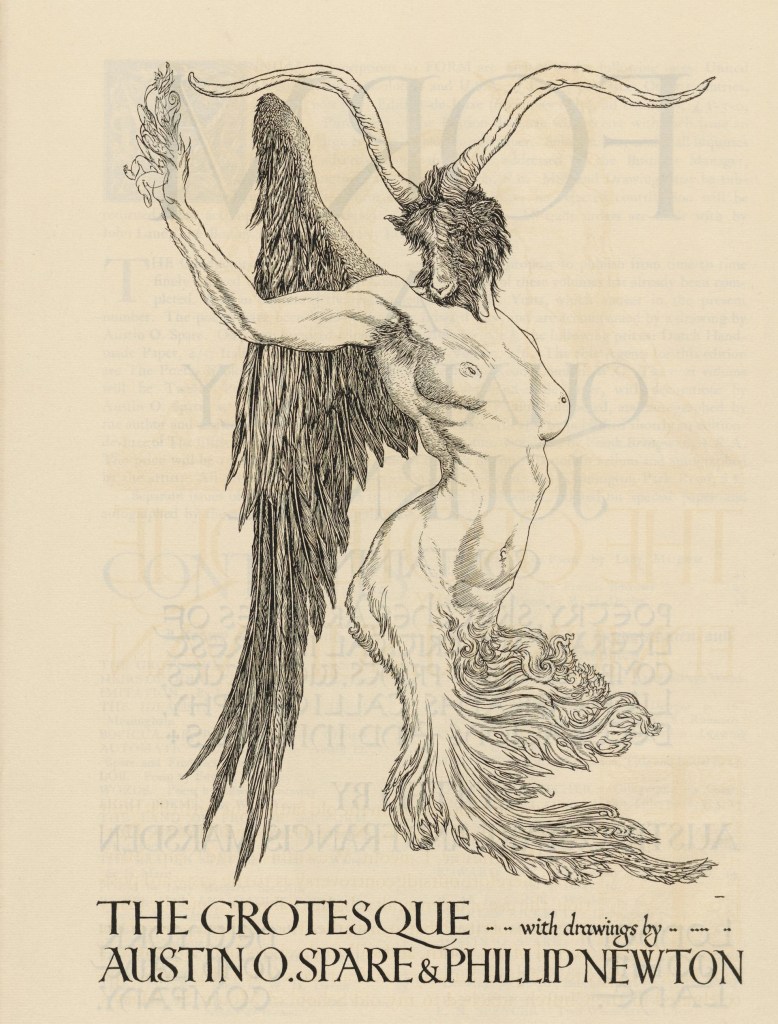
Form. A Quarterly of the Arts, April 1916, nº 1, vol. 1. John Lane, London & John Lane Co., New York. Edited by Austin Osman Spare and Francis Marsden. Page 4. The Grotesque (illustration by Austin O. Spare). | src Universtitätsbibliothek Heidelberg
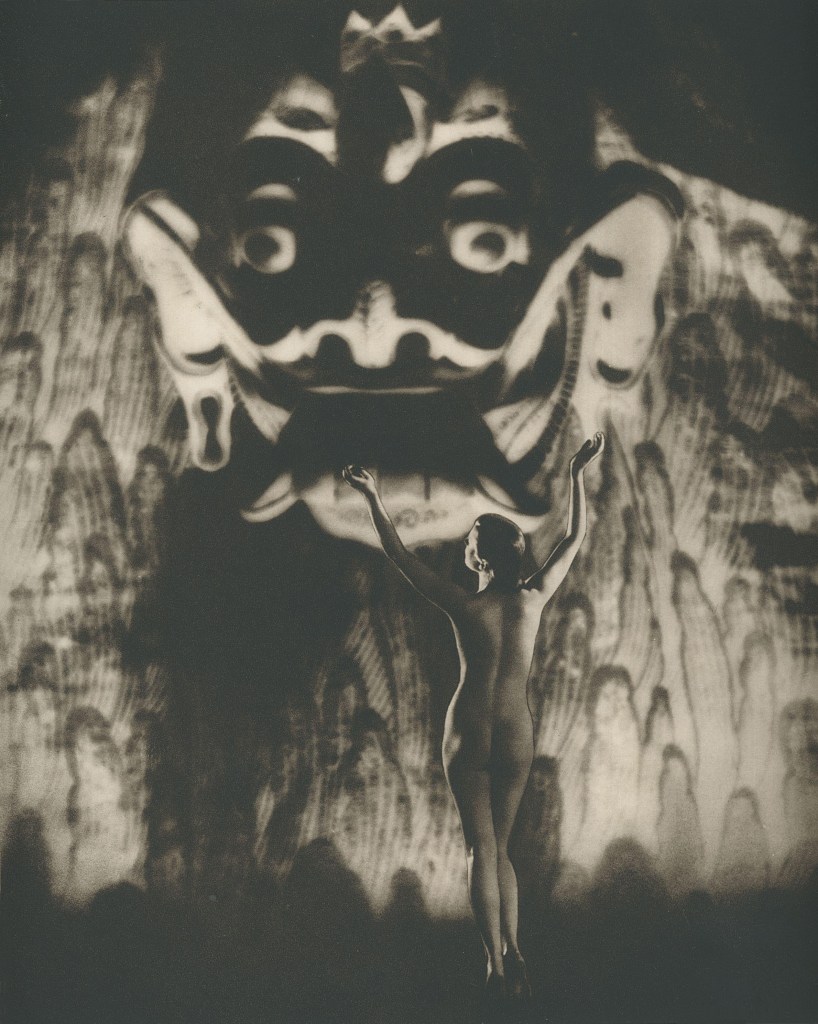
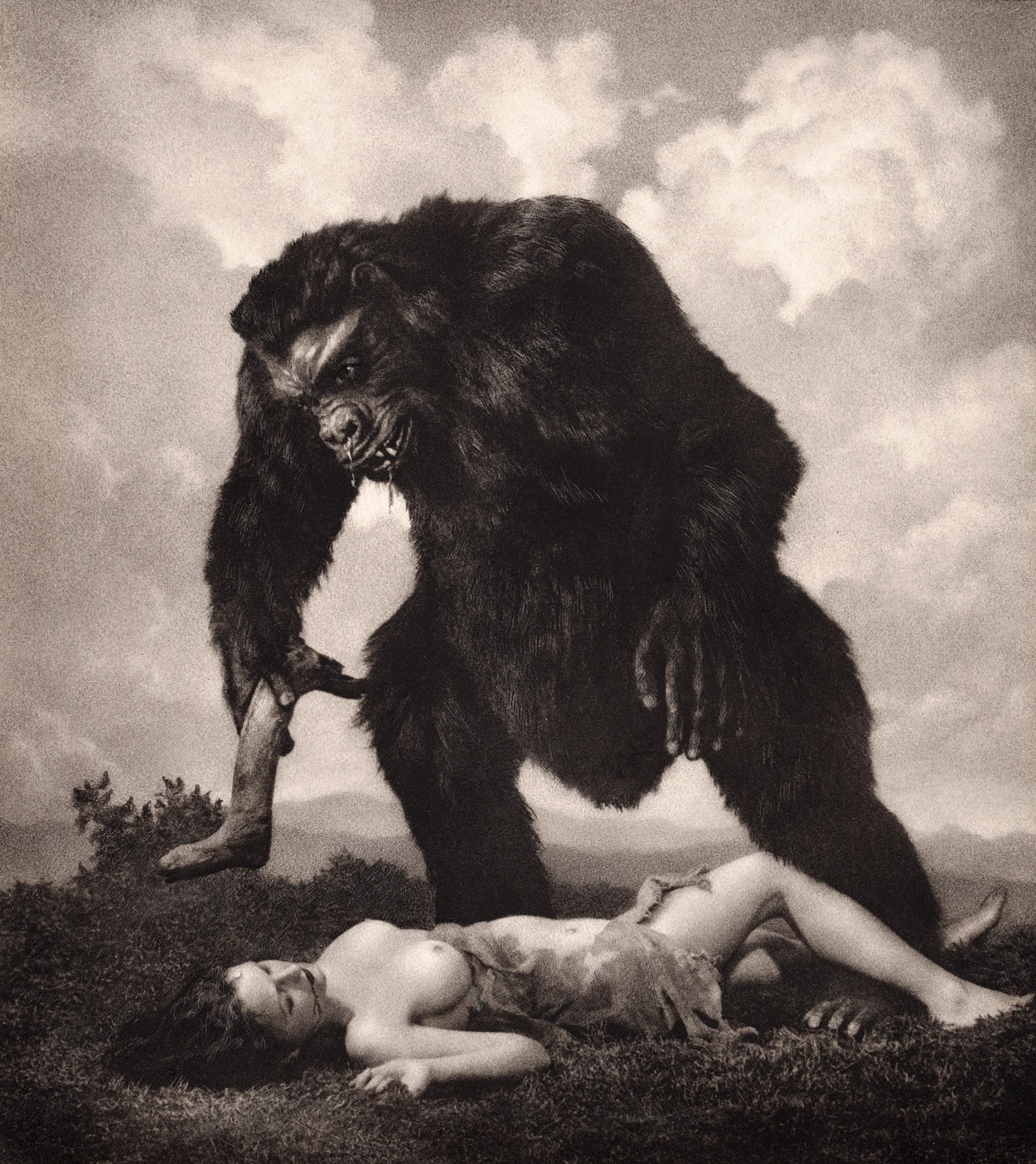
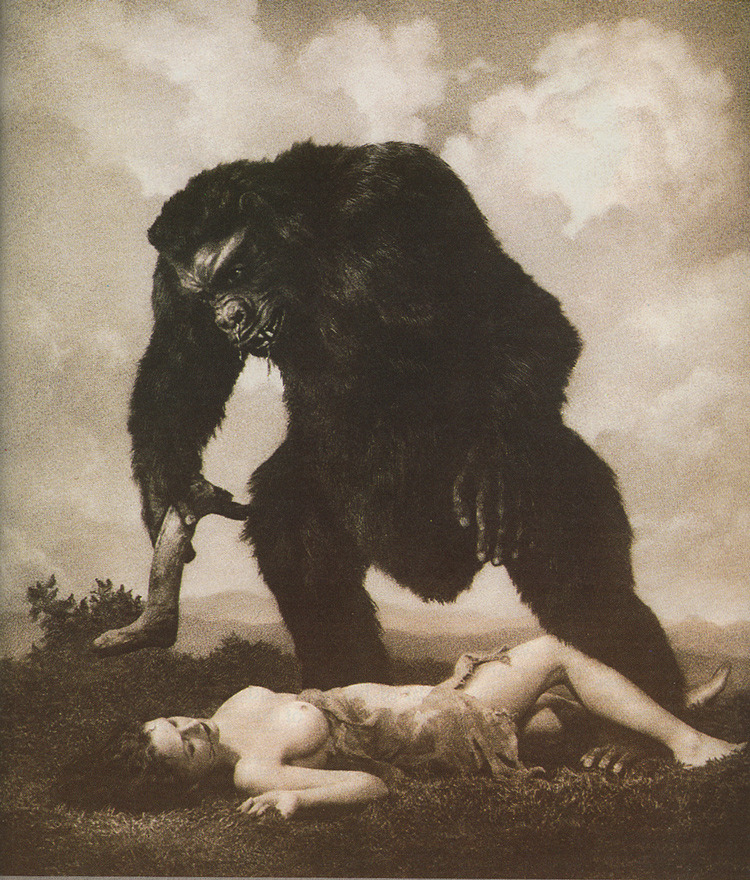
William H. Mortensen :: L’Amour | Love, 1935. Manipulated photograph. An image from American Grotesque: the Life and Art of William Mortensen, published by Feral House. “Mortensen’s methods often made it hard to distinguish whether the results were photographs or not. He used traditional printmaking techniques, such as bromoiling, and developed many of his own. He would create composite images, scratch, scrape and draw on his prints, then apply a texture that made them look like etchings, thereby disguising his manipulations. Consequently, every print was unique.” quoted from source The GuardianWilliam H. Mortensen :: L’Amour | Love, 1935. Manipulated photograph. | src cargo collective | more [+] by this photographer
Related
Herbert List :: Grotesque Figure, Park of Palazzo Orsini, Bomarzo, near Rome, Italy, 1952 / via





 un regard oblique