George Platt Lynes (1907-1955) ~ Balanchine’s Orpheus and Eurydice, ca. 1936 | src Focus on Dance ~ Keith de Lellis GalleryGeorge Platt Lynes (1907-1955) ~ Orpheus and Eurydice, ca. 1936 | src Focus on Dance ~ Keith de Lellis GalleryGeorge Platt Lynes (1907-1955) ~ Lew Christiensen, William Dollar & Daphne Vane performing Orpheus and Eurydice, 1936 src Focus on Dance ~ Keith de Lellis Gallery, also at The MetGeorge Platt Lynes (1907-1955) ~ Nicholas Magallanes and Francisco Moncion in ‘Orpheus’, ca. 1948 | src Focus on Dance ~ Keith de Lellis Gallery
Herbert James Draper (1864-1920) :: Study of Florrie Bird for Naiad in The Lament for Icarus. Black and white chalks on grey paper. Signed ‘Herbert Draper’ (lower left), inscribed with title (centre right). | src Bonhams Herbert Draper (1863–1920) :: The Lament for Icarus, exhibited 1898. Oil on canvas. | DETAILHerbert Draper (1863–1920) :: The Lament for Icarus, exhibited 1898. Oil on canvas. | Tate Britain
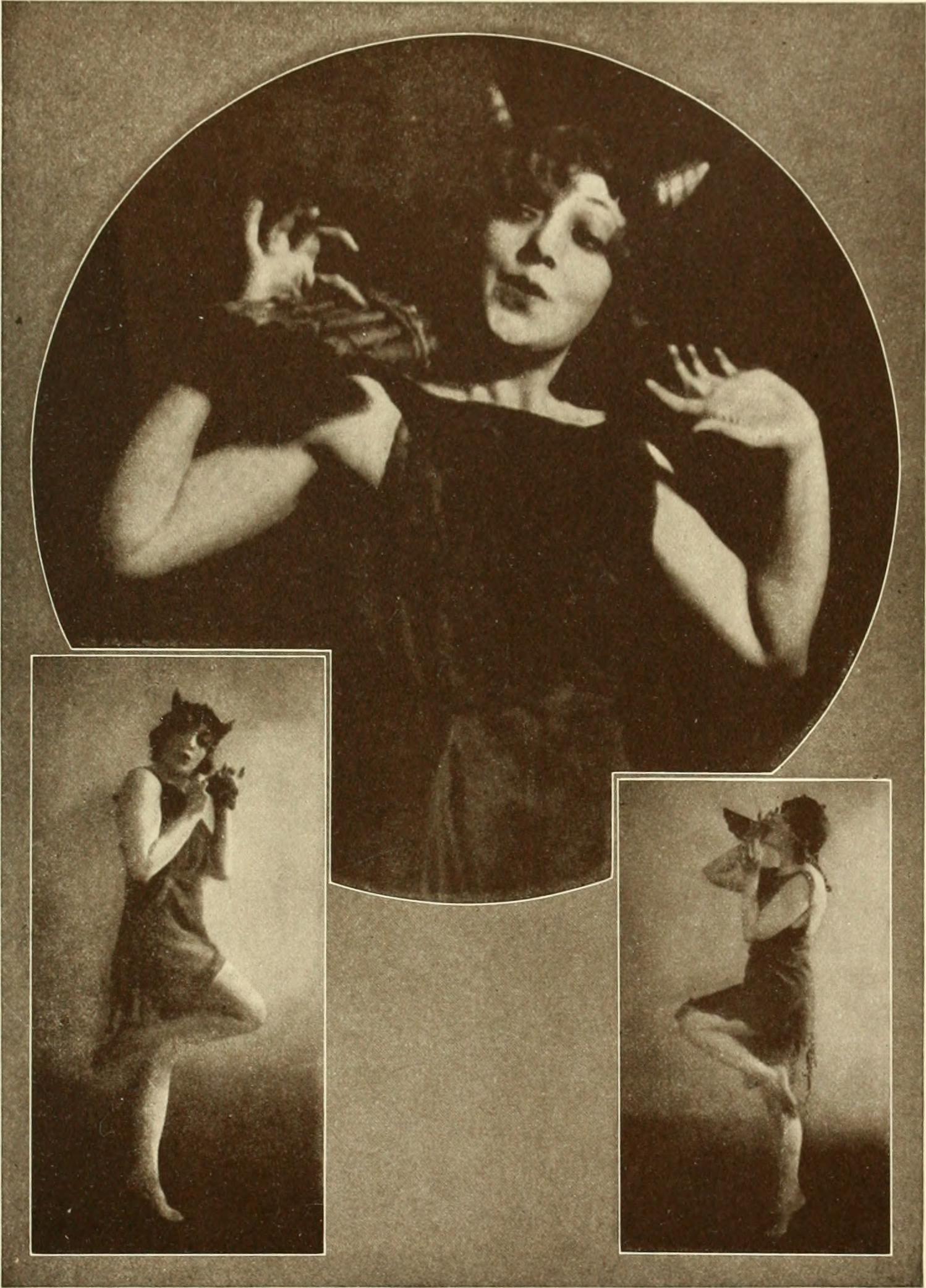
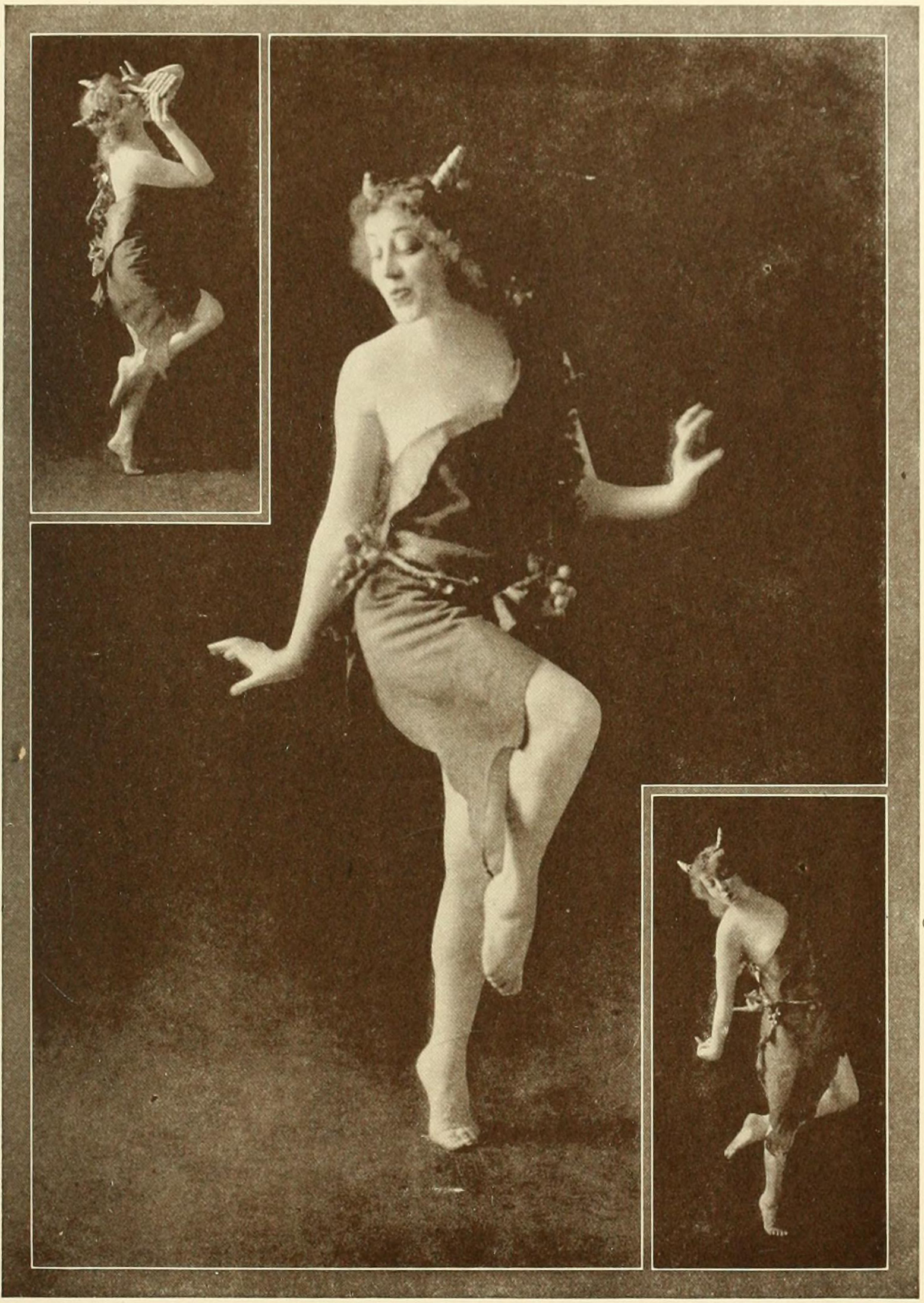
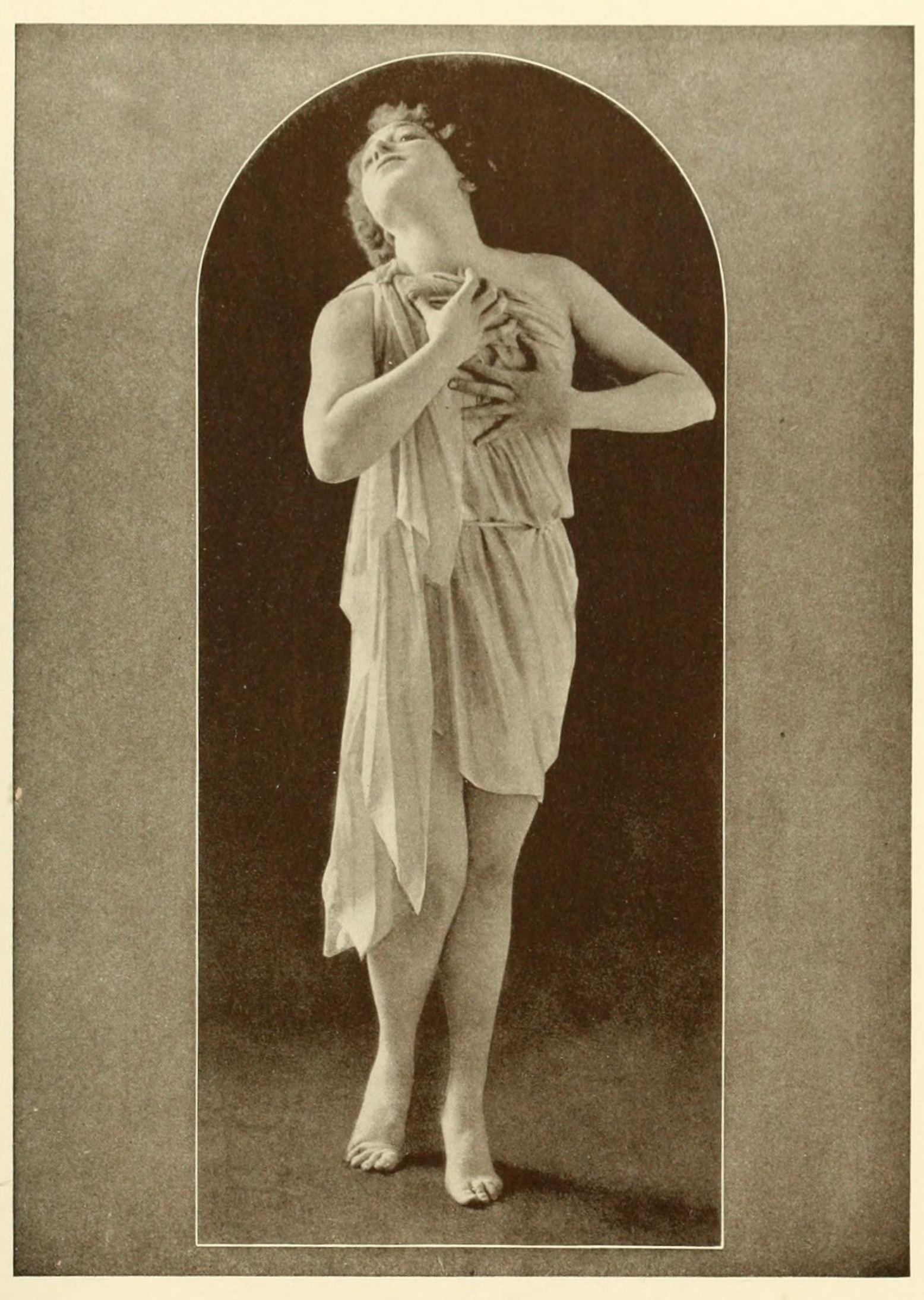
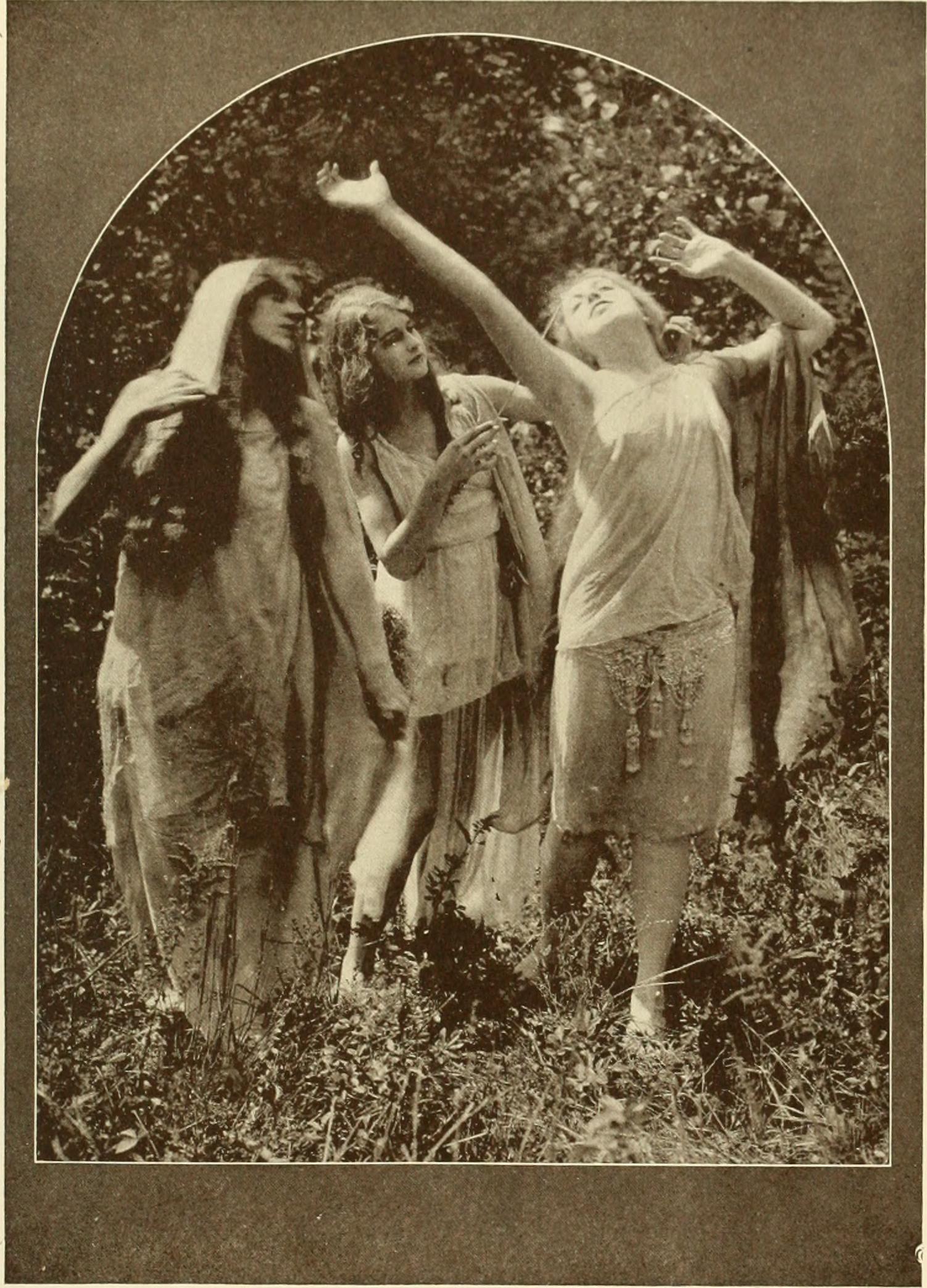
“The idea of Pan inspires the Greek dancer with a charming variety of interpretations of a lyrical, as well as of a sprightly and mischievous, character.” From ‘Dancing with Helen Möller’, 1918. Page 110. University of California Libraries. | src internet archive“An adaptation of the classic idea of Pan — three manifestations emphasizing the gay and mischievous attributes of that minor deity of the Arcadian woodland.” From ‘Dancing with Helen Möller’, 1918. Page 28. University of California Libraries. | src internet archive“All true physical expression has its generative centre in the region of the heart, the same as the emotions which actuate it. Movements flowing from any other source are aesthetically futile.” From ‘Dancing with Helen Moller’, 1918. Page 96. University of California Libraries. | src internet archive“Both of these Bacchante figures exhibit original interpretations in which beauty of line is sustained in connection with appropriate gestures and facial expression.” From ‘Dancing with Helen Moller’, 1918. Page 81. University of California Libraries. | src internet archive“Bacchante. Showing the moment of lustful anticipation of delight in the intoxicating product of the fruit — as though hardly to be restrained from seizing and devouring at once.” From ‘Dancing with Helen Moller’, 1918. Page 102. University of California Libraries. | src internet archive“Woodland interpretation. The ocean-born Aphrodite being adorned by Goddesses of the Seasons for her first appearance among her peers on Olympus.” Helen Moller and Curtis Dunham :: ‘Dancing with Helen Moller; her own statement of her philosophy and practice and teaching formed upon the classic Greek model, and adapted to meet the aesthetic and hygienic needs of to-day’, 1918. Page 112. University of California Libraries. | src internet archive
ACKNOWLEDGMENT: Many of the photographs reproduced in this book were taken by the author herself. For the privilege of reproducing other fine examples of the photographer’s art, she desires to express her grateful acknowledgments to Moody, to Maurice Goldberg, to Charles Albin and to Underwood and Underwood; also to Arnold Genthe for the plate [lost plate] on Page 36; and to Jeremiah Crowley for his admirable arrangement of the entire series of illustrative art plates. [quoted from source]
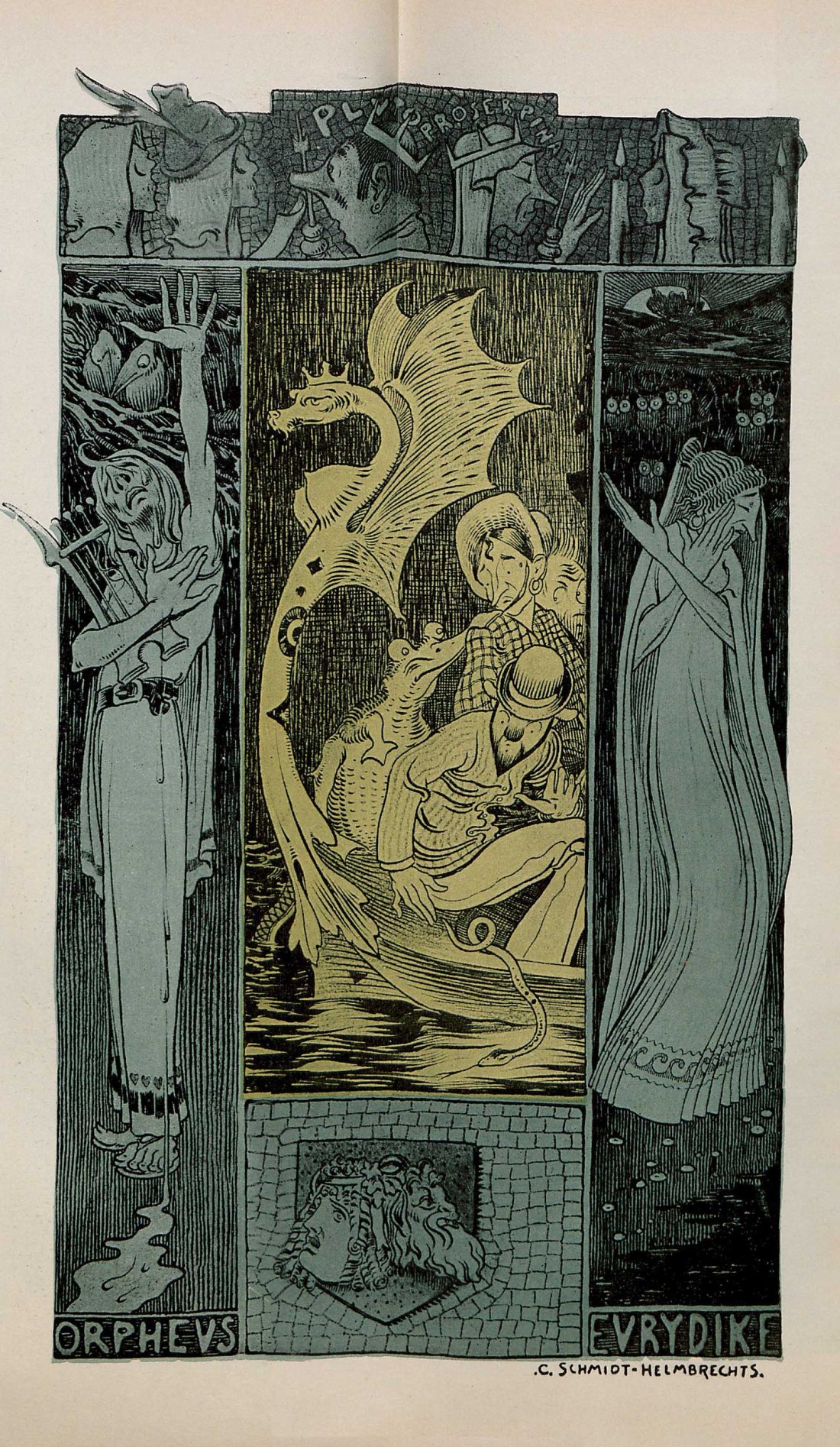
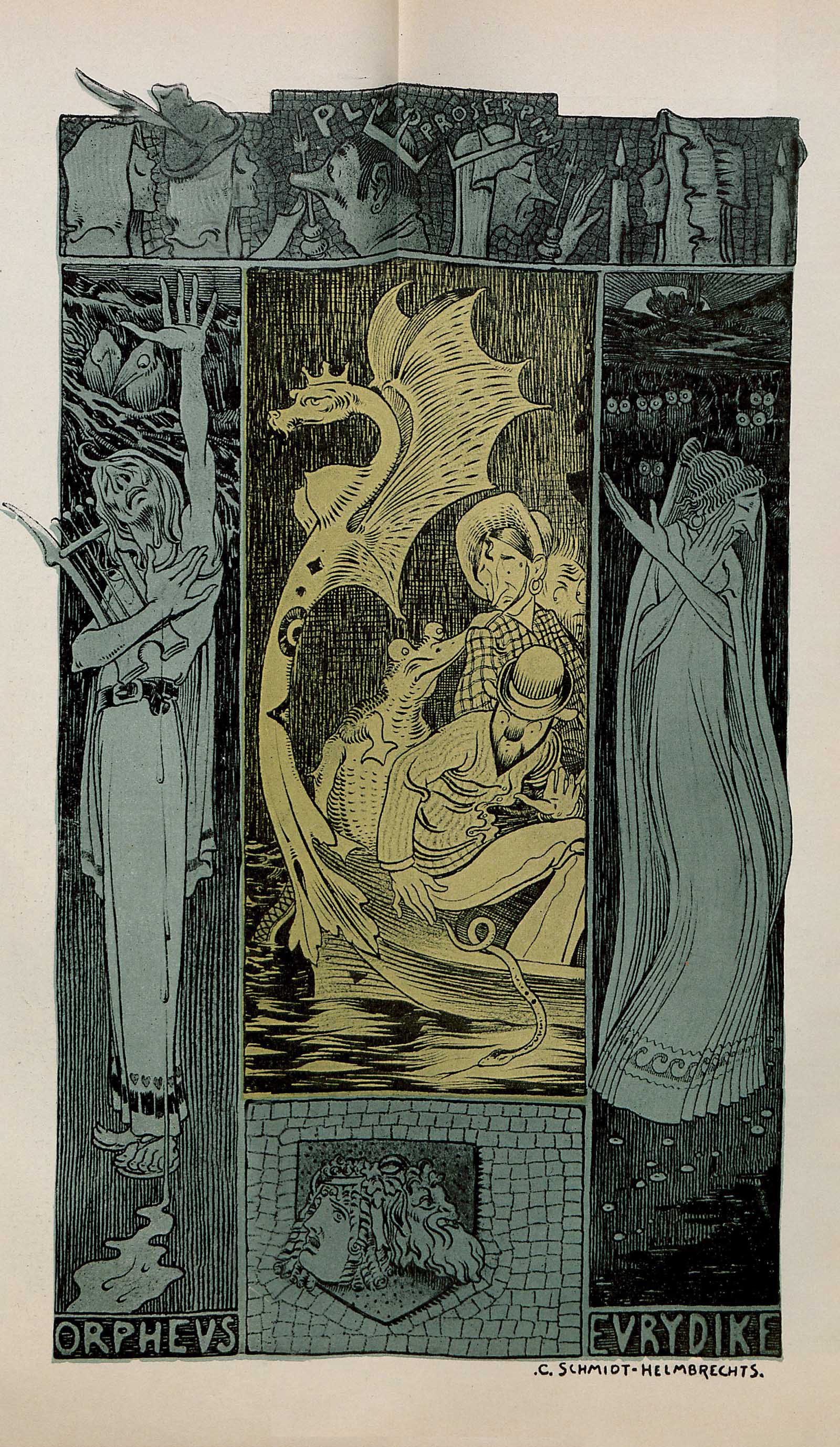
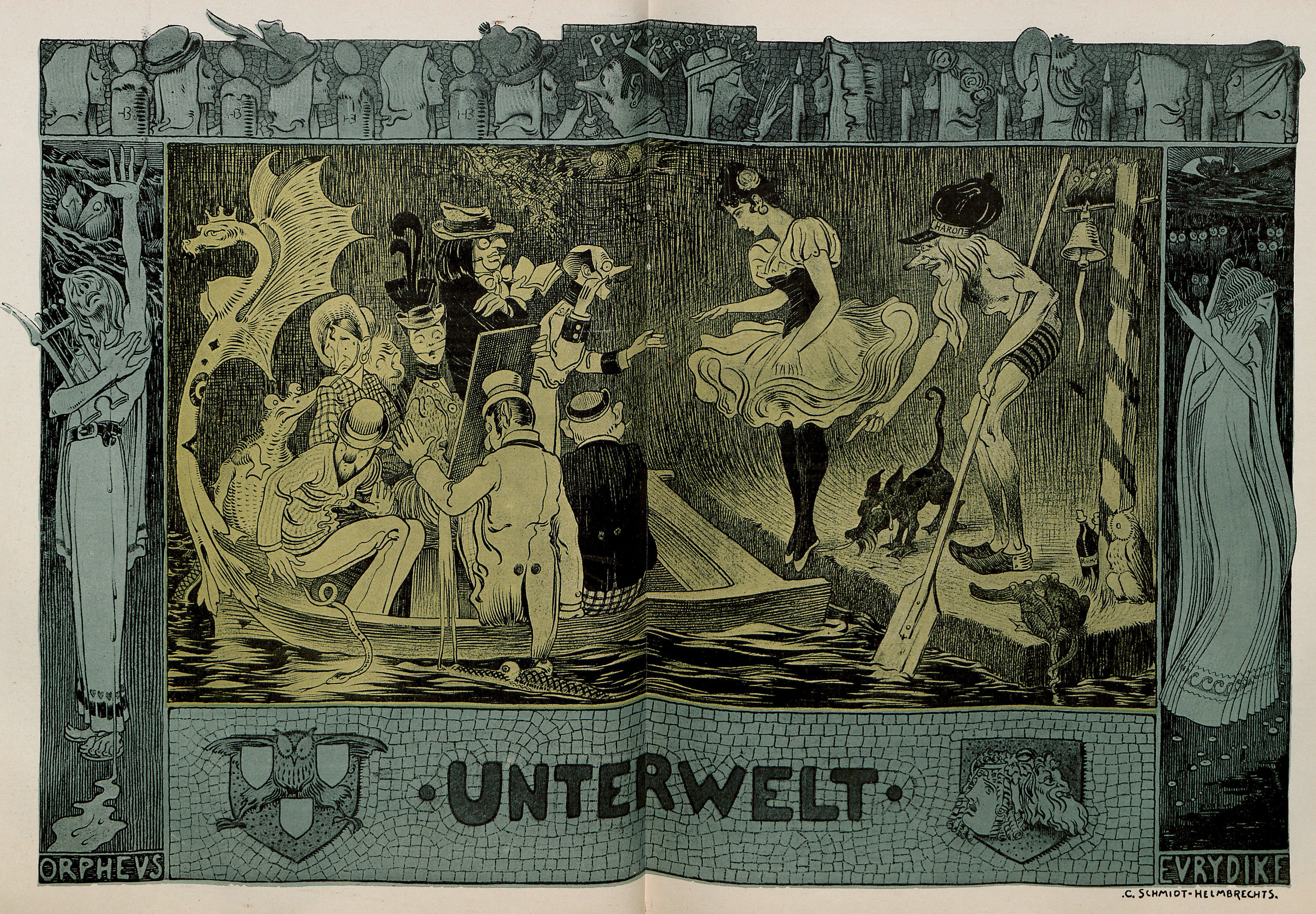
C. Schmidt Helmbrechts :: Unterwelt. Orpheus ~ Eurydike. Jugend: Münchner illustrierte Wochenschrift für Kunst und Leben, 1896, Band 1 (Nr. 8) [detail] | src Universitätsbibliothek HeidelbergC. Schmidt Helmbrechts :: Unterwelt. Orpheus ~ Euridike. Jugend: Münchner illustrierte Wochenschrift für Kunst und Leben, 1896, Band 1 (Nr. 8) | Munich illustrated weekly for art and life, 1896, Volume 1 (Nº 8) [Full size]
Thomas Longworth-Cooper :: Anita Heyworth and Madge Bateman in ‘The Legend of Daphne and Apollo’, a dance arranged by Madge Atkinson, ca. 1931-1933 / source: dance archives







 un regard oblique