Leonetto Cappiello · Dancers

Leonetto Cappiello (1875-1942) ~ A dancer in motion wearing a futuristic headpiece and billowing wide pants, 1928. Watercolor and pencil drawing | src invaluable
Leonetto Cappiello (1875-1942) ~ Folies Bergere poster, 1900s | src RetroGraphik

Leonetto Cappiello: The Father of Modern Advertising Poster

Leonetto Cappiello (1875 – 1942) was an Italian poster artist who lived much of his life in Paris, France. With no formal training in art, he emerged as one of the leading Italian artist and caricaturist in Paris that eventually succeeded the other famous lithographers such as Henri Toulouse-Lautrec (1864-1901), Jules Cheret (1836-1932) and Alphonse Mucha (1860-1939) as the leading advertising poster designer in Paris.

Talented Cappiello started his arts career as a caricature artist in 1896 illustrating for French journals like Le Rire, Le Cri de Paris, Le Sourire, L’Assiette au Beurre, La Baionnette, Femina, and others. His first album of caricatures, Lanterna Magica, was made in 1896. His early caricature style was seen to be influenced by Henri Toulouse-Lautrec, which was already the most famous artist of the time.

Today, arts historians list him as one of the most influential poster artist in the history of poster art as many would agree that he is also known as the “Father of Modern Advertising Poster”. As advertising posters were the main medium of communication during the time, Paris streets were saturated with many types of advertising posters, all trying hard to engage the increasingly distracted eyes. There was a need to rethink how poster as a medium need to be relevant and engage the faster pace of the 20th century. 
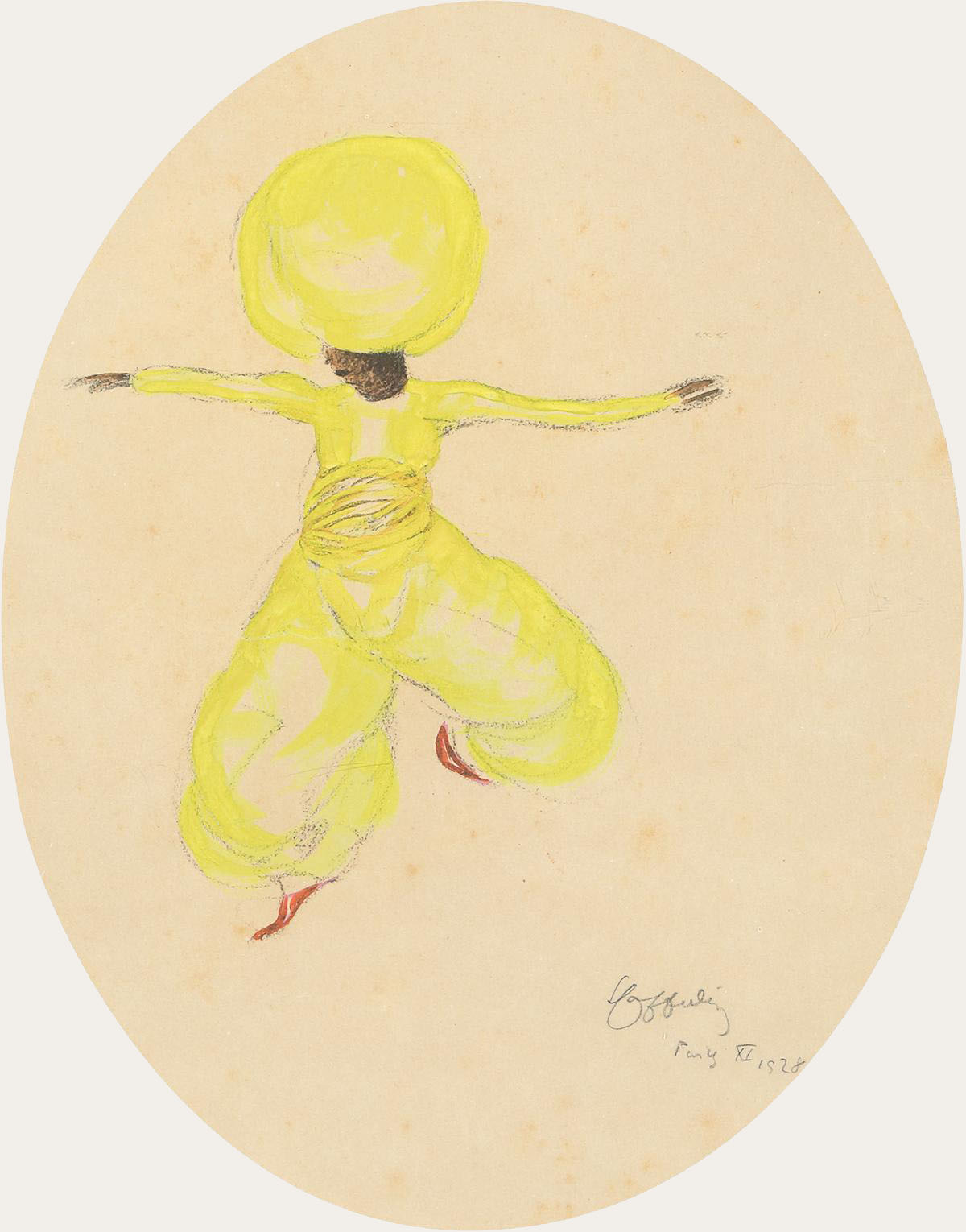
Leonetto Cappiello (1875-1942) ~ Turbaned dancer in midair wearing a bright yellow outfit, 1928. Watercolor and charcoal drawing | src invaluable
Leonetto Cappiello (1875-1942) ~ Asti Cinzano poster, 1910s | src RetroGraphik

The Cappiello Style

Cappiello is credited to revolutionize the old thinking of poster illustration during his time. His concept of poster art was simple, to simply engage audience faster by creating unconventional visual impact. He was the first poster artist to boldly experiment and innovate new graphical styles at the time. His presentation was straight forward with use of enlarged bold subjects with unconventional colors,contrasted by the very dark background, which make his art “pop out”. By doing so he moved away from illustrating intricate details in his artworks, which was famous at the time as Art Nouveau movement was popular.

Between 1901 and 1914, he created several hundred posters in a style that revolutionized the art of poster design. Cappiello redesigned the fin-de-siècle pictures into images more relevant to the faster pace of the 20th century.

His new functionalist style of graphic art, in which a single bold image would be used to grab the viewer’s attention. This graphic design proved highly effective, not only in drawing attention to the product but also in building a brand. It made Cappiello the acknowledged master of the advertising poster in his time for almost 20 years. | src RetroGraphik

Cassandre poster design

A.M. Cassandre :: Poster for the Paris newspaper L'Intransigeant, designed by Cassandre, 1925. Collection of Philip B. Meggs Printer: Hachard & Cie., Paris | src MoMA
A.M. Cassandre :: Poster for the Paris newspaper L’Intransigeant, designed by Cassandre, 1925. Printer: Hachard & Cie., Paris | src MoMA

Cassandre (1901-1968) or A.M. Cassandre (the pseudonym of Adolphe-Jean-Marie Mouron) was a graphic artist, stage designer, and painter whose poster designs greatly influenced advertising art in the first half of the 20th century.

Cassandre used figurative geometry and modulated planes of colour, derived from Cubism, to revitalize postwar French poster design. From 1923 until 1936, Cassandre designed posters in which he reduced his subject matter to bold shapes and flat, modulated icons. He emphasized two-dimensional pattern, and he integrated lettering with his imagery to make a unified overall composition. Cassandre also utilized airbrushed blends and grading to soften rigid geometry. 

A.M. Cassandre (Adolphe Mouron, 1901-1968)
A.M. Cassandre (Adolphe Mouron, 1901-1968) :: 1932 version of the “Dubonnet” poster. Alliance Graphique, Paris. | src Rennert Gallery

Cassandre gained a reputation with such posters as “Étoile du Nord” (1927) and “Dubo Dubon Dubonnet” (1932). The Dubonnet posters were among the earliest designed specifically to be seen from fast-moving vehicles, and they introduced the idea of the serial poster, a group of posters to be seen in rapid succession to convey a complete idea.

In 1926 Cassandre cofounded the advertising agency Alliance Graphique and soon turned his attention to experimental typography. He designed three typefaces: Bifur (1929), Acier Noir (1935) and Piegnot (1937). In 1939 he abandoned poster art and henceforth devoted himself to designing stage sets and to painting.

quoted from Encyclopædia Britannica

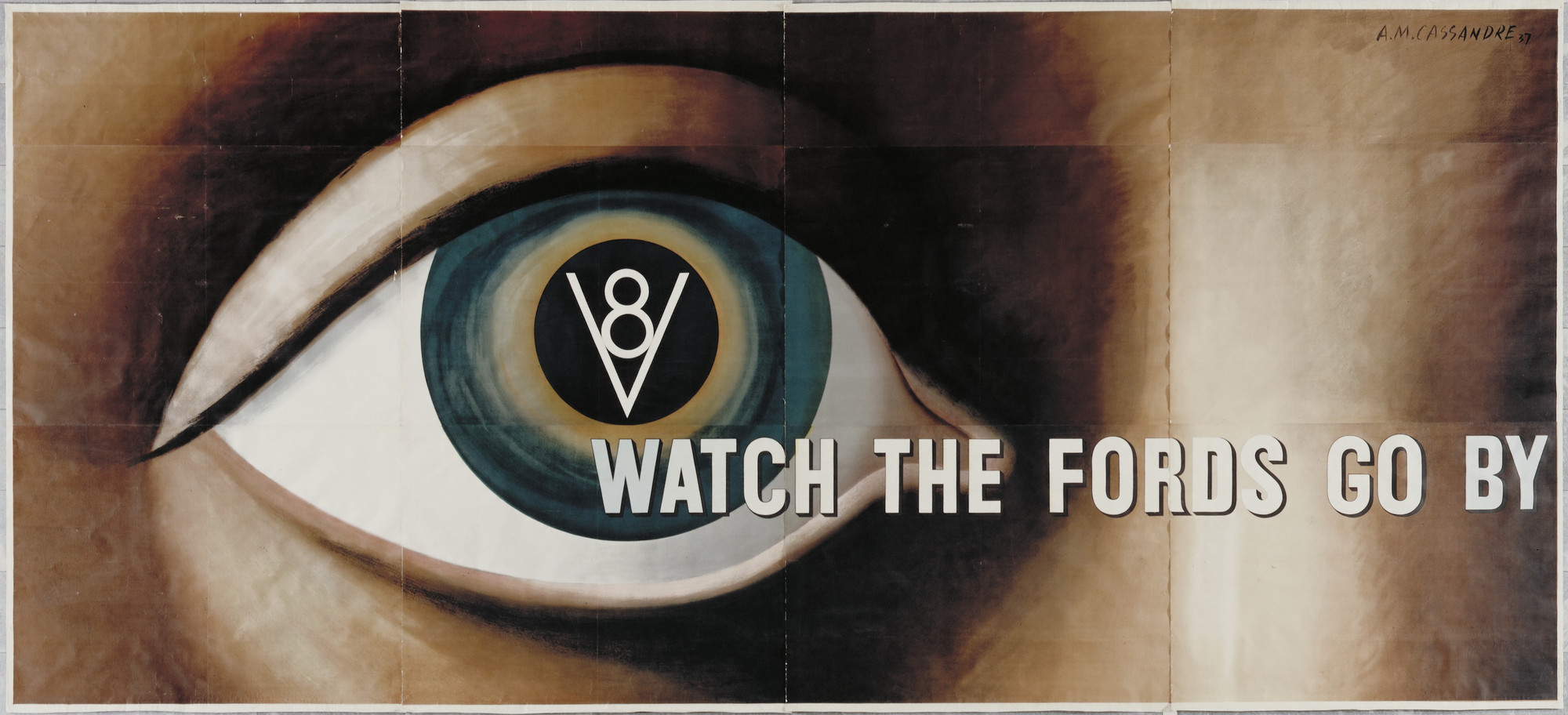
A.M. Cassandre :: Watch the Fords Go By (Poster for Ford Motor Company), 1935 | src MoMA

Ford was the first manufacturer to develop a V8 engine—previously associated with luxury and specialist cars—for a mass market. In employing Cassandre, Ford infused its corporate reputation for industrial innovation with the artistic cachet of European modernism. Cassandre was already established as a preeminent French poster designer and in 1936 he had become the first graphic artist to have a solo exhibition at MoMA. This compelling image of a disembodied, all-seeing eye is rooted in a classical tradition that emphasizes the primacy of vision in Western culture; the eye is also prevalent in Surrealist art of the 1920s. Trailing from the iris, the slogan “Watch the Fords Go By” gives a sense of modern vision, always in motion, while the V8 icon imprinted on the pupil suggests a fusion of mind, body, and technology—a synthesis that revolutionized individual perception in the modern world.

Gallery label from Shaping Modernity: Design 1880-1980, December 23, 2009–July 25, 2010 (MoMA)

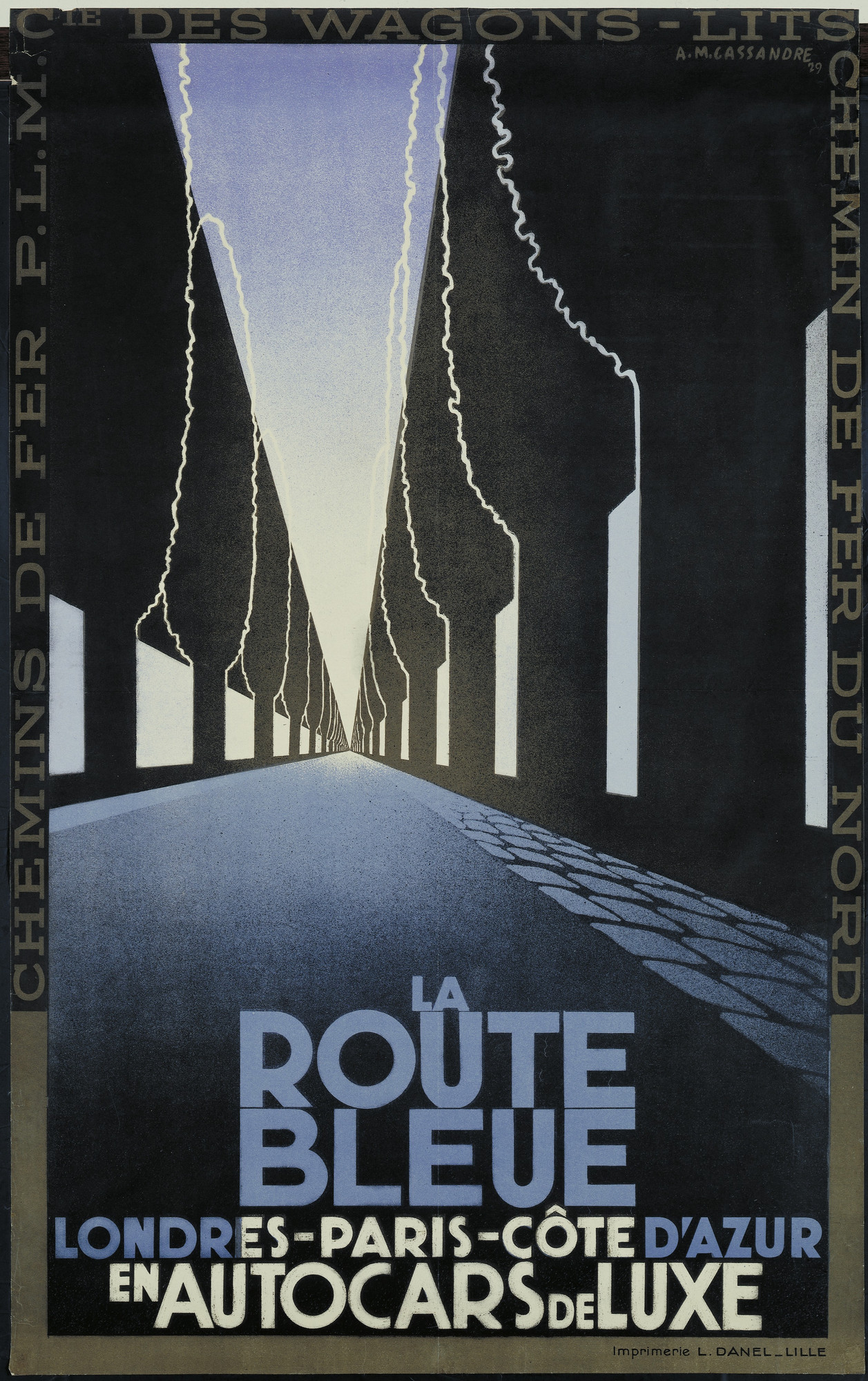
A.M. Cassandre :: La Route Bleu, Londres-Paris-Côte d’Azur en Autocars de Luxe, 1929 | MoMA
A.M. Cassandre :: Fêtes de Paris, 1935. | MoMA
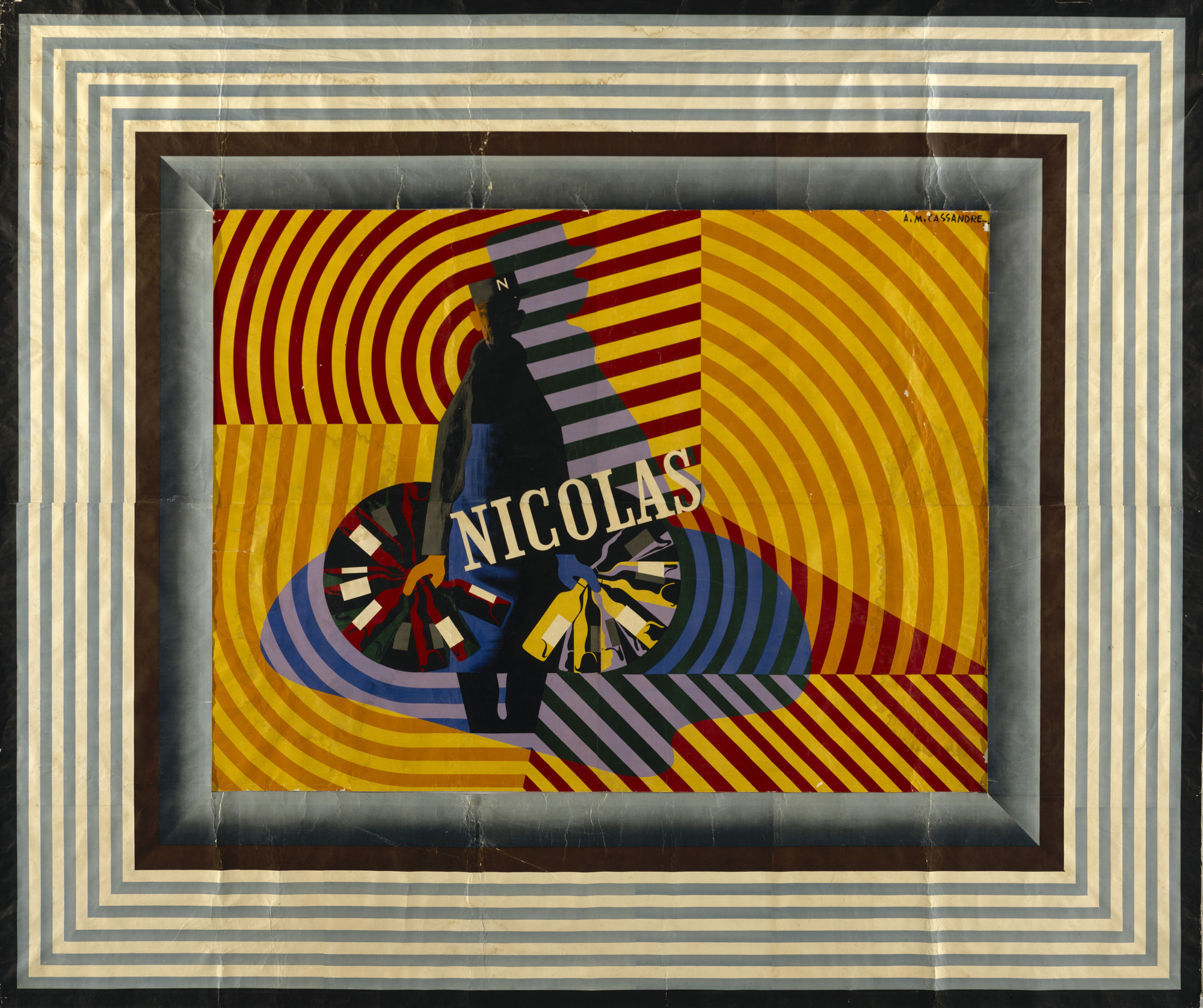
A.M. Cassandre :: Nicolas, 1935 | src MoMA

Friedensreich Hundertwasser

Friedensreich Hundertwasser :: Das vollständige druckgrafische Werk 1951-1986 (cover) | src Dobiaschofsky Auktionen
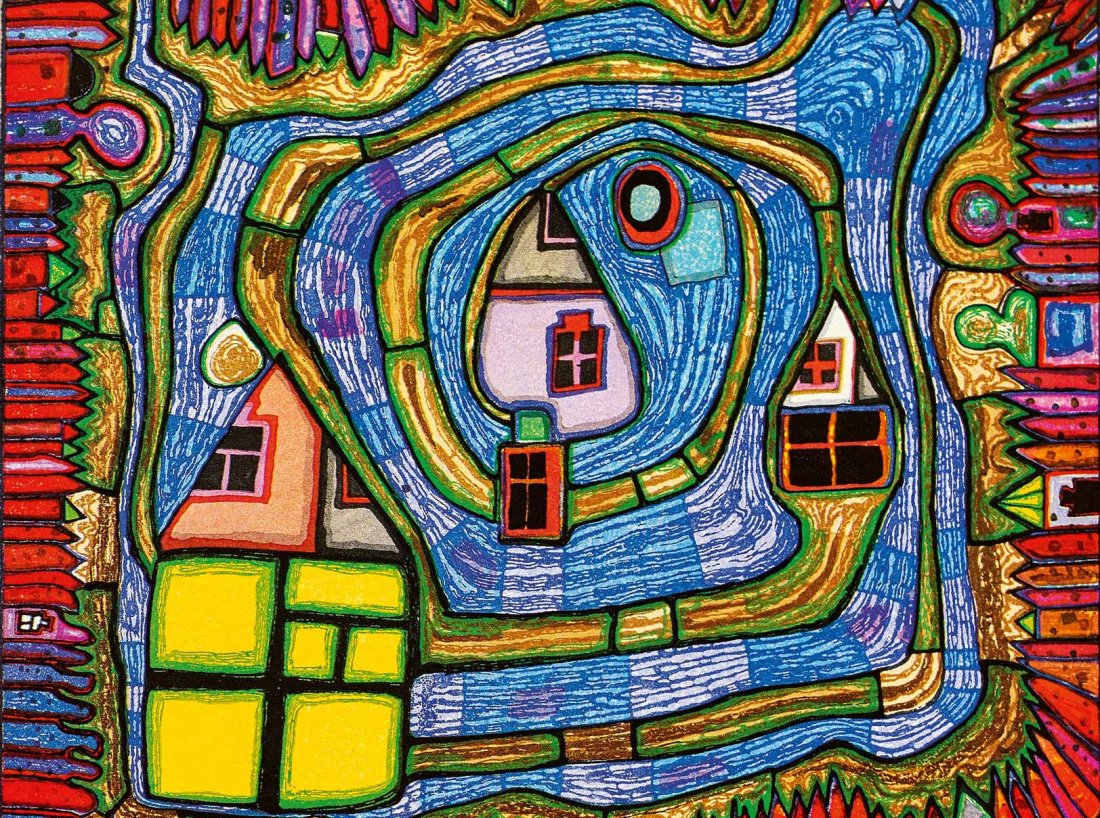
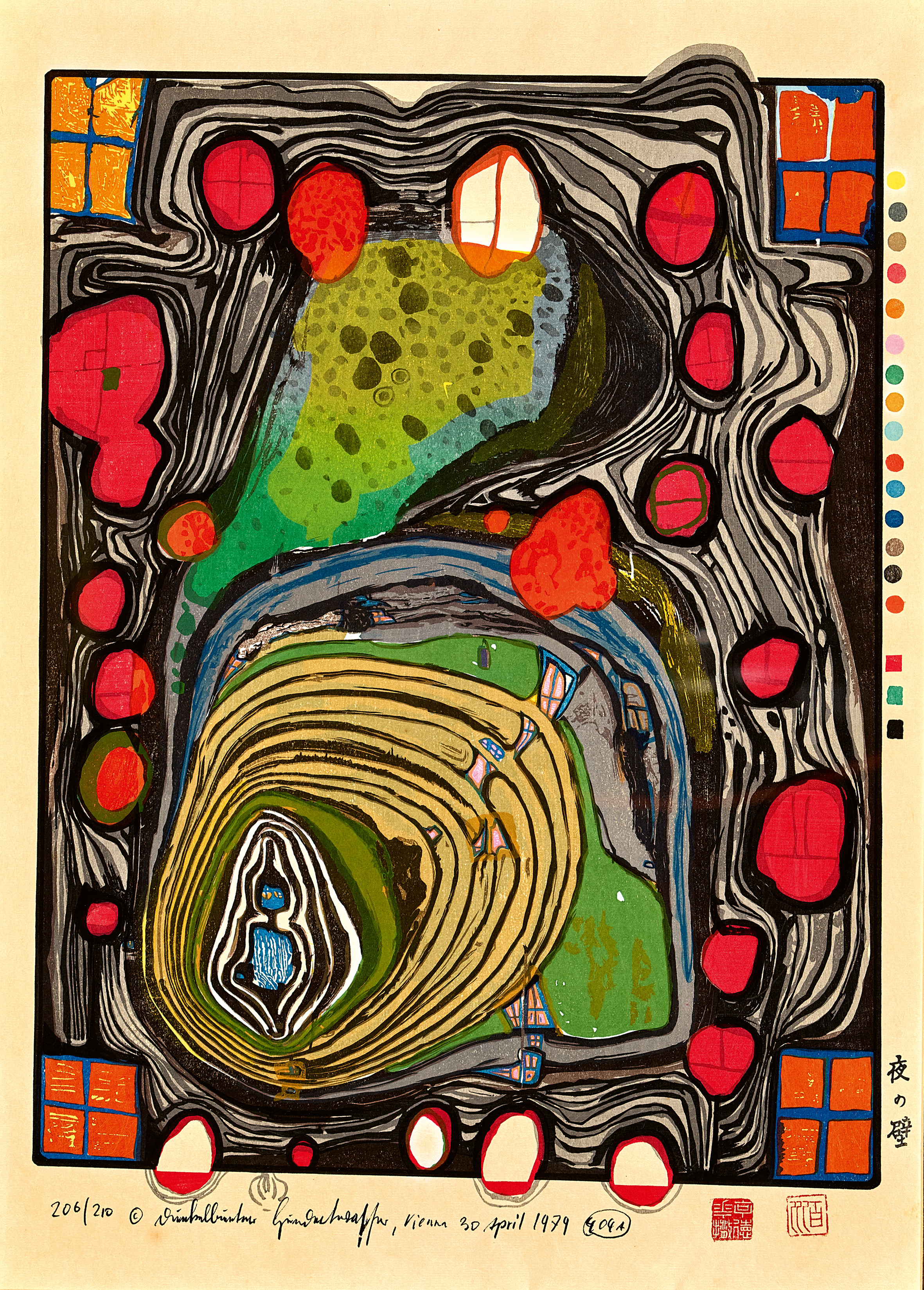
HUNDERTWASSER, FRIEDENSREICH Die Mauer, 1979
Friedensreich Hundertwasser :: Die Mauer, 1979 | src Dobiaschofsky Auktionen

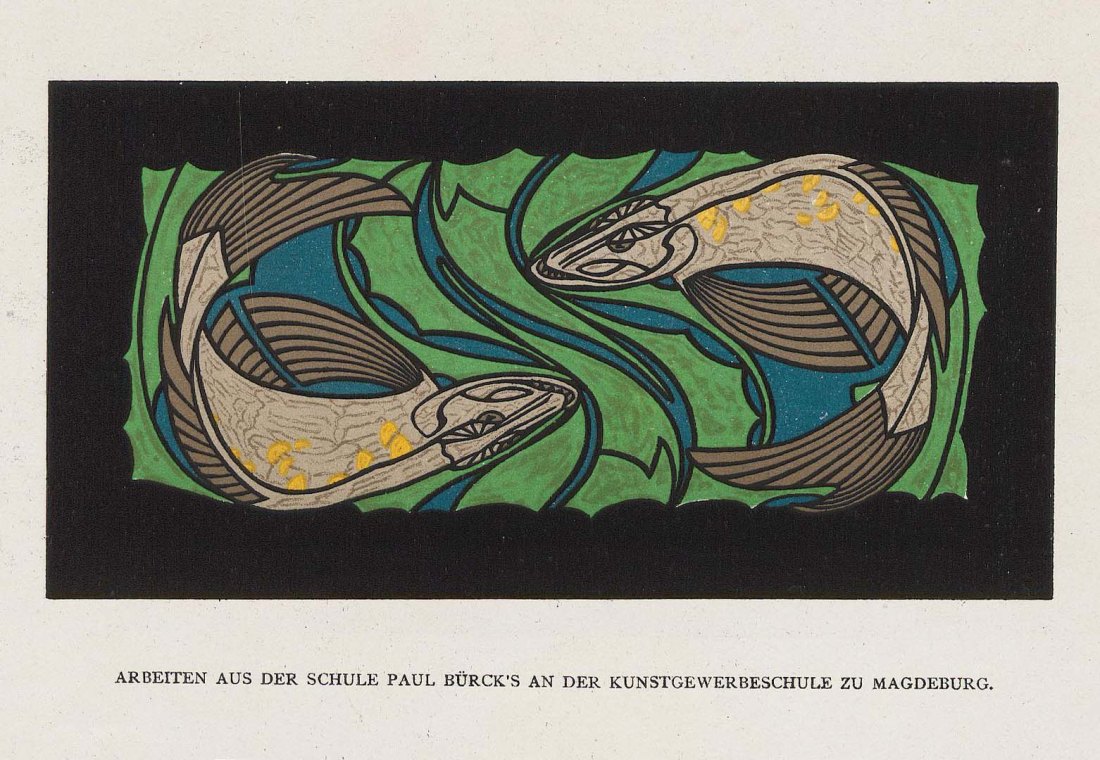
Das Meer und seine Bewohner

Das Meer und seine Bewohner Arbeit aus der Schule Paul Bürck's an der Kunstgewerbeschule zu Magdeburg. Deutsche Kunst und Dekoration, 1903
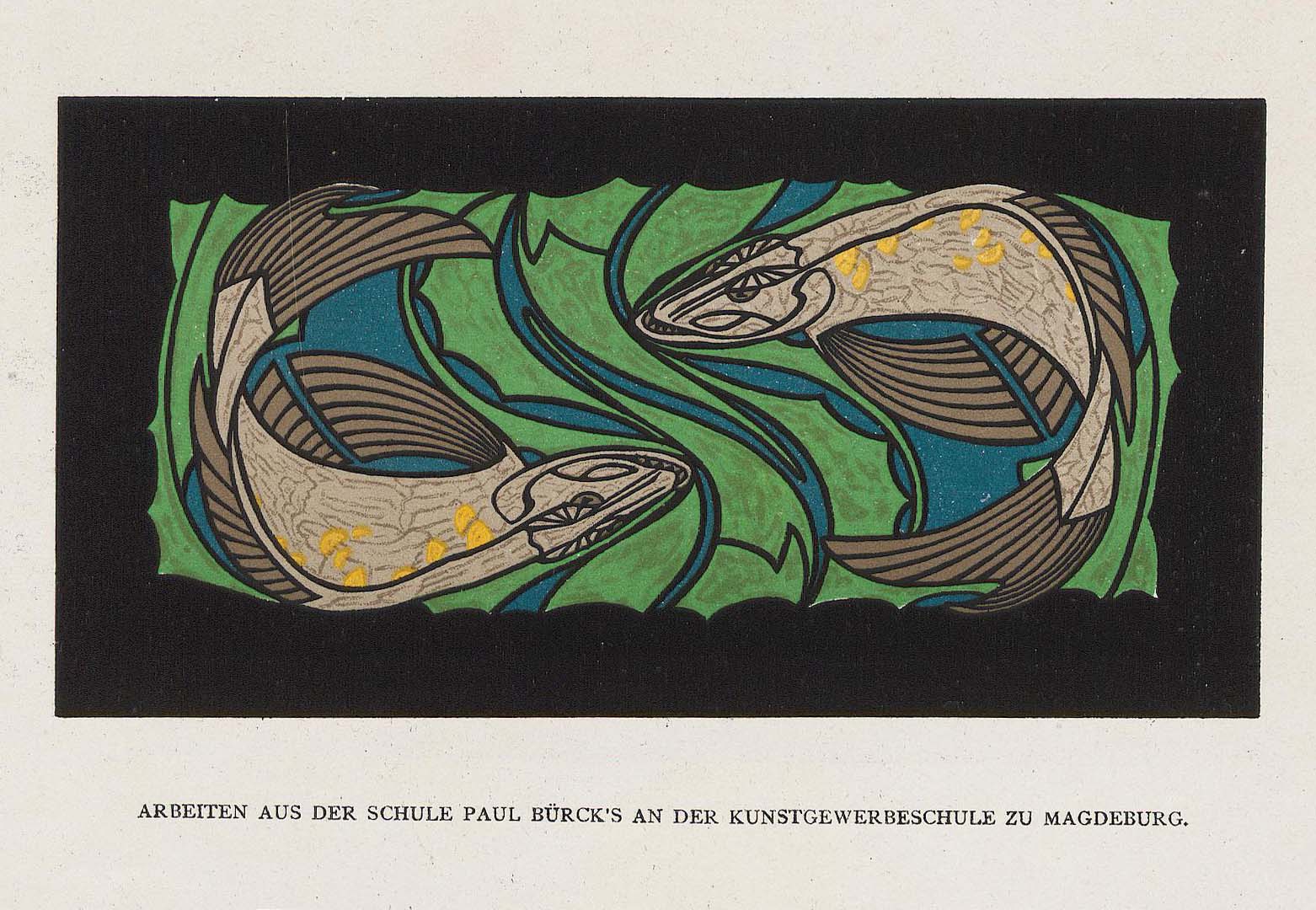
Das Meer und seine Bewohner
Arbeit aus der Schule Paul Bürck's an der Kunstgewerbeschule zu Magdeburg. Deutsche Kunst und Dekoration, 1903
Das Meer und seine Bewohner
Arbeit aus der Schule Paul Bürck’s an der Kunstgewerbeschule zu Magdeburg. Deutsche Kunst und Dekoration, 1903
Das Meer und seine Bewohner
Arbeit aus der Schule Paul Bürck's an der Kunstgewerbeschule zu Magdeburg. Deutsche Kunst und Dekoration, 1903
Das Meer und seine Bewohner
Arbeit aus der Schule Paul Bürck’s an der Kunstgewerbeschule zu Magdeburg. Deutsche Kunst und Dekoration, 1903

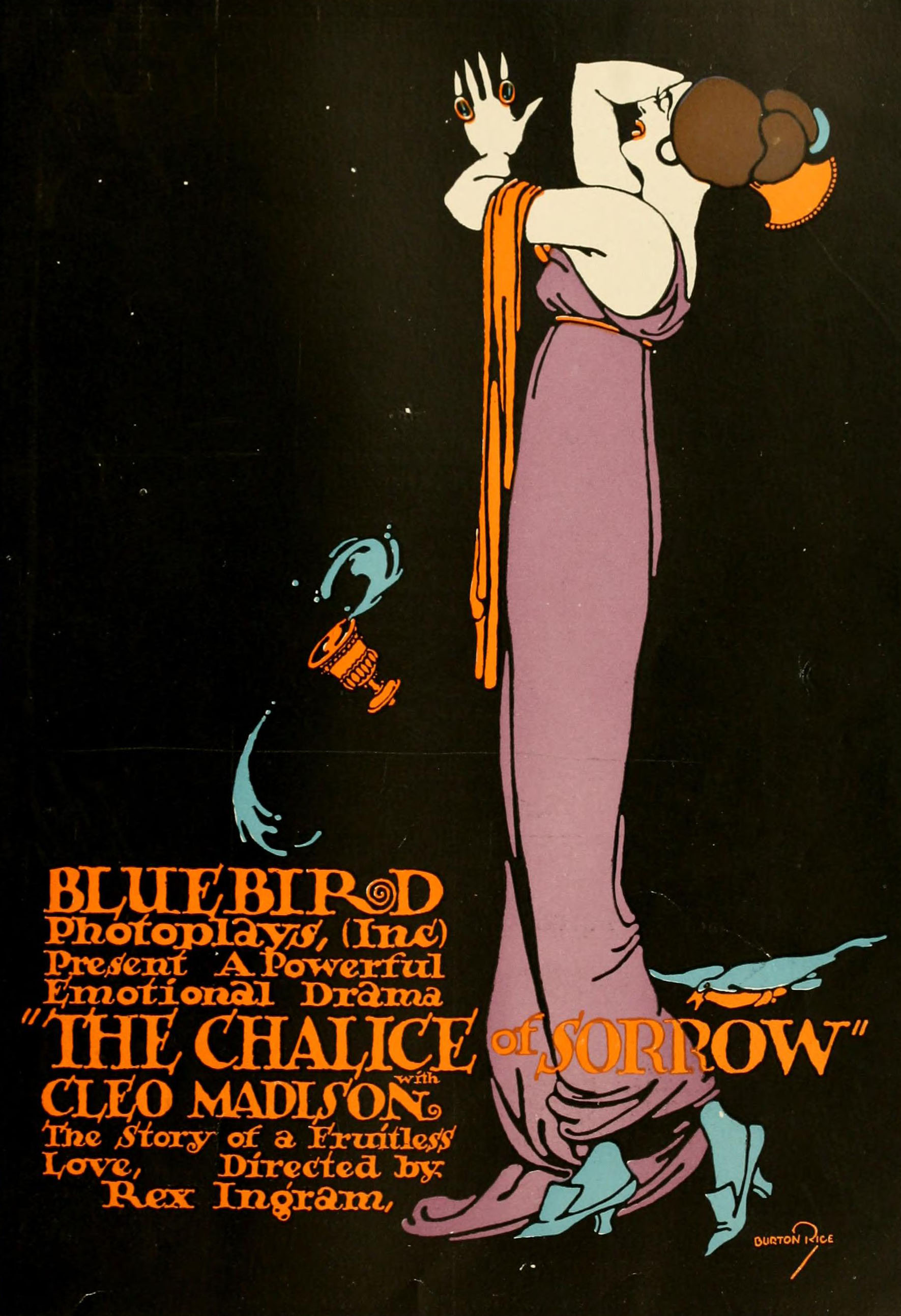
The Chalice of Sorrow (1916)

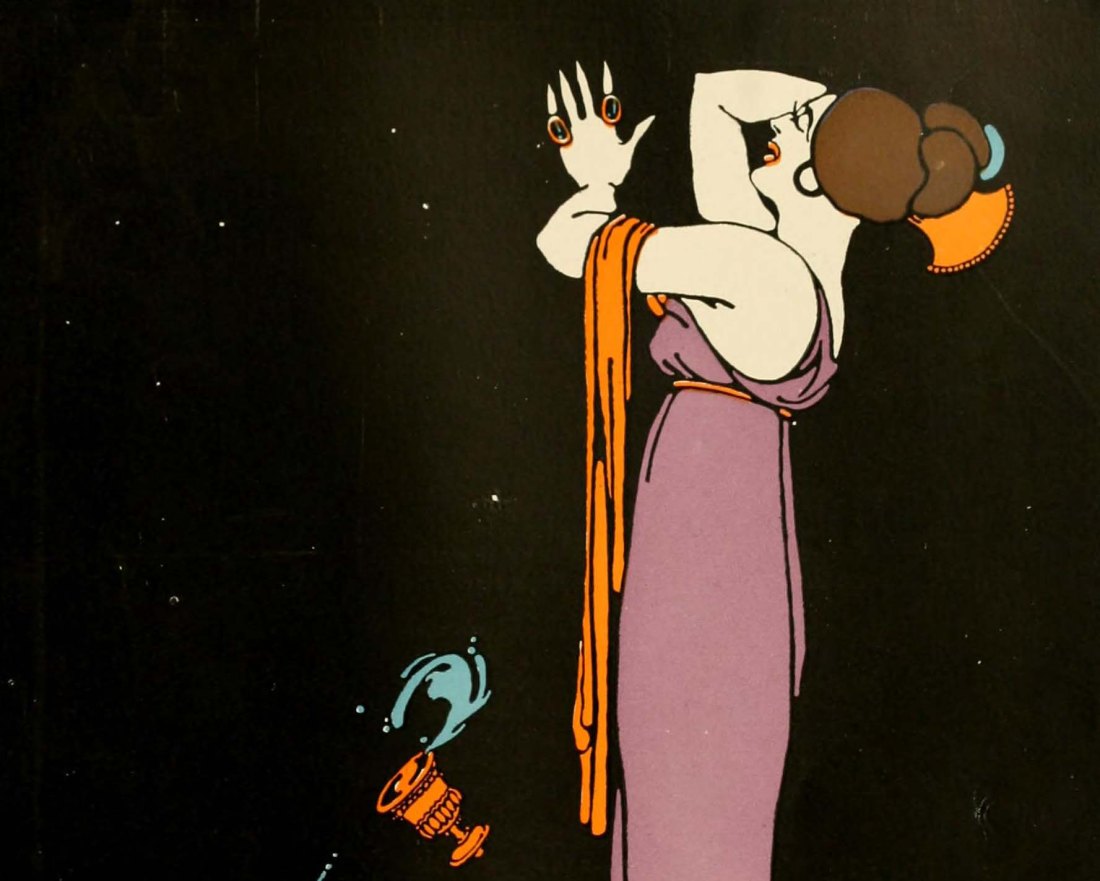
Advertisement for The Chalice of Sorrow (1916). Signed: Burton Rice
A powerful emotional drama "The Chalice of Sorrow" [aka, The Fatal Promise] with Cleo Madison. The Story of a Fruitless Love, directed by Rex Ingram. Moving Picture World, November 1916
A powerful emotional drama “The Chalice of Sorrow” [aka, The Fatal Promise] with Cleo Madison. The Story of a Fruitless Love, directed by Rex Ingram. Moving Picture World, November 1916

Bluebird Photo-Plays began advertising in Moving Picture World, January 8, 1916. Burton Rice created the advertisements for Bluebird Photo-Plays that appeared in Moving Picture World beginning April 15, 1916. On December 23th, 1916 MPW published a short article on Burton Rice and his plans of moving to Europe. He left the US, moved to Paris and mailed his artwork to Bluebird Photo-Plays in New York City. In 1917 Rice produced fewer works for Bluebird Photo-Plays. Ethel Rundquist was hired to fill-in for Rice and eventually replaced him.

In the second half of the 1920s, Rice began using the pen name, Dynevor Rhys. From 1930 to 1935 Rice, as Rhys, was credited with almost three dozen covers for The Delineator. He contributed drawings to Harper’s Bazaar.

A powerful emotional drama “The Chalice of Sorrow” [aka, The Fatal Promise] with Cleo Madison. The Story of a Fruitless Love, directed by Rex Ingram. Motion Picture News, October 1916

L’Atlantide (1921)

Poster for the French silent film L’Atlantide (aka Missing Husbands, Lost Atlantis), directed by Jacques Feyder, starring Stacia Napierkowska as Queen Antinea (1921). Poster design by Manuel Orazi. | src IMdB

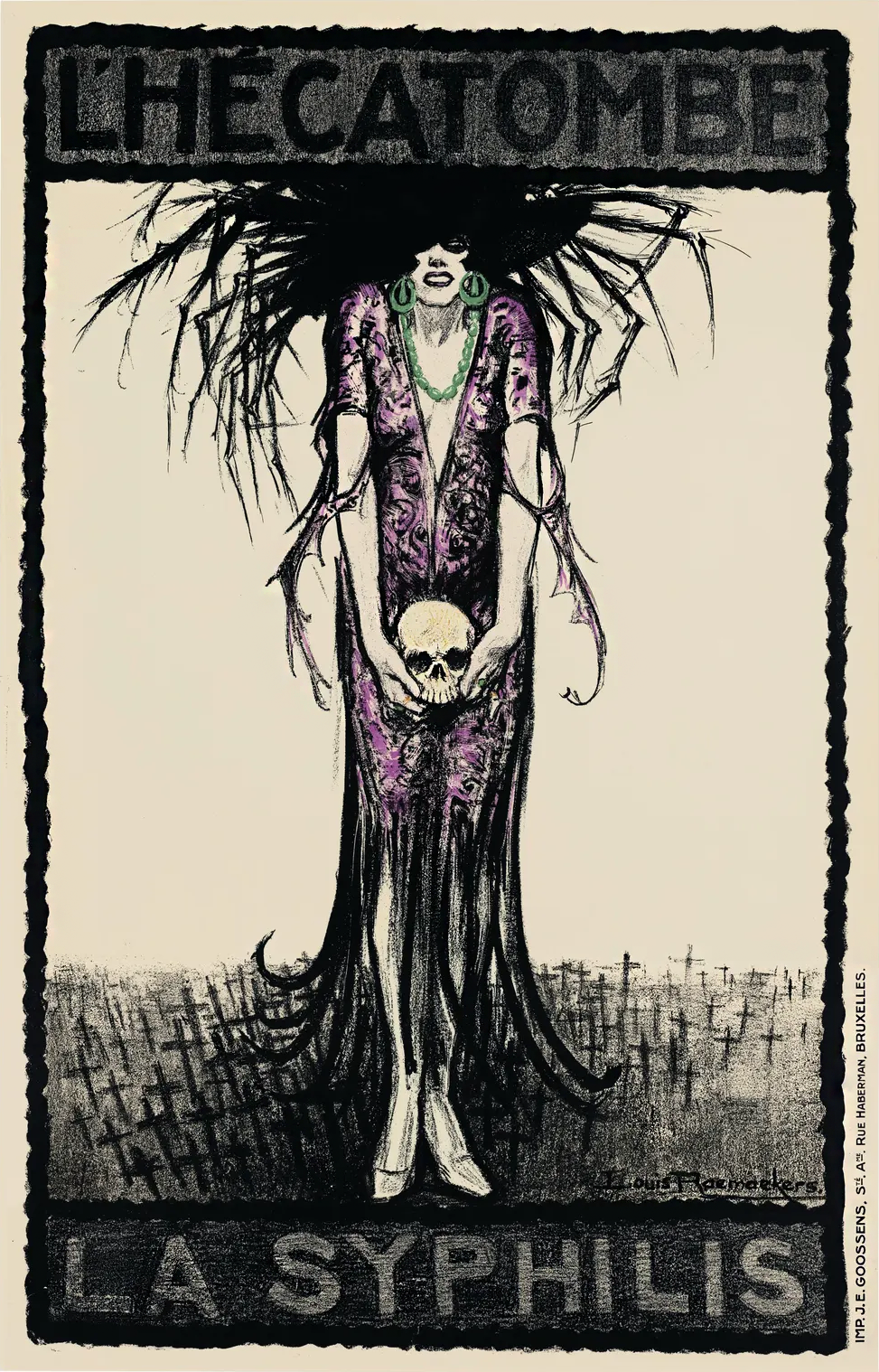
La Syphilis (1910s)

Louis Raemaekers :: L’Hecatombe. La Syphilis. “An image meant to warn Belgian soldiers returning from the front of the dangers of ‘The French Pox’. It depicts a dangerous woman standing both seductively and menacingly in front of a field of graves.” | src The Guardian

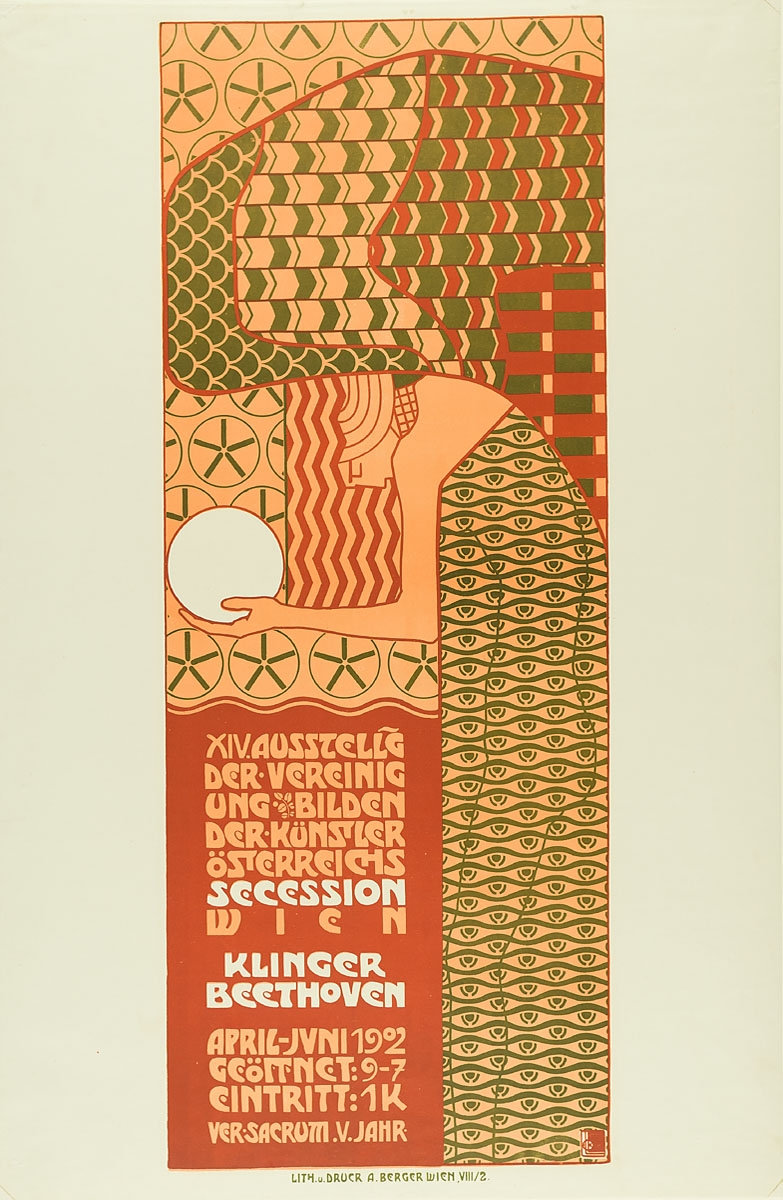
Exhibition of Austrian Visual Artists, 1902


Alfred Roller (1864–1935) :: XIV. Ausstellung der Vereinigung bildender Künstler Österreichs – Secession Wien. Klinger – Beethoven. (1902) | src MK&G ~ Museum für Kunst und Gewerbe (Hamburg)

The Dancer Gertrude Barrison

Fritz Zeymer :: The Dancer Gertrude Barrison (plate 3) from the First Theater Program of Kabarett Fledermaus (Cabaret Fledermaus) 1907. In October 1907, the Wiener Werkstätte opened the nightspot and performing arts space. Designed by Carl Otto Czeschka, this program exemplifies the then-current idea of the Gesamtkunstwerk, or total work of art. | src MoMA