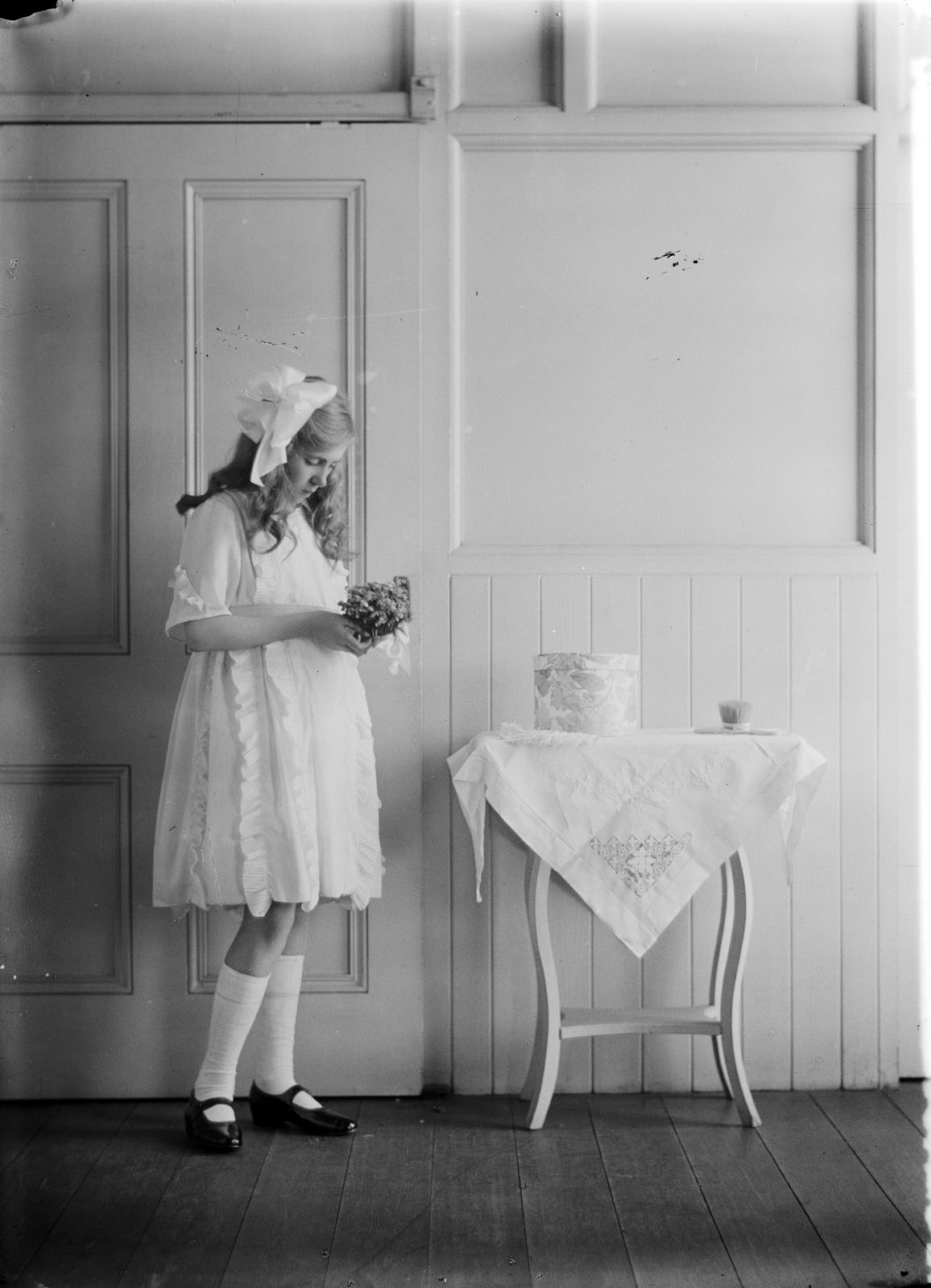
Ruth Hollick was an Australian commercial photographer who became famous for her portraits of children. She worked from about 1910 in Melbourne.
images that haunt us
Ruth Hollick was an Australian commercial photographer who became famous for her portraits of children. She worked from about 1910 in Melbourne.


William Henry Jackson :: Nemo on the Tomoka River, Florida, ca. 1890s. Detroit Publishing Co. Glass negative. | detail from original photograph.
more [+] by this photographer
![Gertrude Käsebier :: Portrait of Evelyn Nesbit (Miss N.). Published in Camera Work, Nº 1, 1903. Portrait of Evelyn Nesbit [three-quarter length portrait, seated, wearing an off-the-shoulder dress], 1902. The Toledo Museum of Art | src NYTimes Lens Journal](https://unregardoblique.com/wp-content/uploads/2018/08/tumblr_pctxijdvx01rp66ruo1_1280.jpg)
![Gertrude Käsebier (1852-1934) :: [Evelyn Nesbit about 1900 at a time when she was brought to the studio by Stanford White] Evelyn Nesbit, three-quarter length portrait, seated, wearing an off-the-shoulder dress. Glass negative. | src Library of Congress](https://live.staticflickr.com/65535/52157663063_19b8a604b3_o.png)
![Gertrude Käsebier (1852–1934) :: Evelyn Nesbit, 1902 [Carbon print?]. | src Princeton University Art Museum](https://live.staticflickr.com/65535/52156641737_cf6781edbc_o.jpg)

![Gertrude Käsebier [Des Moines, Iowa, USA, 1852 - New York, USA, 1934] :: Portrait (Miss N.). From: Camera Work No. 1, January 1903. Date: 1898 (circa) / Printed circa 1903. Technique: Photogravure on Japanese paper. | src Museo de Arte Reina Sofía](https://live.staticflickr.com/65535/52158329585_5d98ae81e4_o.jpg)

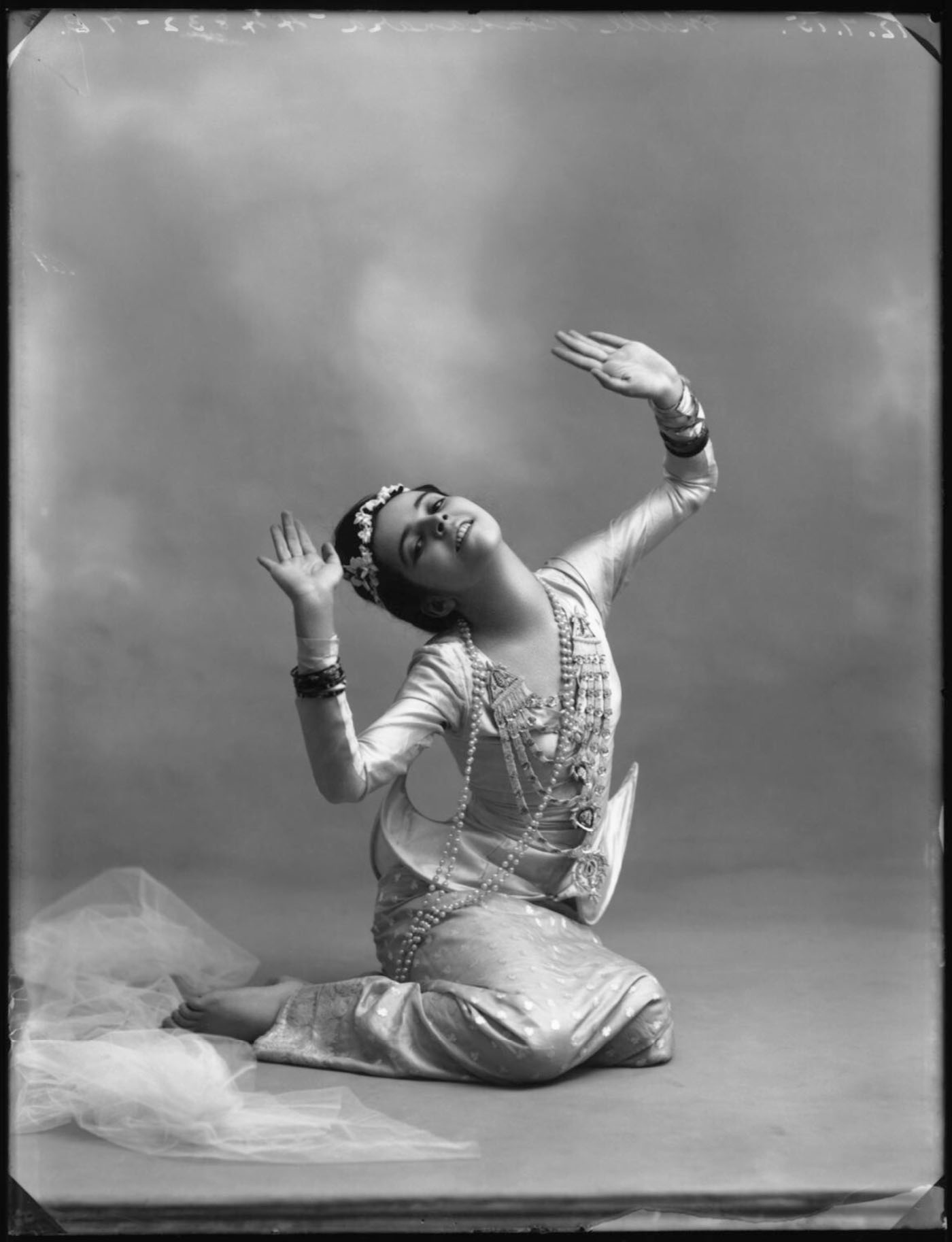

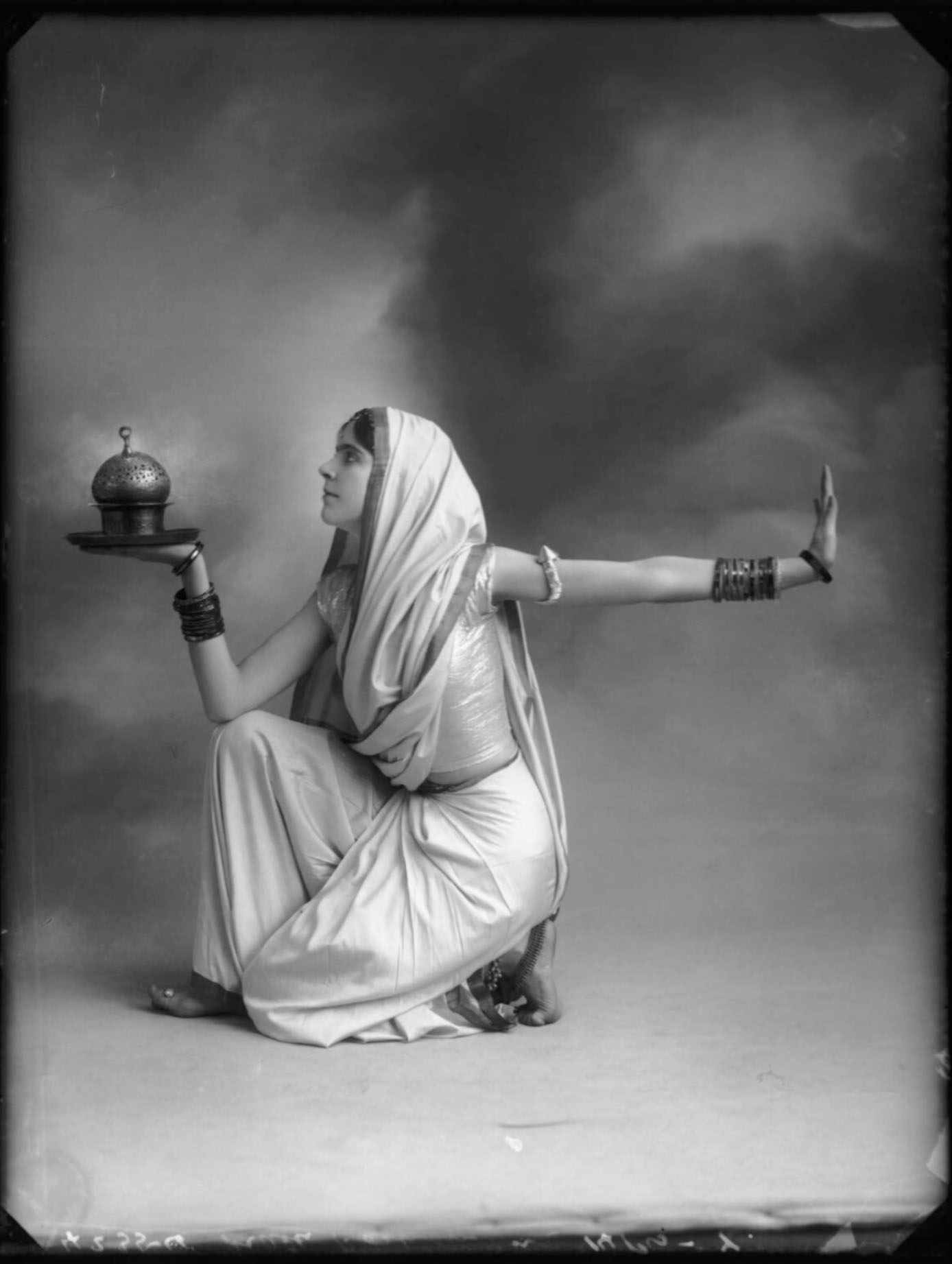

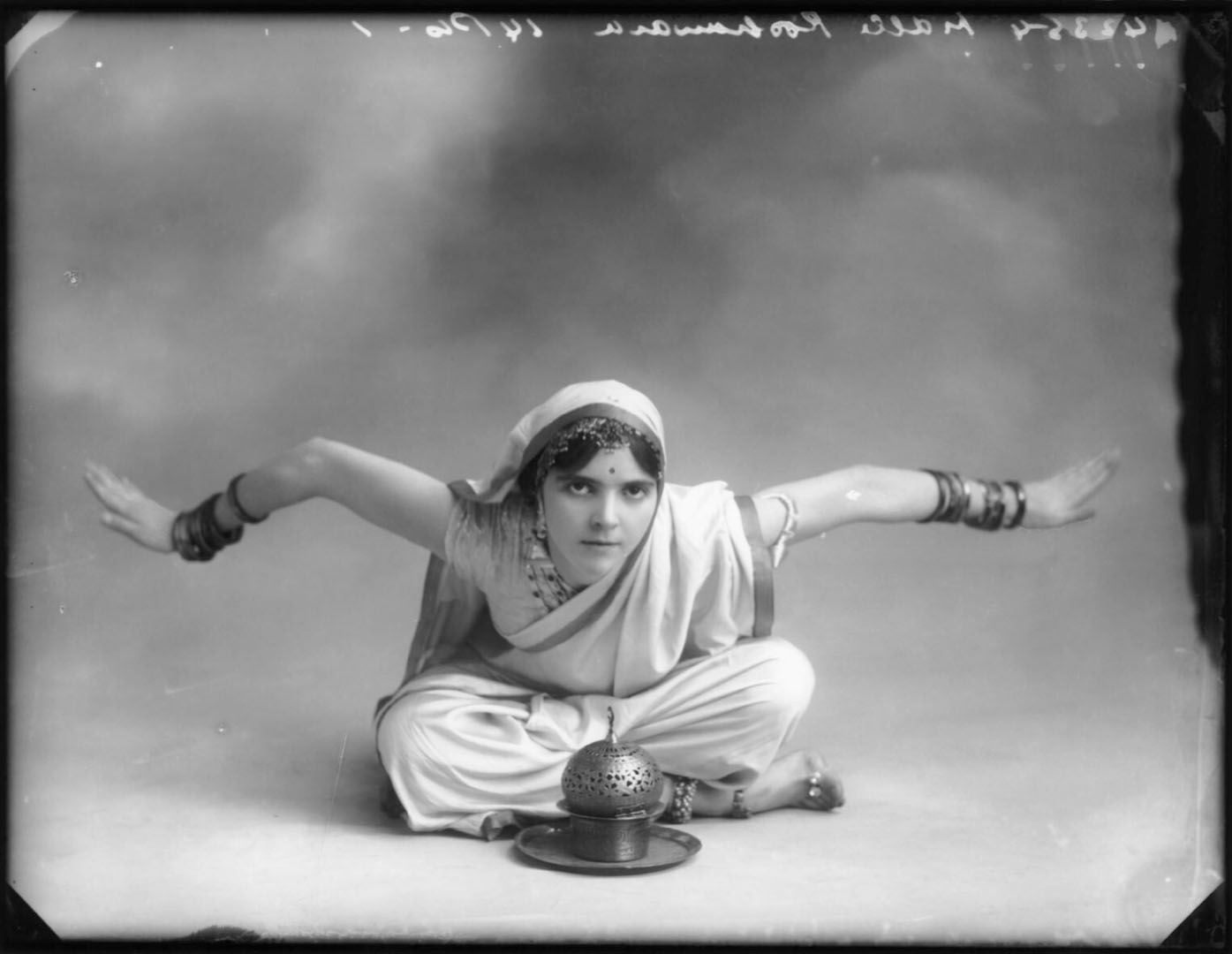
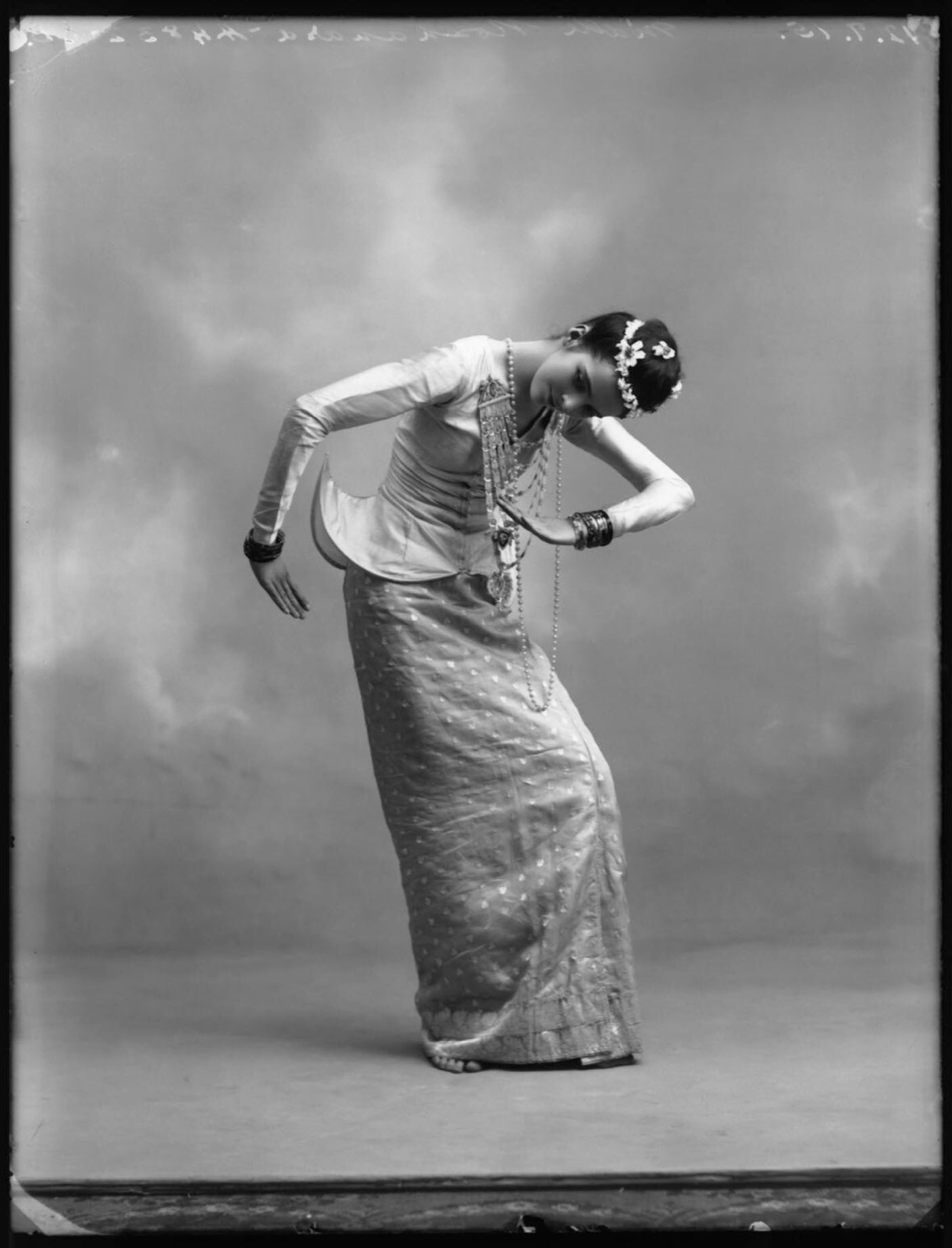
Roshanara occupies a similar position in Britain to that of Ruth St. Denis in the USA, albeit she is far less-widely known. Both aroused an interest in Indian and what was then called oriental dance at a time when there had been little serious study of the art form in Western theatre, although for both theatricality remained more important than authenticity. An important difference from St Denis was that Craddock was born in Calcutta and brought up in India of mixed parentage – an English mother and Anglo-Indian father, of Irish extraction – giving her a serious base rather than fantasy from which to draw her dances. Also, although Roshanara taught, unlike St Denis she never established a formal school to perpetuate her ideas. As Alma Talley wrote in ‘The Story of Roshanara’, The Dance, November 1926, ‘Roshanara has brought to the Western World the spirit of Central India as no one else has ever been able to bring it…India’s dances were a part of her soul. She devoted her life to perfecting them, as an artist in water colors gives years of study to making his art as nearly perfect as perfection is humanly possible’.
Once Craddock had chosen a performing career she adopted the name of a Mughal princess (1617-1671), reputed to have been the first to travel outside her own country. The name means ‘Light-Adorning’. In about 1909 Craddock travelled to Europe with her mother and appears to have worked briefly with Loie Fuller before, in 1911, having studied with Tórtola Valencia, she appeared as the Almah in Kismet at the Garrick Theatre. In 1911 (14, 18, 21, 25m November & 5 December) she appeared five times as Zobeide in Schéhérazade for the Ballets Russes at the Covent Garden, London.
In 1912 Roshanara had a season at the Palace Theatre, London, and in the autumn had a speciality spot on Anna Pavlova’s British regional tour, presenting her Incense, Village and Snake dances. In 1913 Roshanara danced at the Tivoli, London, and in July-August 1914 appeared for two weeks at the London Coliseum. She periodically returned to India to dance. By 1916 she was dancing in the USA where she gave numerous recitals, appeared in productions, danced with Adolph Bolm’s multi-cultural Ballets Intimes and taught. (Bette Davis was for a time one of her pupils). Her life and work are documented in ‘Roshanara “Secrets of Oriental Grace”’, Dance Lovers Magazine, February 1925, pp.35, 36, 66 and substantial obituary articles by Talley: ‘The Story of Roshanara A Short Biography of That Great Englishwoman Who Brought the Art of the Orient to the Eyes of the Western World’, The Dance, November 1926, pp.10-13, 51; and ‘Always a Wanderer, She Brought the Rich Beauty of Oriental Art to Many Lands’, The Dance, December 1926, pp.41, 42, 50. (text : V&A museum)


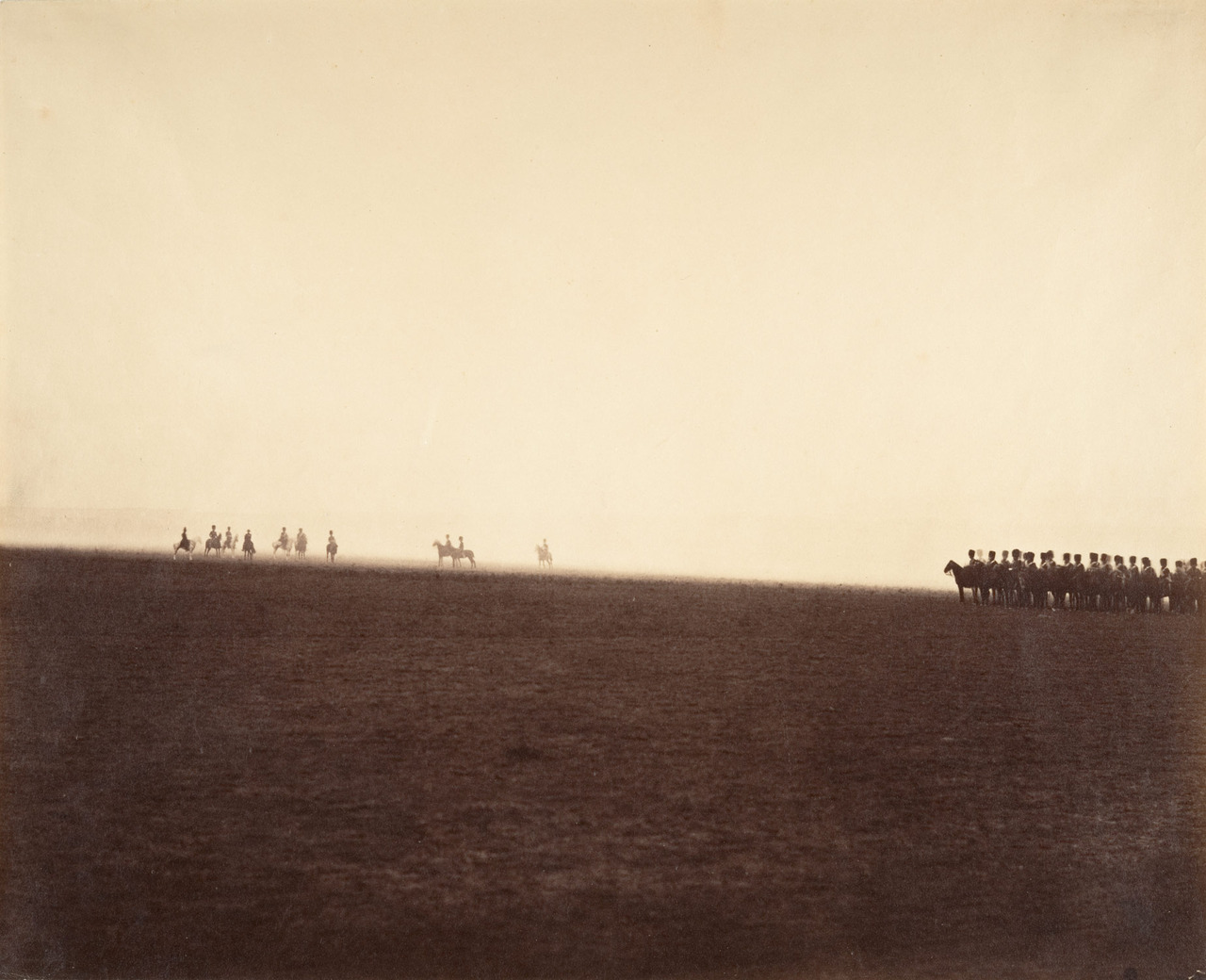
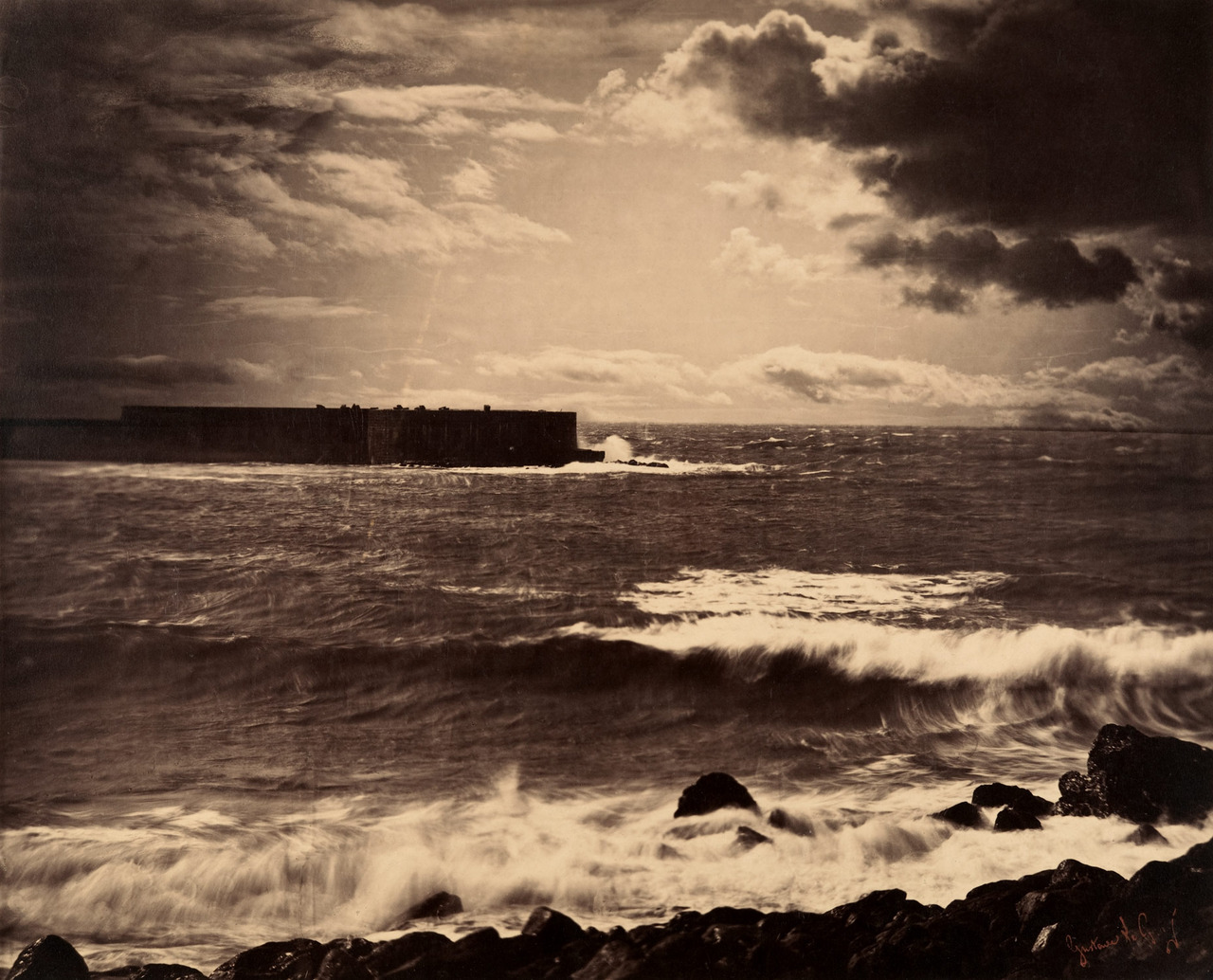
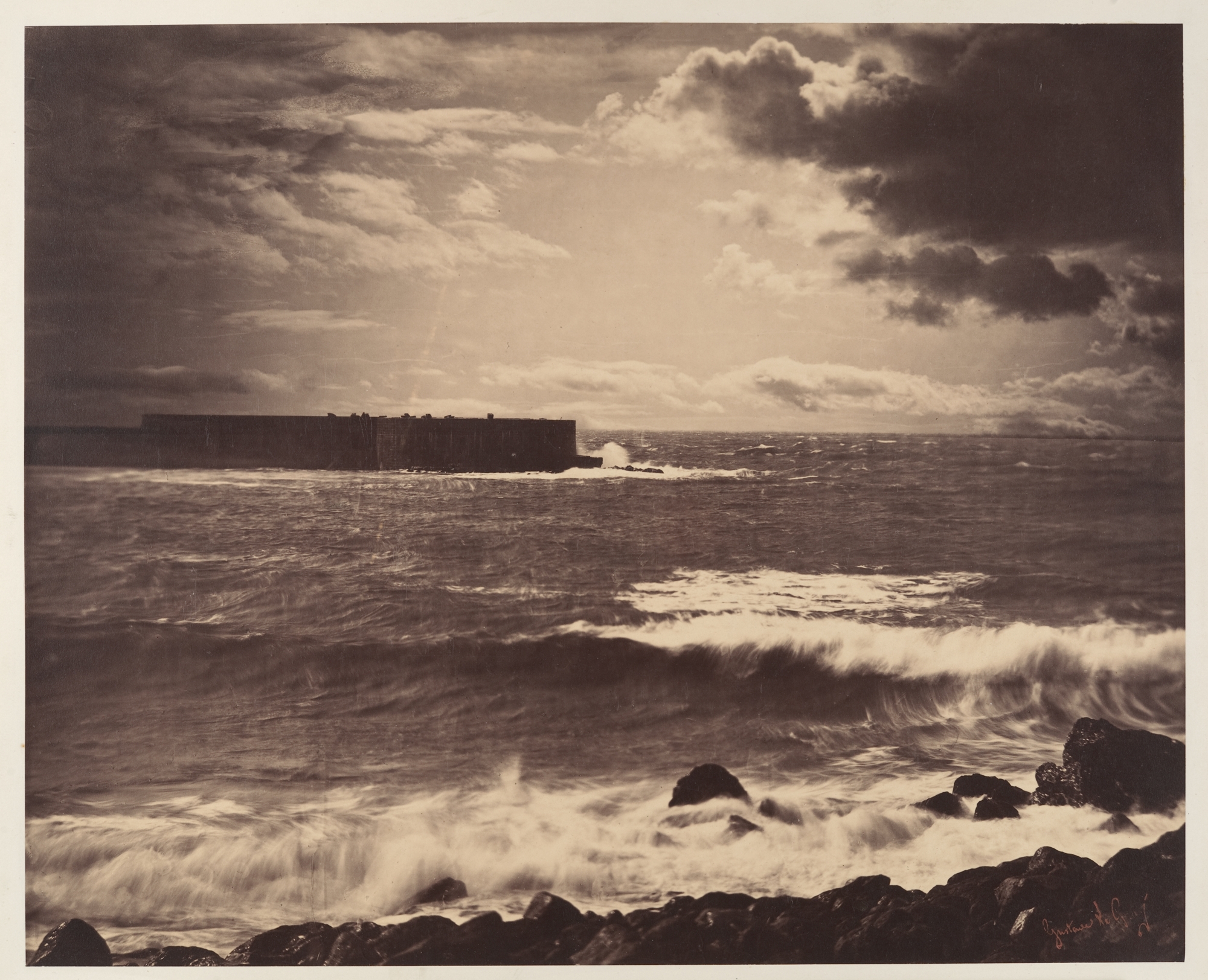
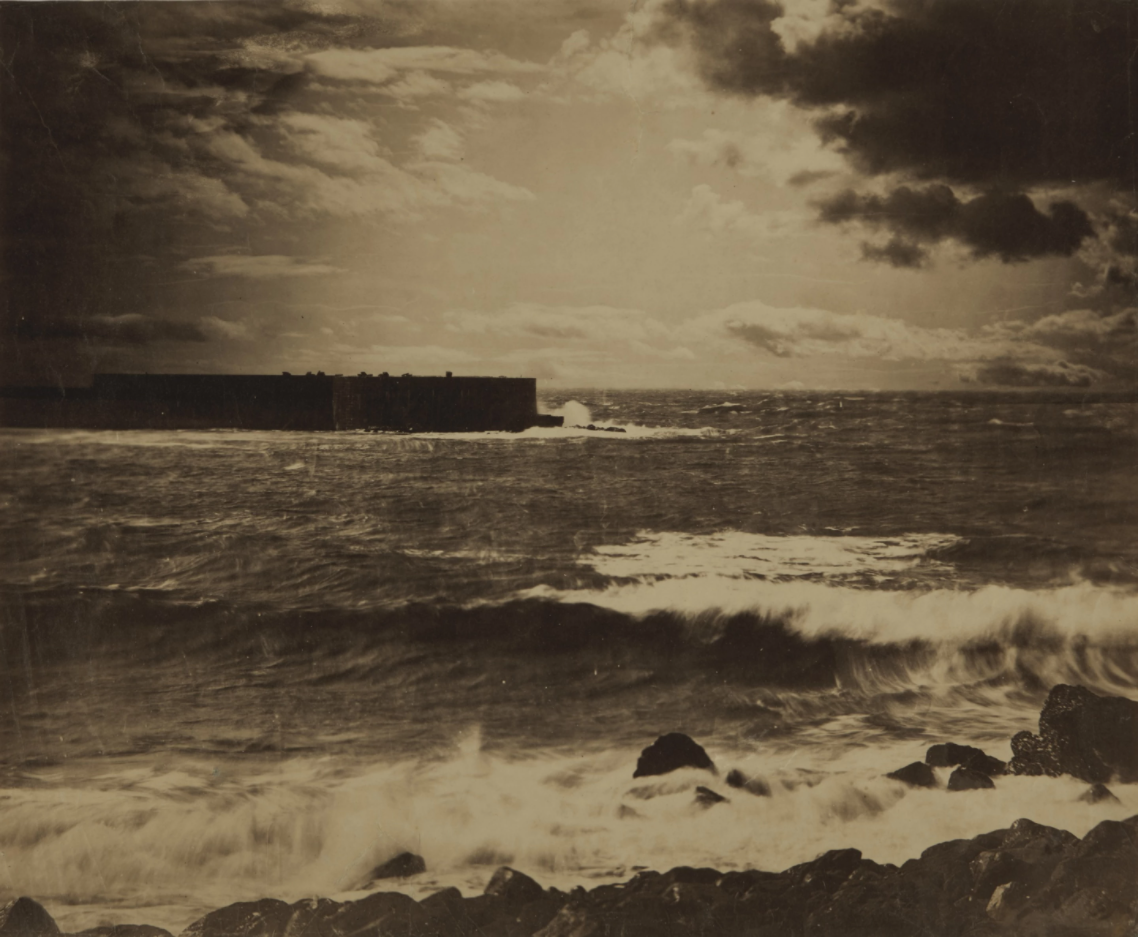
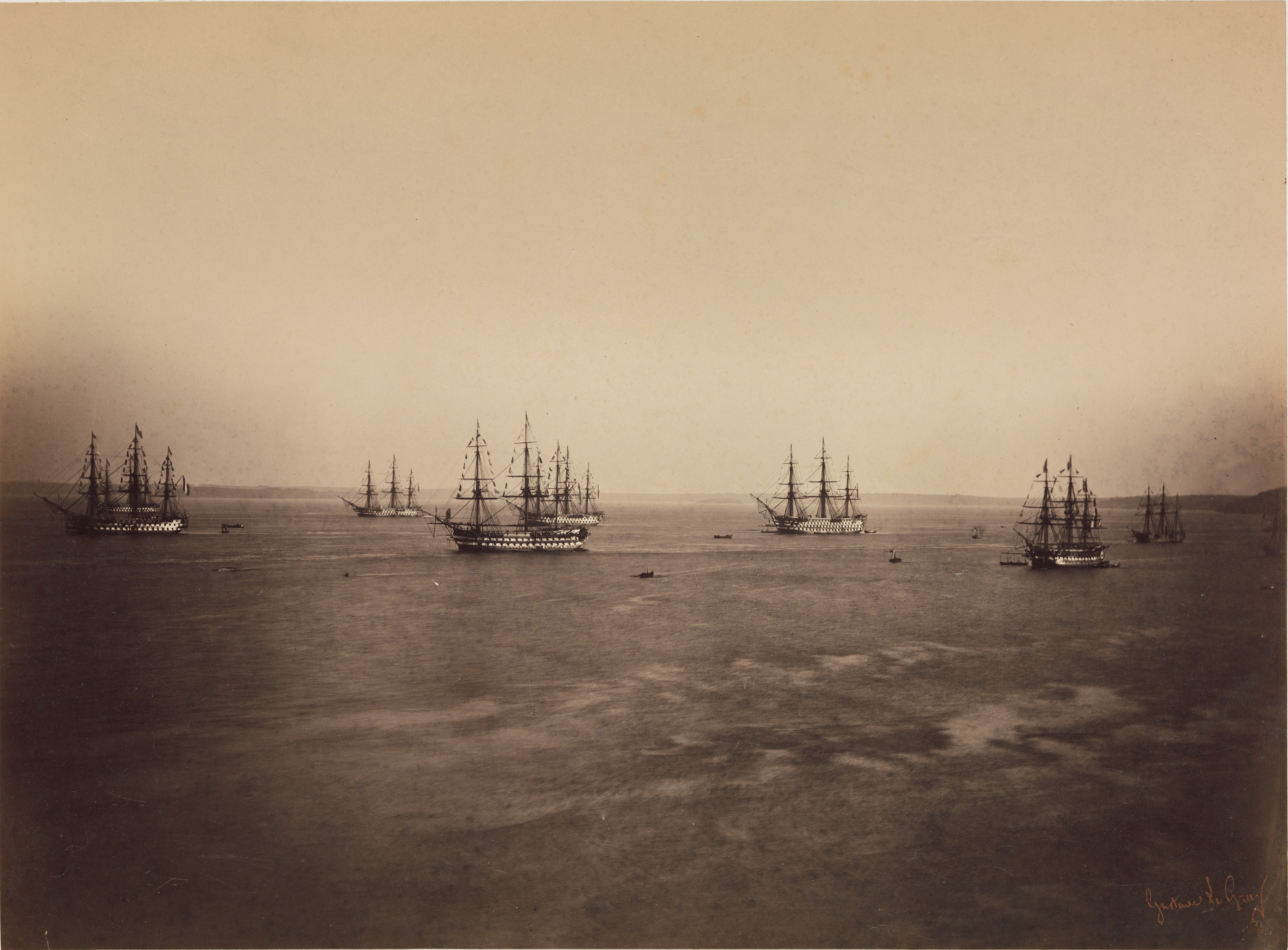
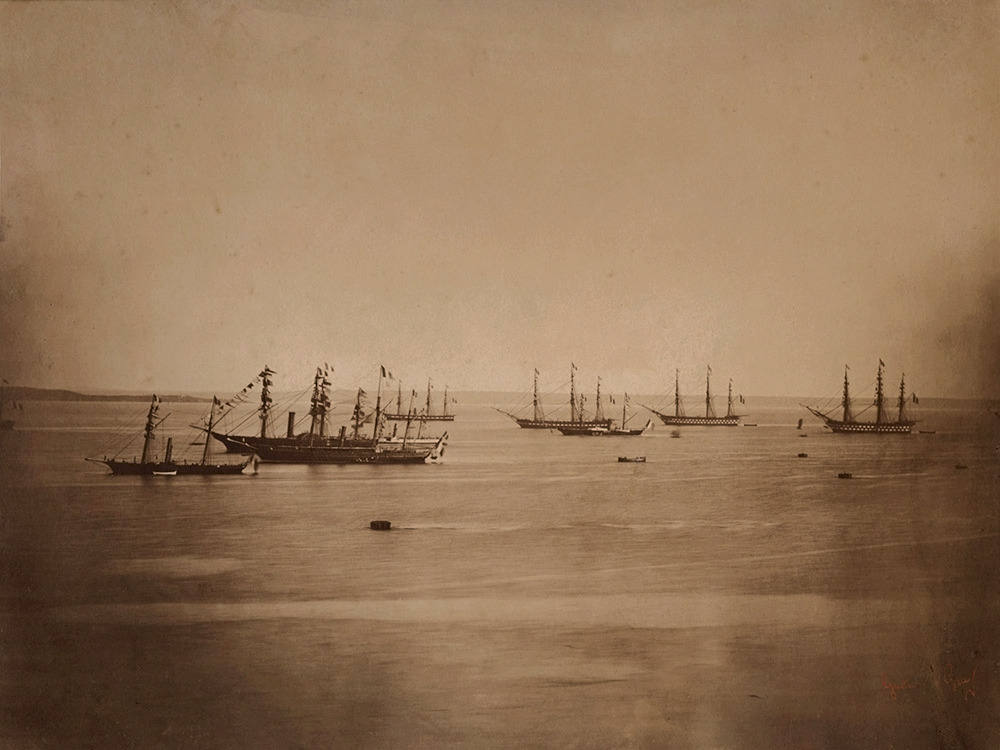
The dramatic effects of sunlight, clouds, and water in Le Gray’s seascapes stunned his contemporaries and immediately brought him international recognition. At a time when photographic emulsions were not equally sensitive to all colors of the spectrum, most photographers found it impossible to achieve proper exposure of both landscape and sky in a single picture. Le Gray solved this problem by printing two negatives on a single sheet of paper: one exposed for the sea, the other for the sky, and sometimes made on separate occasions or in different locations. Le Gray’s marine pictures caused a sensation not only because their simultaneous depiction of sea and heavens represented a technical tour de force, but also because the resulting poetic effect was without precedent in photography. / quoted from The Metropolitan Museum of Art.
 un regard oblique