La fille aux cheveux de lin (1930s)

laure albin guillot la fille aux cheveux de lin preludes de claude debussy
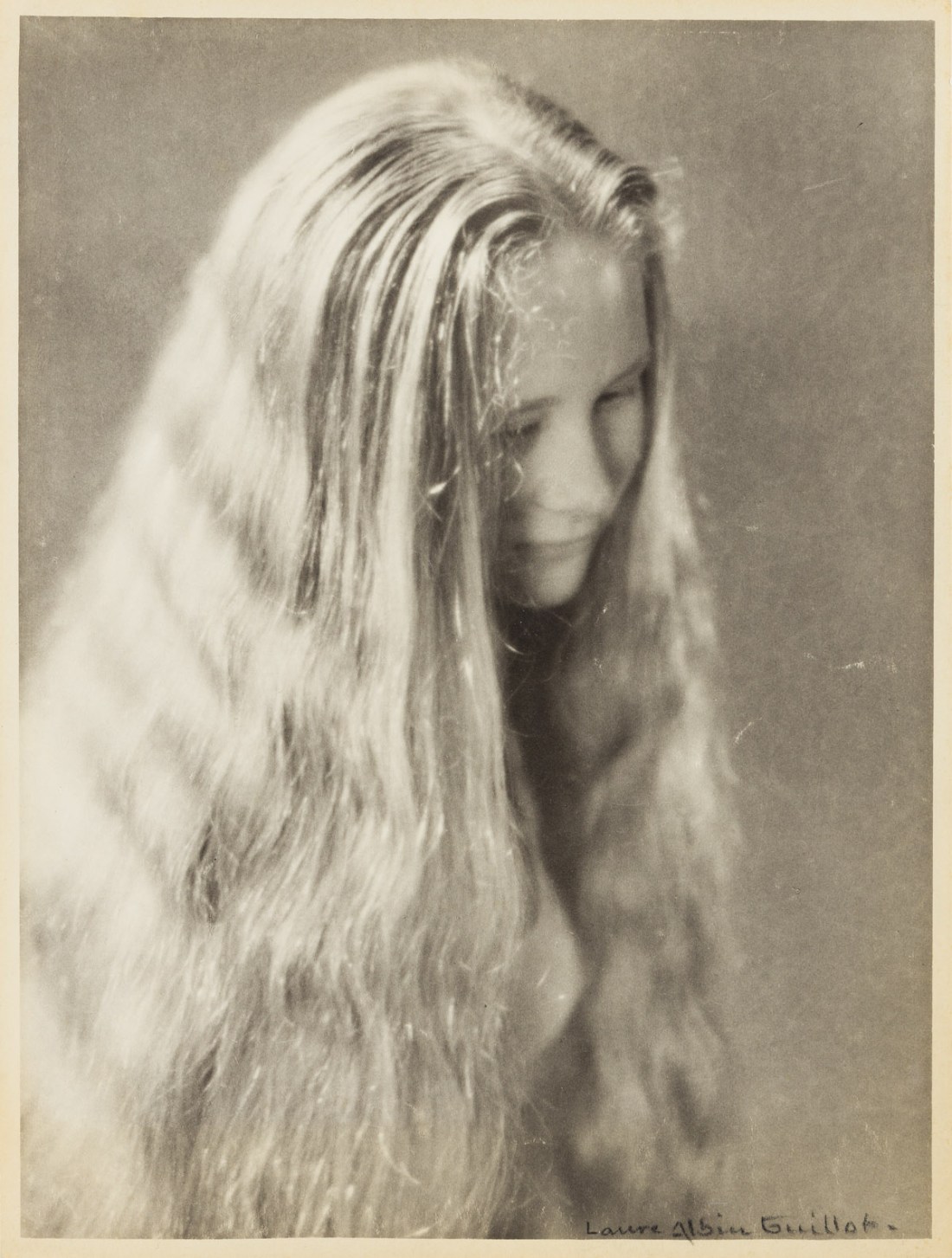
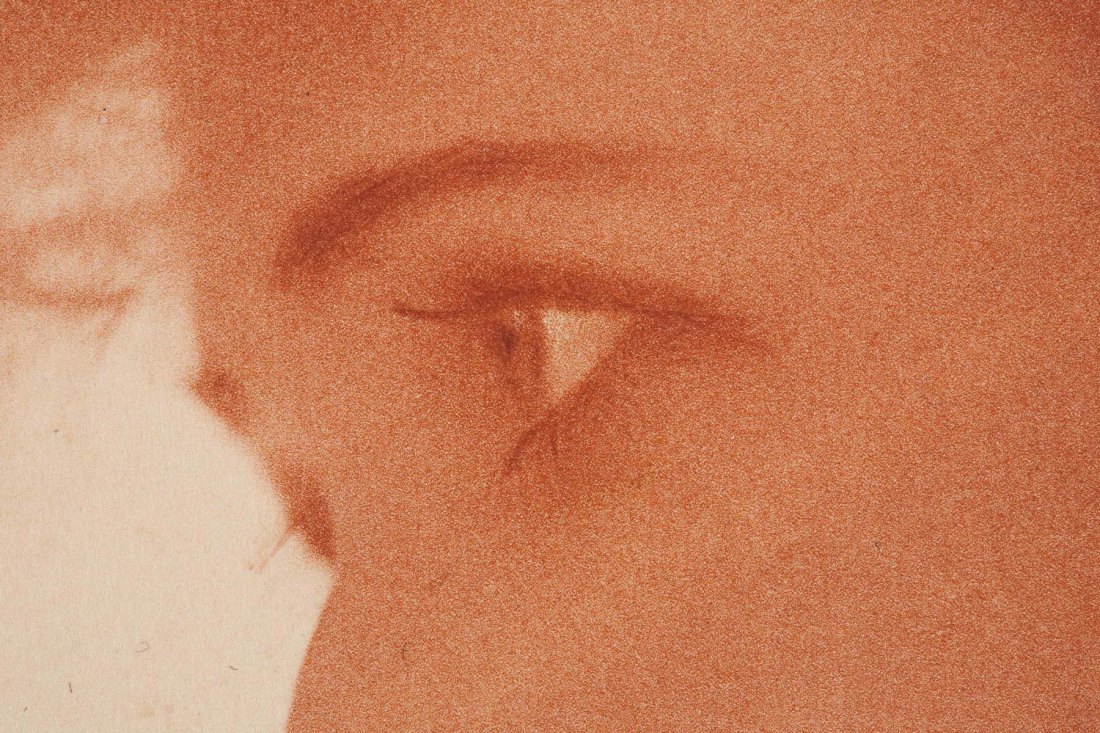
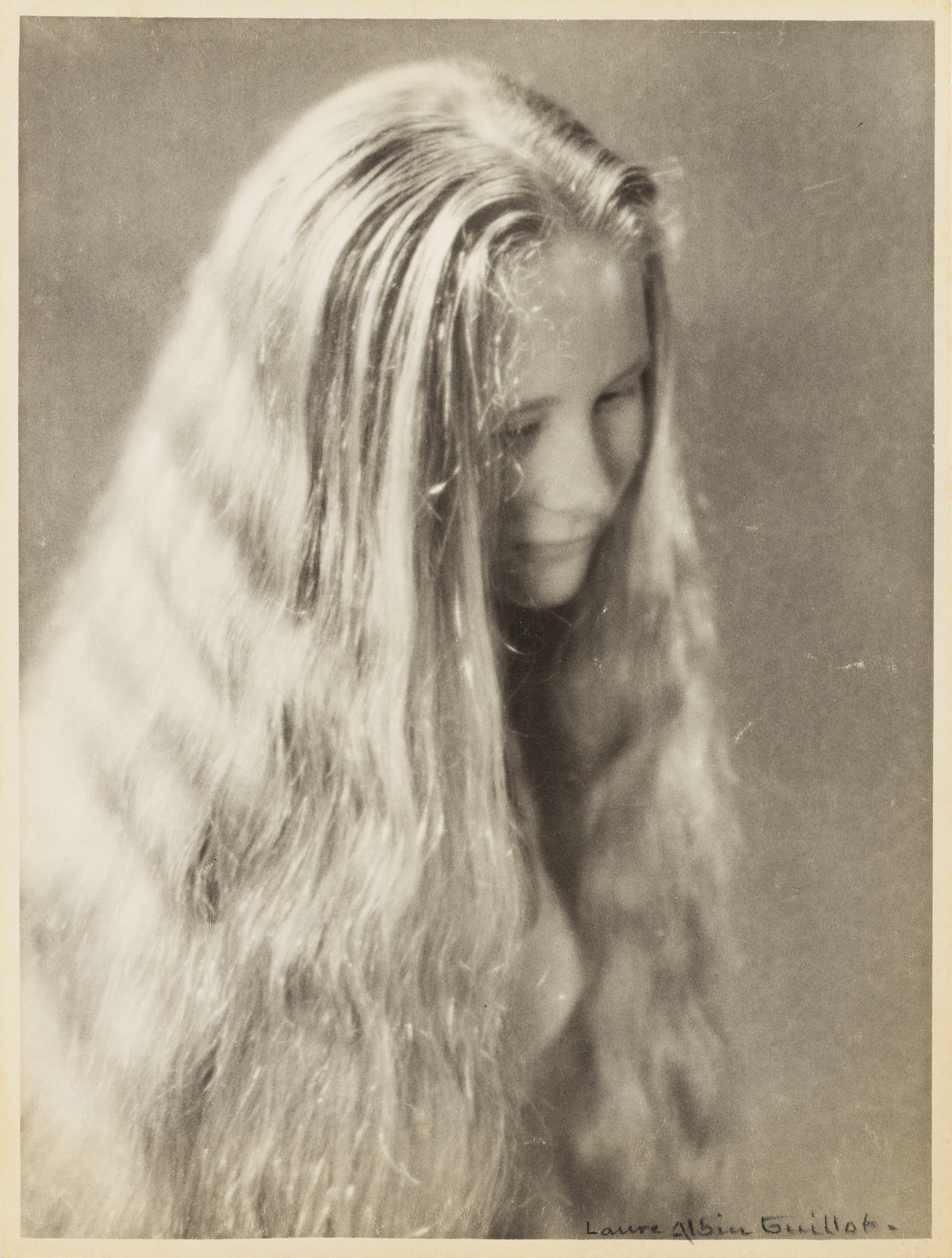
 Laure Albin-Guillot (1879-1962) :: Portrait of a Woman. Fresson print, with Albin-Guillot's signature, in black pencil, on recto, and an inventory number, in pencil, in an unknown hand, on verso. Circa 1930. Illustration for the Préludes by Claude Debussy. An exhibit titled "Laure Albin-Guillot: Fresson Prints" was held at Zabriskie Gallery, New York in 1994, where this was shown. | src Swann Galleries
Laure Albin-Guillot (1879-1962) :: Portrait of a Woman. Fresson print, with Albin-Guillot’s signature, in black pencil, on recto, and an inventory number, in pencil, in an unknown hand, on verso. Circa 1930. Illustration for the Préludes by Claude Debussy. An exhibit titled “Laure Albin-Guillot: Fresson Prints” was held at Zabriskie Gallery, New York in 1994, where this was shown. | src Swann Galleries
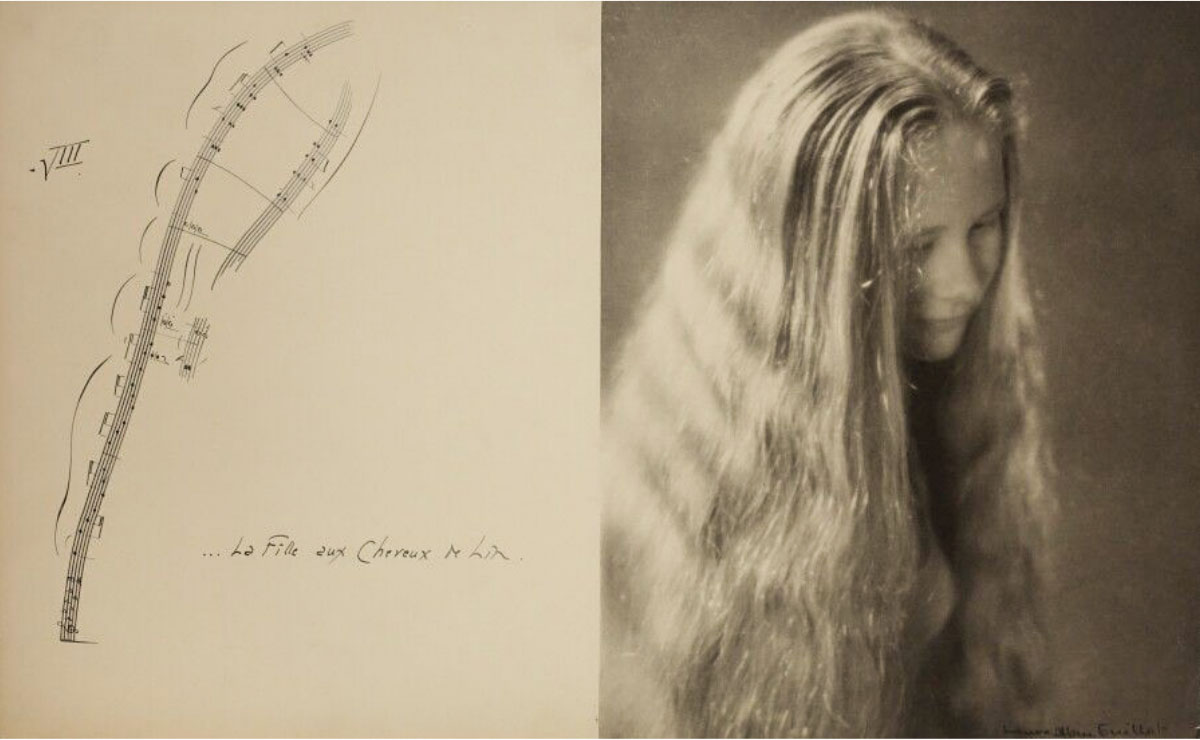
Laure Albin-Guillot :: La fille aux cheveux de lin, 1948, tirage au charbon. À gauche se trouvent dessinées les notes introductives et le titre du Prélude illustré; à droite, le tirage au charbon illustratif. Au recto, à l'intérieur de la page double, à gauche, portée calligraphiée avec la mention "Très calme et doucement expressif"; au recto, à l'intérieur de la page double, à gauche, titre calligraphié: "La Fille aux Cheveux de Lin". Cet ensemble constitue la huitième des 23 illustrations du port-folio intitulé Illustrations pour les Préludes de Claude Debussy. | src Musée français de la Photographie
Laure Albin-Guillot :: La fille aux cheveux de lin, 1948, tirage au charbon. À gauche se trouvent dessinées les notes introductives et le titre du Prélude illustré; à droite, le tirage au charbon illustratif. Au recto, à l’intérieur de la page double, à gauche, portée calligraphiée avec la mention “Très calme et doucement expressif”; au recto, à l’intérieur de la page double, à gauche, titre calligraphié: “La Fille aux Cheveux de Lin”. Cet ensemble constitue la huitième des 23 illustrations du port-folio intitulé Illustrations pour les Préludes de Claude Debussy. | src Musée français de la Photographie

Albin-Guillot nude study, ca. 1930

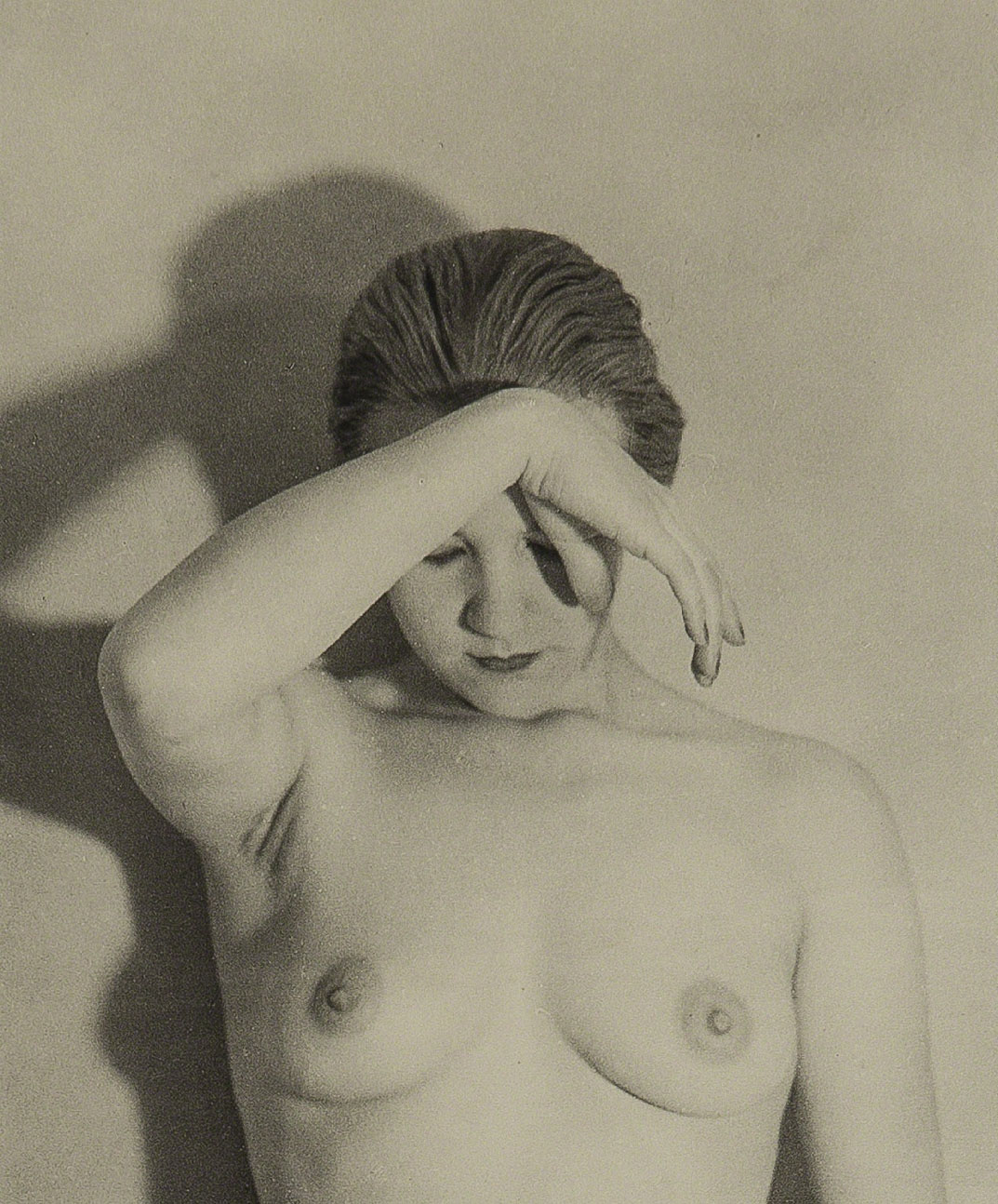
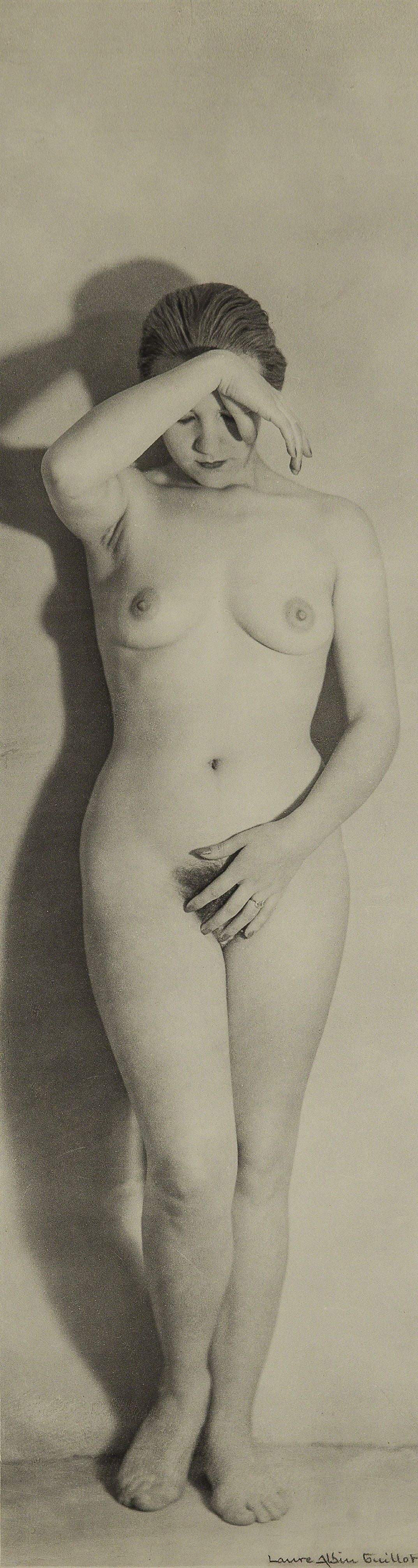
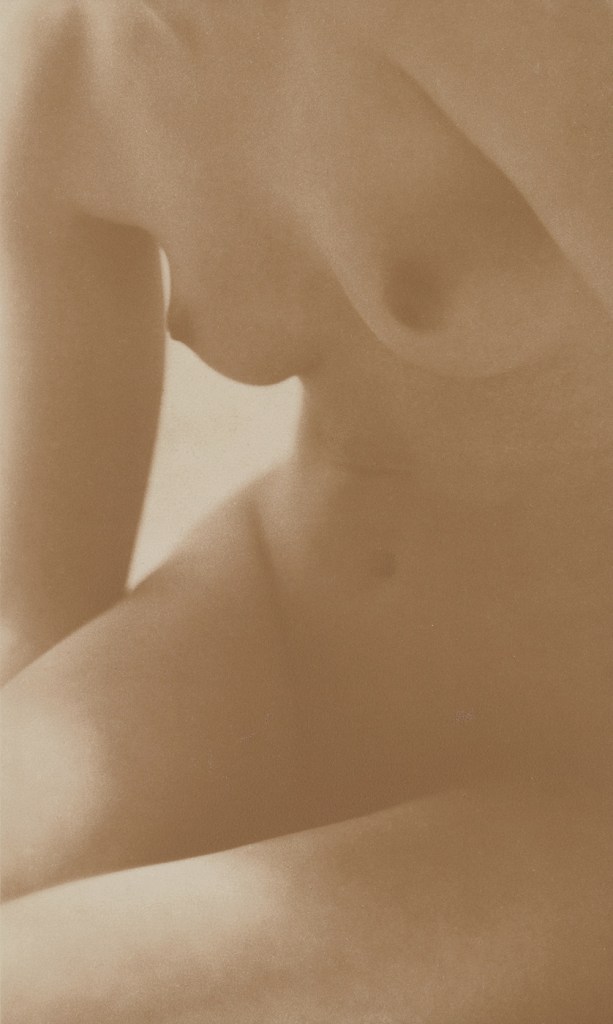
Laure Albin-Guillot :: Untitled (nude study), circa 1930. Fresson print, flush-mounted to paper. | src Phillips auctions

Etudes de Fleurs ca. 1930

Laure Albin-Guillot :: Étude de fleurs [with stem] [magnolias (?)], ca. 1930. Vintage Fresson print. | src Seagrave Gallery
Laure Albin-Guillot :: Étude de Fleurs [water lilies (?)], ca. 1930. Vintage Fresson print. | src Seagrave Gallery

by Philiberte de Flaugergues

Due to the reticulation pattern of the image, Fresson prints will often appear grainy. While image grain is visible in this print, it has a particularly fine-grain image, which the photographer controlled during development. The image texture is also somewhat affected by the texture of the paper. Fresson papers were available in a variety of textures and paper weights. Smoother papers gave a smoother texture to the image. Paul Anderson, an early twentieth century photographer, claimed that a Fresson print on a smooth paper could have a texture as fine as a palladium print.
The image tone of this print is reddish-brown. Notice Fresson prints have a characteristic velvety appearance to the deep shadows. Although black was the most commonly used color, Fresson papers came in a wide variety of colors and different intensities of color. Direct carbon (Fresson) prints consist of pigment suspended in a colloid—likely gelatin. Like other carbon prints, they typically exhibit no image fading.
Fresson papers are technically a direct carbon process. Carbon prints are based on the light sensitivity of dichromated gelatin tissue which hardens when exposed to light (shadows) and remains soluble in unexposed areas (highlights). The mid-tones become partially soluble with the hardened gelatin on top and the soluble gelatin underneath. Before development, the tissue was transferred to another support so that the soluble gelatin in the mid-tones was on top and could be washed away. Without the transfer step, the print would have high contrast with poor mid-tones.
In the late nineteenth century there was an interest in producing a carbon printing paper that did not require cumbersome transferring of the carbon tissue for development, but still gave good mid-tones. Fresson (direct carbon) paper
The surface sheen of direct carbon is typically matte.| src Graphics Atlas guided tour
A varnish would have been applied to the binder side of the negative to give the surface tooth to accept the graphite of the retouching pencil. | src Graphics Atlas guided tour
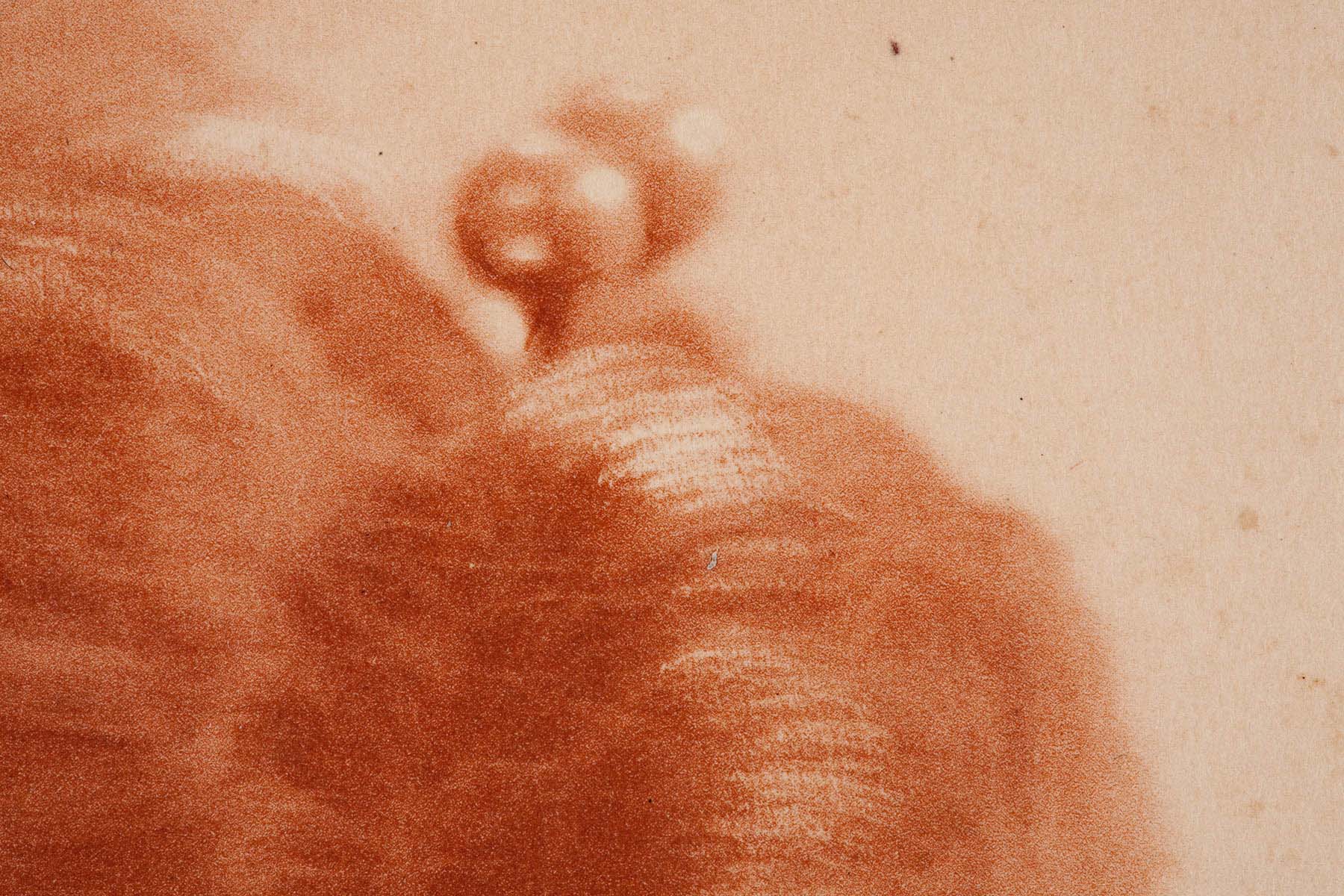
Notice the highlights in the model’s hair have a sketched quality. This is due to retouching on the negative. A varnish would have been applied to the binder side of the negative to give the surface tooth to accept the graphite of the retouching pencil. This was used to add density to the negative, which in turn adds a highlight to the print.
src Graphics Atlas guided tour
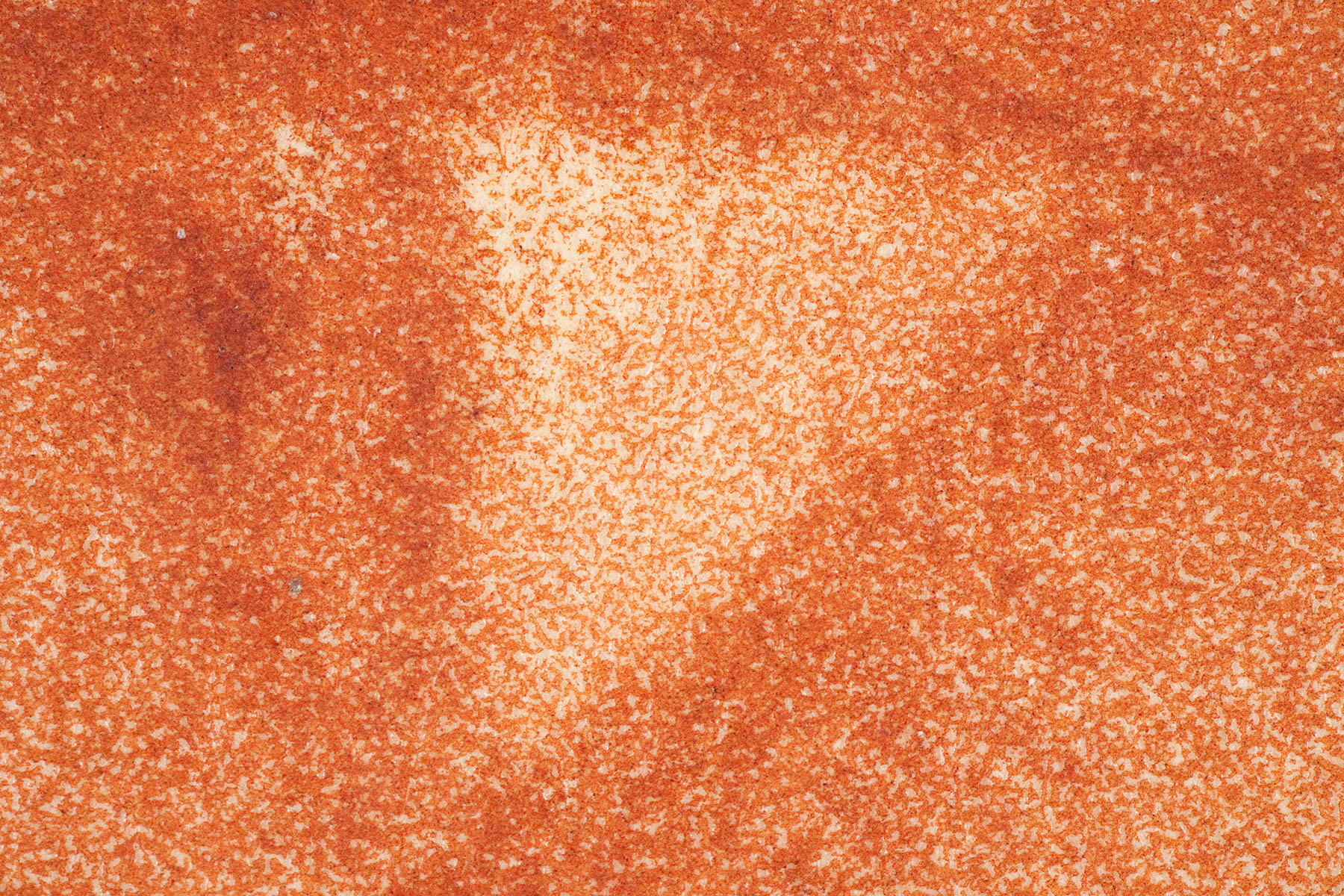
Notice the distinctive reticulation pattern exhibited by this process. This particular print has a rather fine-grain appearance with a small reticulation pattern. The graininess of the print could be controlled during development. The print was placed on a metal plate at an angle and a slurry of sawdust and water was repeatedly poured over the surface, which gradually eroded the soluble portions of the pigmented colloid. To achieve a finer grain, the support angle could be lowered and the sawdust slurry thinned.
Due to the proprietary nature of the process, it is not known why or how the reticulation pattern was formed. It is similar to the pattern seen in the collotype process, but appears more spindly and random.
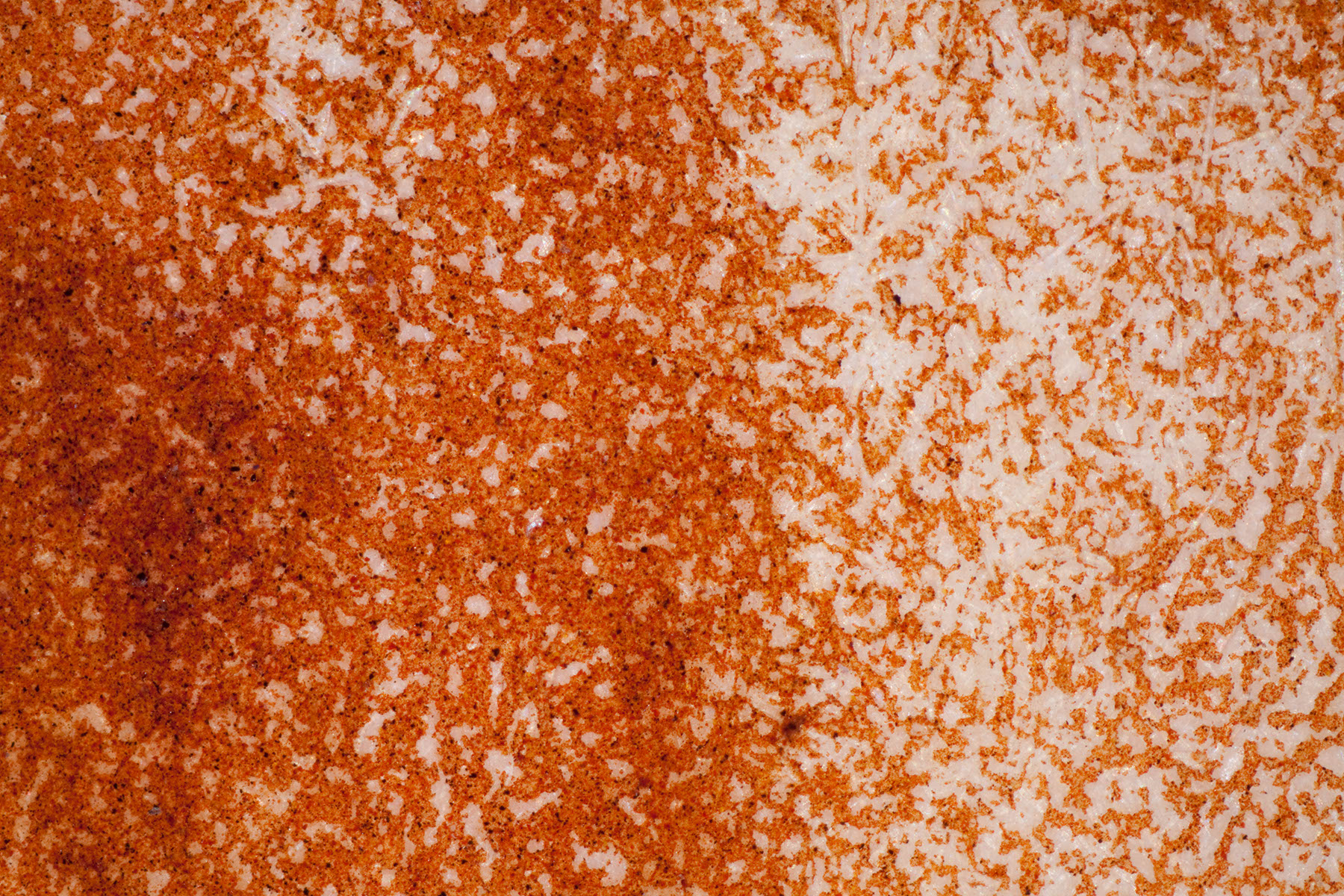
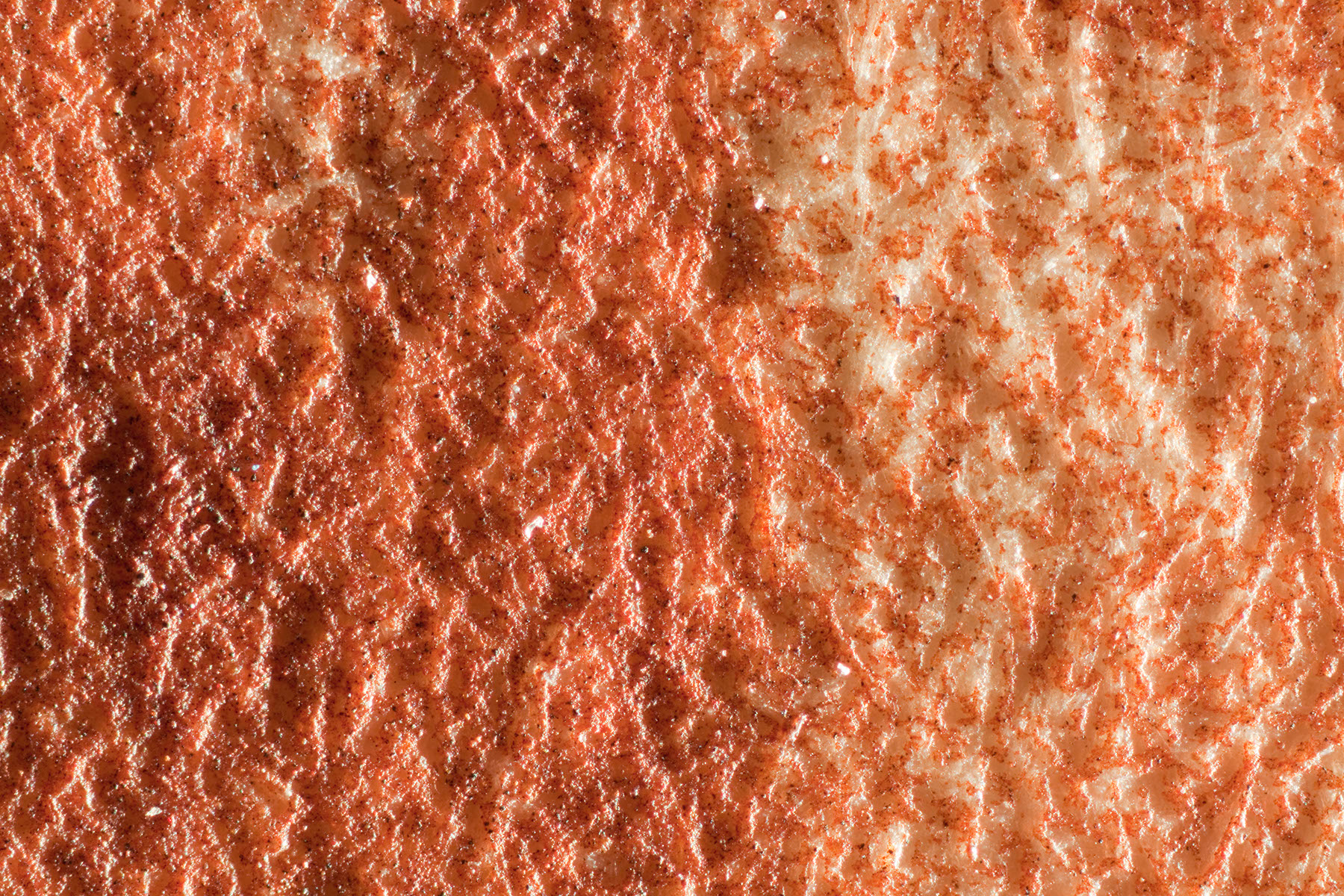
Fresson prints, like carbon, consist of pigment suspended in gelatin. Notice the pigment particles are visible under magnification.
The paper fibers are visible in the highlights, but the thickness of the binder obscures the paper fibers in the shadows. Direct carbon is a dichromated colloid process; the binder is thicker in the shadows and thin or absent in the highlights.
This photograph, in addition to being signed by Philiberte de Flaugergues, shows the negative number in the lower right corner in white. It was common for commercial photographers to have a numbering, or cataloging system for their negatives. | src Graphics Atlas
Using raking light the reticulated binder has a slight relief. Direct carbon, like carbon, is based on the light sensitivity of a dichromated colloid, which hardens under exposure to light but remains soluble in the unexposed areas. During development the unexposed, soluble colloid is washed away. This likely explains the presence of relief although it is not known why or how the reticulation pattern was formed.
src Graphics Atlas guided tour

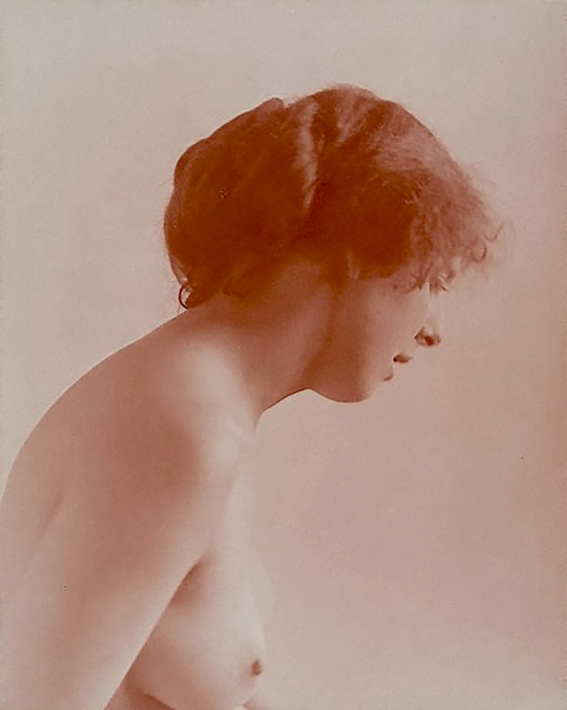
Philiberte de Flaugergues, a largely forgotten French photographer working from the 1920s to the 40s. She was one of the few women photographers to professionally work as a fashion photographer. She also photographed female nudes, which have been described as surrealist-influenced and sensual. (Direct carbon. Fresson, red pigment). | src Graphics Atlas

Nu féminin allongé, 1945

Laure Albin-Guillot (1879-1962) :: Nu féminin allongé, 1945 | Lying nude, 1945. Fresson print, signed and dated in pencil in lower right corner. | src Ader auctions

Vase aux Iris et Orchidées

irises or orchids
Laure Albin-Guillot (1879-1962) :: Vase aux Iris | Vase with Iris, 1938 | src tout ceci est magnifique
Laure Albin-Guillot (1879-1962) :: Vase aux orchidées (*), 1938. Épreuve au charbon, tirage Fresson, signée et datée au recto, inscription manuscrite « New York expo Art décoratif français » au verso | src Piasa auction Dec. 2016 (lot 11)

(*) Note: not orchids but irises; vase with irises. Unless they were a variety of orchids that look very much like irises. If anybody happen to have the knowledge to disambiguate, please drop a line below. Thank you!

Laure Albin-Guillot :: Orchidées 1927. Carbon Fresson print, on metalised golden paper. | src Luminous Lint LL/50901
Laure Albin-Guillot :: Orchidées, 1927. Carbon Fresson print, on metalised golden paper. Auctioned at Sotheby’s May 2013 PF 1310 Lot 79. | src Luminous Lint : LL/50901

“Le sujet le plus banal, quelques fleurs dans un vase par exemple, devient nouveau par la façon dont les lumières y sont groupées et par l’extrème variété des valeurs. (…) Pour donner plus de richesse à ses compositions, l’auteur [Laure Albin Guillot] les a tirées sur fond or selon un procédé dont elle a le brevet.”
Jean Gallotti, ‘La photographie est-elle un art? Laure Albin-Guyot [sic!]’, dans L’art vivant, No. 99, 1er février 1929, p. 138. [Quoted from Sotheby’s]