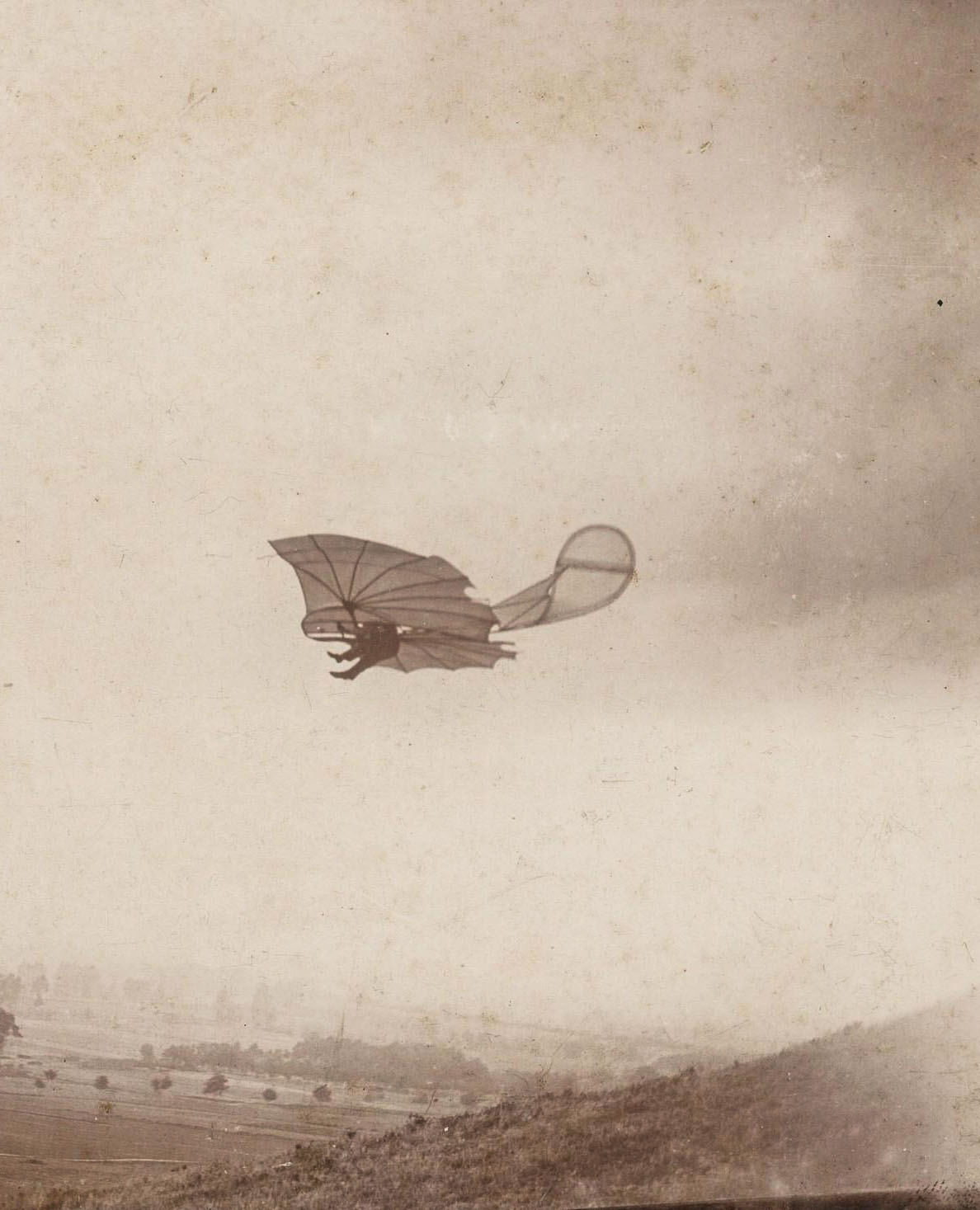
Otto Lilienthal gliding near Berlin

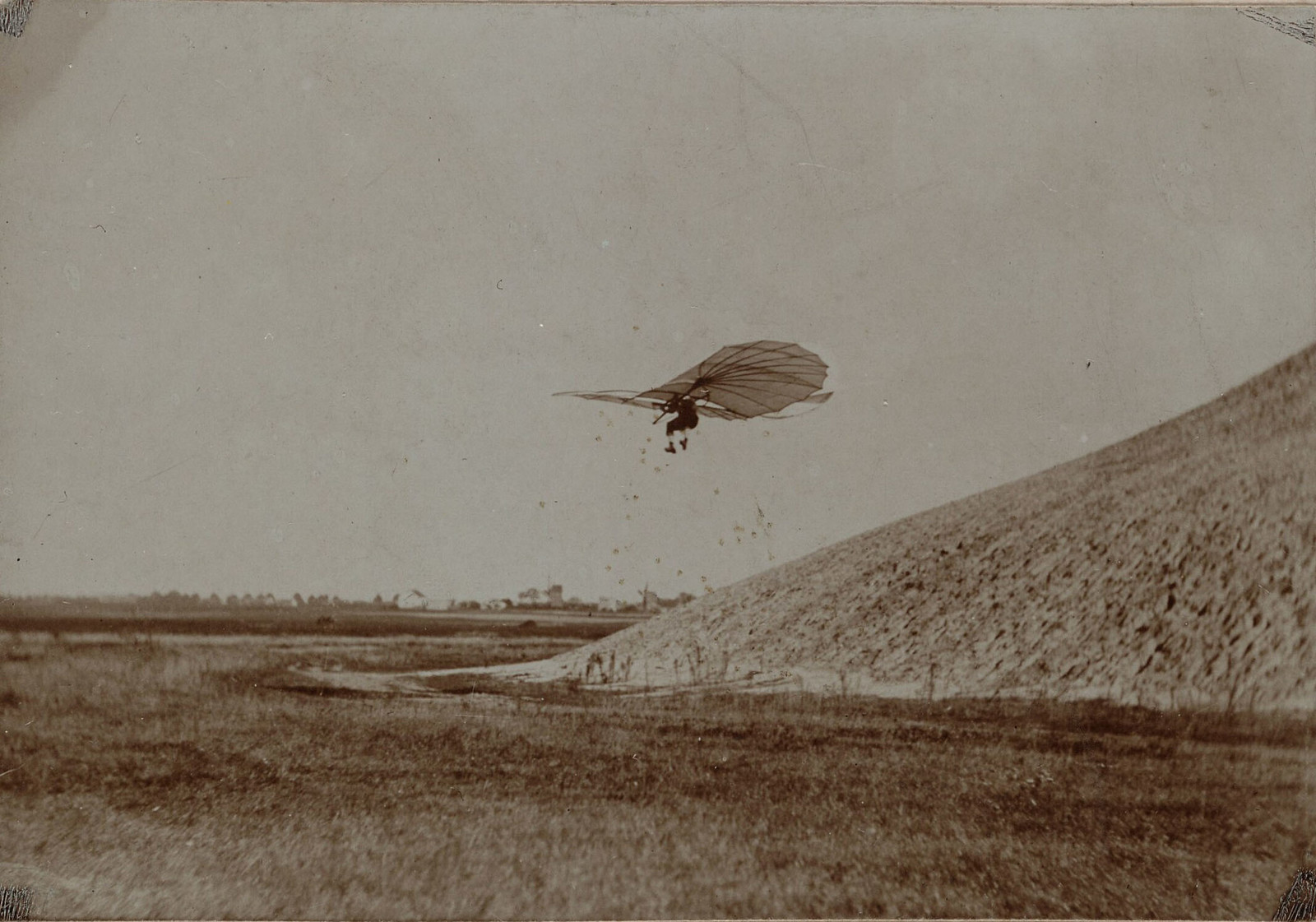
Detail from : Otto Lilienthal flying one of his gliding planes near Berlin, 1893. Photo by Alex Krajewski
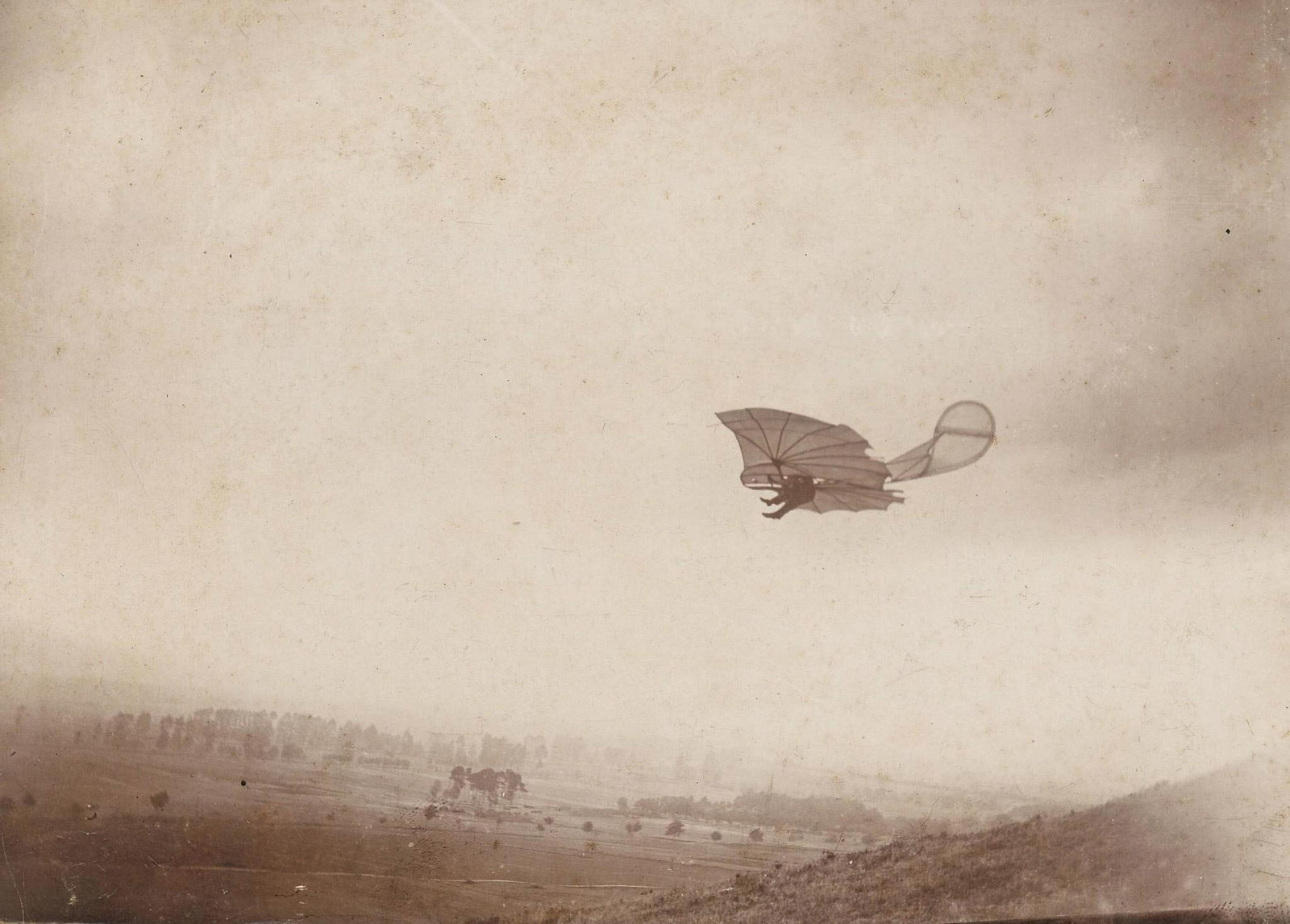
Alex Krajewski ~ Otto Lilienthal flying one of his gliders near Berlin, Rhinower Berge, 1893. Collodion print | src Galerie Bassenge Auktion 123

Alex Krajewski (Court photographer of Prince Aribert von Anhalt, active in Berlin, 1890s). Otto Lilienthal flying one of his gliding planes near Berlin, Rhinower Berge, Germany, 1893. Vintage collodion paper print. Mounted to original ornamental board

The evolution of photography and aviation shares interesting similarities. In 1884, Ottomar Anschütz began capturing images of storks in flight, marking the first momentary snapshots in the history of photography. By 1890, he developed the “Tachyscope,” displaying sequential images of people and animals in motion, which gained popularity at the 1893 Chicago World’s Fair, highlighting advancements in transportation and industry through widely distributed photographs. In 1891, Otto Lilienthal initiated his flight experiments, lasting five years until his unfortunate death in 1896, due to a flight accident. During this period, photographers such as Ottomar Anschütz, Carl Kassner, Richard Neuhauss, and Alex Krajewski documented Lilienthal’s flights near Berlin. These images often circulated as photo postcards and served as crucial documentation for Lilienthal. Unfortunately, the glass negatives of Lilienthal’s photographs, archived in the Deutsches Museum in Munich, were destroyed during WWII. This particular image, part of a series by Alex Krajewski capturing Lilienthal’s flights in the Rhinow Hills near Berlin, is exceptionally rare, with only eight images from this series preserved in the photo archives of the Otto Lilienthal Museum in Anklam. (source: Bassenge Auktion 123)
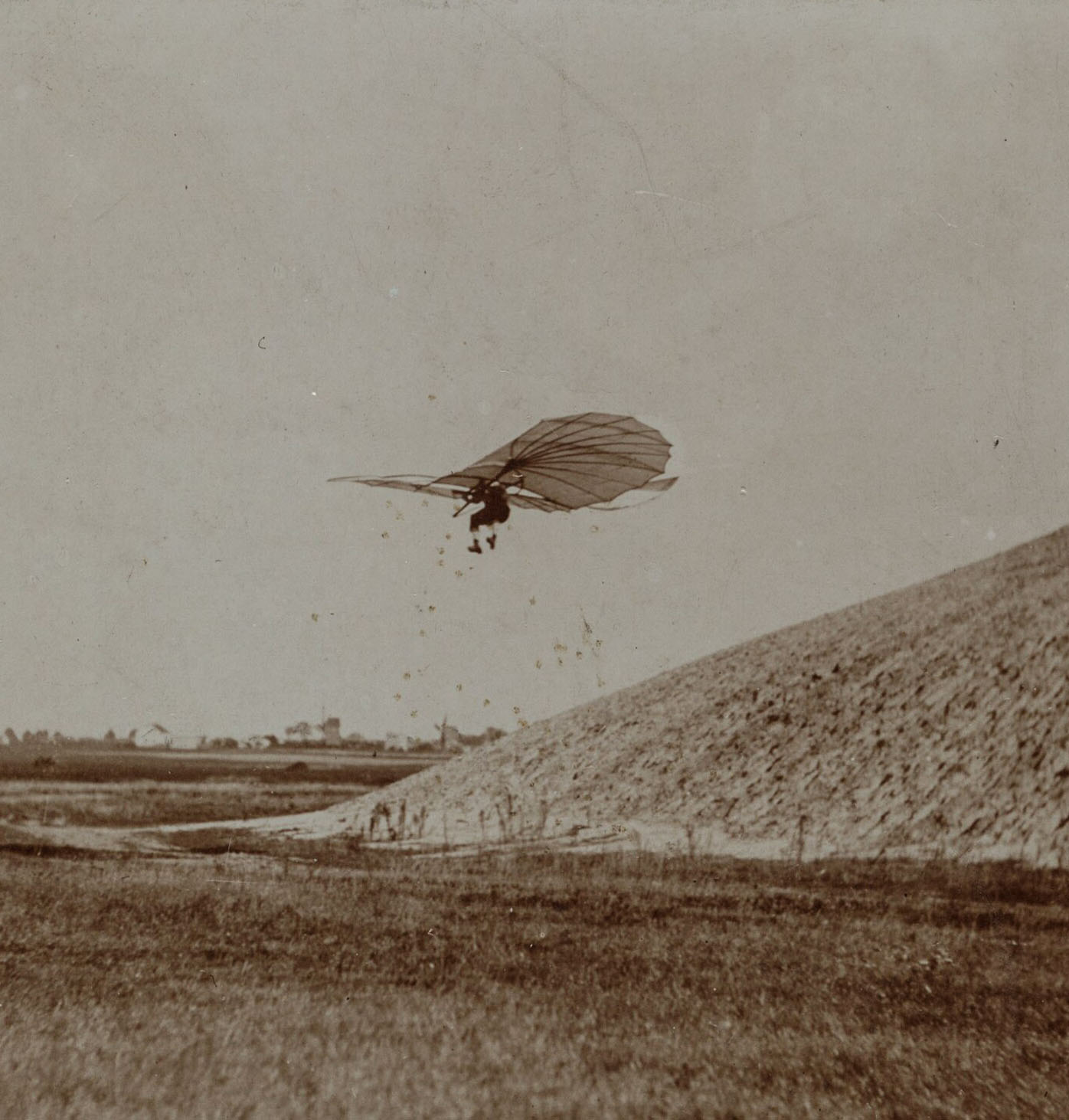
Detail from : Otto Lilienthal gliding experiment, [1895?] | src Library of Congress
Otto Lilienthal gliding experiment, [1895?]. Unknown / unidentified photographer | src Library of Congress
Flug Otto Lilienthals mit seinem Normalsegelapparat am Fliegeberg in Lichterfelde bei Berlin, 1894 | src wikimedia

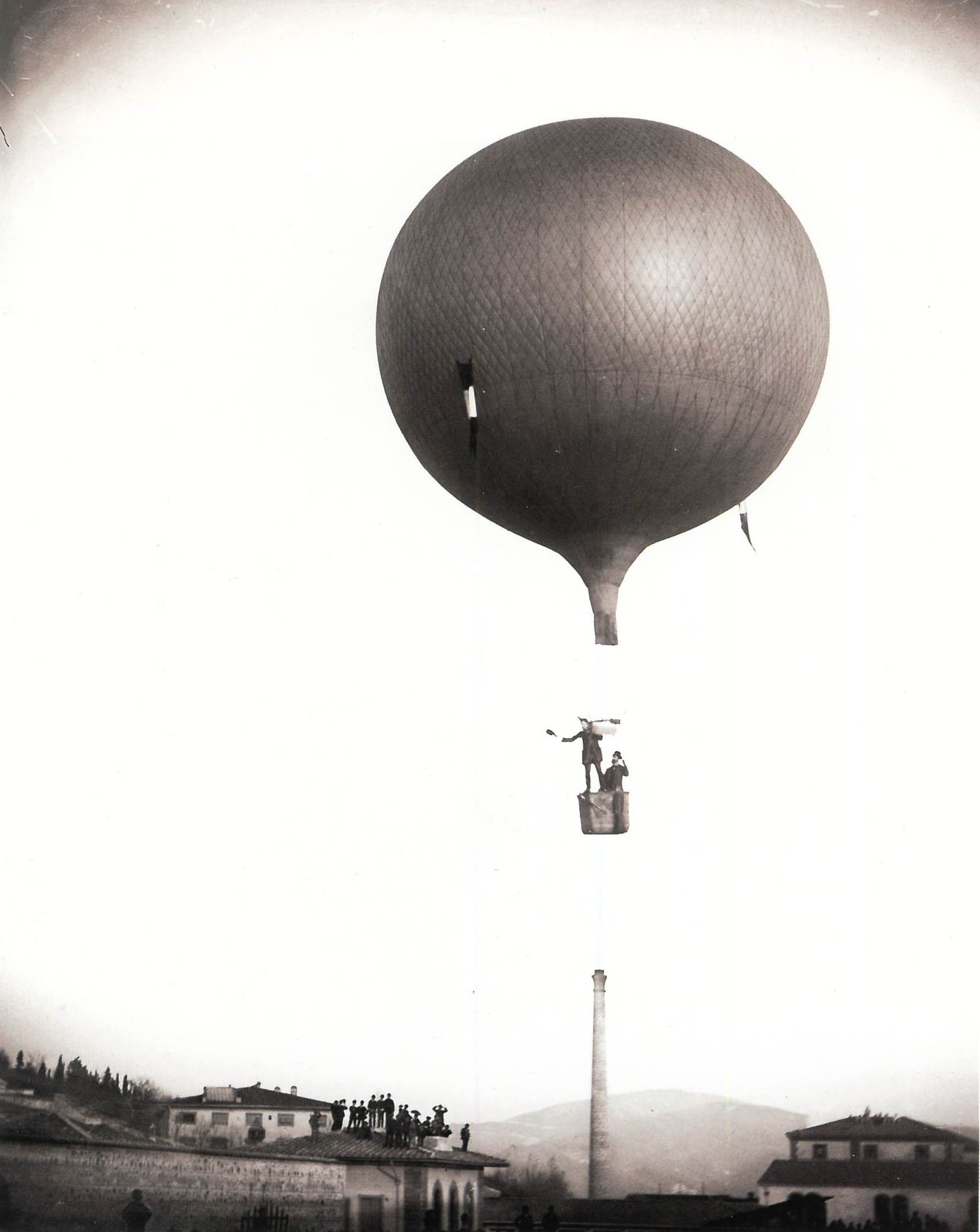
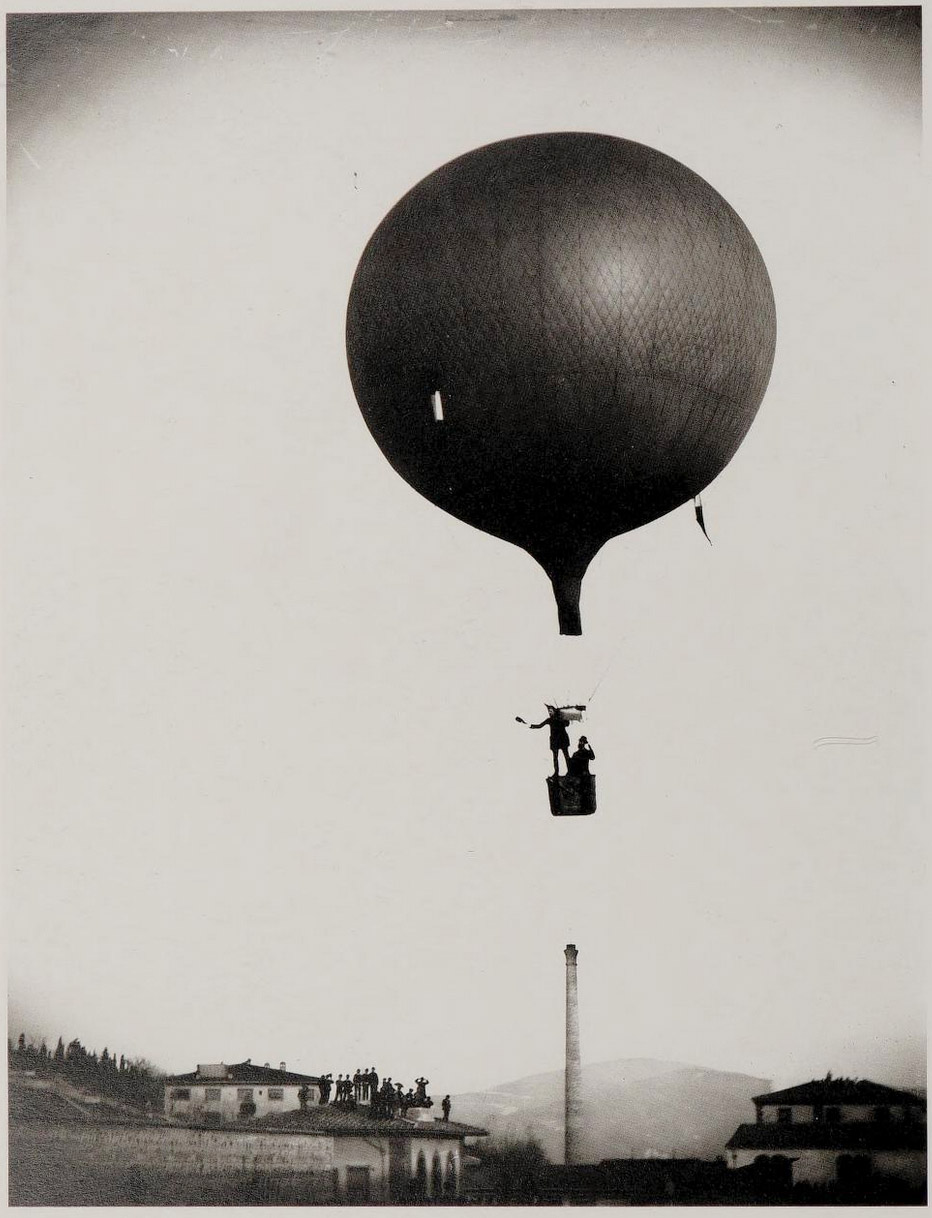
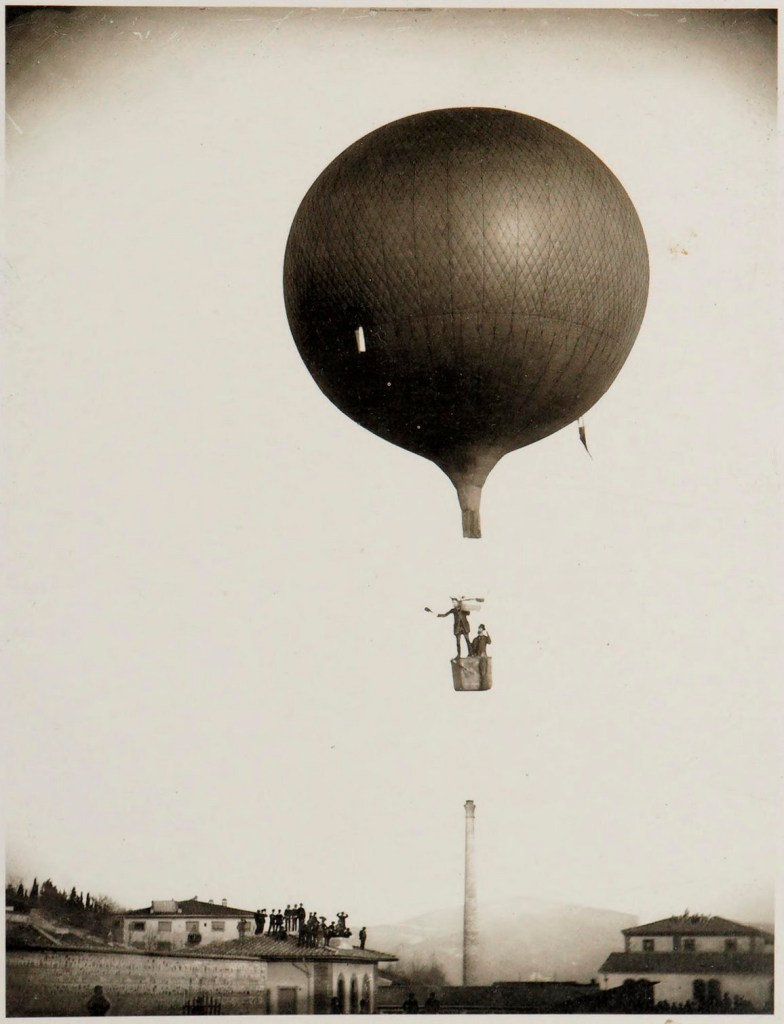
Fratelli Alinari · Julhes aerostat

Fratelli Alinari ~ Hot-air balloon, piloted by the aeronaut Julhes, 1884. Exhibition: Fratelli Alinari: A Photographic Tradition

Fratelli Alinari: A Photographic Tradition

The exhibition celebrated 150 years of Fratelli Alinari, the renowned photographic studio that documented the changing cultural and social landscape of Italy from the mid-nineteenth century.

The firm was founded in Florence in 1854 by the brothers Leopoldo, Giuseppe and Romualdo Alinari at a time when standards of photography and techniques of reproduction were being revolutionised. It quickly established an eminent reputation through its iconic images of Tuscan towns and cities, and following unification – when Florence was briefly the capital of Italy – politicians, intellectuals and royalty all visited the studio to have their portraits taken. At the other end of the spectrum are their striking images of working class life and gritty street scenes.

These beautiful photographs featured in the exhibition vividly trace Italy’s relatively late transition from a rural economy to an industrialised nation, capturing a pivotal era in Italian history. | quoted from: Estorick Collection [x]

Fratelli Alinari ~ Mister Julhes’ ascension in a balloon, Florence, 1905. From: Italy : one hundred years of photography (Susan Sontag and Cesare Colombo), 1988 (page 60) | src internet archive
Fratelli Alinari ~ Mister Julhes’ ascension in a balloon, Florence, 1905. From: Italy : one hundred years of photography (Susan Sontag and Cesare Colombo), 1988 (p. 60) | src internet archive
Fratelli Alinari ~ Mister Julhes’ ascension in a balloon, Florence, 1905. From: Italy : one hundred years of photography (Susan Sontag and Cesare Colombo), 1988. Front cover | src internet archive
Fratelli Alinari ~ Mister Julhes’ ascension in a balloon, Florence, 1905. From: Italy : one hundred years of photography (Susan Sontag and Cesare Colombo), 1988. Front cover. | src internet archive

Learning to fly · Kids at War

A ‘taube’ is spotted; a French 75 is immediately put into battery while ‘Pépéte’, the aviator, prepares to give chase. Paris, 19 September 1915.
The aviator ‘Pépéte’ has just shot down a ‘taube’ with his machine gun. Paris, 19 September 1915.
Léon Gimpel  (1873-1948) :: The aviator ‘Pépéte’ has just shot down a ‘taube’ with his machine gun. Paris, 19 September 1915.
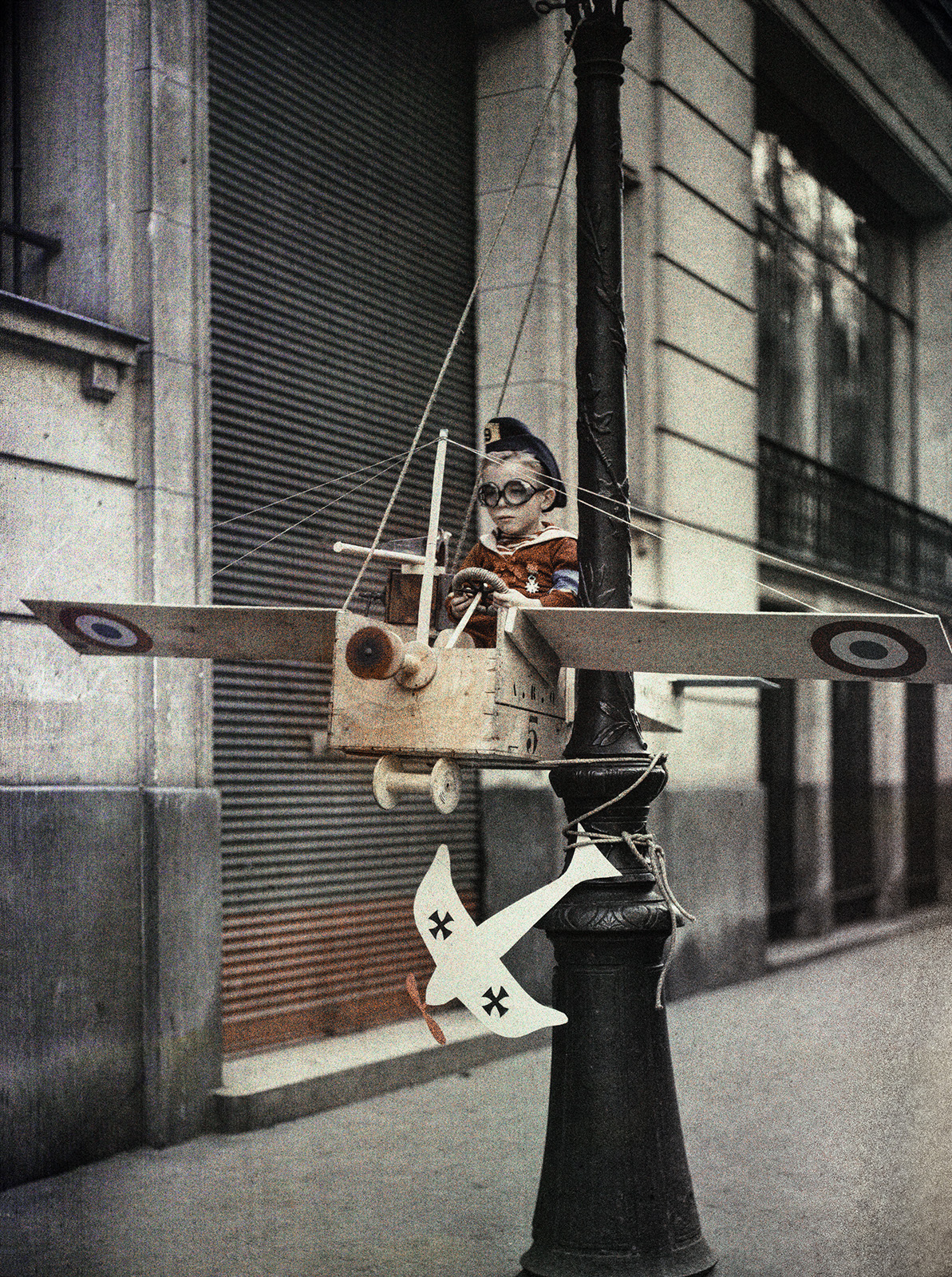
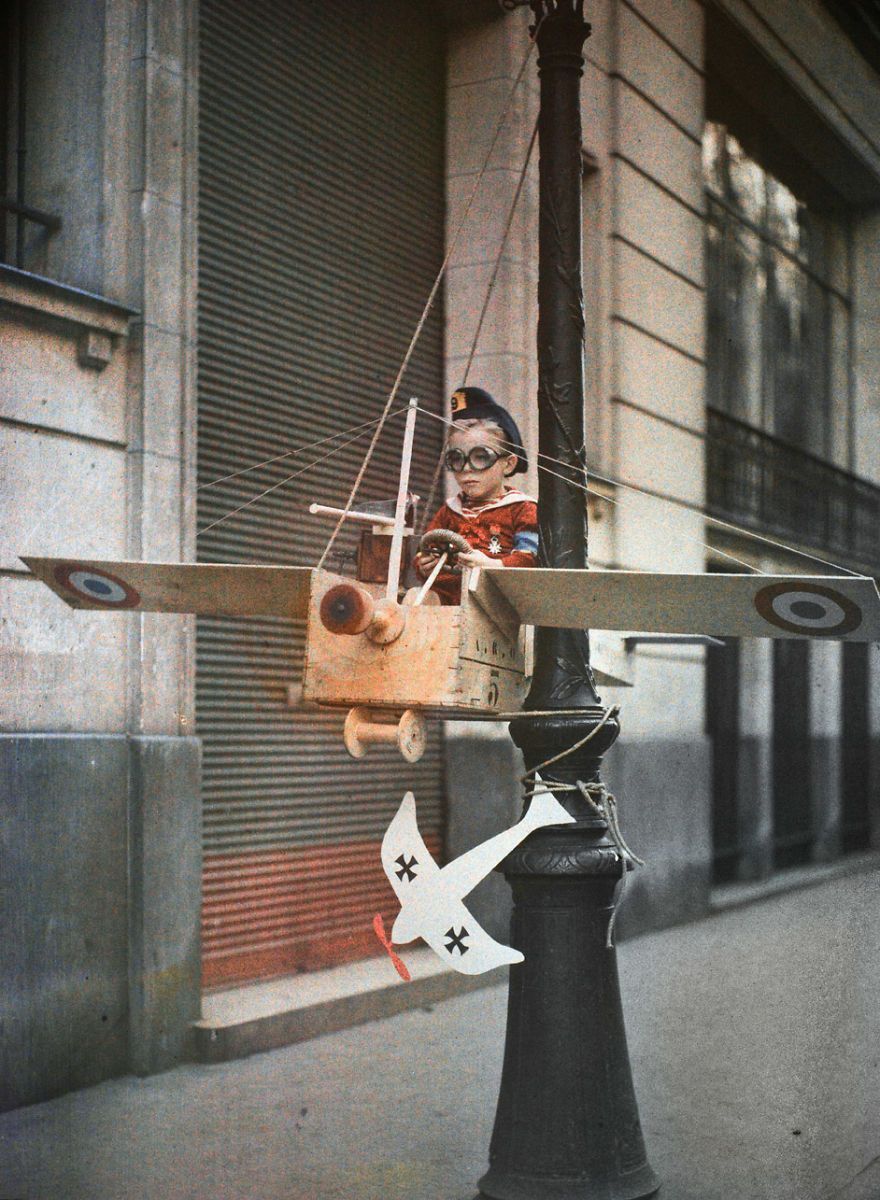
Léon Gimpel :: Boy playing in model airplane attached to a lamppost. France, 1915. Autochrome. | src Aktuallne Magazin
Léon Gimpel  (1873-1948) :: Boy playing in model airplane attached to a lamppost. France, 1915. Autochrome. | src SFP
L’aviateir «Pépete» vient d’abattre un «Taube» à coups de mitralleuse. Paris, 19 septembre 1915.

In 1915 Gimpel befriended a group of children from the Grenata Street neighborhood in Paris who had established their own “army”. He began to visit them regularly on Sundays, helping them to build their arsenal from whatever was to hand, providing direction in “casting”, and recording with his camera the army’s triumphs over the evil enemy, the Boche.
 
Gimpel was charmed by these children and came to know each of them well: the “chief”, the eldest in the garrison; his friend, who was conscripted to play the unenviable role of the Boche; and Pépète, who was “small, slightly misshaped, rather scrofulous, looking somewhat like a gnome” but who nonetheless played the part of an ace aviator. At the end of each session, Gimpel would reward the troops with barley sugar, causing all to shout with one voice, “Long live the photograph!”

quoted from Luminous-Lint online exhibition : Autochromes and Autochromists of WWI

Léon Gimpel (1873-1948)
The famous aviator ‘Pépéte’ triumphs in front of his victim. Paris, 19 September 1915. Autochrome | src SFP
Léon Gimpel (1873-1948) · The famous aviator ‘Pépéte’ triumphs in front of his victim. Paris, 19 September 1915. Autochrome | src SFP

From : La guerre de gosses, Léon GIMPEL, Paris, 1915

More images at Images en ligne de la Société française de photographie (SFP)

Bihō Takahashi · Bat in Moon

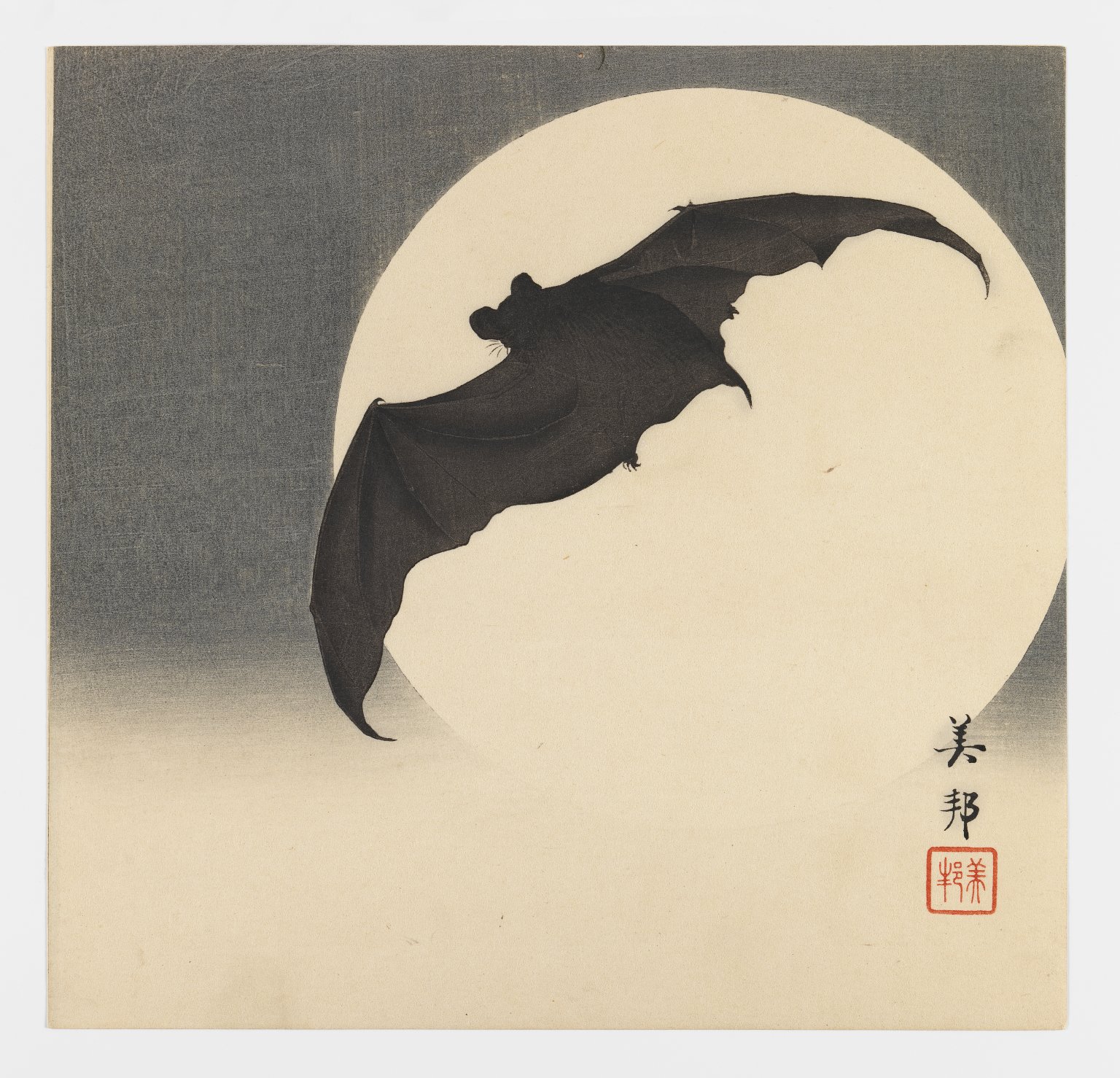
Biho Takashi (active ca. 1890-1930) :: Bat in Moon, ca. 1905. Color woodblock print on paper | src Brooklyn Museum
Biho Takashi (active ca. 1890-1930) :: Bat in Moon / Bat against full Moon, woodblock print in colours and ink, ca. 1905. | Bukowskis

Bihō Takahashi / Nomura Yoshikuni 野村美邦 / Hirose Yoshikuni
Sealed: Yoshikuni (美邦). Signed: Yoshikuni (美邦). / Meiji Period

Bihō Takahashi :: Bat in Moon / Bat against full Moon, woodblock print in colours and ink, ca. 1905. [DETAIL] | src Bukowskis

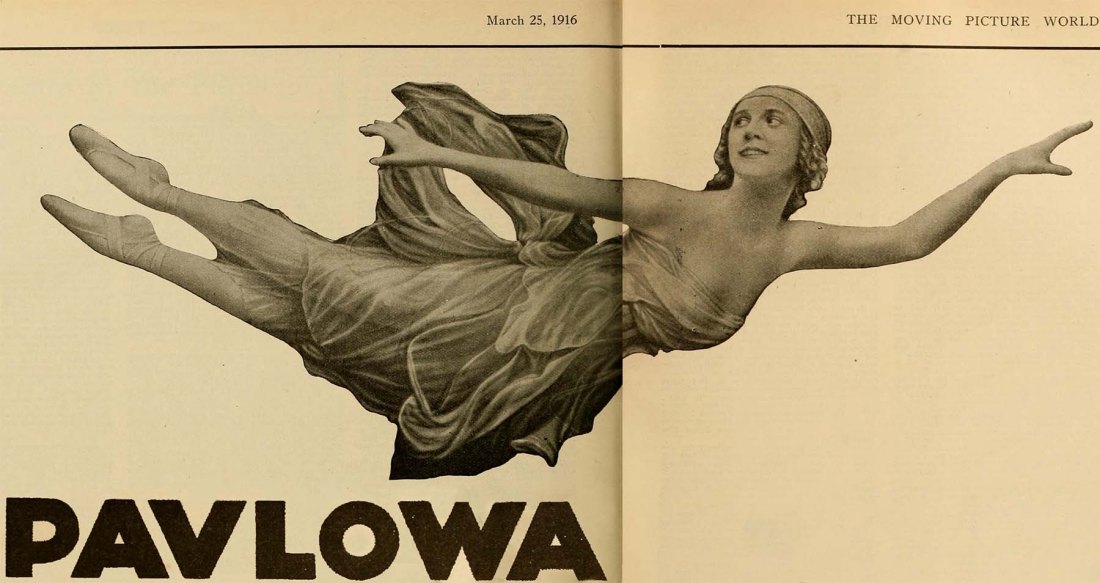
Pavlowa (MPW March 1916)

Pavlowa The Incomparable in "The Dumb Girl of Portici". The Moving Picture World, March 1916 [detail]
Pavlowa The Incomparable in “The Dumb Girl of Portici”. The Moving Picture World, March 1916 [detail]
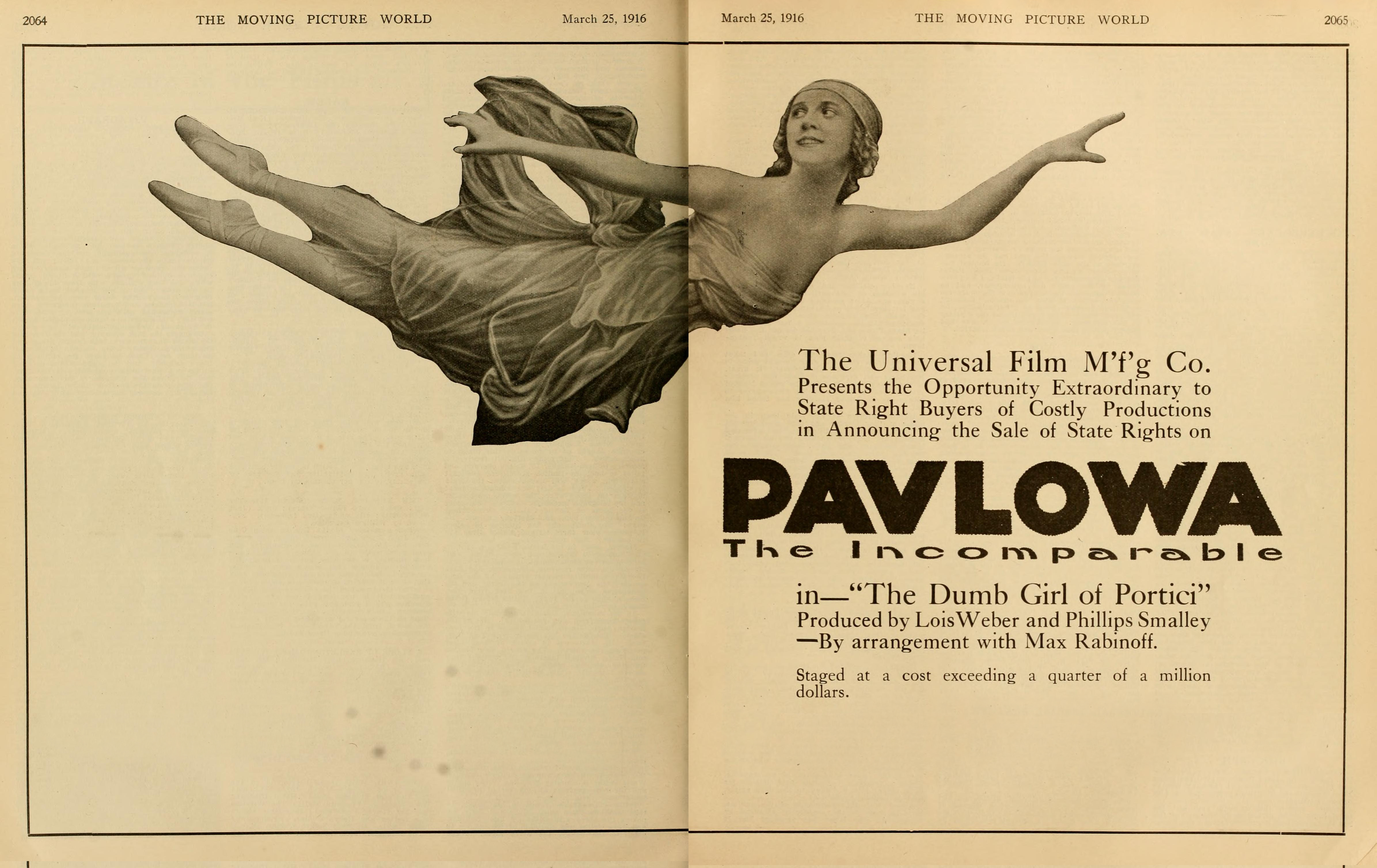
Pavlowa The Incomparable in "The Dumb Girl of Portici". The Moving Picture World, March 1916
Pavlowa The Incomparable in “The Dumb Girl of Portici”. Published in The Moving Picture World, March 1916

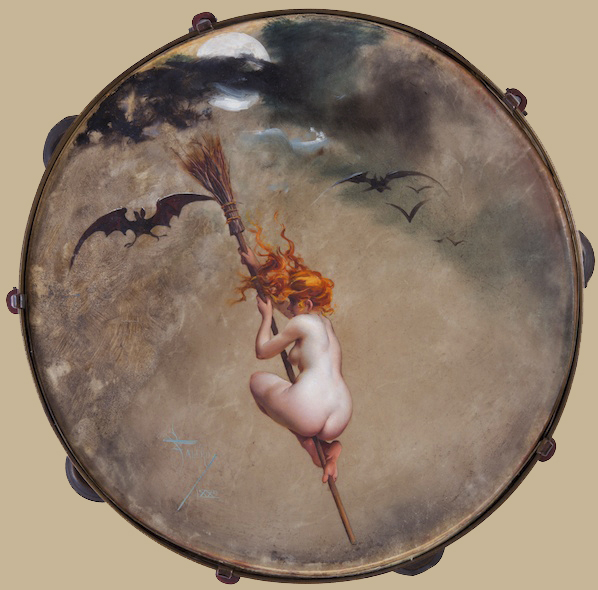
La Sorcière | The witch, 1882

Luis Ricardo Falero, Duke of Labranzano :: La Sorcière | The witch, painted on a tambourine, oil on parchment, 1882. Signed and dated: FALÉRO / 1882. Exhibited at Salon des artistes indépendants, Paris, 1884. | src Paris Tableau, 2013 (pages 90-91)

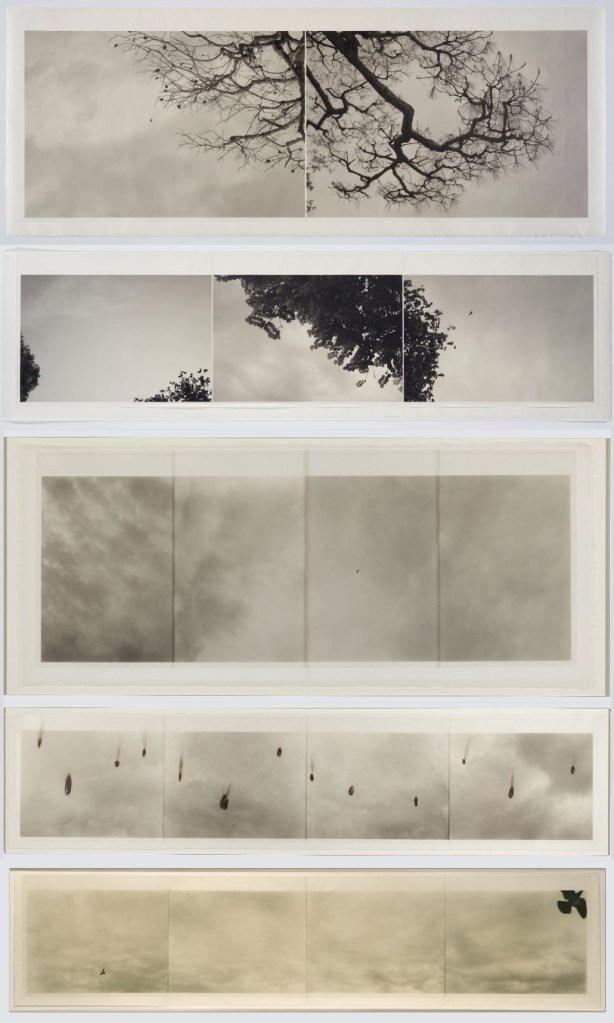
Marie Navarre, 2010-2016

all artworks by Marie Navarre (source: Lisa Sette Gallery)
1- learn from the pine (from Basho), 2016, rag paper, Japanese washi, archival digital print on vellum, silk thread.
2- turning towards the light, 2016, rag paper, digital washi, digital vellum, silk thread.
3- No here, no there, 2010, film, mulberry paper, rag paper, silk thread.
4- Songs and cries, 2010, film, Gampi, rag paper, silk thread, antique book pages, archival inkjet prints.
5- breathing the in between, 2010, digital vellum, silk thread, handmade Japanese paper.