Choiselat and Ratel
[
Marie-Charles-Isidore Choiselat and
Stanislas Ratel] ::
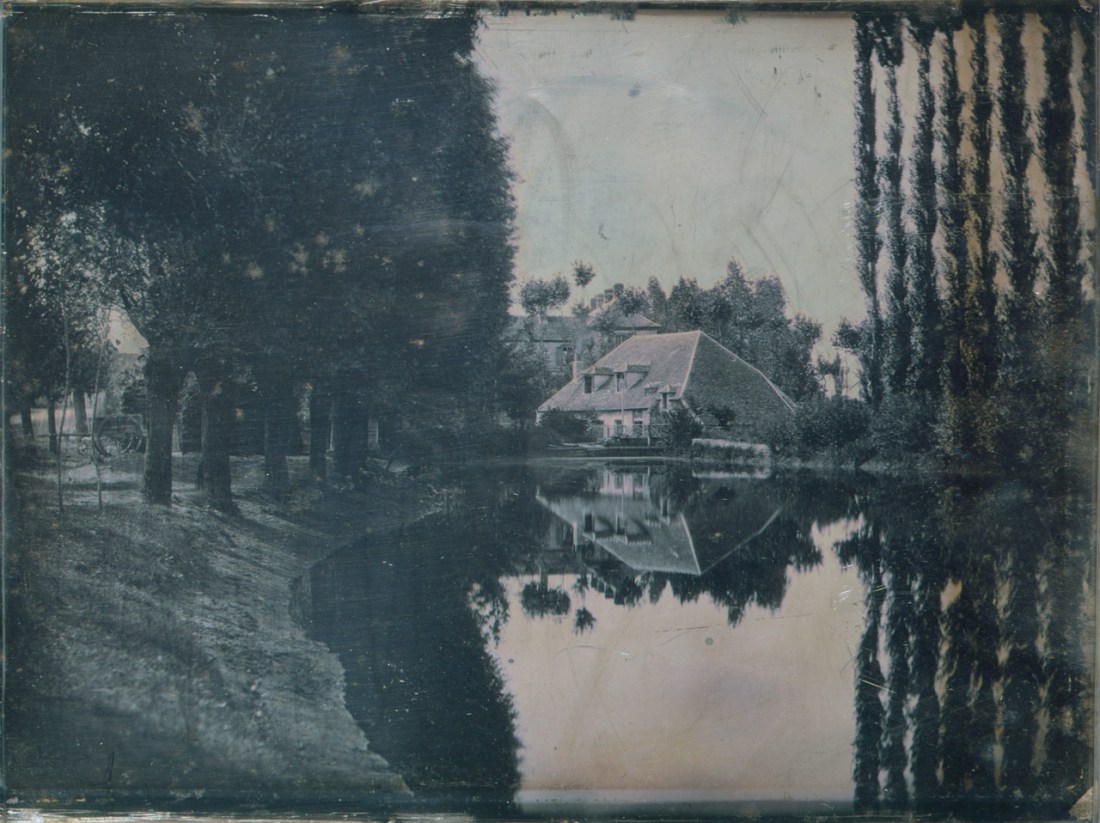
Landscape with Cottage, 1844.
Daguerreotype. / src: The Met

Choiselat and Ratel emphasized the two-dimensional organization of the
picture’s surface. The poplars, reflected in the water, seem to stretch
across the plate from top to bottom instead of sitting on the far side
of the pond; the cottage forms, with its reflection, a single geometric solid
floating in space. (Quoted from source)
Mer Méditerranée, 1857

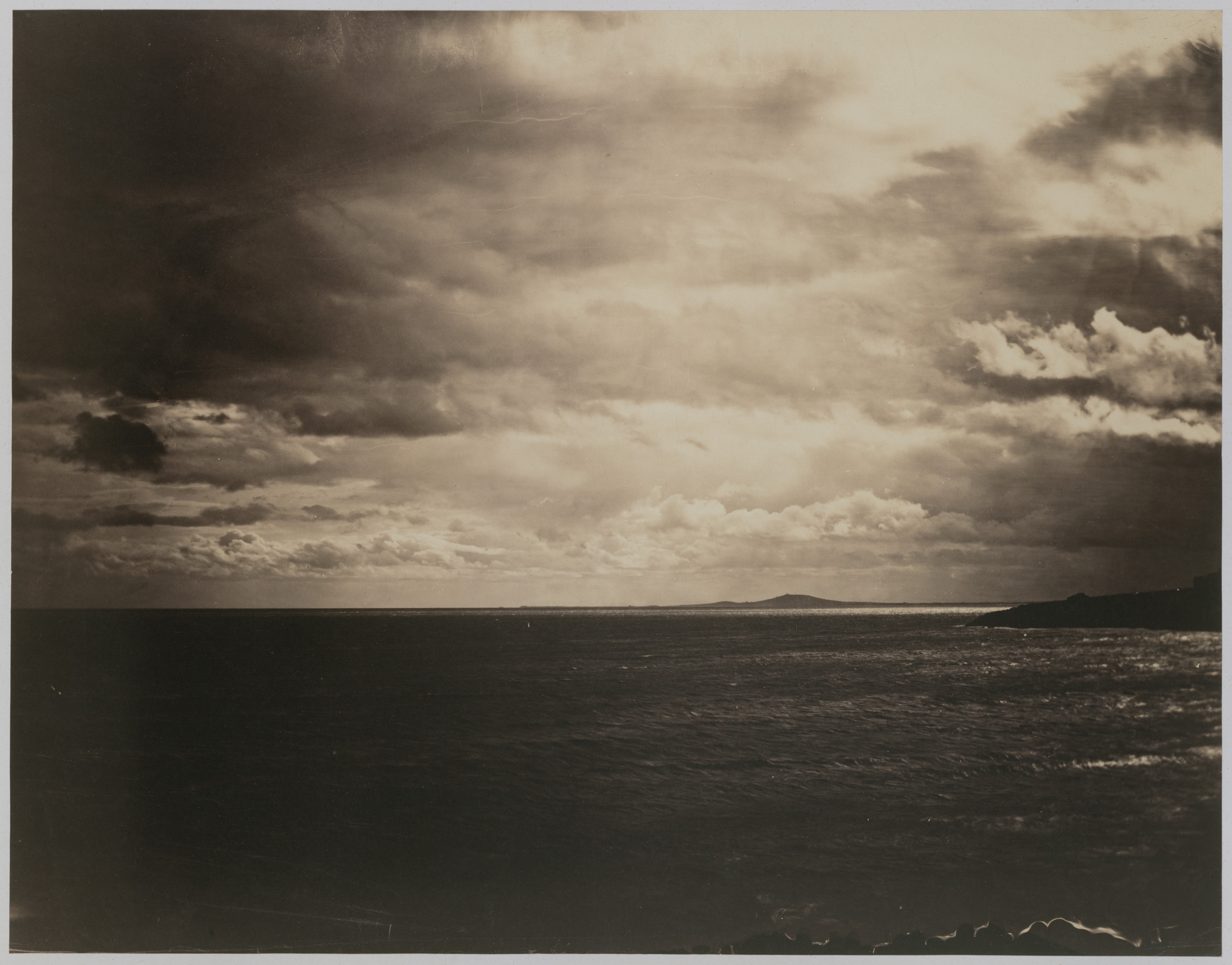
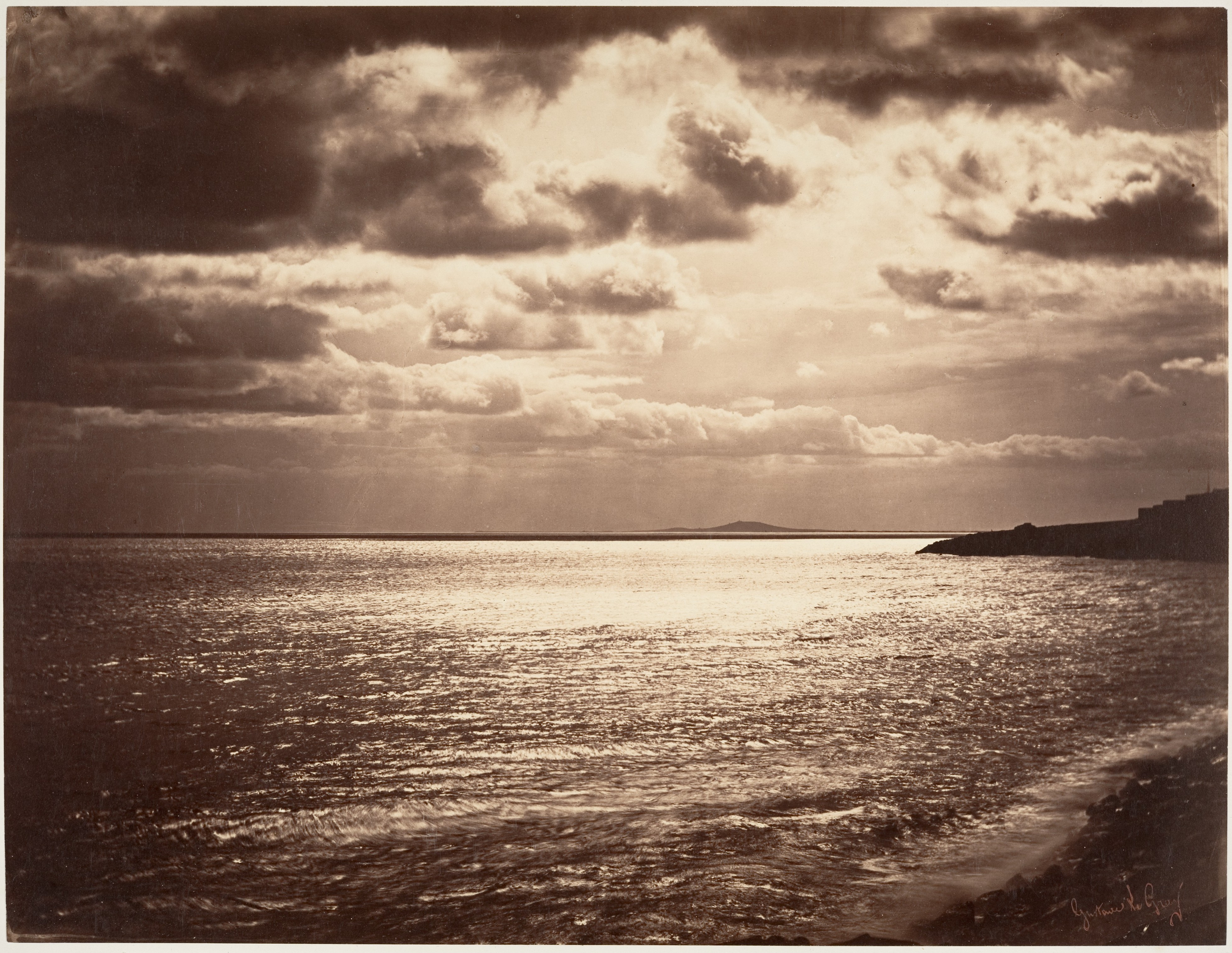
Gustave Le Gray :: Mediterranean with Mount Agde, 1857. Albumen silver print from two glass negatives. | src The Met
Gustave Le Gray :: Mer Méditerranée – Sète, 1857. Albumen silver print from two glass negatives. | src The Met

The dramatic effects of sunlight, clouds, and water in Gustave Le Gray’s Mediterranean and Channel coast seascapes stunned his contemporaries and immediately brought him international recognition. At a time when photographic emulsions were not equally sensitive to all colors of the spectrum, most photographers found it impossible to achieve proper exposure of both landscape and sky in a single picture; often the mottled sky of a negative was painted over, yielding a blank white field instead of light and atmosphere.
In many of his most theatrical seascapes, Le Gray printed two negatives on a single sheet of paper–one exposed for the sea, the other for the sky, sometimes made on separate occasions or at different locations. Although the relationship of sunlight to reflection in this example was carefully considered and the two negatives skillfully printed, one can still see the joining of the two negatives at the horizon. Le Gray’s marine pictures caused a sensation not only because their simultaneous depiction of sea and heavens represented a technical tour de force, but because the resulting poetic effect was without precedent in photography
. / quoted from The Met

Grande vague, 1857

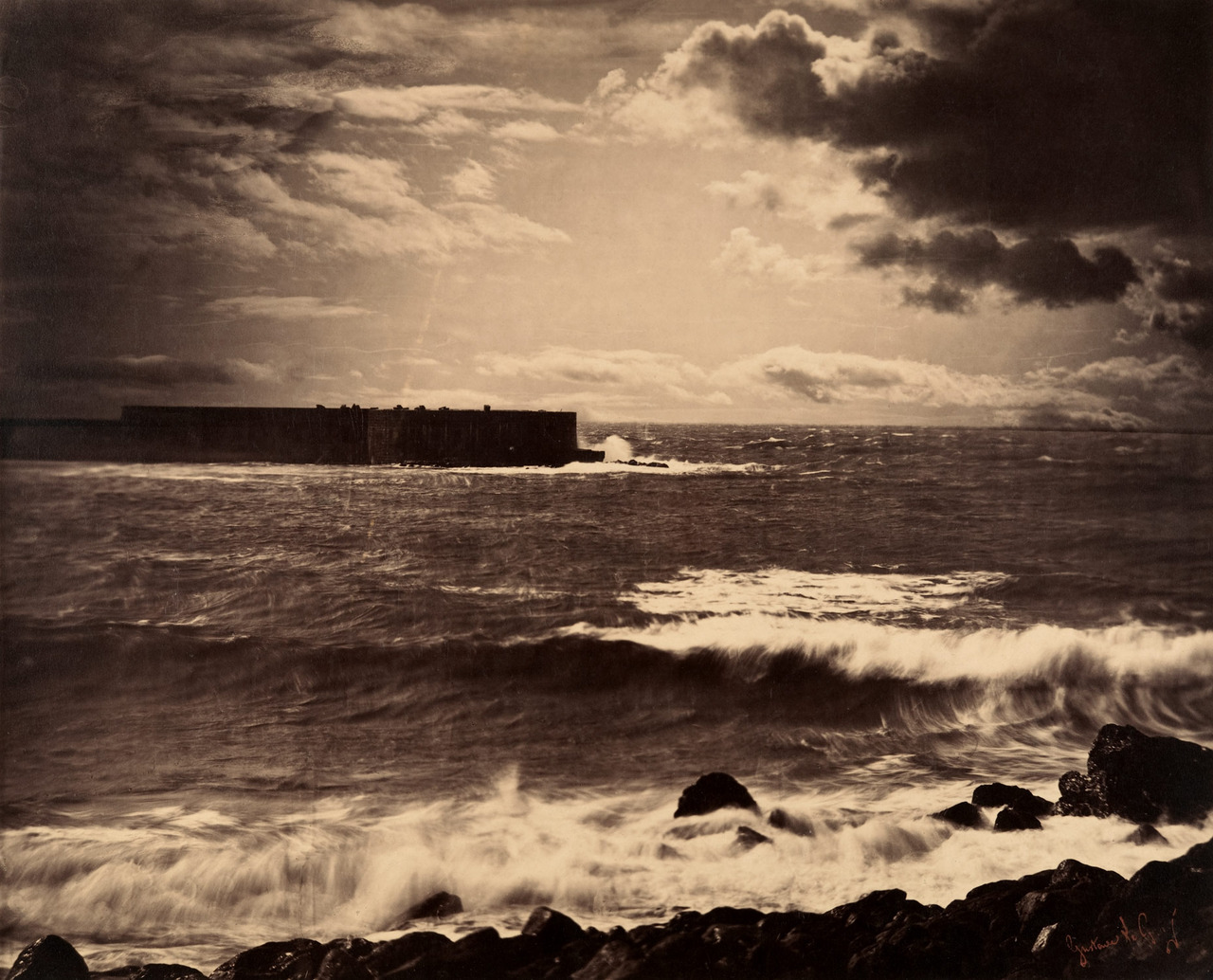
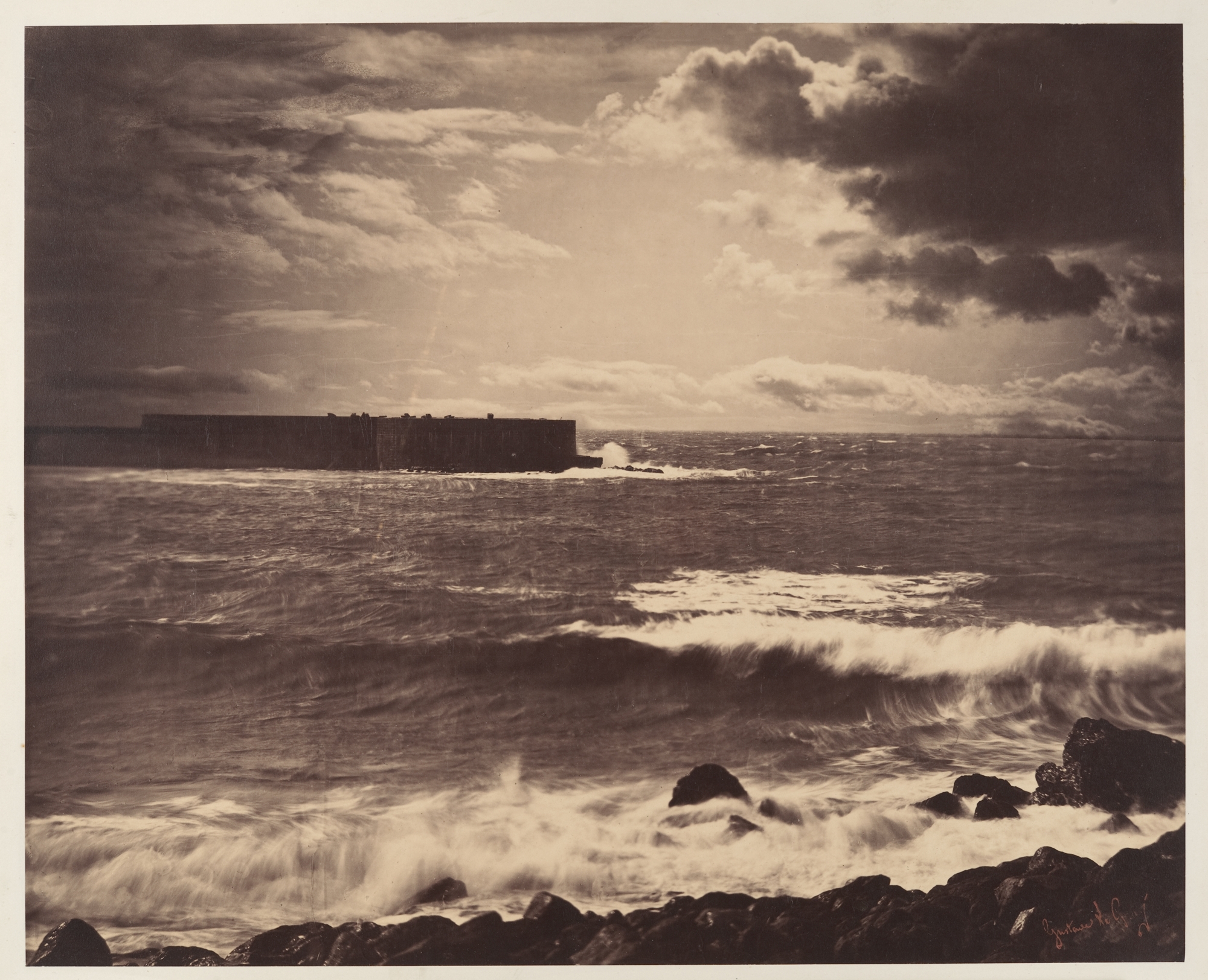
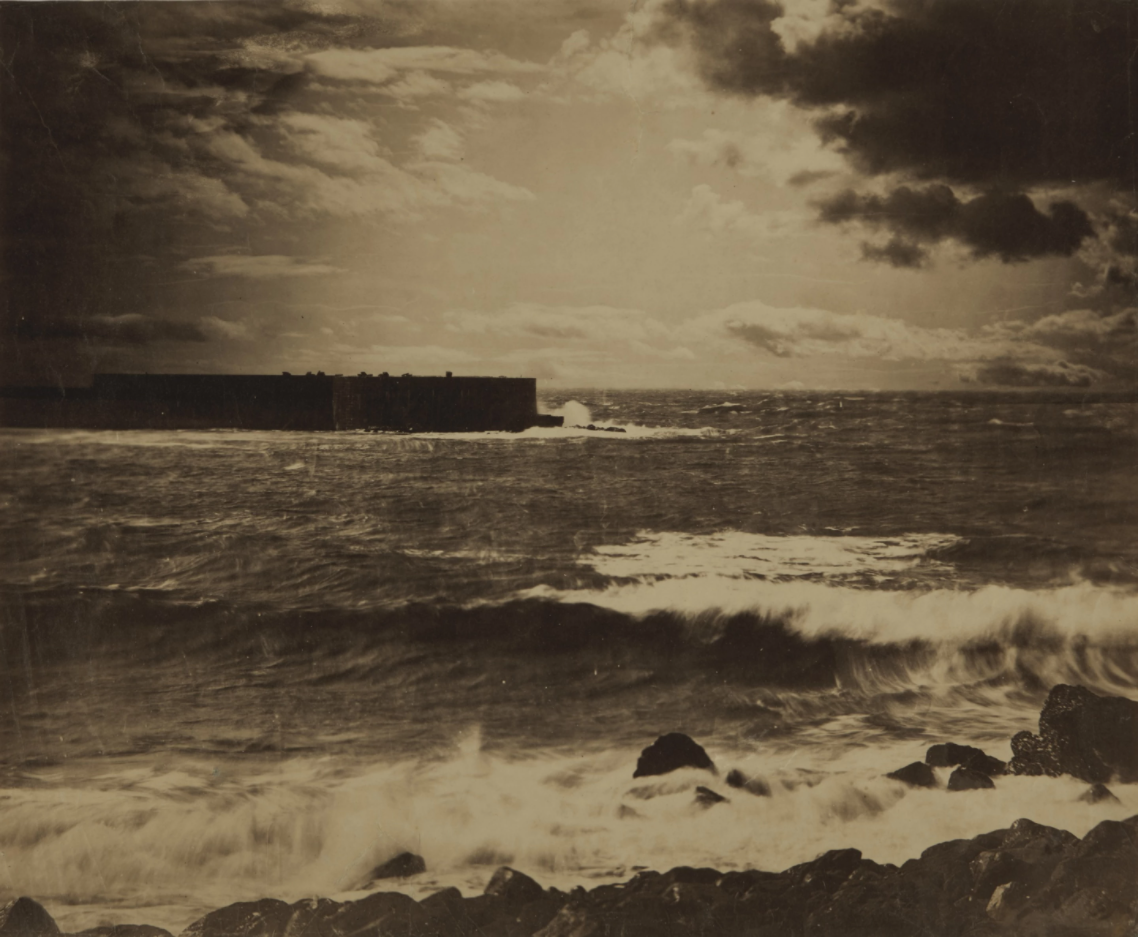
Gustave Le Gray :: The Great Wave, Sète, 1857. Albumen silver print from glass negative. | src The Met

The dramatic effects of sunlight, clouds, and water in Le Gray’s seascapes stunned his contemporaries and immediately brought him international recognition.  At a time when photographic emulsions were not equally sensitive to all colors of the spectrum, most photographers found it impossible to achieve proper exposure of both landscape and sky in a single picture.  Le Gray solved this problem by printing two negatives on a single sheet of paper: one exposed for the sea, the other for the sky, and sometimes made on separate occasions or in different locations.  Le Gray’s marine pictures caused a sensation not only because their simultaneous depiction of sea and heavens represented a technical tour de force, but also because the resulting poetic effect was without precedent in photography. / quoted from The Metropolitan Museum of Art.

Gustave Le Gray :: Grande vague. (The Great Wave, Sète), albumen print, numbered ‘14,918’ in black ink on the reverse, 1857. | src Sotheby’s

French and English Fleets, 1858

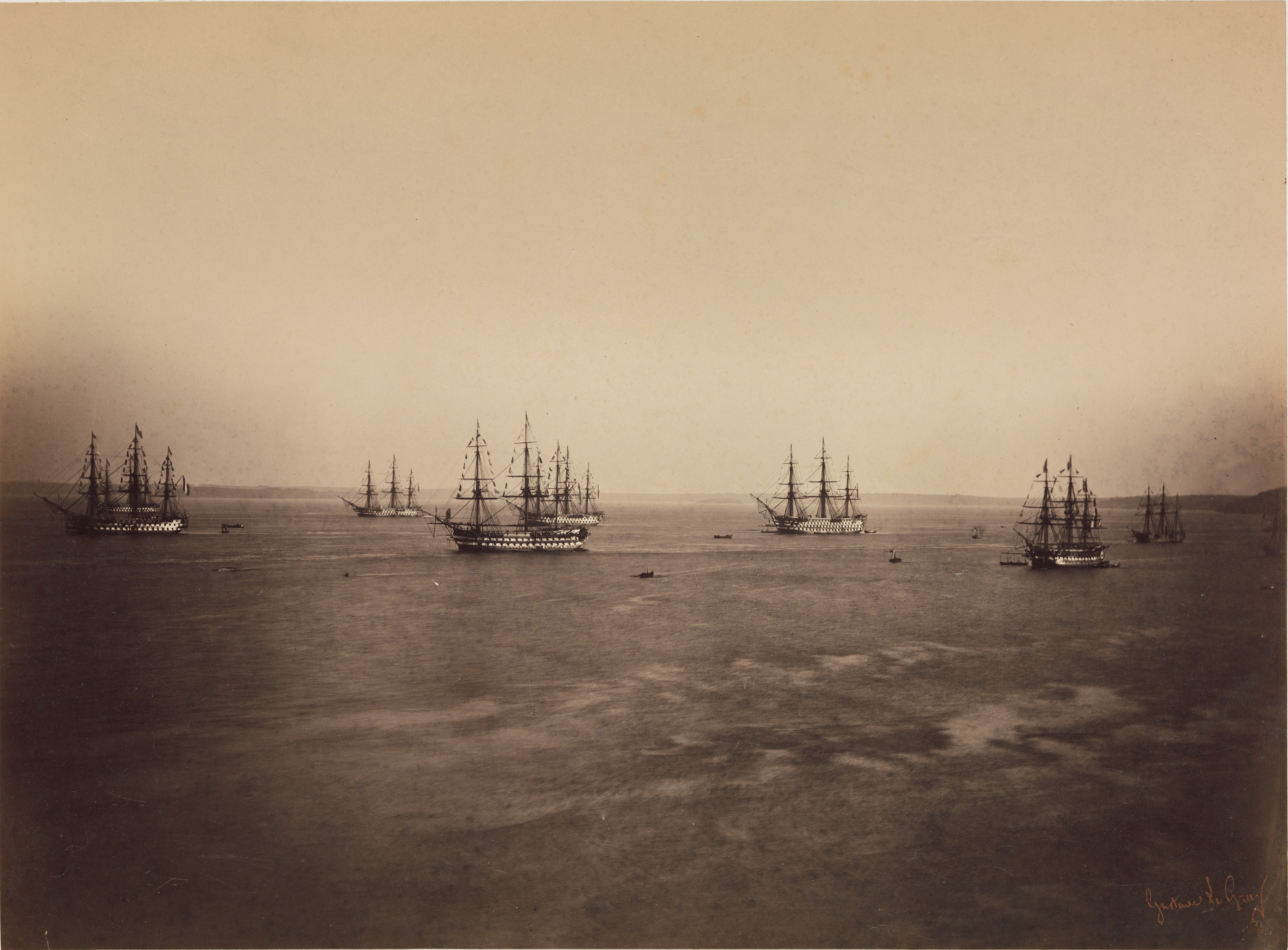
Gustave Le Gray (French, 1820–1884) :: The French and English Fleets, Cherbourg, August 1858. Albumen silver print from glass negative. Bequest of Maurice Sendak, 2013. | src The Metropolitan Museum of Art
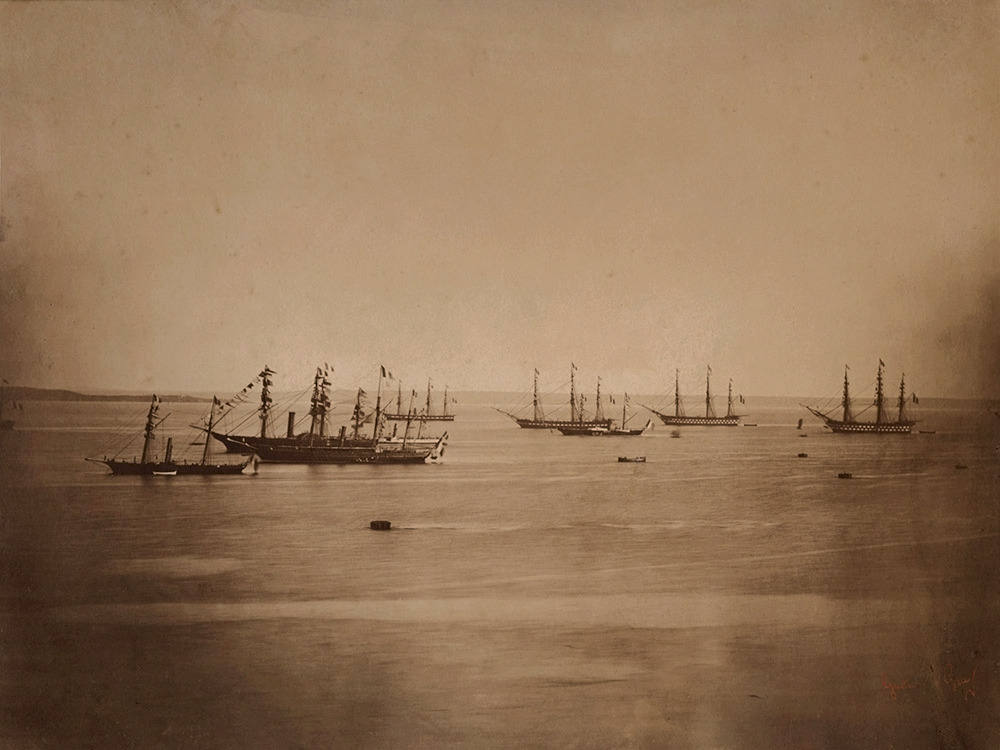
Gustave Le Gray :: Flotte Franco-Anglais en Rade de Cherbourg, 1858. Albumen print from wet plate negative. | src VW