Fratelli Alinari · Julhes aerostat

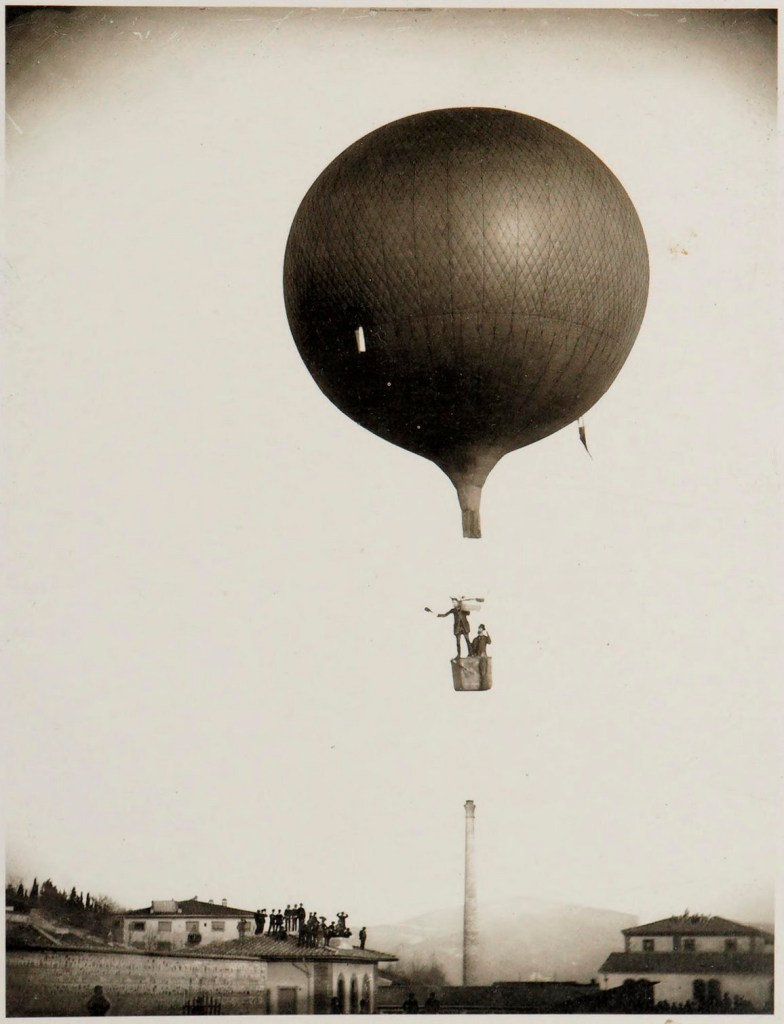
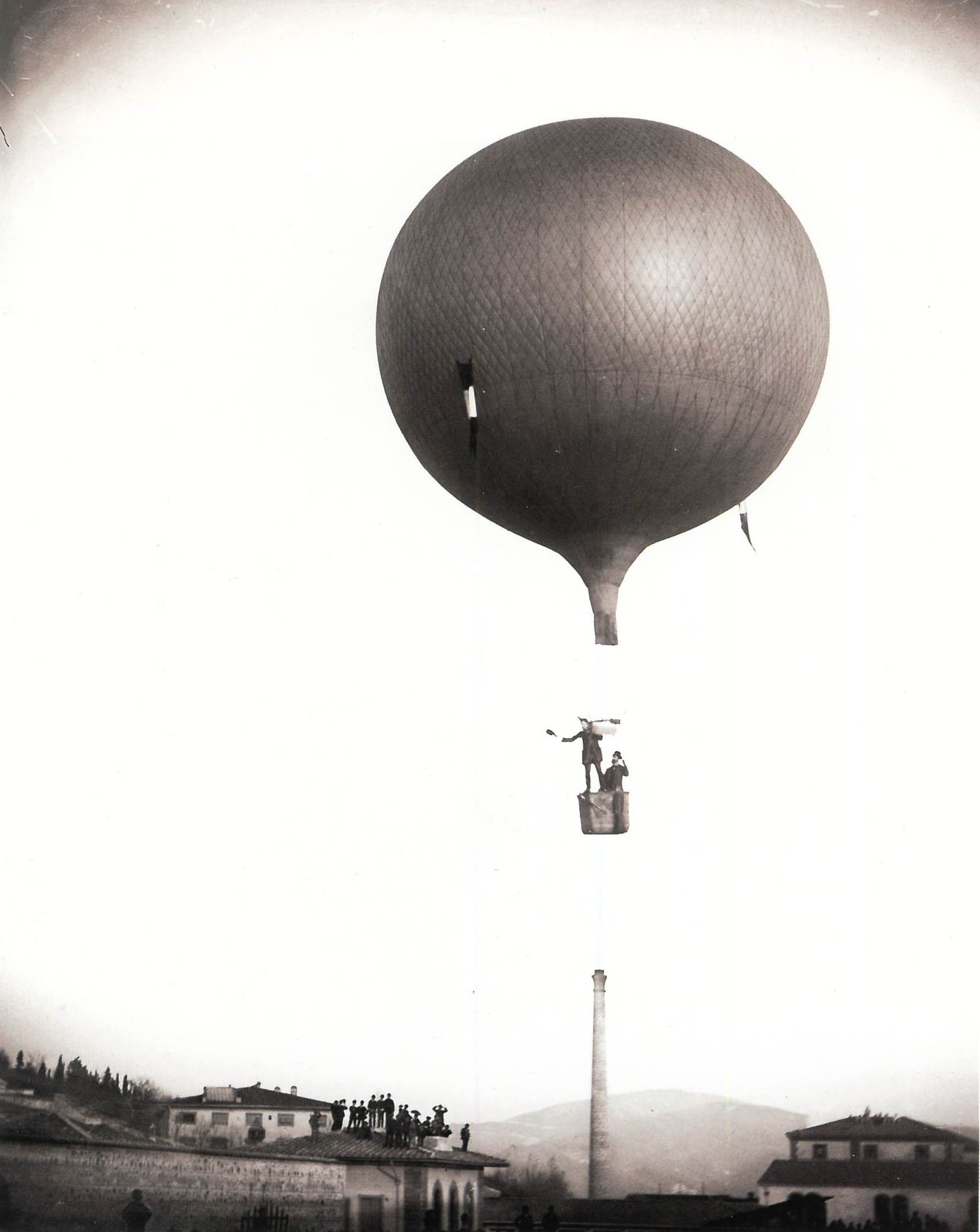
Fratelli Alinari ~ Hot-air balloon, piloted by the aeronaut Julhes, 1884. Exhibition: Fratelli Alinari: A Photographic Tradition

Fratelli Alinari: A Photographic Tradition

The exhibition celebrated 150 years of Fratelli Alinari, the renowned photographic studio that documented the changing cultural and social landscape of Italy from the mid-nineteenth century.

The firm was founded in Florence in 1854 by the brothers Leopoldo, Giuseppe and Romualdo Alinari at a time when standards of photography and techniques of reproduction were being revolutionised. It quickly established an eminent reputation through its iconic images of Tuscan towns and cities, and following unification – when Florence was briefly the capital of Italy – politicians, intellectuals and royalty all visited the studio to have their portraits taken. At the other end of the spectrum are their striking images of working class life and gritty street scenes.

These beautiful photographs featured in the exhibition vividly trace Italy’s relatively late transition from a rural economy to an industrialised nation, capturing a pivotal era in Italian history. | quoted from: Estorick Collection [x]
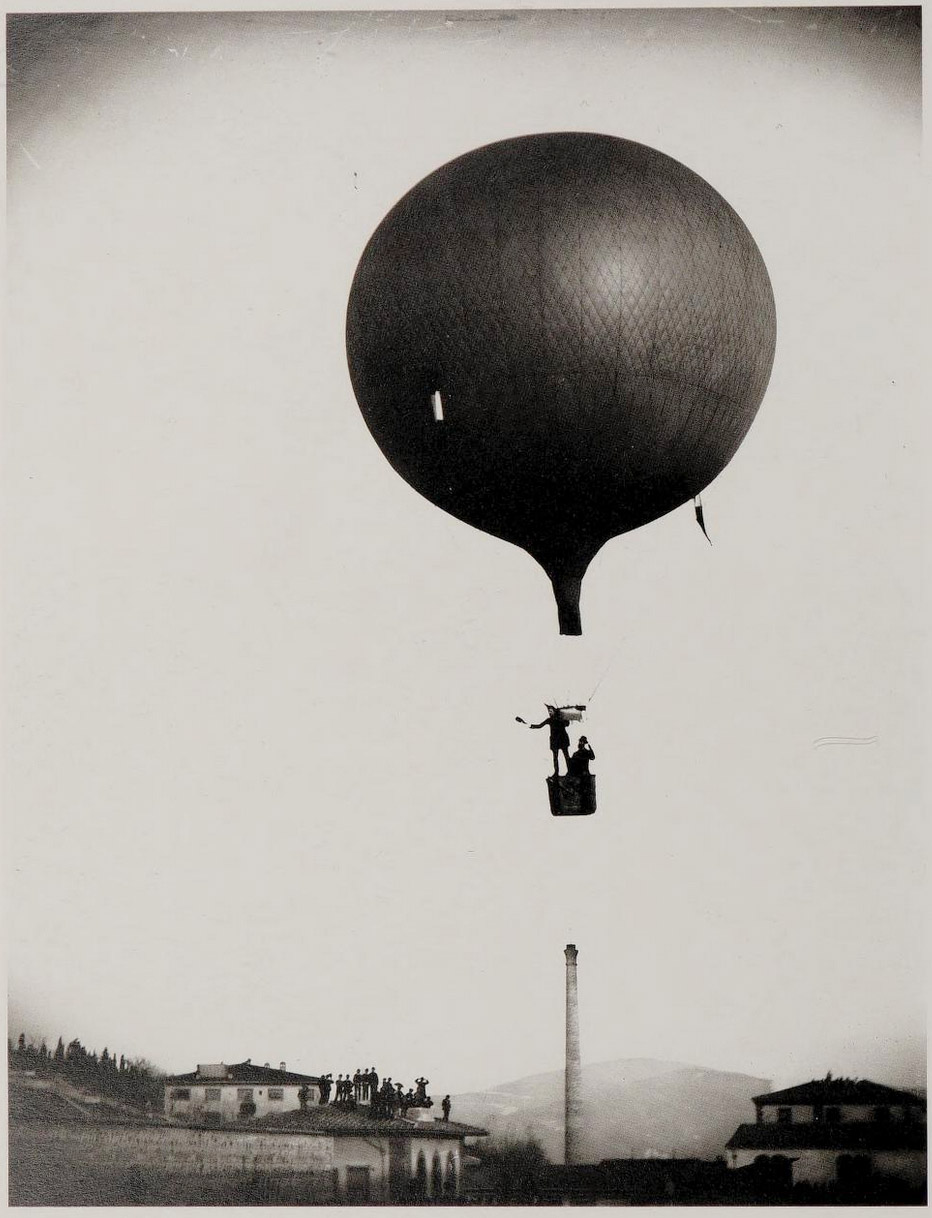
Fratelli Alinari ~ Mister Julhes’ ascension in a balloon, Florence, 1905. From: Italy : one hundred years of photography (Susan Sontag and Cesare Colombo), 1988 (page 60) | src internet archive
Fratelli Alinari ~ Mister Julhes’ ascension in a balloon, Florence, 1905. From: Italy : one hundred years of photography (Susan Sontag and Cesare Colombo), 1988 (p. 60) | src internet archive
Fratelli Alinari ~ Mister Julhes’ ascension in a balloon, Florence, 1905. From: Italy : one hundred years of photography (Susan Sontag and Cesare Colombo), 1988. Front cover | src internet archive
Fratelli Alinari ~ Mister Julhes’ ascension in a balloon, Florence, 1905. From: Italy : one hundred years of photography (Susan Sontag and Cesare Colombo), 1988. Front cover. | src internet archive

Flugversuche · Flight attempts

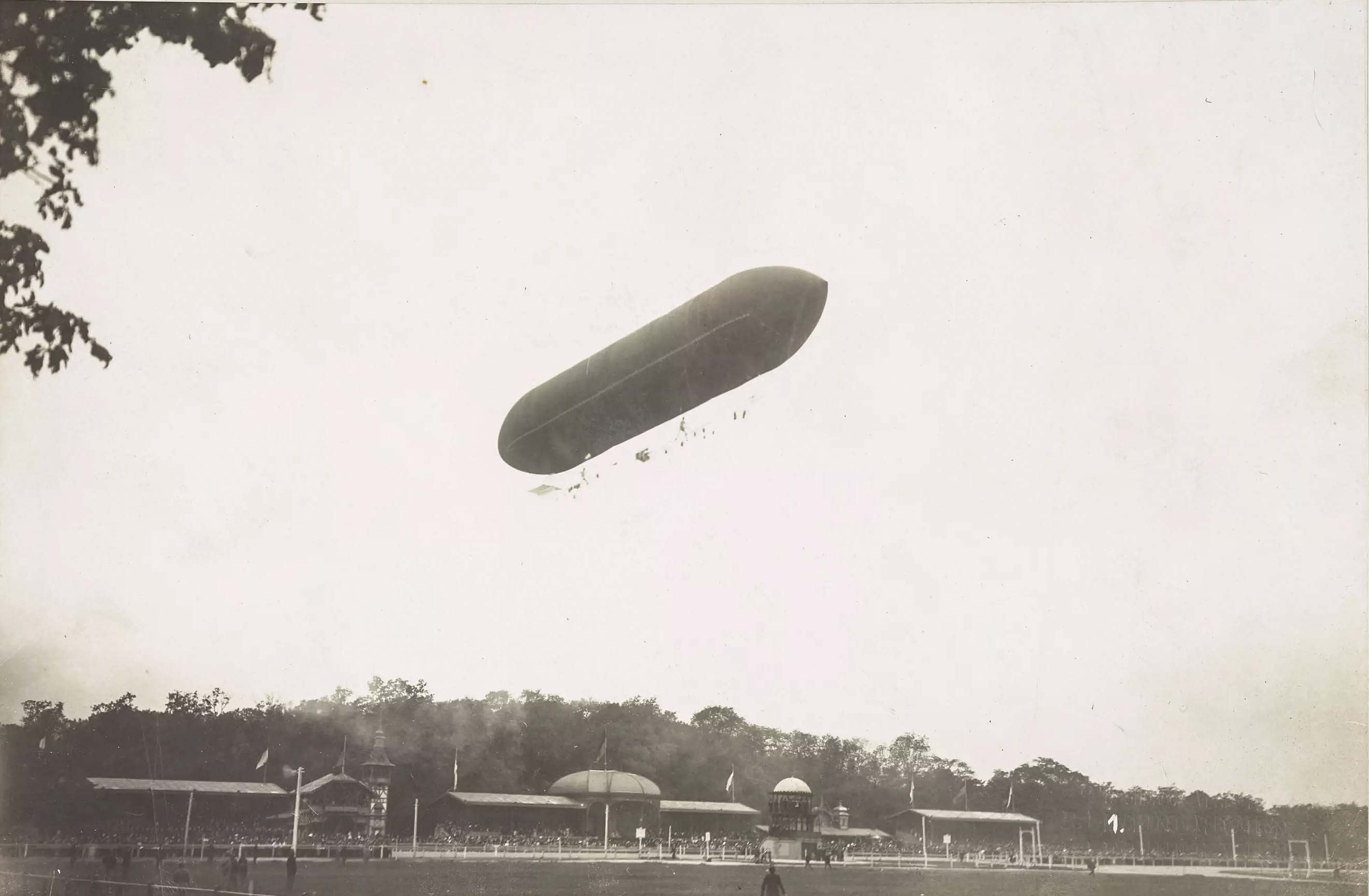
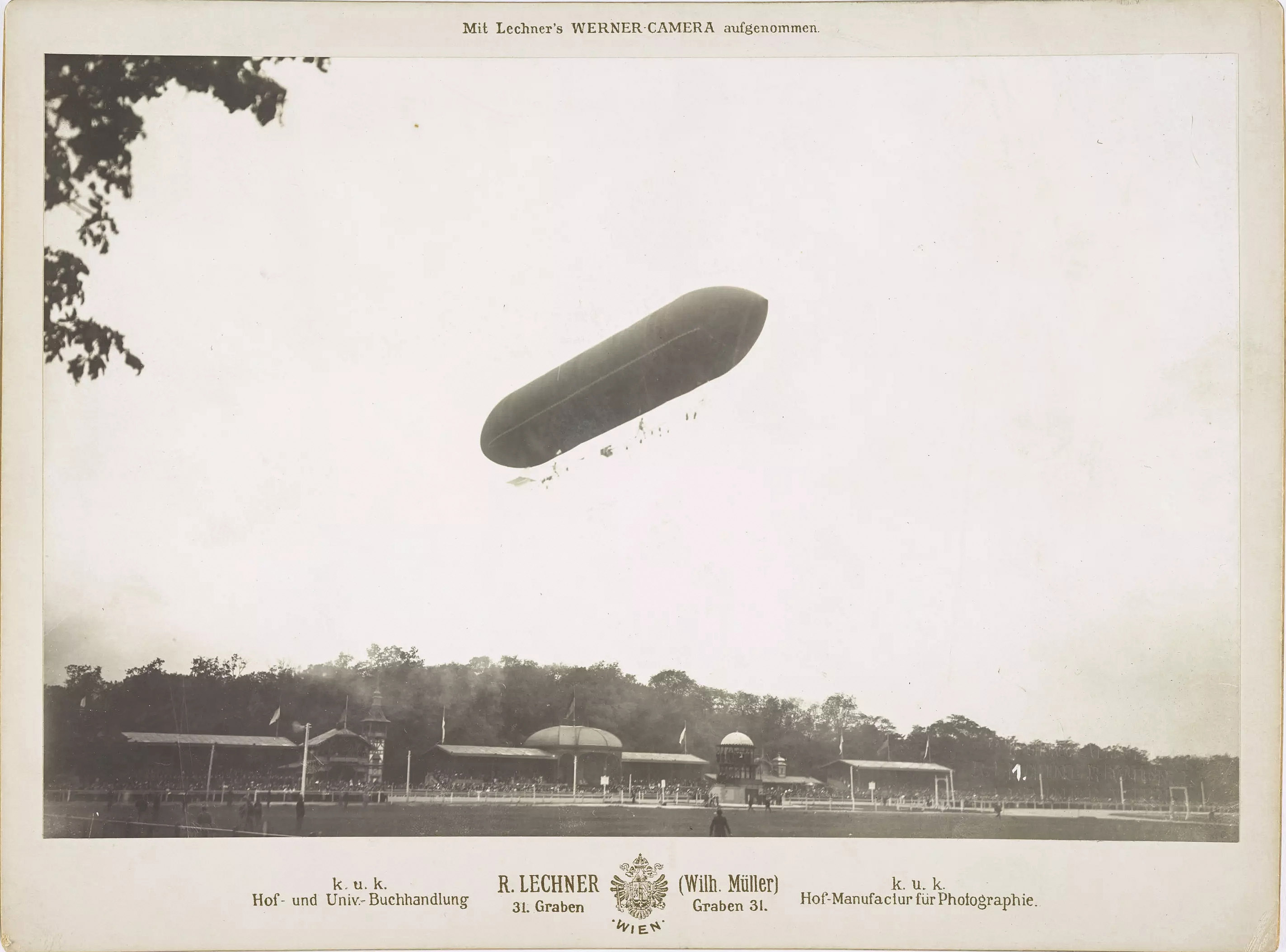
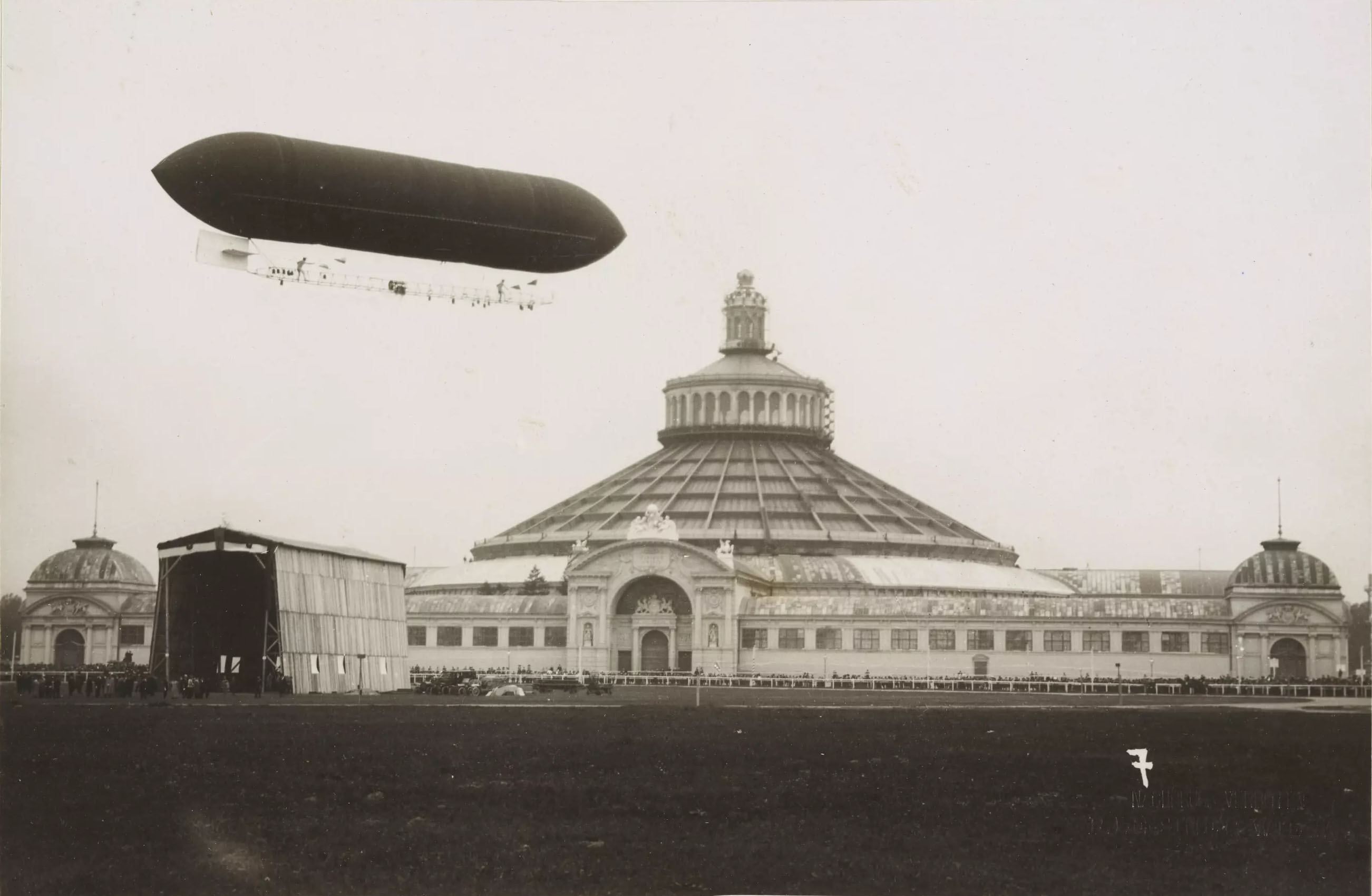
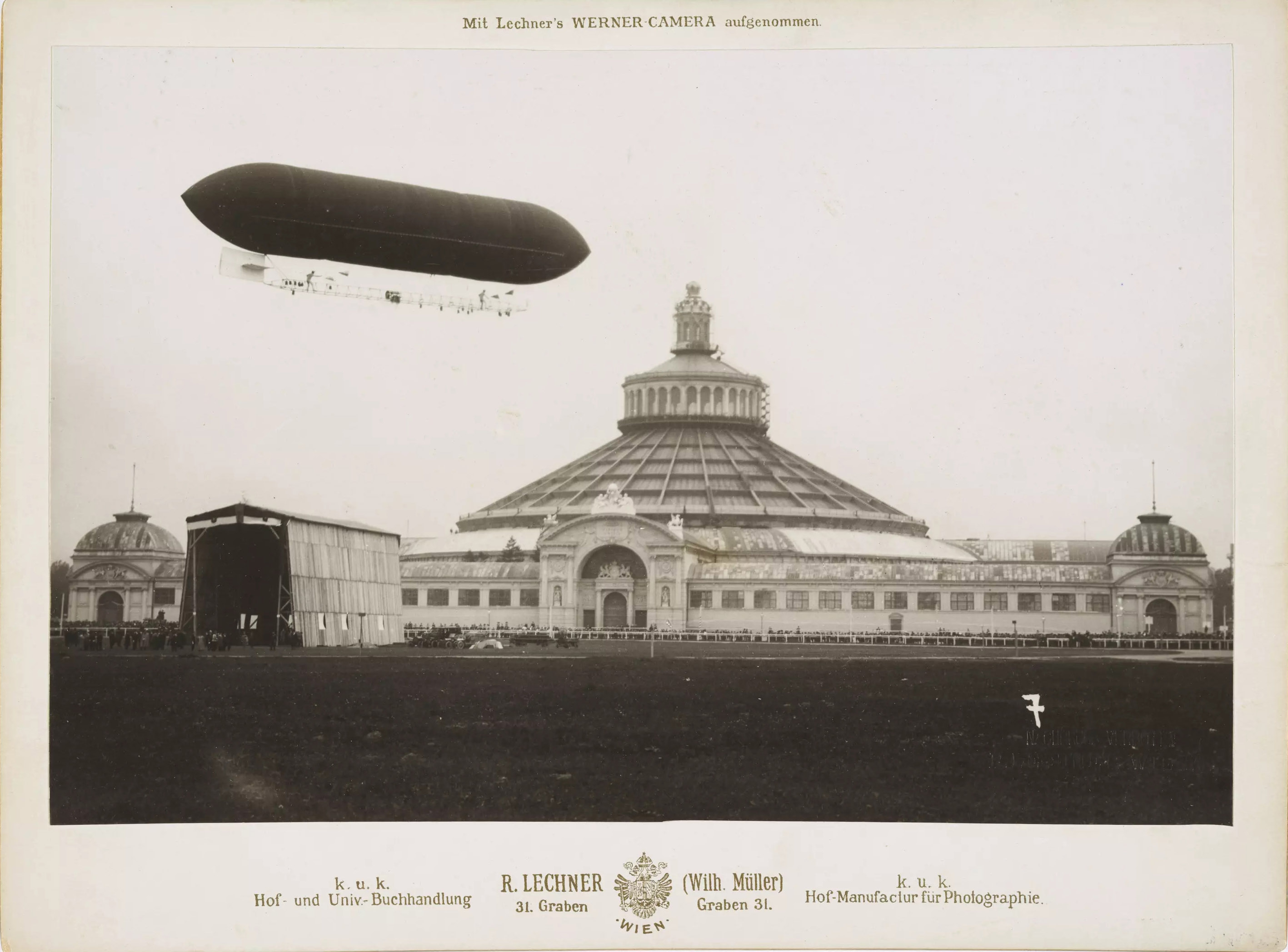
Flugversuch der Brüder Renner im Prater 1909. Verlag bzw. k. u. k. Universitätsbuchhandlung R. Lechner (Wilhelm Müller) 
Flight attempt by the Renner brothers in the Prater 1909. Publisher or k. u.k. R. Lechner University Bookstore (Wilhelm Müller)
src Wien Museum
Flugversuch der Brüder Renner im Prater 1909. Verlag bzw. k. u. k. Universitätsbuchhandlung R. Lechner (Wilhelm Müller)
Flight attempt by the Renner brothers in the Prater 1909. Publisher or k. u.k. R. Lechner University Bookstore (Wilhelm Müller)
src Wien Museum
Flight attempt by the Renner brothers in the Prater 1909. Publisher or k. u.k. R. Lechner University Bookstore (Wilhelm Müller)
src Wien Museum
Flight attempt by the Renner brothers in the Prater 1909. Publisher or k. u.k. R. Lechner University Bookstore (Wilhelm Müller)
src Wien Museum
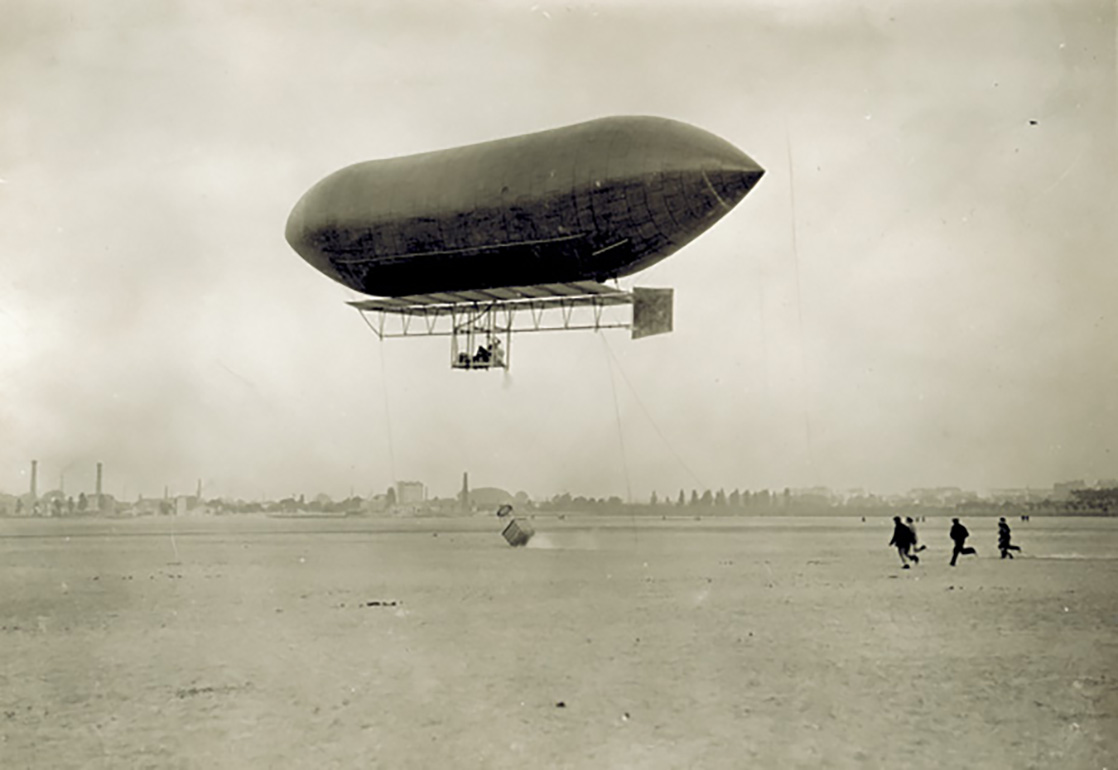
Louis Malecot's airship dragging basket 1908
Louis Malecot’s airship dragging a basket, 1908. Ph. J. Theodoresco. | Wright Brothers Photographs

Louis Malecot’s airship in flight dragging a basket across the field. The basket was used for vertical steering. The basket was suspended by its two ends and hung some 60 feet below the keel. The vertical rudder at the rear of the airship provided horizontal steering. | Special Collections and Archives; Wright State University Libraries

Flugversuch der Brüder Renner im Prater 1909. Verlag bzw. k. u. k. Universitätsbuchhandlung R. Lechner (Wilhelm Müller) 
Flight attempt by the Renner brothers in the Prater 1909. Publisher or k. u.k. R. Lechner University Bookstore (Wilhelm Müller)
src Wien Museum
Flugversuch der Brüder Renner im Prater 1909. Verlag bzw. k. u. k. Universitätsbuchhandlung R. Lechner (Wilhelm Müller)
Flight attempt by the Renner brothers in the Prater 1909. Publisher or k. u.k. R. Lechner University Bookstore (Wilhelm Müller)
src Wien Museum
Flugversuch der Brüder Renner im Prater 1909
Flight attempt by the Renner brothers in the Prater 1909. Publisher or k. u.k. R. Lechner University Bookstore (Wilhelm Müller)
src Wien Museum
Flight attempt by the Renner brothers in the Prater 1909. Publisher or k. u.k. R. Lechner University Bookstore (Wilhelm Müller)
src Wien Museum

Death of Sophie Blanchard 1819

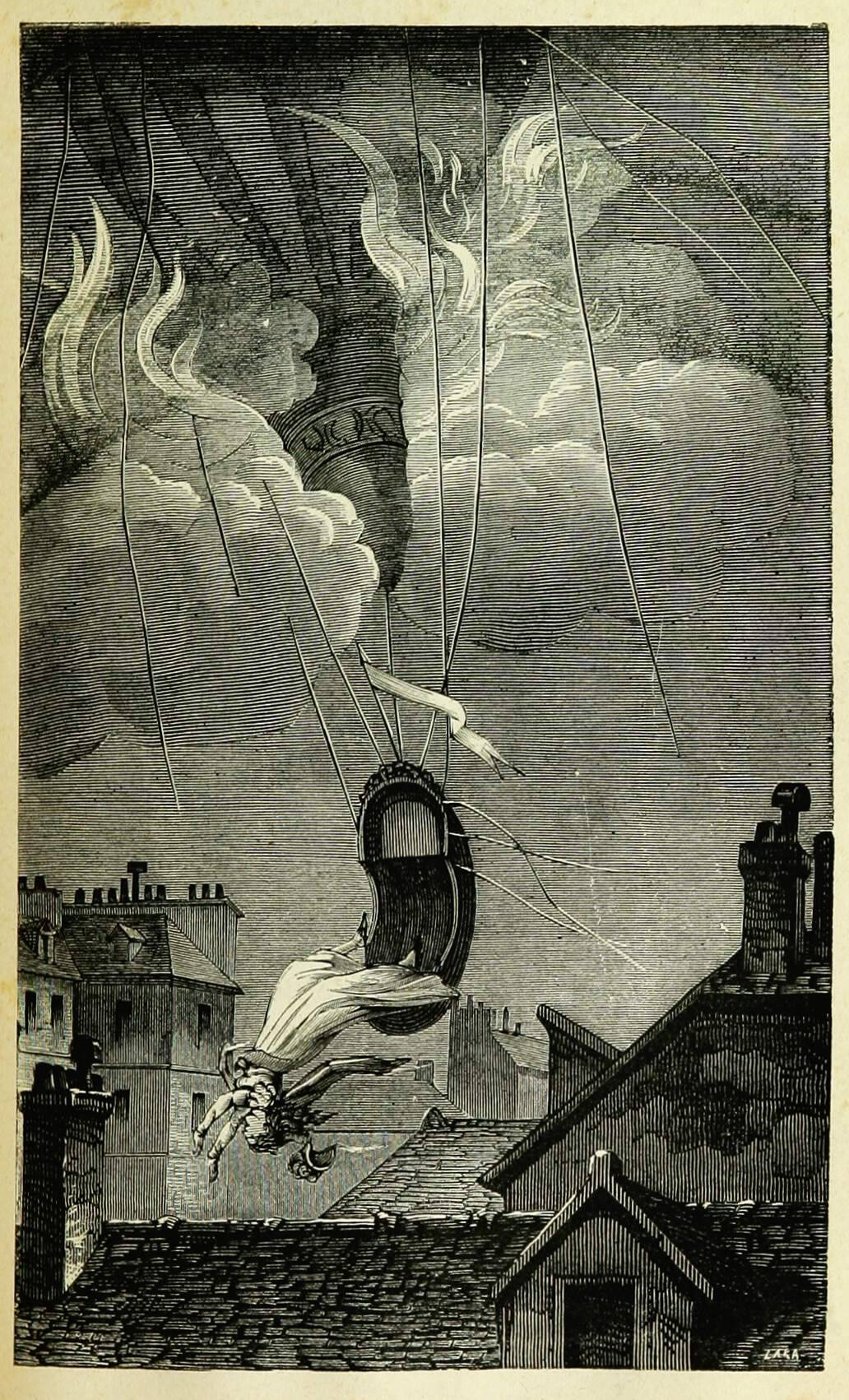
Death of French aeronaut Madame Sophie Blanchard after fireworks ignited her balloon, Paris, 1819. Woodblock engraving. From Louis Figuier’s “Les Merveilles de la Science: Aerostats” (Marvels of Science: Air Balloons), Paris : Librairie Furne, Jouvet et Cie., 1867. | src old book illustrations and internet archive

A woman is falling from the gondola of a hot-hair balloon flying over the roofs. She is Sophie Blanchard was the widow of aeronaut Pierre Blanchard, and an aeronaut herself.

On July 6, 1819, Madame Blanchard was taking part in an exhibition in the Tivoli garden in the rue Saint-Lazare. She carried with her a parachute full of fireworks in order to give the public the spectacle of fireworks descending from the middle of the air. She held a fire lance in her hand to light the fireworks she was supposed to launch from the balloon gondola. A false movement brought the orifice of the balloon into contact with the fire lance: the hydrogen gas ignited. Immediately an immense pillar of fire rose above the machine. Madame Blanchard was then distinctly seen trying to extinguish the fire by compressing the lower orifice of the balloon: then, recognizing the uselessness of her efforts, she sat down in the basket and waited. The gas burned for several minutes, without communicating with the balloon gondola. The rapidity of the descent was very moderate, and there is no doubt that, had she been directed towards the country, Madame Blanchard would have reached land without accident. Unfortunately it was not so: the balloon fell on Paris; it fell on the roof of a house in the rue de Provence. The gondola slid down the slope of the roof, on the side of the street. “A moi!” cried Madame Blanchard. These were her last words. As it slid down the roof, the gondola encountered an iron spike; it stopped abruptly, and, as a result of this shock, the unfortunate aeronaut was thrown out, and fell, head first, on the pavement. (quoted from scanned book at internet archive)

The caption reads in the original French: “Mort de madame Blanchard”. IA