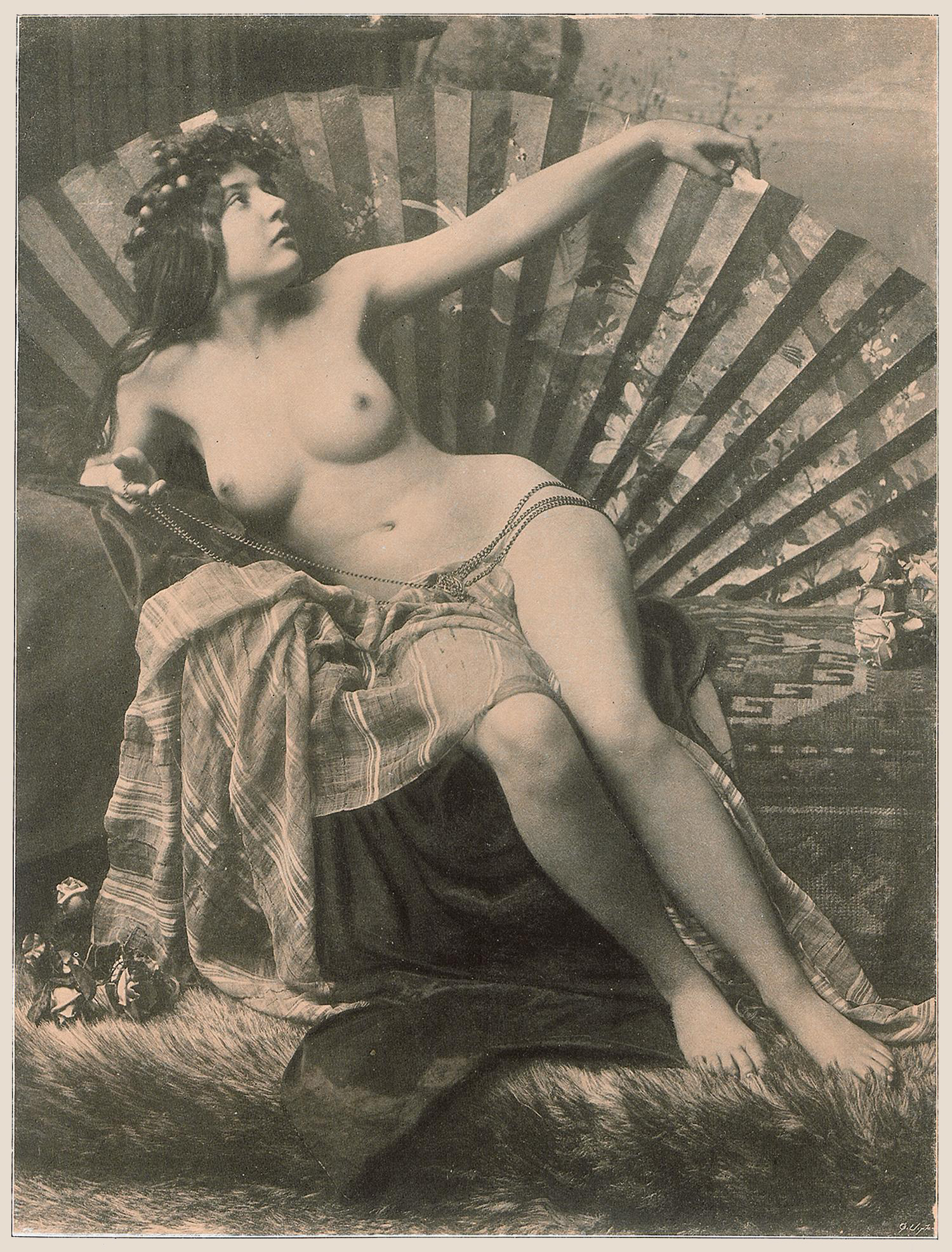
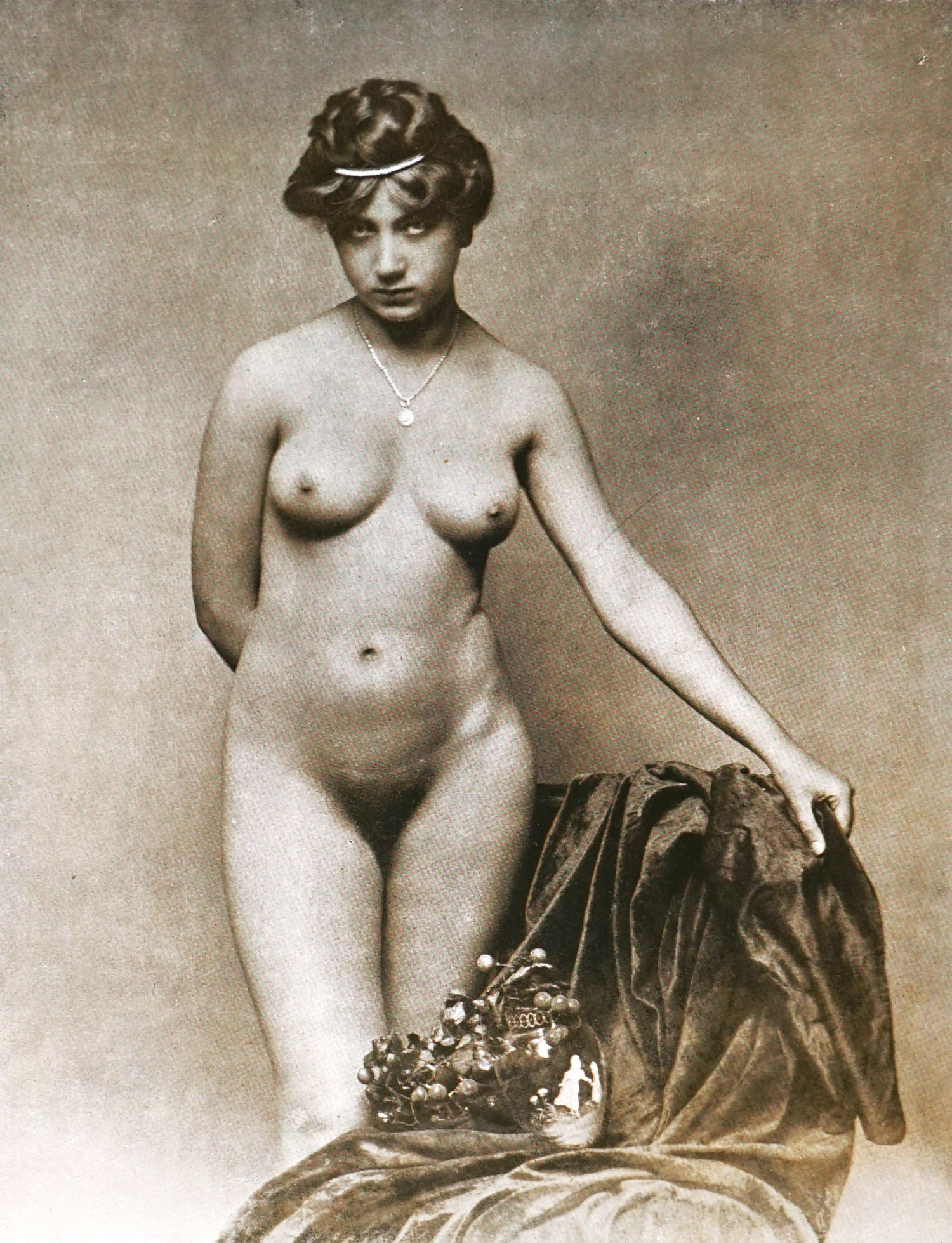
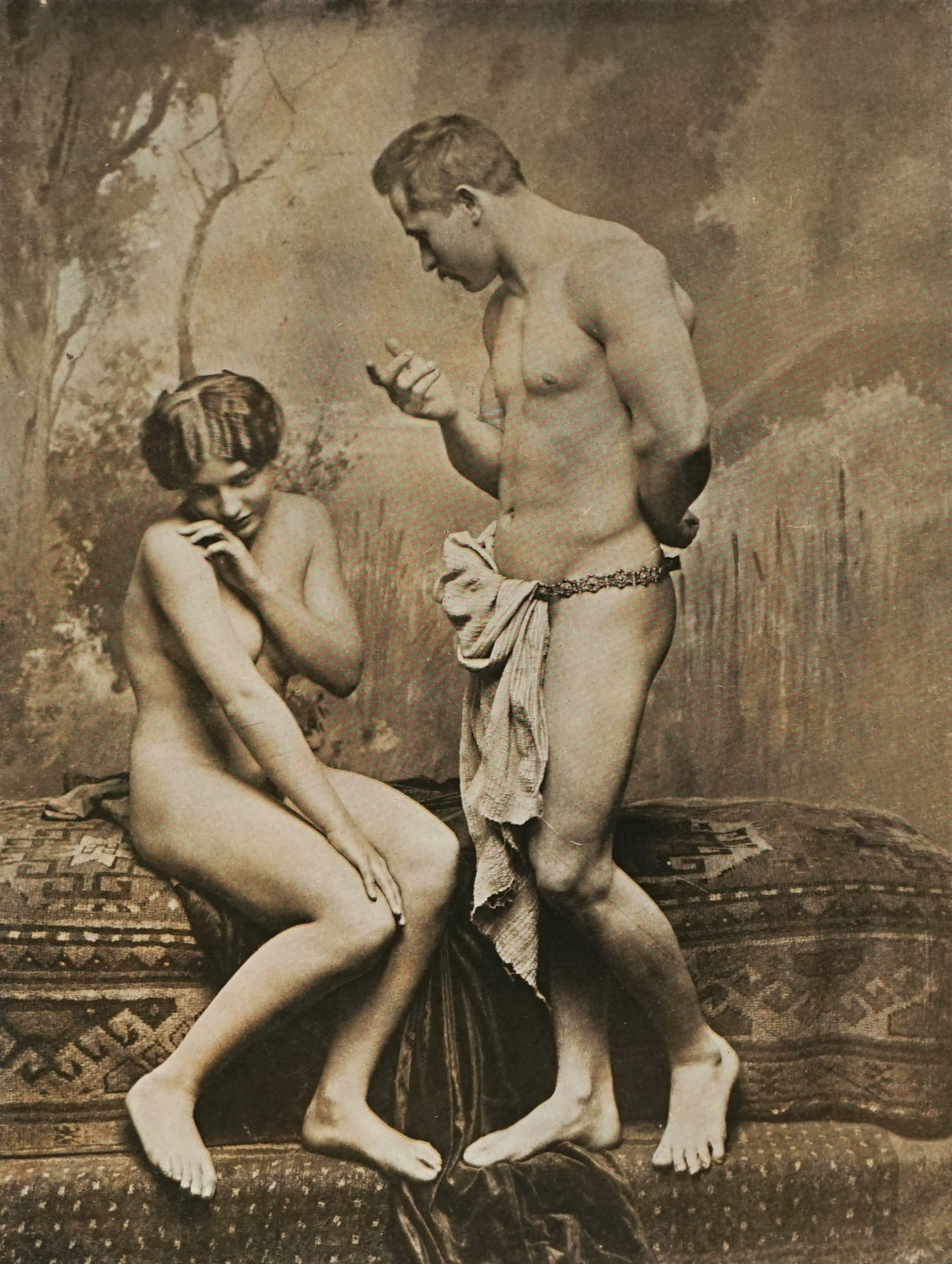
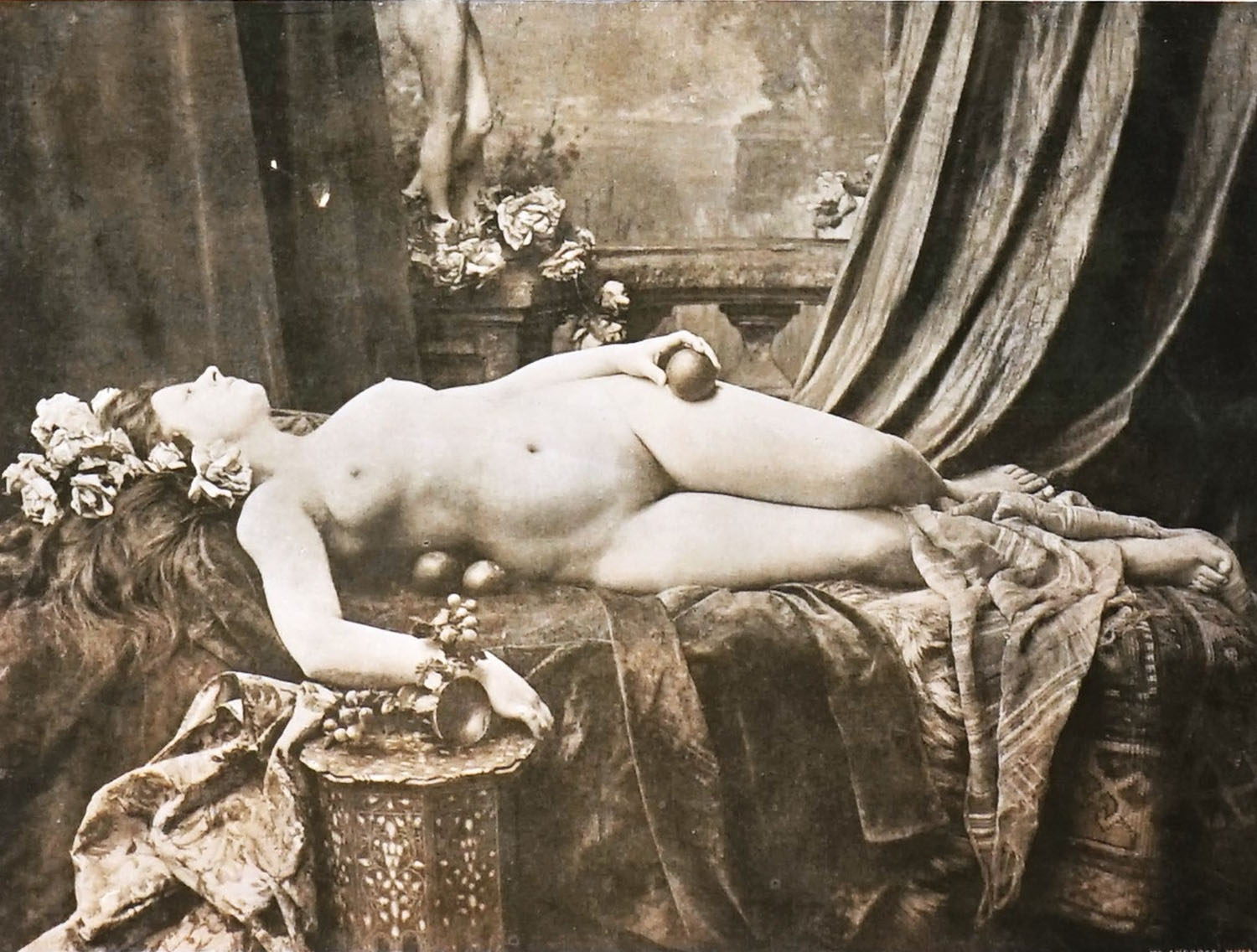
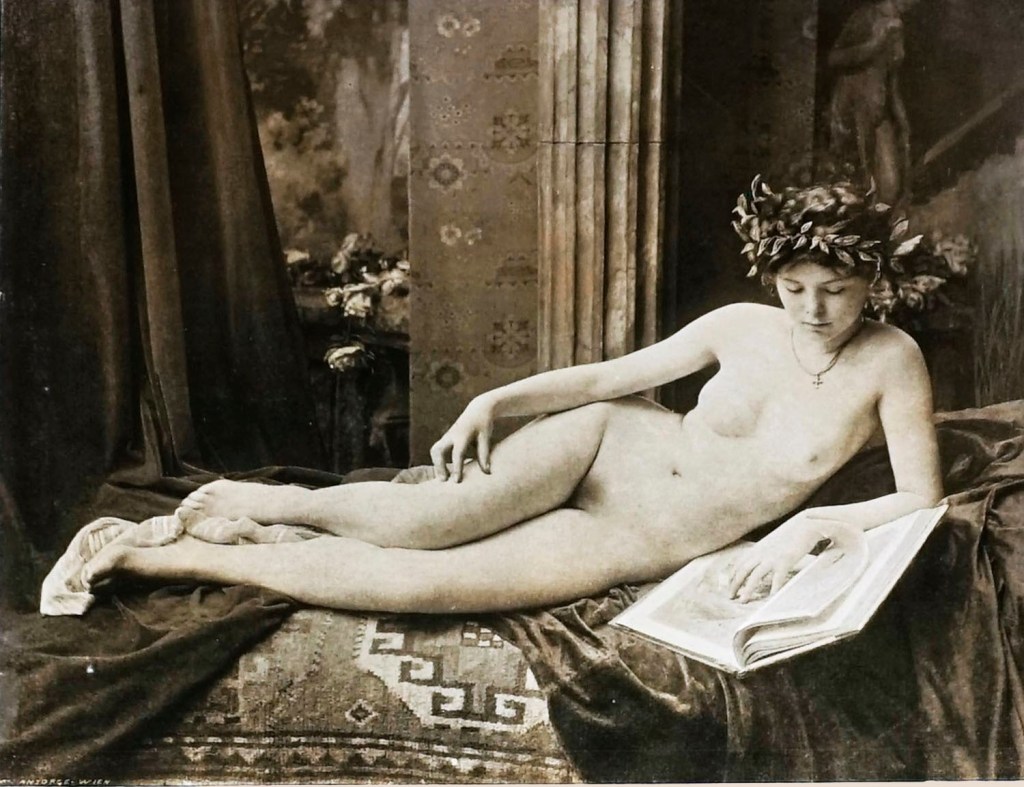
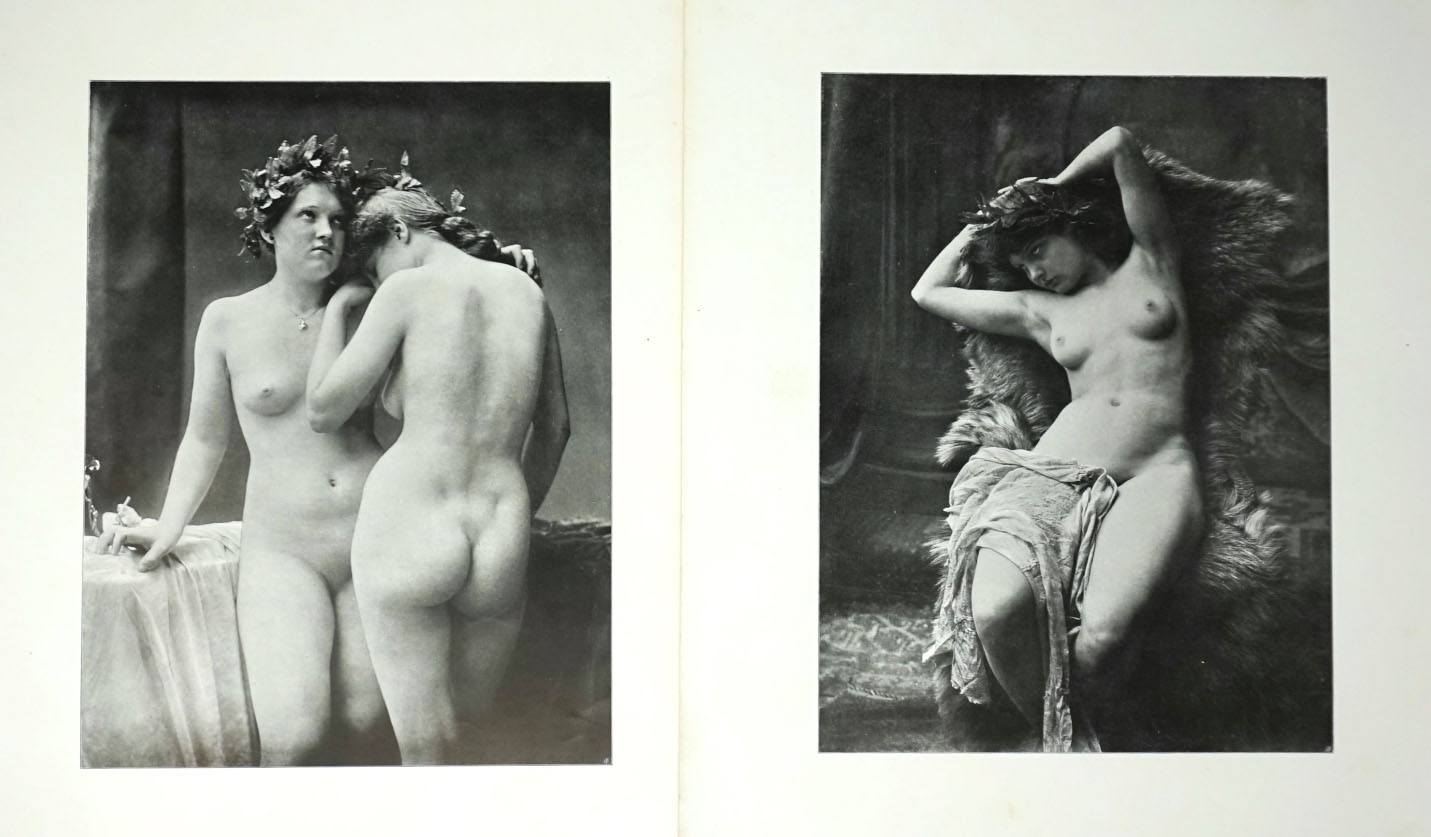
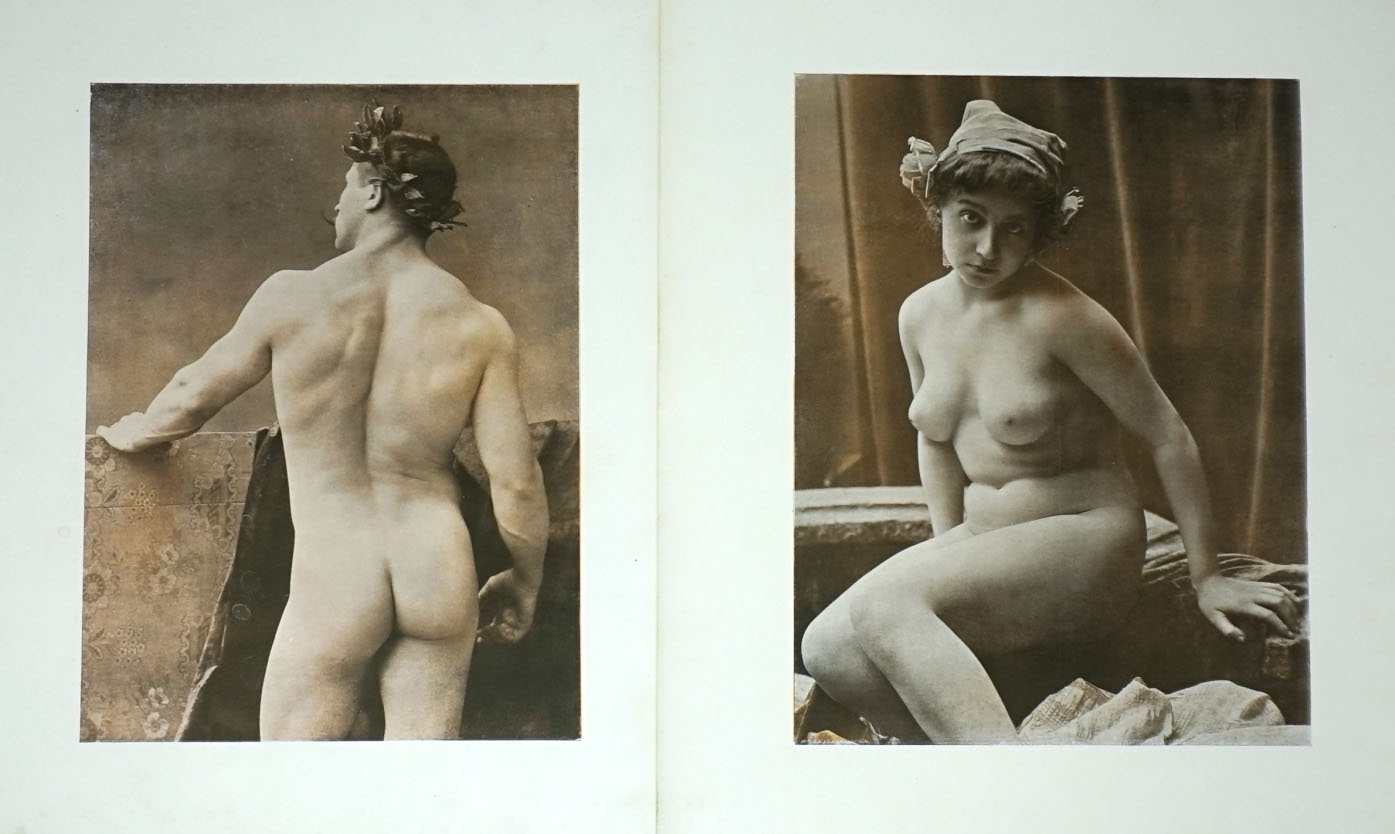
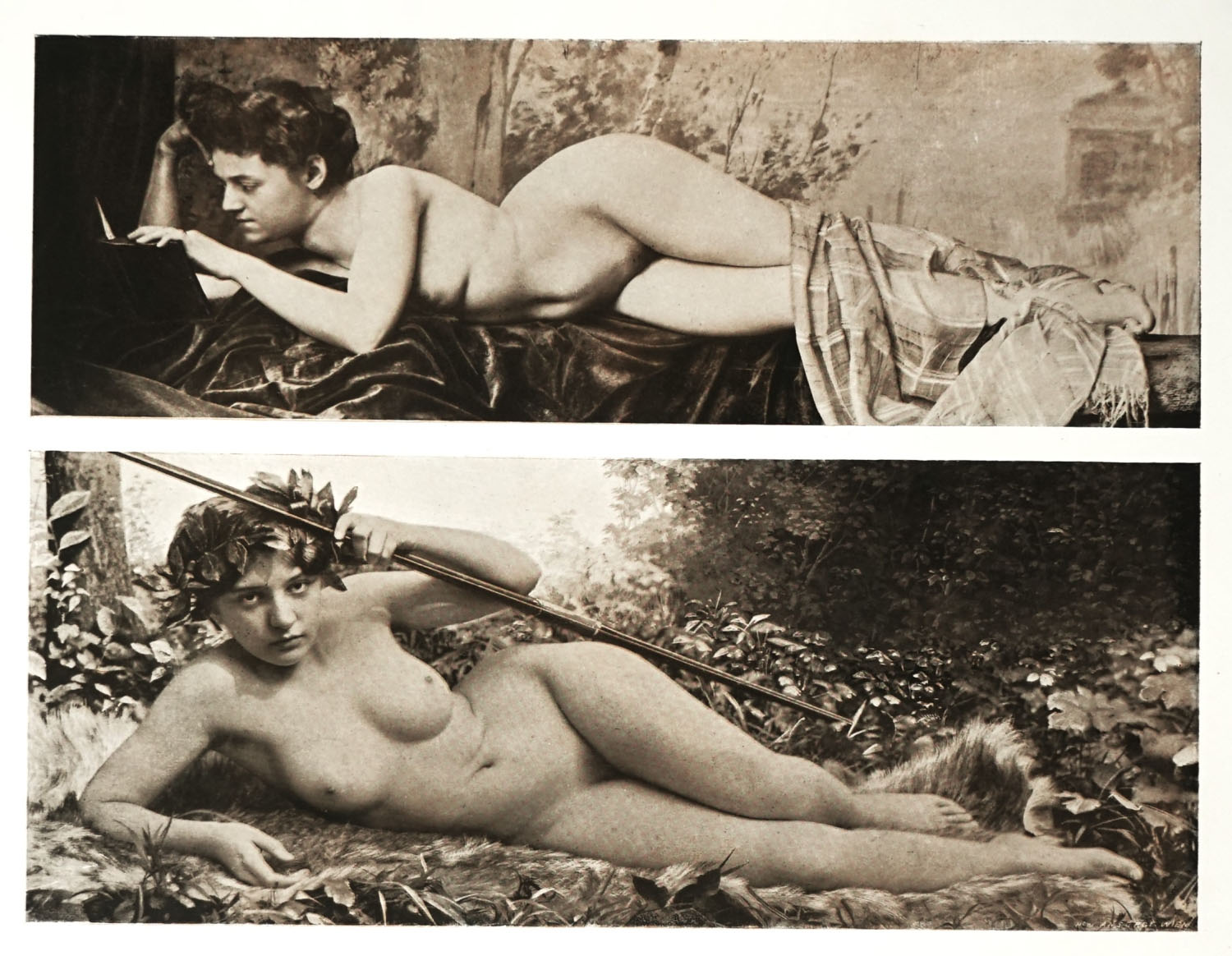
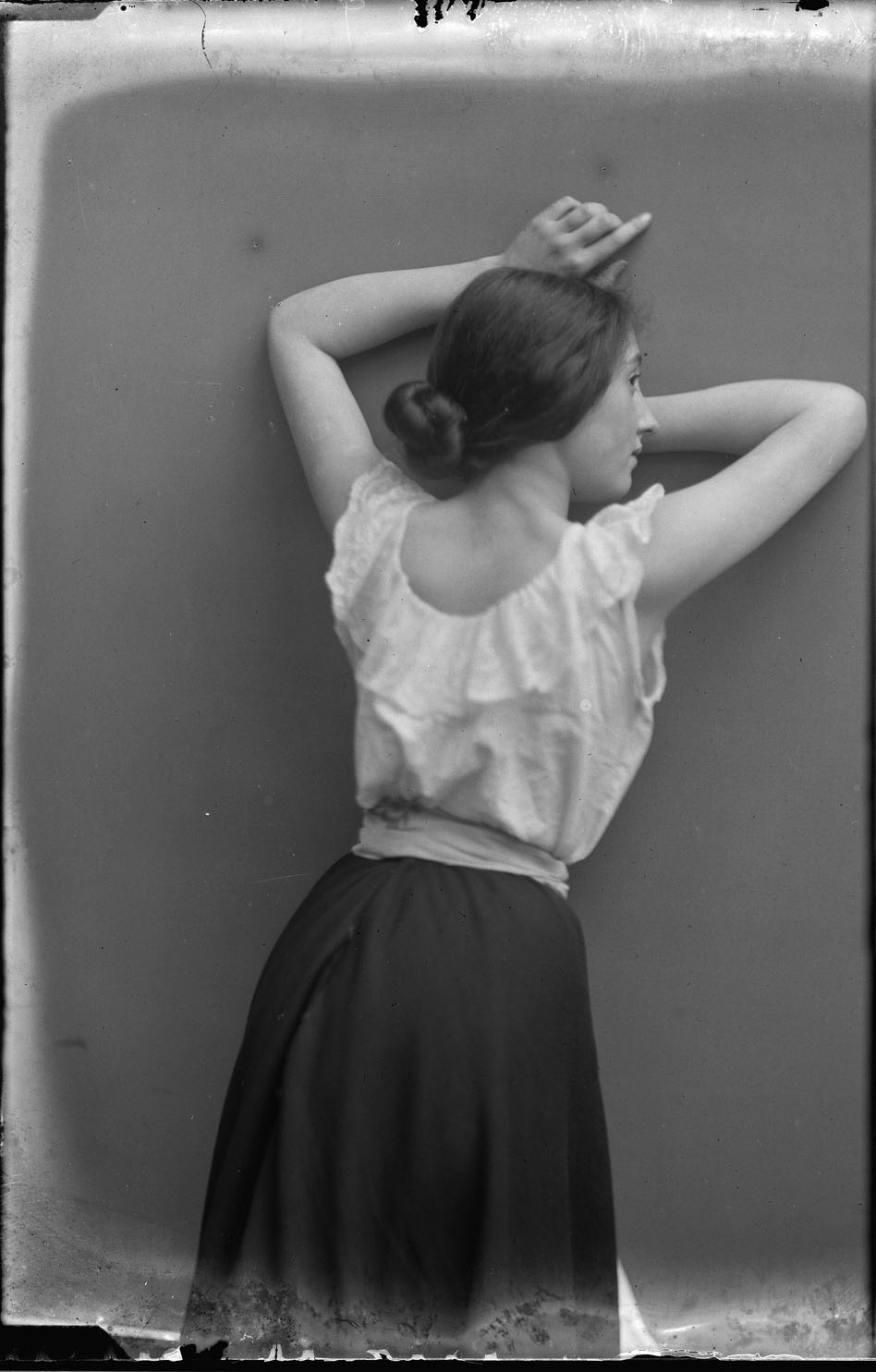
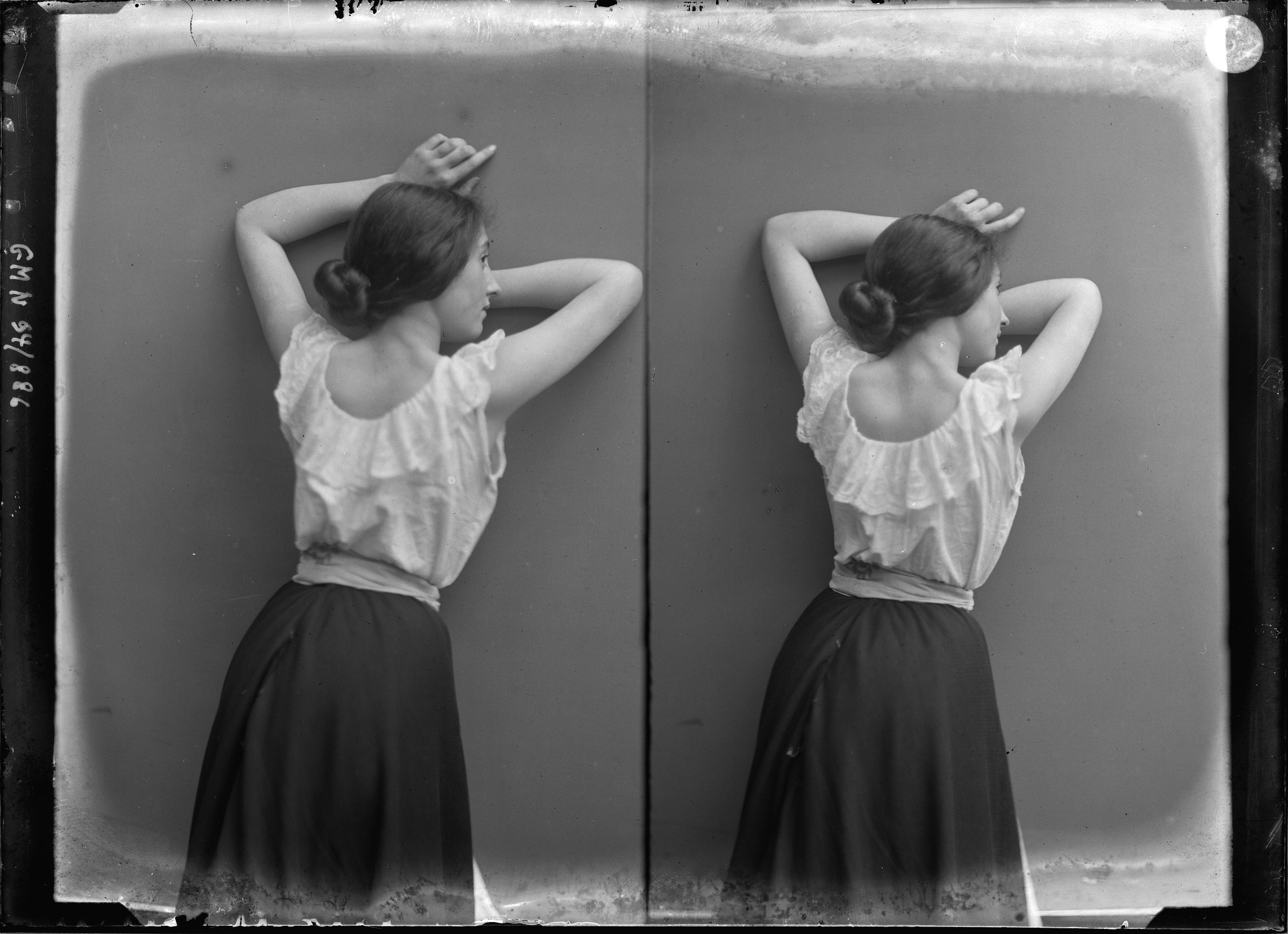
Eduard Büchler & Johann Riediger ~ Der Wiener Akt, Serie I (Wien, Otto Schmidt, 1906) | src Bassenge AuktionenEduard Büchler & Johann Riediger ~ Der Wiener Akt, Serie I (Wien, Otto Schmidt, 1906) | src Bassenge AuktionenEduard Büchler & Johann Riediger ~ Der Wiener Akt, Serie I (Wien, Otto Schmidt, 1906) | src Bassenge AuktionenEduard Büchler & Johann Riediger ~ Der Wiener Akt, Serie I (Wien, Otto Schmidt, 1906) | src Bassenge AuktionenDer Wiener Akt, Serie I. Eduard Büchler & Johann Riediger (Wien, Otto Schmidt, 1906) | src Bassenge AuktionenDer Wiener Akt, Serie I. Eduard Büchler & Johann Riediger (Wien, Otto Schmidt, 1906) | src Bassenge AuktionenDer Wiener Akt, Serie I. Eduard Büchler & Johann Riediger (Wien, Otto Schmidt, 1906) | src Bassenge Auktionen
Der Wiener Akt, Serie I. Fotografische Aufnahmen nach der Natur gestellt von Kunstmaler Eduard Büchler aufgenommen von Johann Riediger (Deckeltitel)
Seltenes Mappenwerk mit 24 Aktphotographien nach Motiven des Wiener Jugendstilmalers Eduard Büchler (1861-1958)
Rare portfolio with 24 nude photographs based on motifs by the Viennese Art Nouveau painter Eduard Büchler (1861-1958).
Eduard Büchler & Johann Riediger ~ Der Wiener Akt, Serie I (Wien, Otto Schmidt, 1906) | src Bassenge AuktionenEduard Büchler & Johann Riediger ~ Der Wiener Akt, Serie I (Wien, Otto Schmidt, 1906) | src Bassenge AuktionenEduard Büchler & Johann Riediger ~ Der Wiener Akt, Serie I (Wien, Otto Schmidt, 1906) | DetailEduard Büchler & Johann Riediger ~ Der Wiener Akt, Serie I (Wien, Otto Schmidt, 1906) | src Bassenge AuktionenEduard Büchler & Johann Riediger ~ Der Wiener Akt, Serie I (Wien, Otto Schmidt, 1906) | src Bassenge Auktionen
Wilhelm von Gloeden (1856-1931) ~ Boy [Giacomo Lanfranchi] dressed as a girl, with cloak of cloth over head, Taormina, Sicily, 1906. Albumen silver print from glass negative | src The MetWilhelm von Gloeden~ [Boy dressed as girl in Gypsy lace shawl], ca. 1900 | src Palmer Museum of Art of The Pennsylvania State University
Gustave Marissiaux ~ Untitled, Liège, 1902 (left half of stereo image)Gustave Marissiaux ~ sans titre, Liège, 1902. Reproduction par inversion du négatif sur verre. Coll. Musée de la Photographie (Charleroi)
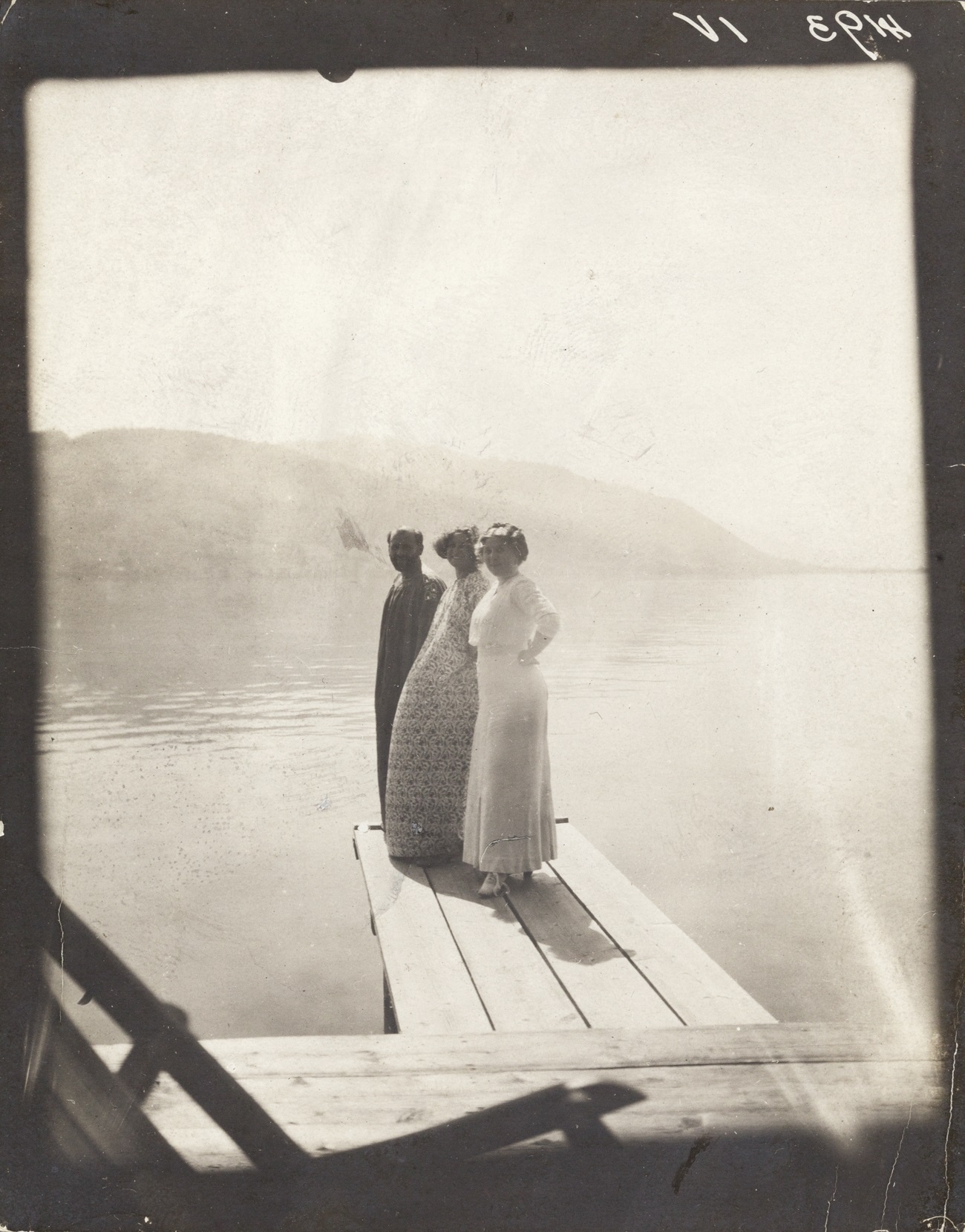
Anonymous. Gustav Klimt, Emilie und Helene Flöge, Litzlberg at Attersee, Austria, 1906 | src Ostlicht
Emilie Flöge spent many summers with Gustav Klimt at Lake Attersee from the 1890s on. Her sisters Pauline and Helene, with whom she opened the “Schwestern Flöge” fashion salon at Mariahilfer Strasse 1b in 1904, were often also part of the party. The salon, designed by Josef Hoffmann as a “Gesamtkunstwerk”, employed up to 80 seamstresses at the time of its greatest success and catered to the upper bourgeoisie. Helene Flöge was married to Ernst Klimt, the younger brother of Gustav Klimt, with whom he worked in a studio partnership.
This private photograph is captivating because of the contrast between the different silhouettes of the three figures, which reveals the emancipatory radicalism of the reform dress – in contrast to the usual dresses worn over a corset. Implicitly, as one might say, this also “quotes” the design element of repeated curved lines, as found in many of Gustav Klimt’s compositions. This is the only known print of this photograph [Negative number “4/93 IV” in the upper margin, handwritten annotated “Gustav Klimt Emilie Helene” in ink on the reverse.] | src Ostlicht
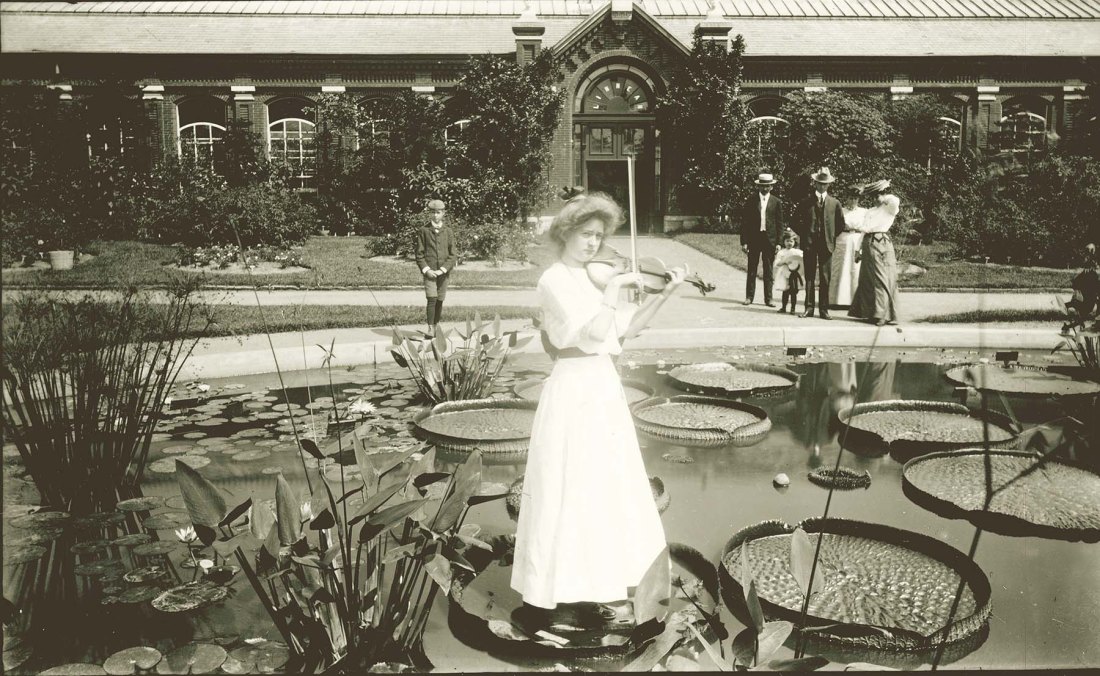
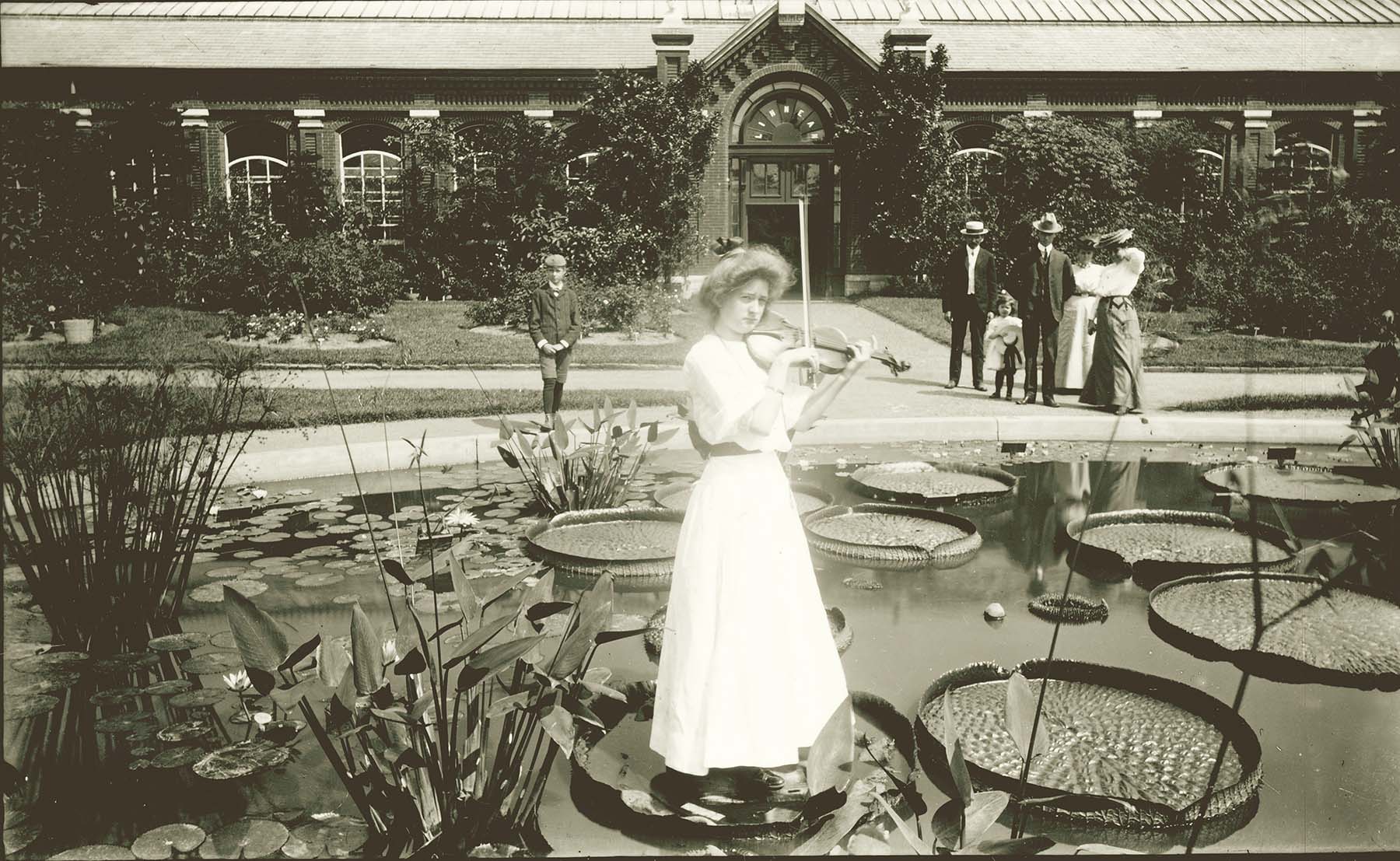
Woman playing violin, standing on lily pad at Shaw’s Garden (Missouri Botanical Garden), in front of Linnean House. Photograph by William G. Swekosky, ca. 1905. [Detail]A young woman playing the violin, standing on lily pad at Shaw’s Garden (Missouri Botanical Garden), in front of Linnean House. Photograph by William G. Swekosky, ca. 1905. | Missouri History Museum
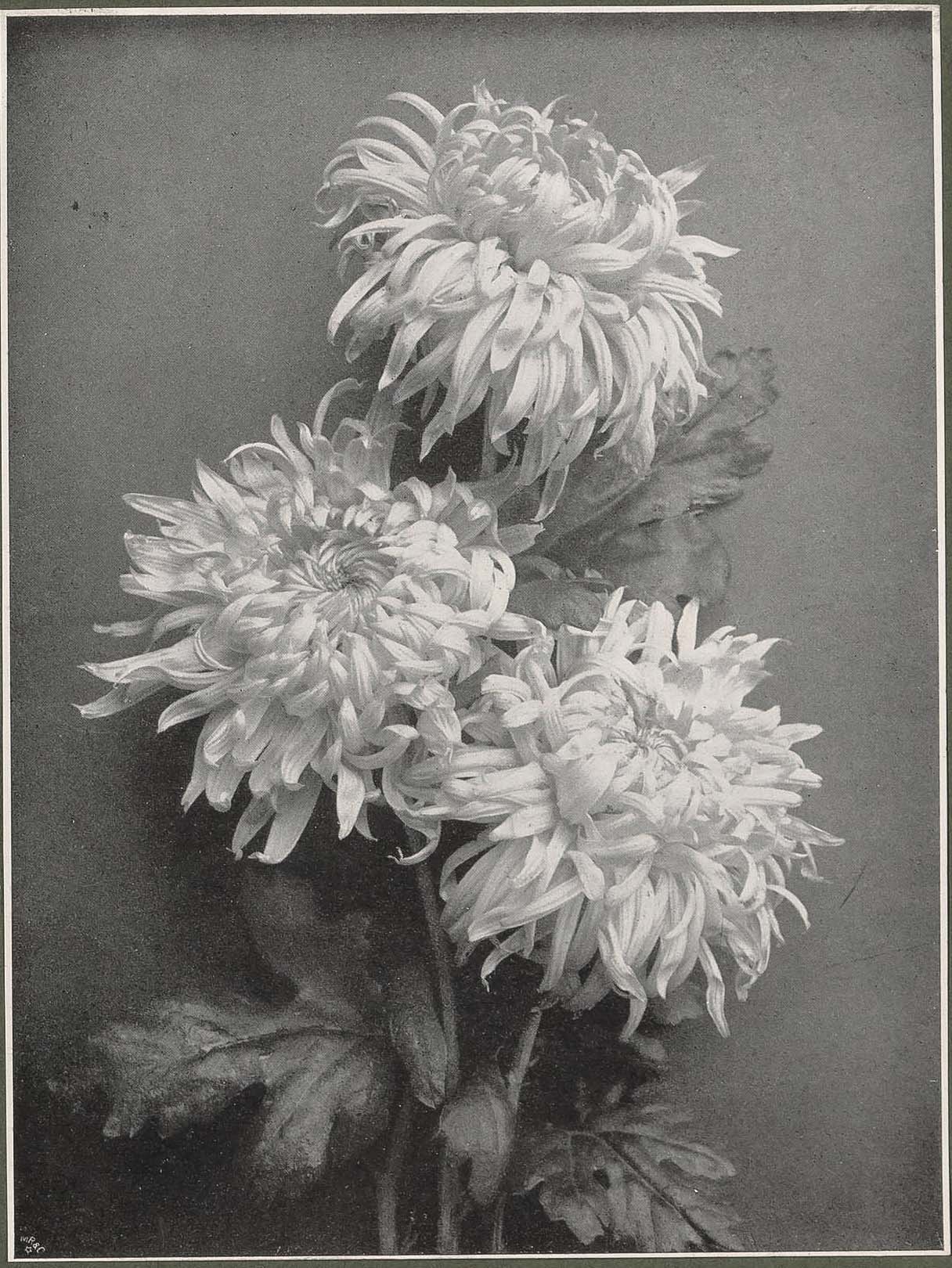
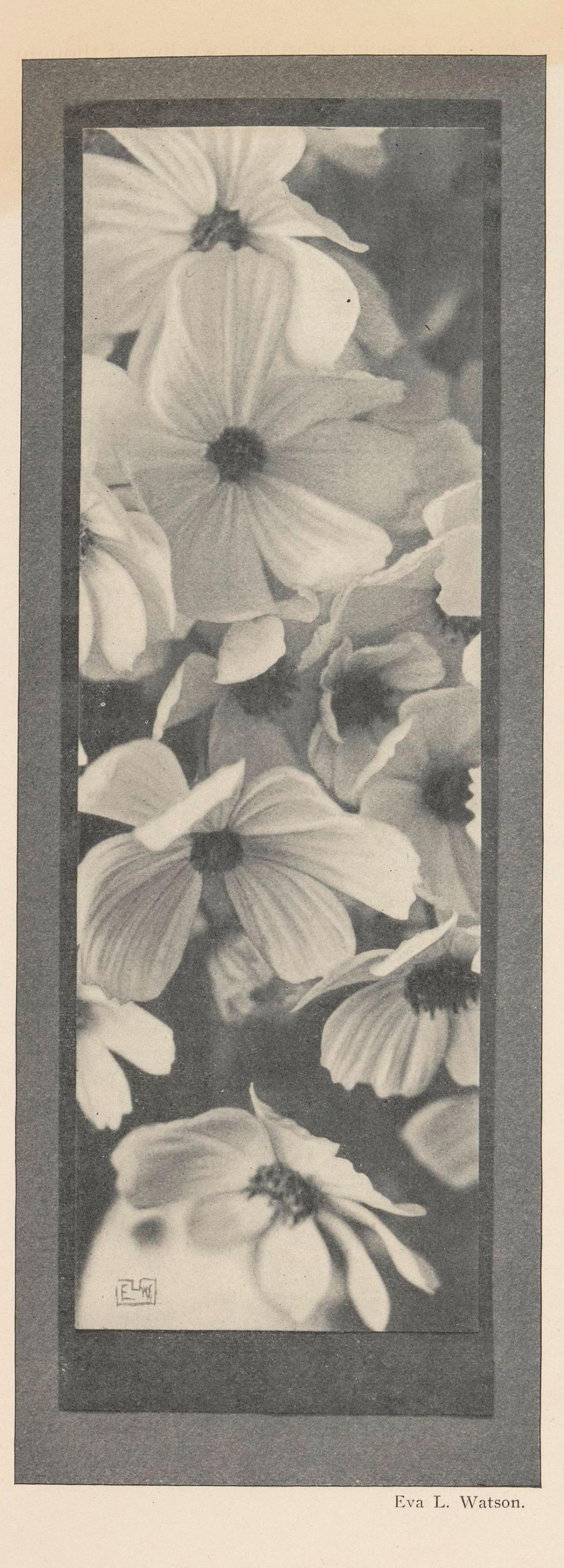
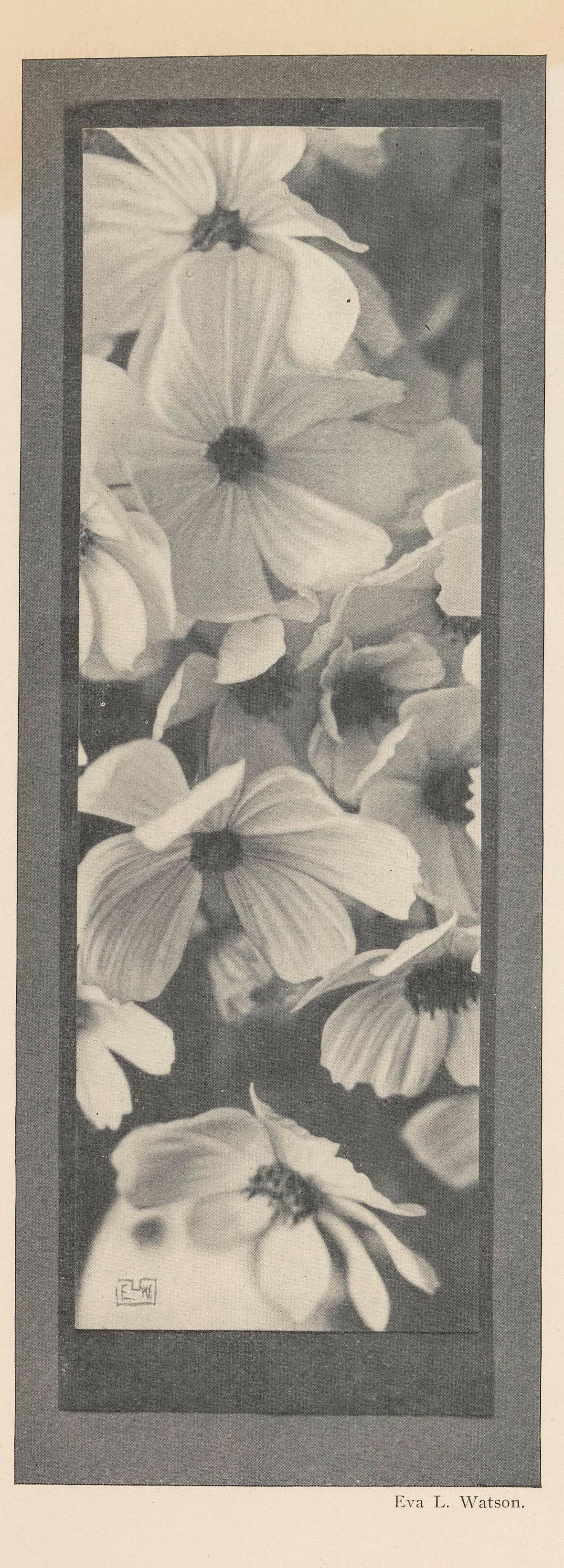
Eva Watson-Schütze :: Bloemen, ca. 1895 – in or before 1900. From: Camera notes / The Camera Club of New York | RijksmuseumCamera notes / The Official Organ of the Camera Club of New York, 1900-1901. Published quarterly. | src Rijksmuseum
Eva Watson-Schütze (born, Eva Lawrence Watson) (1867–1935)
In 1883, when Eva Watson was sixteen, she enrolled in the Pennsylvania Academy of the Fine Arts in Philadelphia, where she studied under well-known painter and photographer Thomas Eakins. Her interests at that time were watercolor and oil painting, and it’s unknown if she took any interests in Eakins’ photography.
Around the 1890s Watson began to develop a passion for photography, and soon she decided to make it her career. Between 1894 and 1896 she shared a photographic studio with Amelia Van Buren, another Academy alumna, in Philadelphia, and the following year she opened her own portrait studio. She quickly became known for her pictorialist style, and soon her studio was known as a gathering place for photographers who championed this aesthetic vision.
In 1897 she wrote to photographer Frances Benjamin Johnston about her belief in women’s future in photography: “There will be a new era, and women will fly into photography.”
In 1898 six of her photographs were chosen to be exhibited at the first Philadelphia Photographic Salon, where she exhibited under the name Eva Lawrence Watson. It was through this exhibition that she became acquainted with Alfred Stieglitz, who was one of the judges for the exhibit.
In 1899 she was elected as a member of the Photographic Society of Philadelphia. Photographer and critic Joseph Keiley praised the work she exhibited that year, saying she showed “delicate taste and artistic originality”.
The following year she was a member of the jury for the Philadelphia Photographic Salon. A sign of her stature as a photographer at that time may be seen by looking at the other members of the jury, who were Alfred Stieglitz, Gertrude Kasebier, Frank Eugene and Clarence H. White.
In 1900 Johnston asked her to submit work for a groundbreaking exhibition of American women photographers in Paris. Watson objected at first, saying “It has been one of my special hobbies – and one I have been very emphatic about, not to have my work represented as ‘women’s work’. I want [my work] judged by only one standard irrespective of sex.” Johnston persisted, however, and Watson had twelve prints – the largest number of any photographer – in the show that took place in 1901.
In 1901 she married Professor Martin Schütze, a German-born trained lawyer who had received his Ph.D. in German literature from the University of Pennsylvania in 1899. He took a teaching position in Chicago, where the couple soon moved.
That same year she was elected a member of The Linked Ring. She found the ability to correspond with some of the most progressive photographers of the day very invigorating, and she began to look for similar connections in the U.S.
In 1902 she suggested the idea of forming an association of independent and like-minded photographers to Alfred Stieglitz. They corresponded several times about this idea, and by the end of the year she joined Stieglitz as one of the founding members of the famous Photo-Secession.
Since Watson-Schütze’s death there have been two retrospective exhibitions of her photographs: Eva Watson-Schütze, Chicago Photo-Secessionist, at the University of Chicago Library in 1985, and Eva Watson-Schütze, Photographer, at the Samuel Dorsky Museum Art at the State University of New York at New Paltz in 2009.
Her works were also included in exhibits at the National Museum of Women in the Arts in Washington, DC. [quoted from Wikipedia website]
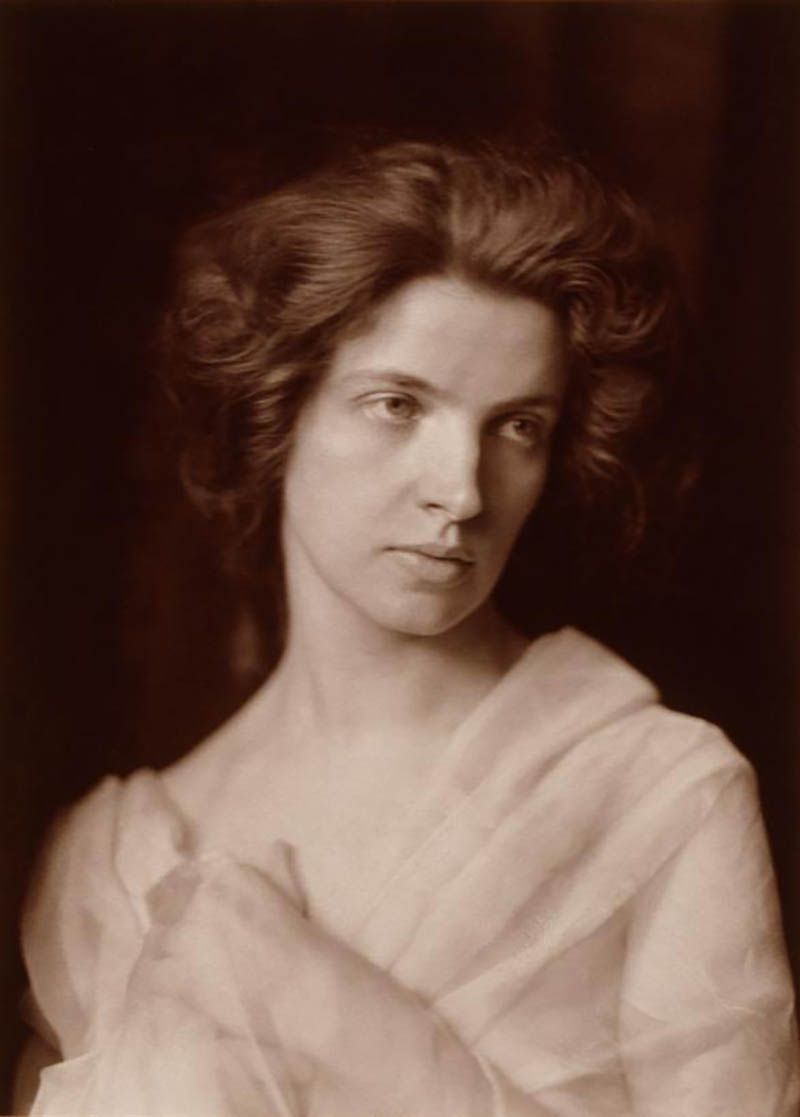
Alfred Nybom :: Nuori nainen (Young woman) · Maud Allan, hiilivedos (carbon print), 1905 | src Suomen valokuvataiteen museon kokoelma – Collection of the Finnish Museum of PhotographyAlfred Nybom :: Untitled, ca. 1903 | Collection of the Finnish Museum of PhotographyAlfred Nybom :: Maud Allan, carbon print, 1905 | Collection of the Finnish Museum of Photography
Ethereal, fragile, clean, innocent, like an ancient muse. An unnamed beauty in portraits taken by Alfred Nybom in Berlin in the early 20th century. The descriptions I could have previously combined with these familiar collections now seem foreign, stale, and deadly boring. What would a bohemian sex symbol, a queer in Edwardian England, a versatile, controversial and intelligent, and scandalous artist sound like?
I may not have viewed the woman in the picture as an individual in the past, but she represented an archetype: a dreamlike and allegorical female figure in Belle Époque’s pictorialist photography. The generalized impression was shattered when the museum was contacted by a collector interested in theatrical photographs. That person had read about our Nybom collection. She said the woman in Nybom’s picture was Maud Allan.
At the museum, of course, we rejoiced when the iconic image got its name. At the same time, getting to know Allan’s life story changed my own attitude towards these images.
Beulah Maude Durrant was born in Toronto, Canada in 1873. In 1895, Durrant’s brother was convicted of the brutal murder of two young women. He was executed three years later. Durrant’s mother was a repressive figure whose incestal love for her son has long been rumored. To distance himself from his family, Durrant changed his name to Maud Allan and went across the Atlantic to Berlin to study to be a pianist.
Allan’s career as a pianist and opera singer was short and miserable, but she immediately adapted to the bohemian circles of Berlin and supported herself, among other things, by designing corsets and illustrating a sex guide for women. Allan didn’t find her self-expression in dance until he was 27 years old. Modern dance was a new and free art form that did not require lifelong practice. Allan developed an expression that revived, in her own words, the dance traditions of ancient Greece and the feminine movement in Renaissance paintings.
Allan wrote her memoir My Life and Dancing, which at the same time was a dissertation on dance as an art, in 1908. Her autobiography reflects a passionate approach to art, extensive reading, a sense of humor and a sharp intelligence. Allan spoke of her attitude towards dancing as a noble pure expression of emotion. At the same time, she completely ignored the controversial side associated with her personality. For example, she did not comment on the eroticism of her dance style.
Allan became known for her role as the greatest of the femme fatale, Salome, the seductress of the Bible. She identified with Salome and felt that she was essentially an innocent child suffering from her mother’s sins. Allan’s dance toward catharsis: breaking away from her difficult motherhood and bloody family history. Her masterpiece, the Shamelessly Sensual and Sexy Salome’s Vision (1906), based on thorough research, was a success. Allan had designed her own performance outfit.
Salome’s Vision also sparked protests over its eroticism, but with a few exceptions, the show avoided censorship. Allan managed to meet the needs of the time and combined oriental exoticism, eroticism, and high culture in a salon-friendly way. In 1907, after seeing Allan’s performance, King Edward himself invited Allan to England, where she lived for the next decade.
In her autobiography, Allan still wrote that most of the opposition and criticism she experienced came from other women. With the patriarchal control and repression of male sexuality by men, Allan came to face it in all its creepy in an episode that ruined her career.
Noel Pemberton Billing, a Member of Parliament, a champion of the moral purity of British society, published a paranoid and outrageous attack in the nationalist Imperialist newspaper in December 1917, with British war success at stake. According to Pemberton Billing, war enemy Germany was under the control of homosexuals. England, on the other hand, was full of spies who belonged to the secret society of German “spiritualists, whores, and homosexuals”. Maud Allan was among the named perverts. She had a relationship with the wife of the former British Liberal Prime Minister, according to Pemberton Billing, and the entire trio were minions of the enemy. Pemberton Billing, who himself had a German wife, continued on the obscene line when he wrote about Oscar Wilde’s play in 1918, in which Allan again performed Salome. After a performance in Paris, he painted threatening images of a “clitoris cult” of lesbian spies, claiming that the enemies of the state were at the forefront of Allan’s shameless performance.
The only true to the accusations was that Allan did indeed have intimate relationships with both men and women. Engaged in Germany, even engaged to a German sculptor, the bisexual and “fallen woman” who had connections to the politicians of the other party was a great target.
Allan sued Pemberton Billing for defamation. Surprisingly, he found himself on the defensive. The accused had excavated Allan’s grim family history and also considered this brother’s offense to be aggravating Allan’s identity. After revealing the painful secrets, Pemberton Billing asked the shocked Allan if she knew what the word clitoris meant. Allan’s positive response was taken as clear evidence of her sexual anomaly. Luckily, Pemberton Billing didn’t know Allan had drawn clitoris to a German sex guide 18 years earlier. The trial became a nutty circus, with no room for all the twists and turns in this context. Allan was witnessed by Oscar Wilde’s former, bitter lover, who sought revenge by dragging Wilde’s play into the bottom line. In addition, the slandered liberal politicians hired a young female agent to seduce Pemberton Billing and lead him to a brothel but failed. The agent fell in love with the attractive Pemberton Billing, changed sides and lied in favor of him in her testimony in court. Pemberton Billing was acquitted of all charges. The decision was made in the courtroom with shouts of joy as the women waved their handkerchiefs and the men threw their hats in the air.
The Salome mania of the early 20th century was over and the career of the disgraced Maud Allan collapsed. The aging female artist, known for her appearance, had no chance of re-creating herself. According to Allan’s biographer, she became a disappointed, useless, lying, exploitative, and even sadistic diva who lived a delusional life unable to let go of the glory of her youth. Maud Allan died almost forgotten in 1956 in the United States. We will never see these images again as before. The museum lost an unnamed and clean archetype, but was replaced by something much more interesting.










 un regard oblique