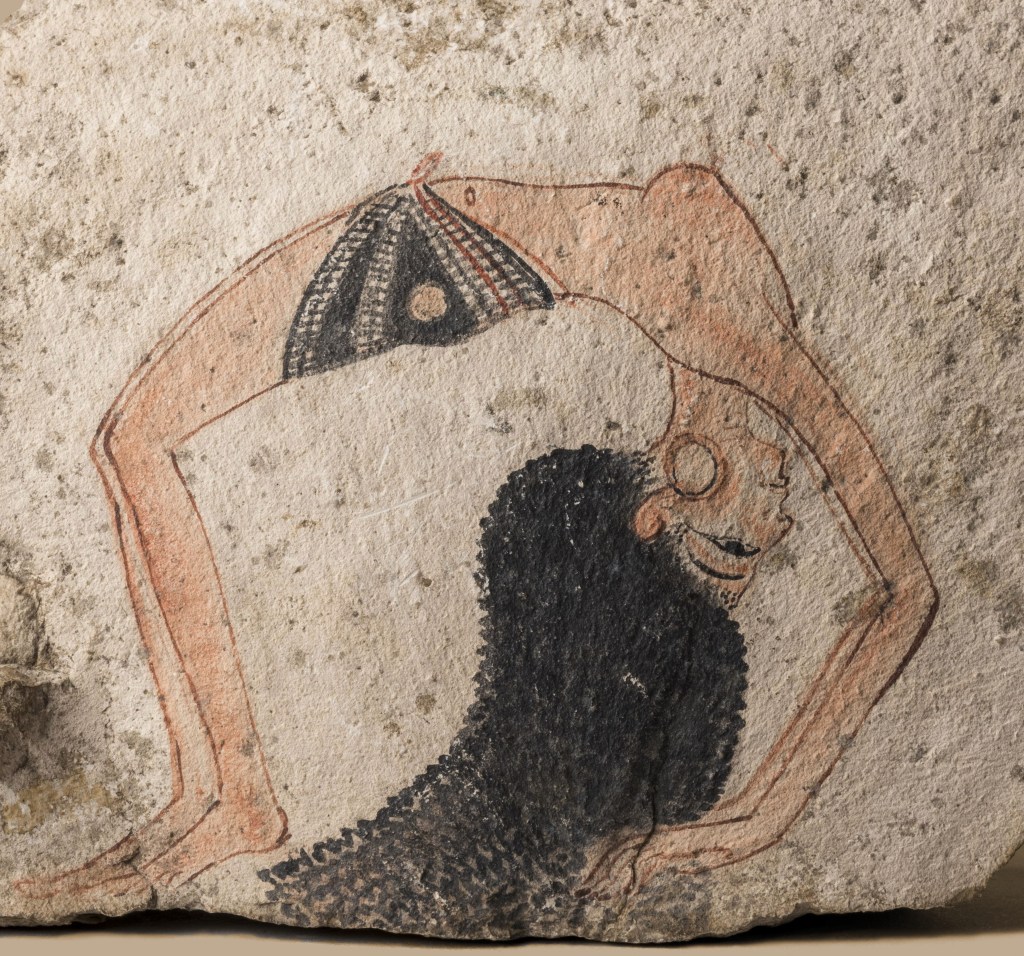
Ostrakon figurato con rappresentazione di danzatrice in posizione acrobatica. La donna è seminuda, con indosso un pareo nero e gli orecchini a cerchio in oro. È raffigurata, mentre si piega, perfettamente di profilo. Calcare dipinto. Nuovo Regno, XIX-XX dinastia (1292-1076 a.C.). Provenienza: Deir el-Medina. Ostrakon with representation of a dancer in an acrobatic position. The woman is half-naked, wearing a black sarong and gold hoop earrings. She is pictured, bending over, perfectly in profile. Painted limestone. New Kingdom, 19th-20th dynasty (1292-1076 BC). Provenance: Deir el-Medina source Museo Egizio, Torino
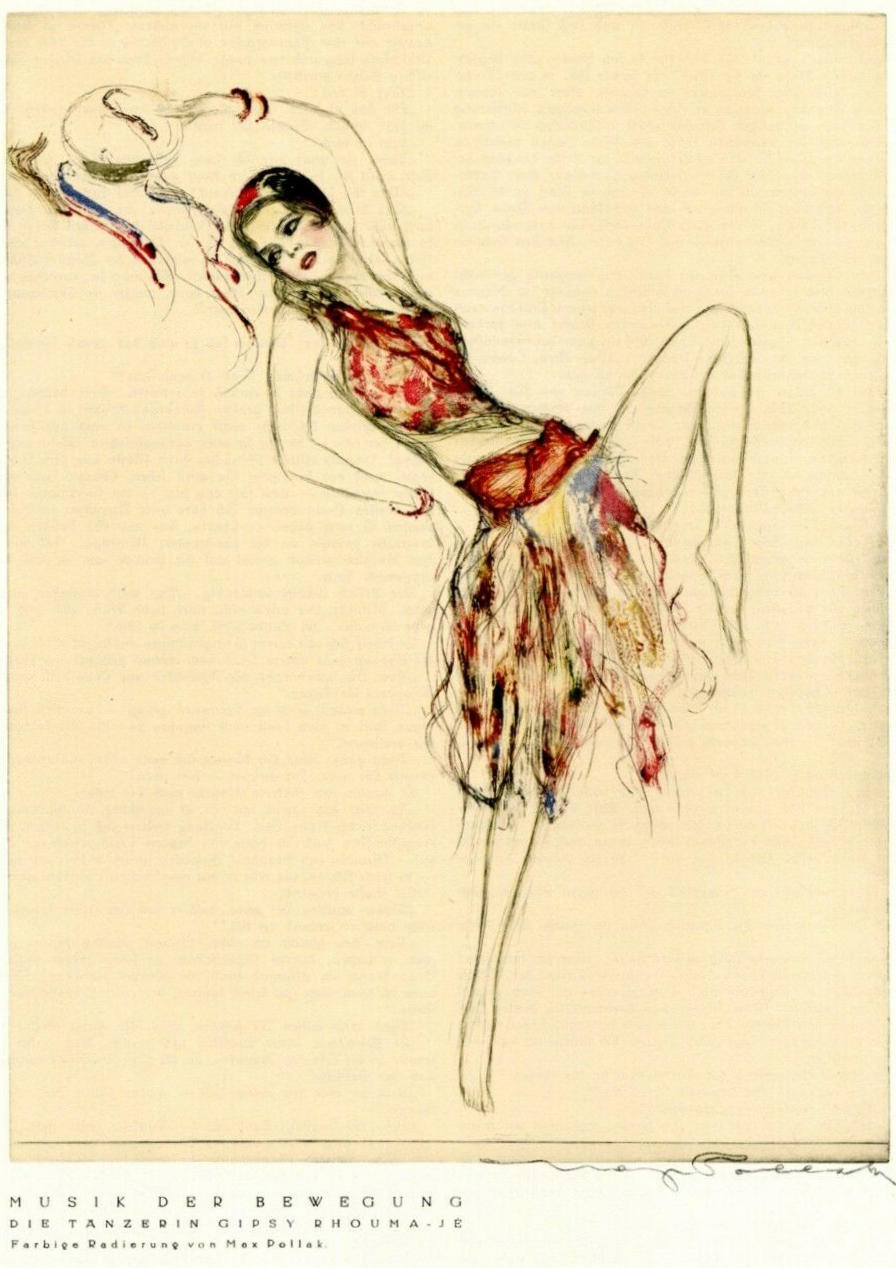
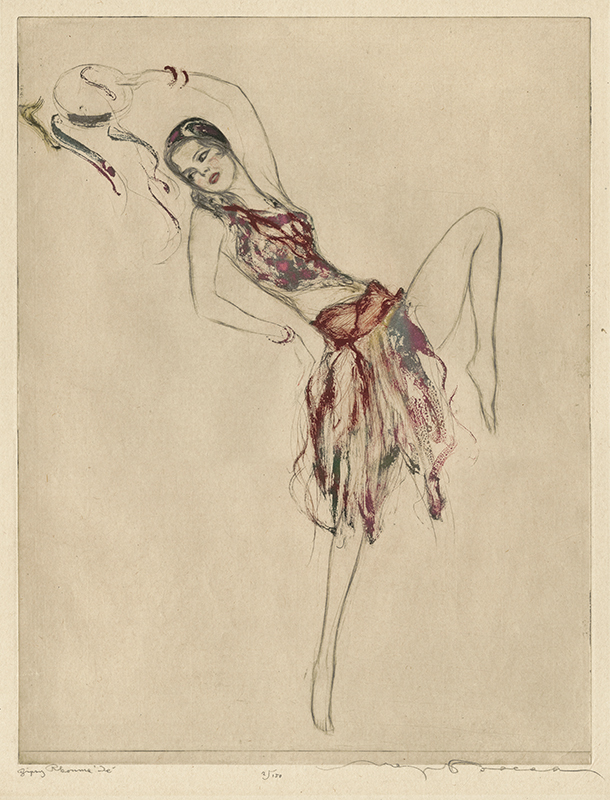
“Musik in der Bewegung – Die Tänzerin Gipsy Rhouma-je”. Kunstdruck nach einer Radierung von / Art print after an etching by Max Pollak. Großer Kunstdruck aus dem Jahr 1932. | src eBay“Music in motion – The dancer Gipsy Rhouma-je”. Kunstdruck nach einer Radierung von / Art print after an etching by Max Pollak. Großer Kunstdruck aus dem Jahr 1932. (Full page) | src eBay
Max Pollak :: Gipsy Rhouma-Jé (Gypsy Rhoumaje), ca. 1925. Color aquatint with etching. | src Annex Galleries
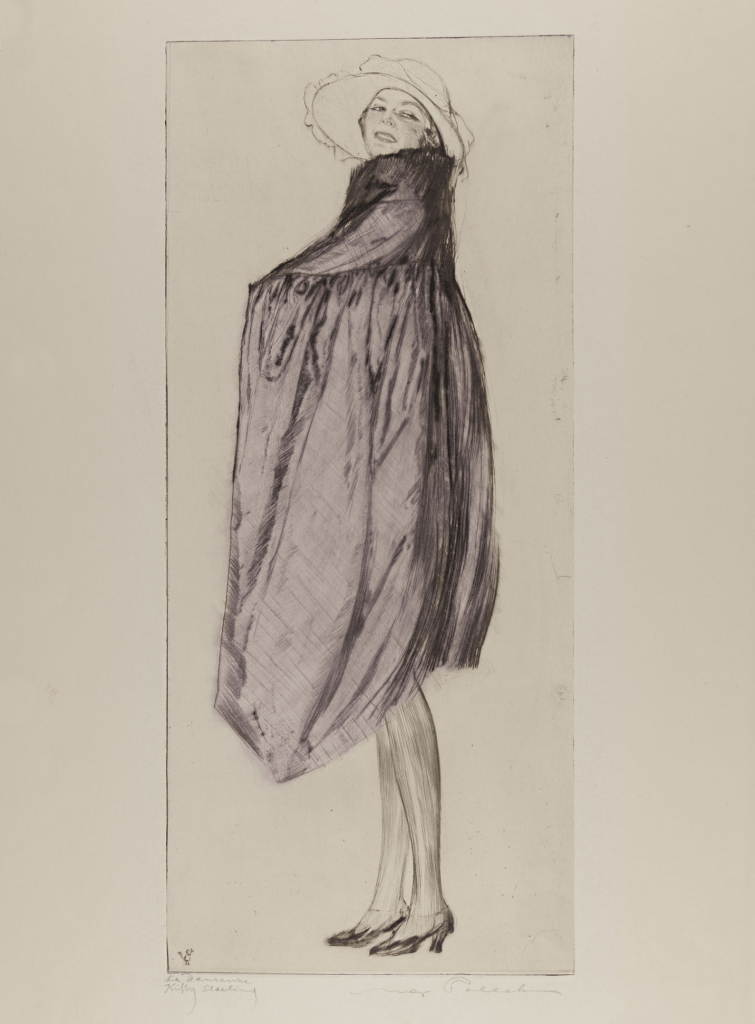
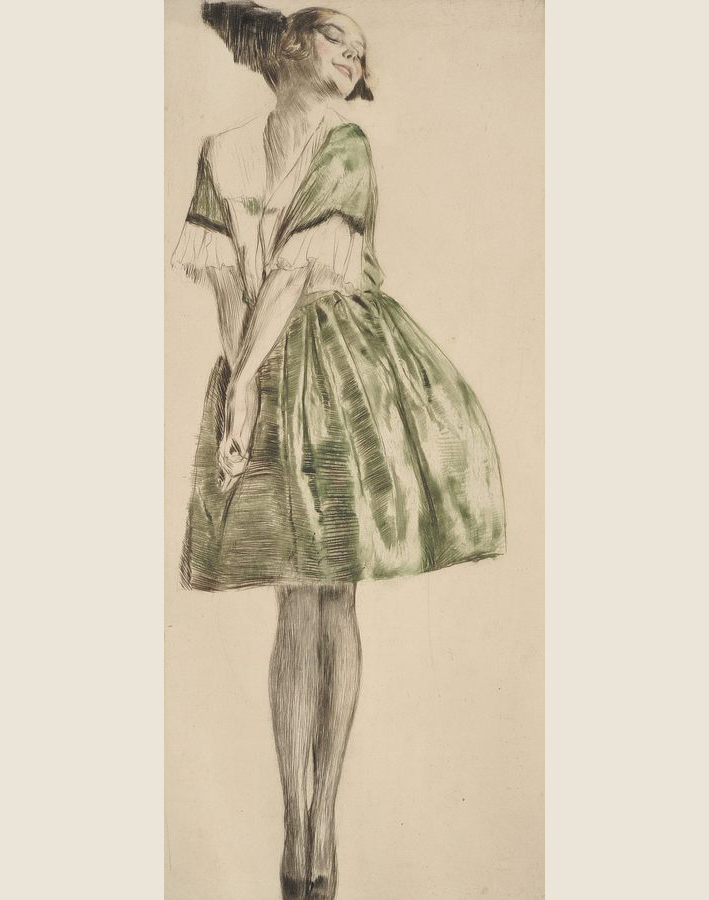
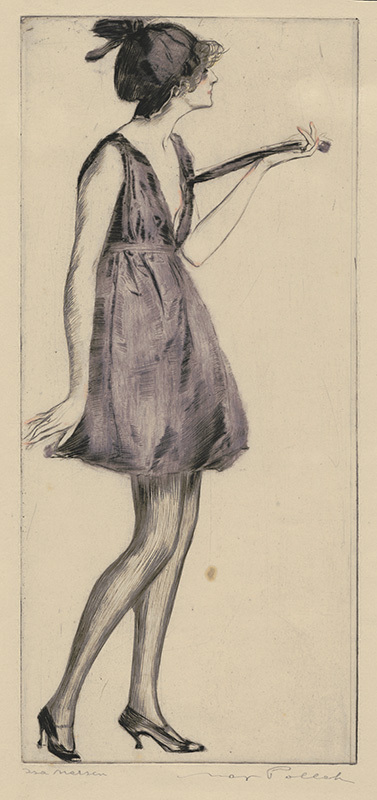
Max Pollak :: Thea von Ujj , ca. 1925. Color aquatint with etching. |src Annex Gallery «While in Vienna Max Pollak became involved in the avant-garde dance scene. He did a series of intaglio portraits of dancers, usually costumed and posed, from one of their noted performances. He is sometimes credited with being ‘the first etcher to turn his attention to the dance as a subject‘.»




 un regard oblique