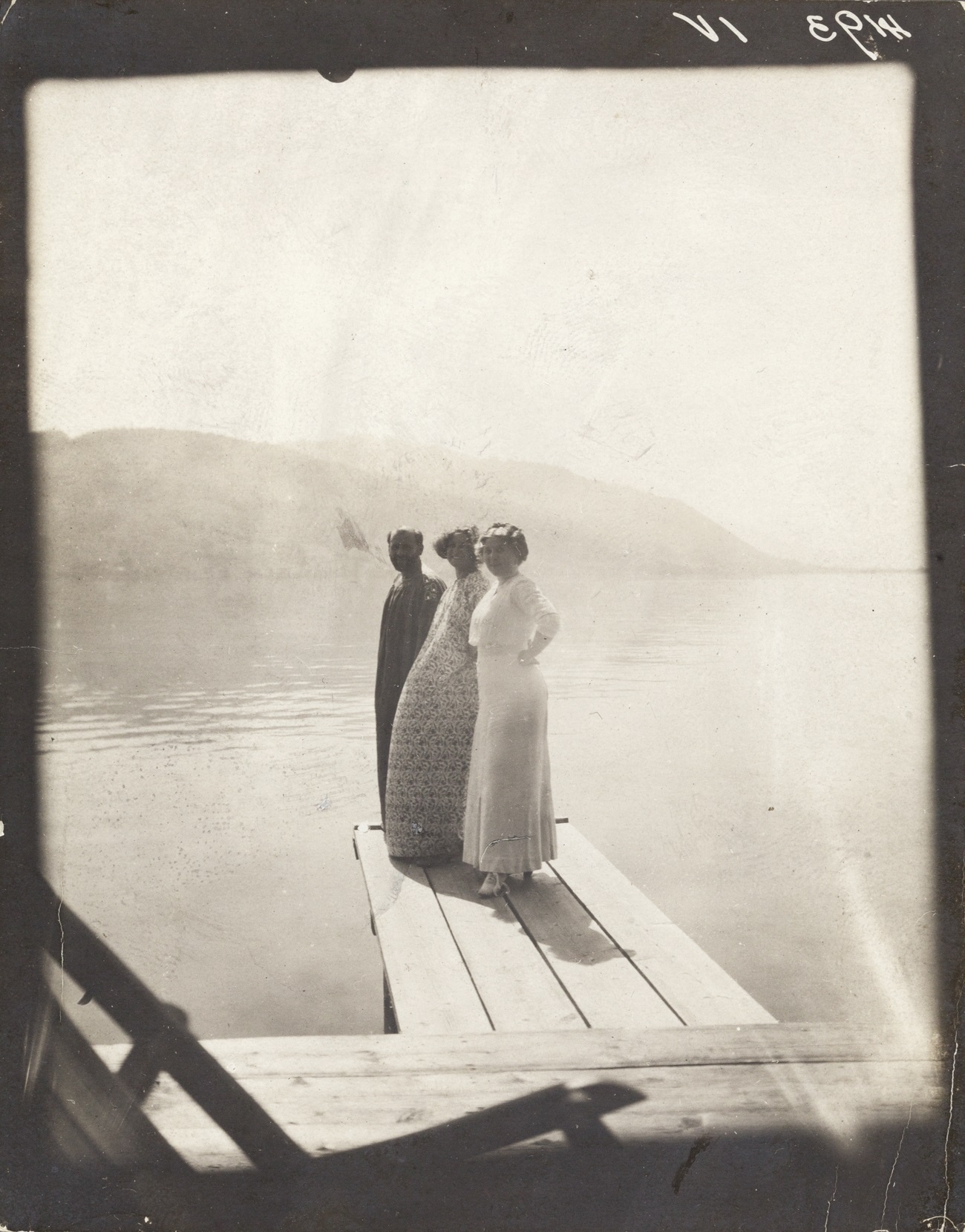
Klimt and Flöge sisters in 1906

Anonymous. Gustav Klimt, Emilie und Helene Flöge, Litzlberg at Attersee, Austria, 1906 | src Ostlicht

Emilie Flöge spent many summers with Gustav Klimt at Lake Attersee from the 1890s on. Her sisters Pauline and Helene, with whom she opened the “Schwestern Flöge” fashion salon at Mariahilfer Strasse 1b in 1904, were often also part of the party. The salon, designed by Josef Hoffmann as a “Gesamtkunstwerk”, employed up to 80 seamstresses at the time of its greatest success and catered to the upper bourgeoisie. Helene Flöge was married to Ernst Klimt, the younger brother of Gustav Klimt, with whom he worked in a studio partnership.

This private photograph is captivating because of the contrast between the different silhouettes of the three figures, which reveals the emancipatory radicalism of the reform dress – in contrast to the usual dresses worn over a corset. Implicitly, as one might say, this also “quotes” the design element of repeated curved lines, as found in many of Gustav Klimt’s compositions. This is the only known print of this photograph [Negative number “4/93 IV” in the upper margin, handwritten annotated “Gustav Klimt Emilie Helene” in ink on the reverse.] | src Ostlicht
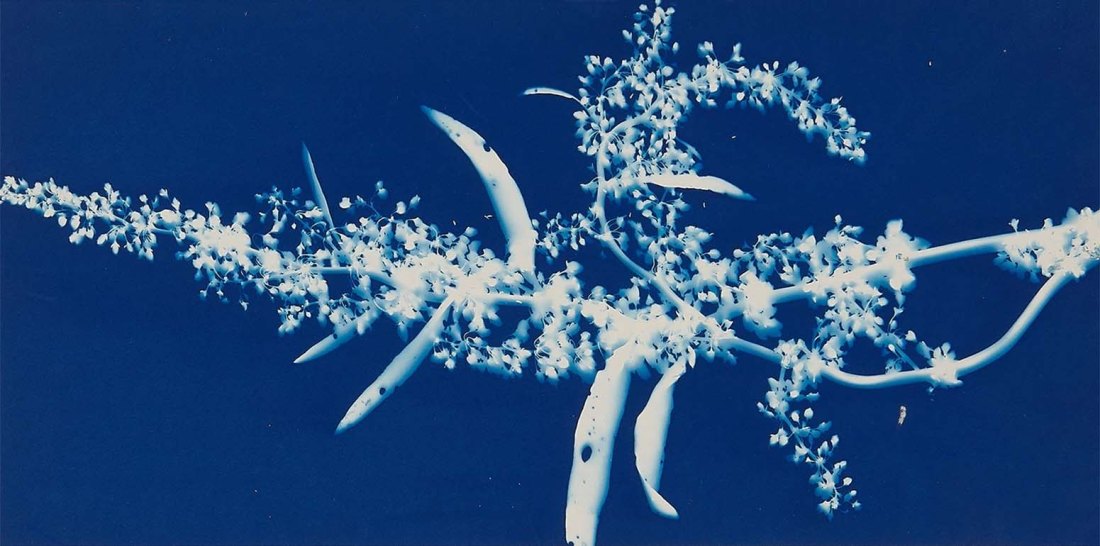
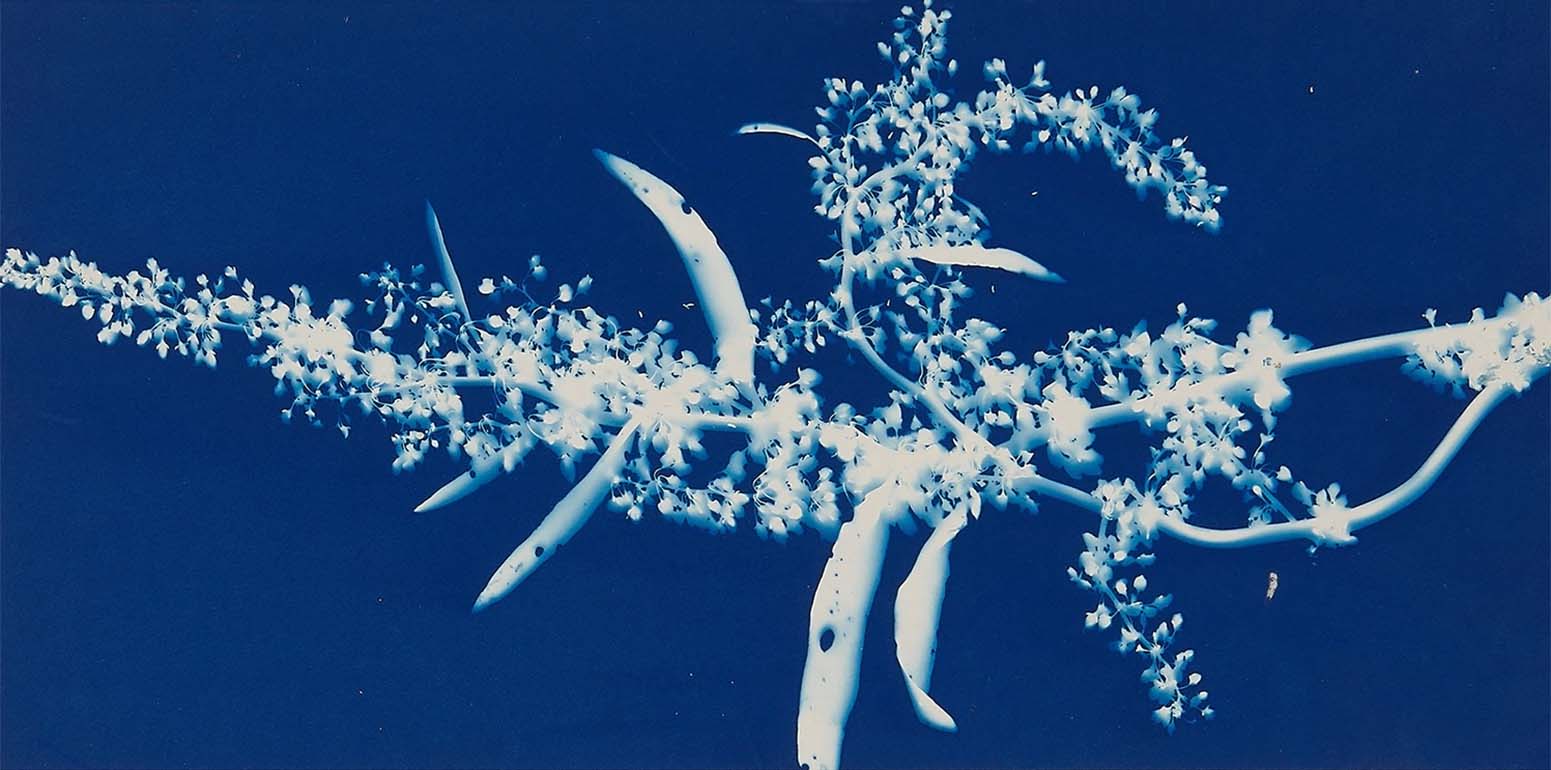
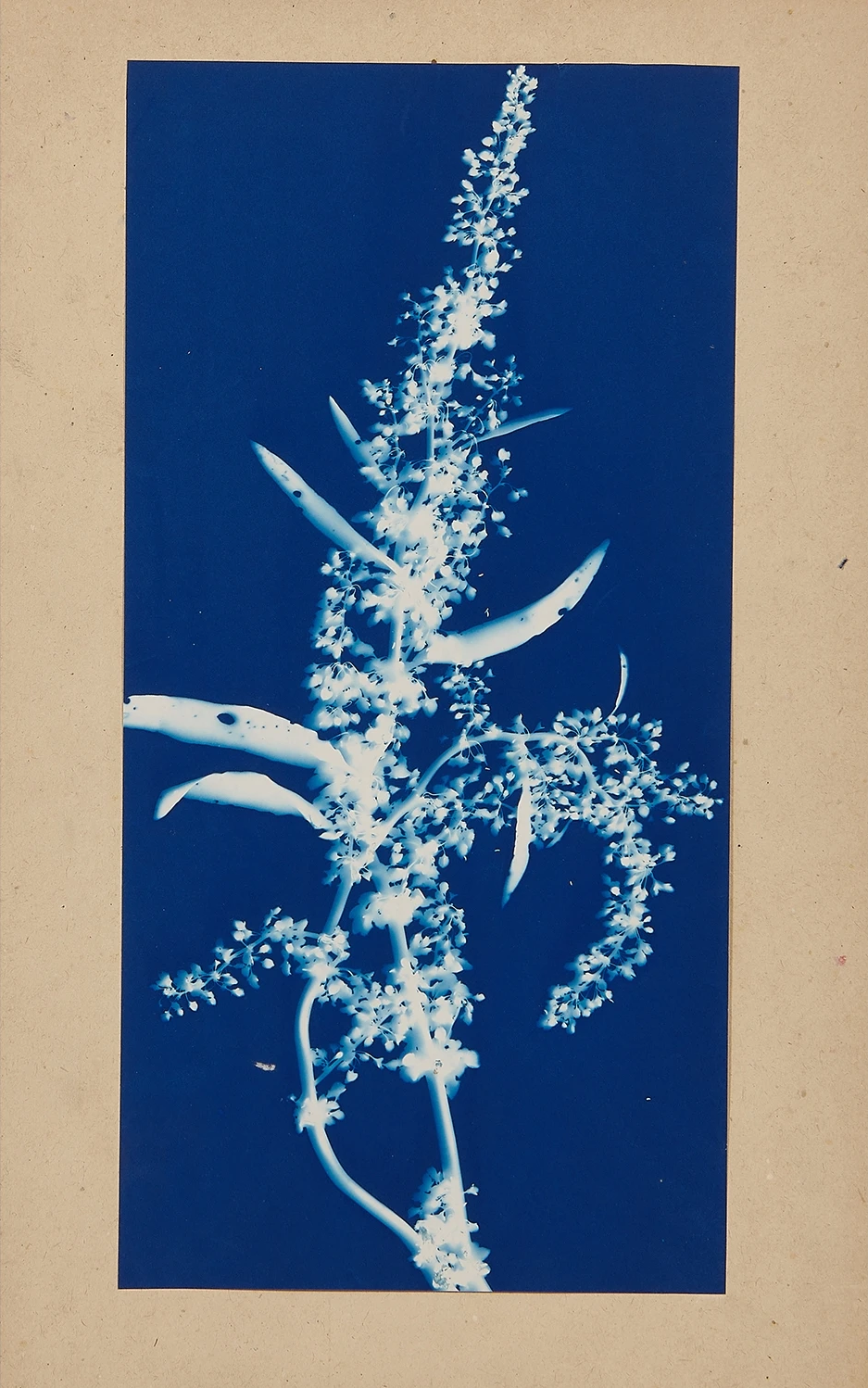
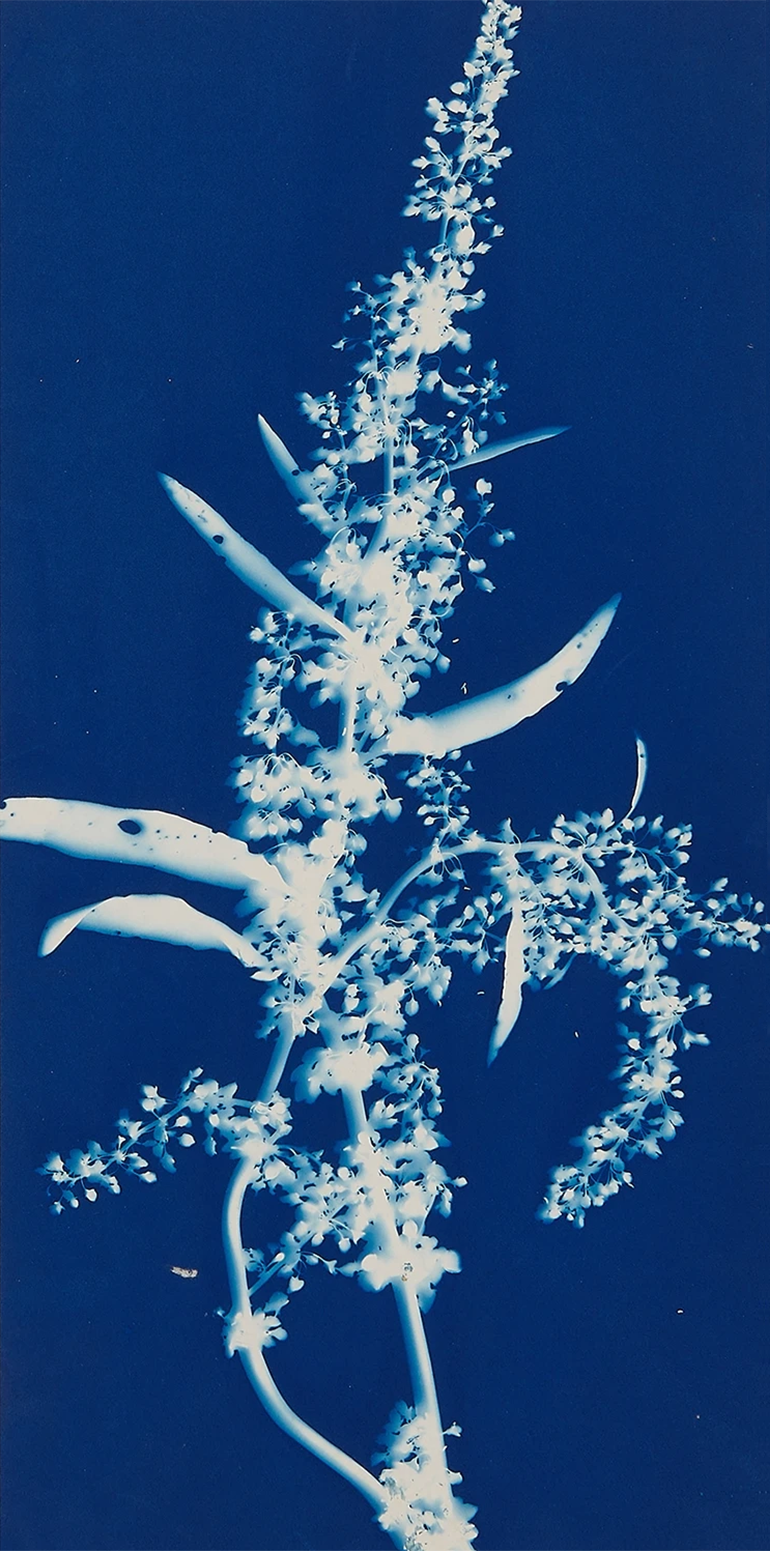
Blossoms of Dock by Jaques

Bertha Evelyn Jaques :: Blossoms of Wild Dock, 1910. Cyanotype. | src MutualArt
Bertha Evelyn Jaques :: Blossoms of Dock, 1910. Cyanotype. | src MutualArt
Bertha Evelyn Jaques :: Blossoms of Wild Dock, 1910. Cyanotype. | src MutualArt
Bertha Evelyn Jaques :: Blossoms of Dock, 1910. Cyanotype. | src MutualArt
Bertha Evelyn Jaques :: Blossoms of Wild Dock, 1910. Cyanotype. | src MutualArt

Jaques was already a respected printmaker when she began making cyanotype photograms of wildflowers. An active member of the Wild Flower Preservation Society, she created over a thousand of these botanical images. Made without a camera by placing objects directly on sensitized paper and exposing it to light, the photogram is the least industrialized type of photography. Because prints were easy to produce by this method, it achieved wide popularity. Graphic artists often chose this form of print because of its rich Prussian blue color. Aligned with the antimodernist views of the late Victorian Arts and Crafts movement, Jaques’s work reflects a reverence for commonplace elements of nature and the beautifully crafted object.

Merry A. Foresta American Photographs: The First Century (Washington, D.C.: National Museum of American Art with the Smithsonian Institution Press, 1996). From Smithsonian American Art Museum (SAAM)

Bertha Evelyn Jaques :: Blossoms of Wild Dock, 1910. Cyanotype. | src MutualArt

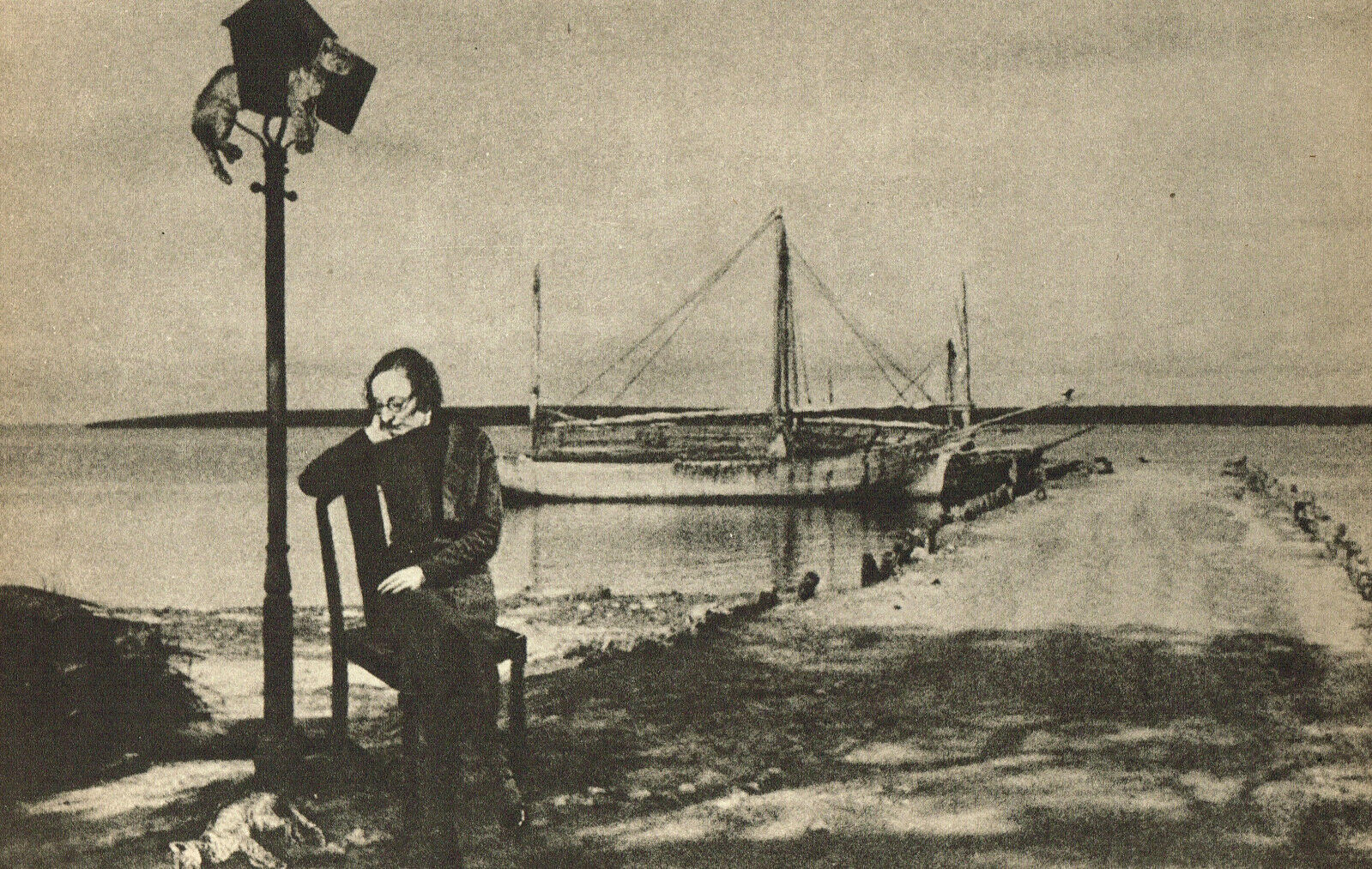
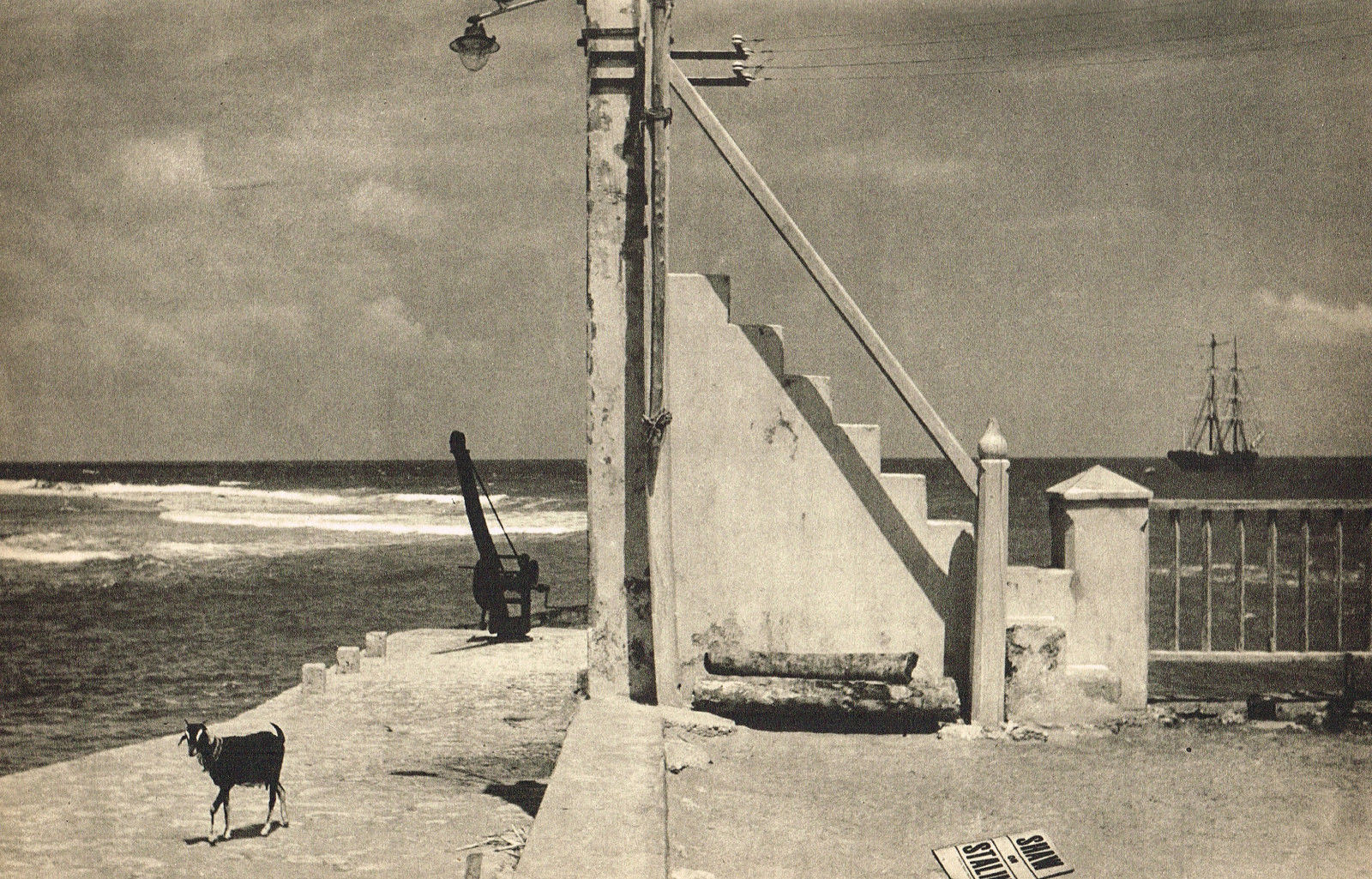
Lionel Wendt’s Ceylon

Lionel Wendt :: ‘And no birds sing’, Lionel Wendt’s Ceylon, Lincolns-Prager Publishers Ltd (Publisher, for Lionel Wendt Memorial Fund), London, 1950, p.201. Photogravure print, photomontage. | src vintageads on eBay
Lionel Wendt :: Strange Décor [“Shaw or Stalin”,Russia Today, 1941 issue], 1933-34, photogravure, from Lionel Wendt’s Ceylon (London, Lincolns-Prager Publishers Ltd, 1950). | src British Art Studies