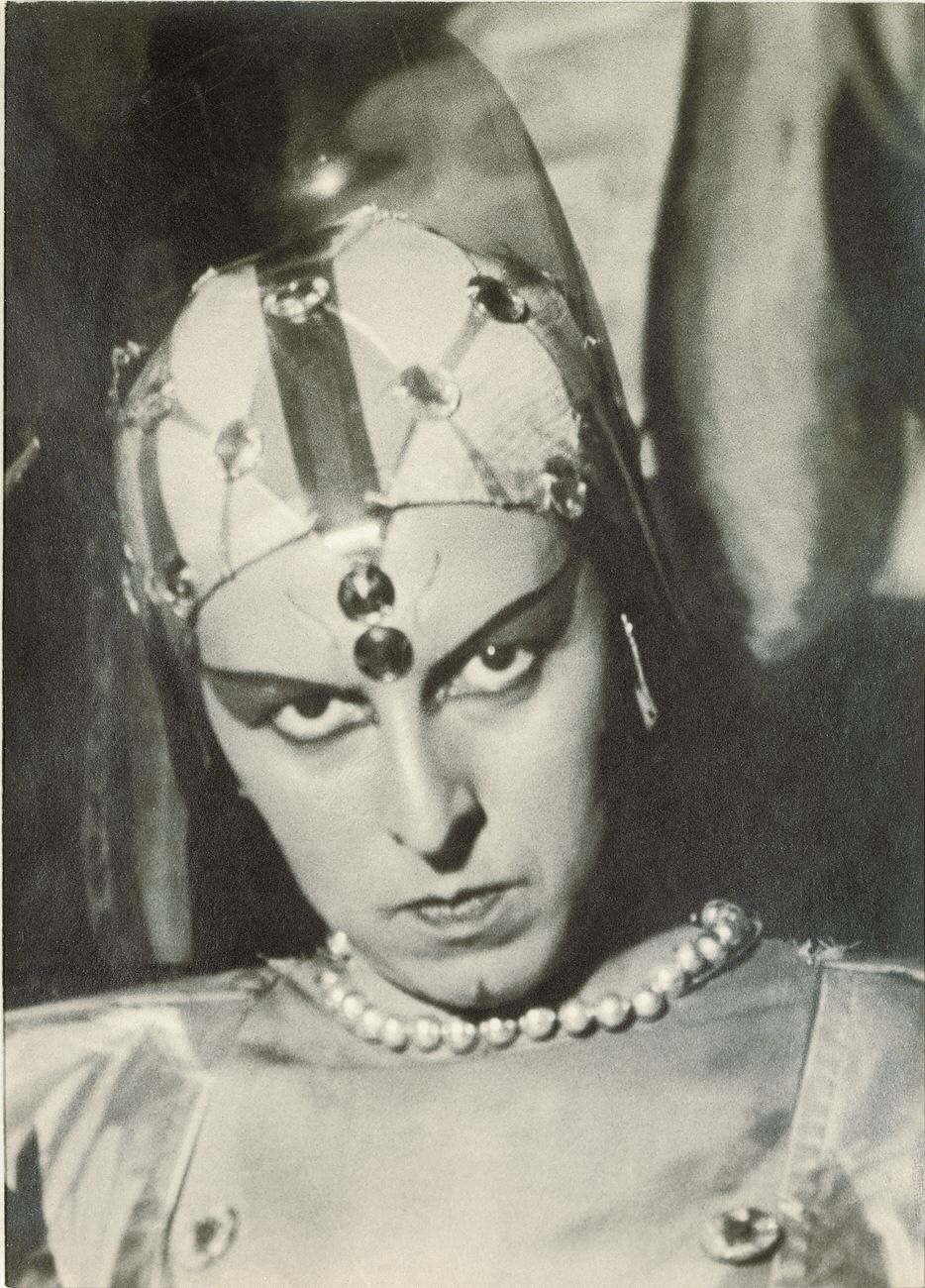
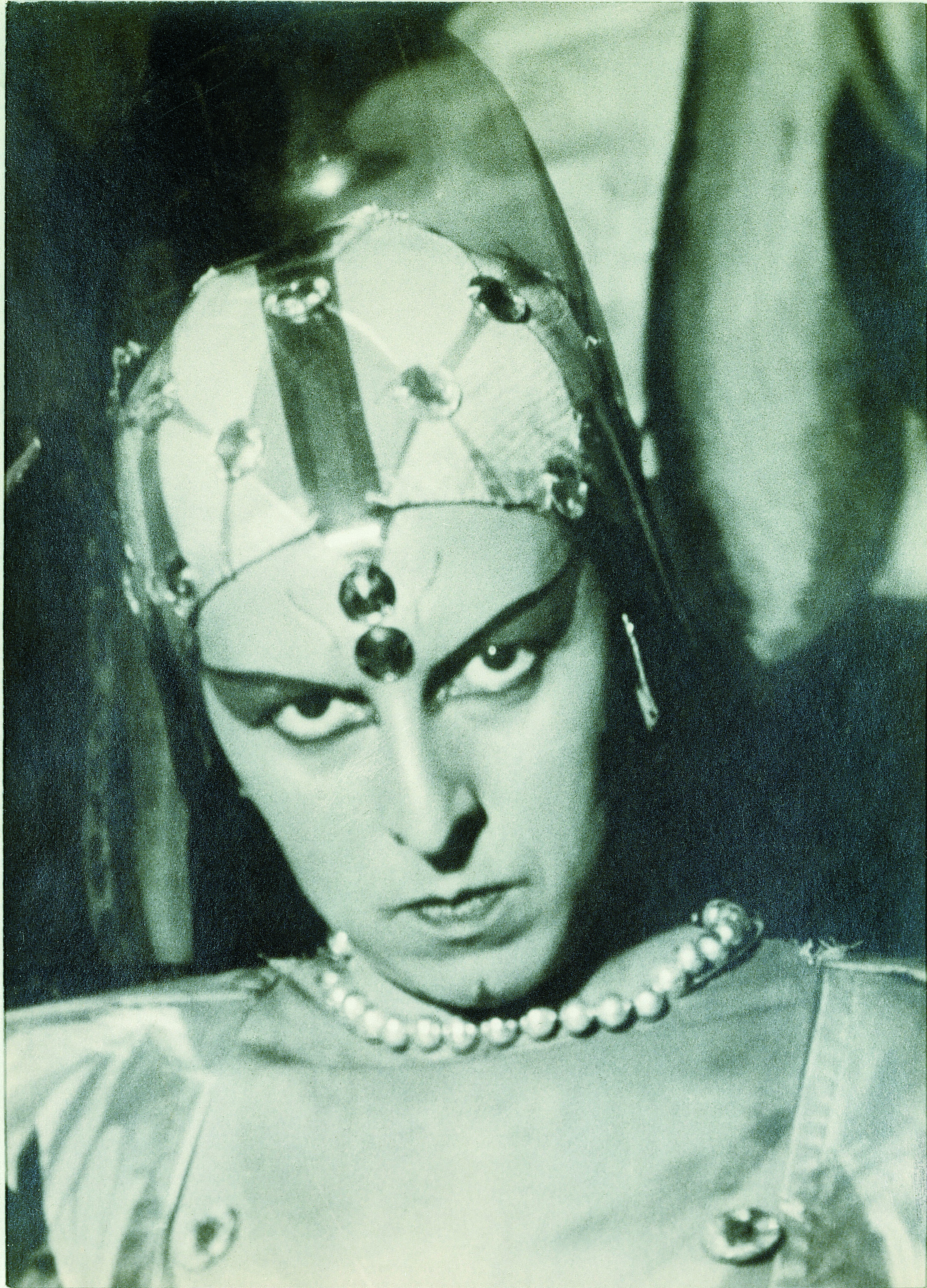
Claude Cahun was a French photographer and writer known for her surrealist self-portraits. Her performative photographic practice explores themes of identity, gender nonconformity, and self-image. Cahun’s art prefigured the radical feminist photography of artists such as Cindy Sherman, Nan Goldin, and Yasumasa Morimura.
Persistently aiming to undermine authority and actively disavow social and cultural norms, Cahun was highly politicised, both in her art and her everyday life and was active as a resistance worker and propagandist during World War II.
Despite not receiving recognition during her lifetime, Cahun’s artwork has been exhibited widely at major galleries around the world including The Museum of Modern Art and The Metropolitan Museum of Modern Art in New York.
Early Years
Cahun was born in Nantes, France in 1894 to a prominent Jewish family. As a teenager, Cahun experimented with photography and recorded her first self-portrait in 1912. After moving to Paris to study at the Sorbonne University, Cahun immersed herself in the surrealist art scene. She began working alongside artists and intellectuals like Man Ray, André Breton, and Georges Bataille.
In the early 1920s, Cahun—born Lucy Renée Mathilde Schwob—decided to change her name to Claude Cahun. Traditionally in France, the adopted name ‘Claude’ can refer to either a woman or a man, making it gender-neutral.
Although never identifying as openly gay, Cahun’s forward thinking approach to gender-fluidity shaped her artistic practice and has established her as an important figure among artists and members of the LGBTQ community. As she wrote in her surrealist memoir Disavowals in 1930, ‘Masculine? Feminine? It depends on the situation. Neuter is the only gender that always suits me.’
Cahun often collaborated with fellow artist and lifelong romantic partner Suzanne Malherbe, who adopted the pseudonym Marcel Moore. The two artists worked together to create multidisciplinary art including collages and sculptures. Cahun and Moore also published various written works including articles and novels.
Self-Portraits (1925-1930)
Claude Cahun is best known for her portraits capturing the self in a plethora of shifting personalities. Cahun used her photos as a device to present her own image and the overworked characteristics of feminine and masculine identity.
Her self-portraits capture posed performances where Cahun would dress as a man or woman under various guises. She fashioned her hair short, long, or completely shaved, and wore playful makeup that disguised her as anything from dandy to doll, body-builder to vampire.
Her performative portraits feature various surrealist aesthetics. From her expressions and poses, to her backgrounds and use of specific props, Cahun encapsulates the vibrancy of surrealism during its height in the 1920s. Her photographs were strikingly different to her male contemporaries because they focused on self-image as the subject and object of the work.
quoted from Ocula Limited
![Claude Cahun - Marcel Moore :: Untitled [Claude Cahun in Le Mystère d'Adam (The Mystery of Adam)], 1929. Detail. | src SF·MoMA](https://live.staticflickr.com/65535/52571360559_e9567f7a8e_o.jpg)


 un regard oblique