Ballerina by de Meyer

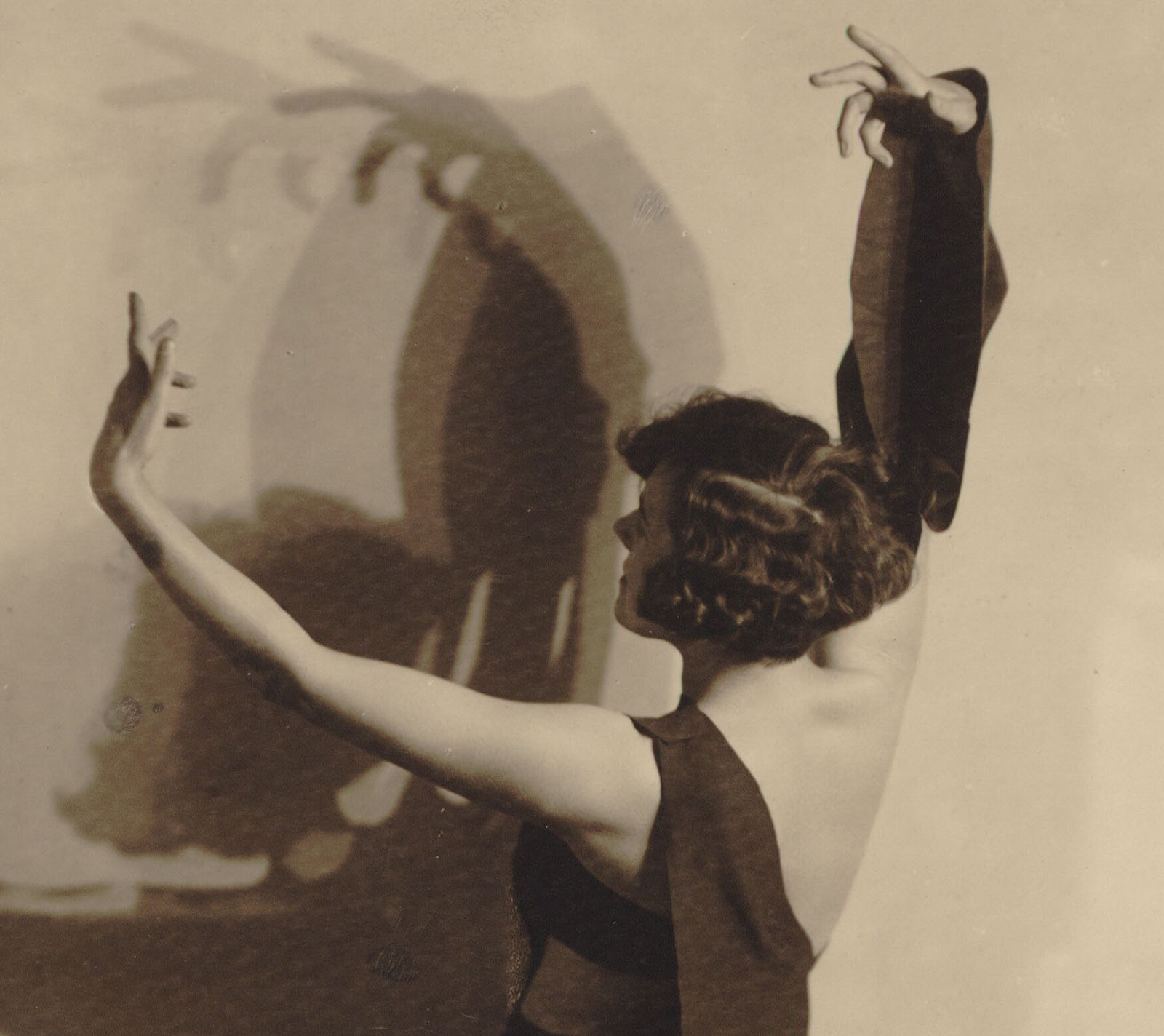
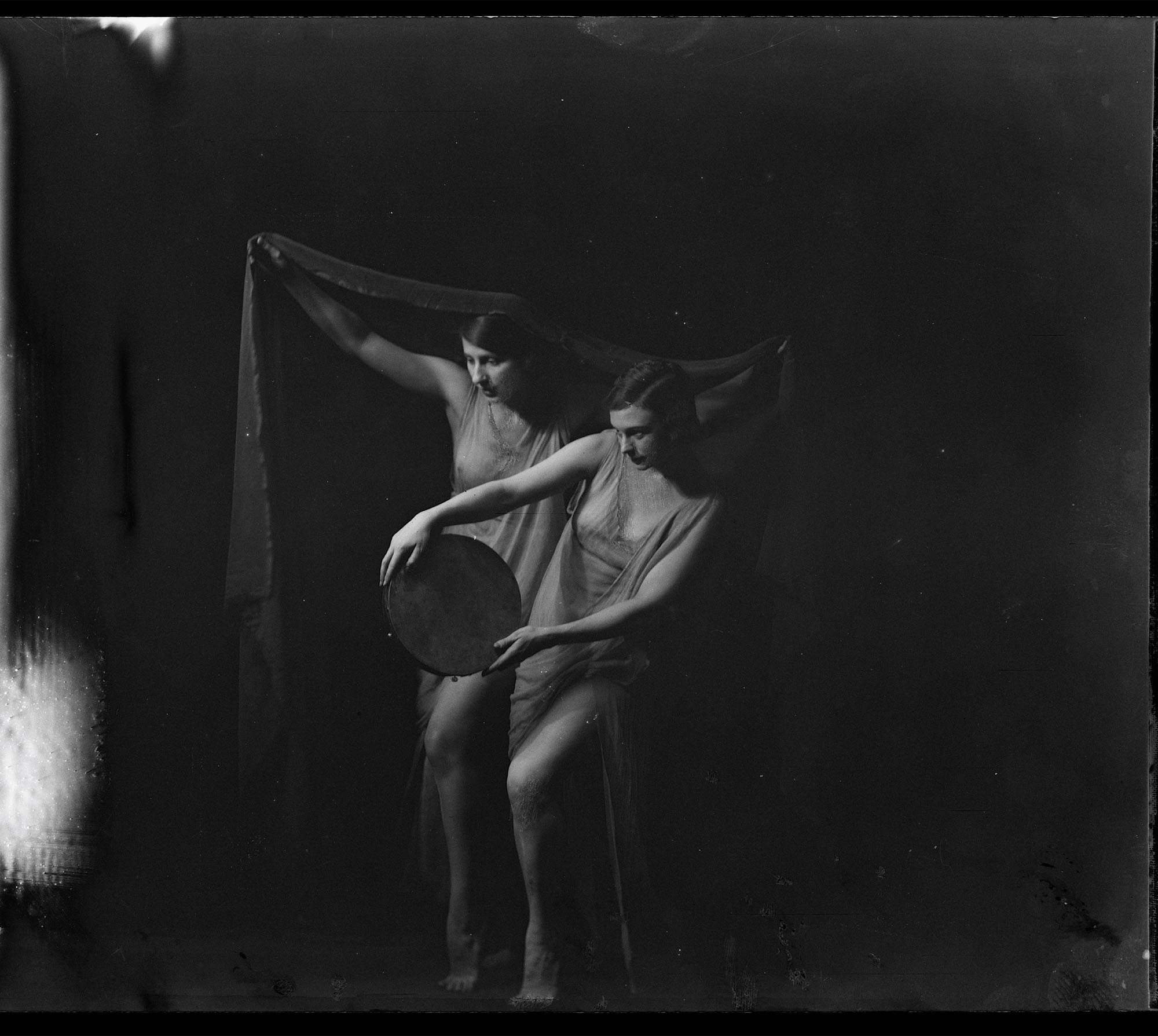
Baron Adolph de Meyer (1868–1946) ~ Ballet dancer, ca. 1910–1920 (detail 1)
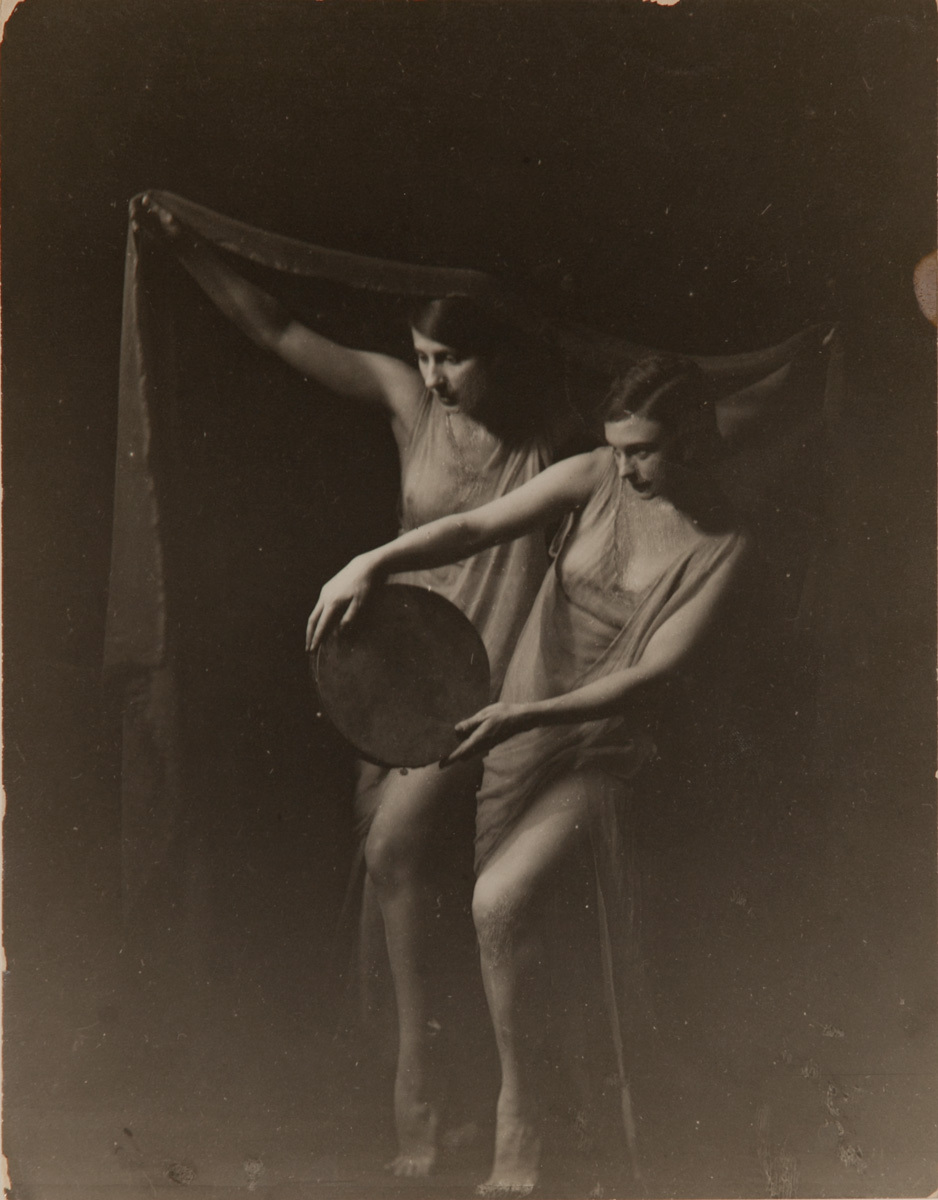
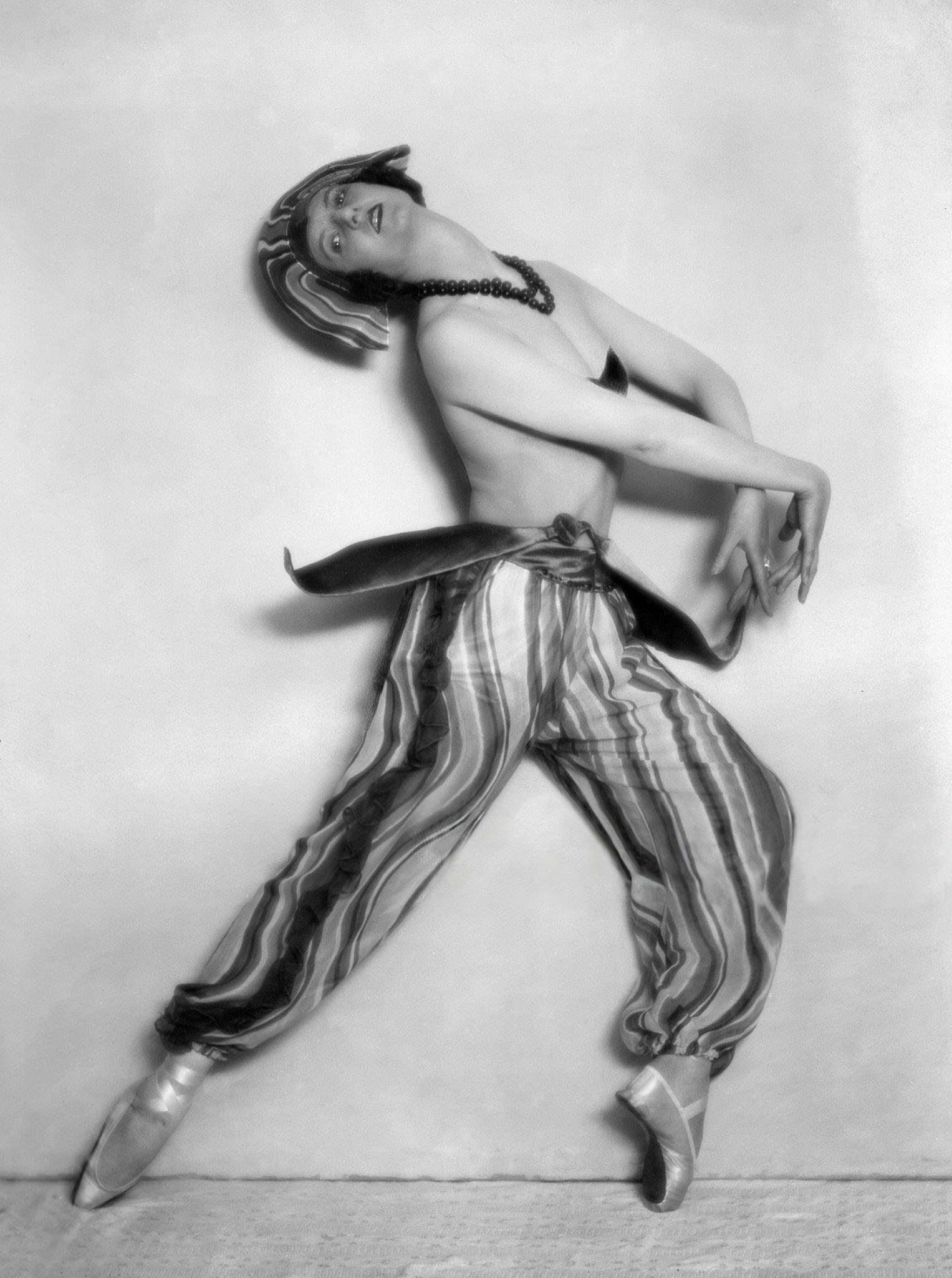
Adolf de Meyer (1868–1946) ~ Ballet dancer, ca. 1910s | src Christie’s
Baron Adolph de Meyer (1868–1946) ~ Ballet dancer, ca. 1910–1920 (detail 2)

Ballet dancer by de Meyer

Baron Adolph de Meyer (1868–1946) ~ Ballet dancer, ca. 1910–1920 | src Christie’s
Baron Adolph de Meyer (1868–1946) ~ Ballet dancer, ca. 1910–1920 (detail)
Baron Adolph de Meyer (1868–1946) ~ Ballet dancers & other portraits, ca. 1910–1920 | src Christie’s
Baron Adolph de Meyer (1868–1946) ~ Ballet dancer, ca. 1910–1920 | src Christie’s
Baron Adolph de Meyer (1868–1946) ~ Ballet dancer, ca. 1910–1920 (detail)
Baron Adolph de Meyer (1868–1946) ~ Ballet dancers & other portraits, ca. 1910–1920 | src Christie’s

Gerd Neggo in Arabesque

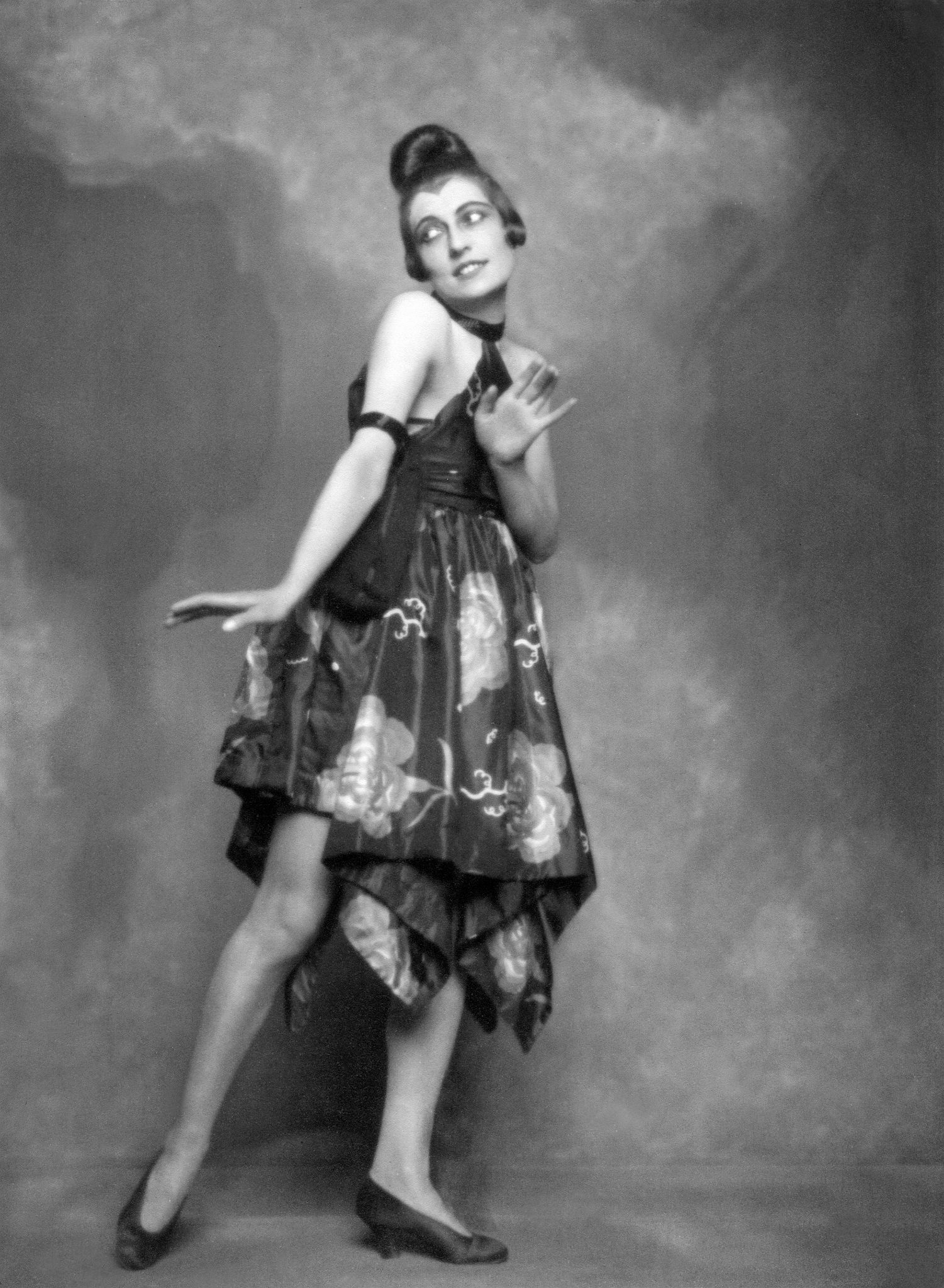
Estonian dancer Gerd Neggo in Arabesque, March 1928 | src BnF~Gallica
Gerd Neggo (1891-1974) in Arabesque, 17.III.1928 | src BnF~Gallica
Gerd Neggo, danseuse estonienne dans sa danse ‘L’Arabesque’ au Théâtre Vanemuine à Tartu le 17-III-1928; ph. K. Akel & Ko.

Gerd Neggo was born in Kuressaare, Estonia, in 1891. She studied the Émile Jaques Dalcroze methodology in Stockholm, then studied modern dance and mime under Rudolf von Laban in his dance studio in Hamburg.

After specializing in the art of modern dance, Neggo returned to Tallinn and established her own dance school in 1924. She started teaching students adopting Laban’s modern dance technique. She organized many solo and group dances, including pantomimes. She and her group held performances at the Estonian Drama Theatre.

In 1944, during the Soviet occupation of Estonia, she and her husband Paul Olak migrated to Sweden. Neggo died in Stockholm in 1974.
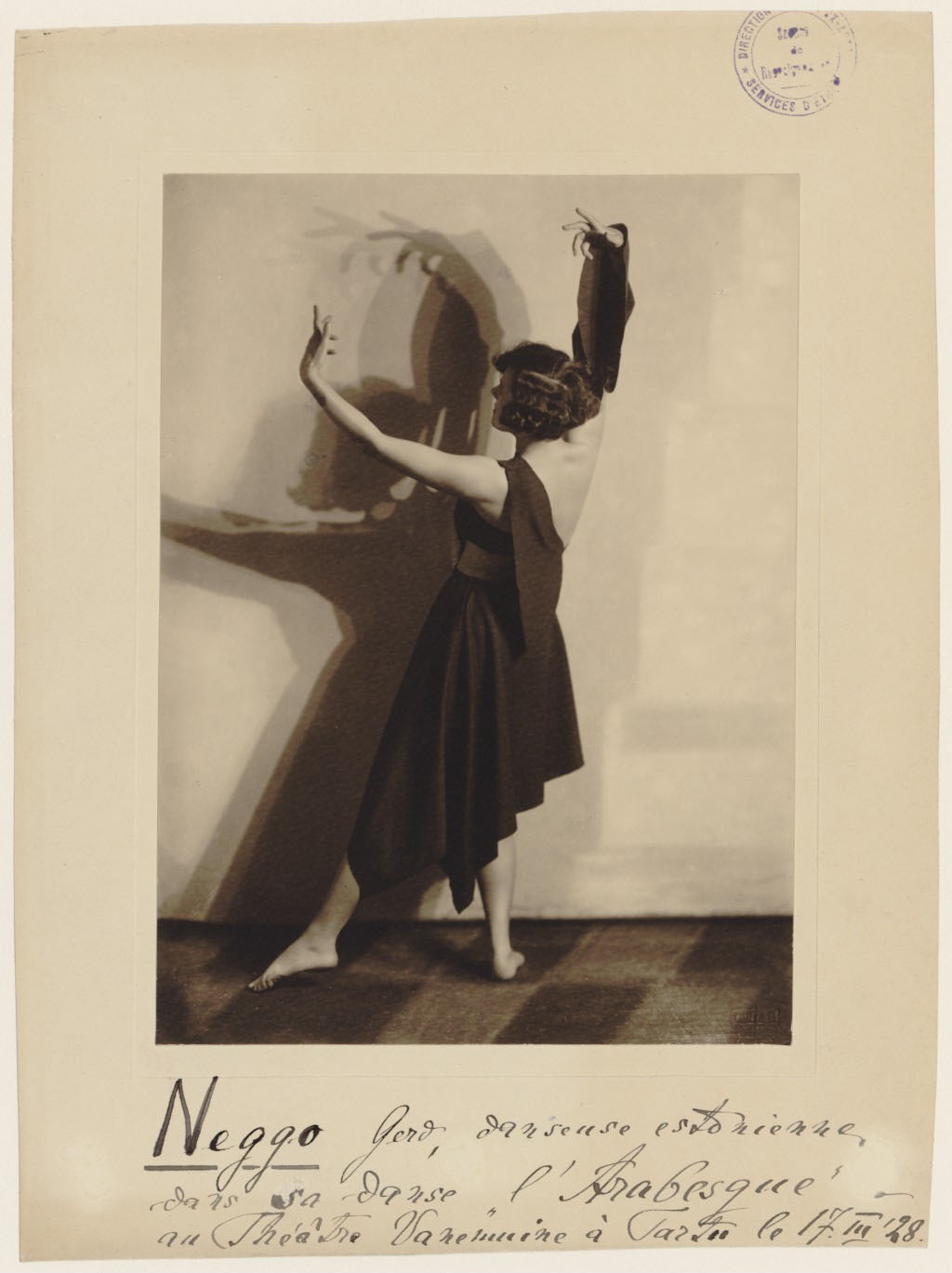
Estonian dancer Gerd Neggo in Arabesque at Vanemuine theater in Tartu, 17-III-1928; photo: K. Akel & Ko | src BnF~Gallica

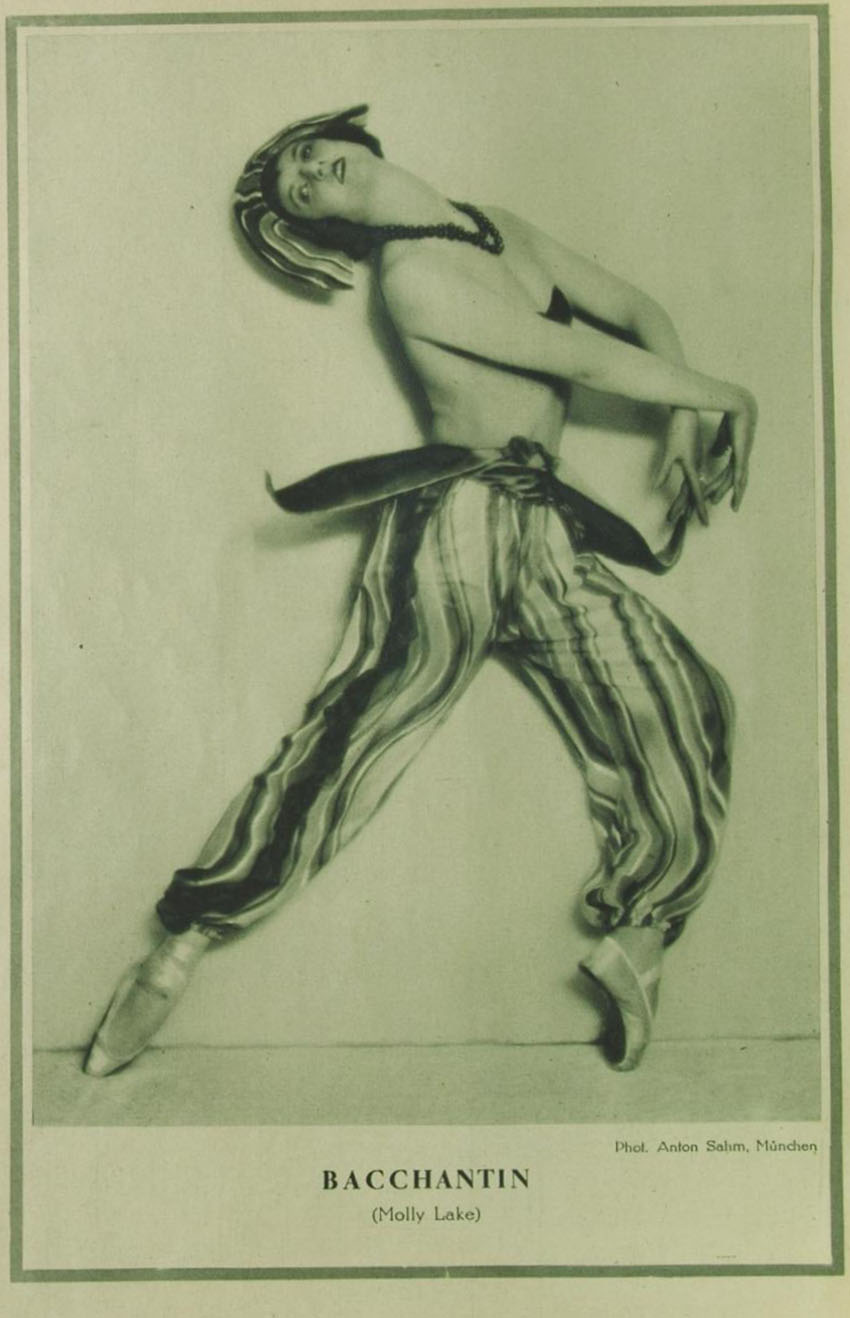
Molly Lake by Anton Sahm

Anton Sahm ~ The dancer Molly Lake, ca. 1928 | src getty images
Anton Sahm ~ Bacchantin (Molly Lake). Scherl’s Magazin B.4 H.2 Februar 1928

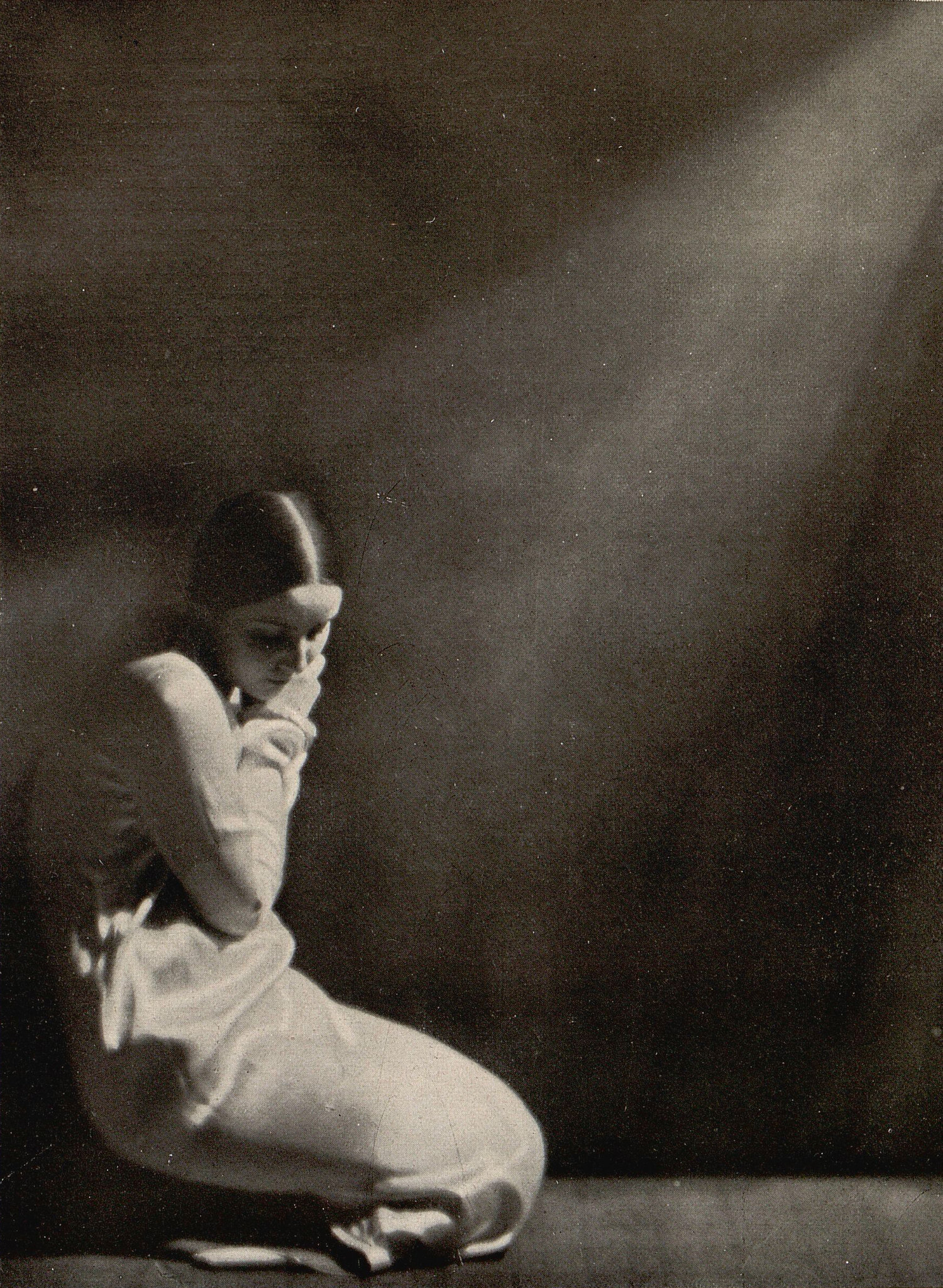
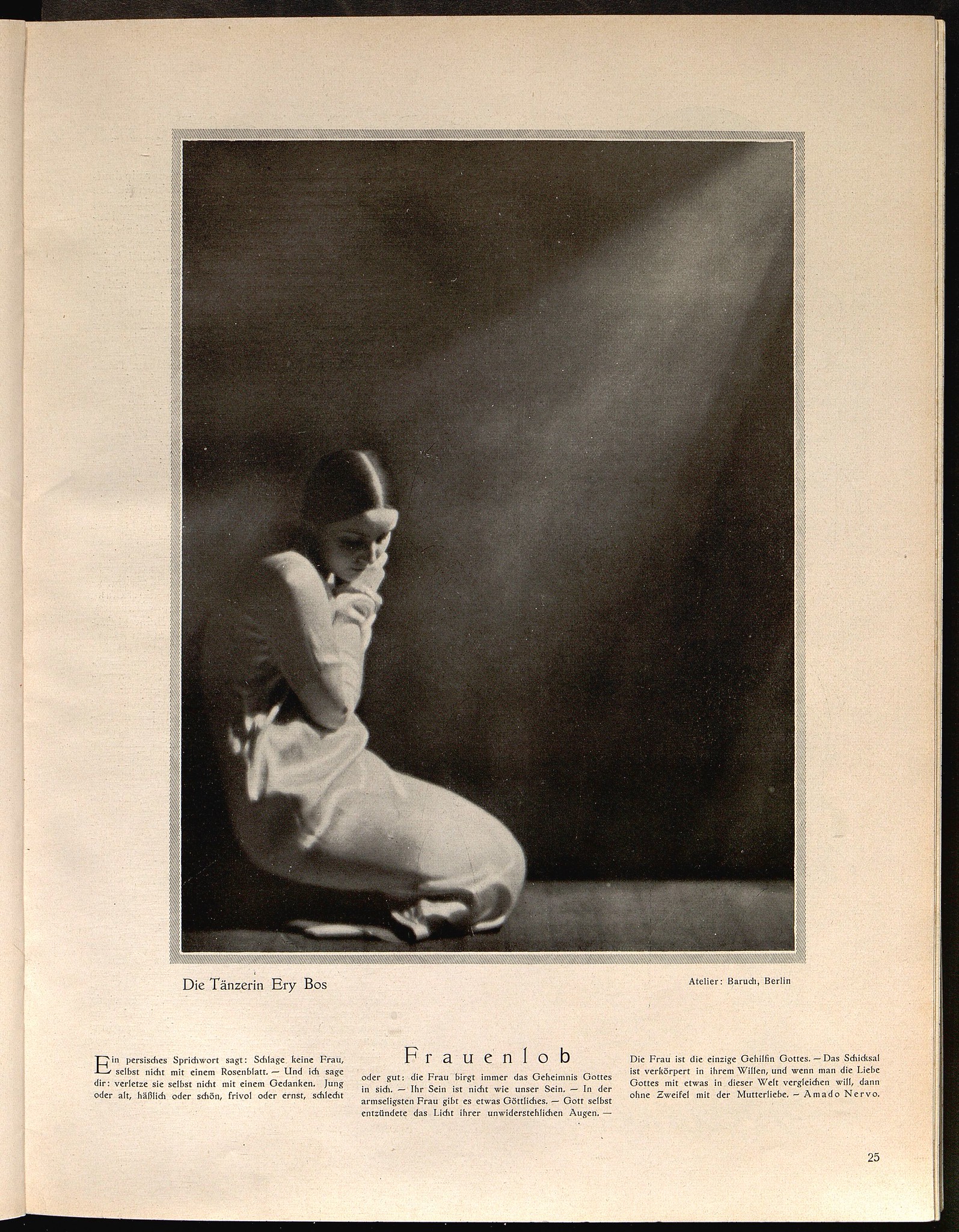
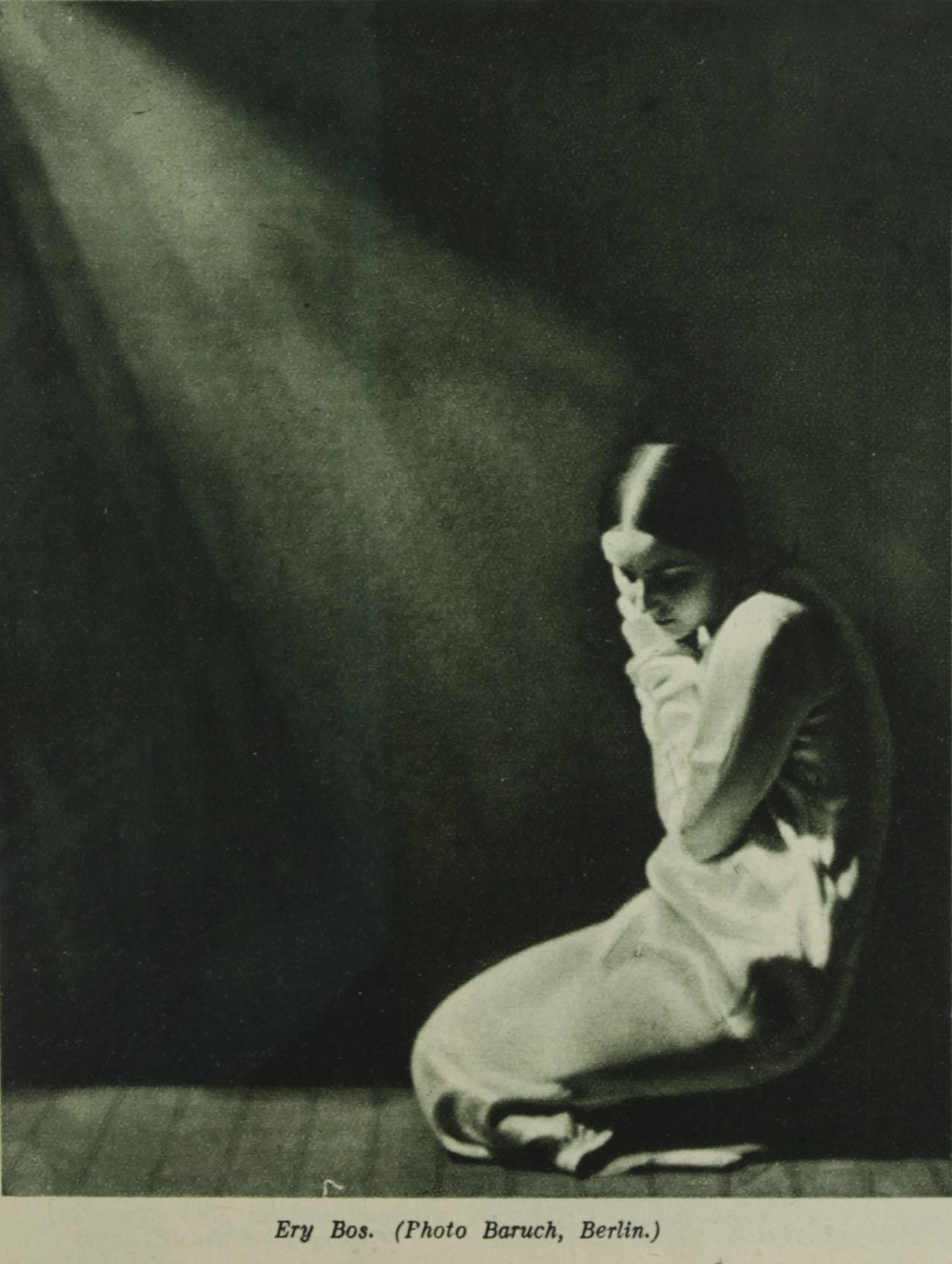
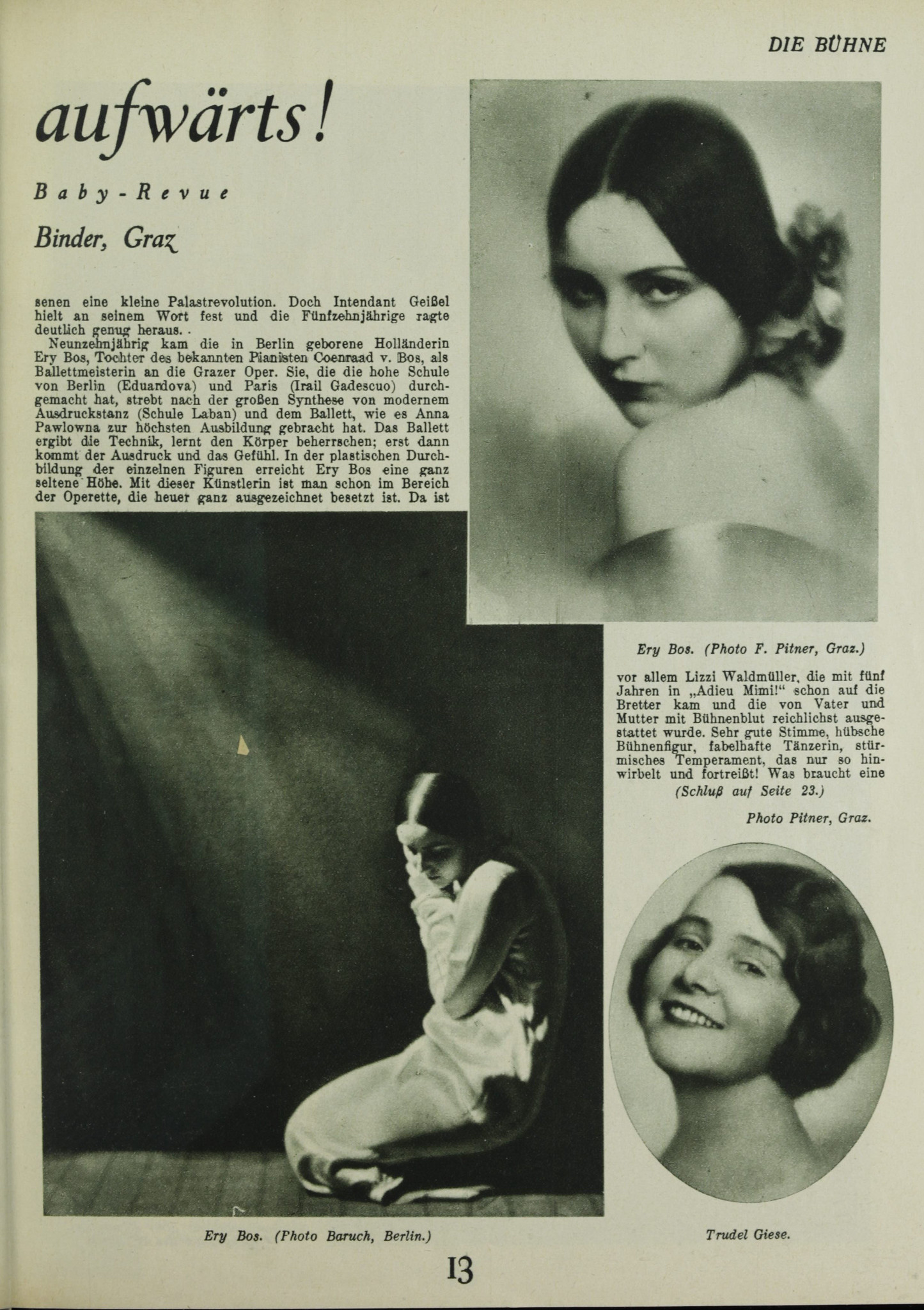
Ery Bos von Lili Baruch

Die Tänzerin Ery Bos by Atelier Baruch (Berlin), ca. 1926. From: Die schöne Frau Nr. 2, 1926
Die schöne Frau Nr. 2, 1926 | src ÖNB
Die Bühne, Heft 222, 1929. Ery Bos (foto: Atelier Baruch, Berlin)
Die Bühne, Heft 222, 1929 | src ÖNB

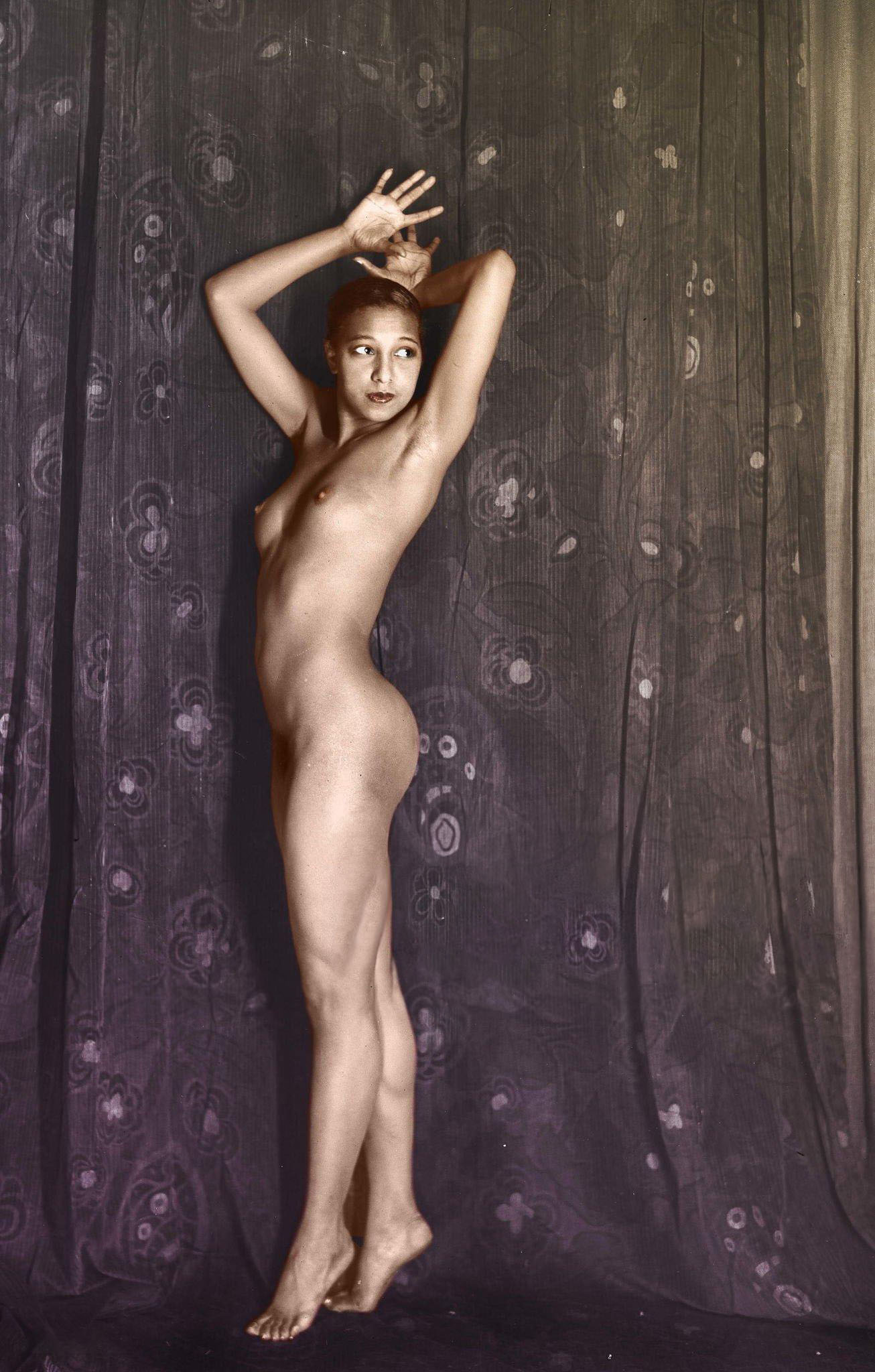
Baker in color by Lipnitzki 1926

Boris Lipnitzki ~ Josephine Baker (1906-1975), May 1926. Colourized photo. Detail | src getty images
Boris Lipnitzki ~ Josephine Baker. From a sitting in the studio of Paul Colin. Paris, May 1926. Colorized photo | src getty images

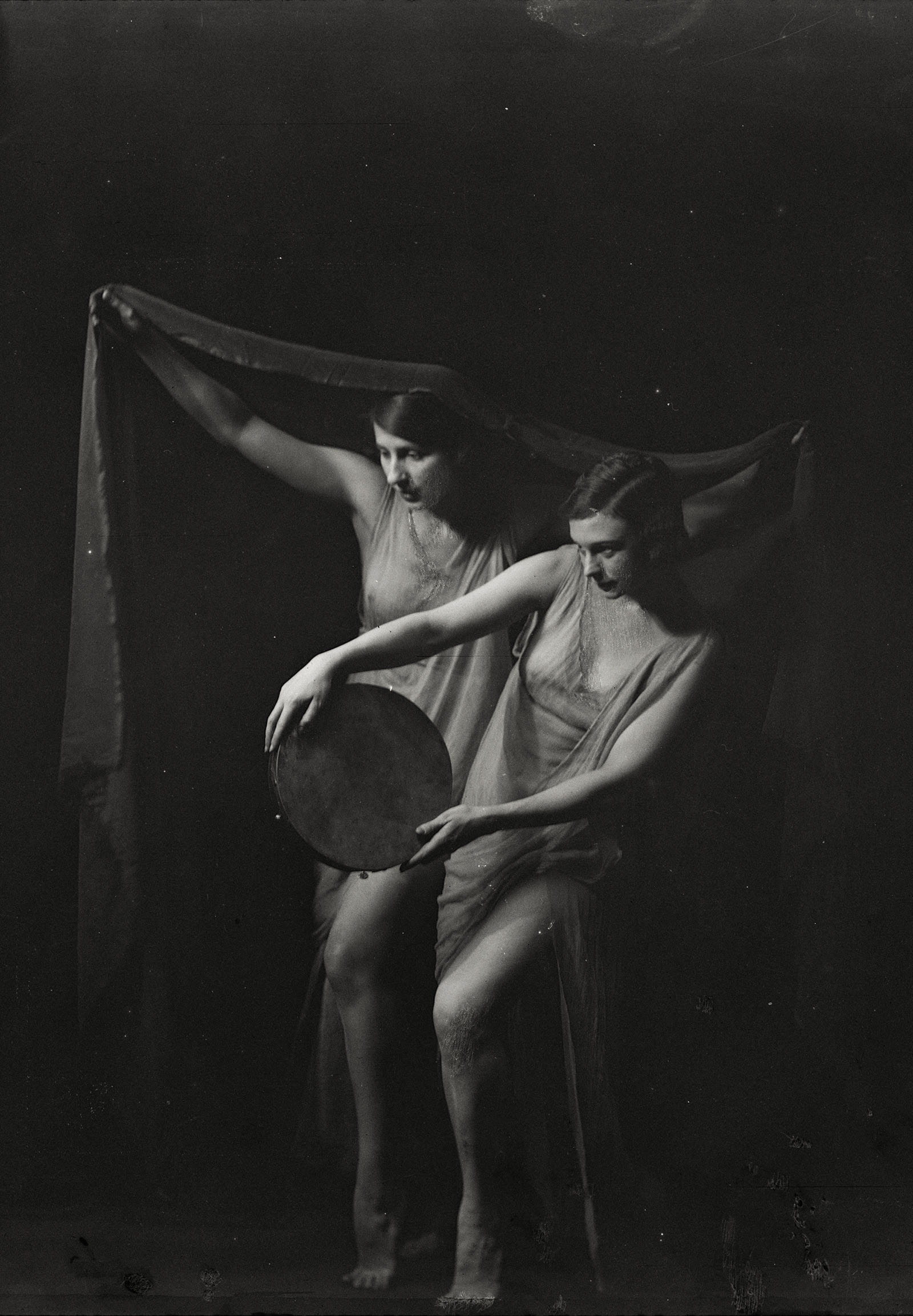
Marion Morgan dancers by Genthe

Arnold Genthe (1869-1942) ~ Marion Morgan dancers, 1914-1927. Nitrate negative (detail)
Arnold Genthe (1869-1942) ~ Marion Morgan dancers, 1914-1927. Nitrate negative | src Library of Congress
Arnold Genthe (1869-1942) ~ Marion Morgan dancers [from out of the shadows], 1920s | src david pollack

Grete Wiesenthal role portraits

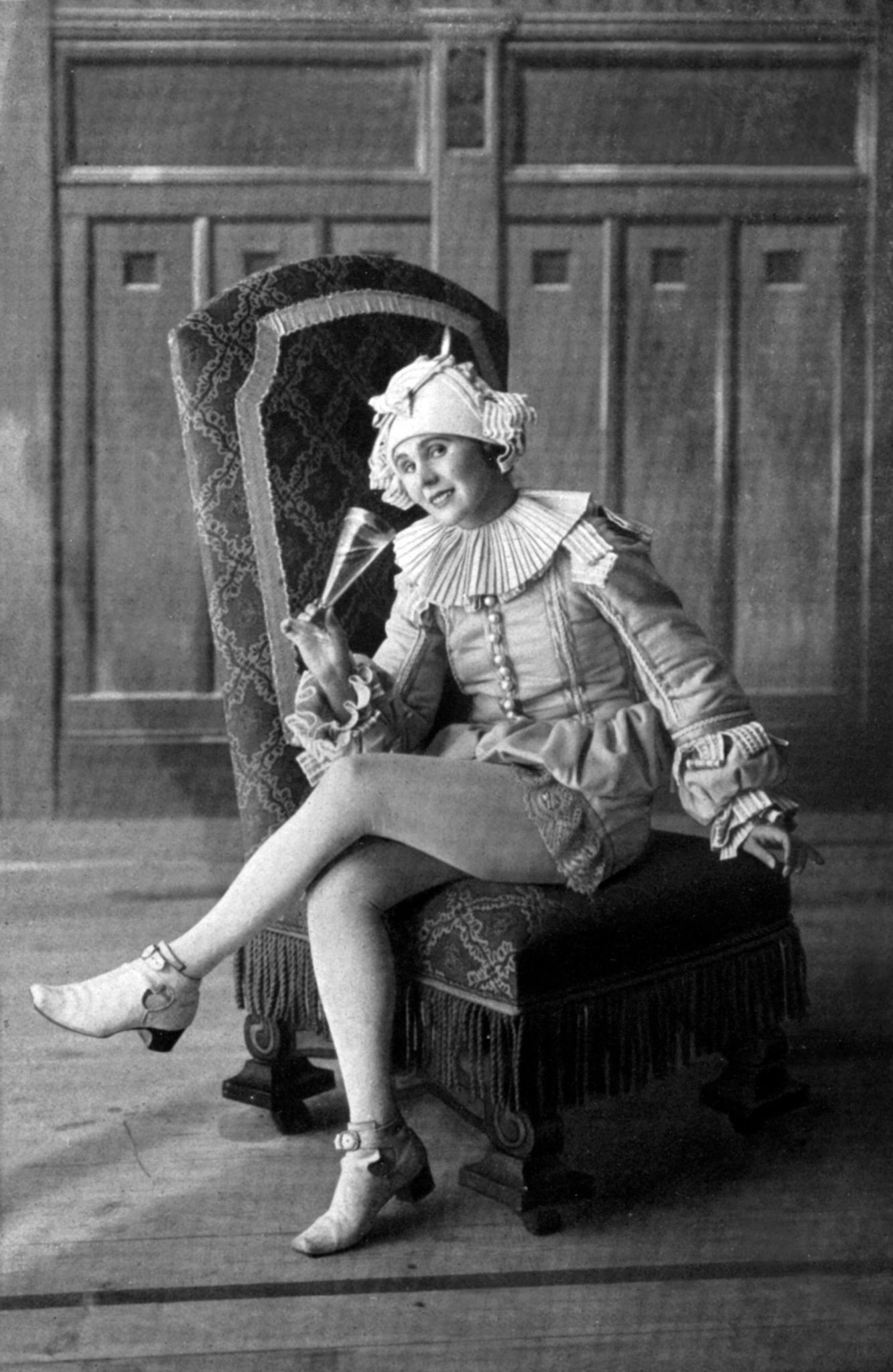
Franz Löwy ~ Grete Wiesenthal (1885-1970), full-figure portrait, dancing with a glass in hand, 1918. Die Dame 16/1918 | getty images
Grete Wiesenthal in the play The Bourgeois Gentleman by Molière in Stuttgartt, picture form magazine Le Théâtre September 1913

Grit Hegesa by Perscheid

Nicola Perscheid ~ Tänzerin Grit Hegesa (1891-1972), Rollenporträt, 1917. In: Die Dame 16/1917 | src getty images

Laura Devine by Sasha

Sasha ~ Laura Devine in ‘Wake up and Dream’ at the London Pavilion, 24th April 1929 | src getty images
Sasha ~ Shadow dance. Dancer Laura Devine performing a shadow dance during a Cochran show ‘This Year of Grace’ at the London Pavilion, 5th October 1928 | src getty images