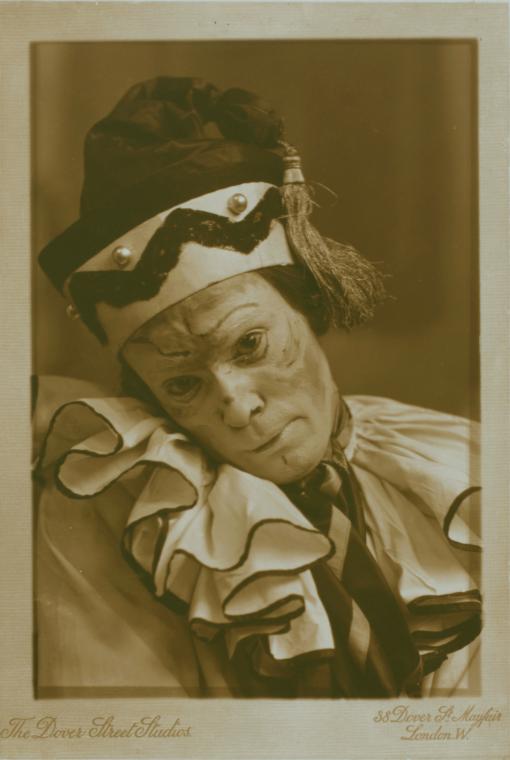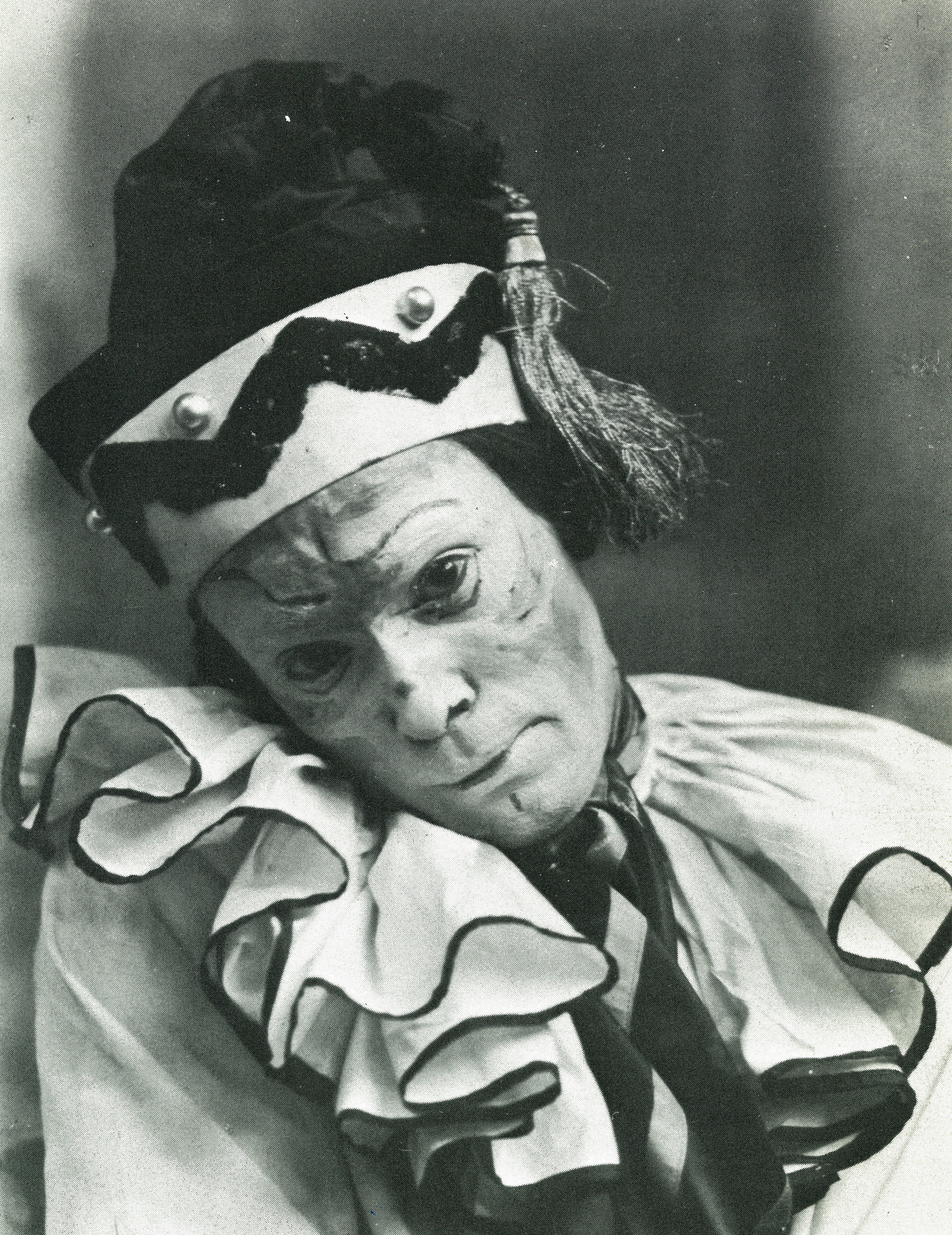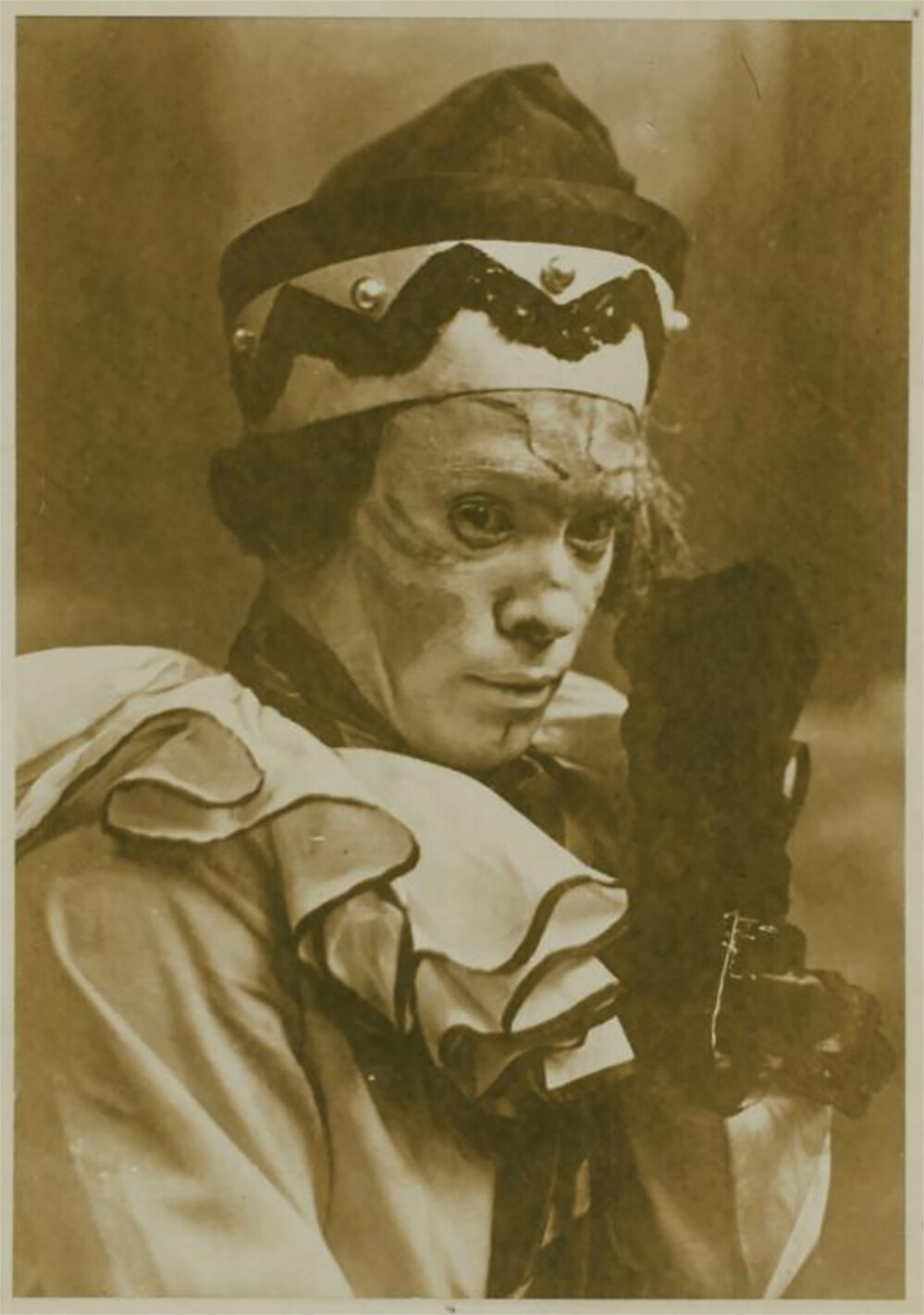
Vaslav Nijinsky as Petrushka, 1911

Photograph of Nijinsky in the title role of the ballet Petrouchka (Petrushka), 1911. [Mishkin N.Y.] | src Library of Congress
Elliott & Fry :: Vaslav Nijinsky as the Rag Doll ‘Petrouchka’ (1911). Petrushka [French: Petrouchka] premiered June 13, 1911 at the Theatre du Chatelet in Paris with costume and scenery design by Alexandre Benois, music by Igor Stravinsky and choreography by Michel Fokine. | src Leo Boudreau, visit his site for more info about Petrouchka and links to the ballet’s videos
Portrait of Vaslav Nijinsky in three-quarter profile, left fist clenched before him in the title role of Petrouchka (a rag doll), 1910-1911.
Petrouchka (Choreographic work: Michel Fokine); uncredited photographer on source | src NYPL
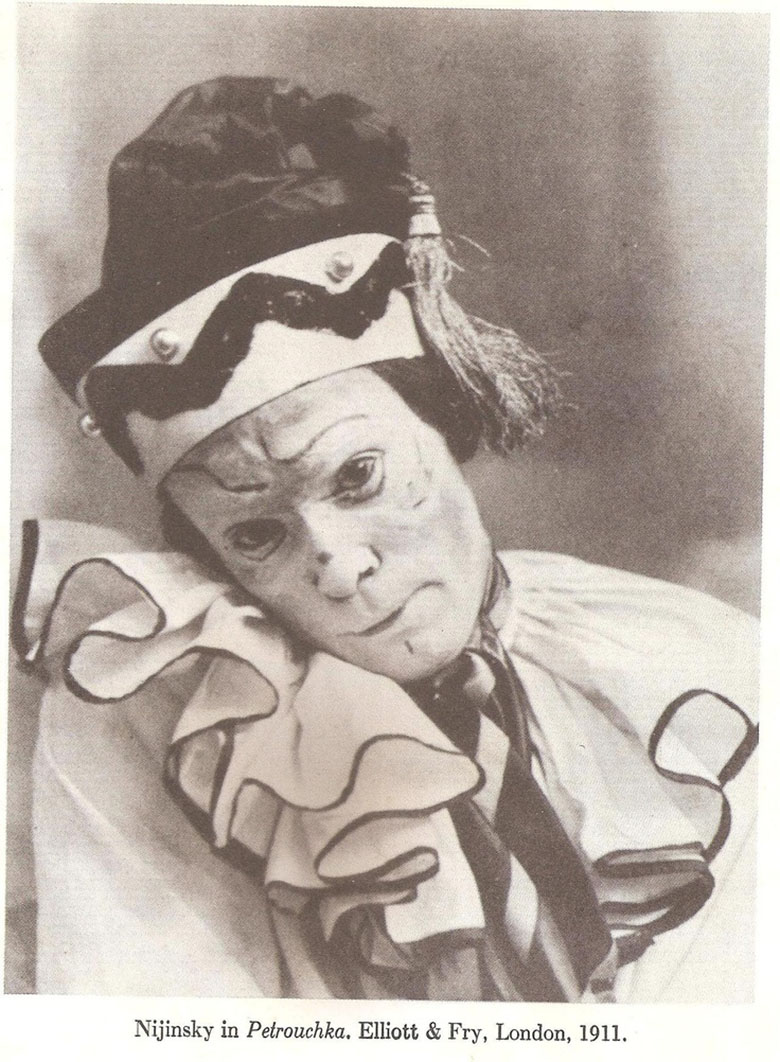
Dover Street Studios (Photographer) :: Nijinsky, London, 1910-1911. | src NYPL
Vaslav Nijinsky in Petrushka (1911) | src San Francisco Symphony : Stravinsky Exhibition

Why are people dancing?

Marion Herrmann :: Tanzgruppe Marion Herrmann. Warum tanzen die Menschen? Tempo Magazin, 1927, Heft 2.
Arnold Genthe :: Aus Mary Wigmans Totentanz. Gestaltung durch künstlerischen Tanz [Mary Wigman’s Dance of Death]. Tempo Magazin, 1927, Heft 2
Marion Herrmann :: Tänze Marion Herrmanns zu Paul Hindemiths Mechanischer Orgel [Dances by Marion Herrmann to Paul Hindemith’s mechanical organ]. Tempo Magazin, 1927, Heft 2.

Rigmor Rasmussen (Uhu · 1926)

Madame d’Ora [Dora Kallmus] ~ Die dänische Tänzerin Rigmor Rasmussen. Uhu, Januar 1926, Band 2, Heft 1

Truempy dance school (1931)

Alfred Eisenstaedt :: Truempy dance school, 1931. Scanned by source (κώστας βακουφτσης) from photobook
Alfred Eisenstaedt :: Trümpy ballet school, 1931. Scanned by source (κώστας βακουφτσης) from photobook

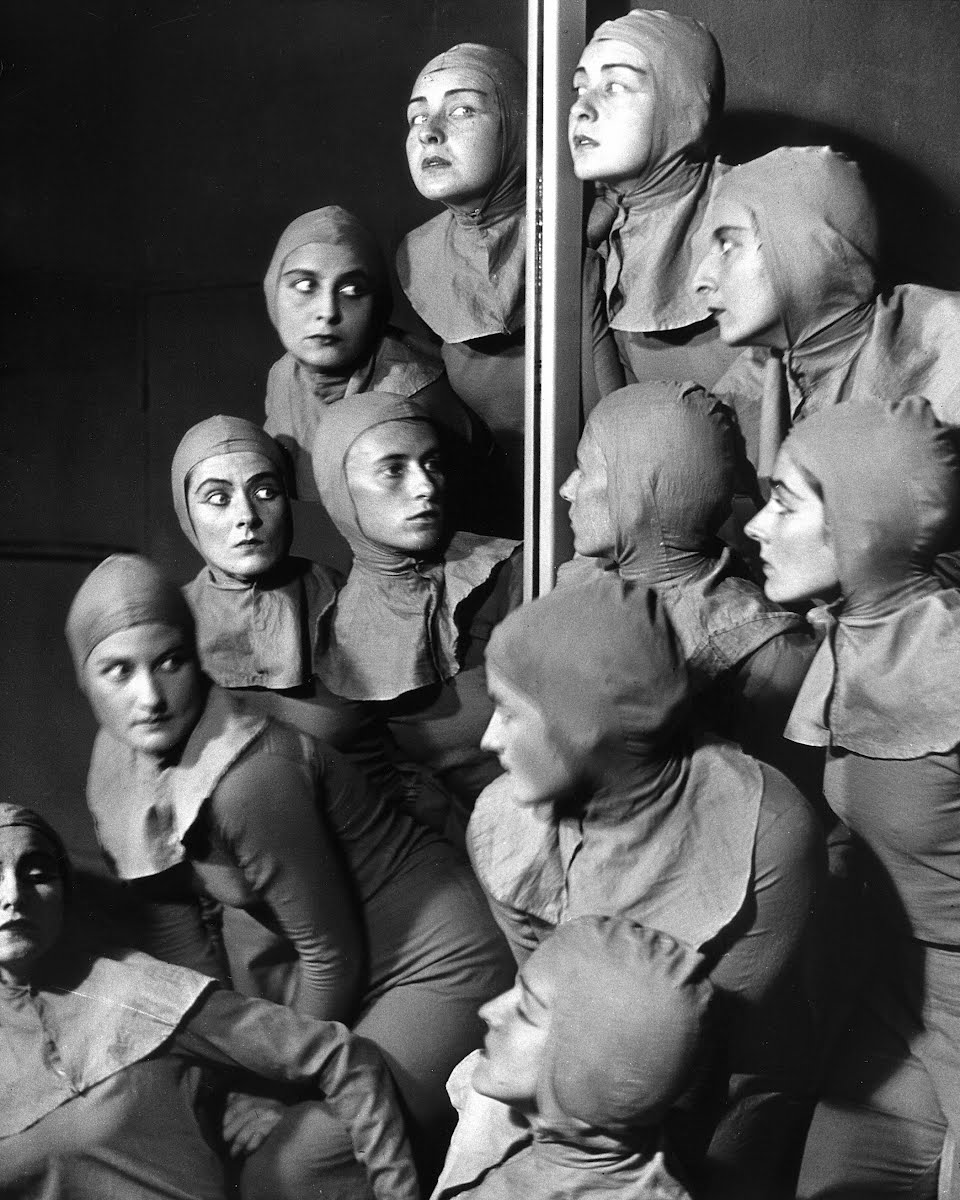
Dancers at Trümpy dance school

Alfred Eisenstaedt :: Costumed dancers at Truempy Dance School looking at themselves in studio mirror, Berlin, 1930, for Life Magazine. | src Google Arts & Culture
Alfred Eisenstaedt :: Dancers at Truempy Dance School, Berlin, 1930-1931. | src Google Arts & Culture
Alfred Eisenstaedt :: First lesson at Truempy dance school, Berlin, 1930, printed in 1995. | src Sotheby’s

Mary Wigman dancing, 1930

Carry und Nini Hess :: »Mary Wigman beim Tanz« [Mary Wigman dancing], 1930. | src Jüdische Allgemeine

Olga Bontjes van Beek · Vom Tanz zur Malerei

Olga Bontjes van Beek, 1923. Archiv Saskia Bontjes van Beek. Olga Bontjes van Beek – Vom Tanz zur Malerei: 26.3.2022 und 27.3.2022. | src Deutsches Tanzfilminstitut
Olga Bontjes van Beek vor einem Vorhang von Bernhard Hoetger [Olga Bontjes van Beek in front of a curtain by Bernhard Hoetger]. Archiv Saskia Bontjes van Beek. Archiv Saskia Bontjes van Beek. | src Deutsches Tanzfilminstitut
Olga Bontjes van Beek, 1919. Archiv Saskia Bontjes van Beek. Olga Bontjes van Beek – Vom Tanz zur Malerei | src Deutsches Tanzfilminstitut

[26.3.2022 & 27.3.2022] The dancer, sculptor and painter Olga Bontjes van Beek is the sixth and youngest daughter of the painter Heinrich Breling – this scenic reading is part of the exhibition “Heinrich Breling and his daughter Olga Bontjes van Beek” of the Kunstverein Fischerhude in Buthmanns and is dedicated to her creative life and work.

The central feature of the event is the narrative of a selection of Olga Bontjes van Beek’s own texts, letters and notes on her art and on selected events in her life, photos of her choreographies, drawings and pictures by the versatile artist.

Olga Bontjes van Beek (1896-1995) studied dance at the Elizabeth Duncan School in Darmstadt and with Sent M’Ahesa and was later a student of the painter Fritz Mühsam in Paris. Her friends include Bernhard Hoetger, Heinrich Vogeler and Theodor Lessing.

Olga’s sketches, which she herself drew for her dance movements, are brought to life to a Debussy recording by the pianist Walter Gieseking, with whom the expressionist dancer toured in the 1920s. This specially made video animation conveys moving impressions of her art as a dancer. Olga’s stage photos, family pictures, theater programmes, reviews and postcards from the tours and some film excerpts bring the artist’s personality to life. The haunting, deep and powerful images from her later creative period show her as a painter.

Music recordings of the time enrich the event and convey a lively feeling of the epoch. Poems by artist friends and comments by friends such as Helmut Schmidt and Lew Kopelev also testify the fascination for the artist Olga Bontjes van Beek. [quoted from Deutsches Tanzfilminstitut]
Dancers and musician (1920s)

Vintage photographs of thee women wearing Greek gowns, two of them dancing, the third playing flute or Aulos, reclining on a tree. [painted background] From a Vaudeville dancer / model photo album / scrapbook. | src House of Mirth on Abebooks