La photographie érotique

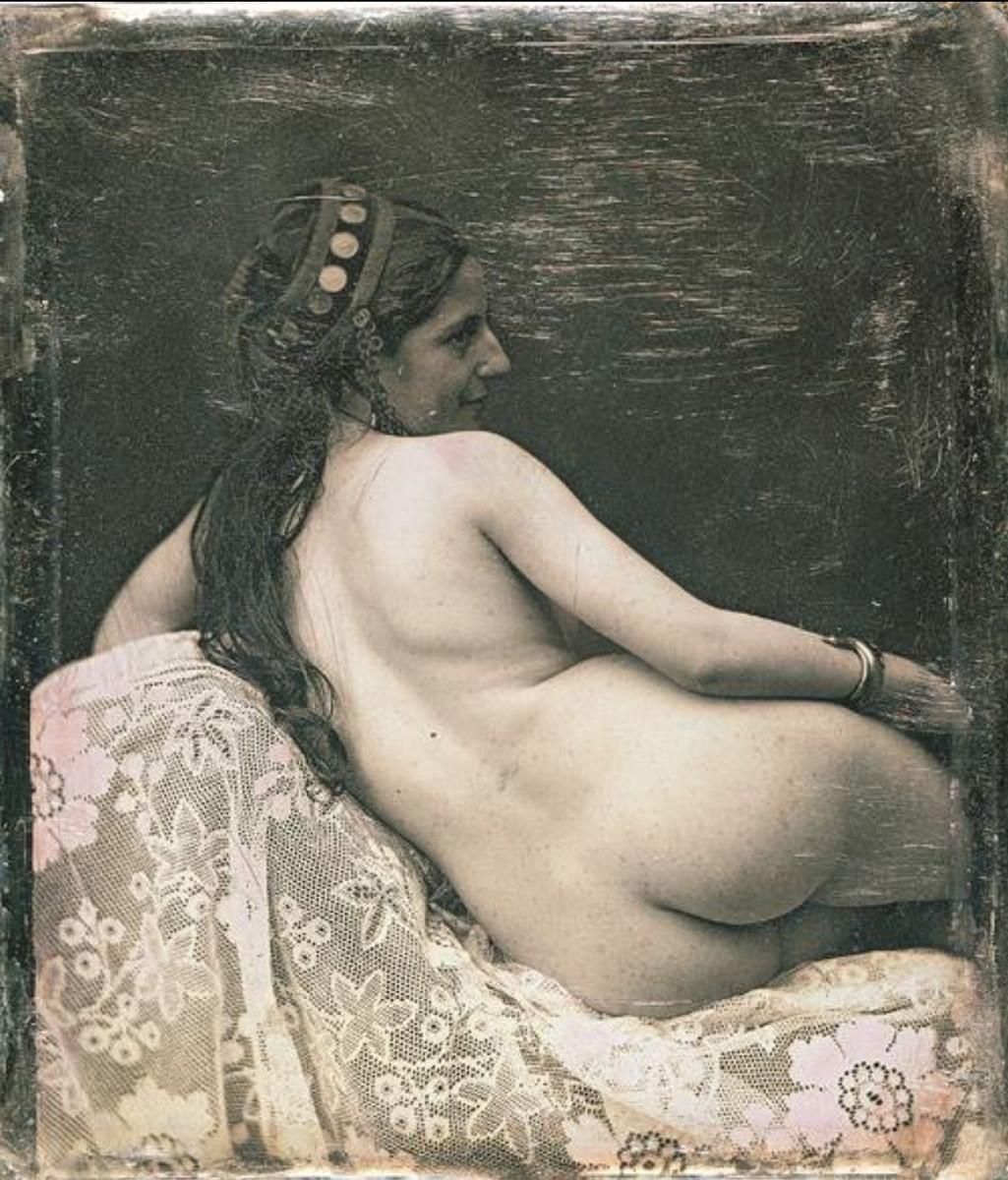
Female Nude. Attributed to Félix Jacques Moulin (French, 1802 - 1875); 1856; Albumen silver print. From «Reconsidérer la photographie érotique» | src l'œil de la photographie
Female Nude. Attributed to Félix Jacques Moulin (French, 1802 – 1875); 1856; Albumen silver print. From: Abigail Solomon-Godeau: «Reconsidérer la photographie érotique» | src l’œil de la photographie
Anonyme, Académie, vers 1845, daguerréotype. From: Abigail Solomon-Godeau: «Reconsidérer la photographie érotique» | src l'œil de la photographie
Anonyme, Académie, vers 1845, daguerréotype. From: Abigail Solomon-Godeau: «Reconsidérer la photographie érotique» | src l’œil de la photographie
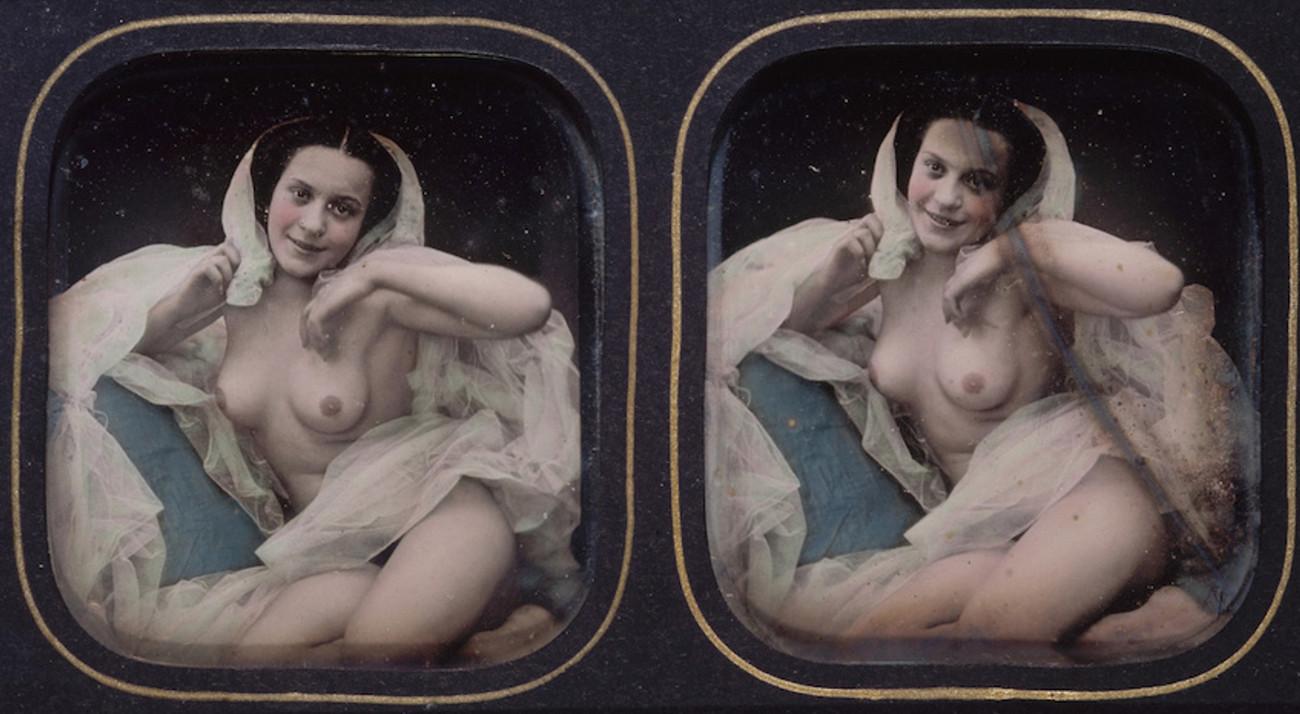
Anonyme, Nu, vers 1848, daguerréotype (stereo). From: Abigail Solomon-Godeau: «Reconsidérer la photographie érotique» | src l'œil de la photograp
Anonyme, Nu, vers 1848, daguerréotype (stereo). From: Abigail Solomon-Godeau: «Reconsidérer la photographie érotique» | src l’œil de la photographie
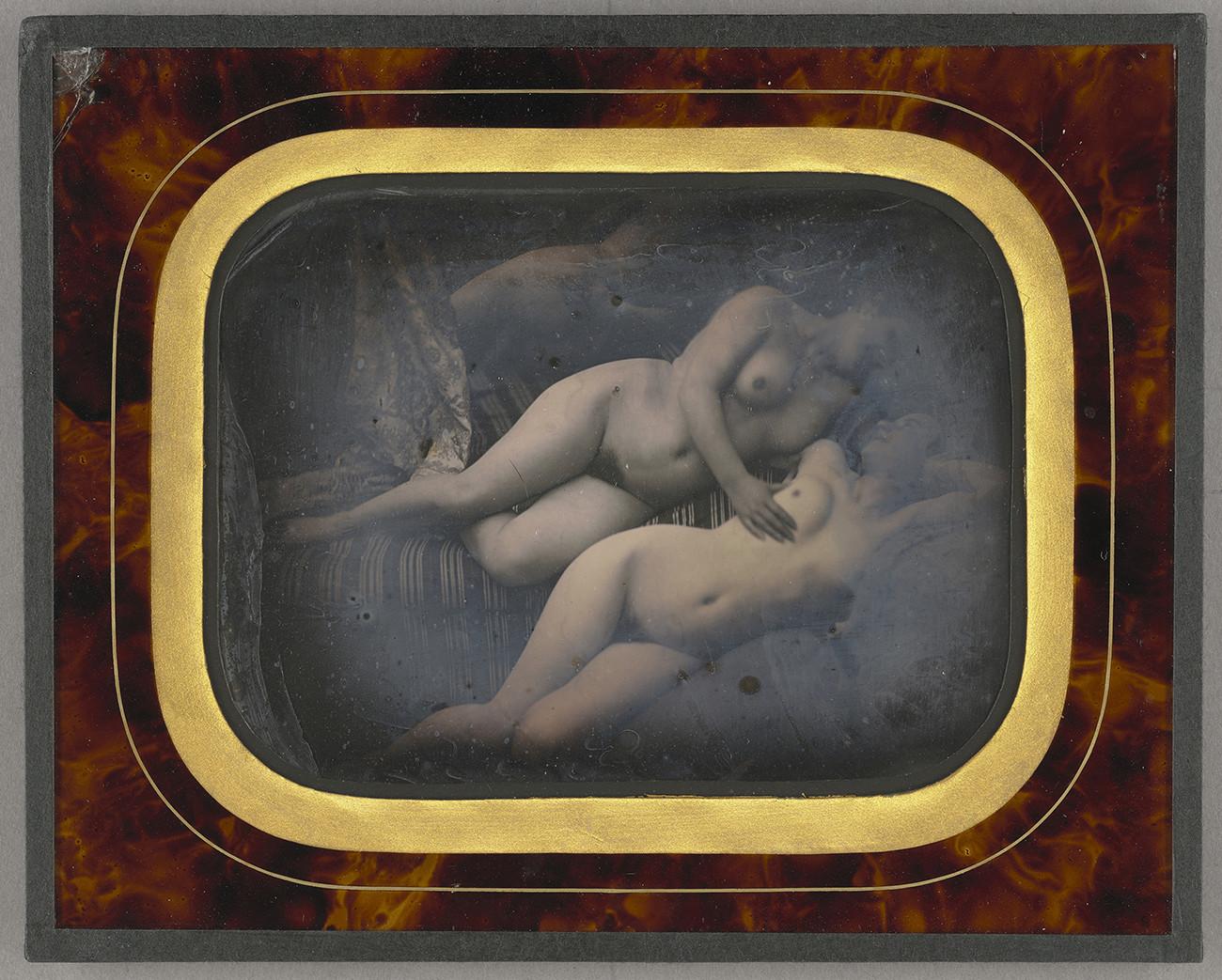
Two Women Embracing. Unknown French maker; about 1848; Daguerreotype, hand-colored. From: Abigail Solomon-Godeau: «Reconsidérer la photographie érotique» | src l'œil de la photographie
Two Women Embracing. Unknown French maker; about 1848; Daguerreotype, hand-colored. From: Abigail Solomon-Godeau: «Reconsidérer la photographie érotique» | src l’œil de la photographie

The title is intriguing: «Reconsidérer la photographie érotique». (“Reconsidering erotic photography”).
The text itself is brilliant and of great intelligence.

In this 1987 essay, historian Abigail Solomon-Godeau traces avenues for exploring a history of erotic and pornographic photographic production, a history hitherto repressed and absent from narratives. Thus opening the door to a feminist and revised history of the photographic medium, she shows how much this imagery has been abundant and present almost from the origins of photography. In “Reconsidering erotic photography”, Abigail Solomon-Godeau analyzes the ways in which naked bodies are presented in several photographic images from the 1840s-1850s, whether academic nudes or images intended for other types of visual consumption, and questions the specificity of photographic representation as opposed to other mediums. Supporting feminist theories, she raises the question of how these images are viewed, and the ambiguity of their designation, between eroticism and pornography. At the heart of this pioneering essay in the history of photography, she defends the need to write the history of these often set aside productions.

Reconsidérer la photographie érotique.
Notes pour un projet de sauvetage historique

Abigail Solomon-Godeau
Éléonore Challine (éd. et trad.),
Éditions de la Sorbonne, 2022
quoted from l’œil de la photographie
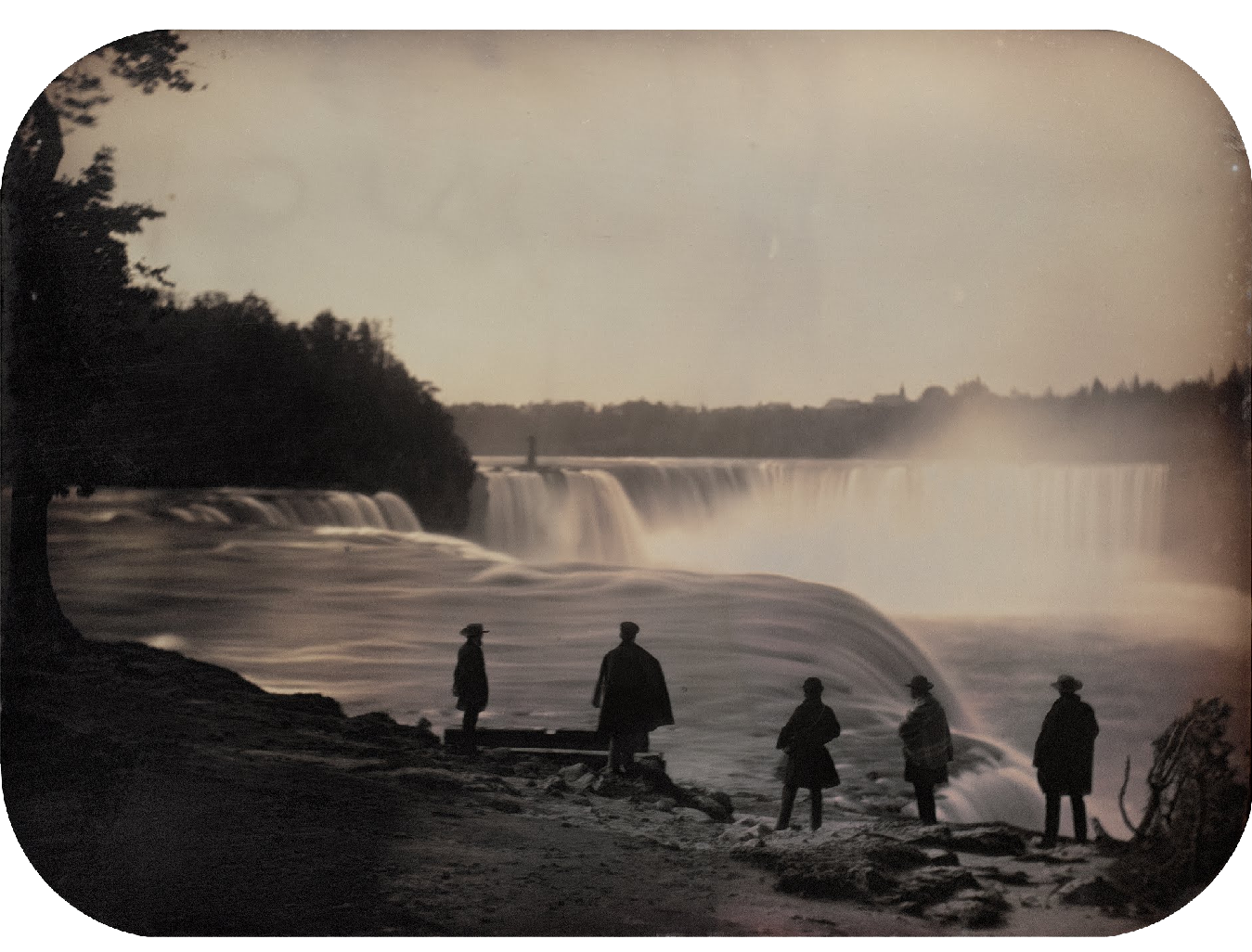
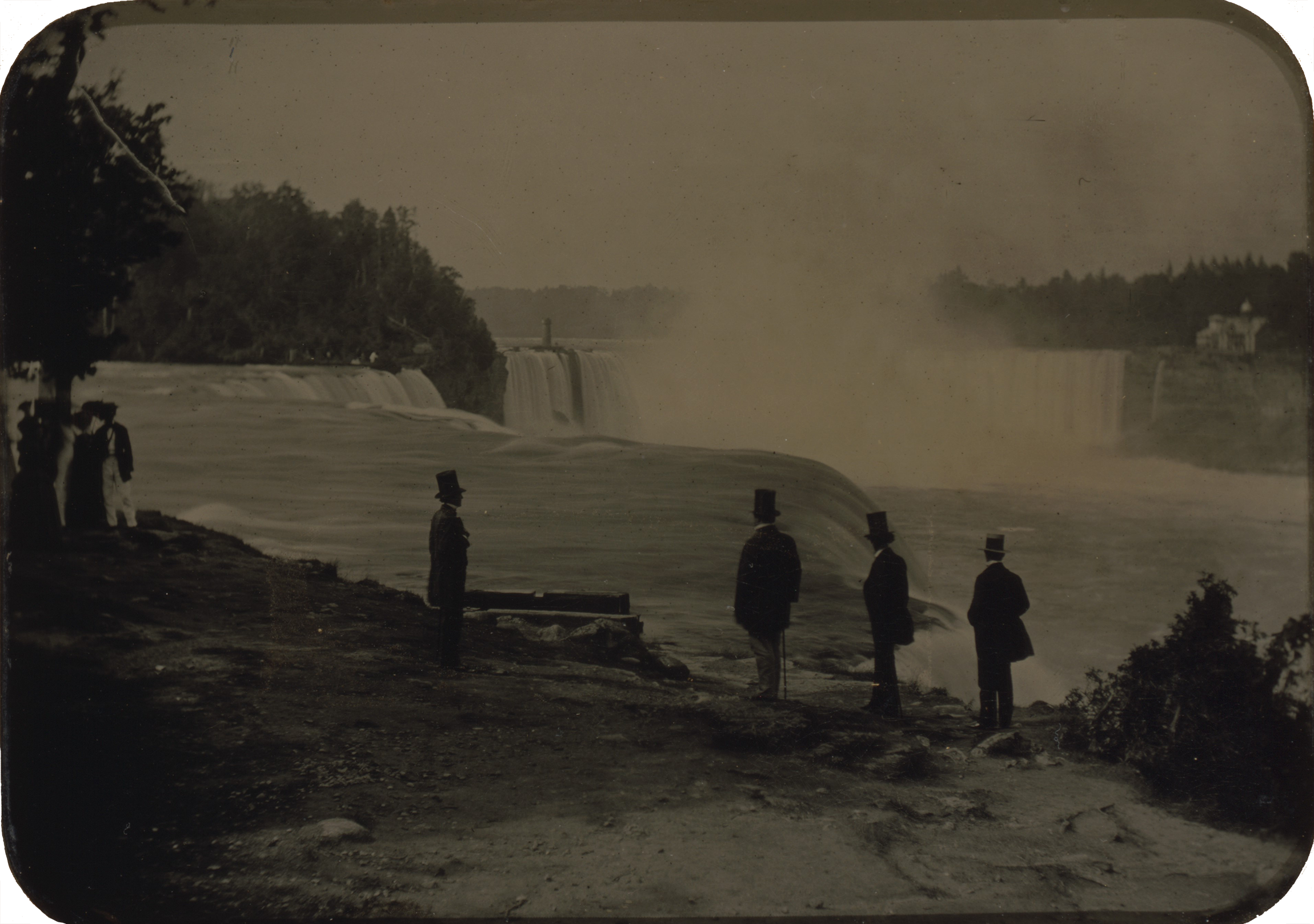
The Niagara Falls, ca. 1855

Platt D. Babbitt :: [Niagara Falls], ca. 1855. Daguerreotype in leather case. | src MFAH · Museum of Fine Arts Houston
Platt D. Babbitt (American, active 1840s–70s) :: The Niagara Falls, ca. 1850. Daguerreotype | src The Met
Platt D. Babbitt (American, active 1840s–70s) :: The Niagara Falls, ca. 1850. Daguerreotype in leather case | src The Met
Platt D. Babbitt (American, 1823 – 1879) :: [Scene at Niagara Falls]; about 1855. Daguerreotype.

In the 1800s Prospect Point at Niagara Falls was a popular destination for travelers in search of a transcendent encounter with nature. The falls were revered as a sacred place that was recognized by the Catholic Church in 1861 as a “pilgrim shrine,” where the faithful could contemplate the landscape as an example of divine majesty.

Platt D. Babbitt would customarily set up his camera in an open-sided pavilion and photograph groups of tourists admiring the falls without their knowledge, as he appears to have done here. Later he would sell the unsuspecting subjects their daguerreotype likenesses alongside the natural wonder. | quoted from Getty Museum

Platt D. Babbitt :: [Scene at Niagara Falls], ca. 1855. Daguerreotype | src Getty Museum Collection

Two well-dressed couples are seen from behind as they stand on the shore downstream from the falls, gazing at its majestic splendor. The silhouetted forms–women wearing full skirts and bonnets and carrying umbrellas and men in stovepipe hats–are sharply outlined against the patch of shore and expansive, white foam. | quoted from Getty Museum

Platt D. Babbitt :: Photograph shows men in morning coats and top hats standing at the side of Niagara Falls [ca. 1854]
Platt D. Babbitt :: [Niagara Falls] [ca. 1854] whole-plate ambrotype on case | src Library of Congress
Photograph shows men in morning coats and top hats standing at the side of Niagara Falls.


Choiselat and Ratel
[
Marie-Charles-Isidore Choiselat and
Stanislas Ratel] ::
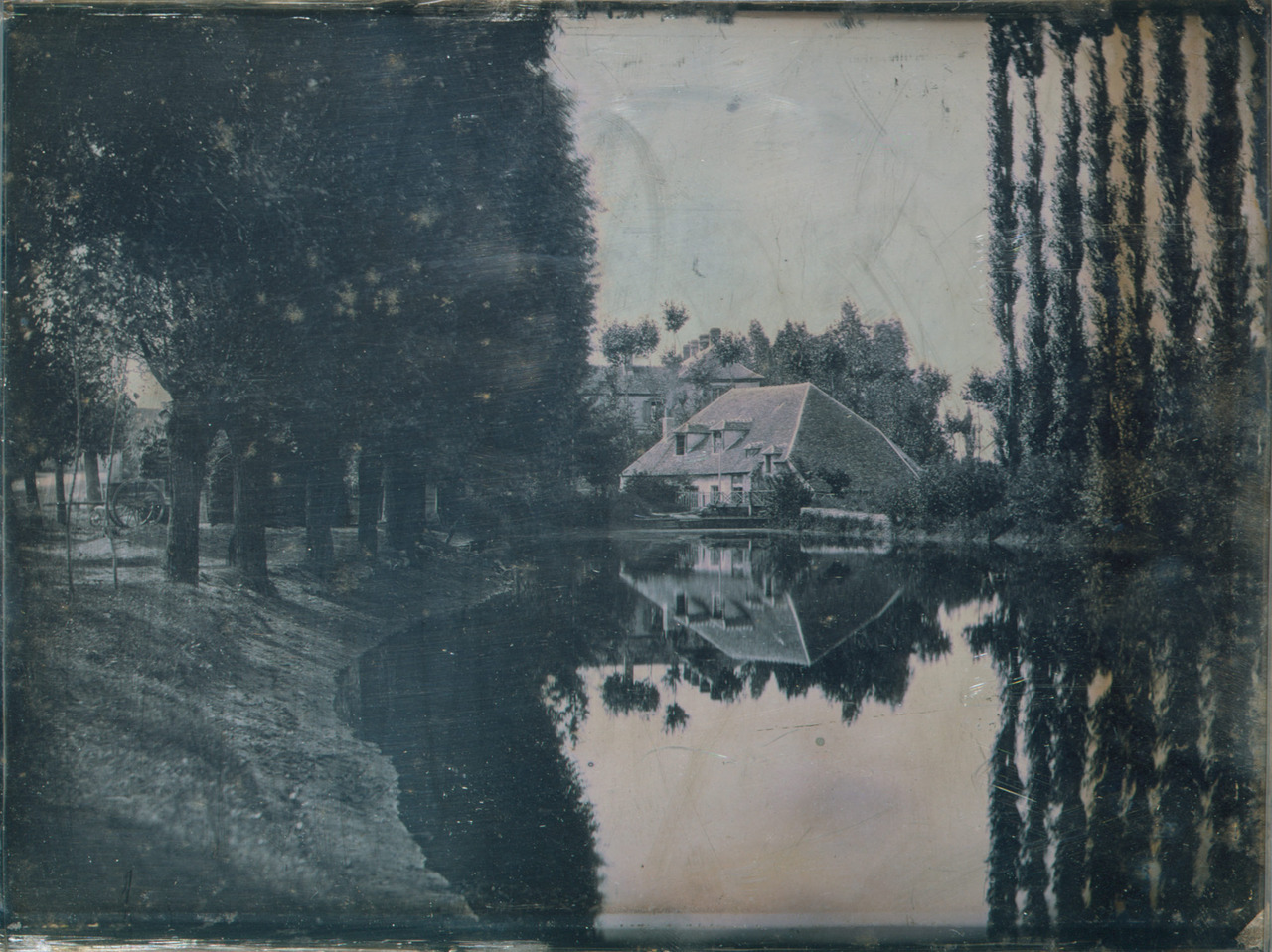
Landscape with Cottage, 1844.
Daguerreotype. / src: The Met

Choiselat and Ratel emphasized the two-dimensional organization of the
picture’s surface. The poplars, reflected in the water, seem to stretch
across the plate from top to bottom instead of sitting on the far side
of the pond; the cottage forms, with its reflection, a single geometric solid
floating in space. (Quoted from source)

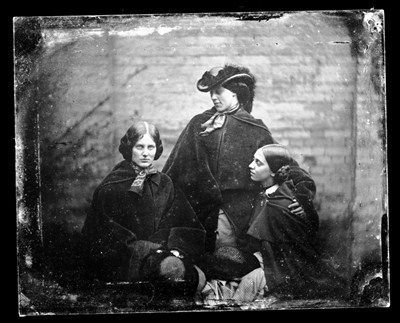
An alleged photo of the Bronte sisters (from left to right: Charlotte, Emily, Anne), 1940′s

“This
is a collodion photo with ‘The Bronte Sisters’ written in French on the
reverse, however this type of photograph on glass was only invented
in the early 1850′s, after the death of Emily (1848) and Anne (1849).
The researcher believes that this is a copy of an earlier 1840′s photo (a
daguerreotype). Sit back from the screen and you may
notice that the photo is on a slight slant and has the appearance of
having been cropped. This is how daguerreotypes were copied, at an angle
to avoid reflections
and centered to avoid marks at the edges of the original photo.” (quoted from original source)

thanks to apotigma for sending me this wonderful image

via
ladylabsinthe

/ original source: theBronteSisters