
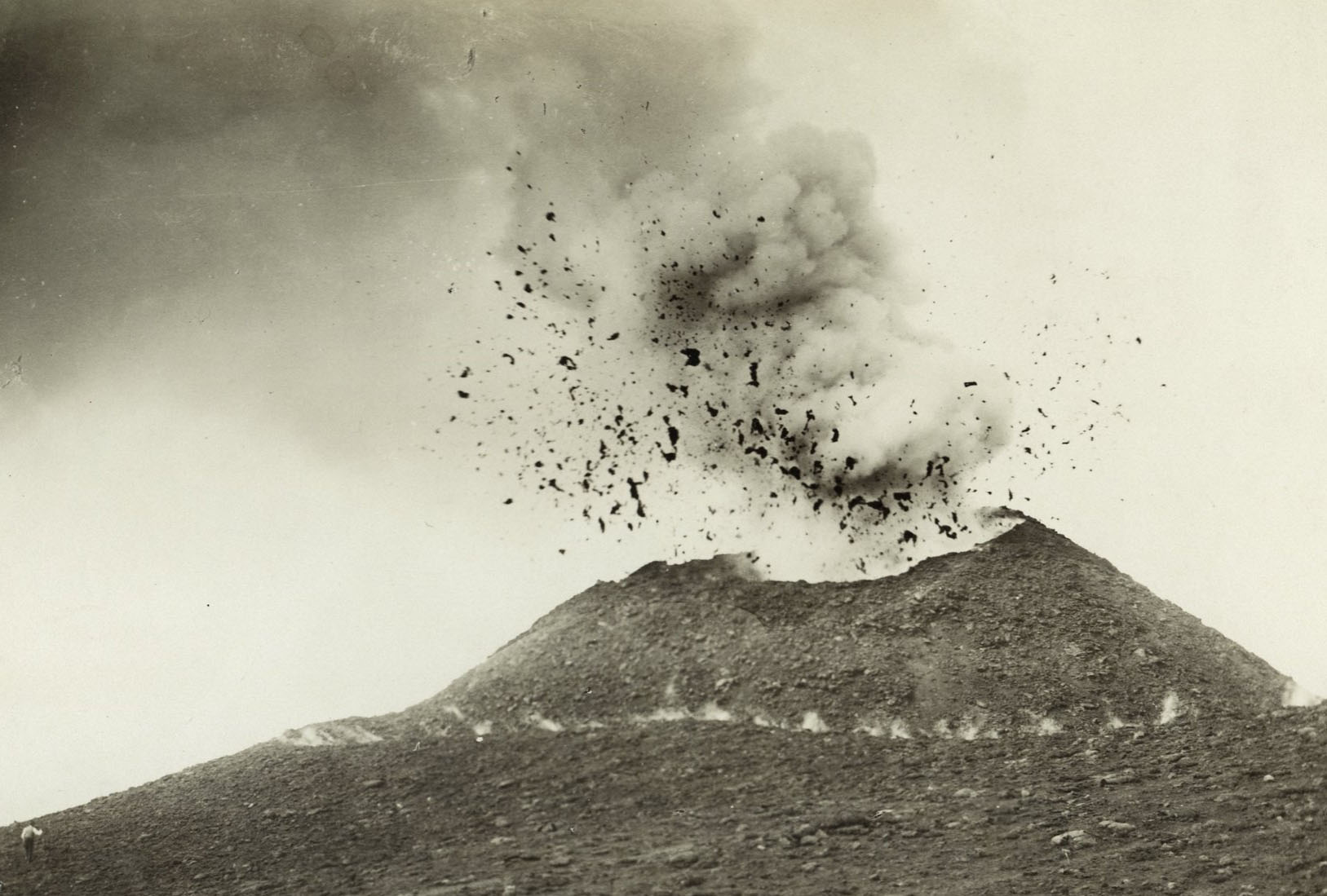
Notes; titled in the negative at bottom: “61. Il Vesuvio Cratere in eruzione 1895 / (Edizione Esposito).”
images that haunt us
Notes; titled in the negative at bottom: “61. Il Vesuvio Cratere in eruzione 1895 / (Edizione Esposito).”
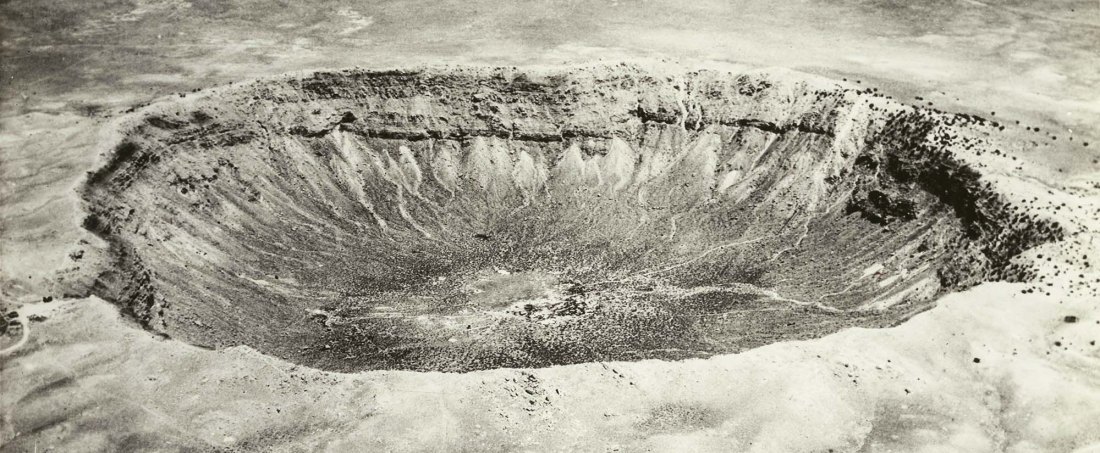
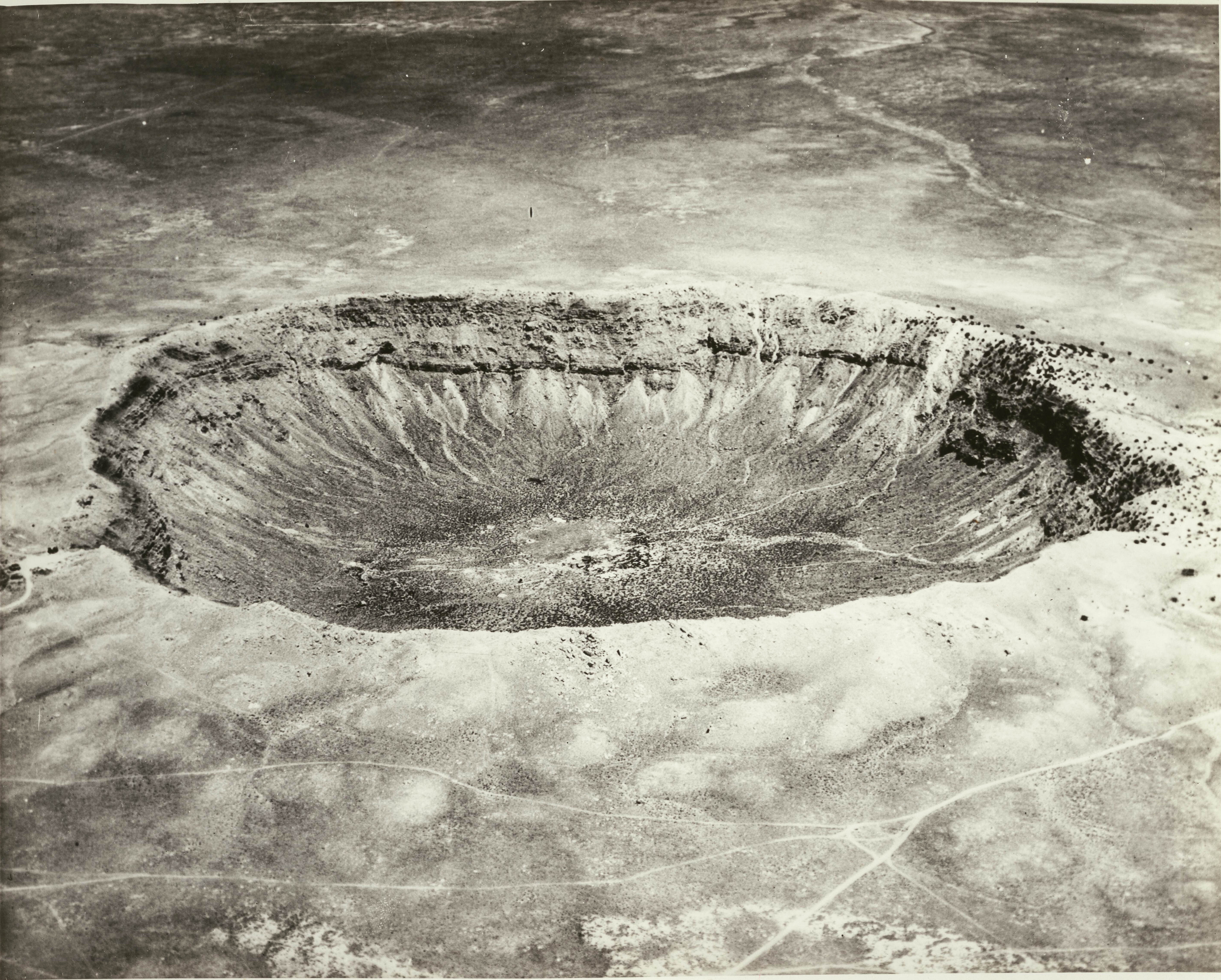
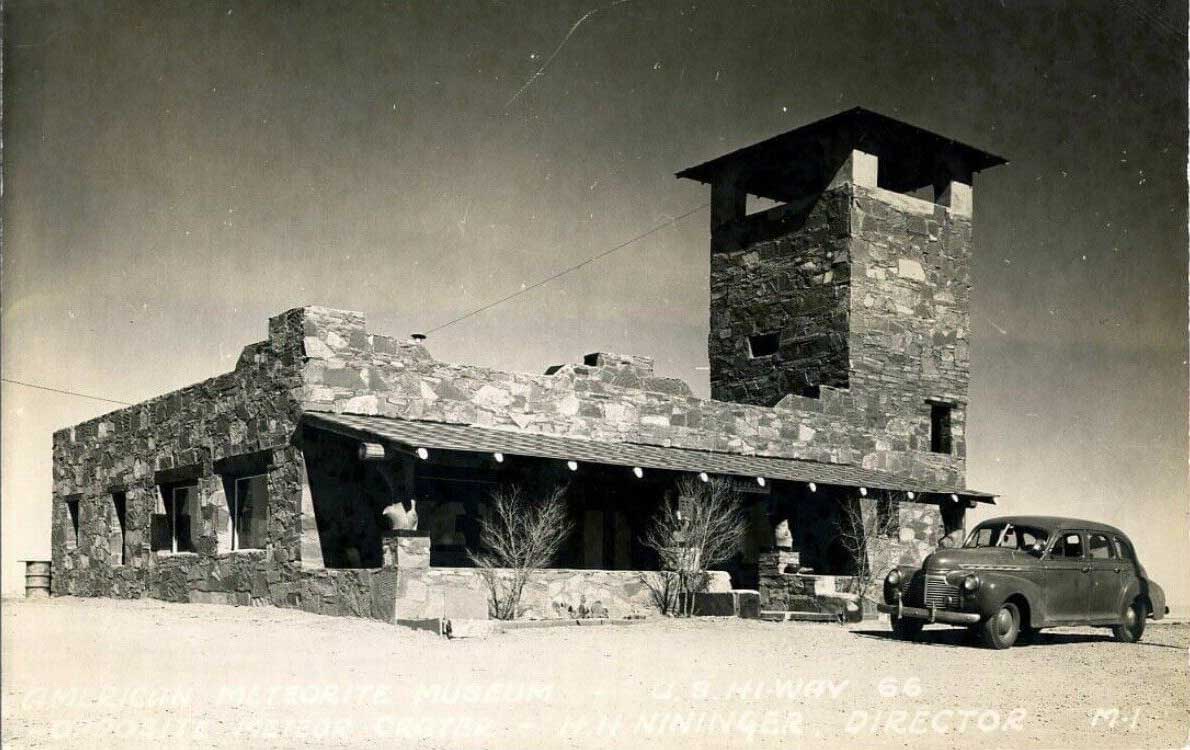
The Barringer Crater, also known as Meteor Crater, is a large impact crater located in Arizona, in the United States (*). It is about 1.2 kilometers (0.75 miles) in diameter and about 170 meters (570 feet) deep. The crater was formed about 50,000 years ago when an iron meteorite struck the Earth’s surface. It is unusually well preserved in the arid climate of the Colorado Plateau, in fact the (alleged) best preserved meteorite impact site on Earth and is a popular tourist destination. The crater is named after the mining engineer and businessman Daniel M. Barringer, who was the first person to suggest that it was formed by the impact of a large iron-metallic meteorite on Earth.
(*) The site had several earlier names, and the fragments of the meteorite are officially called the Canyon Diablo Meteorite, after the adjacent Cañon Diablo.
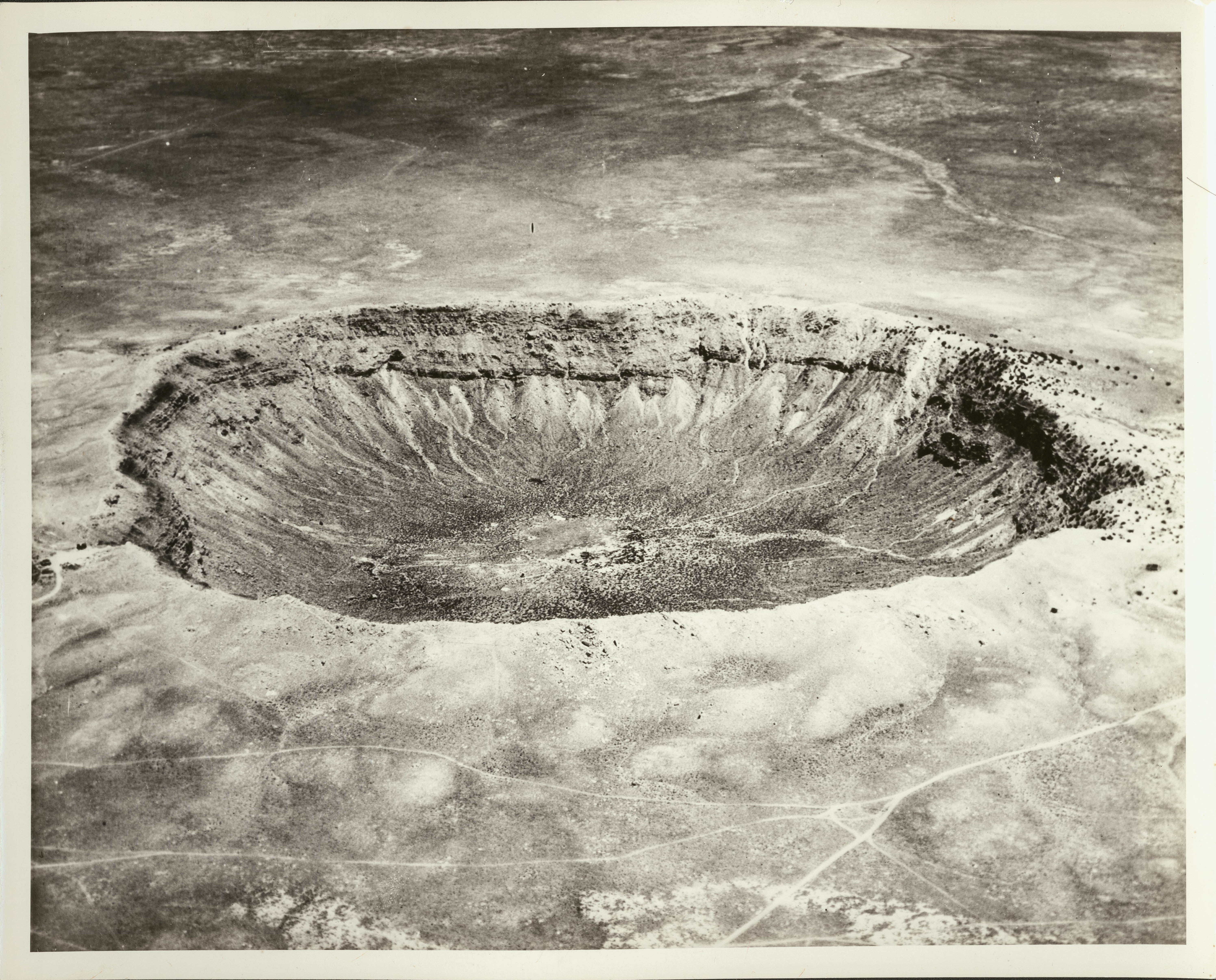
This is a Public Domain Work. Please credit both “University of Southern California. Libraries” and “California Historical Society” as the source. Digitally reproduced by the USC Digital Library.

Meteor Crater (also known as Barringer Crater) on Earth is only 50,000 years old. Even so, it’s unusually well preserved in the arid climate of the Colorado Plateau. Meteor Crater formed from the impact of an iron-nickel asteroid about 46 meters (150 feet) across. Most of the asteroid melted or vaporized on impact. The collision initially formed a crater over 1,200 meters (4,000) feet across and 210 meters (700 feet) deep. Subsequent erosion has partially filled the crater, which is now only 150 meters (550 feet) deep. Layers of exposed limestone and sandstone are visible just beneath the crater rim, as are large stone blocks excavated by the impact.
Impacts have shaped the Earth and Moon since early in the history of the solar system. In fact, the Moon likely formed when a proto-planet (likely the size of Mars) crashed into the Earth over 4.5 billion years ago. The collision sprayed material from the two worlds into orbit around the Earth. The debris coalesced and formed the Moon.
Meteorites continue to strike both the Earth and Moon. Micrometeorites bombard the Earth continuously. Larger asteroids hit Earth less frequently. Asteroids measuring roughly 50 meters (160 feet) across strike the Earth every 1,000–2,000 years, while more than 100,000 years typically elapse between strikes from asteroids larger than 1,000 meters (3,300 feet) across. [quoted from NASA]
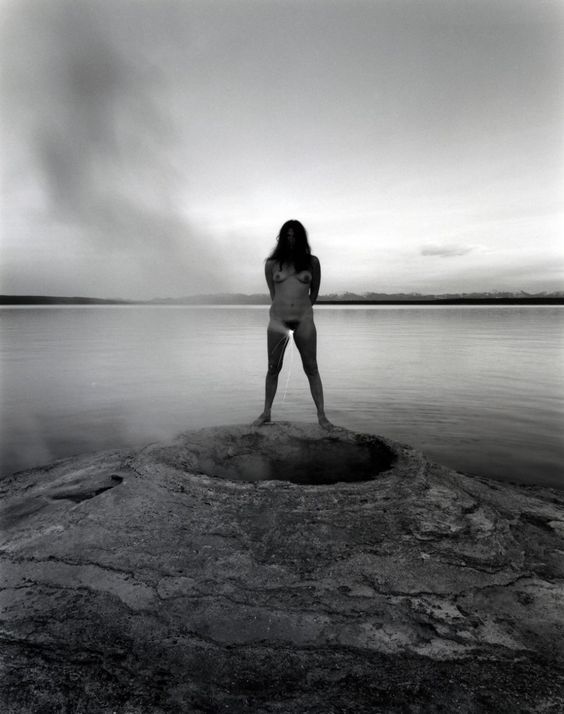
Judy Dater :: Self-Portrait with Steam Vent [Self-Portrait with Sparkler], 1981; gelatin silver print. Courtesy of di Rosa Collection, Napa. | Judy Dater: On Vaginas and Earthsworks | src Art Practical
more [+] by this photographer

Near the Moon’s North pole. Region near the North-west limb. There is a curious arrengement of crater-rings in pairs […]. Photograph taken at the Paris Observatory by M M. Moewy and Puiseux. Published in Hutchinson’s Splendour of the heavens; a popular authoritative astronomy. 1923. / src

Jackson Patterson ::
Moonset Crater, 2013, from Recollected Memories. / src: Lensculture.com
 un regard oblique