Rubinstein par Wegener

Otto Wegener ~ Ida Rubinstein en Cléopâtre. Paris, 1909 | Drouot & Daguerre
Grande épreuve agentique d’exposition avec nombreuses retouches à la gouache par l’artiste au niveau du visage, des yeux et des cheveux, signature au crayon sur le carton de montage.

Paris, 1909. Serge Diaghilev engage Ida Rubinstein dans les Ballets russes pour le rôle-titre de Cléopâtre, à l’opéra
Garnier. Cette interprétation est remarquée, ainsi que le nez de la diva.
Les costumes sont signés Léon Bakst et le final inspire le Souvenir de la saison d’Opéra Russe 1909 du peintre Kees van Dongen. Nijinski danse sa première saison des Ballets russes, dans le rôle d’un esclave peu vêtu, éblouissant le public parisien.

From : Otto Portraits : Daguerre & Drouot

Paris, 1909. Serge Diaghilev engages Ida Rubinstein in the Ballets Russes for the title role of Cleopatra, at the opera
Garnier. This interpretation is noticed, as well as the nose of the diva.
The costumes are by Léon Bakst and the finale inspires the Souvenir de la saison d’Opéra Russe 1909 by the painter Kees van Dongen. Nijinsky danced his first season of the Ballets Russes, in the role of a scantily dressed slave, dazzling the Parisian audiences.

Otto Wegener ~ Ida Rubinstein dans une robe de Léon Bakst. Paris, 1909. | Drouot & Daguerre
Grande épreuve d’exposition à la gomme bichromatée, signée au crayon dans l’angle supérieur droit de l’épreuve.

Portrait dynamique : Ida Rubinstein dans un costume pour Cléopâtre, ballet en un acte, argument d’après Pouchkine.

Otto Wegener ~ Ida Rubinstein en Hélène de Sparte. Paris, mai 1912.
Épreuve d’exposition à la gomme bichromatée, signée à la gouache blanche. | Drouot & Daguerre

Remarquables décors et costumes de Léon Bakst, pour la première au théâtre du Châtelet.

Otto Wegener ~ Ida Rubinstein, La Pisanelle ou la Mort Parfumée, 1912. | Drouot & Daguerre
Grande épreuve argentique d’exposition sur papier mat montée sur carton gris, signature au crayon “Otto Paris”

“Le 13 juin 1913 est créée au théâtre du Châtelet à Paris une œuvre rutilante et hybride : la Pisanelle ou la Mort parfumée, texte français du dramaturge italien Gabriele d’Annunzio. La participation russe est prépondérante : Lev Bakst pour le décor, Ida Rubinstein dans le rôle principal, Vsevolod Meyerhold pour la mise en scène.
La richissime actrice est la commanditaire du spectacle dont la chaude volupté répond à ses vœux. Dans cette œuvre, D’Annunzio a voulu faire se mesurer latinité et orientalisme.
Les circonstances qui ont procédé à la création de la pièce dans l’atmosphère survoltée d’une vie artistique dominée par les Ballets russes…”
Gérard Abensour, Monde Russe, 2007. From : Otto Portraits : Daguerre & Drouot

“On June 13, 1913, a gleaming and hybrid work was created at the Théâtre du Châtelet in Paris: La Pisanelle ou la Mort parfumée, a French text by the Italian playwright Gabriele d’Annunzio. The Russian participation is preponderant: Lev Bakst for the decor, Ida Rubinstein in the main role, Vsevolod Meyerhold for the staging.
The wealthy actress is the sponsor of the show marked by her fervent voluptuousness. In his work, D’Annunzio wanted to present Latinism and Orientalism into balance.
The circumstances that led to the creation of the piece in the charged atmosphere of an artistic life dominated by the Ballets Russes…”
Gérard Abensour, Monde Russe, 2007.

All the the photographs and texts in this post had been retrieved from the catalogue of this auction :

Otto Portraits. Un fonds d’atelier photographique est retrouvé intact après cent ans d’oubli. Le studio du portraitiste Otto, place de la Madeleine, accueillait le Tout-Paris de la Belle Époque. Otto et ses fils y menaient grand train.

Vente aux enchères ‘Photographies par Otto Wegener (1849-1924)’ à Hôtel de vente Drouot le 8 novembre 2018 – Daguerre & Drouot
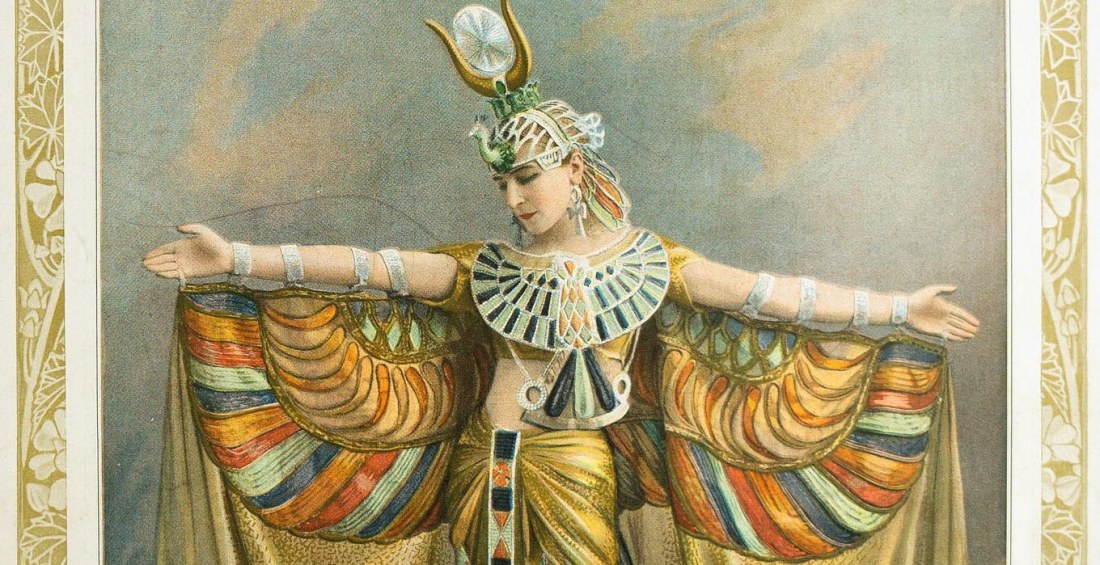
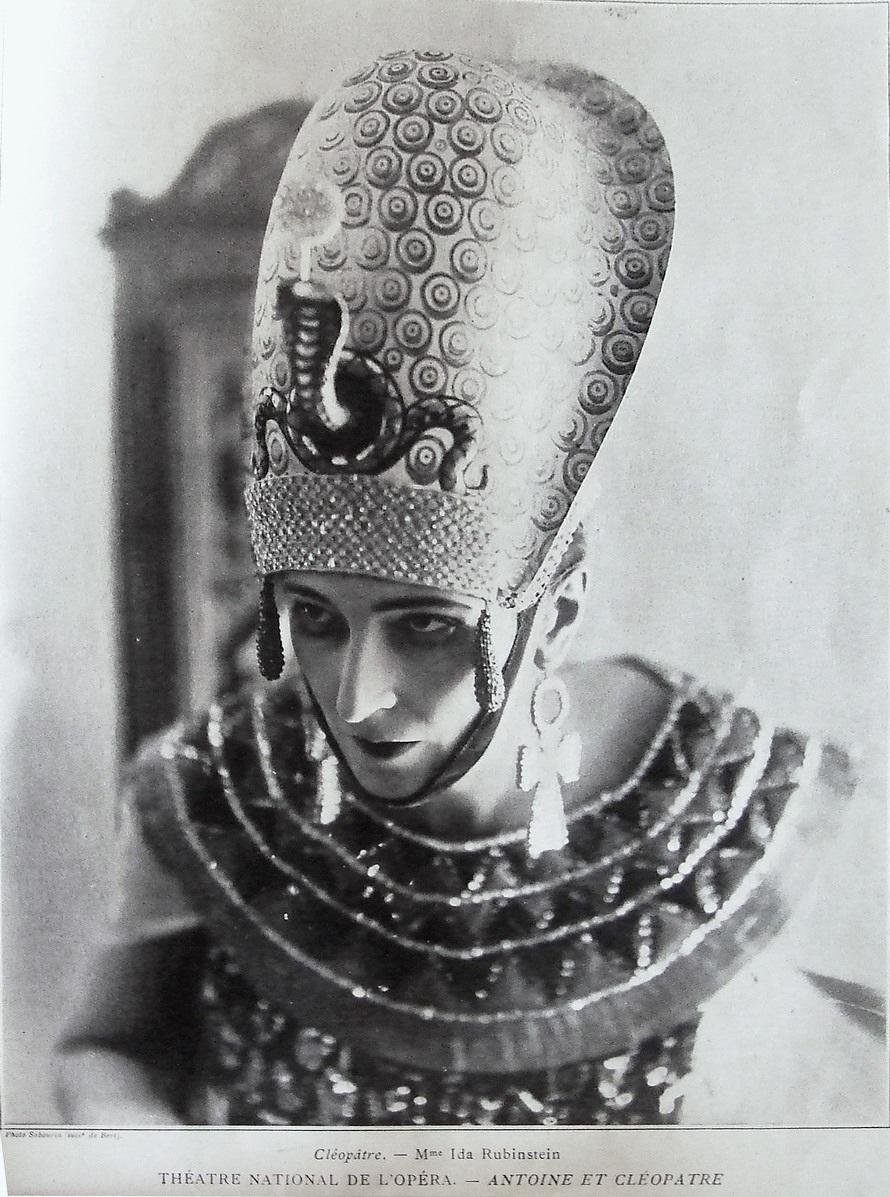
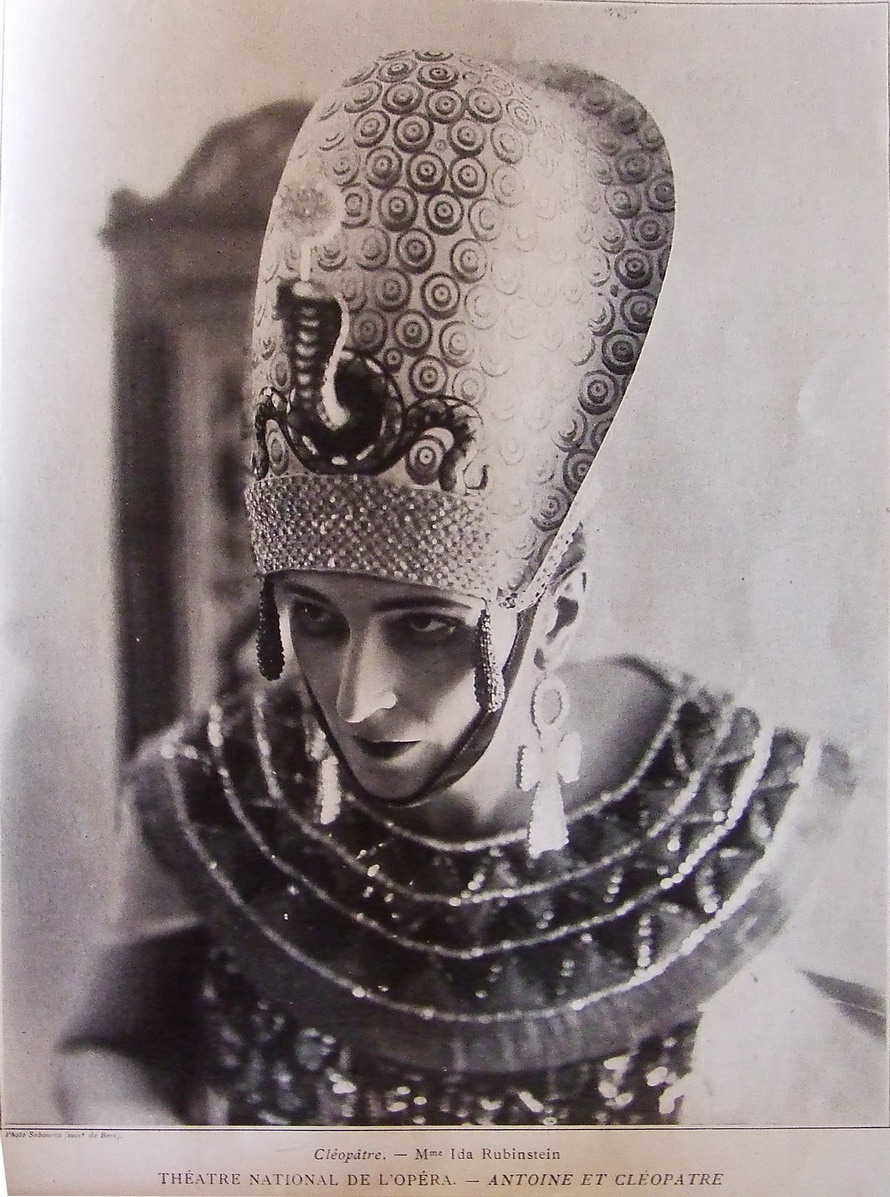
Antoine et Cléopâtre (1920)

cleopatre, ballets russes
Cléopâtre. ─ Mme Ida Rubinstein. Théatre National de l’Opéra. Antoine et Cléopâtre [Photo Sabourin (succ. de Bert)] | src Getty Images
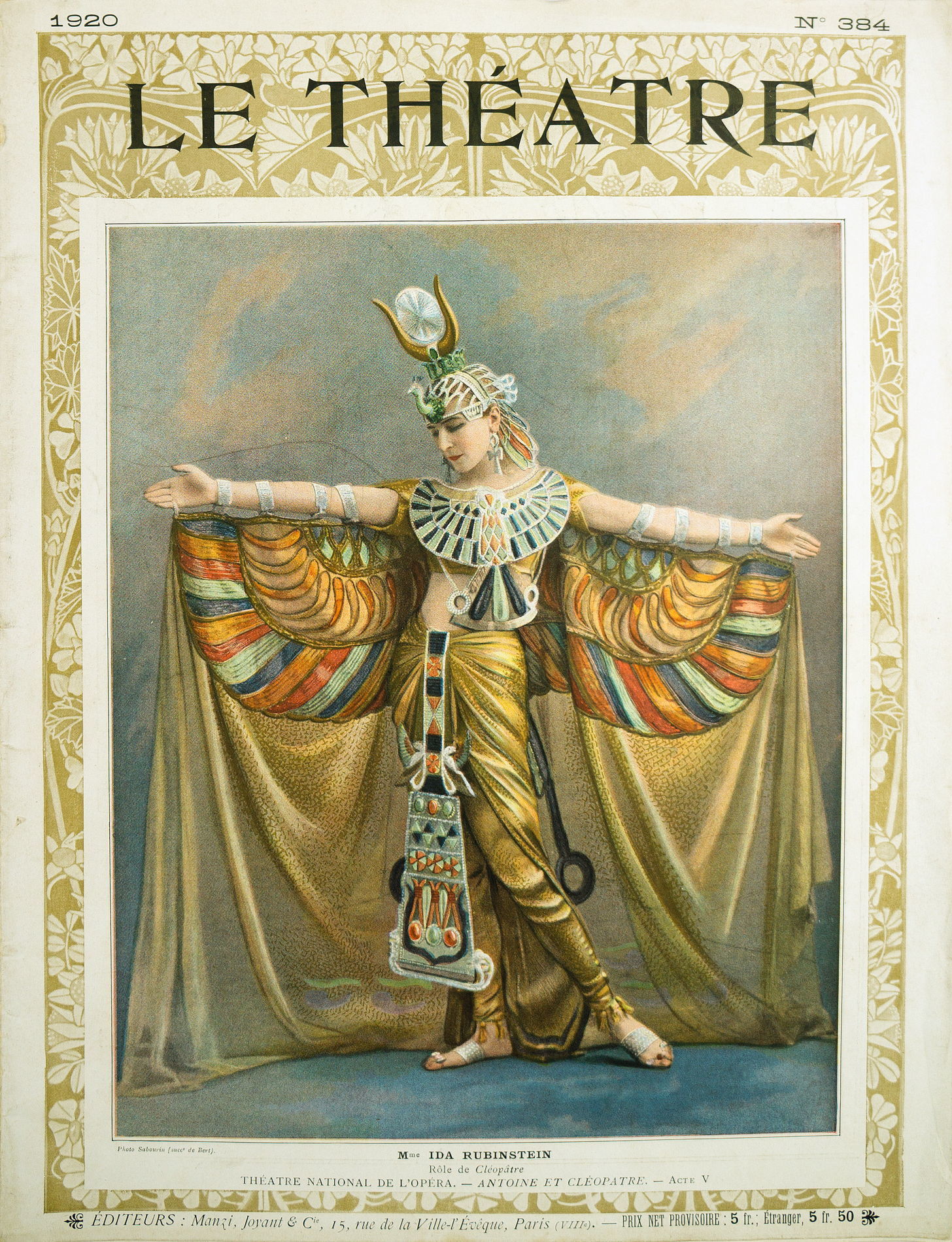
Ida Rubinstein (1880-1960) in the role of Cleopatra from Antony and Cleopatra by William Shakespeare,from magazine Le Theatre, 1920
1920 ─ LE THÉATRE ─ Nº 384 | Kabinett Auktionen
Cléopâtre. ─ Mme Ida Rubinstein. Théatre National de l'Opéra. Antoine et Cléopâtre [Photo Sabourin (succ. de Bert)]
1920 ─ LE THÉATRE ─ Nº 384 | Kabinett Auktionen
Cléopâtre. ─ Mme Ida Rubinstein. Théatre National de l’Opéra. Antoine et Cléopâtre [Photo Sabourin (succ. de Bert)]
Alternative scan of the magazine found on The Red List (broken link, the site had been taken down a few years ago)
1920 ─ LE THÉATRE ─ Nº 384 | Kabinett Auktionen
Mme Ida Rubinstein. Rôle de Cléopâtre. Théatre National de l’Opéra. Antoine et Cléopâtre ─ Acte V [Photo Sabourin (succ. de Bert)]

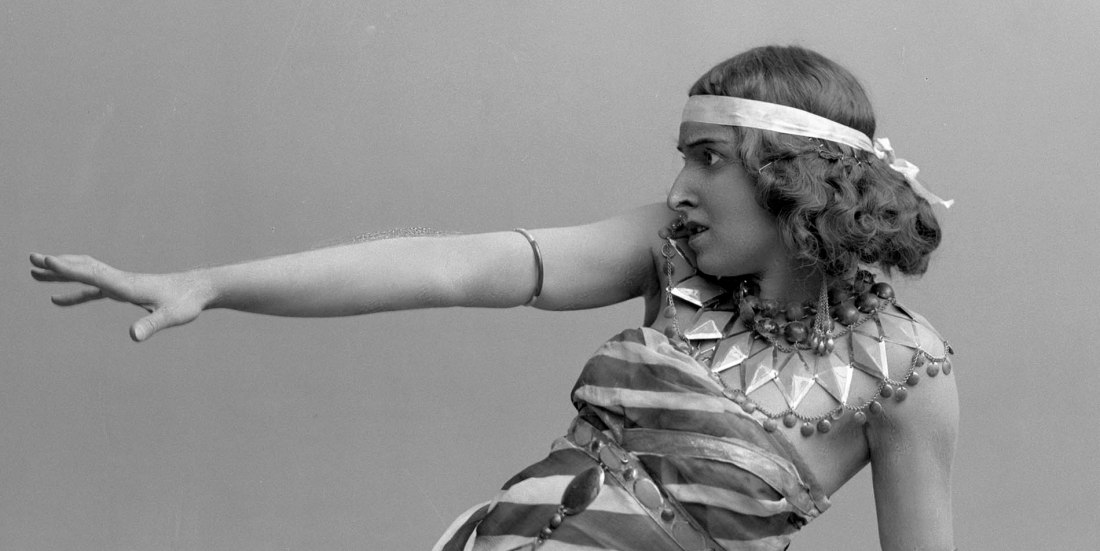
Fokina as Tabor in «Kleopatra»

Vera Fokina i baletten Kleopatra, Kungliga Operan 1913. Glasnegativ Detail
Atelier Jaeger, Stockholm :: Vera Fokina som Tabor i baletten Kleopatra (Cléopâtre), Kungliga Operan, 1913. Skannat glasnegativ | Vera Fokina as Tabor in the ballet Cleopatra (Cléopâtre), the Royal Opera, 1913. Scanned glass negative. | src Musik- och teaterbiblioteket
Atelier Jaeger :: Vera Fokina as Tabor in the ballet Cleopatra (Cléopâtre), the Royal Opera, 1913. Scanned glass negative. | src Musik- och teaterbiblioteket
Atelier Jaeger, Stockholm :: Vera Fokina som Tabor i baletten Kleopatra (Cléopâtre), Kungliga Operan, 1913. Skannat glasnegativ | Vera Fokina as Tabor in the ballet Cleopatra (Cléopâtre), the Royal Opera, 1913. Scanned glass negative. | src Musik- och teaterbiblioteket
Vera Fokina i baletten Kleopatra, Kungliga Operan, 1913. Hofatelier Jaeger. Glasnegativ | src Musik- och teaterbiblioteket
Atelier Jaeger, Stockholm :: Vera Fokina som Tabor i baletten Kleopatra (Cléopâtre), Kungliga Operan, 1913. Skannat glasnegativ | Vera Fokina as Tabor in the ballet Cleopatra (Cléopâtre), the Royal Opera, 1913. Scanned glass negative. | src Musik- och teaterbiblioteket
Atelier Jaeger :: Vera Fokina som Tabor i baletten Kleopatra (Cléopâtre), Kungliga Operan, 1913. Skannat glasnegativ. | src Musik- och teaterbiblioteket
Vera Fokina en tenue de scène dans  Cléopâtre [assise, tendant le bras] / [photo : Atelier Jaeger] Stockholm : Théâtre Royal, 14-03-1913  | src BnF
Vera Fokina en tenue de scène dans Cléopâtre [assise, tendant le bras] drame chorégraphique en 1 acte | chorégraphie de Michel Fokine. [photo : Atelier Jaeger] Stockholm : Théâtre Royal, 14-03-1913 | src BnF

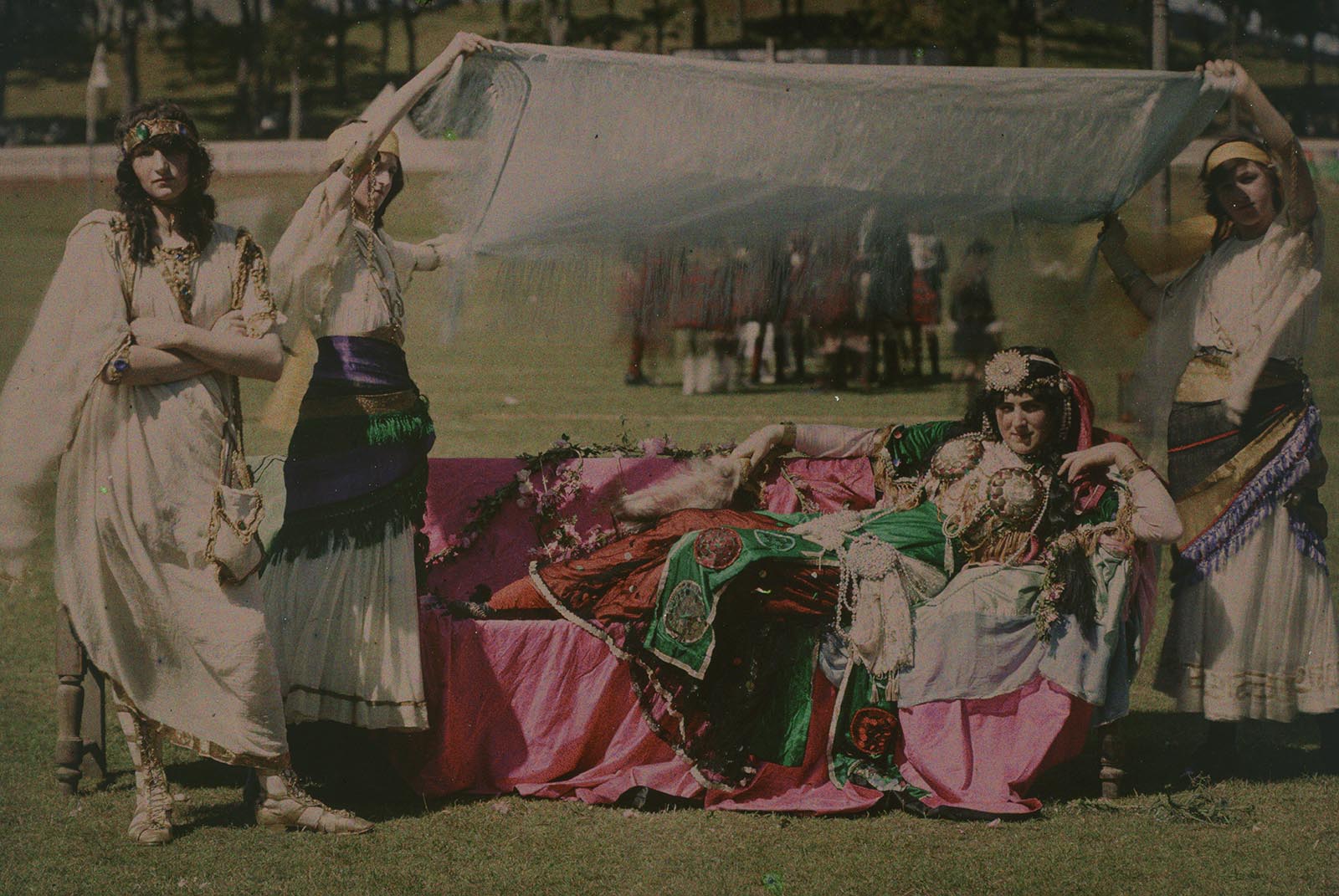
Cleopatra in Auckland, 1914

Robert Walrond :: "Cleopatra" in Domain cricket ground, Auckland, 1914. Autochrome. | Te Papa Tongarewa
Robert Walrond :: “Cleopatra” in Domain cricket ground, Auckland, 1914. Autochrome. | Te Papa Tongarewa

When the autochrome — the Lumière brothers’ new colour photographic process — reached New Zealand in 1907, it was eagerly adopted by those who could afford to use it. Among them was Auckland photographer Robert Walrond, whose ‘Cleopatra’ in Domain cricket ground is among a small number of superb early colour photographs in Te Papa’s collection. The combined effect of the sun and wind on the women’s costumes and in the fluttering appearance of the silk scarf held above the Cleopatra character is stunning. The tableau is interrupted but undiminished by what appears to be a pipe band in uniform in the background. The women were very likely part of what was described by the New Zealand Herald as a ‘fine’ performance of Luigi Mancinelli’s Cleopatra (a musical setting of the play by Pietro Cossa), associated with the Auckland Exhibition of 1913–14 held in the Domain.

The story of Cleopatra — with a particular focus on her love life and tragic death — was an exotic but respectable theme for theatre and dress-up events for women at the time. The Cleopatra myth and look were popularised by international performers such as the frequently-photographed Sarah Bernhardt in France and by numerous stage productions and films from the late nineteenth century onwards. With the advent of photography, part of performing the role became having a portrait made while in costume. The arrival of the autochrome was greeted with excitement and anticipation because rich colours could now be captured and the elaborate style of the costumes enhanced.

Much was made of the impact the autochrome would have on art and the role of photography within it. However, one of the disadvantages of the process was that it involved a unique one-off image on a glass plate: this required projection to be viewed and couldn’t be exhibited. So despite the original excitement for the method, it slipped out of sight once new developments arrived that fixed colour printing on a paper format. Walrond’s set of autochromes held by Te Papa are one of only a few larger bodies of work by New Zealand practitioners of this process.

Lissa Mitchell – This essay originally appeared in New Zealand Art at Te Papa (Te Papa Press, 2018)

Robert Walrond :: "Cleopatra", 1914. Additive colour process. | Museum of New Zealand - Te Papa Tongarewa
Robert Walrond :: “Cleopatra”, 1914. Autochrome, additive colour process. | Museum of New Zealand – Te Papa Tongarewa

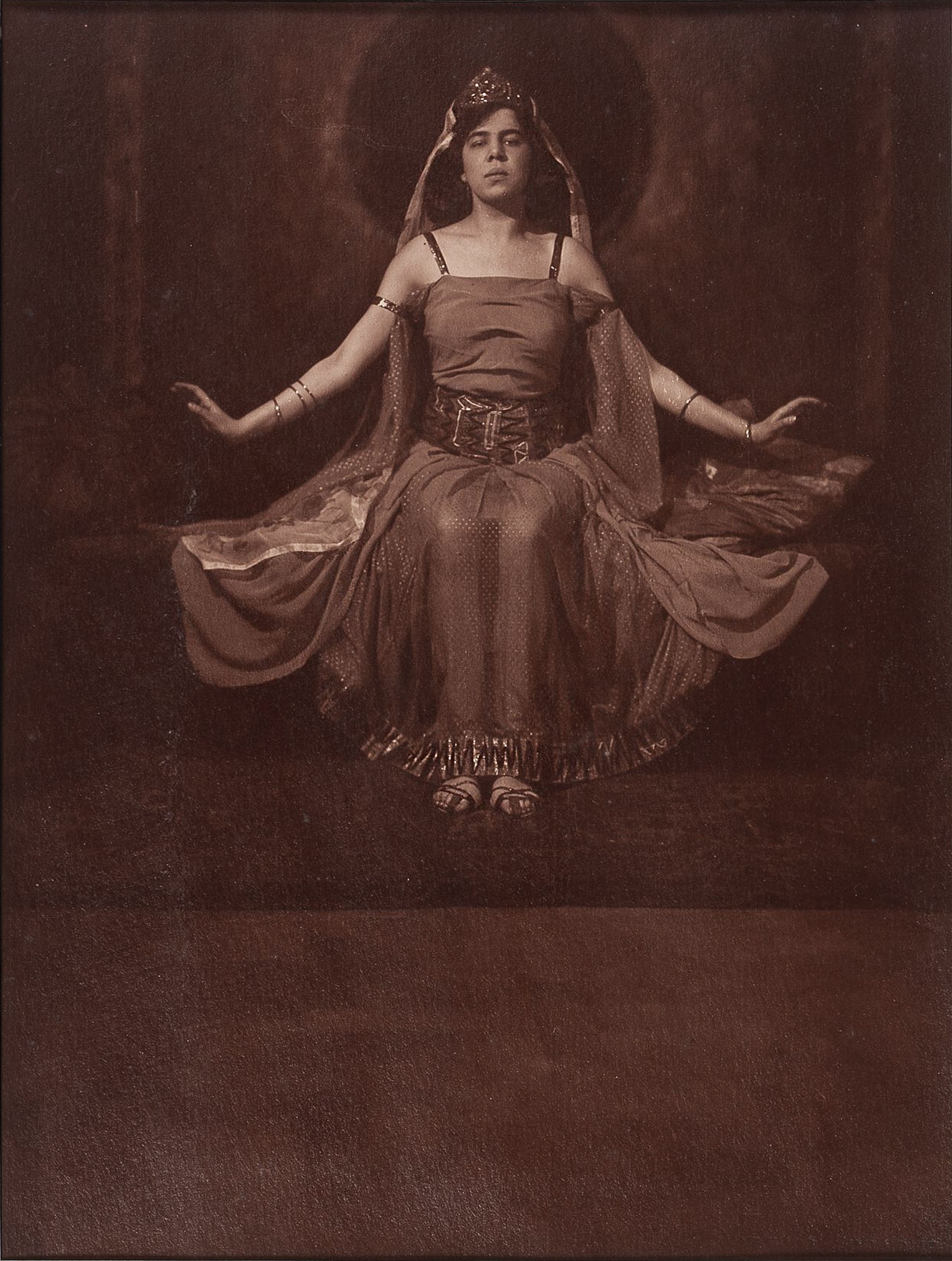
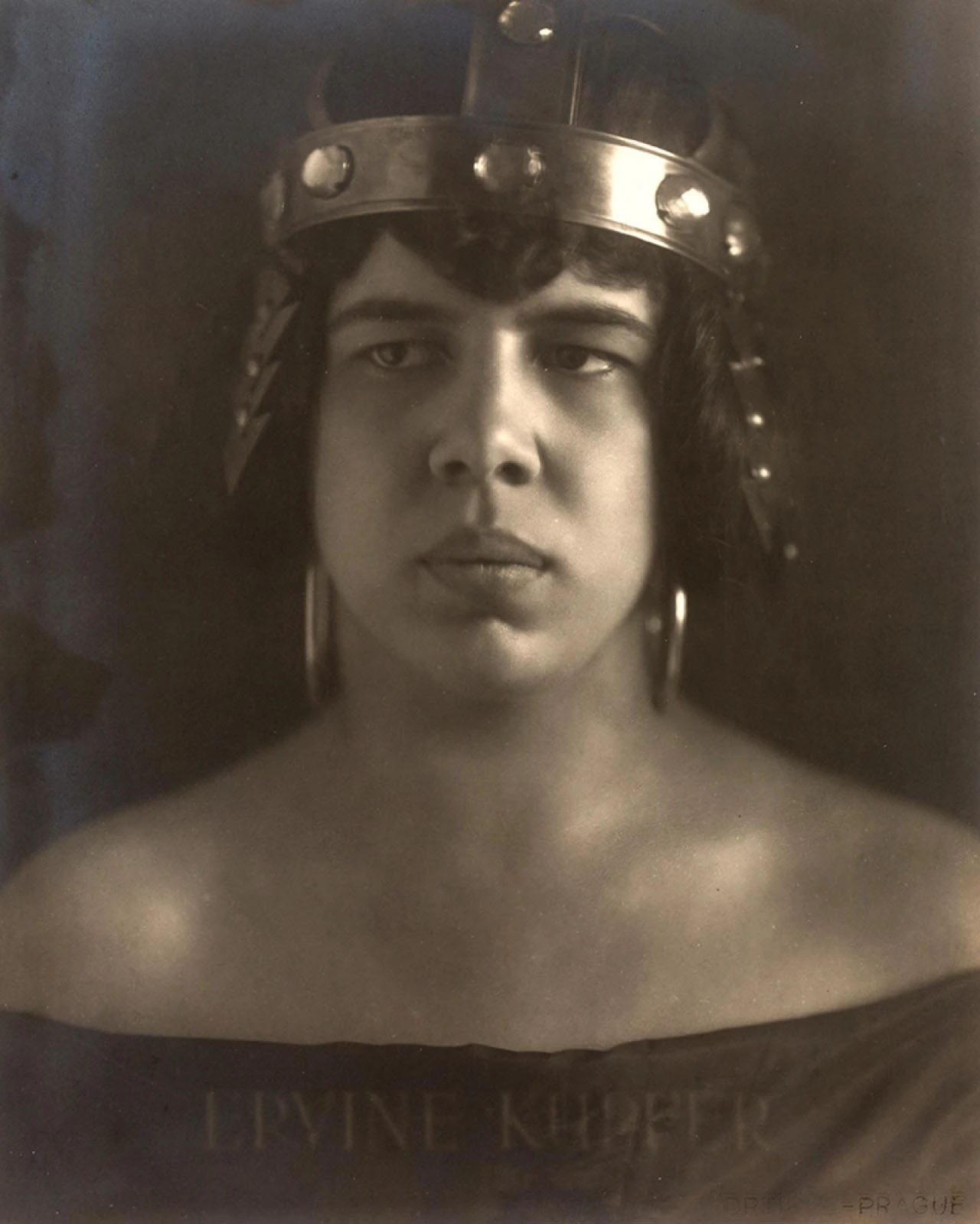
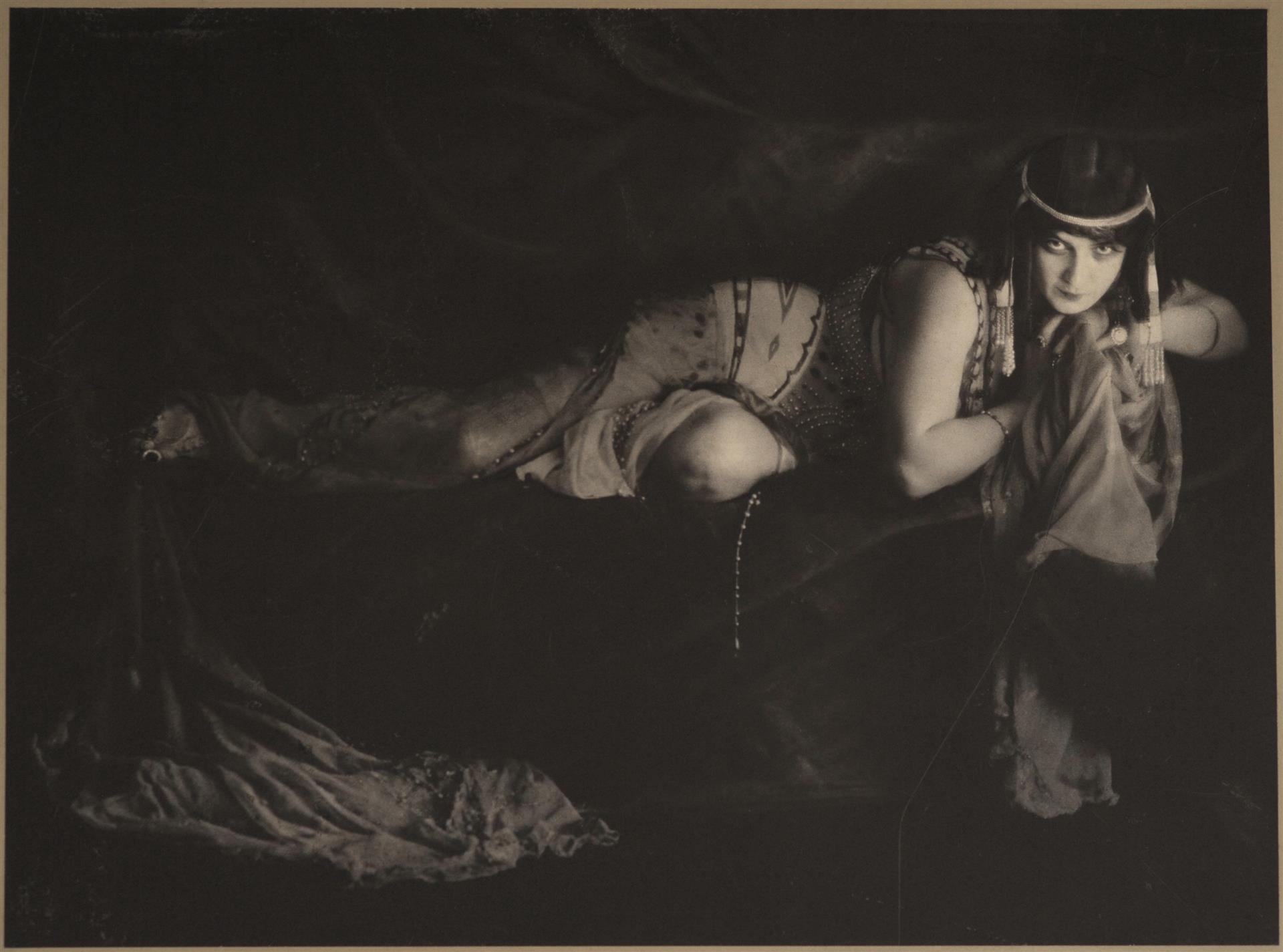
Ervina Kupferová role portraits

František Drtikol :: Ervina Kupferova en Cléopâtre. Photographie originale, ca. 1920 | src Drouot

Tirage argentique en brun contrecollé sur carton représentant Ervina Kupferova en Cléopâtre. Ervína Kupferová, danseuse célèbre fut la femme de Frantisek Drtikol. (src: Drouot)

František Drtikol ~ (Role) Portrait of Ervina Kupferova, 1919 | src mutualArt

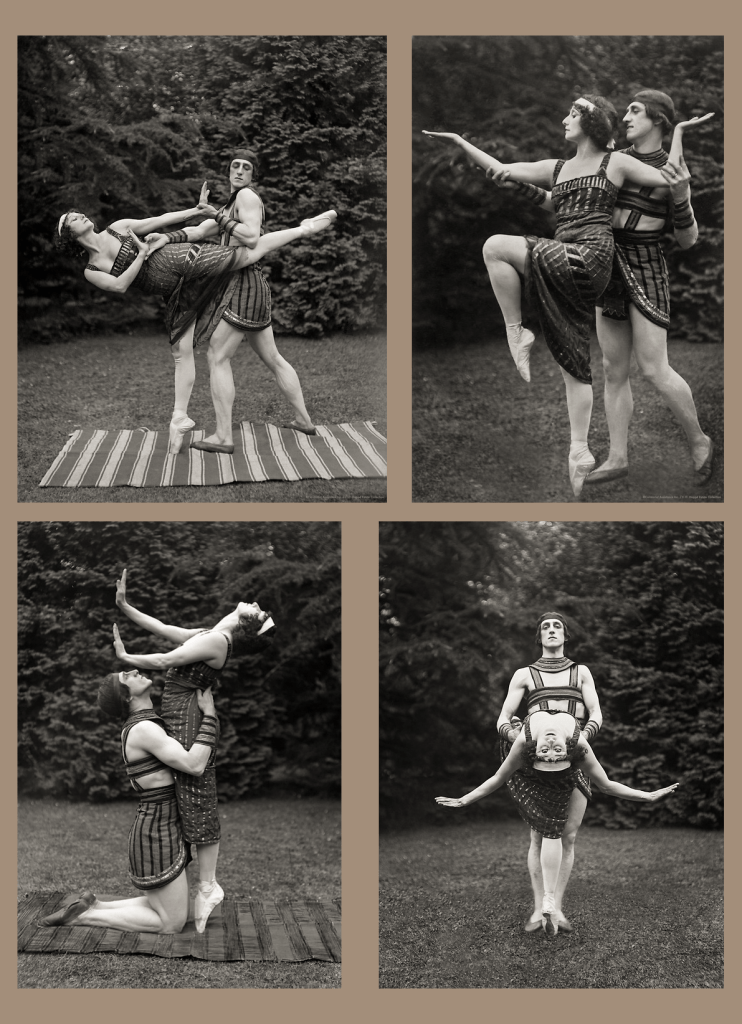
«Cléopâtre», London, 1923

E.O. Hoppé :: Anna Pavlova as Cleopatra and Laurent Novikoff as Amoun in «Cléopâtre» at Ivy House, Hampstead Heath, London, England, 1923. | src E.O. Hoppé Estate Collection / Ballets Russes (1909-1929)

Vera Fokina by Atelier Jaeger

Atelier Jaeger (Stockholm) :: Dancer Vera Petrovna Fokina (1886-1958) in Cléopâtre, choreographic drama in one act. Choreography by Michel Fokine. Stockholm Royal Theatre, 1913 [detail] | src BnF · Gallica
Atelier Jaeger (Stockholm) :: Dancer Vera Petrovna Fokina (1886-1958) in Cléopâtre, choreographic drama in one act. Choreography by Michel Fokine. Stockholm Royal Theatre, 1913 | src BnF · Gallica
Atelier Jaeger (Stockholm) :: Dancer Vera Petrovna Fokina (1886-1958) in Cléopâtre, choreographic drama in one act. Choreography by Michel Fokine. Stockholm Royal Theatre, 1913. | src BnF · Gallica
Atelier Jaeger (Stockholm) :: Dancer Vera Petrovna Fokina (1886-1958) in Cléopâtre, choreographic drama in one act. Choreography by Michel Fokine. Stockholm Royal Theatre, 1913 [detail, v] | src BnF · Gallica
Atelier Jaeger (Stockholm) :: Dancer Vera Petrovna Fokina (1886-1958) in Cléopâtre, choreographic drama in one act. Choreography by Michel Fokine. Stockholm Royal Theatre, 1913 [detail] | src BnF · Gallica