Woke up laughing by Bruno Roels

Bruno V. Roels ~ Desertwave. From: Woke up Laughing. Gallery 51 | src ODLP

‘Woke up Laughing’ presents a vibrant universe of palm trees reminiscent of vacation, luxury, paradise and adventure. Roels celebrates their beauty but also sheds light on their darker sides, as, much like photography, they are not entirely trustworthy. A palm tree in Monaco tells a different story than a tree in Fallujah, Iraq, or in Palmyra, Syria, occupied by ISIS. These seemingly pristine and peaceful universal icons ruthlessly resonate with memories of our colonial history. Each image serves as a silent testimony, compelling the viewer to reflect, illustrating that paradise lurks around the corner but remains elusive and unattainable. The bright colours that Roels added to the black and white images make the confrontation lighter and more playful. Due to his background in literature and linguistics, his titles also play a crucial role in his work. Often embodying historical and contemporary references, they create confusion through their ambiguity.

The title ‘Woke up Laughing’ refers to the eponymous song by British pop musician Robert Palmer and encapsulates the concept of Roels’ exhibition.

Woke up laughing
You make yourself a fortune out in Hong Kong
You sit at home and wonder whether you were wrong
You take a small vacation just to keep sane
You find on your return your home is blown away

With ‘Woke Up Laughing’, the artist presents a series of perspectives, techniques, and approaches. There is much to observe, not only about photography but also about what lies behind it. His images serve as both an escape from and a reflection on the reality in which we live. While he does not seek to impose criticism, he cleverly elucidates the challenges we face today.

Bruno V. Roels ~ Desertwave # 2. From: Woke up Laughing. Gallery 51 | src ODLP

For his fifth solo exhibition at Gallery 51, Belgian artist Bruno V. Roels (b. 1976) presents new work and delves further into the possibilities of the analog photographic process. In ‘Woke up Laughing’, his images navigate between aesthetics and experimentation, escapism and a historical consciousness.

Inspired by artists like John Baldessari (1931-2020) and Ed Ruscha (b. 1937), who approached photography in a conceptual manner, Roels also questions the properties of the image: how it operates, influences, and deceives. What defines photography as photography? And how do viewers interpret it, in an era marked by image manipulation and production, where visual communication sets the tone? These are significant questions embedded in his body of work.

While Roels’ artistic practice is primarily rooted in analog photography, he combines analog techniques with other art forms, non-photographic processes, or Artificial Intelligence and generative imaging. This allows the artist’s imagination to reach its peak, as nothing is deemed impossible. Additionally, the artist plays with the reproducible nature of the medium, creating unique works often consisting of multiple variations of the same negative, compiling them as equivalent images within the same frame, rendering no image perfect or superior to another. He also produces overprints, where the same negative is printed several times, causing the images to blend. The yellowed, coffee- coloured prints give his work a recognizable vintage look. Artistic imperfections and incidental elements, such as creases and stains that occur during printing, remain visible and characterize his visual language. By imprinting text on the prints or by drawing and painting on them, Roels adds surreal elements and layers of meaning.

Bruno V. Roels ~ An Ornament For A Summer’s Day # 2. From: Woke up Laughing. Gallery 51 | src ODLP
Bruno V. Roels ~ Figura Serpentinata (Demeter V). From: Woke up Laughing. Gallery 51 | src ODLP

Dancing cacti by Grete Kolliner

Grete Kolliner (1892-1933) ~ Manon Chaufour und Otto Werberg als Tanzkakteen, um 1931 (detail)
Grete Kolliner (1892-1933) ~ Manon Chaufour und Otto Werberg als Tanzkakteen, um 1931 | src Dorotheum
Atelier Kolliner ~ Manon Chaufour & Otto Werberg als Tanzkakteen (dancing cacti), um 1931 | src Dorotheum
Proveniennz: Aus dem Nachlass Hedi (Hedy) Pfundmayr

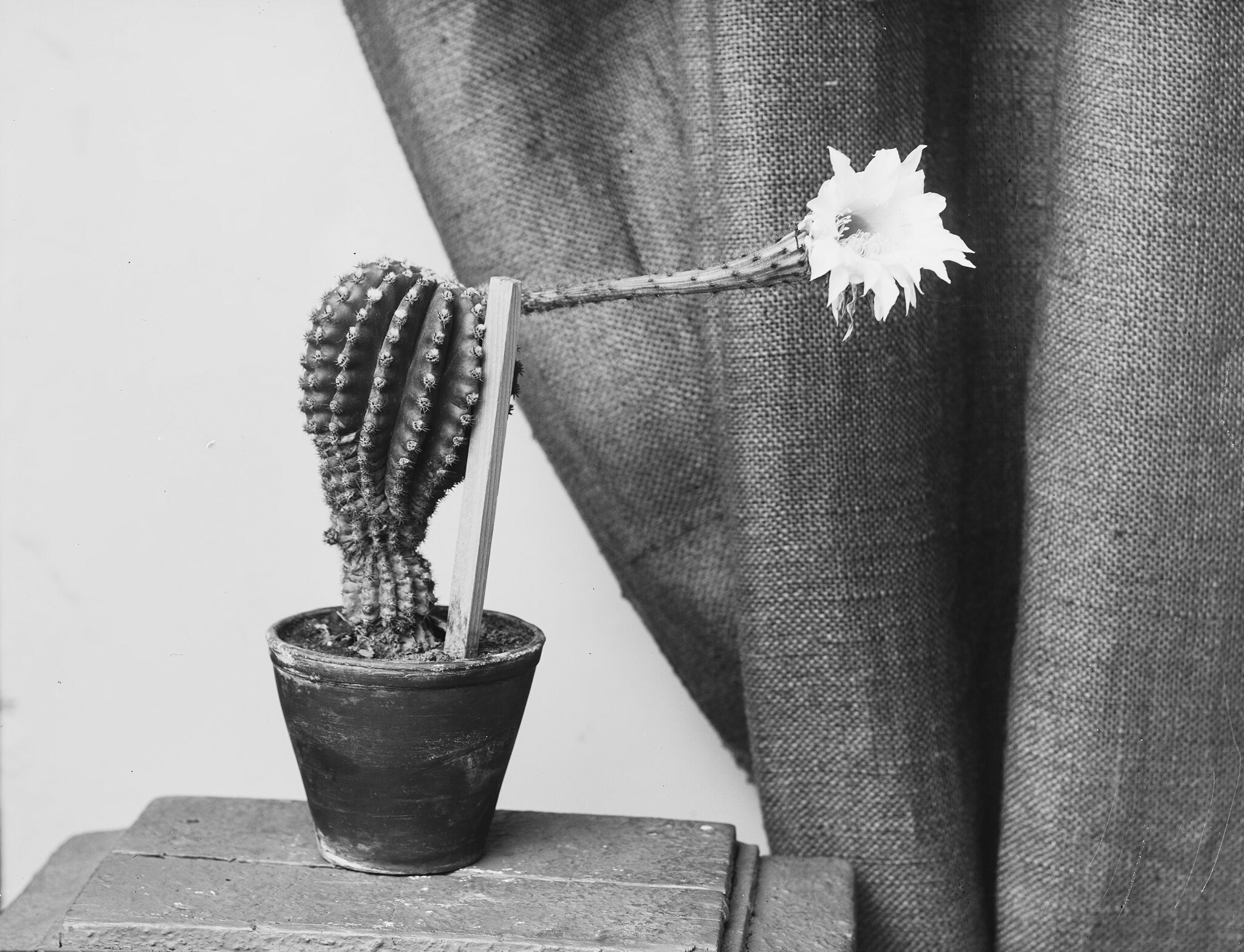
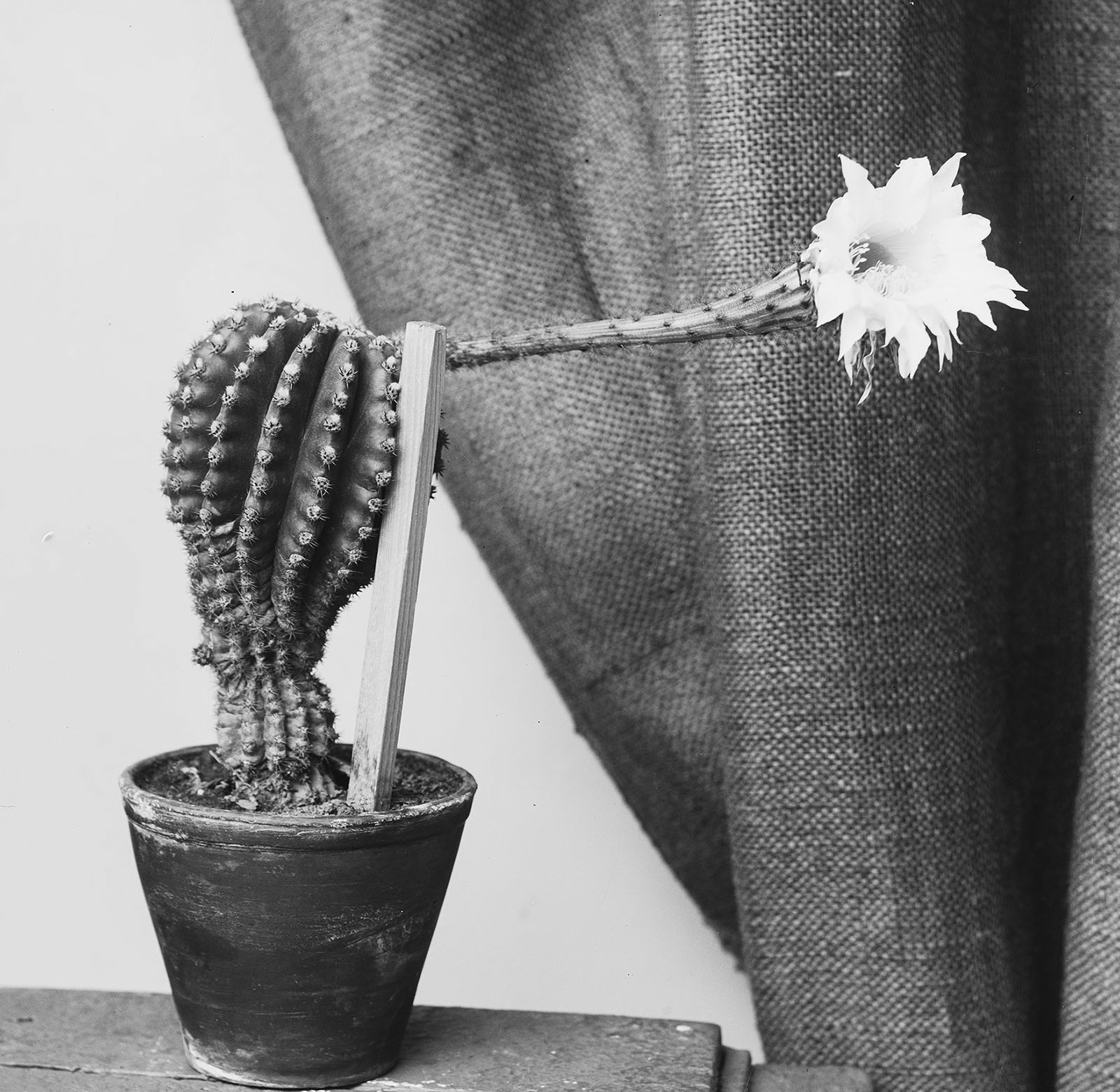
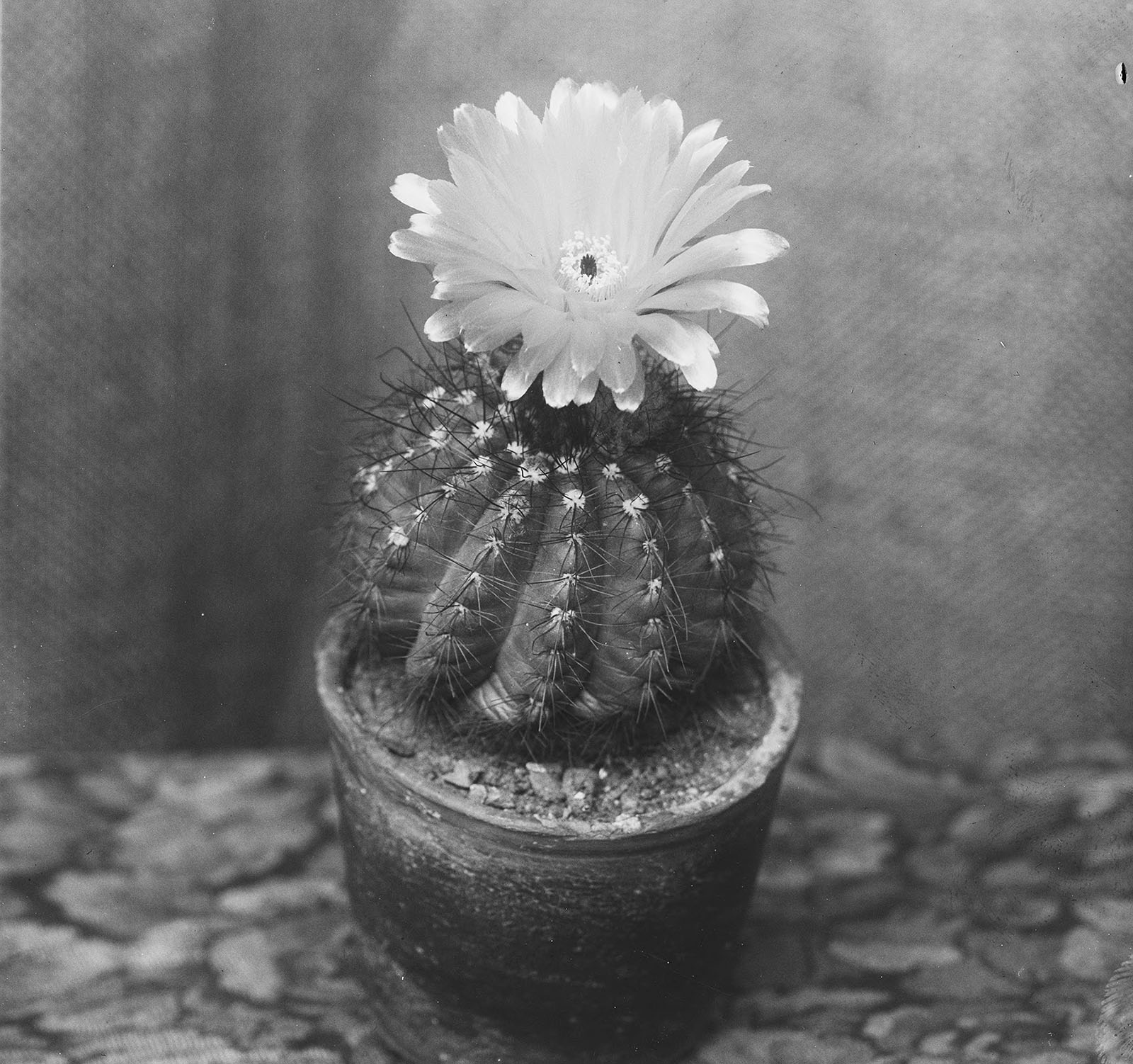
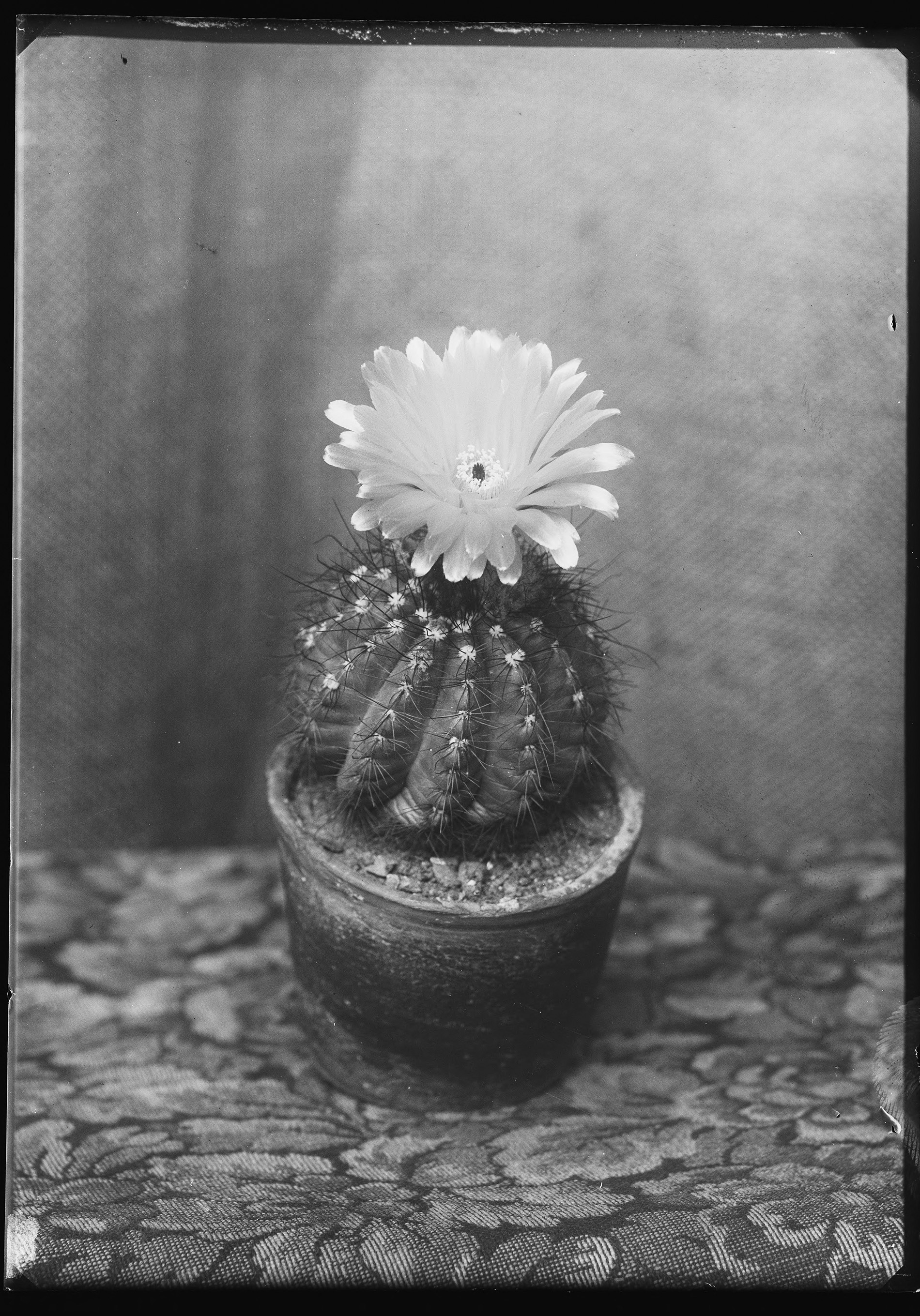
Cactus in blossom, 1925-1935

Atelier Skarpmoen / Conrad M. Bringe ~ Bjølgerud, Kaktus; 1925-1935 | src Nasjonalbiblioteket
Atelier Skarpmoen / Conrad M. Bringe ~ Bjølgerud, Kaktus; 1925-1935 (detail)
Atelier Skarpmoen / Conrad M. Bringe ~ Bjølgerud, Kaktus; 1925-1935 (Detail)
Atelier Skarpmoen / Conrad M. Bringe ~ Bjølgerud, Kaktus; 1925-1935 | src Nasjonalbiblioteket

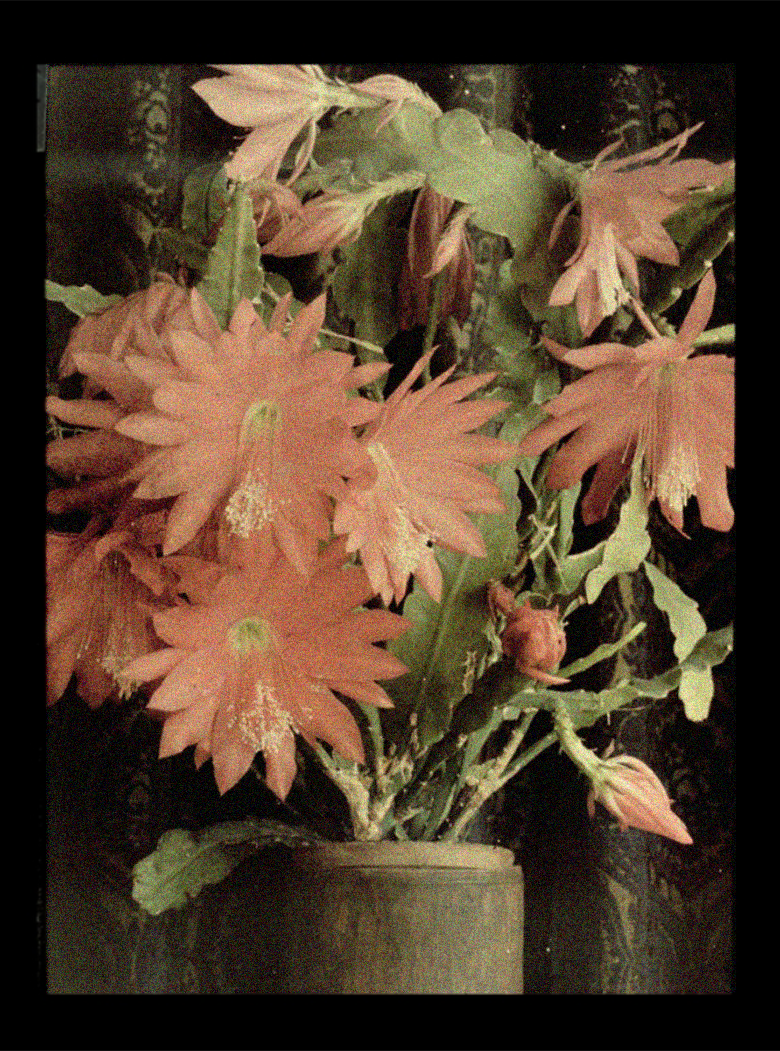
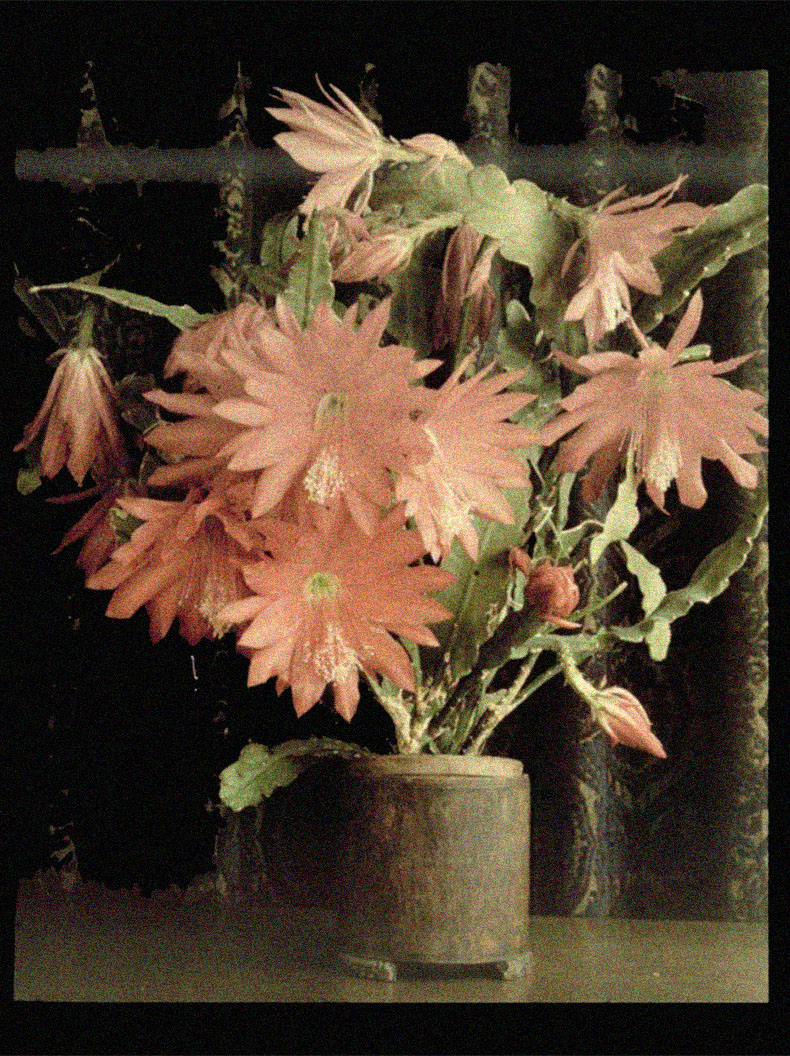
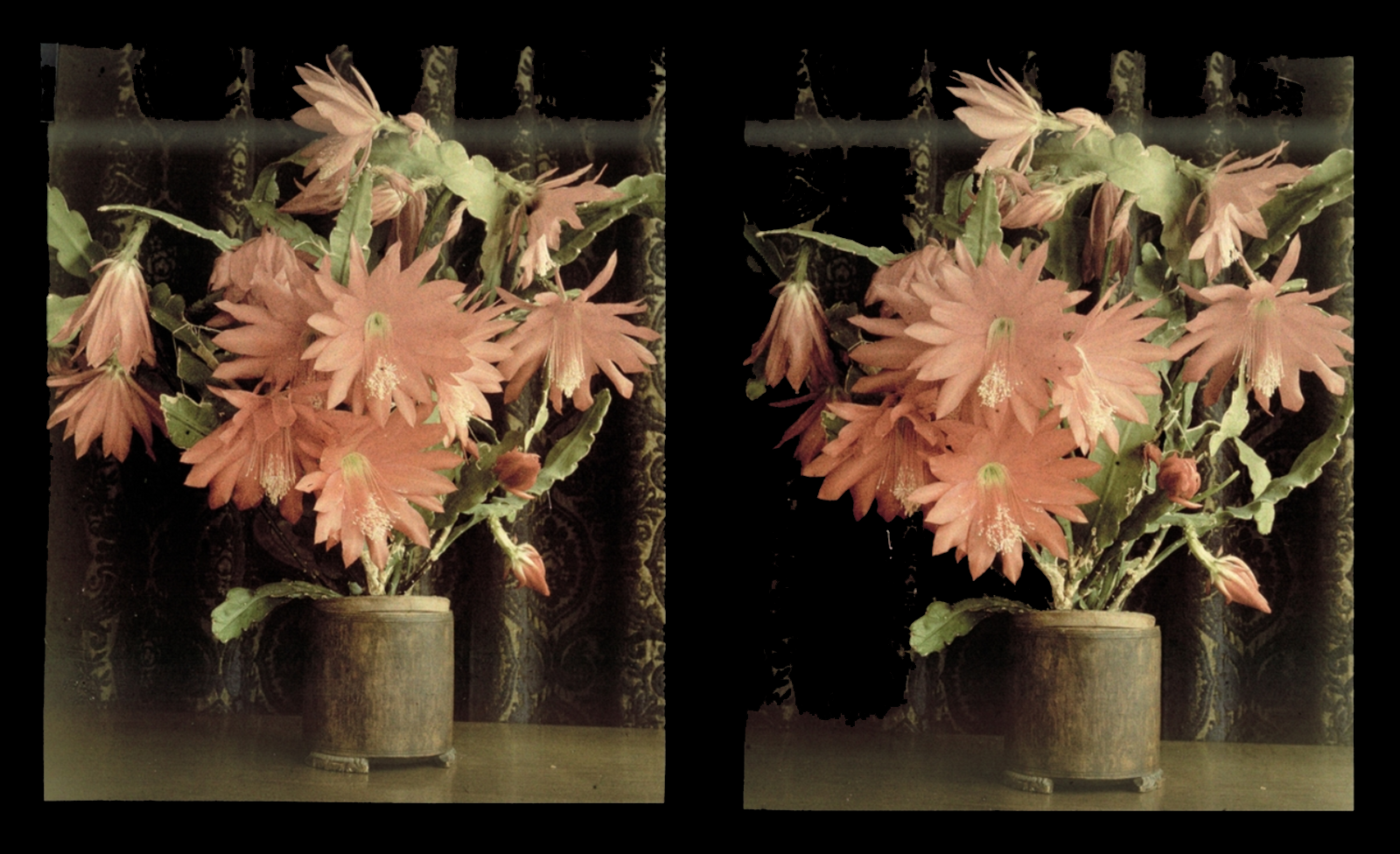
Blossoming cactus 1930s

Hans Grendahl (1877-1962) ~ Cactus flowers. Close-up, June, 1937. Autochrome. Stereo. | src Preus museum
Hans Grendahl (1877-1962) ~ Kaktusblomster. Nærbilde, June, 1937. Autochrome. Stereo. | src Preus museum
Hans Grendahl (1877-1962) ~ Blossoming cactus, July, 1934. Autochrome. Stereo photograph. | src Preus museum
Hans Grendahl (1877-1962) ~ Blomstrende kaktus, July, 1934. Autochrome. Stereo photograph. | src Preus museum
Hans Grendahl (1877-1962) ~ Blossoming cactus, July, 1937. Autochrome. Stereo photograph. | src Preus museum
Hans Grendahl (1877-1962) ~ Blomstrende kaktus, July, 1937. Autochrome. Stereo photograph. | src Preus museum

About Hans Grendahl (1877 – 1962)

Born in Rennebu. Son of farmer Ole Knudsen Grendahl and Ane Hansdatter, born Aas. He graduated in architecture with architect Solberg, Trondheim, in 1902, after which he went to Germany and studied architecture at the university in Karlsruhe. After completing his education, Grendahl was employed, among others in the company Jacob Digre in Ålesund, later he became an assistant teacher in building subjects, construction and freehand drawing at Trondhjem’s technical training institute. In 1916 he was employed as a teacher at NTH. In the 1920s and 30s took a number of photographs in color (Autochromes), i.a. interiors and exteriors of churches in Trøndelag, Gudbrandsdalen, Østerdalen, Møre and Romsdal and Telemark, as well as pictures from the Trøndelag exhibition in 1930 and the Drammen exhibition in the same year. The oldest color photo taken in his collection is from 1922. Grendahl left a unique archive of stereo images, about half of which are in colour, to his daughter Adelheide (Ada) Grue, in Stjørdal. The picture collection was bought by the Preus Fotomuseum in 1989 and digitalized in December 2021. It consists of 1017 photographs on glass plates in the format 90×140 mm. With a few exceptions, the images are stereo images.

quoted from Preus Fotomuseum

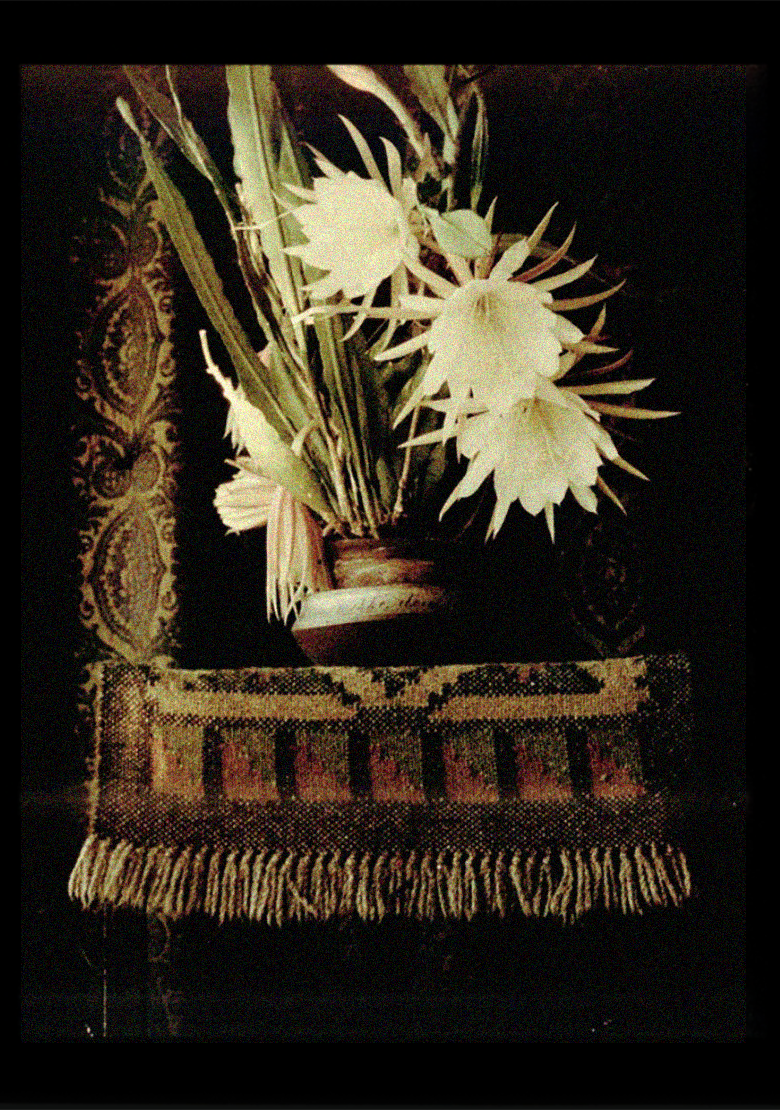
Hans Grendahl (1877-1957) ~ White cactus, July, 1935. Autochrome. Stereo photograph. | src Preus museum
Hans Grendahl (1877-1957) ~ Hvit kaktus, July, 1935. Autochrome. Stereo photograph. | src Preus museum

Botanicals by Biermann

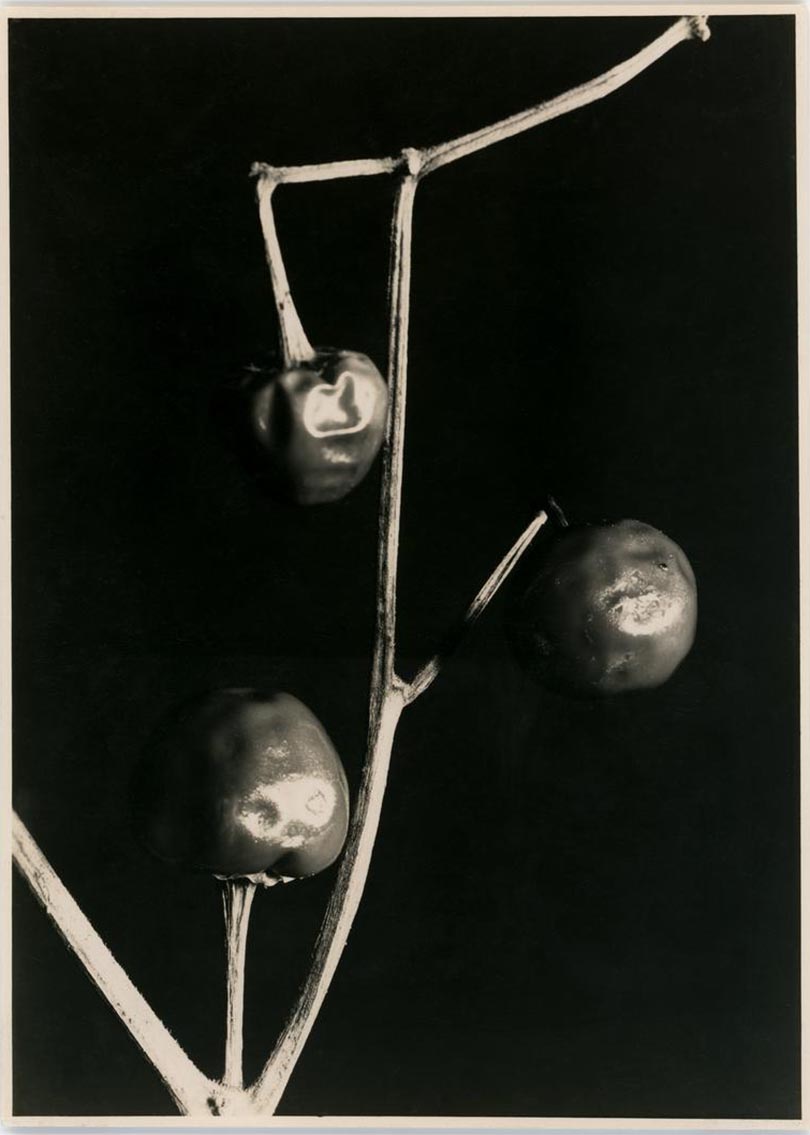
Licht, Kontrast und das ganz Alltägliche: Zweig einer Paprikapflanze. | Light, contrast and the really mundane: a branch of a pepper plant.

Aenne Biermann (1898-1933) :: Paprika, 1928. Gelatin silver print © Collection Biermann family
Licht, Kontrast und das ganz Alltägliche: Zweig einer Paprikapflanze. | Light, contrast and the really mundane: a branch of a pepper plant.
src Bellevue NZZ
Aenne Biermann (1898-1933) :: Paprika, 1928. Gelatin silver print © Collection Biermann family
Aenne Biermann (1898-1933) :: Paprika, 1928. Gelatin silver print © Collection Biermann family 
From : Aenne Biermann: Up Close and Personal at Tel Aviv Museum of Art
Aenne Biermann (1898-1933) :: Paprika, 1928. Gelatin silver print © Collection Biermann family
From : Aenne Biermann: Up Close and Personal at Tel Aviv Museum of Art
Aenne Biermann (1898-1933) :: Kaktus, [Cactus], around 1929, © Museum Ludwig, Köln

Aenne Biermann zeigte, wie viel Poesie in unscheinbaren Dingen stecken kann

Die deutsche Fotografin Aenne Biermann begann als Autodidaktin mit der Geburt ihrer Kinder zu fotografieren. Auch wenn sie das Alltägliche abbildete, banal sind ihre Arbeiten keineswegs.

Aenne Biermann (1898-1933) wurde als Tochter einer wohlhabenden jüdisch-deutschen Familie geboren. Mit der Geburt ihrer Kinder begann sie ohne künstlerische Ausbildung als Autodidaktin zu fotografieren. Sie fotografierte zunächst in ihrer häuslichen Umgebung – oft ihre Kinder. Aber auch Landschaften, Architekturdetails und Stillleben gehörten seit den Anfängen zum fotografischen Oeuvre der Künstlerin.
Die Fotografin arbeitete sich in ihrer nur 13-jährigen dauernden Schaffenszeit an ihrer unmittelbaren Umgebung ab (welche in Gera war) und vergrösserte ihren Radius bis Paris. Mit Ausweitung ihres Radius’ erweiterte sich auch ihre Arbeitsweise – Akt- und Stadtaufnahmen von Paris ergänzten ihr späteres Werk.
Betrachtet man ihre Bilder, ist es so, als ob man eine zweite Chance bekäme, das Banal-Alltägliche neu zu sehen. Die Arbeiten zeigen Früchte, Pflanzen, das Innenleben einer Schublade, Eier, Steine, Krimskrams, Gleise, das Innere eines Klaviers, Kindergesichter oder Körper.
Die Fotografin muss in einer Art Unermüdlichkeit und Konzentriertheit das sie Umgebende auf Schönheit und Stimmung abgetastet haben. Baumnüsse in einer Papiertüte oder Äpfel auf einem Teller, alles ist einem vertraut. Und doch sind ihre Werke durch das Spiel mit Perspektiven, Ausschnitt, Kontrast und Licht einzigartig und voll Poesie. Ihre Arbeiten haben etwas Beruhigendes an sich und könnten den gestressten, von reizüberfluteten Jetztlern ein neues Sehen beibringen.
Ob der klaren Schönheit und Pointierung gerät man beinah in eine Art kontemplative Verzückung und beginnt, die Dinge, die Landschaften, die Personen neu, anders oder wahrhaftig zu sehen. Diese sensible, unaufgeregte, aber auch sehr konkrete Eigenschaft ihrer Bilder führte dazu, dass sie zu einer der wichtigsten Vertreterinnen der Avantgardefotografie der 1920er und 1930er Jahre wurde.
Der Verlag Scheidegger & Spiess hat jüngst unter dem Titel «Aenne Biermman: Up close and personal» in Kooperation mit dem Tel Aviv Museum of Art eine Publikation veröffentlicht, die mit 100 Abbildungen und mehreren Essays Biermanns Schaffen umfassend beschreiben. Die Publikation begleitet die Anfangs August 2021 eröffnete Ausstellung in Tel Aviv.

Aenne Biermann showed how much poetry can be found in inconspicuous things

The German photographer Aenne Biermann started as an autodidact with the birth of her children. Even if she depicts the everyday, her works are by no means banal.

Aenne Biermann (1898-1933) was born into a wealthy Jewish-German family. With the birth of her children, she began to photograph as an autodidact without any artistic training. She initially photographed in her home environment – often her children. But landscapes, architectural details and still-lifes have also been part of the artist’s photographic oeuvre from the very beginning.
During her creative period of only 13 years, the photographer worked on her immediate environment (which was in Gera) and extended her radius to Paris. As her radius expanded, so did her way of working – nude and city photographs of Paris complemented her later work.
Looking at her paintings is like getting a second chance to see the mundane everyday in a new way. The works show fruits, plants, the inner workings of a drawer, eggs, stones, odds and ends, rails, the inside of a piano, children’s faces or bodies.
The photographer must have scanned her surroundings for beauty and mood with a kind of tirelessness and concentration. Tree nuts in a paper bag or apples on a plate, everything is familiar. And yet her works are unique and full of poetry through the play with perspective, detail, contrast and light. There’s something calming about her work, and it could teach the stressed, overstimulated now-people a new way of seeing.
Because of the clear beauty and emphasis, one almost falls into a kind of contemplative rapture and begins to see the things, the landscapes, the people in a new, different or truthful way. This sensitive, calm, but also very concrete quality of her pictures made her one of the most important representatives of avant-garde photography of the 1920s and 1930s.
The publishing house Scheidegger & Spiess recently published a publication entitled “Aenne Biermman: Up close and personal” in cooperation with the Tel Aviv Museum of Art, which comprehensively describes Biermann’s work with 100 illustrations and several essays. The publication accompanies the exhibition that opened in Tel Aviv at the beginning of August 2021.

Quoted from Bellevue (NZZ)