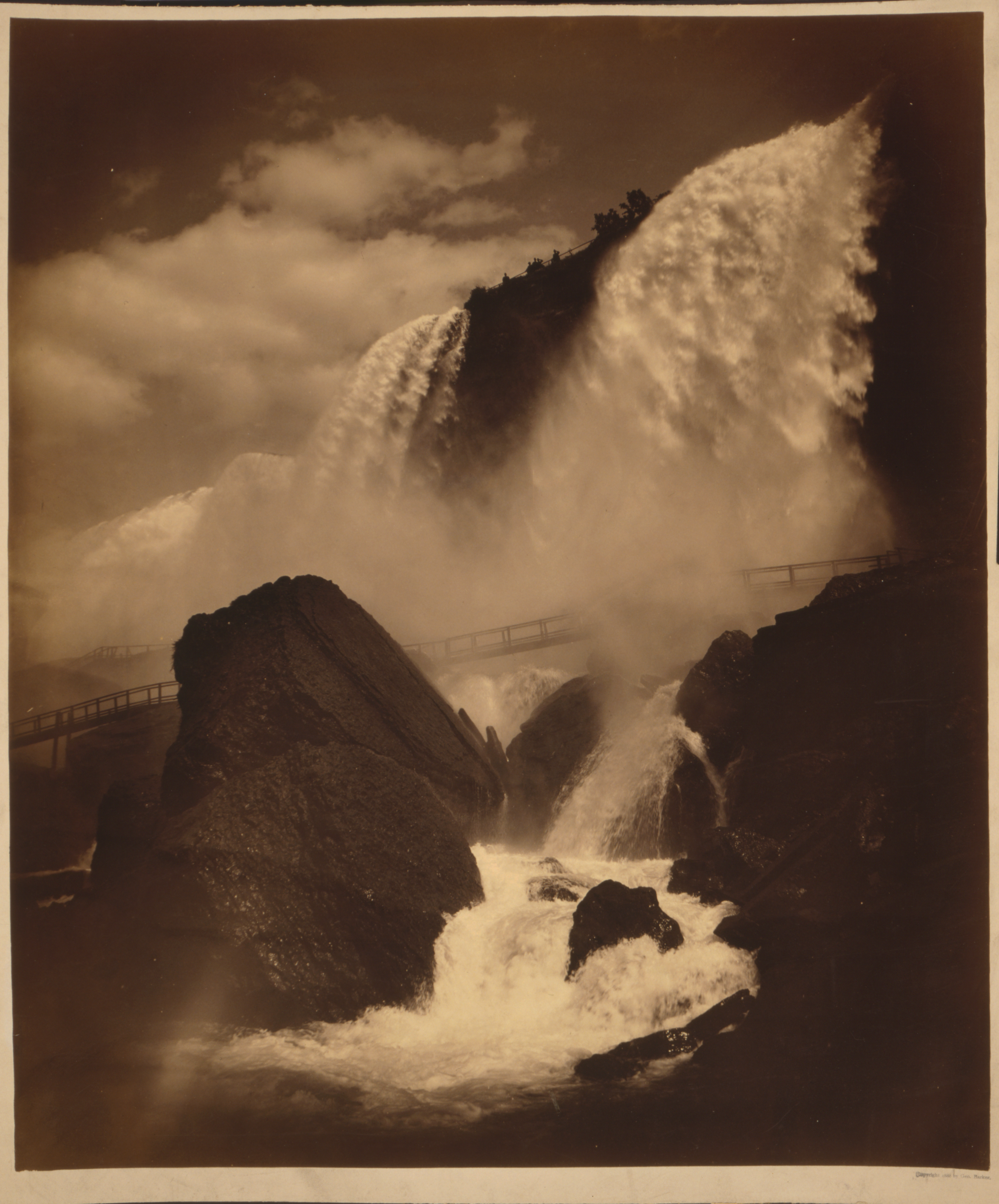
Table Rock · Cave of the Winds

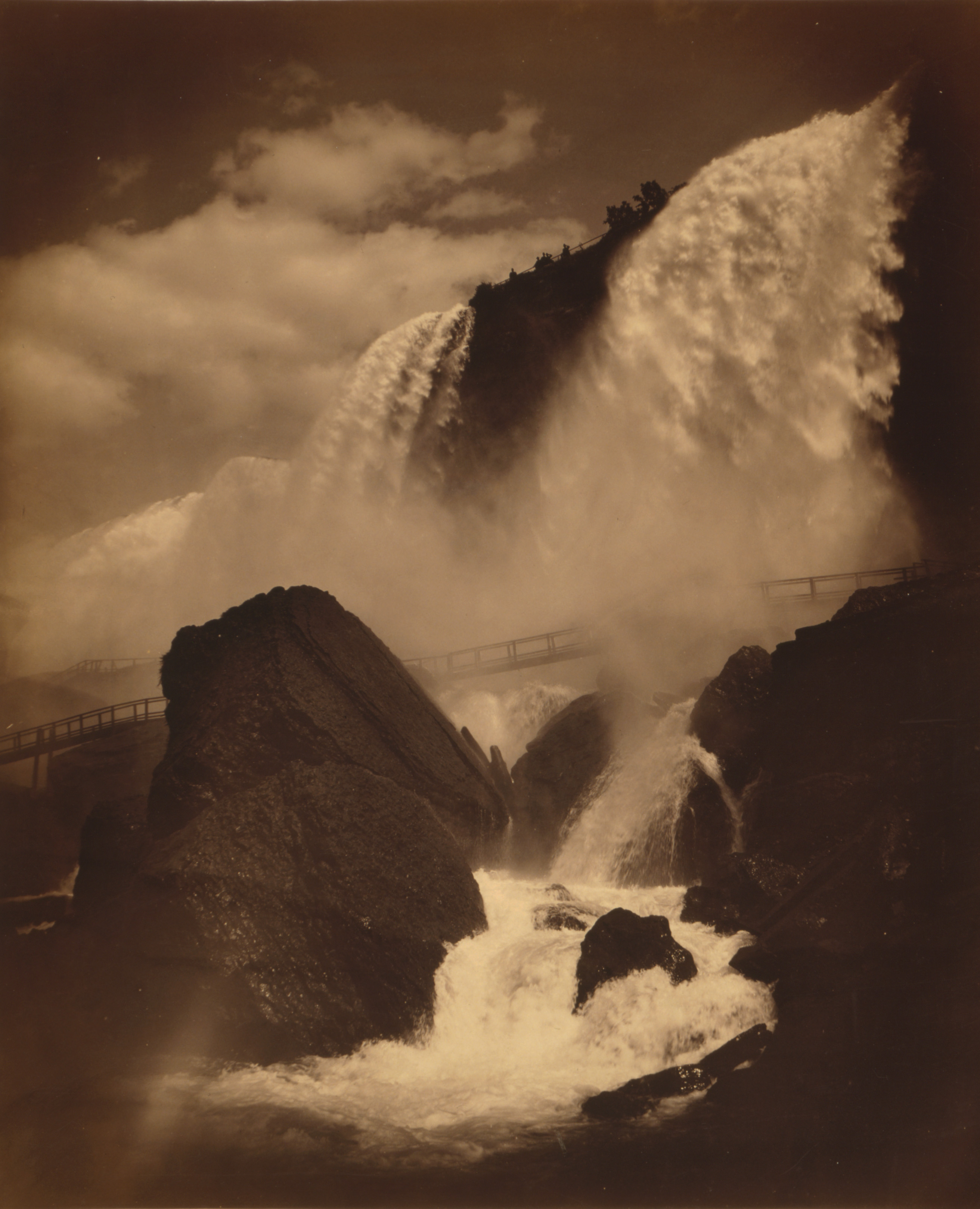
George Barker (1844-1894) ~ [Niagara Falls], ca. 1888. Albumen silver print. View of Niagara Falls taken from the base of the falls, with large boulder in foreground and footbridge in the background. | src Getty Museum Coll.
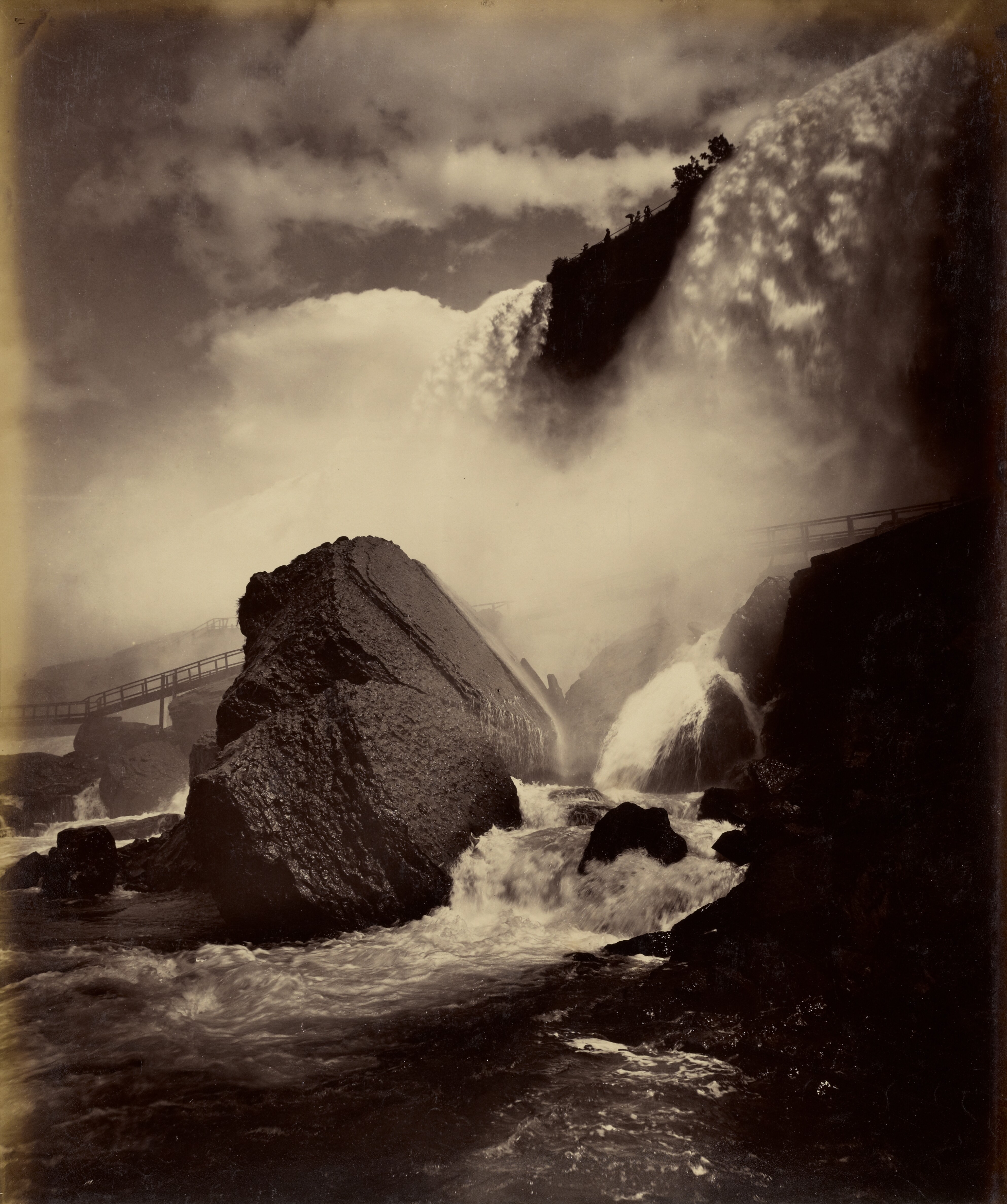
George Barker (1844-1894) ~ Cave of the winds, ca. 1888. Niagara Falls with walkway in the foreground. Albumen silver print. | src Library of Congress

This Image is hosted in four American museums; three of them (Library of Congress, Getty Museum and The Metropolitan Museum of Art) acknowledge the authorship to George Barker. According to The Nelson-Atkins Museum of Art [x] this photograph is Nielson’s. In their website there is a mention to the photographer’s logo on back: “H.F. Nielson, Manuf. of all kinds of / Paper & Glass Views / Niagara Falls.”

Though the commercial market for large-scale landscape views was limited in the late 19th century, a small group of talented and savvy photographers found a lucrative niche in this genre. Herman F. Nielson, who lived most of his life in Niagara, New York, specialized in majestic tourist views of Niagara Falls. Here, Nielson depicts the American Falls (Luna Falls and Bridal Veil Falls) and the Rock of Ages. This view, or a slight variant, was reproduced in a popular guidebook at the time.

“New View Manufactory,” Niagara Falls Gazette 30:16 (October 10, 1883): n.p.

quoted from The Nelson-Atkins Museum of Art [x]
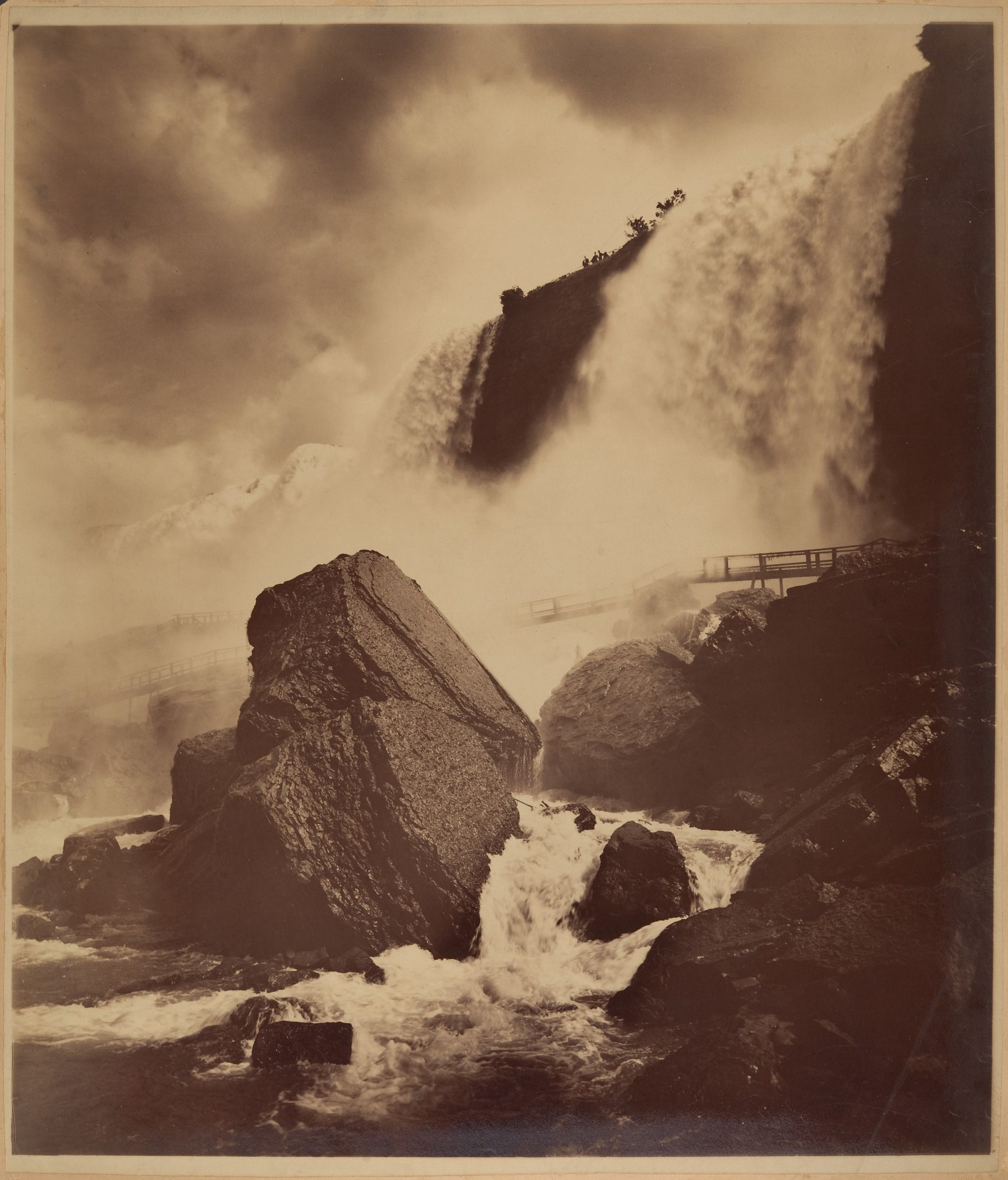
George Barker (1844-1894) ~ Niagara Falls, ca. 1888 Albumen silver print from glass negative | src The Met
George Barker (1844-1894) ~ Cave of the winds, ca. 1888. Image of rushing waterfalls leading down to a bridge with large rocks in the foreground. | Library of Congress
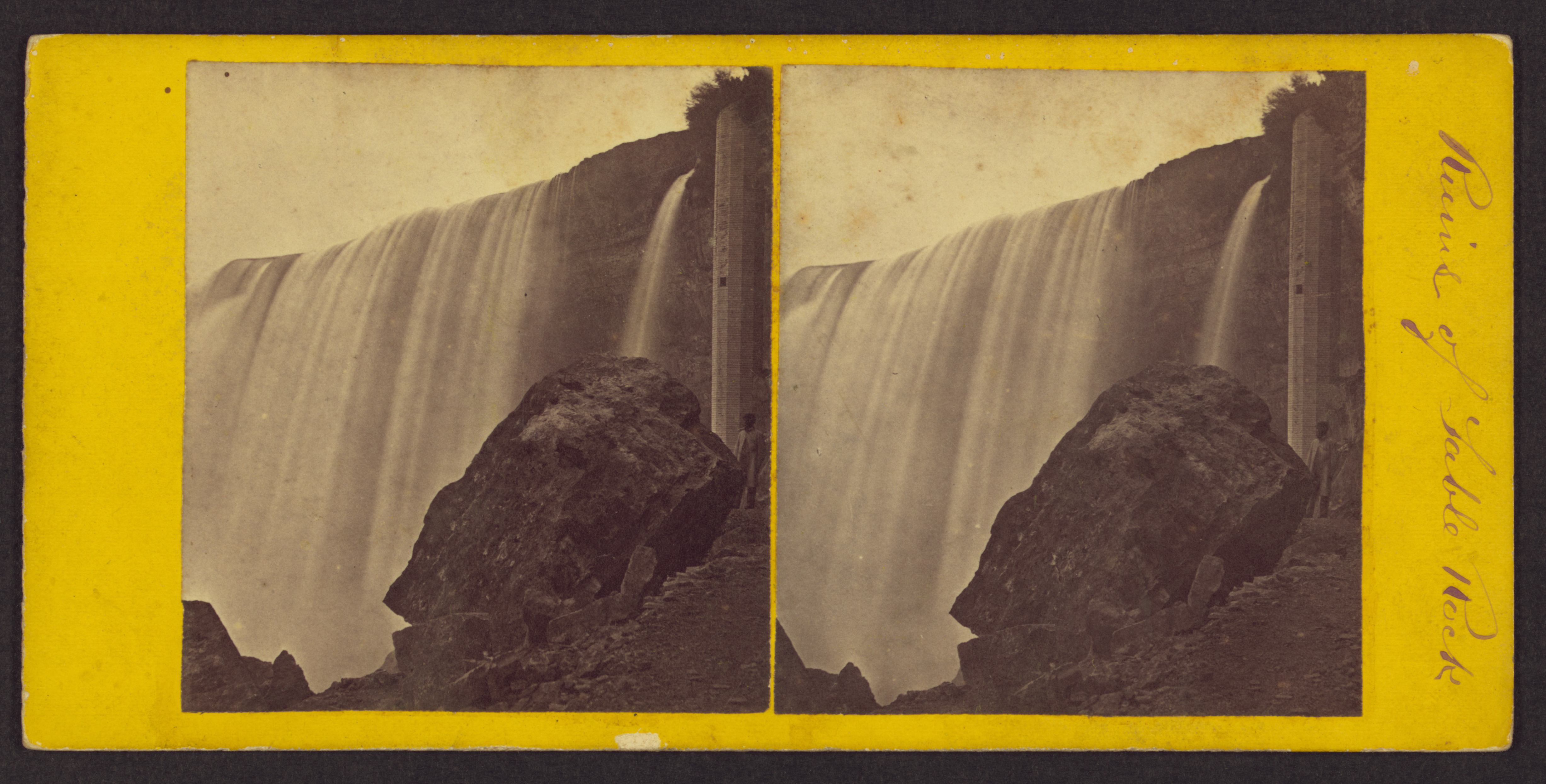
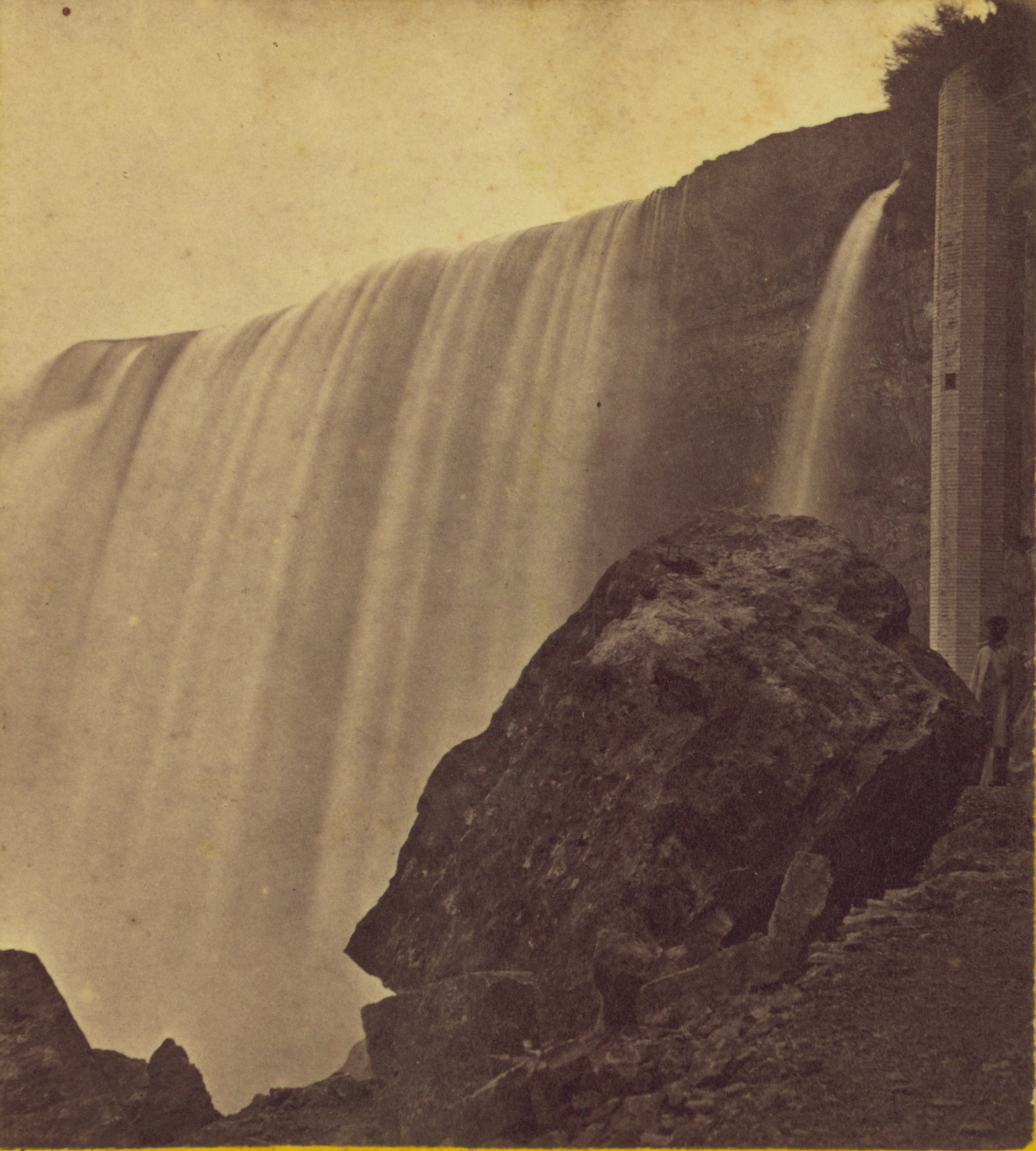
George Barker (1844-1894) ~ Ruins of Table Rock, ca. 1870. Stereograph. Albumen print on stereo card. | Library of Congress
Stereograph showing a portion of Table Rock that has fallen off the cliff, with Niagara Falls in the background. | Library of Congress

Jack Thwaites’ Tasmania

landscape, tasmania, 1930s
Geilston Bay. Denison Range - Christmas 1935-1936. From the Jack Thwaites Photographic Collections. Libraries Tasmania's online collection NS3195/2/2217
Denison Range – Christmas 1935-1936. From the Jack Thwaites Photographic Collections. Libraries Tasmania‘s online collection NS3195/2/2217
Hobart Walking Club on Mt Arthur, 1948. From the Jack Thwaites Photographic Collections. Libraries Tasmania's online collection | permalink
Hobart Walking Club on Mt Arthur, 1948. From the Jack Thwaites Photographic Collections. Libraries Tasmania‘s online collection | permalink
Rocking Stone boulder on granite base north of Deep Creek near Eddystone Point. 11 Aug 1960. From the Jack Thwaites Photographic Collections. Libraries Tasmania's online collection | permalink
Rocking Stone boulder on granite base north of Deep Creek near Eddystone Point. 11 Aug 1960. From the Jack Thwaites Photographic Collections. Libraries Tasmania‘s online collection | permalink

Tandil moving rock

THE WORLDS LARGEST ROCKING STONE, TANDIL, ARGENTINA

This immense stone is so evenly poised that the wind or the slightest touch of the hand set it in motion, but the storms of the centuries have failed to dislodge it.

CHAPTER IV. THE PRAIRIE AND ITS INHABITANTS

The Pampas, or prairie lauds of the Argentine, stretch to the south and west of Buenos Ayres,and cover some 800,000 square miles. On this vast level plain, watered by sluggish streams or shallow lakes, boundless as the ocean, seemingly limitless in extent, there is an exhilarating air and a rich herbage on which browse countless herds of cattle, horses, and flocks of sheep. The grass grows tall, and miles upon miles of rich scarlet, white, or yellow flowers mingle with or overtop it. Beds of thistles, in which the cattle completely hide themselves, stretch away for leagues and leagues, and present an almost unbroken sheet of purple flowers. So vast are these thistle-beds that a days ride through them only leaves the traveller with the same purple forest stretching away to the horizon. (…)

Published in:

George Whitfield Ray : Through five republics on horseback; being an account of many wanderings in South America. Sixteenth edition, 1920. Hosted at internet archive

George Whitfield Ray : Through five republics on horseback; being an account of many wanderings in South America. Thirteenth edition, 1915. Hosted at internet archive

The immense boulder was near the city of Tandil. The city’s name “Tan / dil” comes from the Mapuche words tan (“falling”), and lil (“rock”). It is probably a reference to the Piedra Movediza (“Moving Stone”), a large boulder which stood seemingly miraculously balanced on the edge of a rocky foothill. The Moving Stone toppled on February 29th, 1912, and split into two main pieces at the bottom of the hill.

more [+] posts about Tandil’s moving rock