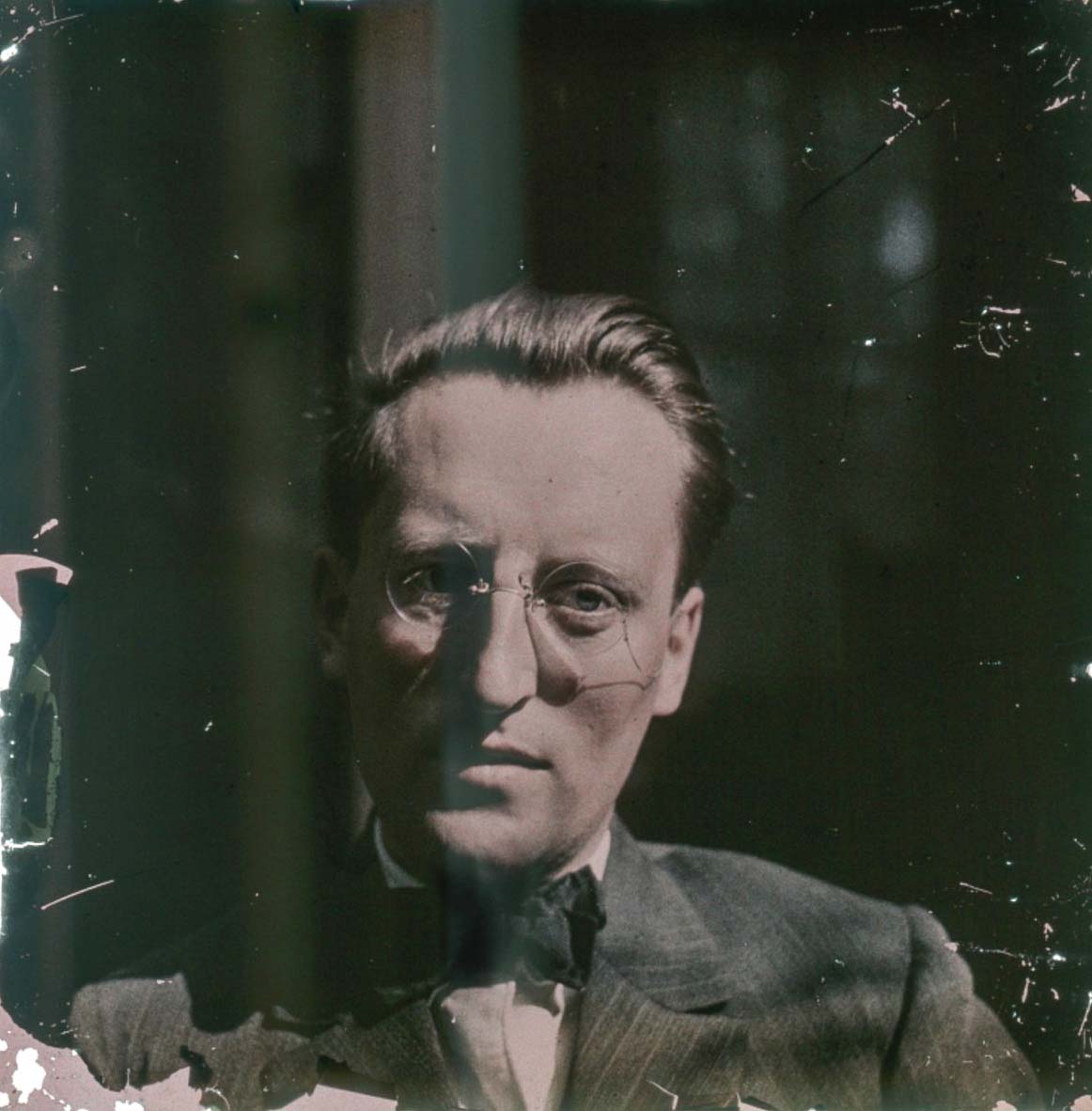
Blok’s Selfportrait, 1930s

Leendert Blok :: Zelfportret Leendert Blok, omstreeks 1930-1935. Autochrome. Courtesy Galerie Dudok de Groot. | src Het Parool
Leendert Blok's early color flower portraits compiled in Silent Beauties (2015) | src Het Parool and Hatje Cantz
Leendert Blok’s early color flower portraits compiled in Silent Beauties (2015) | src Het Parool & Hatje Cantz

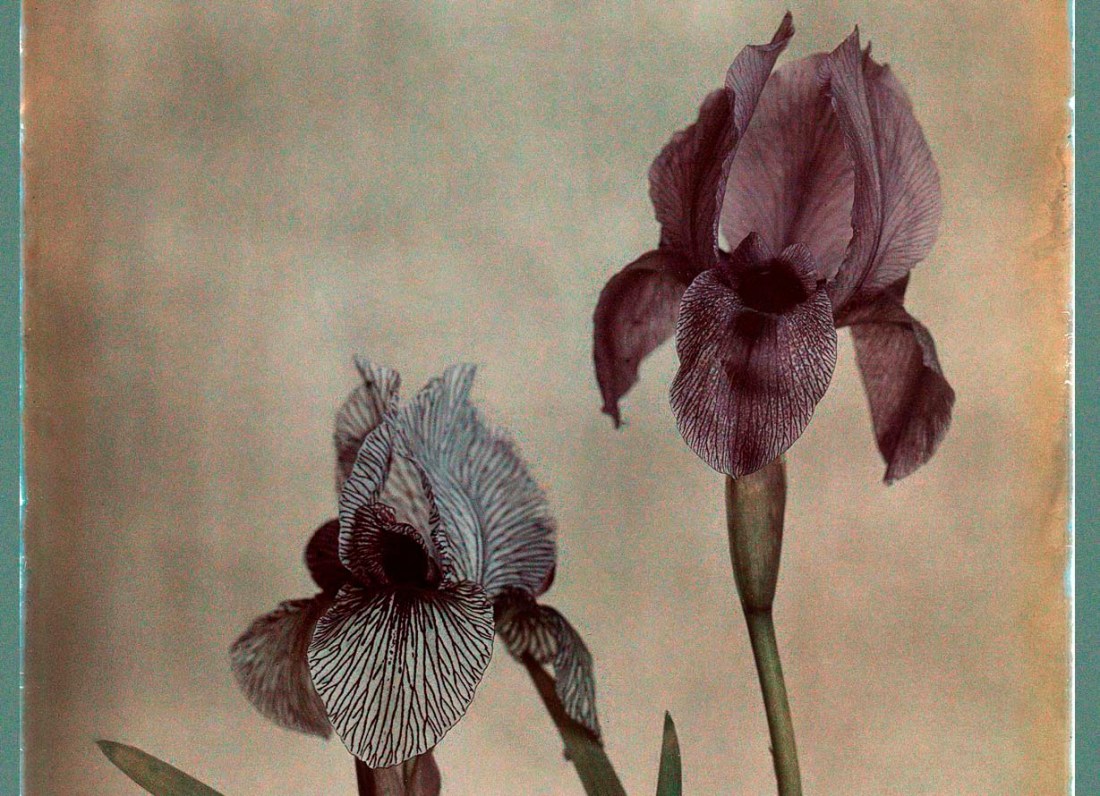
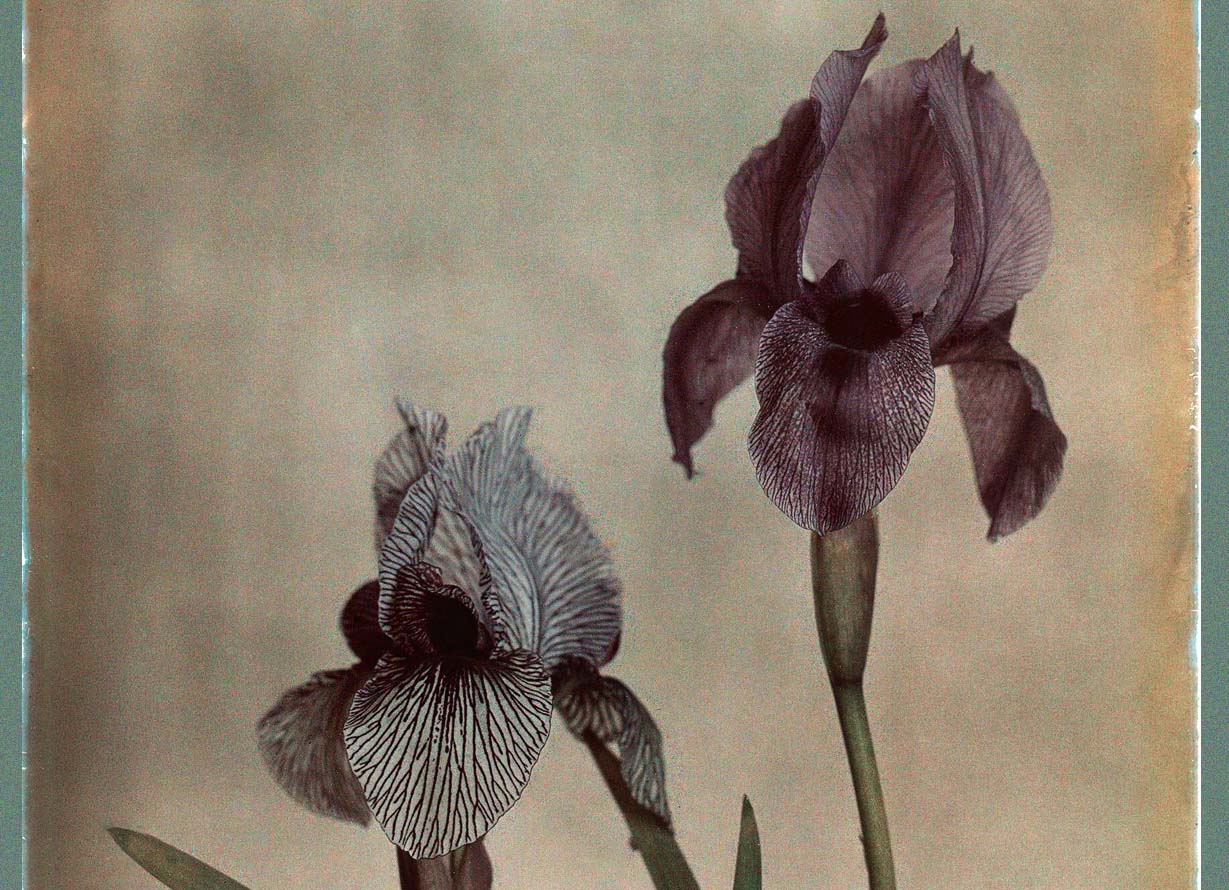
Iris by Leendert Blok (1920s)

Lendeert Blok (1895-1986) :: Iris, Ismene / Uma, 1920-1930. Autochrome. | src Moors Magazine and ODLP
Lendeert Blok (1895-1986) :: Iris, Ismene / Uma, 1920-1930. Autochrome. | src Moors Magazine and ODLP | Detail
Lendeert Blok (1895-1986) :: Iris, Ismene / Uma, 1920-1930. Autochrome. | src Moors Magazine and ODLP (detail)

Leendert Blok experimented with color process and with close-up shots that filled the screen. A pioneer of color photography, Blok worked closely in the 1920s with flower producers in The Netherlands, who were developing many new floral varieties and made high-quality color prints for their product catalogs.
Silent Beauties. Fotografien aus den 1920er-Jahren, Hatje Cantz, 2015.
Les extravagantes, portraits of flowers shot in autochrome by Lendeert Blok. Xavier Barral, 2015.
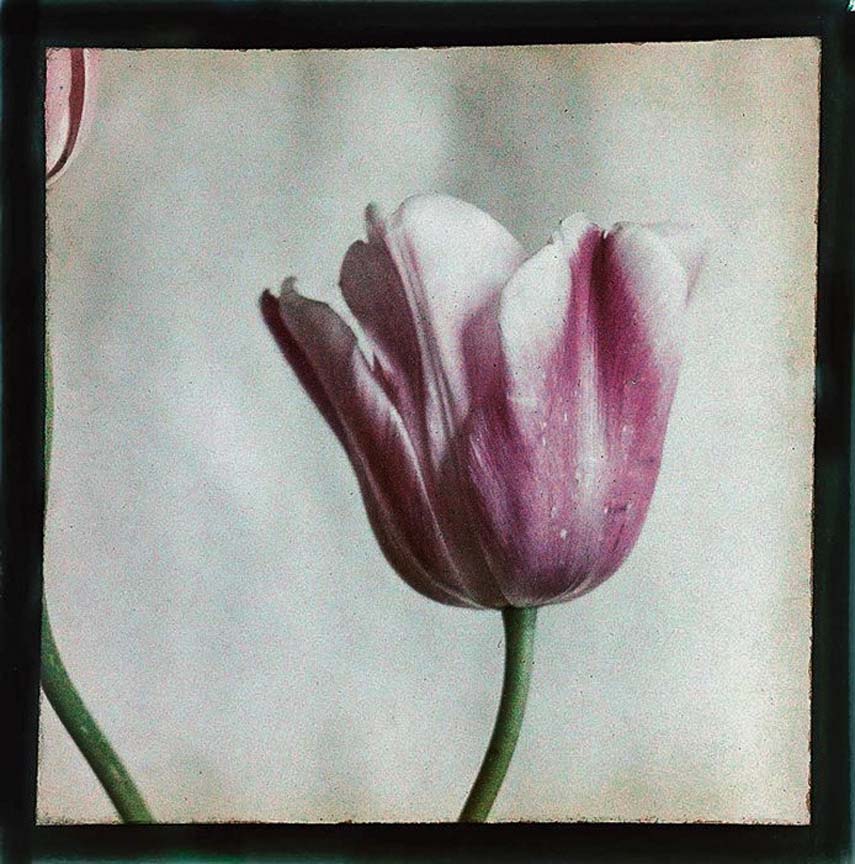
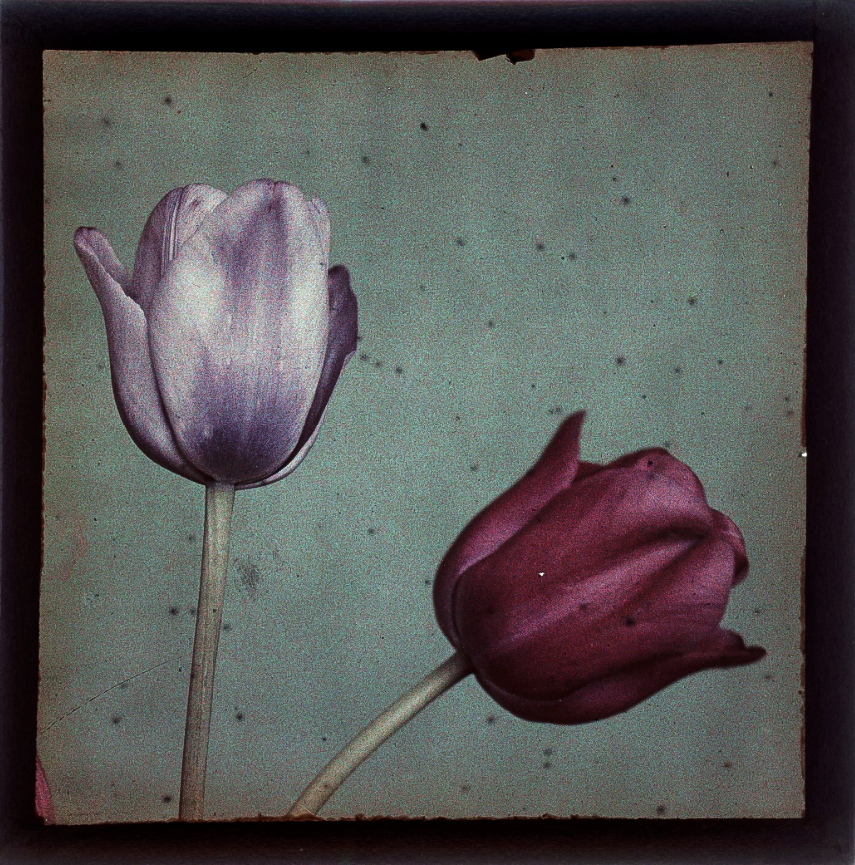
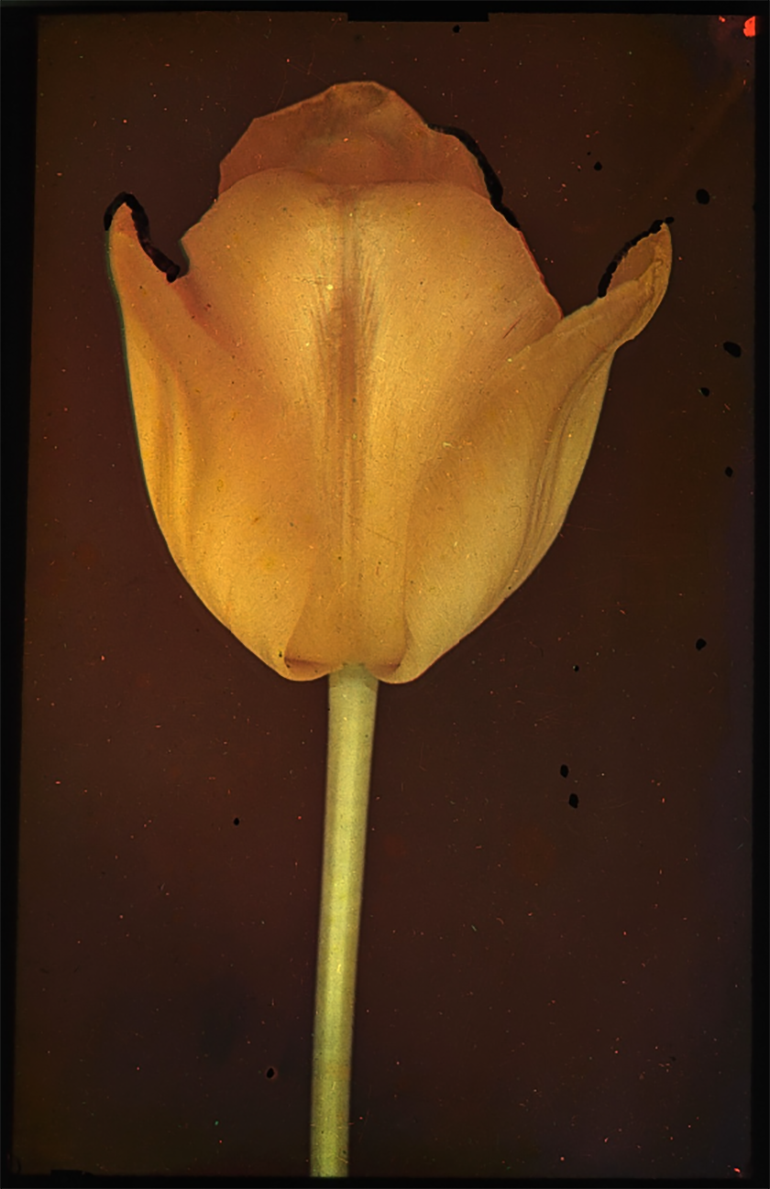
Copland’s Tulips ca. 1927

Leendert Blok :: Tulip, Copland's Favorite, The Netherlands, ca. 1927. Example of early photography made according to the Autochrome process. | src Collectie Spaarnestad
Leendert Blok :: Tulip, Copland’s Favorite, The Netherlands, ca. 1927. Example of early photography made according to the Autochrome process. | src Collectie Spaarnestad
Leendert Blok :: Tulips, Copland's Purple. Lisse, Nederland, omstreeks 1927. Autochrome. | src Nationaal Archief
Leendert Blok :: Tulips, Copland’s Purple. Lisse, Nederland, omstreeks 1927. Autochrome. | src Nationaal Archief

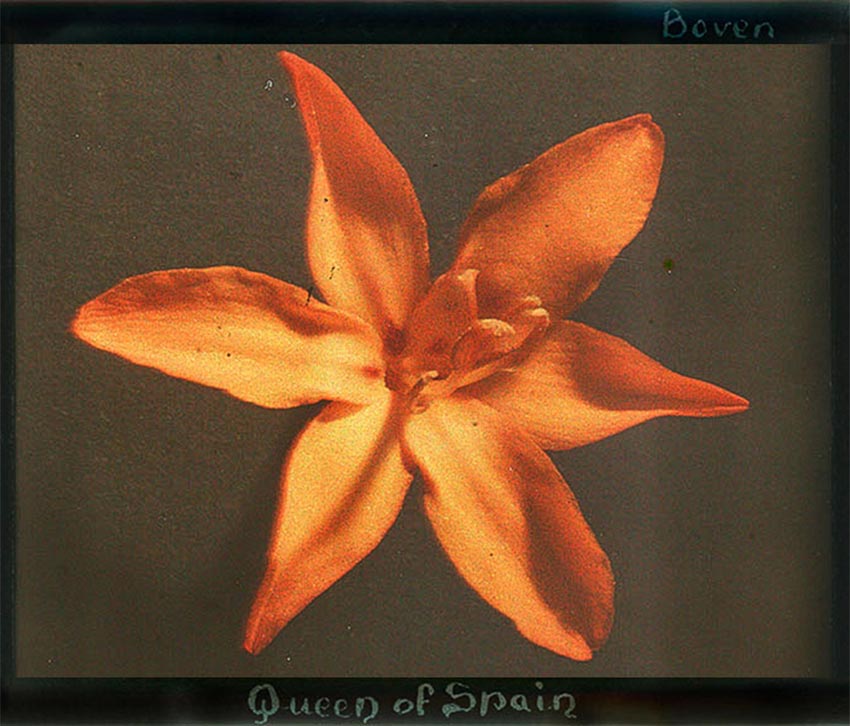
Tulip and daffodil, 1927-1931

Leendert Blok :: Orange daffodil, Narcissus Queen of Spain. Example of early photography made according to the Autochrome process. [The Netherlands, ca. 1927.] | src Collectie Spaarnestad
Leendert Blok :: Tulip 'Golden Age'. Lisse, The Netherlands, May 1931. Spectracolor. | src Collectie Spaarnestad
Leendert Blok :: Tulip ‘Golden Age’. Lisse, The Netherlands, May 1931. Spectracolor. | src Collectie Spaarnestad
Leendert Blok :: Orange daffodil, Narcissus Queen of Spain. Example of early photography made according to the Autochrome process. [The Netherlands, ca. 1927.] | src Collectie Spaarnestad

La Micrographie Décorative

Laure Albin-Guillot :: Bud from an Ashtree, from Micrographie Décorative / Decorative Photo-Micrographs, 1931. Portfolio of 20 photogravures. | src MoMA
Laure Albin-Guillot :: Barley Root, from Micrographie Décorative / Decorative Photo-Micrographs, 1931. Portfolio of 20 photogravures. | src MoMA
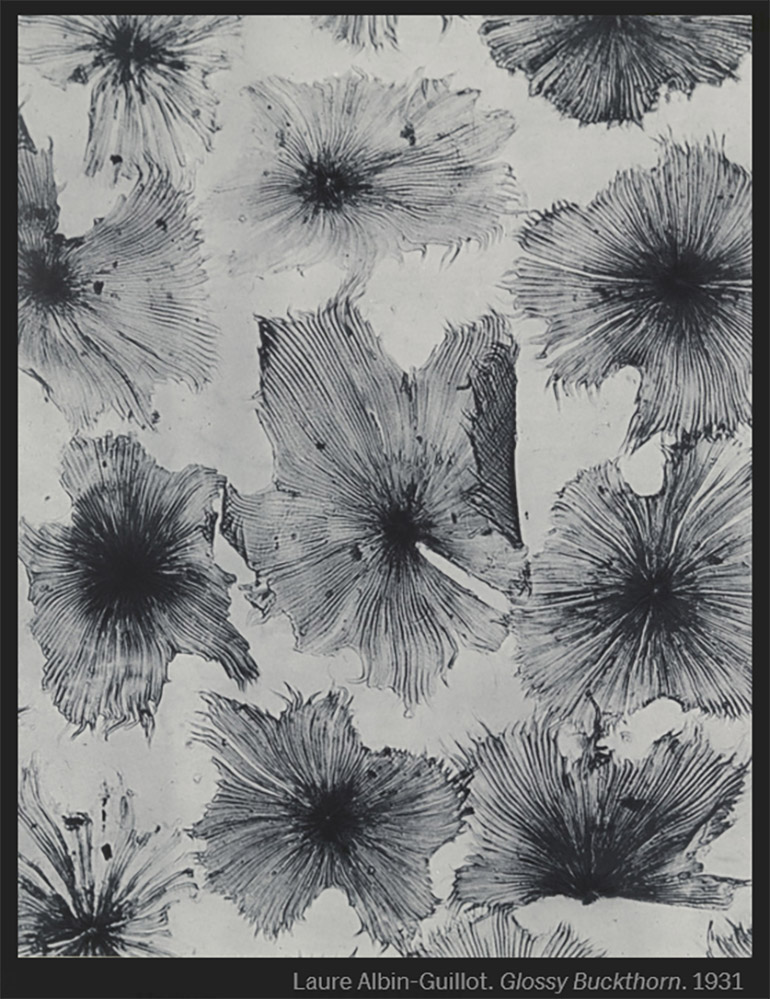
Laure Albin-Guillot :: Glossy Buckthorn (Frangula alnus), from Micrographie Décorative / Decorative Photo-Micrographs, 1931. Portfolio of 20 photogravures. | src MoMA

V. Riparia sauvage, ca. 1880

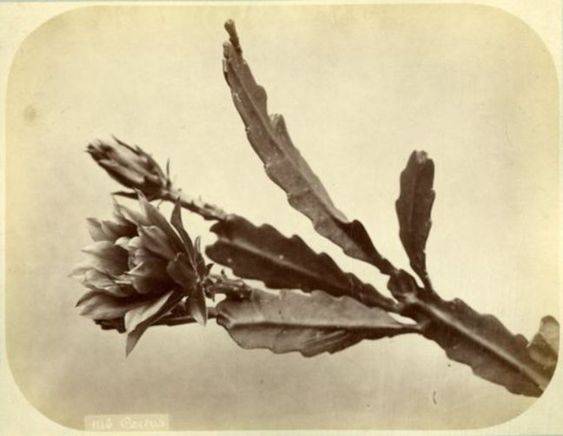
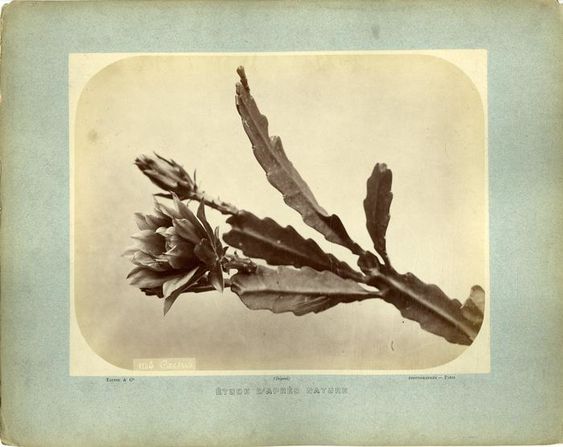
Emm Isard :: Extrémité de rameau du V. Riparia sauvage, ca. 1880 | Shoot end of the riverbank grape (vitis riparia), ca. 1880. Albumen print from wet collodion negative, mounted on cardboard. | src spallart “A natural-scientific picture that – by concentrating on the object in front of a uniform background – does also meet the esthetic needs long before Blossfeldt.” quoted from source

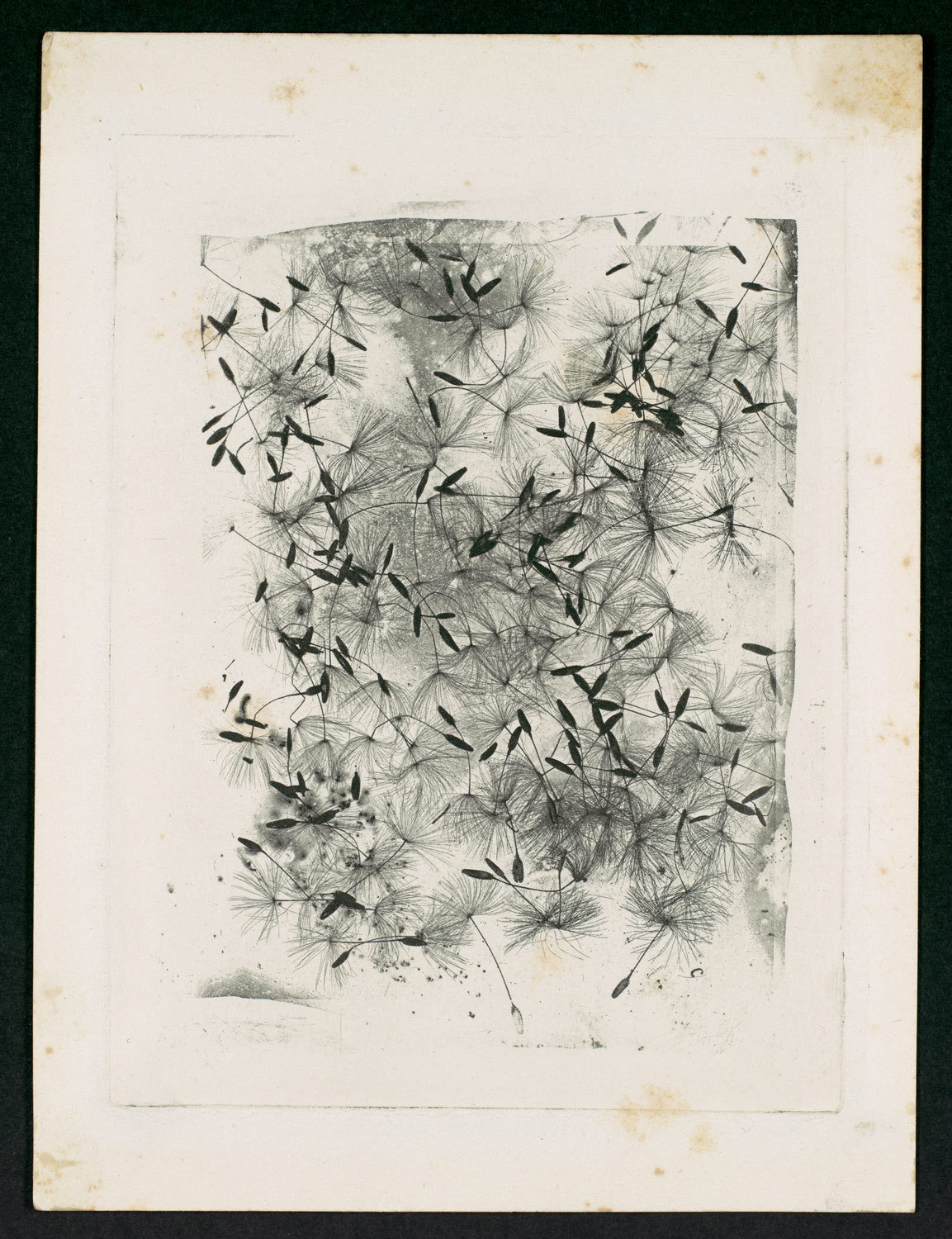
Dandelion Seeds, ca. 1858

William Henry Fox Talbot :: Dandelion Seeds, 1858 or later. 
Photogravure (photoglyphic engraving from a copper plate). | source The Metropolitan Museum of Art
William Henry Fox Talbot :: Dandelion Seeds, 1858 or later.
Photogravure (photoglyphic engraving from a copper plate). | source The Metropolitan Museum of Art

This experimental proof is a fine example of the capacity of Talbot’s “photoglyphic engraving” to produce photographic results that could be printed on a press, using printer’s ink-a more permanent process than photographs made with light and chemicals. Like Talbot’s earliest photographic examples, the image here was photographically transferred to the copper engraving plate by laying the seeds directly on the photosensitized plate and exposing it to light, without the aid of a camera. Equally reminiscent of Talbot’s early experiments, this image is part of Talbot’s lifelong effort to apply his various photographic inventions to the field of botany. In a letter tipped into the Bertoloni Album, Talbot wrote, “Je crois que ce nouvel art de mon invention sera d’un grand secours aux Botanistes” (“I think that my newly invented art will be a great help to botanists”). Such uses were still prominent in Talbot’s thinking years later when developing his photogravure process; he noted in 1863 that “if this art [of photoglyphic engraving] had been invented a hundred years ago, it would have been very useful during the infancy of botany.” Had early botanists been able to print fifty copies of each engraving, he continued, and had they sent them to distant colleagues, “it would have greatly aided modern botanists in determining the plants intended by those authors, whose descriptions are frequently so incorrect that they are like so many enigmas, and have proved a hindrance and not an advantage to science.” [quoted from The Met]