

images that haunt us
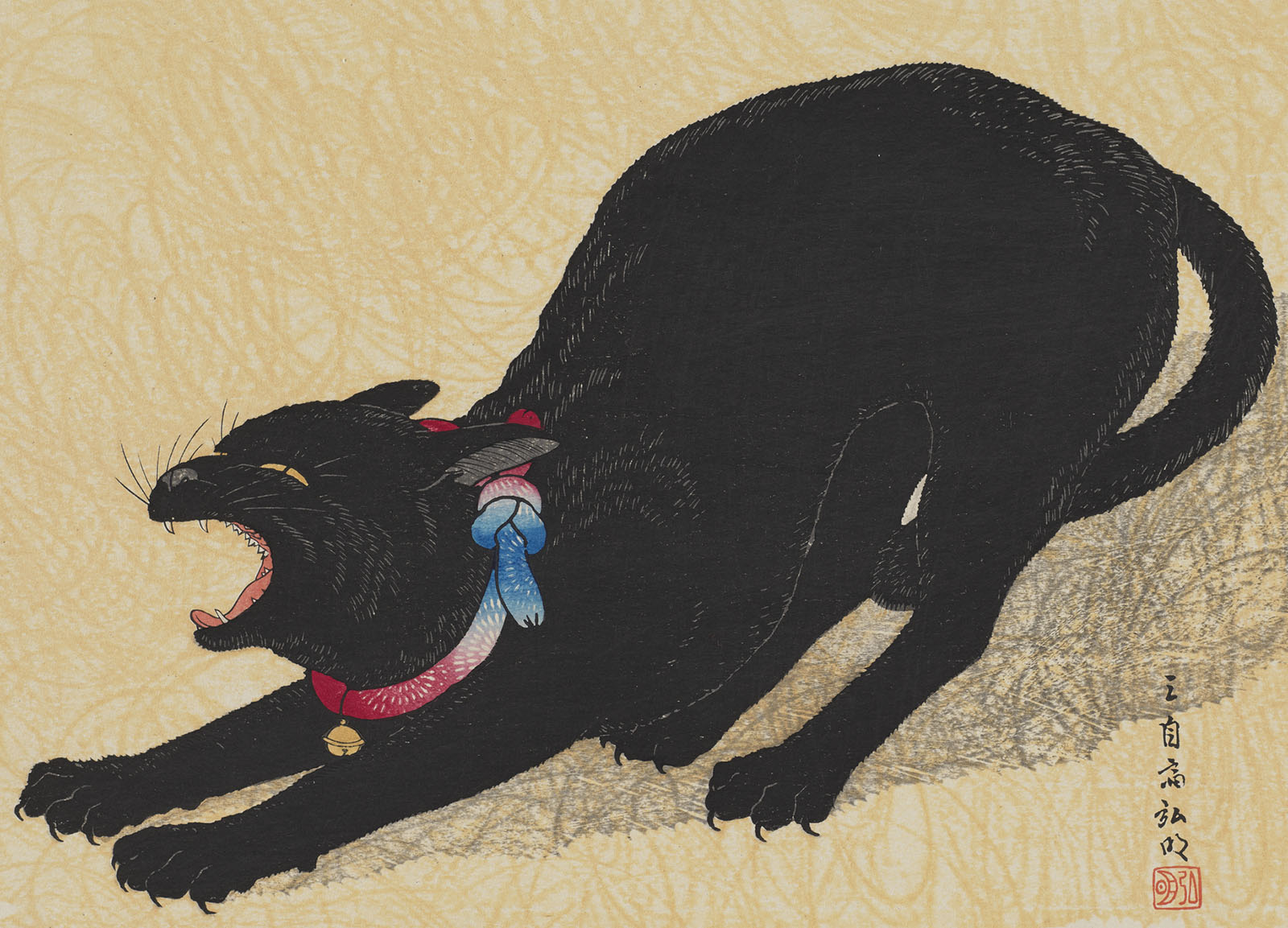
Takahashi Hiroaki was the first print designer to collaborate with the publisher Watanabe Shôzaburô to revive the themes and techniques of 19th-century ukiyo-e prints. Between 1907 and 1923, when the Great Kantô Earthquake destroyed both prints and blocks, they produced over 500 designs. After the quake, Hiroaki began anew, sometimes creating modified versions of his earlier designs. This work, however, is from his output for a different publisher, Kaneko Fusui, who apparently allowed him to do more experimental designs. The swirling patterns in the background, done in soft yellow-orange, show the movement of the baren pad during the printing process. Takahashi worked with Kaneko for only four years, between 1929 and 1932, so prints from this publisher are relatively rare. (quoted from Portland Art Museum)


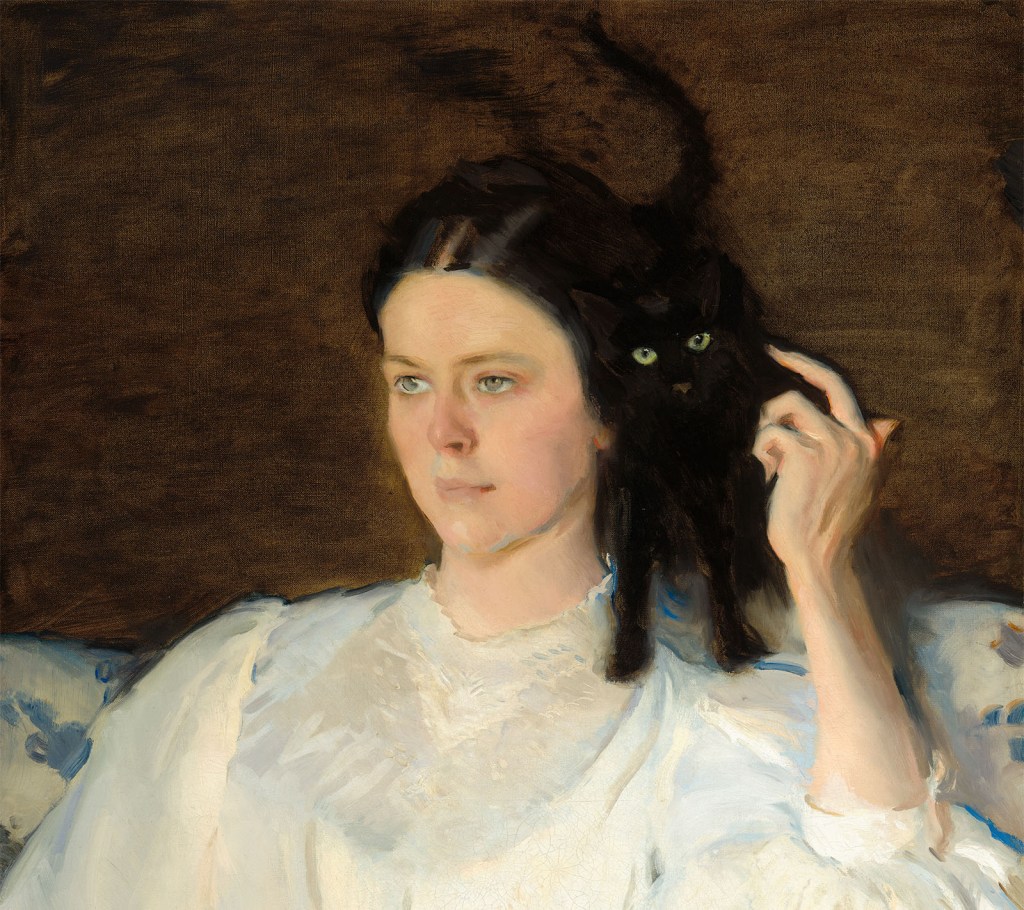
This portrait by Cecilia Beaux portrays the artist’s cousin, Sarah Allibone Leavitt, dressed in white with her black cat on her shoulder. Beaux was recognized not only for her bold painting technique, but also for her ability to imbue her female subjects with wit and intelligence, rendering them more than just mere objects of beauty. A student in Paris in the late 1880s, the artist was influenced by her firsthand exposure to French impressionism. Her light-filled palette and gestural style invite comparisons with many of her contemporaries, including William Merritt Chase, James McNeill Whistler, John Singer Sargent, and Mary Cassatt.
The sitter’s white dress, for instance, evokes Whistler’s infamous 1862 painting of Joanna Hiffernan, Symphony in White, No. 1: The White Girl (National Gallery of Art, Washington). The formal connection between the two paintings demonstrates Beaux’s knowledge of Whistler’s painting. Additionally, the direct gaze of the black cat perched on Sarah’s shoulder references Edouard Manet’s painting Olympia (1865, Musée d’Orsay, Paris), in which a similarly posed black cat sits at the foot of Olympia’s bed. These connections suggest that Beaux intended to reveal more with this portrait than simply her mastery of painting technique. The enigmatic title of the painting may represent Manet’s influence—Beaux’s use of Spanish diminutives, Sarita for Sarah and Sita, meaning “little one,” for the cat, acknowledges the late 19th-century popularity of Spanish painting, championed by Manet.
The present work is a replica of the original painted in 1893 and displayed in the 1895 Society of American Artists exhibition in New York. Before donating the original to the Musée de Luxembourg in Paris (now in the collection of the Musée d’Orsay, Paris), Beaux recorded that she made a second painting for her “own satisfaction when the original went to France for good.” / quoted from NGA


 un regard oblique