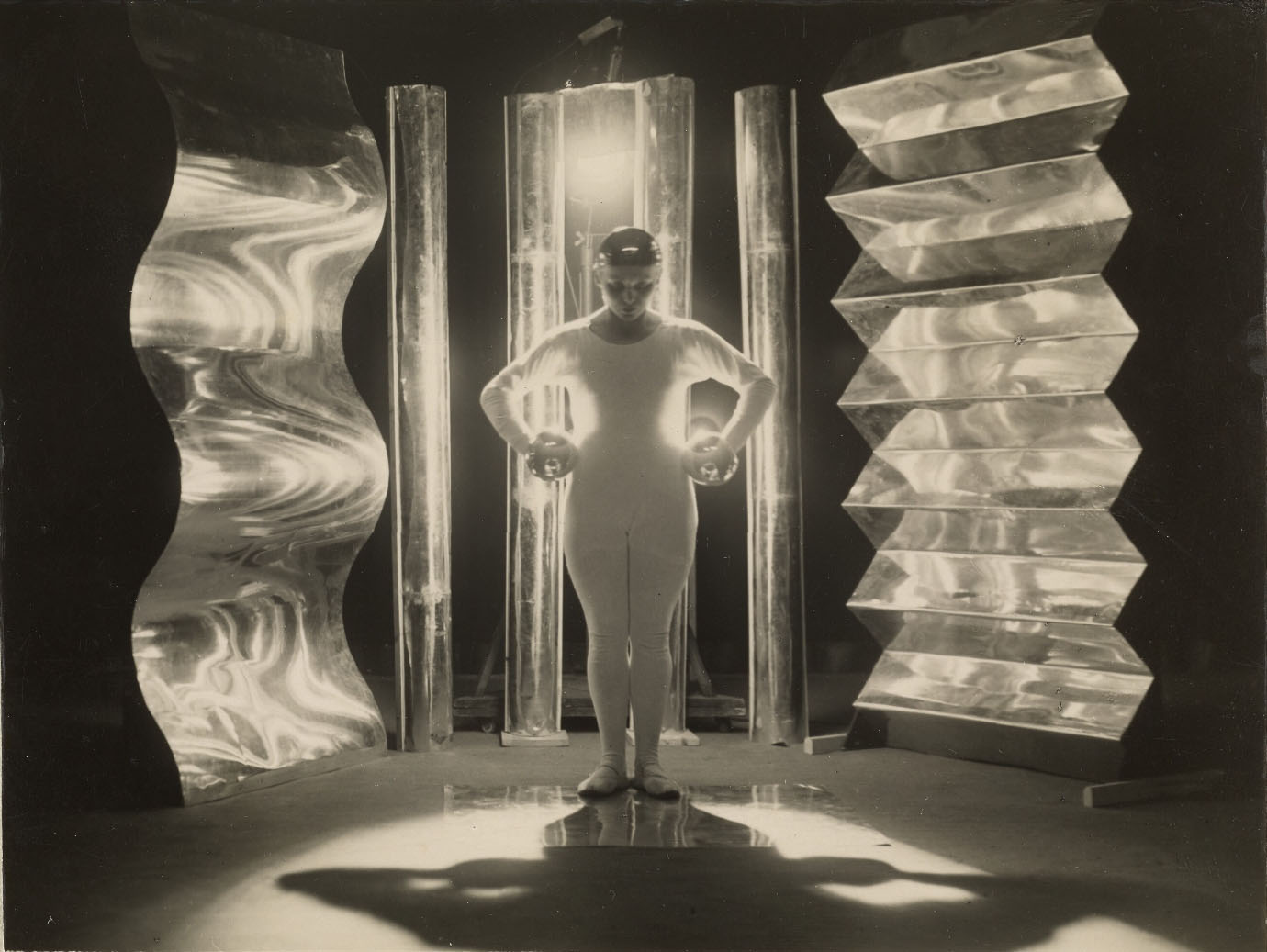
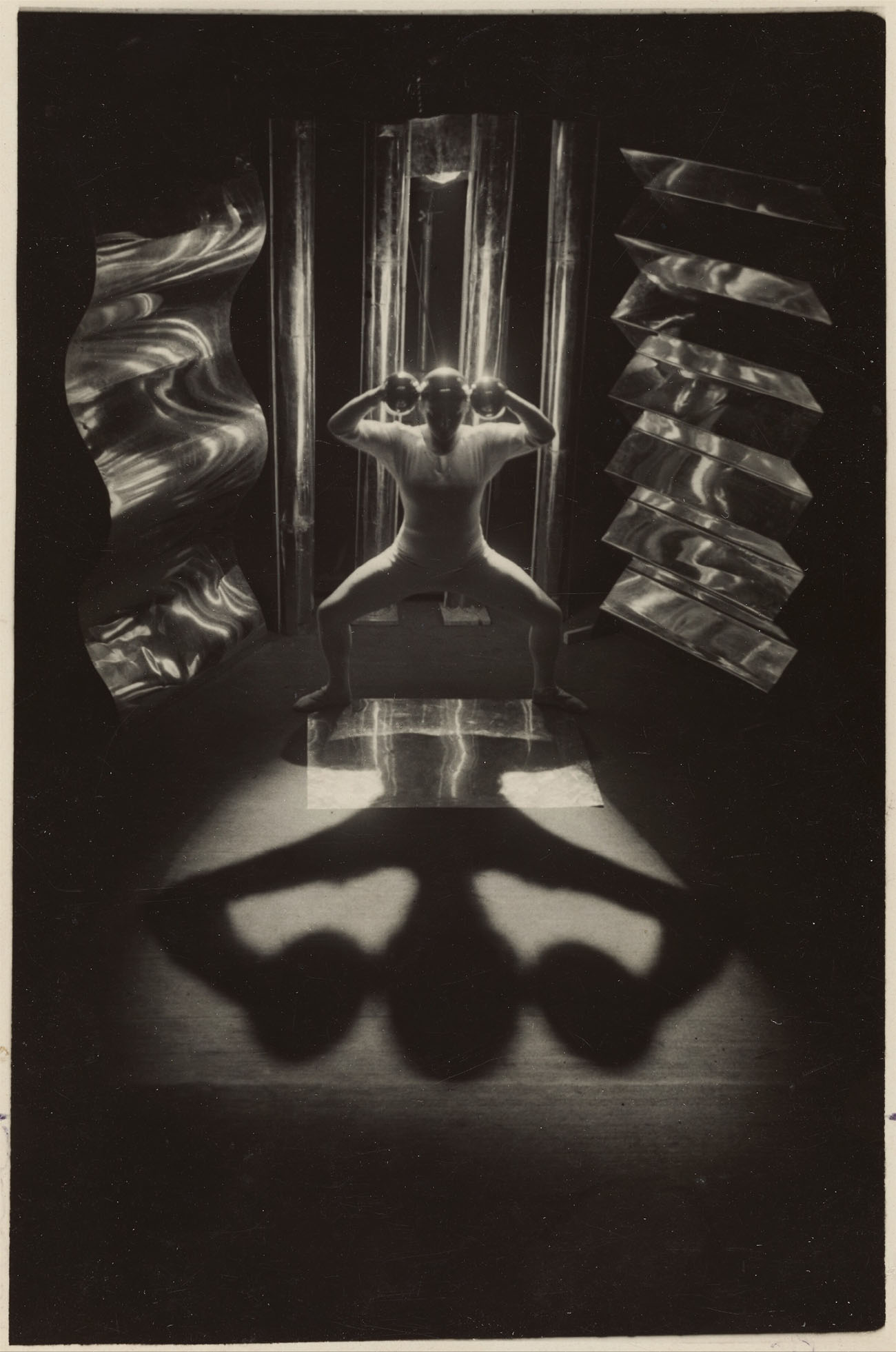
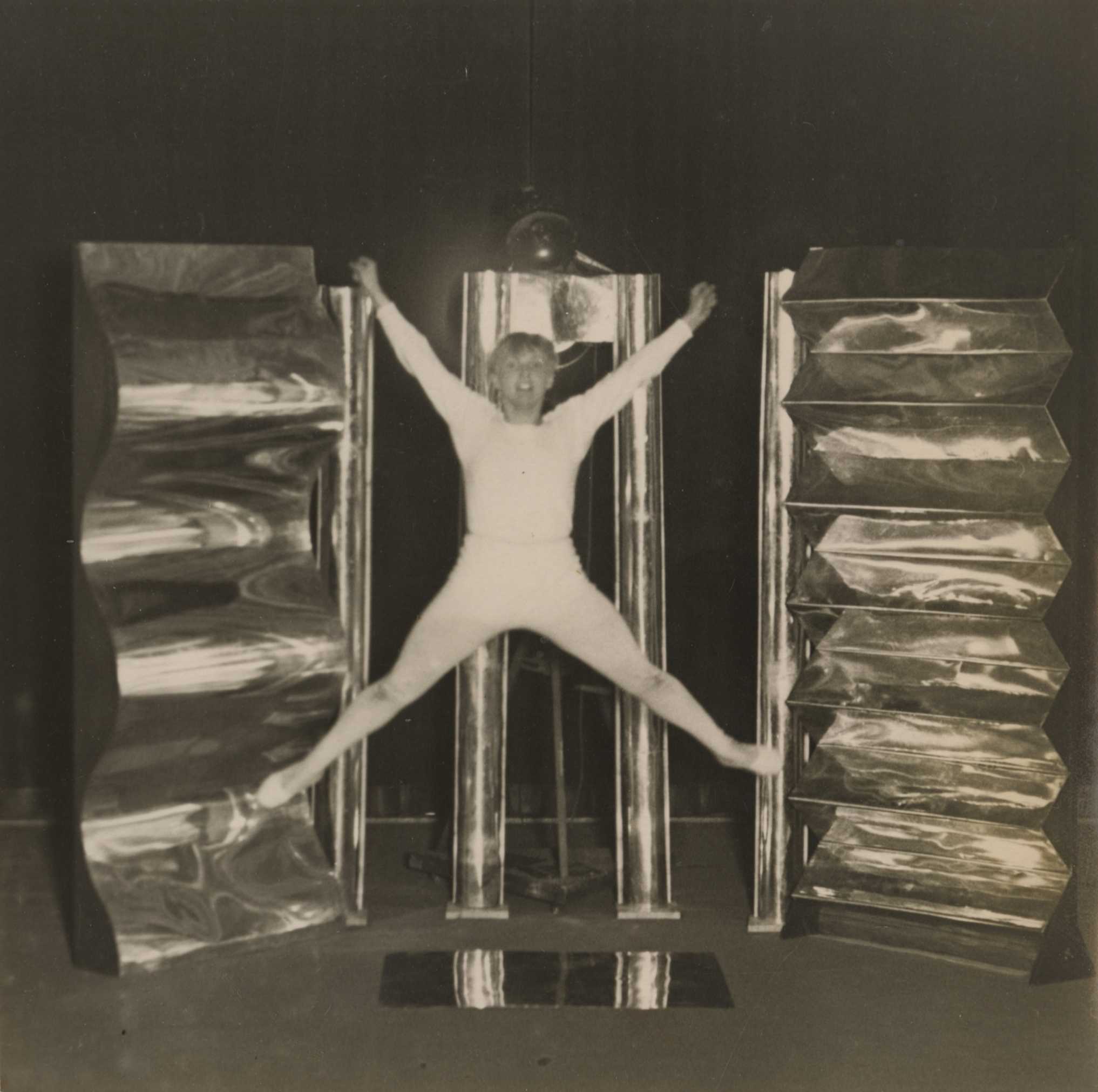
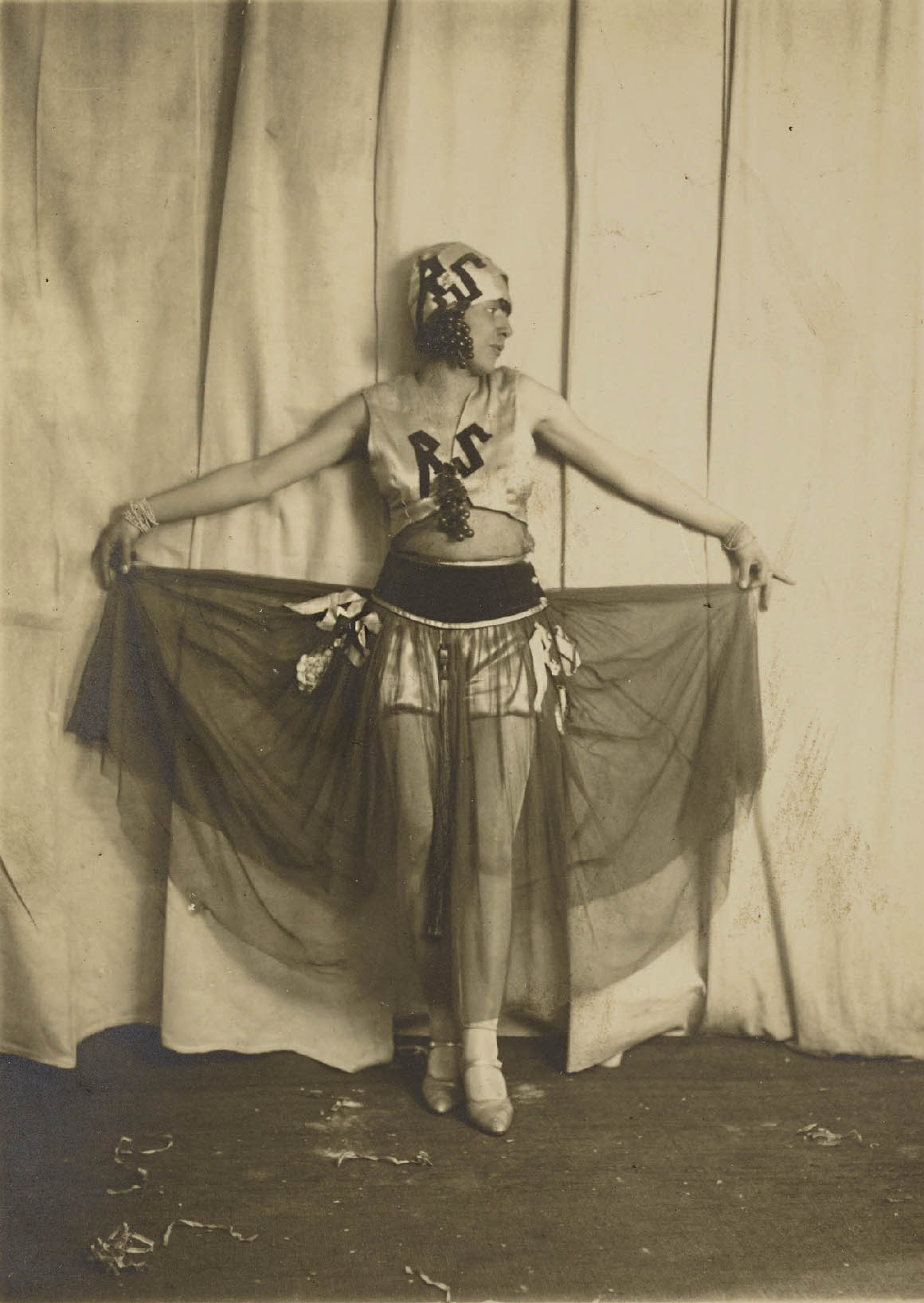
T. Lux Feininger (1910 – 2011) ~ [Metalltanz], Bauhaus Dessau, about 1928-1929 | src getty.edu
Karla Grosch’s performance of Metalltanz, or “Dance in Metal,” exploited the reflective properties of polished metal. The avant-garde performances produced by Oskar Schlemmer’s Stage Workshop at the Bauhaus School are seen today as significant forerunners of modern performance art and multimedia theater.
The photographer T. Lux Feininger studied at the Bauhaus with Schlemmer, under whose direction theater and dance became popular and important aspects of the German school’s program. [text from getty.edu]
T. Lux Feininger (1910 – 2011) ~ [Metalltanz]. Dance in Metal, by Oskar Schlemmer, performed by Karla Grosch, Dessau, ca. 1928-1929 | src Getty museumT. Lux Feininger ~ Untitled (Bauhaus Stage; Dance in Metal by Oskar Schlemmer, performed by Karla Grosch), ca. 1928 | src Kicken Galerie Berlin at Art Basel 2019
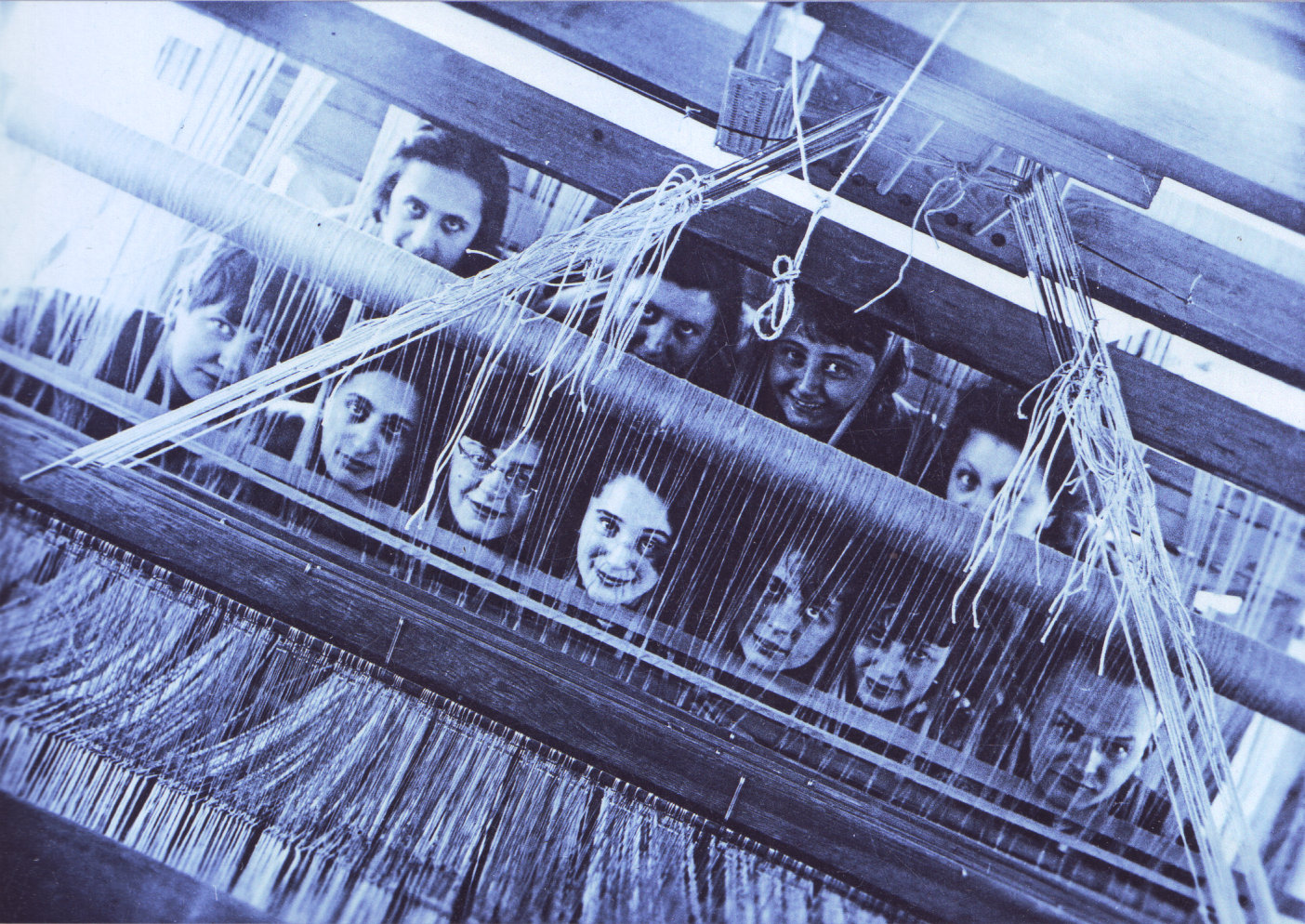
Webereistudierende der Klasse von Webmeister Kurt Wanke im Webstuhl [Urheberschaft unklar], 1927-1928
Group portrait of the weaving class of weaver Kurt Wanke at the Bauhaus Dessau. Front row from left: Lotte (Stam-)Beese, Anni Albers, Ljuba “Ljuka” Monastirsky, Rosa “Rosel” Berger, Gunta Stölzl, Otti Berger, Webmeister Kurt Wanke.
Back row from top: Lisbeth (Birmann-) Oestreicher, Gertrud “Gert” Preiswerk, Helene “Lene” Bergner (Léna Meyer-Bergner), Margaretha “Gretel” Reichardt.]
Uncertain photographer, sometimes credited as T. Lux Feininger’s (Theodore Lukas Feininger)
Students of the weaving workshop of master weaver Kurt Wanke in a loom [Authorship uncertain], (Leben am Bauhaus: Gruppenportrait der Weberinnen hinter einem Webstuhl in der Weberei Bauhaus Dessau), 1927-1928 | src Kunst Archive
Gruppenporträt der Webereiklasse von Webmeister Kurt Wanke am Bauhaus Dessau. Vordere Reihe von links: Lotte Beese (Lotte Stam-Beese), Anni Albers, Ljuba Monastirsky, Rosa Berger, Gunta Stölzl, Otti Berger, Webmeister Kurt Wanke Hintere Reihe von links: Lisbeth Birmann-Oestreicher, Gertrud Preiswerk, Helene Bergner (Léna Meyer-Bergner), Grete (Margaretha) Reichardt.
E. Metzke :: Ohne Titel (Melusine Herker auf dem Metallischen Fest am 9. Februar 1929 im Bauhausgebäude). Vintage gelatin silver print with photographer’s blind-stamp on bottom right. | src Stiftung Bauhaus Dessau
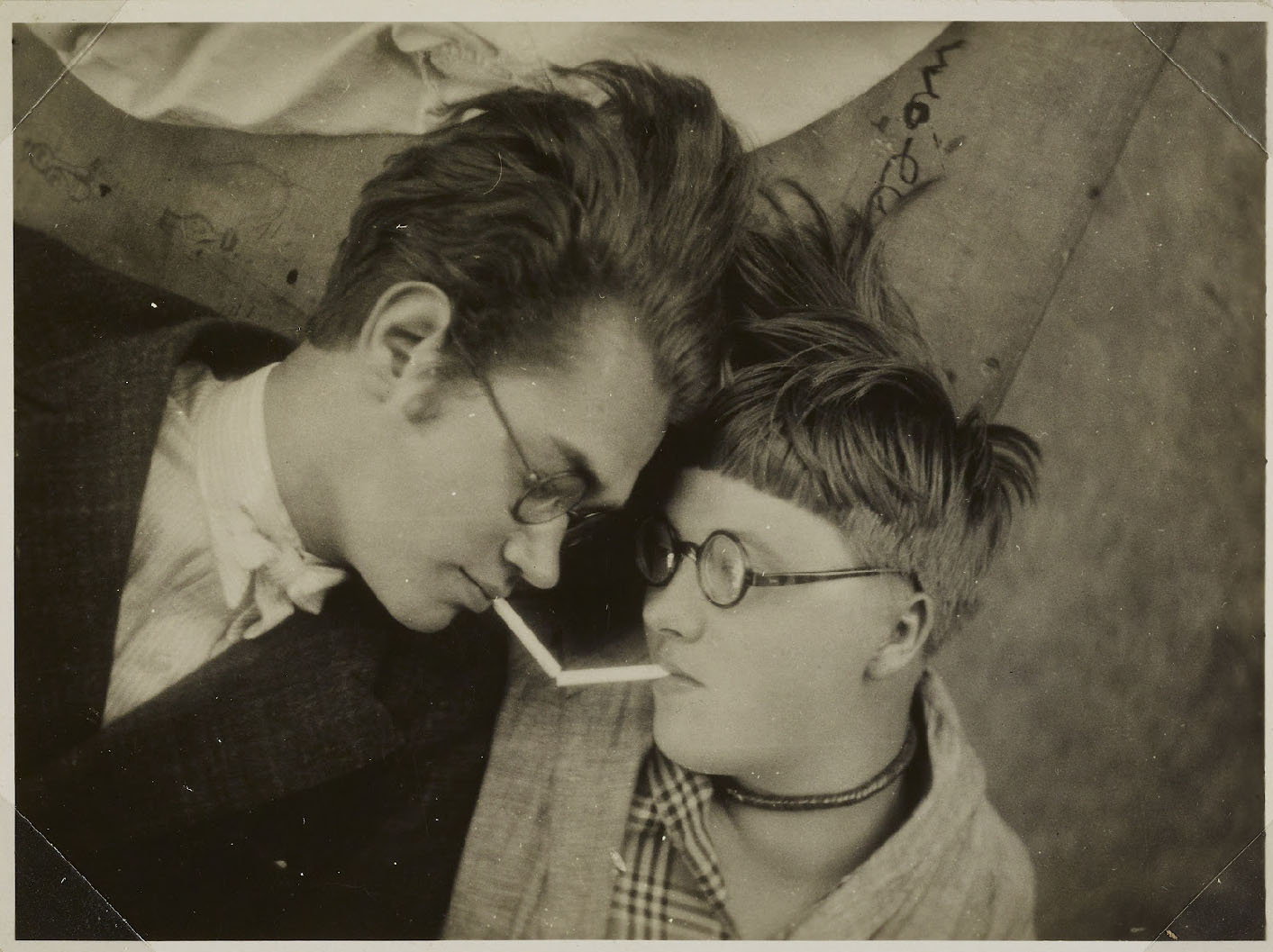
Erich Krause :: Four intertwined people [Bauhauslers on the terrace of the Bauhaus canteen with Hermann “Sven” Gautel (top) and Hin Bredendieck (bottom)], ca. 1929. | src Bauhaus DessauUntitled (Portrait of Elsa Franke and Gerhard Kadow at the Bauhaus Dessau), 1929. | src Stiftung Bauhaus Dessau
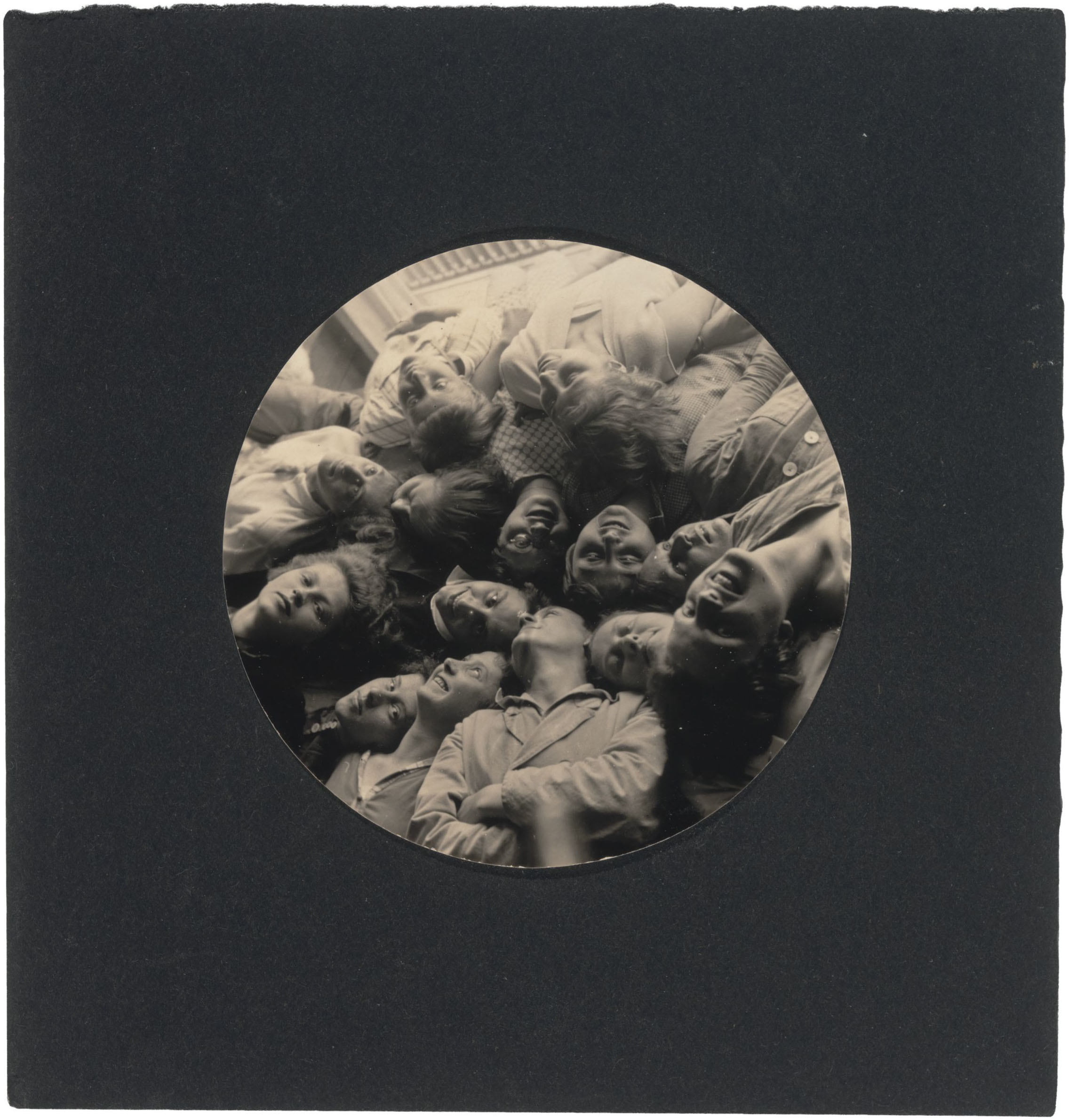
The Bauhaus weaving workshop, composed primarily of women, was among the school’s most successful and experimental workshops. Influenced by the color and formal theories of Vasily Kandinsky, Paul Klee, and Johannes Itten, the students experimented with traditional and industrial dyeing and weaving techniques. Lotte Beese took no formal classes in photography, but she made a number of photographs during her years in Dessau and is known especially for her Bauhaus portraiture. Uniting her interest in portraying fellow students with her intimate participation in the weaving workshop, where she studied textile design under Gunta Stölzl, Beese’s image of a circular cluster of progressive young women weavers was featured on the cover of the Bauhaus journal in 1928, with a headline beckoning, “Young people, come to the Bauhaus!” Beese likely shot this picture from a ladder or with her camera mounted on an elevated tripod, using a Rollholder that she described as a “rickety second camera.”
The picture is printed on Velox, a Gaslight Paper known for its warm highlights and light texture. The material was marketed to amateurs because it required no enlarger or darkroom; it could be exposed in the comfort of one’s parlor, just inches from an ordinary gas jet or electric bulb. Bauhaus artists experimented with Velox and other contact papers before a formal photography program was established at the school.
To achieve the picture’s circular format, Beese prepared a masking layer with a round window 8.5 centimeters (3 3/8 inches) in diameter, which she placed over the unexposed photographic paper and the rectangular negative. This stacked construction was then exposed to light and processed, resulting in a circular image in the center of a white sheet of paper. She then carefully trimmed around the image edge and retouched a few white lines and spots. At some point the print was mounted to black paper, whose rough, hand-torn edges and embossed line along one side indicate that it once was part of an album.
—Mitra Abbaspour, Hanako Murata | quoted from MoMA
Cover of Bauhaus 2, no. 4 (1928). Editor Hannes Meyer. Photograph by Lotte (Charlotte) Beese | src MoMA





 un regard oblique