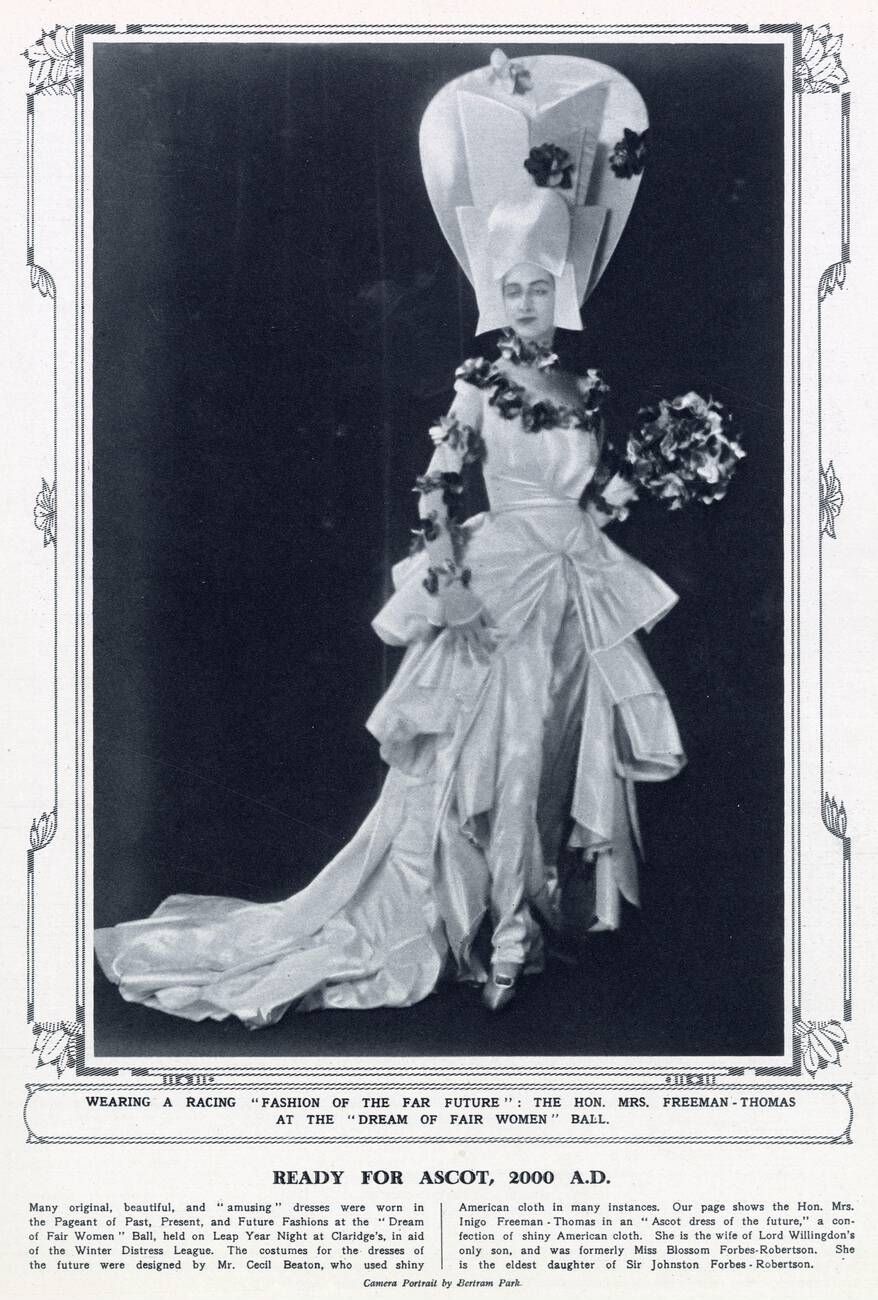
The Pageant of Past, Present and Future Fashions was held on 29th February 1928 (Leap Year Night) at Claridge’s (London) in aid of the Winter Distress League. The costumes for the dresses of the (far) future were designed by Cecil Beaton. The image above shows Ms. Freeman-Thomas in an outfit titled ‘The Ascot Dress of the Future’.
Detail from Mrs Freeman-Thomas by Cecil Beaton (formerly Miss Blossom Forbes-Robertson), 1928
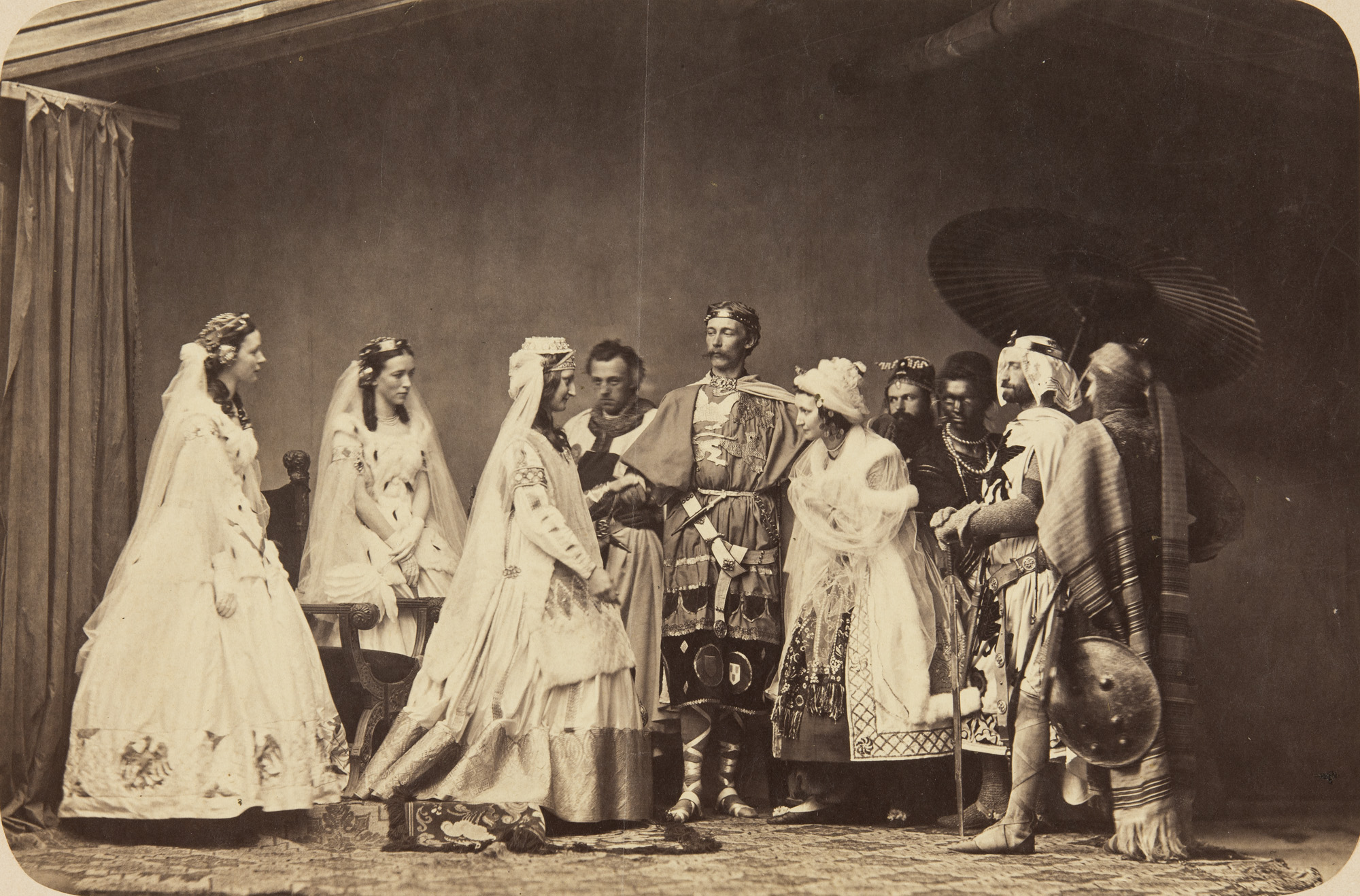
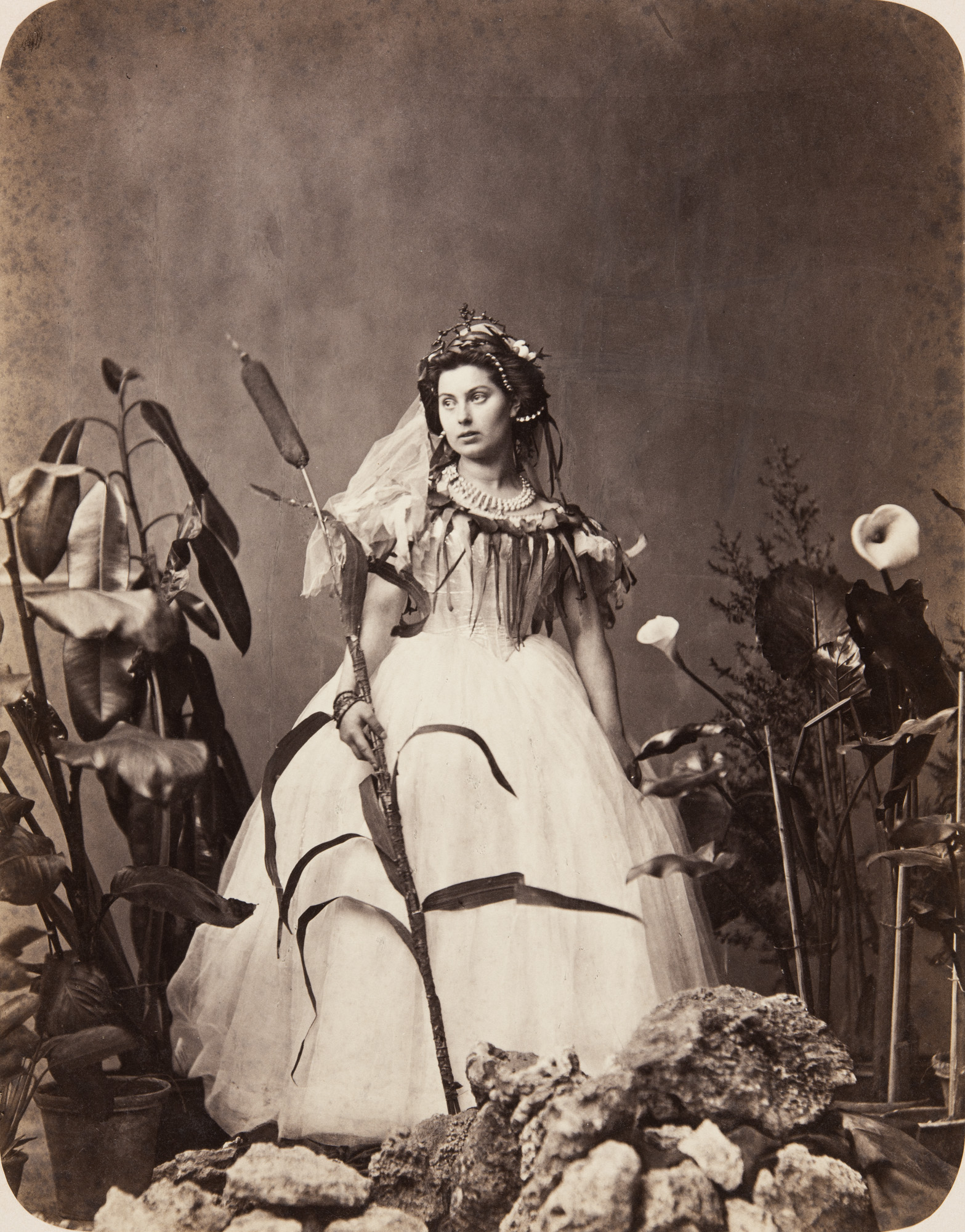
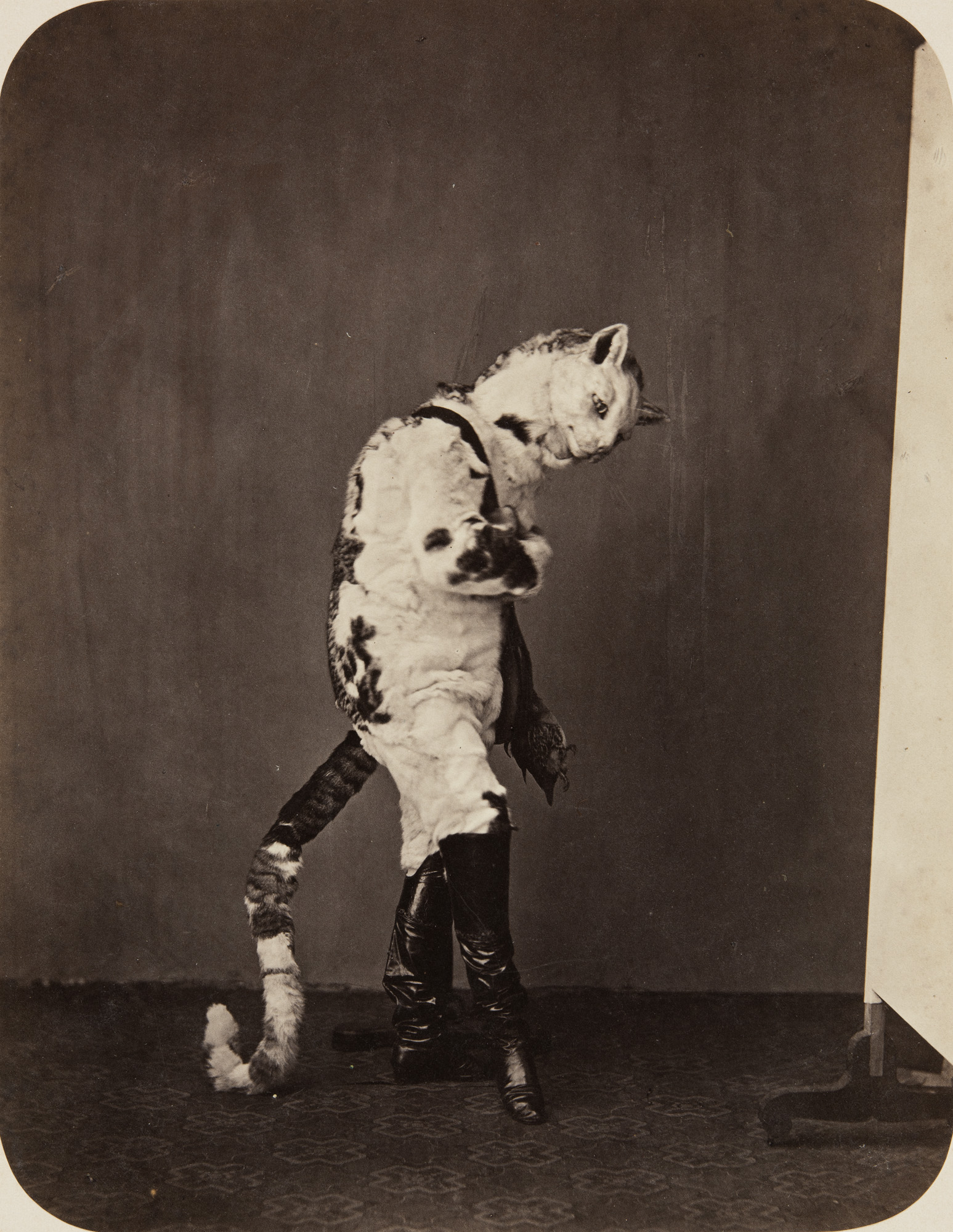
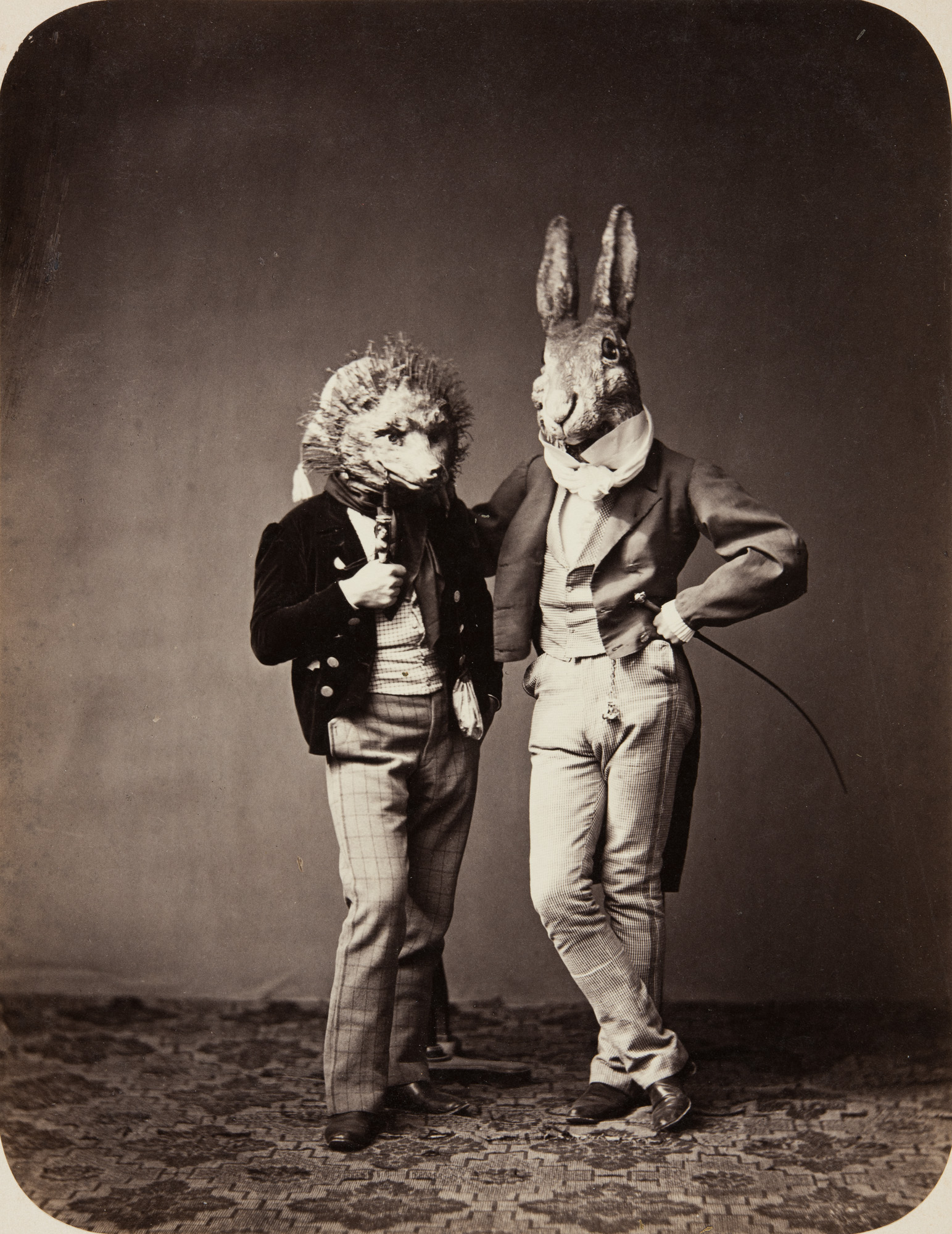
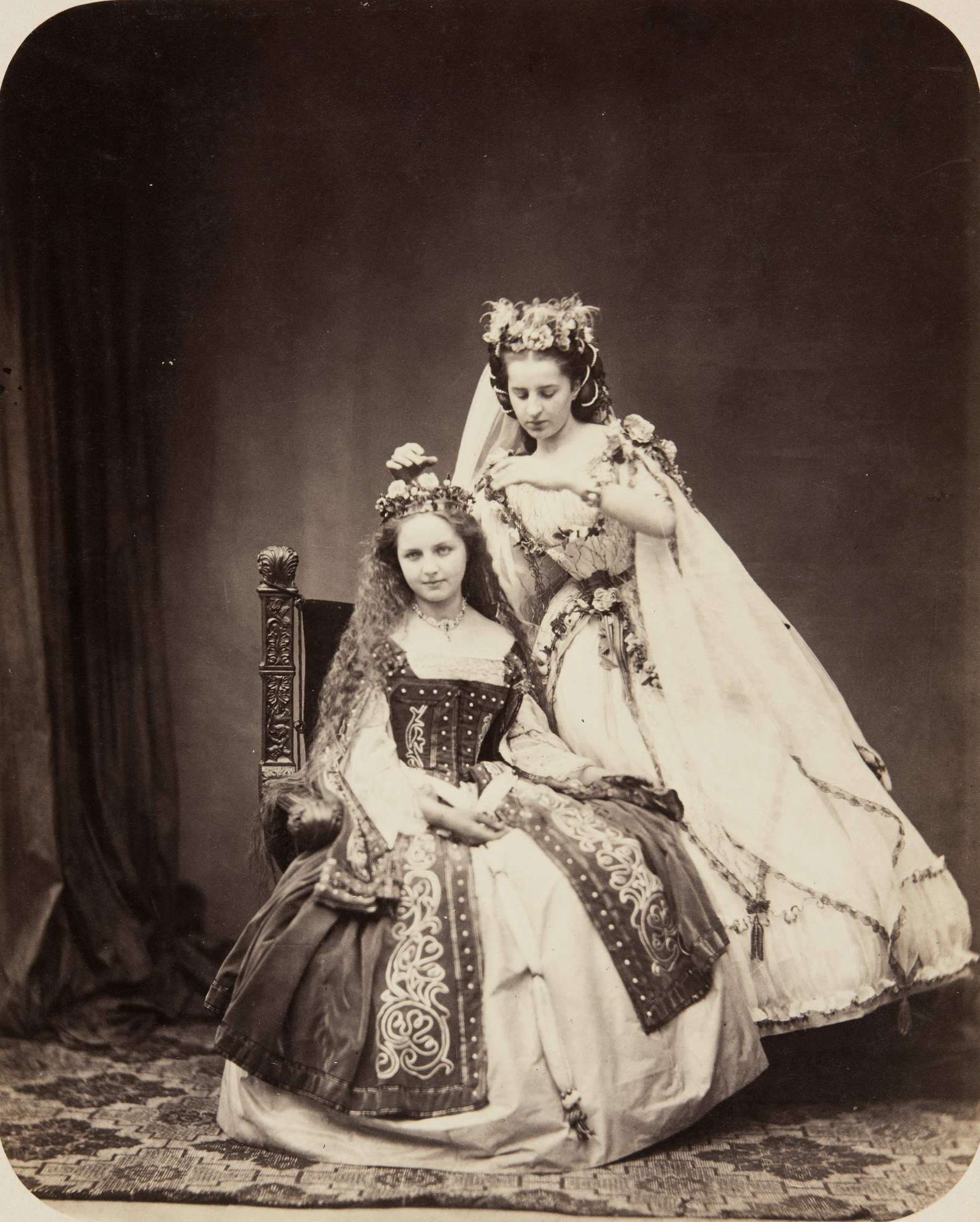
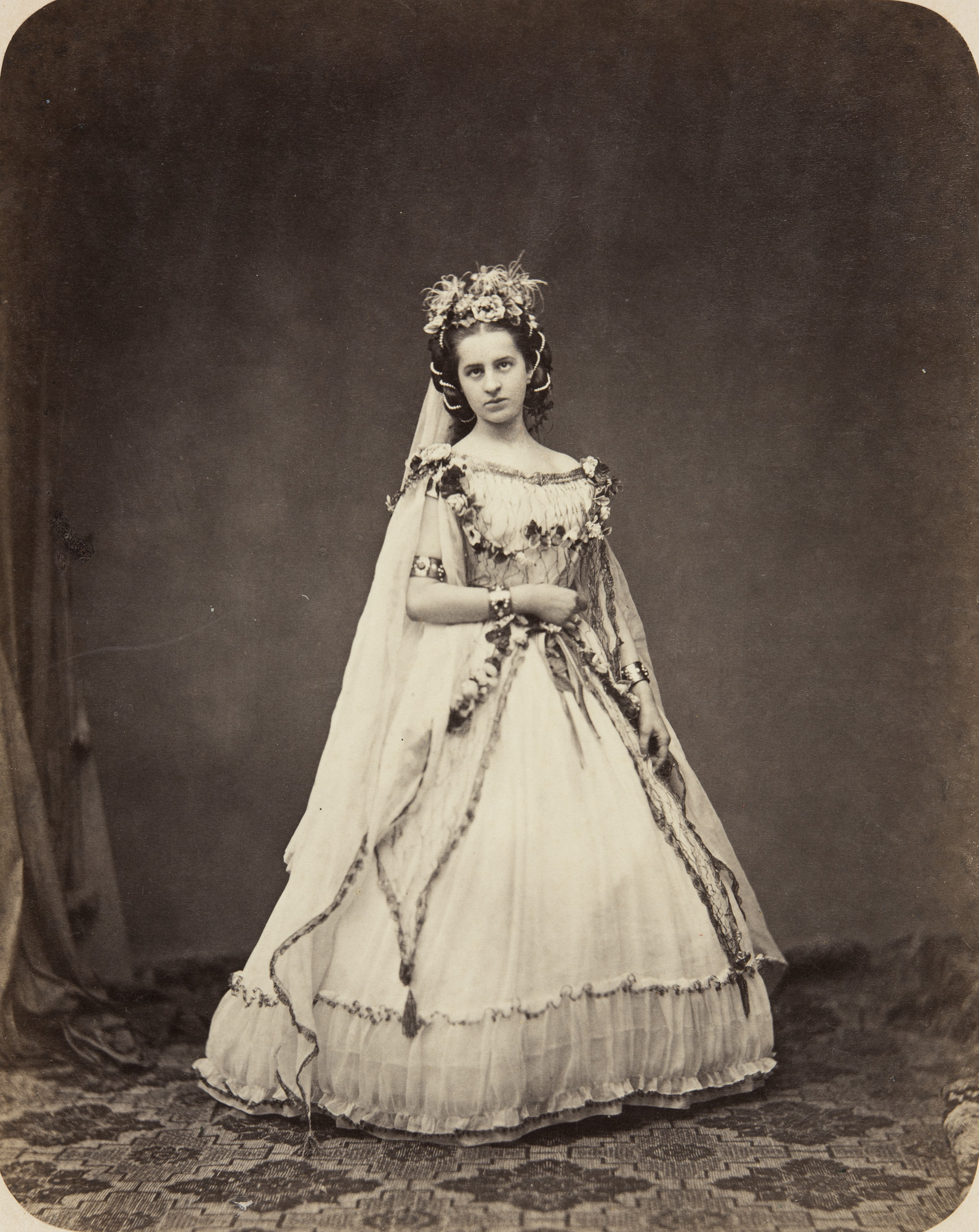
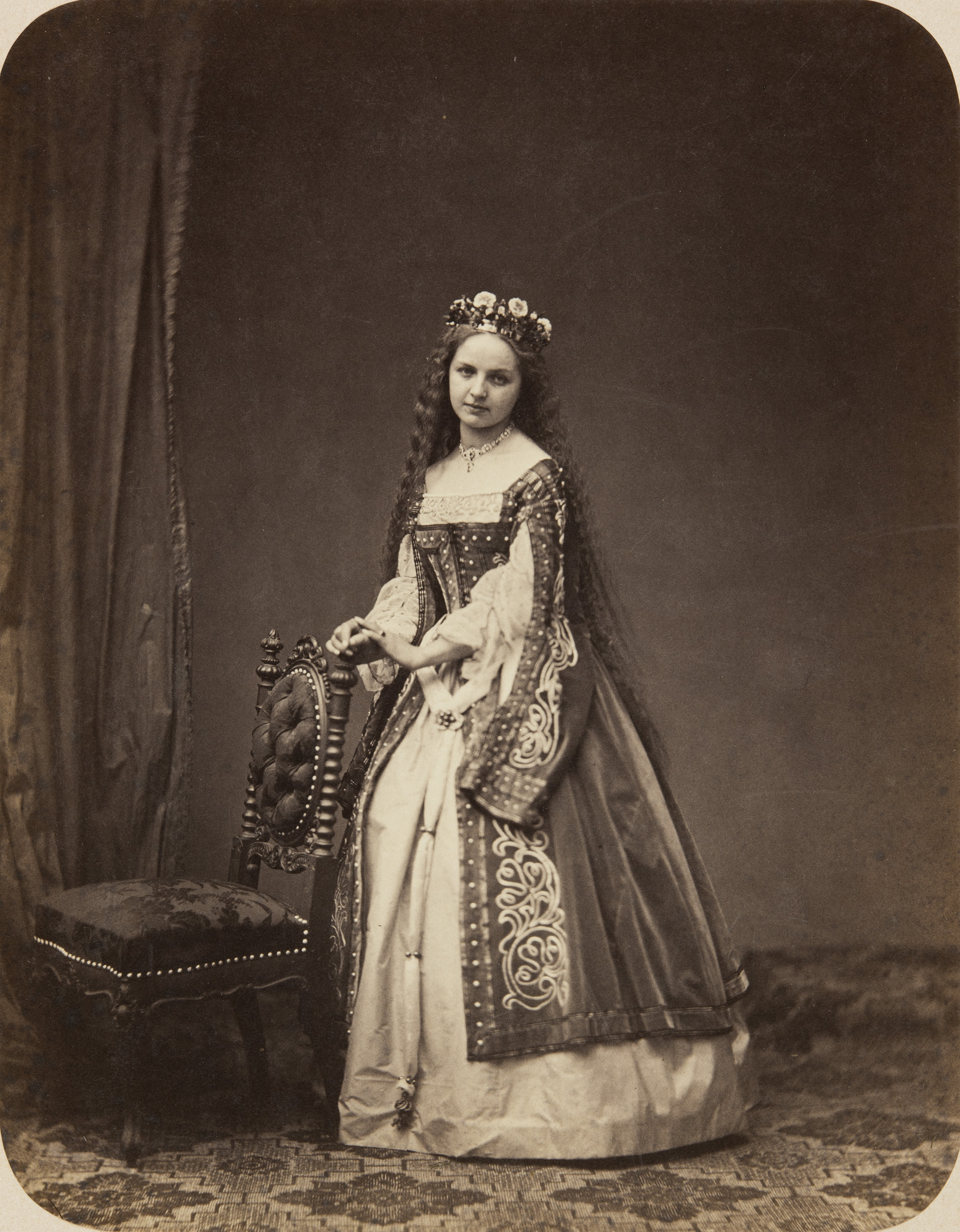
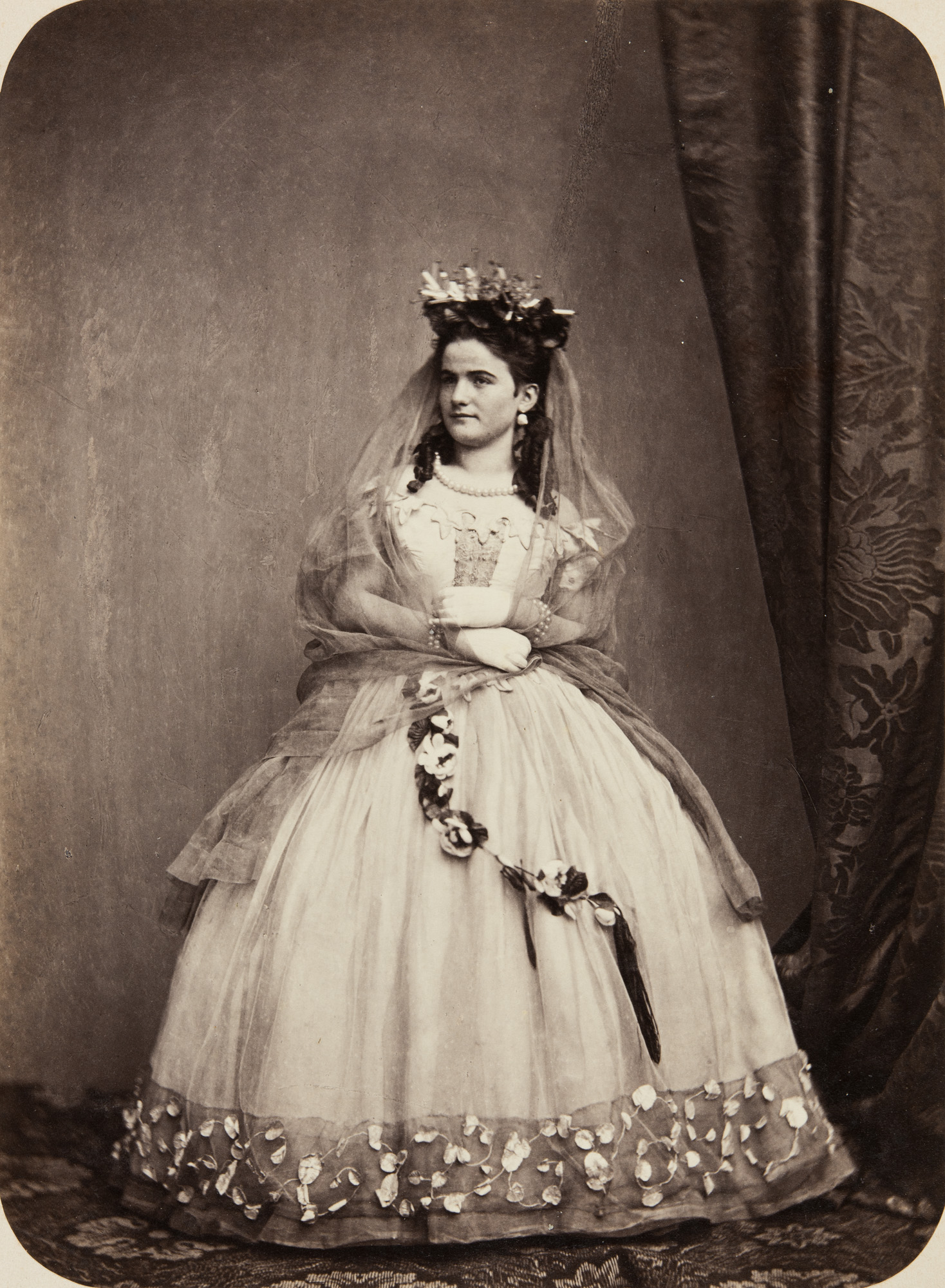
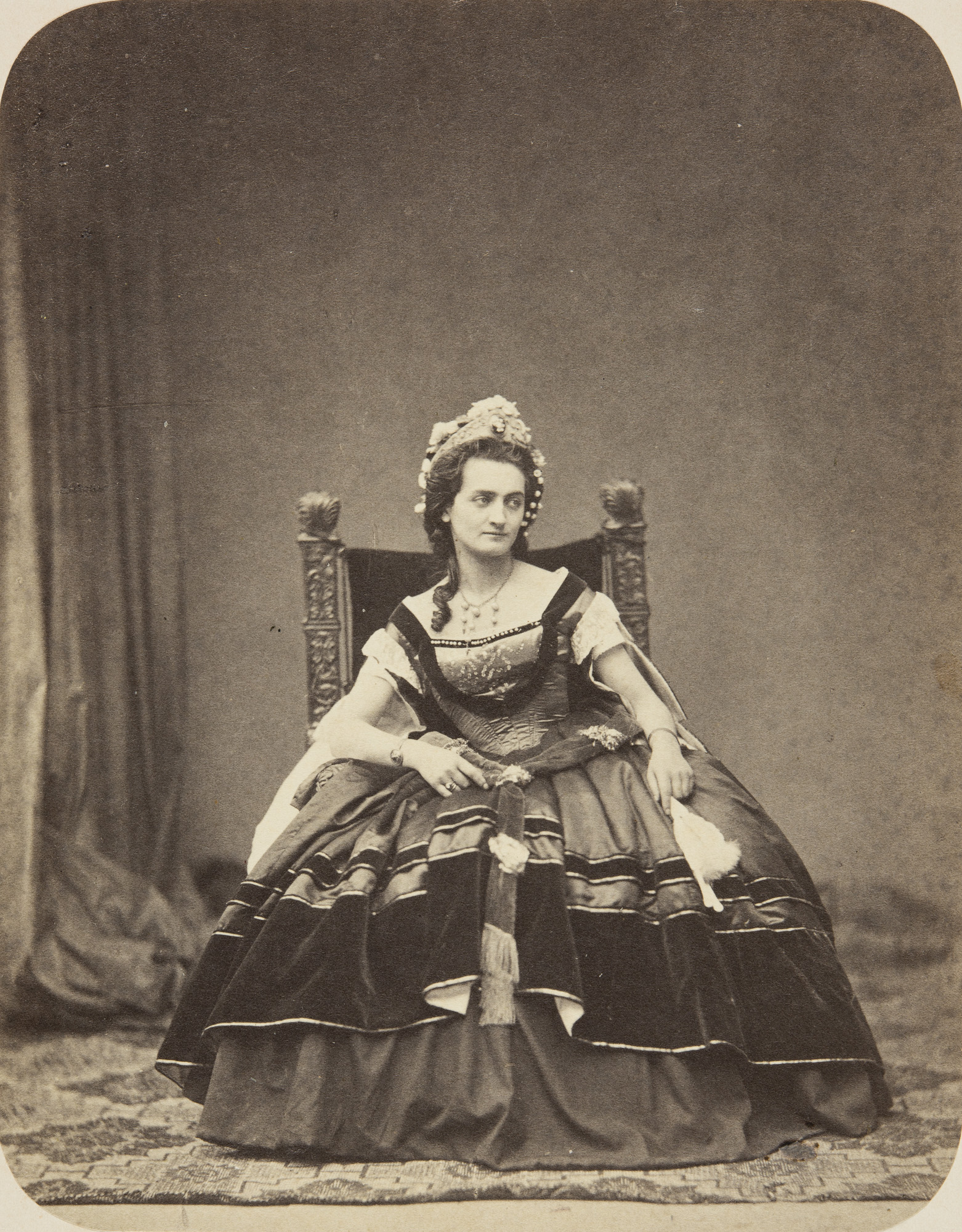
Joseph Albert ~ “Maskenball von ‘Jung-München’ 1862 / Frl. Pfeiffer, Frl. Bischoff, Frl. Pfeiffer, Frl. Bischoff / Aus der Gruppe: ‘Graf v. Gleichen'” (Count of Gleichen), Februar 1862, Albuminpapier / Münchner Stadtmuseum ~ Sammlung Dietmar SiegertJoseph Albert ~ “Maskenball v. ‘Jung-München’ 1862 / Frl. Pfeiffer, Frl. Pfeiffer, Bildhauermeister von Tiesenhausen, Frl. Bischoff, Maler A. Klein und Moosbrugger, Max Stuttgarter, E. Küster / “Maskenball von ‘Jung-München’ 1862 / ‘Gruppe des Grafen von Gleichen'” (Counts of Gleichen), Februar 1862, Albuminpapier Münchner Stadtmuseum ~ Sammlung Dietmar SiegertJoseph Albert ~ “Märchenball von ‘Jung-München’ 1862 / Frau von Passerant, M. v. Liebig, Schlierholz, Frl. Knapp, Frl. Stöger / Gruppe ‘Nixenkönigin'” (Mermaid Queen), Februar 1862, Albuminpapier Münchner Stadtmuseum ~ Sammlung Dietmar SiegertJoseph Albert ~ “Frl. Knapp / Münchener Künstlermaskenfest 1862”, Februar 1862, Albuminpapier Münchner Stadtmuseum ~ Sammlung Dietmar Siegert
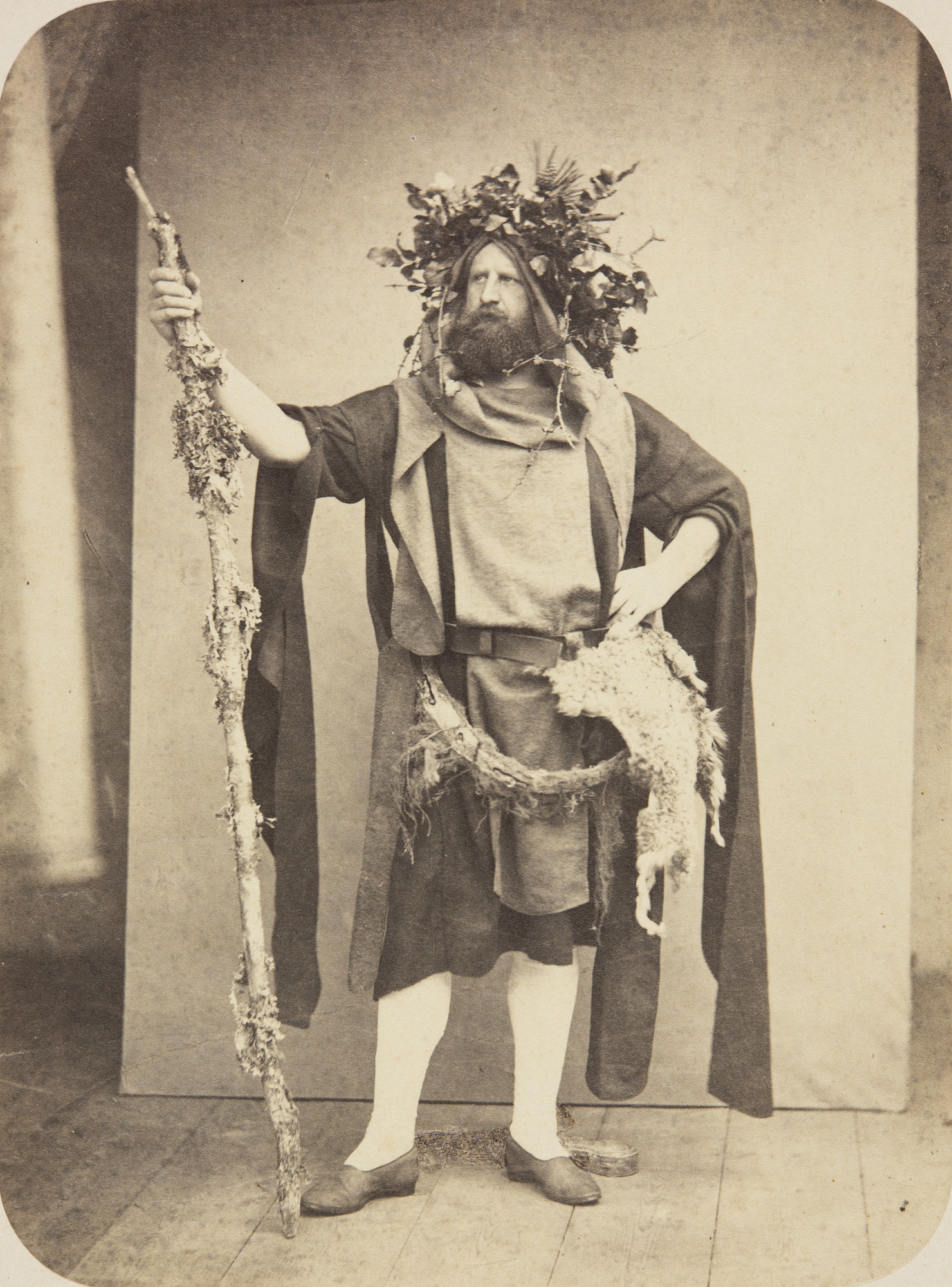
Von Künstlervereinigungen ausgerichtete Maskenfeste waren im 19. Jahrhundert in München überaus populär. Zu den frühen Aufnahmen dieser speziellen Festkultur zählen die fast surreal anmutenden, rund 30 Gruppen- und Einzelporträts, die der Fotograf Joseph Albert (1825–1886) von den Teilnehmenden am Maskenfest “Die Märchen” schuf. Das von der Vereinigung “Jung-München” veranstaltete Fest fand in der Faschingszeit am 15. Februar 1862 statt, geladen wurde in das königliche Odeon, zahlreiche Mitglieder der bayerischen Königsfamilie nahmen daran teil, darunter auch der spätere “Märchenkönig” Ludwig II.
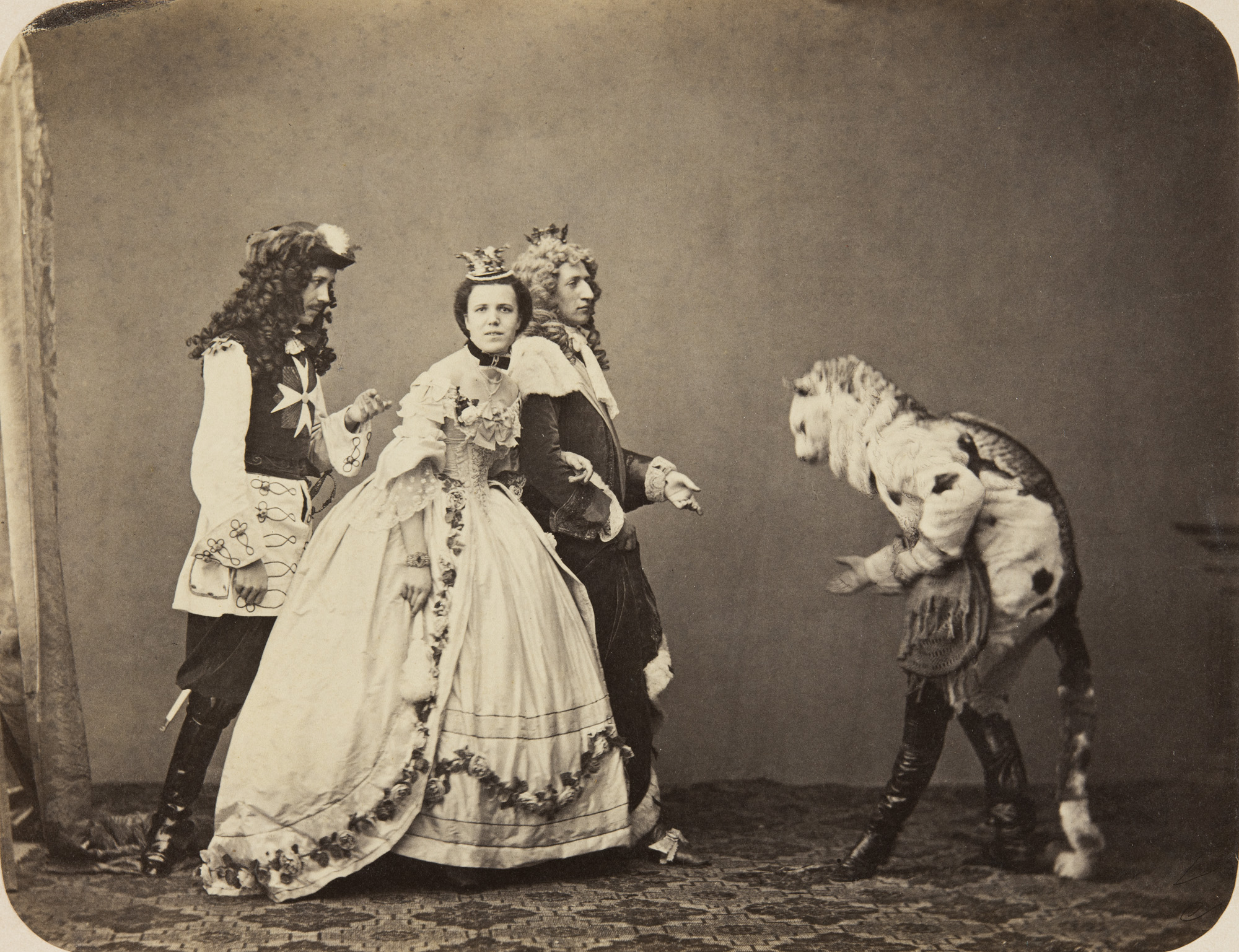
Die Kostüme entsprachen der Vorliebe der Zeit für das mittelalterliche und märchenhafte Genre, das sich auch in der Kunst der Epoche widerspiegelte. Zu den dargestellten Märchen gehörten “Kindermärchen” wie “Hänsel und Gretel”, “Waldmärchen” wie “Rotkäppchen” oder auch “Thiermärchen” wie der “Gestiefelte Kater” oder “Hase und Igel”. Für den Fotografen Albert präsentierten sich die Kostümierten abseits des Geschehens entweder allein in typisch nachempfundener Pose oder zu mehreren für ausgewählte Szenen in der Tradition “lebender Bilder”, den sogenannten “tableaux vivants”. [quoted from : Münchner Stadtmuseum ~ Sammlung Dietmar Siegert]
Joseph Albert ~ “Eduard Lang, Frl. Clara Lang, Seder, Heinrich Lang / Maskenball von ‘Jung-München’ 1862 / Der gestiefelte Kater” (Puss in Boots), Februar 1862, Albuminpapier / Münchner Stadtmuseum ~ Sammlung Dietmar SiegertJoseph Albert ~ “Heinrich Lang / Maskenball von ‘Jung-München’ 1862 / Der gestiefelte Kater” (Puss in Boots), Februar 1862, Albuminpapier. Münchner Stadtmuseum ~ Sammlung Dietmar SiegertJoseph Albert ~ Hermann Oehlmann / Maskenball von ‘Jung-München’ 1862. / Wettlauf des Igels und des Hasen” (Race of the Hedgehog and the Hare), Februar 1862, Albuminpapier / Münchner Stadtmuseum, Sammlung Dietmar Siegert
Mask festivals organized by artists’ associations were extremely popular in Munich in the 19th century. The early photographs of this festival culture include these almost surreal-looking images: around thirty group and individual portraits that the photographer Joseph Albert (1825-1886) created of the participants in the masked festival “The Fairy Tales”, the festival, organized by the “Jung-München” association, took place during the carnival period on February 15, 1862. Among the invited guests were numerous members of the Bavarian royal family, including the later “fairy tale king” Ludwig II.
The costumes corresponded to the period’s penchant for the medieval and fairytale genre, which was also reflected in the art of the period. The fairy tales presented included “children’s fairy tales” such as “Hansel and Gretel”, “forest fairy tales” such as “Little Red Riding Hood” or “animal fairy tales” such as “Puss in Boots” or “Hase and Hedgehog”. The costumed people presented themselves, for the photographer, away from the action either alone in a typically imitated pose or in groups for selected scenes in the tradition of “living pictures”, the so-called “tableaux vivants”.
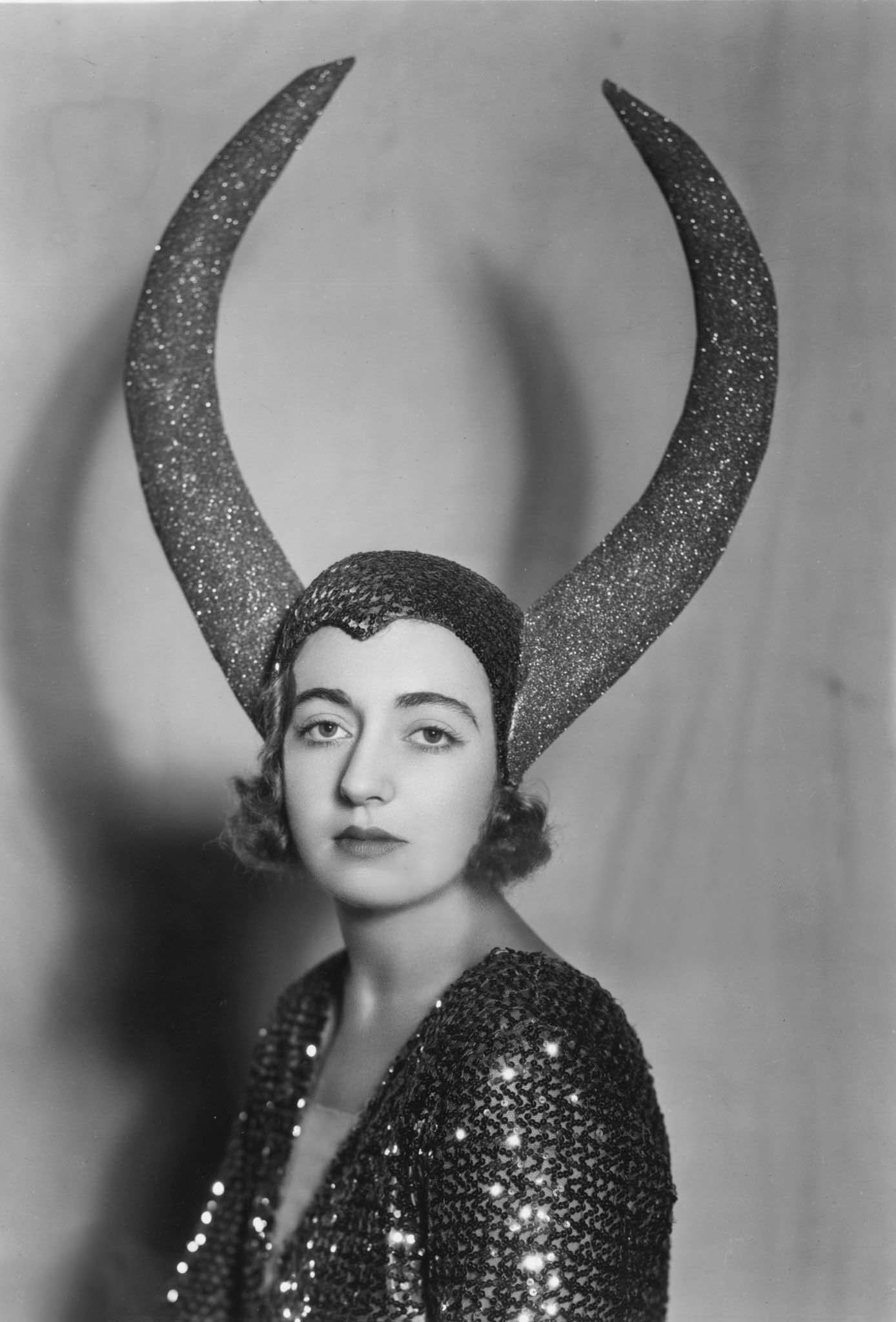
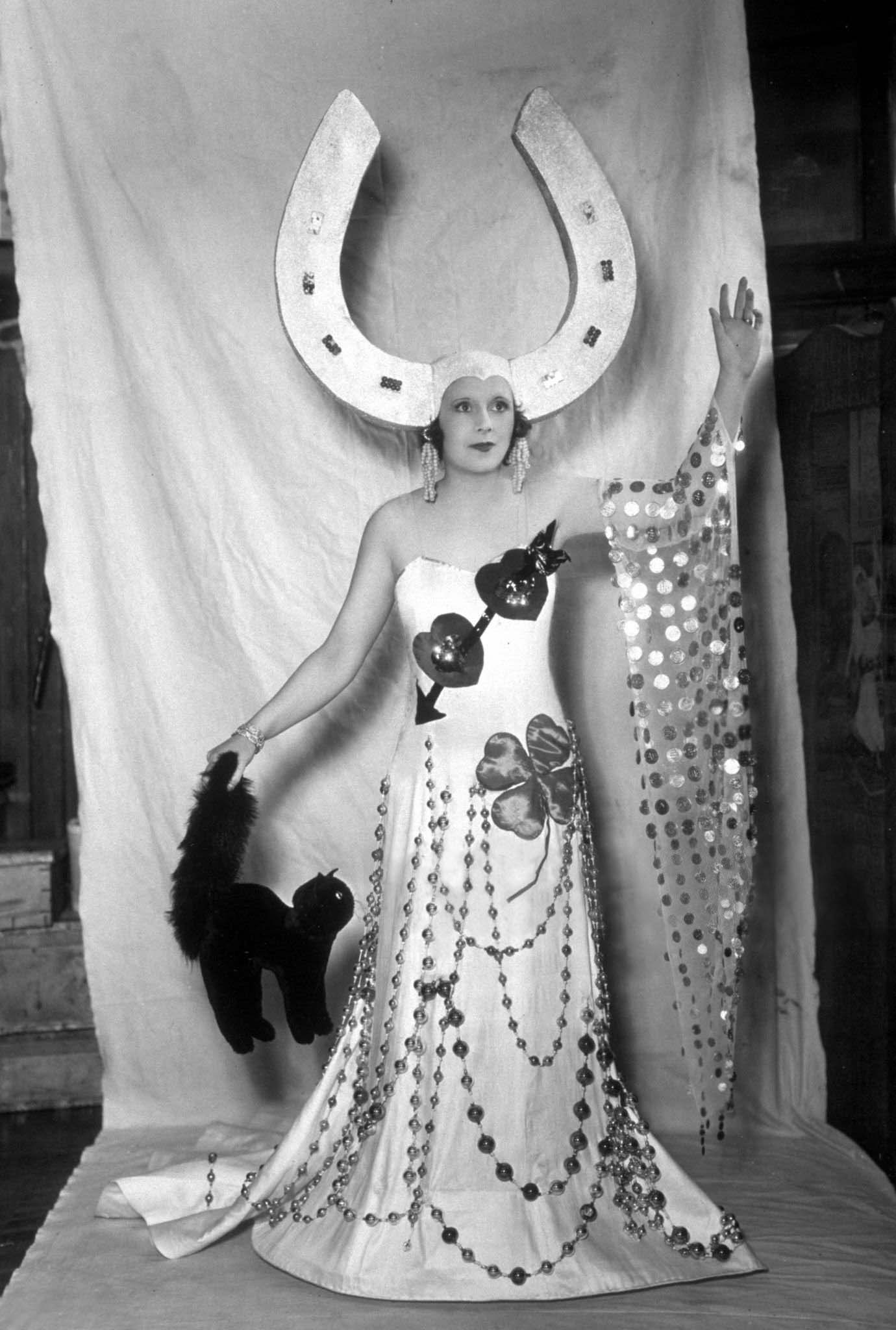
Sasha :: Princess George Imeritinsky wearing a hat with large horns, part of her costume symbolizing ‘Green’. She is taking part in the ‘Pageant of the Superstitions’ at the Haymarket Theatre in aid of the Queen Charlotte Maternity Hospital Maintenance Fund, October 11th, 1930. Costume designed by Barbara Cartland. | src Getty ImagesSasha :: Barbara Cartland (1901-2000) wearing a huge horseshoe on her head as ‘Good Luck’ in the ‘Pageant of the Superstitions’ at the Haymarket Theatre, London, November 1st, 1930. | src Getty ImagesSasha :: Mrs Roland Cubitt dressed as ‘Three Candles’ in a costume made by L & H Nathan Ltd., for the ‘Pageant of the Superstitions’, a feature of the ‘All Halloween Ball’, and repeated as a matinee at the Haymarket Theatre, in aid of the Queen Charlotte Maternity Hospital Fund, October 11th or November 1st, 1930. | src Getty Images
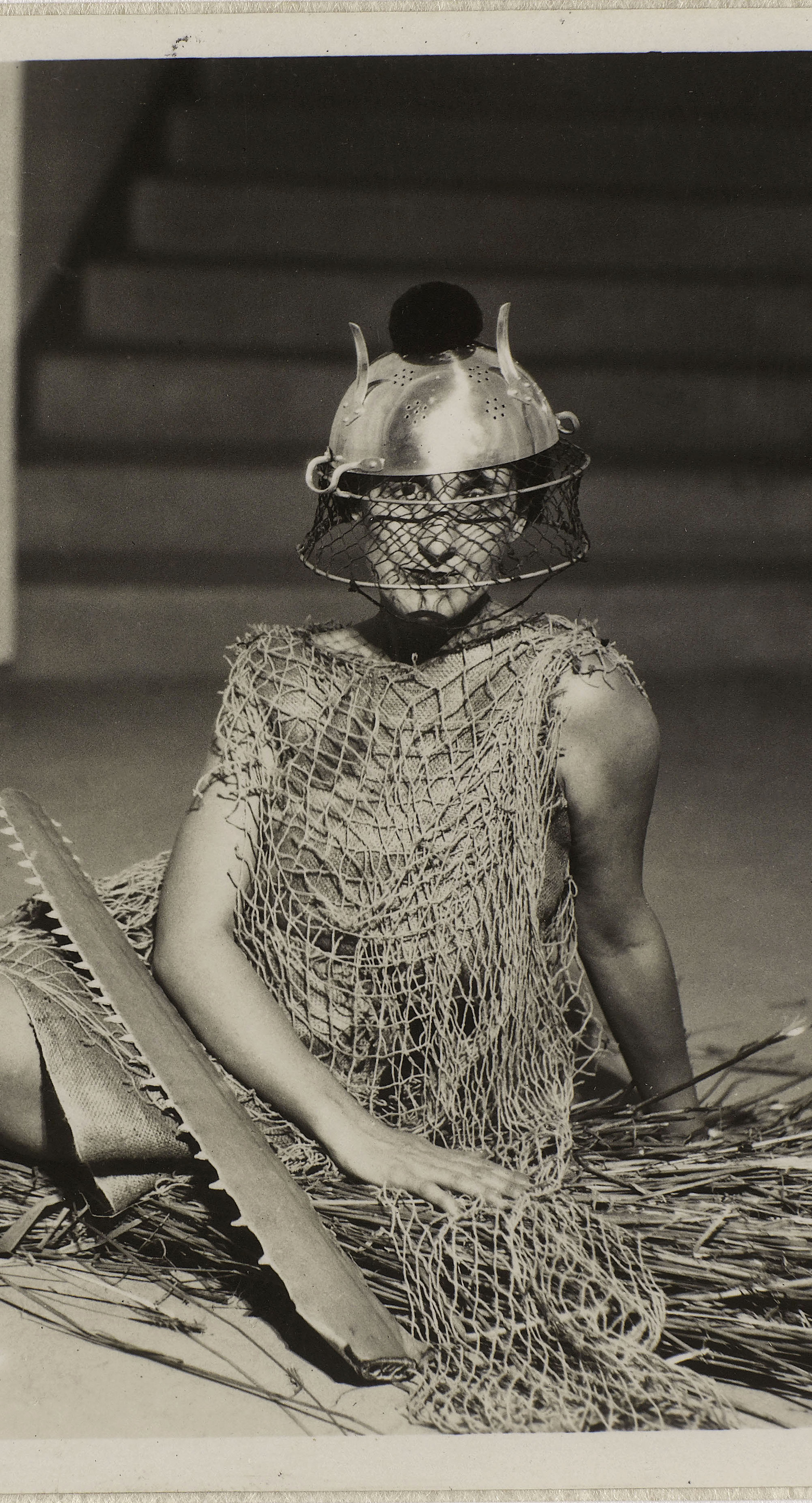
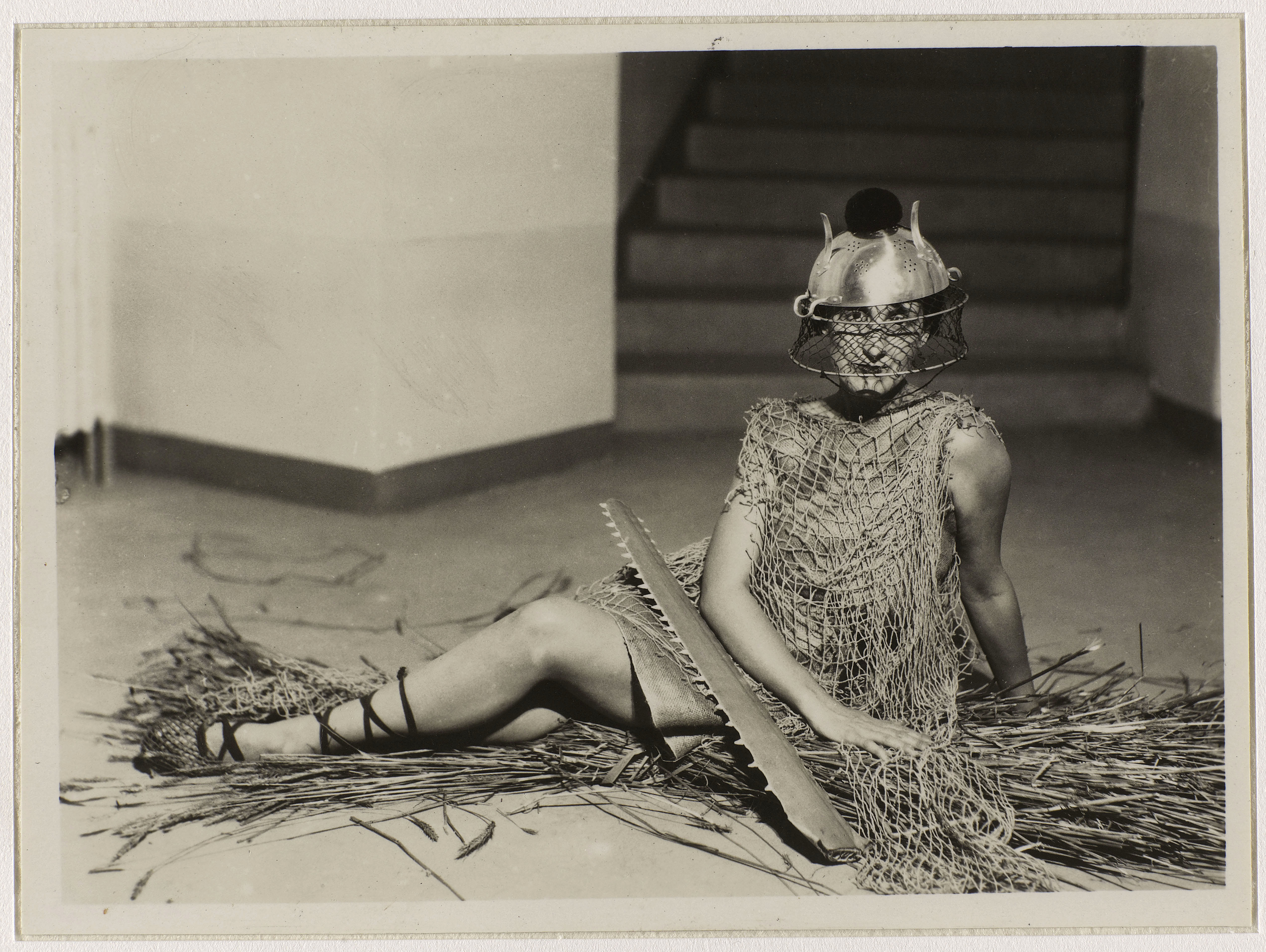
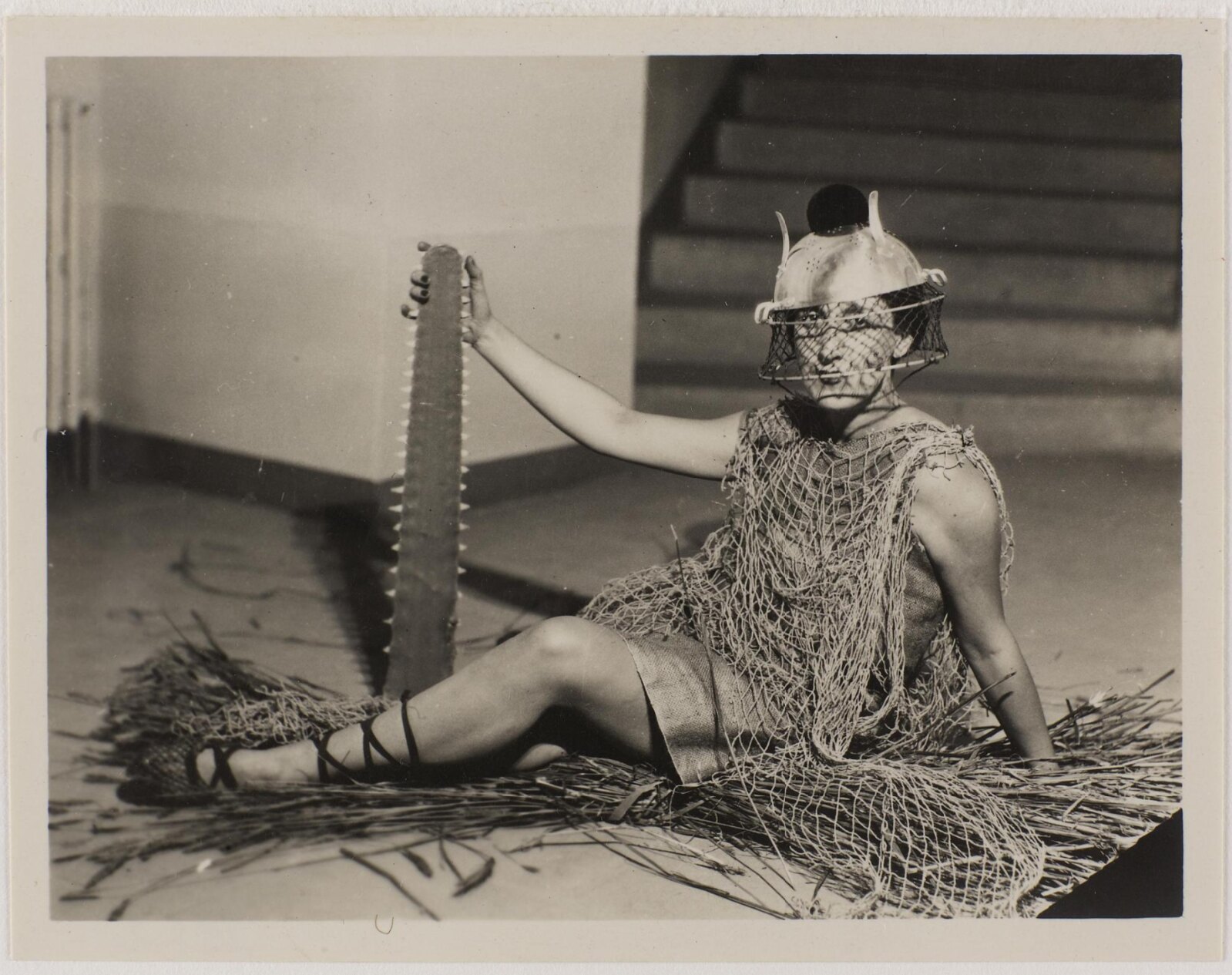
Man Ray (Emmanuel Radnitzky) :: Bal au château des Noailles, vers 1929. Epreuve gélatino-argentique. | src l’œil de la photographieMan Ray (Emmanuel Radnitzky) :: Bal au château des Noailles, vers 1929. [full image] | src l’œil de la photographieMan Ray (Emmanuel Radnitzky) :: Bal au château des Noailles, vers 1929. Epreuve gélatino-argentique. | src Centre Pompidou








 un regard oblique