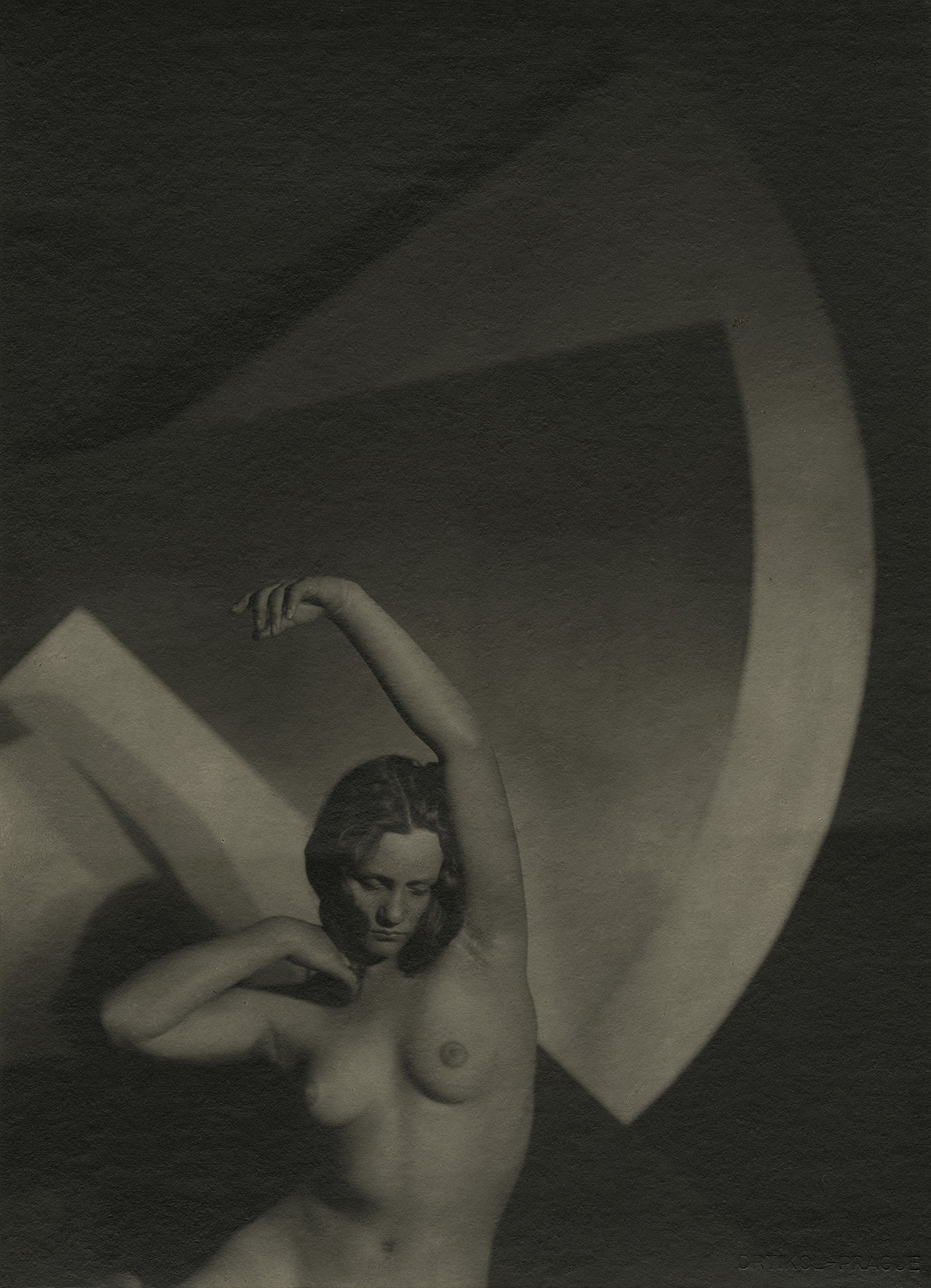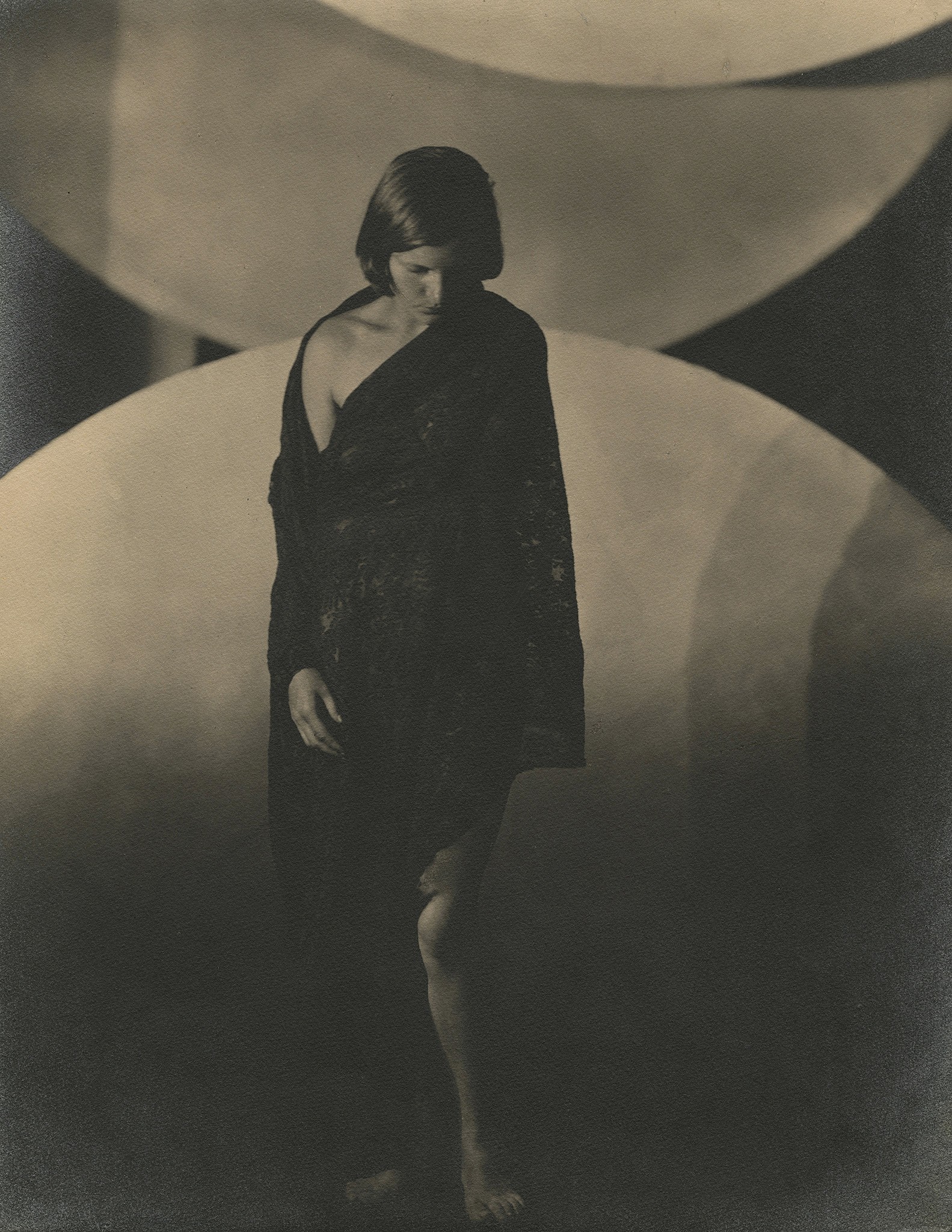
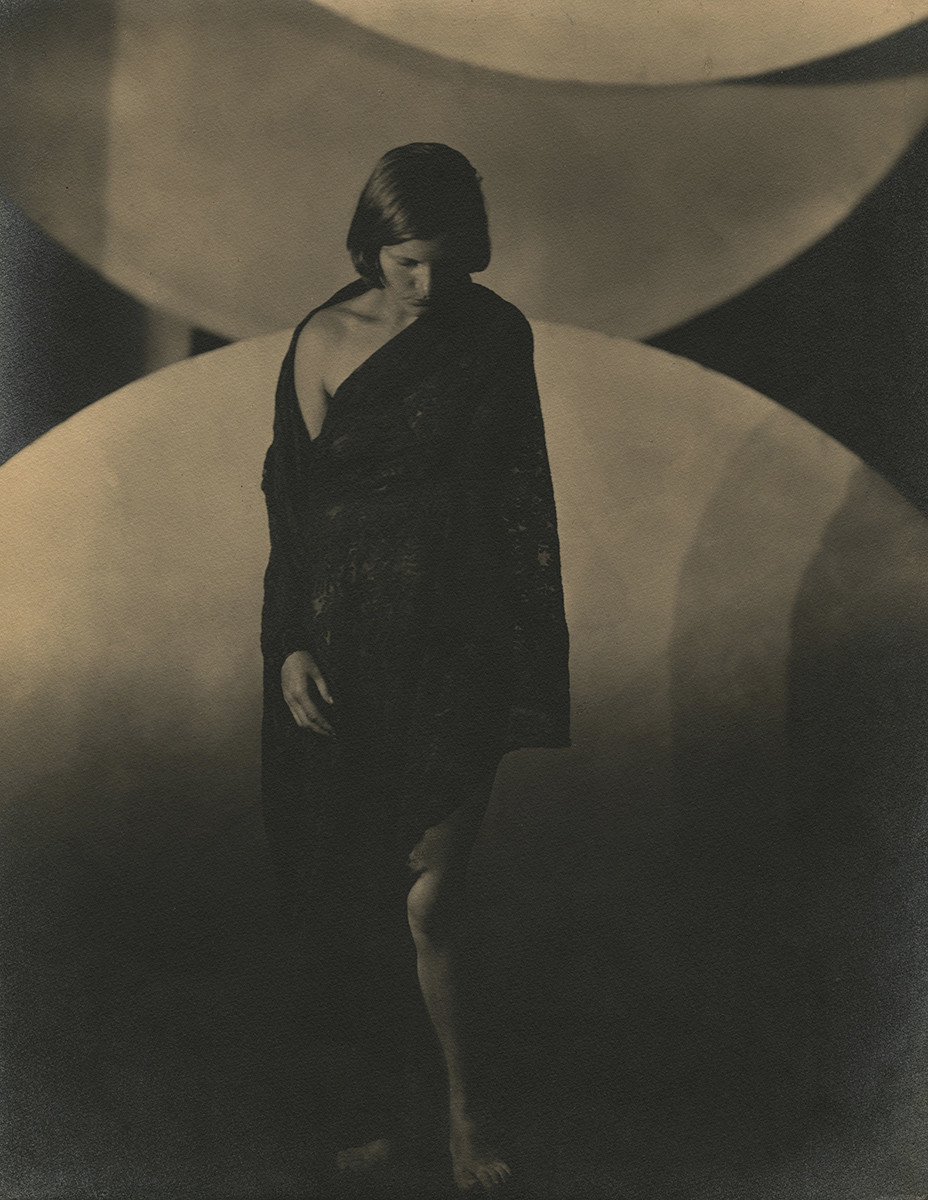
Pensive draped lady by Drtikol

František Drtikol (1883-1961) ~ Untitled, ca. 1923-29 | src Gitterman Gallery ~ Czech Avant-Garde (2023)
František Drtikol (1883-1961) ~ Untitled, ca. 1923-29. Courtesy Gitterman gallery | src ODLP ~ l’œil de la photographie

Drtikol modernist nudes

František Drtikol (1883-1961) ~ Untitled, 1927 (Carbon print) | src Gitterman Gallery ~ Czech Avant-Garde 2023

Czech Avant-Garde (2023) at Gitterman Gallery (NY)

Gitterman gallery presents a selection of avant-garde Czech photography with a focus on rare vintage works by two seminal figures, František Drtikol and Josef Sudek. Each created exquisite prints that added dimension to their innovative visions.

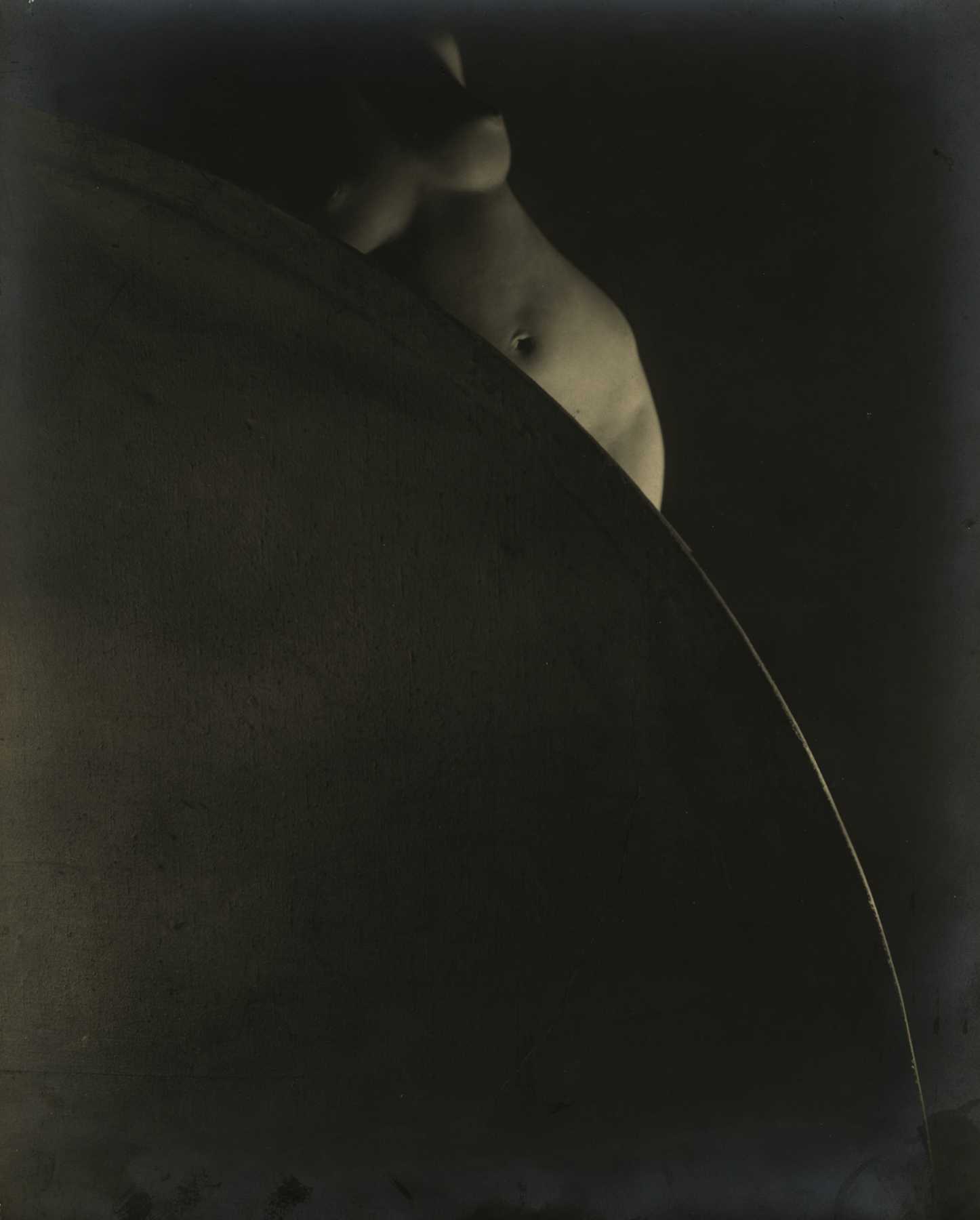
František Drtikol’s (1883-1961) photographs are distinctly emblematic of the Art Deco period (1920s and 30s) by merging styles of Symbolism, Pictorialism, and Modernism. These two photos are an example of his best known works: Pictorial images of nudes in Modernist (Art decó) stagings.
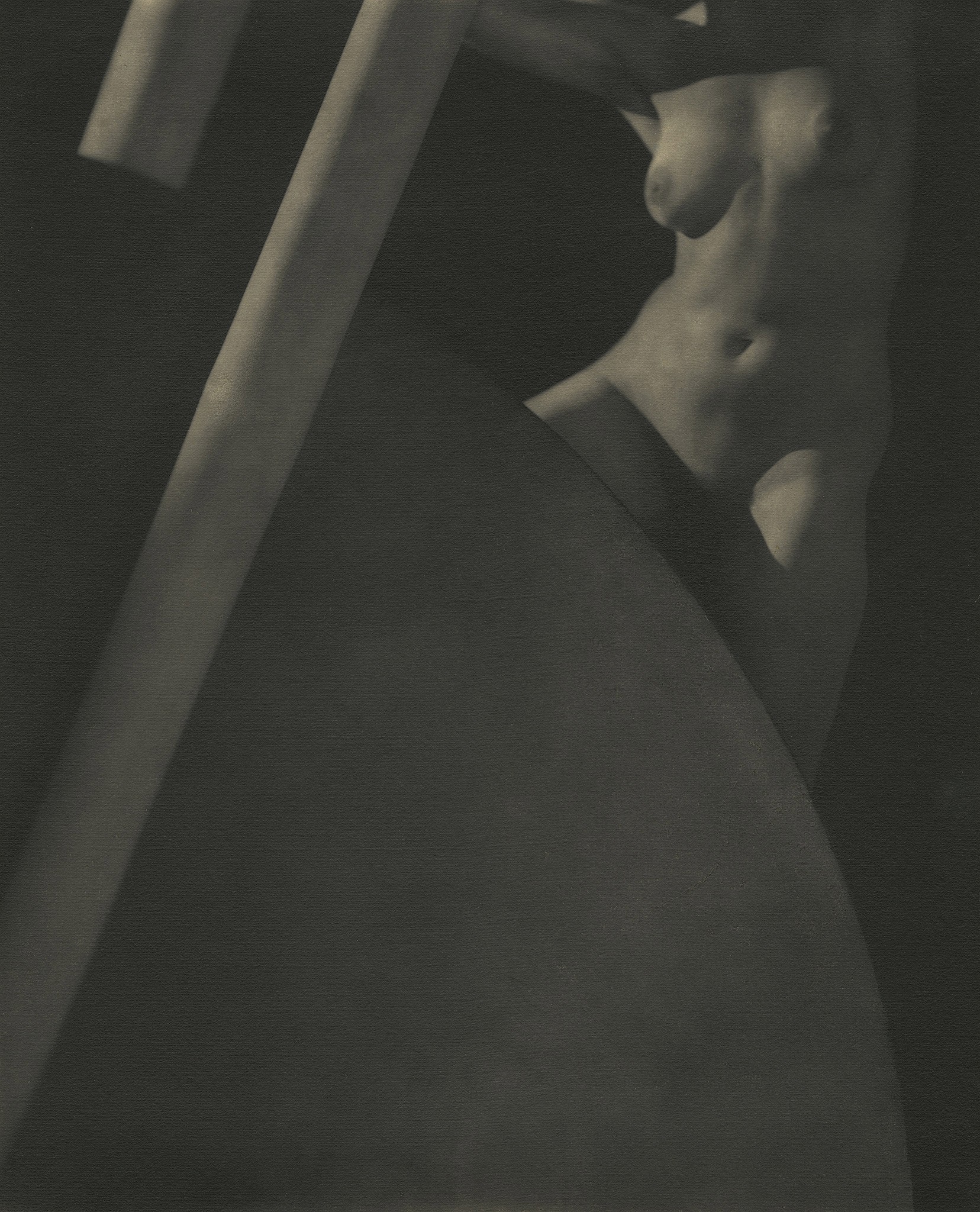
František Drtikol (1883-1961) ~ Kruh a Přímky (Circle and lines), 1926. Vintage pigment print, carbon. | src Gitterman gallery
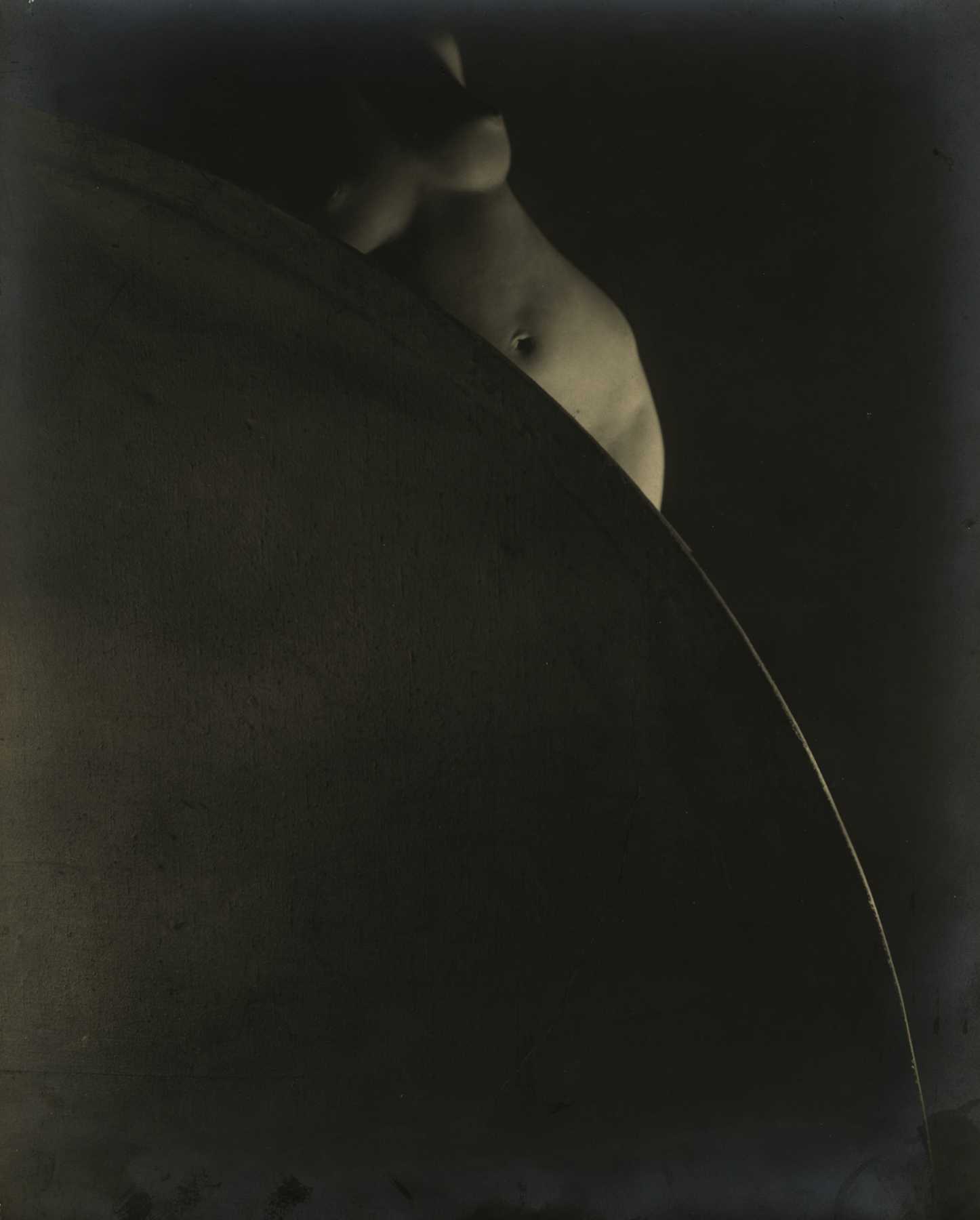
František Drtikol ~ Akt s dekoracio | Nude with quarter circle, ca. 1926. Bromoil print | src Galerie Kicken Berlin

2 Studie · Foto Salon Manasse

Atelier Manassé (active between 1922–1938) ~ ‘Studie’ (Posing with an artificial leg), ca. 1926 | src Ostlicht

Studio’s signature “Manassé Wien” in the negative, with a vintage paper label with typewritten mention “Zensuriert”. “Foto-Salon ‘Manassé'” copyright stamp, “Wiener Foto-Kurier” agency stamp as well as “Ag. Schostal” agency label, and annotated “Studie” in pencil on the reverse.
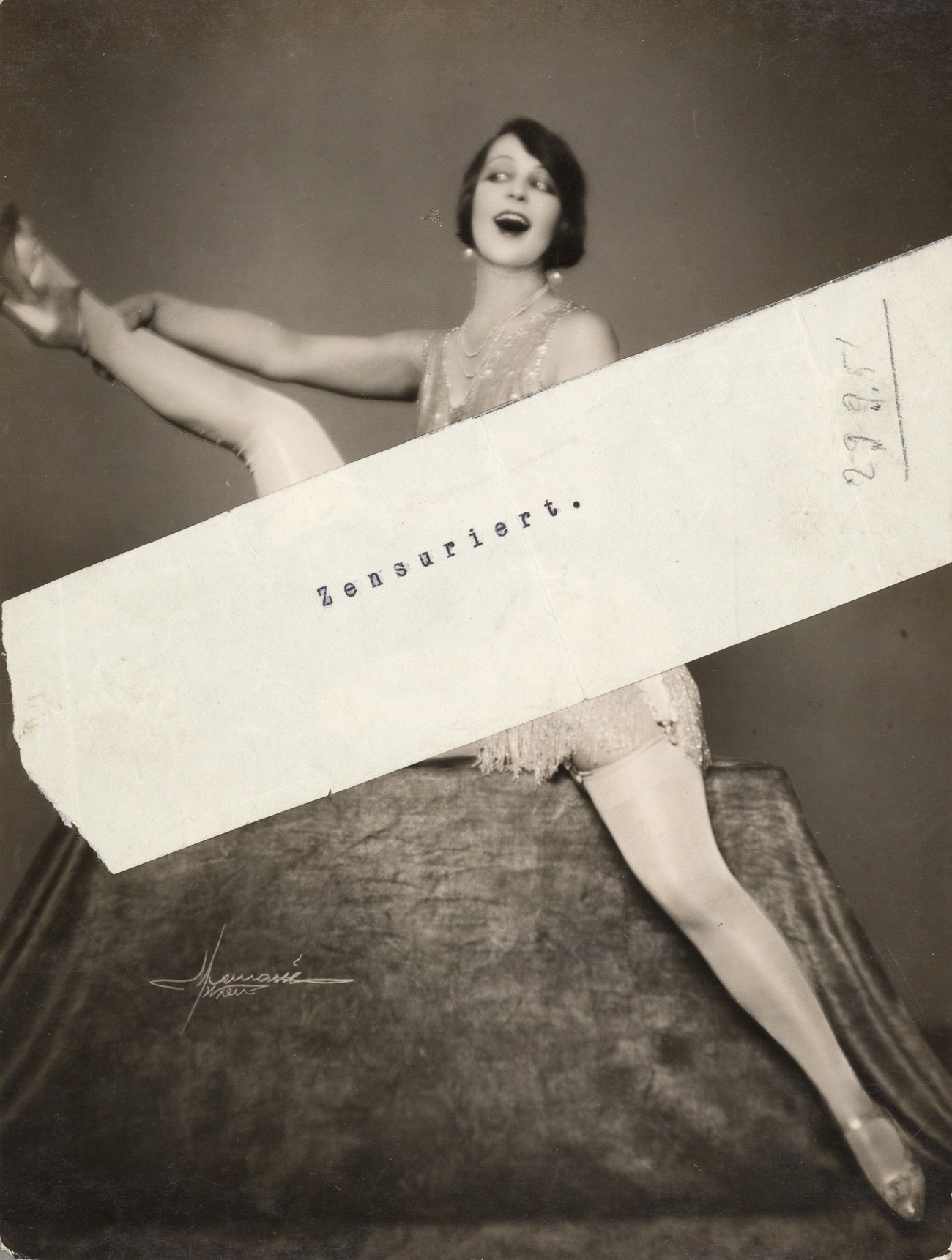
Atelier Manassé ~ ‘Studie’ (with a paper label with typewritten mention “Zensuriert”), ca. 1926. Vintage silver print | src Ostlicht
Atelier Manassé (active between 1922–1938) ~ ‘Studie’. Art Deco dance pose, ca. 1927 | src Ostlicht

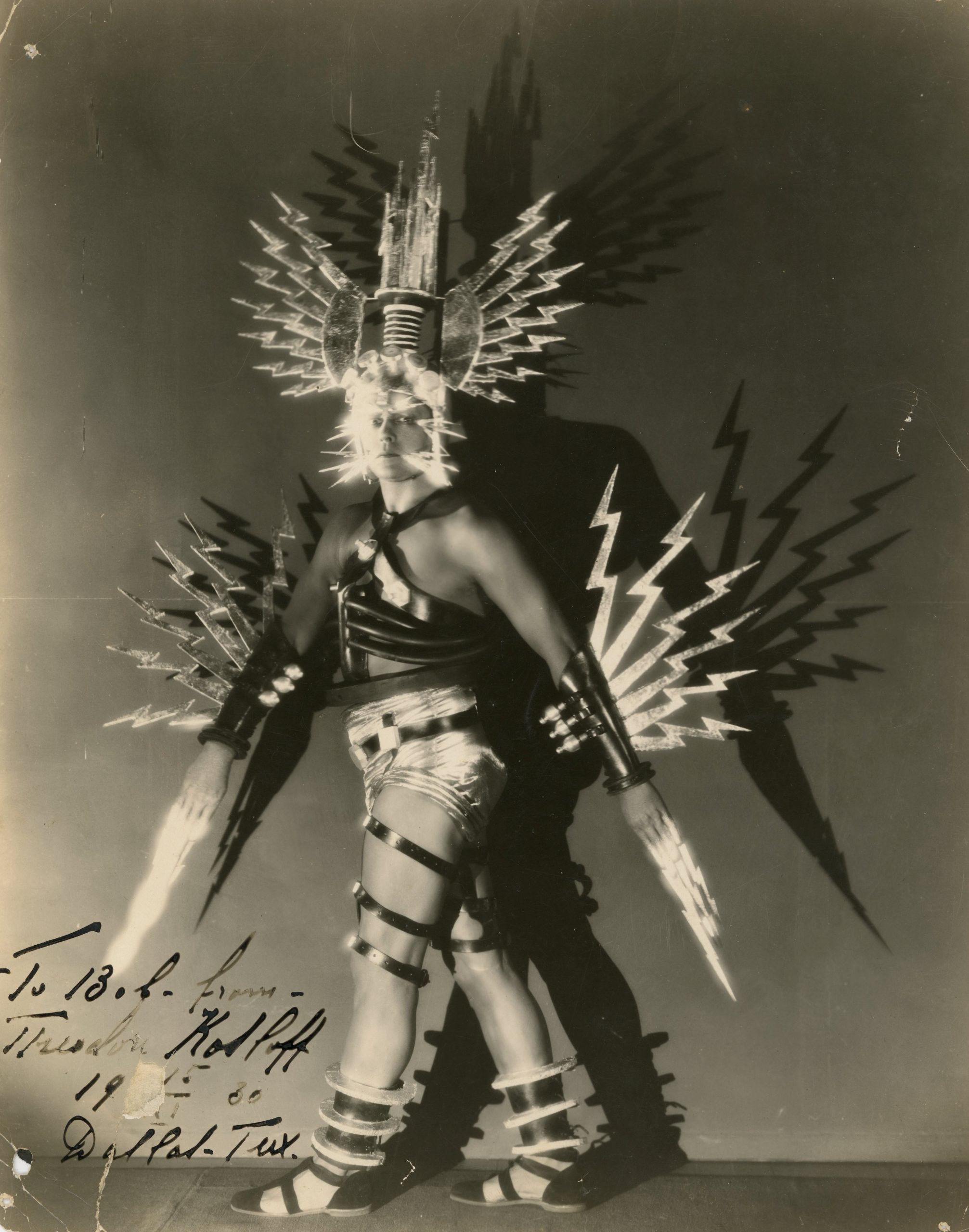
Electricity · Madam Satan

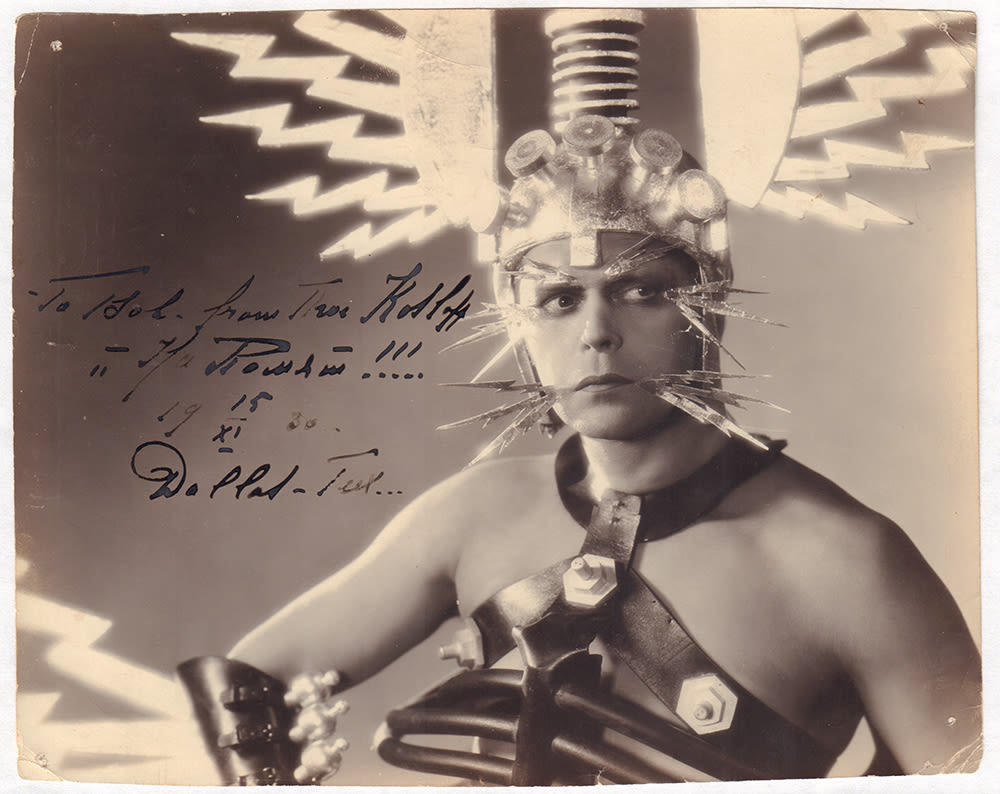
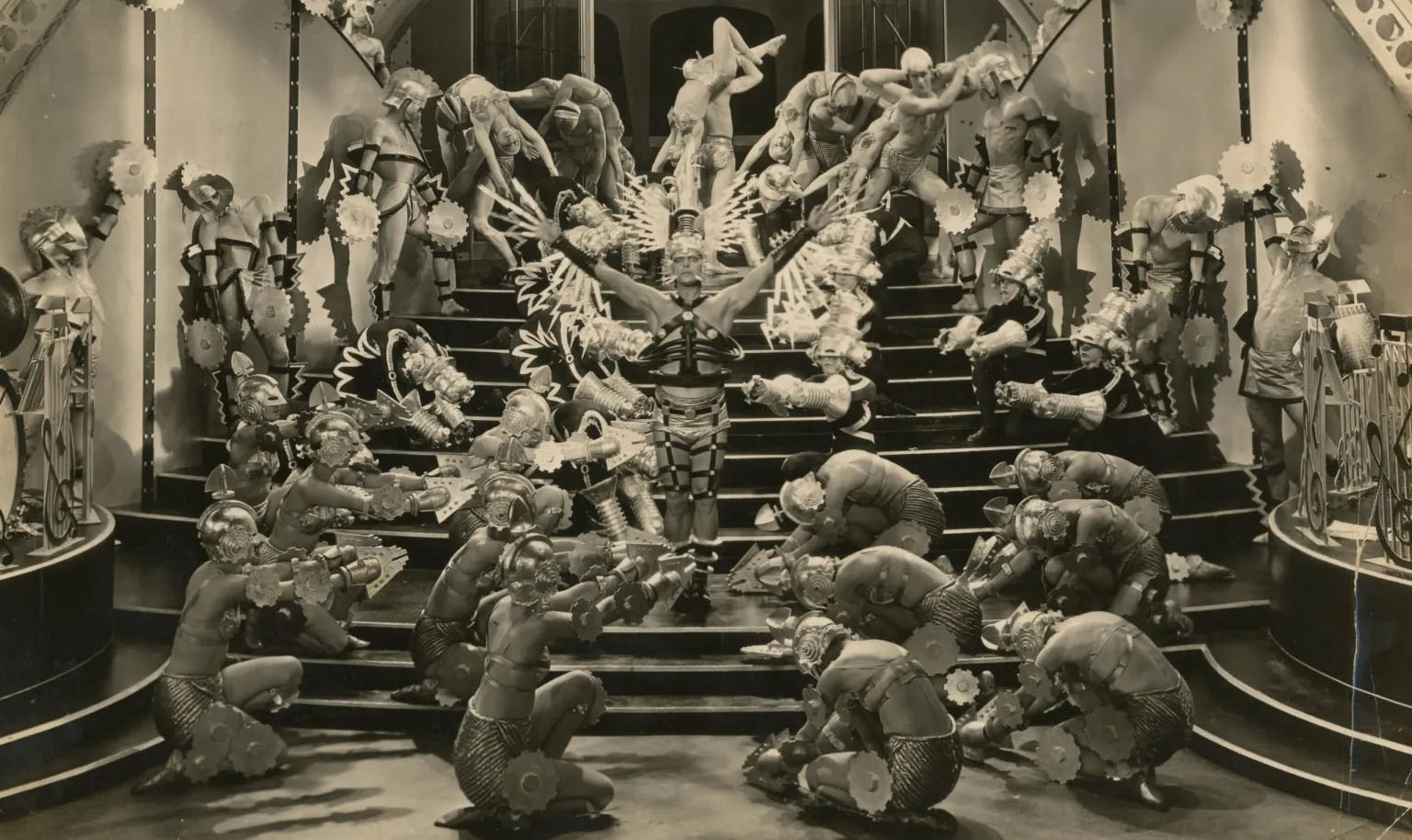
Theodore Kosloff dans un costume Electricity d’Adrian, pour la séquence de ballet intitulé Ballet Mécanique, dans Madam Satan, le film de Cecil B. DeMille, 1930
Madam Satan” film photograph featuring Theodore Kosloff as “Electricity”, 1930. | src Special Collections Research Center, George Mason University Libraries C0468
Madam Satan” film photograph featuring Theodore Kosloff as “Electricity” and a group of dancers dressed as turbines or generators for the ballet sequence entitled Ballet Mechanique. | src George Mason University Libraries

Drtikol · Composition w circle

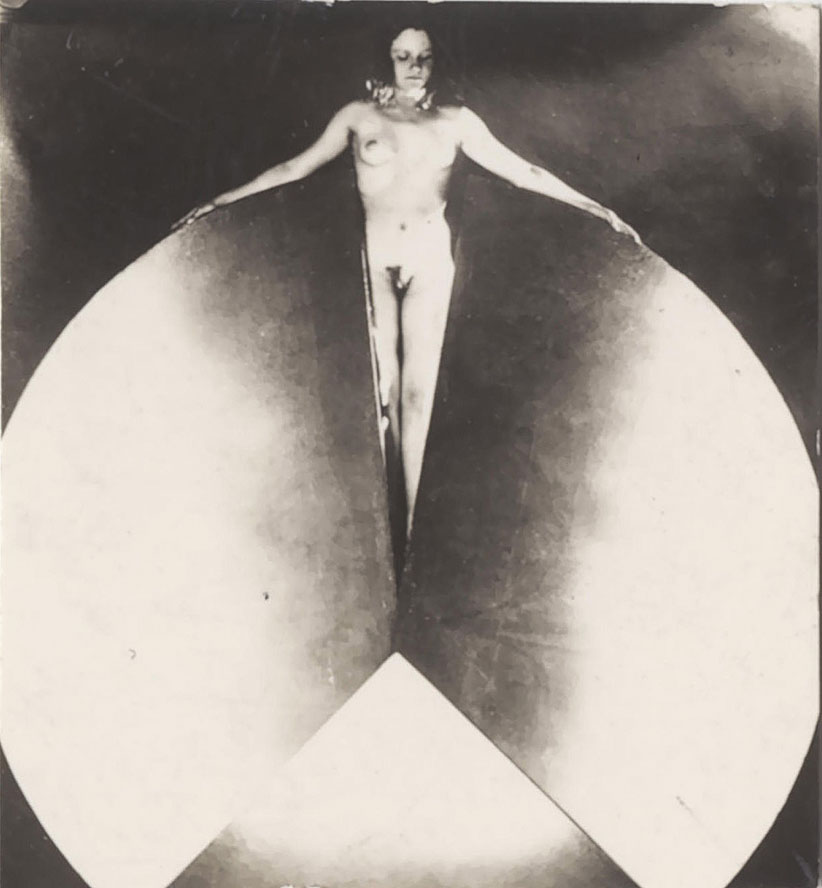
František Drtikol (1883 – 1961) ~ Untitled [Female nude with circular and triangular structures], 1924. Gelatin silver print. | src Christie’s
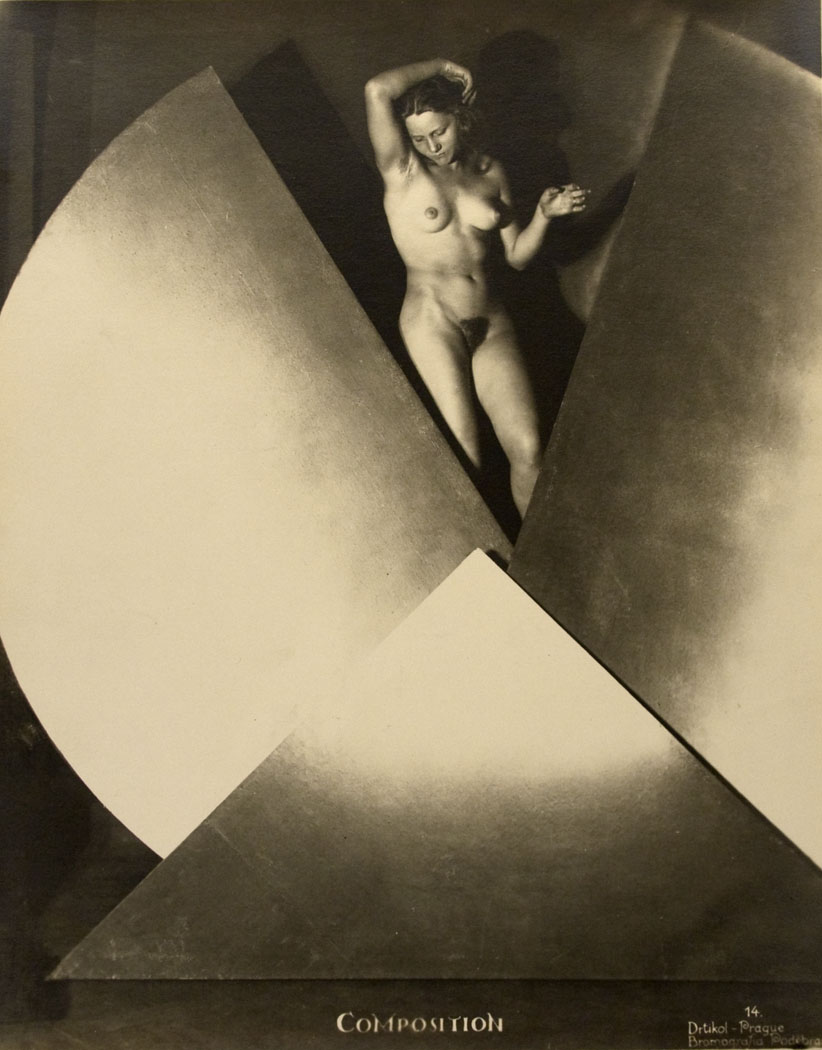
František Drtikol (1883 – 1961) ~ Composition # 14, 1925. Stamp of Bromografia Podebrady. | src The Baruch foundation

Cassandre poster design

A.M. Cassandre :: Poster for the Paris newspaper L'Intransigeant, designed by Cassandre, 1925. Collection of Philip B. Meggs Printer: Hachard & Cie., Paris | src MoMA
A.M. Cassandre :: Poster for the Paris newspaper L’Intransigeant, designed by Cassandre, 1925. Printer: Hachard & Cie., Paris | src MoMA

Cassandre (1901-1968) or A.M. Cassandre (the pseudonym of Adolphe-Jean-Marie Mouron) was a graphic artist, stage designer, and painter whose poster designs greatly influenced advertising art in the first half of the 20th century.

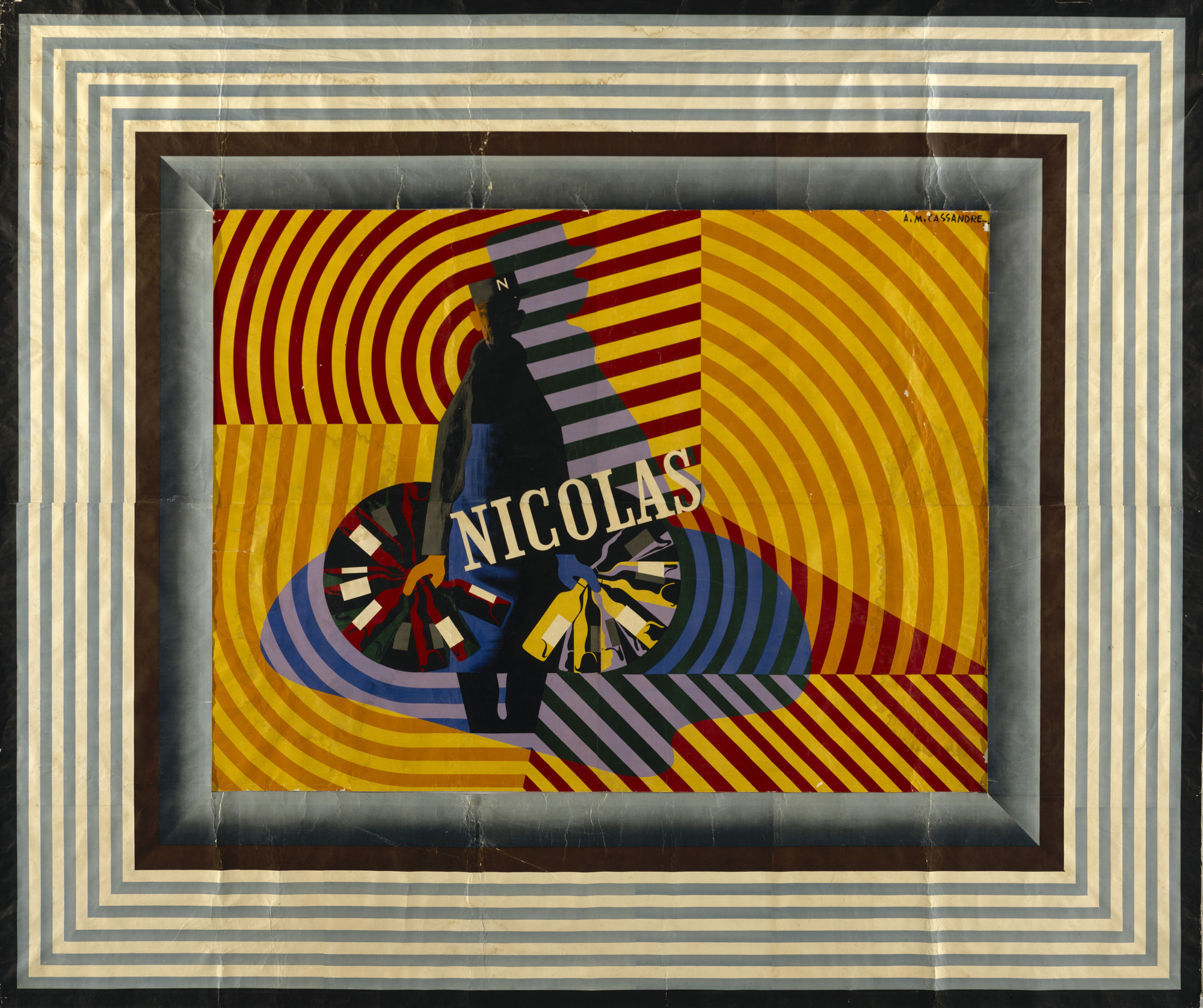
Cassandre used figurative geometry and modulated planes of colour, derived from Cubism, to revitalize postwar French poster design. From 1923 until 1936, Cassandre designed posters in which he reduced his subject matter to bold shapes and flat, modulated icons. He emphasized two-dimensional pattern, and he integrated lettering with his imagery to make a unified overall composition. Cassandre also utilized airbrushed blends and grading to soften rigid geometry. 

A.M. Cassandre (Adolphe Mouron, 1901-1968)
A.M. Cassandre (Adolphe Mouron, 1901-1968) :: 1932 version of the “Dubonnet” poster. Alliance Graphique, Paris. | src Rennert Gallery

Cassandre gained a reputation with such posters as “Étoile du Nord” (1927) and “Dubo Dubon Dubonnet” (1932). The Dubonnet posters were among the earliest designed specifically to be seen from fast-moving vehicles, and they introduced the idea of the serial poster, a group of posters to be seen in rapid succession to convey a complete idea.

In 1926 Cassandre cofounded the advertising agency Alliance Graphique and soon turned his attention to experimental typography. He designed three typefaces: Bifur (1929), Acier Noir (1935) and Piegnot (1937). In 1939 he abandoned poster art and henceforth devoted himself to designing stage sets and to painting.

quoted from Encyclopædia Britannica
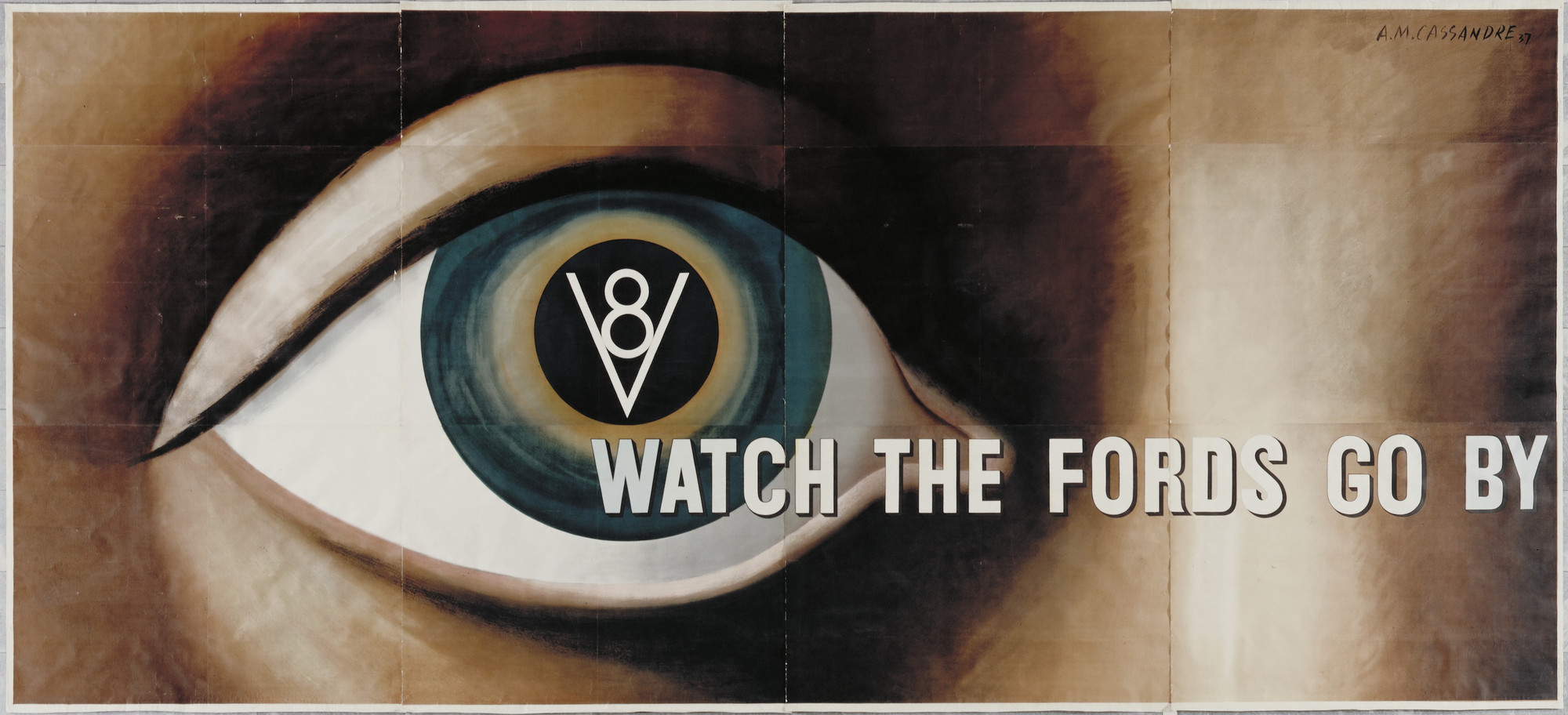
A.M. Cassandre :: Watch the Fords Go By (Poster for Ford Motor Company), 1935 | src MoMA

Ford was the first manufacturer to develop a V8 engine—previously associated with luxury and specialist cars—for a mass market. In employing Cassandre, Ford infused its corporate reputation for industrial innovation with the artistic cachet of European modernism. Cassandre was already established as a preeminent French poster designer and in 1936 he had become the first graphic artist to have a solo exhibition at MoMA. This compelling image of a disembodied, all-seeing eye is rooted in a classical tradition that emphasizes the primacy of vision in Western culture; the eye is also prevalent in Surrealist art of the 1920s. Trailing from the iris, the slogan “Watch the Fords Go By” gives a sense of modern vision, always in motion, while the V8 icon imprinted on the pupil suggests a fusion of mind, body, and technology—a synthesis that revolutionized individual perception in the modern world.

Gallery label from Shaping Modernity: Design 1880-1980, December 23, 2009–July 25, 2010 (MoMA)
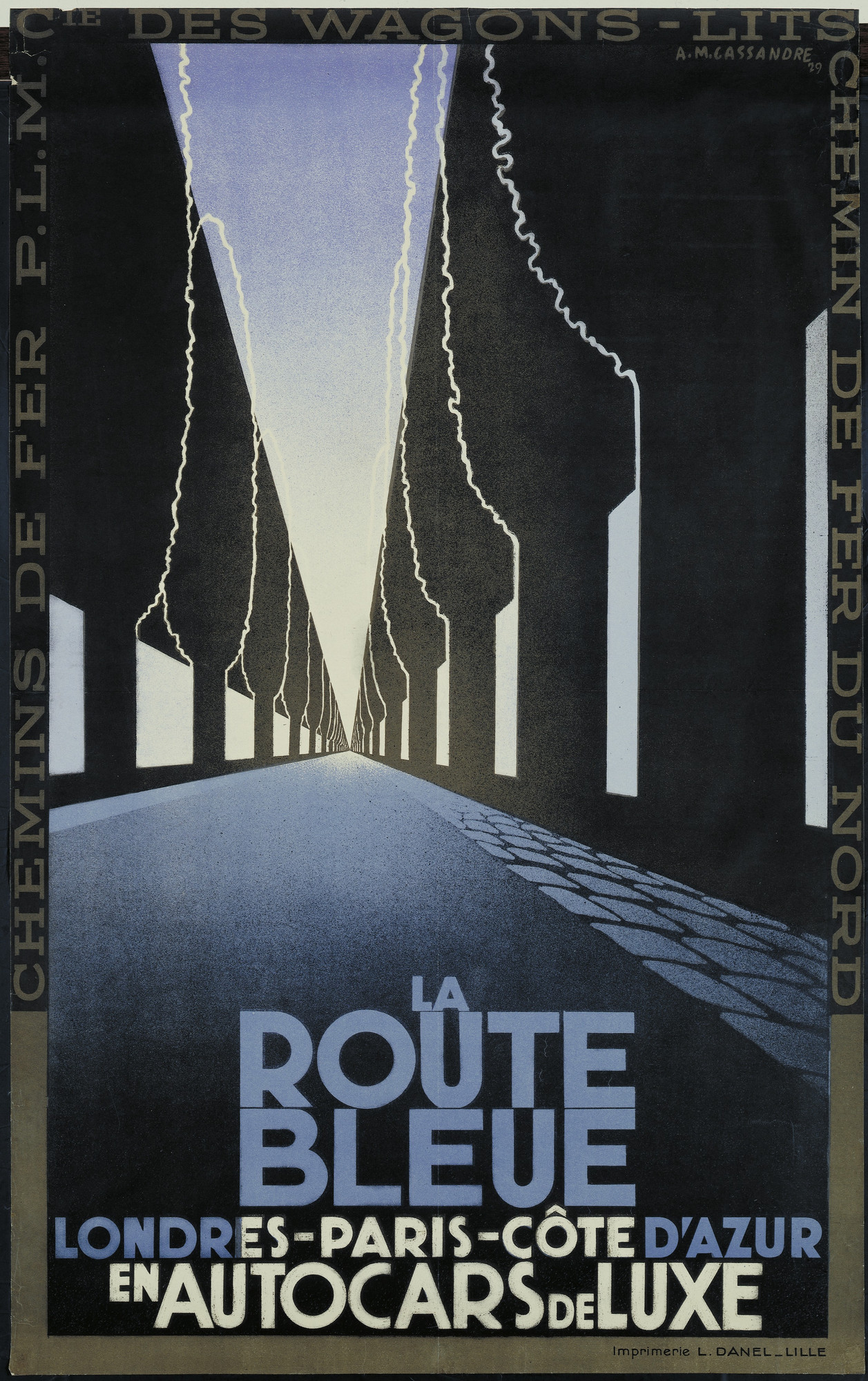
A.M. Cassandre :: La Route Bleu, Londres-Paris-Côte d’Azur en Autocars de Luxe, 1929 | MoMA
A.M. Cassandre :: Fêtes de Paris, 1935. | MoMA
A.M. Cassandre :: Nicolas, 1935 | src MoMA

Art deco hat by Agnès

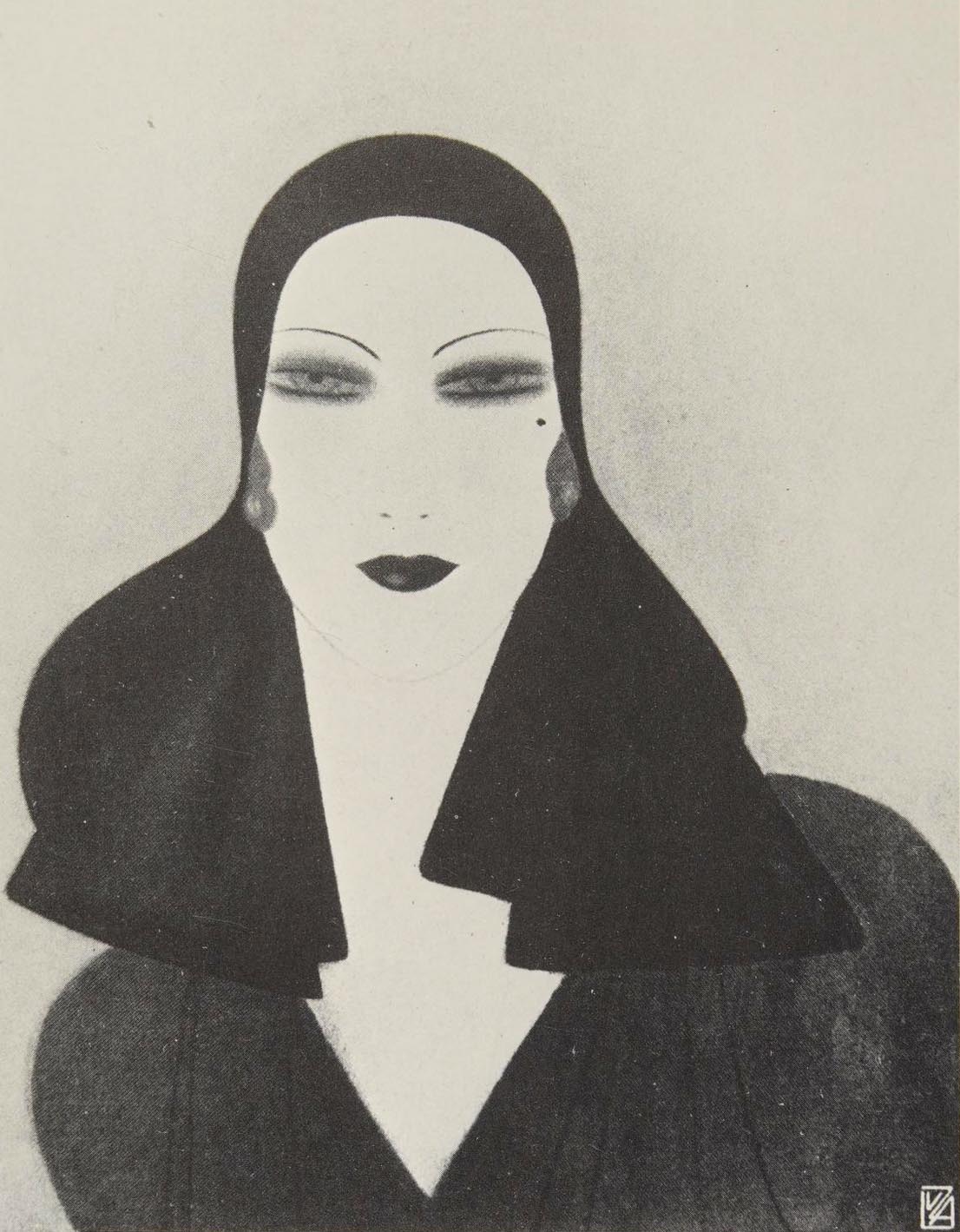
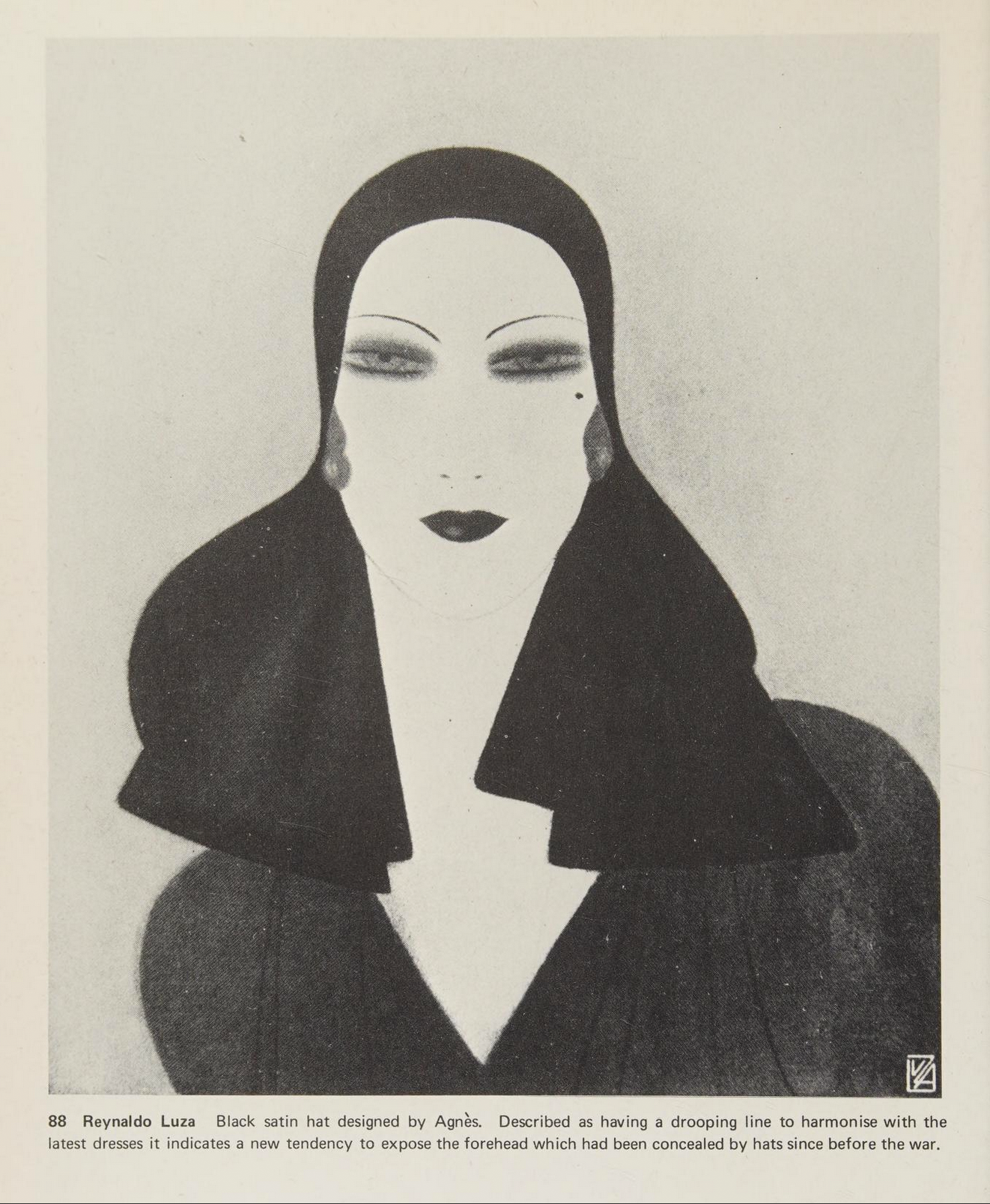
Reynaldo Luza. Black satin hat designed by Agnès. From : Art deco fashion : French designers 1908-1925. | src internet archive
Reynaldo Luza. Black satin hat designed by Agnès. From : Art deco fashion : French designers 1908-1925. Martin Battersby. London : Academy Editions ; New York : St. Martin's Press. 1974 | src internet archive
From : Art deco fashion : French designers 1908-1925. Martin Battersby. London : Academy Editions ; New York : St. Martin’s Press. 1974 | src internet archive

Nude studies · A·N Studio

Étude de nu féminin, ca. 1905-1930. Tirage argentique d’époque, sur papier cartoline, cachet du studio A·N (Alfred Noyer) et numéro 77 dans l’image. | src Millon ~ Artprecium
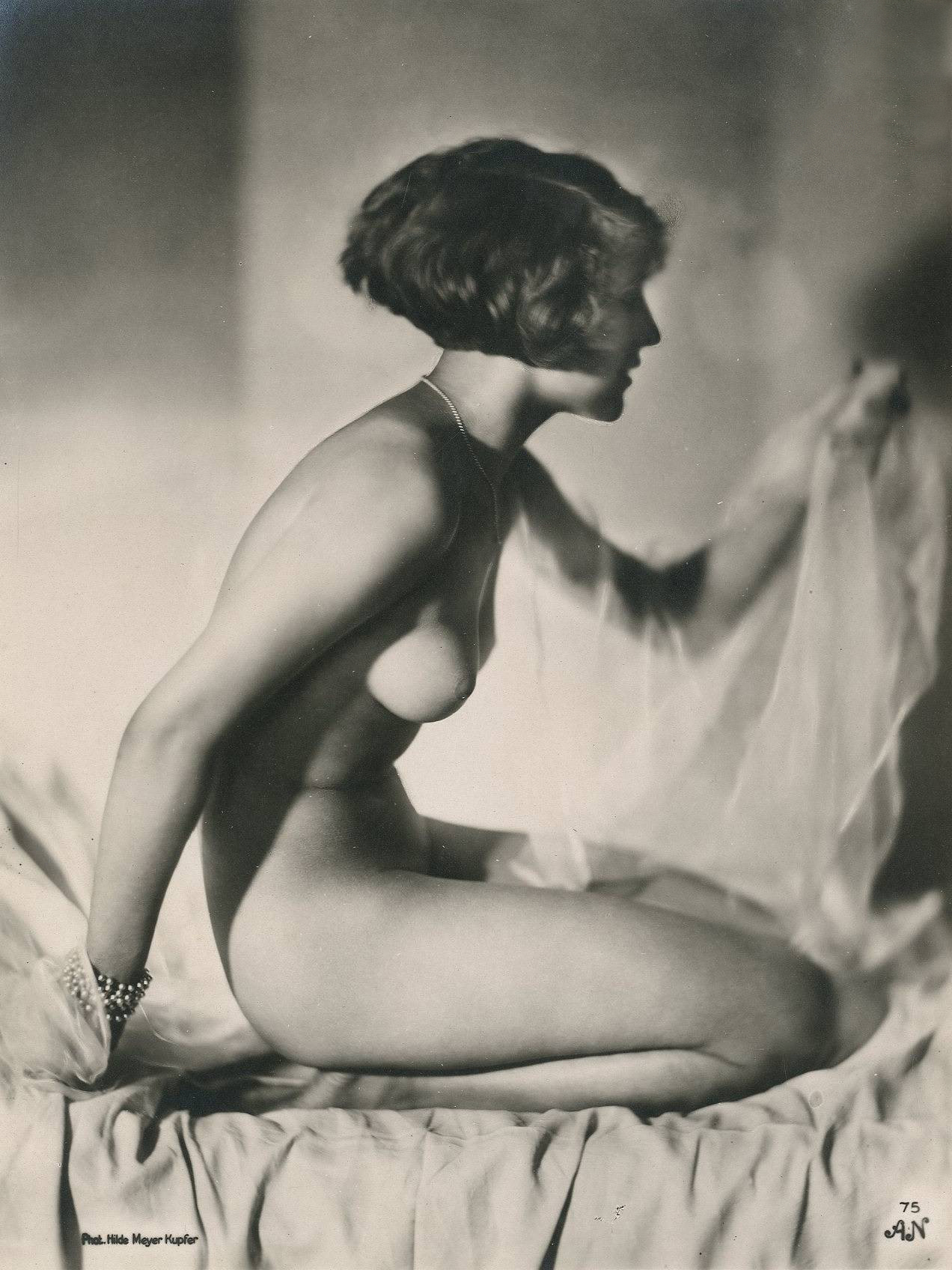
Étude de nu féminin, ca. 1905-1930. Tirage argentique d’époque, sur papier cartoline, cachet du studio A·N (Alfred Noyer) et numéro 75 dans l’image. Phot. Hilde Meyer Kupfer. | src Millon ~ Artprecium
Étude de nu féminin, ca. 1905-1930. Tirage argentique d’époque, sur papier cartoline, cachet du studio A·N (Alfred Noyer) et numéro 78 dans l’image. | src Millon ~ Artprecium
Étude de nu féminin, ca. 1905-1930. Tirage argentique d’époque, sur papier cartoline, cachet du studio A·N (Alfred Noyer) et numéro 85 dans l’image. | src Millon ~ Artprecium

Zwei Tänzer by Antios, 1920s

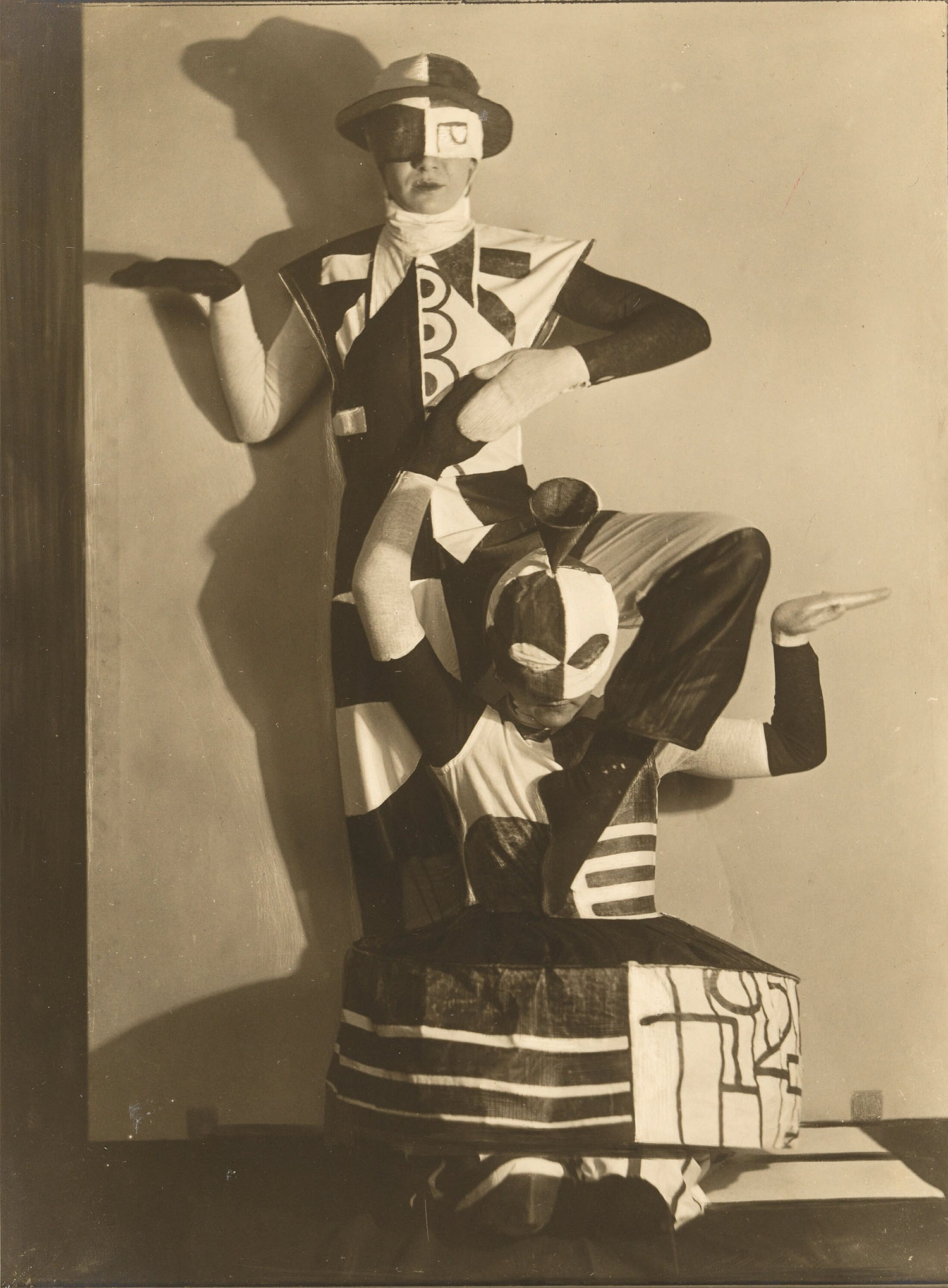
Anton Josef Trčka (auch Antios) ~ Zwei unbekannte Tänzer in Fantasiekostümen, 1920-1930. Silbergelatinepapier auf Untersatzpapier, braungetont. | src Wien Museum
Anton Josef Trčka (auch Antios) ~ Zwei unbekannte Tänzer in Fantasiekostümen, 1920-1930. Silbergelatinepapier auf Untersatzpapier, braungetont | src Wien Museum
Anton Josef Trčka (auch Antios) ~ Two unknown dancers in fantasy costumes, 1920s; gelatin silver print | src Wien museum

Modernist nude by Drtikol

František Drtikol :: Akt s dekoracio | Nude with quarter circle, ca. 1926. Gelatin silver bromide print. From the exhibition 1974. 40 years… 40 photographs. | src Galerie Kicken Berlin