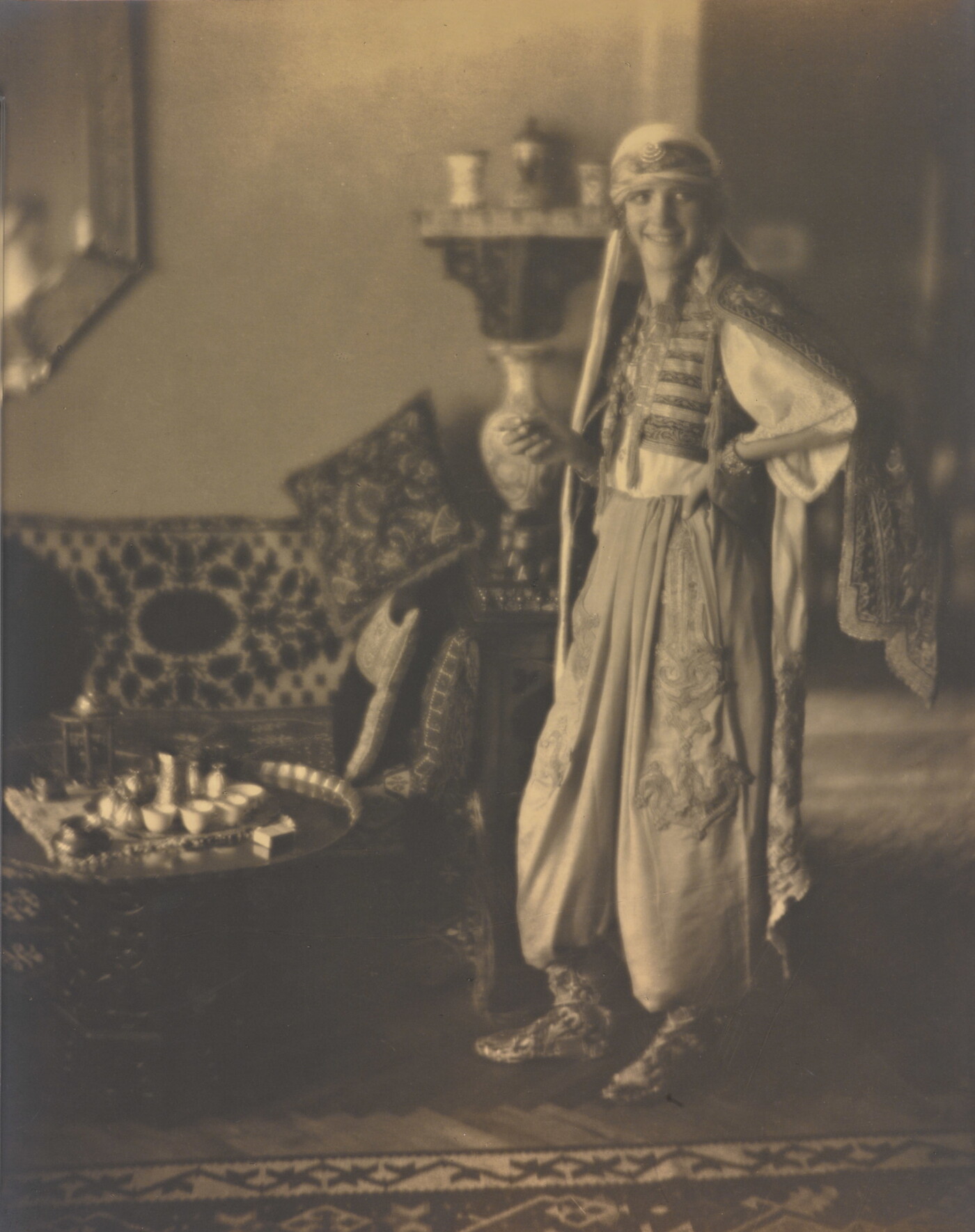
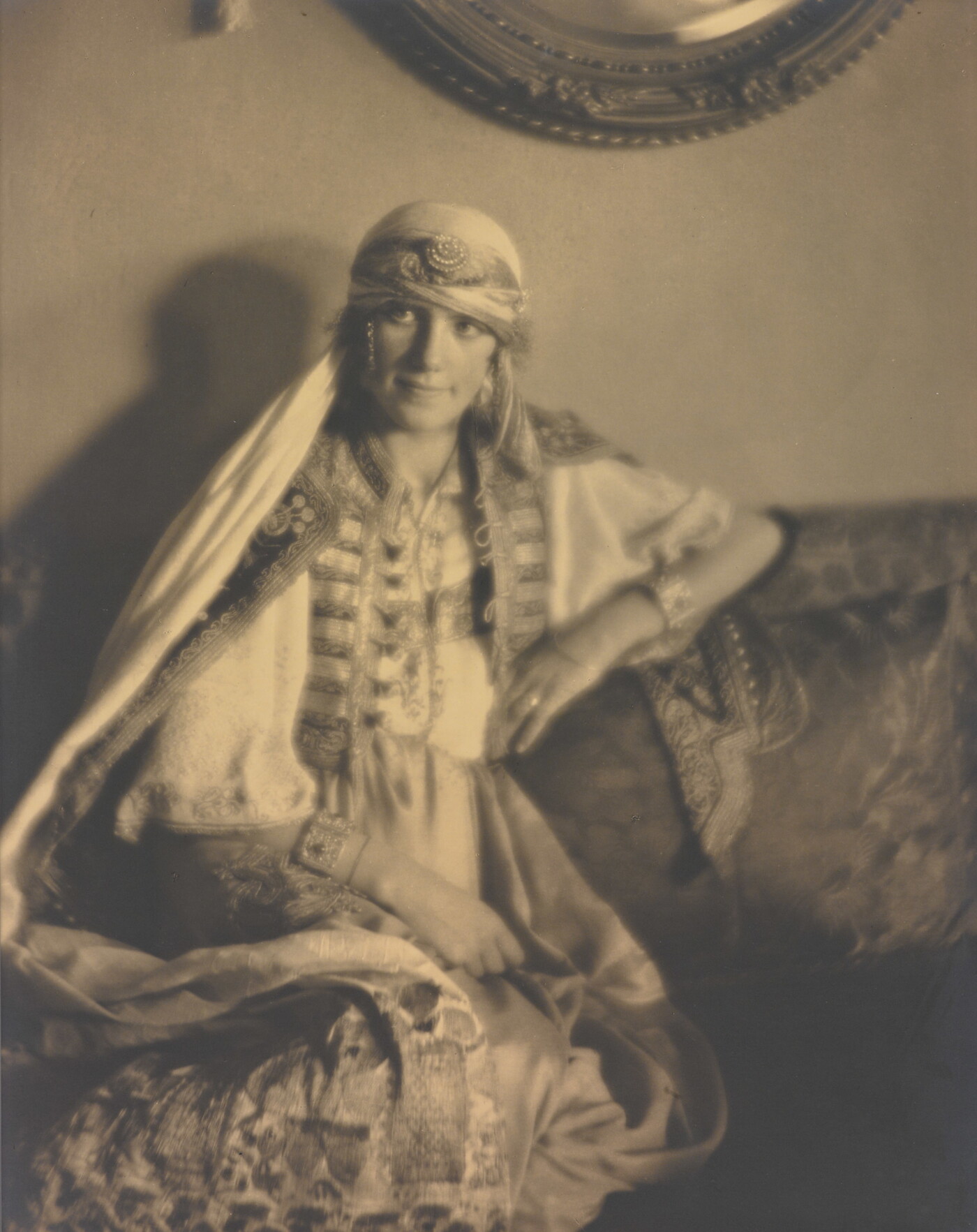
![Clara E. Sipprell (1885-1975) :: [Two women in Turkish dress drinking coffee], 1924. Amon Carter Museum](https://live.staticflickr.com/65535/52201694082_5a2b8c4748_o.jpg)
images that haunt us
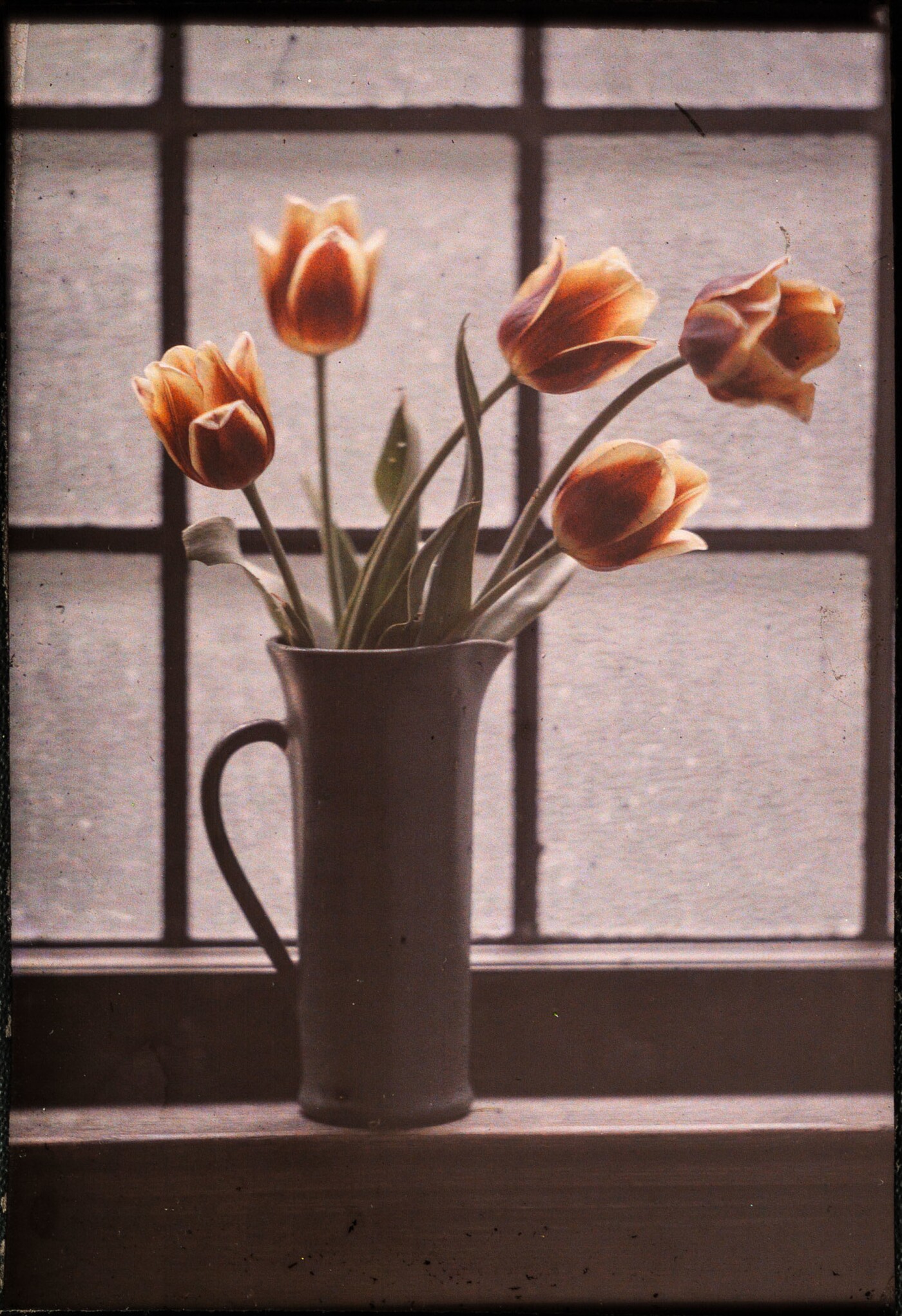

(*) Additive Color Screen Plate or Screen Plate were known commonly by the product name: Autochrome, Filmcolor, Lumicolor, Alticolor. Used mainly between 1907 and 1935. Initially it has a glass support; later products on film supports. This process was the first fully practical single-plate color process. The Autochrome plate or Screen plate could record both saturated and subtle colors with fidelity, and since the screen and the image were combined, there were no registration problems. Nonetheless, it had its drawbacks: the exposure times were long, and the processed plates were very dense, transmitting only less than the 10% of the light reaching them.
The result is a soft, subdued, dreamy colored image. And grainy. Although the starch grain filters were microscopically small their random distribution meant that inevitably there would be clumping of grains of the same color.
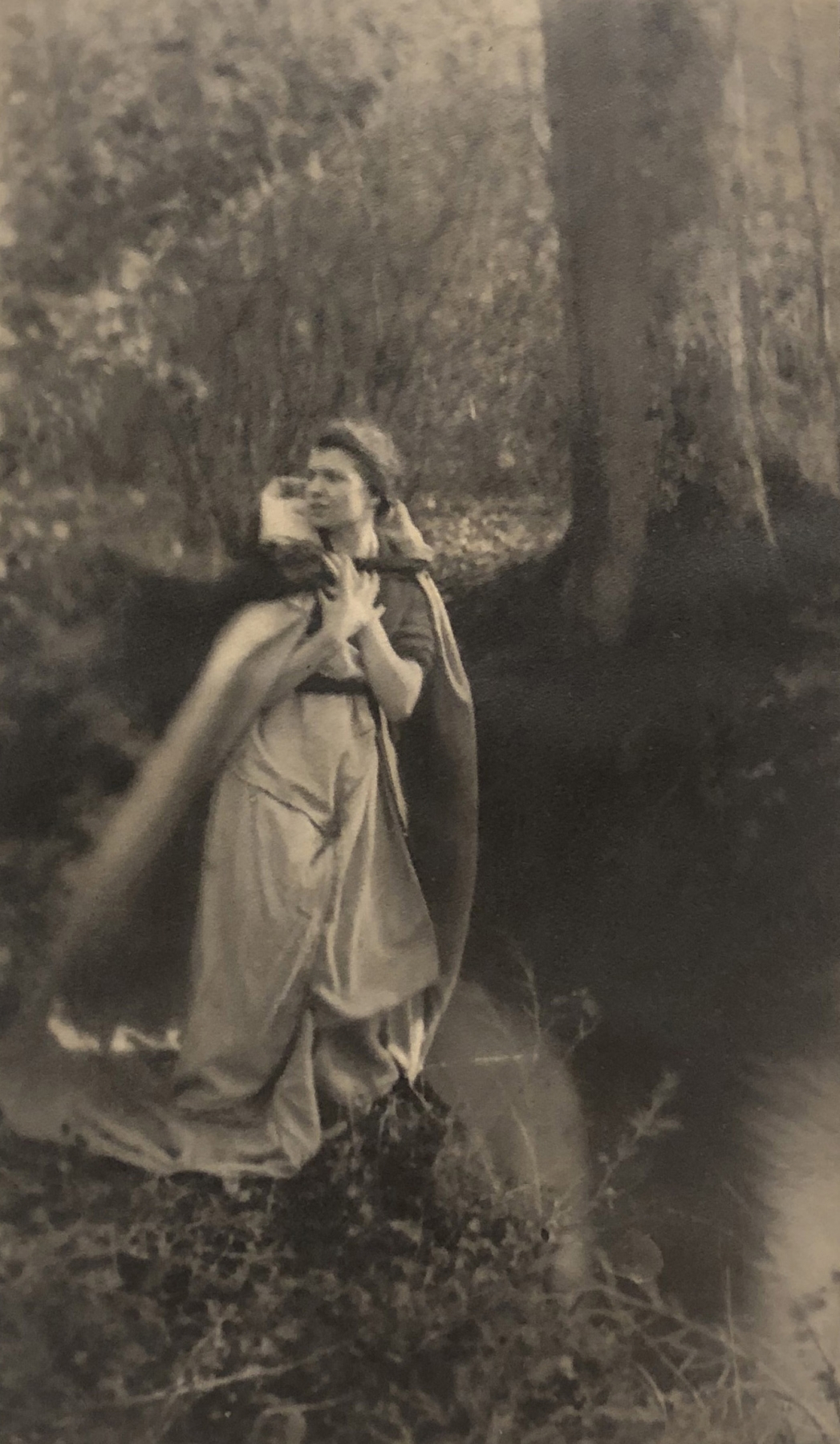
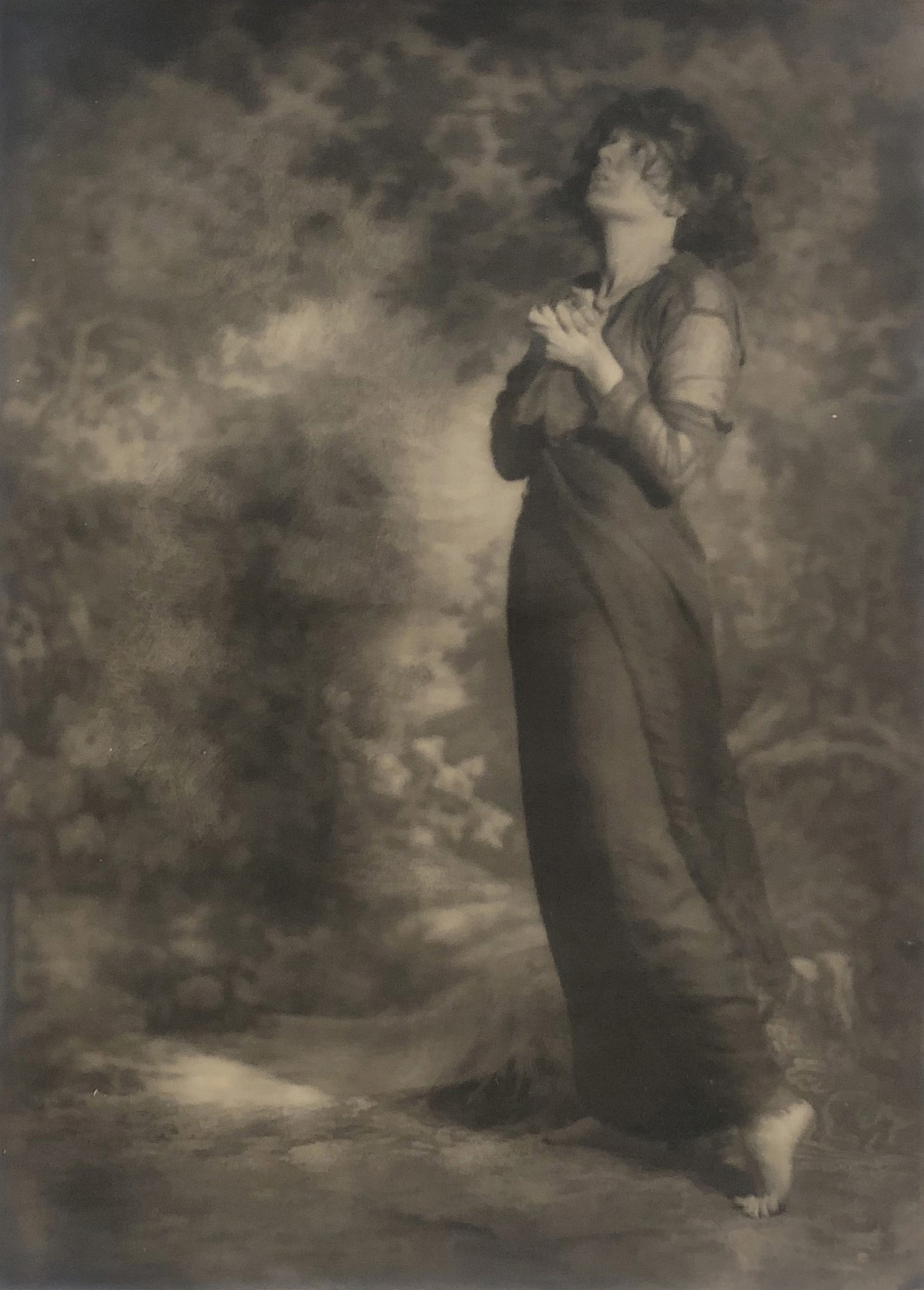


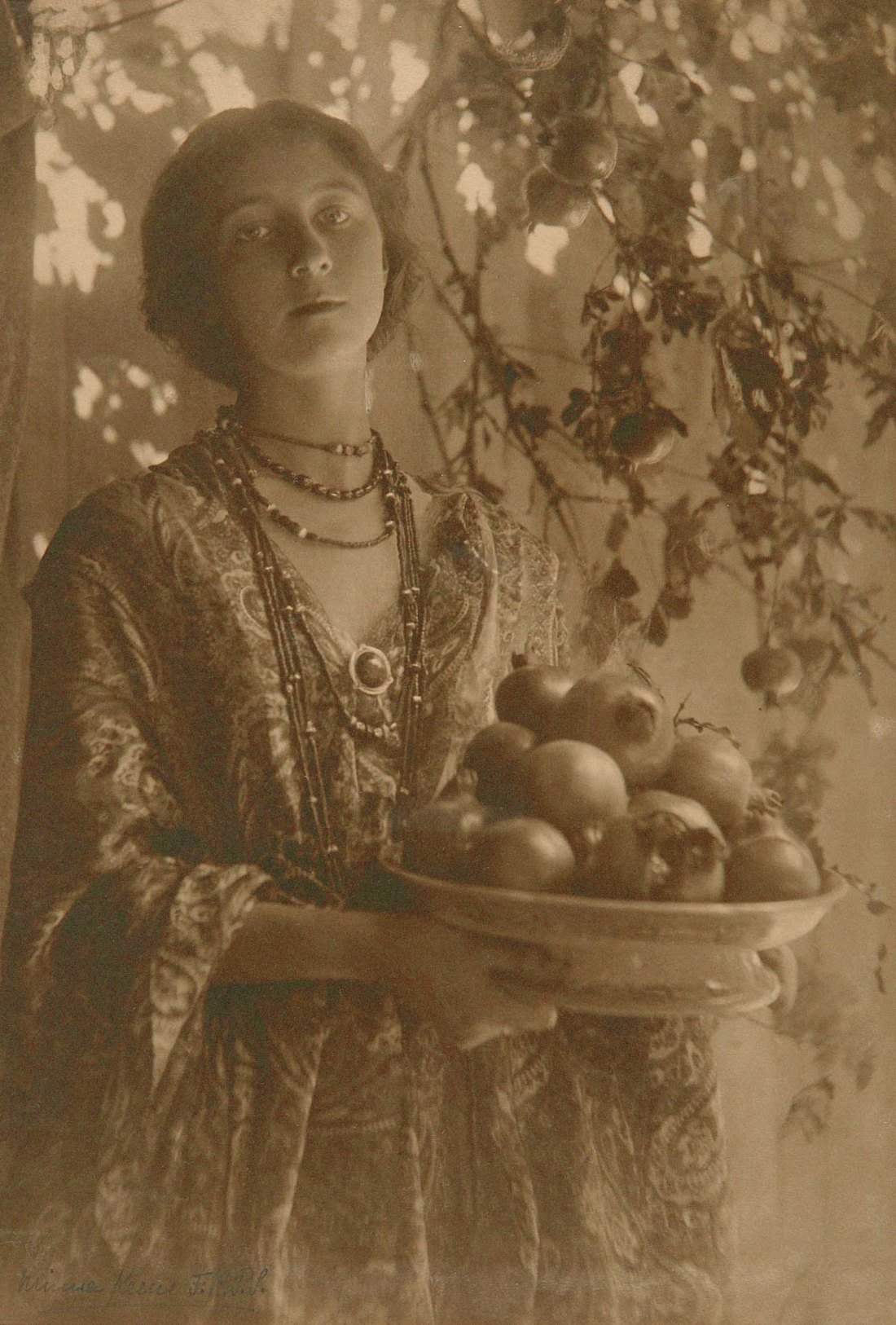
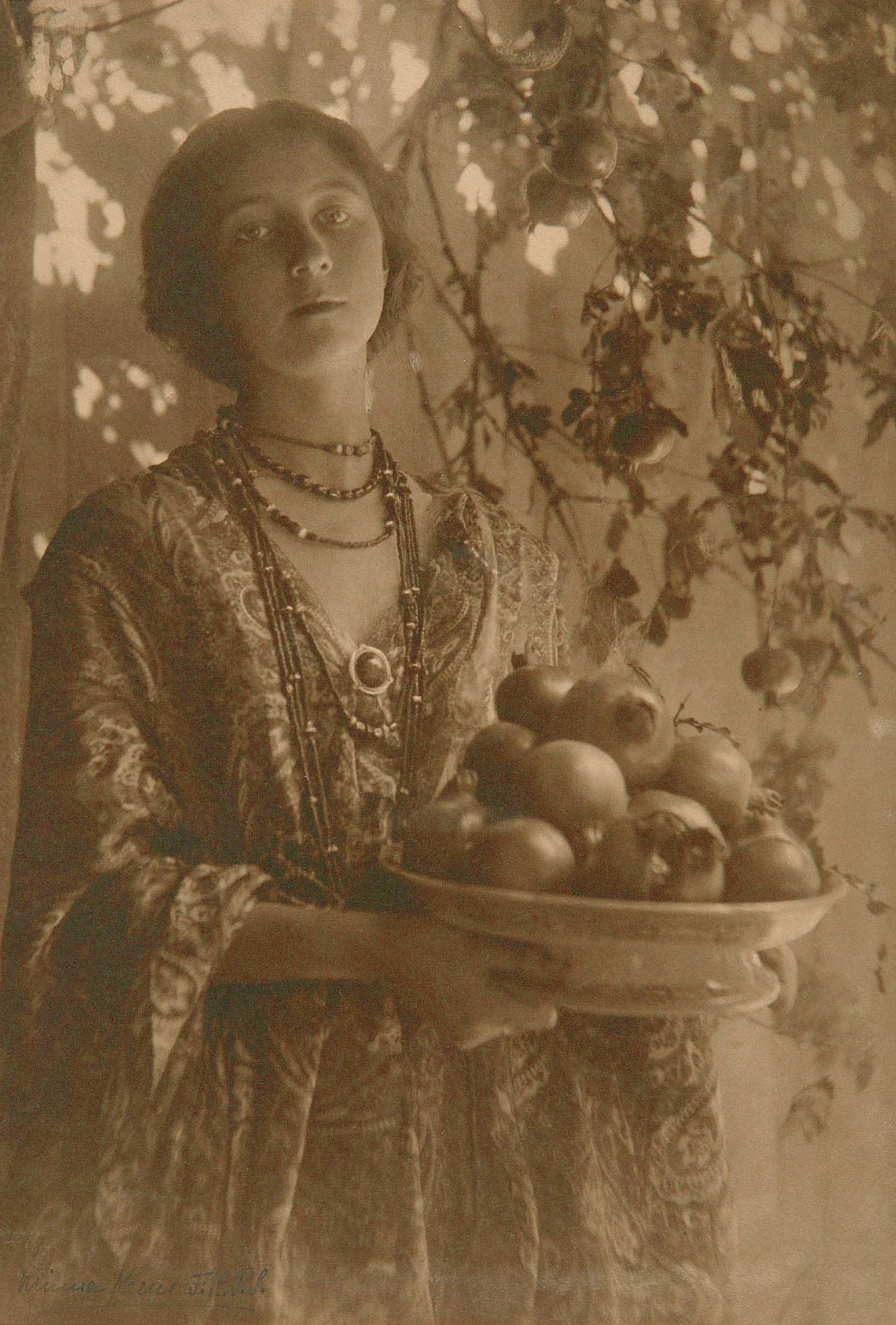

The subject of this photograph is believed to be of Violet Keene, Minna Keene’s daughter, according to Getty Images.

A fine example of a signed exhibition-quality image of one of Minna Keene’s most famous of images, taken at her home in Cape Town. Using her young daughter Violet as the model, she created an iconic Pre-Raphaelite image, combining the beauty of a young girl with nature. This image was included in the famous Tate London Exhibition in 2016, Painting with Light alongside Julia Margaret Cameron, Millais, Emerson, Goodall, Hacker, Rossetti, and others. In 1911, “Pomegranates” was awarded Picture of the Year at the London Photographic Salon. [quoted from source]


 un regard oblique