
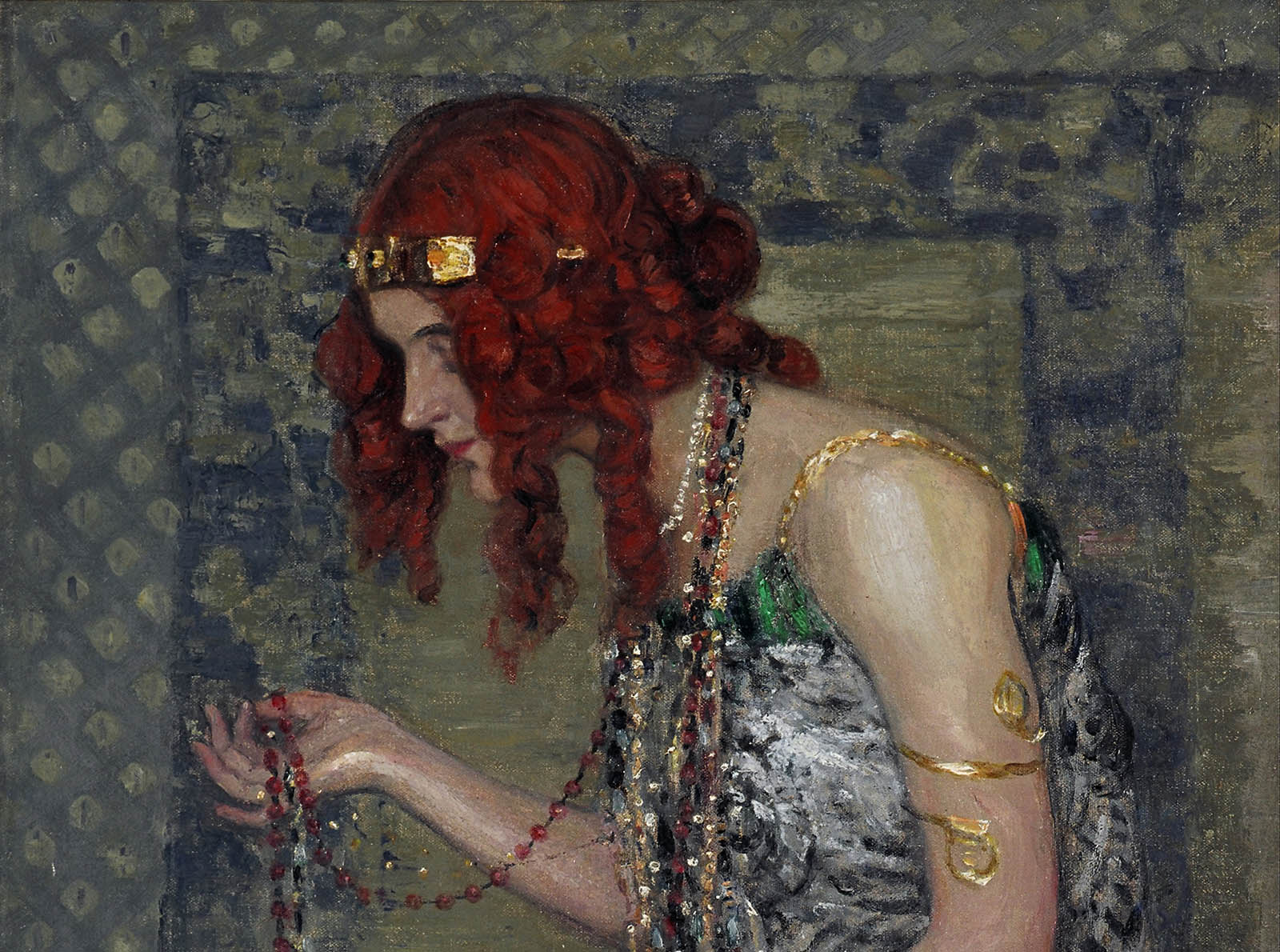
In the last years of his life, Janis Rozentāls repeatedly returned to the composition with the figures of a princess and monkey. The first of the painting was exhibited in 1913 at the 3rd Baltic Artists Union exhibition and at the international art show in Munich where the Leipzig publisher Velhagen & Klasing acquired reproduction rights ensuring wide popularity for the work. The symbolic content of the decoratively resplendent Art Nouveau composition has been interpreted as an allegory of the relationship between artist and society reflecting the power of money over the artist; on other occasions, the princess is seen as “great, beautiful art” but the monkey as the artist bound by golden chains – its servant and plaything. [quoted from Latvijas Nacionālā bibliotēka (link)]

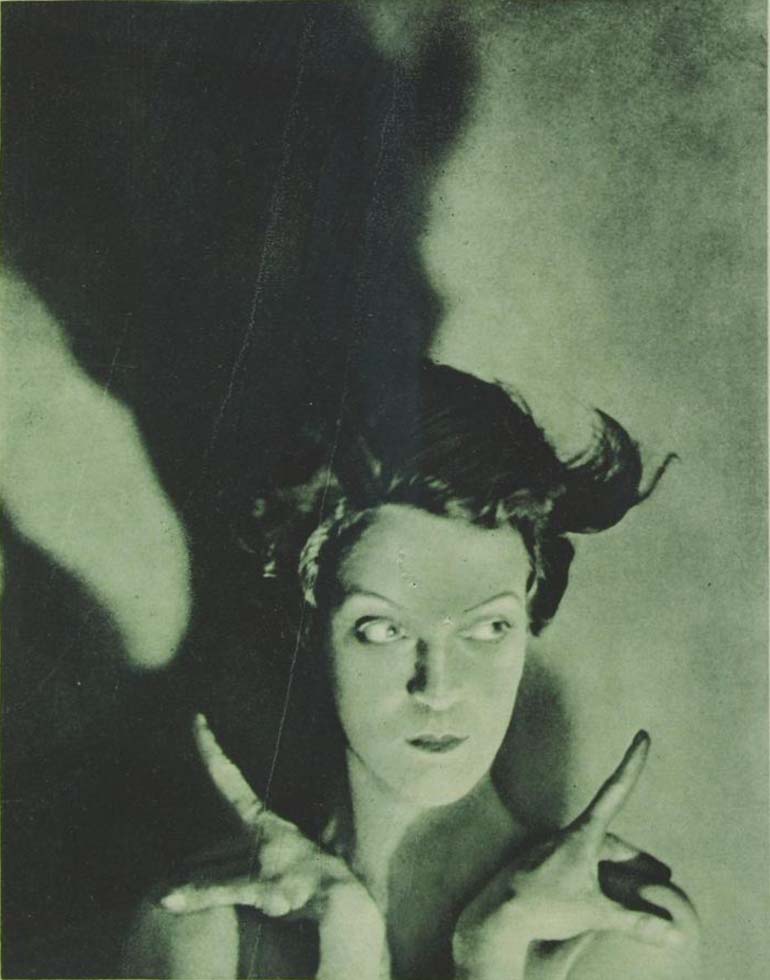
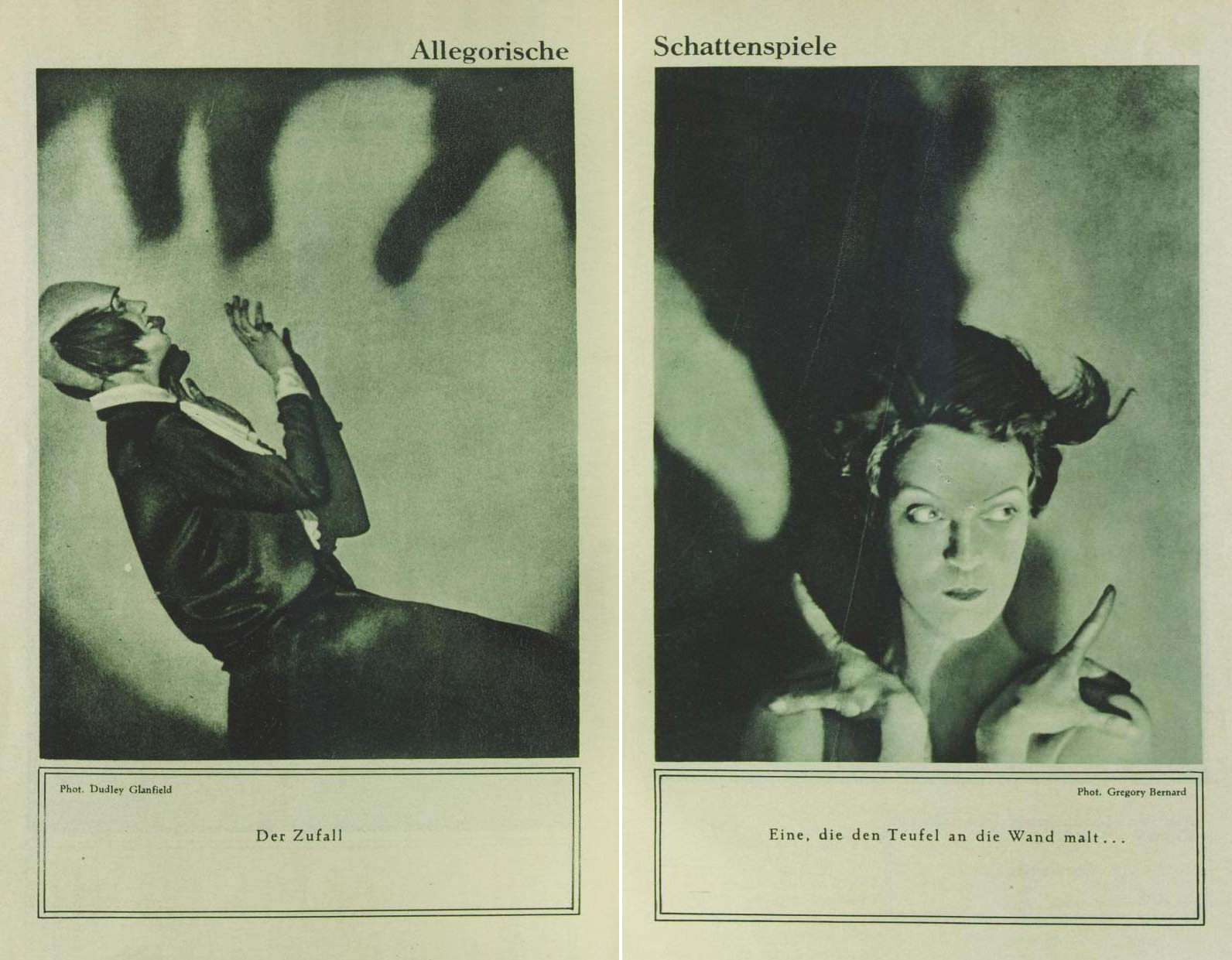
![Schattenspiele. Eine, die den Teufel an die Wand malt... [Phot. Gregory Bernard]. Revue des Monats Band 2, H.11, September 1928](https://unregardoblique.com/wp-content/uploads/2022/11/revue-des-monats-band-2-h.11-september-1928-gregory-bernard-eine-die-den-teufel-an-die-wand-malt-crp.jpg)
![Shadow games. One who draws the devil on the wall… [Phot. Gregory Bernard]. Revue des Monats Band 2, H.11, September 1928](https://live.staticflickr.com/65535/52515985747_1b683781a0_o.jpg)
![Allegorical Shadow Games. The coincidence. [Phot. Dudley Glanfield]. Revue des Monats Band 2, H.11, September 1928](https://live.staticflickr.com/65535/52516939895_25c5b37bc2_o.jpg)
![Allegorische Schattenspiele. Der Zufall. [Phot. Dudley Glanfield]. Revue des Monats Band 2, H.11, September 1928](https://live.staticflickr.com/65535/52516939885_012b082ec7_o.jpg)


 un regard oblique