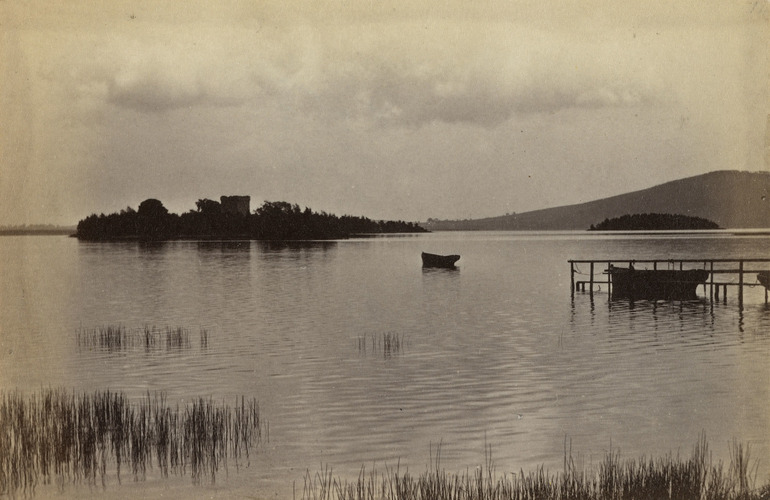
View across to a tree covered island on the centre of which stands a tower. Loch Leven Castle was constructed ca. 1300. Mary, Queen of Scots was imprisoned in the castle in 1567.
Albumen print. / source: The Royal Collection Trust
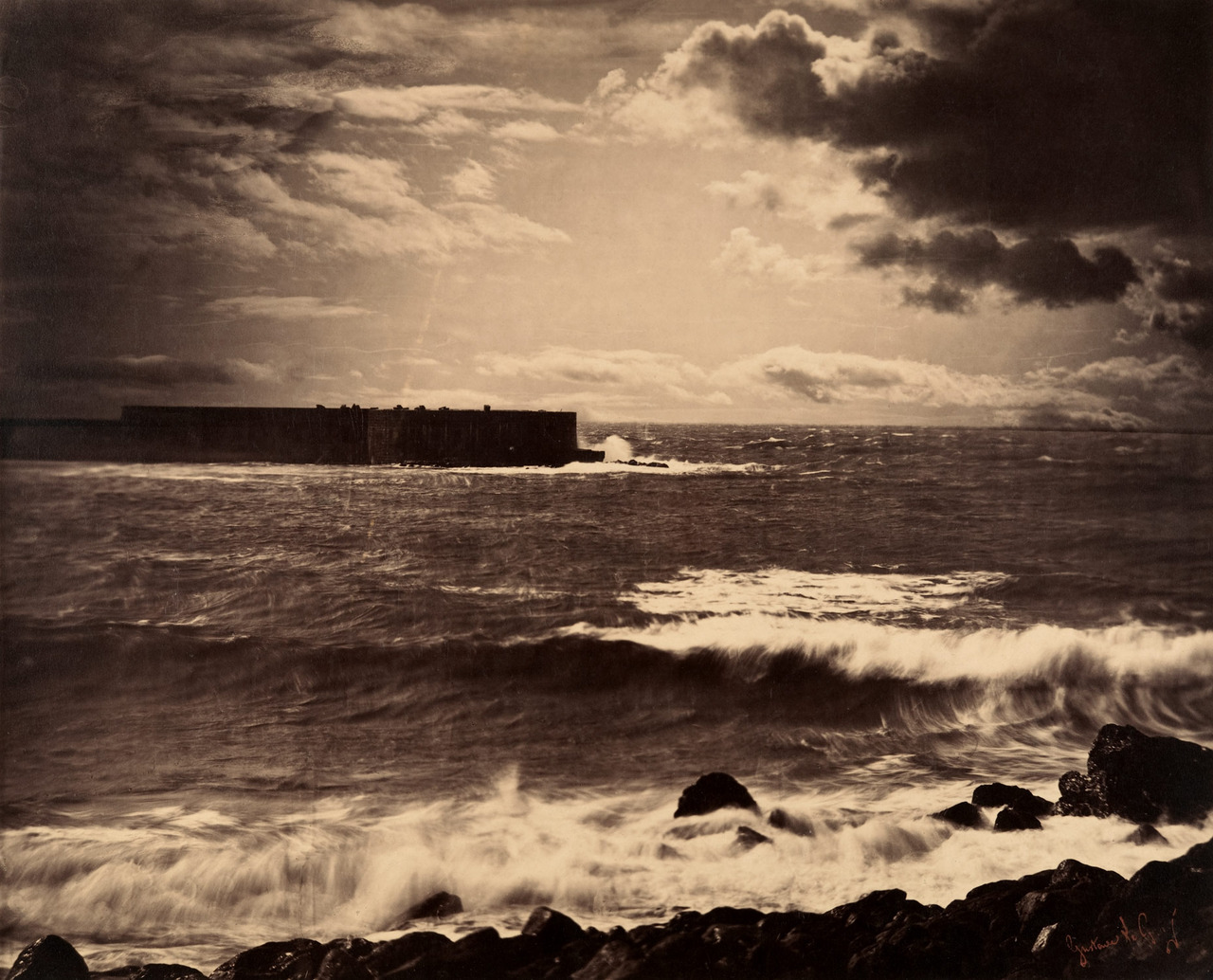
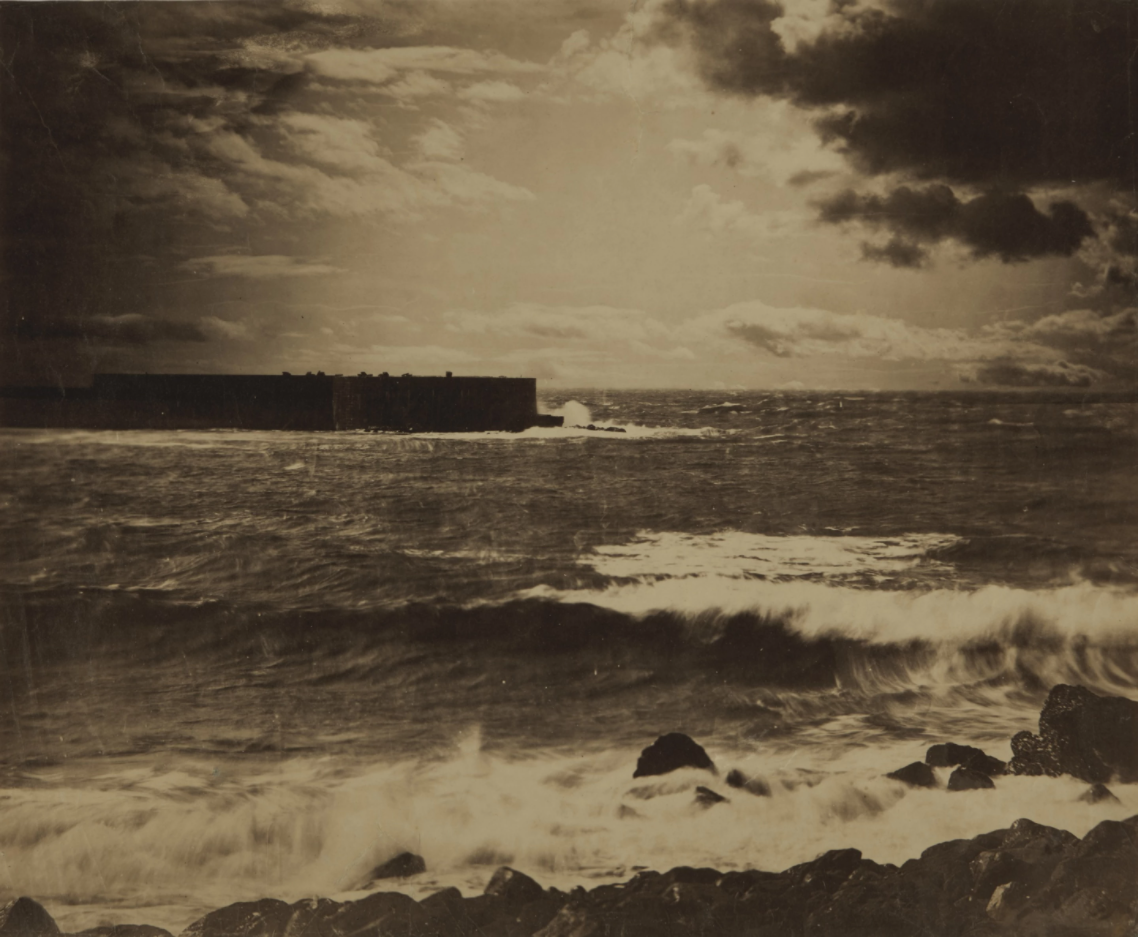
Gustave Le Gray :: The Great Wave, Sète, 1857. Albumen silver print from glass negative. | src The MetGustave Le Gray :: The Great Wave, Sète, 1857. Albumen silver print from glass negative. | src The Met
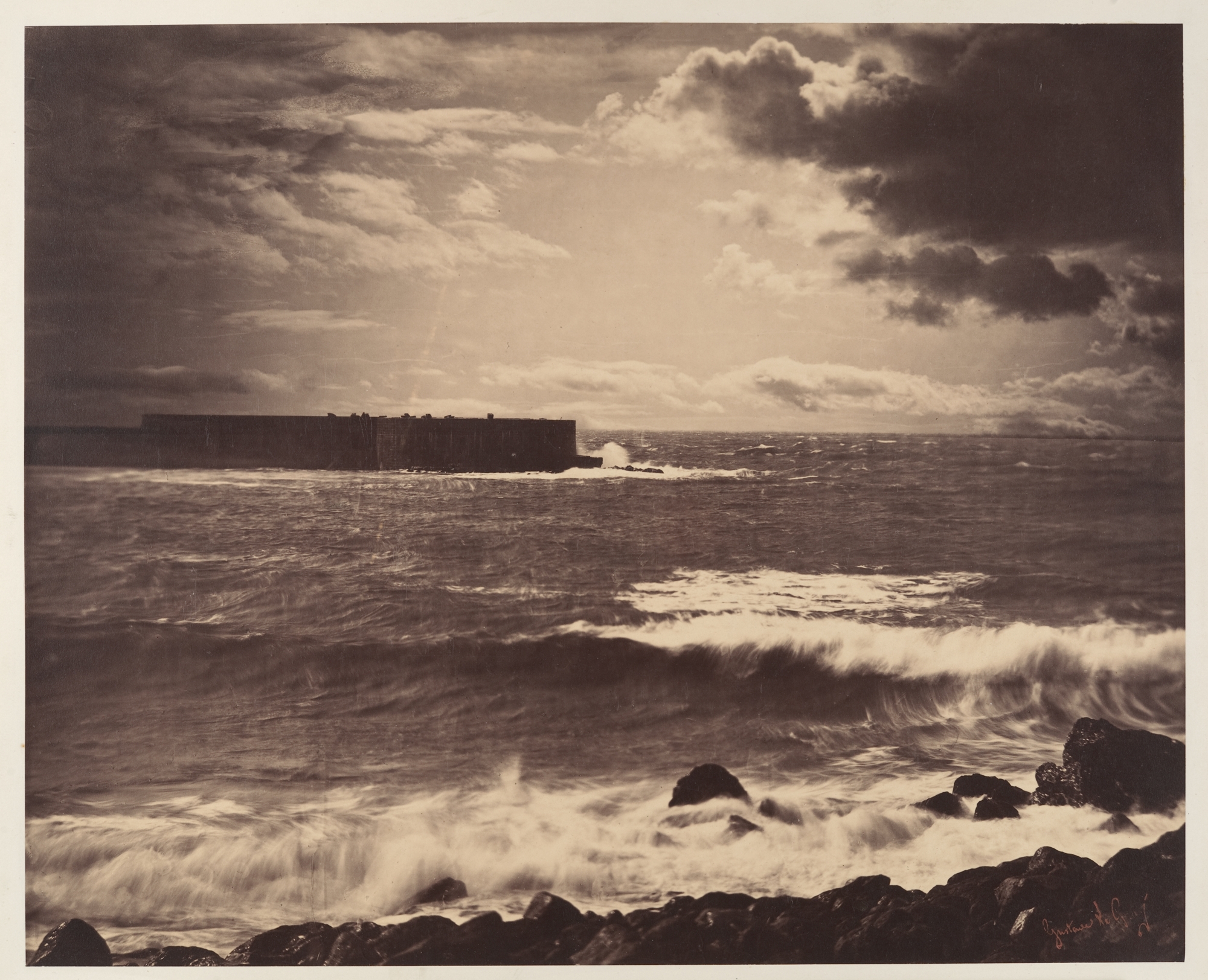
The dramatic effects of sunlight, clouds, and water in Le Gray’s seascapes stunned his contemporaries and immediately brought him international recognition. At a time when photographic emulsions were not equally sensitive to all colors of the spectrum, most photographers found it impossible to achieve proper exposure of both landscape and sky in a single picture. Le Gray solved this problem by printing two negatives on a single sheet of paper: one exposed for the sea, the other for the sky, and sometimes made on separate occasions or in different locations. Le Gray’s marine pictures caused a sensation not only because their simultaneous depiction of sea and heavens represented a technical tour de force, but also because the resulting poetic effect was without precedent in photography. / quoted from The Metropolitan Museum of Art.
Gustave Le Gray :: Grande vague. (The Great Wave, Sète), albumen print, numbered ‘14,918’ in black ink on the reverse, 1857. | src Sotheby’s
Cat watching bird in cage, ca. 1880, Albumen print, George Eastman House Collection. / via
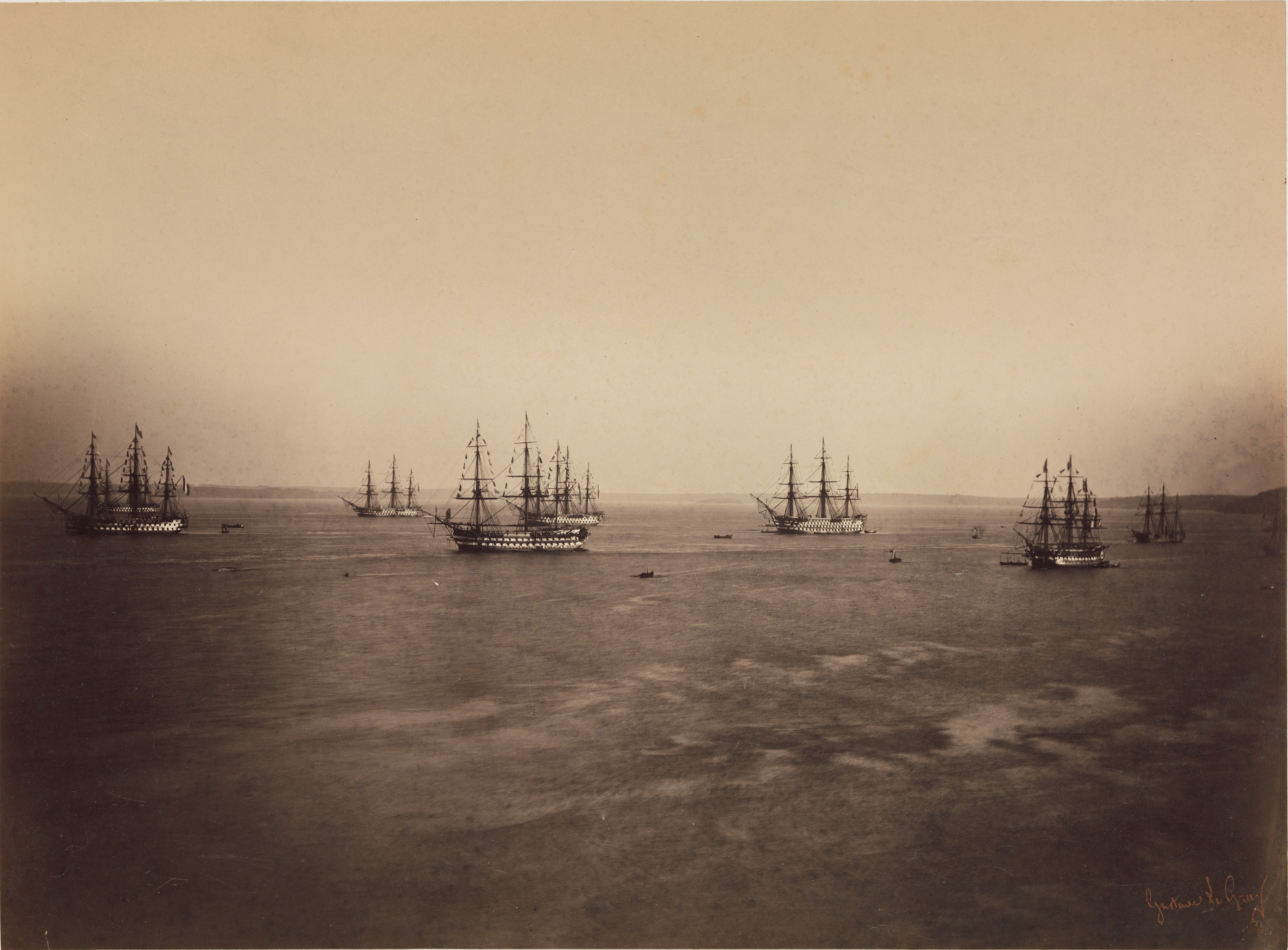
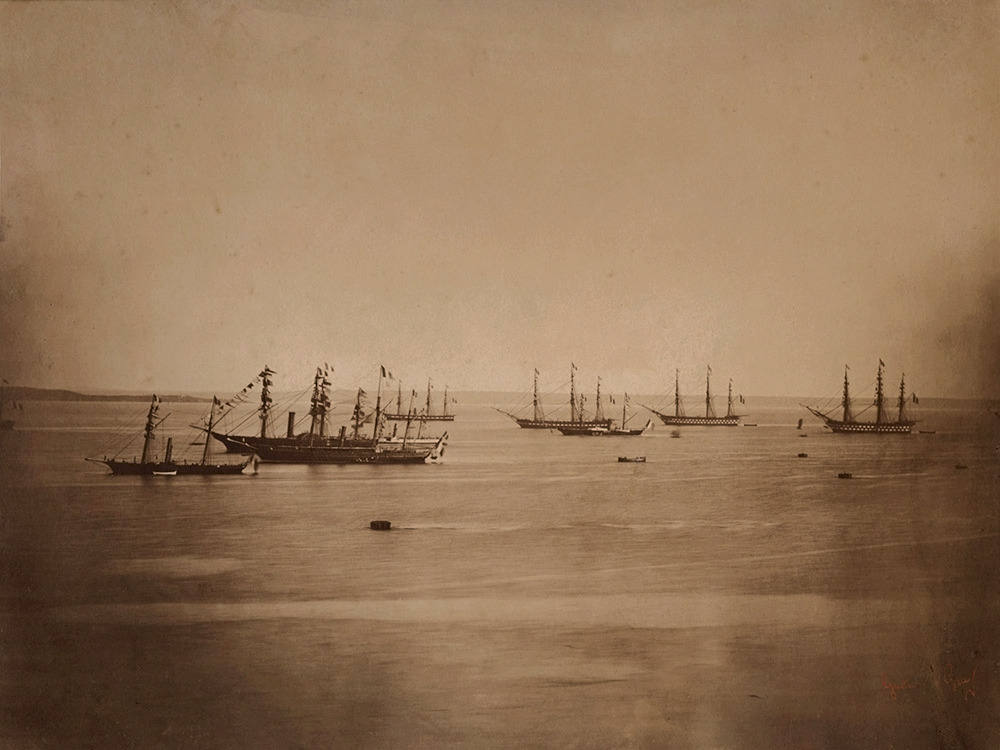
Gustave Le Gray (French, 1820–1884) :: The French and English Fleets, Cherbourg, August 1858. Albumen silver print from glass negative. Bequest of Maurice Sendak, 2013. | src The Metropolitan Museum of ArtGustave Le Gray :: Flotte Franco-Anglais en Rade de Cherbourg, 1858. Albumen print from wet plate negative. | src VW
Napoleon Sarony :: Oscar Wilde Nº 18, 1882. Albumen silver print. / source: The Met
Francis Frith :: The Statues on the Plain, Thebes, 1857. Mammoth plate albumen print. / src: Tate Gallery
A Tranquil Scene on Lake Ashi, seen from the shores of Hakone Village as Mt. Fuji rises beyond the distant headlands.’ A beautiful albumen photo from over 120 years ago. From the lens on the camera to the lip of Fuji’s crater is 32 Kilometers = 20 miles. / src: Okinawa Soba



 un regard oblique