images that haunt us
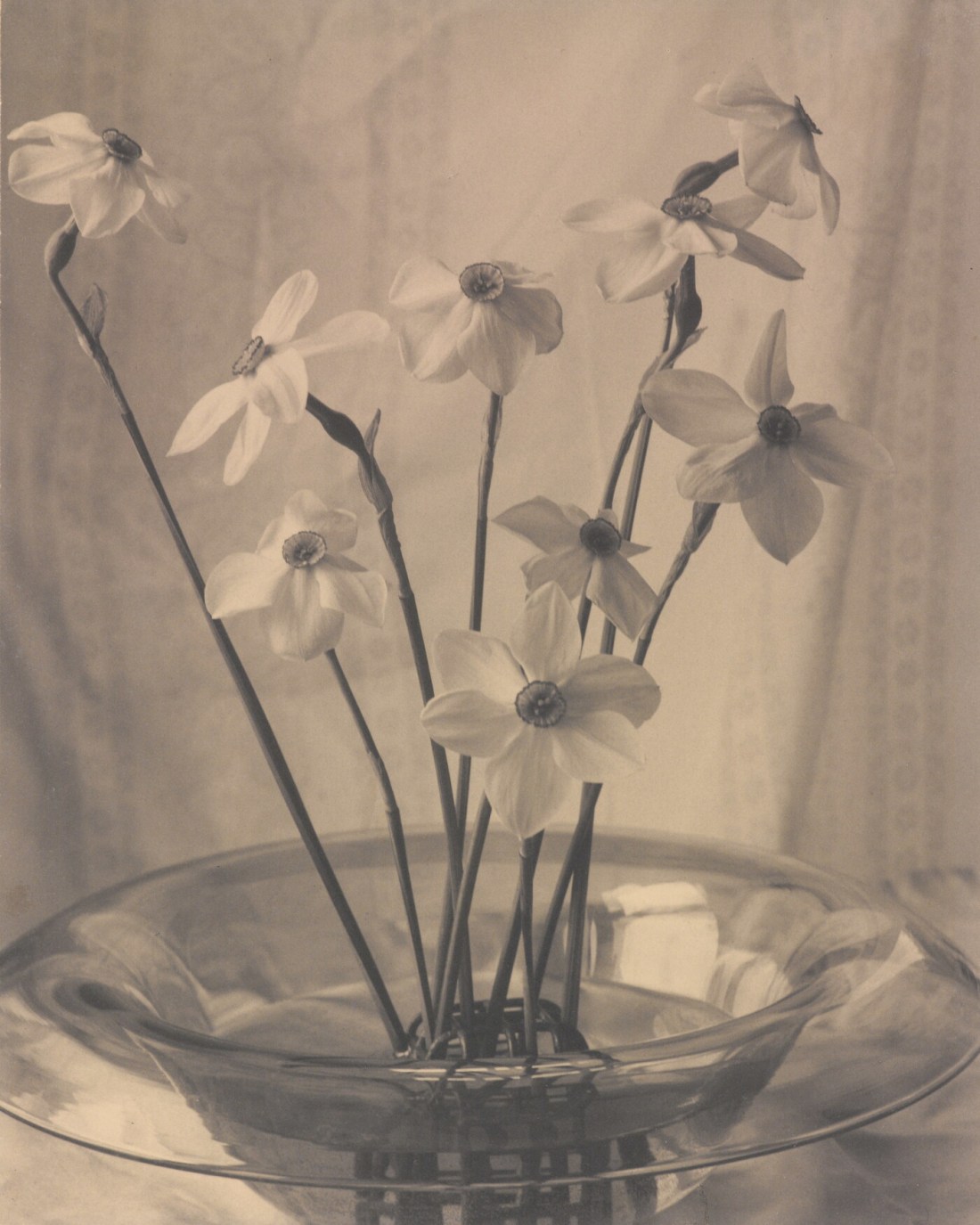


![Print, Verso:
u.l. to c.r. in ink: Narcissus \ 1926 [sic] \ Exhibited \ Brooklyn Institute of Arts & Sciences \ Oct. 1922 [sic] \ Photographic Society of Philadelphia \ Chicago Camera Club. 1929 (Feb) \ Omaha Camera Club \ Photo Pictorialists of Milwauke [sic] 1929 \ California Camera Club May 1929 \ Camera Club of New York. Dec 1-15 1928 \ Hon. Mention 8th Annual Competition American Photography](https://unregardoblique.com/wp-content/uploads/2023/04/laura-gilpin-1891-1979-narcisus-1928-amon-carter.jpg)
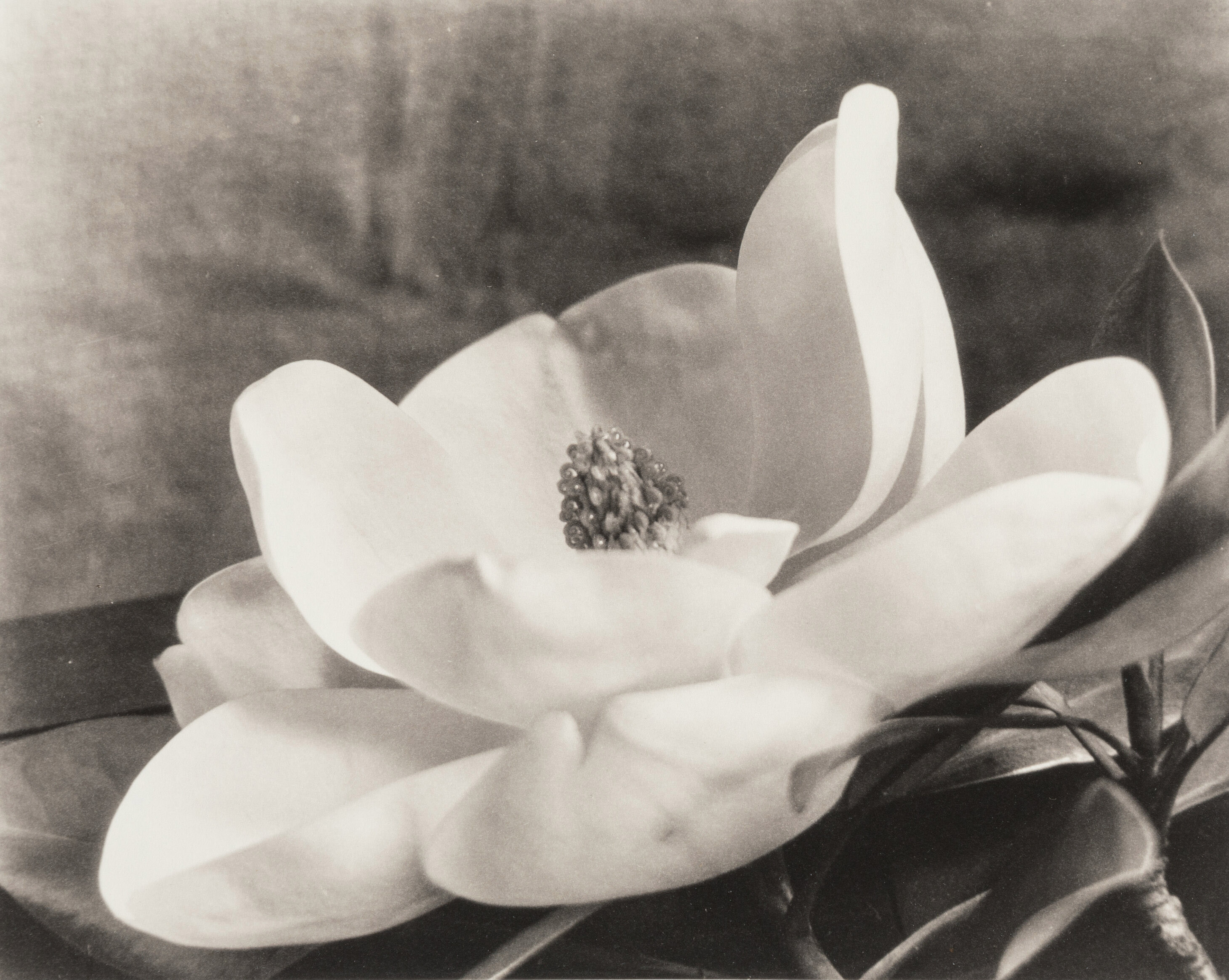
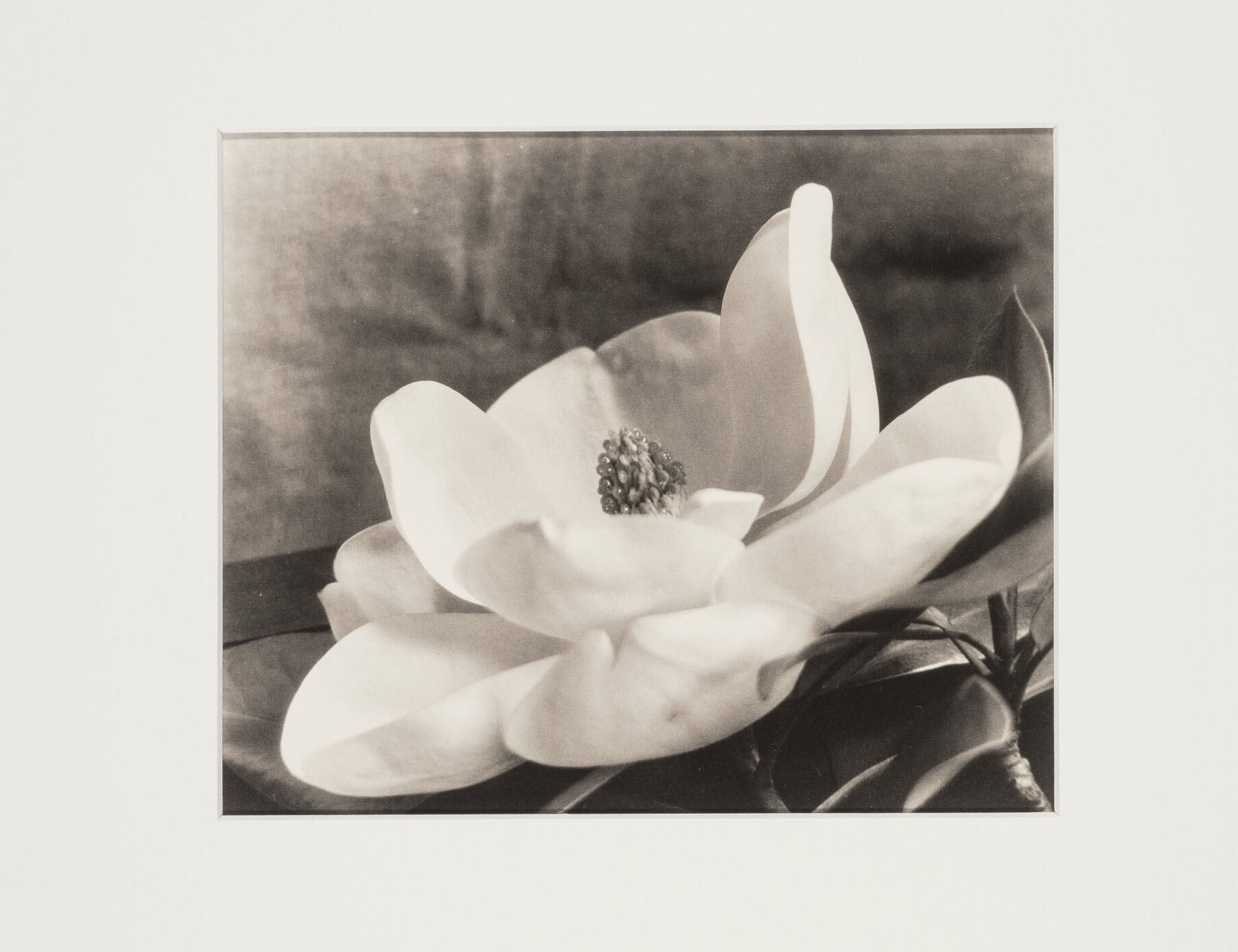
On verso of the Amon Carter Museum version (above this), there are a list of exhibitions and awards : Print, Verso:
u.l. to c.r. in ink: Narcissus \ 1926 [sic] \ Exhibited \ Brooklyn Institute of Arts & Sciences \ Oct. 1922 [sic] \ Photographic Society of Philadelphia \ Chicago Camera Club. 1929 (Feb) \ Omaha Camera Club \ Photo Pictorialists of Milwauke [sic] 1929 \ California Camera Club May 1929 \ Camera Club of New York. Dec 1-15 1928 \ Hon. Mention 8th Annual Competition American Photography
Also, this additional information: u.c. on paper label: [printed]: A PHOTOGRAPH BY \ LAURA GILPIN \ SANTA FE, NEW MEXICO \ [typed]: A PLATINUM PRINT \ NARCISSUS \ 1928
In 1949, Georgia O’Keeffe and the Alfred Stieglitz Estate donated 1,311 photographs by Alfred Stieglitz to the National Gallery of Art and placed on deposit an additional collection of 331 portraits of O’Keeffe, which were later given to the Gallery in 1980. This collection, known as the Key Set, is an unparalleled selection of Stieglitz’s photographs, containing at least one print of every mounted photograph in his possession at the time of his death. It remains one of the most important photographic collections in existence. Carefully selected by O’Keeffe to include the finest examples, the Key Set traces the evolution of Stieglitz’s work, from its inception in the 1880s to its rich maturation in the 1930s, and thoroughly documents all aspects of his decisive contribution to the art of photography.
Previously available only in print, the Alfred Stieglitz Key Set online Edition represents the definitive publication on the artist’s work. Incorporating updated scholarship, including recent conservation findings, as well as overviews of the major periods in his art, robust search functionality, and advanced image viewing and comparison tools, the Online Edition opens up new avenues for researching—and being inspired by—Stieglitz’s work.
Explore highlights of the Key Set, browse by subject or person, or search the Key Set to view all Key Set photographs and filter results by Key Set number, negative date, photographic process, or other criteria. [permalink]
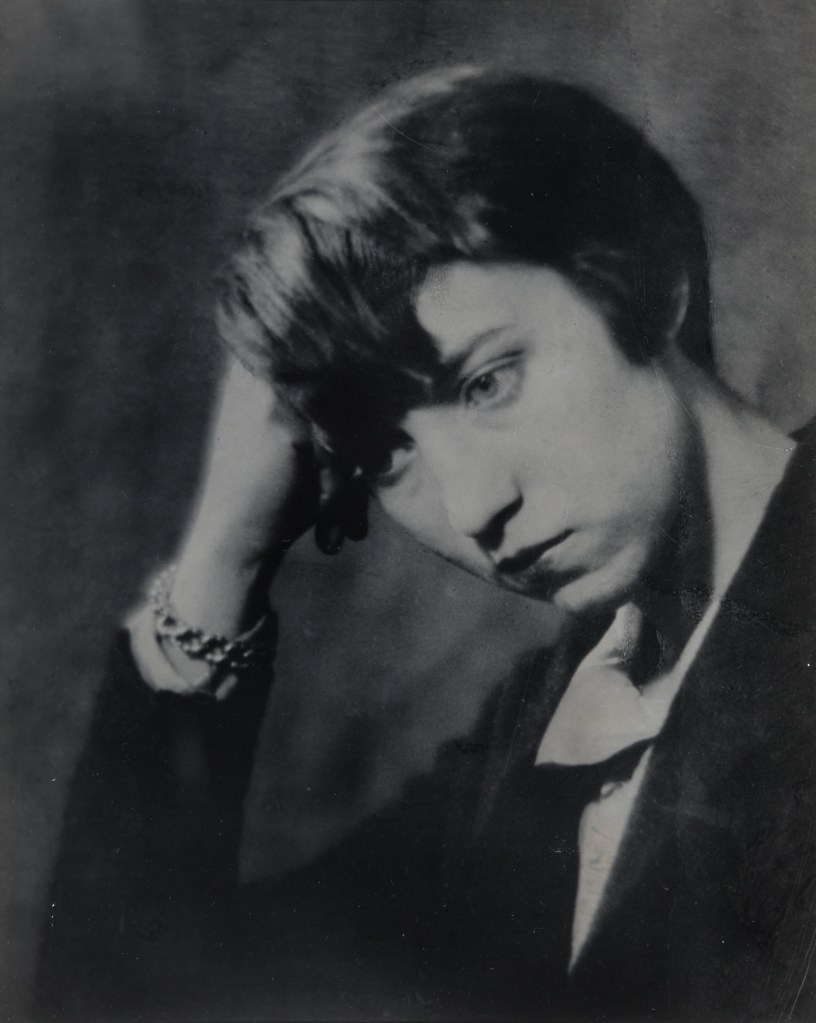
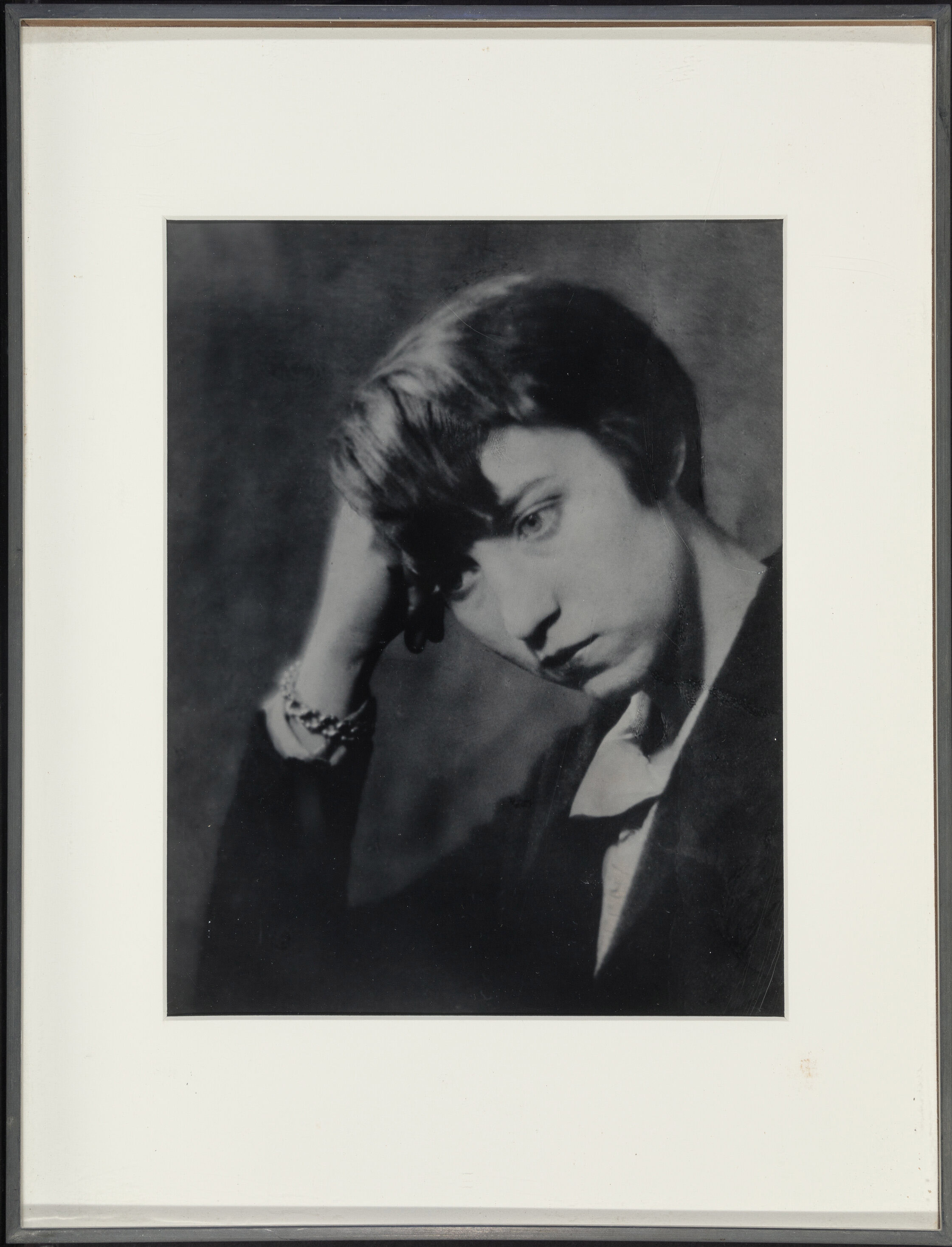
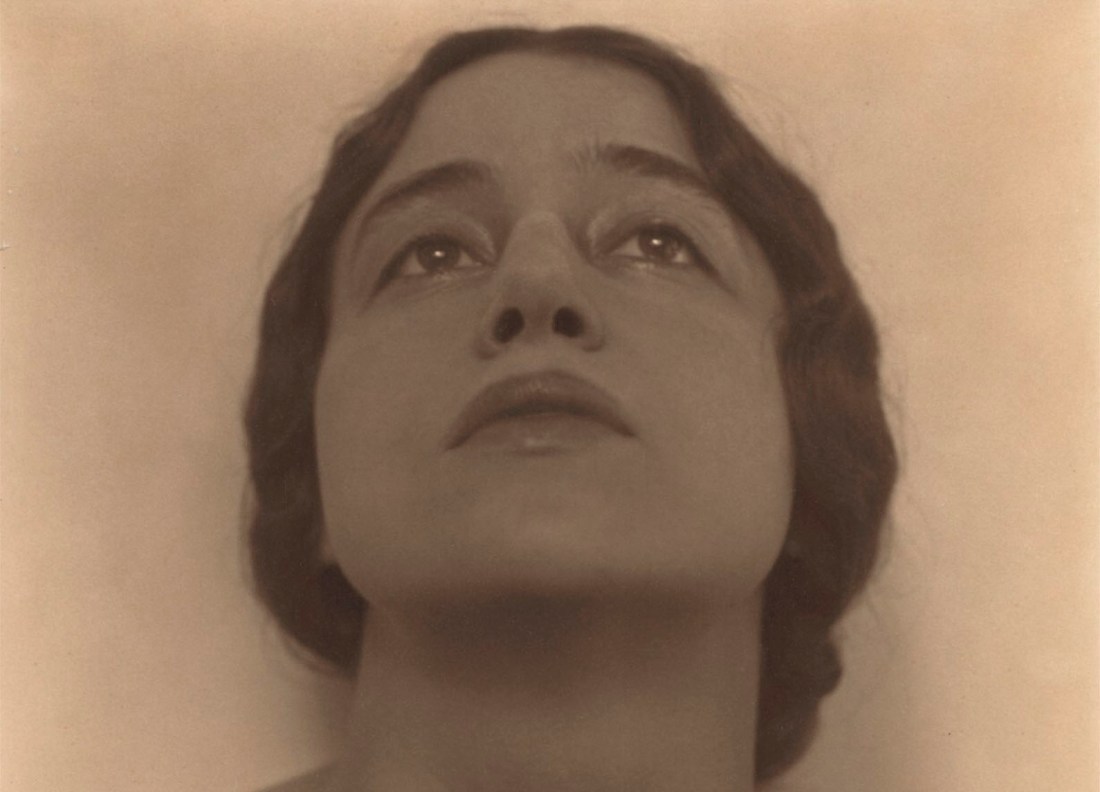
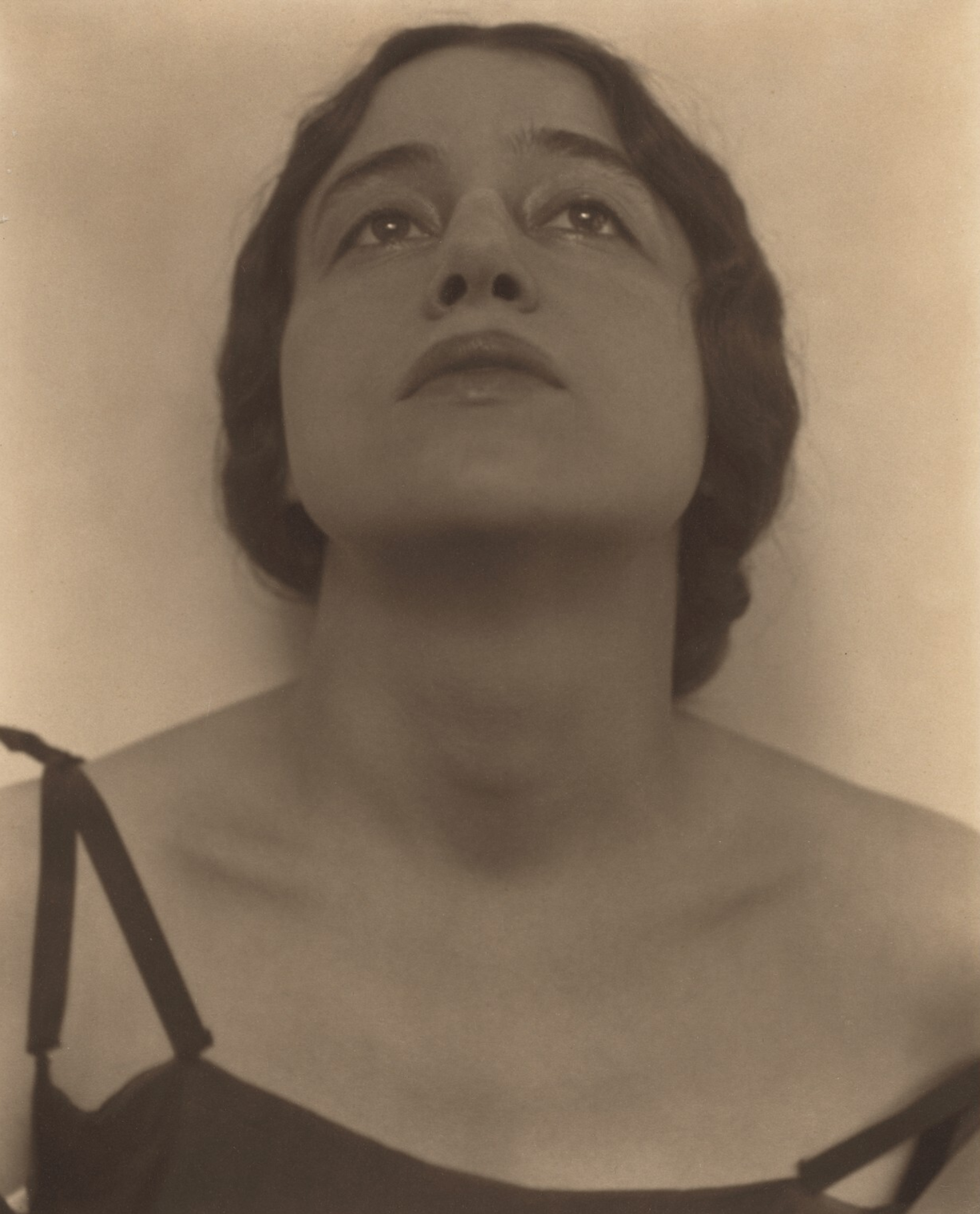
A dancer, actress, and writer, Helen Freeman (Corle) probably met Stieglitz and O’Keeffe in the early 1920s through her friendship with Mitchell Kennerley, owner of the Anderson Galleries.
The photographs and Key Set numbers 711-716 were made on at least two separate occasions between late November 1921 and Fall 1922.
“My Dear Miss. Freeman: The exposures have been developed. And there are proofs.—I have been thinking them over.—Some I feel are acceptable.—At least as a beginning. Early next week, should you find time, I’ll make another series.—And when you come, you’ll see the proofs” (Stieglitz to Helen Freeman, 1 December 1921 [Sotheby’s, auction catalogue, 17 April 1991, lot 123A])
quoted from NGA
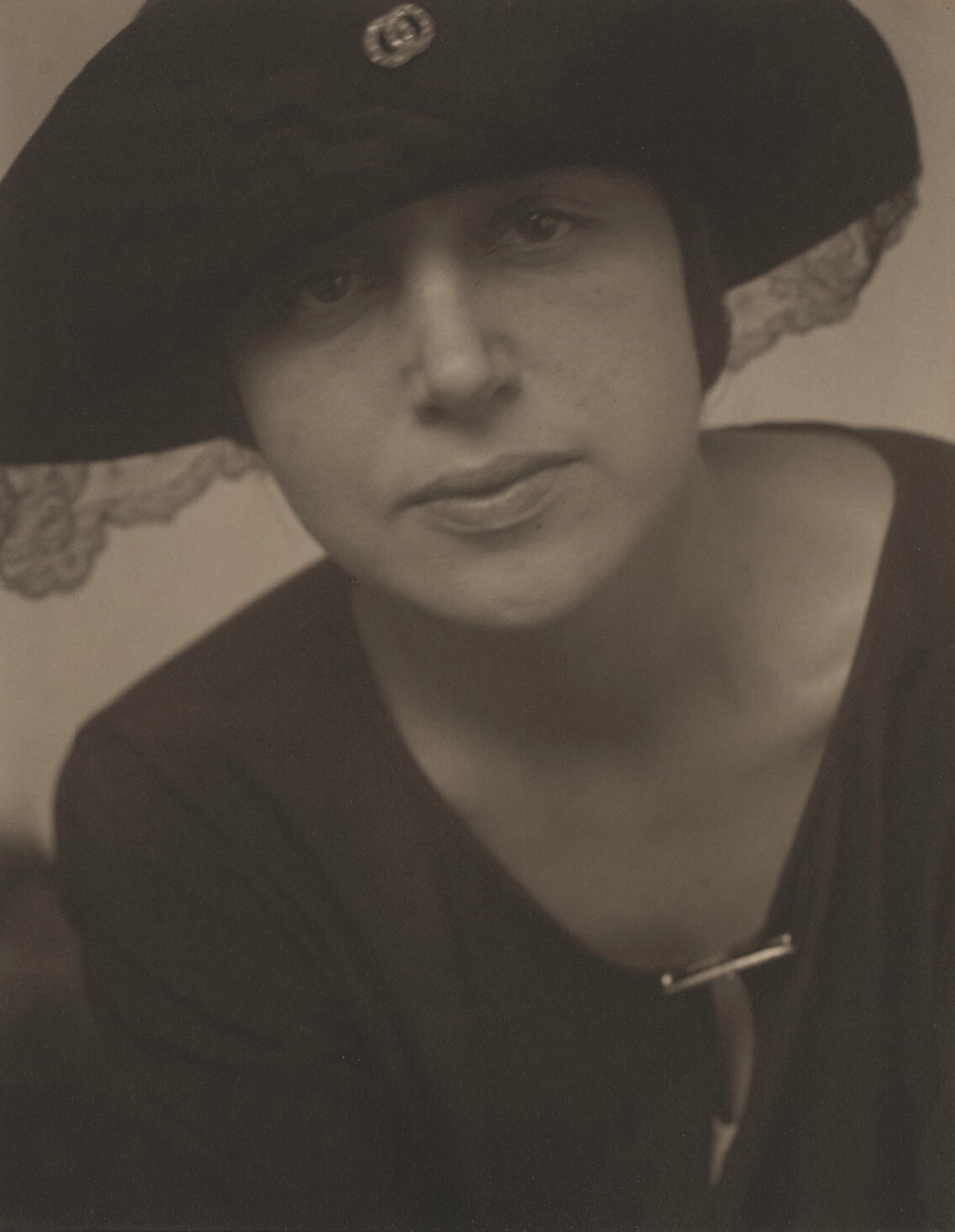
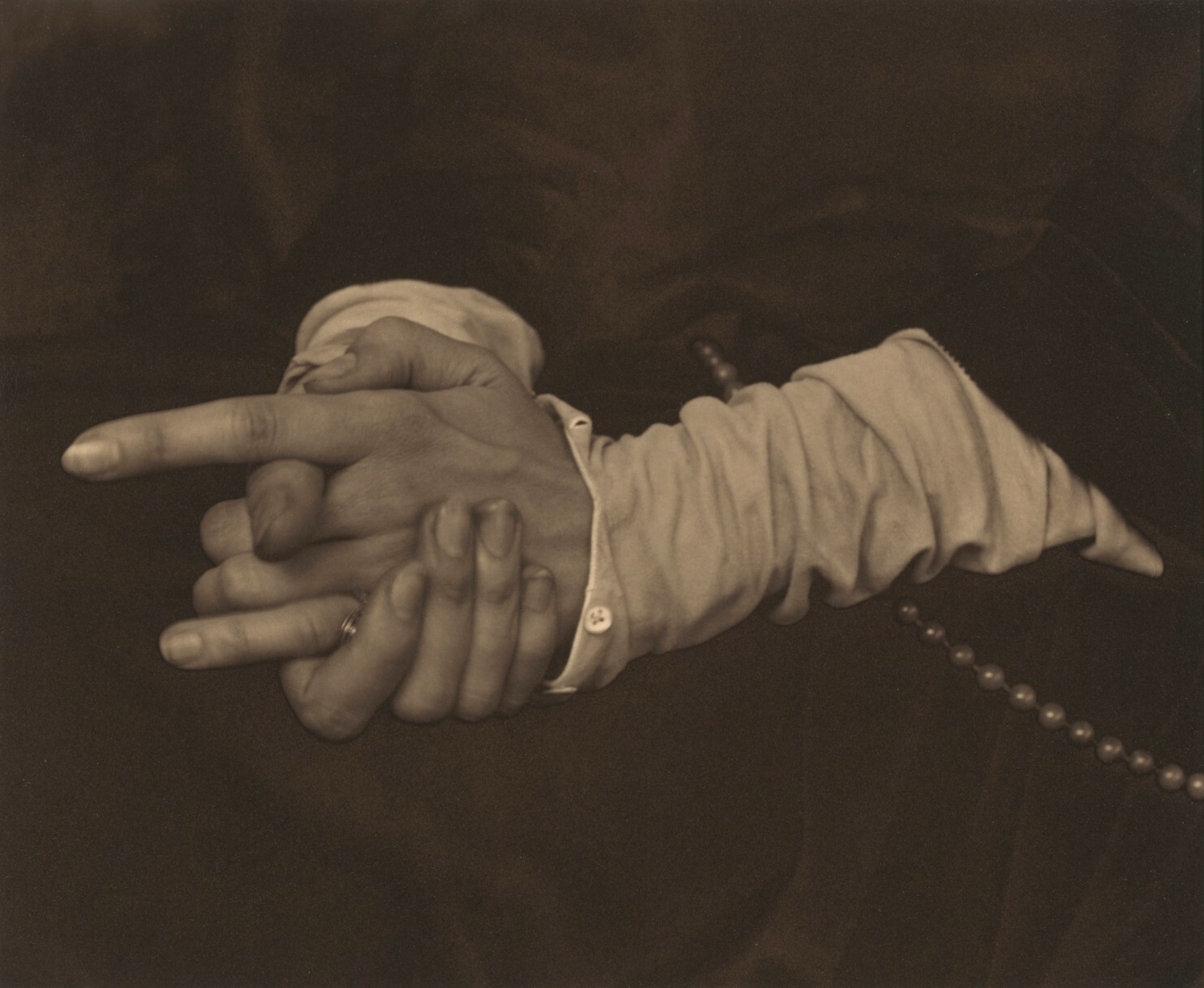

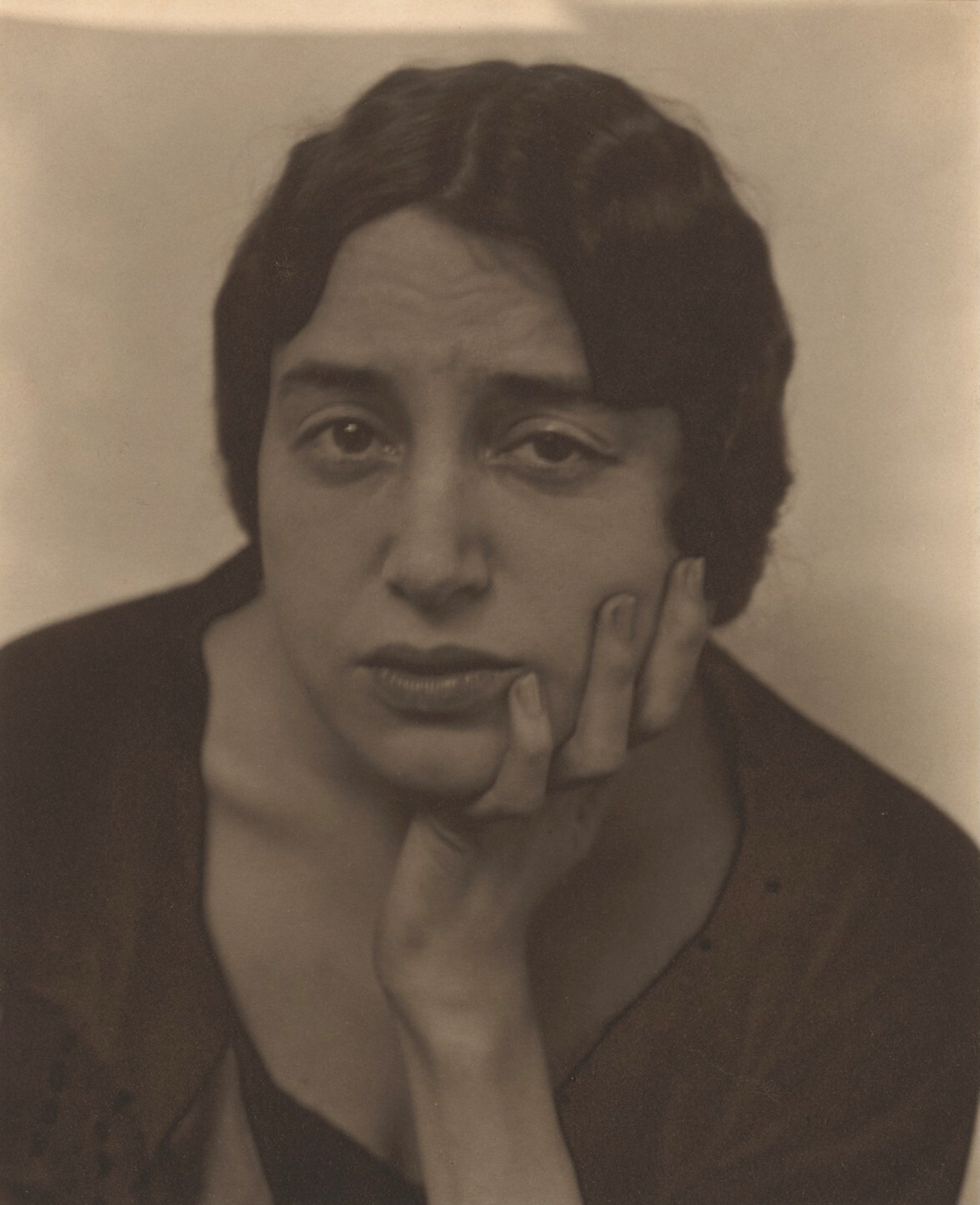
A dancer, actress, and writer, Helen Freeman (Corle) probably met Stieglitz and O’Keeffe in the early 1920s through her friendship with Mitchell Kennerley, owner of the Anderson Galleries.
The photographs and Key Set numbers 711-716 were made on at least two separate occasions between late November 1921 and Fall 1922.
“My Dear Miss. Freeman: The exposures have been developed. And there are proofs.—I have been thinking them over.—Some I feel are acceptable.—At least as a beginning. Early next week, should you find time, I’ll make another series.—And when you come, you’ll see the proofs” (Stieglitz to Helen Freeman, 1 December 1921 [Sotheby’s, auction catalogue, 17 April 1991, lot 123A])
quoted from NGA

In 1949, Georgia O’Keeffe and the Alfred Stieglitz Estate donated 1,311 photographs by Alfred Stieglitz to the National Gallery of Art and placed on deposit an additional collection of 331 portraits of O’Keeffe, which were later given to the Gallery in 1980. This collection, known as the Key Set, is an unparalleled selection of Stieglitz’s photographs, containing at least one print of every mounted photograph in his possession at the time of his death. It remains one of the most important photographic collections in existence. Carefully selected by O’Keeffe to include the finest examples, the Key Set traces the evolution of Stieglitz’s work, from its inception in the 1880s to its rich maturation in the 1930s, and thoroughly documents all aspects of his decisive contribution to the art of photography.
Previously available only in print, the Alfred Stieglitz Key Set online Edition represents the definitive publication on the artist’s work. Incorporating updated scholarship, including recent conservation findings, as well as overviews of the major periods in his art, robust search functionality, and advanced image viewing and comparison tools, the Online Edition opens up new avenues for researching—and being inspired by—Stieglitz’s work.
Explore highlights of the Key Set, browse by subject or person, or search the Key Set to view all Key Set photographs and filter results by Key Set number, negative date, photographic process, or other criteria. [permalink]


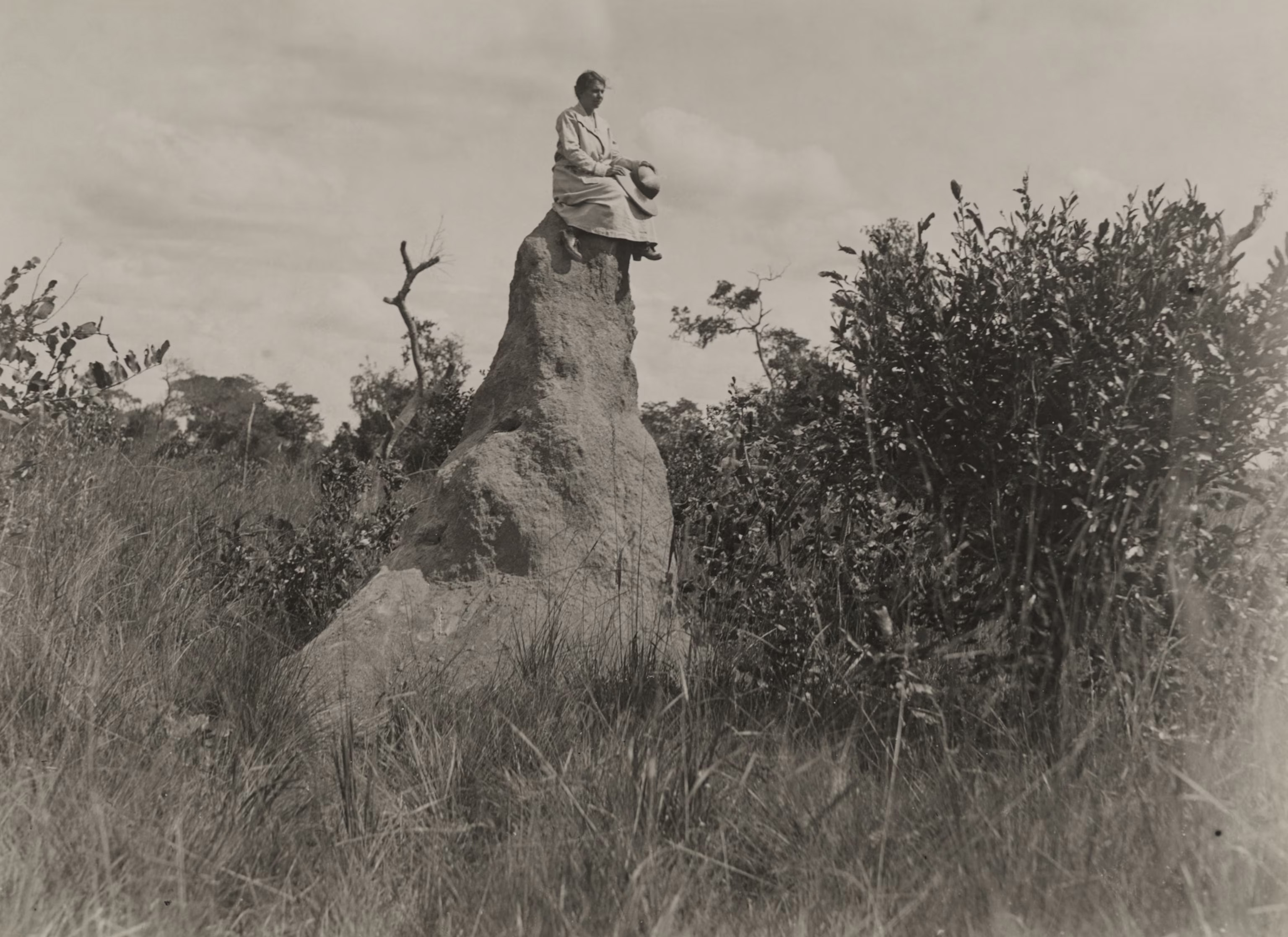
A woman sits on top of a large white anthill, some of which can rise up to 40 feet high, near Elizabethville in the former Belgian Congo. The image was taken for a story in the October 1922 issue about a navy operation in Africa during World War I (National Geographic / Nat Geo). Photograph by Frank J. Magee.


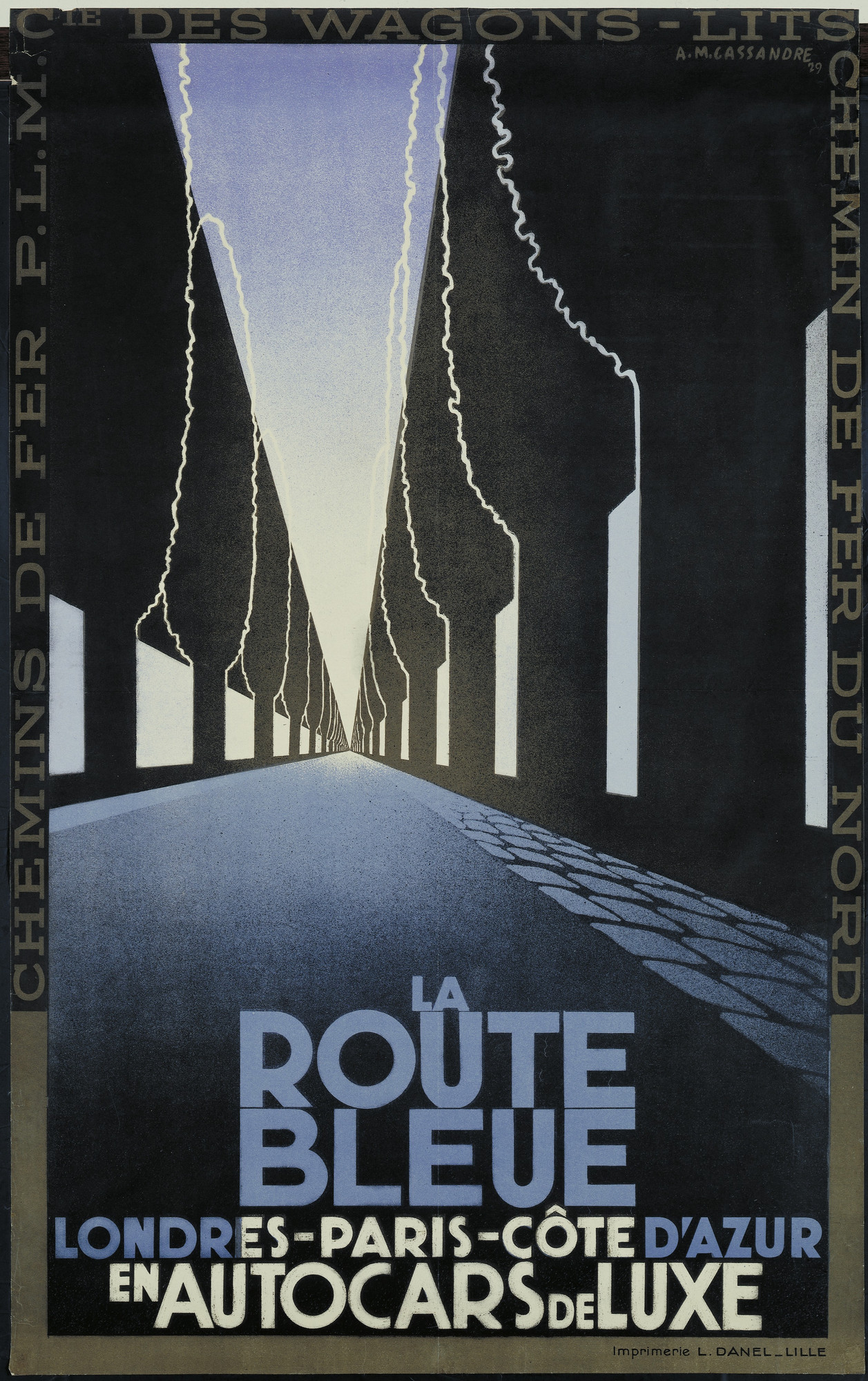
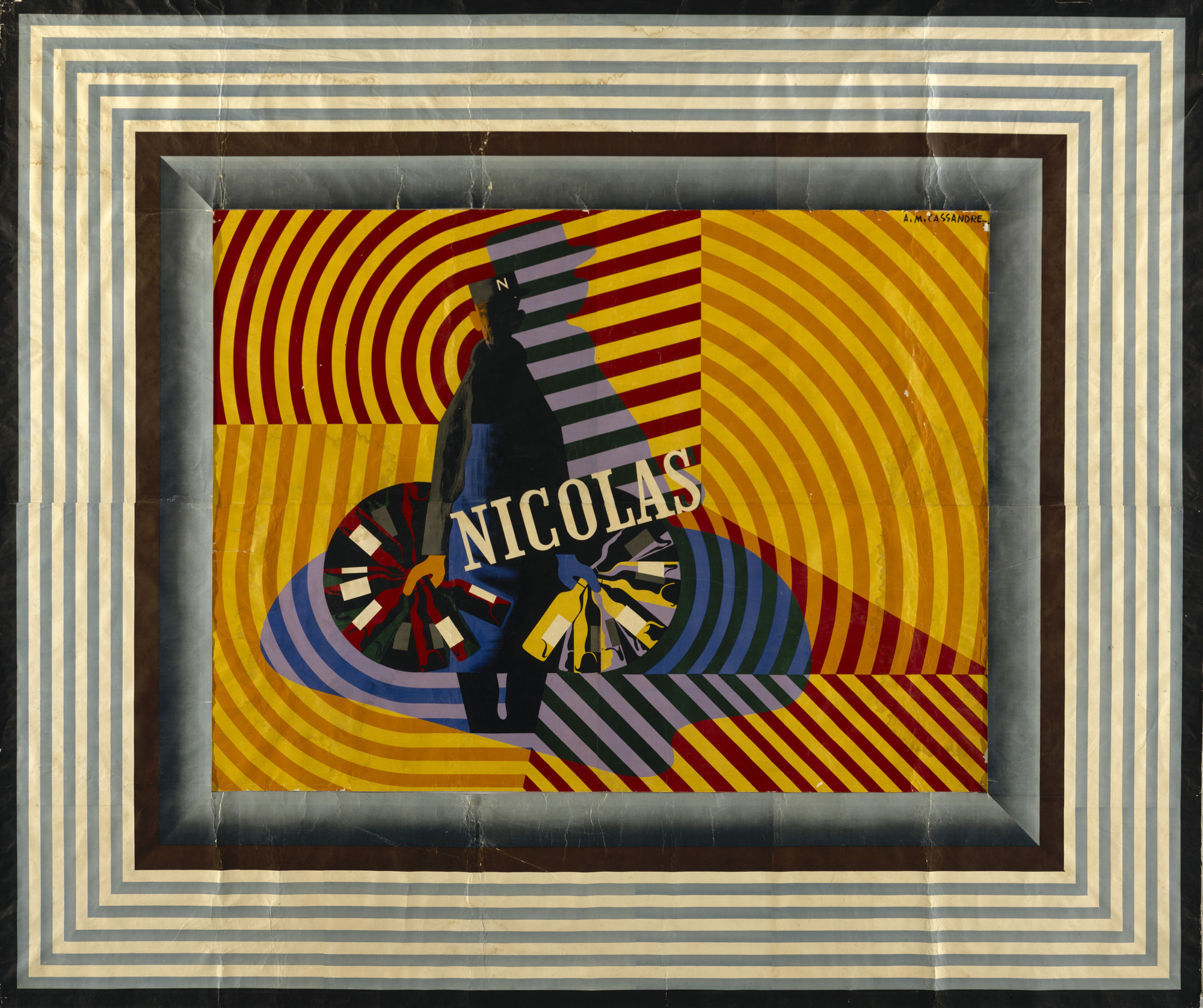
Cassandre (1901-1968) or A.M. Cassandre (the pseudonym of Adolphe-Jean-Marie Mouron) was a graphic artist, stage designer, and painter whose poster designs greatly influenced advertising art in the first half of the 20th century.
Cassandre used figurative geometry and modulated planes of colour, derived from Cubism, to revitalize postwar French poster design. From 1923 until 1936, Cassandre designed posters in which he reduced his subject matter to bold shapes and flat, modulated icons. He emphasized two-dimensional pattern, and he integrated lettering with his imagery to make a unified overall composition. Cassandre also utilized airbrushed blends and grading to soften rigid geometry.

Cassandre gained a reputation with such posters as “Étoile du Nord” (1927) and “Dubo Dubon Dubonnet” (1932). The Dubonnet posters were among the earliest designed specifically to be seen from fast-moving vehicles, and they introduced the idea of the serial poster, a group of posters to be seen in rapid succession to convey a complete idea.
In 1926 Cassandre cofounded the advertising agency Alliance Graphique and soon turned his attention to experimental typography. He designed three typefaces: Bifur (1929), Acier Noir (1935) and Piegnot (1937). In 1939 he abandoned poster art and henceforth devoted himself to designing stage sets and to painting.
quoted from Encyclopædia Britannica
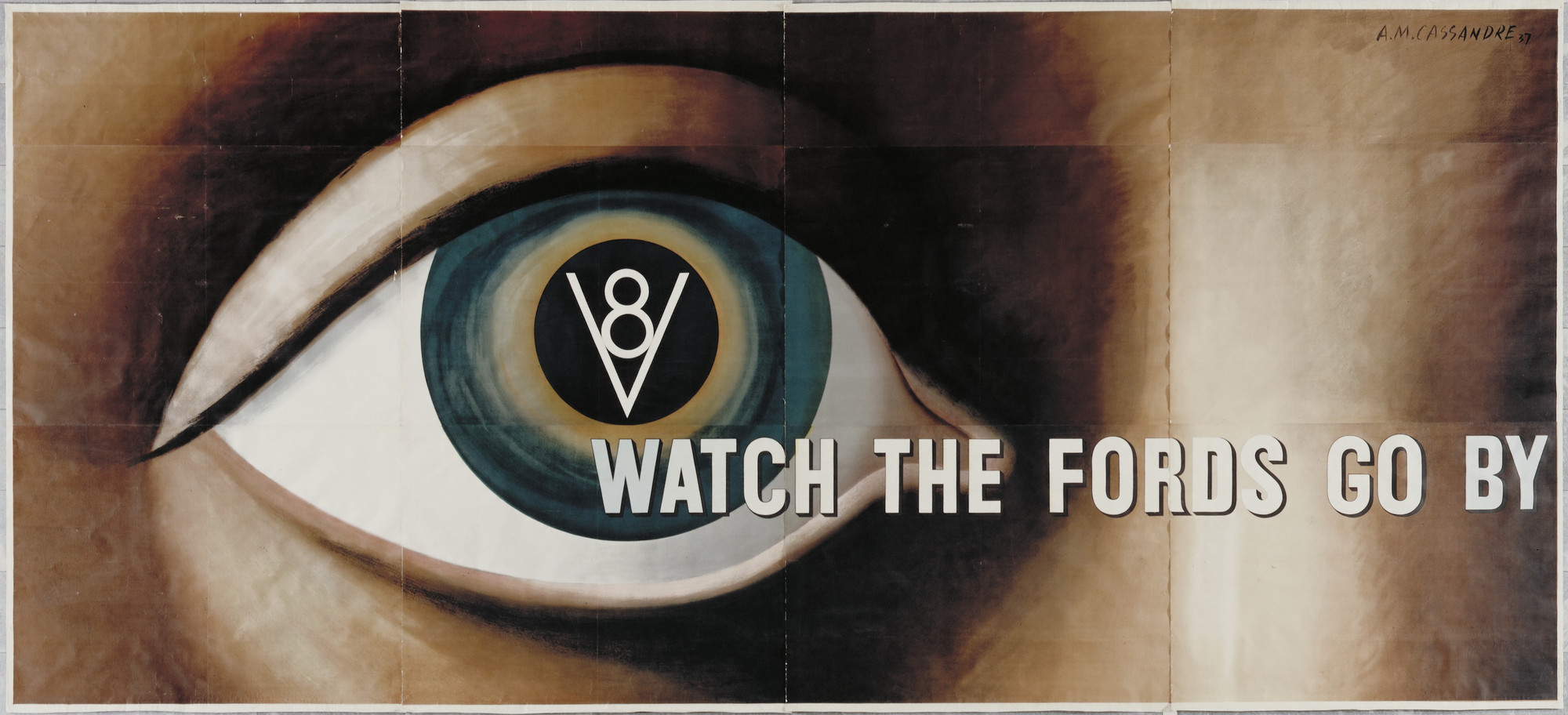
Ford was the first manufacturer to develop a V8 engine—previously associated with luxury and specialist cars—for a mass market. In employing Cassandre, Ford infused its corporate reputation for industrial innovation with the artistic cachet of European modernism. Cassandre was already established as a preeminent French poster designer and in 1936 he had become the first graphic artist to have a solo exhibition at MoMA. This compelling image of a disembodied, all-seeing eye is rooted in a classical tradition that emphasizes the primacy of vision in Western culture; the eye is also prevalent in Surrealist art of the 1920s. Trailing from the iris, the slogan “Watch the Fords Go By” gives a sense of modern vision, always in motion, while the V8 icon imprinted on the pupil suggests a fusion of mind, body, and technology—a synthesis that revolutionized individual perception in the modern world.
Gallery label from Shaping Modernity: Design 1880-1980, December 23, 2009–July 25, 2010 (MoMA)

 un regard oblique