Anitra’s dance, 1916

Maggie Gripenberg esittää Anitran tanssia Kansallisteatterin ‘Peer Gynt’ -näytelmässä 1916. | Maggie Gripenberg performs Anitra’s dance in the National Theater’s ‘Peer Gynt’ play in 1916. | src Finnish Heritage Agency – Museovirasto

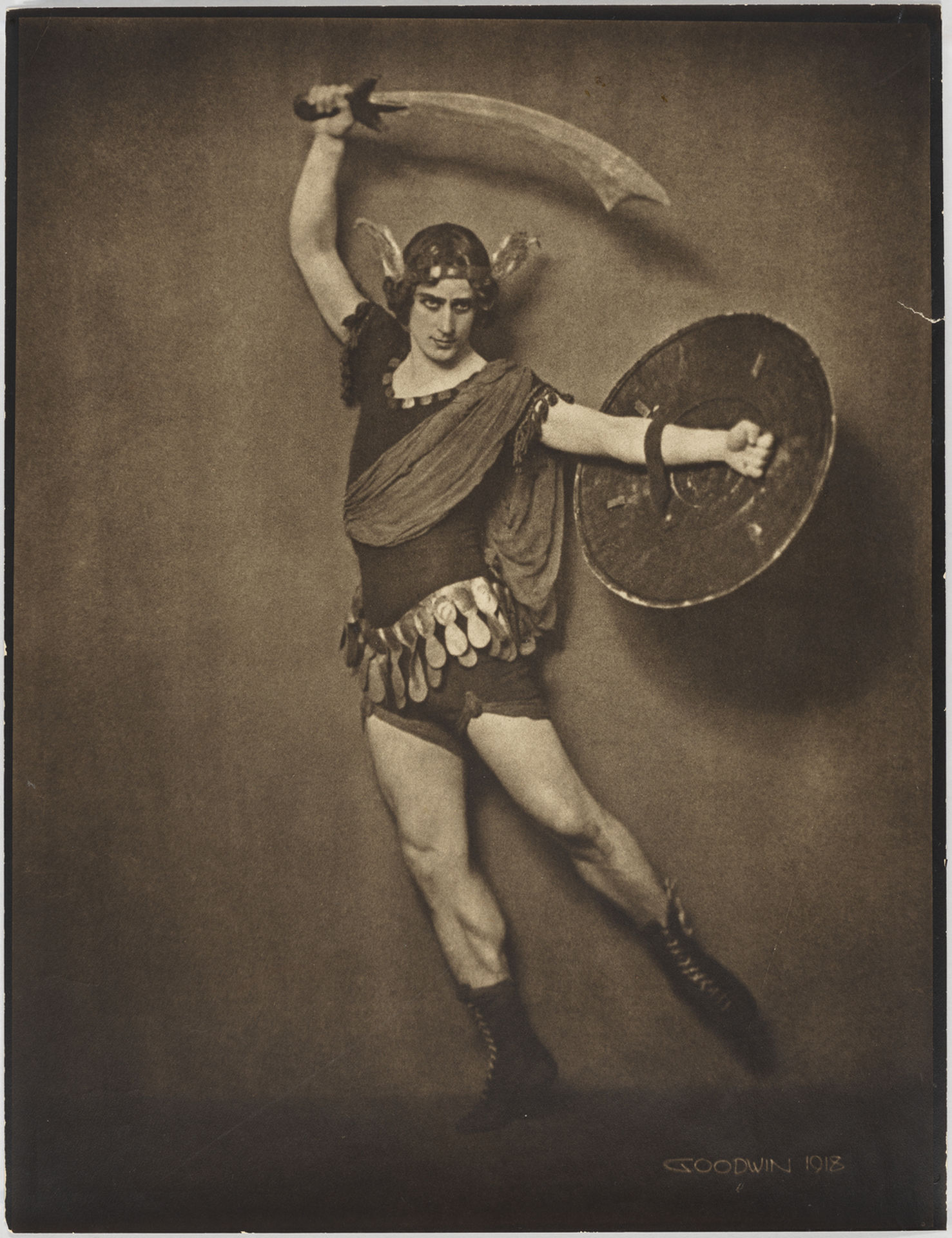
Mikhail Fokine, 1918

Henry B. Goodwin :: Mikhail Mikhailovich Fokin, choreographer and dancer, portrayed acting the part of Perseus, 1918. | src Nationalmuseum, Sweden

‘Iris and the gnome’, 1917

Iris and the gnome, September 1917. Photograph of Elsie Wright with a dancing gnome taken by Frances Griffiths using Elsie’s father quarter-plate camera. | src Dominic Winter Auctioneers via The Guardian and Flickr
The images of the Cottingley Fairies were taken in July and September 1917 by 16-year-old Elsie Wright and her nine-year-old cousin Frances Griffiths, in the village of Cottingley, near Bingley in Yorkshire.
A photograph of Elsie ‘Iris’ Wright with a fairy, taken by Frances ‘Alice’ Griffiths. (Sept., 1917) | src SSPL-Getty Images via Flickr

‘Alice and the Fairies’, 1917

This picture showing Frances Griffiths with four dancing fairies was taken in 1917 by Elsie Wright, 16, in the village of Cottingley, West Yorkshire. The two girls, like so many children then and now, believed in fairies and set out to prove their existence. They staged them with paper cut-outs at the end of Elsie’s garden. | src SSPL – Getty Images via The Sun
Alice and the Fairies, taken by Elsie Wright, shows Frances Griffiths with the fairies, made from coloured paper cutouts and hat pins. July, 1917. | src Dominic Winter Auctioneers via The Guardian and Flickr
The images of the Cottingley Fairies were taken between July and September 1917 by 16-year-old Elsie Wright and her nine-year-old cousin Frances Griffiths, in the village of Cottingley, near Bingley in Yorkshire.

Beautiful like Kaloma

“Beautiful like Kaloma“. A semi-nude woman scantily clad in a see-through silk veil. The model, like Kaloma, is standing with both hands in front of her. Original 1910-1920s French Real Photo Postcard. | src eBay

Kaloma, 1914

Kaloma, Pastime Novelty Company (PNC, PNCo.), 1914. Gelatin silver print. Unknown photographer. A nude woman, allegedly Josephine Earp, draped in a long, transparent veil. The veil covers her head and is draped to the ground. She is standing with both hands in front of her. | src The J. Paul Getty Museum
Kaloma, 1914. Toned silver print with hand-coloring. Photographer’s blind stamp, including title, copyright and date. | src Heritage Auctions

This portrait gained fame when it was rumored to be Josephine Sarah Marcus, Wyatt Earp’s third wife. A novelty company, The Pastime Novelty Company, in New York City, published the picture as a postcard, and Kaloma became widely popular as a pin-up during World War I.

Photogravure of a semi-nude woman published on the cover of I Married Wyatt Earp | src wikimedia

This photogravure (image above) of a semi-nude woman was published on the cover of I Married Wyatt Earp. Editor Glen Boyer insisted it was a picture of Josephine Earp from 1880 but the picture was actually copyrighted in 1914. The 1914 copyright is the earliest known version of the photograph. Circulated by the ABC Novelty Company in Brooklyn, New York, in 1914. It is labeled “Kaloma” underneath, and at the bottom right is printed, “© 1914-P.N.Co.”, which was the copyright of the Pastime Novelty Company.

Kaloma [semi-nude woman scantily clad in a see-through silk garment], 1914. Copyright: M.L. Pressler (Canada), 1914. The most famous photo of Sadie Earp (**) that does not depict her. | src eBay
(**) Josephine Sarah “Sadie” Earp (née Marcus; 1861 – 1944) third wife of Wyatt Earp.

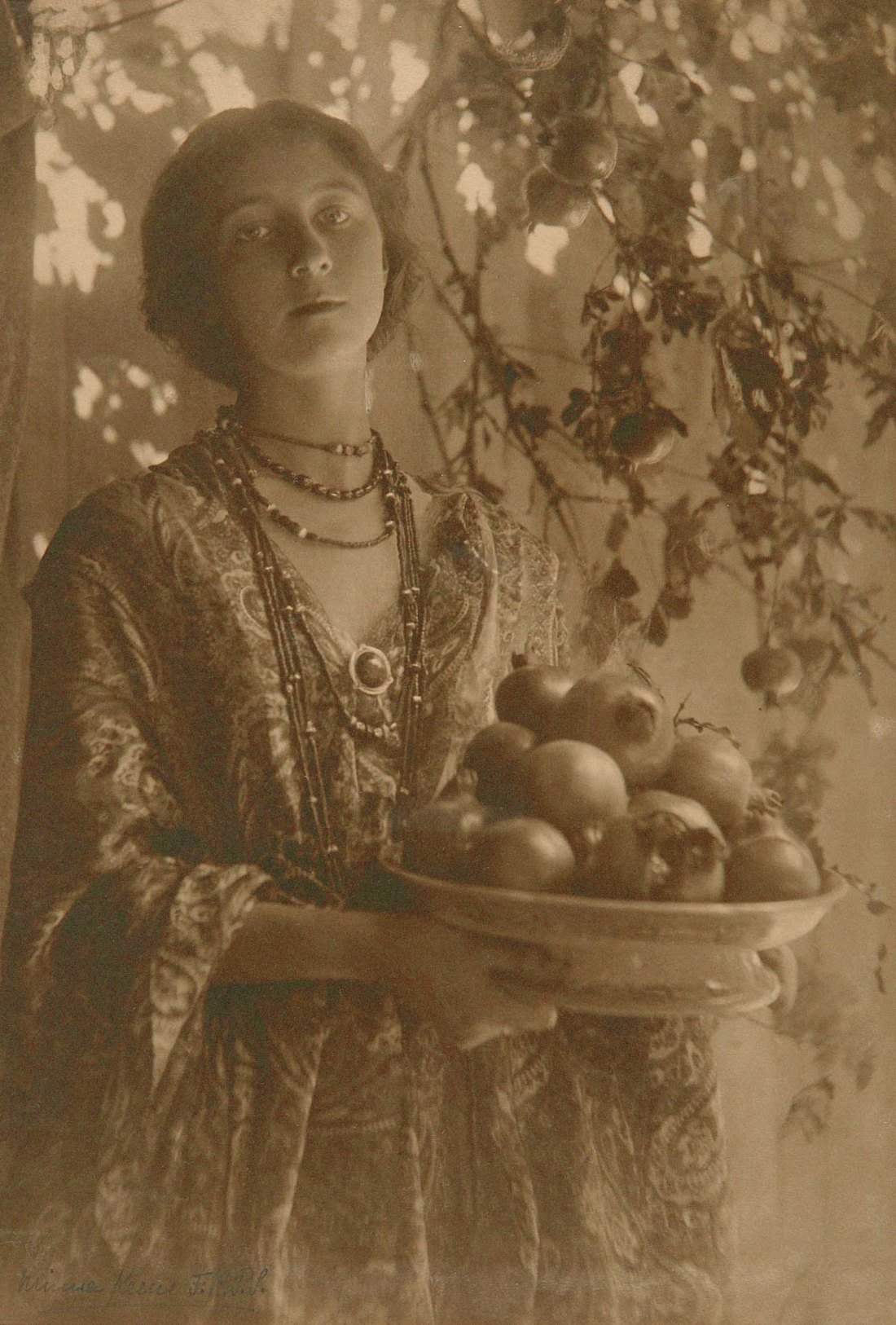
Decorative Study: Pomegranates

Minna Keene (née Bergmann, Canadian born Germany, 1861-1943) :: Pomegranates, ca. 1910. Carbon print with some details reduced by hand. | src Stephen Bulger Gallery
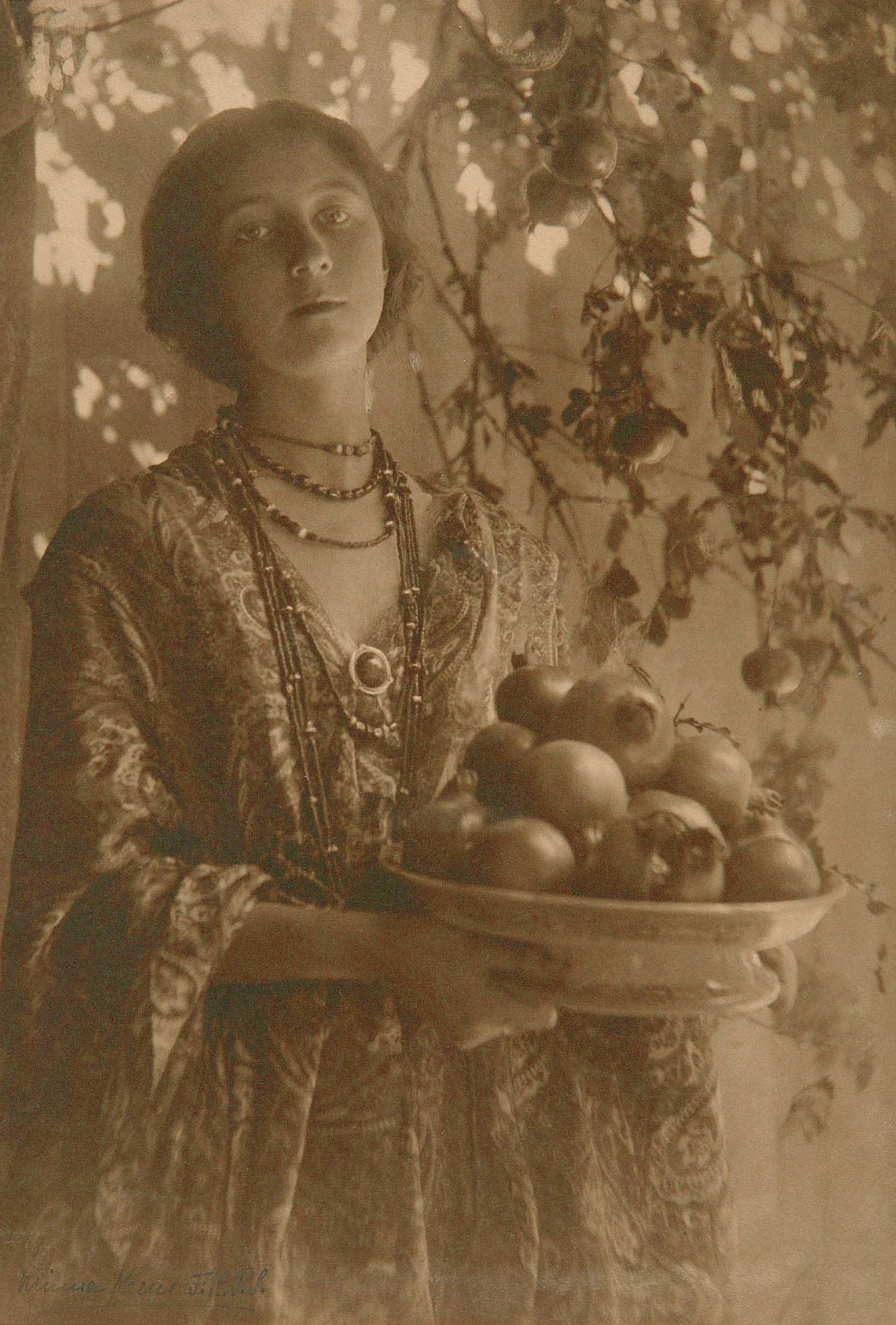
Minna Keene (née Bergmann, Canadian born Germany, 1861-1943) :: Pomegranates (aka Decorative Study), ca. 1910. Green carbon print by Minna Keene. | src The Royal Photographic Society Collection, Victoria and Albert Museum, London via Getty Images

The subject of this photograph is believed to be of Violet Keene, Minna Keene’s daughter, according to Getty Images.

Minna Keene (née Bergmann, Canadian born Germany, 1861-1943) :: Decorative Study nº 1. Pomegranates, Cape Town, South Africa, ca. 1906. Carbon print, mounted on exhibition board. Original photograph. | src Bonhams

A fine example of a signed exhibition-quality image of one of Minna Keene’s most famous of images, taken at her home in Cape Town. Using her young daughter Violet as the model, she created an iconic Pre-Raphaelite image, combining the beauty of a young girl with nature. This image was included in the famous Tate London Exhibition in 2016, Painting with Light alongside Julia Margaret Cameron, Millais, Emerson, Goodall, Hacker, Rossetti, and others. In 1911, “Pomegranates” was awarded Picture of the Year at the London Photographic Salon. [quoted from source]

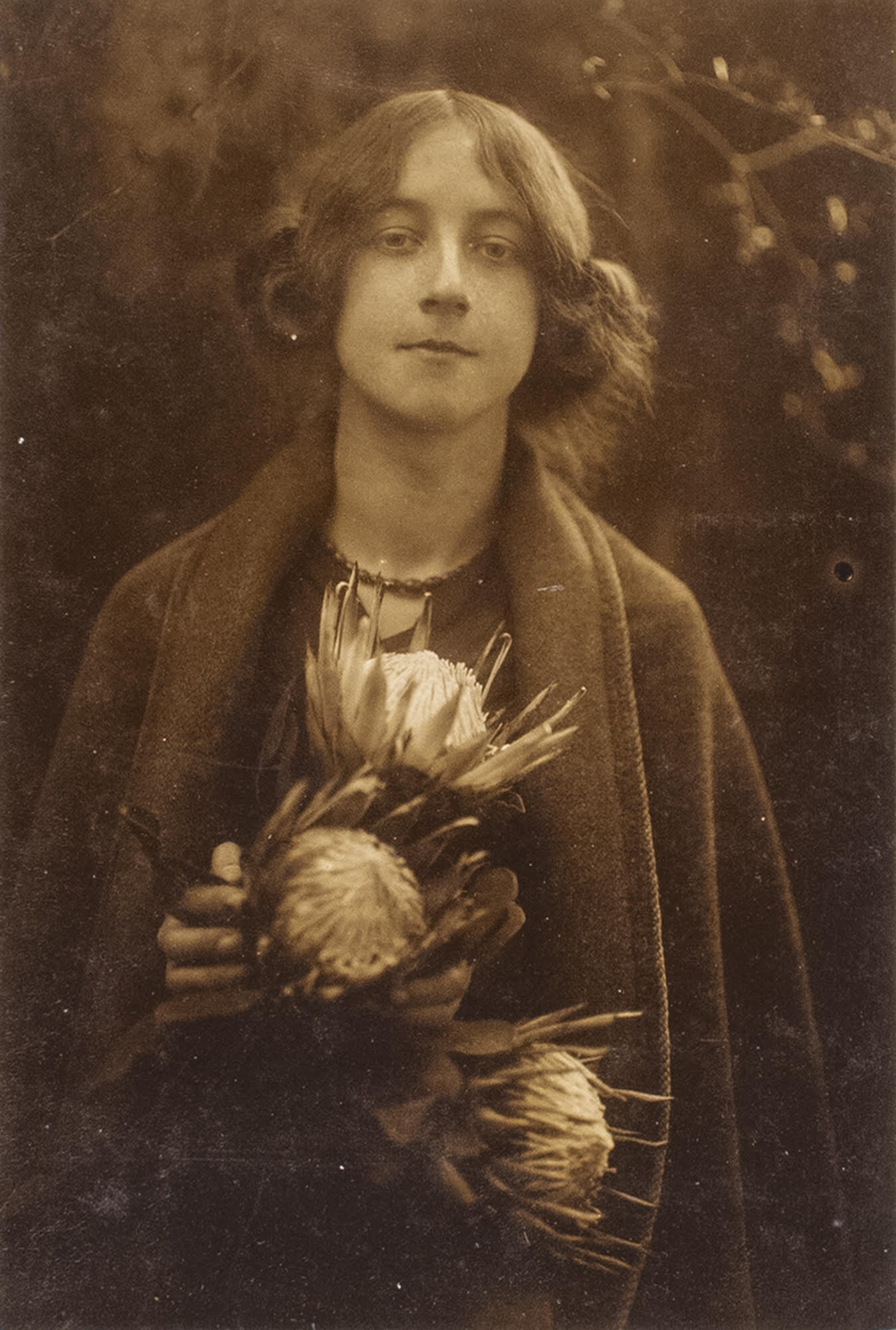
Minna Keene (née Bergmann, Canadian born Germany, 1861-1943) :: Decorative Study nº 1. Pomegranates, Cape Town, South Africa, ca. 1906. Carbon print, mounted on exhibition board. Original photograph. | src Bonhams