

images that haunt us


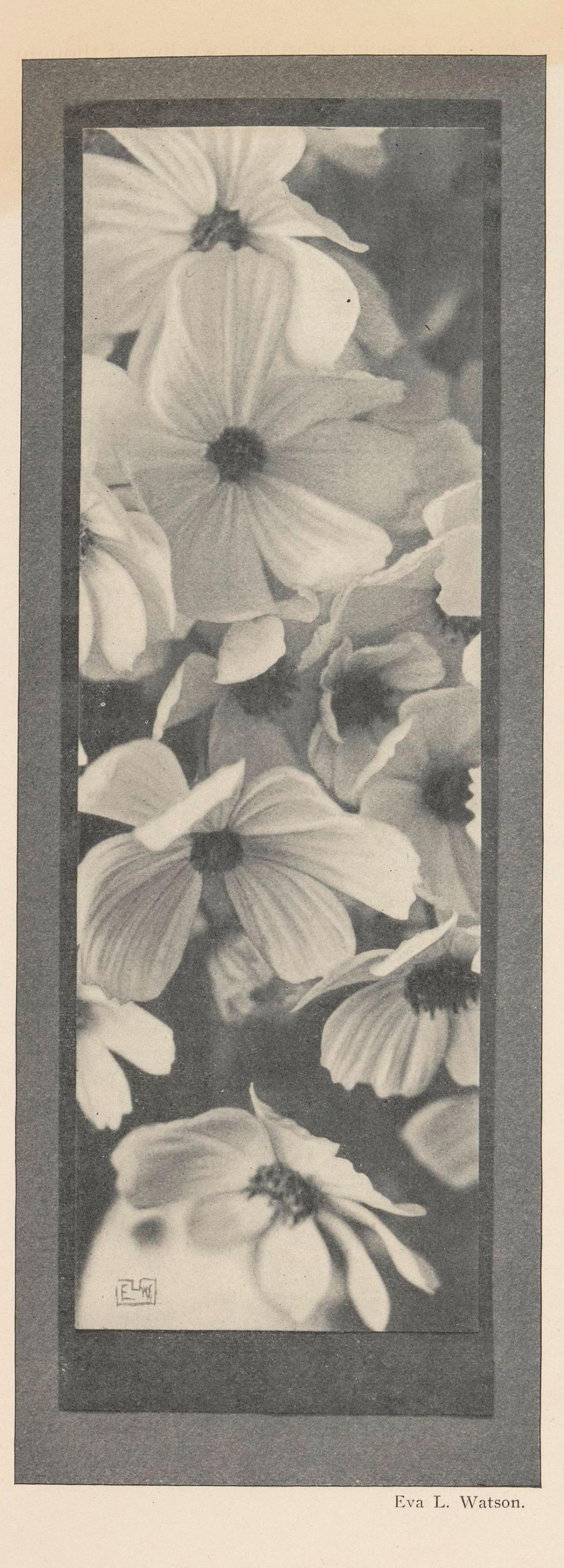

Eva Watson-Schütze (born, Eva Lawrence Watson) (1867–1935)
In 1883, when Eva Watson was sixteen, she enrolled in the Pennsylvania Academy of the Fine Arts in Philadelphia, where she studied under well-known painter and photographer Thomas Eakins. Her interests at that time were watercolor and oil painting, and it’s unknown if she took any interests in Eakins’ photography.
Around the 1890s Watson began to develop a passion for photography, and soon she decided to make it her career. Between 1894 and 1896 she shared a photographic studio with Amelia Van Buren, another Academy alumna, in Philadelphia, and the following year she opened her own portrait studio. She quickly became known for her pictorialist style, and soon her studio was known as a gathering place for photographers who championed this aesthetic vision.
In 1897 she wrote to photographer Frances Benjamin Johnston about her belief in women’s future in photography: “There will be a new era, and women will fly into photography.”
In 1898 six of her photographs were chosen to be exhibited at the first Philadelphia Photographic Salon, where she exhibited under the name Eva Lawrence Watson. It was through this exhibition that she became acquainted with Alfred Stieglitz, who was one of the judges for the exhibit.
In 1899 she was elected as a member of the Photographic Society of Philadelphia. Photographer and critic Joseph Keiley praised the work she exhibited that year, saying she showed “delicate taste and artistic originality”.
The following year she was a member of the jury for the Philadelphia Photographic Salon. A sign of her stature as a photographer at that time may be seen by looking at the other members of the jury, who were Alfred Stieglitz, Gertrude Kasebier, Frank Eugene and Clarence H. White.
In 1900 Johnston asked her to submit work for a groundbreaking exhibition of American women photographers in Paris. Watson objected at first, saying “It has been one of my special hobbies – and one I have been very emphatic about, not to have my work represented as ‘women’s work’. I want [my work] judged by only one standard irrespective of sex.” Johnston persisted, however, and Watson had twelve prints – the largest number of any photographer – in the show that took place in 1901.
In 1901 she married Professor Martin Schütze, a German-born trained lawyer who had received his Ph.D. in German literature from the University of Pennsylvania in 1899. He took a teaching position in Chicago, where the couple soon moved.
That same year she was elected a member of The Linked Ring. She found the ability to correspond with some of the most progressive photographers of the day very invigorating, and she began to look for similar connections in the U.S.
In 1902 she suggested the idea of forming an association of independent and like-minded photographers to Alfred Stieglitz. They corresponded several times about this idea, and by the end of the year she joined Stieglitz as one of the founding members of the famous Photo-Secession.
Since Watson-Schütze’s death there have been two retrospective exhibitions of her photographs: Eva Watson-Schütze, Chicago Photo-Secessionist, at the University of Chicago Library in 1985, and Eva Watson-Schütze, Photographer, at the Samuel Dorsky Museum Art at the State University of New York at New Paltz in 2009.
Her works were also included in exhibits at the National Museum of Women in the Arts in Washington, DC. [quoted from Wikipedia website]
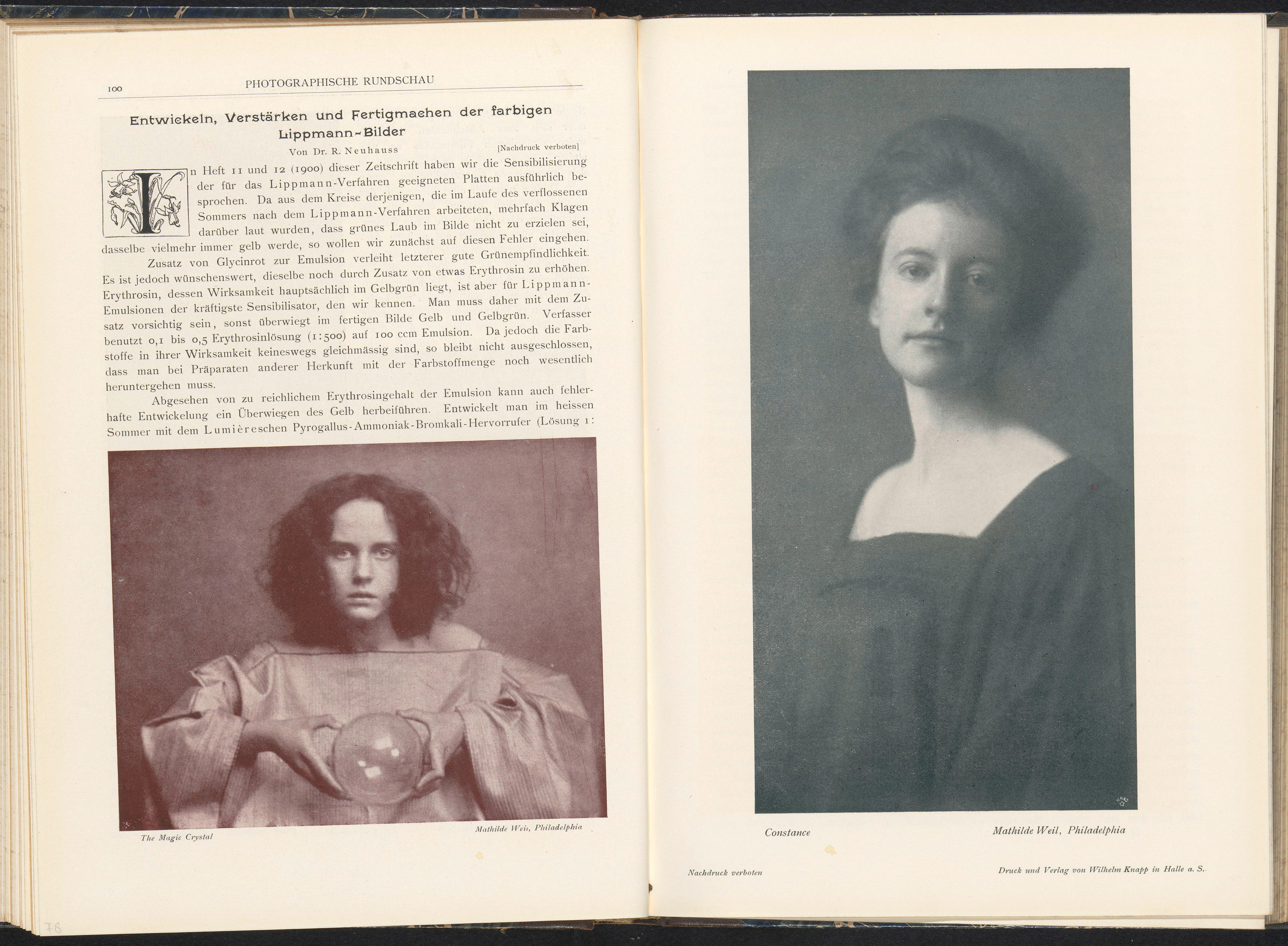
![Mathilde Weil :: The Magic Crystal [Portret van een onbekende vrouw met een glazen bol / Portrait of an unknown woman with a crystal ball], ca. 1896 - in or before 1901. This work belongs to Photographische Rundschau: Zeitschrift für Freunde der Photographie, 1901. | Rijksmuseum](https://unregardoblique.com/wp-content/uploads/2022/08/portret-van-een-onbekende-vrouw-met-een-glazen-bol-mathilde-weil-c.-1896-in-or-before-1901-rijksmuseumcrp.jpg)
![Mathilde Weil :: Constance [Portret van een onbekende vrouw / Portrait of an unknown woman], ca. 1896 - in or before 1901. This work belongs to Photographische Rundschau: Zeitschrift für Freunde der Photographie, 1901. | src Rijksmuseum](https://live.staticflickr.com/65535/52260781178_9c84c1cbd2_o.jpg)
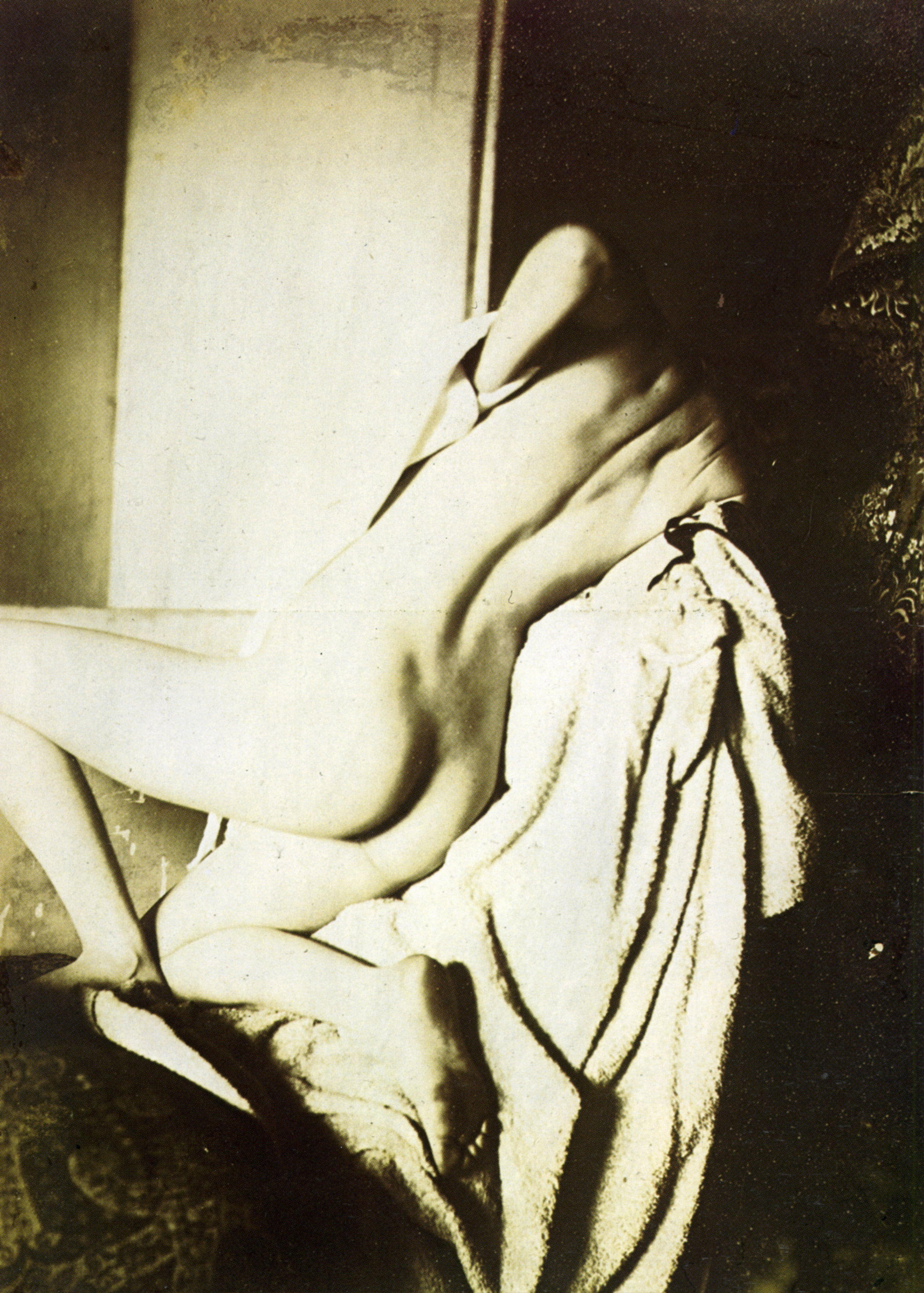
![George H. Breitner :: [Geesje Kwak in Japanese kimono] [Geesje Kwak in Japanse kimono], 1889-1895. Universitaire Bibliotheken Leiden](https://unregardoblique.com/wp-content/uploads/2022/07/g.h.-breitner-geesje-kwak-in-japanse-kimono-1893-1895.-leiden-university-library.crp_.jpg?w=880)
![George H. Breitner :: [Geesje Kwak in Japanese kimono in front of a folding screen] [Geesje Kwak in Japanse kimono voor kamerscherm], 1889-1913. Universitaire Bibliotheken Leiden](https://unregardoblique.com/wp-content/uploads/2022/07/george-h.-breitner-geesje-kwak-in-japanse-kimono-voor-kamerscherm-obj-datastream.crp_.jpg)
![George H. Breitner :: [Geesje Kwak in Japanese kimono in front of a folding screen] [Geesje Kwak in Japanse kimono voor kamerscherm], 1889-1913. Universitaire Bibliotheken Leiden [full size]](https://live.staticflickr.com/65535/52208601699_abacc299c8_o.jpg)
![George H. Breitner :: [Geesje Kwak in Japanese kimono] [Geesje Kwak in Japanse kimono], 1889-1895. Universitaire Bibliotheken Leiden](https://unregardoblique.com/wp-content/uploads/2022/07/g.h.-breitner-geesje-kwak-in-japanse-kimono-1893-1895.-leiden-university-library.crp_.jpg)
![George H. Breitner :: [Geesje Kwak in Japanese kimono] [Geesje Kwak in Japanse kimono], 1889-1895. Universitaire Bibliotheken Leiden [full size]](https://live.staticflickr.com/65535/52207325667_51f44b3a0a_o.jpg)
![George H. Breitner :: [Geesje Kwak in profile to the left] [Geesje Kwak, en-profil naar links], 1889-1913. Universitaire Bibliotheken Leiden](https://live.staticflickr.com/65535/52214393447_cb3de95dc3_o.jpg)
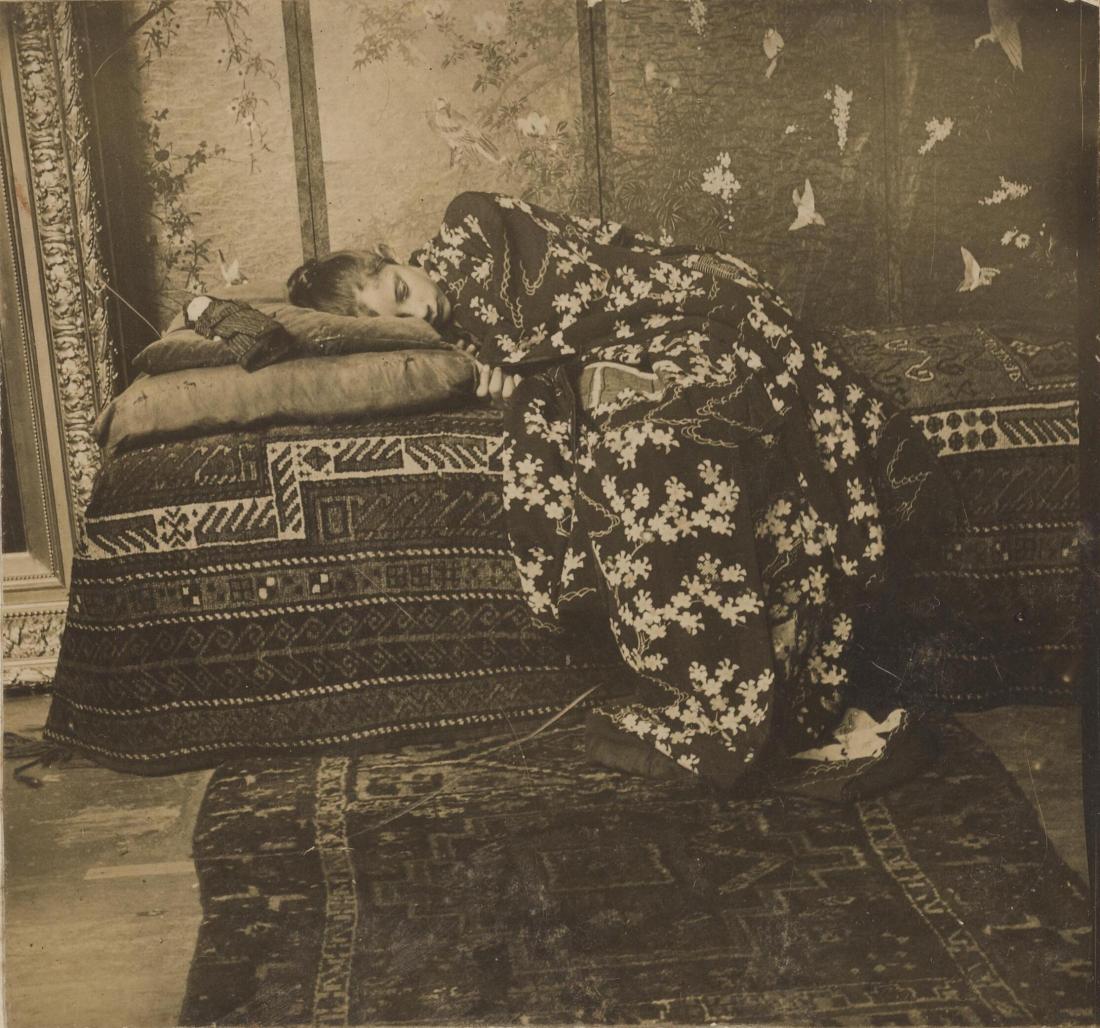
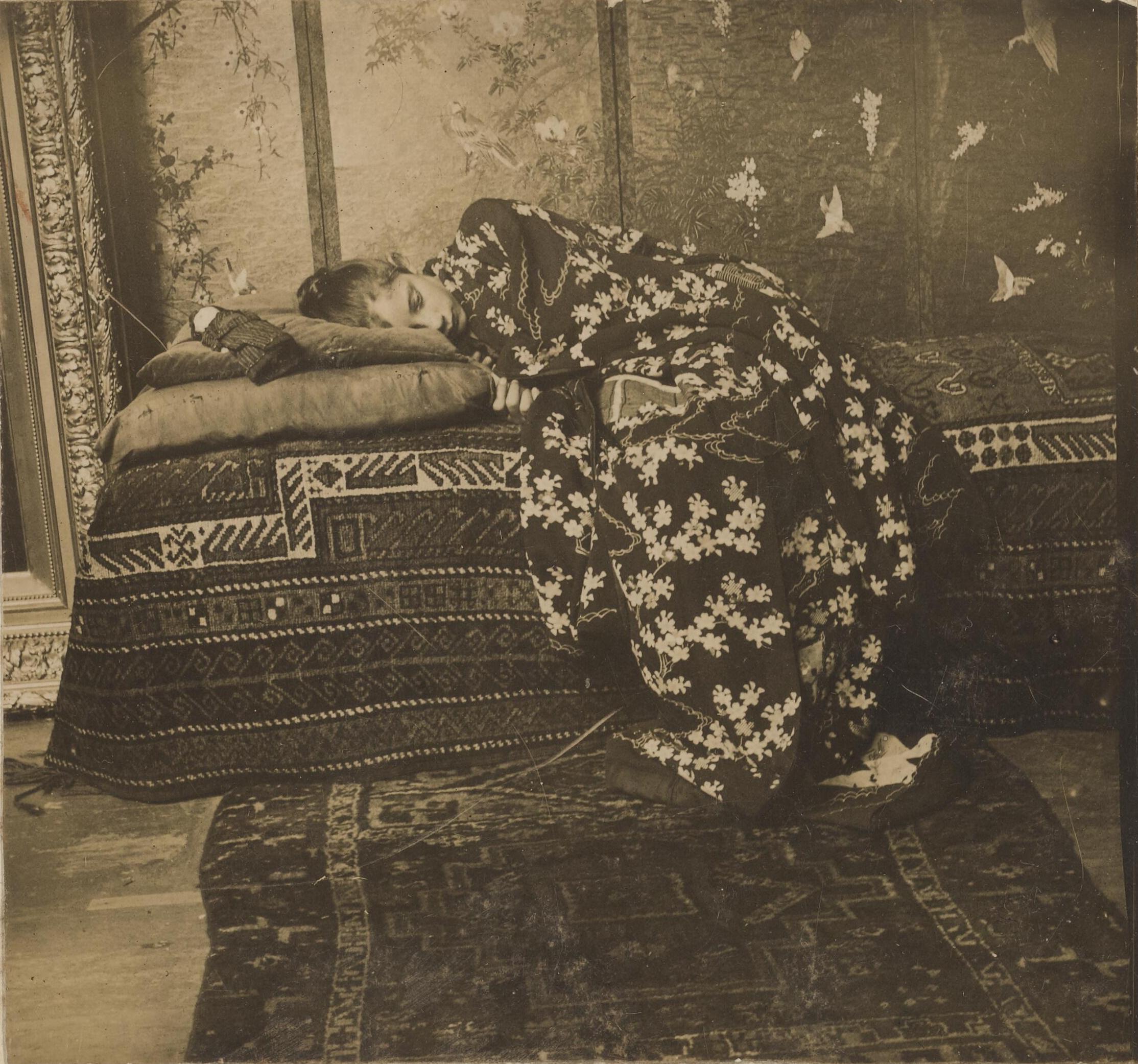

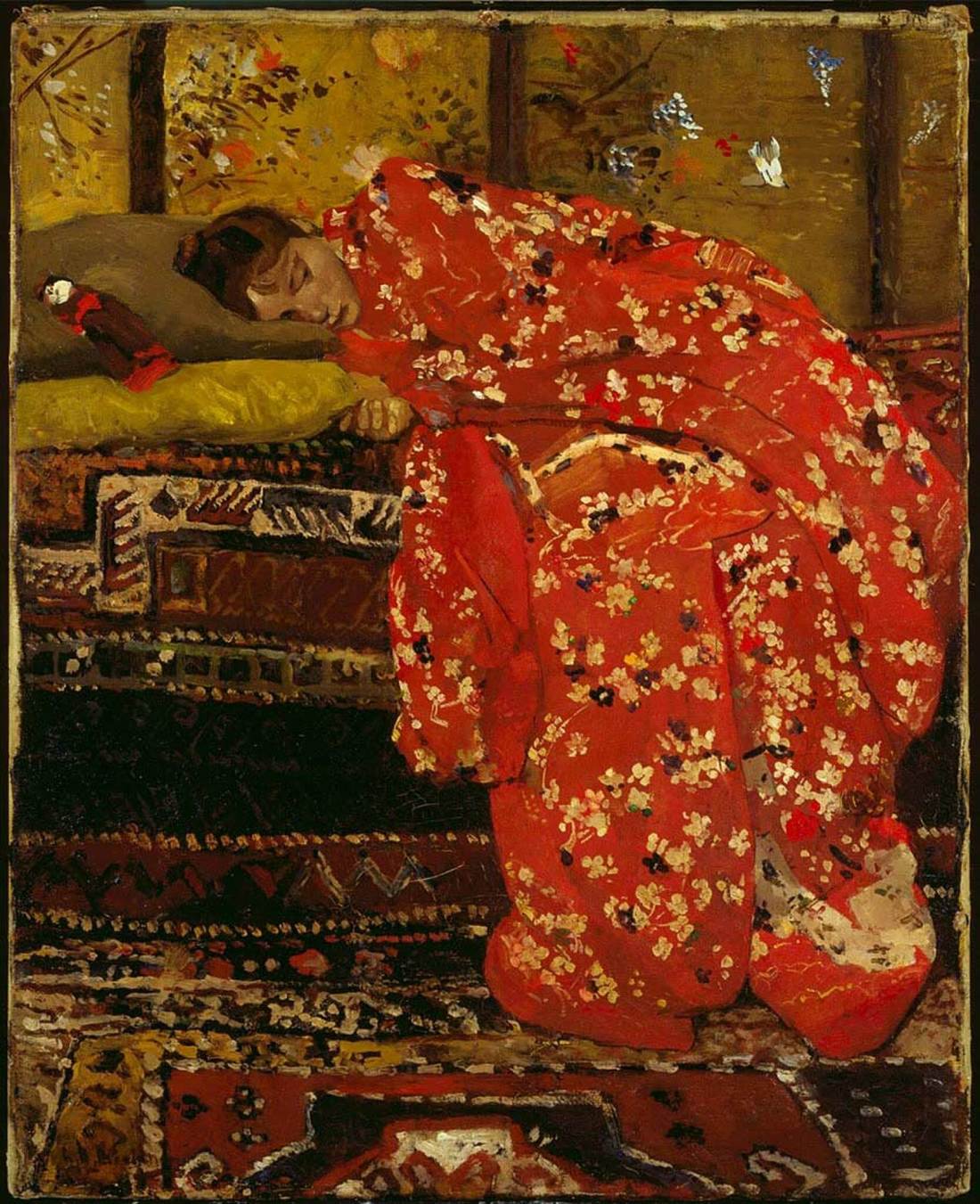
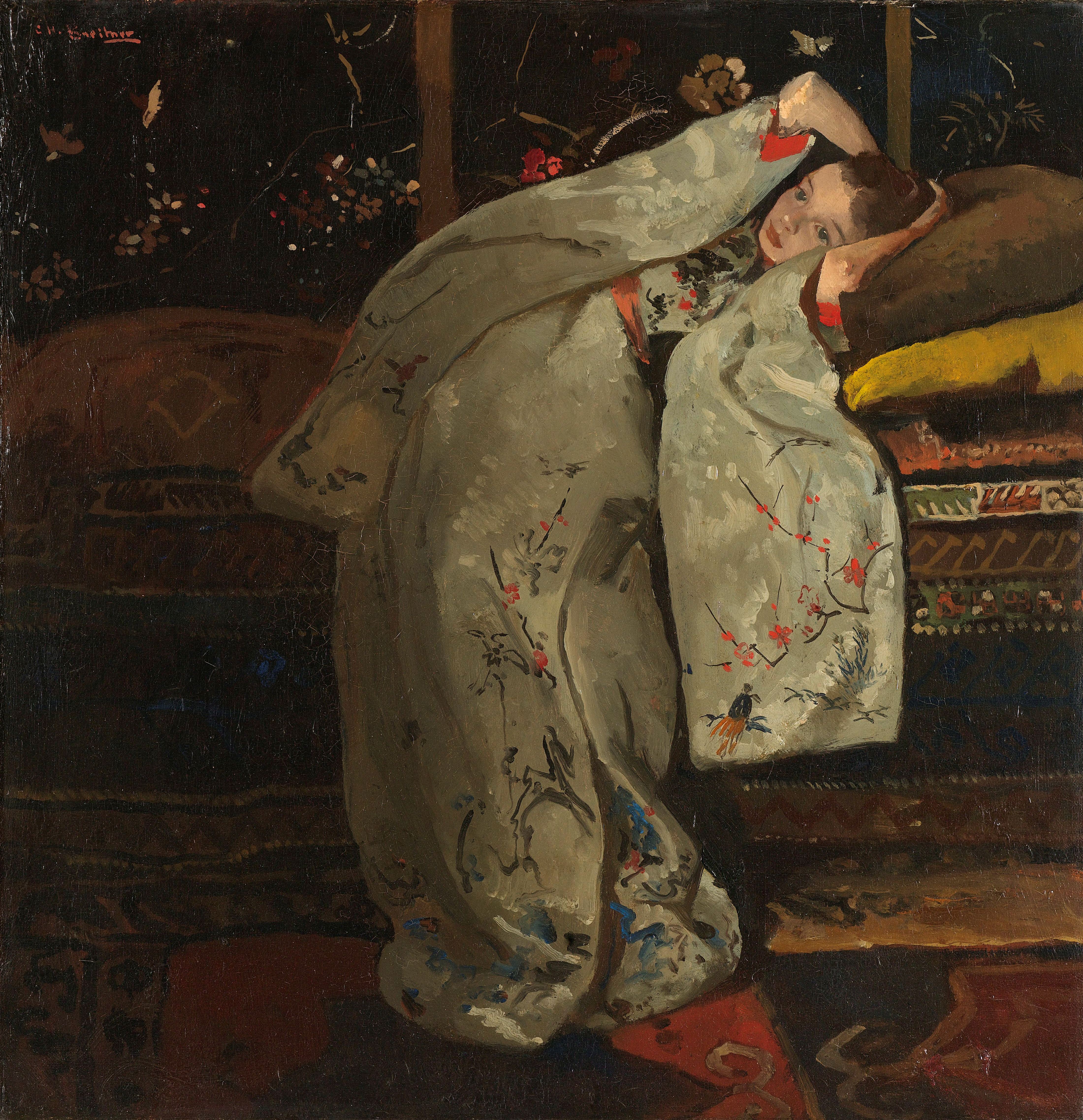
Inspired by Japanese prints, between 1893 and 1896 Breitner made thirteen paintings of a girl in a kimono. She assumes different poses and the kimono often has a different colour. What catches the eye here is the embroidered, white silk kimono with red-trimmed sleeves and an orange sash. The dreamy girl is sixteen-year-old Geesje Kwak, a seamstress and one of Breitner’s regular models. [quoted from Rijksmuseum]

The Girl in a Kimono series was not a success with critics initially, but today they are considered the pinnacle of the Dutch expression of Japonisme in the fine arts. The Rijksmuseum celebrated the series in 2016 with an exhibition that brought together all of the Girl in a Kimono paintings: “Breitner: meisje in kimono”.
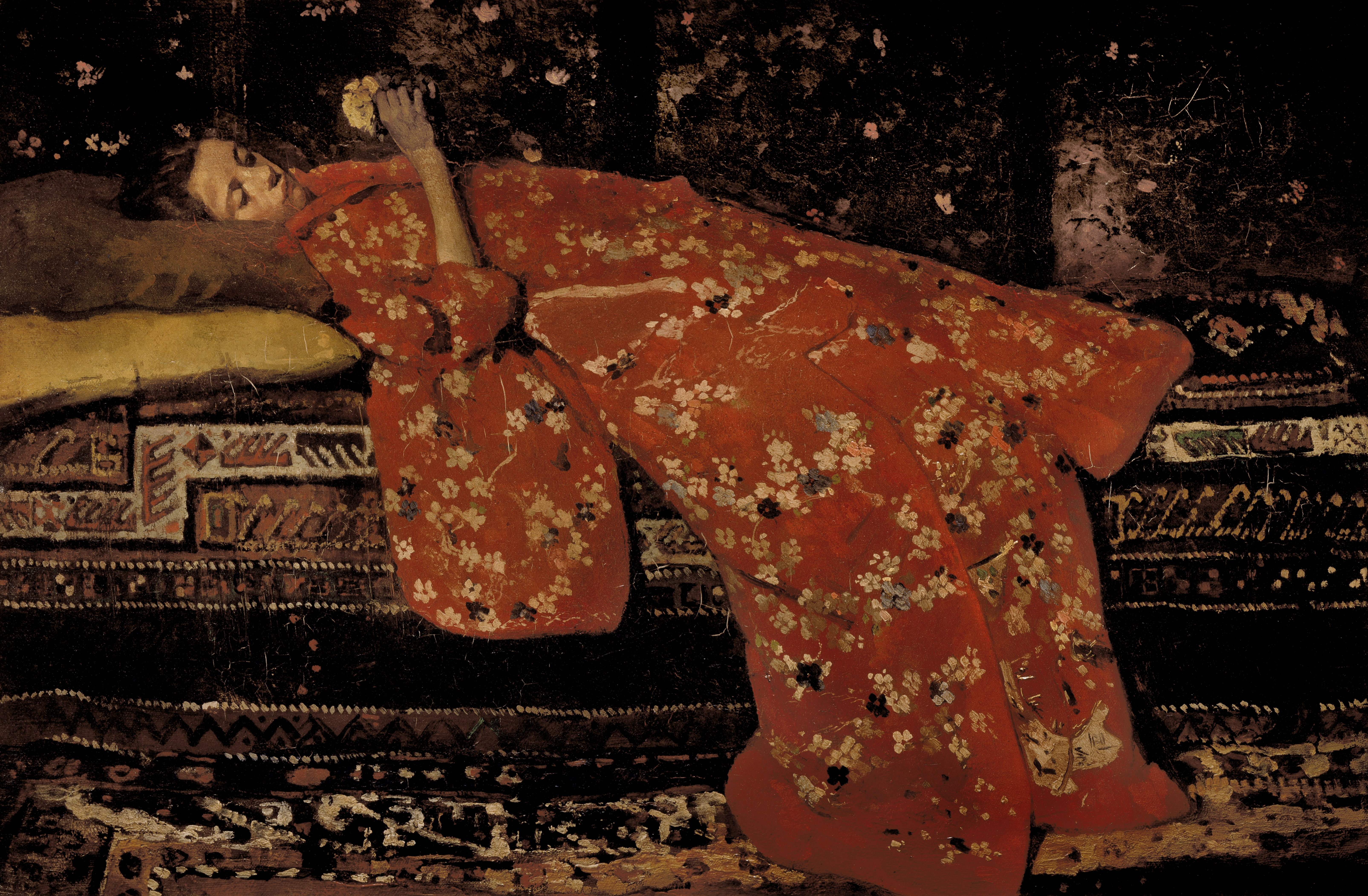
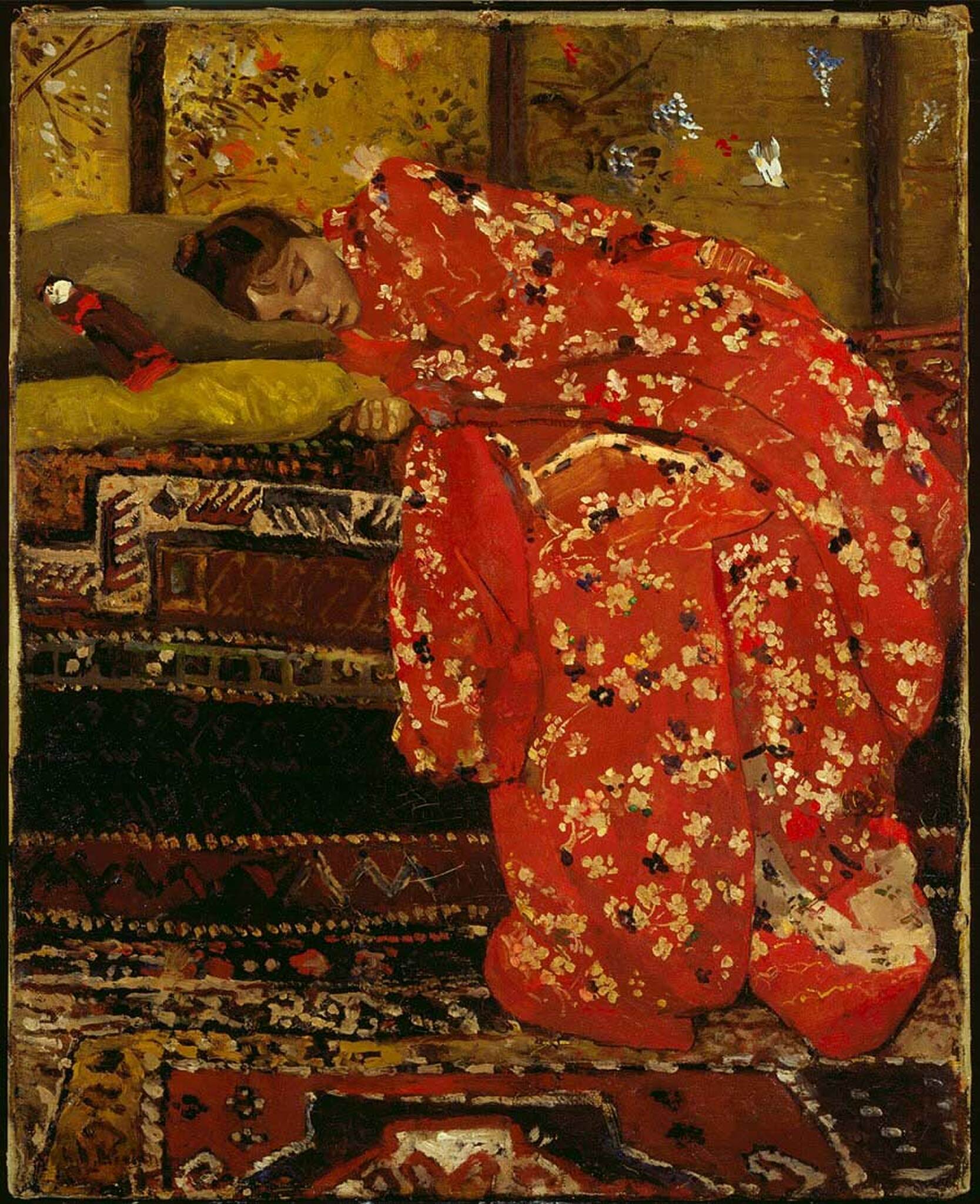
After the reopening of Japan to foreign trade in the 1850s and 1860s, European artists like Claude Monet, James McNeill Whistler and Vincent van Gogh were influenced by Japanese fine and decorative arts. One of Van Gogh’s friends and compatriots, George Hendrik Breitner, was inspired by the Japonisme trend to create a series of 13 paintings of a young girl wearing a kimono.
Breitner was born in Rotterdam in 1857. For the decade between 1876 and 1886 he studied and worked in The Hague where he explored working class areas of the city, sketching the people and places he encountered. He embraced the social realism movement and considered himself le peintre du peuple, the painter of the people. He moved to Amsterdam in 1886 where he was soon able to add photography to drawing and painting. Breitner took pictures of street life, people at work and going about their business in the city, some of the photographs reminiscent of the kind of work Jacob Riis was doing in the crowded and scary tenements of New York City at the same time.
Breitner was one of the first artists to use photos as studies for specific paintings, not just of street scenes but in the studio as well. He integrated his social realist perspective in his studio portraits, making a point of employing models from the working class. One of them was a milliner’s shopgirl named Geesje Kwak who, along with her sister Anna, posed for Breitner in around 1893-1895 when she was 16-18 years old. It was Geesje Kwak who would be immortalized as the girl in a kimono.
Japonisme had intrigued Breitner since he’d traveled to Paris in 1884. He collected Japanese woodcuts and in 1892 visited an exhibition of Japanese prints in The Hague. The show was his immediate inspiration for the kimono series. He acquired several Japanese kimonos and a pair of folding screens that he set up in his studio on the Lauriergracht canal. Geesje Kwak posed in the kimonos — one red, one white, one blue — against the backdrop of the folding screens on a bed draped in oriental rugs. She was paid for her time and there was no hanky panky going on; all strictly professional. Breitner kept meticulous records of which models posed for him when, for how long and at what rate.
Breitner’s work with Geesje Kwak ended when she emigrated to South Africa with her younger sister Niesje in 1895. Geesje died of tuberculosis in Pretoria in 1899, just shy of her 22nd birthday. quoted from The History Blog
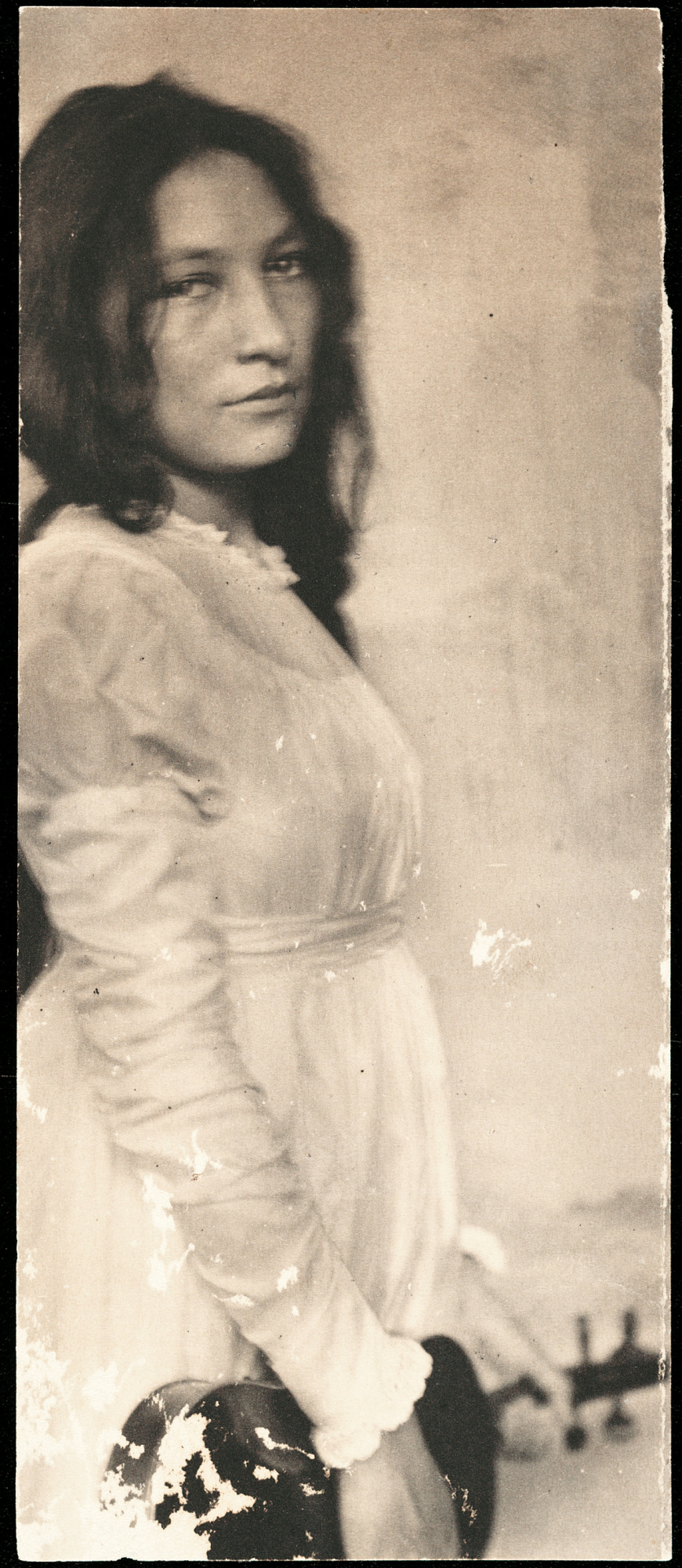
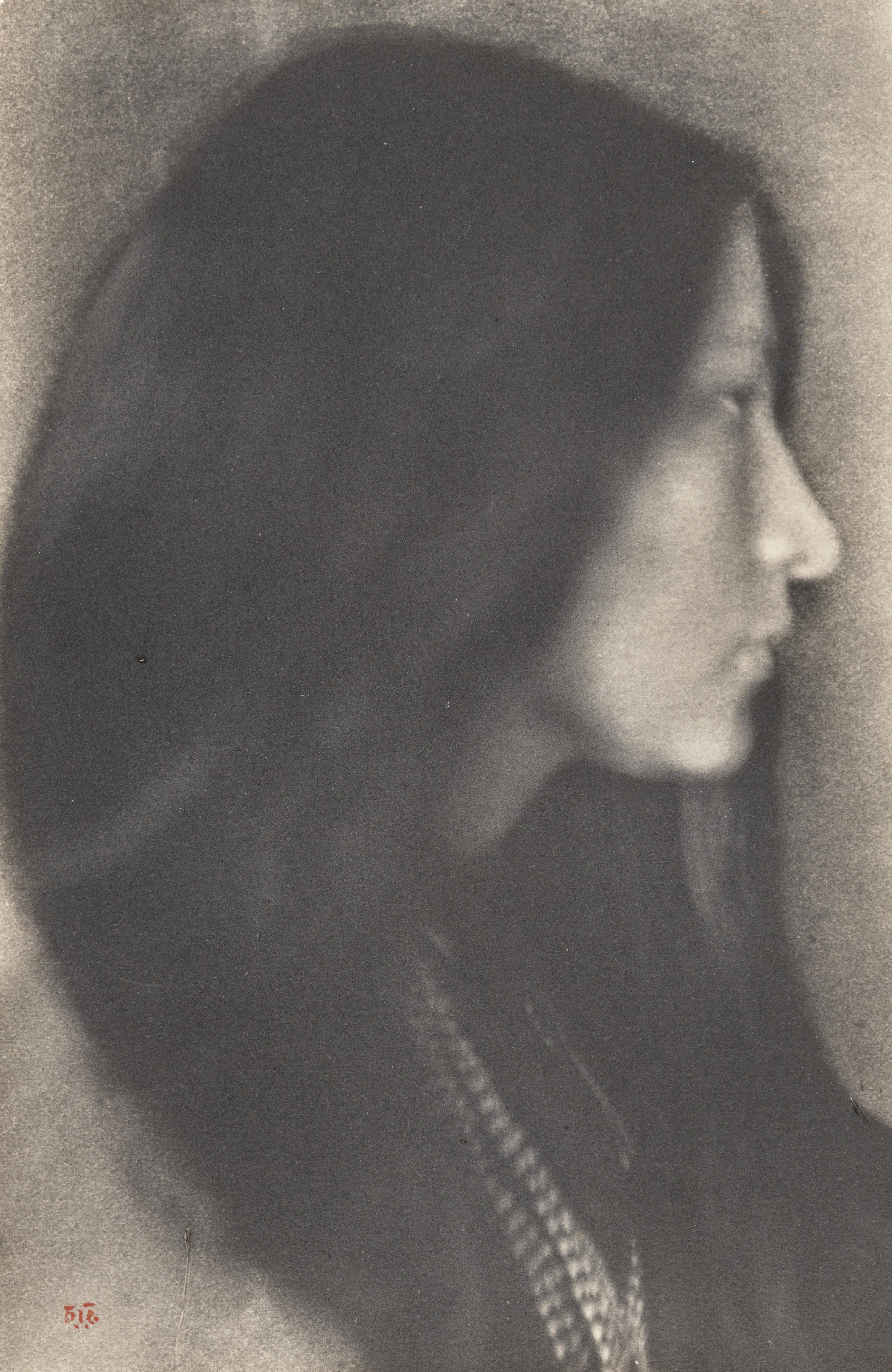
In addition to photographing the Sioux performers sent by Buffalo Bill Cody to her studio, Käsebier was able to arrange a portrait session with Zitkala-Sa, “Red Bird,” also known as Gertrude Simmons (1876-1938), a Yankton Sioux woman of Native American and white ancestry. She was born on the Pine Ridge Reservation in South Dakota, like many of the Sioux traveling with the Wild West show. She was well educated at reservation schools, the Carlisle Indian School, Earlham College in Indiana, and the Boston Conservatory of Music. Zitkala Sa became an accomplished author, musician, composer, and dedicated worker for the reform of United States Indian policies.
Käsebier photographed Zitkala-Sa in tribal dress and western clothing, clearly identifying the two worlds in which this woman lived and worked. In many of the images, Zitkala Sa holds her violin or a book, further indicating her interests. Käsebier experimented with backdrops, including a Victorian floral print, and photographic printing. She used the painterly gum-bichromate process for several of these images, adding increased texture and softer tones to the photographs. (quoted from NMAH)

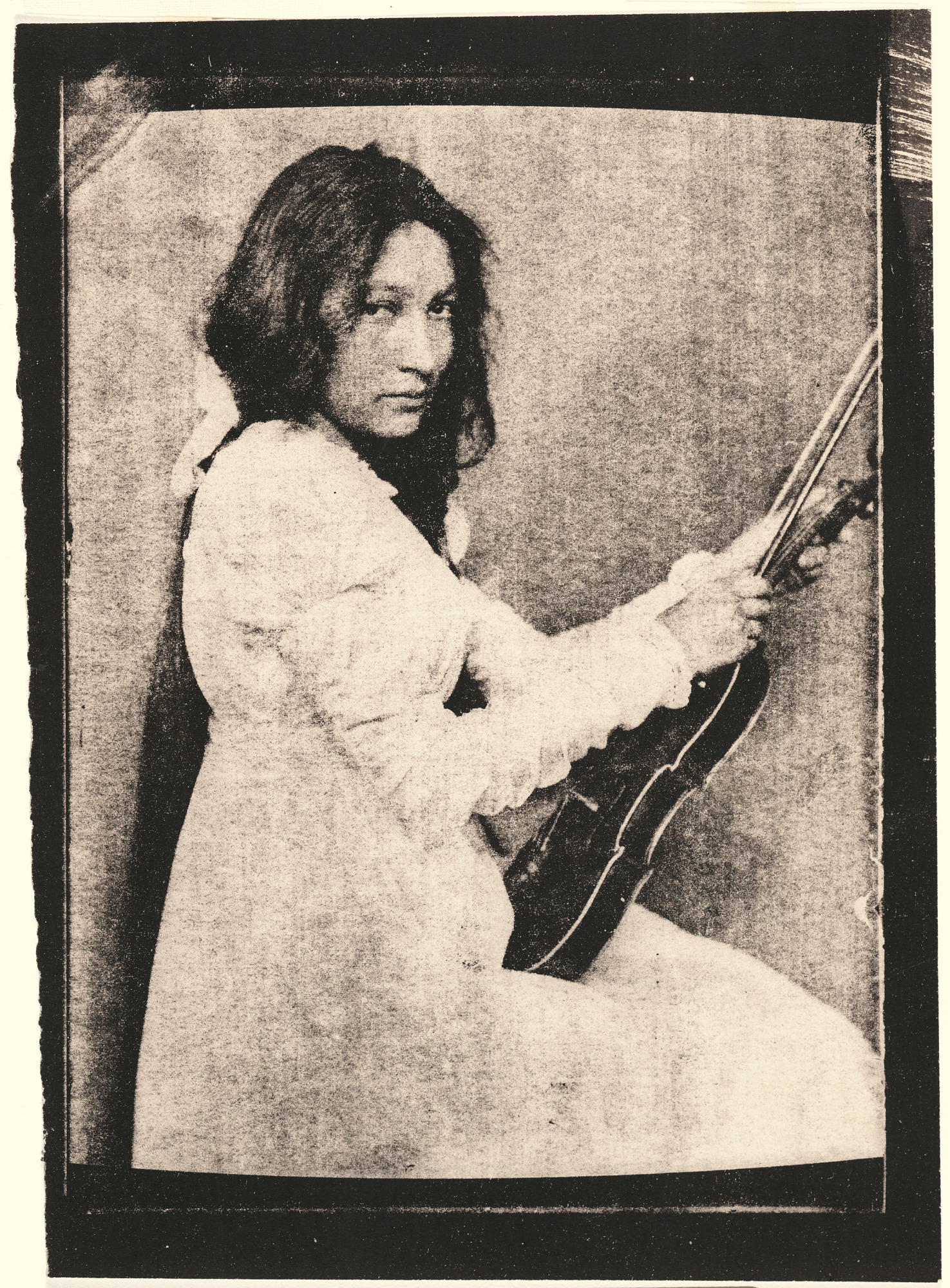
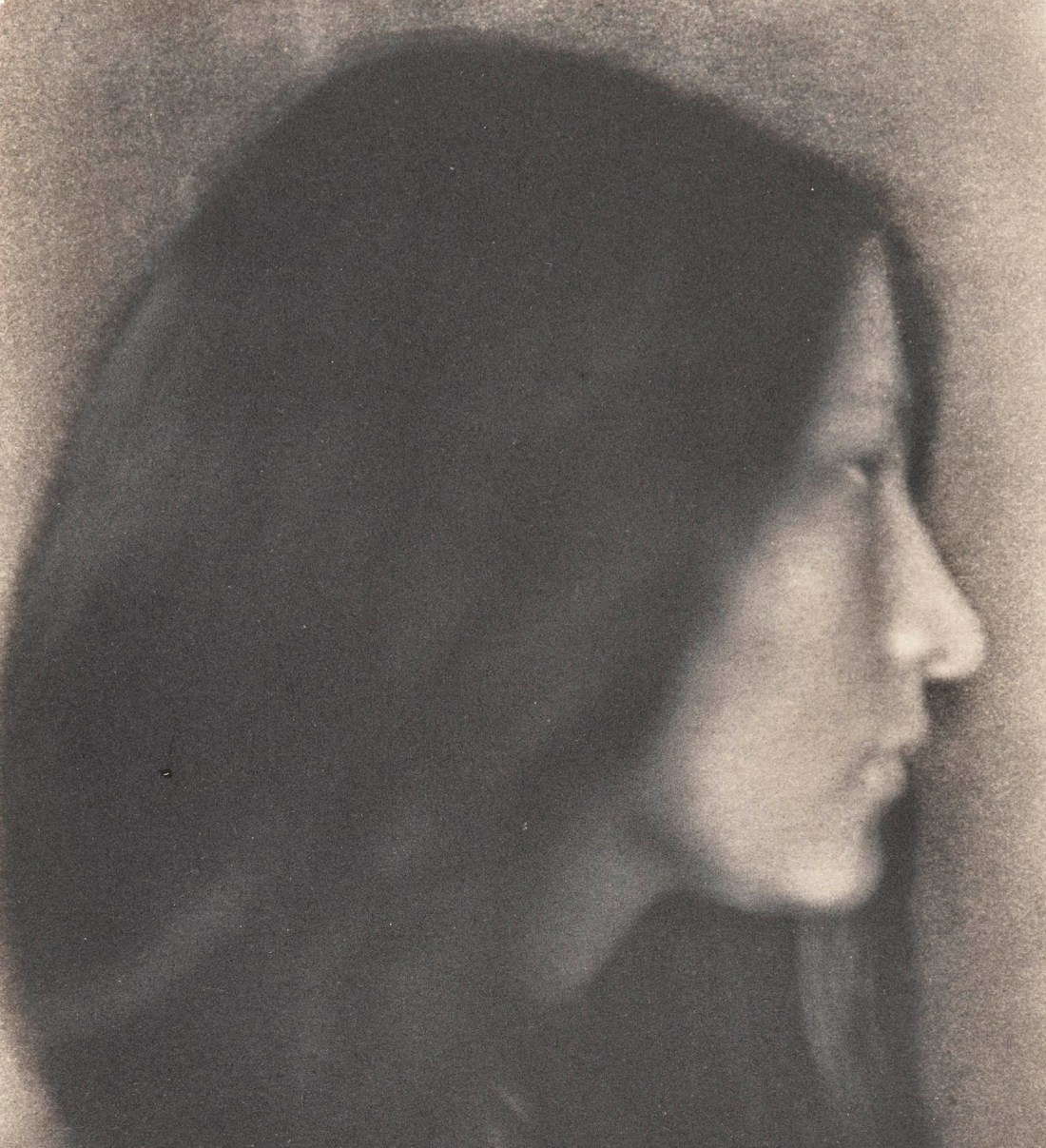
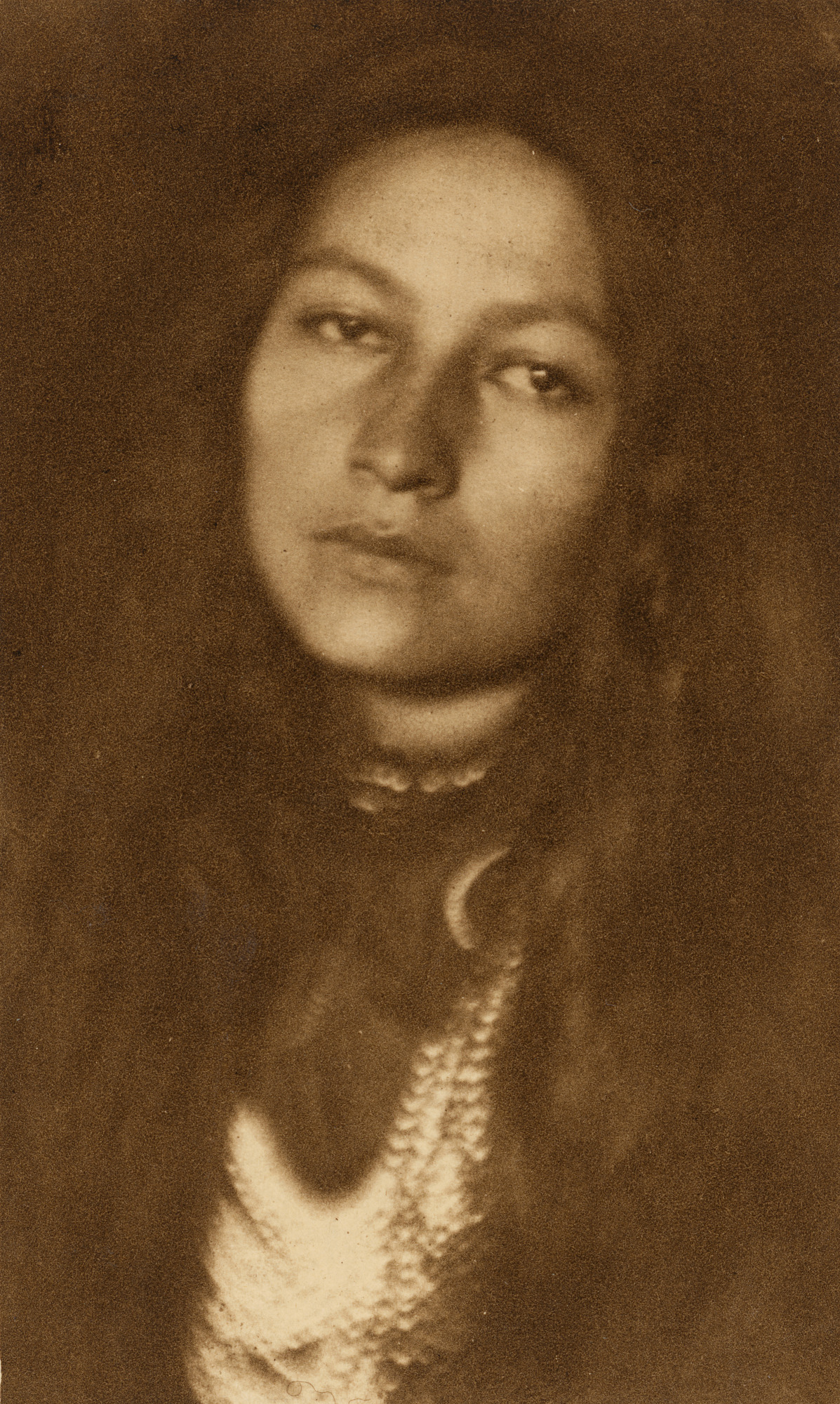
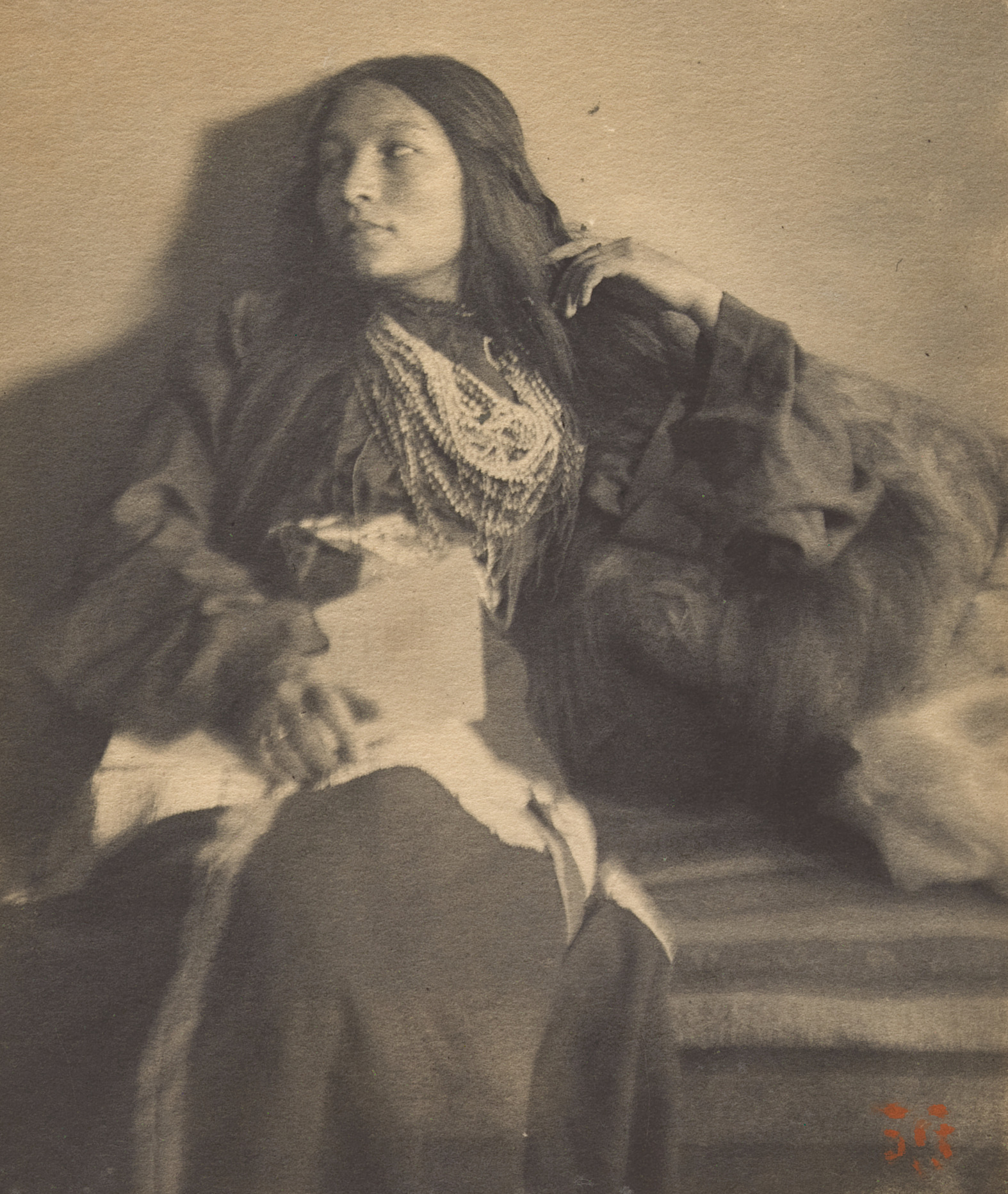
Zitkála-Šá was a pioneer in a generation of Indian rights activists who had graduated from mission and government schools, where children were forbidden from speaking their indigenous native languages. Working together, these intellectual activists representing various tribal backgrounds used their formal educations and flawless English to fight U.S. federal Indian policy and demand social justice. At ease in mainstream and urban (i.e., white) society, they formed professional organizations. For example, the Society of American Indians, founded in 1907, was the first national all-Indian organization to advocate for Indian rights. As one of its leaders, Zitkála-Šá tirelessly fought for Native American citizenship rights, and she was described as “a Jeanne D’Arc to lead her people into citizenship.” Zitkála-Šá later founded one of the most important Native rights organizations, the National Council of American Indians. [quoted from source : NPG]

 un regard oblique