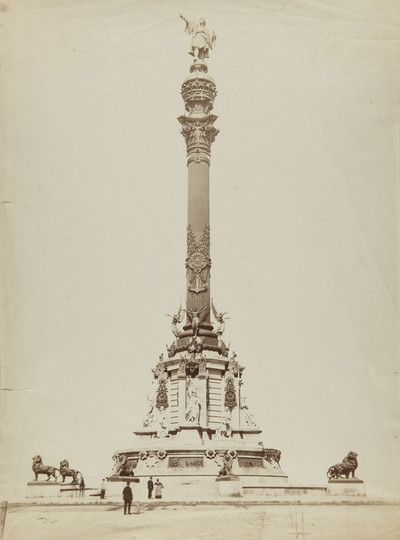
Antoni Esplugas Puig :: Sense títol [Monument a Colom / Columbus Monument], Barcelona, ca. 1890. | src fotografia catalunya
more [+] by this photographer
images that haunt us
Antoni Esplugas Puig :: Sense títol [Monument a Colom / Columbus Monument], Barcelona, ca. 1890. | src fotografia catalunya
more [+] by this photographer
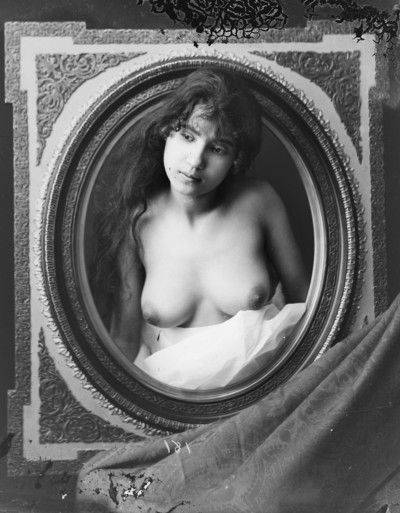
Antoni Esplugas Puig :: Nu femení. Noia sortint d’un marc, 1890-1900. | src fotografia catalunya
more [+] by this photographer


*** for higher resolution right click on images
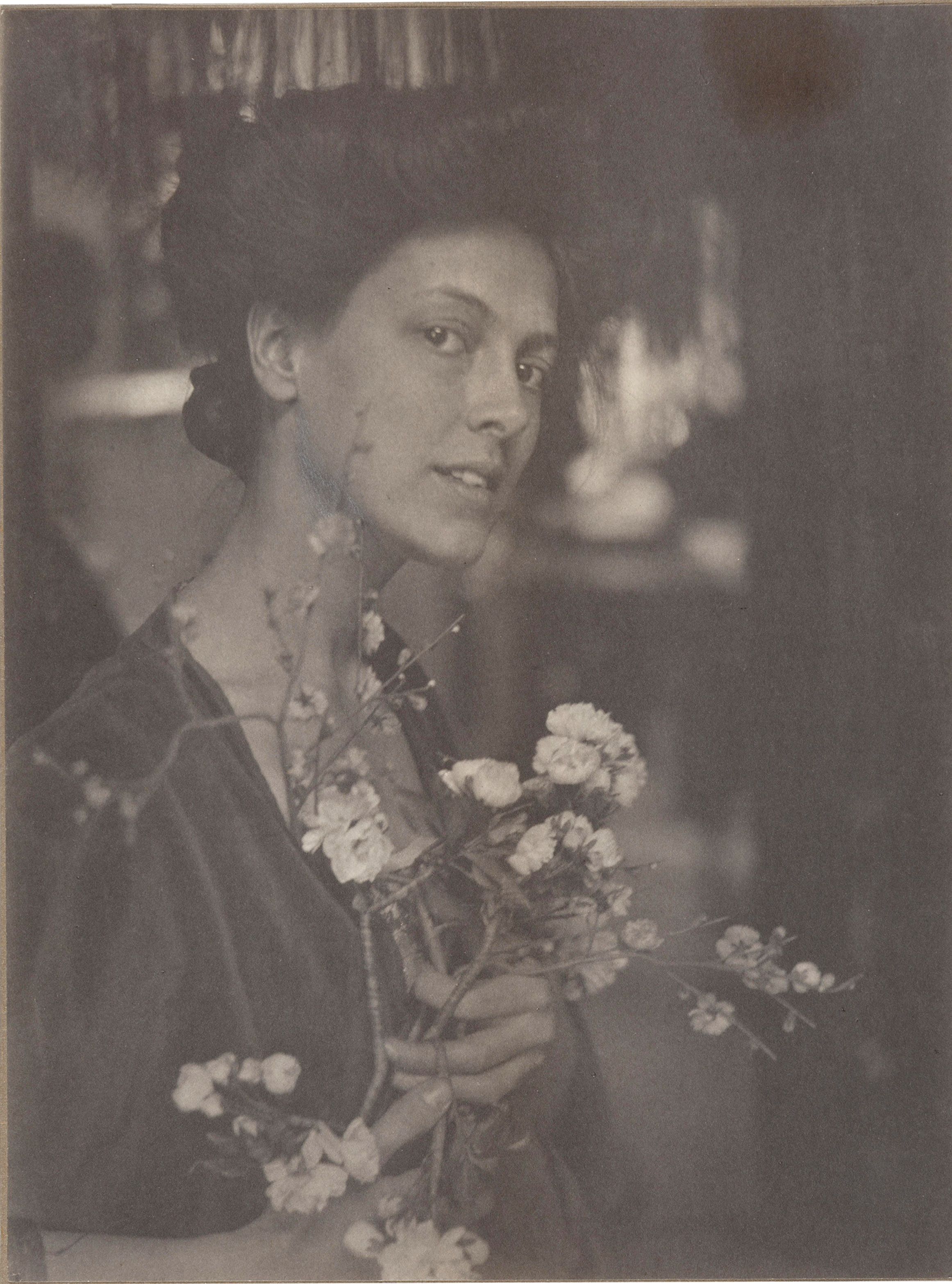
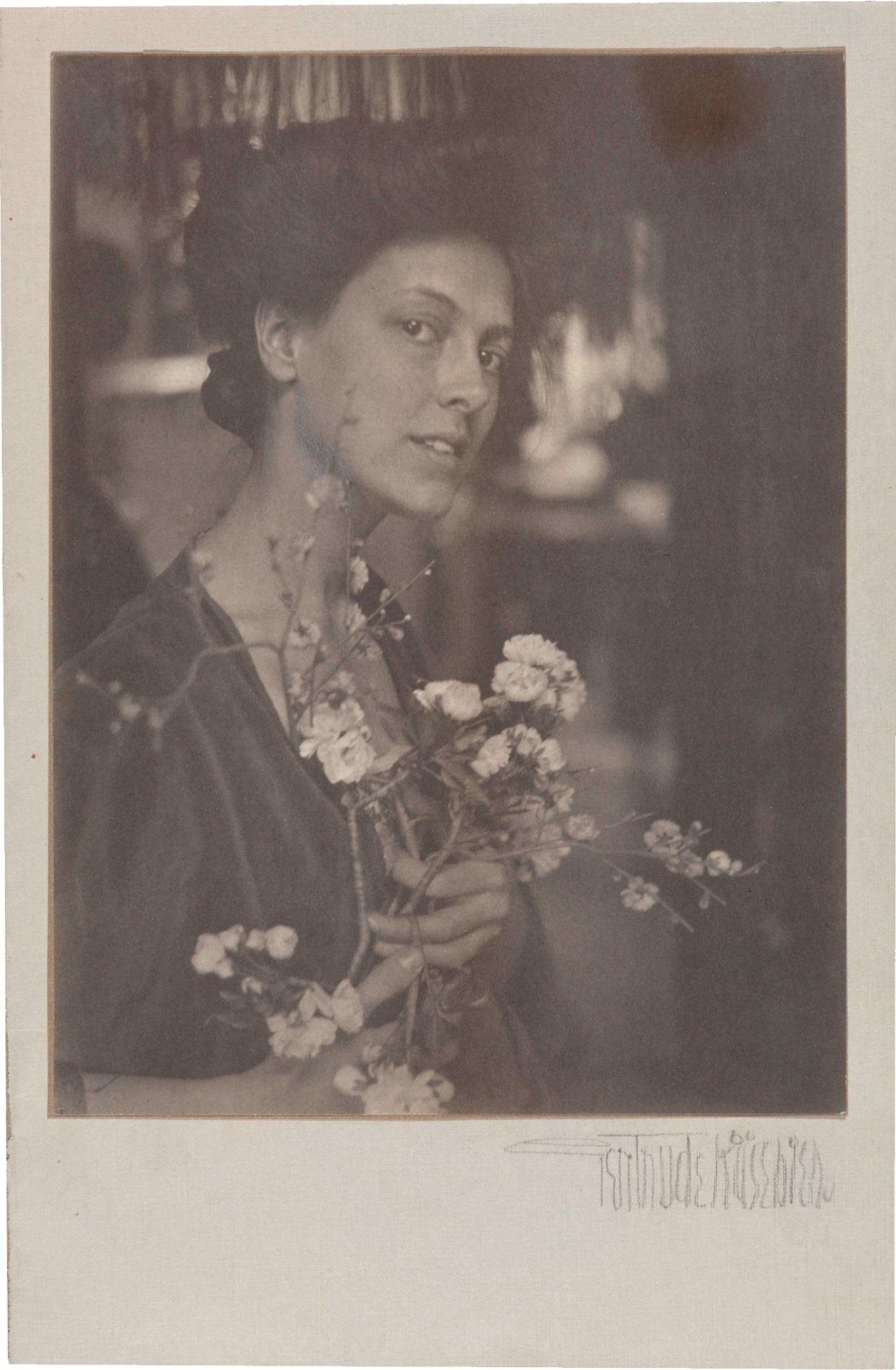
![Gertrude Käsebier :: Portrait of a Lady, ca. 1898. Platinum print. The image was shown at The NY Photography Virtual Fair, sponsored by The Daguerreian Society | src Lunn Ltd. [one of the hosted Dealers]](https://live.staticflickr.com/65535/52157932499_cfbe86a6ae_o.png)
![Gertrude Käsebier :: Portrait of a Lady, ca. 1898. Platinum print. The image was shown at The NY Photography Virtual Fair, sponsored by The Daguerreian Society [full size]](https://live.staticflickr.com/65535/52157699563_56abacba69_o.png)
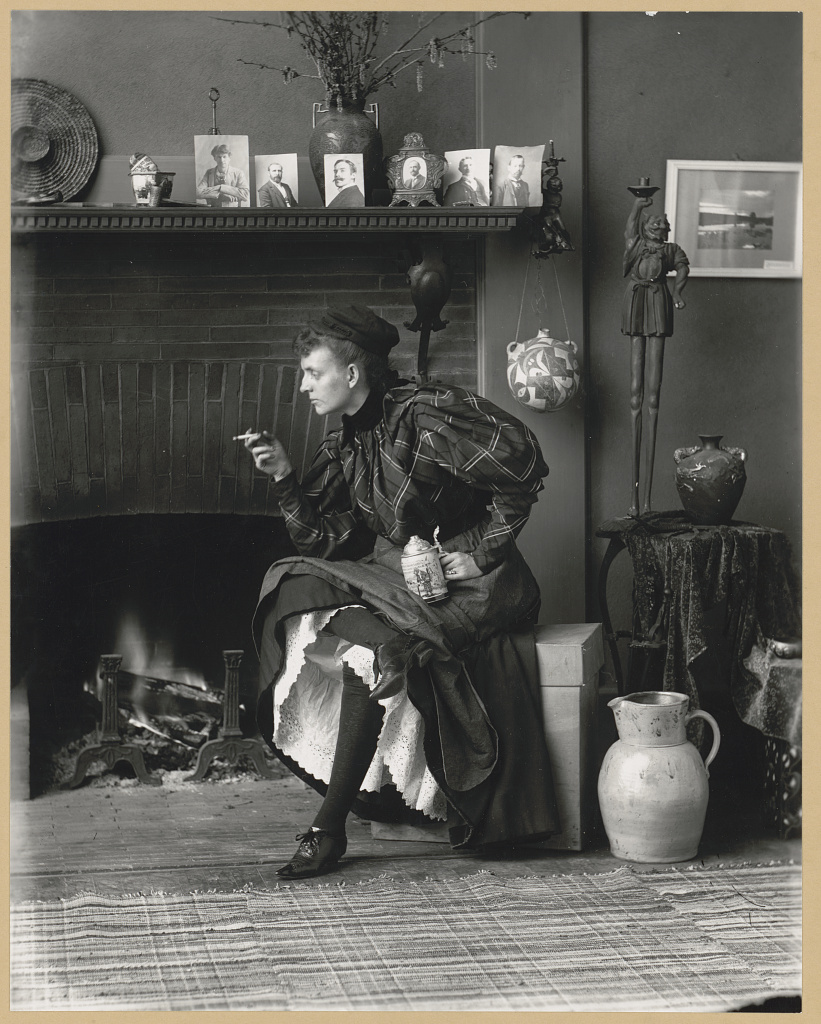

In this self-portrait the photographer Frances Benjamin Johnston poses as an independent ‘new woman.’ On the mantelpiece are six portraits she took of men (from left to right): poet Bliss Carman; A. N. Brown, likely the librarian at the U.S. Naval Academy; Henry Guston Rogers, likely the inventor and playwright Henry Gustave Rogers; architect James Rush Marshall; Smithsonian librarian Frank Phister; and L. M. McCormick, a photographer and member of the Capital Camera Club. [quoted from Library of Congress] permalink

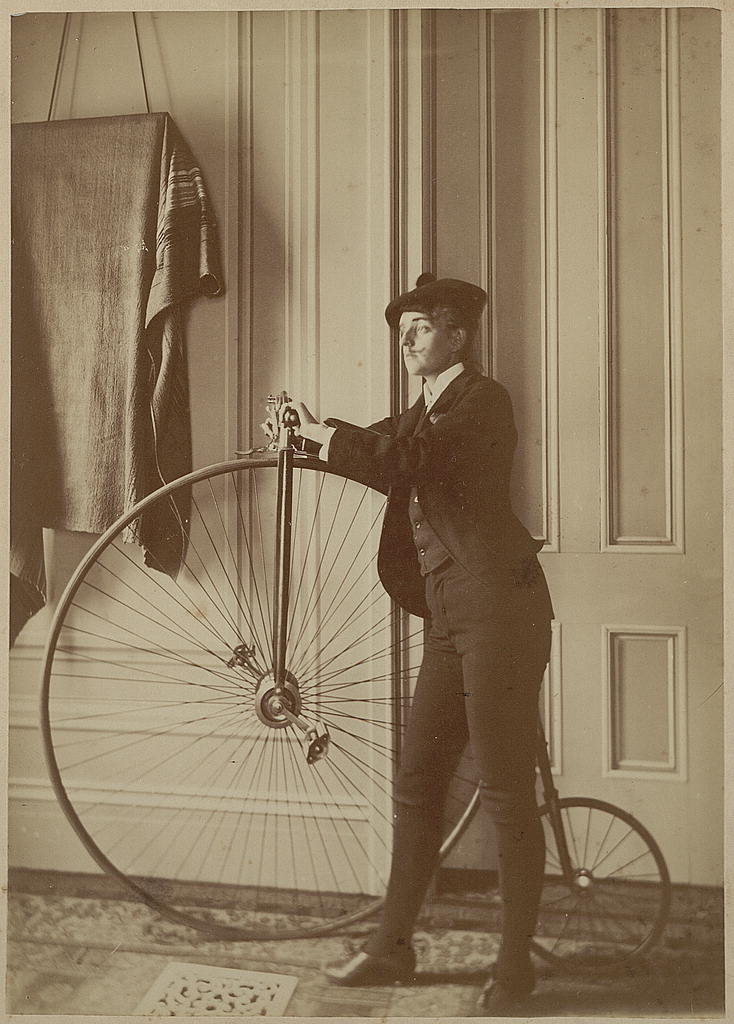
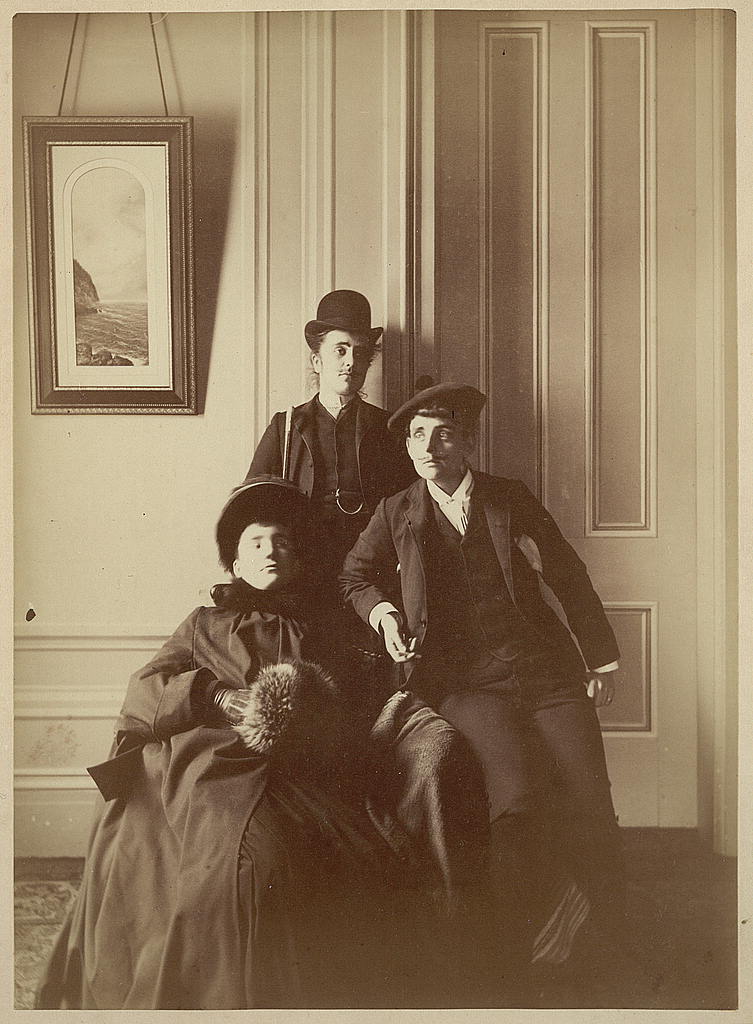
According to Shorpy ─in this website the photograph is titled “Reverso”─ Frances Benjamin Johnston is posing here with two similarly cross-dressing friends. The “lady” is a gent identified in a few other FBJ photos as the illustrator Mills Thompson.
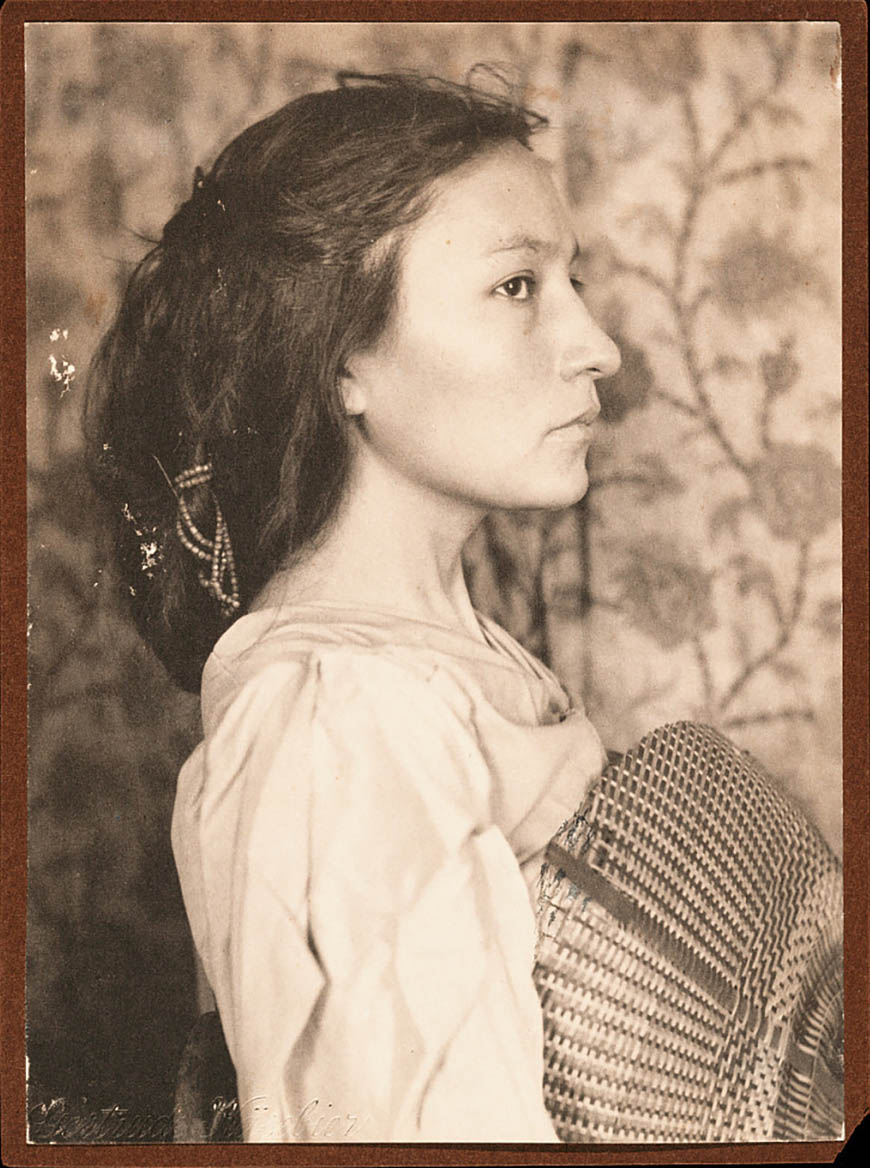
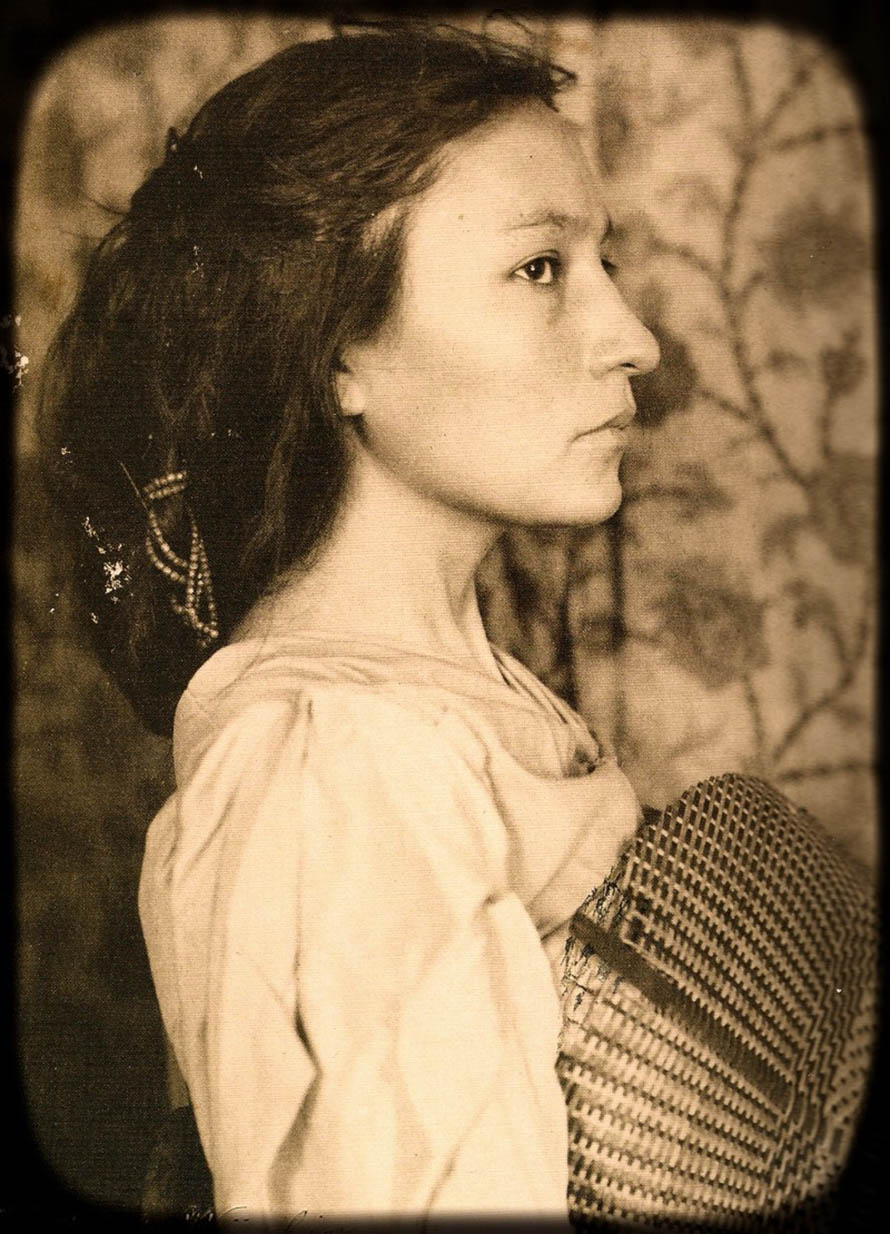
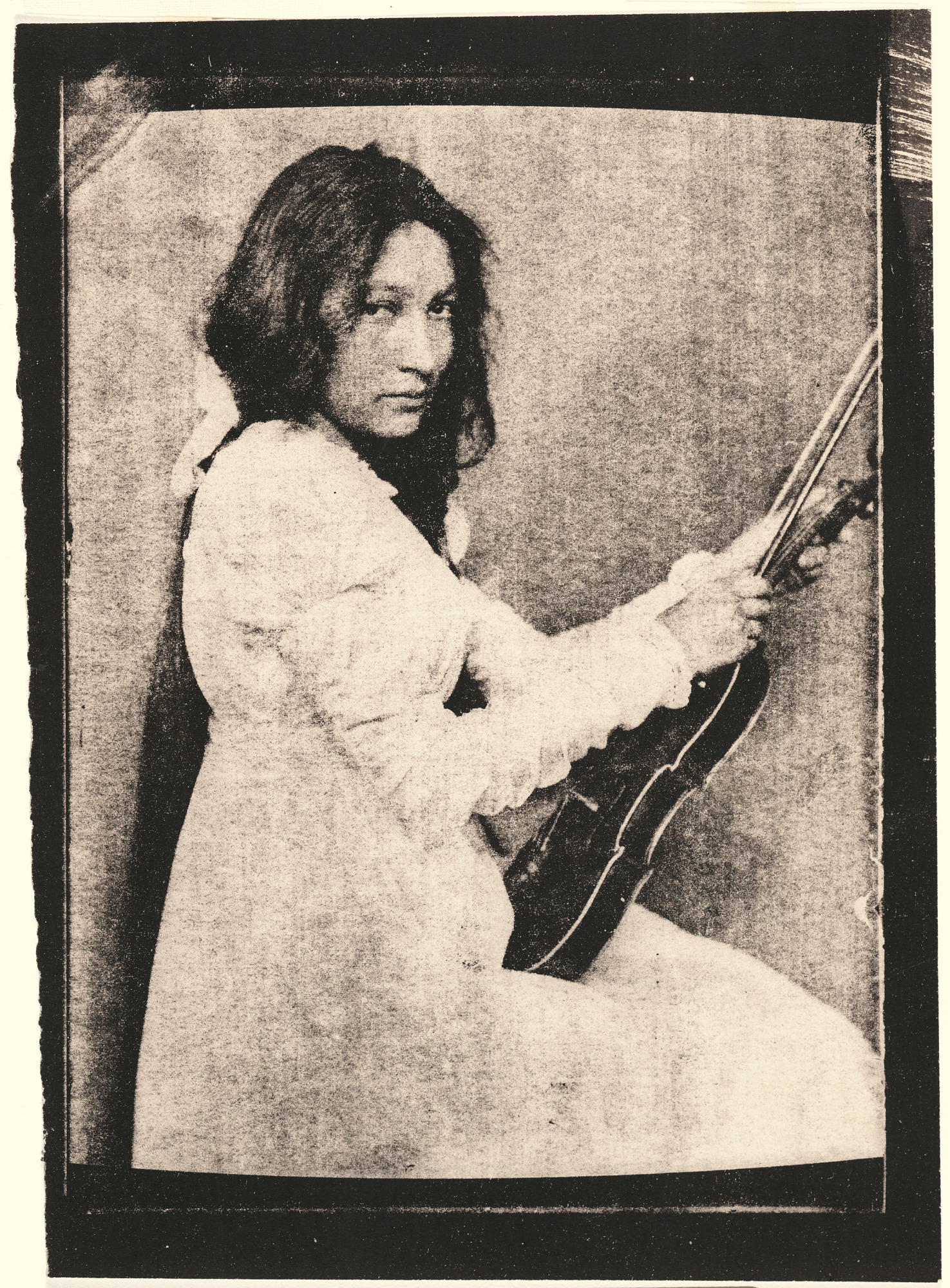
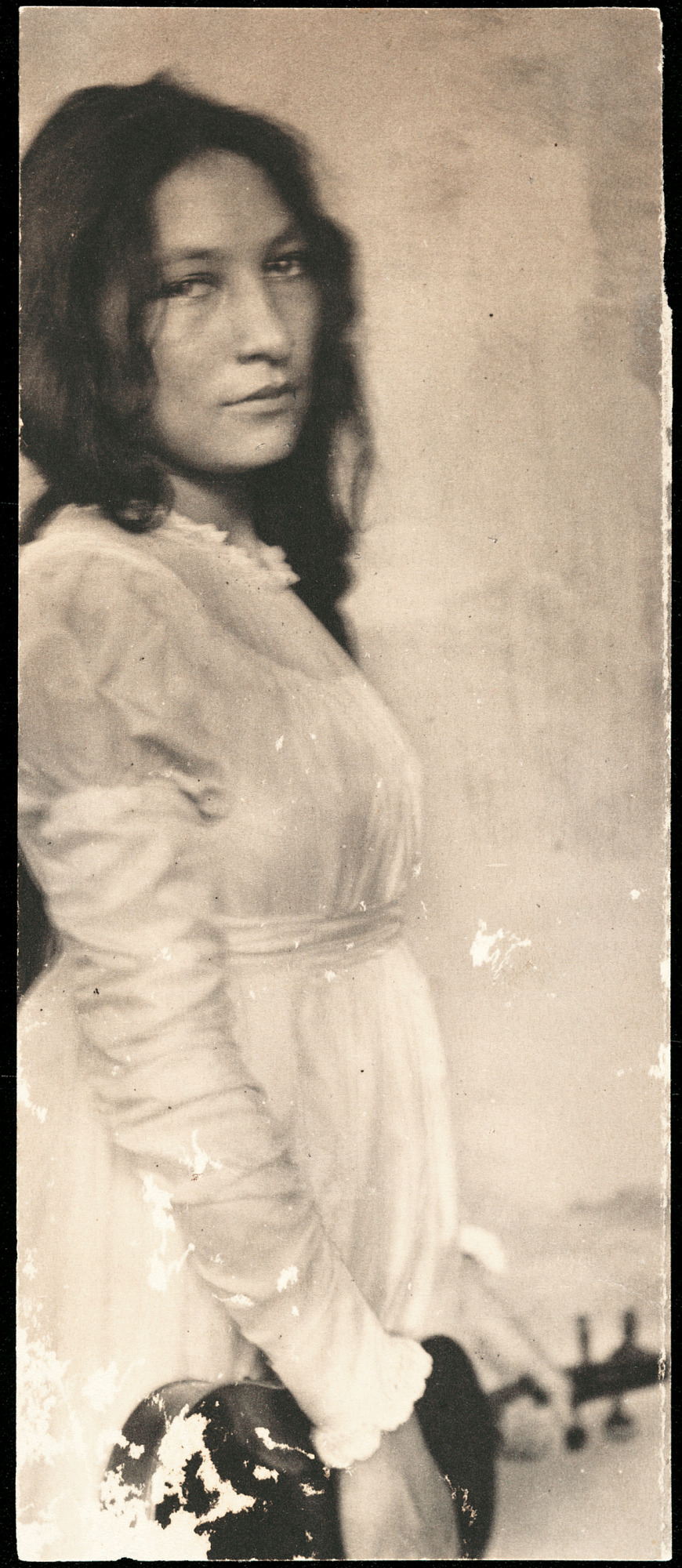
In addition to photographing the Sioux performers sent by Buffalo Bill Cody to her studio, Käsebier was able to arrange a portrait session with Zitkala Sa, “Red Bird,” also known as Gertrude Simmons (1876-1938), a Yankton Sioux woman of Native American and white ancestry. She was born on the Pine Ridge Reservation in South Dakota, like many of the Sioux traveling with the Wild West show. She was well educated at reservation schools, the Carlisle Indian School, Earlham College in Indiana, and the Boston Conservatory of Music. Zitkala Sa became an accomplished author, musician, composer, and dedicated worker for the reform of United States Indian policies.
Käsebier photographed Zitkala Sa in tribal dress and western clothing, clearly identifying the two worlds in which this woman lived and worked. In many of the images, Zitkala Sa holds her violin or a book, further indicating her interests. Käsebier experimented with backdrops, including a Victorian floral print, and photographic printing. She used the painterly gum-bichromate process for several of these images, adding increased texture and softer tones to the photographs. (quoted from NMAH)



This immense stone is so evenly poised that the wind or the slightest touch of the hand set it in motion, but the storms of the centuries have failed to dislodge it.
CHAPTER IV. THE PRAIRIE AND ITS INHABITANTS
The Pampas, or prairie lauds of the Argentine, stretch to the south and west of Buenos Ayres,and cover some 800,000 square miles. On this vast level plain, watered by sluggish streams or shallow lakes, boundless as the ocean, seemingly limitless in extent, there is an exhilarating air and a rich herbage on which browse countless herds of cattle, horses, and flocks of sheep. The grass grows tall, and miles upon miles of rich scarlet, white, or yellow flowers mingle with or overtop it. Beds of thistles, in which the cattle completely hide themselves, stretch away for leagues and leagues, and present an almost unbroken sheet of purple flowers. So vast are these thistle-beds that a days ride through them only leaves the traveller with the same purple forest stretching away to the horizon. (…)
Published in:
George Whitfield Ray : Through five republics on horseback; being an account of many wanderings in South America. Sixteenth edition, 1920. Hosted at internet archive
George Whitfield Ray : Through five republics on horseback; being an account of many wanderings in South America. Thirteenth edition, 1915. Hosted at internet archive
The immense boulder was near the city of Tandil. The city’s name “Tan / dil” comes from the Mapuche words tan (“falling”), and lil (“rock”). It is probably a reference to the Piedra Movediza (“Moving Stone”), a large boulder which stood seemingly miraculously balanced on the edge of a rocky foothill. The Moving Stone toppled on February 29th, 1912, and split into two main pieces at the bottom of the hill.
more [+] posts about Tandil’s moving rock

 un regard oblique