
images that haunt us


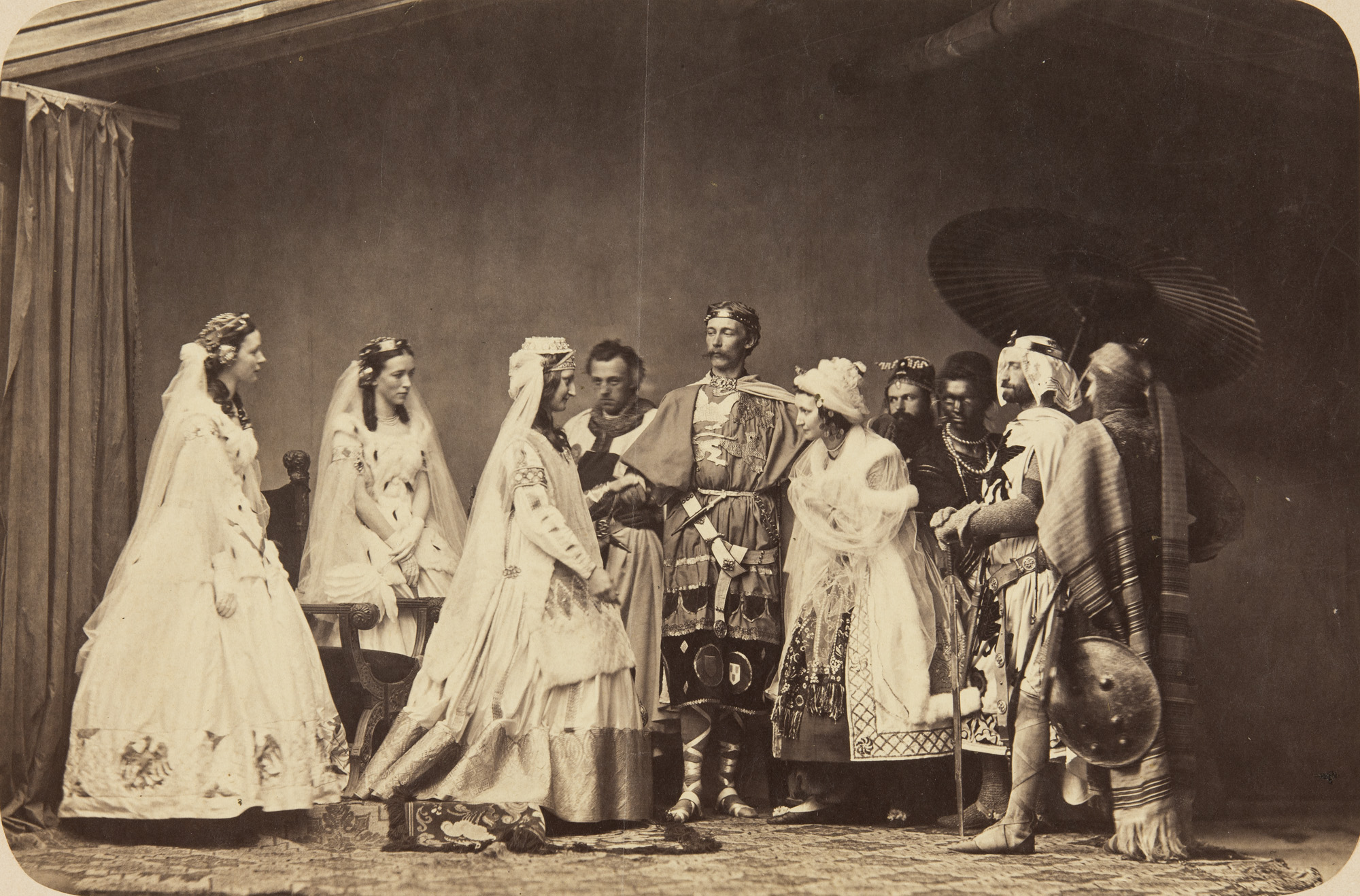

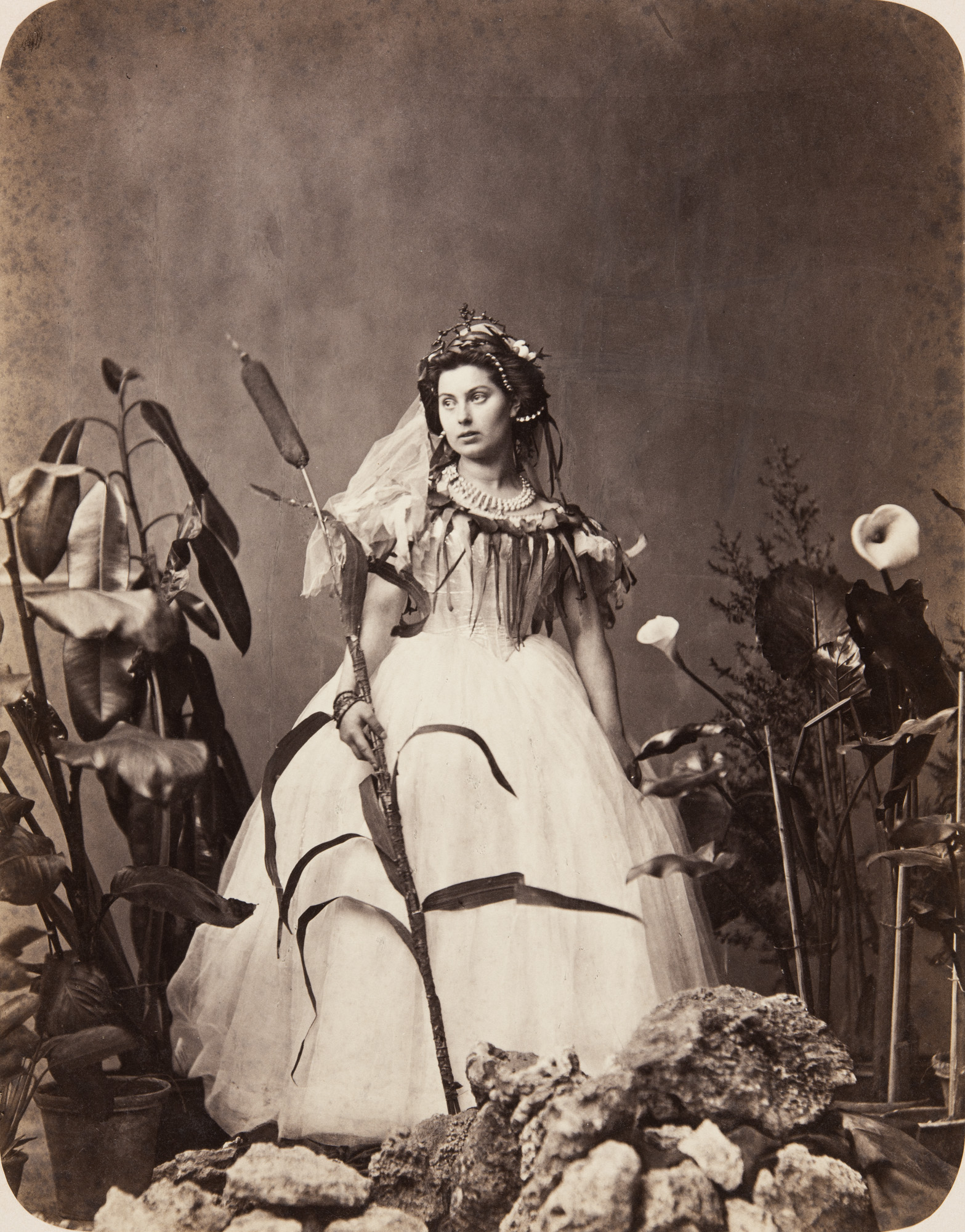
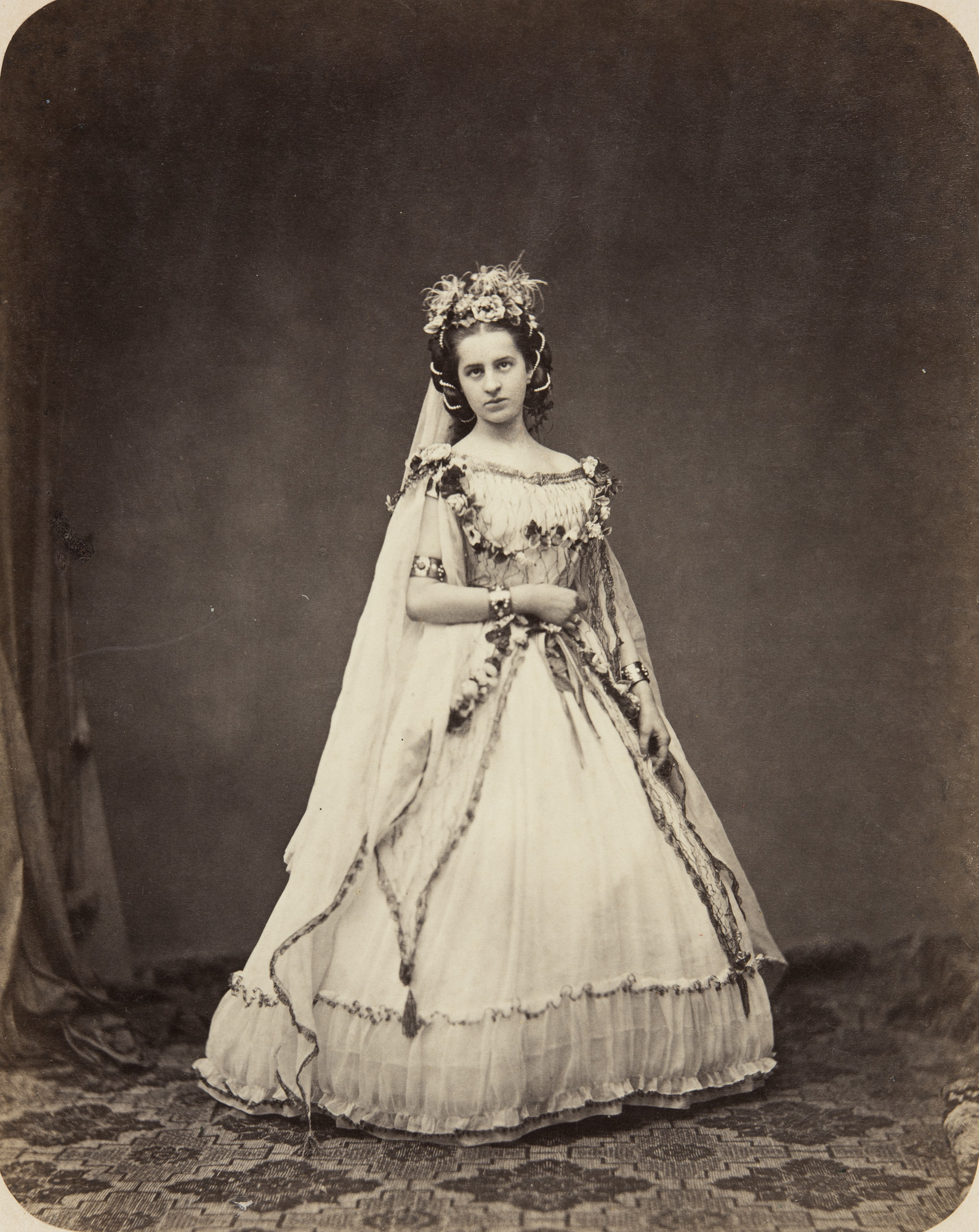
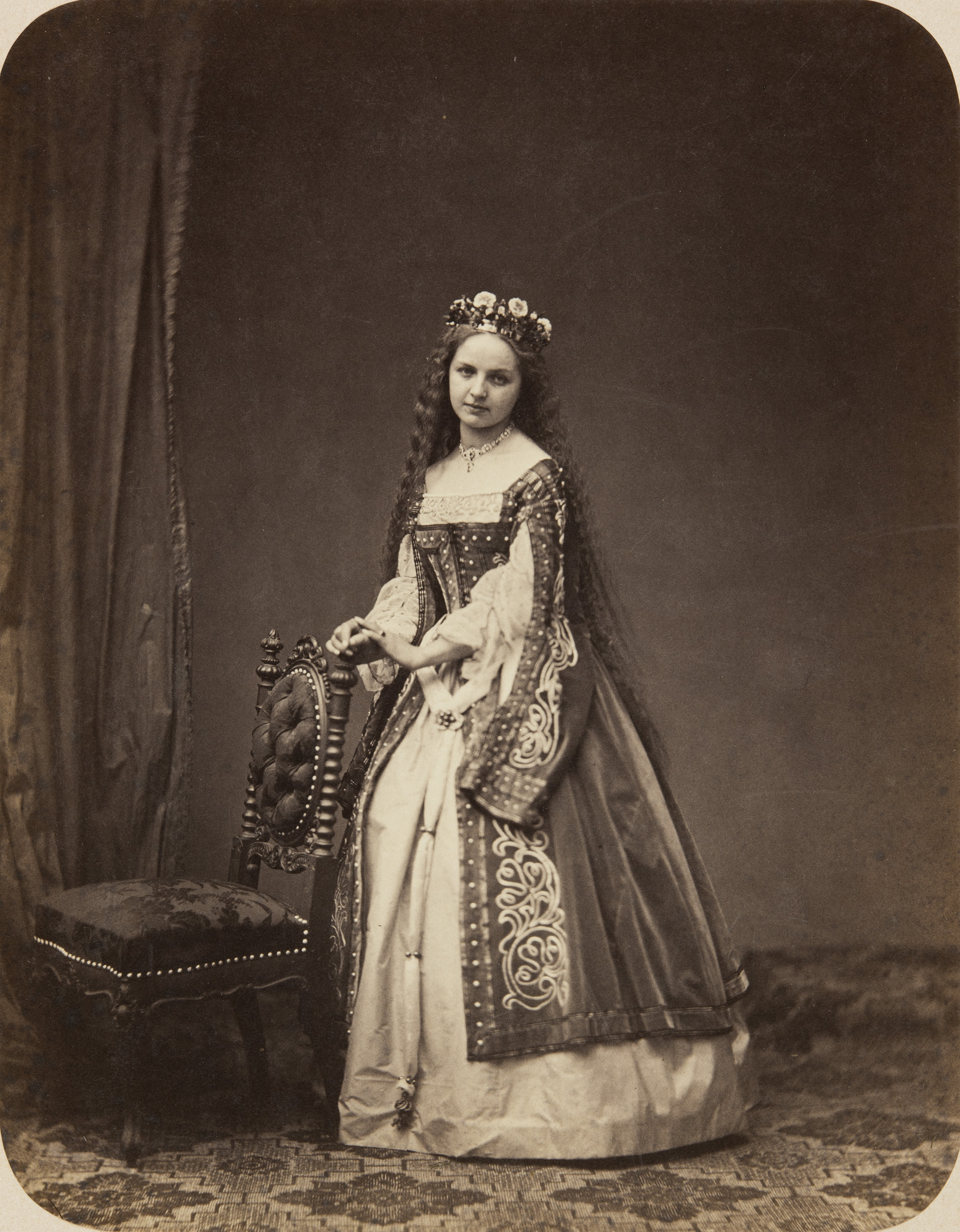
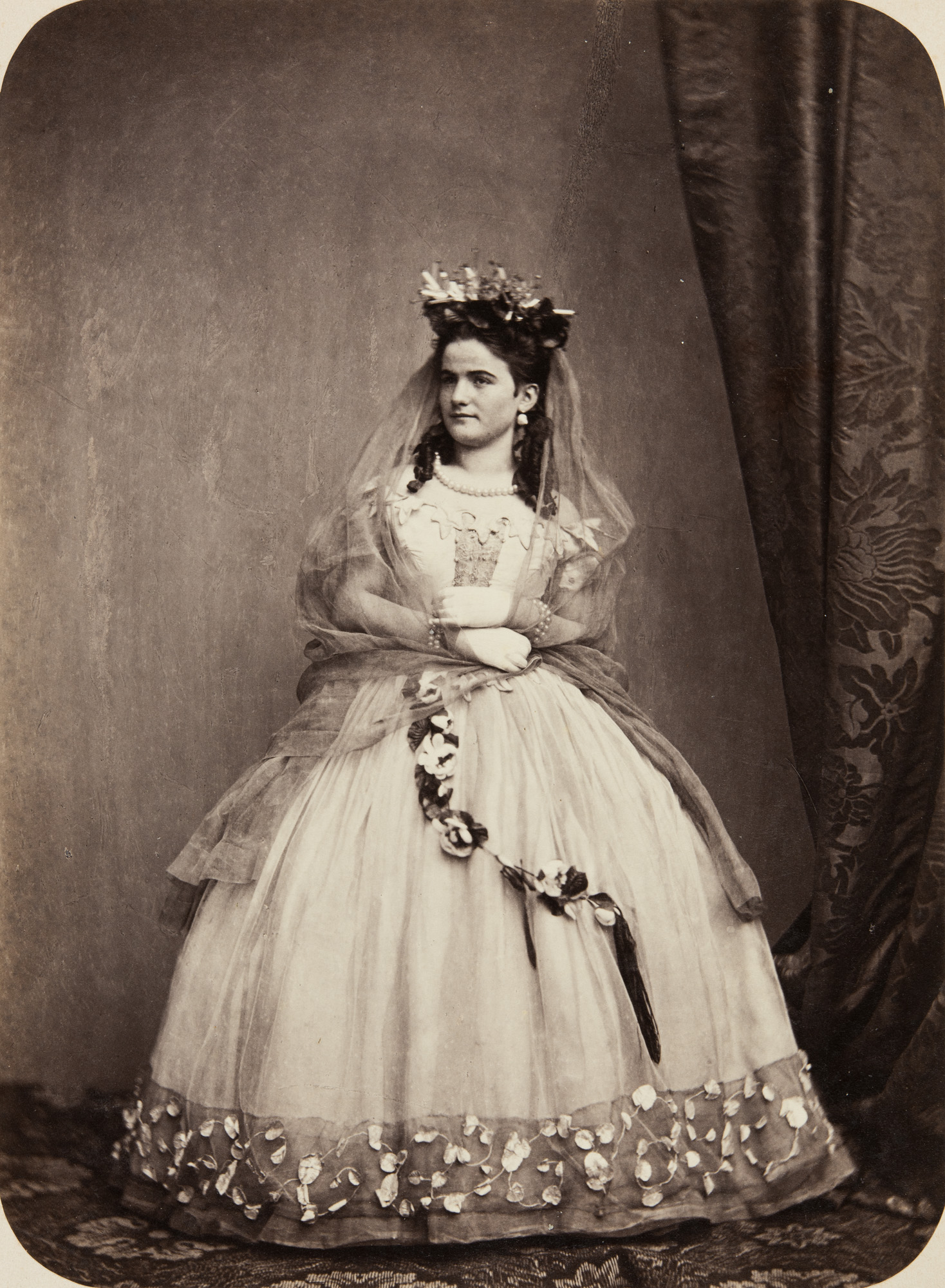
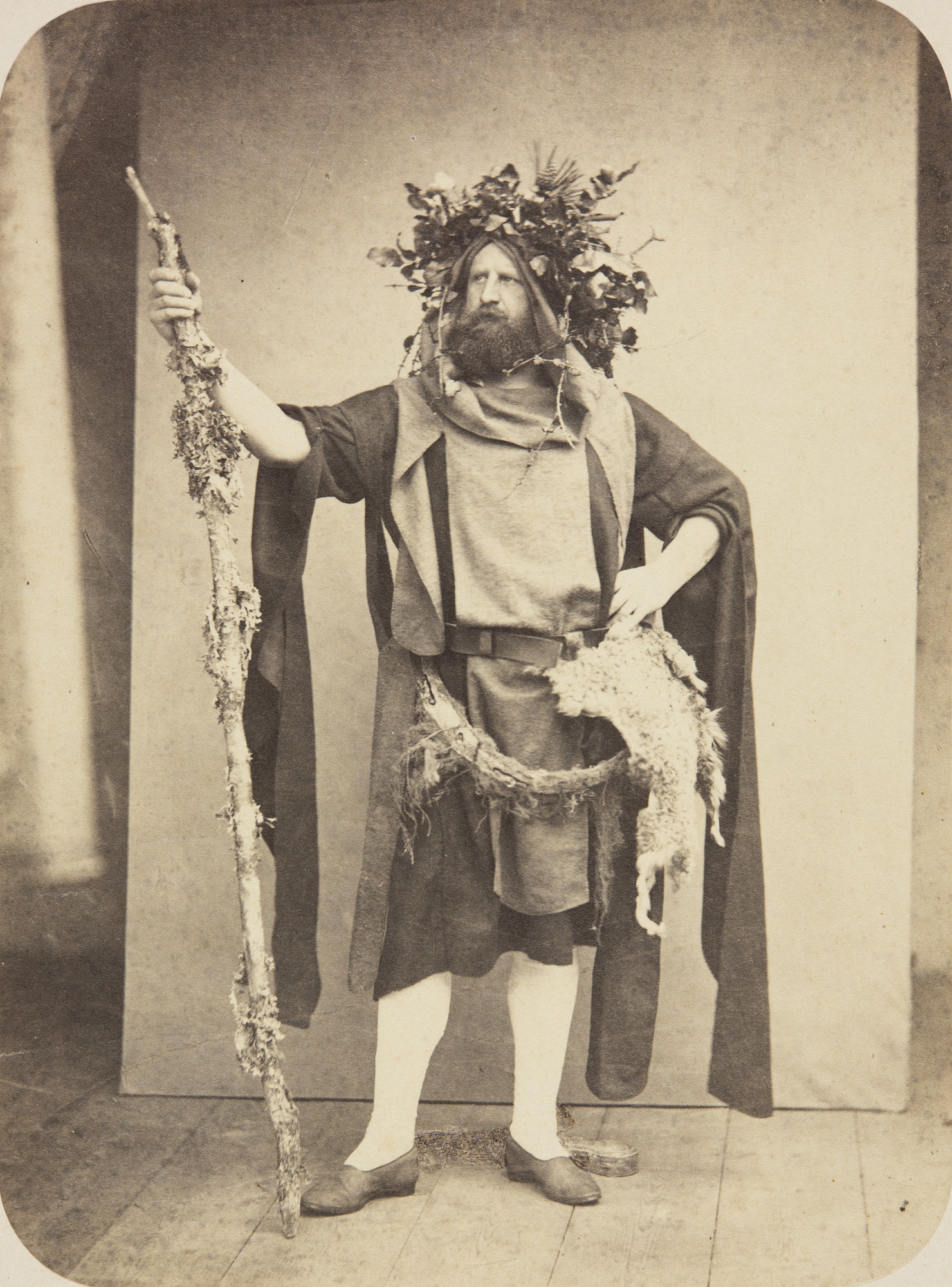
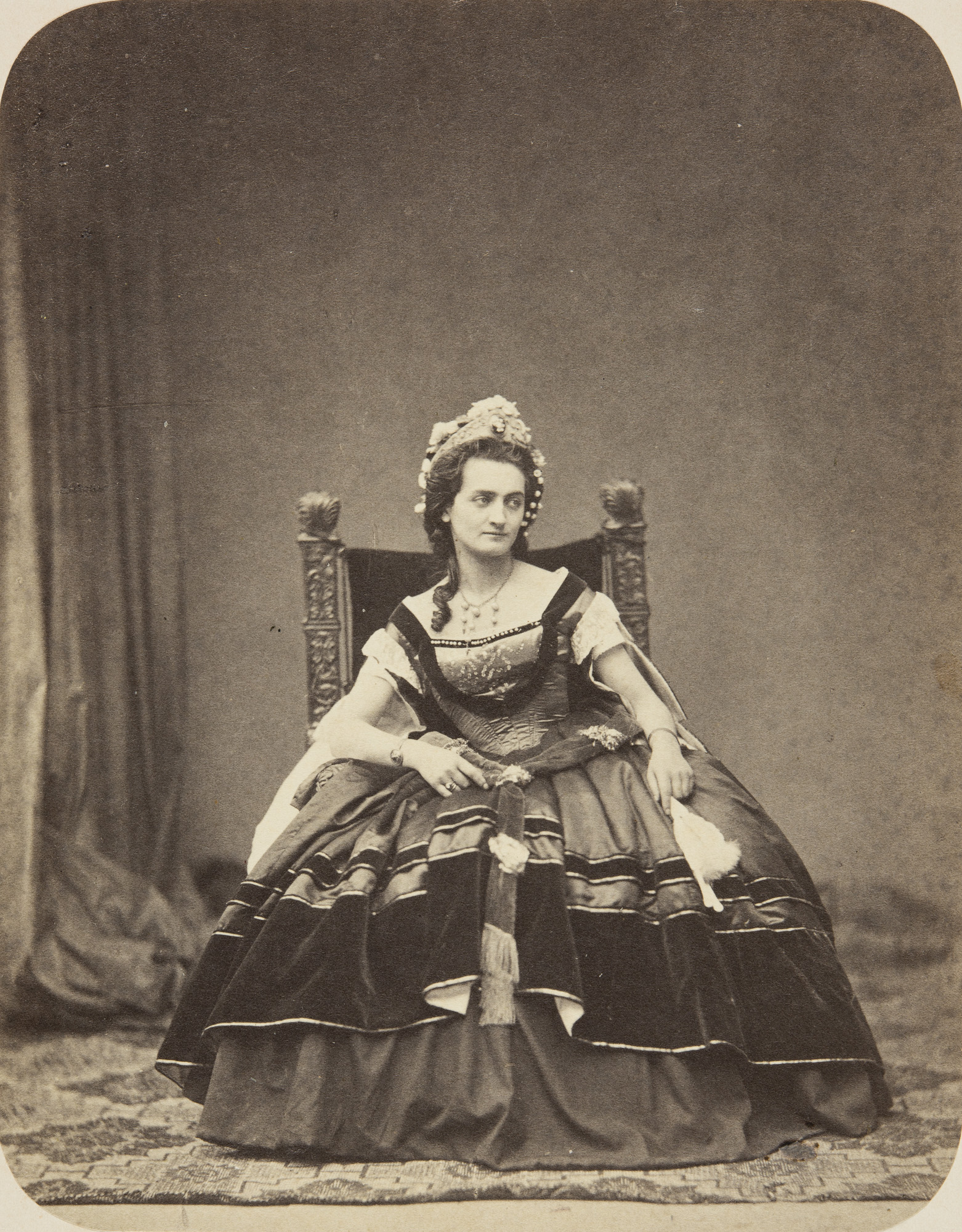
Von Künstlervereinigungen ausgerichtete Maskenfeste waren im 19. Jahrhundert in München überaus populär. Zu den frühen Aufnahmen dieser speziellen Festkultur zählen die fast surreal anmutenden, rund 30 Gruppen- und Einzelporträts, die der Fotograf Joseph Albert (1825–1886) von den Teilnehmenden am Maskenfest “Die Märchen” schuf. Das von der Vereinigung “Jung-München” veranstaltete Fest fand in der Faschingszeit am 15. Februar 1862 statt, geladen wurde in das königliche Odeon, zahlreiche Mitglieder der bayerischen Königsfamilie nahmen daran teil, darunter auch der spätere “Märchenkönig” Ludwig II.
Die Kostüme entsprachen der Vorliebe der Zeit für das mittelalterliche und märchenhafte Genre, das sich auch in der Kunst der Epoche widerspiegelte. Zu den dargestellten Märchen gehörten “Kindermärchen” wie “Hänsel und Gretel”, “Waldmärchen” wie “Rotkäppchen” oder auch “Thiermärchen” wie der “Gestiefelte Kater” oder “Hase und Igel”. Für den Fotografen Albert präsentierten sich die Kostümierten abseits des Geschehens entweder allein in typisch nachempfundener Pose oder zu mehreren für ausgewählte Szenen in der Tradition “lebender Bilder”, den sogenannten “tableaux vivants”. [quoted from : Münchner Stadtmuseum ~ Sammlung Dietmar Siegert]
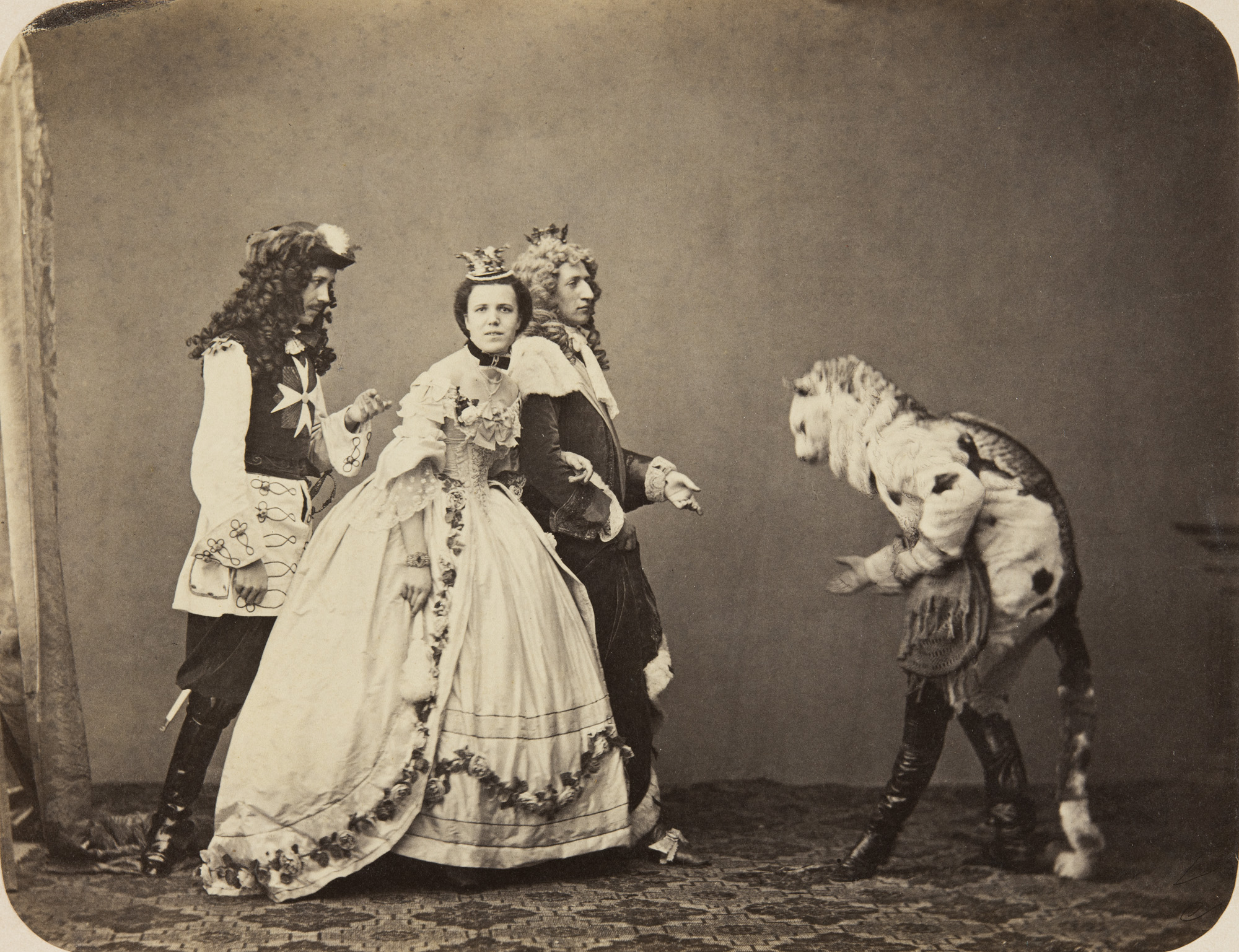
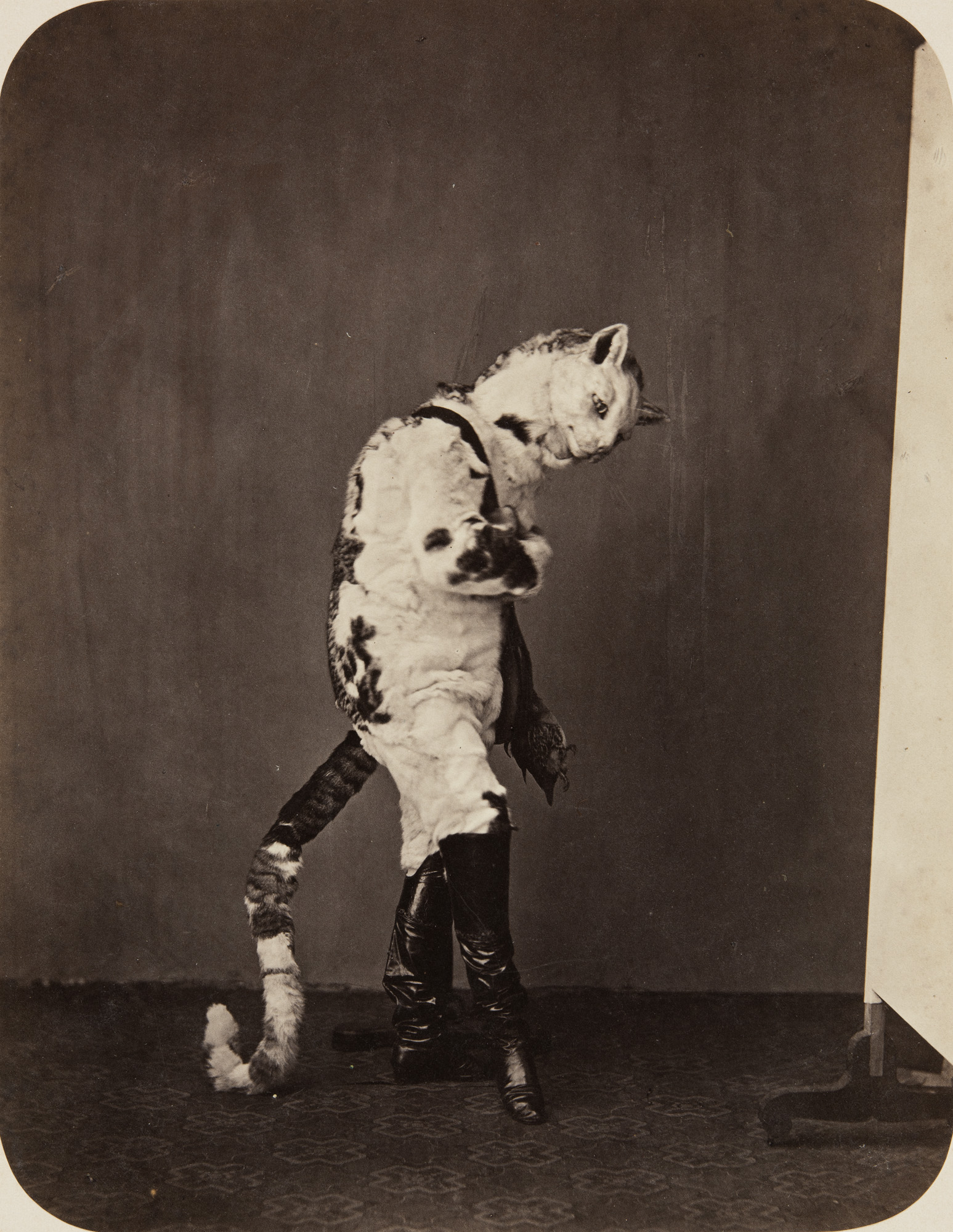
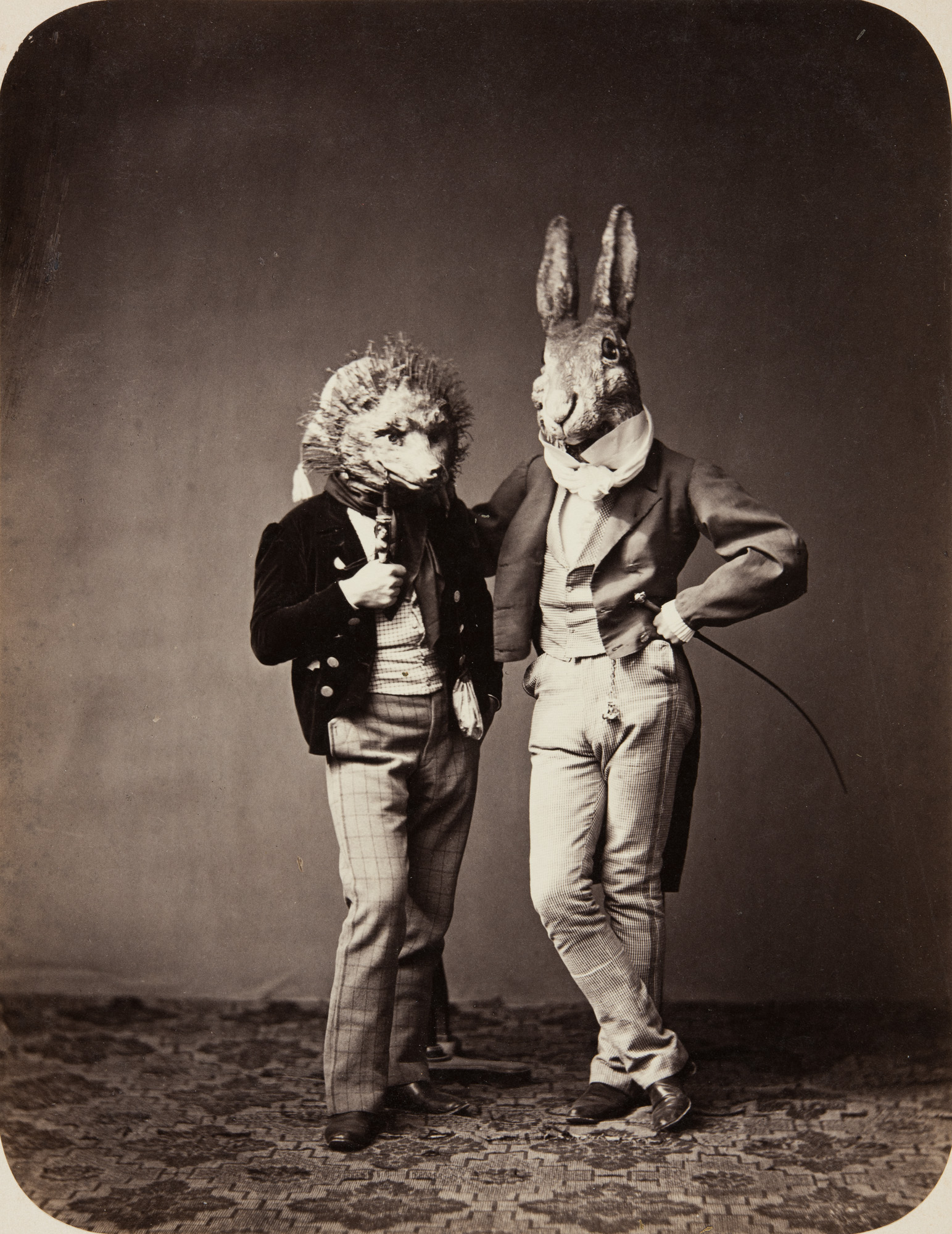
Mask festivals organized by artists’ associations were extremely popular in Munich in the 19th century. The early photographs of this festival culture include these almost surreal-looking images: around thirty group and individual portraits that the photographer Joseph Albert (1825-1886) created of the participants in the masked festival “The Fairy Tales”, the festival, organized by the “Jung-München” association, took place during the carnival period on February 15, 1862. Among the invited guests were numerous members of the Bavarian royal family, including the later “fairy tale king” Ludwig II.
The costumes corresponded to the period’s penchant for the medieval and fairytale genre, which was also reflected in the art of the period. The fairy tales presented included “children’s fairy tales” such as “Hansel and Gretel”, “forest fairy tales” such as “Little Red Riding Hood” or “animal fairy tales” such as “Puss in Boots” or “Hase and Hedgehog”. The costumed people presented themselves, for the photographer, away from the action either alone in a typically imitated pose or in groups for selected scenes in the tradition of “living pictures”, the so-called “tableaux vivants”.
Münchner Stadtmuseum ~ Sammlung Dietmar Siegert
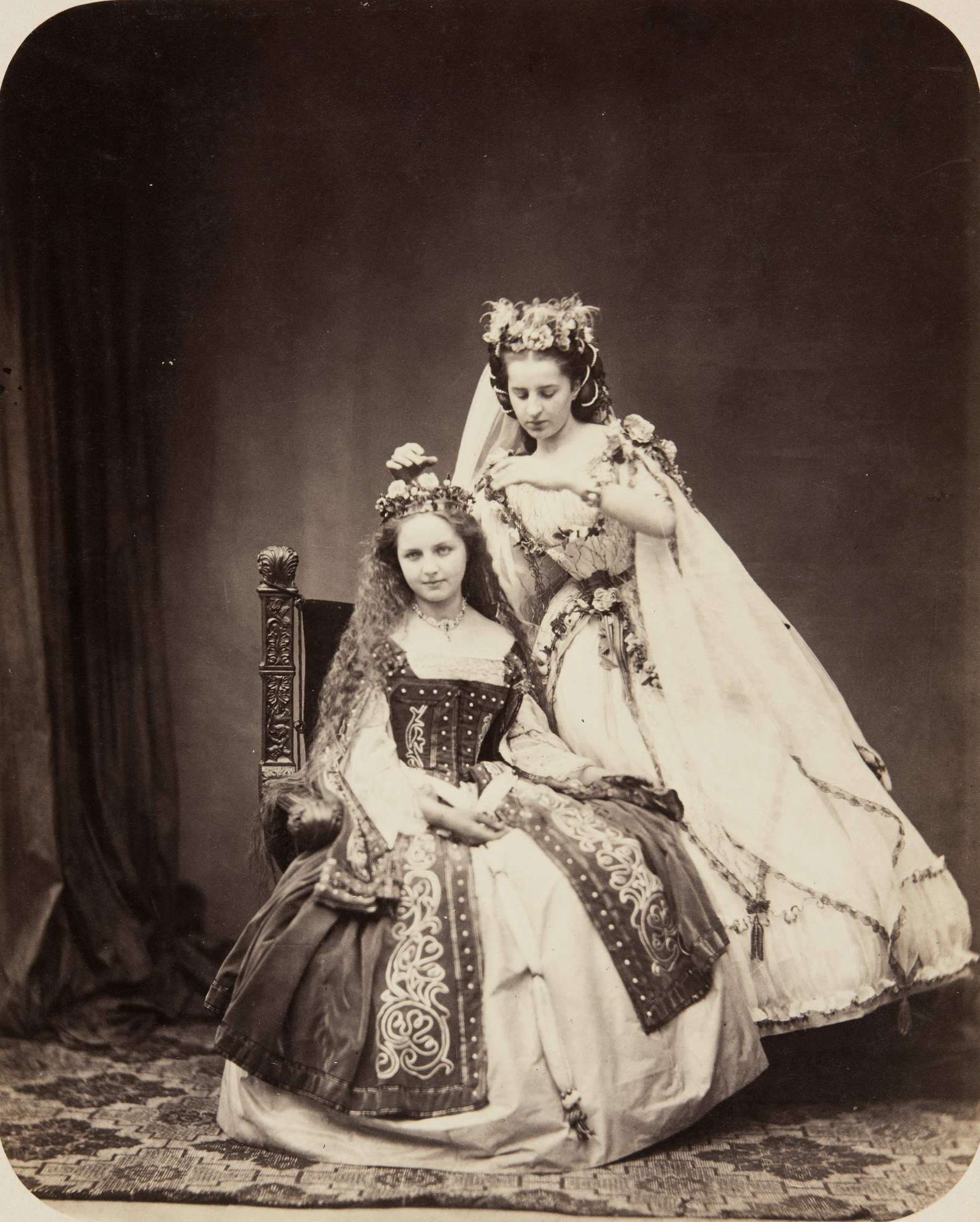

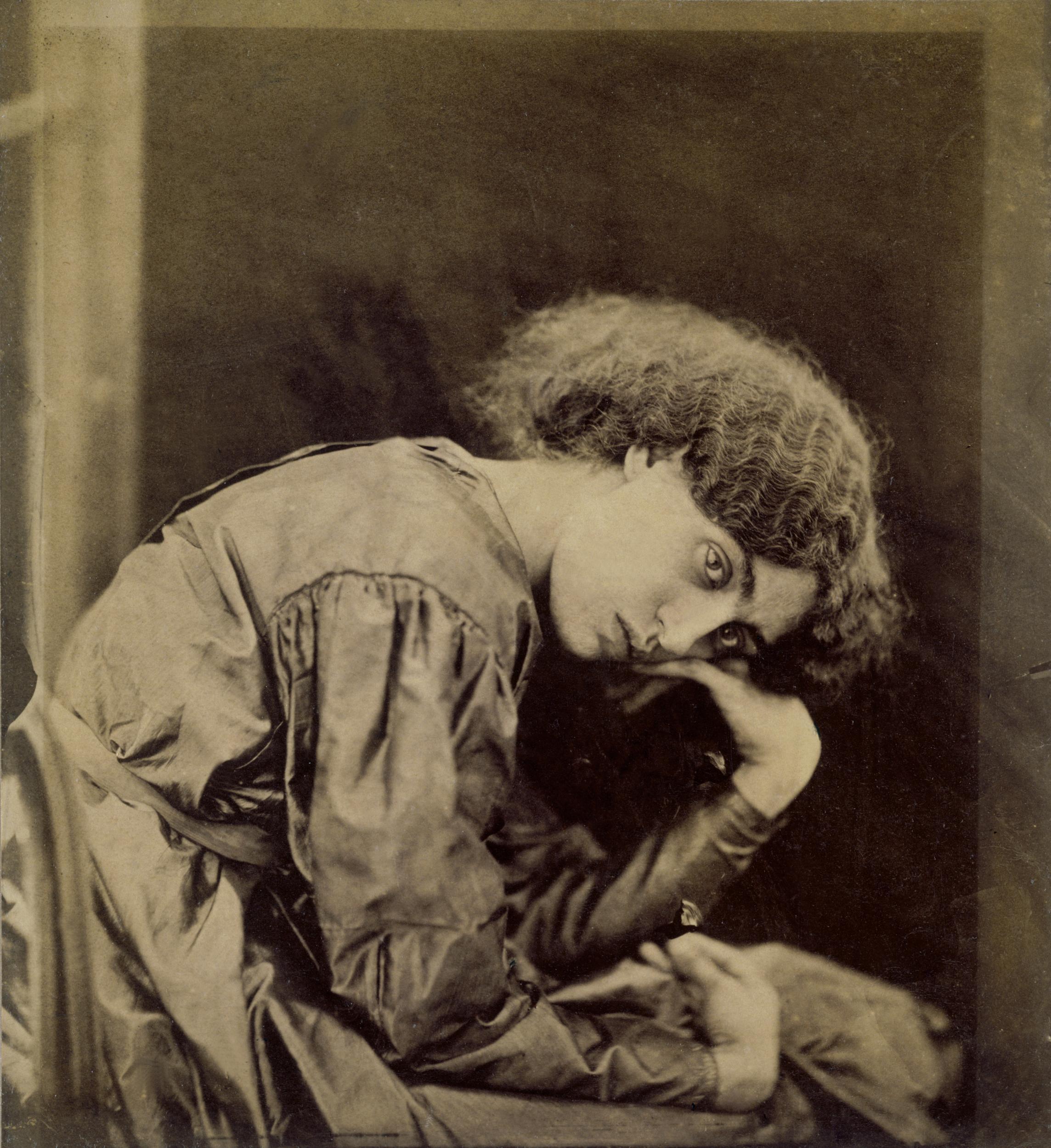
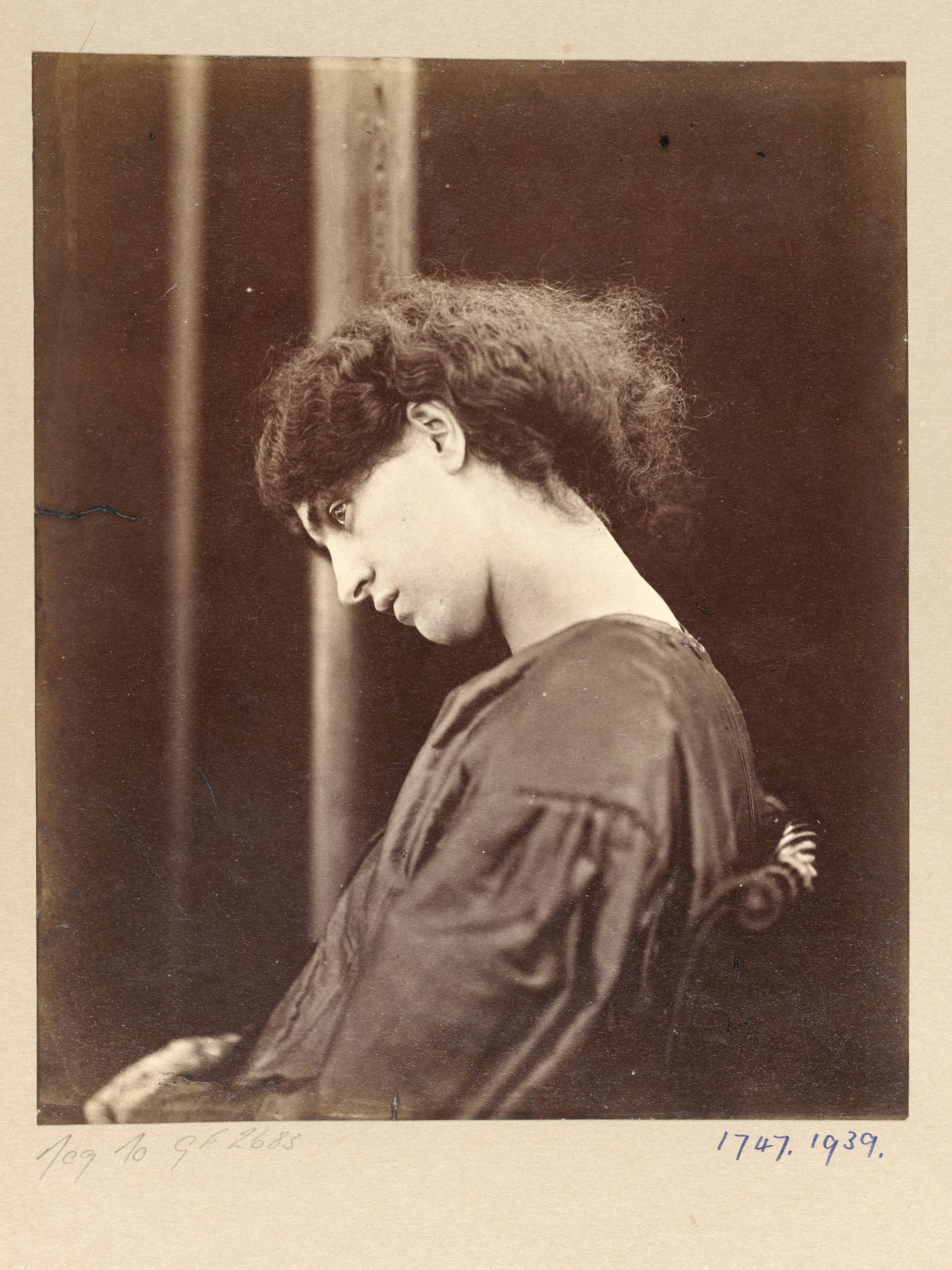
Jane Morris seated, leaning forward with her head turned to the right, resting on her hand, and facing the viewer. DGR posed her in this striking posture and later recurred to the composition in his painting Reverie, done in 1868; the sitter was again Jane Morris.
All images in this post are from: Album of Portraits of Mrs. William Morris (Jane Burden) Posed by Rossetti, 1865. Composed by Gordon Bottomly in 1933
This book is an album of photographic prints that were made from photographs shot by John Parsons under Rossetti’s directions. All the photos seem to have been shot on 7th June 1865 at Rossetti’s house on Cheyne Walk. Most of the shots were taken outdoors, in the garden [where a marquee was set], but two were made indoors in the parlor. Some of the prints are original (dating back from 1865), some were made later as an effort to preserve the images, which were seen to be fading.

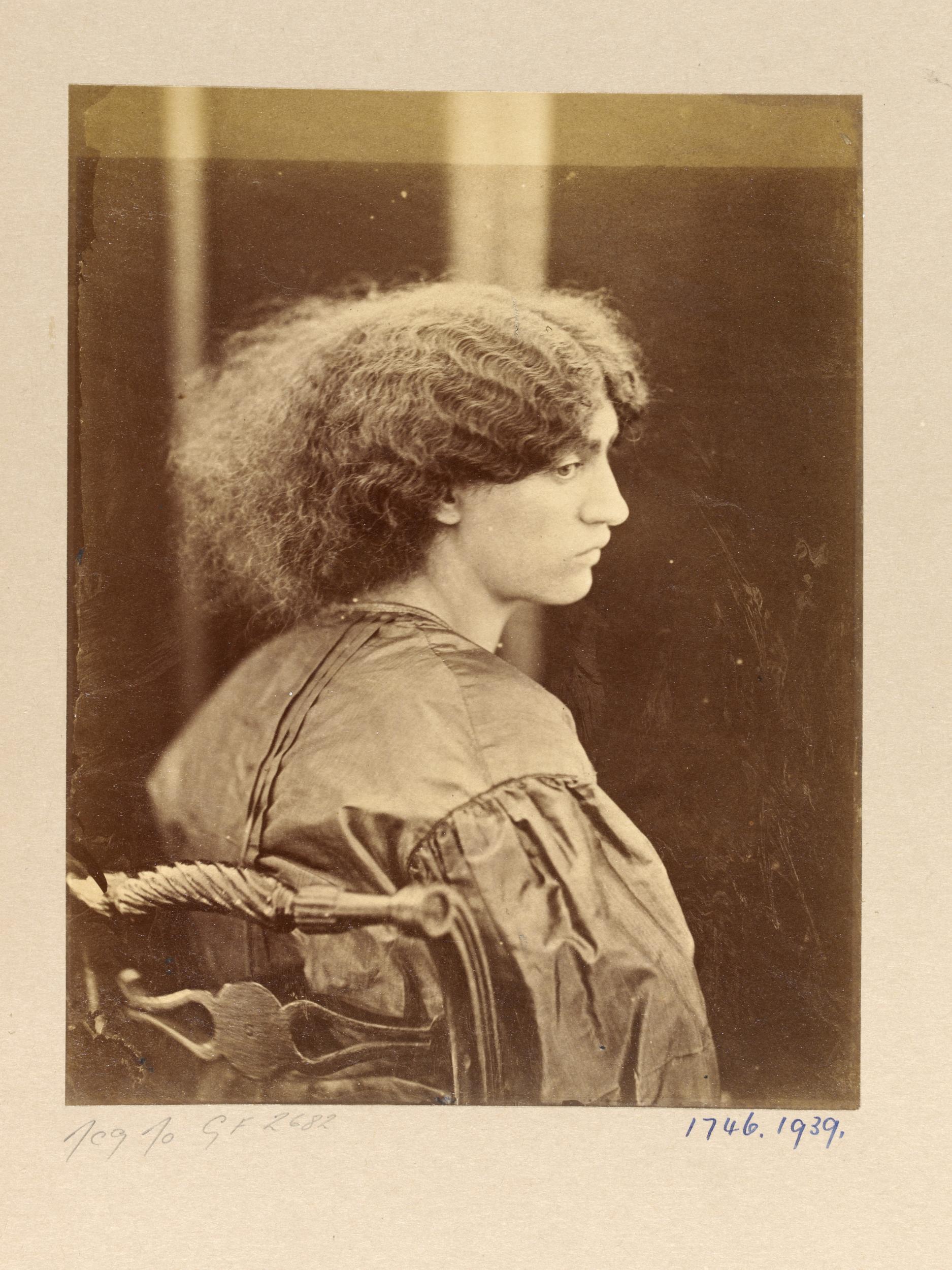
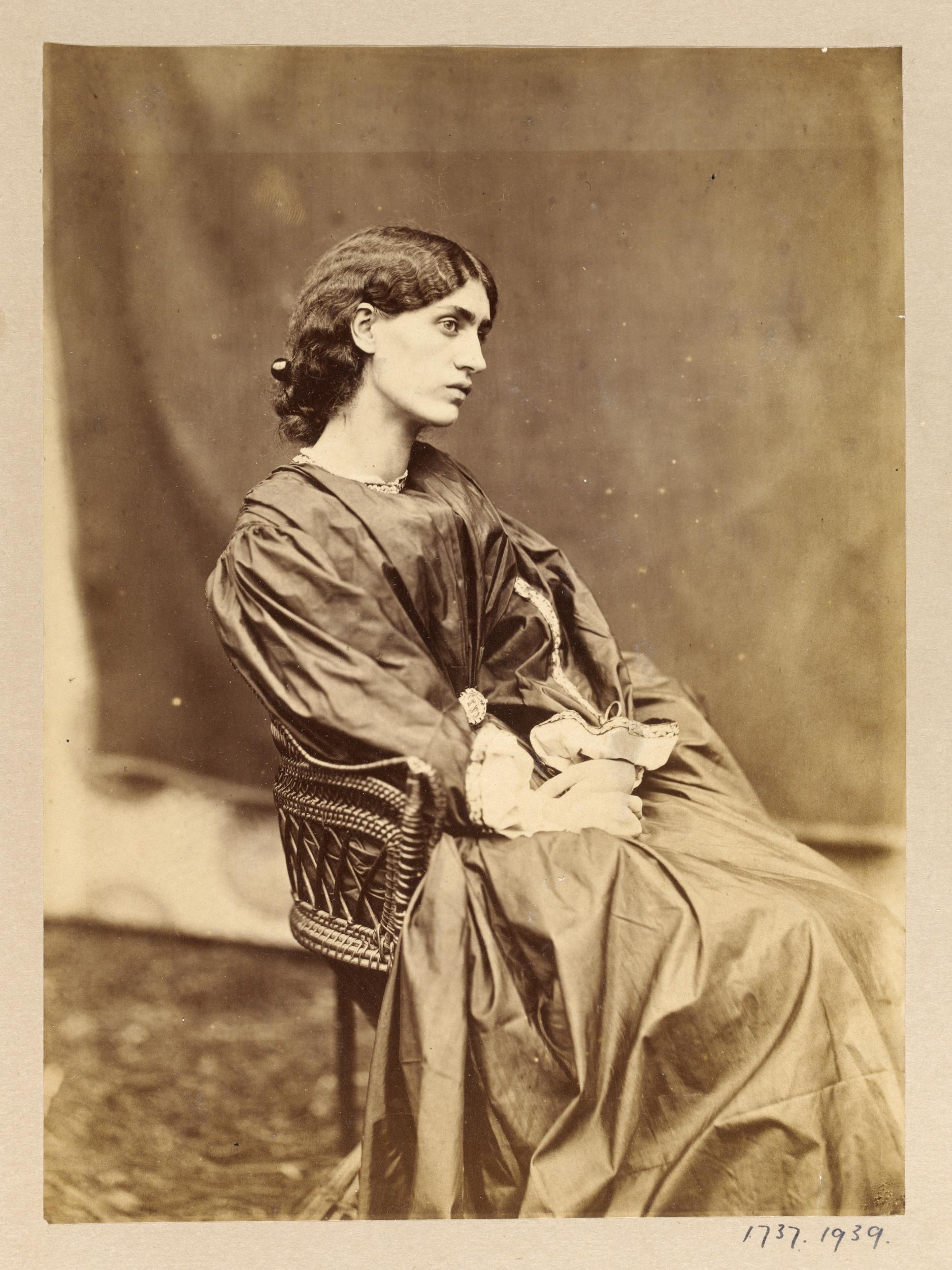
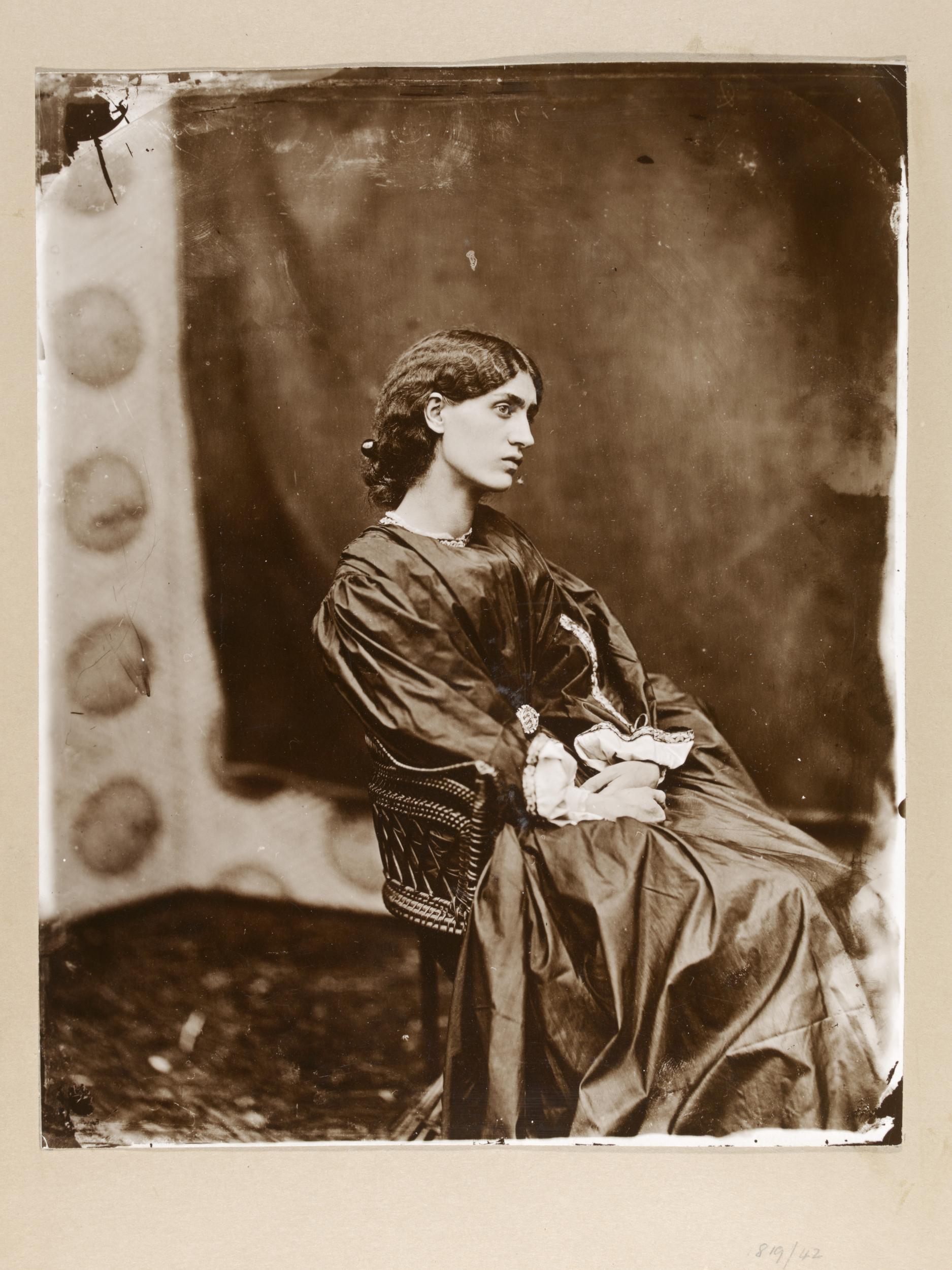
This portrait is closely related to two other pictures in the Jane Morris series of photographs: the picture is virtually the mirror image of “Jane Morris seated, half length” [image # 5 in this post], where Mrs. Morris faces left in much the same pose (the latter is also fairly closely cropped); and to “Jane Morris seated, half length” [image # 2 in this post]—a much less closely cropped shot, this one with Mrs. Morris also facing to the left.
DGR used this photograph as the compositional point of departure for the pencil drawing The Roseleaf
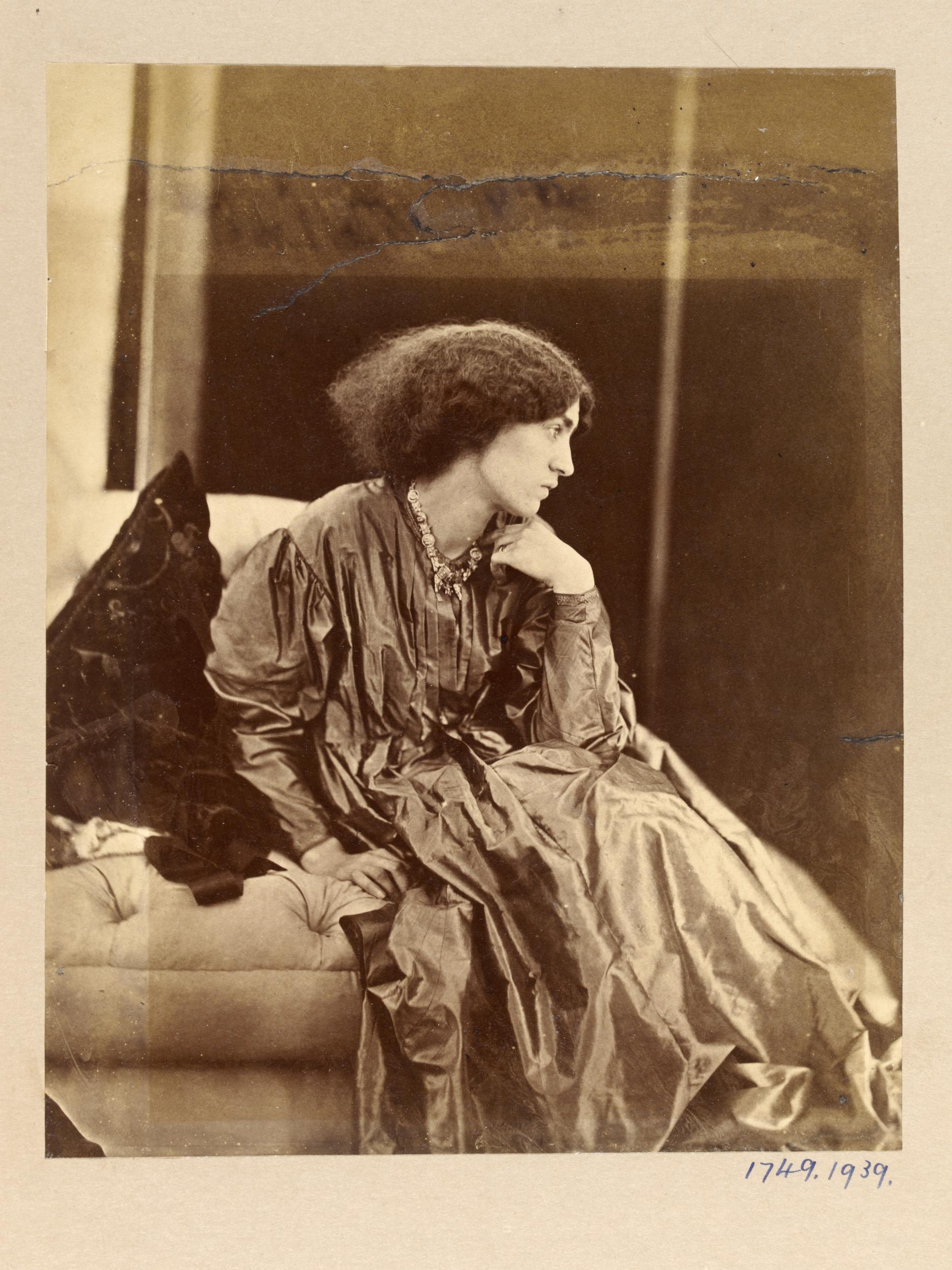
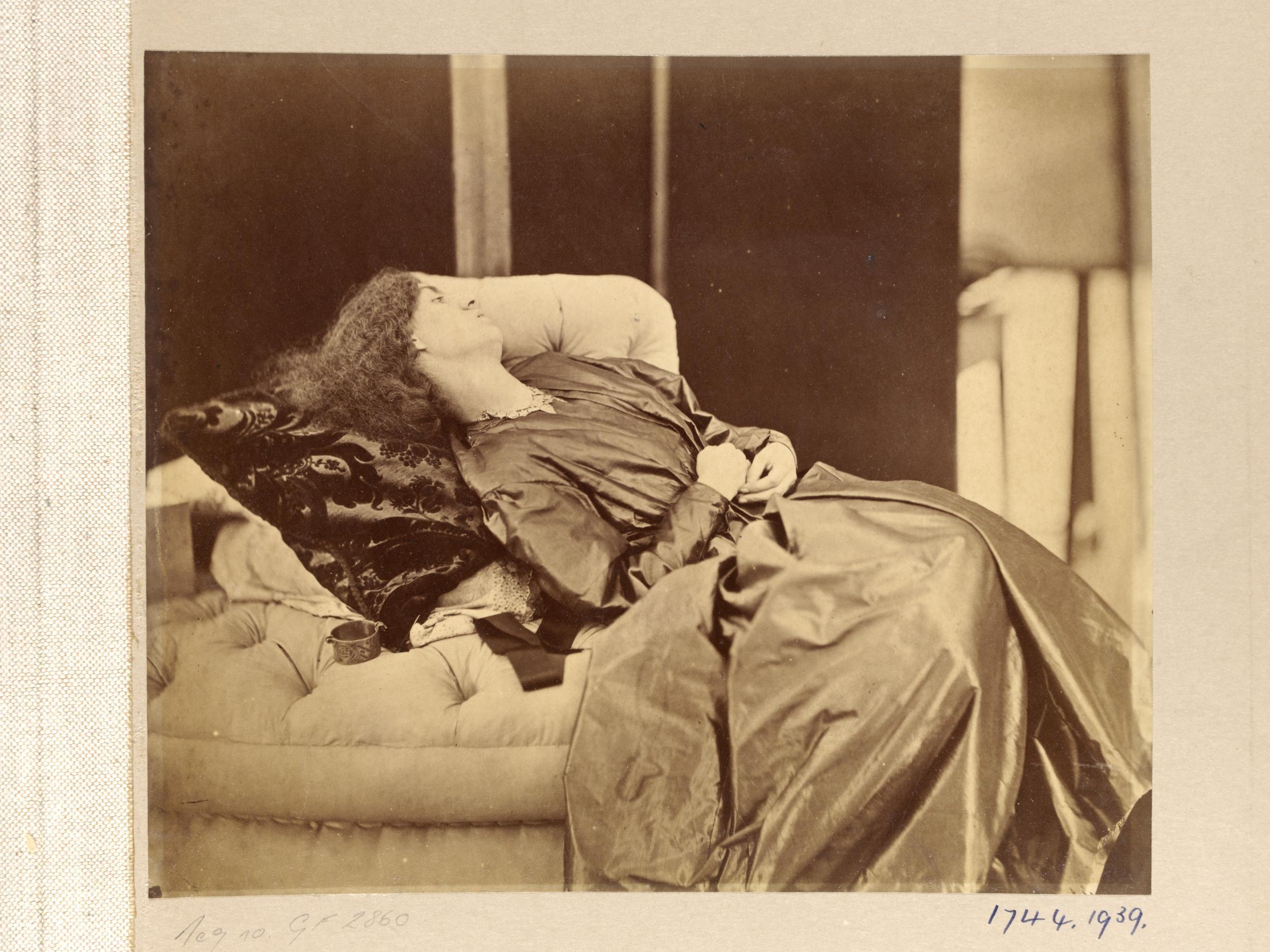
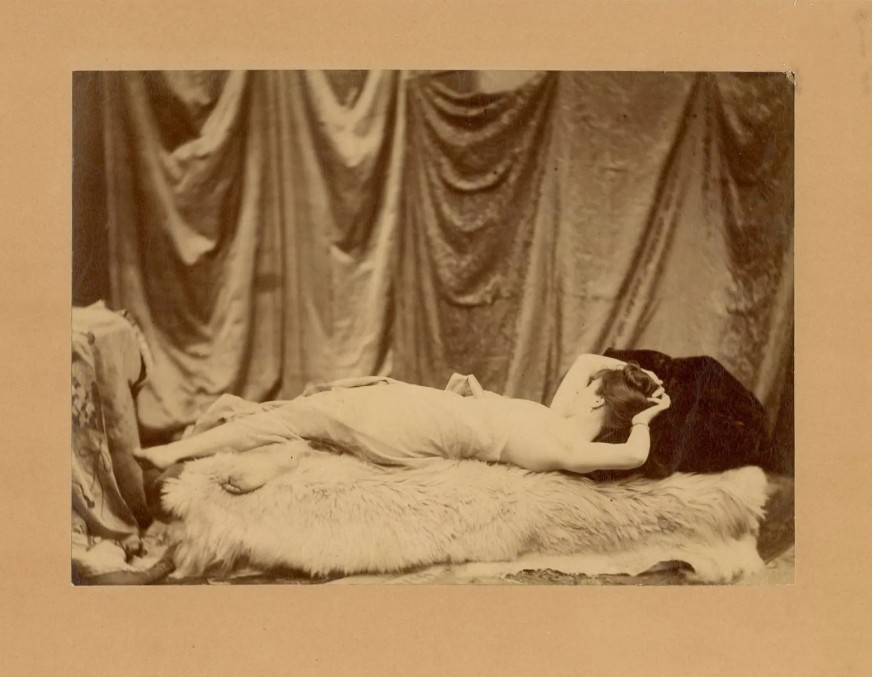
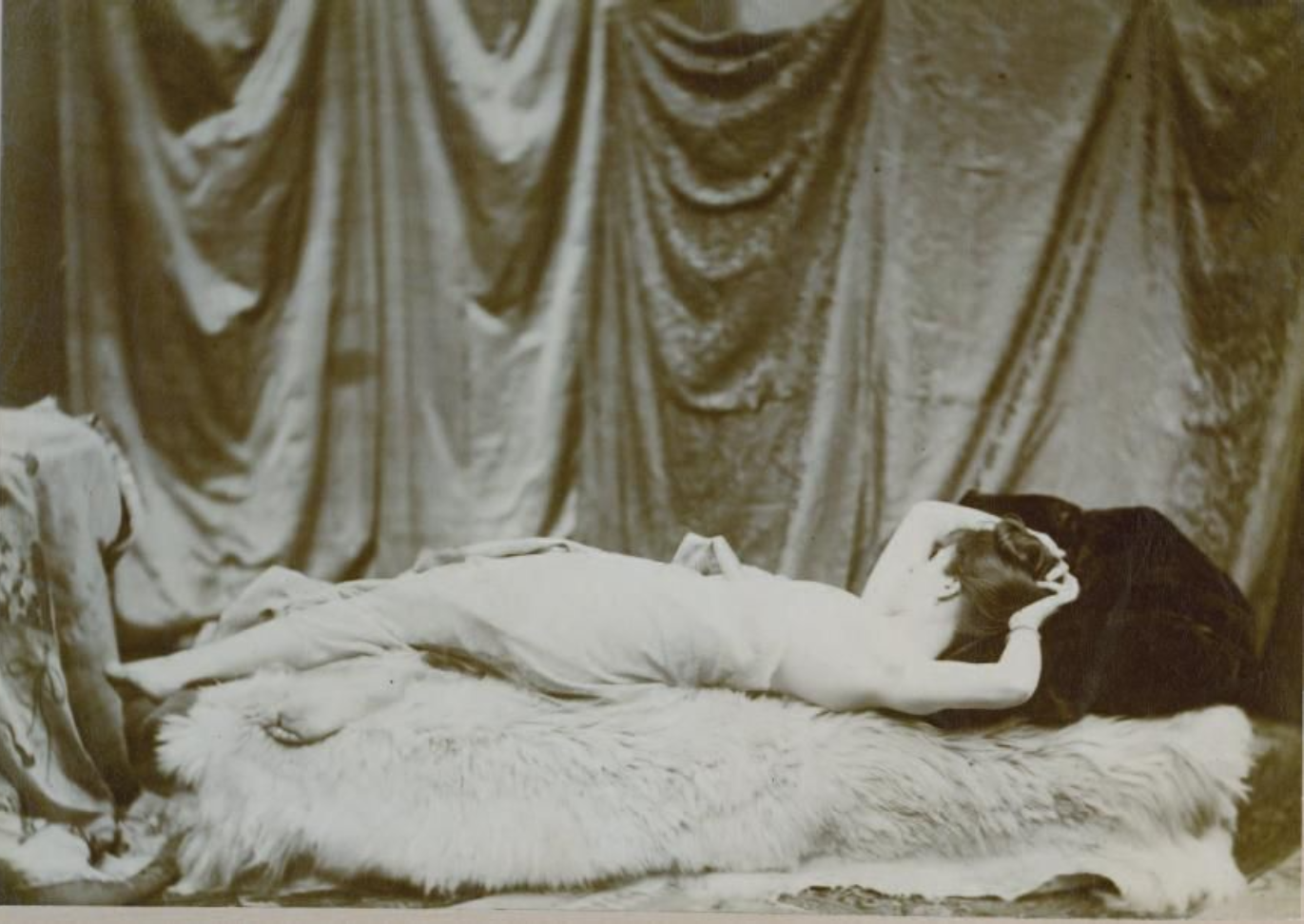
This is one of three prints made from a single negative. Mrs. Morris is reclining on a plush loveseat facing right with her head resting on a black pillow and turned slightly away from the viewer. Her hands are in her lap and the pose is set against a black backdrop. This print is cropped down like the Victoria and Albert’s 1865 original. Museum records identify the second copy in the V & A as a modern copy of the original. The modern print shows a larger background area that includes part of a canopy and some of its upholding poles.
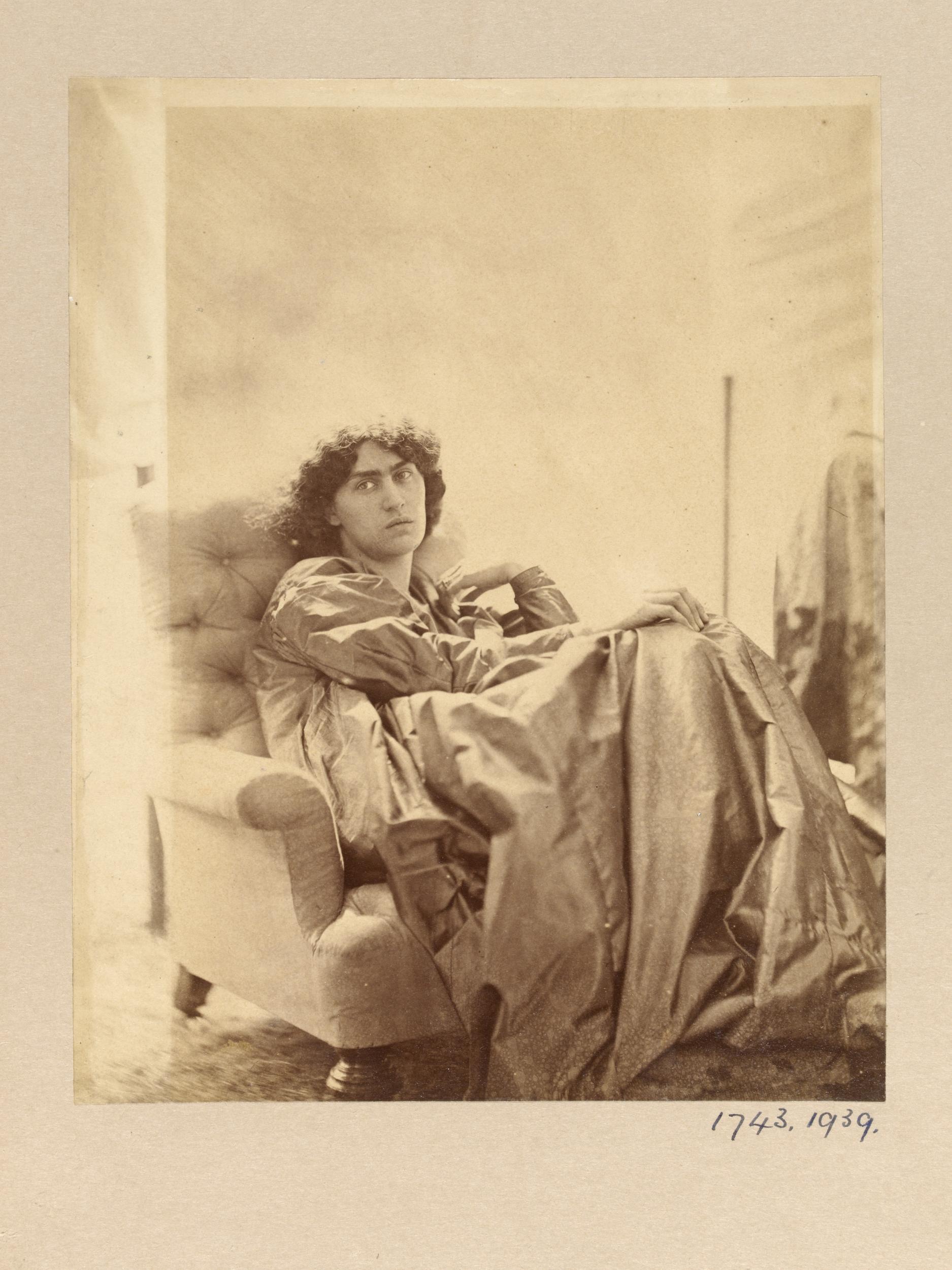
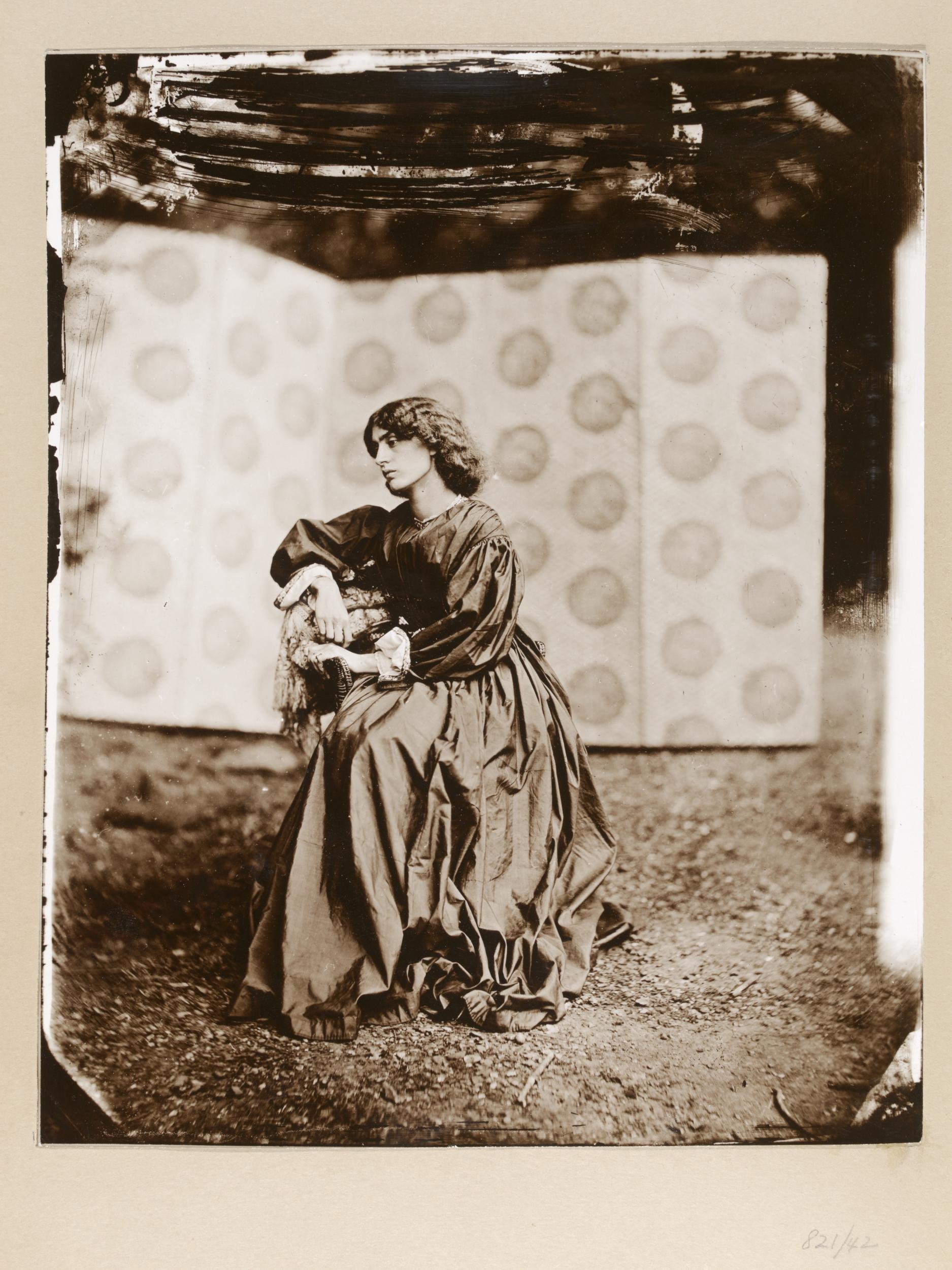
Mrs. Morris outdoors, slumped in plush chair facing the camera, under cloth canopy. Her left hand is curled back over her left shoulder, her right rests on her knee. Off to the right edge of the picture is visible a chair with a shawl or some sort of drapery thrown over it. A second print, uncropped, is identified in the Victoria and Albert records as a modern print; this is the original (1865) print.

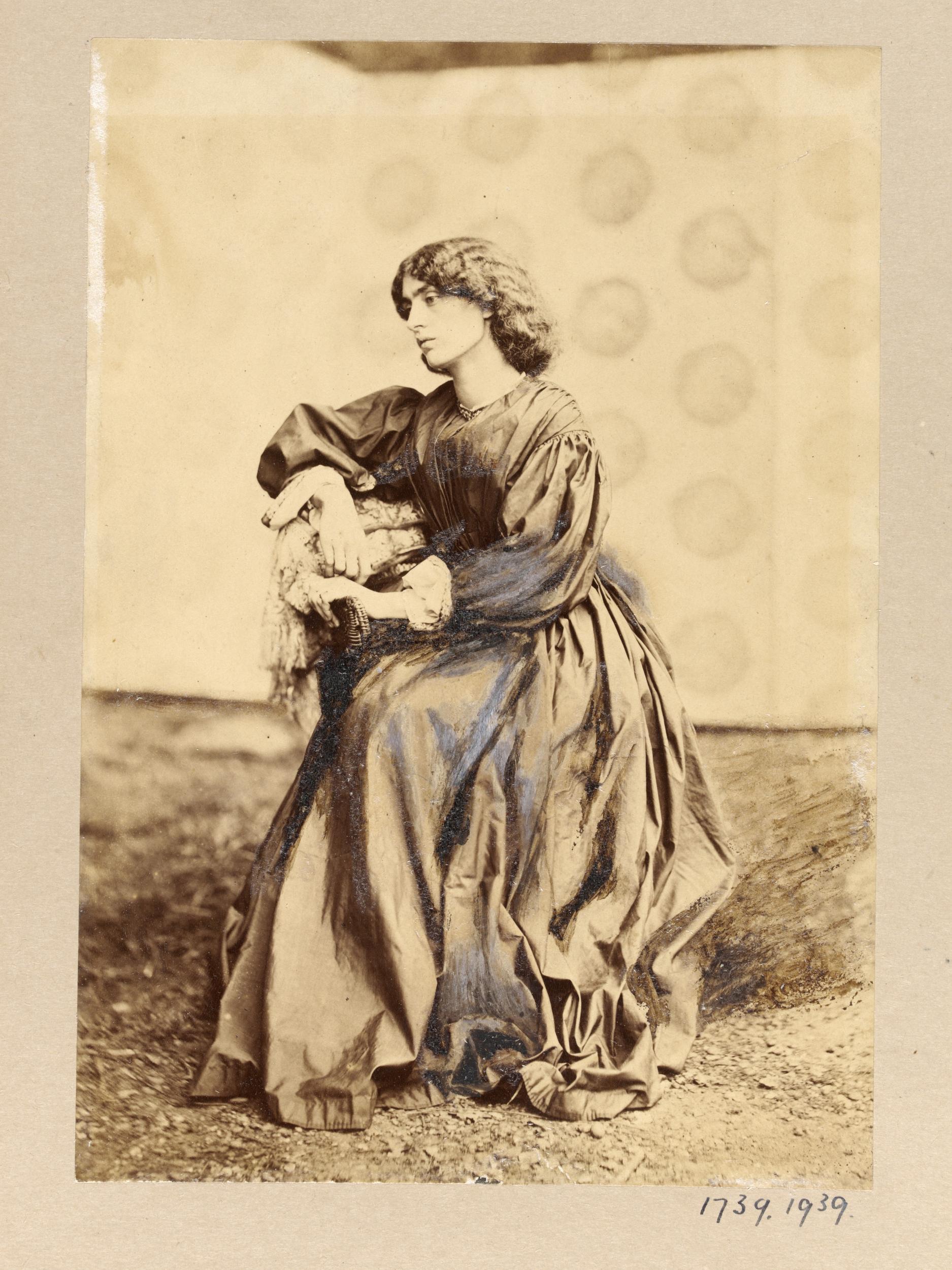
At least three copies of this pose survive, one in the Birmingham City Museum and Art Gallery, the other two in the Victoria and Albert Museum’s Album of Portraits of Mrs. William Morris (Jane Burden). Posed by Rossetti, 1865 .
The state of the two Victoria and Albert Museum prints tells much about DGR’s involvement with these photographs. In the larger copy [image below] a good deal of space is left around the sitter, who is seated in DGR’s garden, in full view, and facing to her right. A decorated screen is placed a few feet behind her; beyond that is foliage, though it is scarcely discernible as such. The print shows where Gordon Bottomly worked on the original print with a brush to disguise where the top of the print had been damaged during later efforts to mount it.
The smaller print [image above] in the album shows DGR intervening on the original photograph. In this case he has used a brush to paint on the print and smooth out Mrs. Morris’s dress (along the left sleeve and also among the folds by her left leg). The second print also illustrates a characteristic alteration of another kind that one finds in the album prints. This second print is much lighter and has been cropped so that the screen takes up virtually the whole of the background.

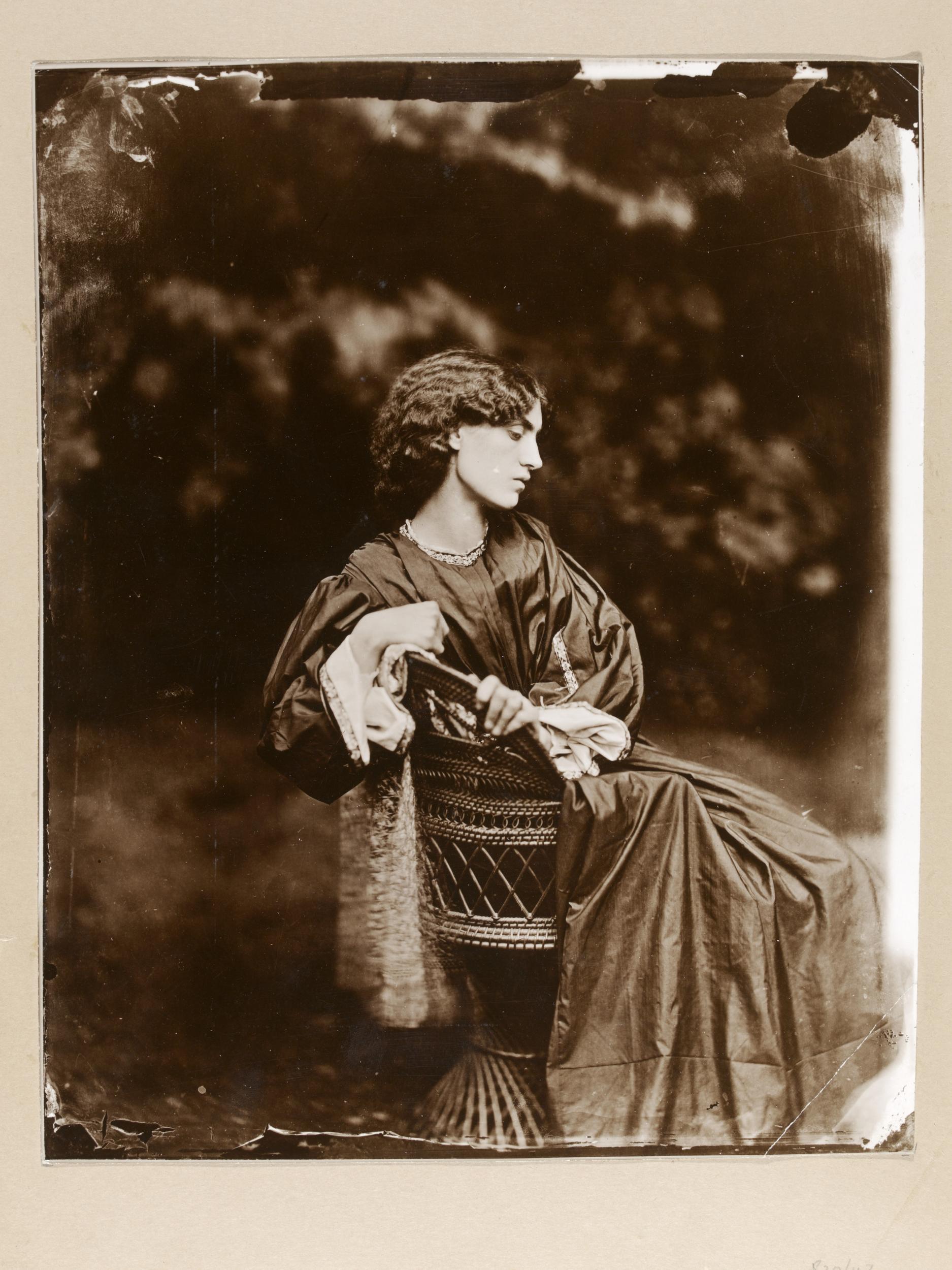
Mrs. Morris outdoors, seated in wicker chair facing right, with her left hand crossed to grasp the right edge of the chair and her right resting on the edge. A shawl draped across the chair has moved and is out of focus. A modern print [image below] showing the original compositional structure of the photograph is also in the V&A museum. This print was made in 1865 and is cropped and printed lighter than the modern print.
All images are from the book : Album of Portraits of Mrs. William Morris (Jane Burden) Posed by Rossetti, 1865. Composed by Gordon Bottomly in 1933
source of images V&A Museum
source of text Rossetti Archive
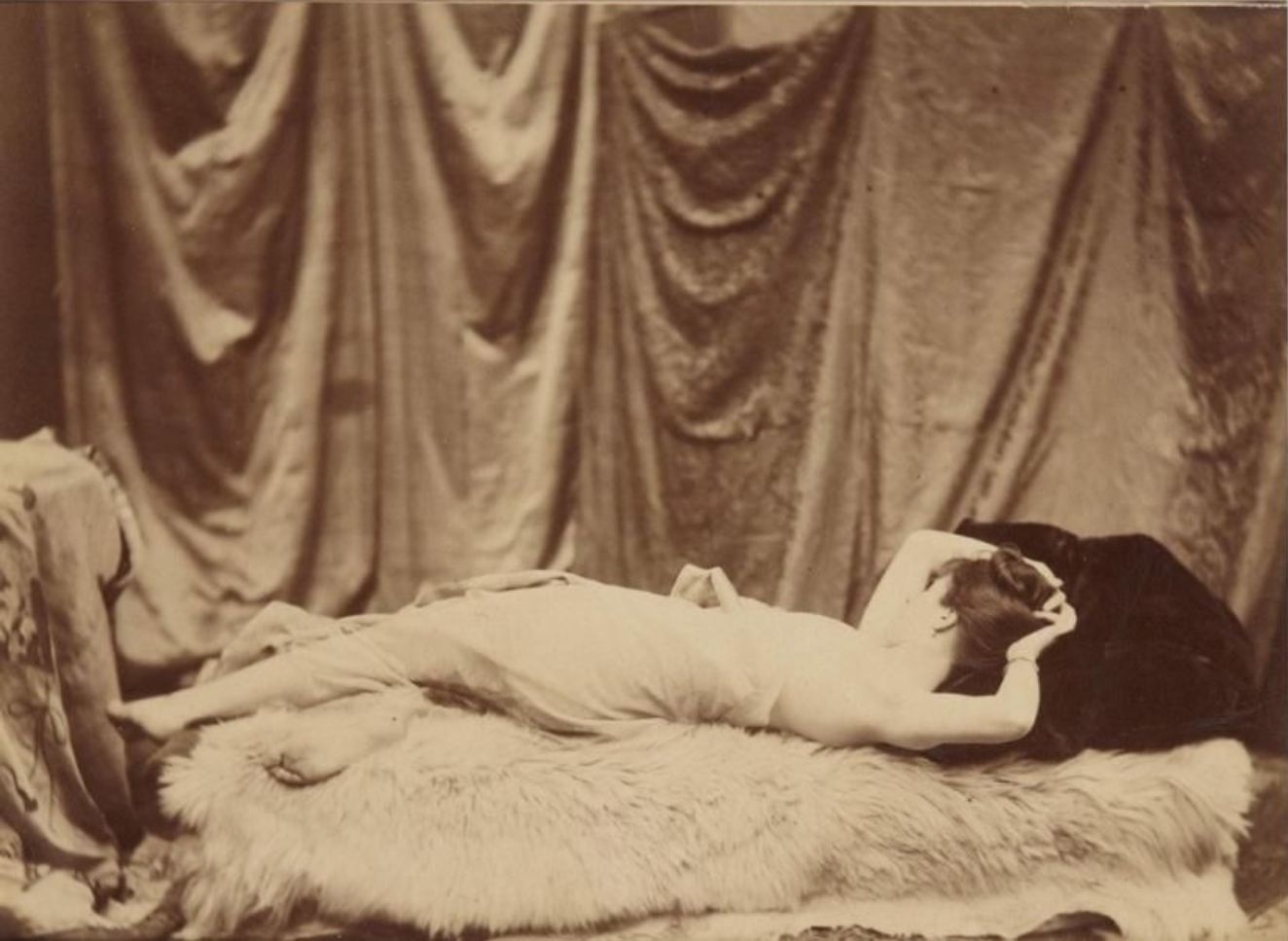

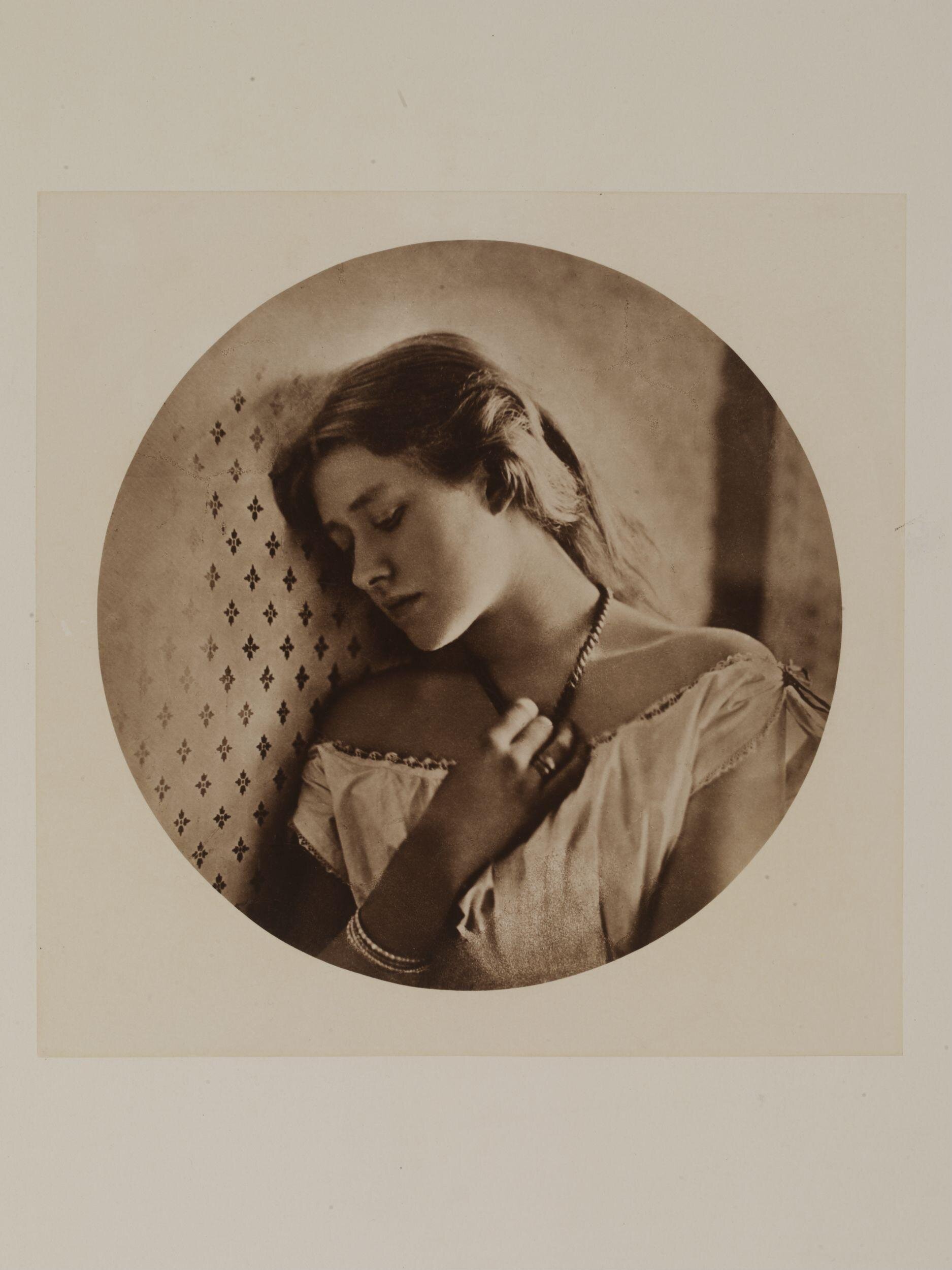
Circular-shaped photograph of a standing woman, shown in profile from the waist up. Her head is leaning against an interior patterned wall and one of her hands is placed at her throat tugging at her necklace.

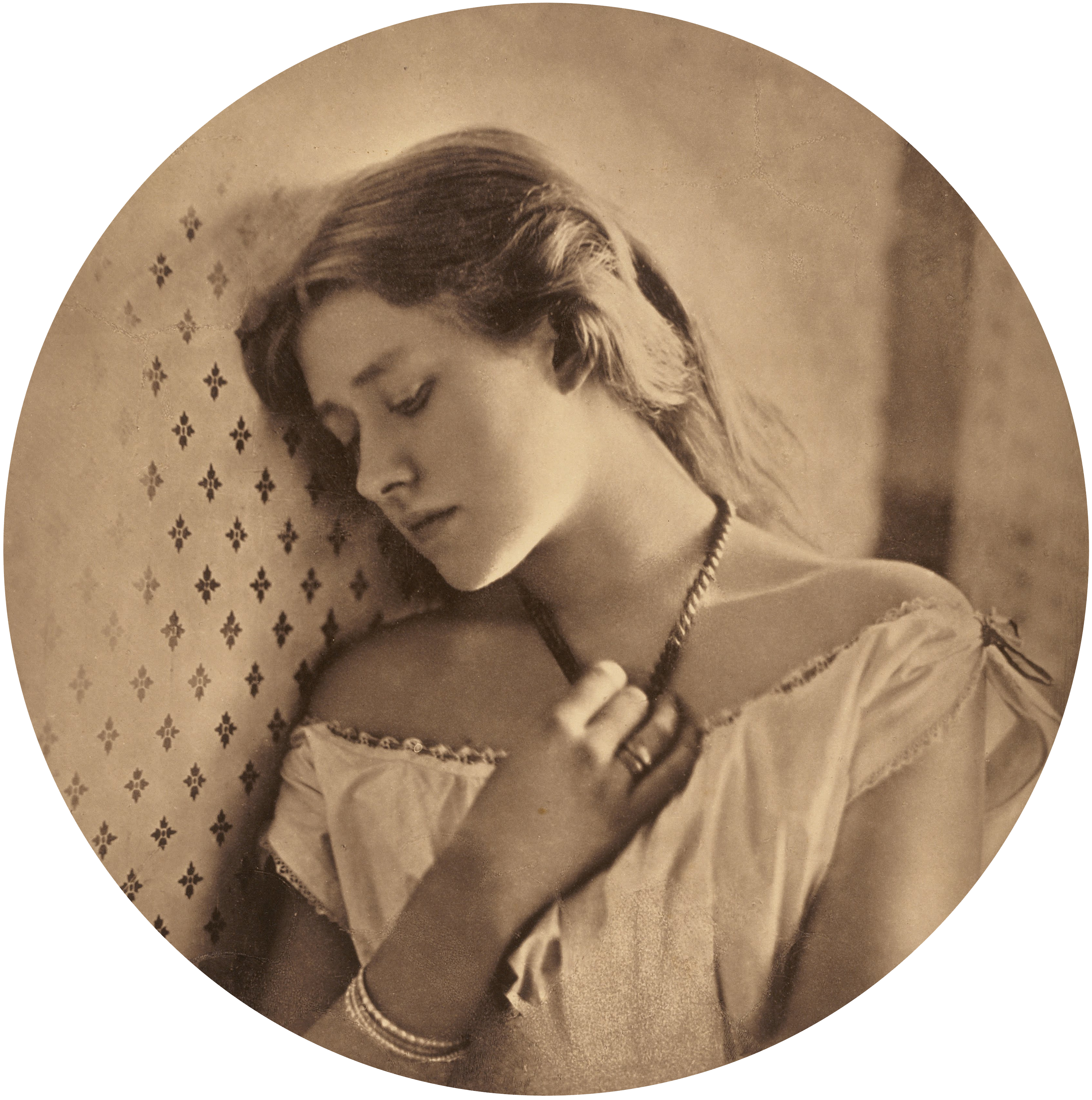
![Julia Margaret Cameron :: [Ellen Terry at Age Sixteen] negative 1864; print about 1875. Carbon print. | The J. Paul Getty Museum](https://live.staticflickr.com/65535/52540020635_1f4c87147e_o.jpg)
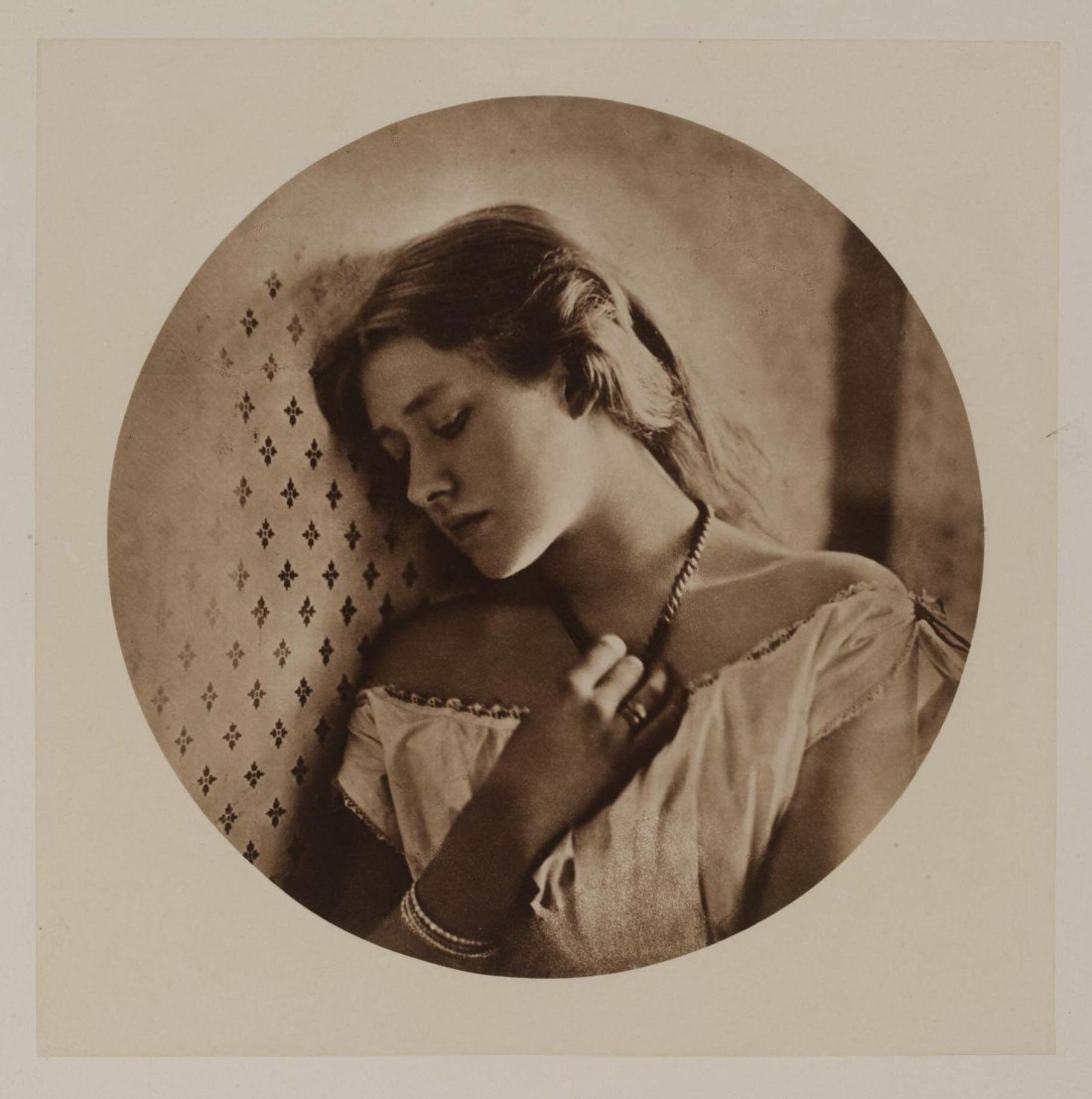
This image of Ellen Terry (1847-1928) is one of the few known photographs of a female celebrity by Julia Margaret Cameron. Terry, the popular child actress of the British stage, was sixteen years old when Cameron made this image. This photograph was most likely taken just after she married the eccentric painter, George Frederick Watts (1817-1904), who was thirty years her senior. They spent their honeymoon in the village of Freshwater on the Isle of Wight where Cameron resided.
Terry came from a theatrical family and had her stage debut at age nine. In 1862 she was introduced to Watts, who painted a double portrait of her with her elder sister Kate. In a union engineered by Cameron and her own sisters, Terry and Watts were married on February 20, 1864, when she was just sixteen. Within a year the couple had separated; they were formally divorced in 1877.
The pair spent their honeymoon at Freshwater, and most likely it was at this time that the portrait was made. While the possibility exists that Terry, as an actress, was striking a pose for Cameron, the picture’s title suggests the realization of a mismatched marriage. Terry’s anxiety is plainly evident—she leans against an interior wall and tugs nervously at her necklace. The lighting is notably subdued, leaving her face shadowed in doubt. In The Story of My Life (1909), Terry recalls how demanding Watts was, calling upon her to sit for hours as a model and giving her strict orders not to speak in front of distinguished guests in his studio.
Cameron’s uncertain technique is evidenced by the image loss at the lower center of the picture, where the collodion emulsion peeled away from the glass-plate negative. She must have created only a single negative at this sitting, since she presented this particular print as is in the Overstone Album. The negative was later rephotographed (with the damage repaired) and distributed commercially as a carbon print by the Autotype Company of London (see image above). This later version was also reproduced in 1913 in Alfred Stieglitz’s Camerawork. (*)
Cameron’s portrait echoes Watt’s study of Terry titled Choosing (1864, National Portrait Gallery, London). As in the painting, Terry is shown in profile with her eyes closed, an ethereal beauty in a melancholic dream state. In this guise, Terry embodies the Pre-Raphaelite ideal of womanhood rather than appearing as the wild boisterous teenager she was known to be. The round (“tondo”) format of this photograph was popular among Pre-Raphaelite artists. (*)
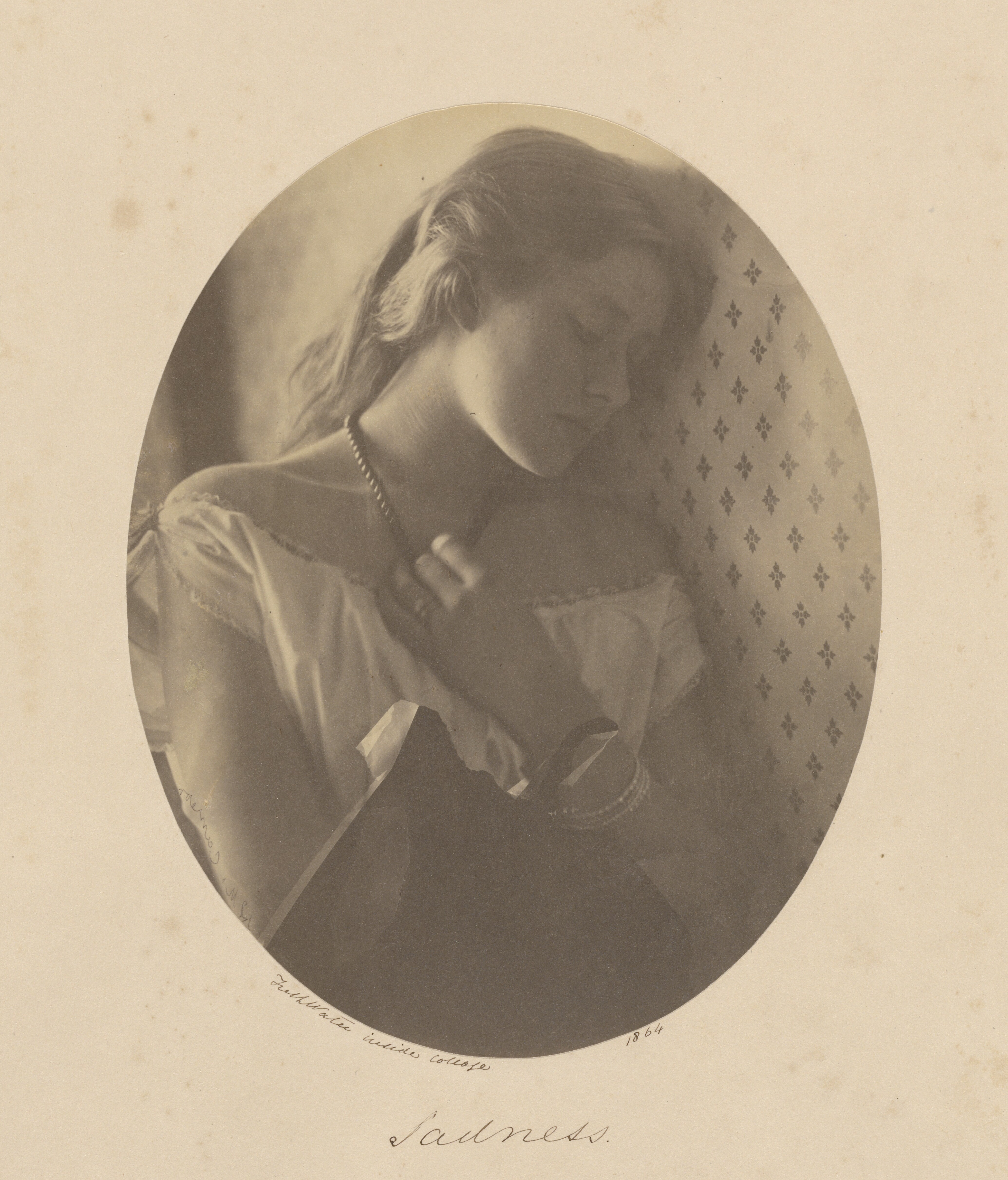
Cameron titled another print of this image Sadness (see image above), which may suggest the realization of a mismatched marriage. Terry’s anxiety is plainly evident—she leans against an interior wall and tugs nervously at her necklace. The lighting is notably subdued, leaving her face shadowed in doubt. In The Story of My Life (1909), Terry recalls how demanding Watts was, calling upon her to sit for hours as a model and giving her strict orders not to speak in front of distinguished guests in his studio.
This particular version was printed eleven years after Cameron first made the portrait. In order to distribute this image commercially, the Autotype Company of London rephotographed the original negative after the damage had been repaired. The company then made new prints using the durable, non-fading carbon print process. Thus, this version is in reverse compared to Sadness. Terry’s enduring popularity is displayed by the numerous photographs taken of her over the years. (*)
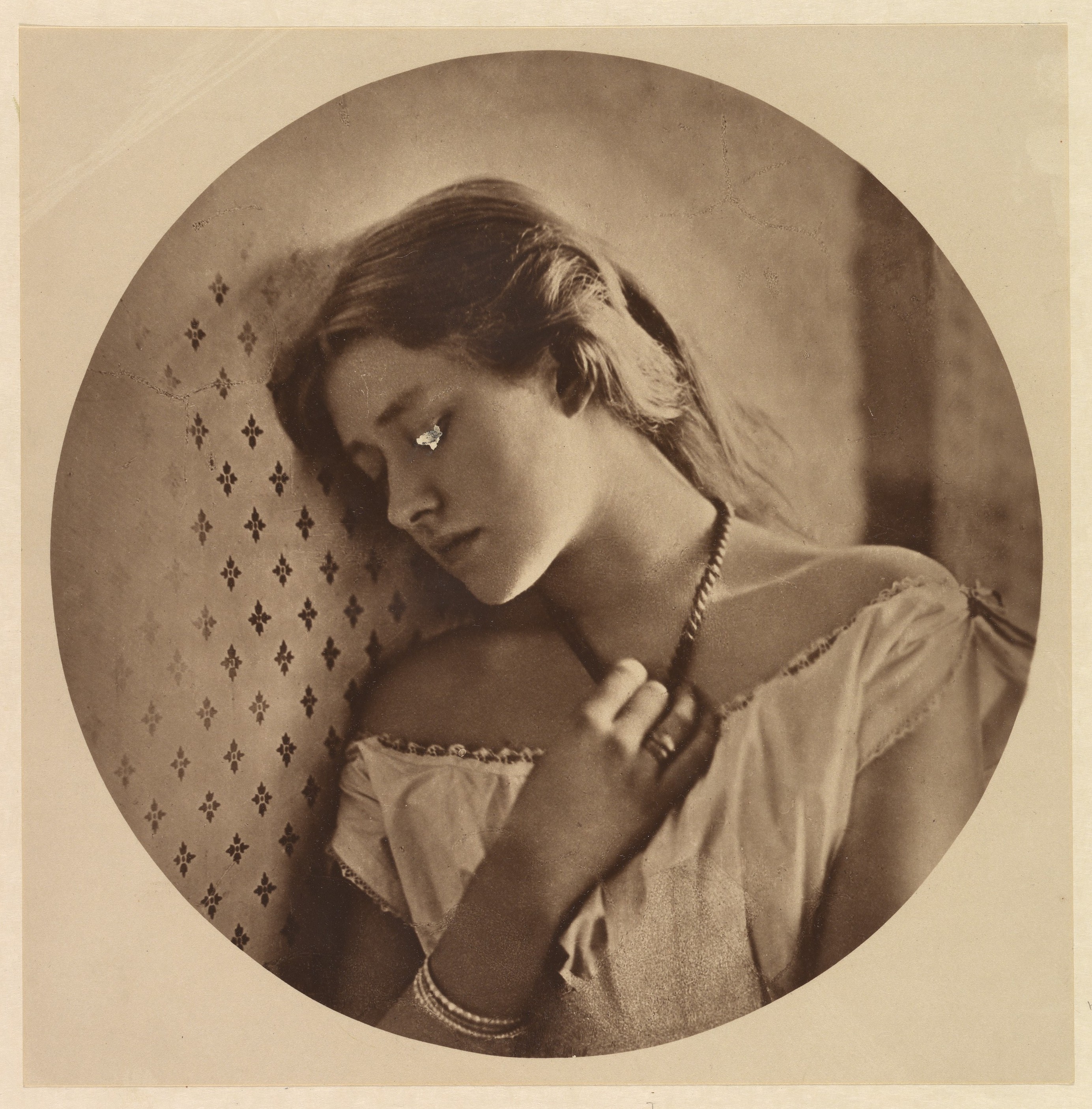
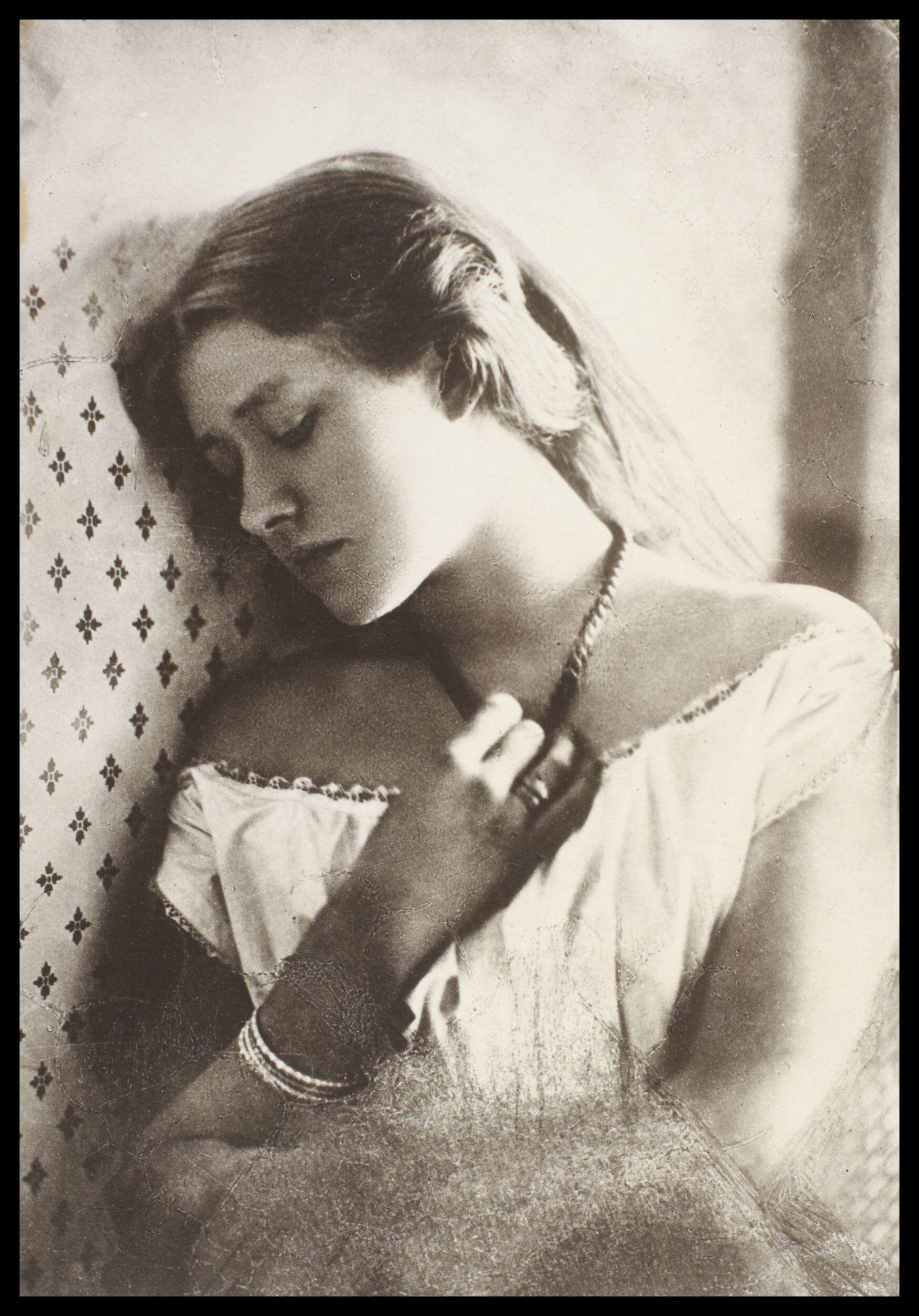
(*) quotations are from The J. Paul Getty Museum, links can be followed from the captions of image 5 and 6 of this post
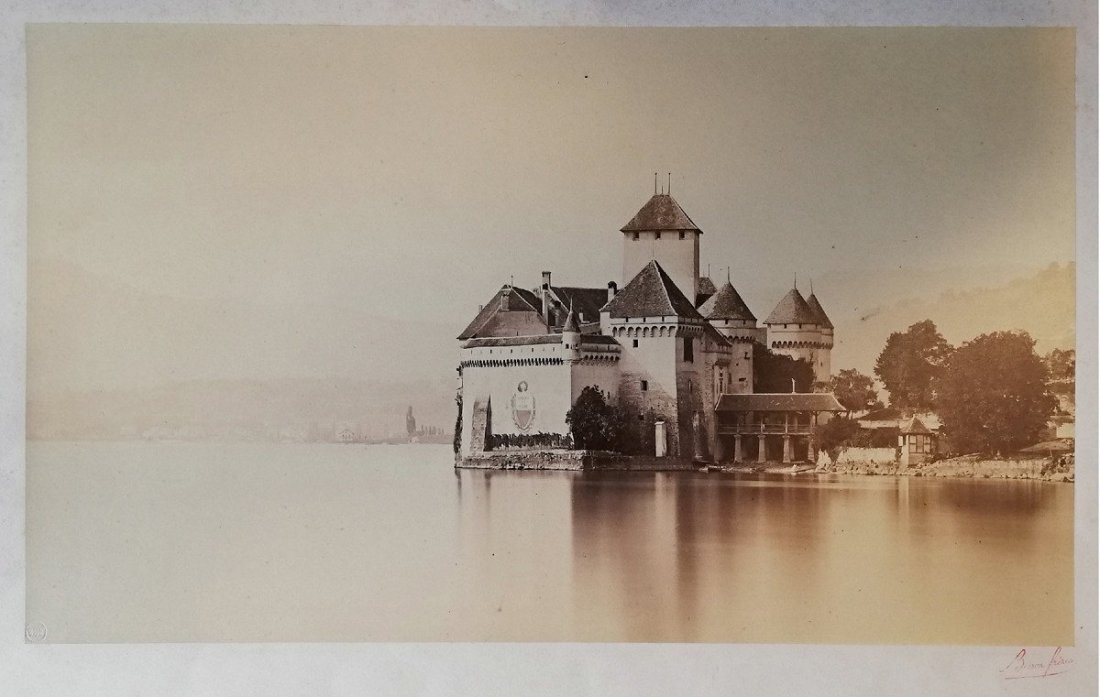
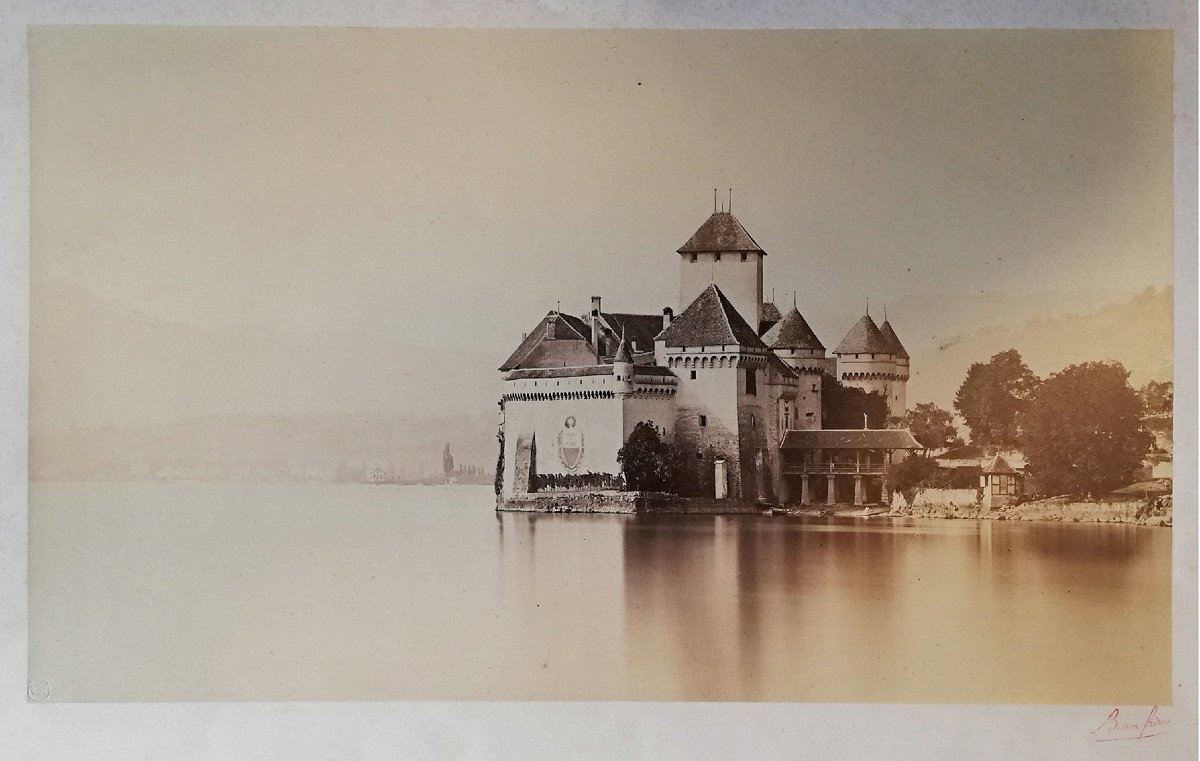
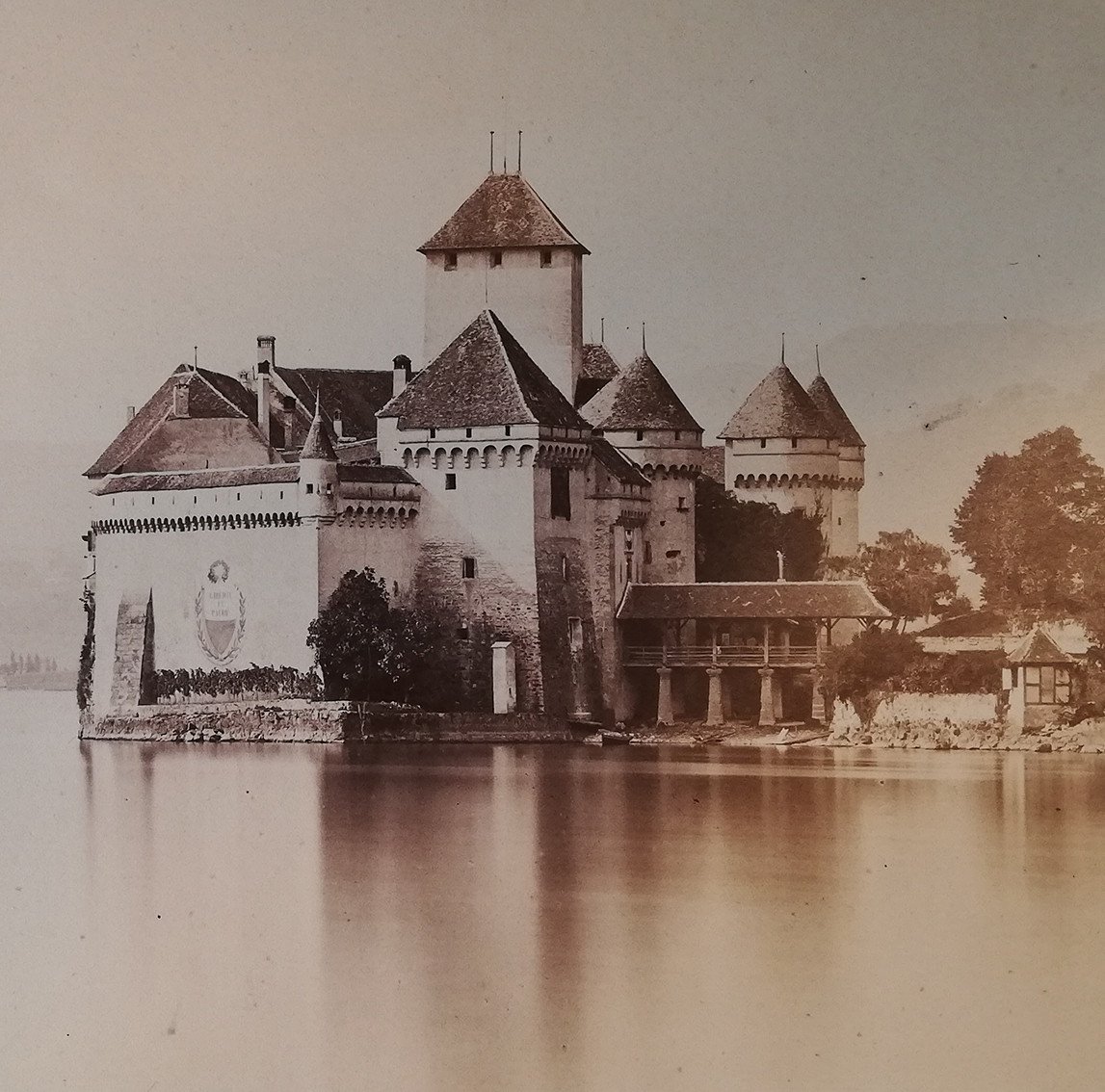
(*) Photo des Frères Bisson Louis-Auguste Bisson (French, 1814–1876) et Artist: Auguste-Rosalie Bisson (French, 1826–1900)
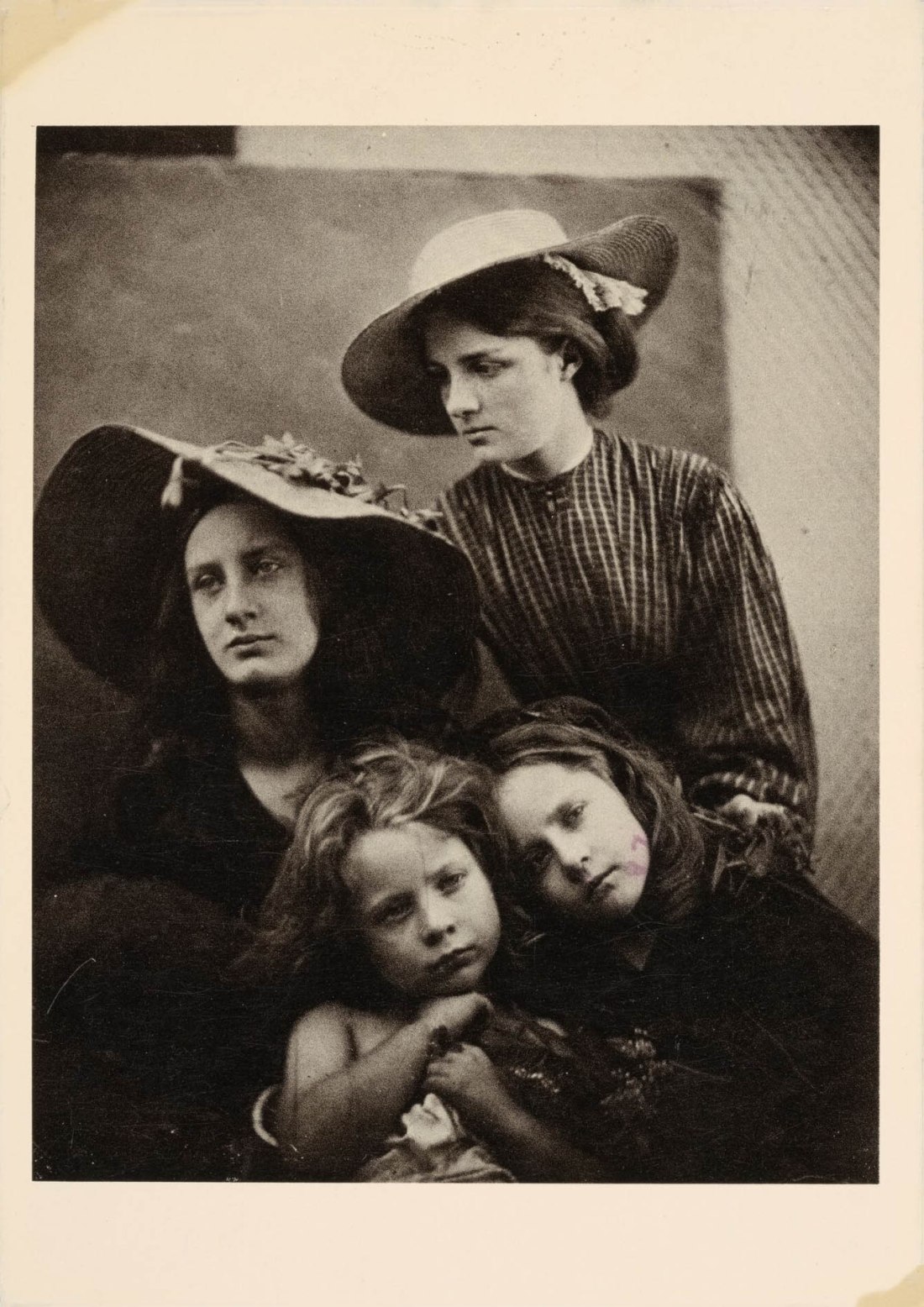
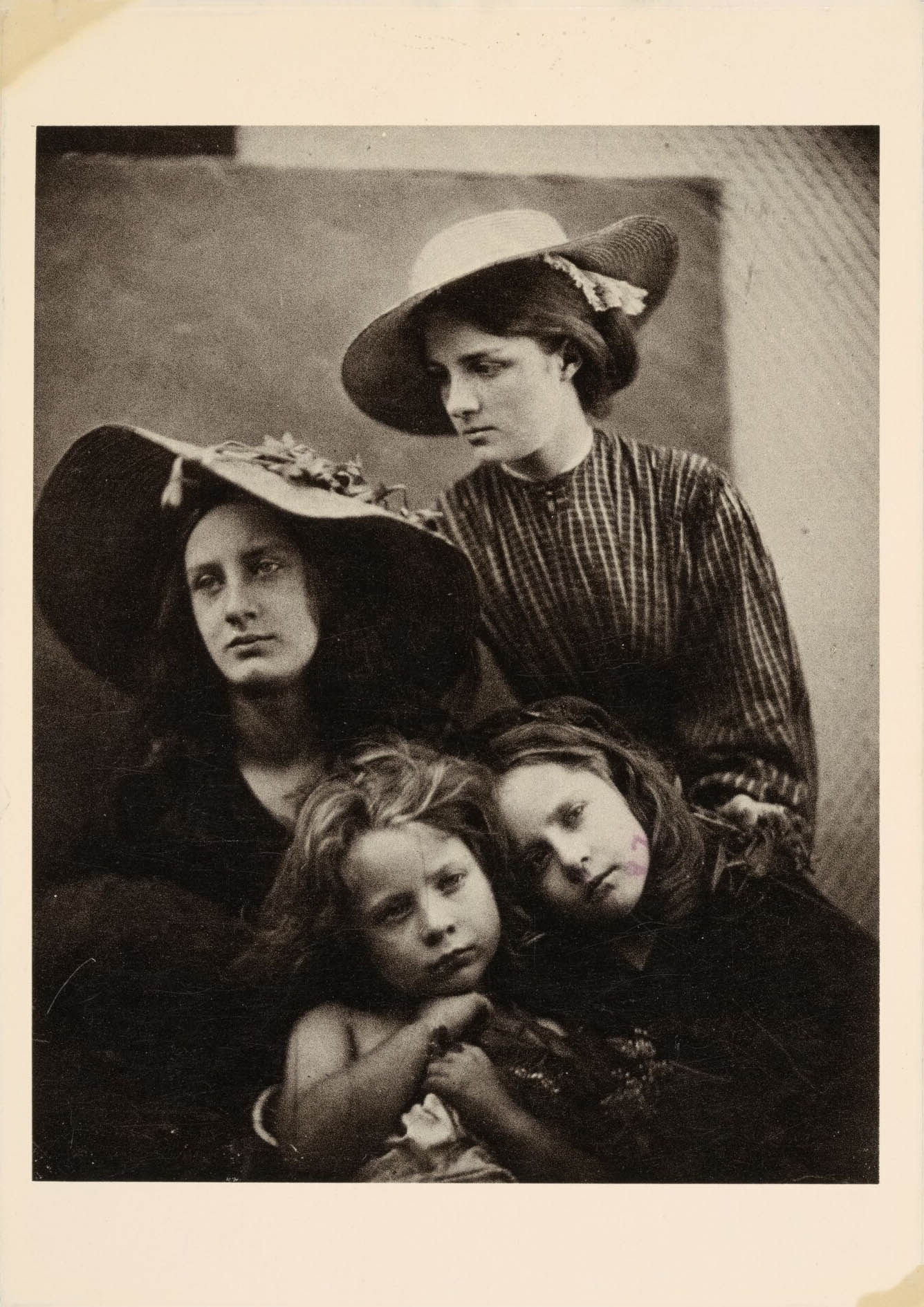
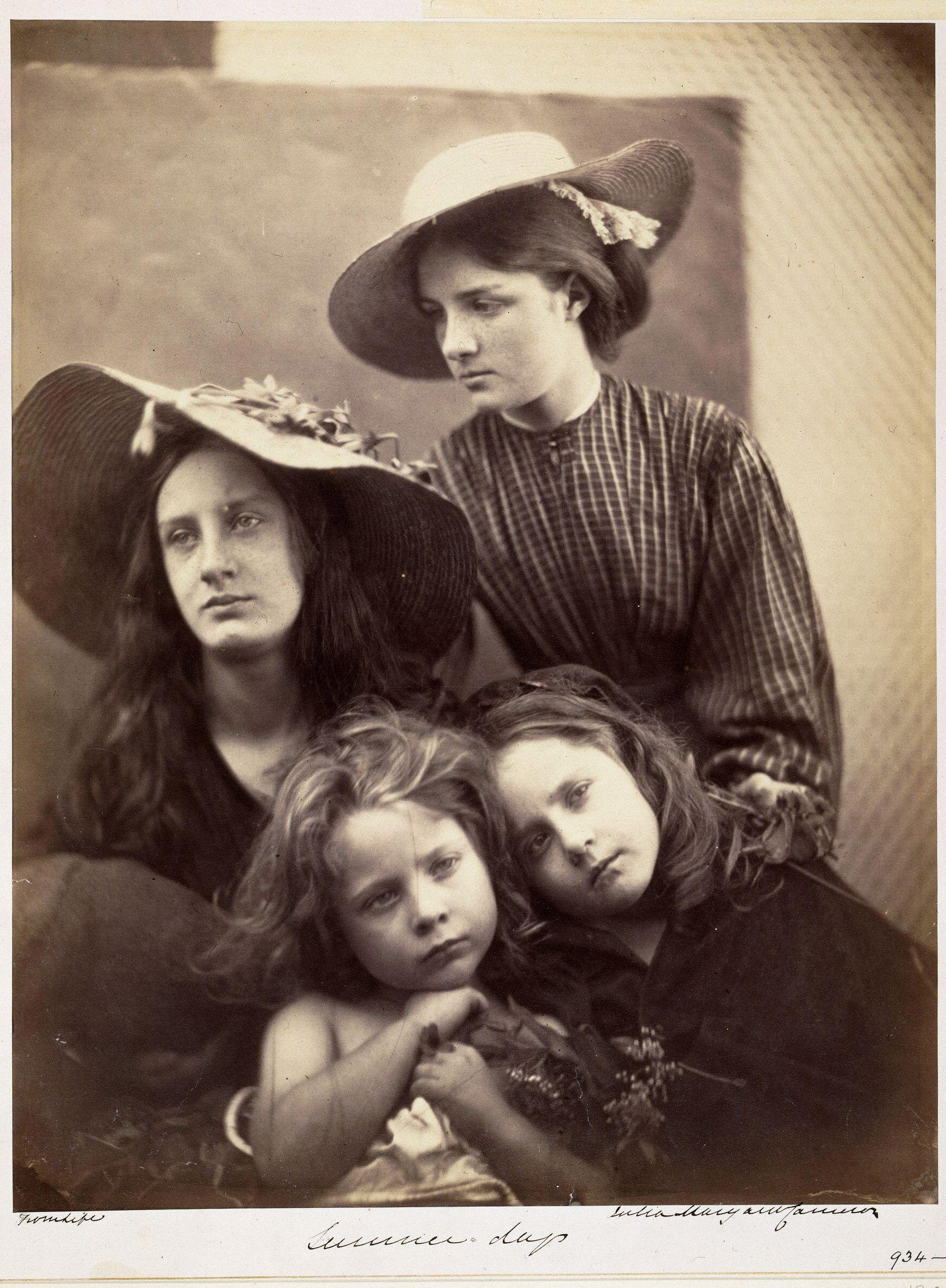
In late 1865, Julia Margaret Cameron began using a larger camera. It held a 15 x 12 inch glass negative, rather than the 12 x 10 inch negative of her first camera. Early the next year she wrote to Henry Cole with great enthusiasm – but little modesty – about the new turn she had taken in her work.
Cameron initiated a series of large-scale, closeup heads that fulfilled her photographic vision. She saw them as a rejection of ‘mere conventional topographic photography – map-making and skeleton rendering of feature and form’ in favour of a less precise but more emotionally penetrating form of portraiture. Cameron also continued to make narrative and allegorical tableaux, which were larger and bolder than her previous efforts.
Cameron’s ability to capture large groups improved with experience as well as with the use of her new, larger lens. Her friend and photographic advisor, the scientist Sir John Herschel, wrote that this picture was ‘very beautiful, and the grouping perfect.’ quoted from V&A
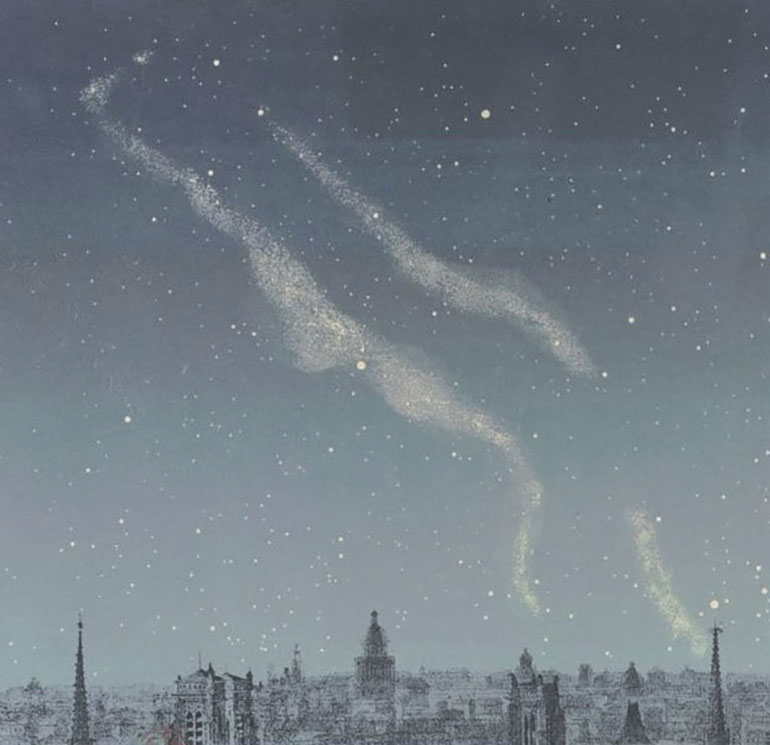
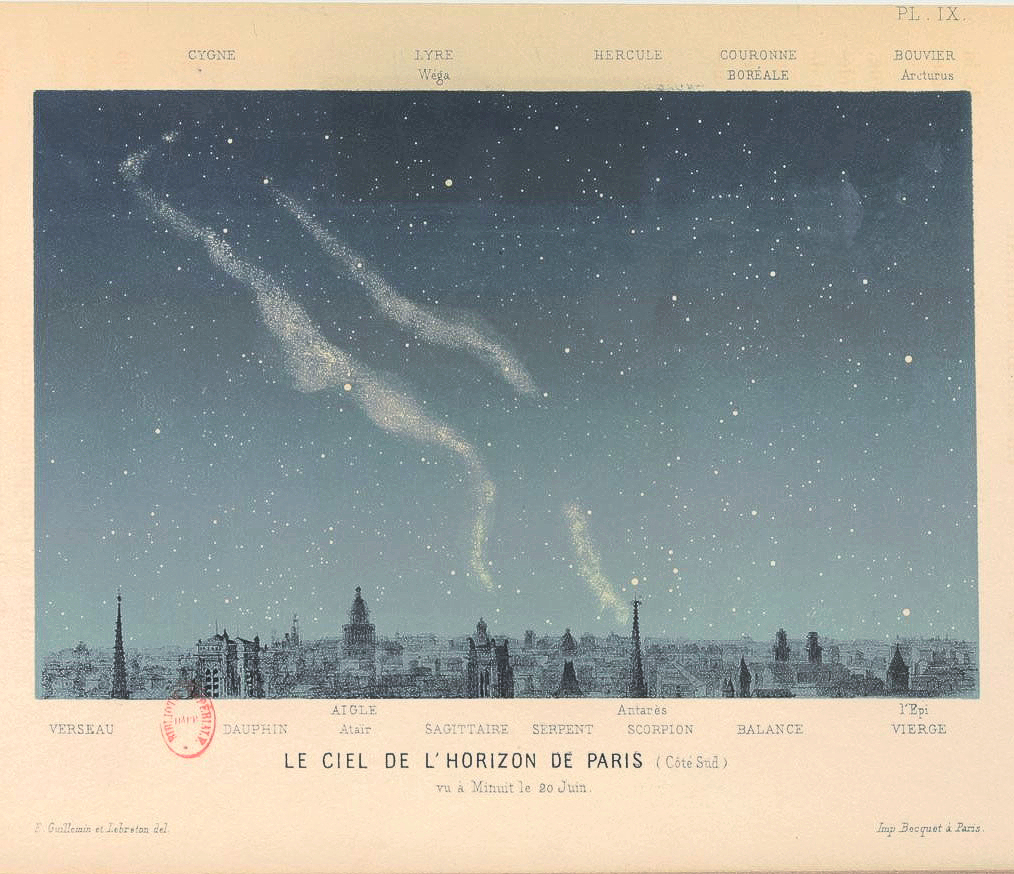
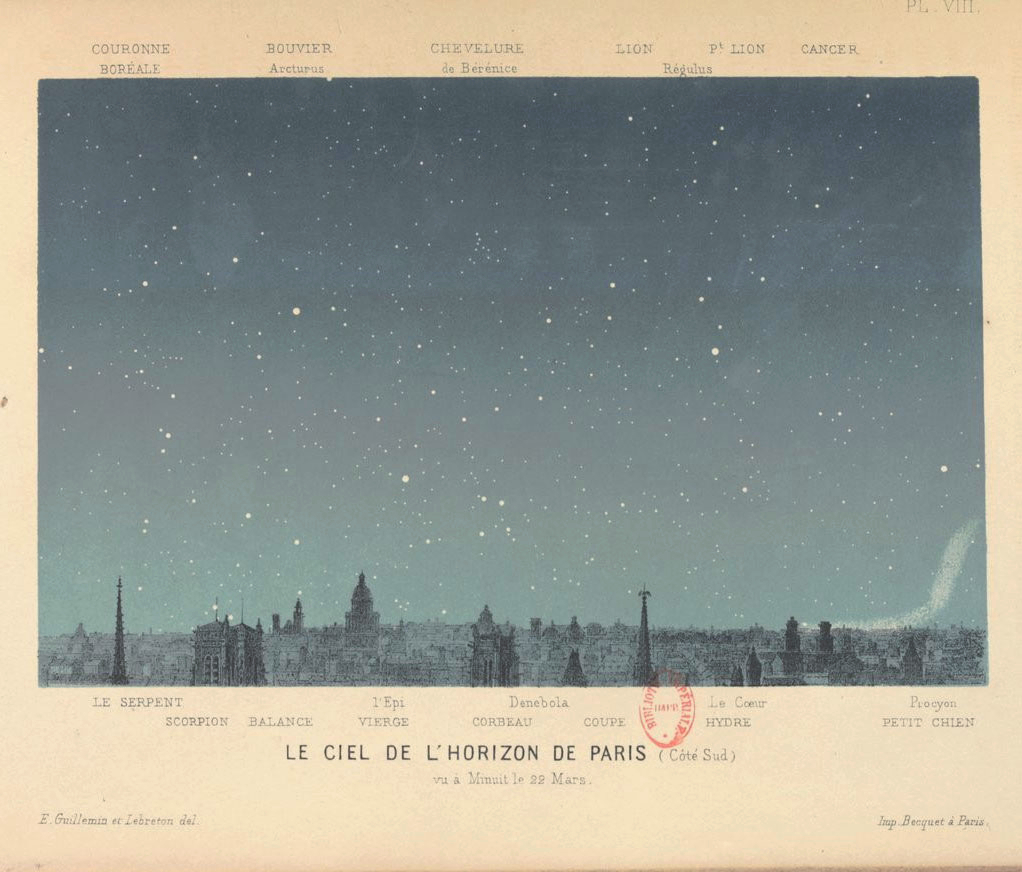
![Le ciel de l'horizon de Paris (Côté Sud ) vu à Minuit le 29 Mars [detail] | BnF · Gallica](https://unregardoblique.com/wp-content/uploads/2022/08/le_ciel_-_notions_dastronomie_...guillemin_amedee_bpt6k62098808_437-1.jpeg)

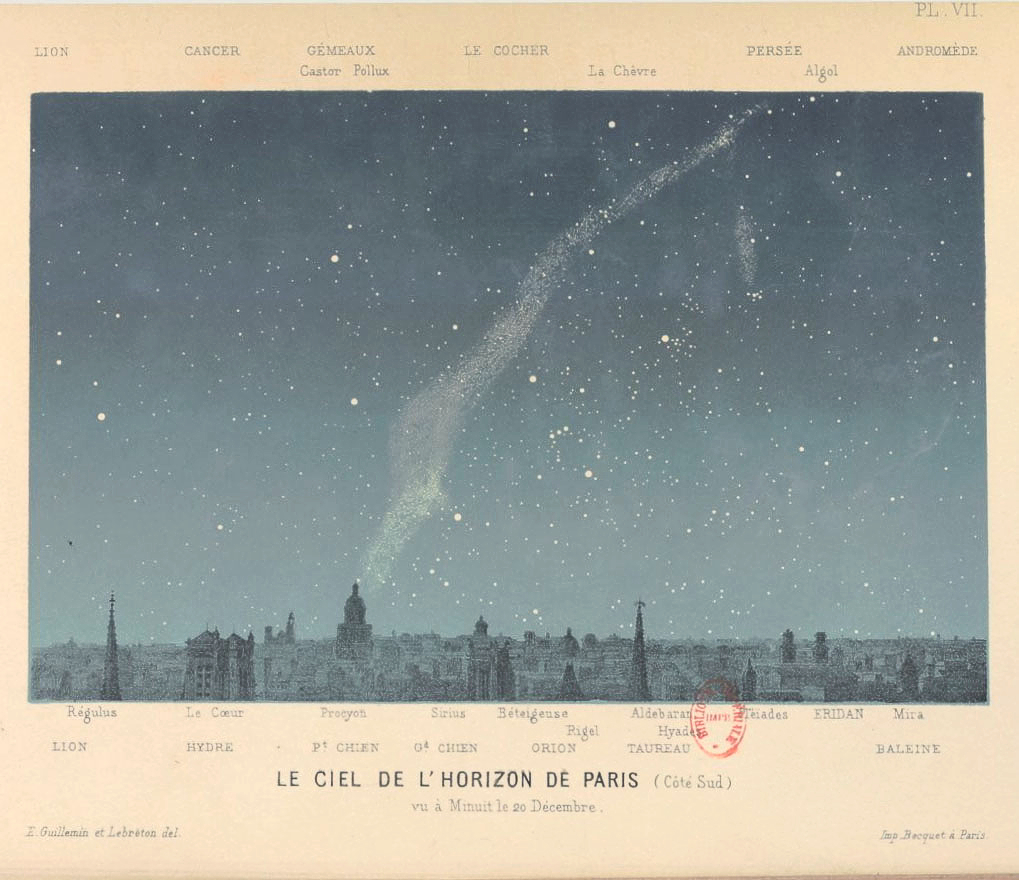
![Le ciel de l'horizon de Paris (Côté Sud ) vu à Minuit le 20 Décembre [detail] | BnF · Gallica](https://unregardoblique.com/wp-content/uploads/2022/08/le_ciel_-_notions_dastronomie_...guillemin_amedee_bpt6k62098808_411-1.jpg)
 un regard oblique