Vera Sabina in Sylphide, 1927

Ritratto fotografico della ballerina Vera Savina (Vera Clark) in costume di scena per il balletto Sylphide, 1927. | src Libreria antiquaria Gonelli

Al verso della fotografia timbri della ‘Casa d’Arte Bragaglia’ e della ‘Rivista Popolo d’Italia’, insieme ad una annotazione manoscritta, parzialmente errata, nella quale si legge il nome della Savina.

La celebre ballerina inglese (Vera Clark, in arte Savina) lavorò a Mosca nel corpo di ballo dei Ballets Russes di Diaghilev e sposò Léonide Massine (Myasin), altro grande coreografo russo. È ripresa seduta nell’atto in indossare una scarpetta. L’acconciatura, il costume di scena, il gioiello ed il bracciolo della sedia corrispondono esattamente a quelli con cui la ritrasse il pittore scozzese Herbert James Gunn nel quadro ‘Sylphide‘ (1927 – collezione privata).

On the back of the photograph, stamps of the ‘Casa d’Arte Bragaglia’ and ‘Rivista Popolo d’Italia’, together with a handwritten annotation, partially incorrect, in which the name of Savina can be read.

The famous English dancer (Vera Clark, aka Savina) worked in Moscow in the ballet troupe of Diaghilev’s Ballets Russes and married Léonide Massine (Myasin), another great Russian choreographer. She is shown sitting in the act of wearing a shoe. The hairstyle, the stage costume, the jewel and the armrest of the chair correspond exactly to those with which the Scottish painter Herbert James Gunn portrayed her in the painting ‘Sylphide‘ (1927 – private collection).
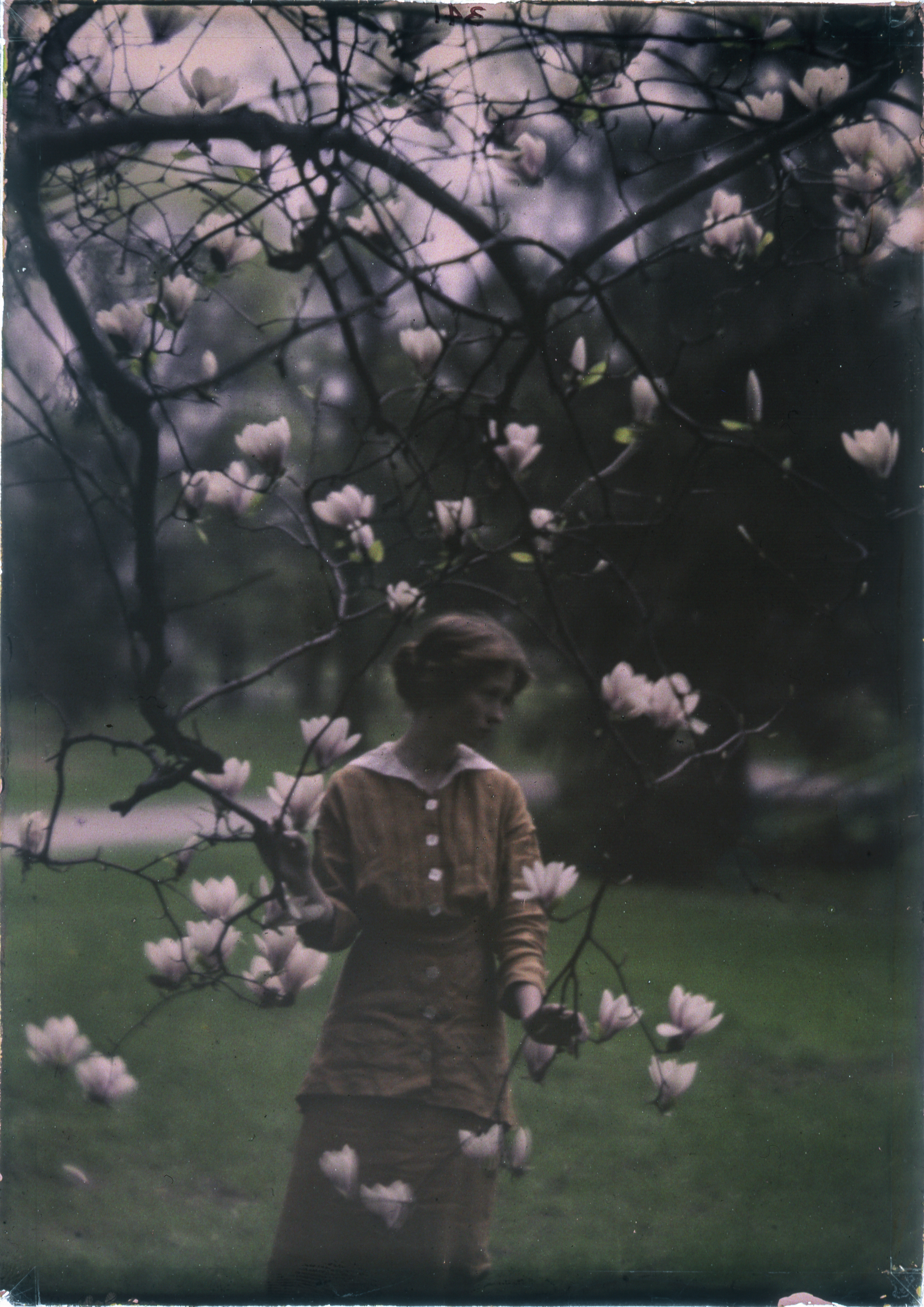
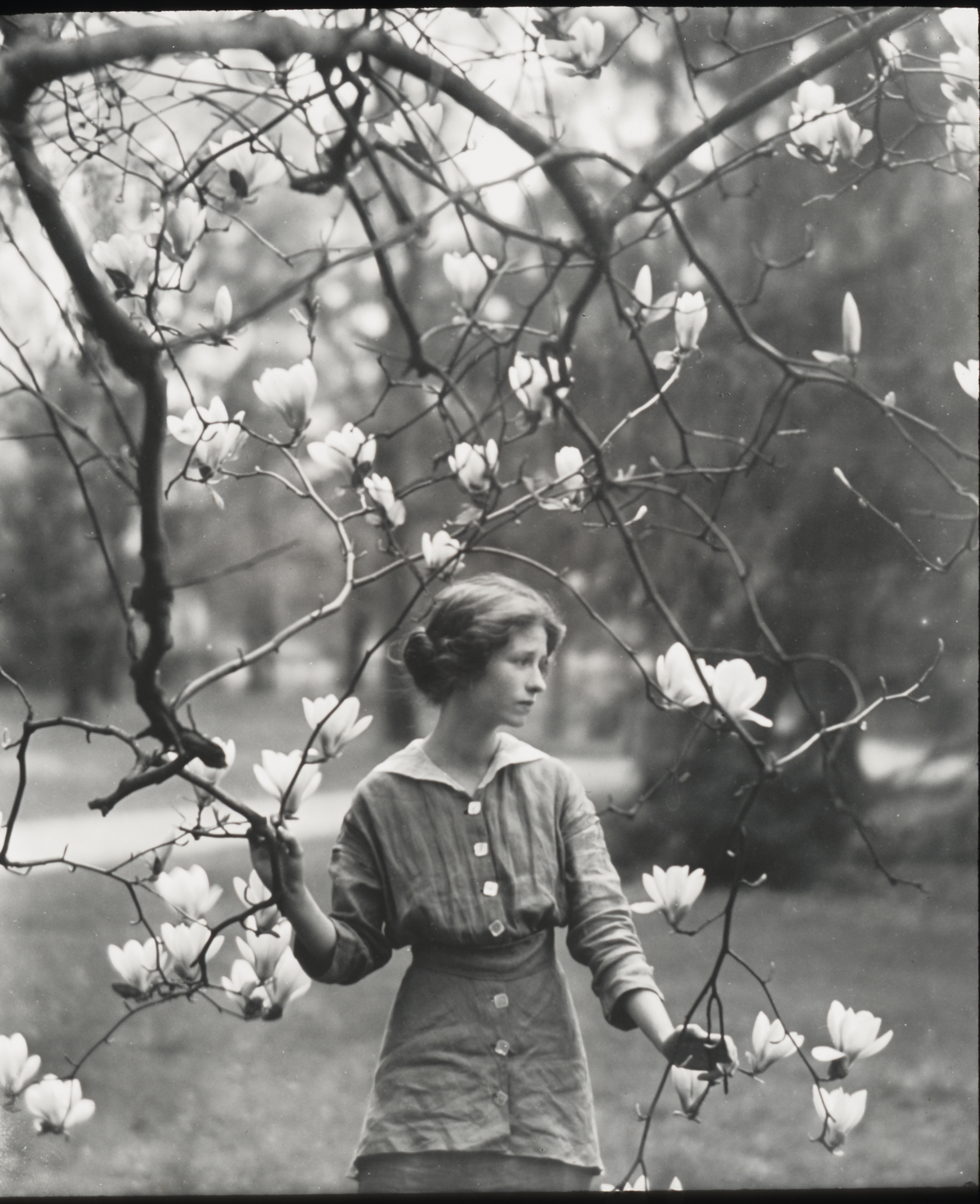
Edna St. Vincent Millay, 1914 (I)

Arnold Genthe :: Edna St. Vincent Millay at Mitchell Kennerley's house in Mamaroneck, New York, 1914. Autochrome. | Library of Congress
Arnold Genthe :: Edna St. Vincent Millay at Mitchell Kennerley’s house in Mamaroneck, New York, 1914. Autochrome. | Library of Congress
Arnold Genthe :: Portrait photograph of Edna St. Vincent Millay, 1914. Digital file from original lantern slide. | Library of Congress
Arnold Genthe :: Edna St. Vincent Millay, portrait photograph, 1914. Glass negative. | Library of Congress

Shells and design, late 1970s

Karel Vaca :: Dívka s Mušlí (Girl with a shell), 1980. Vintage movie poster, offset print. Movie directed by Jiří Svoboda. | src Zezula
Karel Vaca (1919-1989) :: Dívka s Mušlí (Girl with a shell), 1980. Vintage movie poster, offset print. Movie directed by Jiří Svoboda. | src Zezula
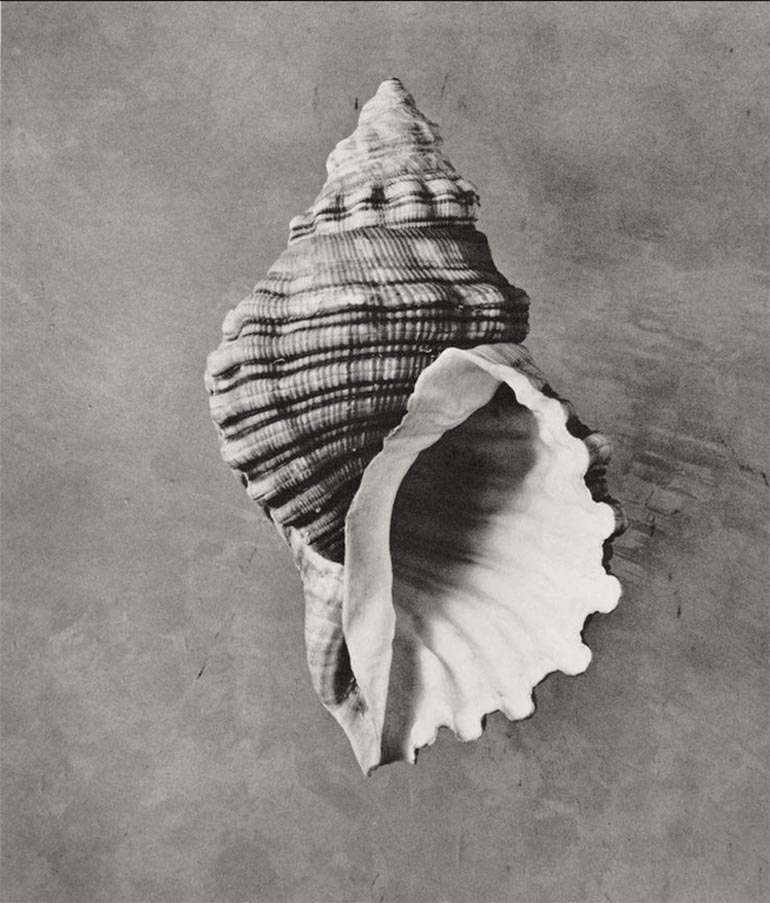
Cymatium spengleri Perry. From "The shell: five hundred million years of inspired design" by Hugh Stix and Marguerite Stix, 1979. | src equator on IG
Cymatium spengleri Perry. From “The shell: five hundred million years of inspired design” by Hugh Stix and Marguerite Stix, 1979. | src equator on IG

Cleopatra in Auckland, 1914

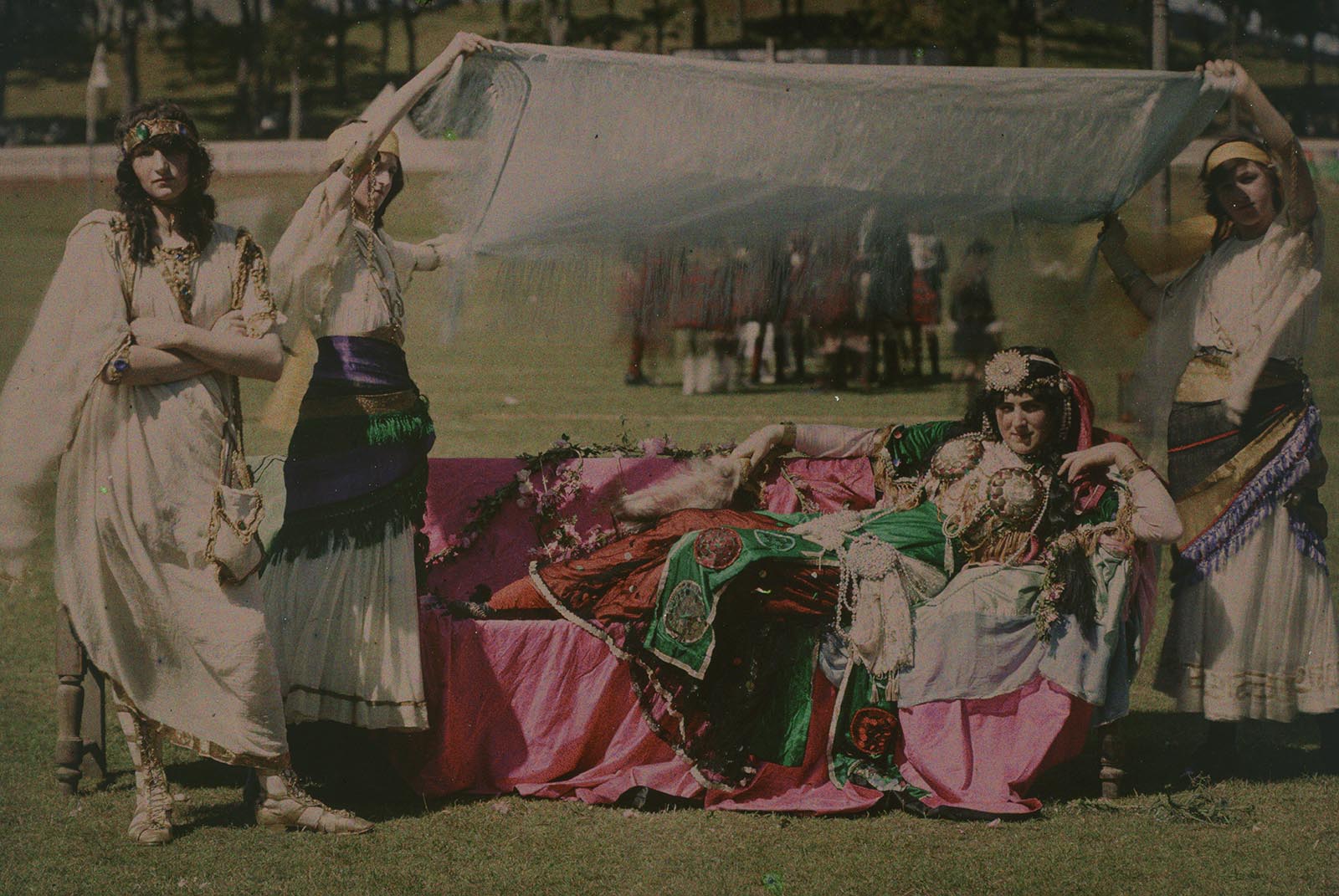
Robert Walrond :: "Cleopatra" in Domain cricket ground, Auckland, 1914. Autochrome. | Te Papa Tongarewa
Robert Walrond :: “Cleopatra” in Domain cricket ground, Auckland, 1914. Autochrome. | Te Papa Tongarewa

When the autochrome — the Lumière brothers’ new colour photographic process — reached New Zealand in 1907, it was eagerly adopted by those who could afford to use it. Among them was Auckland photographer Robert Walrond, whose ‘Cleopatra’ in Domain cricket ground is among a small number of superb early colour photographs in Te Papa’s collection. The combined effect of the sun and wind on the women’s costumes and in the fluttering appearance of the silk scarf held above the Cleopatra character is stunning. The tableau is interrupted but undiminished by what appears to be a pipe band in uniform in the background. The women were very likely part of what was described by the New Zealand Herald as a ‘fine’ performance of Luigi Mancinelli’s Cleopatra (a musical setting of the play by Pietro Cossa), associated with the Auckland Exhibition of 1913–14 held in the Domain.

The story of Cleopatra — with a particular focus on her love life and tragic death — was an exotic but respectable theme for theatre and dress-up events for women at the time. The Cleopatra myth and look were popularised by international performers such as the frequently-photographed Sarah Bernhardt in France and by numerous stage productions and films from the late nineteenth century onwards. With the advent of photography, part of performing the role became having a portrait made while in costume. The arrival of the autochrome was greeted with excitement and anticipation because rich colours could now be captured and the elaborate style of the costumes enhanced.

Much was made of the impact the autochrome would have on art and the role of photography within it. However, one of the disadvantages of the process was that it involved a unique one-off image on a glass plate: this required projection to be viewed and couldn’t be exhibited. So despite the original excitement for the method, it slipped out of sight once new developments arrived that fixed colour printing on a paper format. Walrond’s set of autochromes held by Te Papa are one of only a few larger bodies of work by New Zealand practitioners of this process.

Lissa Mitchell – This essay originally appeared in New Zealand Art at Te Papa (Te Papa Press, 2018)

Robert Walrond :: "Cleopatra", 1914. Additive colour process. | Museum of New Zealand - Te Papa Tongarewa
Robert Walrond :: “Cleopatra”, 1914. Autochrome, additive colour process. | Museum of New Zealand – Te Papa Tongarewa

Lady in Green (Autochromes)

J.W. Chapman-Taylor :: Woman with sunflower print curtains, 1900-1930. Autochrome. | Te Papa Tongarewa Museum of New Zealand
J.W. Chapman-Taylor :: Woman (smiling) with sunflower print curtains, 1900-1930. Autochrome. | Te Papa Tongarewa
J.W. Chapman-Taylor :: Woman with sunflower print curtains, 1900-1930. Autochrome. | Te Papa Tongarewa Museum of New Zealand

Aufsberg recommends for Sunday

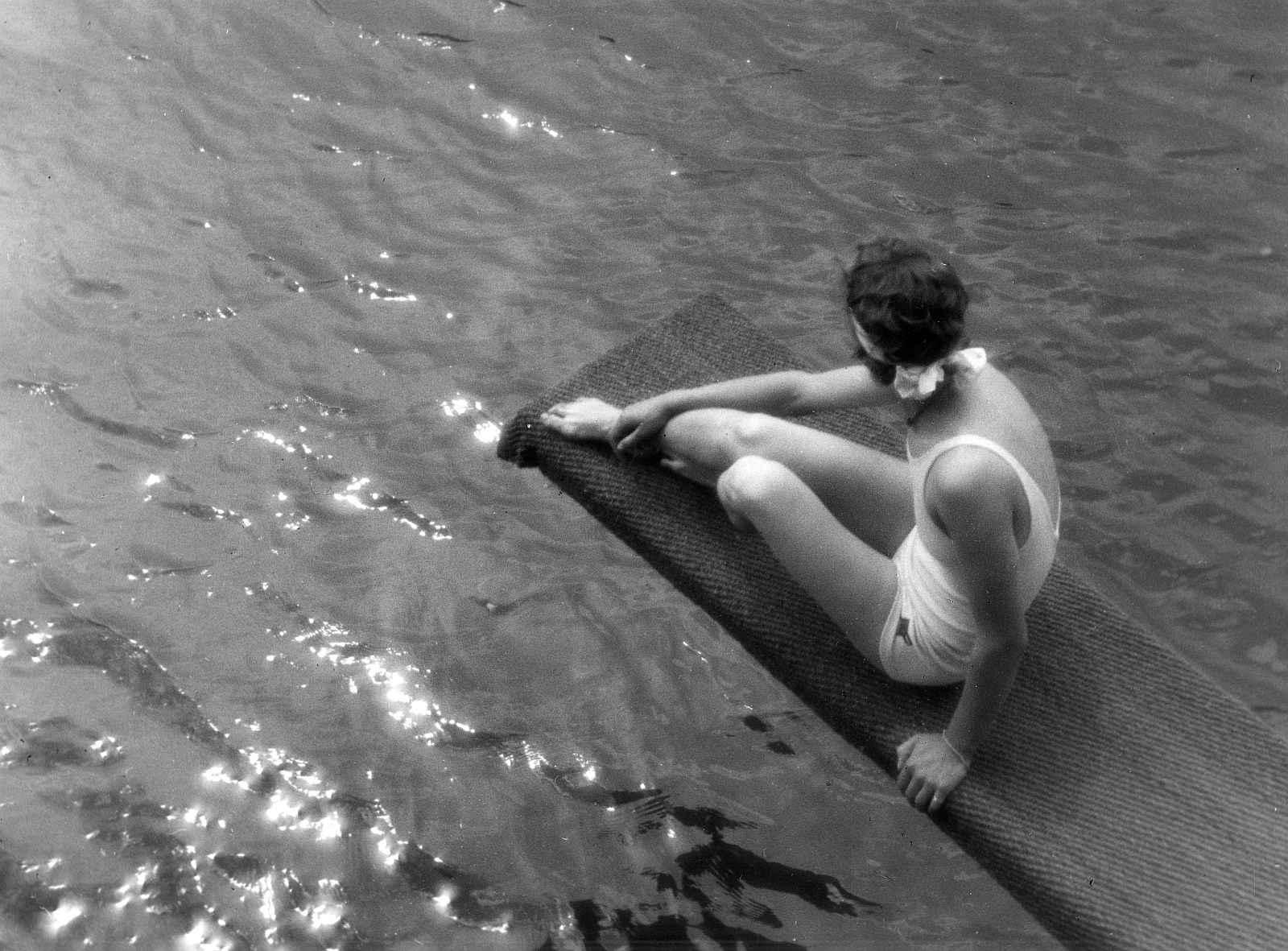
Lala Aufsberg :: Käthchen. Junge Frau im Badeabzug, auf einem Sprungbrett sitzend, 1934. | Deutsche Fotothek
Lala Aufsberg :: Pegnitztal near Nuremberg-Behringersdorf. River landscape with a young woman in a bathing suit and with a fishing rod. Series: Käthchen, 1933 | Deutsche Fotothek
Lala Aufsberg :: Sonnenbad, 1933 | src Deutsche Fotothek

Just a perfect day

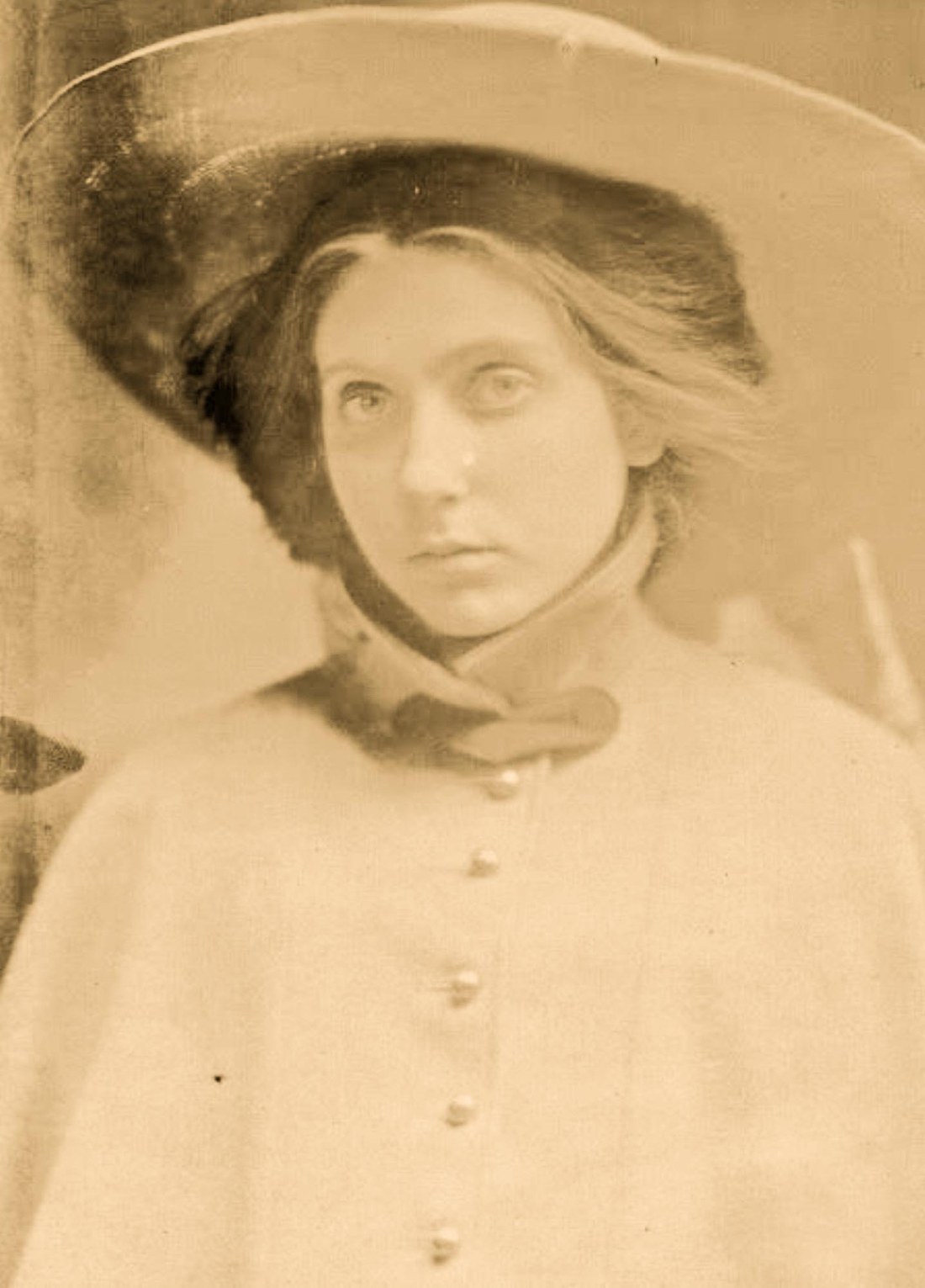
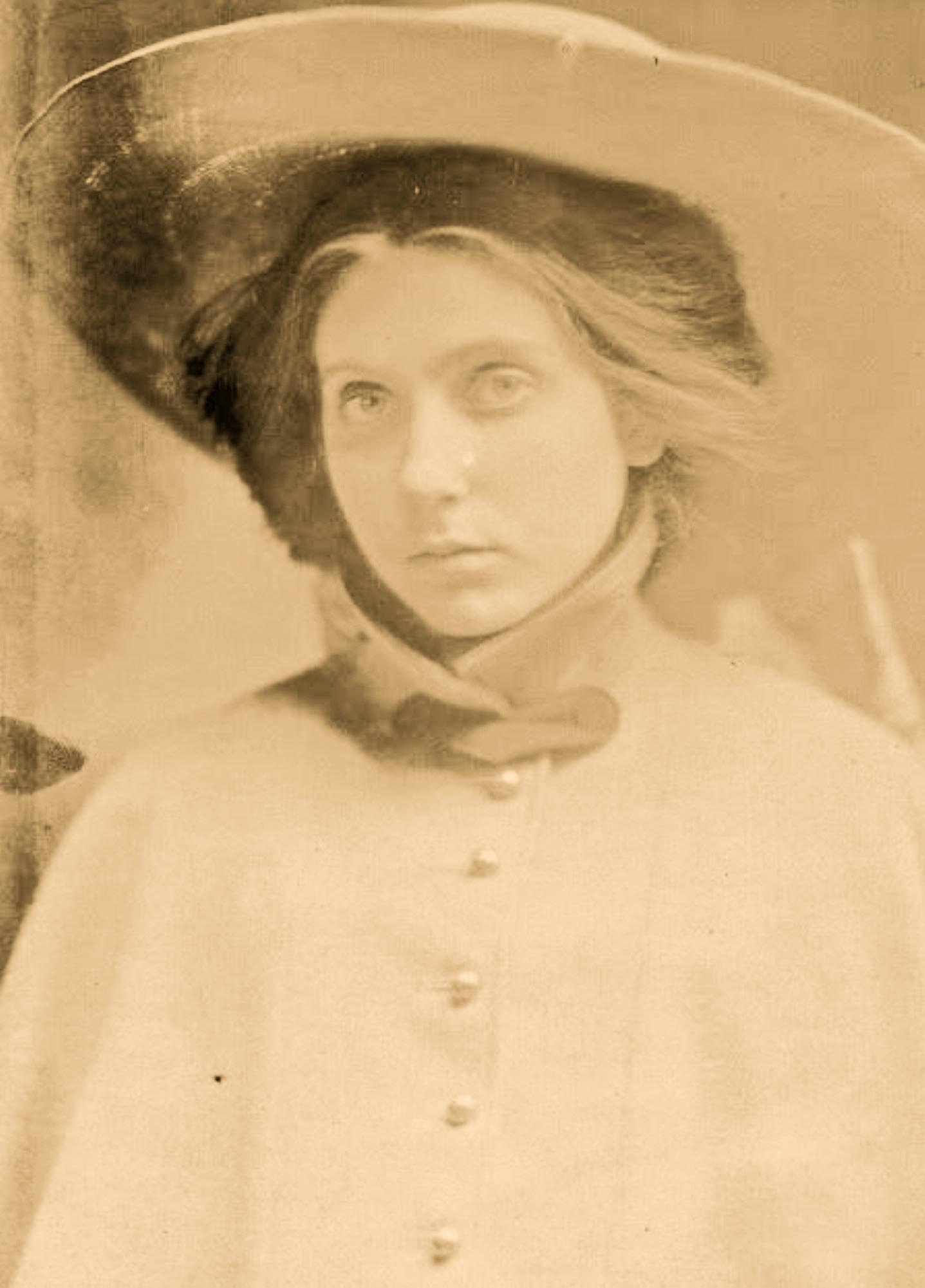
Beatrice Wood, Mama of Dada

Beatrice Wood (1893-1998), 1908 | src Beatrice Wood Center for the Arts

“My life is full of mistakes. They’re like pebbles that make a good road.” ~ Beatrice Wood

Beatrice Wood (1893-1998), 1908 | src Beatrice Wood Center fot the Arts, also on Wikimedia

“There are three things important in life:

Honesty, which means living free of the cunning mind.
Compassion, because if we have no concern for others, we are monsters.
Curiosity, for if the mind is not searching, it is dull and unresponsive.”

~ Beatrice Wood

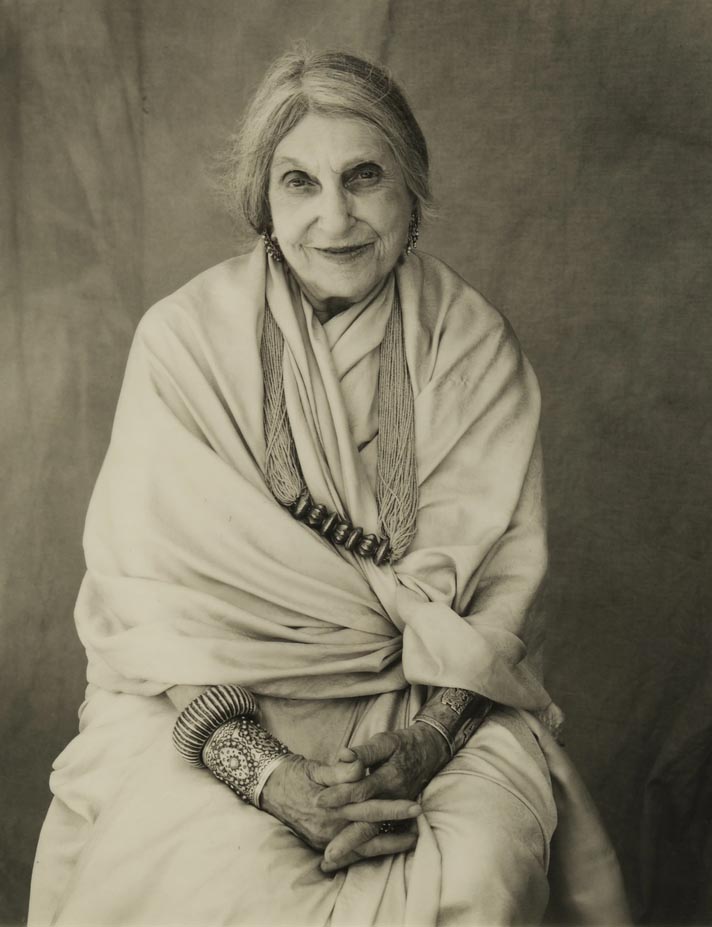
Beatrice Wood (1893-1998) | Photo by Tony Cunha | src Beatrice Wood Center for The Arts

Beatrice Wood, aka the “Mama of Dada” was born into a wealthy San Francisco family in 1893. Defying her family’s Victorian values, she moved to France to study theater and art. On the brink of WWI, her parents brought a reluctant Beatrice back to New York, where her mother did everything within her power to discourage her plans for a career on the New York stage. Despite this, Beatrice’s fluency in French led her to join the French National Repertory Theater, where she played over sixty ingénue roles under the stage name “Mademoiselle Patricia” to save her family’s name and reputation.

Wood’s involvement in the Avant-Garde began in these years with her introduction to Marcel Duchamp and later to his friend Henri-Pierre Roché, a diplomat, writer and art collector. Roché, a man fourteen years her senior, joined the duo, becoming creatively (and romantically) entangled. Together they wrote and edited The Blind Man (and the Rongwrong magazine), a magazine that poked the conservative art establishment and helped define the Dada art movement.

Marcel Duchamp brought Beatrice into the world of the New York Dada group, which existed by the patronage of art collectors Walter and Louise Arensberg. The Arensbergs’ home became the center of legendary soirees that included leading figures of the time including Francis Picabia, Mina Loy, Man Ray, Charles Demuth, Joseph Stella, Charles Sheeler and the composer Edgard Varèse.

Beatrice Wood’s career as an artist of note began when she created an abstraction to tease Duchamp that anyone could create modern art. Duchamp was impressed by the work, arranging to have it published in a magazine and inviting her to work in his studio. It was here that she developed her style of spontaneous sketching and painting that continued throughout her life.

Following the formation of the Society of Independent Artists in 1917, Beatrice exhibited work in their Independents exhibition. [text extracted from Wikipedia entry and Beatrice Wood Center for the Arts]

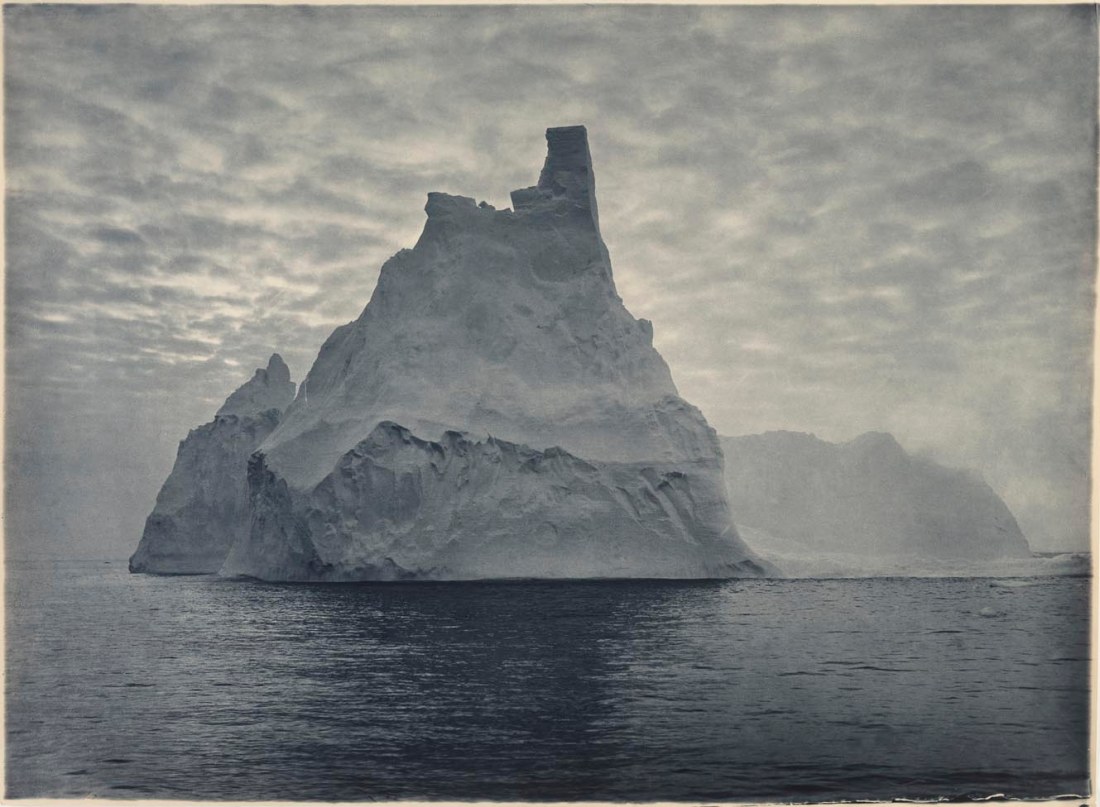
A turreted iceberg, 1913

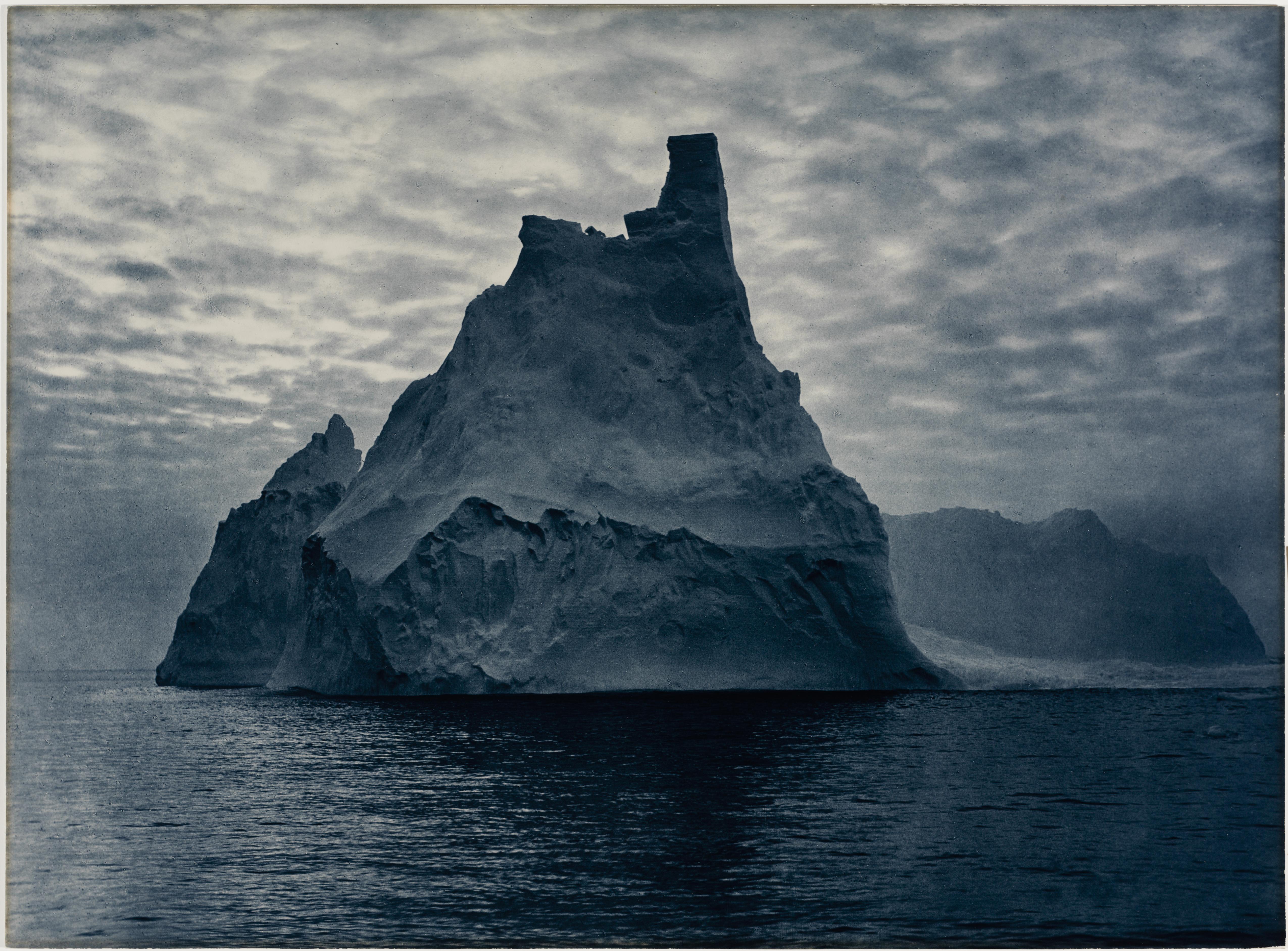
Frank Hurley (1885–1962) :: A turreted berg lit by the midsummer midnight sun, 1913. Carbon print w/ added toning chemicals. First Australasian Antarctic Expedition. One of the most striking photographs from this group, shot during the first of the three major voyages of exploration to Antarctica. | src the National Gallery of Victoria

Gazing at the grey curtains of fog from the deck of our ship, so tiny in the surrounding vastness, we felt like Argonauts whose quest had led to the World’s brim. Slowly we crept on, filled with wonder and expectancy … Through a rift we made out the glimmering sheen of a colossal berg.

– Frank Hurley, Argonauts of the South (1925)

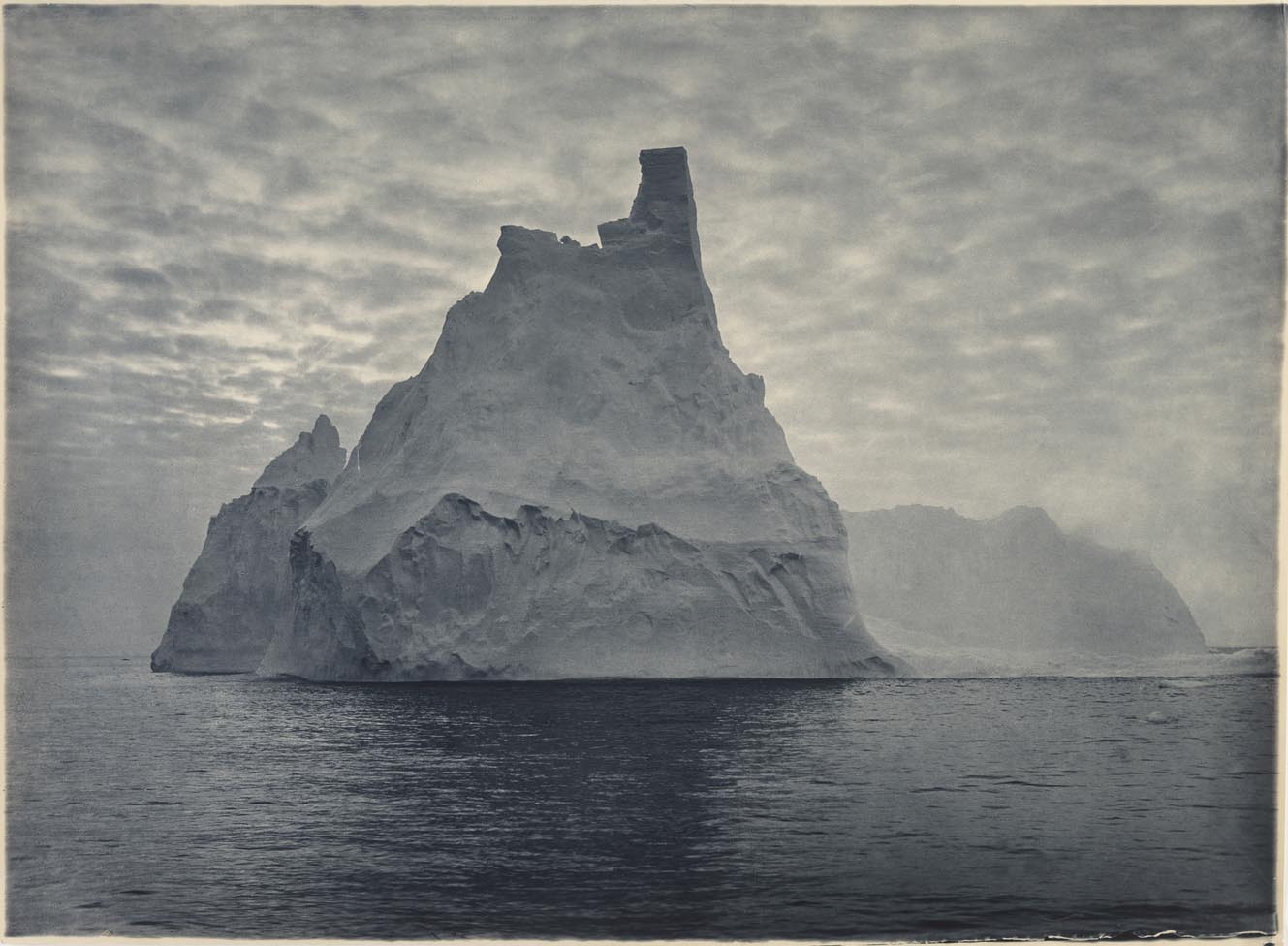
Frank Hurley (1885–1962) :: A radiant turret lit by the midsummer midnight sun, 1913. | State Library of New South Wales

Thousands of mighty bergs were grounded on a vast shoal and our way lay through its midst. No grander sight have I ever witnessed among the wonders of Antarctica. We threaded a way down lanes of vivid blue with shimmering walls of mammoth bergs rising like castles of jade on either side. Countless blue canals branched off and led through what appeared to be avenues of marble skyscrapers – dazzling white in the full sunshine. Waves had weathered out impressive portals and gigantic caverns in their gleaming sides, azure at the entrance and gradually fading into rich cobalt in their remote depths. Festoons of icicles sparkling like crystal pendants, draped ledges and arches.

– Frank Hurley, Argonauts of the South (1925)

Frank Hurley (1885–1962) :: A radiant turret lit by the midsummer midnight sun, 1913. From [Antarctic views] | Mitchell Library, State Library of NSW, also in old catalogue

Among Hurley’s photographs taken on the Aurora in 1913 is A turreted berg, a striking study of a lofty iceberg. The photograph shows an iceberg that has been transformed by the elements into a floating pyramid of ice. In his writings, Hurley repeatedly refers to the intensity and purity of colour of the icebergs. In A turreted berg he has not employed the newly invented colour processes, but has made selective use of toning chemicals to alter the colour of the carbon photograph.15 In this case the normally neutral tonal range of this kind of photograph has been shifted to an intense shade of blue, this colour reflecting more naturalistically the actual tones of the subject.

– Susan van Wyk: A turreted berg : an Antarctic photograph by Frank Hurley [quoted from the National Gallery of Victoria]

A turreted berg [detail of photograph on top of this post] from the National Gallery of Victoria

It is interesting to note the sky in Hurley’s photograph. The clouds fan out almost symmetrically from behind the iceberg, whose remarkable silhouette is softly backlit. However, what seems to be a most fortuitous conjunction of natural phenomena is, in fact, a manipulated effect. Close examination of the photograph reveals an artificially crisp contour line around the iceberg – evidence that suggests Hurley manipulated the image in his darkroom, using the technique of masking, and combining negatives, to create a composite photograph. Hurley was well known for such practices in his work. Subsequently, the practice of combining negatives to create a photograph that ‘more accurately’ represented a scene entered the debate surrounding the veracity of photography as a documentary medium. But in 1913 this question of veracity does not appear to have been an issue, at least for Douglas Mawson, for whom Hurley was ‘indisputably a superb photographer, and a very competent technician in the way he superimposed different photographs for effect’.

– Susan van Wyk: A turreted berg : an Antarctic photograph by Frank Hurley [quoted from the National Gallery of Victoria]

Ice cavern carved by the sea

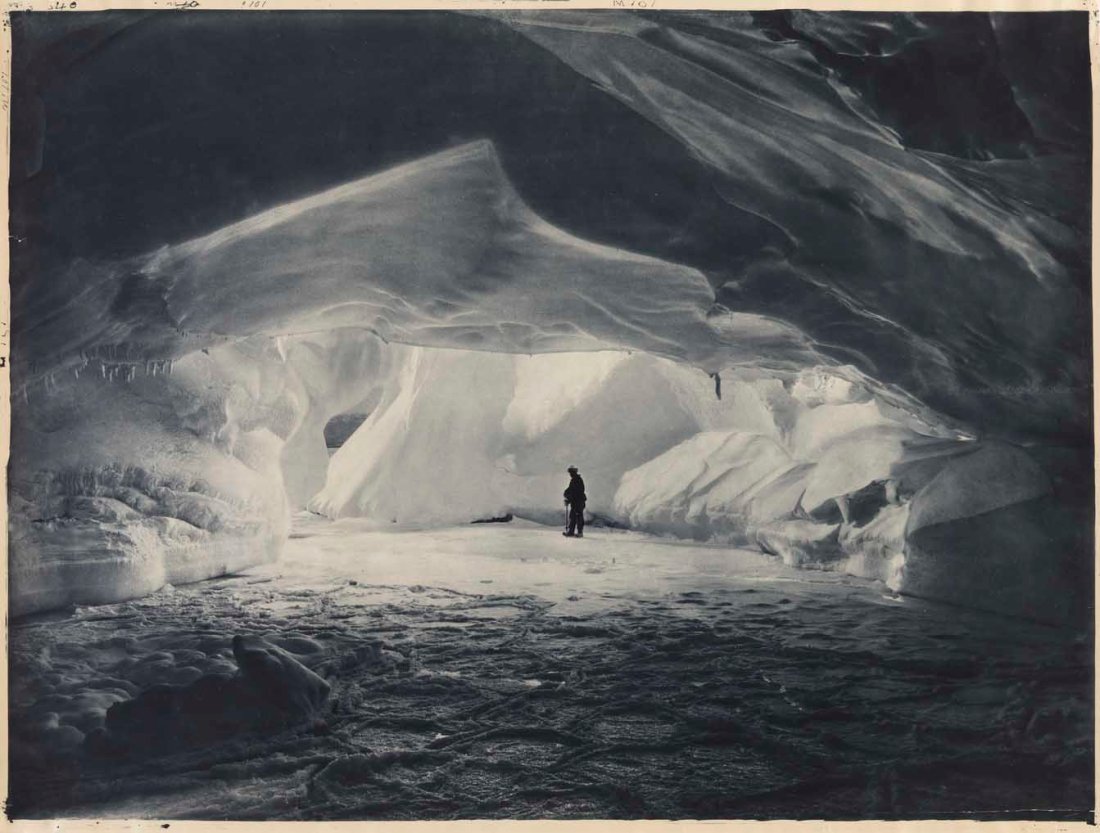
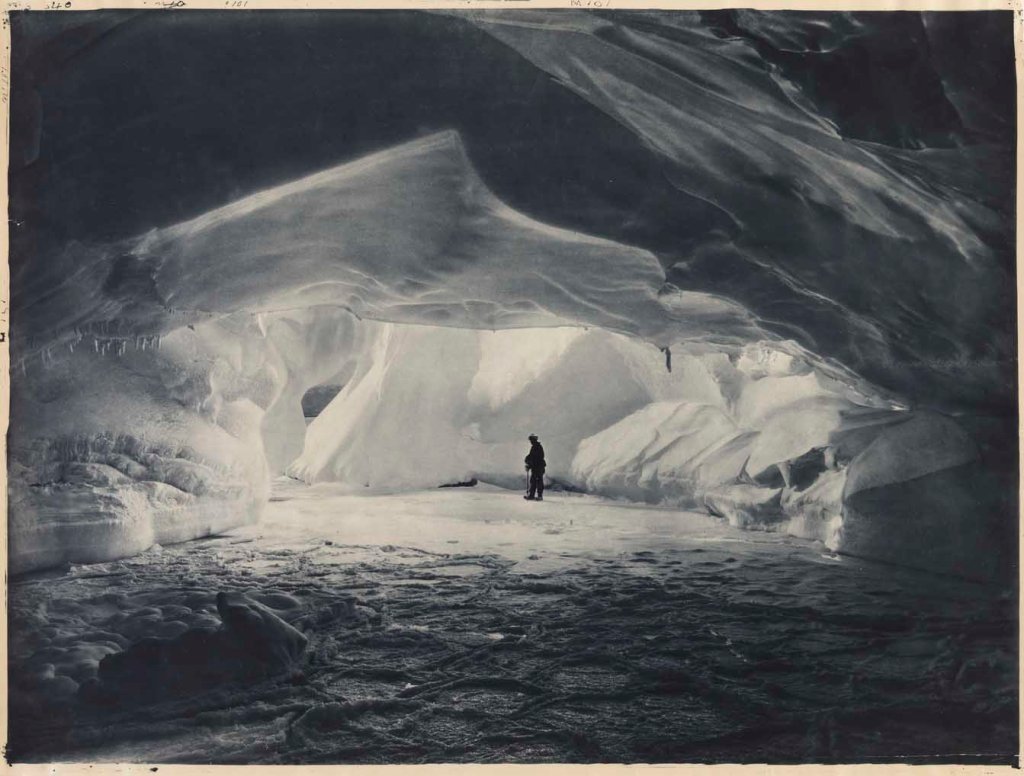
Frank Hurley :: Cavern carved by the sea in an ice wall near Commonwealth Bay. From: Antarctic views | src State Library of New South Wales website (low-res)
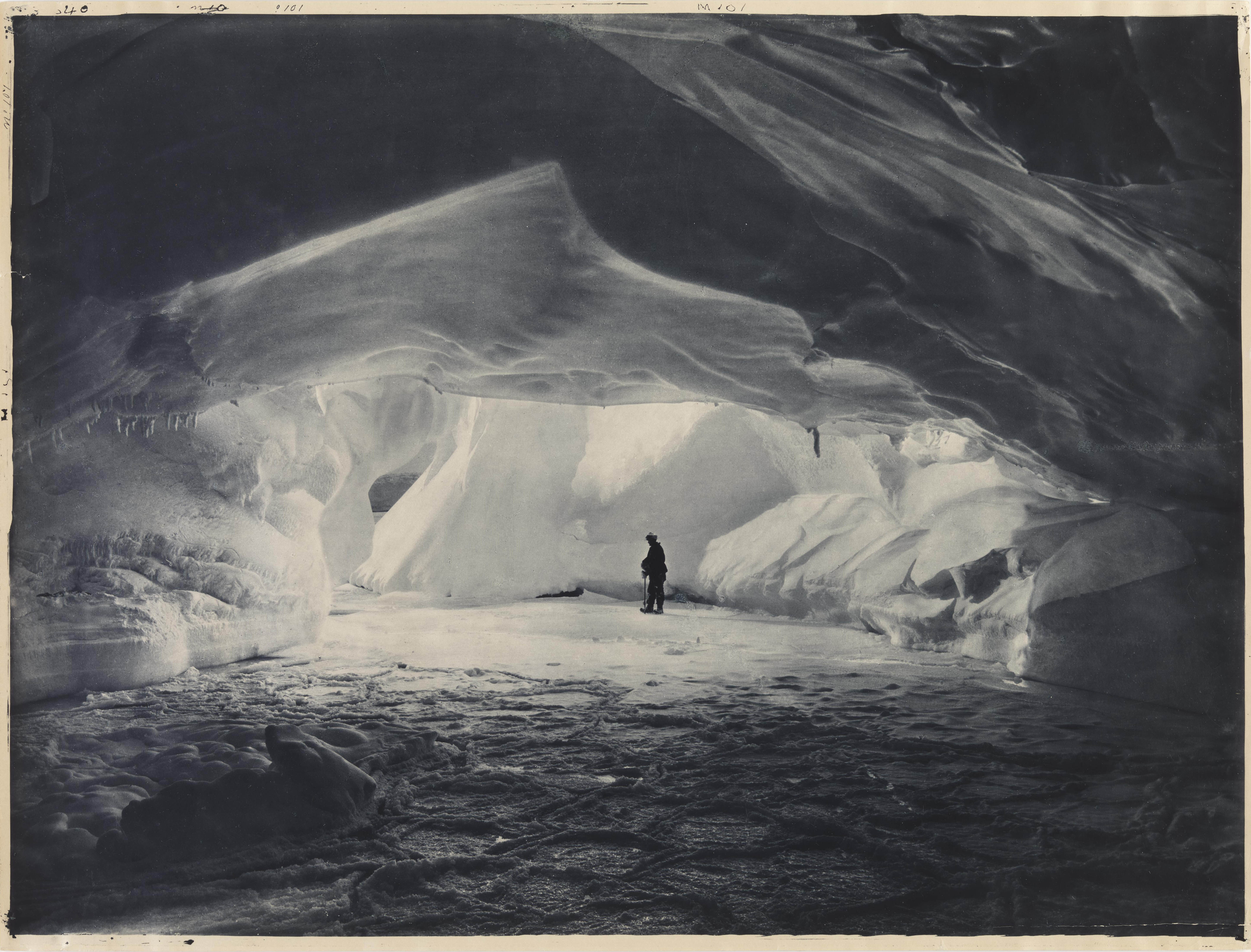
Frank Hurley :: A man (Leslie H. Whetter?) stands in a cavern carved by the sea in an ice wall near Commonwealth Bay, 1911-1914. Silver gelatin photoprint. From: Australasian Antarctic Expedition, 1911-1914 : original pictorial material reproduced in the `Scientific reports'. | src State Library of New South Wales website & its Flickr account
Frank Hurley :: A man (Leslie H. Whetter?) stands in a cavern carved by the sea in an ice wall near Commonwealth Bay, 1911-1914. Silver gelatin photoprint. From: Australasian Antarctic Expedition, 1911-1914 : original pictorial material reproduced in the `Scientific reports’. | src State Library of New South Wales website & its Flickr account (hi-res)
Frank Hurley :: Cavern carved by the sea in an ice wall near Commonwealth Bay. From: Antarctic views | src State Library of New South Wales website (low-res)