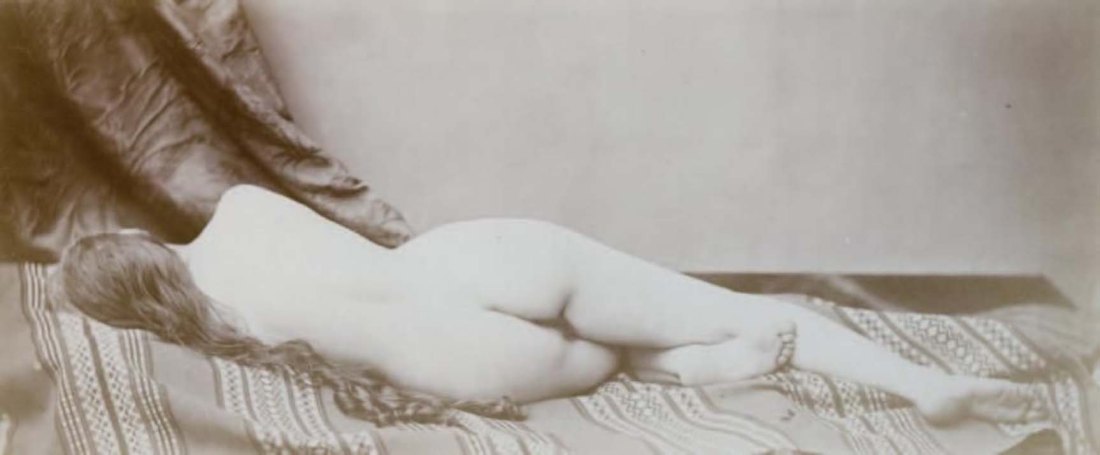
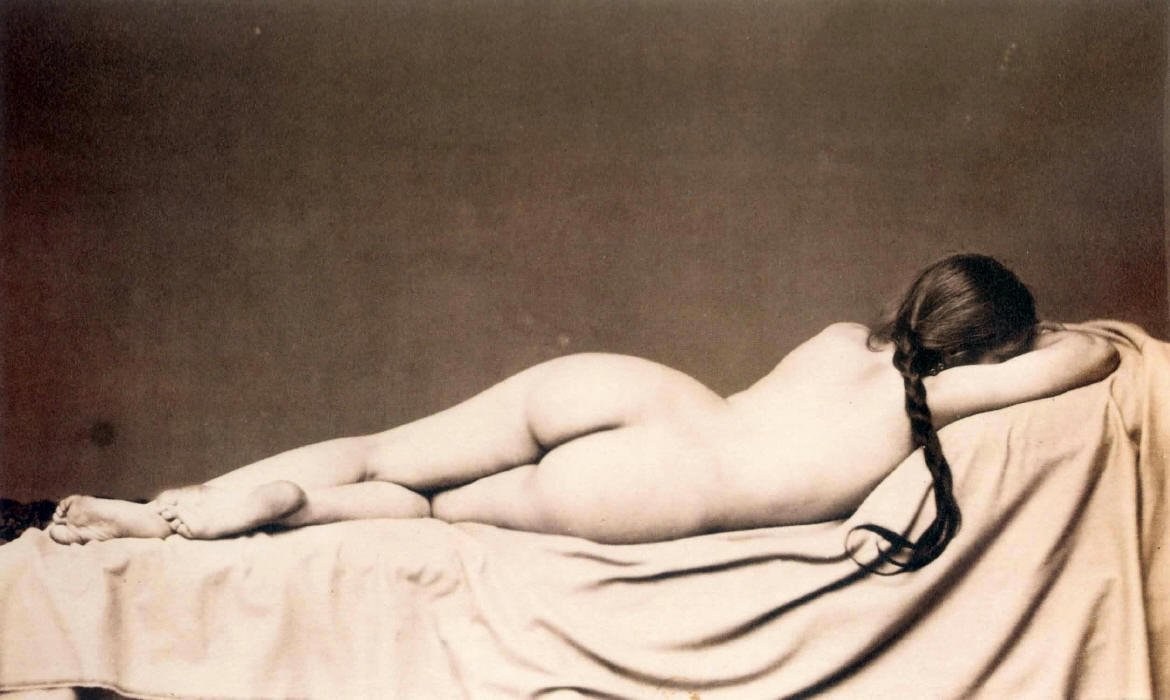
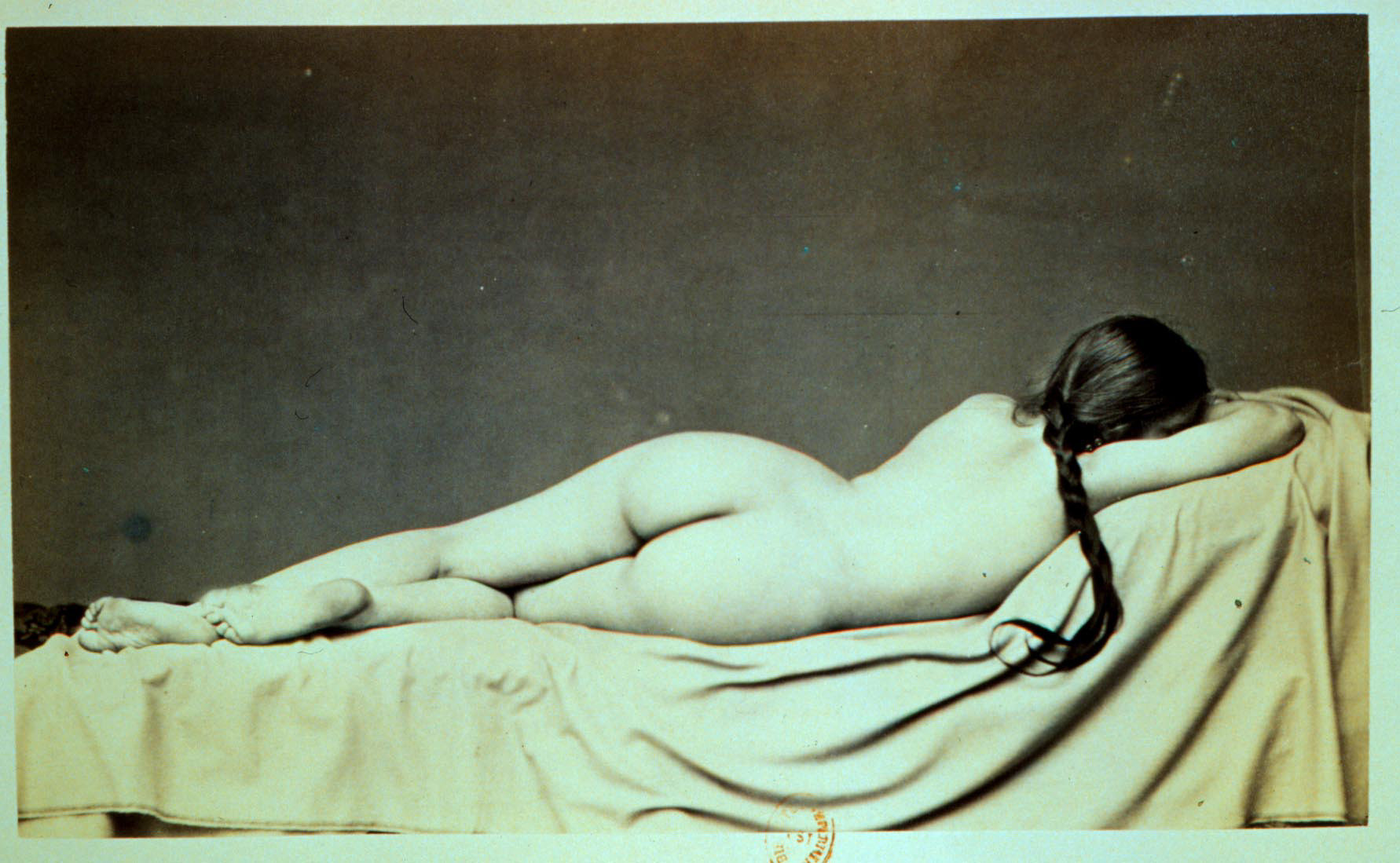
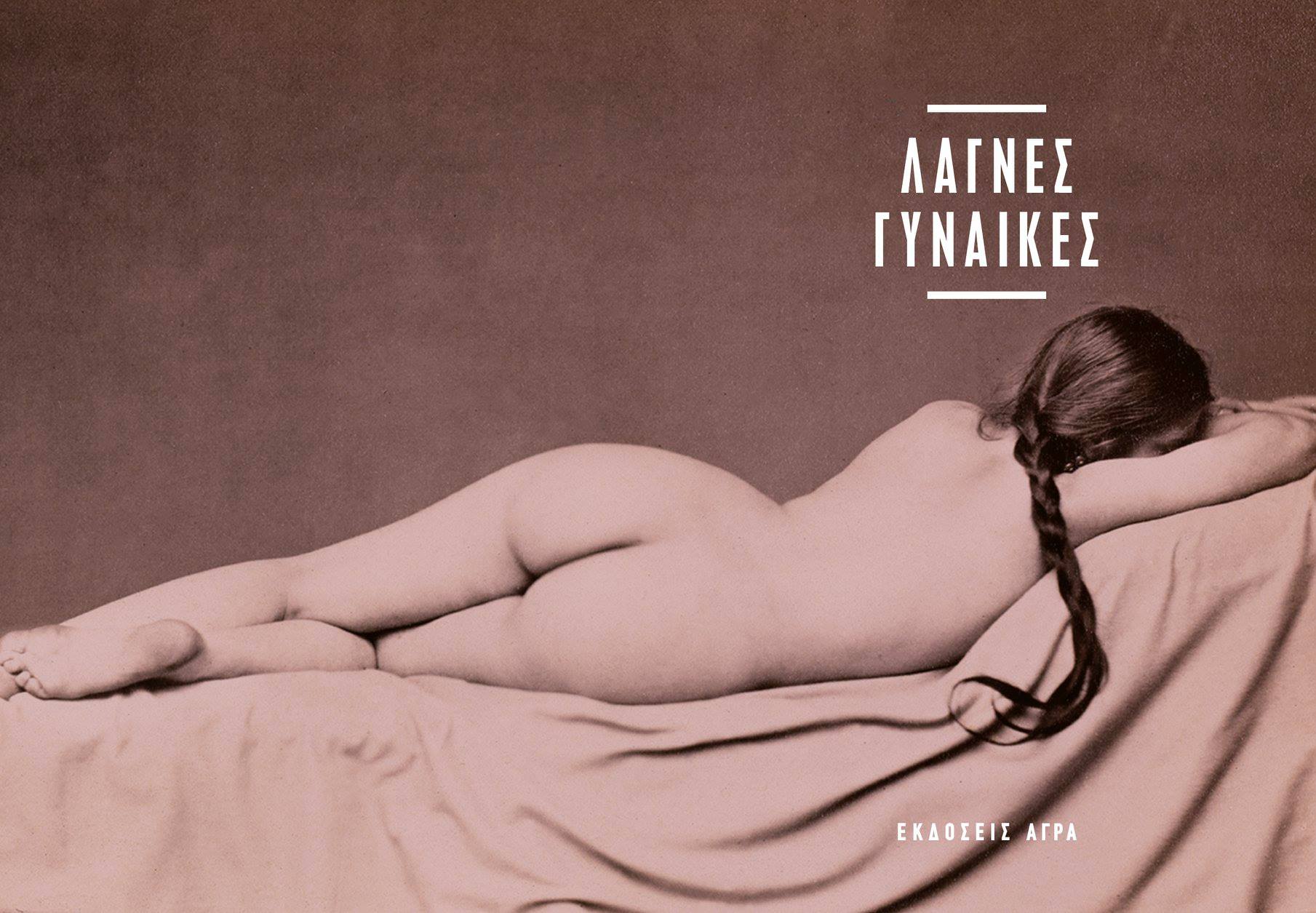
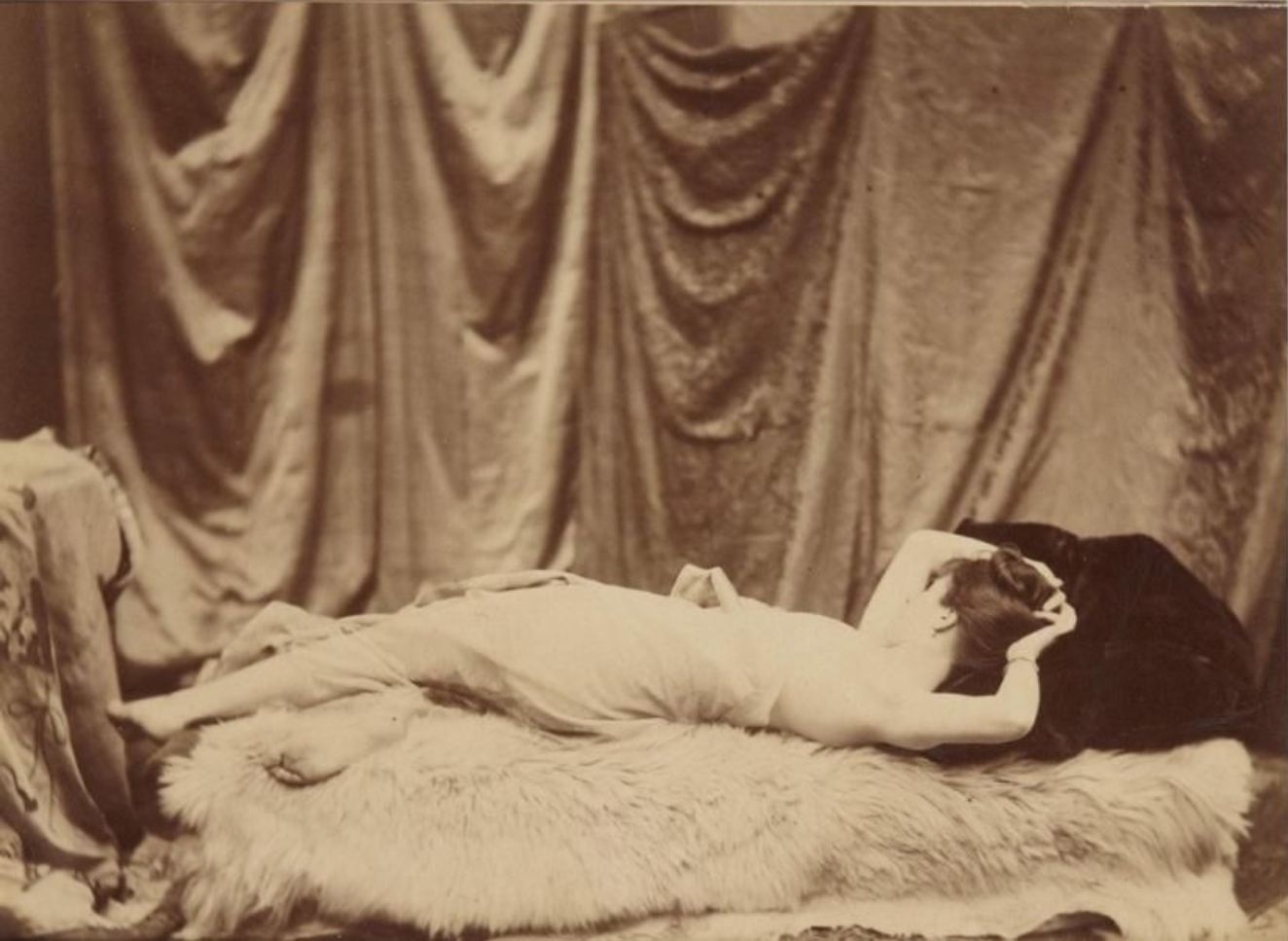
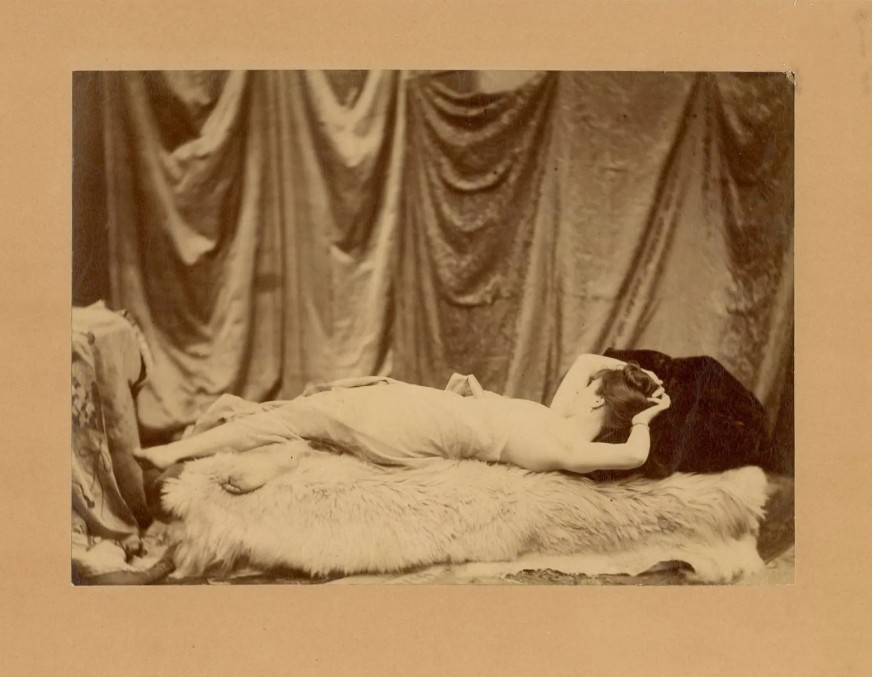
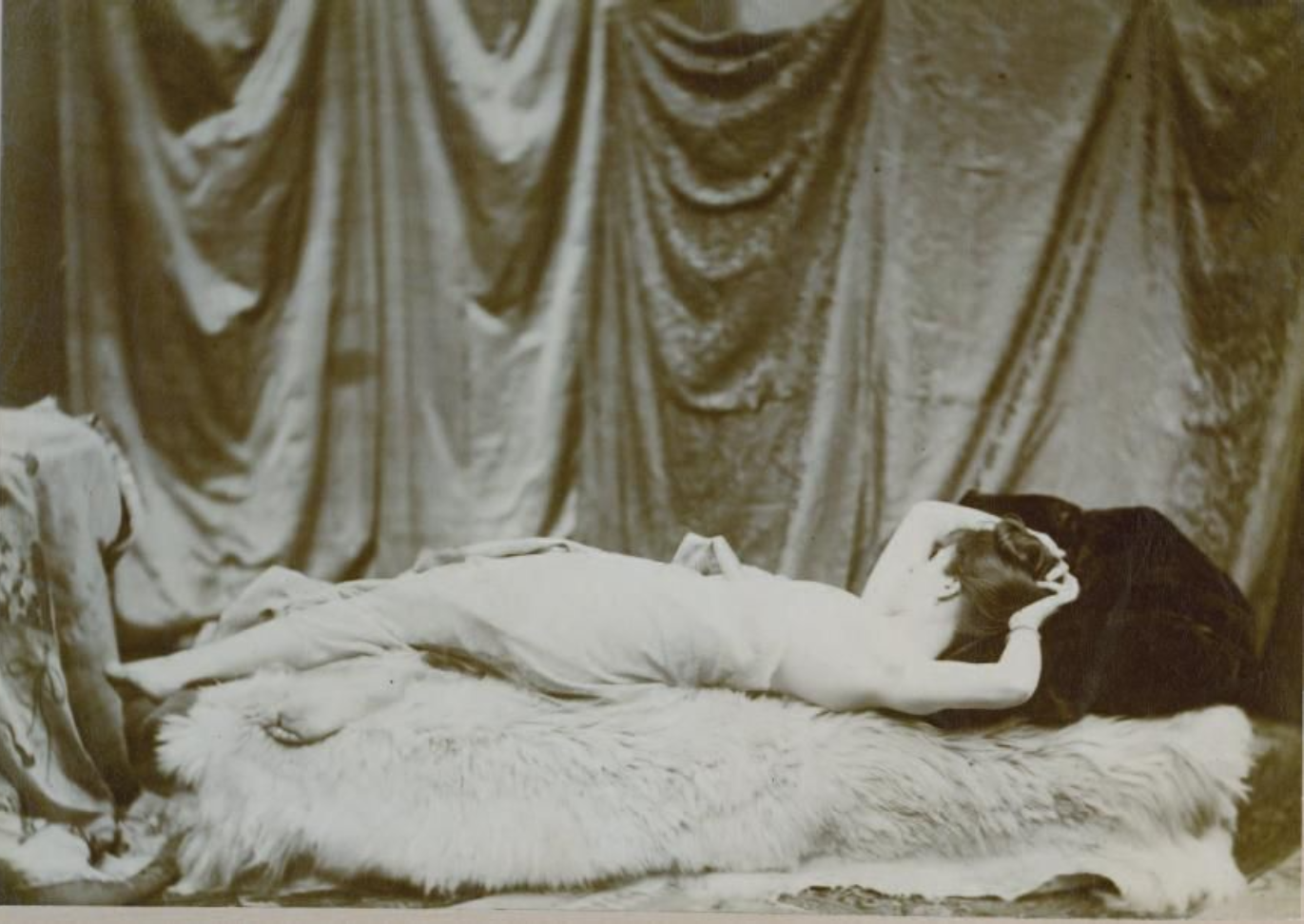
Femme à la tresse. Nu allongé de dos, ca. 1870. Tirage sur papier albuminé, attribué a Gilmer. | src CulturaNu à la chevelure, ca. 1875. Tirage sur papier albuminé monté sur carton, Gilmer (attrib.) | src Tessier SarrouFemale nude, ca. 1870. Albumen print. | src The New York TimesΛΑΓΝΕΣ ΓΥΝΑΙΚΕΣ / Hot Women [Images from the archives of the National Library of France / Bibliothèque nationale de France] Πρόλογος: Sylvie Aubenas (Prologue – Forewords) Μετάφραση: Ισμήνη Δούκα (translation) Εκδόσεις ΑΓΡΑ, Δεκέμβριος 2018 / AGRA Publications, December 2018 src Agra Publications
Nu allongé, ca. 1865. Tirage albuminé monté sur carton. Auteur non-identifié. | src la Gazette DrouotNu allongé, ca. 1865. Tirage albuminé monté sur carton. Auteur non-identifié. | src la Gazette DrouotNu allongé se recoiffant, ca. 1865 Tirage sur papier albuminé monté sur carton. | src Tessier Sarrou
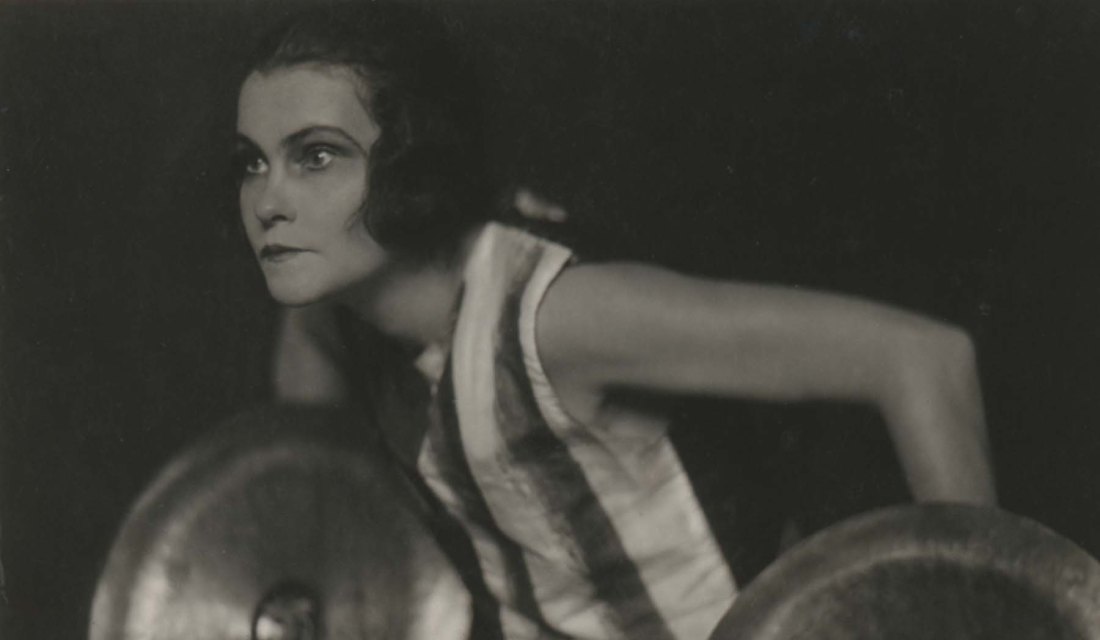
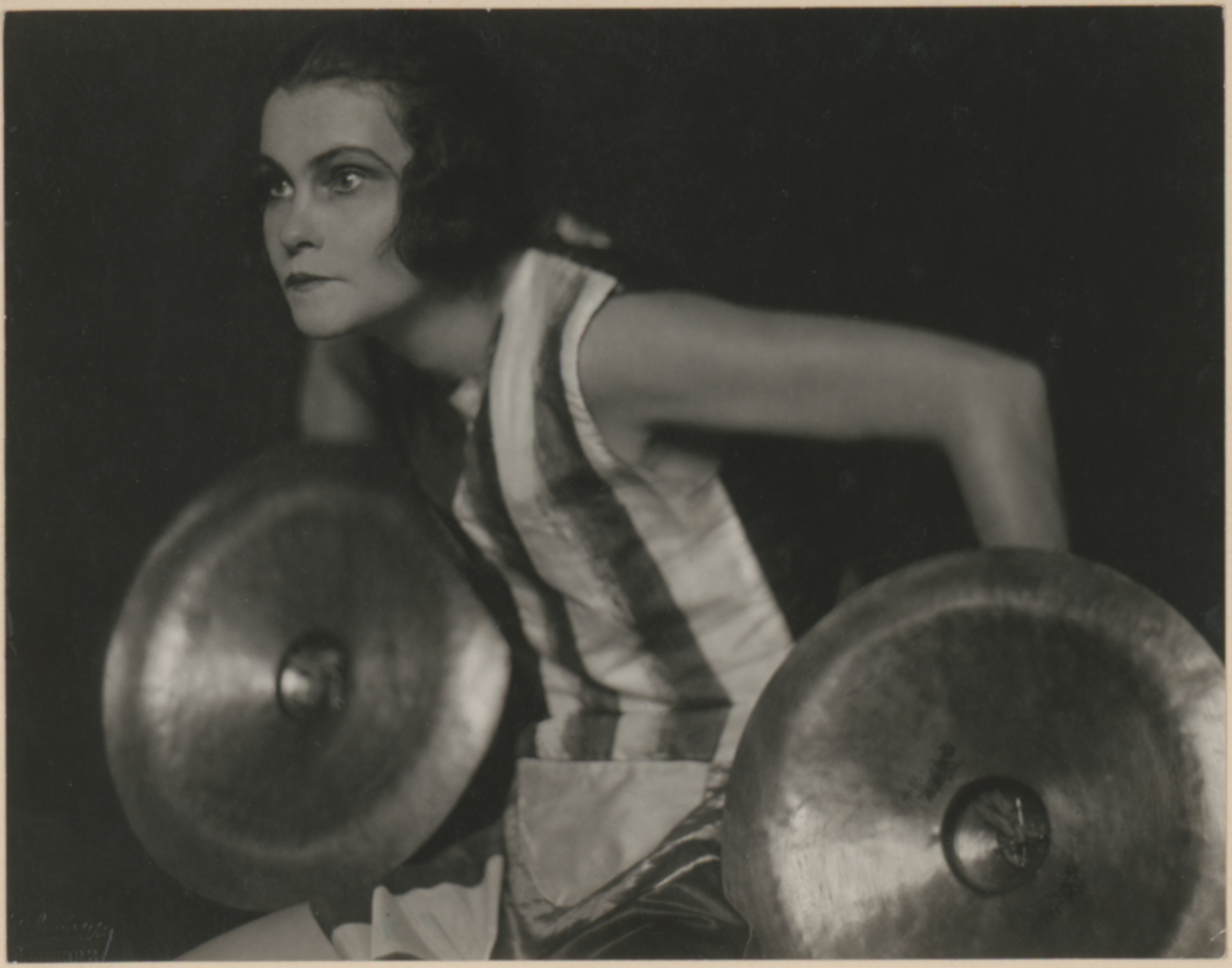
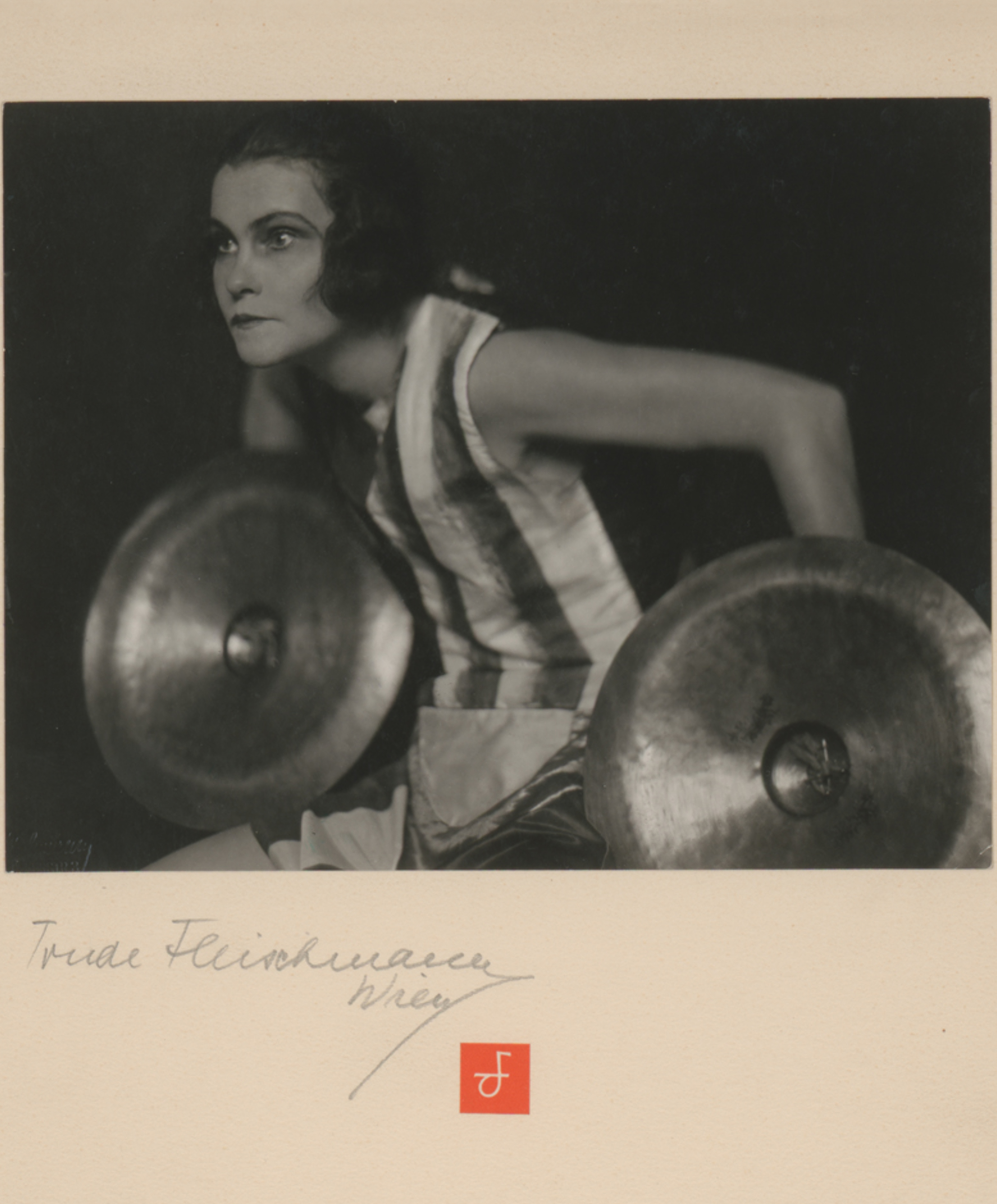
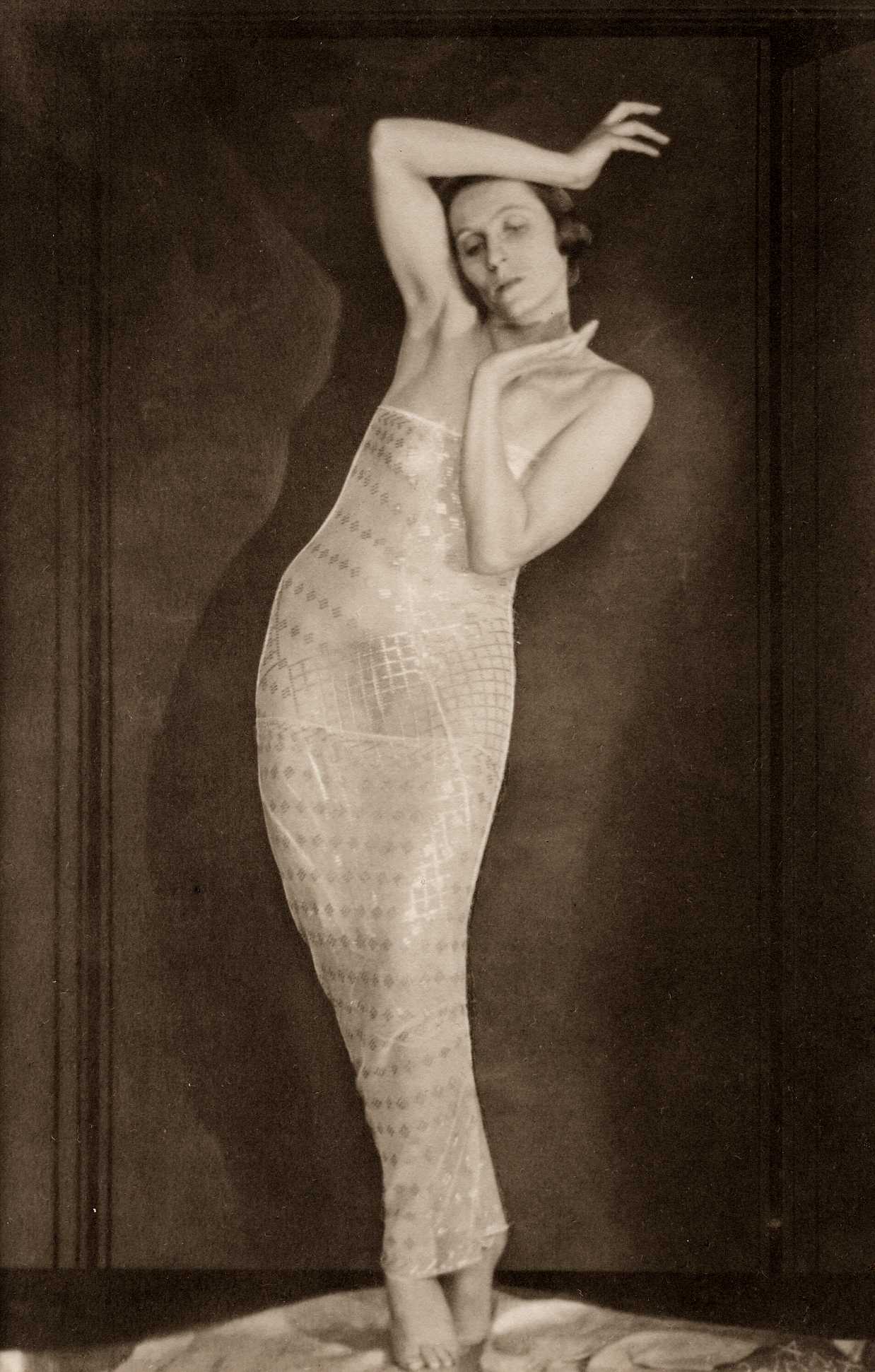
Trude Fleischmann :: Mila Cirul in „Tschinellen Tanz“, Wien, um 1926. Silbergelatinepapier. | src Wien MuseumTrude Fleischmann :: Mila Cirul in „Tschinellen Tanz“, Wien, um 1926. Silbergelatinepapier. | src Wien MuseumTrude Fleischmann :: Mila Cirul in „Tschinellen Tanz“, Wien, um 1926. Silbergelatinepapier Untersatzkarton | src Wien Museum [full image]
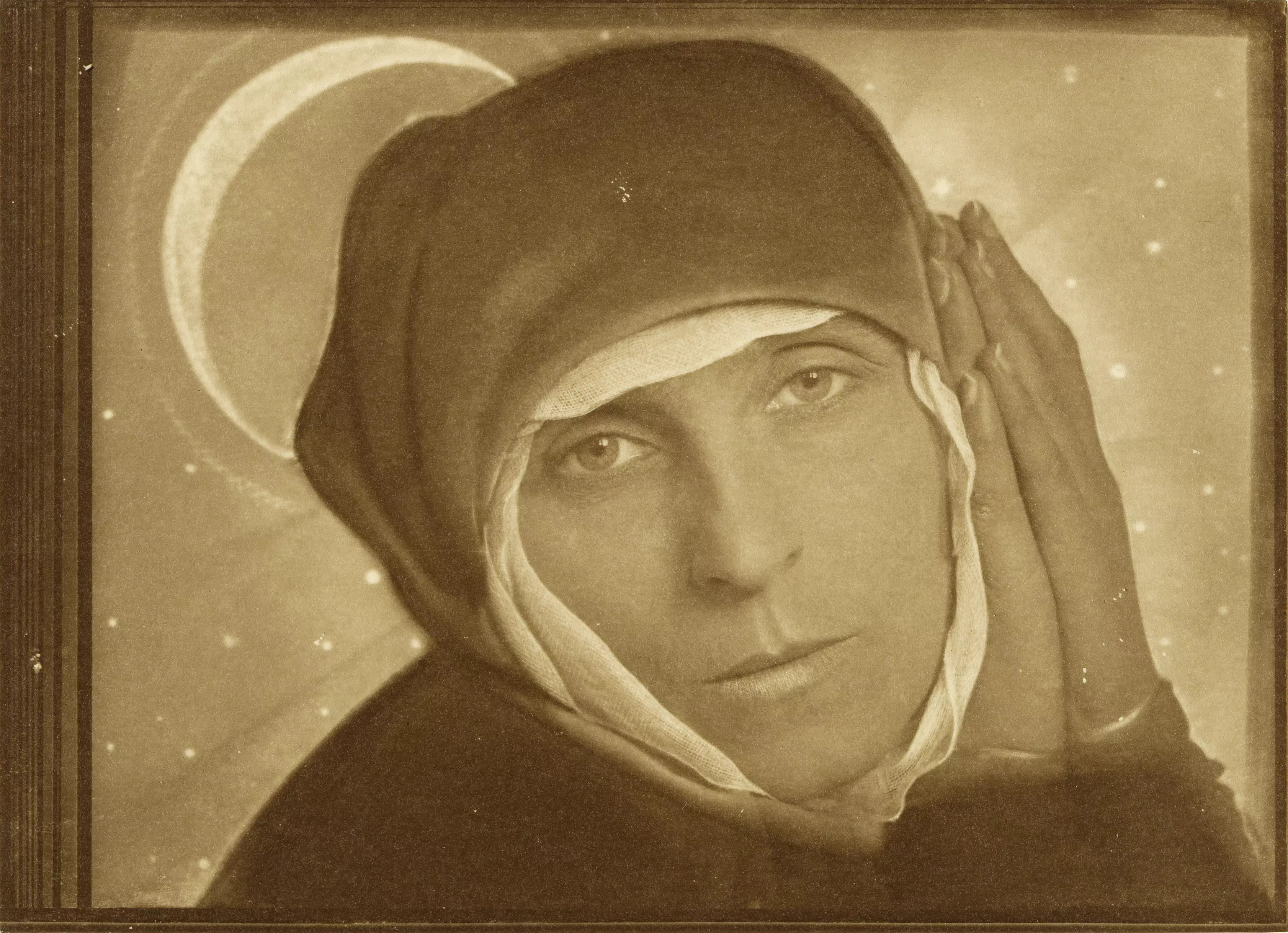
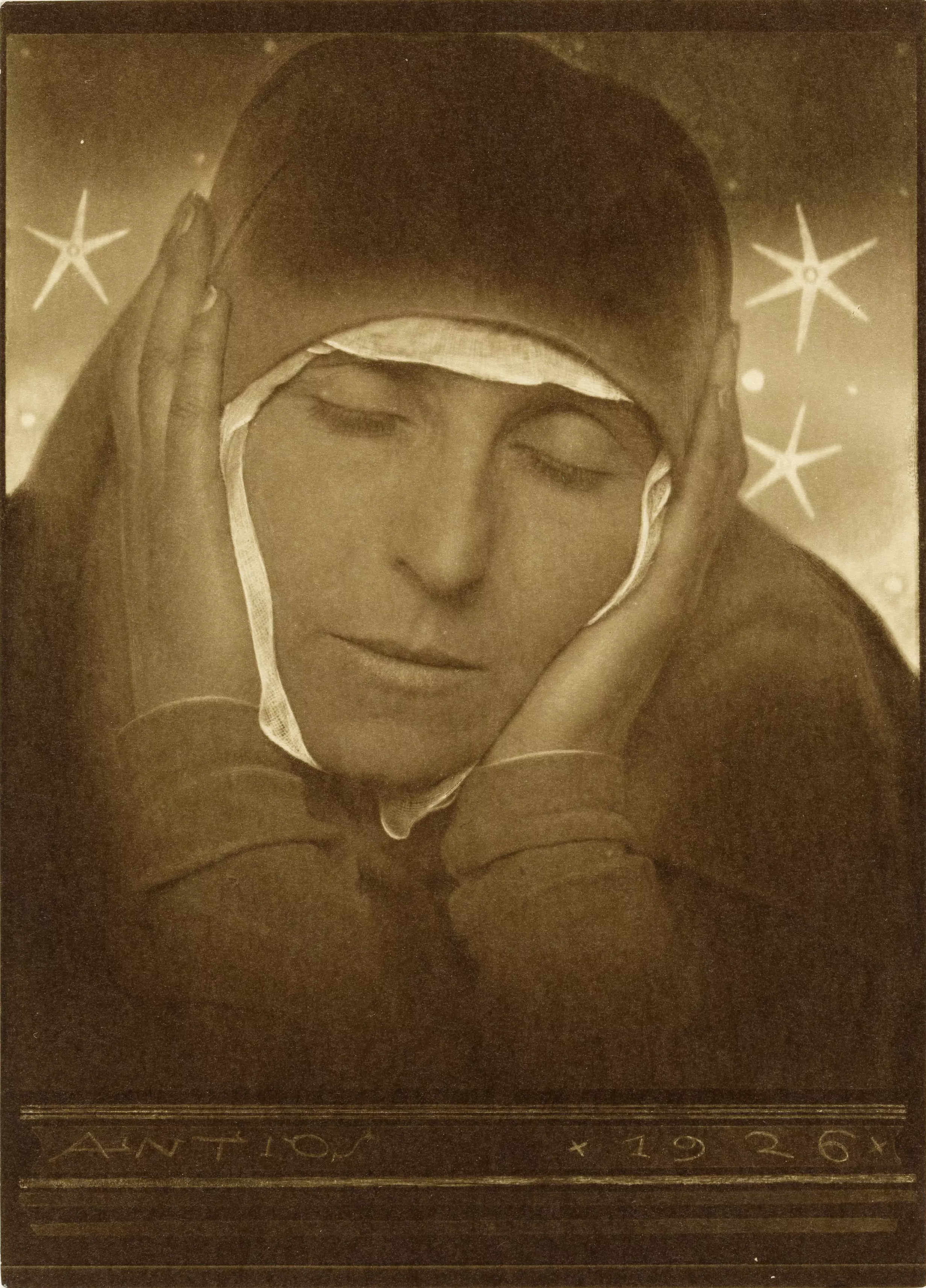
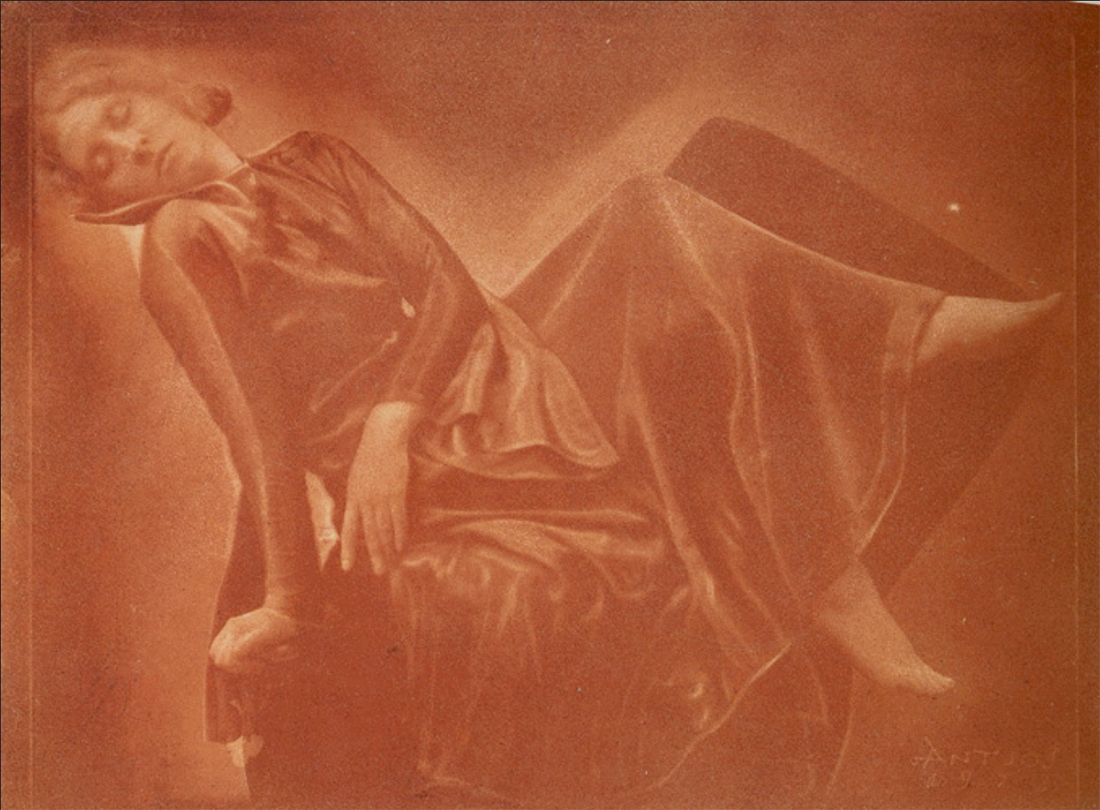
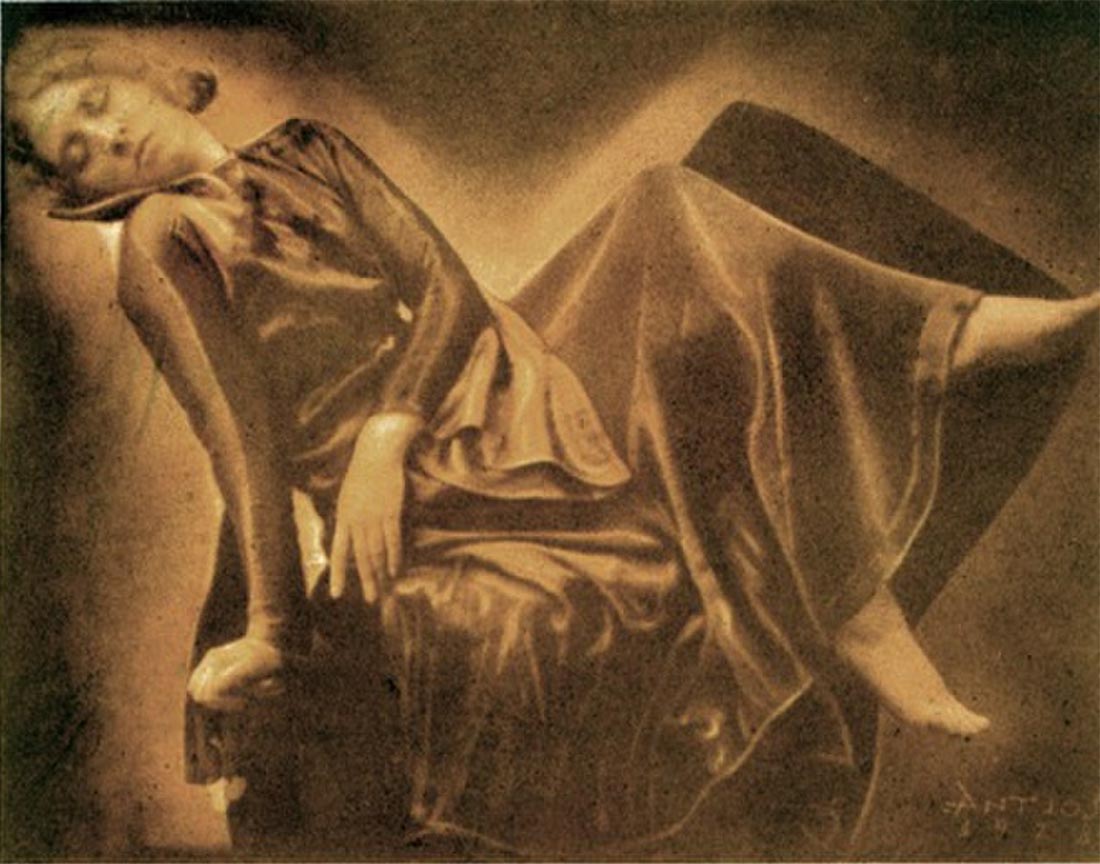
Anton Josef Trčka (Antios) :: Die Tänzerin Ellinor Tordis als “Maria”, 1926. Silbergelatinepapier, braungetont. | src Wien MuseumAnton Josef Trčka (Antios) :: Die Tänzerin Ellinor Tordis als “Maria”, 1926. Silbergelatinepapier, braungetont. | src Wien Museum
ANTIOS – this clearly legible and decorative signet is as much an effective design element of these famous portraits as EGON SCHIELE’s signature. For a long time, it seemed no one was interested in the fact that this legendary Viennese painter and self-portraitist could not have produced such accomplished photographs without the cooperation of a partner who was a master of photographic technique. The way expressive movement blends with the demands of ”classic” portraiture, or the way graphic outline contrasts with the two-dimensional rendering of figures and garments – this cannot have been the work of an amateur. An amateur he certainly was not, this Anton Josef Trčka, who contracted his own name to form the artistic trademark ANT(on) IOS(ef) during his third year of studies at the “Graphischen Lehr- und Versuchsanstalt” (Institute of Graphic Instruction and Experimentation) in Vienna. This specialized learning institute for photography and reproduction technology, the first of its kind worldwide, was founded in 1888 in the tradition of the commercial arts schools, and combined the demand for technical perfection with solid instruction of an artistic nature. The young Trčka found in Karel Novak (later the co-founder of a similar school in Prague that produced the likes of Sudek or Rössler) a teacher, who not only taught his students how to turn the idea of Pictorialism into professional practice, but also conveyed an understanding of classical portraiture and a love of contemporary painting. The level of Novak’s influence can be seen in the way artists such as Rudolf Koppitz or Trude Fleischmann, along with ANTIOS, remained true their life long to decorative design devices particular to their teacher. Well before his Schiele and Klimt portraits, ANTIOS had experimented with compositions that were indebted to Jugendstil. The dynamic contours of his figures appear to be inspired by the work of those young dancers who, in the first decades of the 20th century, consciously distanced themselves from classical ballet. By 1924, Trčka had developed close friendships with several dancers, including Hilde Holger and Gertrud Bodenwieser, and these found expression in photographic dance studies, nudes and portraits, and even drawings and poems. During this period, he developed a portrait style that clearly sets him apart from what is generally considered to be the international avant-garde of the 1920’s, yet at the same time is far removed from the great amateur art photographers at the turn of the century. ANTIOS’s imagery – with its wonderfully circular compositions, the painterly reworking by the artist himself, and the integration of the image title and his signature – radiates a deeper melancholy stemming from a determination for perfection that stands diametrically opposed to the photographic goals of the ”Neues Sehen” movement. As early as his student years, the young Trčka considered himself not only a photographer but also – or mainly! –a painter and poet. And he put these inclinations to use in the service of his intense interest in religion, theosophy and anthroposophy. His admiration for Rudolf Steiner was second only to his admiration for Otokar Brezina, a Czech Poet who at the turn of the last century, created a language based on religion and nature that turned against traditional poetry as well as the hated Austrian domination. Due to this conflict between his Czech roots and the Austrian identity forced (due to economic reasons) on him, and driven with missionary zeal for Anthroposophy, Anton Josef Trcka would be damned to a lifelong existence on the margins. He saw his photographs and paintings exhibited only once in his lifetime, his poetry was made public only through private readings. However, his few friends and admirers, such as Hilde Holger, found in his work something extraordinary that accompanied them in times of escape or emigration. (Text by Monika Faber) ~ quoted from Galerie Kicken Berlin
Aenne Biermann zeigte, wie viel Poesie in unscheinbaren Dingen stecken kann
Die deutsche Fotografin Aenne Biermann begann als Autodidaktin mit der Geburt ihrer Kinder zu fotografieren. Auch wenn sie das Alltägliche abbildete, banal sind ihre Arbeiten keineswegs.
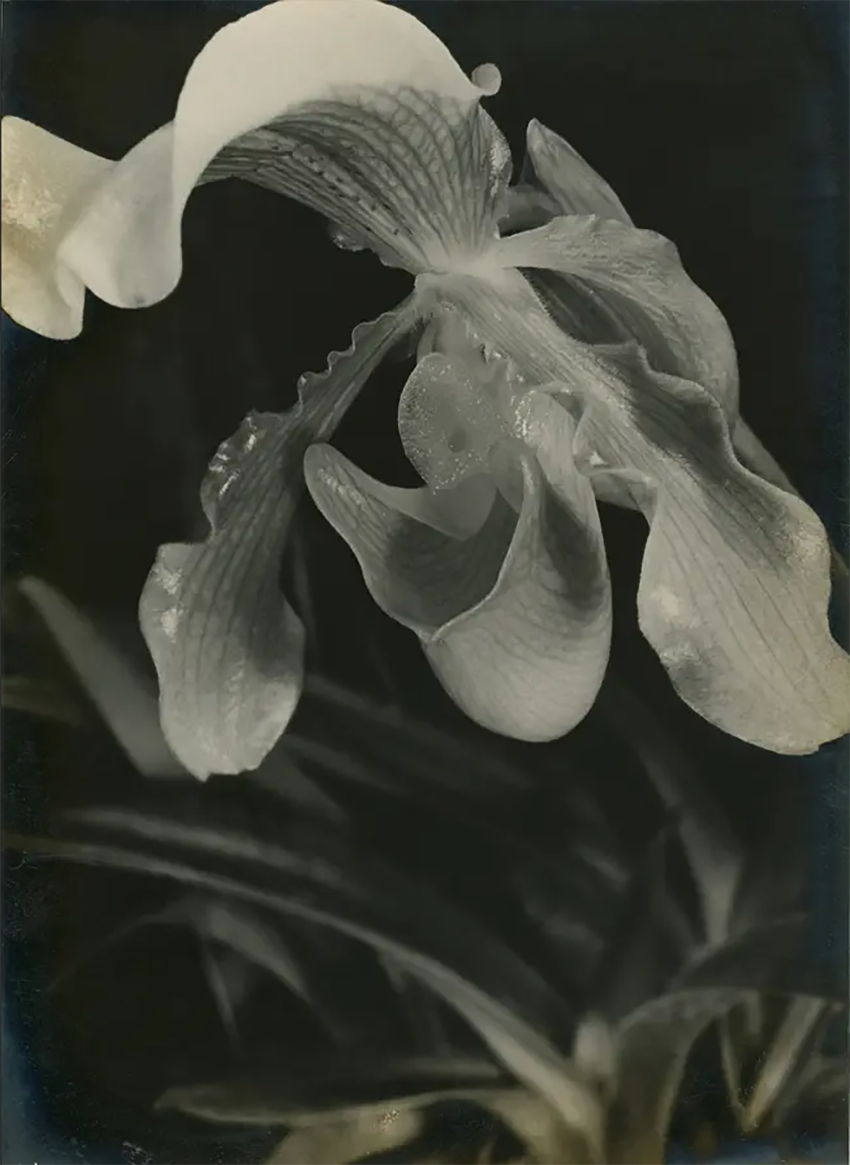
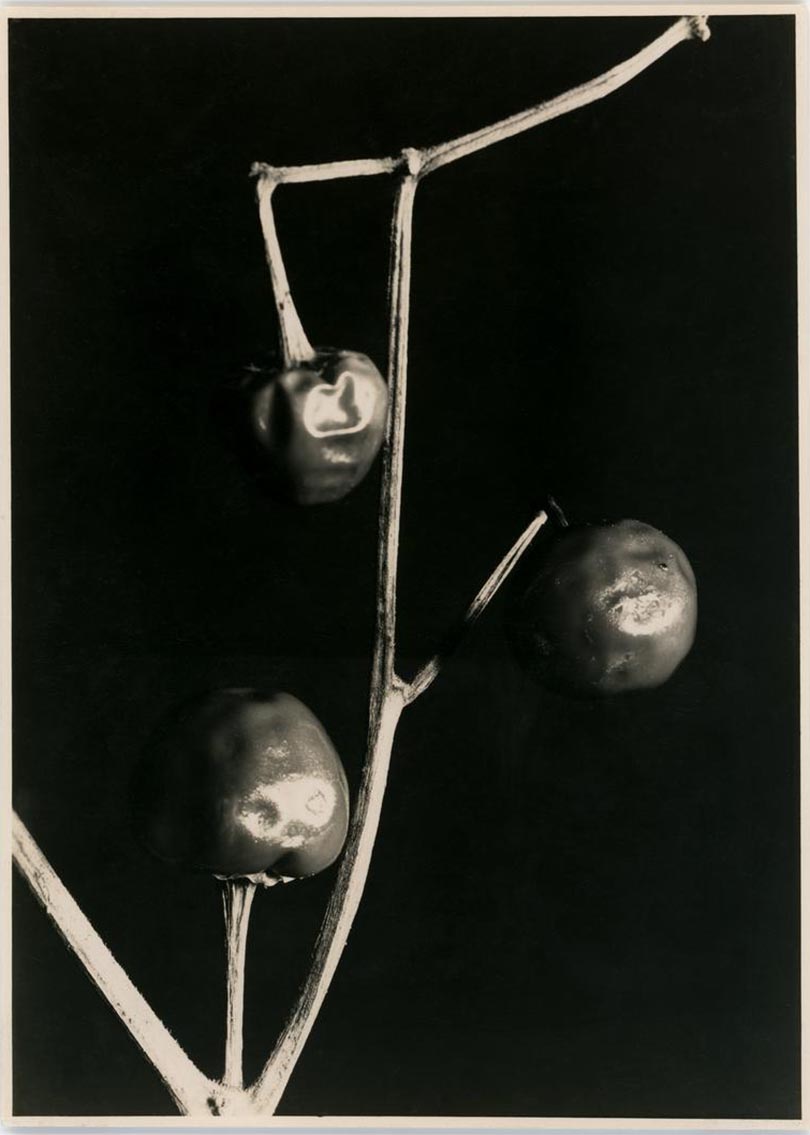
Aenne Biermann (1898-1933) wurde als Tochter einer wohlhabenden jüdisch-deutschen Familie geboren. Mit der Geburt ihrer Kinder begann sie ohne künstlerische Ausbildung als Autodidaktin zu fotografieren. Sie fotografierte zunächst in ihrer häuslichen Umgebung – oft ihre Kinder. Aber auch Landschaften, Architekturdetails und Stillleben gehörten seit den Anfängen zum fotografischen Oeuvre der Künstlerin. Die Fotografin arbeitete sich in ihrer nur 13-jährigen dauernden Schaffenszeit an ihrer unmittelbaren Umgebung ab (welche in Gera war) und vergrösserte ihren Radius bis Paris. Mit Ausweitung ihres Radius’ erweiterte sich auch ihre Arbeitsweise – Akt- und Stadtaufnahmen von Paris ergänzten ihr späteres Werk. Betrachtet man ihre Bilder, ist es so, als ob man eine zweite Chance bekäme, das Banal-Alltägliche neu zu sehen. Die Arbeiten zeigen Früchte, Pflanzen, das Innenleben einer Schublade, Eier, Steine, Krimskrams, Gleise, das Innere eines Klaviers, Kindergesichter oder Körper. Die Fotografin muss in einer Art Unermüdlichkeit und Konzentriertheit das sie Umgebende auf Schönheit und Stimmung abgetastet haben. Baumnüsse in einer Papiertüte oder Äpfel auf einem Teller, alles ist einem vertraut. Und doch sind ihre Werke durch das Spiel mit Perspektiven, Ausschnitt, Kontrast und Licht einzigartig und voll Poesie. Ihre Arbeiten haben etwas Beruhigendes an sich und könnten den gestressten, von reizüberfluteten Jetztlern ein neues Sehen beibringen. Ob der klaren Schönheit und Pointierung gerät man beinah in eine Art kontemplative Verzückung und beginnt, die Dinge, die Landschaften, die Personen neu, anders oder wahrhaftig zu sehen. Diese sensible, unaufgeregte, aber auch sehr konkrete Eigenschaft ihrer Bilder führte dazu, dass sie zu einer der wichtigsten Vertreterinnen der Avantgardefotografie der 1920er und 1930er Jahre wurde. Der Verlag Scheidegger & Spiess hat jüngst unter dem Titel «Aenne Biermman: Up close and personal» in Kooperation mit dem Tel Aviv Museum of Art eine Publikation veröffentlicht, die mit 100 Abbildungen und mehreren Essays Biermanns Schaffen umfassend beschreiben. Die Publikation begleitet die Anfangs August 2021 eröffnete Ausstellung in Tel Aviv.
Aenne Biermann showed how much poetry can be found in inconspicuous things
The German photographer Aenne Biermann started as an autodidact with the birth of her children. Even if she depicts the everyday, her works are by no means banal.
Aenne Biermann (1898-1933) was born into a wealthy Jewish-German family. With the birth of her children, she began to photograph as an autodidact without any artistic training. She initially photographed in her home environment – often her children. But landscapes, architectural details and still-lifes have also been part of the artist’s photographic oeuvre from the very beginning. During her creative period of only 13 years, the photographer worked on her immediate environment (which was in Gera) and extended her radius to Paris. As her radius expanded, so did her way of working – nude and city photographs of Paris complemented her later work. Looking at her paintings is like getting a second chance to see the mundane everyday in a new way. The works show fruits, plants, the inner workings of a drawer, eggs, stones, odds and ends, rails, the inside of a piano, children’s faces or bodies. The photographer must have scanned her surroundings for beauty and mood with a kind of tirelessness and concentration. Tree nuts in a paper bag or apples on a plate, everything is familiar. And yet her works are unique and full of poetry through the play with perspective, detail, contrast and light. There’s something calming about her work, and it could teach the stressed, overstimulated now-people a new way of seeing. Because of the clear beauty and emphasis, one almost falls into a kind of contemplative rapture and begins to see the things, the landscapes, the people in a new, different or truthful way. This sensitive, calm, but also very concrete quality of her pictures made her one of the most important representatives of avant-garde photography of the 1920s and 1930s. The publishing house Scheidegger & Spiess recently published a publication entitled “Aenne Biermman: Up close and personal” in cooperation with the Tel Aviv Museum of Art, which comprehensively describes Biermann’s work with 100 illustrations and several essays. The publication accompanies the exhibition that opened in Tel Aviv at the beginning of August 2021.

![Trude Fleischmann :: Mila Cirul in „Tschinellen Tanz“, Wien, um 1926. Silbergelatinepapier Untersatzkarton | src Wien Museum [full image]](https://live.staticflickr.com/65535/52631325771_301daec170_o.png)
![Aenne Biermann :: Orchid, ca. 1930. Gelatin silver print. [Detail] From : Aenne Biermann : Up Close and Personal at Tel Aviv Museum of Art](https://unregardoblique.com/wp-content/uploads/2023/01/aenne-biermann_orchid-ca.-1930-detail-tel-aviv-museum.jpg)


![Aenne Biermann (1898-1933) :: Kaktus, [Cactus], around 1929, © Museum Ludwig, Köln](https://live.staticflickr.com/65535/52626356372_254b3ddb72_o.jpg)



 un regard oblique