

images that haunt us

In Munich, Maja Lex was first a student member but soon, together with Gunild Keetmann and the founders Dorothee Günther and Carl Orff, belonged to the leading teaching staff of the Günther-Schule, a forward-looking school with a trebly diversified training concept of integrative musical and movement education. War events disrupted this unique constellation of artistic and educational personalities.
Maja Lex developed a new movement and dance education of a timeless pedagogic and artistic value. She liberated herself from the formalized practice/exercise/training and introduced instead the varied movements of rhythmic-dynamic, spatial and formal variation. Structured improvisation, similar to musical improvisation, was established as a definite component of the teaching lesson.
As a solo dancer and choreographer of Tanzgruppe Günther, Maja Lex was a pioneer of the New German Dance (Neuer Deutscher Tanz) in the 1930s. She created a specific dancing style of a ‘thrilling rhythmic intensity’, a definite feeling for form and a high technical dancing discipline. Music and dance became elements of equal value, not least because of the use of rhythm instruments for the dance and for the orchestra of Günther-Schule, where dancers and musicians changed roles. The director of the orchestra was Gunild Keetmann. Maja Lex’s dances belong to the absolute dance. / quoted from Elementarer Tanz
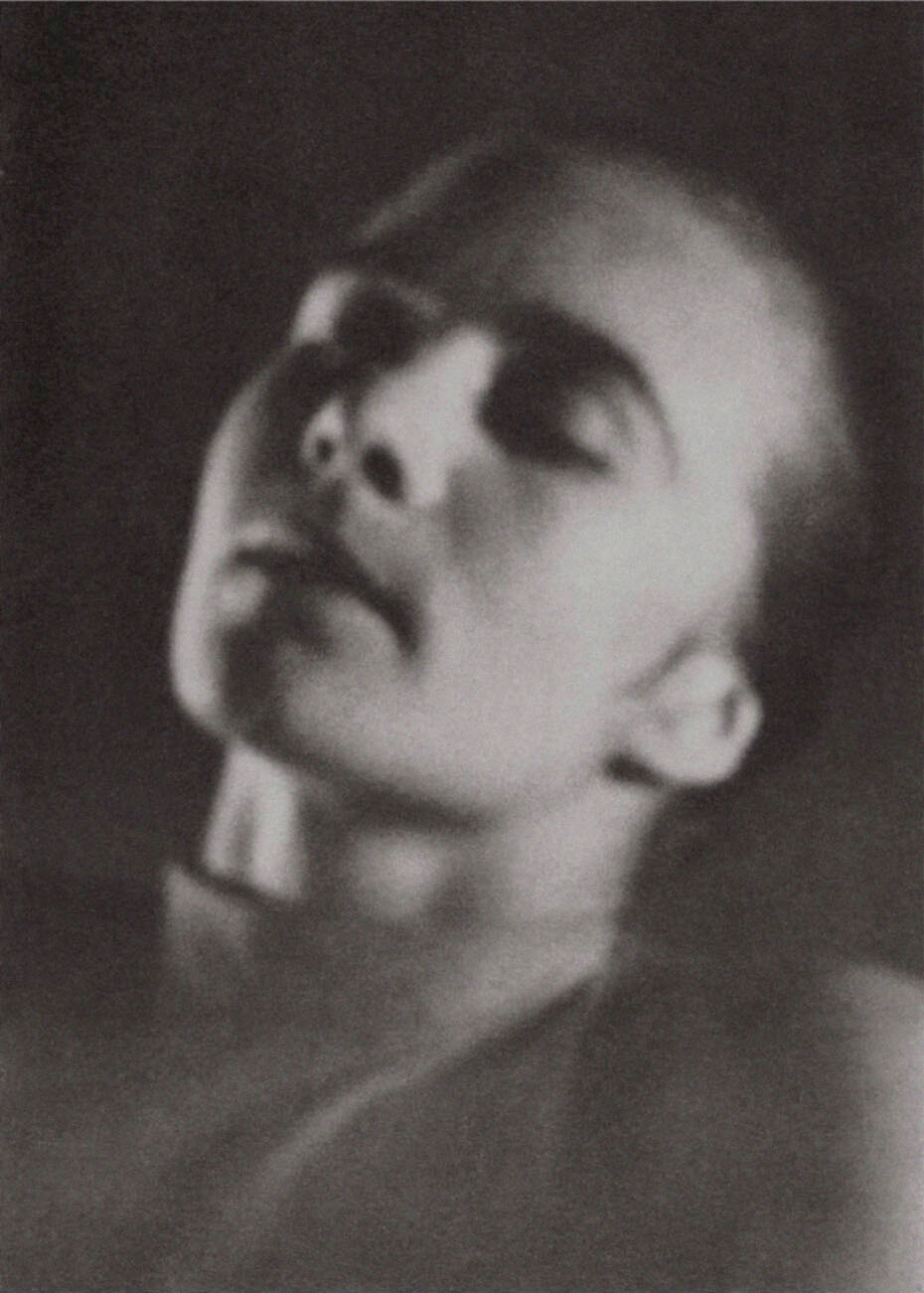
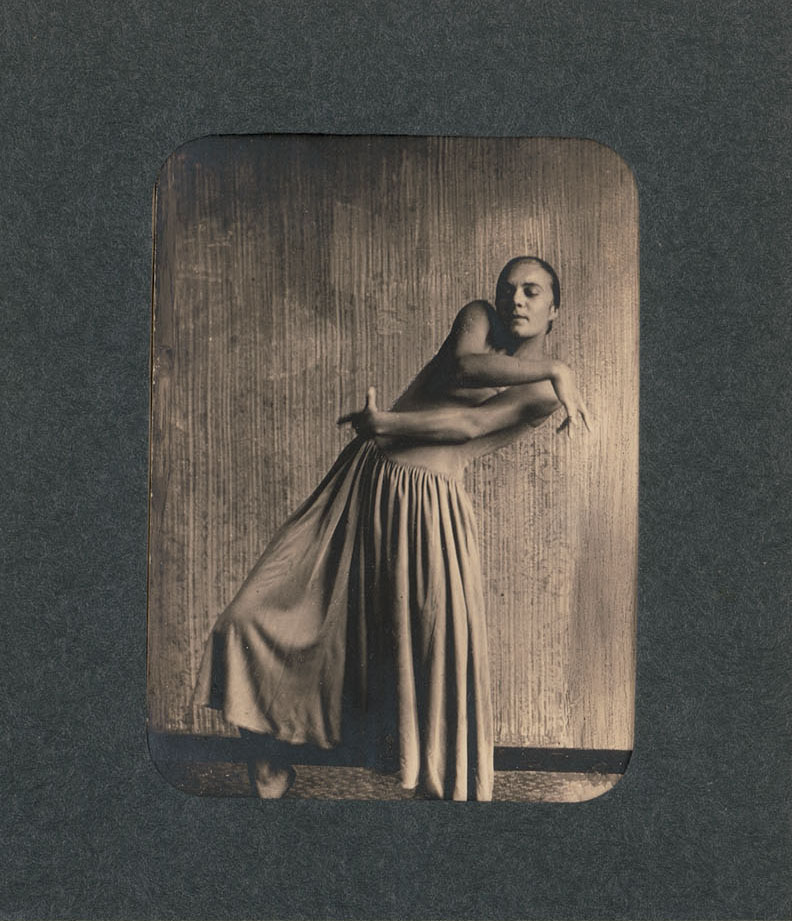
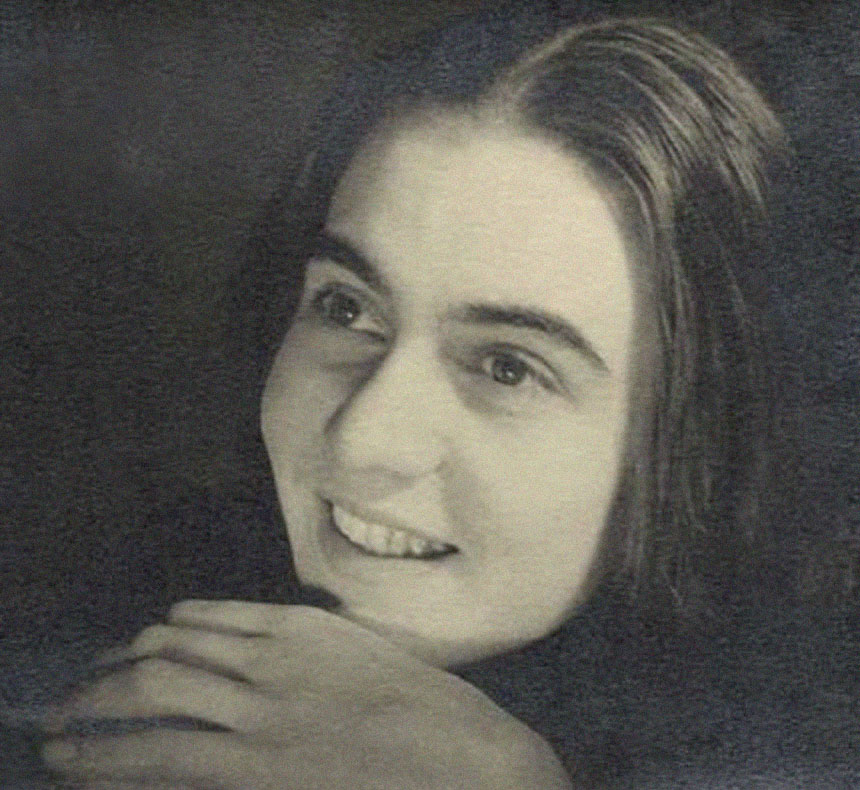
From 1927, Maja Lex performed her own choreographies. As a soloist and choreographer of the Tanzgruppe Günther-München (lead by Dorothee Günther), she made her decisive breakthrough in 1930 with the “Barbarian Suite” in collaboration with the musical director of the group, the composer Gunild Keetman. Numerous guest performances and awards at home and abroad followed until the school was forcibly closed in 1944 and finally destroyed in 1945.
Maja Lex, who had been very ill since the beginning of the 1940s, moved to Rome in 1948 and lived there together with Dorothee Günther in the house of her mutual friend Myriam Blanc. At the beginning of the 1950s Maja Lex resumed her artistic-pedagogical work and taught at the German Sport University Cologne at the invitation of Liselott Diem. From the mid-1950s until 1976, she taught the main training subject “Elementary Dance” as a senior lecturer. The concept of elementary dance was further developed by her and later in collaboration with her successor Graziela Padilla at the German Sports University Cologne. / quoted from queer places


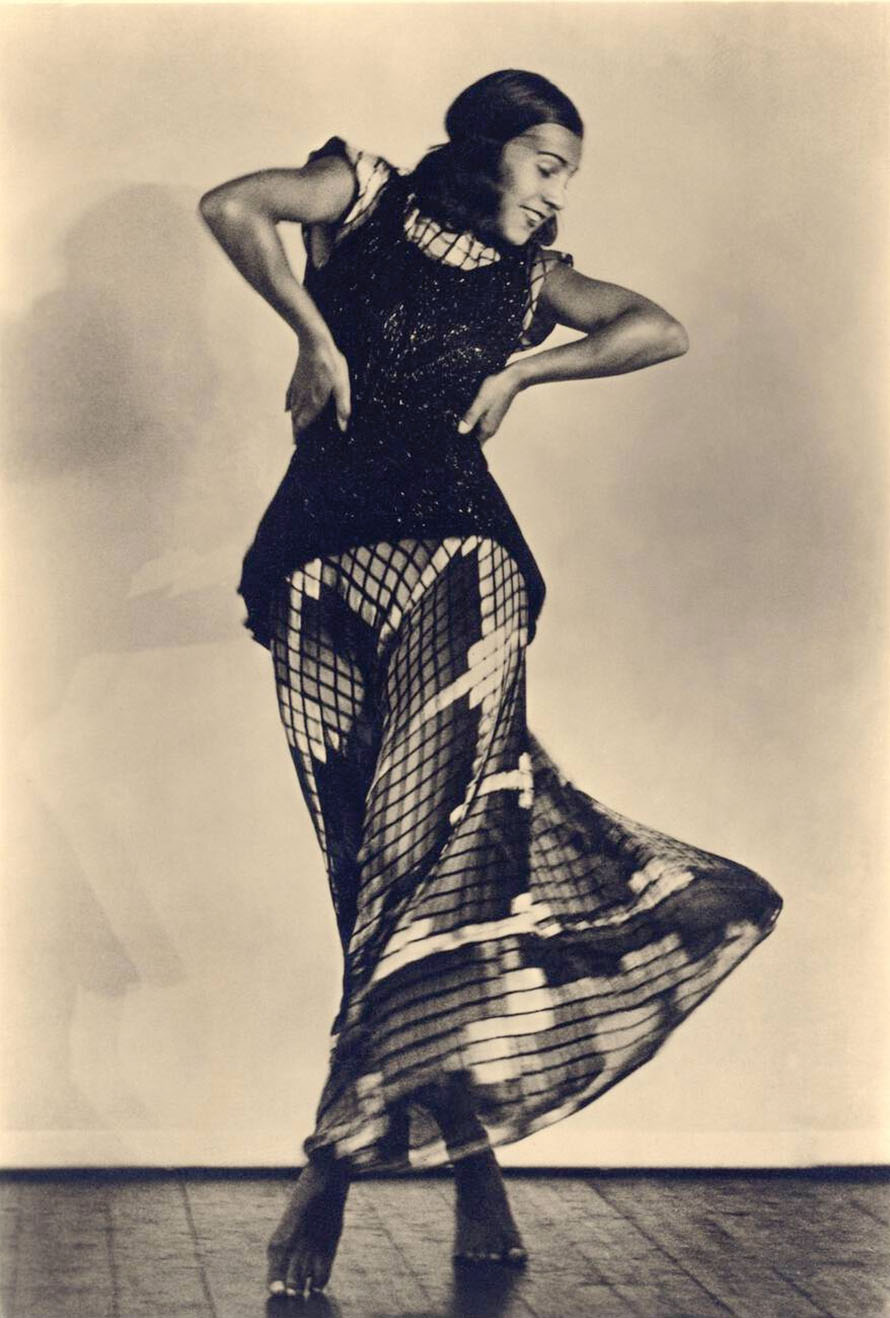


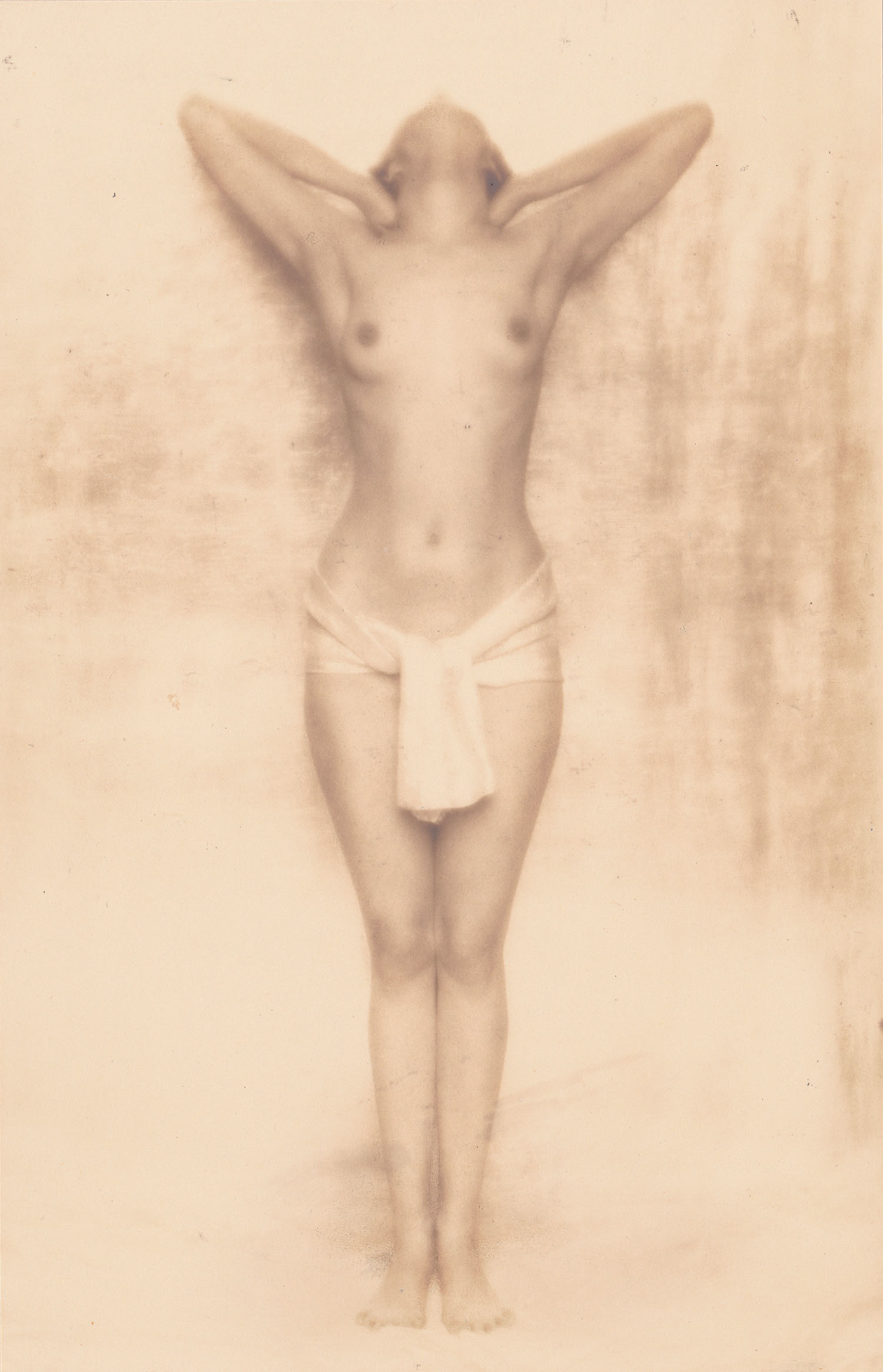
Vintage toned matte gelatin silver print. 20,5 x 13,5 cm. Mounted to board, signed by Bucovich in pencil below image on right, annotated Atelier Schenker below image on left, number label in lower left corner; Atelier Karl Schenker, Berlin W. 62, Budapesterstraße 6 stamp and Swedish exhibition label 1926 on mount verso.

In Munich, Maja Lex was first a student member but soon, together with Gunild Keetmann and the founders Dorothee Günther and Carl Orff, belonged to the leading teaching staff of the Günther-Schule, a forward-looking school with a trebly diversified training concept of integrative musical and movement education. War events disrupted this unique constellation of artistic and educational personalities.
Maja Lex developed a new movement and dance education of a timeless pedagogic and artistic value. She liberated herself from the formalized practice/exercise/training and introduced instead the varied movements of rhythmic-dynamic, spatial and formal variation. Structured improvisation, similar to musical improvisation, was established as a definite component of the teaching lesson.
As a solo dancer and choreographer of Tanzgruppe Günther, Maja Lex was a pioneer of the New German Dance (Neuer Deutscher Tanz) in the 1930s. She created a specific dancing style of a ‘thrilling rhythmic intensity’, a definite feeling for form and a high technical dancing discipline. Music and dance became elements of equal value, not least because of the use of rhythm instruments for the dance and for the orchestra of Günther-Schule, where dancers and musicians changed roles. The director of the orchestra was Gunild Keetmann. Maja Lex’s dances belong to the absolute dance. / quoted from Elementarer Tanz
From 1927, Maja Lex performed her own choreographies. As a soloist and choreographer of the Tanzgruppe Günther-München (lead by Dorothee Günther), she made her decisive breakthrough in 1930 with the “Barbarian Suite” in collaboration with the musical director of the group, the composer Gunild Keetman. Numerous guest performances and awards at home and abroad followed until the school was forcibly closed in 1944 and finally destroyed in 1945.
Maja Lex, who had been very ill since the beginning of the 1940s, moved to Rome in 1948 and lived there together with Dorothee Günther in the house of her mutual friend Myriam Blanc. At the beginning of the 1950s Maja Lex resumed her artistic-pedagogical work and taught at the German Sport University Cologne at the invitation of Liselott Diem. From the mid-1950s until 1976, she taught the main training subject “Elementary Dance” as a senior lecturer. The concept of elementary dance was further developed by her and later in collaboration with her successor Graziela Padilla at the German Sports University Cologne. / quoted from queer places

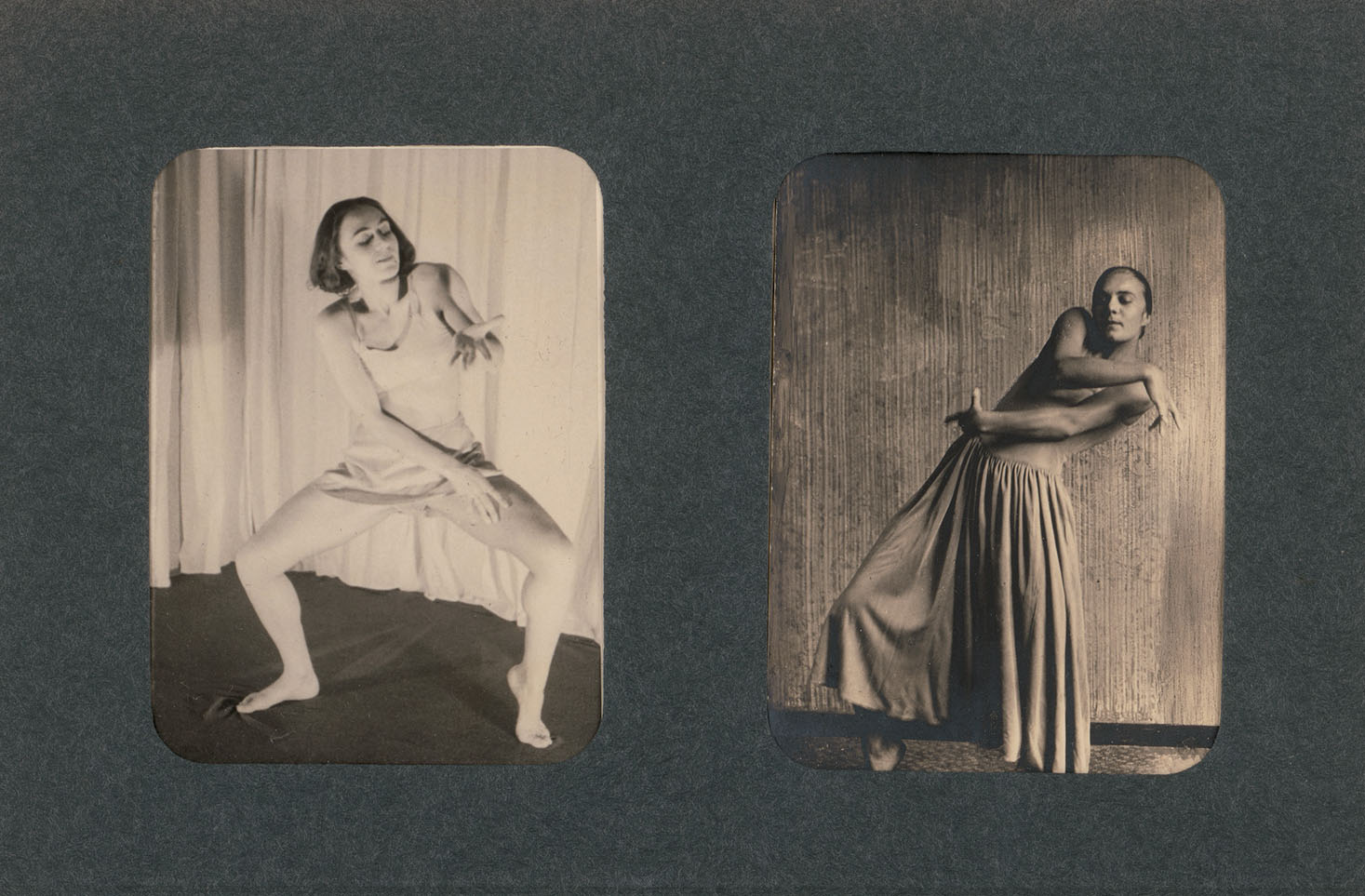
These photographs of various sizes, most circa 7,5 x 11 cm, [inserted in window slits] belongs to a bound in paper album with cord binding. The album included various teaching and dance scenes of the “Günther Schule”, Munich, 1924.
The Günther School was founded on the initiative of Dorothea Günther and Carl Orff. The school quickly became known and subsequently expanded. It existed from 1924-1944, with an extensive teaching program, such as gymnastics, rhythmic dance and physical education, modern artistic dance, singing, anatomy, pedagogy, psychology, drawing and much more. [quoted from : Bassenge Auktion 121]



‘Woke up Laughing’ presents a vibrant universe of palm trees reminiscent of vacation, luxury, paradise and adventure. Roels celebrates their beauty but also sheds light on their darker sides, as, much like photography, they are not entirely trustworthy. A palm tree in Monaco tells a different story than a tree in Fallujah, Iraq, or in Palmyra, Syria, occupied by ISIS. These seemingly pristine and peaceful universal icons ruthlessly resonate with memories of our colonial history. Each image serves as a silent testimony, compelling the viewer to reflect, illustrating that paradise lurks around the corner but remains elusive and unattainable. The bright colours that Roels added to the black and white images make the confrontation lighter and more playful. Due to his background in literature and linguistics, his titles also play a crucial role in his work. Often embodying historical and contemporary references, they create confusion through their ambiguity.
The title ‘Woke up Laughing’ refers to the eponymous song by British pop musician Robert Palmer and encapsulates the concept of Roels’ exhibition.
Woke up laughing
You make yourself a fortune out in Hong Kong
You sit at home and wonder whether you were wrong
You take a small vacation just to keep sane
You find on your return your home is blown away
With ‘Woke Up Laughing’, the artist presents a series of perspectives, techniques, and approaches. There is much to observe, not only about photography but also about what lies behind it. His images serve as both an escape from and a reflection on the reality in which we live. While he does not seek to impose criticism, he cleverly elucidates the challenges we face today.

For his fifth solo exhibition at Gallery 51, Belgian artist Bruno V. Roels (b. 1976) presents new work and delves further into the possibilities of the analog photographic process. In ‘Woke up Laughing’, his images navigate between aesthetics and experimentation, escapism and a historical consciousness.
Inspired by artists like John Baldessari (1931-2020) and Ed Ruscha (b. 1937), who approached photography in a conceptual manner, Roels also questions the properties of the image: how it operates, influences, and deceives. What defines photography as photography? And how do viewers interpret it, in an era marked by image manipulation and production, where visual communication sets the tone? These are significant questions embedded in his body of work.
While Roels’ artistic practice is primarily rooted in analog photography, he combines analog techniques with other art forms, non-photographic processes, or Artificial Intelligence and generative imaging. This allows the artist’s imagination to reach its peak, as nothing is deemed impossible. Additionally, the artist plays with the reproducible nature of the medium, creating unique works often consisting of multiple variations of the same negative, compiling them as equivalent images within the same frame, rendering no image perfect or superior to another. He also produces overprints, where the same negative is printed several times, causing the images to blend. The yellowed, coffee- coloured prints give his work a recognizable vintage look. Artistic imperfections and incidental elements, such as creases and stains that occur during printing, remain visible and characterize his visual language. By imprinting text on the prints or by drawing and painting on them, Roels adds surreal elements and layers of meaning.




All images sourced ODLP and/or MAMM were retrieved from:
ODLP : l’oeil de la photographie / the eye of photography
MAMM : Multimedia Art Museum : Elapsed Time

 un regard oblique