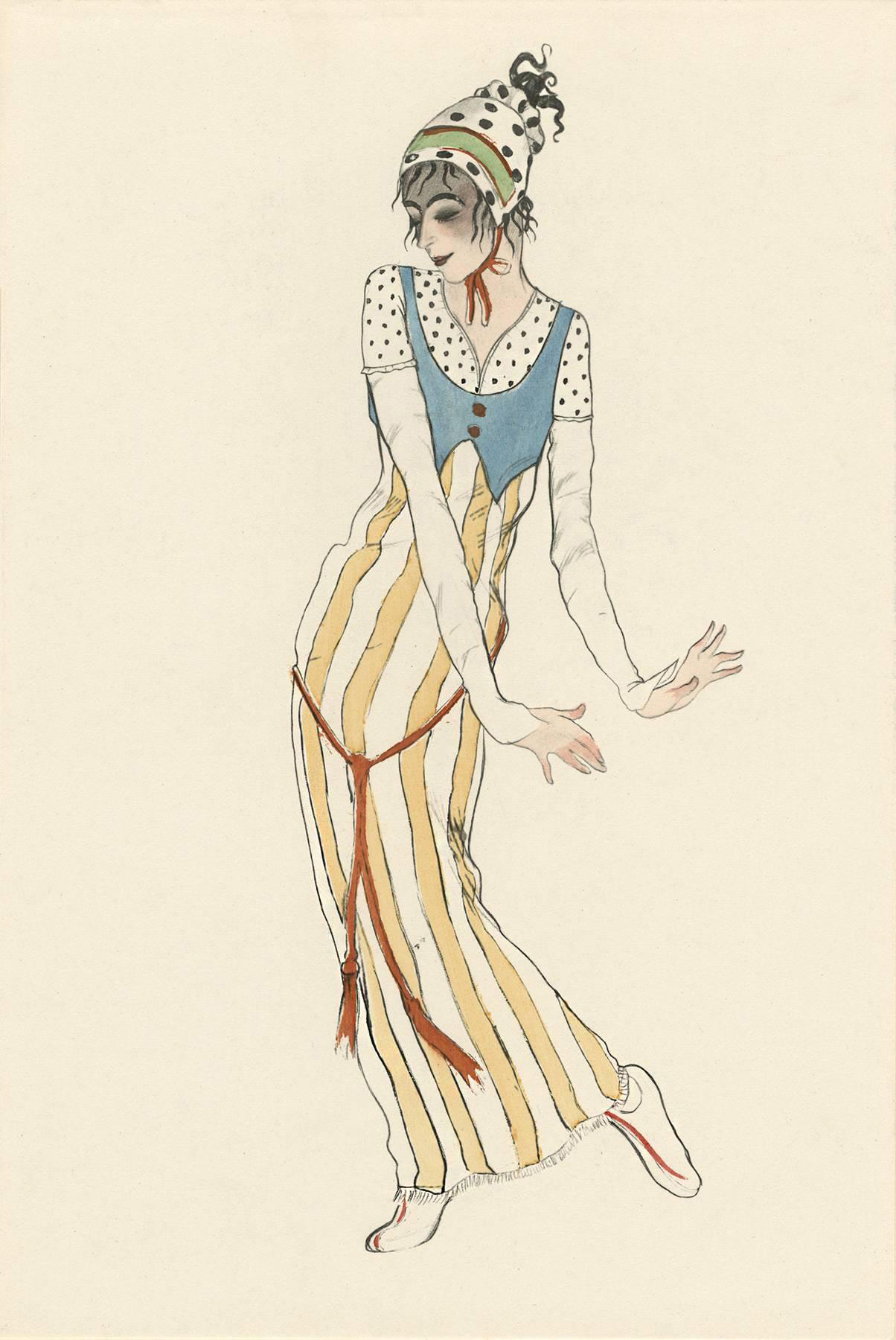
‘Primula Vera’ (Lo Hesse), 1920

Walter Schnackenberg :: Ballet und Pantomime 'Primula Vera' (Lo Hesse), plate # 7, 1920. | src 1st dibs
Walter Schnackenberg :: Ballet und Pantomime ‘Primula Vera’ (Lo Hesse), plate # 7, 1920. | src 1st dibs

“Schnackenberg was a regular contributor to the German magazines Jugend and Simplicissimus before devoting himself to the design of stage scenery and costumes. In the artist’s theatrical work, his mastery of form, ornamentation, and Orientalism became increasingly evident. He excelled at combining fluid Art Nouveau outlines, with spiky Expressionist passages, and the postures and patterns of the mysterious East.” (quoted from source)
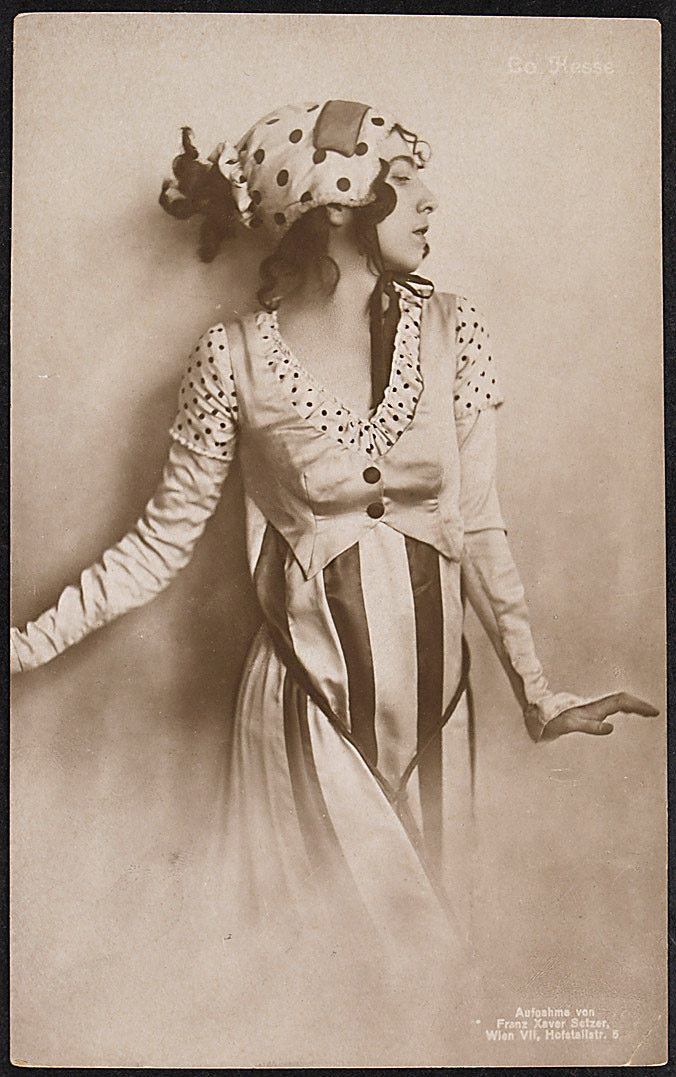
Lo Hesse, Rollenporträt

Franz Xaver Setzer :: Lo Hesse, Rollenporträt | Role portrait, undated. (Primula Vera) | src Theatermuseum Wien

German dancer and model Lo Hesse was the muse of German Avant-garde designer Walter Schnackenberg in the 1910s. She was known for her extravagantly costumed performances with famed dancer Joachim von Seewitz.

Walter Schnackenberg :: Ballet und Pantomime 'Primula Vera' (Lo Hesse), plate # 7, 1920. | src 1st dibs
Walter Schnackenberg :: Ballet und Pantomime ‘Primula Vera’ (Lo Hesse), plate # 7, 1920. | src 1st dibs

“Schnackenberg was a regular contributor to the German magazines Jugend and Simplicissimus before devoting himself to the design of stage scenery and costumes. In the artist’s theatrical work, his mastery of form, ornamentation, and Orientalism became increasingly evident. He excelled at combining fluid Art Nouveau outlines, with spiky Expressionist passages, and the postures and patterns of the mysterious East.”

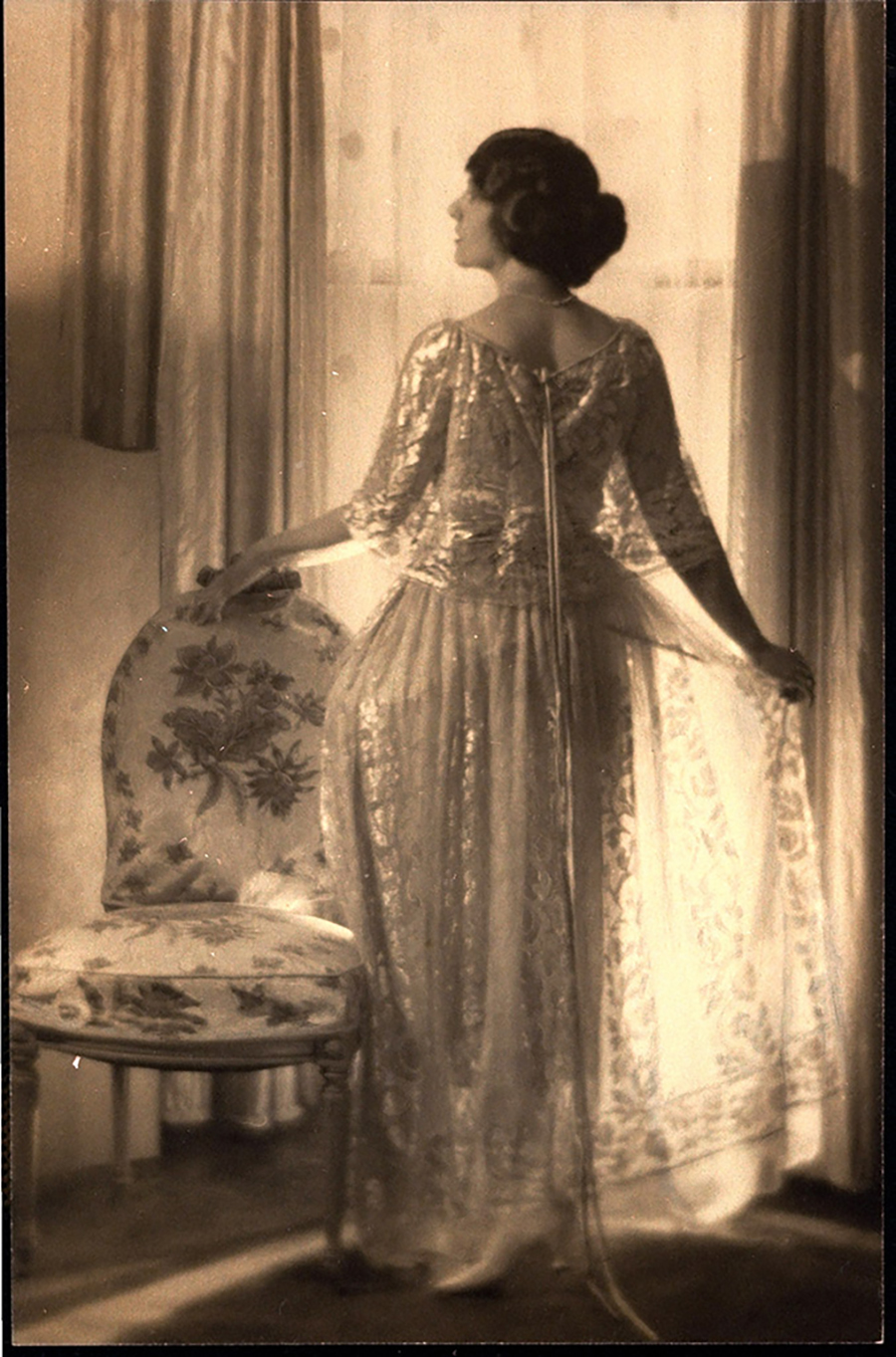
Mary Nash in Diaphanous Dress

Martha Wynn Richards :: Actress Mary Nash Modeling a Diaphanous Dress, 1923, Wynn Richards, gelatin silver print. Courtesy of and © Condé Nast – Vogue, January 1, 1923. | src J. Paul Getty Museum

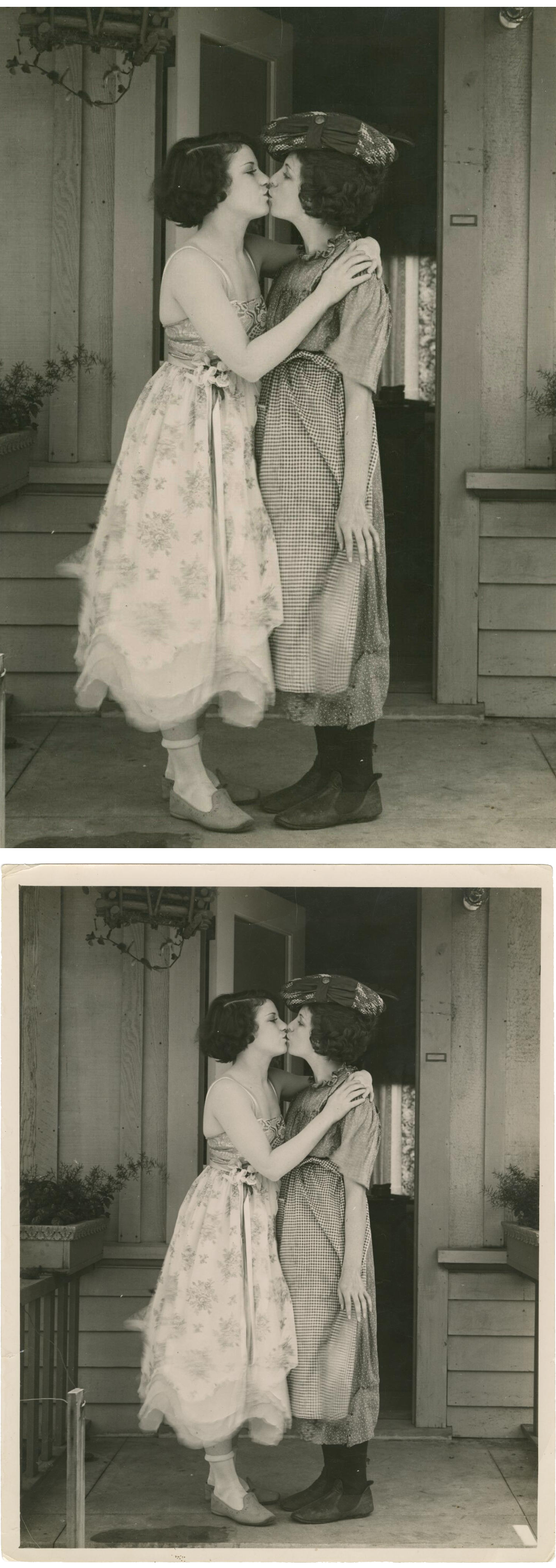
Virginia Morris in a hoopskirt

Edward J. Steichen :: Virginia Morris wearing a hoop-skirt costume with a two-tone skirt and bodice, and a huge bow at one side; and a tricorne hat with waist-length lace panels, for the annual costume party, the Red and Gold Ball, for the New York Junior League. | src Getty Images (broken link)

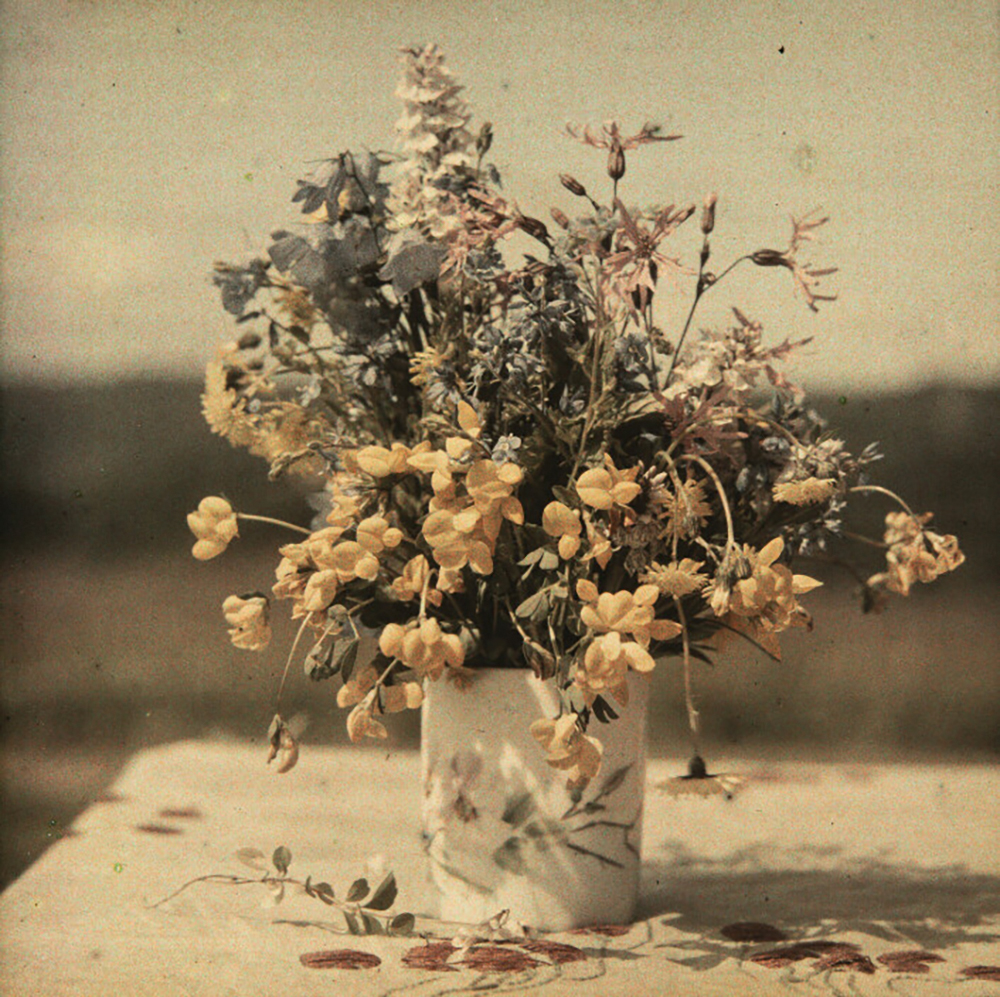
Ralph Lindequist Wilson autokrom

Ralph Lindequist Wilson :: Uten tittel. Trolig 1910-årene. Autokrom. Billedsamlingen, UB Bergen. | src Universitetet i Bergen
“Wilson’s autochrome photograph of a simple bouquet of hand-picked wildflowers in a ceramic vase is a delicate and beautiful example of a classic Still Life. The photograph is also a fine example of experimentation with the aesthetic expression: the bouquet is in sharp focus, but all other parts are blurred and more diffuse.” (quoted from source)
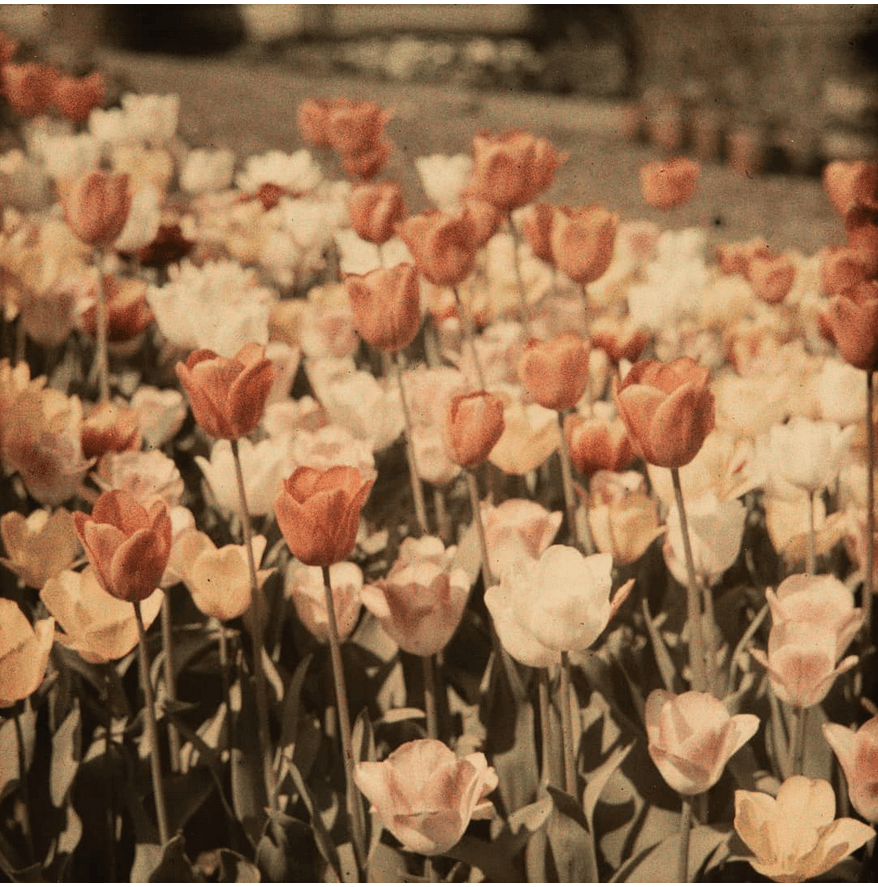
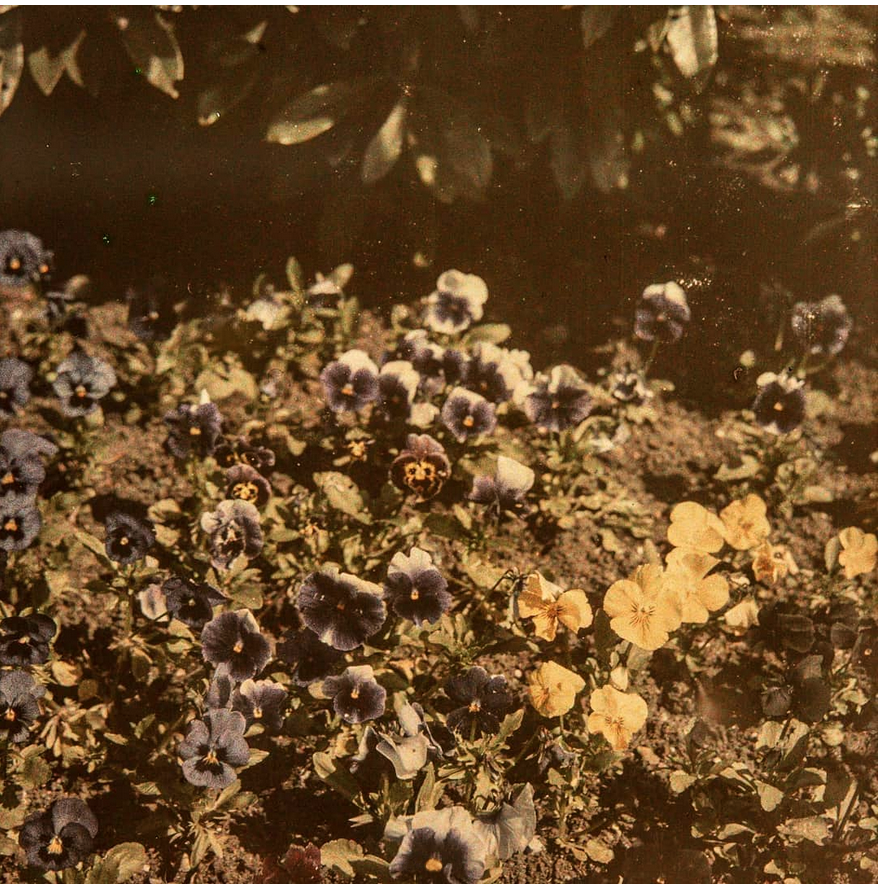
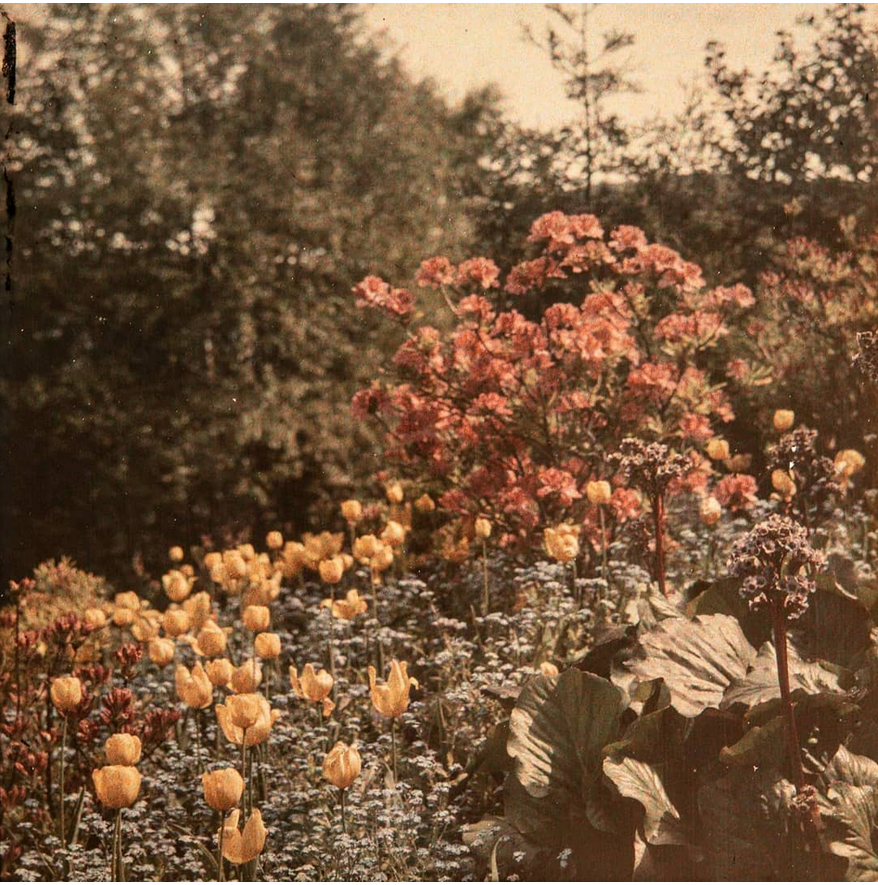
Ralph L. Wilson :: Uten tittel. Dato ukjent. Trolig 1920 – 1930-årene. Autokrom. Billedsamlingen, UB Bergen. | src Universitetet i Bergen
Ralph L. Wilson :: Untitled. Probably between 1920s – 1930s. Autochrome. Billedsamlingen, UB Bergen. | src Universitetet i Bergen
Ralph L. Wilson :: Untitled. Probably between 1920s – 1930s. Autochrome. Billedsamlingen, UB Bergen | src Universitetet i Bergen

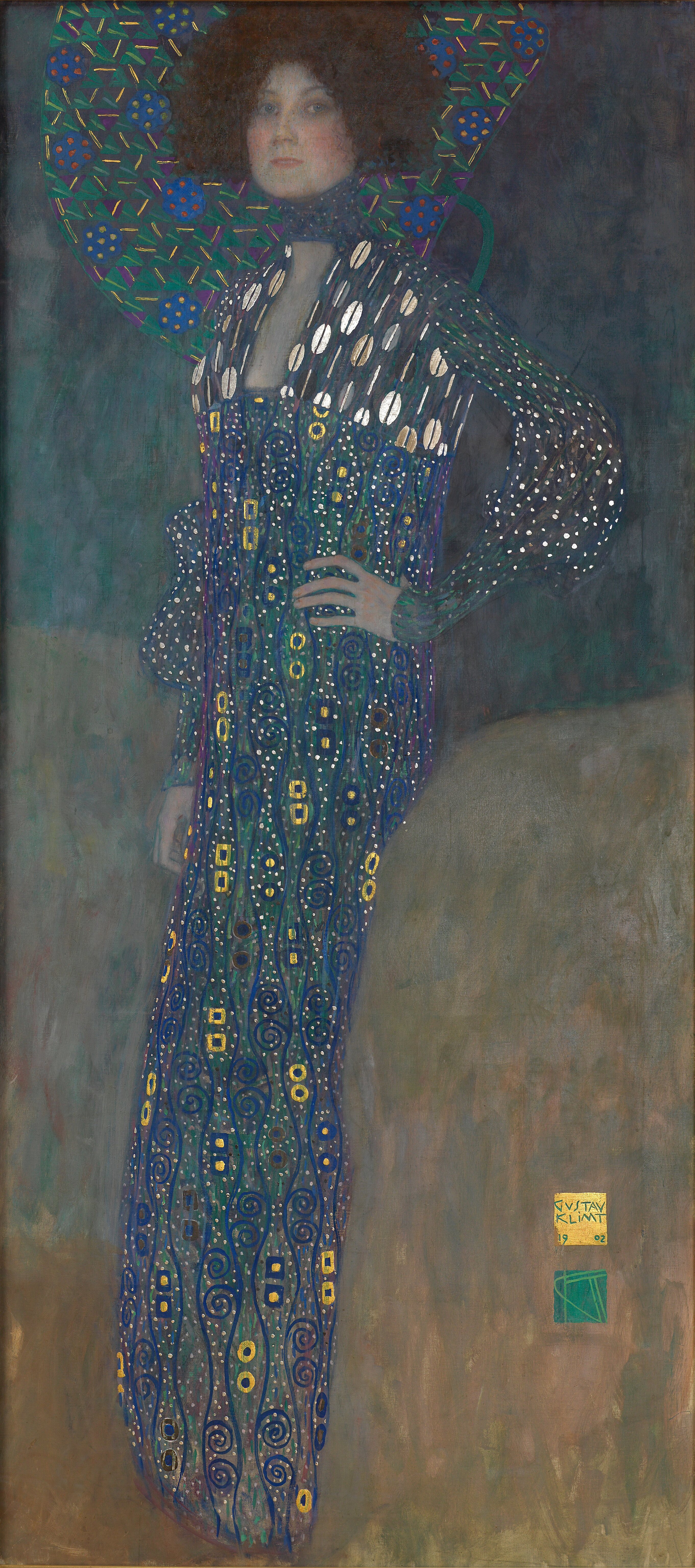
Bildnis. Emilie Flöge, 1902

Gustav Klimt (1862—1918) :: Bildnis Emilie Flöge, 1902. Leinwand. Ölfarbe. (oil on canvas) | src Wien Museum
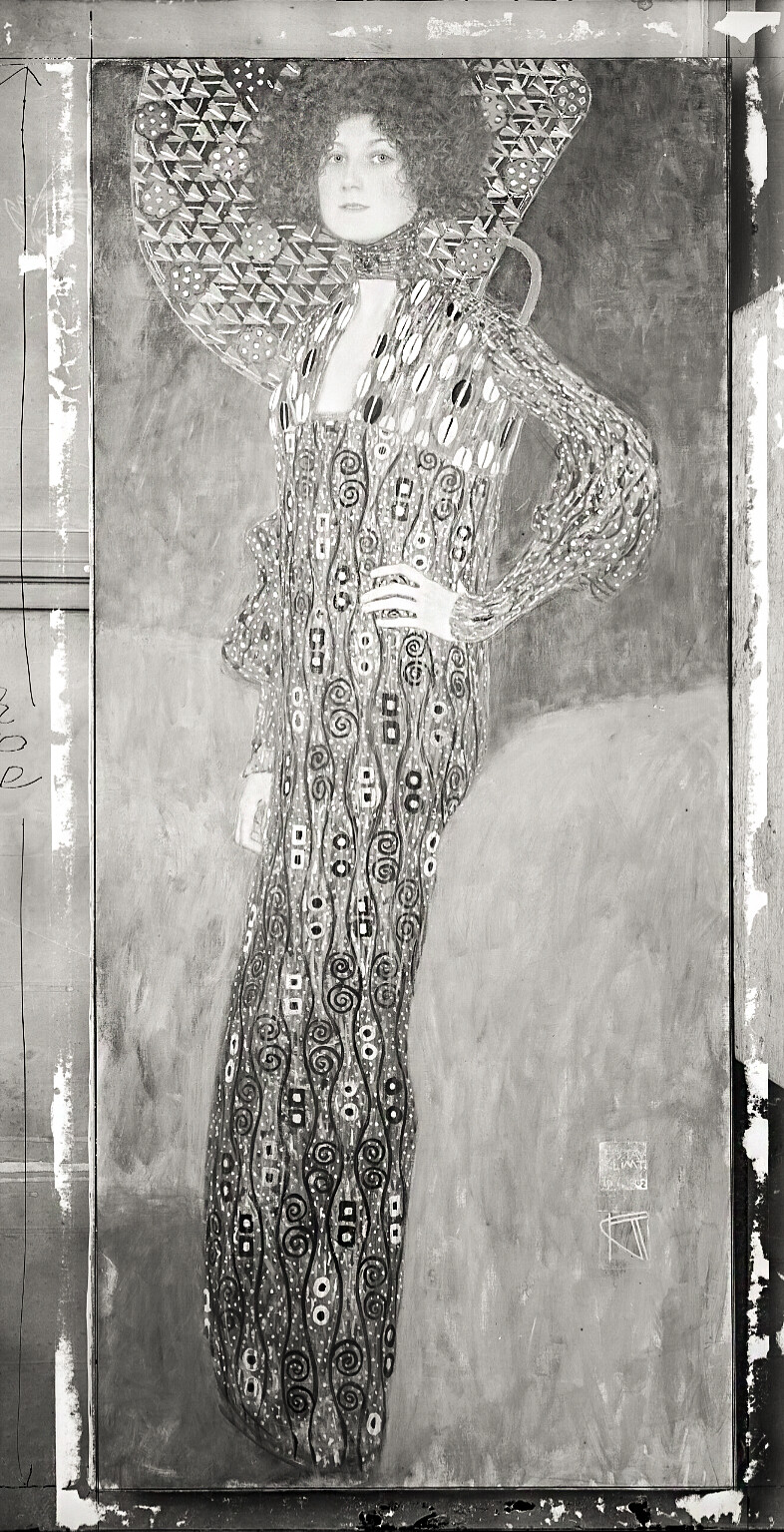
Moriz Nähr (1859-1945) :: Gemälde ‘Emilie Flöge’ (1902-03) von Gustav Klimt. Schwarz-Weiß-Negativ. | src ÖNB

Charles R. Brown autochromes

Charles R. Brown :: Nasturtiums vase på et bord nær en gardin. Autokrom. | Nasturtium vase on a table near a curtain. Autochrome. ca. 1907 – 1937 | src Preus museum
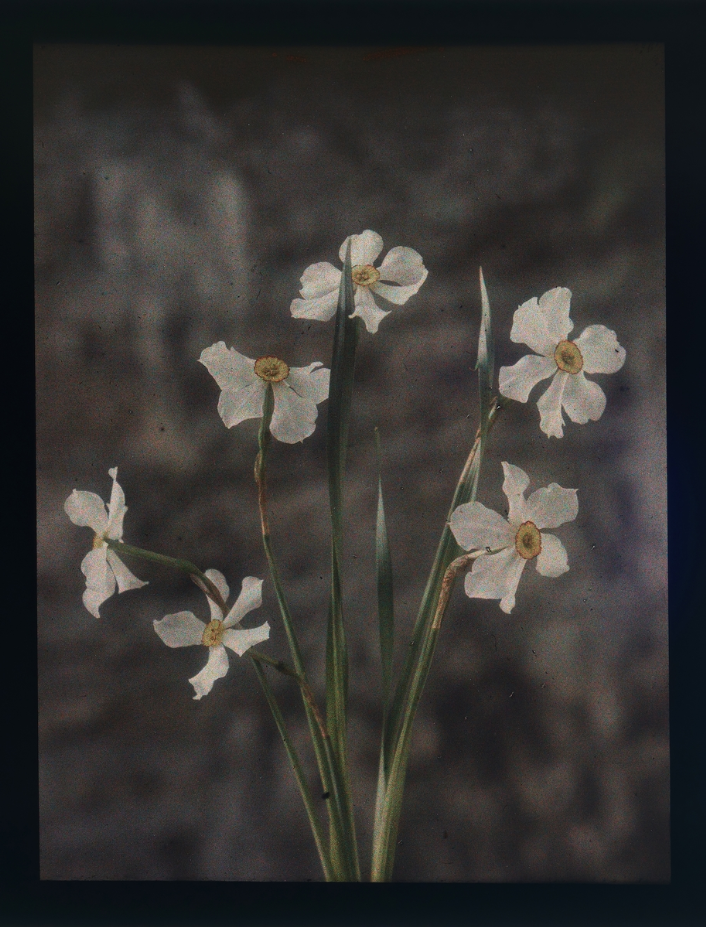
Charles R. Brown :: Seks hvite fasanøyne narcissus. Autokrom. | Six white pheasant eyes narcissus. Autochrome. ca. 1907 – 1937 | src Preus museum
Charles R. Brown :: En gren av rød nyperose. Autokrom. | A branch of red Rambler Rose. Autochrome. ca. 1907 – 1937 | src Preus museum
Charles R. Brown :: Blodrips blomsterplant. Autokrom. | Currant flower. Autochrome. ca. 1907 – 1937 | src Preus museum

Pavots (Poppies), vers 1930

André Chapon :: Pavots (Poppies), vers 1930. Plaque autochrome (9 x 12 cm). | src Musée suisse de l’appareil photographique
André Chapon :: De nationalité française, André Chapon, né en 1896, s’est établi à Lausanne à la fin des années 1960. Ce photographe amateur au sens noble du terme est l’auteur de paysages, de natures mortes, et d’études d’éléments végétaux, domaine qui le passionnait particulièrement. Résidant à Blois, il était membre actif de l’Amical Photo de cette ville. (quoted from source)