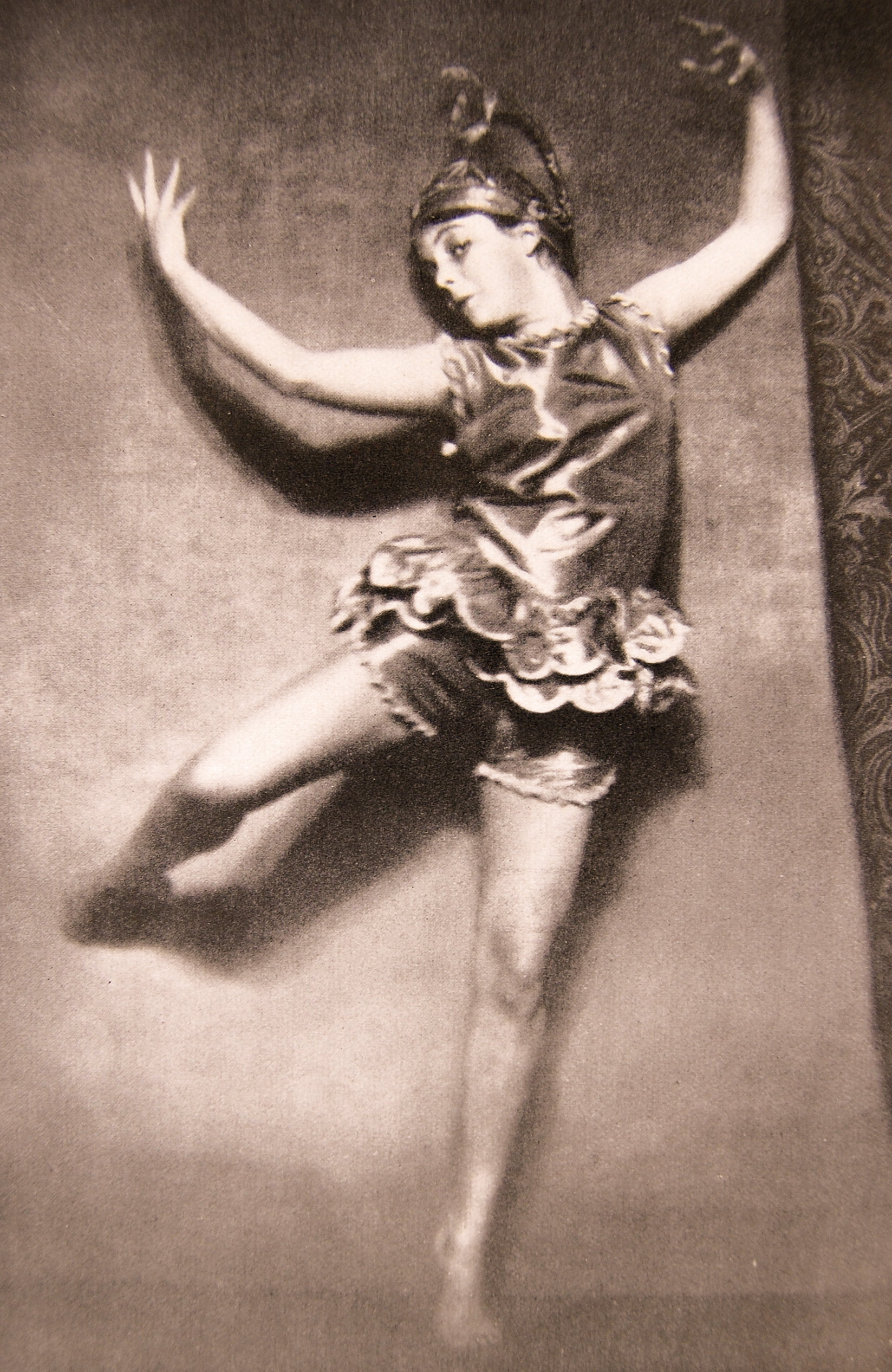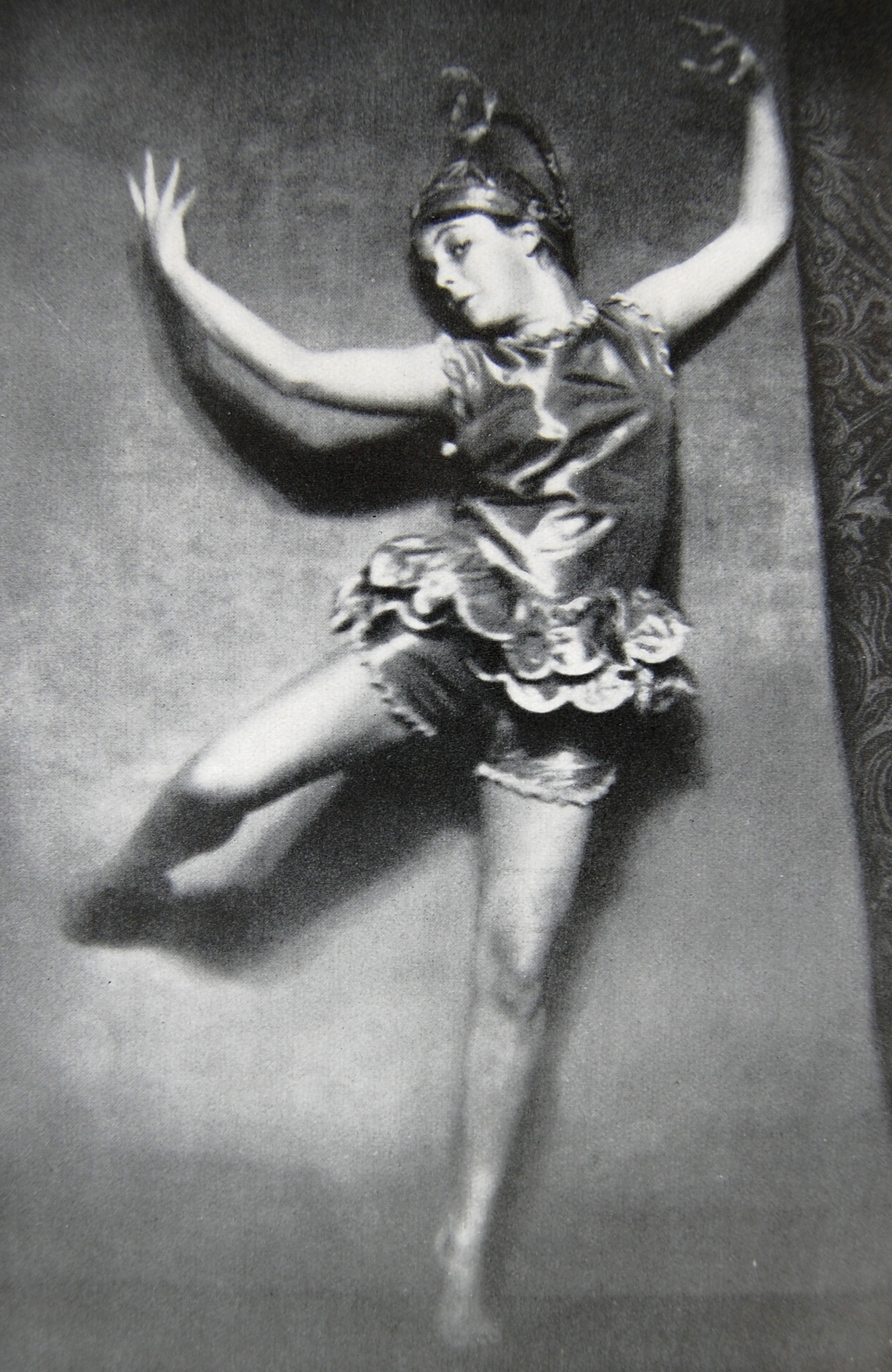
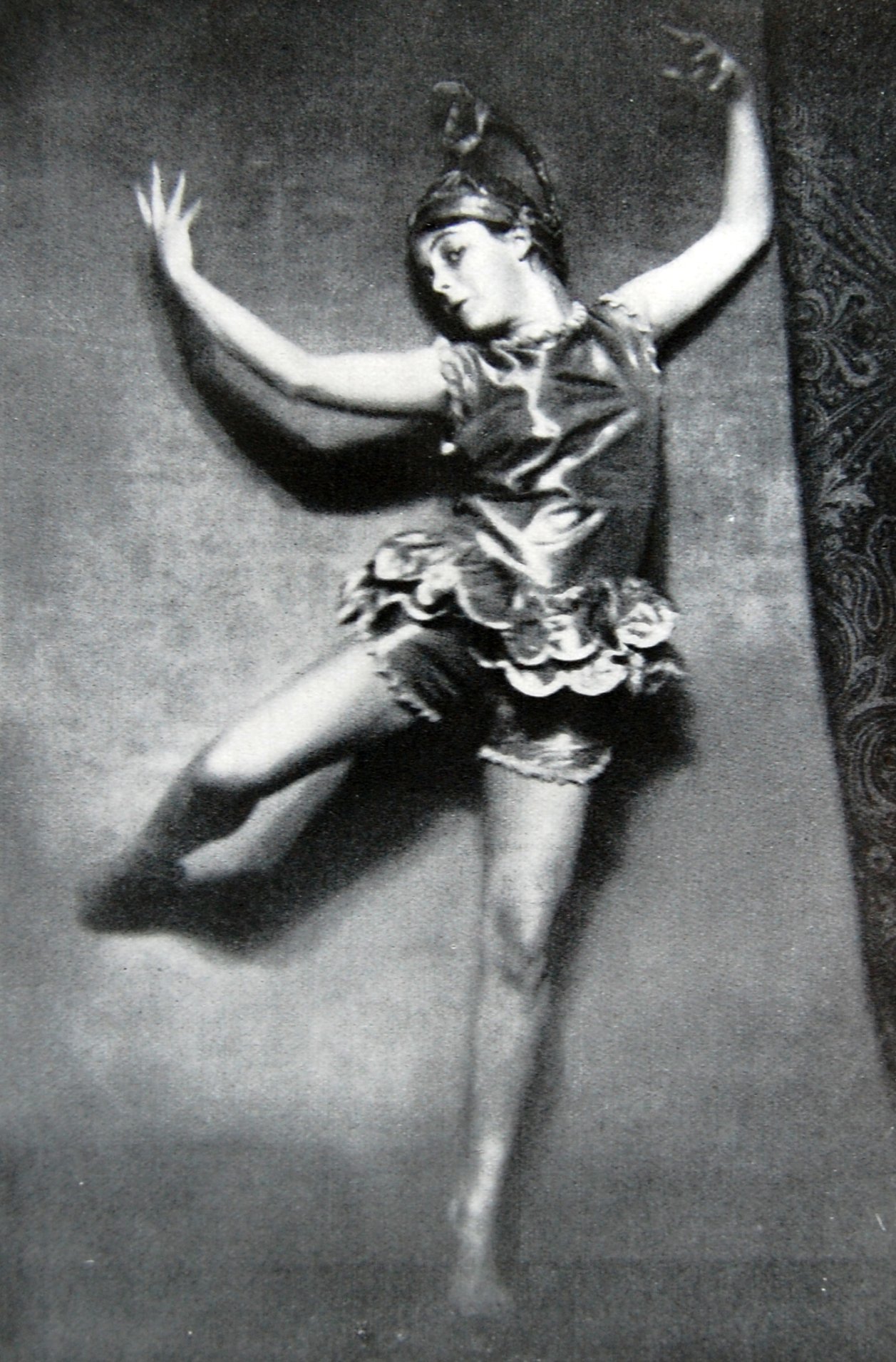
Niddy Impekoven, ca. 1928

Karl Schenker :: Niddy Impekoven. Photograph by Schenker from “Der künstlerische Tanz unserer Zeit” by Hermann and Marianne Aubel. Leipzig : K.R. Langewiesche, 1928. | src Crossett Library

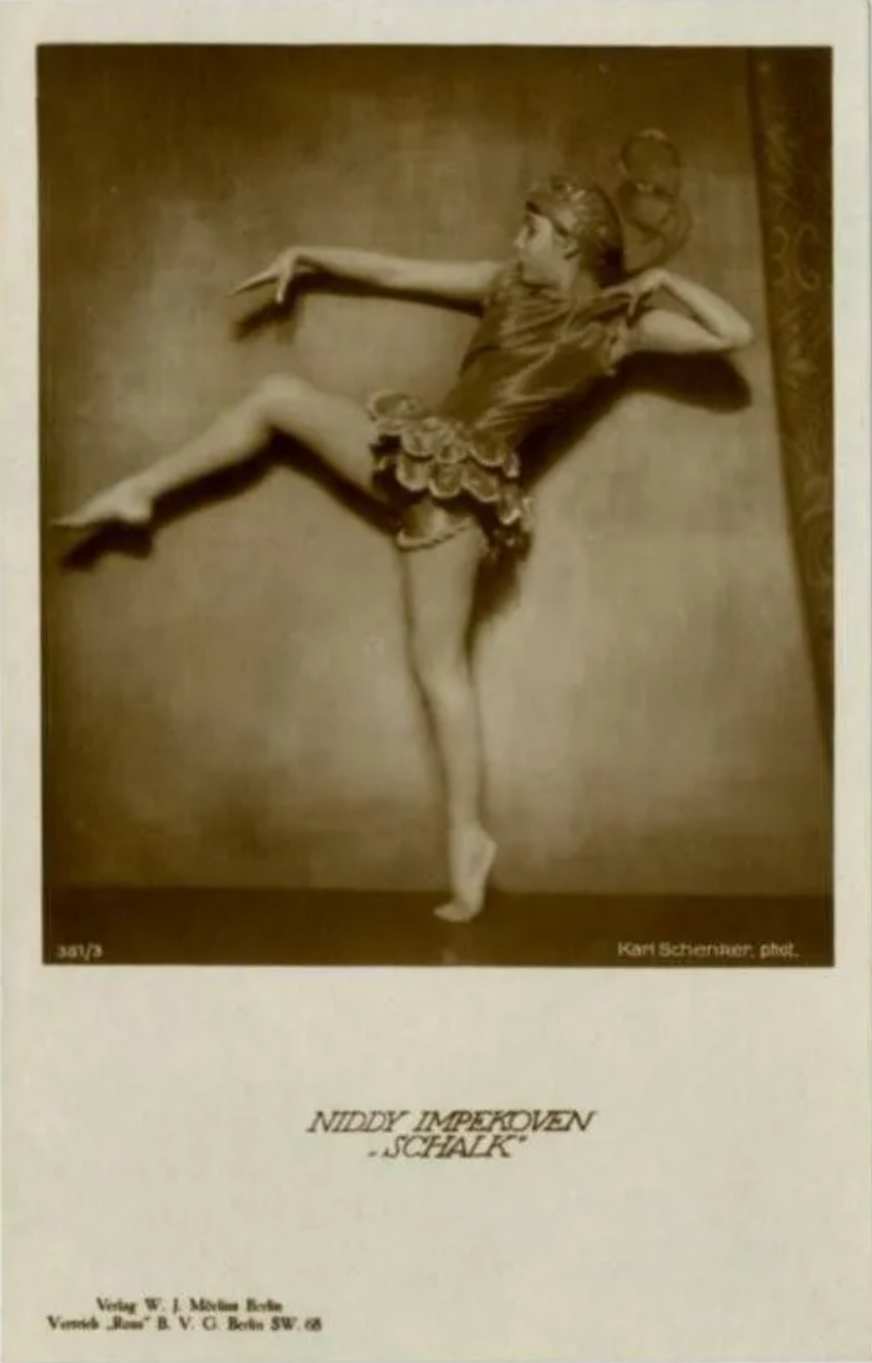
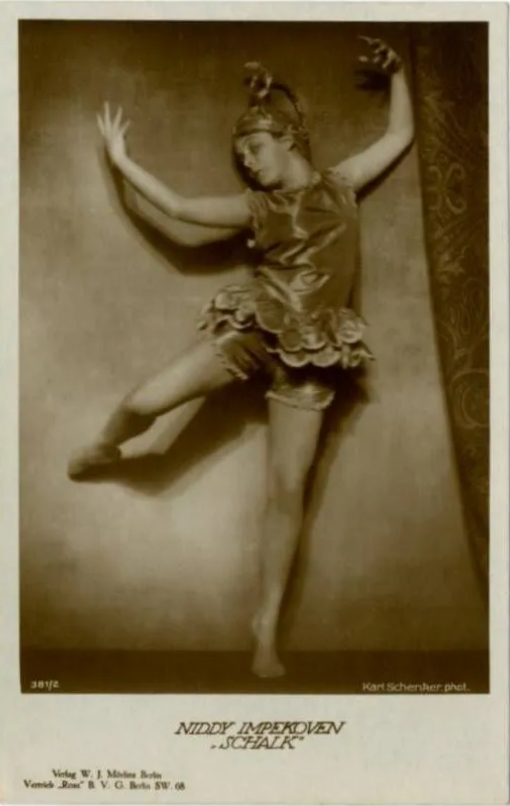
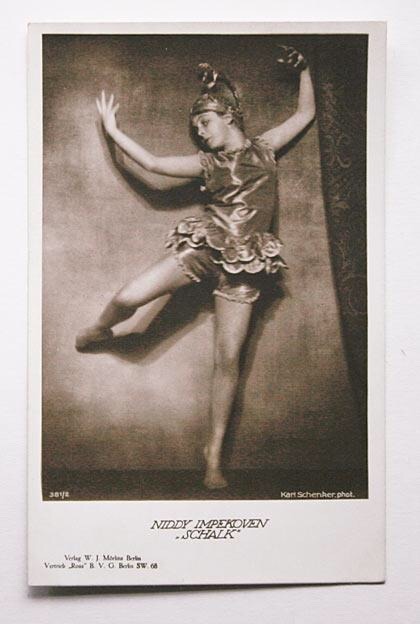

Schalk ~ Scoundrel, 1920s

Mario von Bucovich (Atelier Karl Schenker) :: Niddy Impekoven. “Schalk” (Scoundrel). In Der künstlerische Tanz unserer Zeit by Hermann and Marianne Aubel. Leipzig: K.R. Langewiesche, 1928. | src Crossett Library
Karl Schenker :: Niddy Impekoven. “Schalk”. Ross Verlag postcard, series 381/3. | src Photographies pour Tous
Karl Schenker :: Niddy Impekoven. “Schalk”. Ross Verlag postcard, series 381/2. | src Photographies pour Tous
Karl Schenker :: Niddy Impekoven as “Schalk”. Original photograph designed as a postcard, 1920′s. In the border: publisher: “Ross”, Berlin. Publisher’s series No. 381/2. | src Zvab

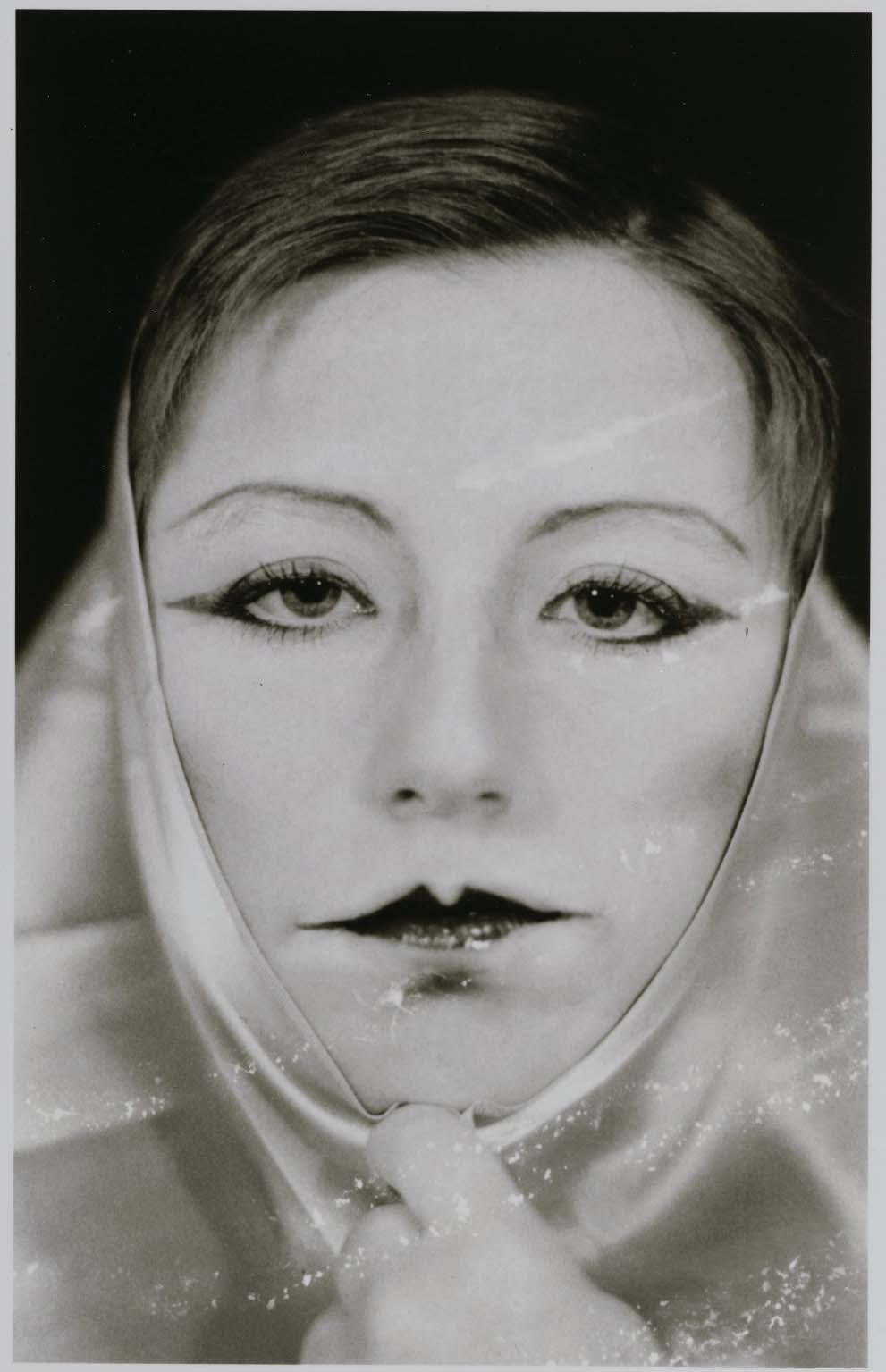
Sherman as Cahun (1975)

cindy sherman as claude cahun
Cindy Sherman :: Untitled, 1975. Chromogenic photograph. © Cindy Sherman | src Brooklyn Museum

This photograph from early in Cindy Sherman’s artistic career indicates a burgeoning interest in what has become a lifelong investigation into using herself as subject. Produced in 1975, during her time as an art student at the State University of New York, Buffalo, the work prefigures her famous Untitled Film Stills series by two years. In it, the artist references Claude Cahun, an early Surrealist photographer whose androgynous self-portraits inspired a later generation of feminist theorists to think about gender as a social role that is performed rather than innate—ideas that would become central to Sherman’s oeuvre from the mid-1970s onward.” (quoted from source)

Cindy Sherman :: Untitled, 1975. Silver print with Sherman's signature, dates, and edition notation in ink, on verso. Printed 2004. | src Classic & Contemporary Photographs · Swann Galleries
Cindy Sherman :: Untitled, 1975. Silver print with Sherman’s signature, dates, and edition notation in ink, on verso. Printed 2004. | src Classic & Contemporary Photographs · Swann Galleries

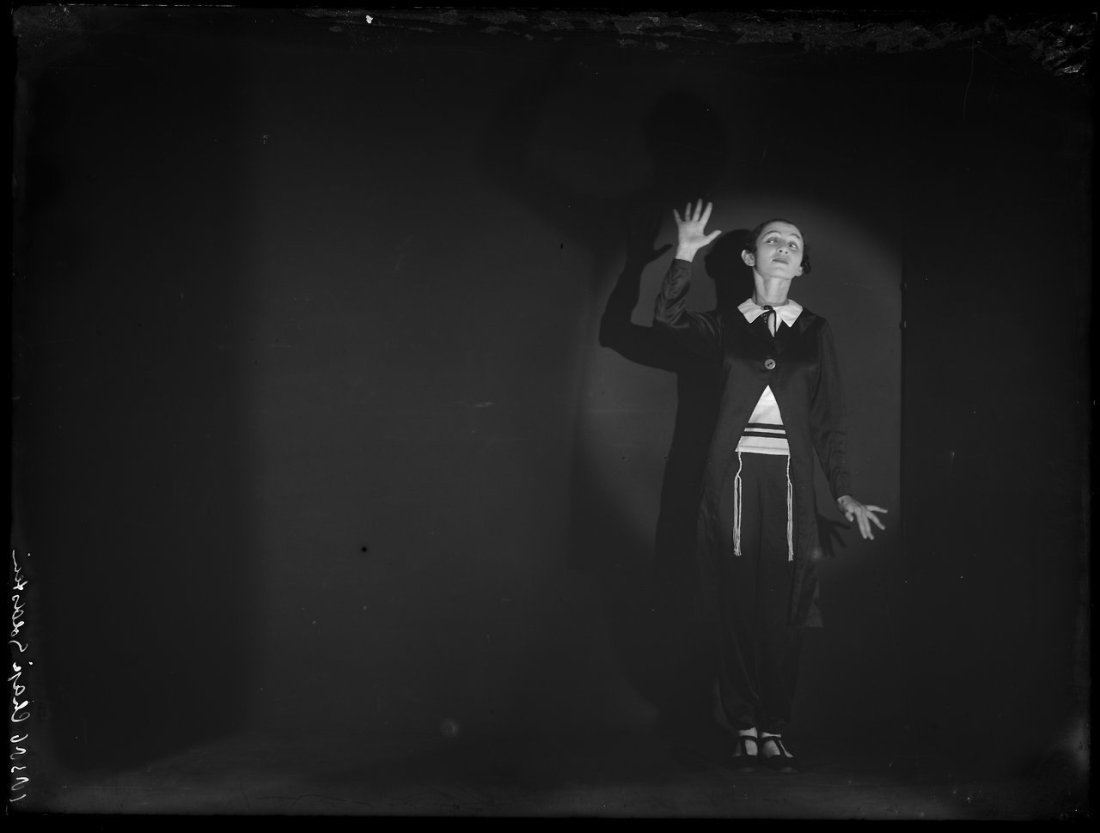
Chaja Goldstein by Merkelbach

Atelier Jacob Merkelbach - Chaja Goldstein performing, 1930s
Atelier Jacob Merkelbach :: Danseres en zangeres, gespecialiseerd in het Jiddische lied en dans; scenefoto als Jeshiva student | Dancer and singer specialized in Yiddish song and dance; scene photo as Yeshiva student, 1937. | src Stadtsarchief Amsterdam
Atelier Jacob Merkelbach :: Danseres en zangeres, gespecialiseerd in het Jiddische lied en dans; scenefoto als Jeshiva student | Dancer and singer specialized in Yiddish song and dance; scene photo as Yeshiva student, 1937. | src Stadsarchief Amsterdam
Atelier Jacob Merkelbach :: Portrait of Chaja Rachul Goldstein (1908-1999), after 1933. | src Stadtsarchief · Collectie Atelier J. Merkelbach
Atelier Jacob Merkelbach :: Portrait of Chaja Rachul Goldstein (1908-1999), after 1933. | src Stadsarchief · Collectie Atelier J. Merkelbach

Chaja Goldstein was born in a Polish ghetto, in the town of Rypin in 1908. […] When she was ten years old, Chaja moved to Berlin with her Orthodox parents, brother Eli and baby sister Sally, fleeing the pogroms in Eastern Europe.

She made her debut in Berlin in 1931 as Hanna Goldstein with dances such as Der reiche und der arme Jude and the Hebräische Lied. The Berliner Tageblatt praised her performances. Shortly afterwards she also performed in the Kaftan, a small Jewish theater on Kurfürstendamm, where she sang Yiddish songs. Over the next few years Goldstein grew into a famous dancer and singer, connecting the Yiddish folk culture of her childhood with modern Western culture. She soon led a lavish life in Berlin’s artistic avant-garde circles. She lived with the Hungarian painter György Kepes (1906-2001) and had a love affair with the Dutch artist Wijnand Grays (1906-1995).

In 1933, Chaja Goldstein fled to the Netherlands as a result of the rise of the Nazi party. In April 1933 she appeared for the first time under the name ‘Chaja Goldstein’ on the stage of the Amsterdam Conservatory and the Rotterdam Studio 32, with her Yiddish dances and songs. [quoted from Huygens Instituut]
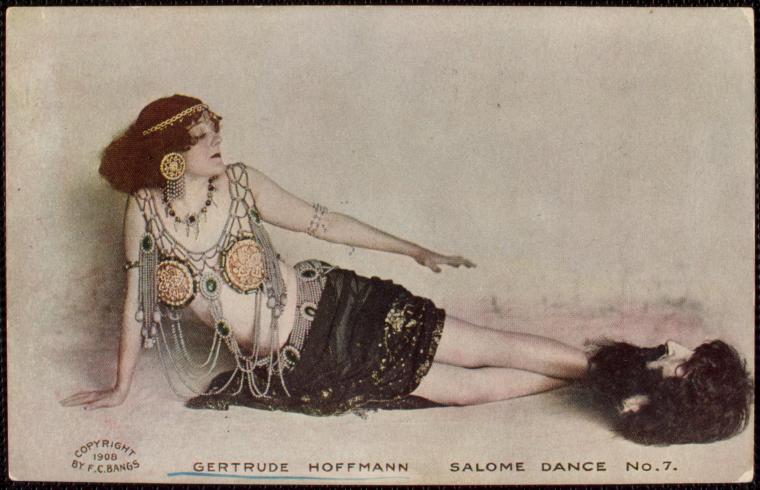
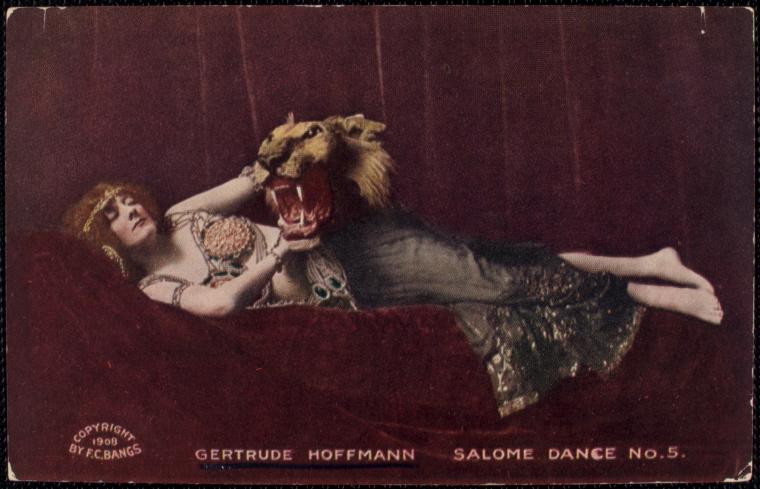
G. Hoffmann by Frank C. Bangs

Frank C. Bangs :: Gertrude Hoffmann, Salomé dance, nº 7, 1908. Vintage postcards. Publisher Theatre Magazine Co. | src NYPL
Frank C. Bangs :: Gertrude Hoffmann, Salomé dance, nº 1 & 2, 1908. Vintage postcards. Publisher Theatre Magazine Co. | src NYPL
Frank C. Bangs :: Gertrude Hoffmann, Salomé dance, nº 5, 1908. Vintage postcards. Publisher Theatre Magazine Co. | src NYPL

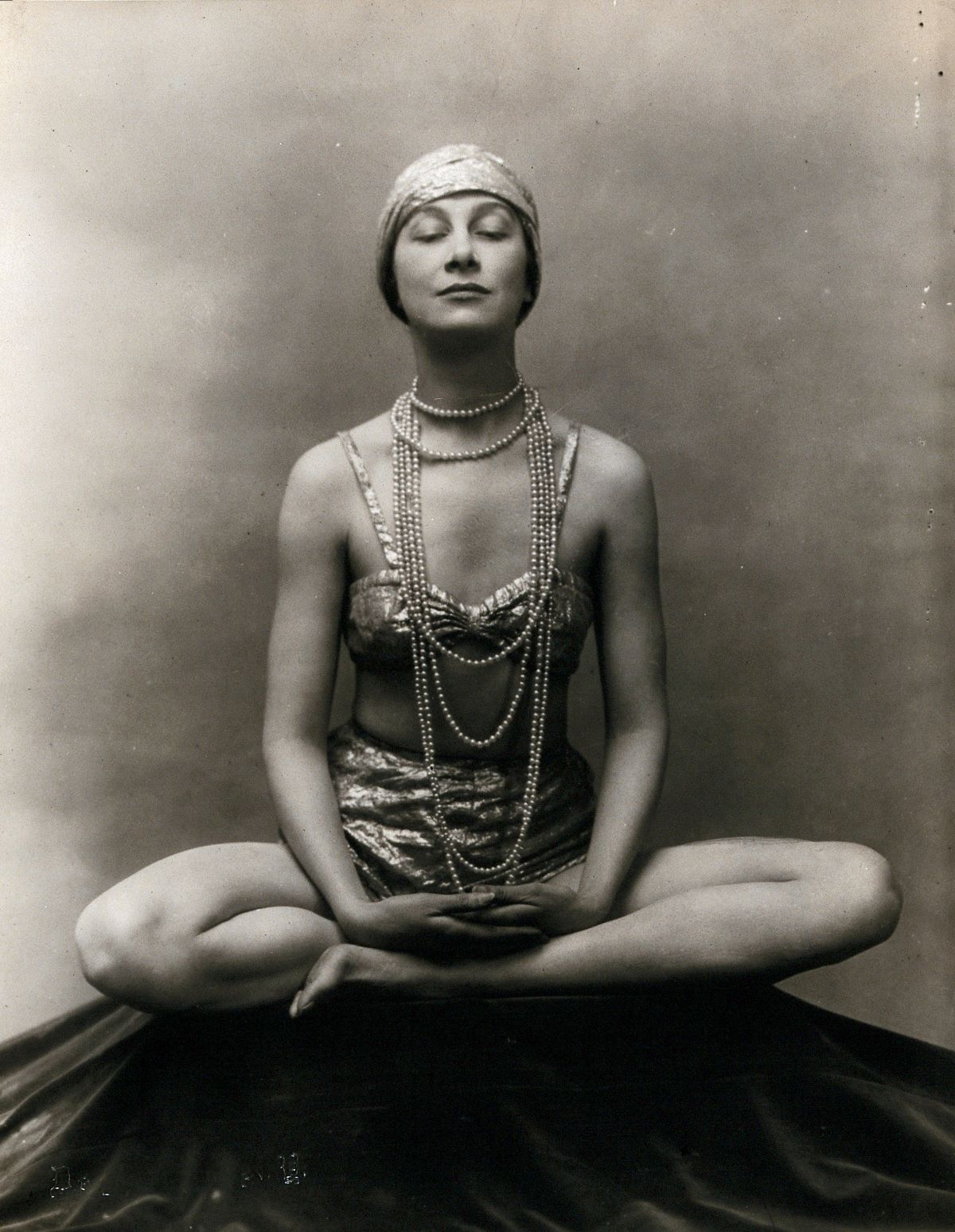
Agniel seated in Buddha position

John de Mirjian Studios ~ Marguerite Agniel seated in a Buddha position, circa 1929. | src Wellcome collection
John de Mirjian ~ Marguerite Agniel seated in a Buddha position, wearing a two-piece costume and matching turban, photographed in studio, ca. 1929 | src Wellcome library

Loie Fuller ca 1900 by Beckett

Samuel Joshua Beckett (1870–1940) ~ Loïe Fuller (1862 – 1928) dancing, ca. 1900. Gelatin silver print | src the Met

The American dancer Loie Fuller (1862-1928) conquered Paris on her opening night at the Folies-Bergère on November 5, 1892. Manipulating with bamboo sticks an immense skirt made of over a hundred yards of translucent, iridescent silk, the dancer evoked organic forms –butterflies, flowers, and flames–in perpetual metamorphosis through a play of colored lights. Loie Fuller’s innovative lighting effects, some of which she patented, transformed her dances into enthralling syntheses of movement, color, and music, in which the dancer herself all but vanished. Artists and writers of the 1890s praised her art as an aesthetic breakthrough, and the Symbolist poet Stéphane Mallarmé, who saw her perform in 1893, wrote in his essay on her that her dance was “the theatrical form of poetry par excellence.” Immensely popular, she had her own theater at the 1900 Exposition Universelle in Paris, promoted other women dancers including Isadora Duncan, directed experimental movies, and stopped performing only in 1925.
Loie Fuller’s whirling, undulating silhouette, which embodied the fluid lines of Art Nouveau, inspired many images, from the portraits of Toulouse-Lautrec and the posters of Jules Chéret and Alphonse Mucha to the sculptures of Pierre Roche and Théodore Rivière, as well as the photographs of Harry C. Ellis and Eugène Druet.

The pictures shown here depict movements from such dances as “Dance of the Lily” and “Dance of Flame.” These images do not pretend to evoke the otherworldly effect of the performance, which took place on a darkened stage in front of a complex set of mirrors and whose magic was entirely dependent on lighting. Here, the strange shapes, reminiscent of chalices and butterflies, take form, incongruously, in the middle of an urban park, through the efforts of a short, stout figure. Arrested in crude natural light, they still retain, however, their spellbinding energy. Part of a group of thirteen photographs complemented by six others in the Musée d’Orsay, Paris, these images belonged to the sculptor Théodore Rivière (1857-1912), and were previously thought to have been made by him. They have now been reattributed to Samuel Joshua Beckett, a photographer working in London. / quoted from the Met

Samuel Joshua Beckett (1870–1940) ~ Loïe Fuller (1862 – 1928) dancing, ca. 1900. Gelatin silver print | src the Met

Dorothy Lee (1920) by Goldberg

Maurice Goldberg :: Theater actress and dancer Dorothy Lee, 1920
Maurice Goldberg :: Theater actress and dancer Dorothy Lee, 1920. This photograph was published in the 19 December 1920 edition of the New York Tribune to promote her appearance as part of the ensemble of F. Ray Comstock and Morris Gest’s musical “Mecca” | src GMGallery on eBay

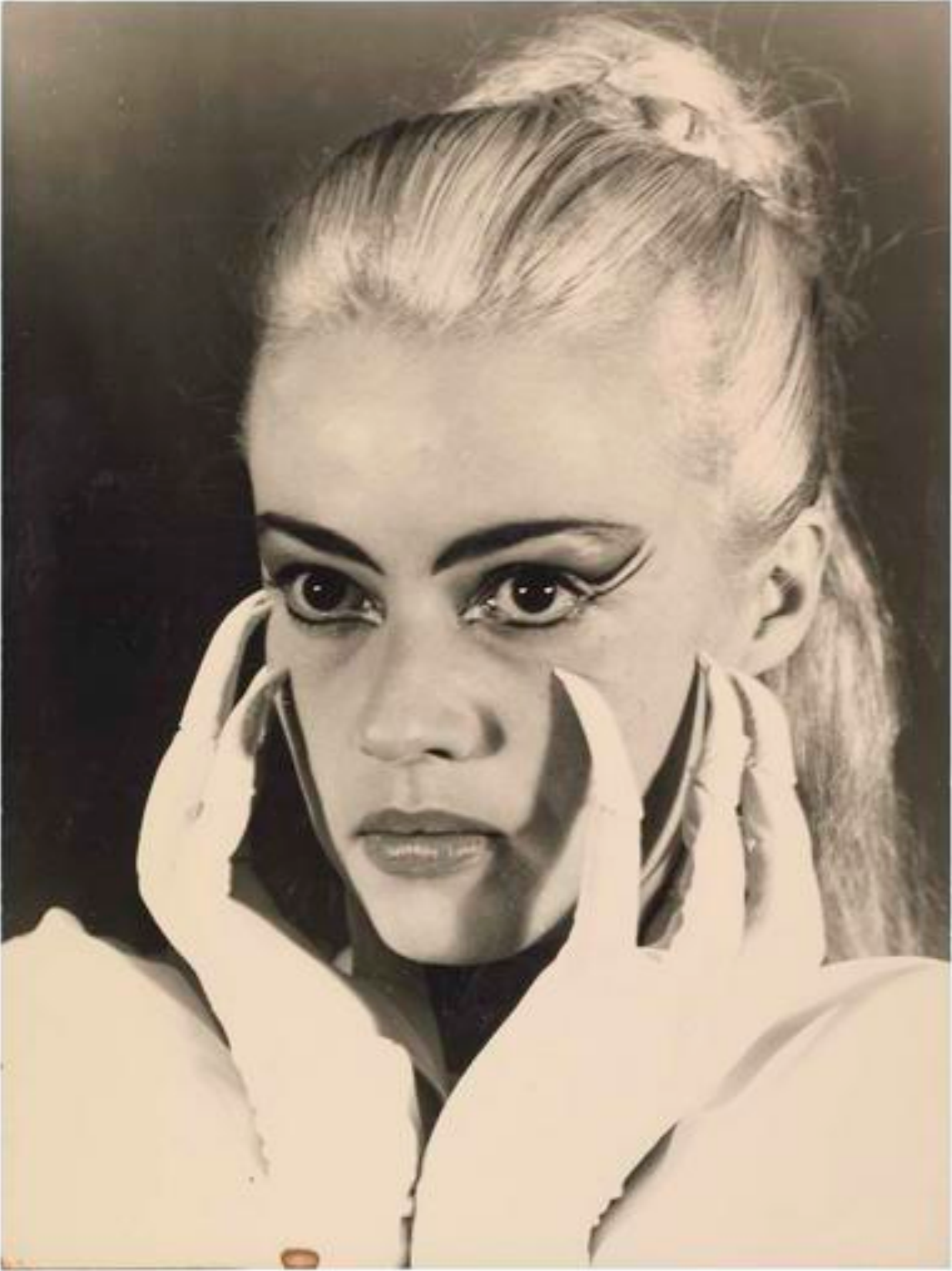
Jeanne Moreau as Le Sphinx, 1954

Thérèse Le Prat :: Jeanne Moreau as Le Sphinx in a 1954 adaptation of the play ‘La Machine infernale’ by Jean Cocteau, 09/1954. Gelatin silver print on Baryta paper. | src Ministère de la Culture

Nyota Inyoka, 1920s

The dancer Nyota Inyoka, 1920s. Probably from George White’s Scandals, a long-running string of Broadway revues produced by George White that ran from 1919 to 1939, modeled after the Ziegfeld Follies. | src grapefruitMoon on eBay