![Atelier Jaeger (Stockholm) :: Dancer Vera Petrovna Fokina (1886-1958) in Cléopâtre, choreographic drama in one act. Choreography by Michel Fokine. Stockholm Royal Theatre, 1913 [detail] | src BnF · Gallica](https://unregardoblique.com/wp-content/uploads/2023/01/cleopatre_-_photographie_-_vera_...atelier_jaeger_btv1b52505937v_12.jpg)

![Atelier Jaeger (Stockholm) :: Dancer Vera Petrovna Fokina (1886-1958) in Cléopâtre, choreographic drama in one act. Choreography by Michel Fokine. Stockholm Royal Theatre, 1913 [detail, v] | src BnF · Gallica](https://live.staticflickr.com/65535/52648685540_6452d5e186_o.jpg)
images that haunt us



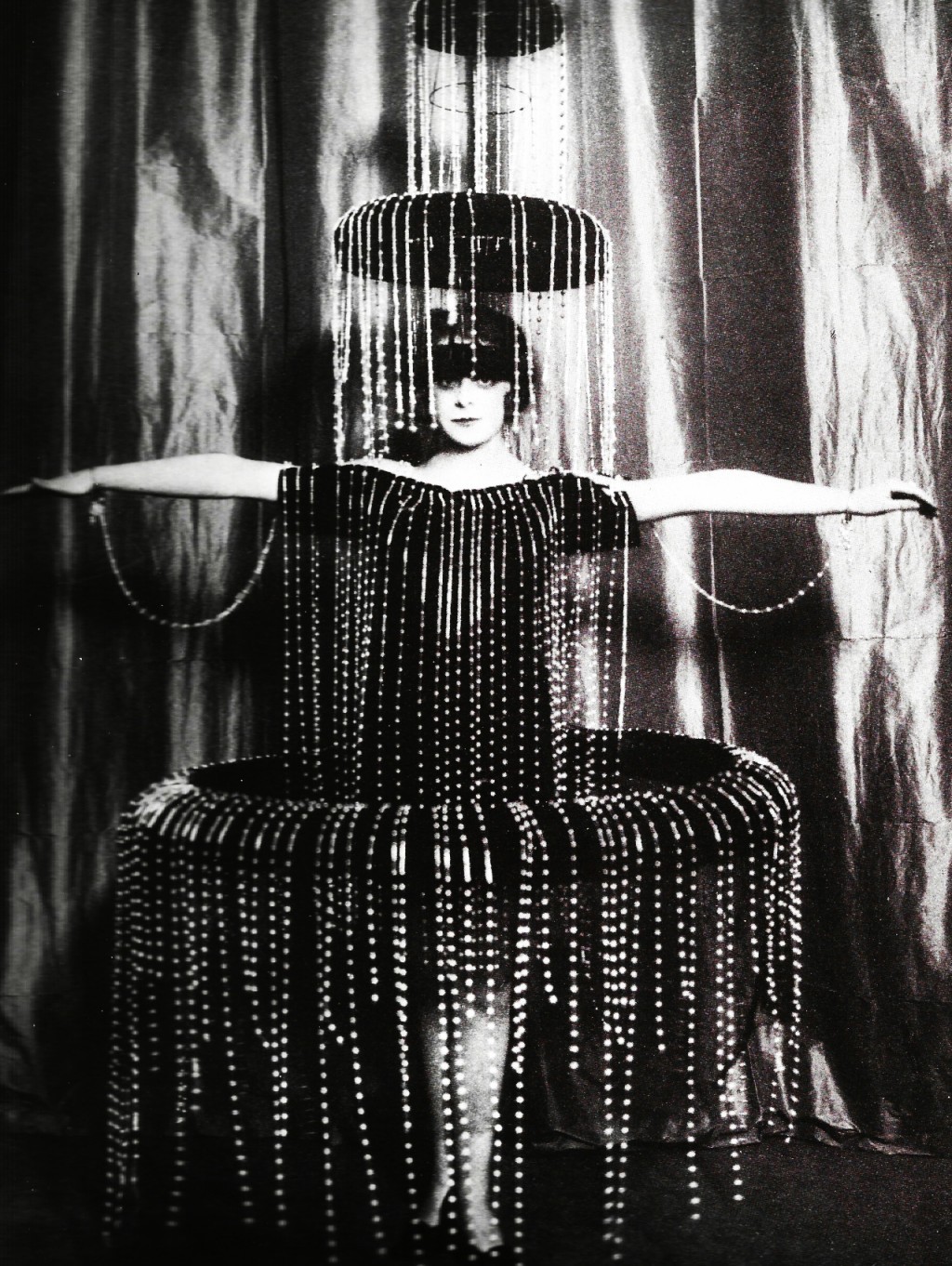
The Beaumont Ball in Paris 1924 (an event with a guest list so selective that Gabrielle Coco Chanel was excluded for being too ‘trade’), was a homage to Pablo Picasso and the Cubists. The dress made entirely from wires and lights, it was too wide for the entrance to Beaumont’s ballroom: the artist Christian Bérard, who witnessed Marchesa Luisa Casati attempting to squeeze through the doorway, reported that she collapsed like a “smashed zeppelin”. (x)
De Beaumont’s fêtes reached an apex in 1924 with the ballet series Soirées de Paris, which took place at the Théâtre de la Cigale in Montmartre from May 17 to June 30, 1924. An homage to the review of the same name by Guillaume Apollinaire, the series included the scandalous ballet Mercure, which featured music composed by Erik Satie, sets and costumes designed by Pablo Picasso, and choreography devised by Léonide Massine. (x)
src lamarchesacasati

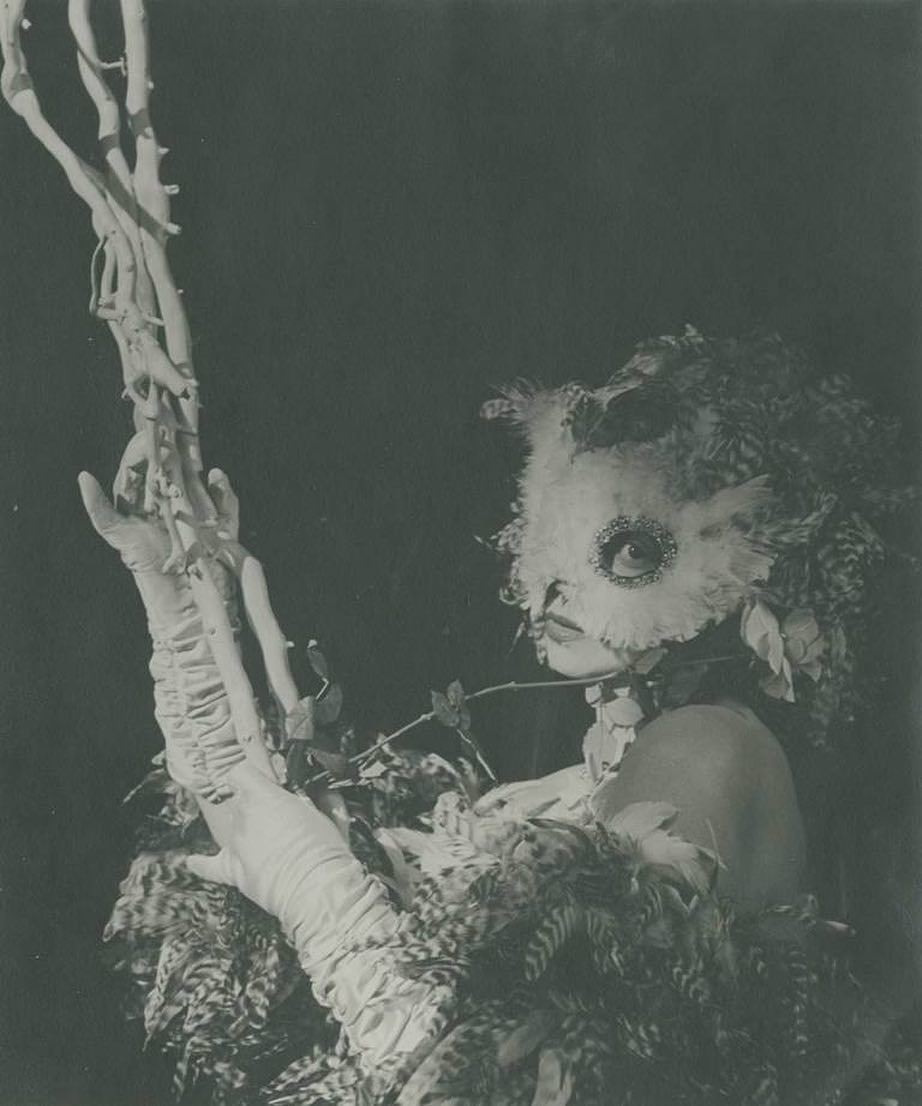
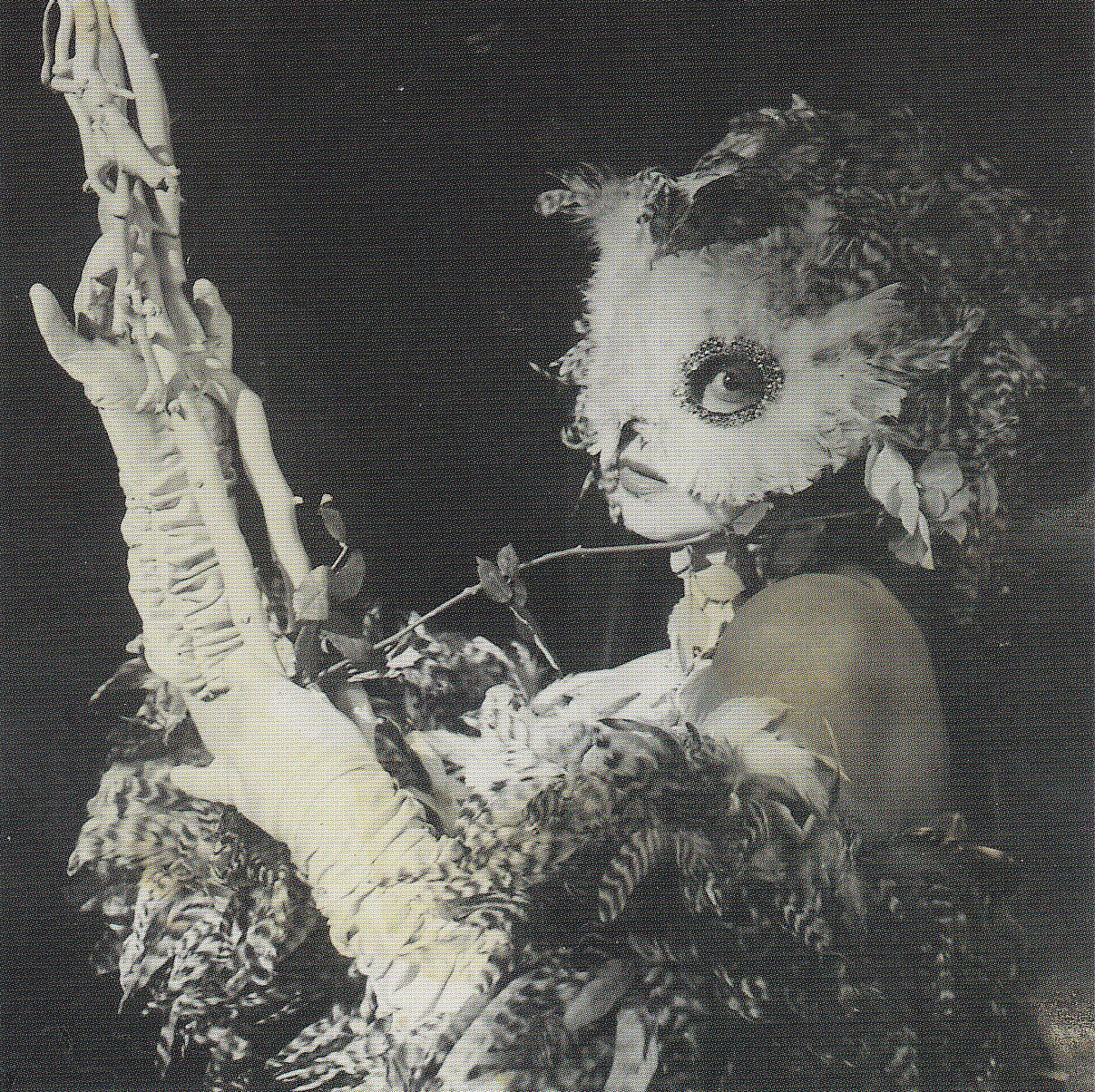
Fini’s owl mask originates with the New Year’s Eve party called the Bal des Oiseaux given at the Palais Rose on the avenue Foch, Paris, by Vicomte Charles Benoist d’Azy at the end of 1948. Webb writes, “she wore an owl mask of white feathers with headdress and gown of black-and-green-striped feathers. A series of dramatic photographs of her in this costume, as well as in the costumes for other balls of 1947 and 1948, were taken by Andre Ostier and widely published in newspapers and magazines, and Pauline Reage used the same mask in the final scene of her erotic novel Histoire d’O (Story of O), which was later illustrated by Leonor.”
Quotation from Peter Webb’s biography: Sphinx – The Life and Art of Leonor Fini
Retrieved from Story of O
 un regard oblique