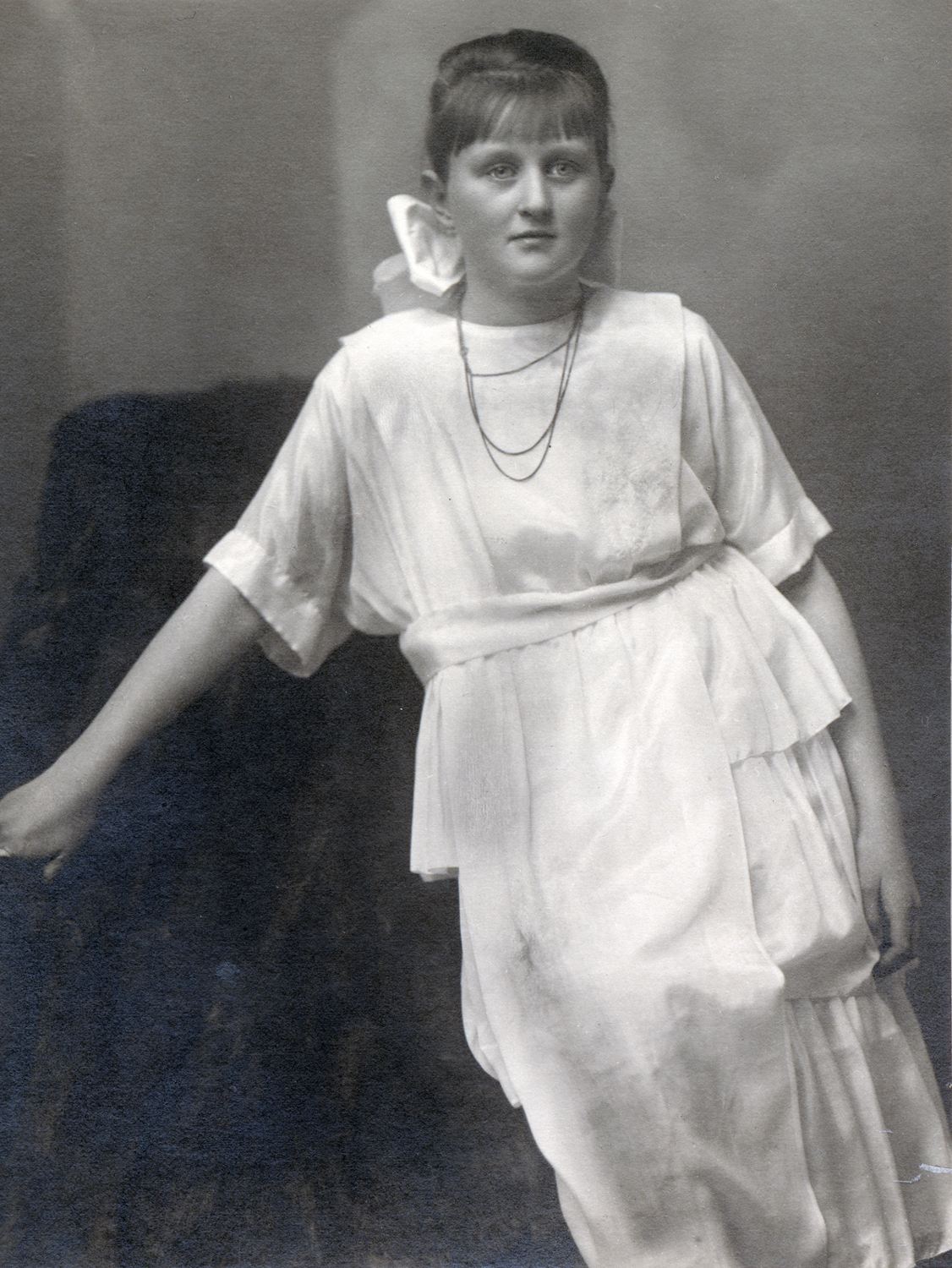
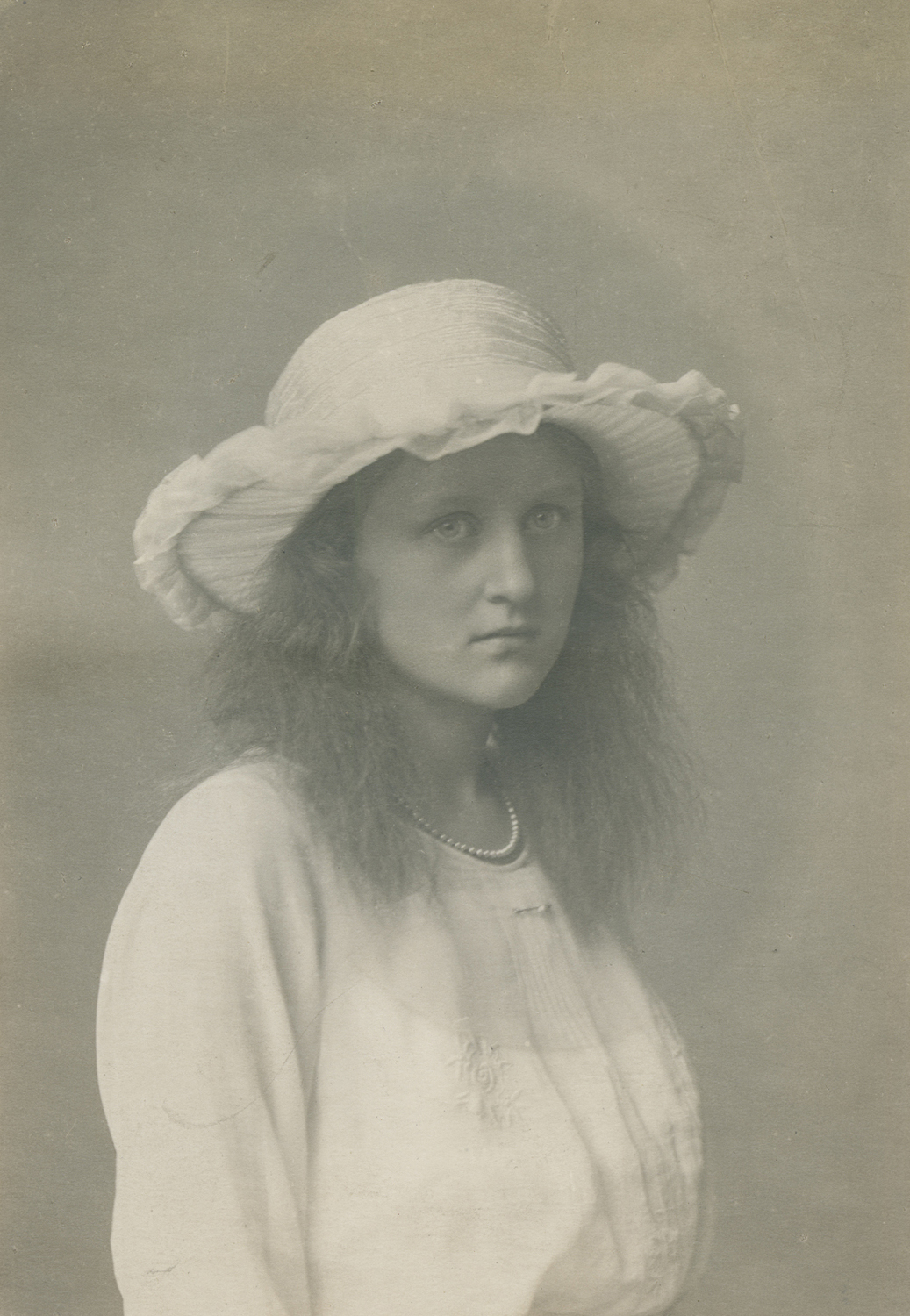
Maud Cronhielm (in 1920s)

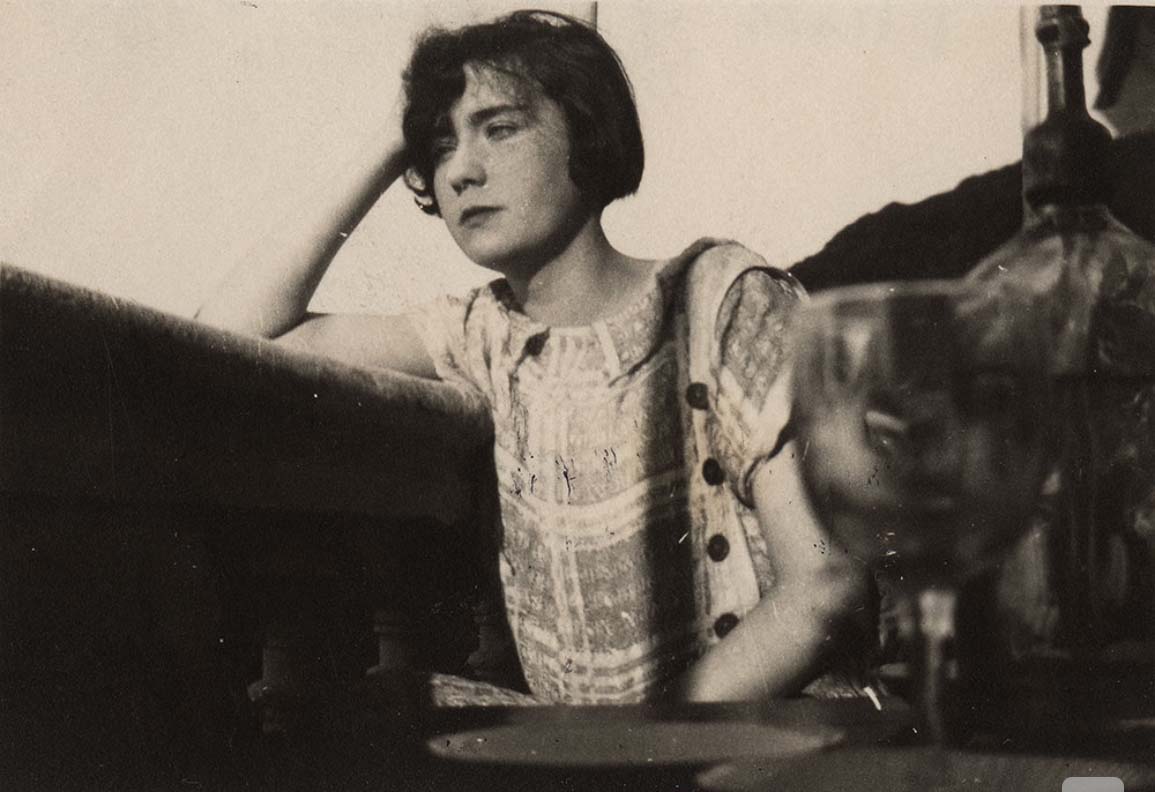
Maria Sundström :: Maud Cronhielm fotograferad inför kostymbal i Karlskrona (Porträtt), 1920s. | src Sörmlands museums samlingar
Hugo Fredrik Cederin :: Maud Cronhielm (Porträtt), 1920s. | src Sörmlands museums samlingar
Hugo Fredrik Cederin :: Maud Cronhielm (Porträtt), 1920s. Visitkort. | src Sörmlands museums samlingar

Lucia Joyce portraits

Lucia Joyce, Ostend, 1924. Courtesy of the Poetry Collection of the University Libraries, University at Buffalo. The Morgan Library & Museum
Lucia Joyce, Zurich, ca. 1917. From: Carol Loeb Schloss : Lucia Joyce : To Dance in the Wake (2003)

“Most accounts of James Joyce’s family portray Lucia Joyce as the mad daughter of a man of genius, a difficult burden. But in this important new book, Carol Loeb Shloss reveals a different, more dramatic truth: Lucia’s father not only loved her but shared with her a deep creative bond. His daughter, Joyce wrote, had a mind “as clear and as unsparing as the lightning.”” “Born at a pauper’s hospital in Trieste in 1907, educated haphazardly in Italy, Switzerland, and Paris as her penniless father pursued his art, Lucia was determined to strike out on her own. She chose dance as her medium, pursuing her studies in an art form very different from the literary ones celebrated in the Joyce circle and emerging, to Joyce’s amazement, as a harbinger of modern expressive dance in Paris. He described her then as a wild, beautiful, “fantastic being” who spoke to “a curious abbreviated language of her own” that he instinctively understood – for in fact it was his as well. The family’s only reader of Joyce’s work, Lucia was a child of the imaginative realms her father created. Even after emotional turmoil wreaked havoc with her and she was hospitalized in the 1930s, Joyce saw in her a life lived in tandem with his own.” “Though most of the documents about Lucia have been destroyed, Shloss has painstakingly reconstructed the poignant complexities of her life – and with them a vital episode in the early history of psychiatry, for in Joyce’s efforts to help his daughter he sought out Europe’s most advanced doctors, including Jung. Lucia emerges in Shloss’s account as a gifted, if thwarted, artist in her own right, a child who became her father’s tragic muse.”–Jacket, quoted from internet archive
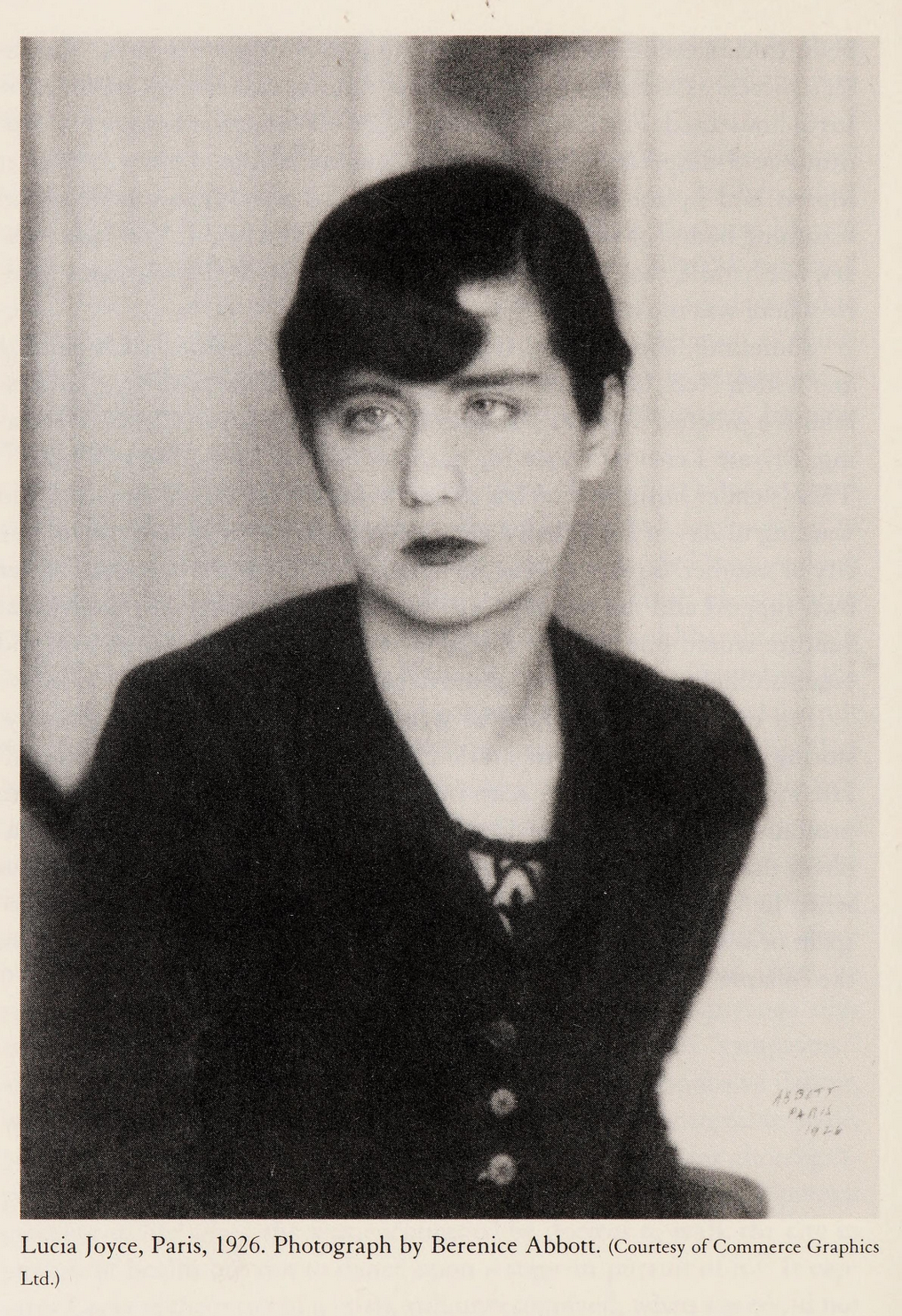
Bérénice Abbott :: Lucia Joyce, Paris, 1926. From: Carol Loeb Schloss : Lucia Joyce : To Dance in the Wake (2003)

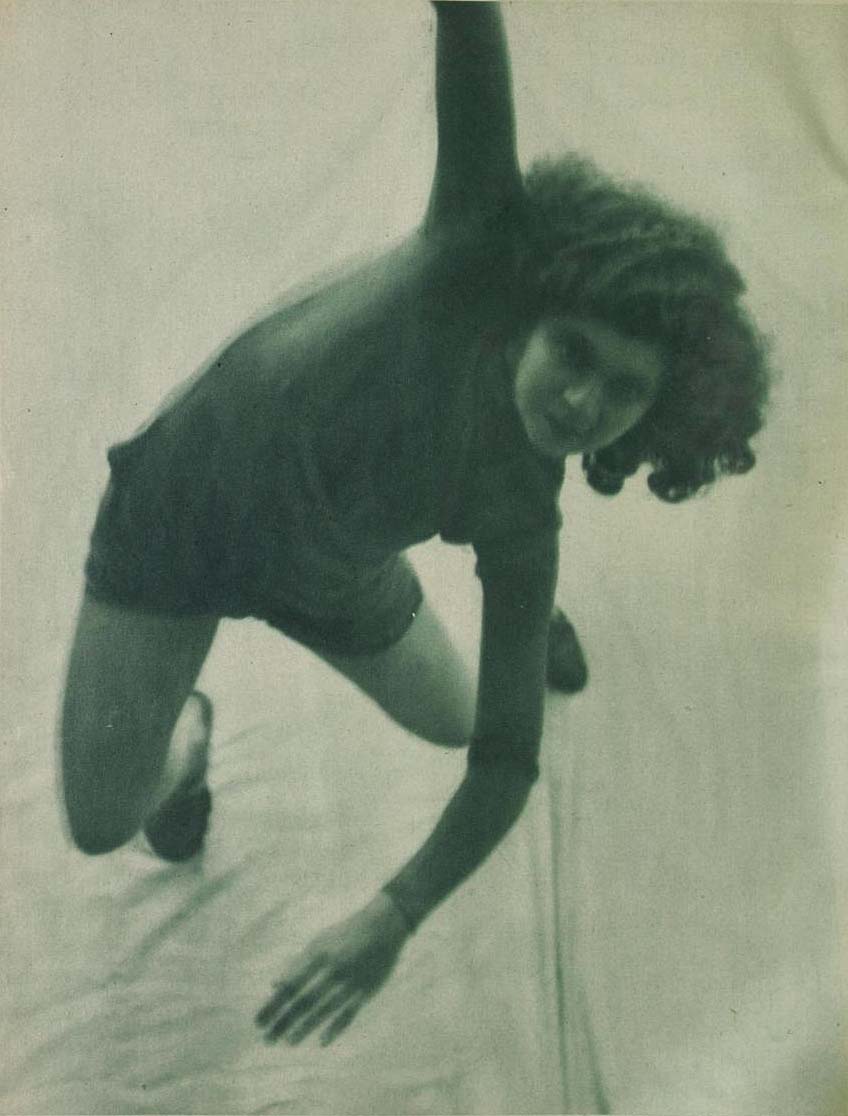
Helen Tamiris by Cami Stone

Cami Stone :: From the grid perspective. The American dancer Helen Tamiris. Scherl's Magazin, Band 6, Heft 2, February 1930
Cami Stone :: Aus der Schnürboden-Perspektive. Die amerikanische Tänzerin Tamiris. Scherl’s Magazin, Band 6, Heft 2, Februar 1930
Cami Stone :: From the grid perspective. The American dancer Helen Tamiris. Scherl's Magazin, Band 6, Heft 2, February 1930
Cami Stone :: From the grid perspective. The American dancer Helen Tamiris. Scherl’s Magazin, Band 6, Heft 2, February 1930

Leni Riefensthal by Lotte Jacobi

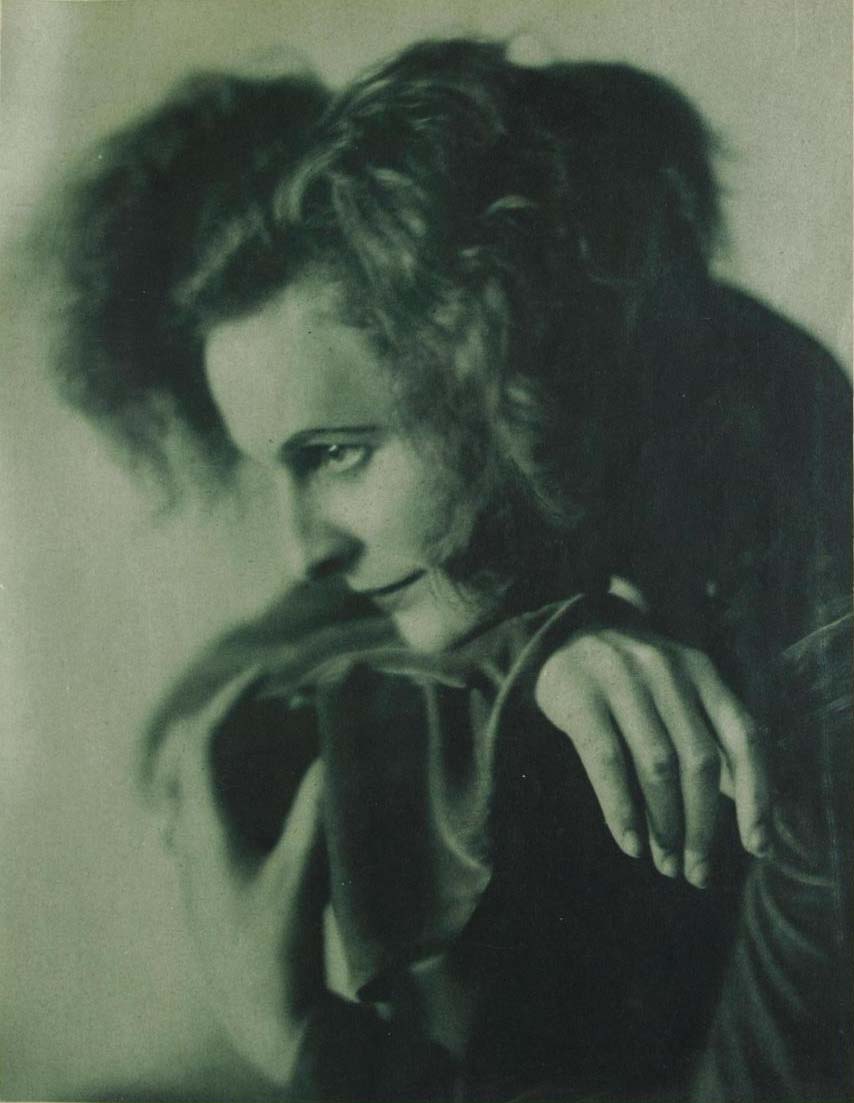
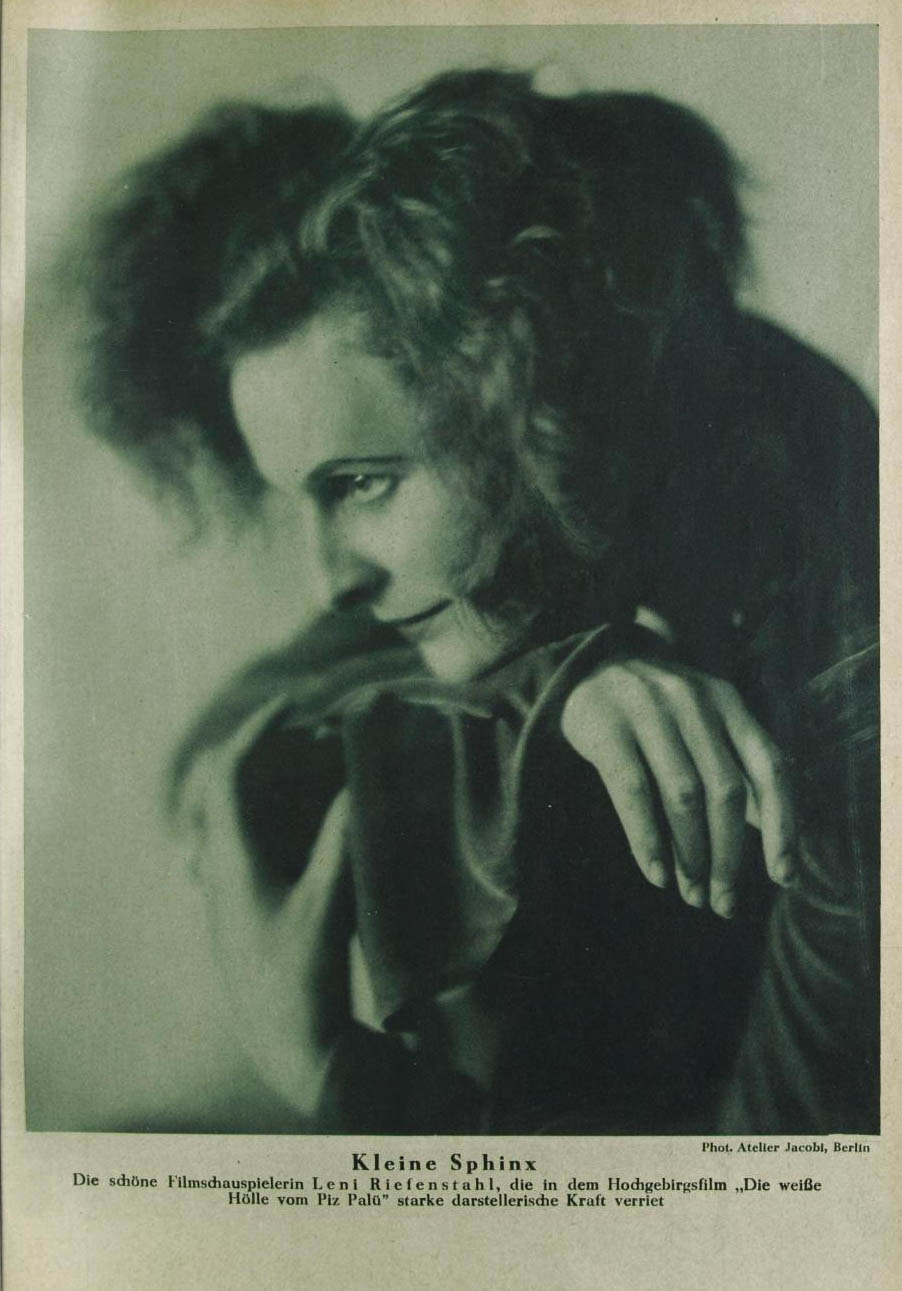
Atelier Jacobi :: Kleine Sphinx. Leni Riefensthal showed strong dramatic qualities in The White Hell of Pitz Palu (1929). Scherl's Magazin, Band 6, Heft 2, Februar 1930
Atelier Jacobi :: Kleine Sphinx. Leni Riefensthal showed strong dramatic qualities in The White Hell of Pitz Palu (1929). Scherl’s Magazin, Band 6, Heft 2, Februar 1930
Kleine Sphinx. Die schöne Filmschauspielerin Leni Riefenstahl, die in dem Hochigebirgsfilm „Die weiße Hölle vom Piz Palü” starke darstellerische Kraft verriet. Phot. Atelier Jacobi, Berlin. Scherl's Magazin, Band 6, Heft 2, Februar 1930
Kleine Sphinx. Die schöne Filmschauspielerin Leni Riefenstahl, die in dem Hochigebirgsfilm „Die weiße Hölle vom Piz Palü” starke darstellerische Kraft verriet. Phot. Atelier Jacobi, Berlin. Scherl’s Magazin, Band 6, Heft 2, Februar 1930

Sisters G by Spurr, 1931

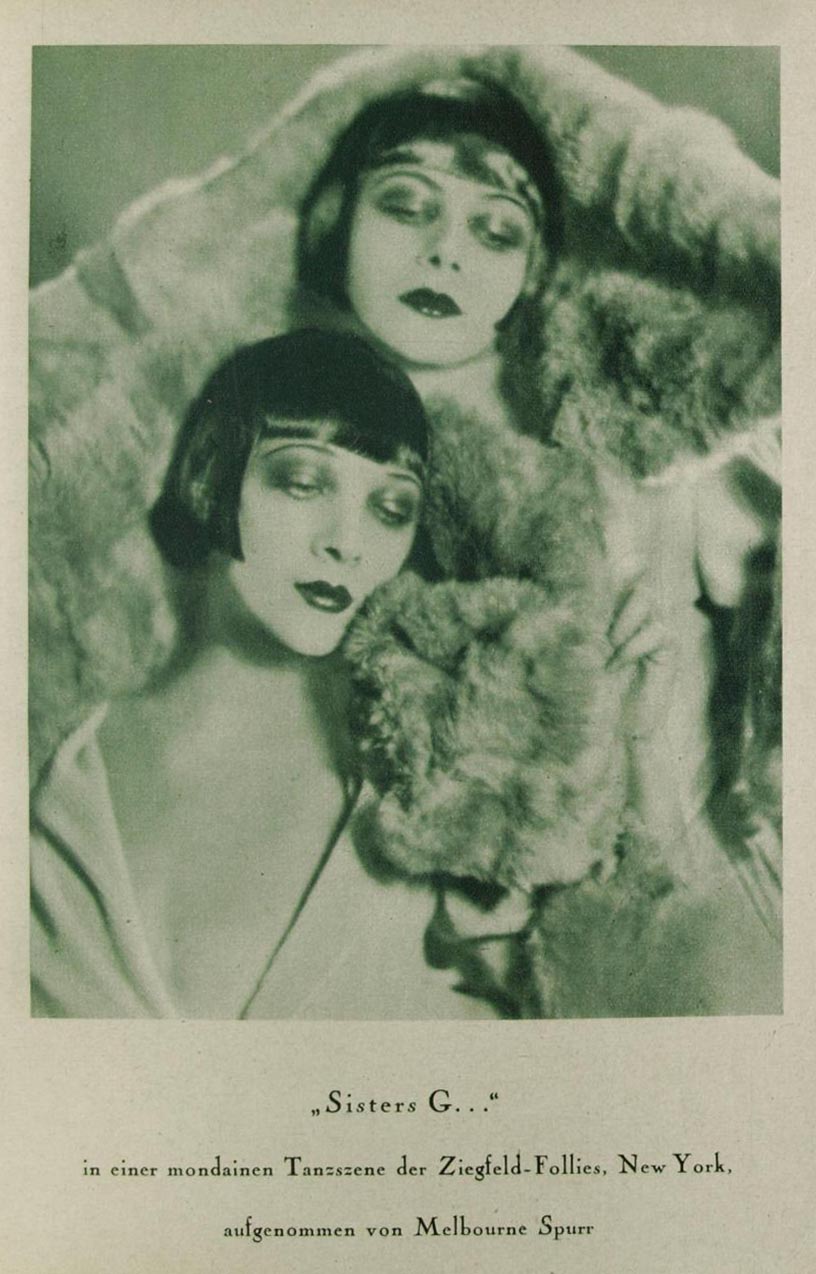
Melbourne Spurr :: Klara and Eleanor Gutchrlein. Single frame. Illustration. Das Magazin Band 7, H 79, March 1931
Melbourne Spurr :: Klara and Eleanor Gutchrlein. Einzelbild. Abbildung. Das Magazin  Band 7, H 79, März 1931
Melbourne Spurr :: Klara und Eleanor Gutchrlein. Einzelbild. Abbildung. Das Magazin Band 7, H 79, März 1931 (Detail)
Melbourne Spurr :: Klara and Eleanor Gutchrlein. Einzelbild. Abbildung. Das Magazin  Band 7, H 79, März 1931
Melbourne Spurr :: Klara and Eleanor Gutchrlein. Single frame. Illustration. Das Magazin Band 7, H 79, March 1931

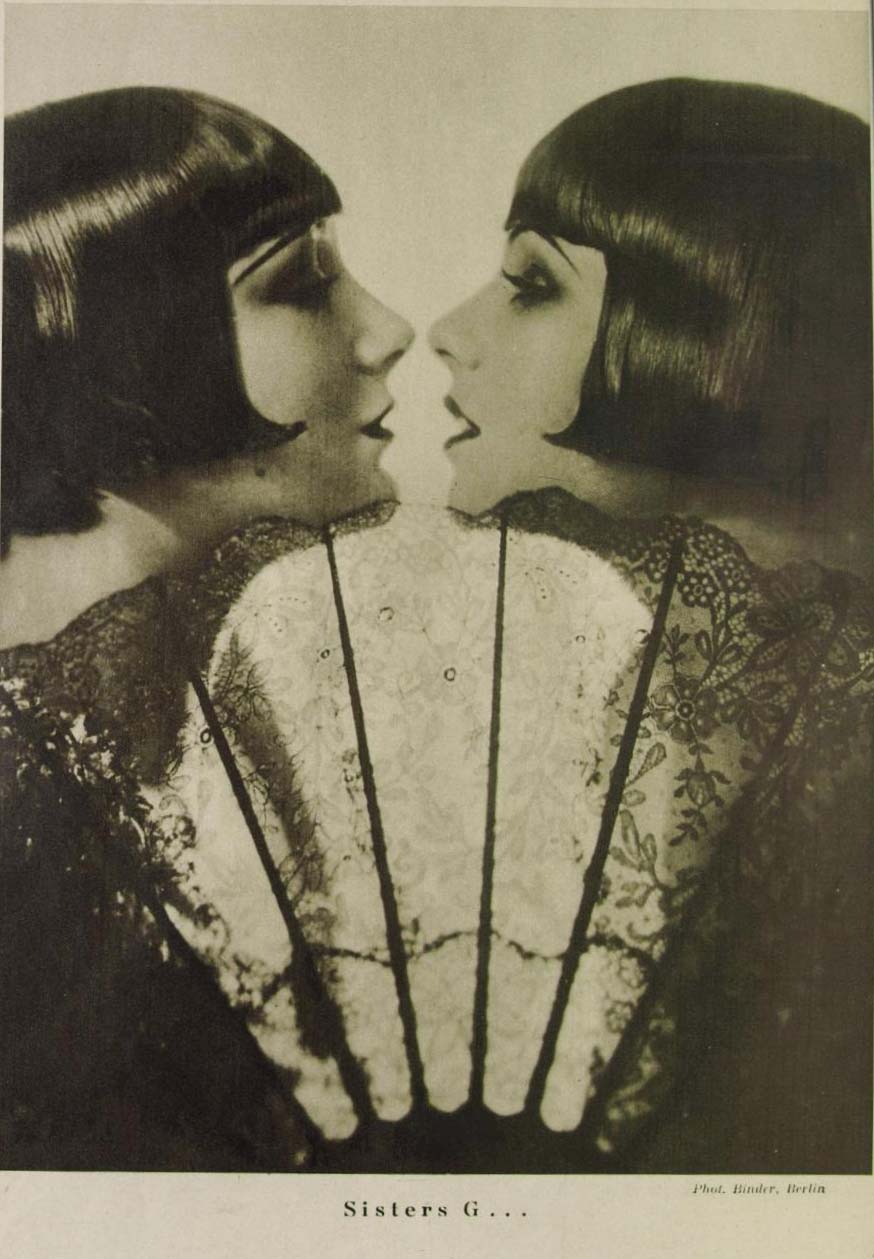
Sisters G by Binder, 1929

Alexander Binder :: Sisters G. Scherl’s Magazin, Band 5, H.7, Juli 1929
Alexander Binder :: Sisters G. Scherl’s Magazin, Band 5, H.7, Juli 1929 [Detail]

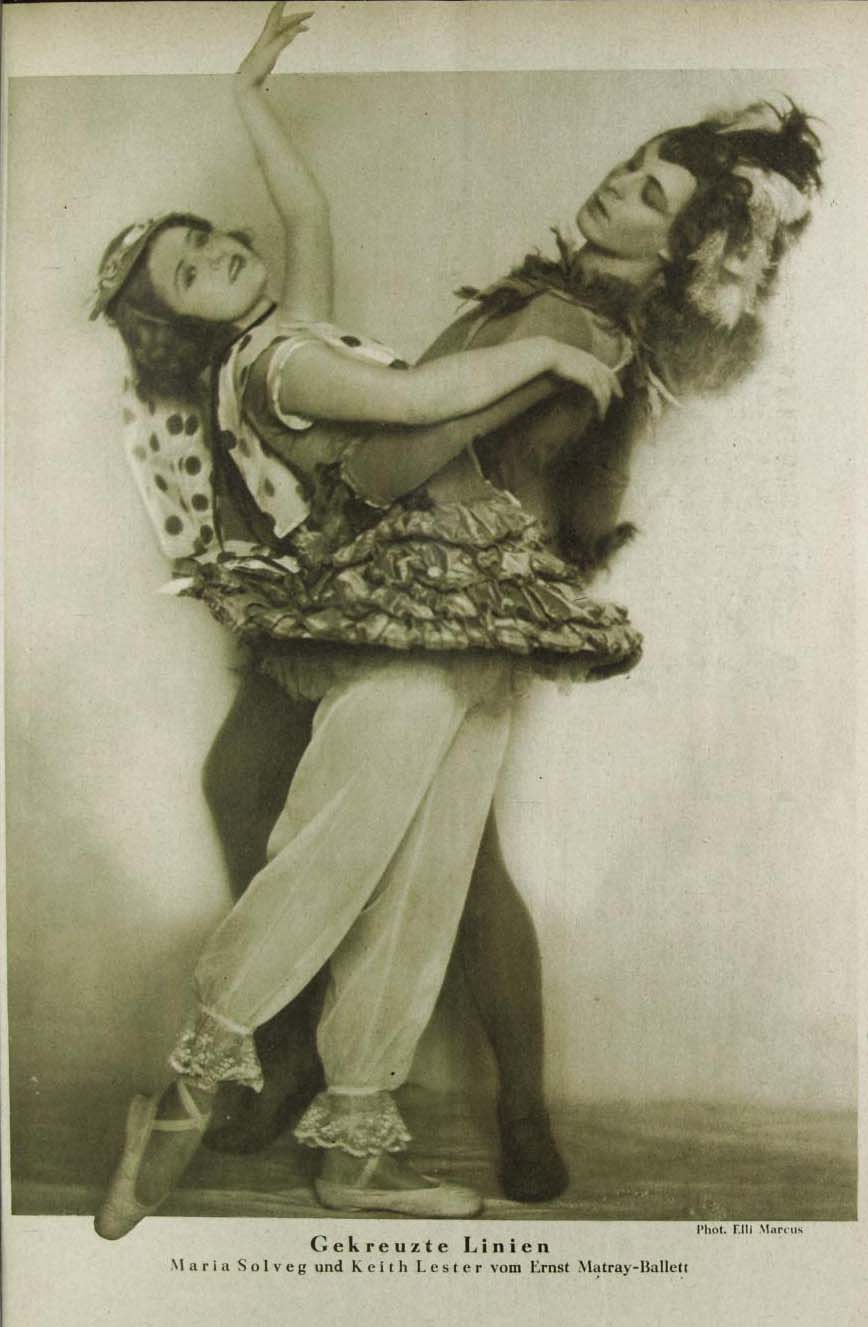
Crossed Lines. Matray Ballet

Elli Marcus :: Gekreuzte Linien. Maria Solveg und Keith Lester vom Ernst Matray Ballett. Scherl's Magazin Band 6, Heft 2, Februar 1930
Elli Marcus :: Gekreuzte Linien. Maria Solveg und Keith Lester vom Ernst Matray Ballett. Scherl’s Magazin Band 6, Heft 2, Februar 1930

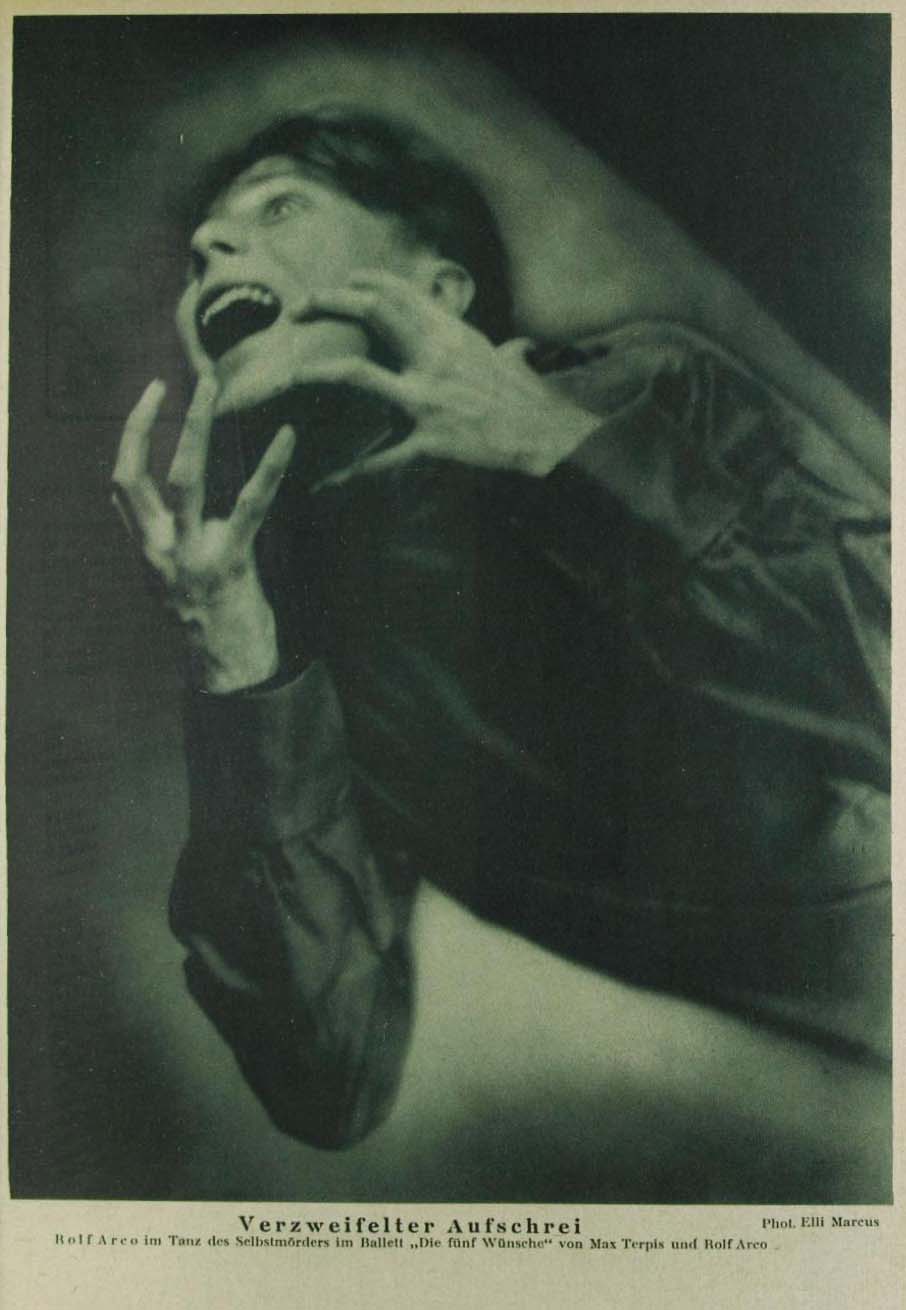
Rolf Arco · Dance of Suicide

cry, suicide, desperation, dancer, dance, Tanz
Desperate cry. Rolf Areo in the Dance of the Suicide from the ballet "The Five Wishes" by Max Terpis and Rolf Areo. Stage design. Photographer: Elli Marcus.
Published in Scherl's magazine in November 1929
Elli Marcus :: Verzweifelter Aufschrei. Rolf Arco im Tanz des Selbstmörders im Ballett “Die fünf Wünsche” von Max Terpis und Rolf Areo. Bühnenbild. Scherl’s Magazin, B. 5, H.11, November 1929

Desperate cry. Rolf Arco in the Dance of the Suicide from the ballet “The Five Wishes” by Max Terpis and Rolf Arco. Stage design. Photographer: Elli Marcus.

Published in Scherl’s magazine in November 1929