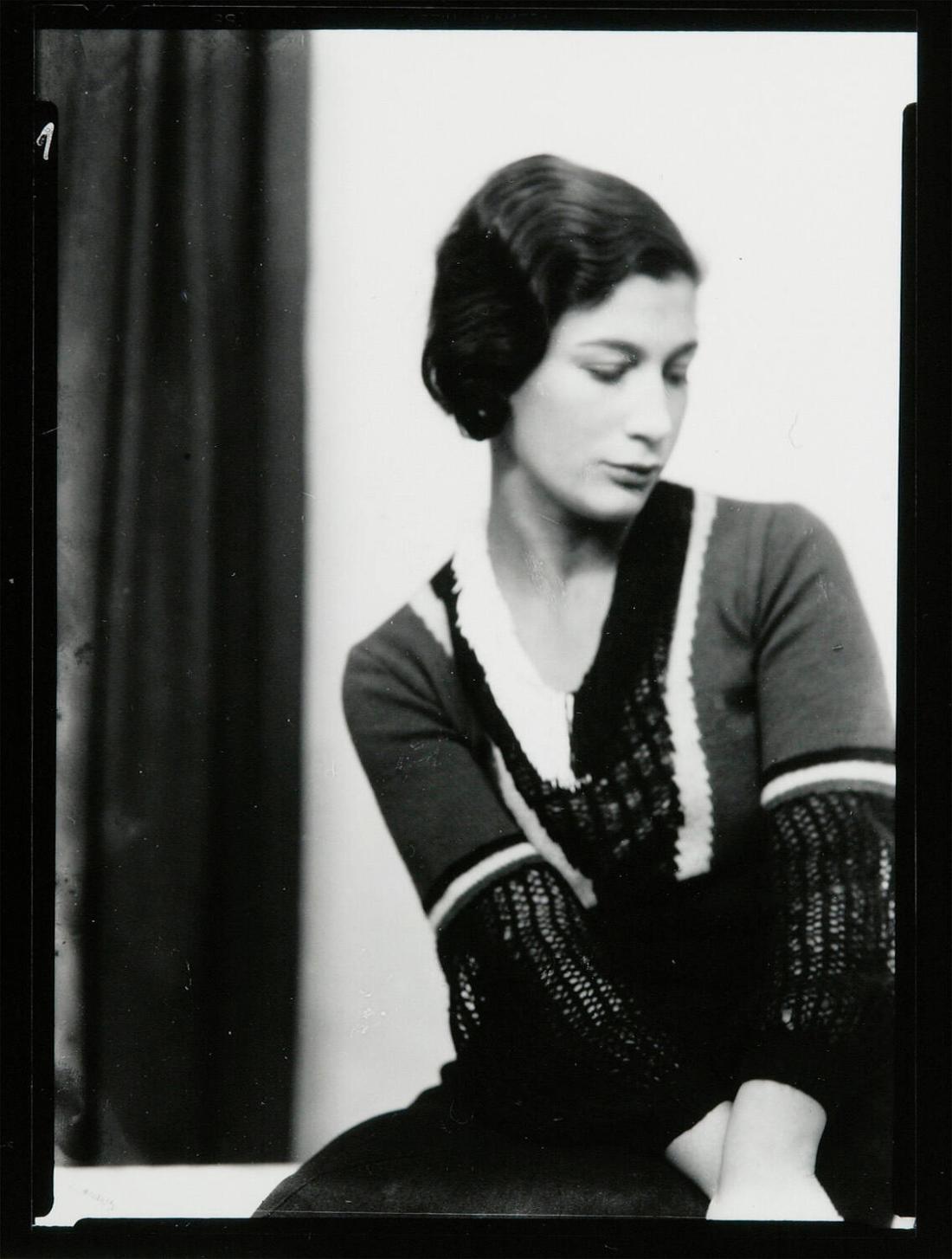
![Anna Riwkin [självporträtt], 1928. Gelatinsilverfotografi. | src Moderna Museet](https://live.staticflickr.com/65535/52604055786_8407e39775_o.jpg)
images that haunt us


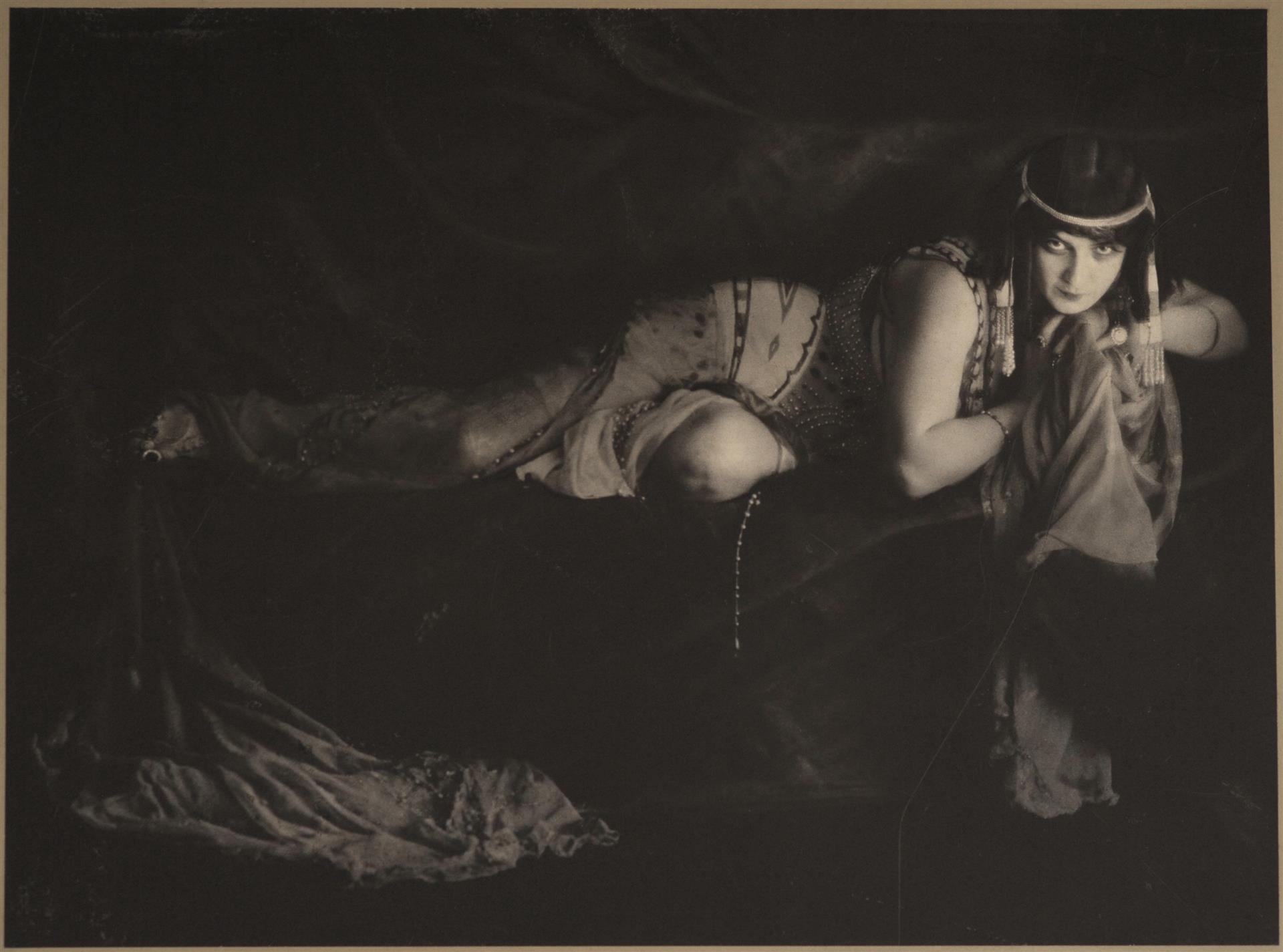
Paris, 1909. Serge Diaghilev engage Ida Rubinstein dans les Ballets russes pour le rôle-titre de Cléopâtre, à l’opéra
Garnier. Cette interprétation est remarquée, ainsi que le nez de la diva.
Les costumes sont signés Léon Bakst et le final inspire le Souvenir de la saison d’Opéra Russe 1909 du peintre Kees van Dongen. Nijinski danse sa première saison des Ballets russes, dans le rôle d’un esclave peu vêtu, éblouissant le public parisien.
From : Otto Portraits : Daguerre & Drouot
Paris, 1909. Serge Diaghilev engages Ida Rubinstein in the Ballets Russes for the title role of Cleopatra, at the opera
Garnier. This interpretation is noticed, as well as the nose of the diva.
The costumes are by Léon Bakst and the finale inspires the Souvenir de la saison d’Opéra Russe 1909 by the painter Kees van Dongen. Nijinsky danced his first season of the Ballets Russes, in the role of a scantily dressed slave, dazzling the Parisian audiences.

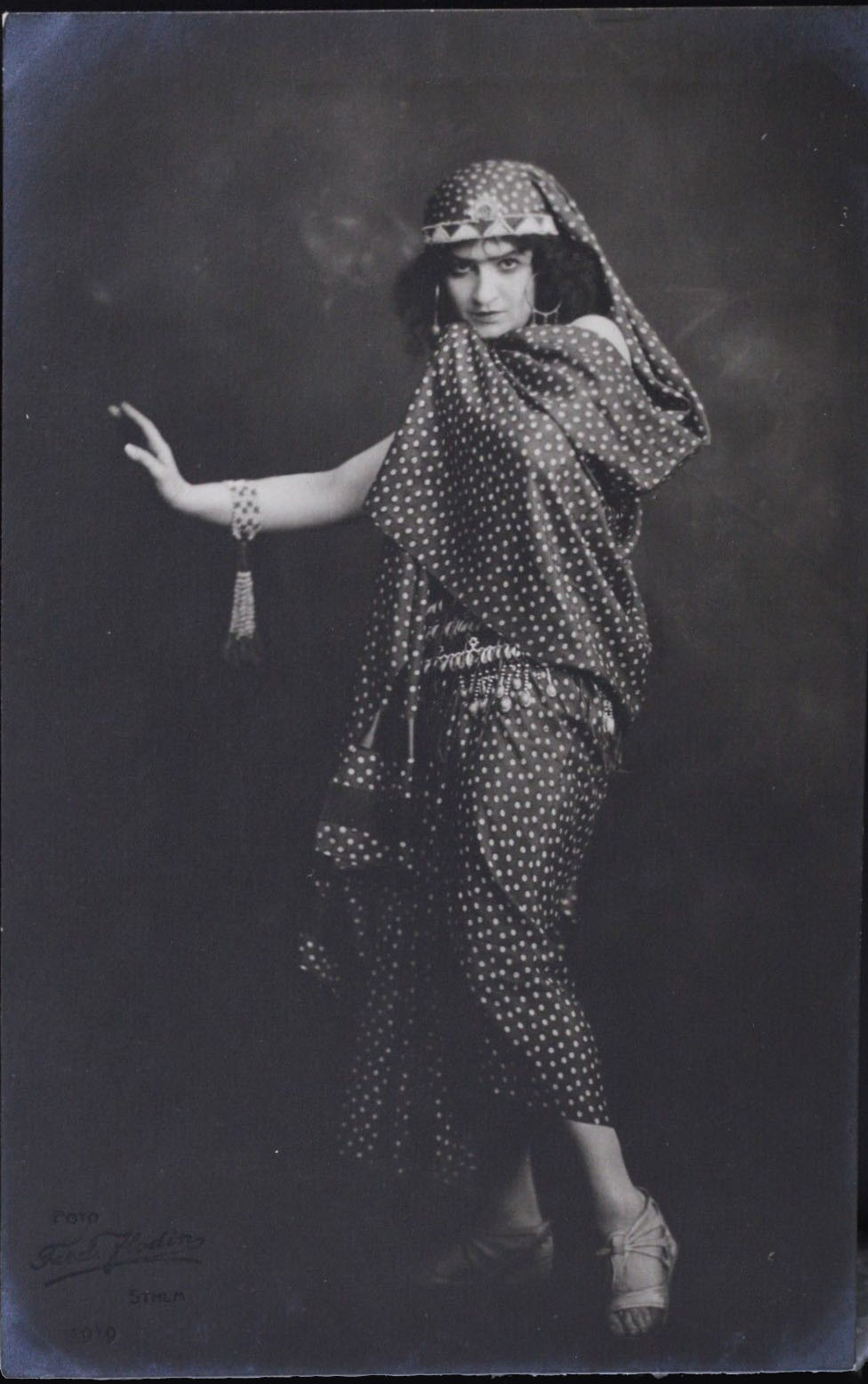
Portrait dynamique : Ida Rubinstein dans un costume pour Cléopâtre, ballet en un acte, argument d’après Pouchkine.

Remarquables décors et costumes de Léon Bakst, pour la première au théâtre du Châtelet.

“Le 13 juin 1913 est créée au théâtre du Châtelet à Paris une œuvre rutilante et hybride : la Pisanelle ou la Mort parfumée, texte français du dramaturge italien Gabriele d’Annunzio. La participation russe est prépondérante : Lev Bakst pour le décor, Ida Rubinstein dans le rôle principal, Vsevolod Meyerhold pour la mise en scène.
La richissime actrice est la commanditaire du spectacle dont la chaude volupté répond à ses vœux. Dans cette œuvre, D’Annunzio a voulu faire se mesurer latinité et orientalisme.
Les circonstances qui ont procédé à la création de la pièce dans l’atmosphère survoltée d’une vie artistique dominée par les Ballets russes…”
Gérard Abensour, Monde Russe, 2007. From : Otto Portraits : Daguerre & Drouot
“On June 13, 1913, a gleaming and hybrid work was created at the Théâtre du Châtelet in Paris: La Pisanelle ou la Mort parfumée, a French text by the Italian playwright Gabriele d’Annunzio. The Russian participation is preponderant: Lev Bakst for the decor, Ida Rubinstein in the main role, Vsevolod Meyerhold for the staging.
The wealthy actress is the sponsor of the show marked by her fervent voluptuousness. In his work, D’Annunzio wanted to present Latinism and Orientalism into balance.
The circumstances that led to the creation of the piece in the charged atmosphere of an artistic life dominated by the Ballets Russes…”
Gérard Abensour, Monde Russe, 2007.
All the the photographs and texts in this post had been retrieved from the catalogue of this auction :
Otto Portraits. Un fonds d’atelier photographique est retrouvé intact après cent ans d’oubli. Le studio du portraitiste Otto, place de la Madeleine, accueillait le Tout-Paris de la Belle Époque. Otto et ses fils y menaient grand train.
Vente aux enchères ‘Photographies par Otto Wegener (1849-1924)’ à Hôtel de vente Drouot le 8 novembre 2018 – Daguerre & Drouot



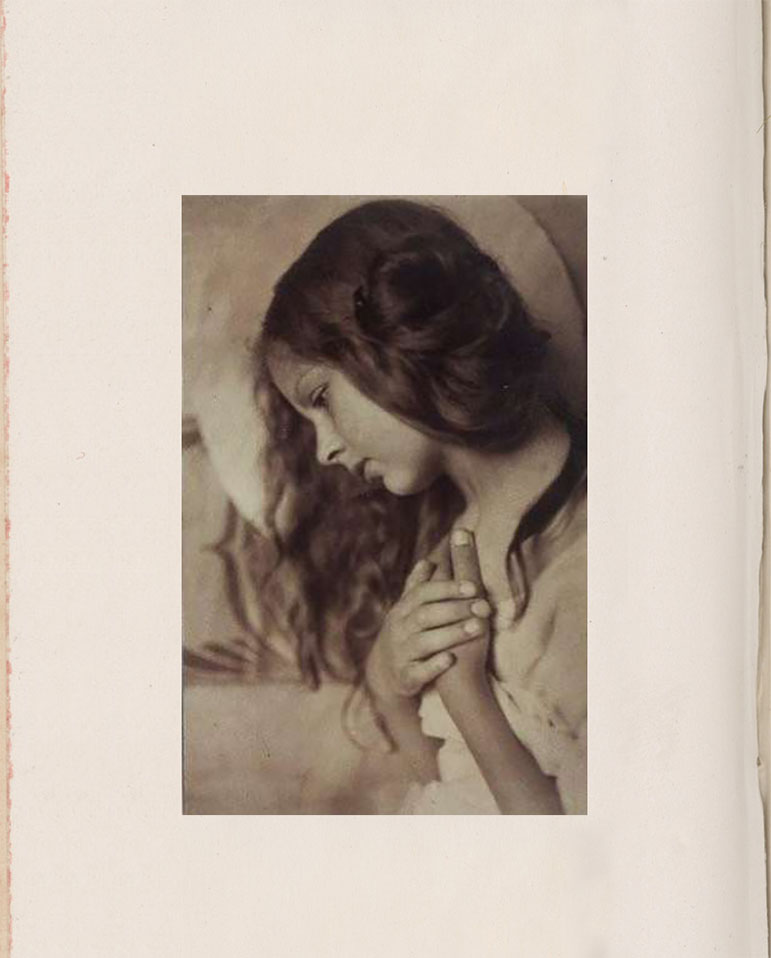
![camera_work1905_12_0087 [F. [Felix] Benedict Herzog, pl. II. Angela, photogravure](https://live.staticflickr.com/65535/52789073200_19514a3e09_o.jpg)

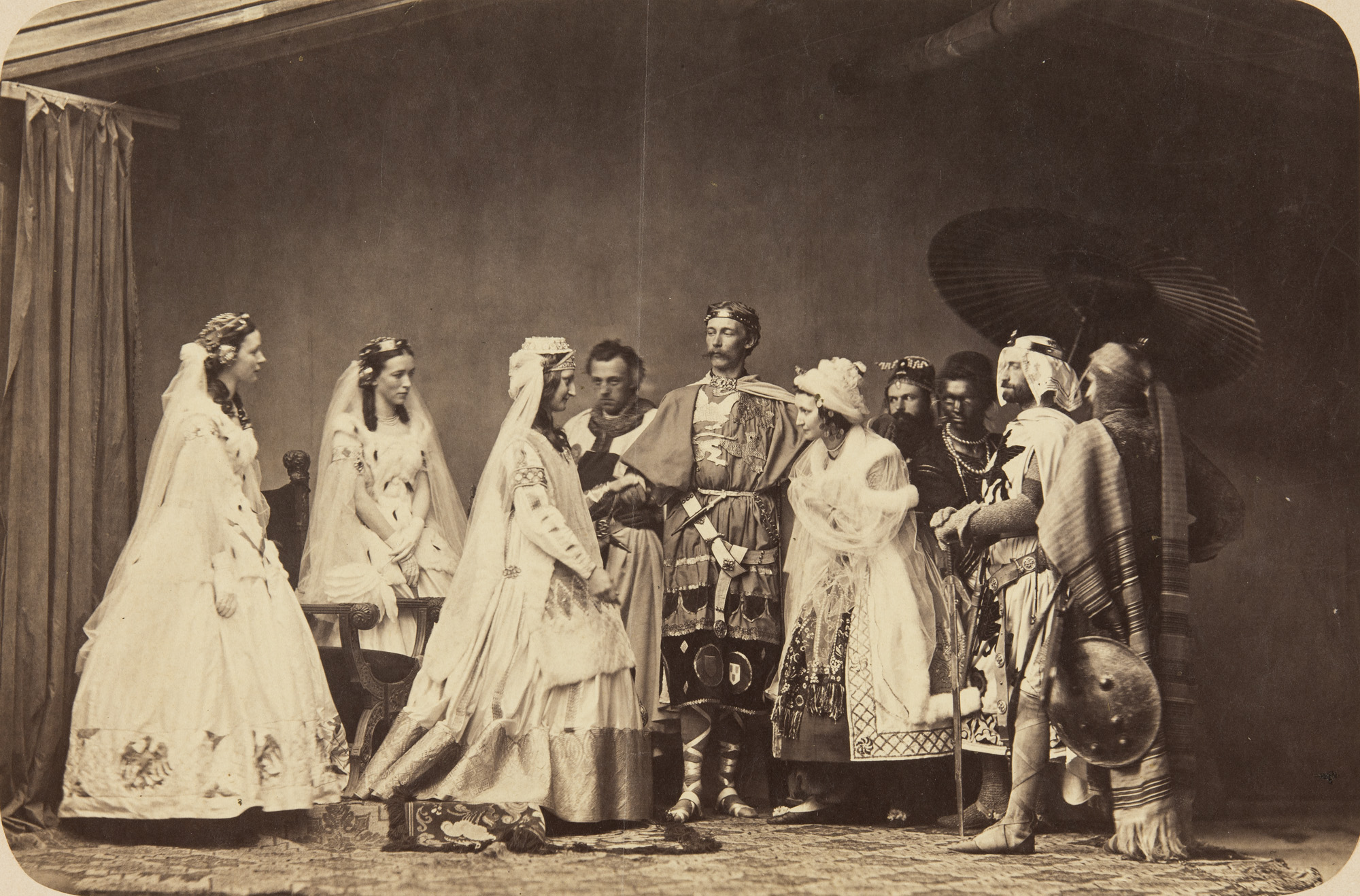

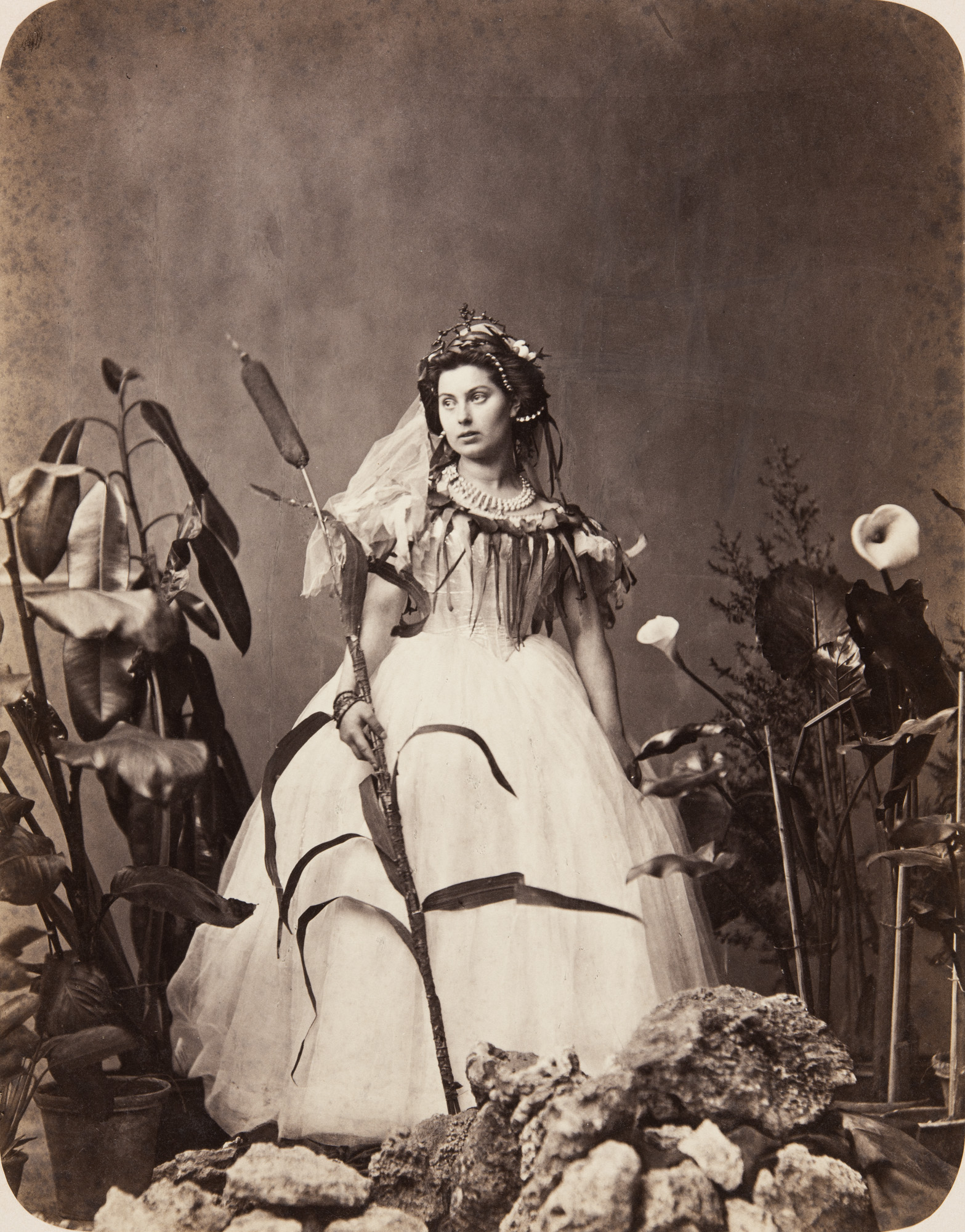
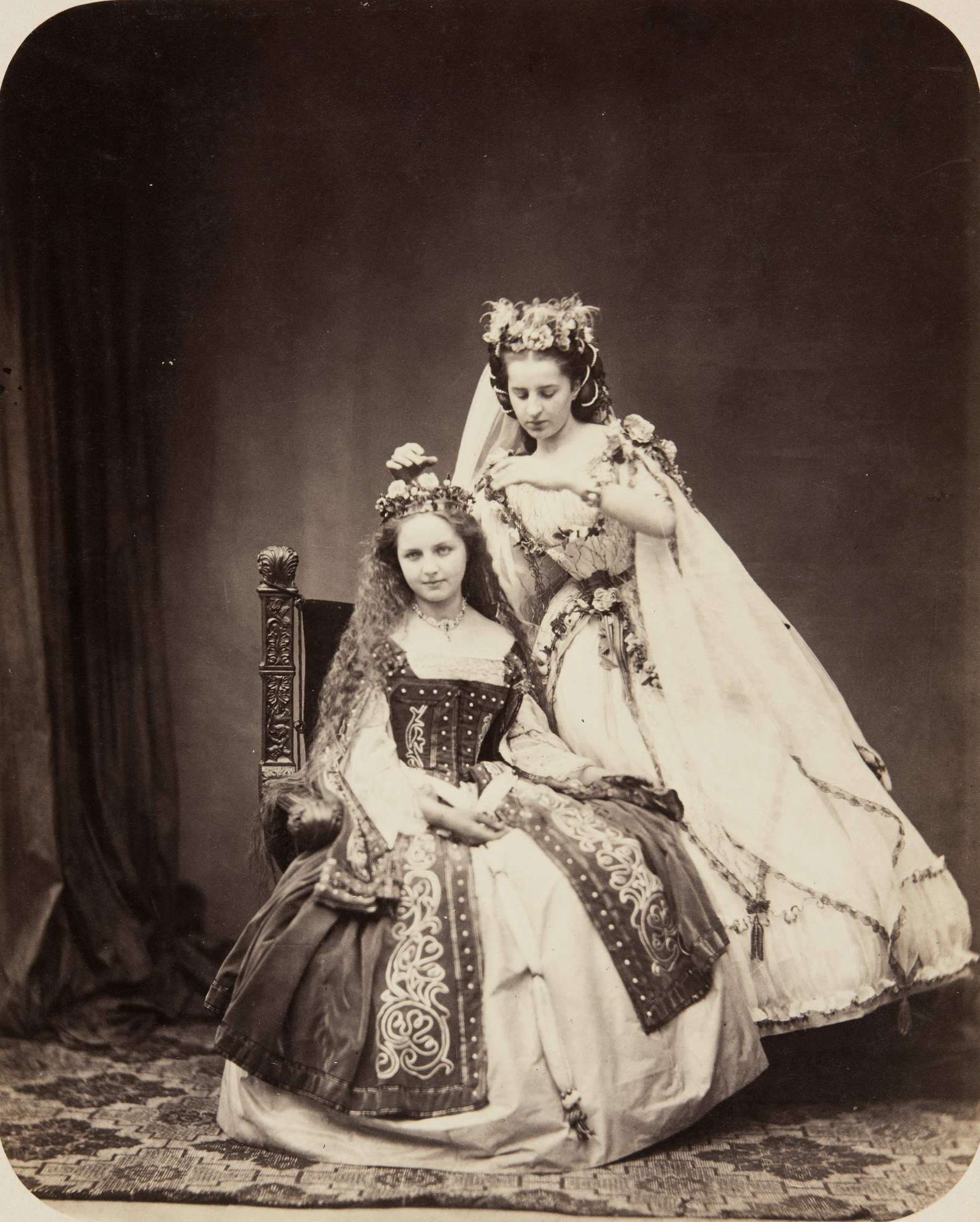
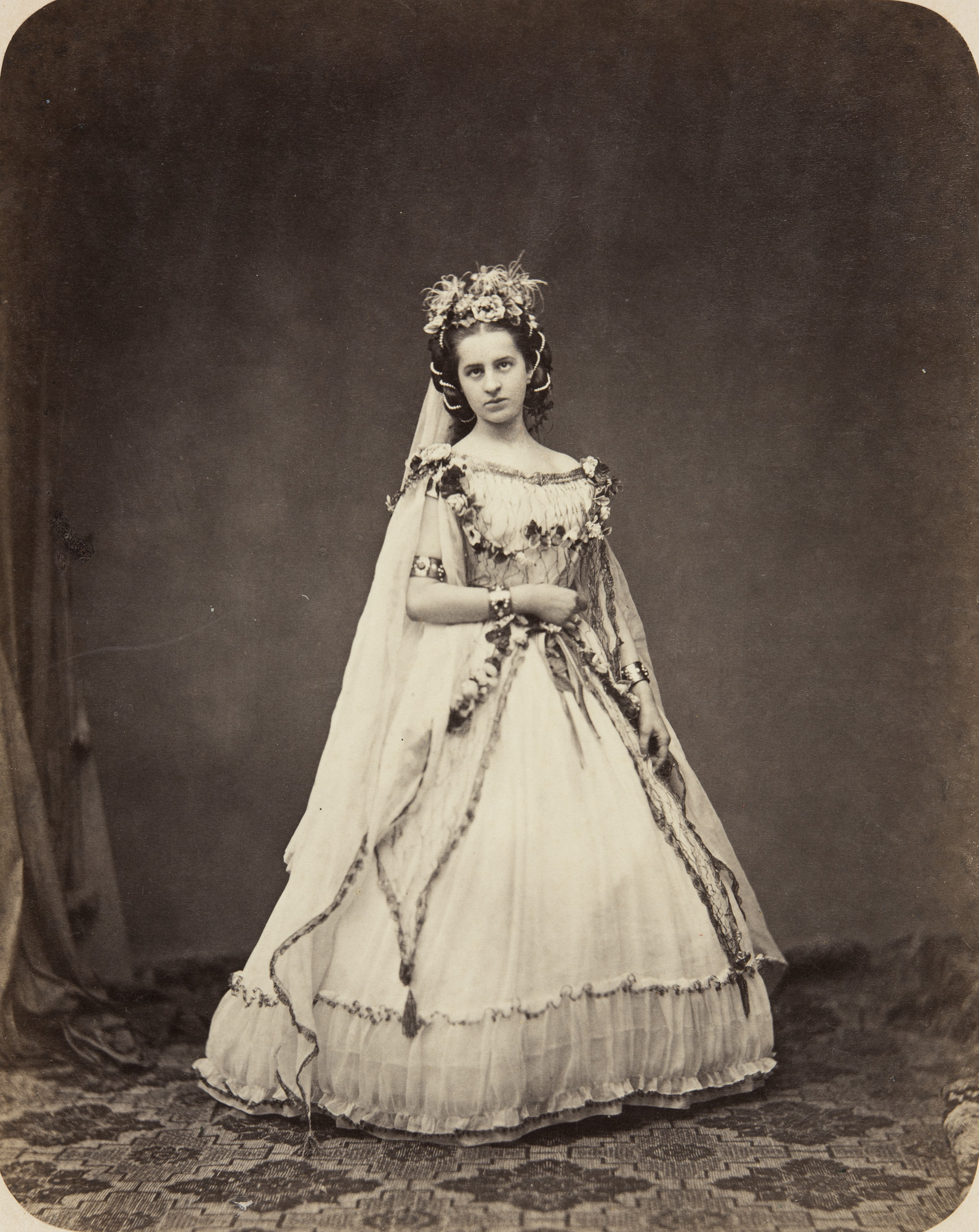
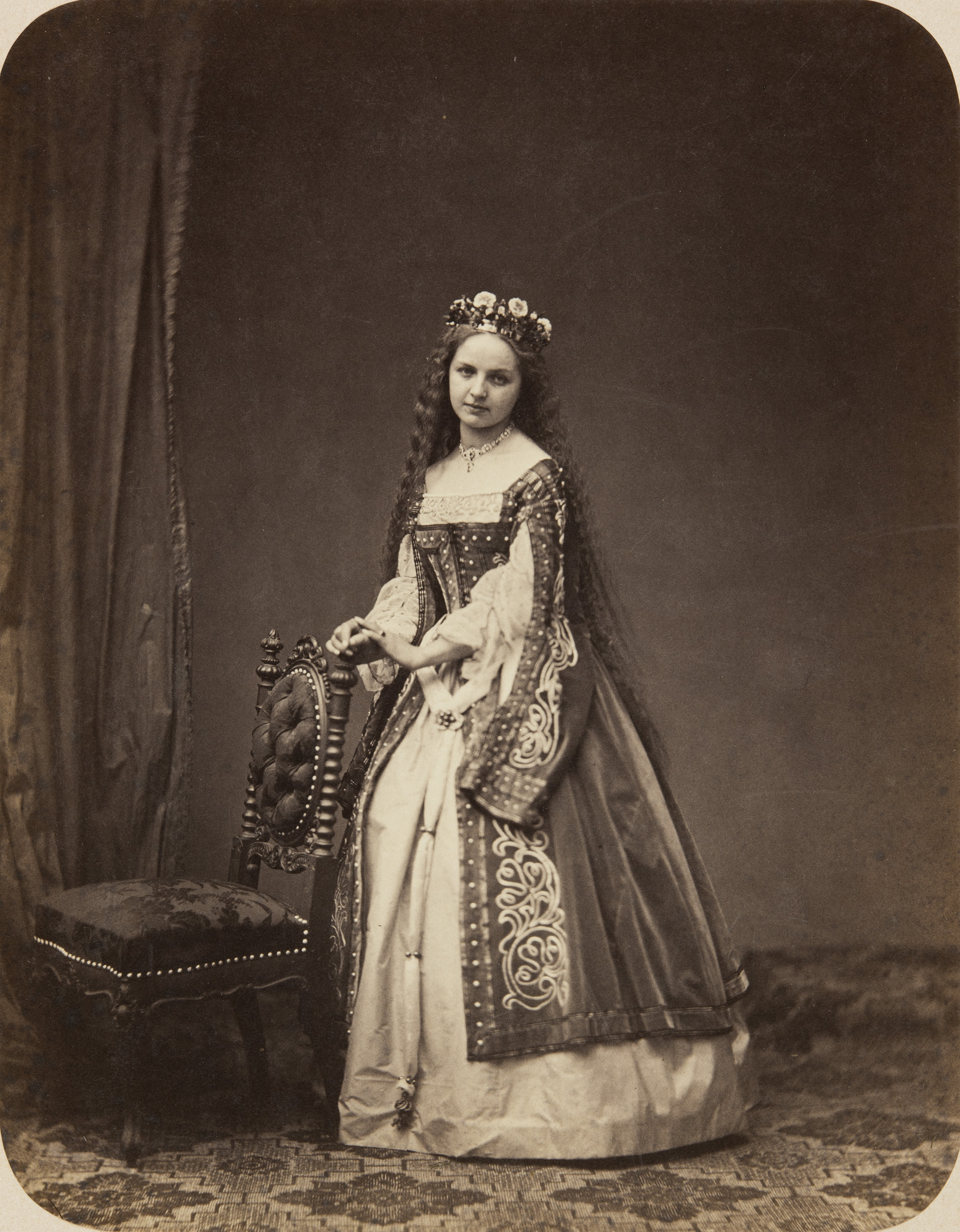
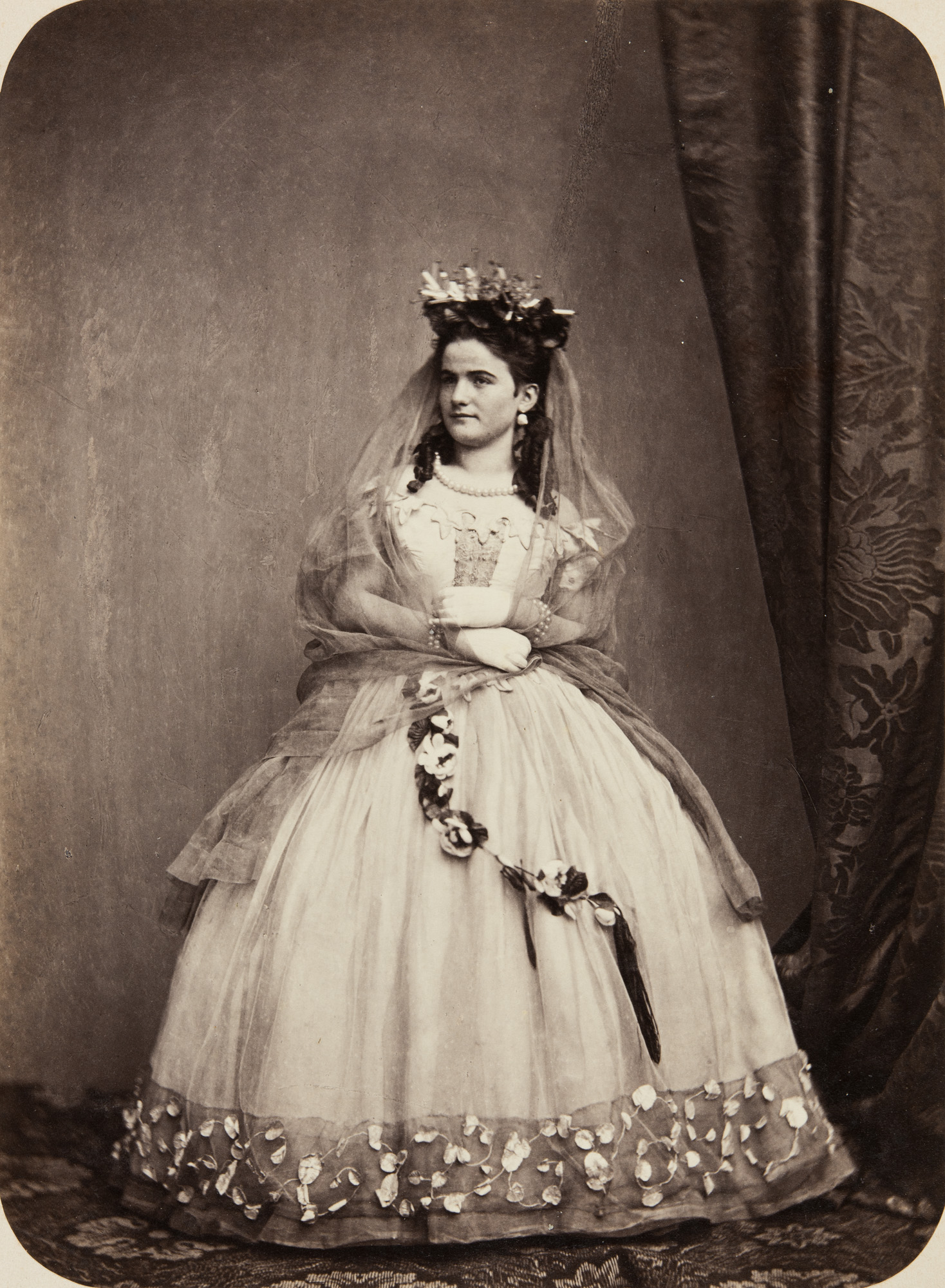
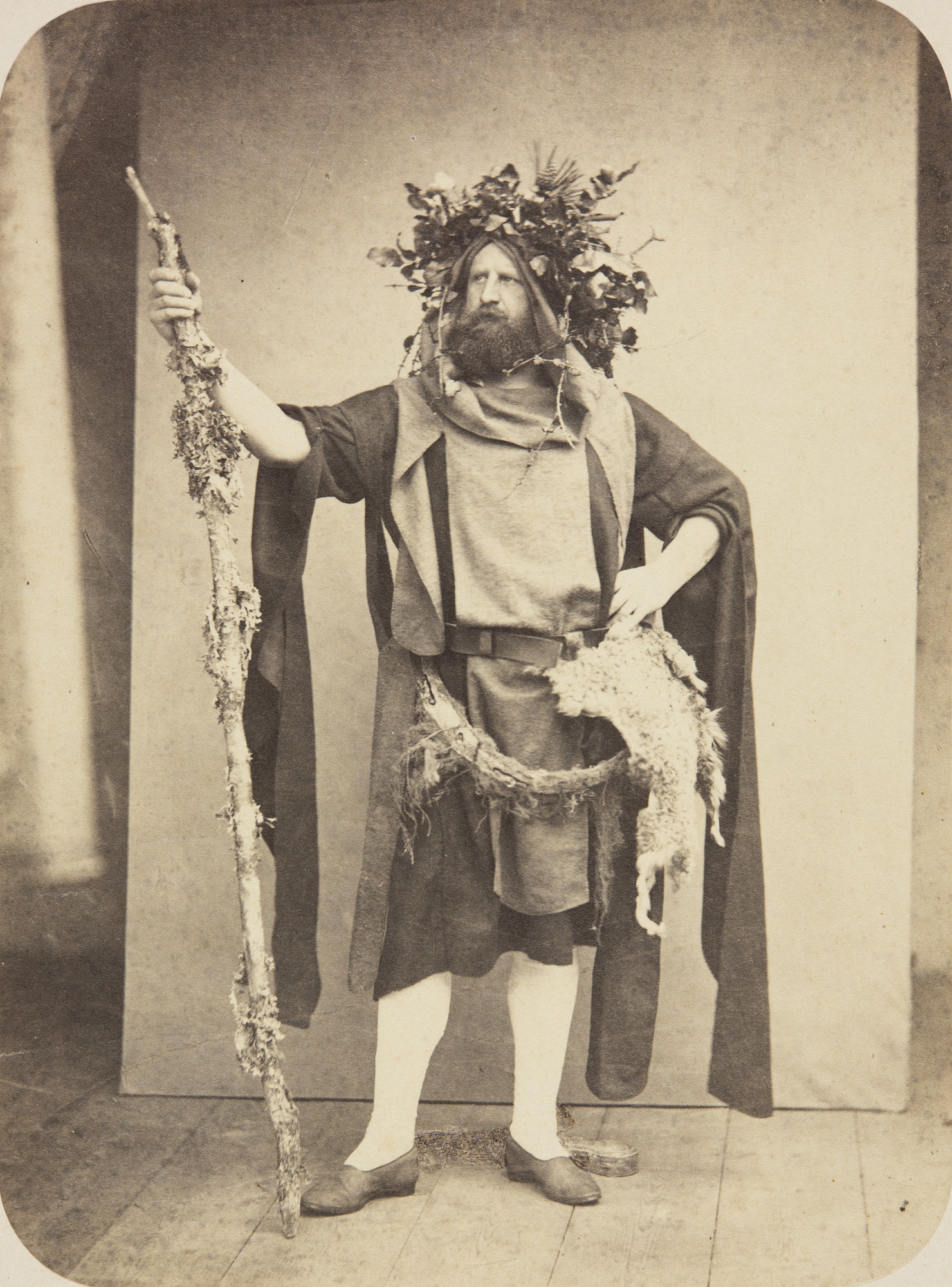
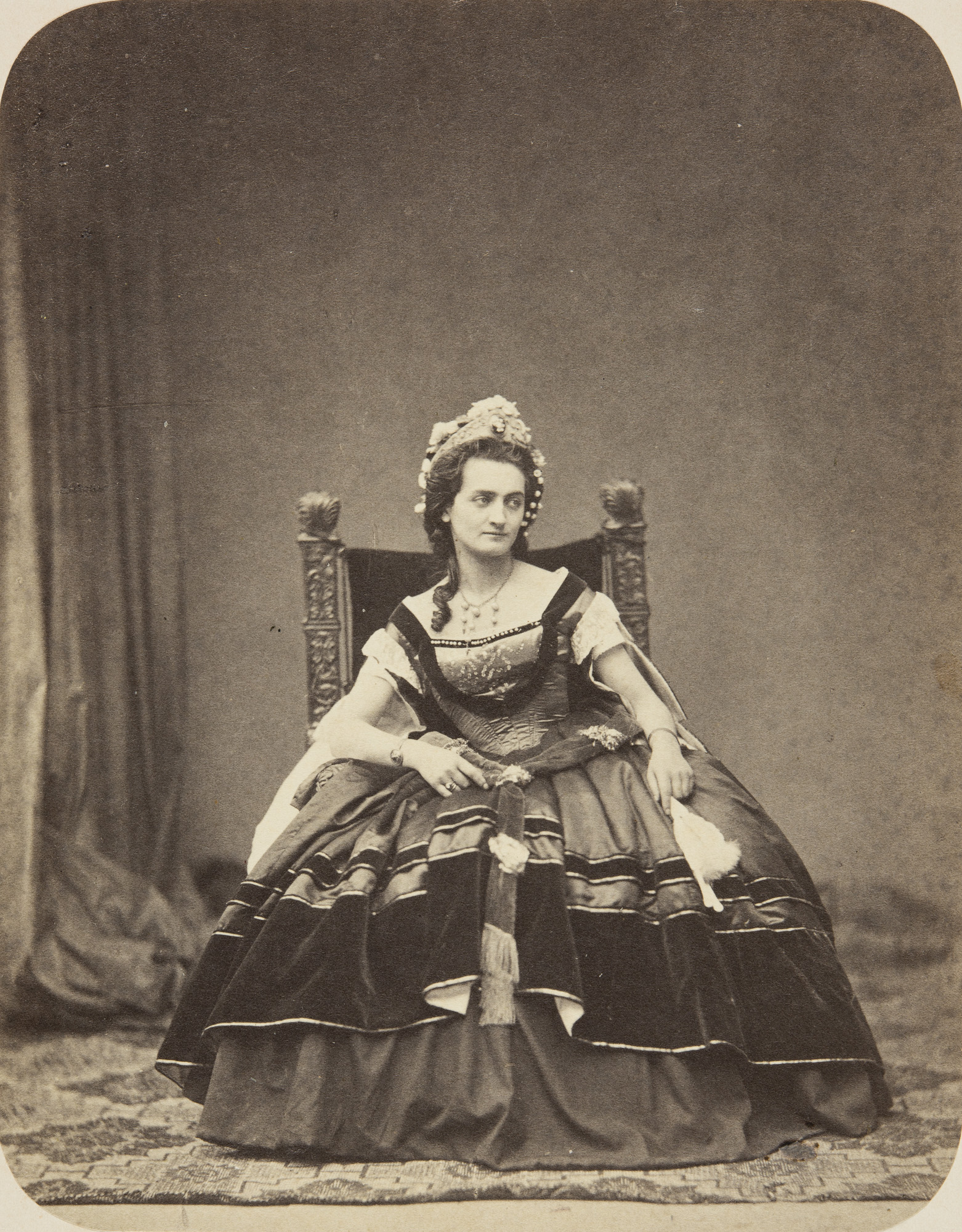
Von Künstlervereinigungen ausgerichtete Maskenfeste waren im 19. Jahrhundert in München überaus populär. Zu den frühen Aufnahmen dieser speziellen Festkultur zählen die fast surreal anmutenden, rund 30 Gruppen- und Einzelporträts, die der Fotograf Joseph Albert (1825–1886) von den Teilnehmenden am Maskenfest “Die Märchen” schuf. Das von der Vereinigung “Jung-München” veranstaltete Fest fand in der Faschingszeit am 15. Februar 1862 statt, geladen wurde in das königliche Odeon, zahlreiche Mitglieder der bayerischen Königsfamilie nahmen daran teil, darunter auch der spätere “Märchenkönig” Ludwig II.
Die Kostüme entsprachen der Vorliebe der Zeit für das mittelalterliche und märchenhafte Genre, das sich auch in der Kunst der Epoche widerspiegelte. Zu den dargestellten Märchen gehörten “Kindermärchen” wie “Hänsel und Gretel”, “Waldmärchen” wie “Rotkäppchen” oder auch “Thiermärchen” wie der “Gestiefelte Kater” oder “Hase und Igel”. Für den Fotografen Albert präsentierten sich die Kostümierten abseits des Geschehens entweder allein in typisch nachempfundener Pose oder zu mehreren für ausgewählte Szenen in der Tradition “lebender Bilder”, den sogenannten “tableaux vivants”. [quoted from : Münchner Stadtmuseum ~ Sammlung Dietmar Siegert]
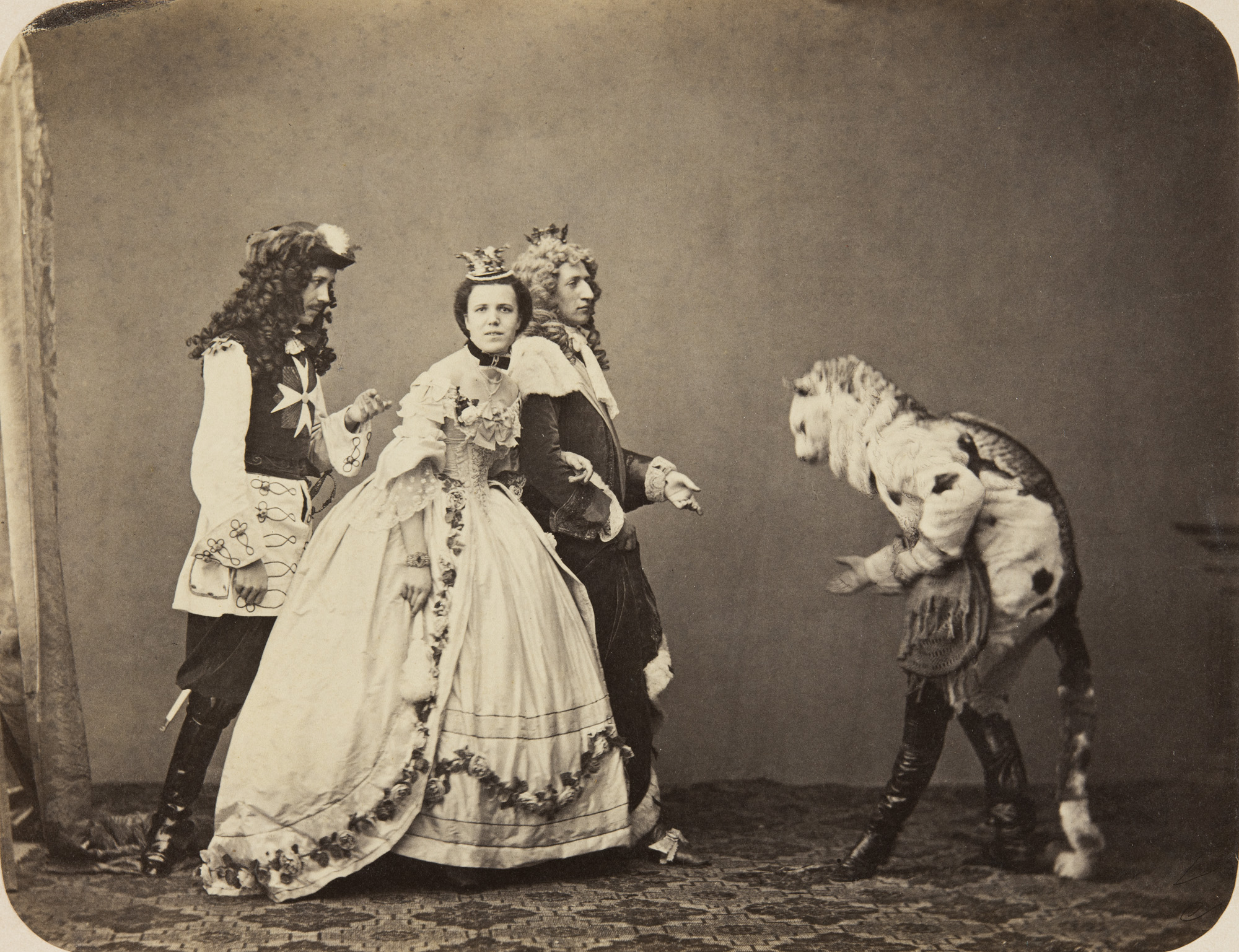
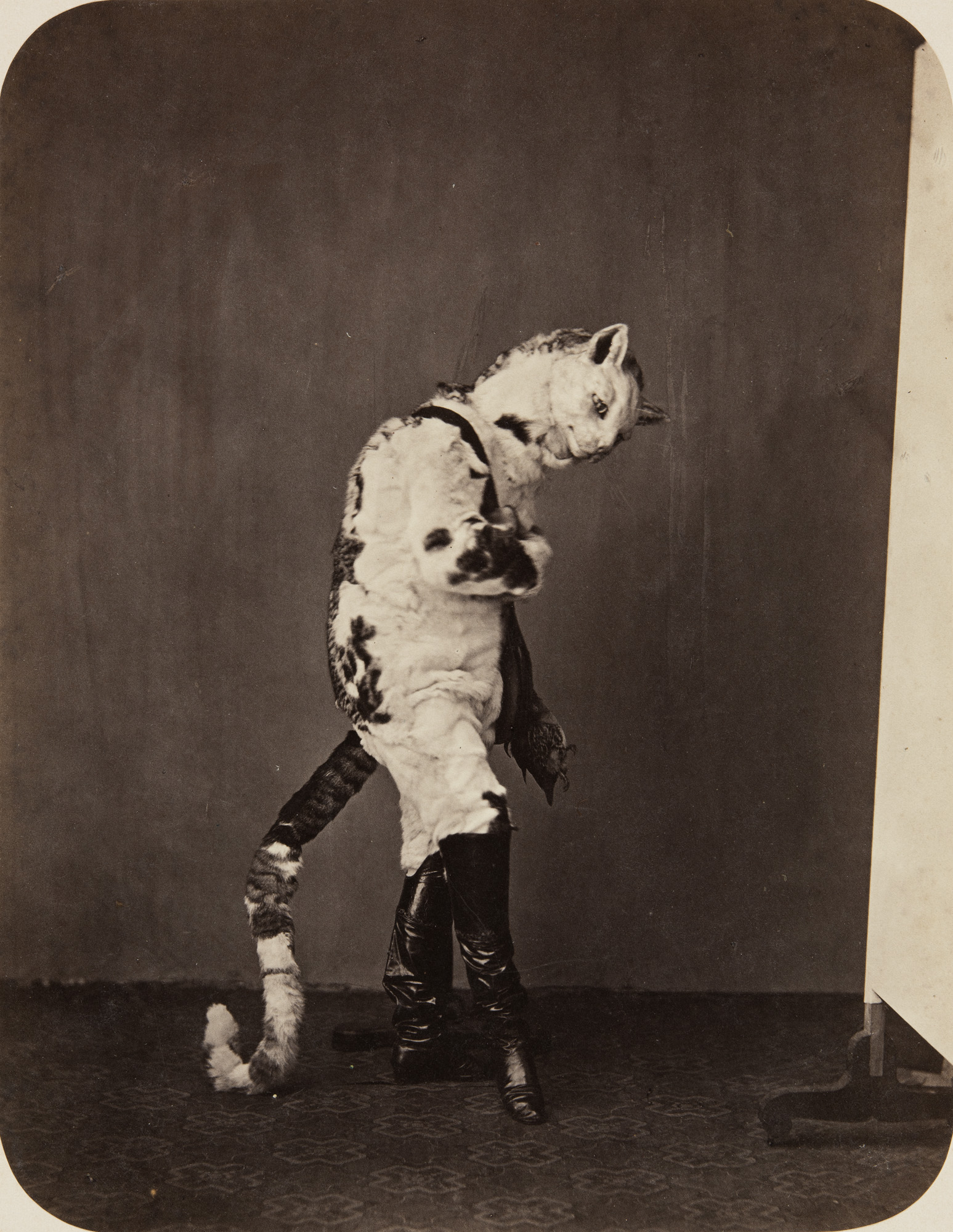
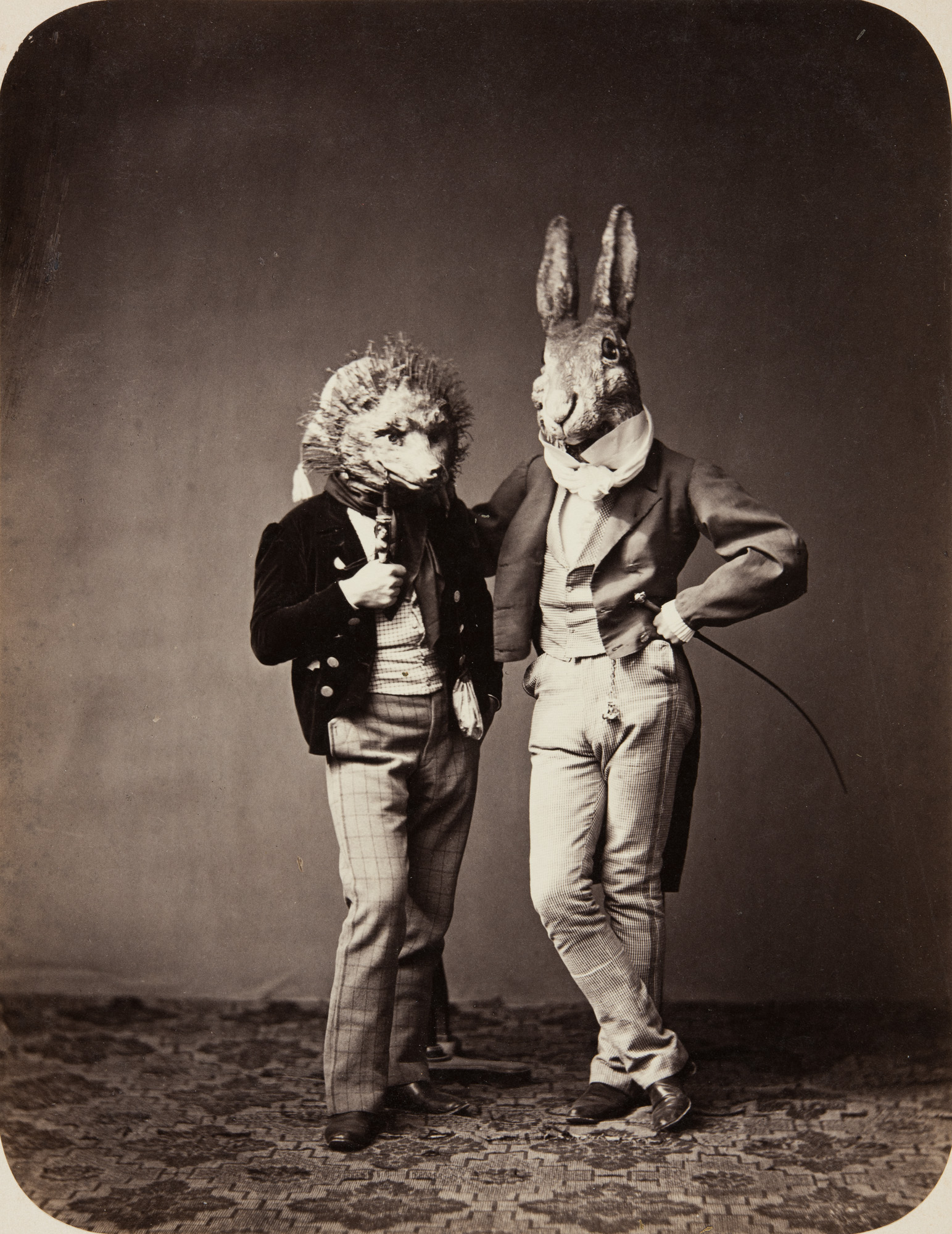
Mask festivals organized by artists’ associations were extremely popular in Munich in the 19th century. The early photographs of this festival culture include these almost surreal-looking images: around thirty group and individual portraits that the photographer Joseph Albert (1825-1886) created of the participants in the masked festival “The Fairy Tales”, the festival, organized by the “Jung-München” association, took place during the carnival period on February 15, 1862. Among the invited guests were numerous members of the Bavarian royal family, including the later “fairy tale king” Ludwig II.
The costumes corresponded to the period’s penchant for the medieval and fairytale genre, which was also reflected in the art of the period. The fairy tales presented included “children’s fairy tales” such as “Hansel and Gretel”, “forest fairy tales” such as “Little Red Riding Hood” or “animal fairy tales” such as “Puss in Boots” or “Hase and Hedgehog”. The costumed people presented themselves, for the photographer, away from the action either alone in a typically imitated pose or in groups for selected scenes in the tradition of “living pictures”, the so-called “tableaux vivants”.
Münchner Stadtmuseum ~ Sammlung Dietmar Siegert




 un regard oblique