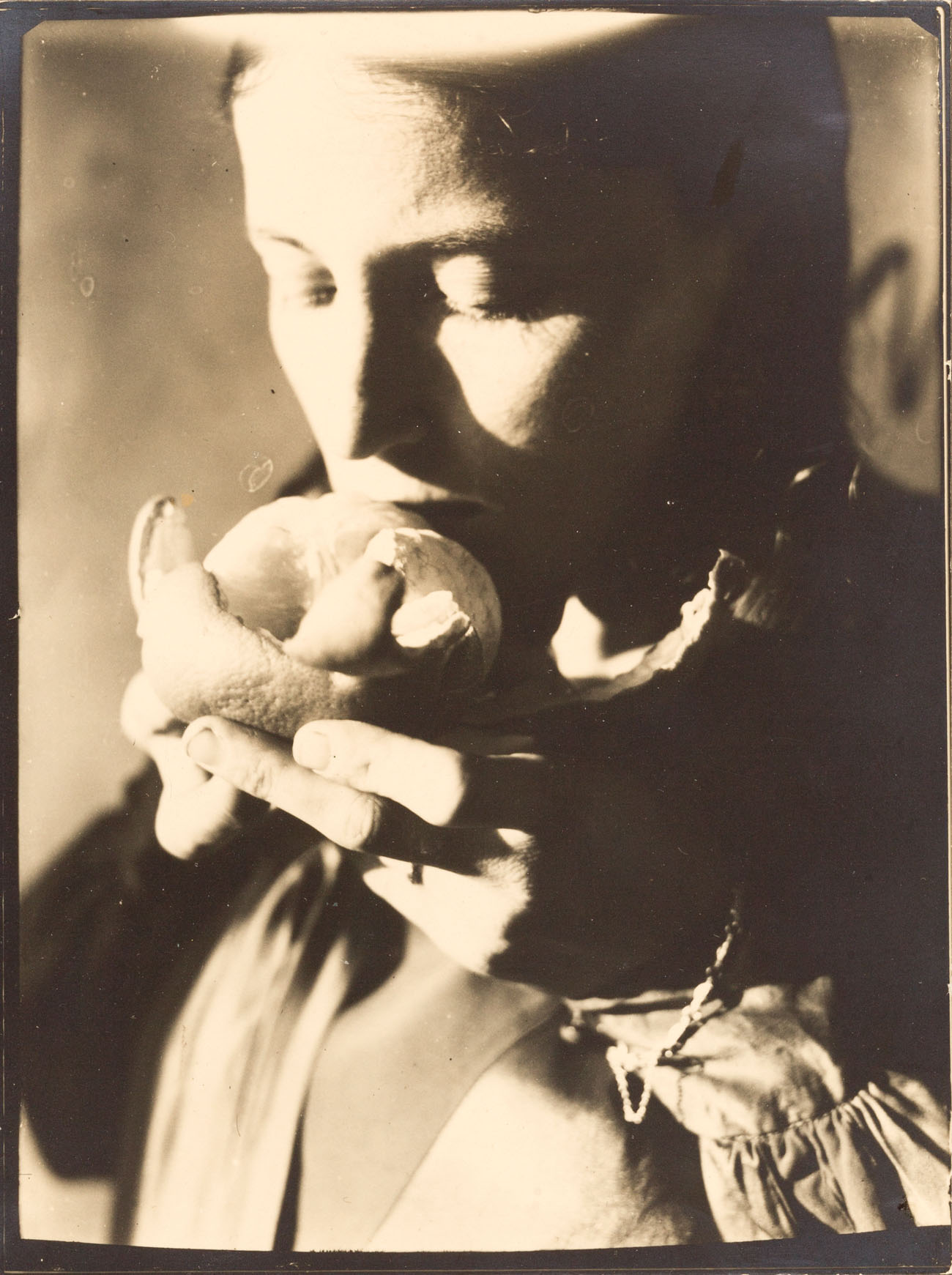
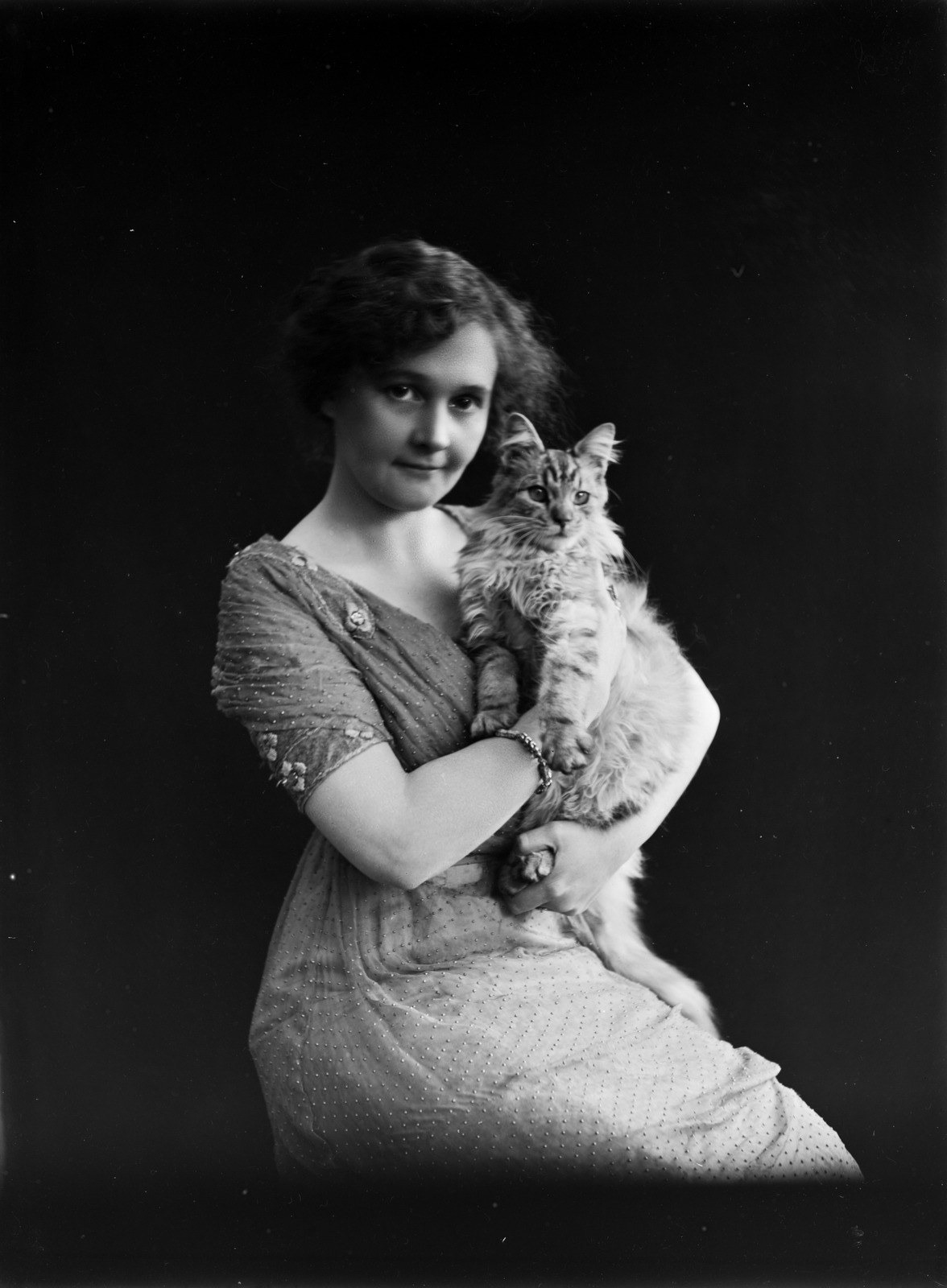
Artur Nikodem (1870–1940) ~ Barbara (Hoyer) with an orange, Innsbruck, Austria, 1928 | src OstLicht Auktionen
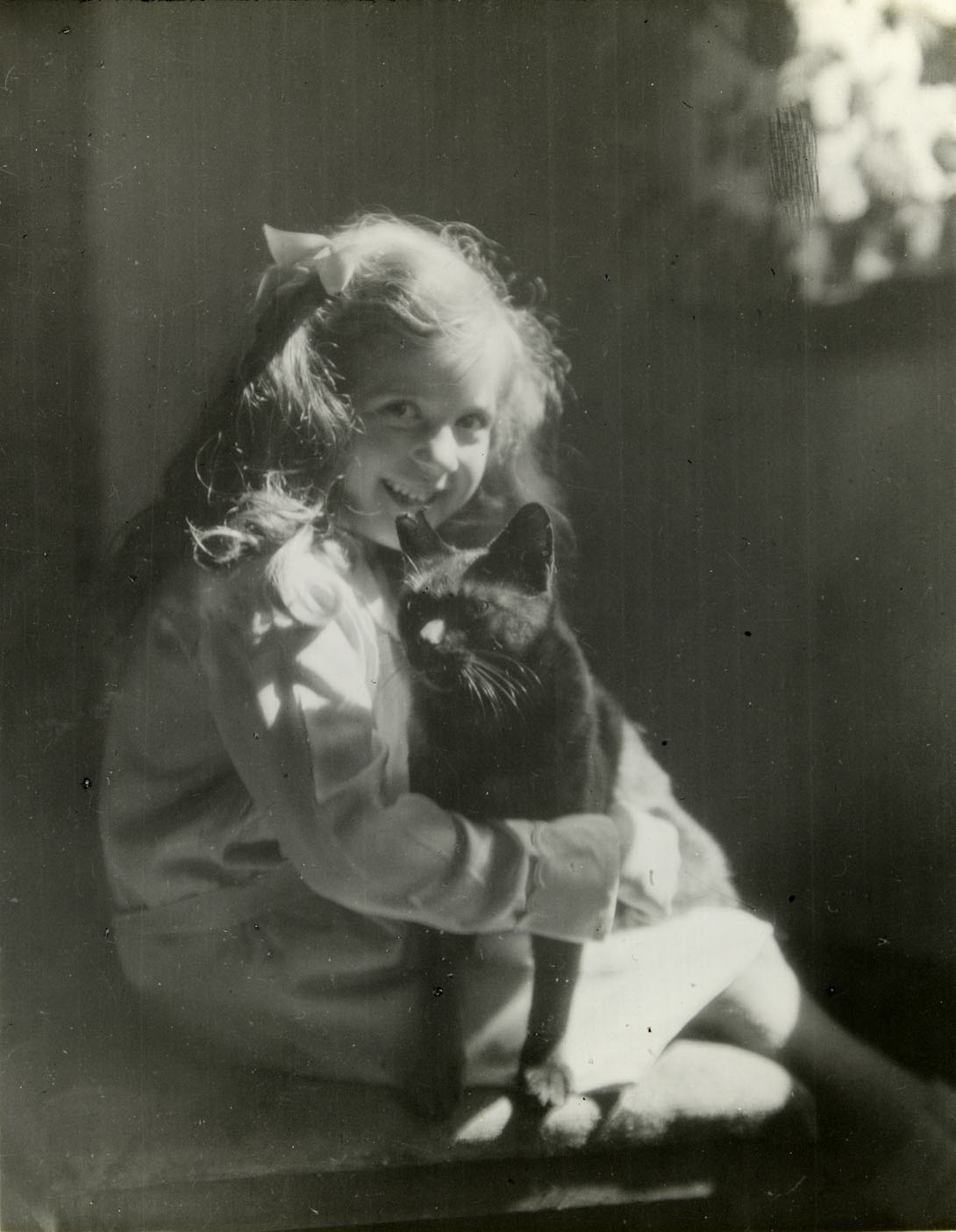
Trained in Munich by Defregger and Kaulbach, the Innsbruck artist enjoyed international success as a landscape painter from 1920 until his career ended with the Nazi takeover. He did not use photography for templates, but as a medium in its own right and experimented in many photographic genres and pictorial languages in his mostly very small-format prints; yet his astonishing photographic oeuvre did not receive attention until the 1980s. This photo features the artist’s second wife Barbara Hoyer (1907–1970), who posed for many of his staged photographs.
Artur Nikodem (1870–1940) ~ Barbara with an orange, Innsbruck, Austria, 1928 | src OstLicht Auktionen
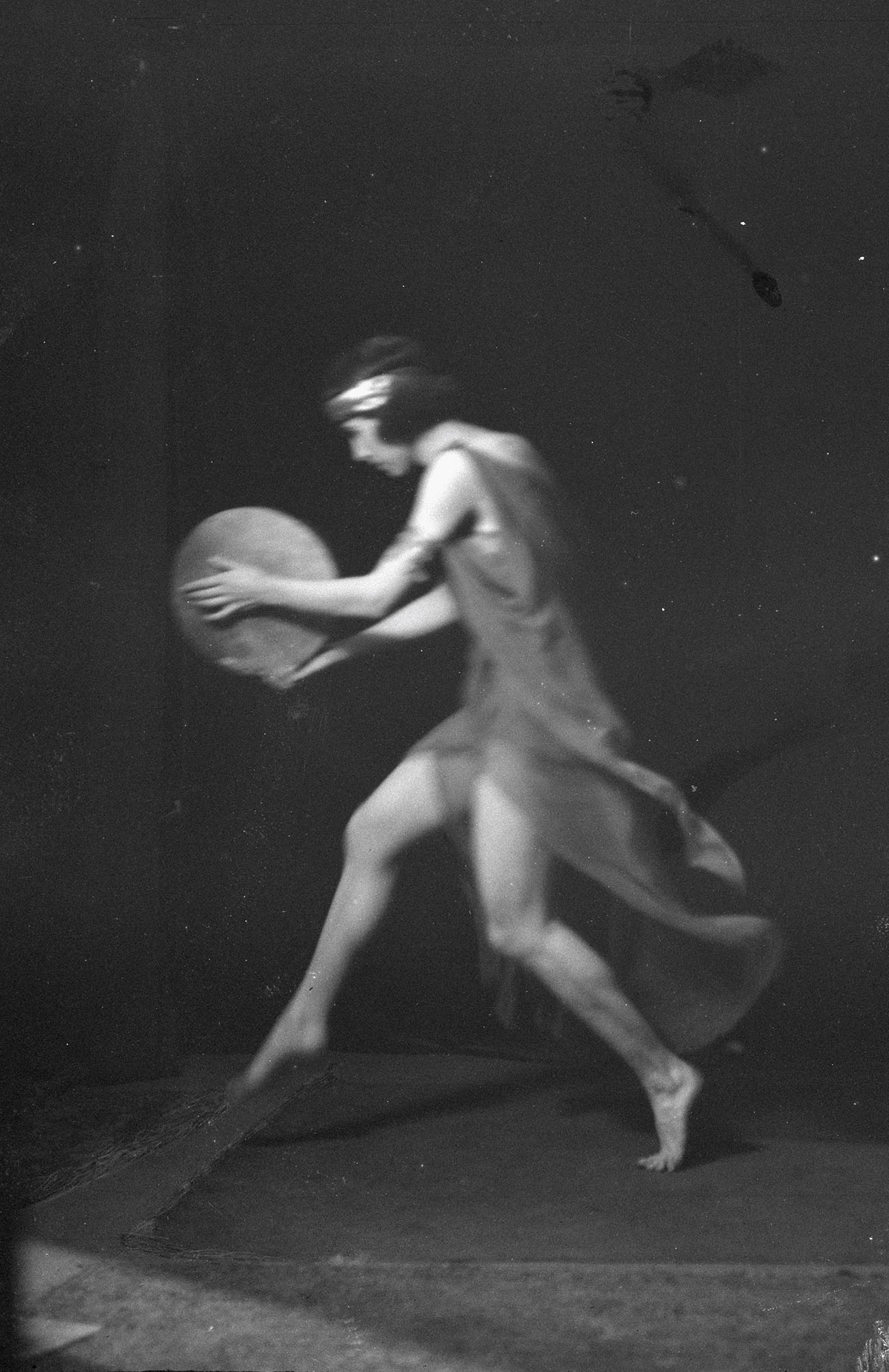
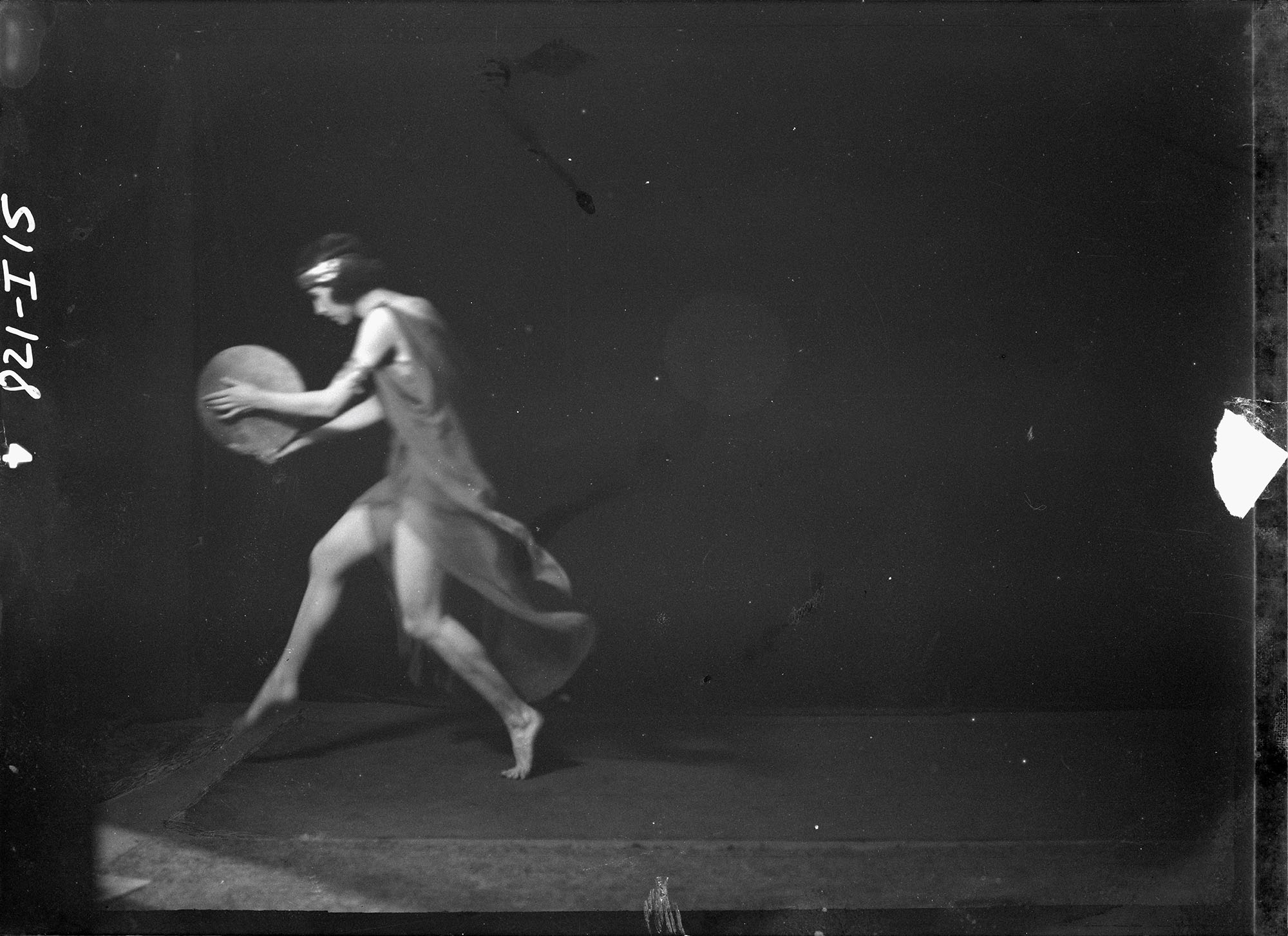
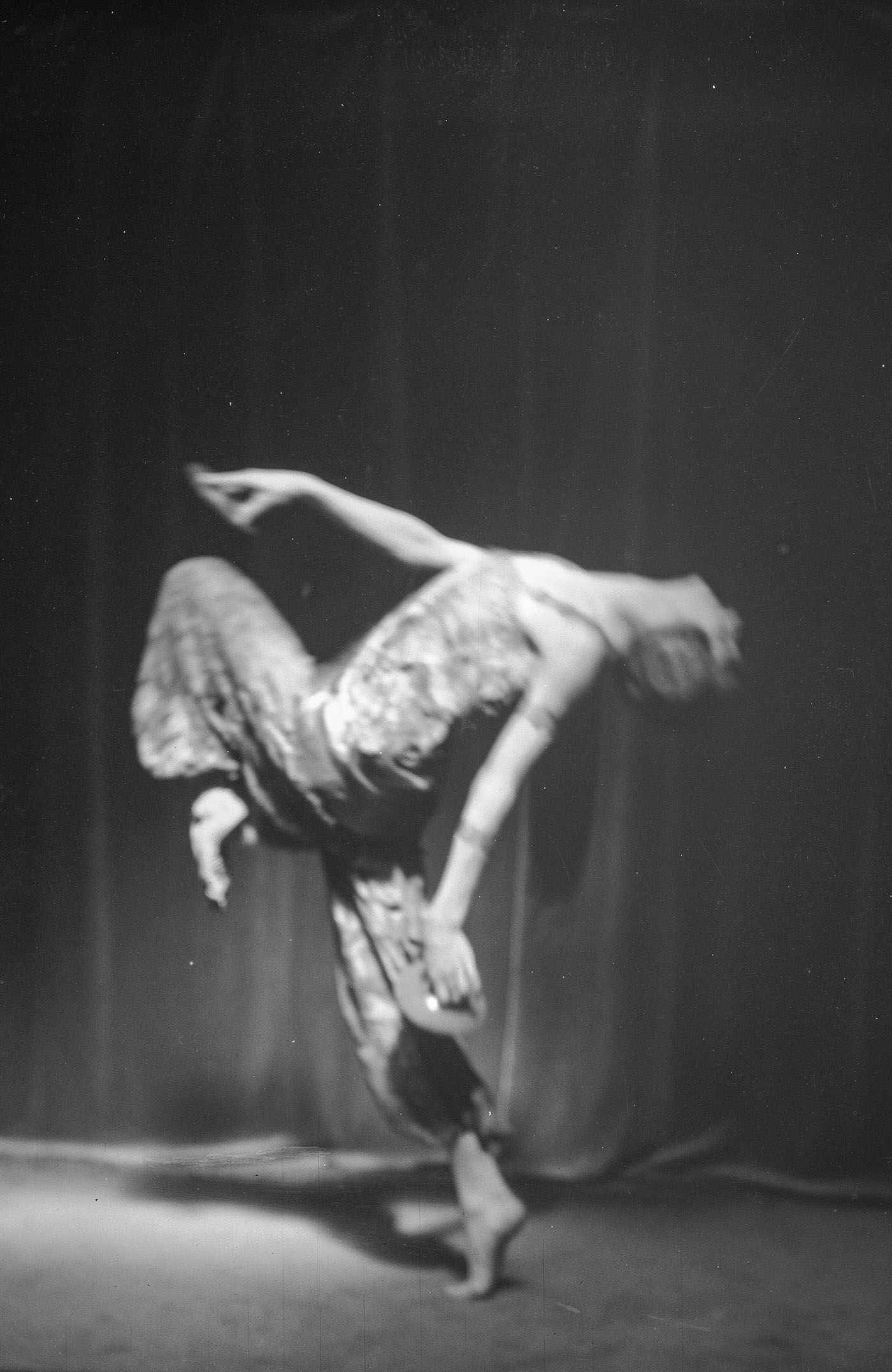
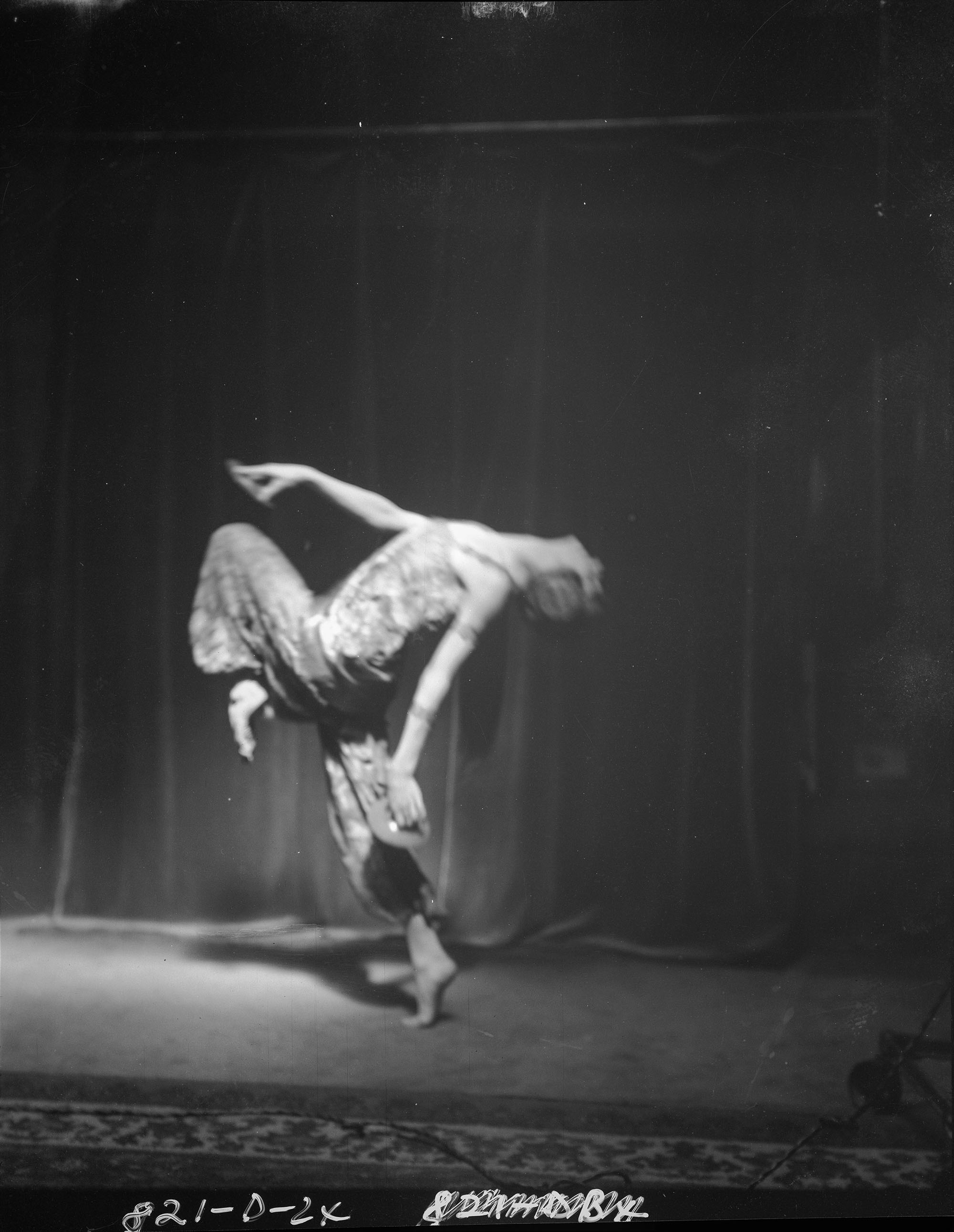
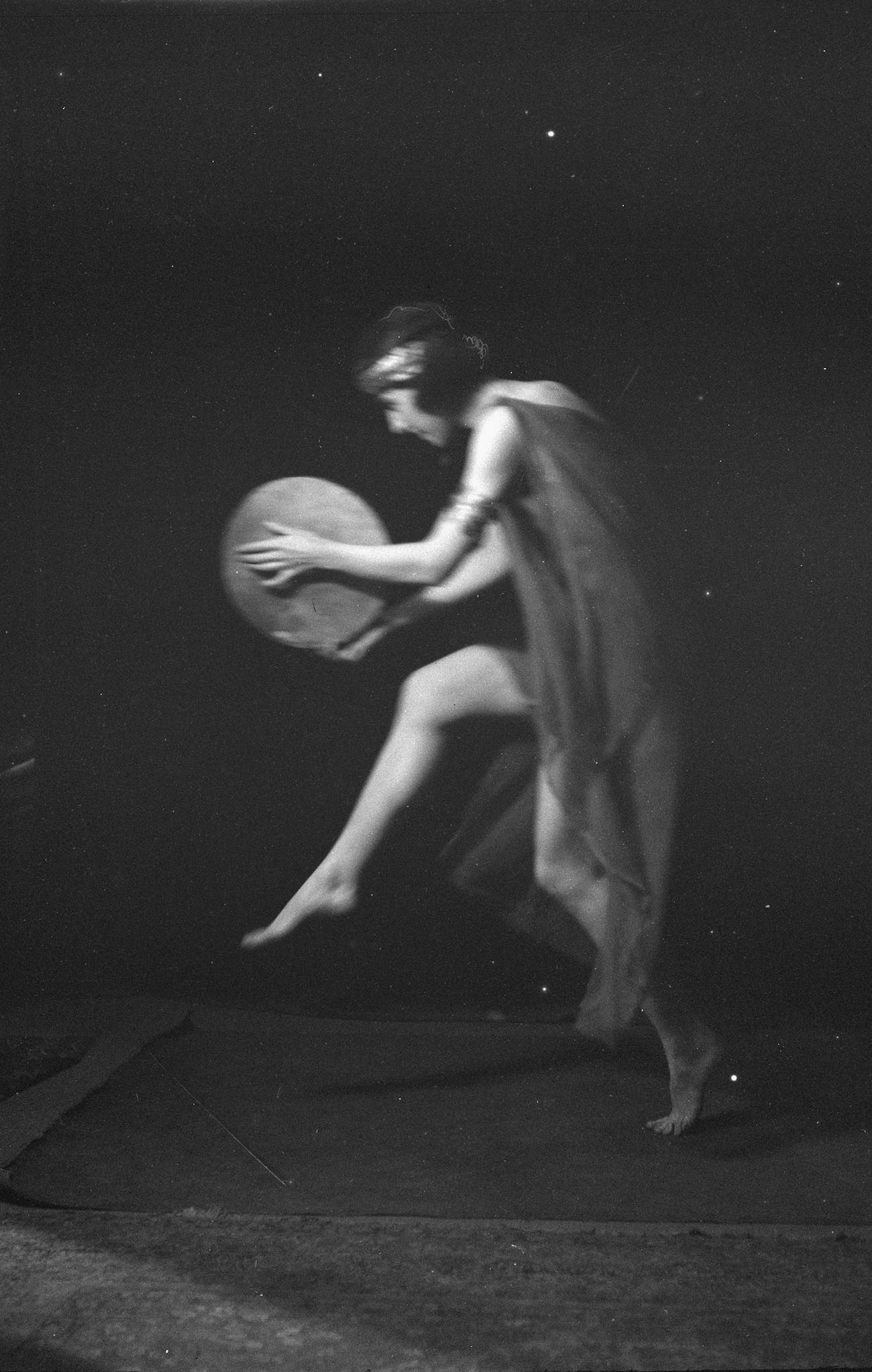
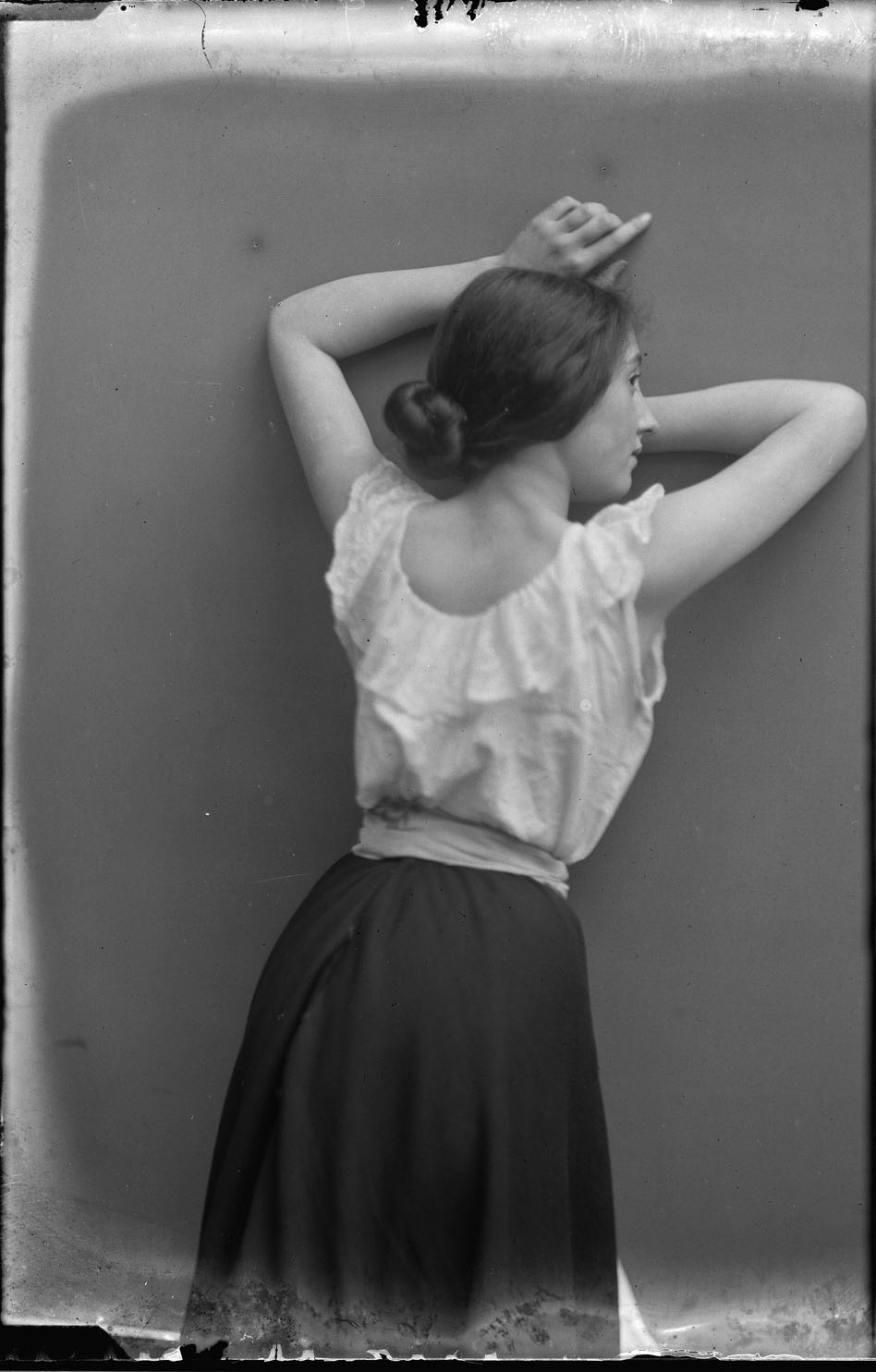
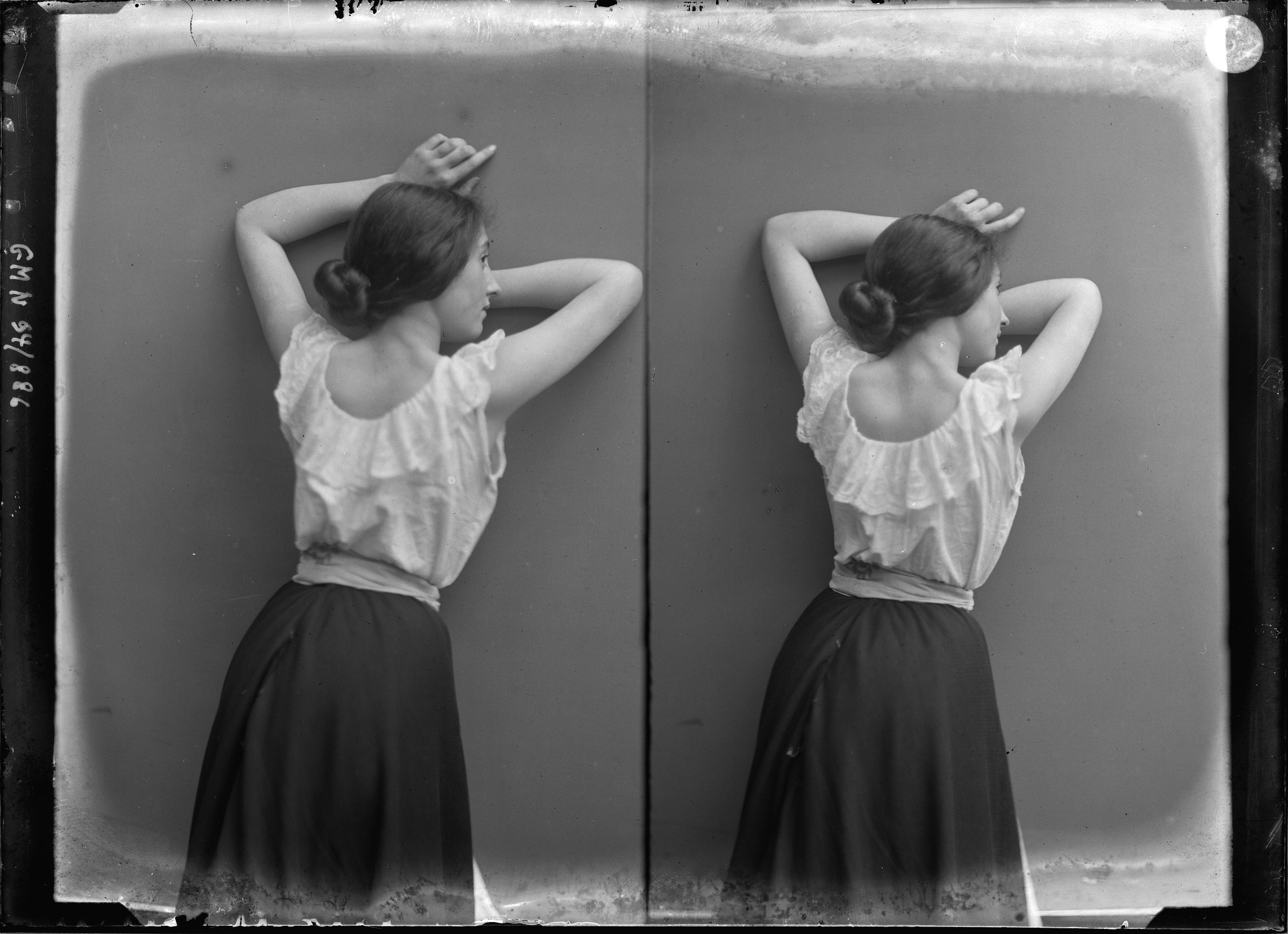
Arnold Genthe (1869-1942) ~ Marion Morgan dancer, 1914-1927 (detail)Arnold Genthe (1869-1942) ~ Marion Morgan dancer, 1914-1927. Nitrate negative | src Library of CongressArnold Genthe (1869-1942) ~ Marion Morgan dancer, 1914-1927 (detail)Arnold Genthe (1869-1942) ~ Marion Morgan dancer, 1914-1927. Nitrate negative | src Library of CongressArnold Genthe (1869-1942) ~ Marion Morgan dancer, 1914-1927 (detail)Arnold Genthe (1869-1942) ~ Marion Morgan dancer, 1914-1927. Nitrate negative | src Library of Congress
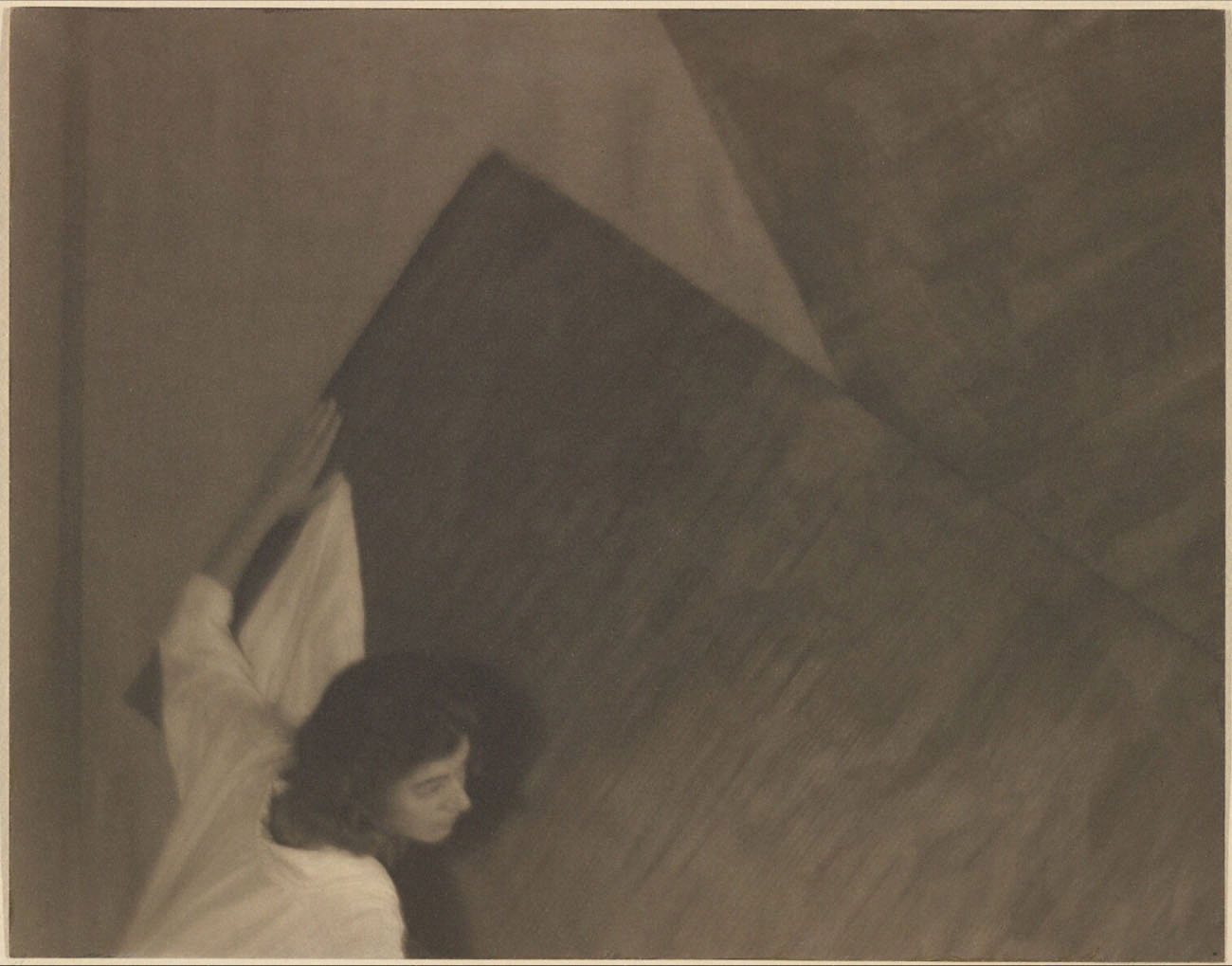
Edward H. Weston (1886 – 1958) ~ Betty Katz in her attic (seated, smoking), Los Angeles, 1920. Palladium print | src Getty museum
This particular photograph is part portrait and part compositional experiment with Weston’s growing interest in the formal concerns of Modernism. Katz is shown sitting in a niche where a network of large intersecting planes made up of the attic’s floor, walls, and dormers and articulated in varying shades by light entering from an unseen window on the right.
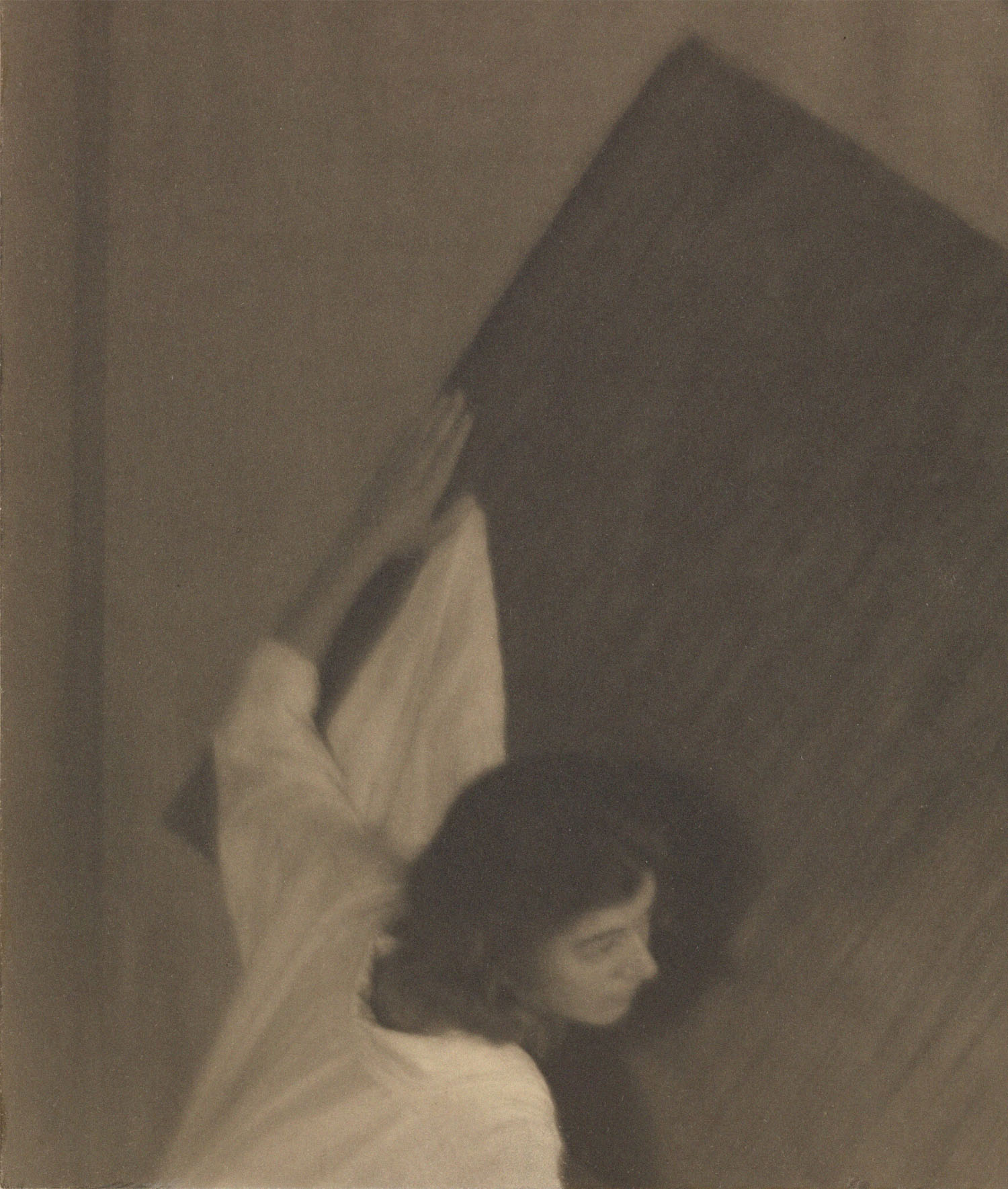
Edward H. Weston (1886 – 1958) ~ Betty Katz in her attic, Los Angeles, 1920. Palladium print | src Getty museum
This particular photograph is Pictorialist in its soft focus and compositional arrangement. However, it is also Modernist in its self-conscious use of space and form as subjects of the photograph. Weston subordinated Katz’s figure to the graphic abstraction of the large rectangles that she appears to hold up. The print’s muted tones flatten the image’s depth, reducing the room to a two-dimensional space.
Edward H. Weston (1886 – 1958) ~ Betty Katz in her attic, Los Angeles, 1920. Palladium print (detail)
A critic for Pictorial Photography, wrote about this image: “Queerness for its own sake must have obsessed Edward Weston when he recorded the stiff and angular lines in Betty in Her Attic . . . , although there is no denying the truth and beauty of tones of the floors and walls. But the position of the girl!—is there not a touch of cussedness in that?”
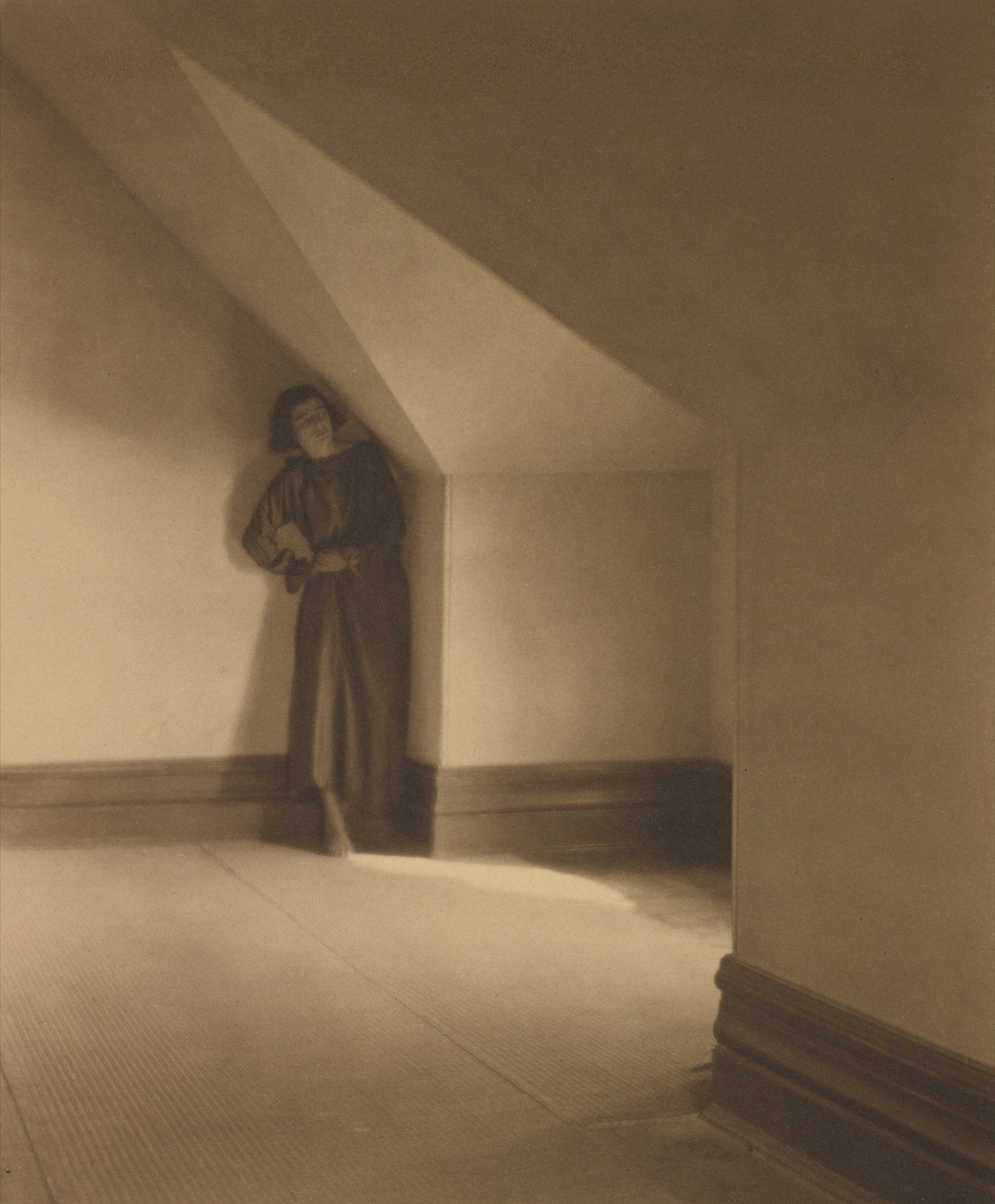
Edward H. Weston (1886 – 1958) ~ Betty Katz in Her Attic, Los Angeles, 1920. Palladium print | src Getty museum
This particular photograph is part portrait and part compositional experiment with Weston’s growing interest in the formal concerns of Modernism. Katz is shown tucked into a network of large intersecting planes made up of the attic’s floor, walls, and dormers and articulated in varying shades by light entering from an unseen window on the left.
Edward H. Weston (1886 – 1958) ~ Betty Katz in Her Attic, Los Angeles, 1920 | src Getty museum
This particular photograph is part portrait and part compositional experiment with Weston’s growing interest in the formal concerns of Modernism. Katz is shown tucked into a network of large intersecting planes made up of the attic’s floor, walls, and dormers and articulated in varying shades by light entering from an unseen window on the right.
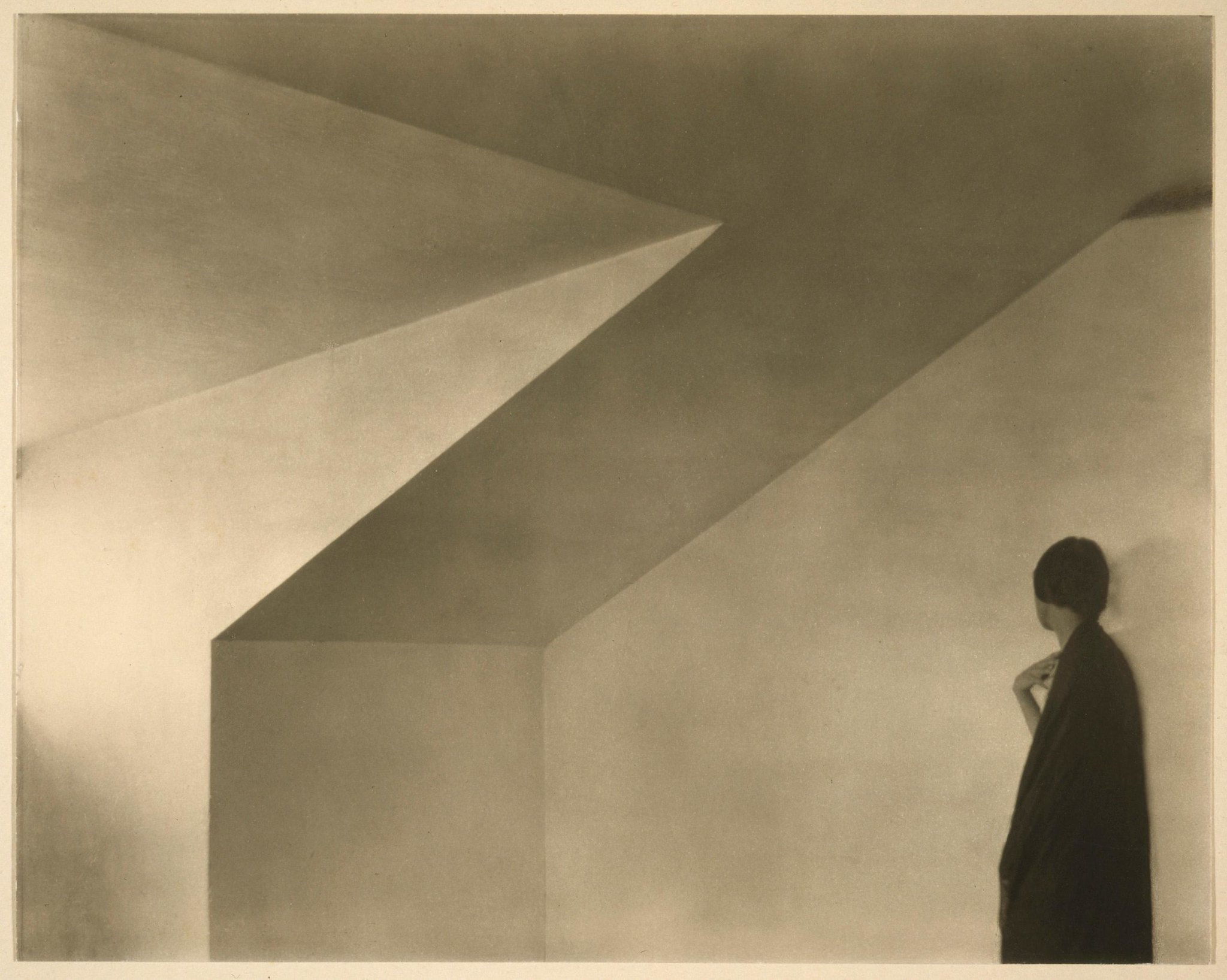
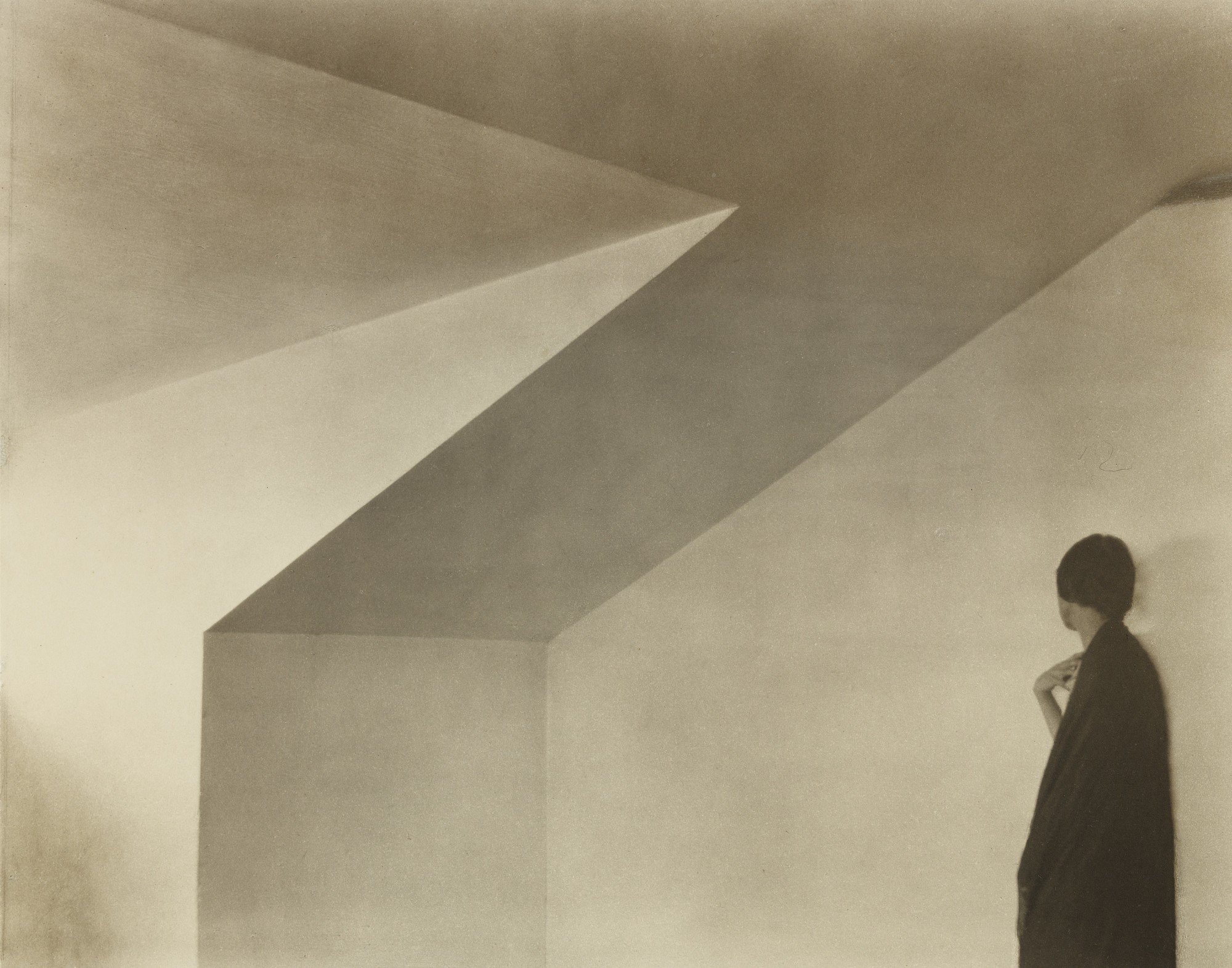
Edward H. Weston (1886 – 1958) ~ Attic, Glendale, California, 1921. Platinum print | src George Eastman Museum
In 1920 Edward Weston began a creative series of pictures made in his friends’ attics. Reactions to these images were mixed. Imogen Cunningham (1883-1976), one of Weston’s friends and fellow photographers, wrote glowingly of one in a letter addressed to him, “It has Paul Strand’s eccentric efforts, so far as I have seen them, put entirely to shame, because it is more than eccentric. It has all the cubistically inclined photographers laid low. It is a most pleasing thing for the mind to dwell on, the mind I say and mean, not the emotions or fancies. It is literal in a most beautiful and intellectual way.”
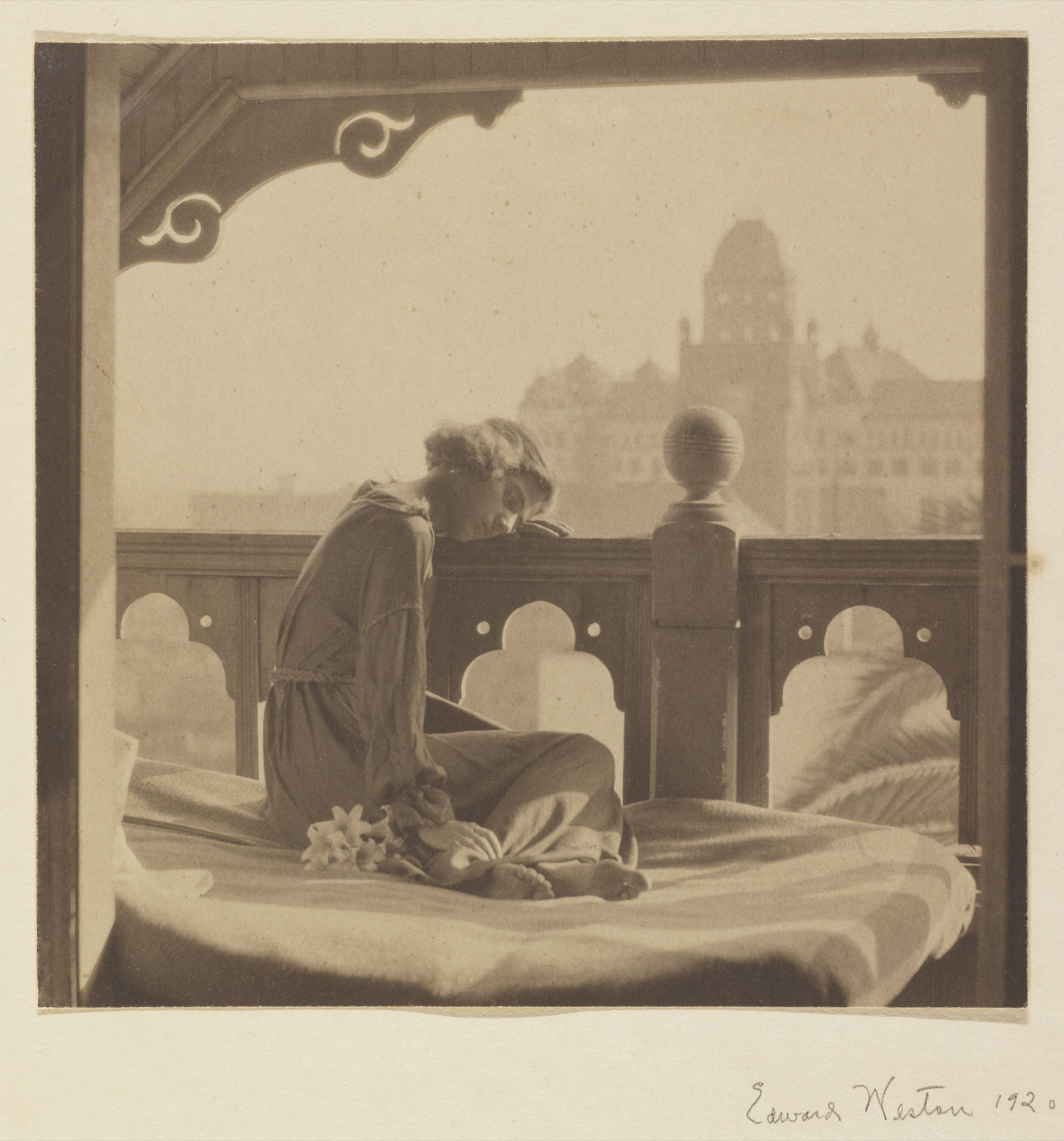
The woman pictured is Betty Katz (later Brandner, 1895-1982), who was introduced to Weston by his colleague Margrethe Mather (1886-1952). Weston and Katz engaged in a brief affair in October 1920, when he made several other images of her in her attic and out on a balcony.
Text adapted from Brett Abbott. Edward Weston, In Focus: Photographs from the J. Paul Getty Museum [All quotes from this post retrieved from Getty museum]
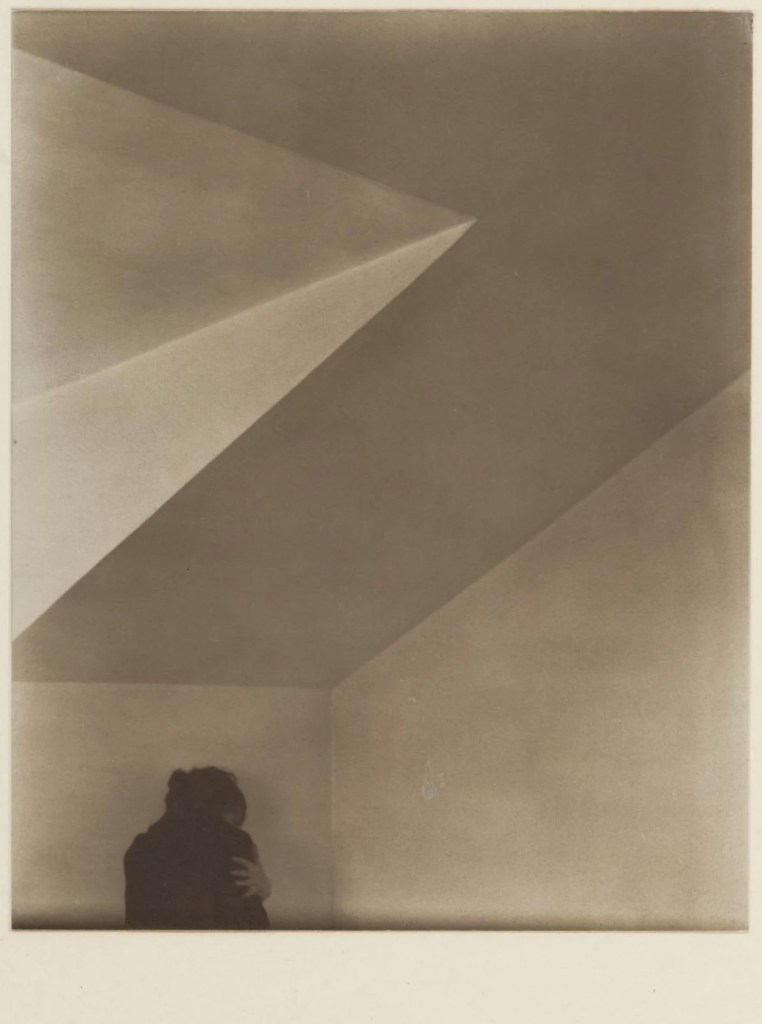
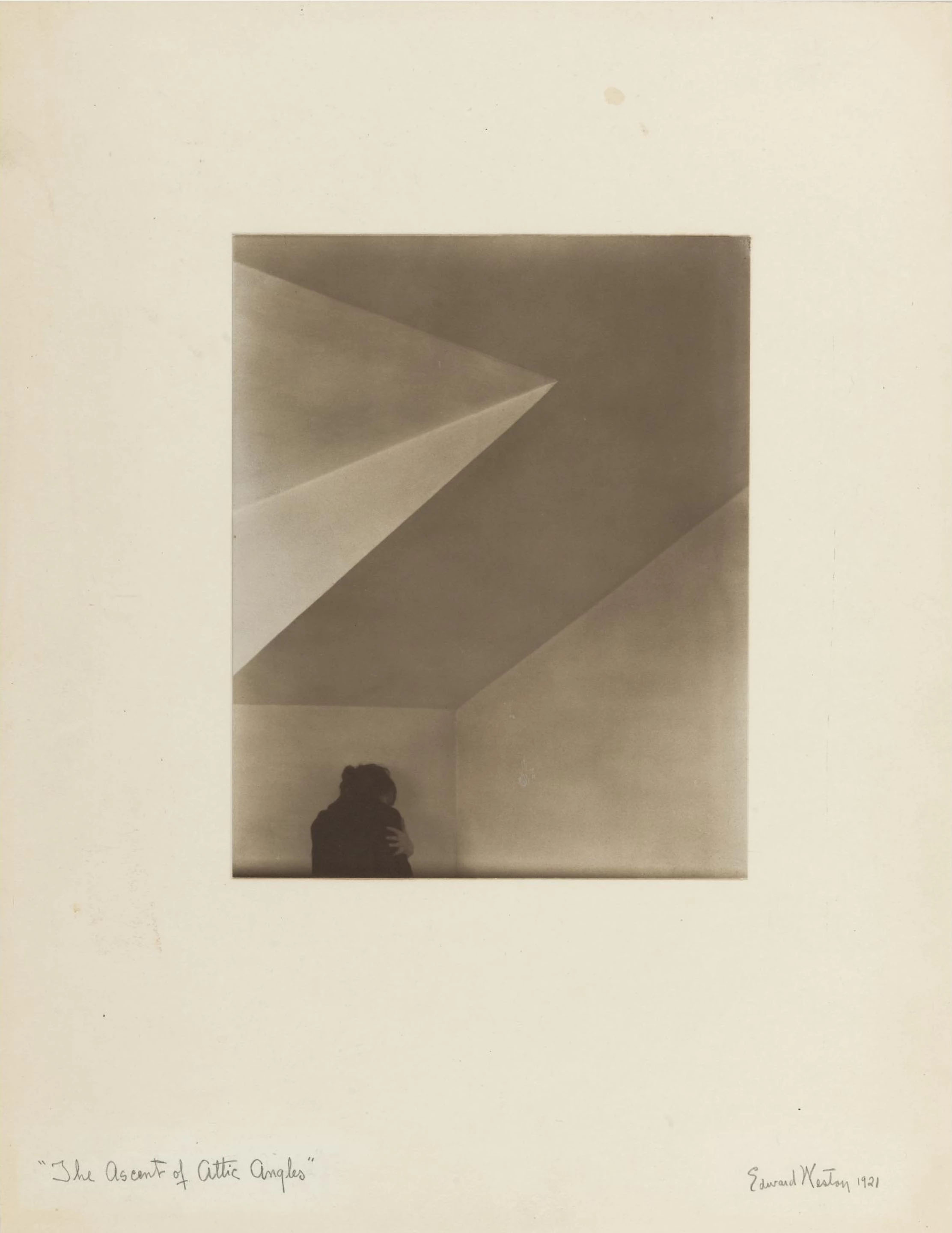
Edward H. Weston (1886 – 1958) ~ Attic [Betty Katz (?)], 1921. Palladium print. Thomas Walther Collection | src MoMAEdward H. Weston (1886 – 1958) ~ The Ascent of Attic Angles, 1921. Platinum print | src Sotheby’s also, NMAH Smithsonian institutionEdward H. Weston (1886 – 1958) ~ The Ascent of Attic Angles, 1921. Platinum print, tipped to a large tan mount | src Sotheby’s
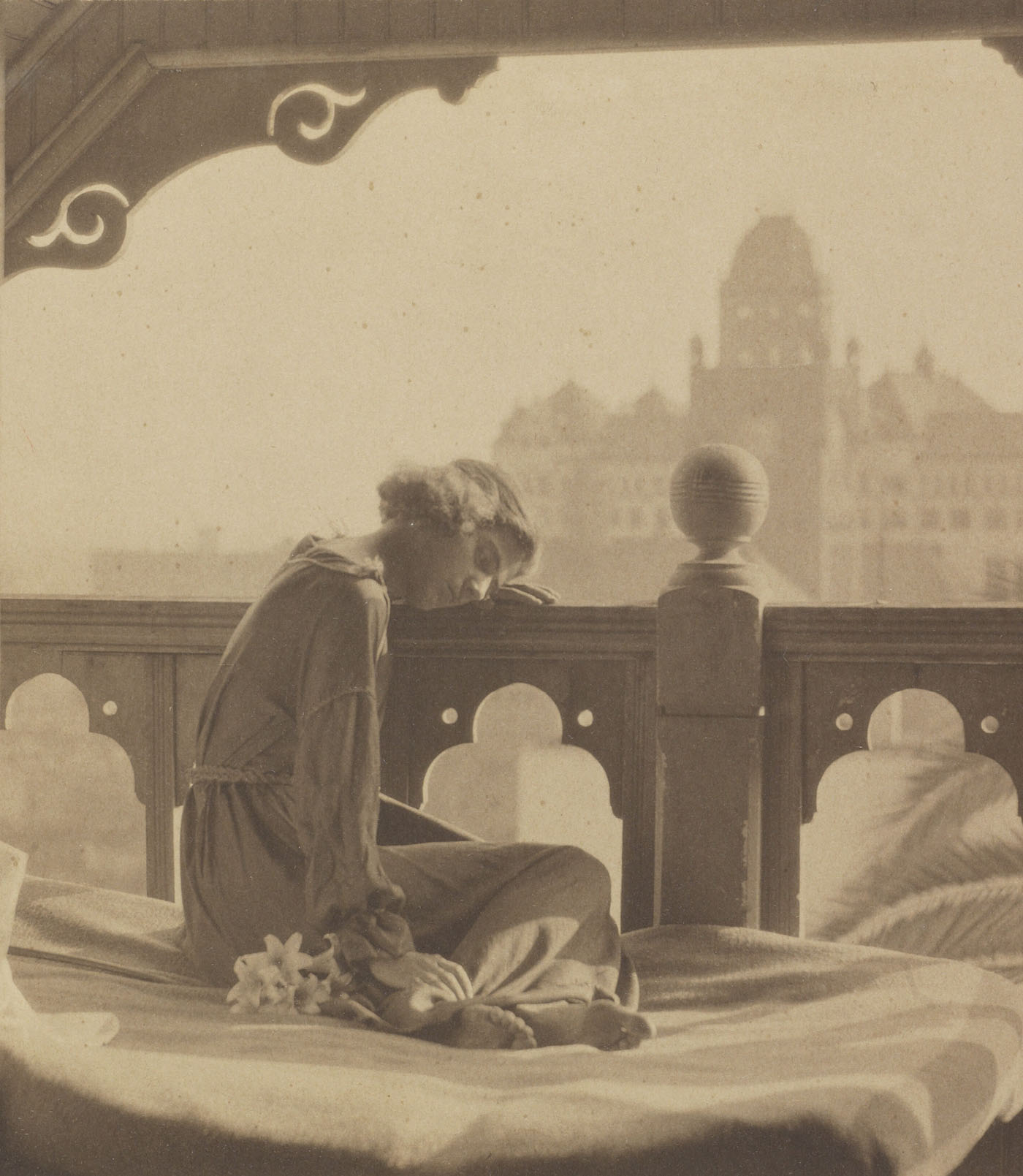
Edward H. Weston (1886 – 1958) ~ Betty Katz (in balcony), Los Angeles, 1920. Palladium print | src Getty Museum (detail)Edward H. Weston (1886 – 1958) ~ Betty Katz (in balcony), Los Angeles, 1920. Palladium print | src Getty Museum
The woman pictured is Betty Katz (later Brandner, 1895-1982), who was introduced to Weston by his colleague Margrethe Mather (1886-1952). Weston and Katz engaged in a brief affair in October 1920, when he made several other images of her in her attic and this image—out on a balcony. This particular photograph is Pictorialist in its soft focus and compositional arrangement. However, the prominent attention given the repeating cut forms of the balustrade, the post’s round finial, and the varied angles that frame the image point to Weston’s growing interest in the formal concerns in Modernism.
Gustave Marissiaux ~ Untitled, Liège, 1902 (left half of stereo image)Gustave Marissiaux ~ sans titre, Liège, 1902. Reproduction par inversion du négatif sur verre. Coll. Musée de la Photographie (Charleroi)
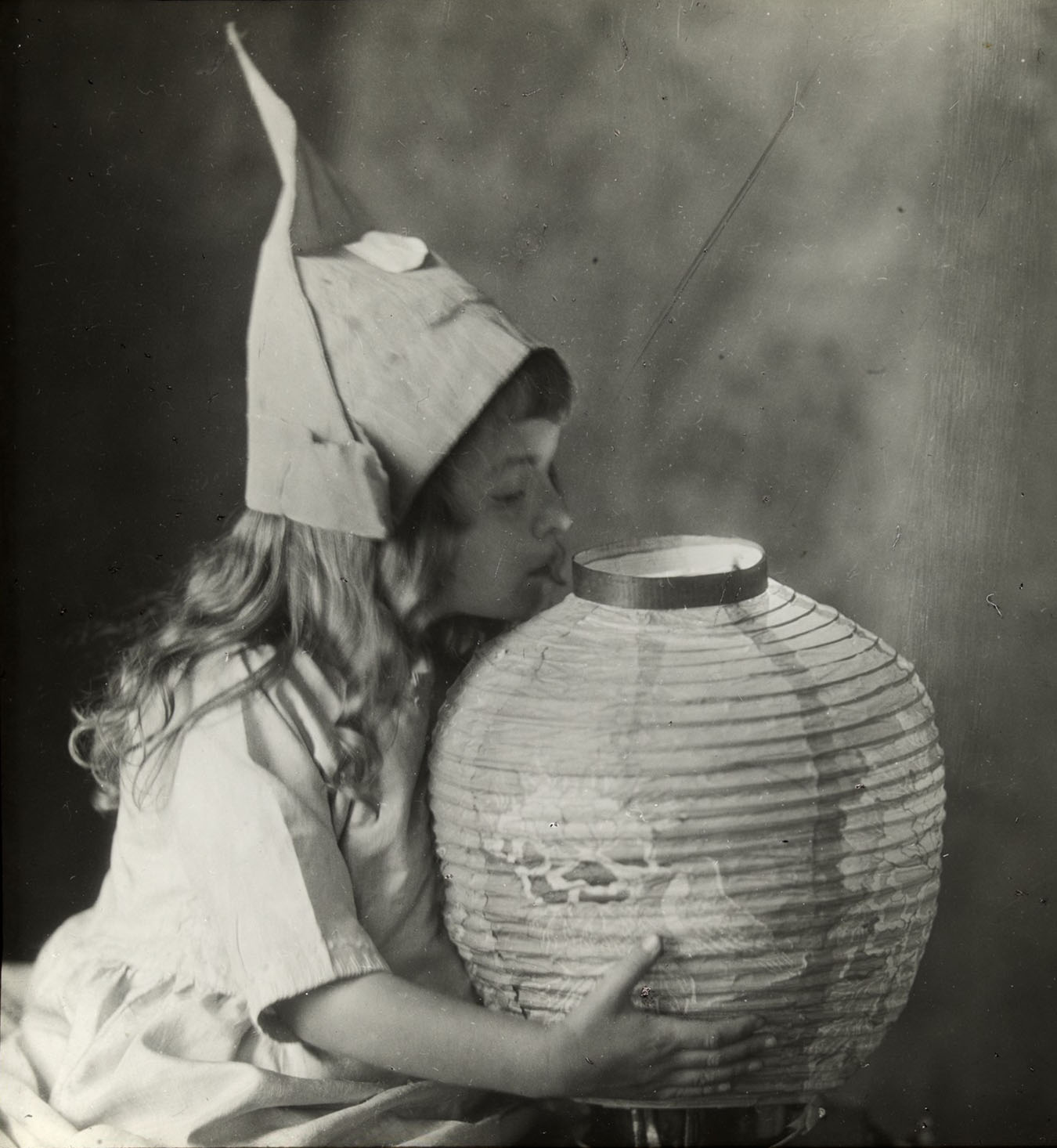
Ruth Hollick (1883-1977) ~ [Young girl holding a Chinese paper lantern, wearing a hat] (1910-1930) [detail]Ruth Hollick (1883-1977) ~ [Young girl holding a Chinese paper lantern, wearing a hat] 1910-1930. Glass lantern slide | src SLV
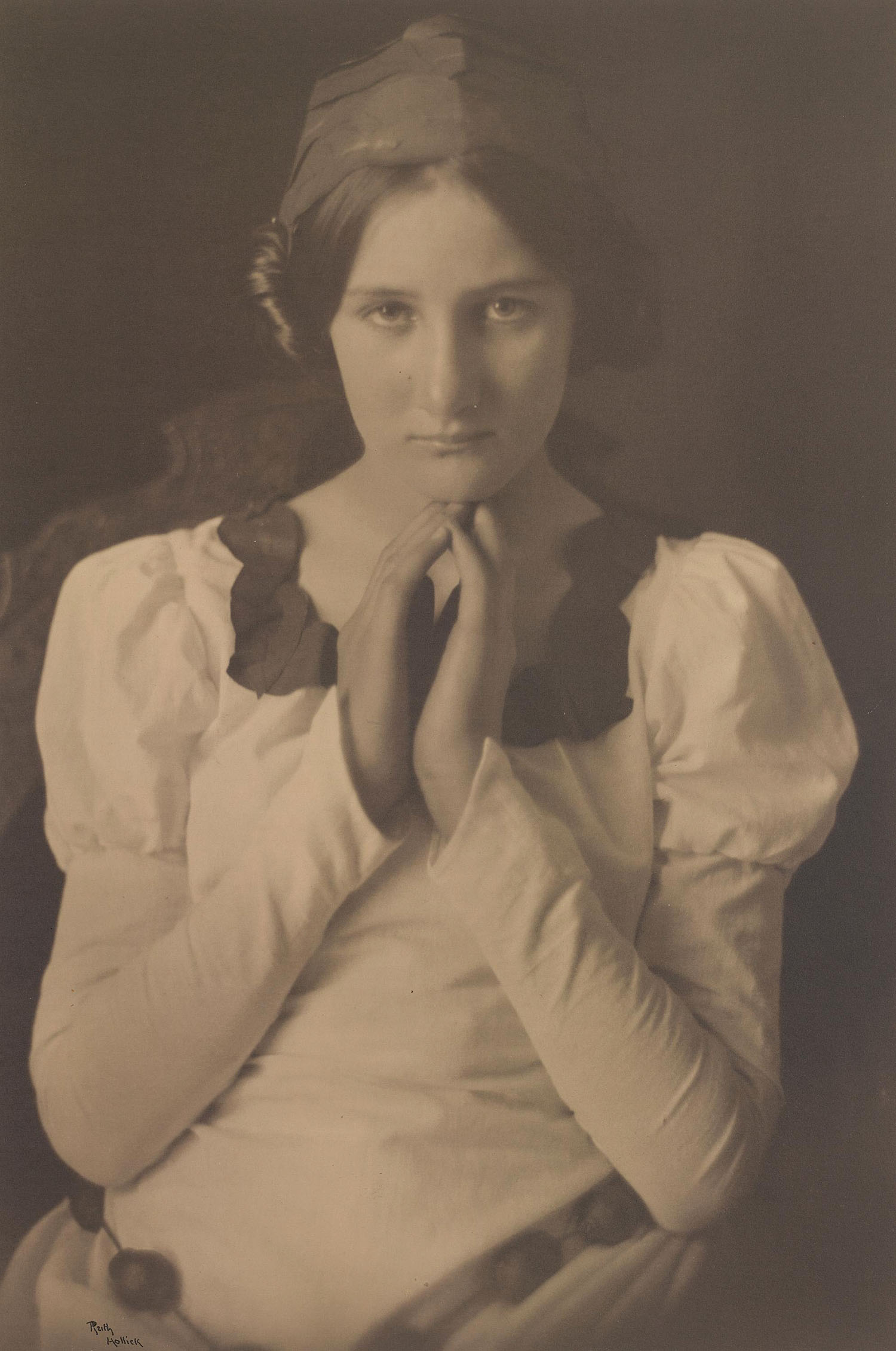
Ruth Hollick (1883-1977) ~ Thought, 1921 | src National Gallery of Victoria, Melbourne. Image ID: De102079
Thought is a portrait of the artist’s niece in a distinctly Australian costume adorned with appliqued gum leaves and a gum nut belt. The sitter is pictured in a meditative pose and the evocative title of the photograph encourages an allegorical interpretation of the work. The photograph is an exhibition-size print in its original frame. Hollick entered ‘Thought’ in the Colonial Exhibition in London in 1921 and was awarded a bronze medal. src NGV
The exhibition Photography: Real and Imagined (2023-2024) examines two perspectives on photography; photography grounded in the real world, as a record, a document, a reflection of the world around us; and photography as the product of imagination, storytelling and illusion. On occasion, photography operates in both realms of the real and the imagined.
Highlighting major photographic works from the NGV Collection, including recent acquisitions on display for the very first time, Photography: Real and Imagined examines the complex, engaging and sometimes contradictory nature, of all things photographic. The NGV’s largest survey of the photography collection, the exhibition includes more than 300 works by Australian and international photographers and artists working with photo-media from the nineteenth, twentieth and twenty-first centuries. / The Ian Potter Centre: NGV Australia









 un regard oblique