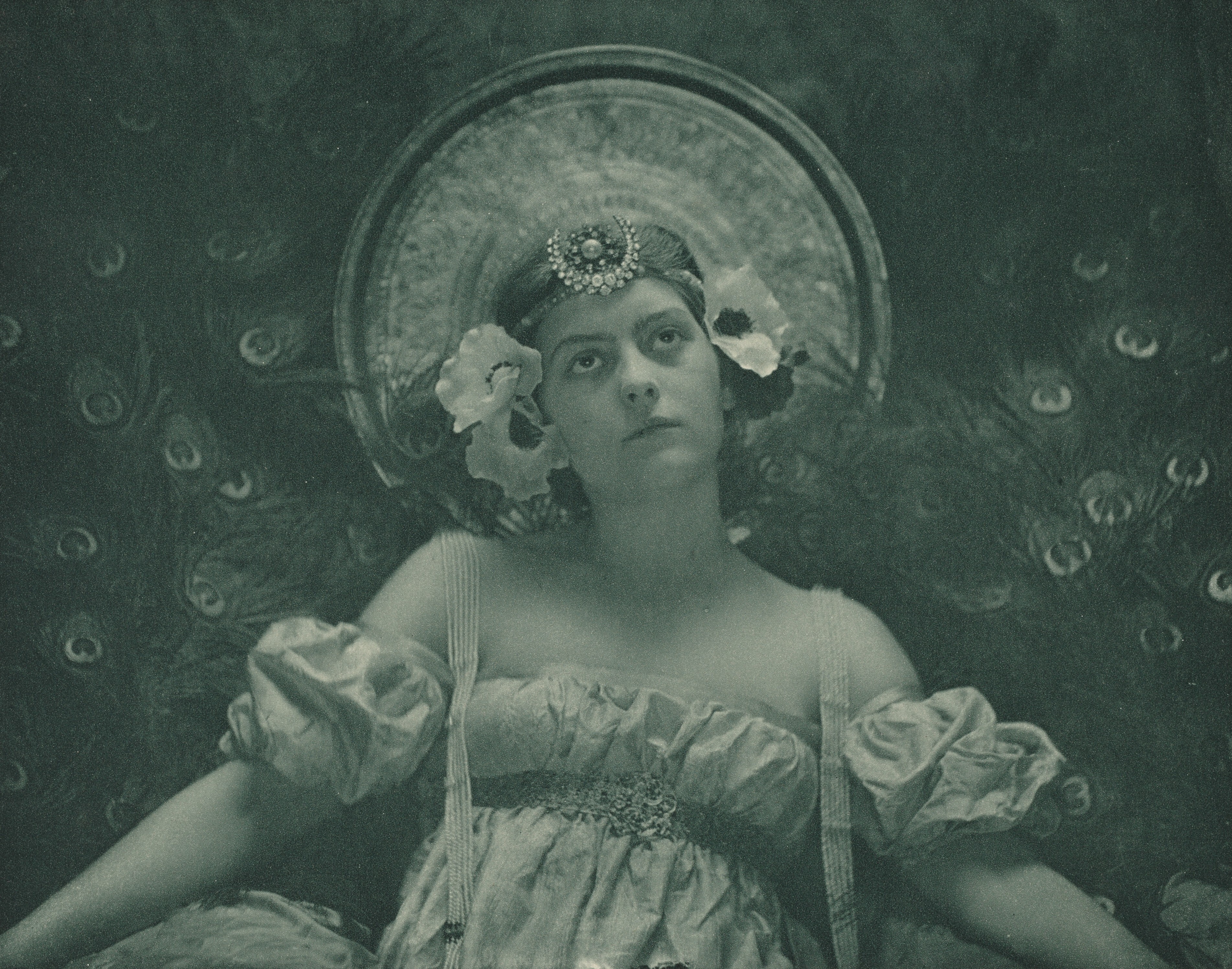
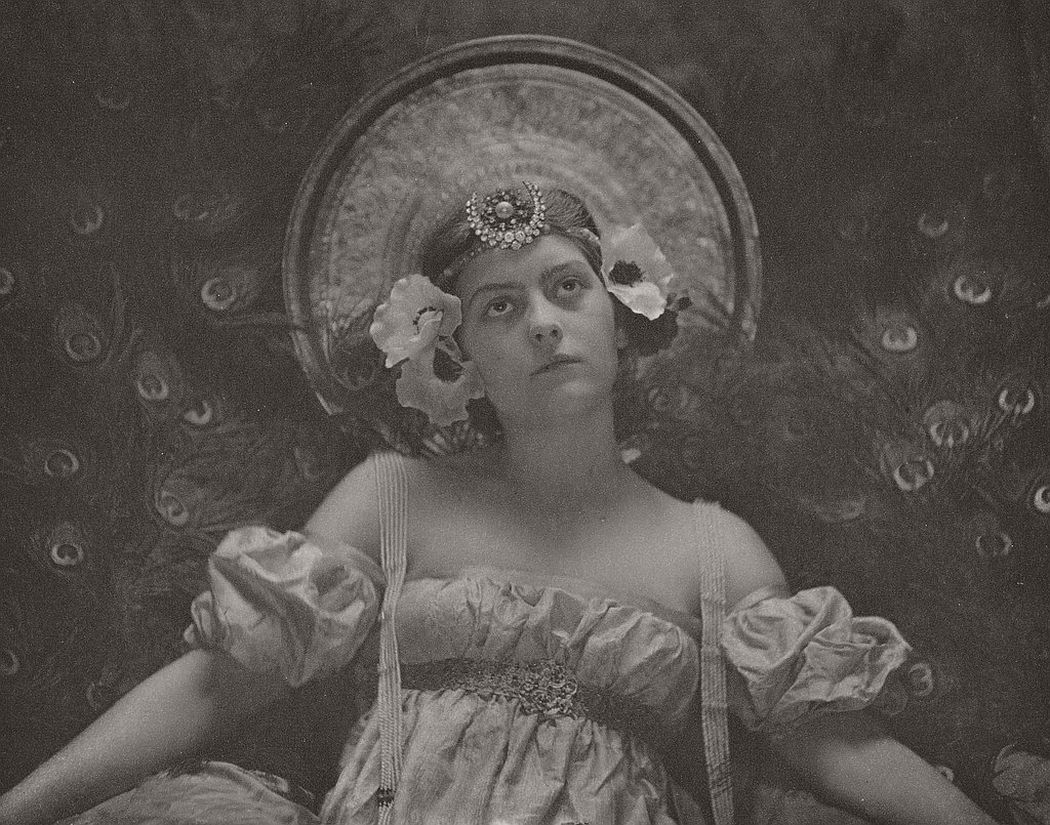
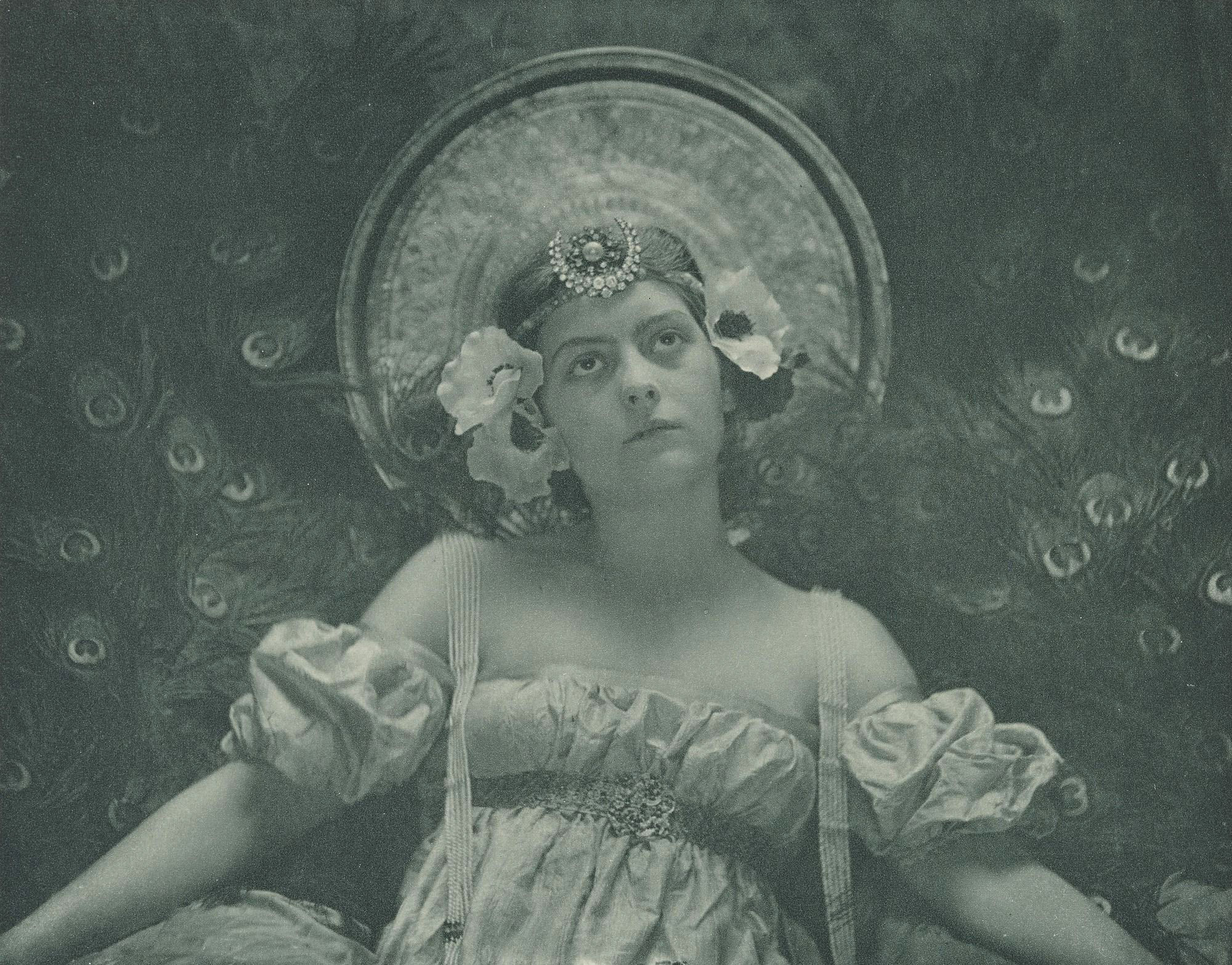
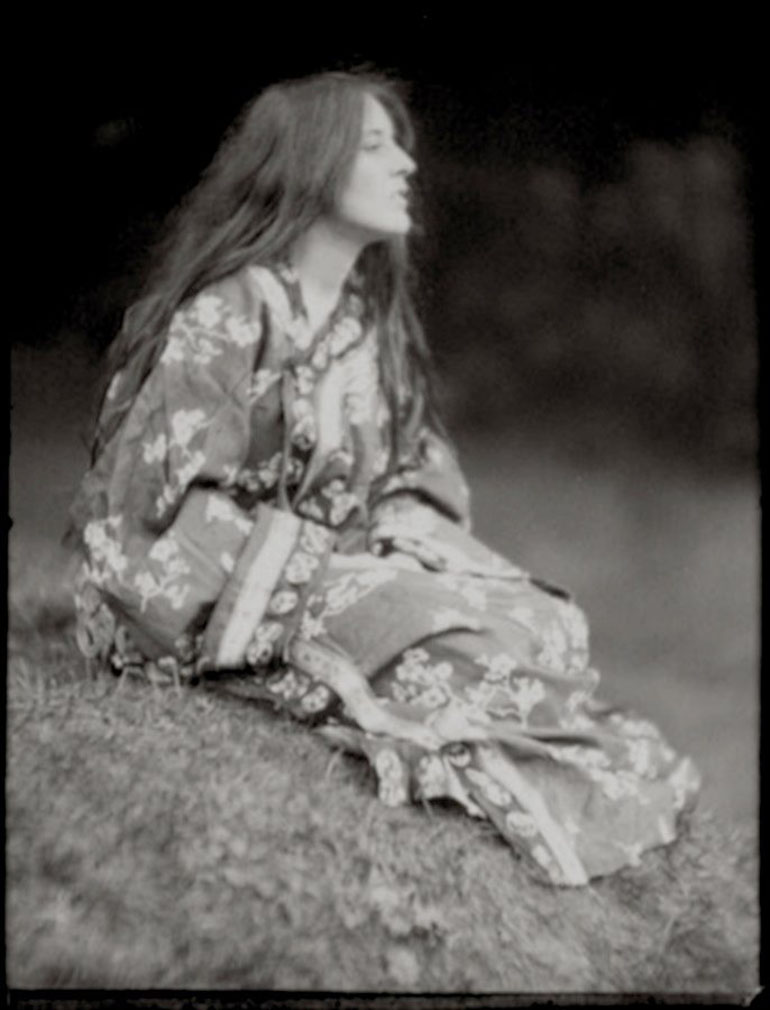
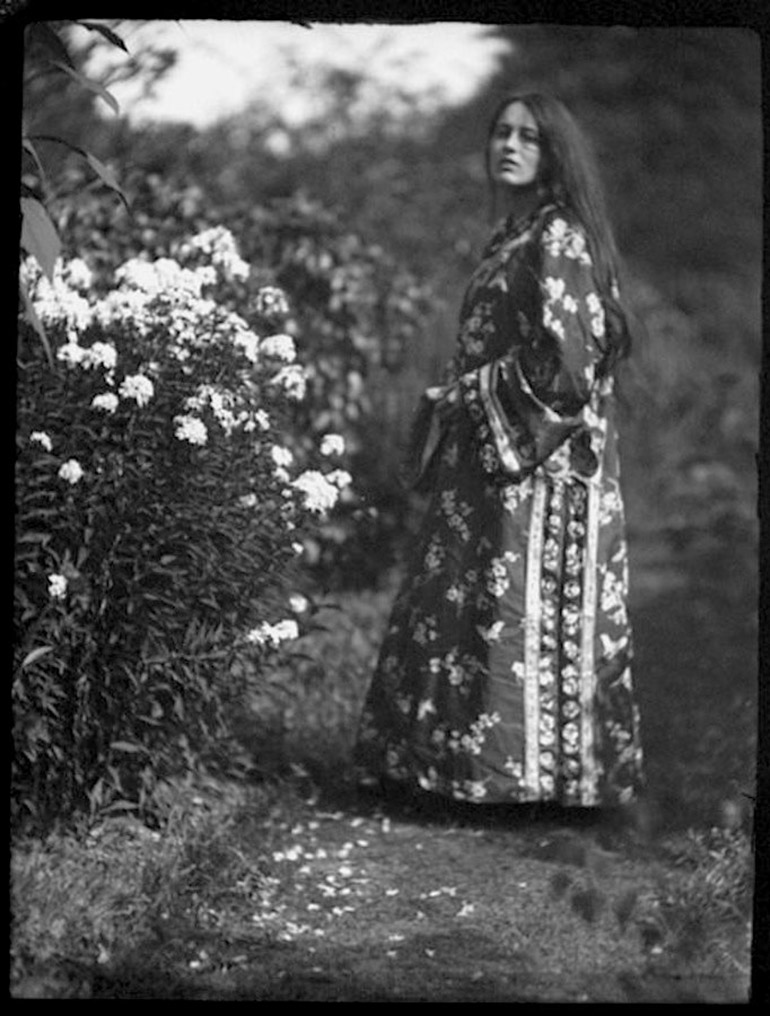
Emma Justine Farnsworth :: La Cigale, 1899; photogravure in blue mounted on light gray wove paper. From : American Pictorial Photography, Series I | src National Gallery of ArtControversial: is this image Berg’s or Farnsworth’s?Charles I. Berg (American, 1856-1926) :: Odalisque, circa 1897. Photogravure. Camera Notes Vol. 3 No. 3. | The Art of PhotogravureCharles I. Berg (American, 1856–1926) :: Odalesque (sic), No. 17 from the portfolio “American Pictorial Photography, Series I” (1899); edition 146/150 | AIC · Art Institute Chicago
This has not been an involuntary mistake, the images had been credited as there were in their respective sources. But there is further to be noticed, as you can see, the image below look more like one of Farnsworth in style and motive.
Charles I. Berg : Odalesque, 1899 series Title : American Pictorial Photography, Series I Medium : photogravure in red mounted on green wove paper
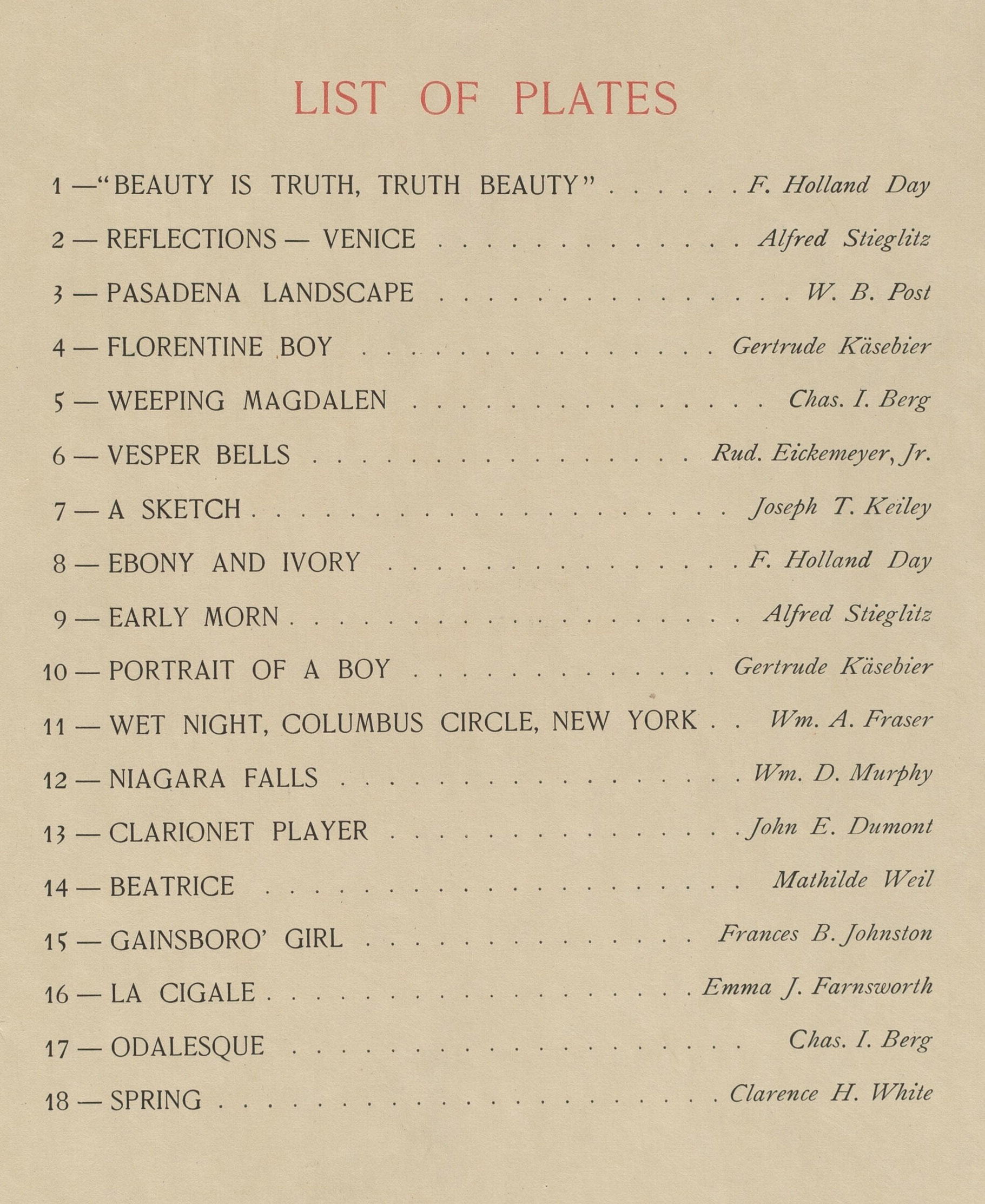
Index : American Pictorial Photography, Series I (1899) Published for ‘Camera Notes’ by the Publication Committee of the Camera Club (New York)
Plate 16 : La Cigale …………….. by Emma J. Farnsworth
Plate 17 : Odalesque ………….. by Charles I. Berg
Bearing in mind the photographers’ styles and motives it is highly probable that the plates had been miscredited at the National Gallery of Art. We reckon the last but one image in this post is plate number 16 (La Cigale / Farnsworth); and the other images correspond to plate number 17 : ‘Odalesque’ by Charles Berg.
Anyway, we are not certain about it, but hope that you have enjoyed the images.
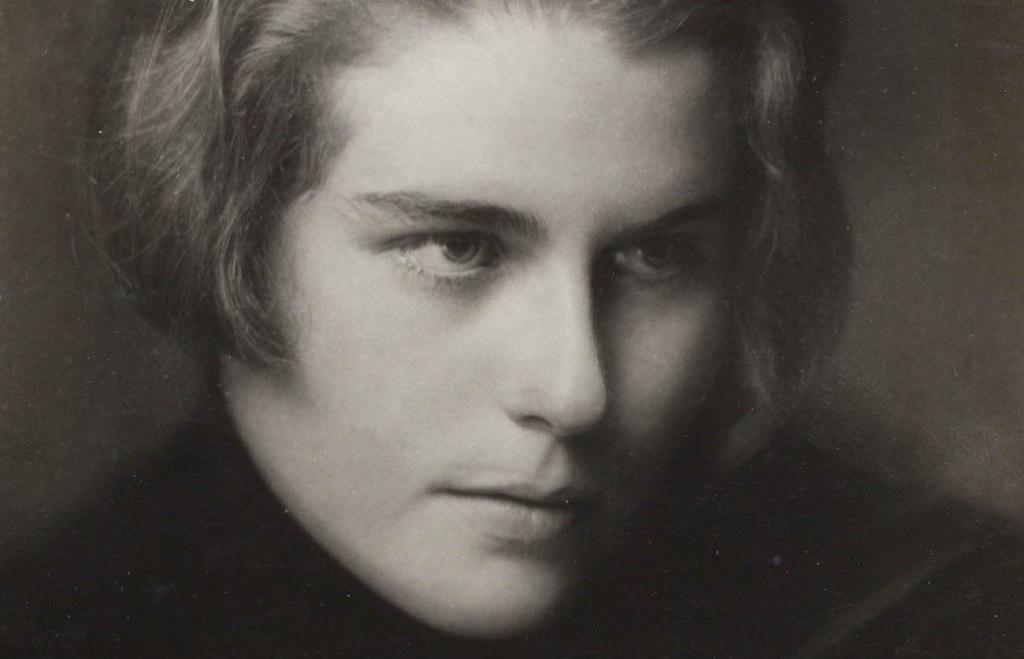
Photographer’s stamp with address at “Wien I. Ebendorferstraße 3”, her copyright stamp and her re-order stamp with handwritten negative no. “1039/a” in ink, “Wiener Foto-Kurier” agency stamp, several numbers and handwritten annotated “Frl. Marianne Rosenberg” in pencil on the reverse. LITERATURE “Die junge Frau von Heute”, in: Die Bühne, no. 299, March 1931, Vienna, p. 5 (titled “Fräulein Maria Rosenberg”); Frauke Kreutler, Anton Holzer (eds.), Trude Fleischmann. Der selbstbewusste Blick, cat. Wien Museum, Vienna 2013, p. 127 (ill. from “Die Bühne”).
«Die junge Frau von Heute». Fräulein Maria Rosenberg. Die Bühne, no. 299, March 1931, p. 5«Die junge Frau von Heute» Die Bühne, no. 299, March 1931, p. 6«Die junge Frau von Heute» Die Bühne, no. 299, March 1931, p. 7Elisabeth Martin, die Gattin des Direktors der Berliner Volksbühne Karl Heinz Martin. Die Bühne, 299, März 1931Hanne Wassermann, die bekannte Wiener Gymnastiklehrerin. Die Bühne, 299, März 1931
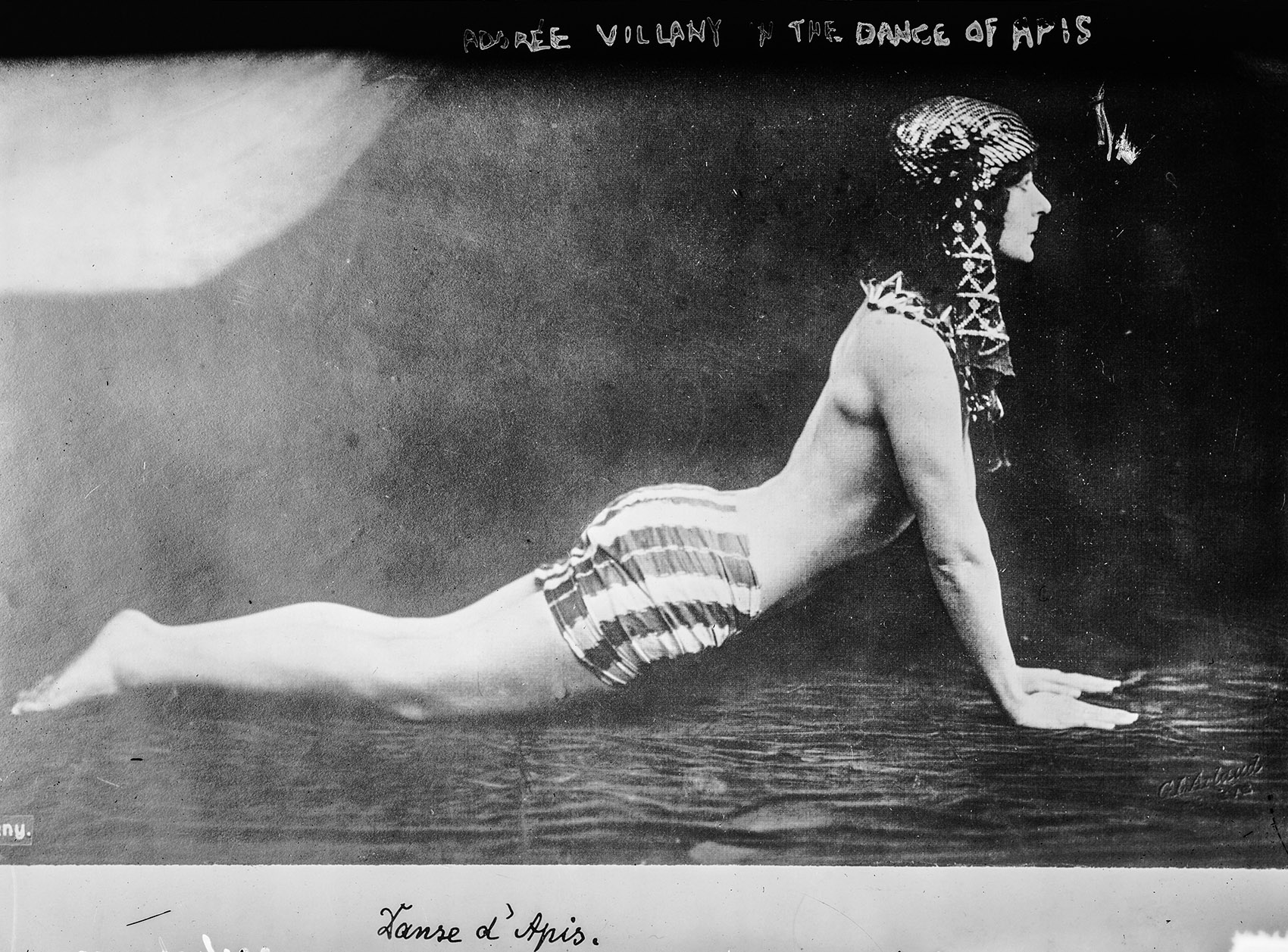
Text on image : Adoree Villany / The Dance of Apis / Villany / Danse d’Apis / 2619 Uncredited photographer on source. Blindstamp on right lower corner of the image reads: G.L. Arlaud.Adoree Villany in the Dance of Apis, between ca. 1910-1915. Glass negative. Bain News Service | src Library of Congress
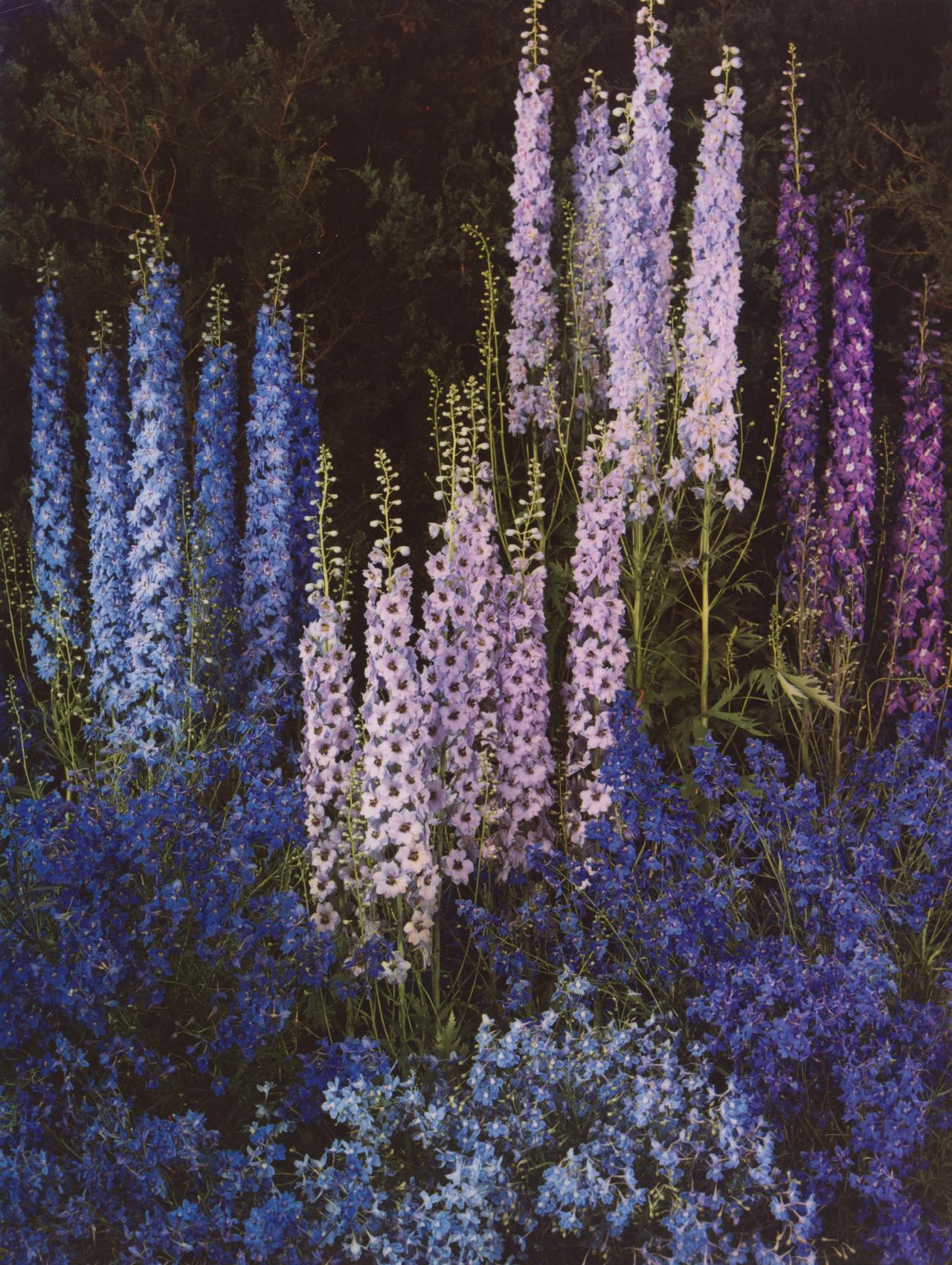
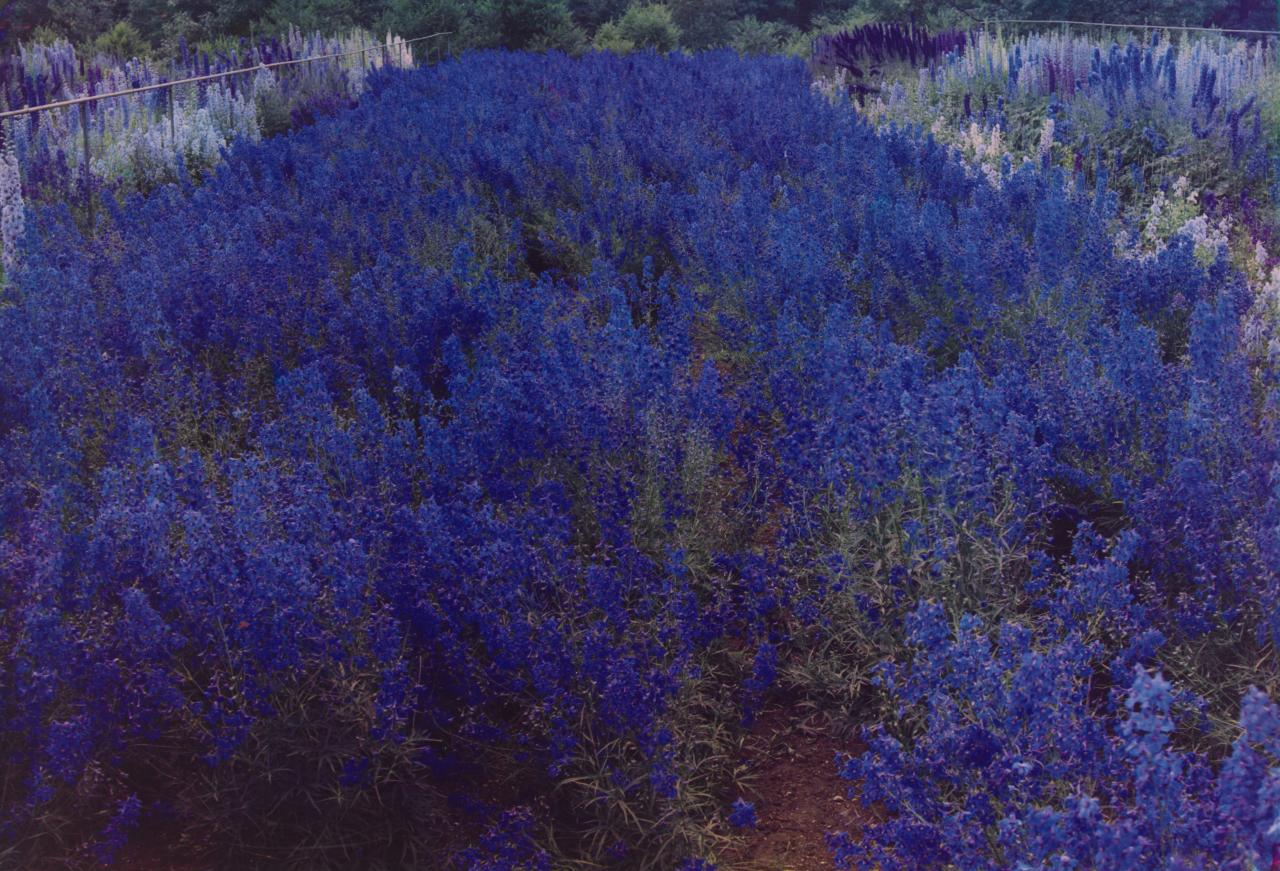
Edward Steichen ~ Delphiniums, Ridgefield, Connecticut, 1939; printed 1940. Dye transfer photograph. | src NGVEdward Steichen ~ Block of blue wave delphiniums at Steichen’s plant breeding farm, 1938 | NGV ~ National Gallery of VictoriaEdward Steichen (American, b. Luxembourg, 1879–1973) ~ Delphiniums, ca. 1940. Dye imbibition print. | Eastman museum
Edward Steichen: painter, photographer, modern art promoter, museum curator, exhibition creator—and delphinium breeder.
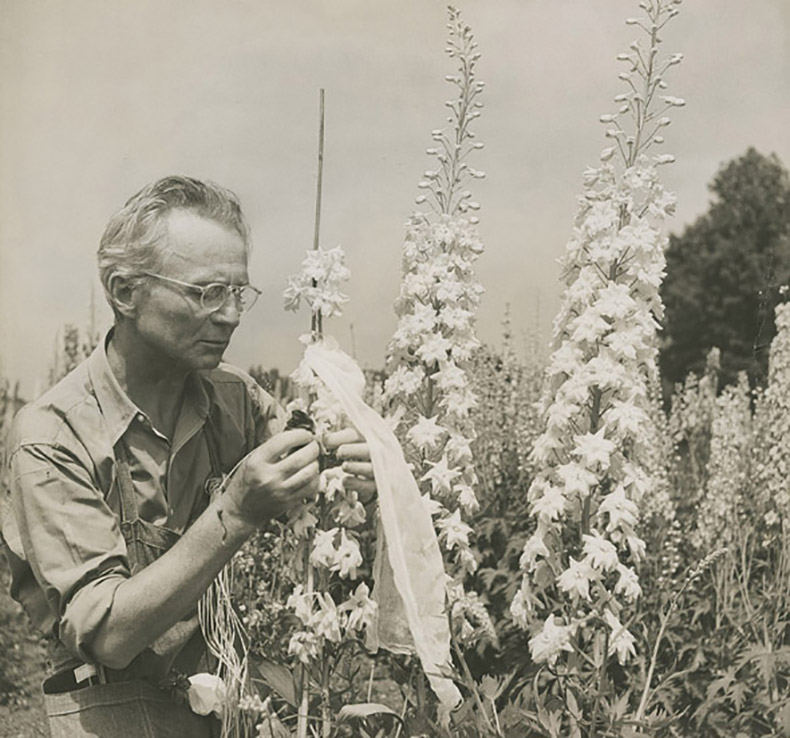
Yes, in addition to his groundbreaking career as a visual artist and museum professional, Steichen was also a renowned horticulturist. While he lived in France, the French Horticultural Society awarded him its gold medal in 1913, and he served as president of the American Delphinium Society from 1935 to 1939. In the early 1930s, after leaving his position as chief of photography for the Condé Nast publications—including Vogue and Vanity Fair—and more than 10 years before beginning his career as Director of the Department of Photography at MoMA, he retired to his Connecticut farm to raise flowers.
Among the delphinium breeds Steichen hybridized there were “Carl Sandburg,” named for his brother-in-law and close friend (and Nobel Prize–winning poet and author), and, in the 1960s, “Connecticut Yankees”…
In June 1936, MoMA presented its first and only dedicated flower show, Edward Steichen’s Delphiniums, which exhibited—for one week only—plants Steichen had raised and then trucked to the Museum’s galleries himself. (Read the original press release for the exhibition in MoMA’s online press archives.)
Edward Steichen with delphiniums (ca. 1938), Umpawaug House (Redding, Connecticut). Photo by Dana Steichen. Gelatin silver print. Edward Steichen Archive, VII. The Museum of Modern Art Archives. | MoMA blog
Edward Steichen ~ [Dana Steichen draped in shawl], ca. 1920. Cyanotype and palladium print. | src George Eastman museumEdward Steichen ~ Dana Steichen Holding a Sunflower, ca. 1924. Cyanotype and palladium print. | src George Eastman MuseumEdward Steichen ~ [Dana Steichen draped in shawl], ca. 1920. Cyanotype and experimental process. | src George Eastman Museum
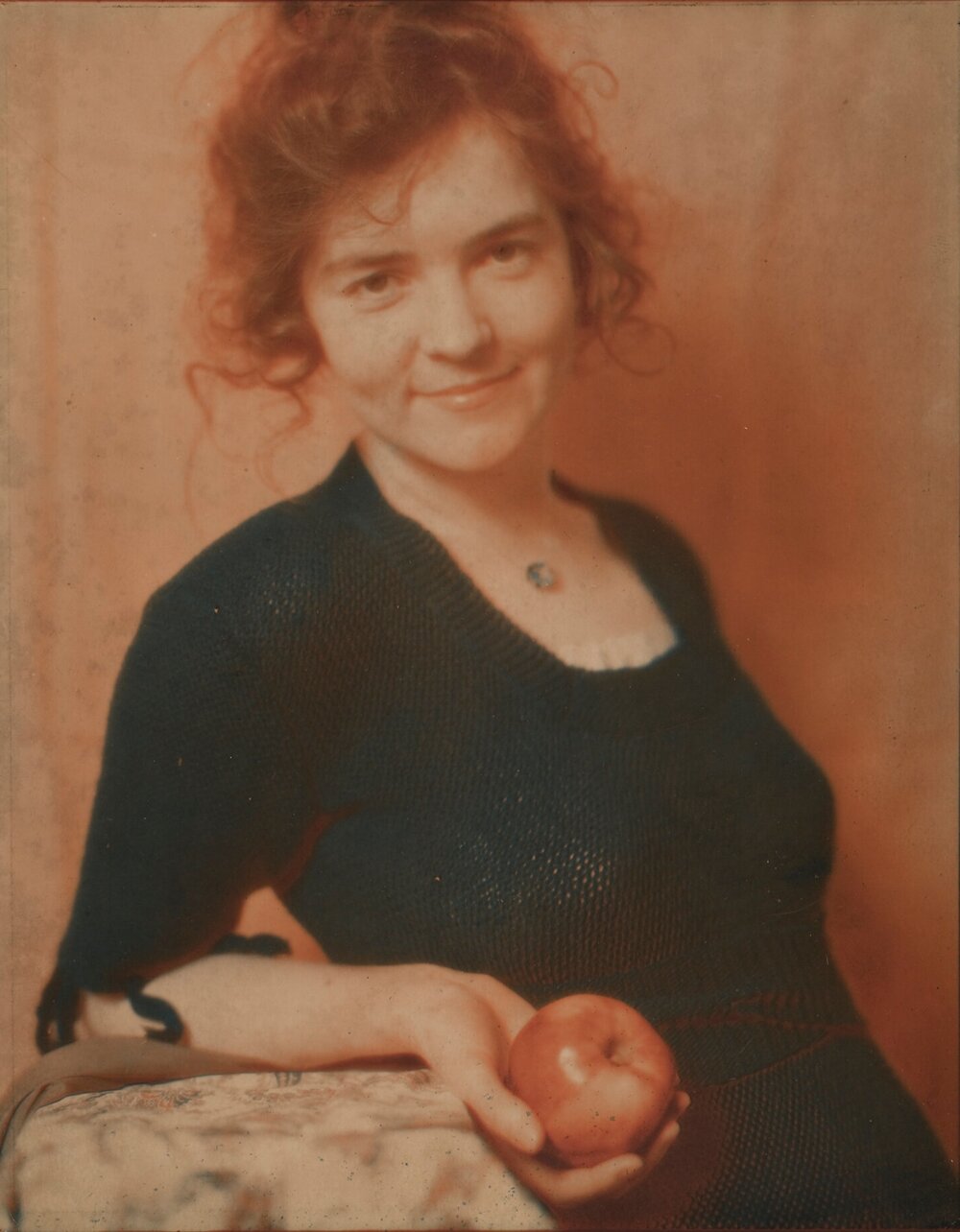
Edward Steichen ~ Dana [Desboro Glover] Steichen holding an Apple ca. 1923. Dye imbibition print. | George Eastman Museum
After a quiet romance, Steichen married the actress Dana Desboro Glover in March 1923 in Blairstown, New Jersey, where Dana’s family owned a farm. From 1928 on they lived together on a large farm in West Redding, Connecticut where Steichen continued his extensive work in plant genetics, breeding award-winning delphiniums and other flowers. A strikingly modern glass home they built there continues to garner praise for its extraordinary siting and craftsmanship. Up until 1927, they also spent a part of each summer at Steichen’s home in Voulangis. Dana Steichen died in 1957 after thirty-four years of marriage. (quoted from E.S. Estate)
Edward Steichen (American, b. Luxembourg, 1879–1973) Edward Steichen~ [Dana Steichen with apple], ca. 1920. Cyanotype and palladium print. | George Eastman Museum
PUCK der Waldgeist nennt diese junge fantasiebegabte Tänzerin diesen grotesken Tanz, ein paar Kastanien- blätter sind die Dekoration Foto: Illpho-Dillan 2. Das Kleine Magazin 1940 Band 16 Heft 34PUCK the forest spirit is what this young, imaginative dancer calls this grotesque dance, a few chestnut leaves are the decoration Photo: Illpho-Dillan 2. Published in Das Kleine Magazin, 1940
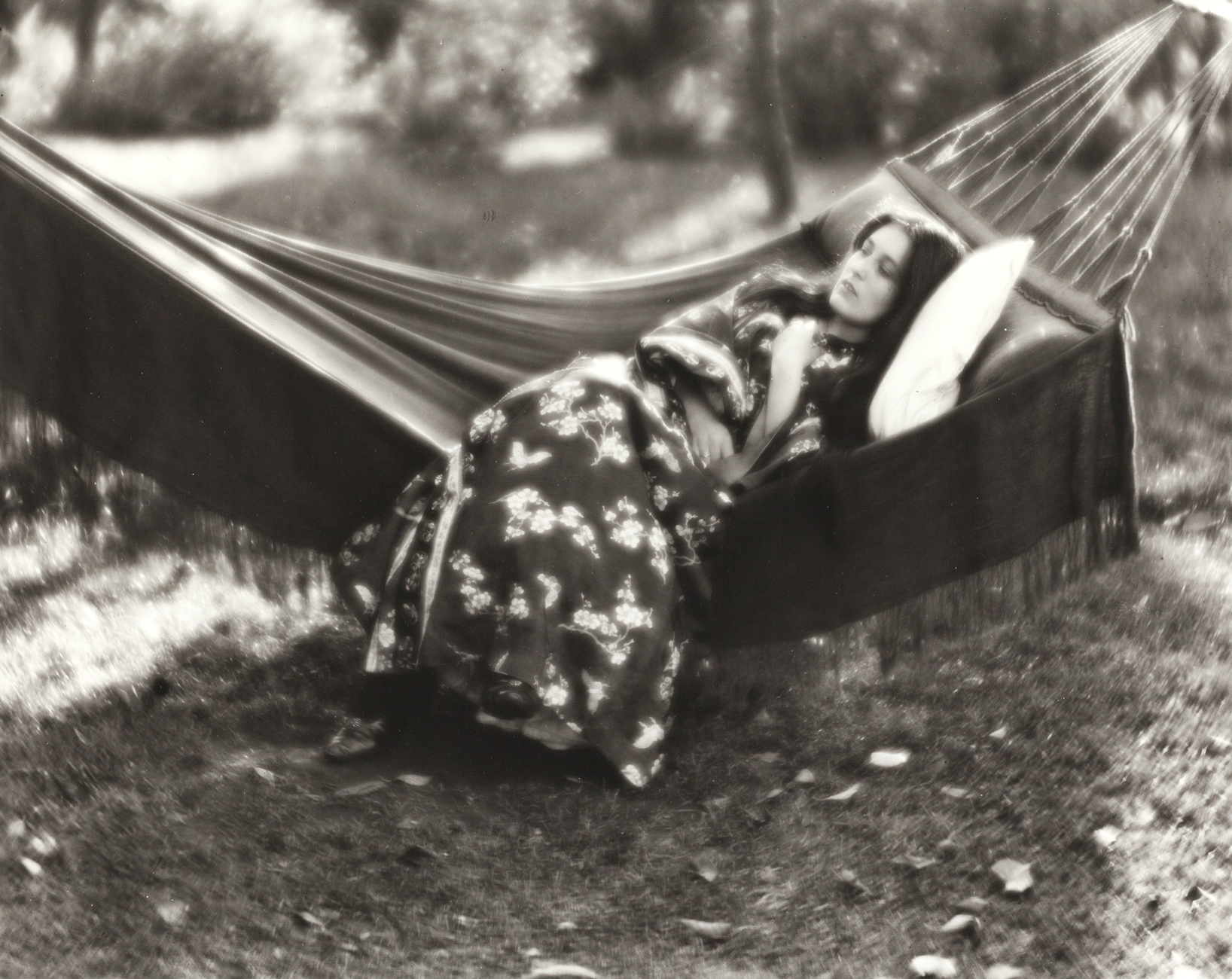
Alvin L. Coburn (1882–1966) :: ‘Toodles (Elsie Thomas)’, ca. 1908. Gelatin silver print, printed in the 1980s | Ostlicht Auktion 2023
Coburn was given his first camera at the age of eight and was introduced to photography by his cousin Fred Holland Day. As early as 1902 he became a member of the New York Photo-Secession initiated by Alfred Stieglitz, and two years later his first pictures appeared in Stieglitz’s magazine “Camera Work”. A vintage print of this beautiful motif is hold at The Museum of Fine Arts, Houston (MFAH), there titled and dated. Coburn also made autochromes of the same model, showing the red colour of her kimono.
Alvin Langdon Coburn (1882–1966) :: ‘Toodles (Elsie Thomas)’, ca. 1908 | Ostlicht Auktion 2023Alvin Langdon Coburn :: Elsie Thomas in an Eastern costume sitting on a hammock, ca.1908. AutochromeAlvin Langdon Coburn :: Elsie Thomas in a red an Eastern costume with sunflower, ca.1908. Autochrome LumièreAlvin Langdon Coburn :: Elsie Thomas (‘Toodles’) in an Eastern costume, ca.1908Alvin Langdon Coburn :: Elsie Thomas wearing an Eastern costume, ca.1908






![Edward Steichen ~ [Dana Steichen draped in shawl], ca. 1920. Cyanotype and palladium print. | src George Eastman museum](https://unregardoblique.com/wp-content/uploads/2023/06/dana-steichen-draped-in-shawl-ca.-1920.-cyanotype-and-palladium-print.jpg)


![Edward Steichen
American, b. Luxembourg, 1879–1973
[Dana Steichen with apple]
ca. 1920
Cyanotype and palladium print](https://live.staticflickr.com/65535/52939805172_c426b43d9f_o.jpg)





 un regard oblique