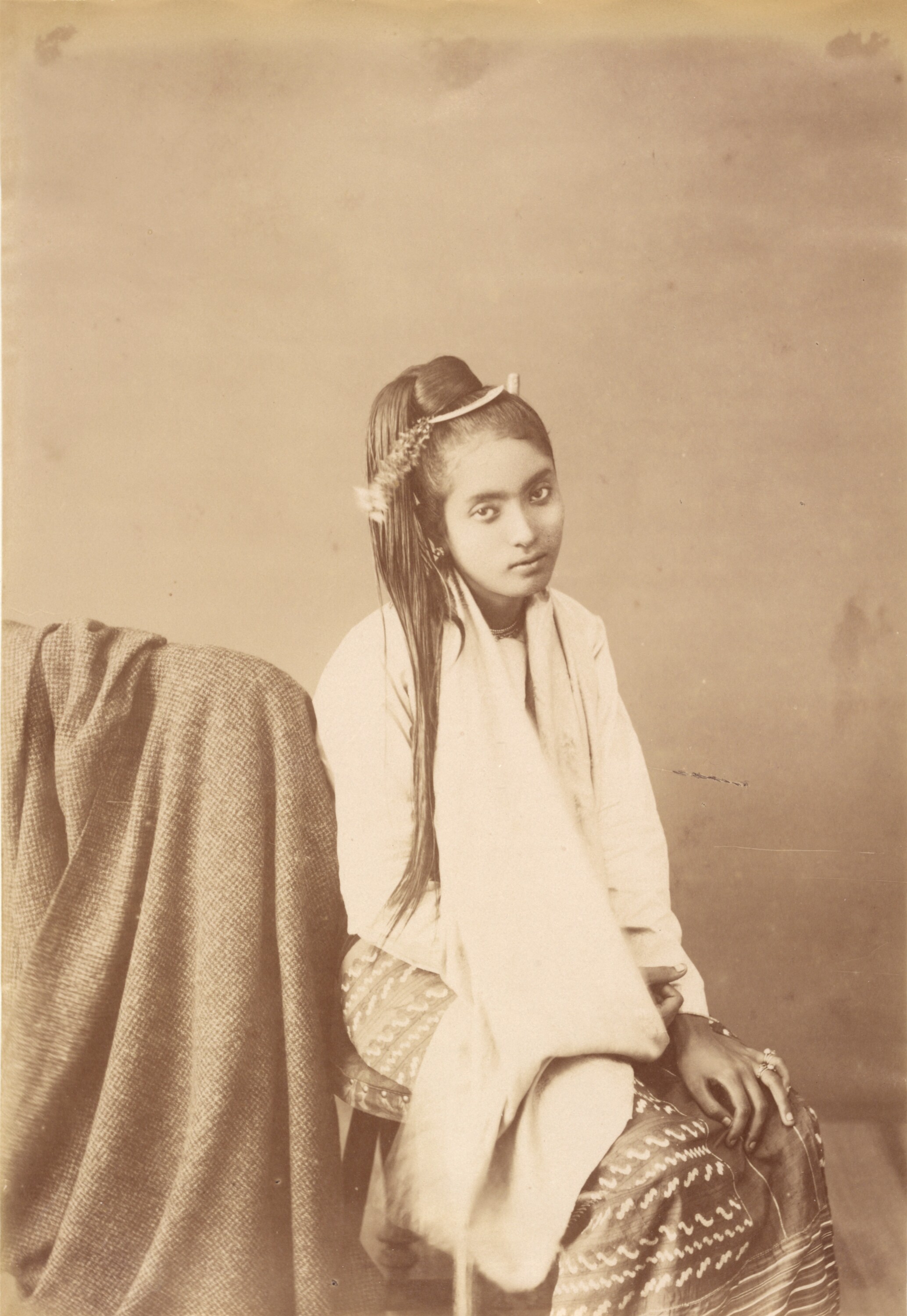
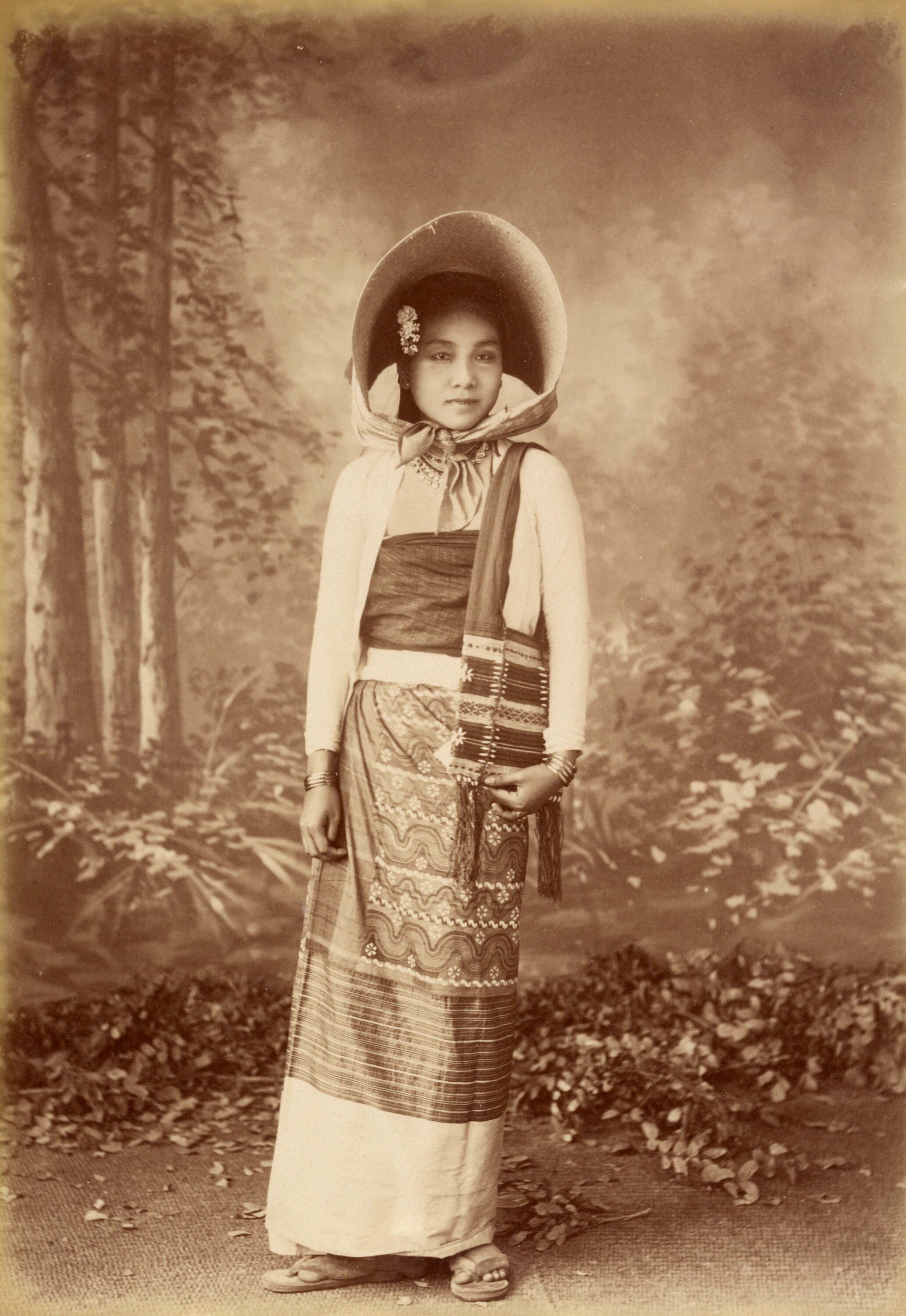
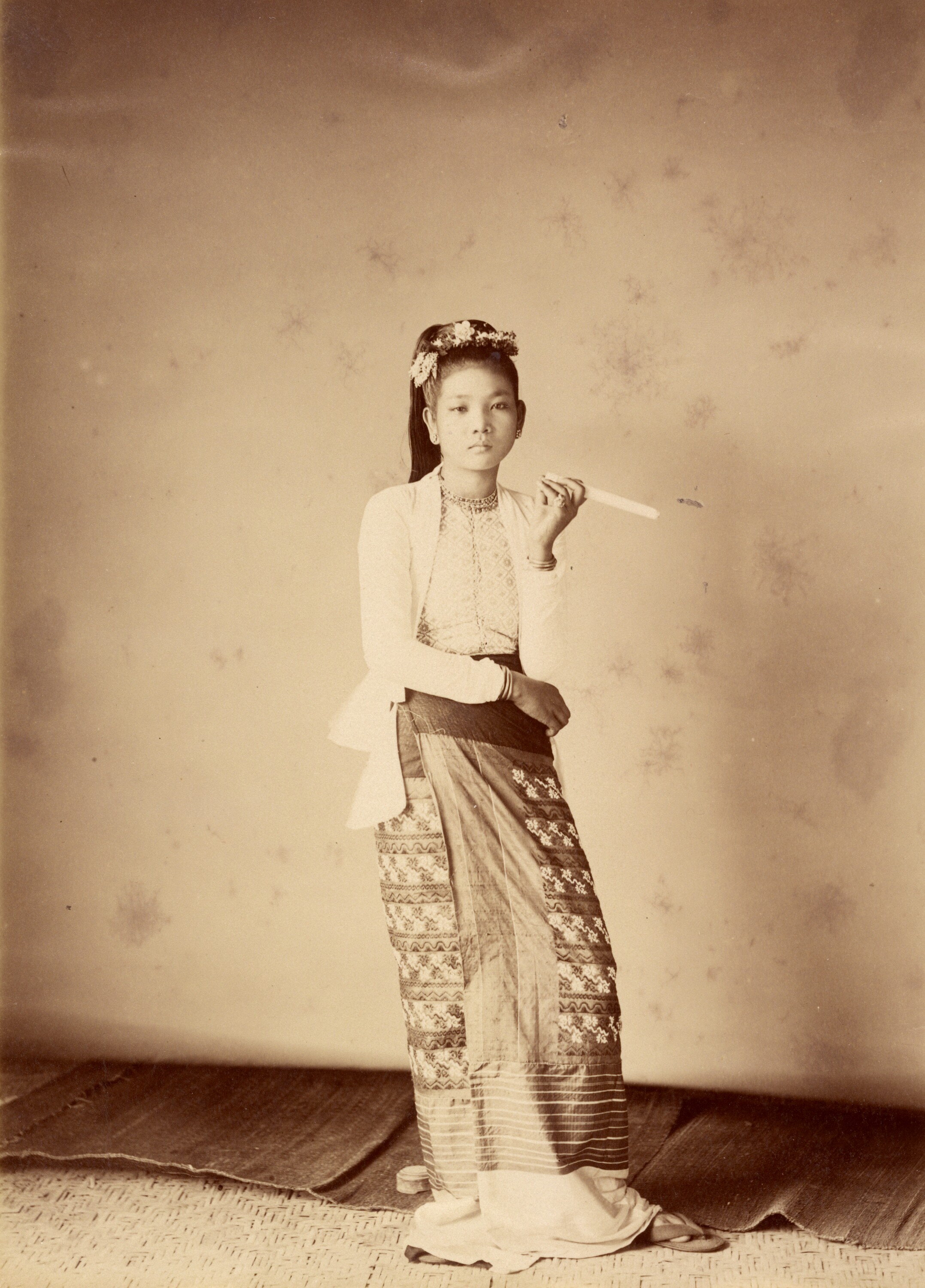
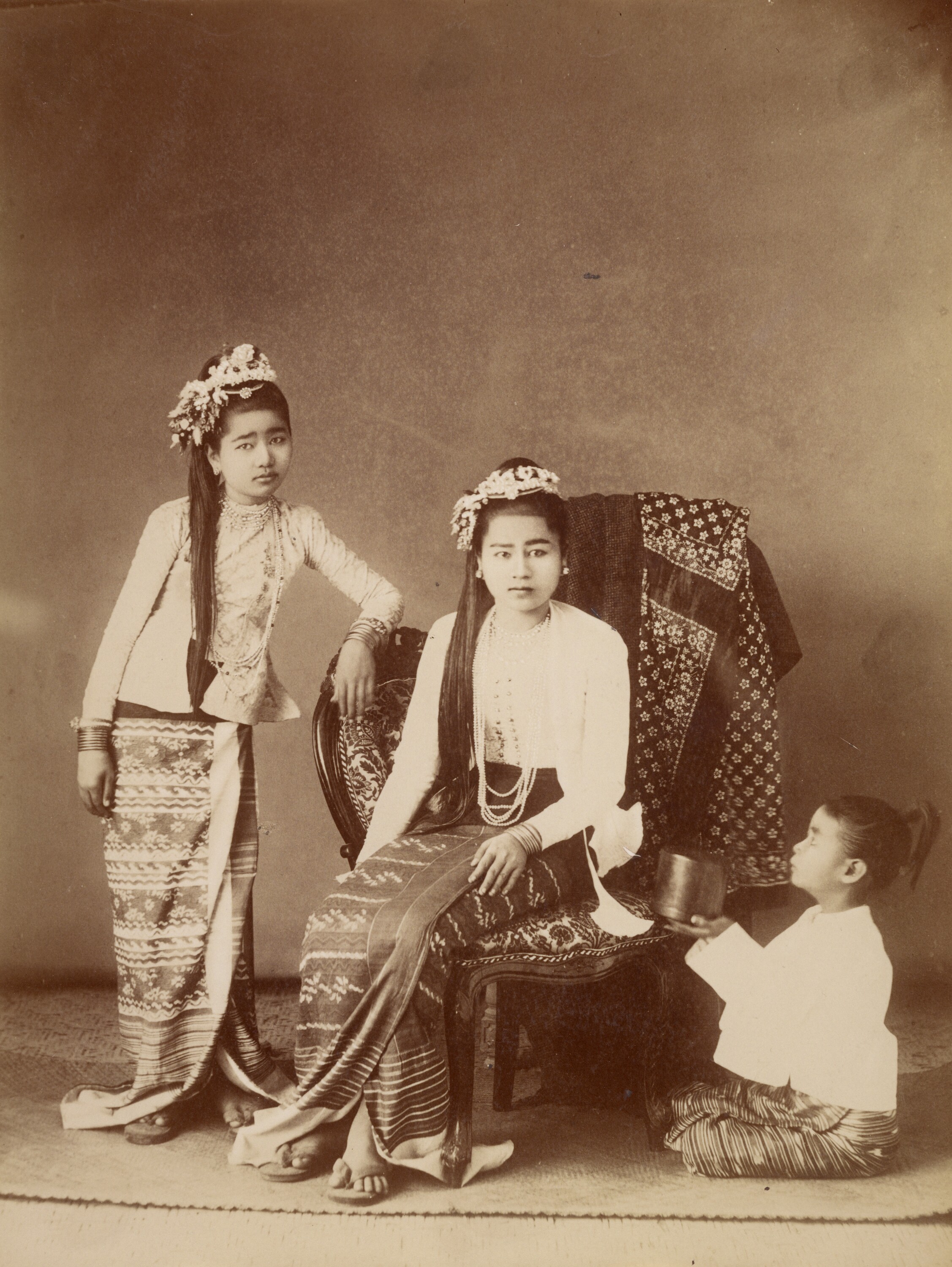
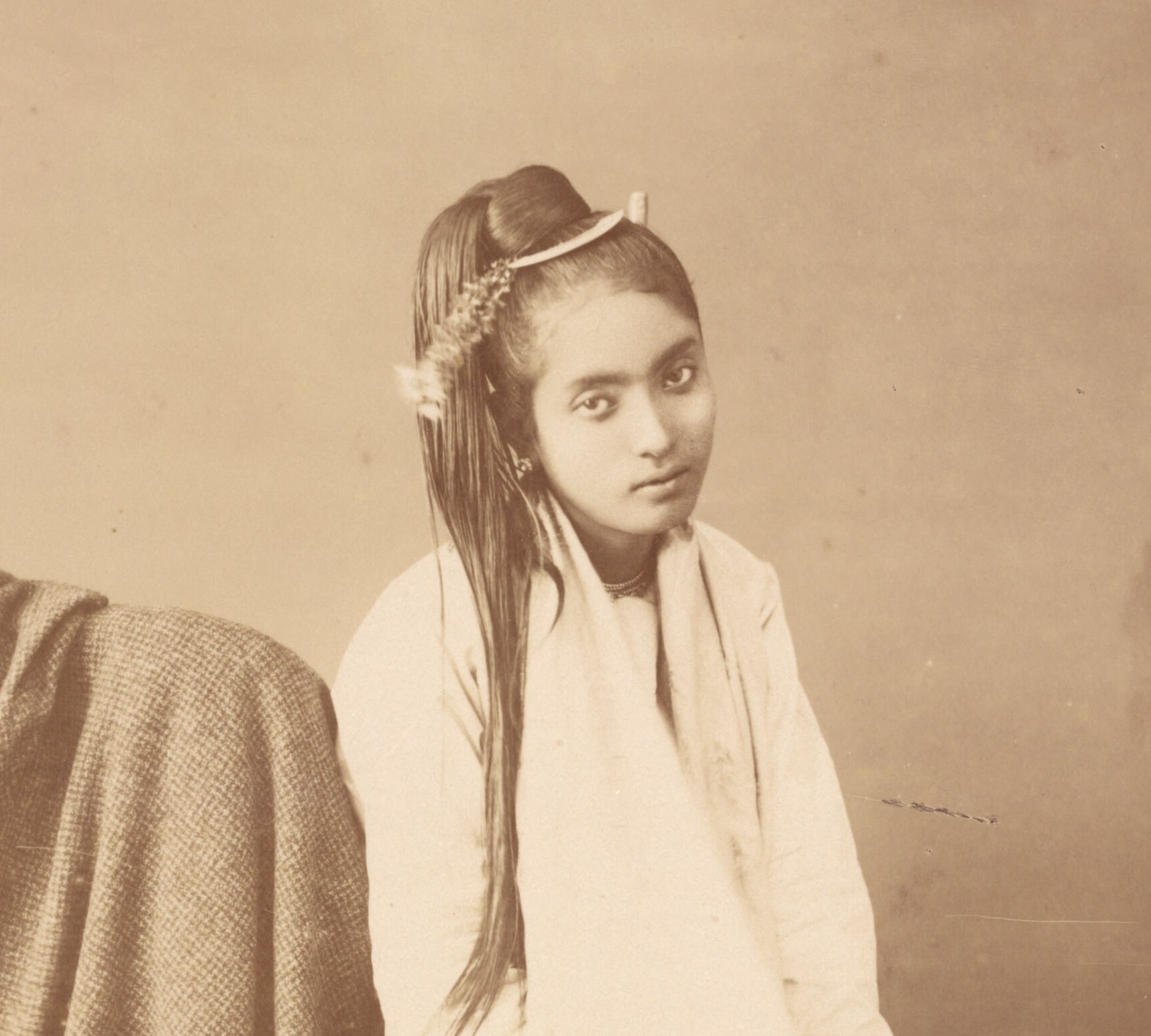
Felice Beato (1832 – 1909) ~ Burmese Type Silk Sitter, Burma, about 1885. Albumen silver print. Portfolio of Views in Burma src Wilson Centre for Photography at Getty MuseumFelice Beato (1832 – 1909) ~ Burmah, about 1885. Albumen silver print. Portfolio of Views in Burma A full length studio portrait of a young woman dressed in Burmese clothing. She holds a parasol over her right shoulder.Felice Beato (1832 – 1909) ~ A Sawbwa Daughter, Burma, about 1885. Albumen silver print. Portfolio of Views in Burma src Wilson Centre for Photography at Getty MuseumFelice Beato (1832 – 1909) ~ An Interpreter’s Wifer, Burma, about 1885. Albumen silver print. Portfolio of Views in Burma A full length studio portrait of a Burmese woman smoking a cheroot.Felice Beato (1832 – 1909) ~ Burmese Girl and her Cheroot, Burma, about 1885. Albumen silver print. Portfolio of Views in Burma src Wilson Centre for Photography at Getty MuseumFelice Beato (1832 – 1909) ~ Burmese Princesses, Burma, about 1885. Albumen silver print. Views in Burma src Wilson Centre for Photography at Getty MuseumFelice Beato (1832 – 1909) ~ Burmese Peasant Girl as Decolté, Burma, about 1885. Albumen silver print. Views in Burma Full length studio portrait of a girl in traditional Burmese clothing with a clay water jug under one arm. In her right hand she holds a coiled rope and basket.Felice Beato (1832 – 1909) ~ Burmese Type Silk Sitter, Burma, about 1885. Albumen silver print. Portfolio of Views in Burma (Group Title) | src Wilson Centre for Photography at Getty Museum
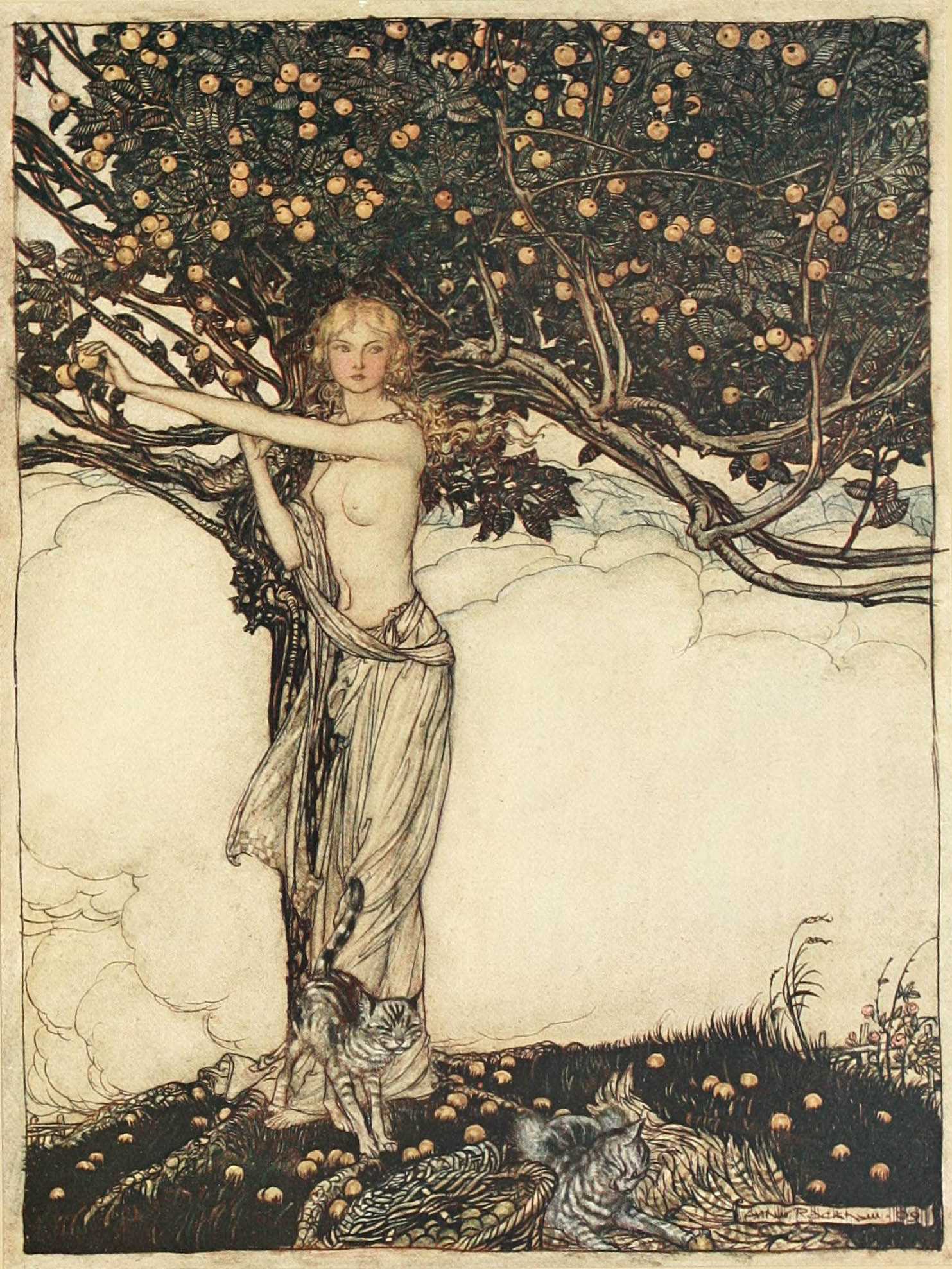
Freia, the fair one · From : The Rhinegold & the Valkyrie, 1910Freia · From : The Rhinegold & the Valkyrie, 1910Brünnhilde · From : The Rhinegold & the Valkyrie, 1910Brünnhilde slowly and silently leads her horse down the path to the caveBrünnhilde stands for a long time dazed and alarmed · From : The Rhinegold & the Valkyrie, 1910Sieglinde prepares Hunding’s draught for the night” Father ! Father ! Tell me what ails thee ? With dismay thou art filling thy child ! “
” The Rhine’s fair children, Bewailing their lost gold, weep “From : The Rhinegold & The ValkyrieThe Rhine-Maidens teasing Alberich · From : The Rhinegold & The Valkyrie” Mock away ! Mock ! The Niblung makes for your toy ! ““Seize the despoiler ! Rescue the gold ! Help us ! Help us ! Woe! Woe!”The frolic of the Rhine-Maidens · From : The Rhinegold & The Valkyrie
All illustrations are from : The Rhinegold & The Valkyrie by Richard Wagner (1813-1883). Illustrations by Arthur Rackham (1867-1939). Published in 1910. New York Public Library at internet archive
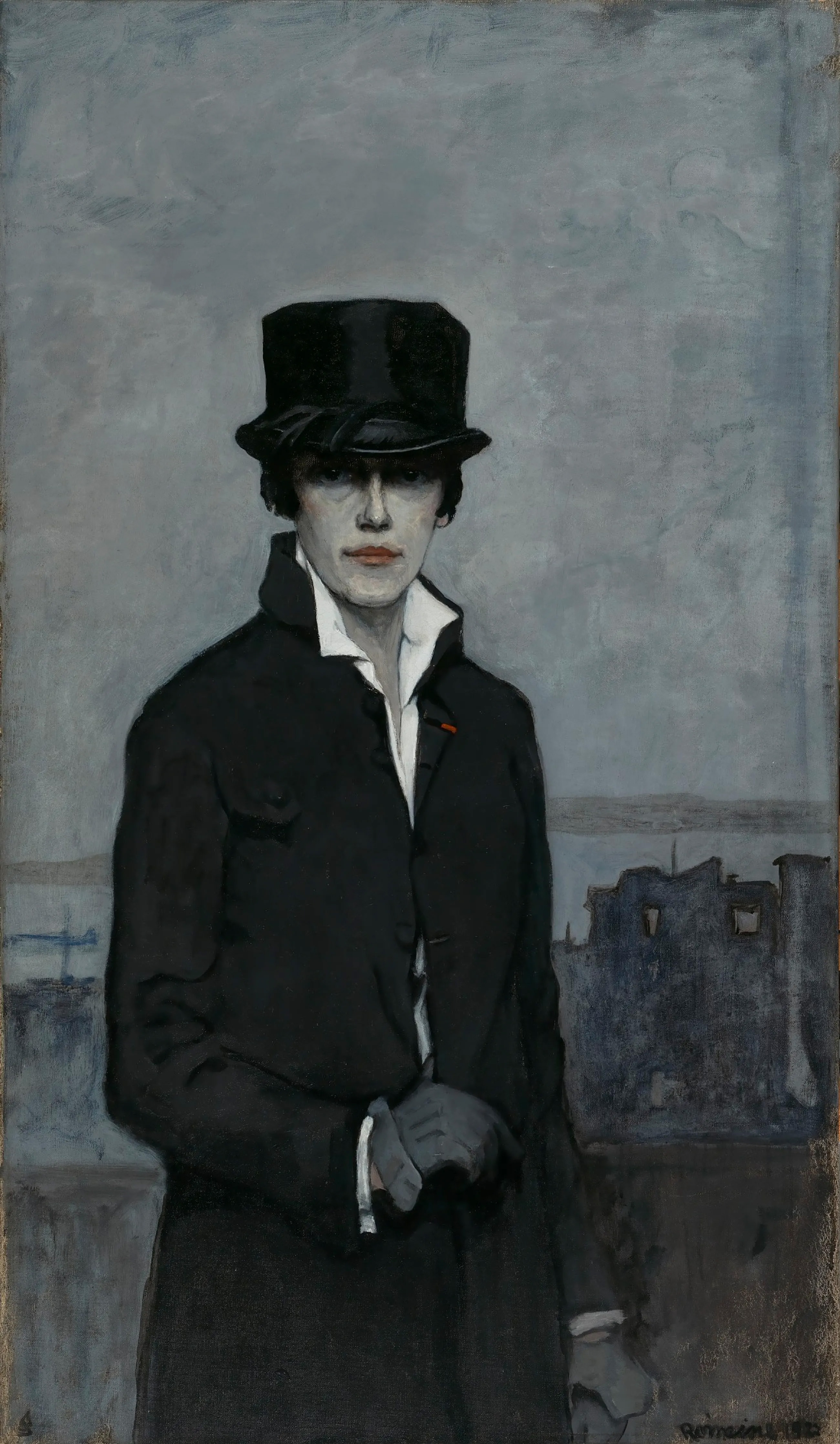
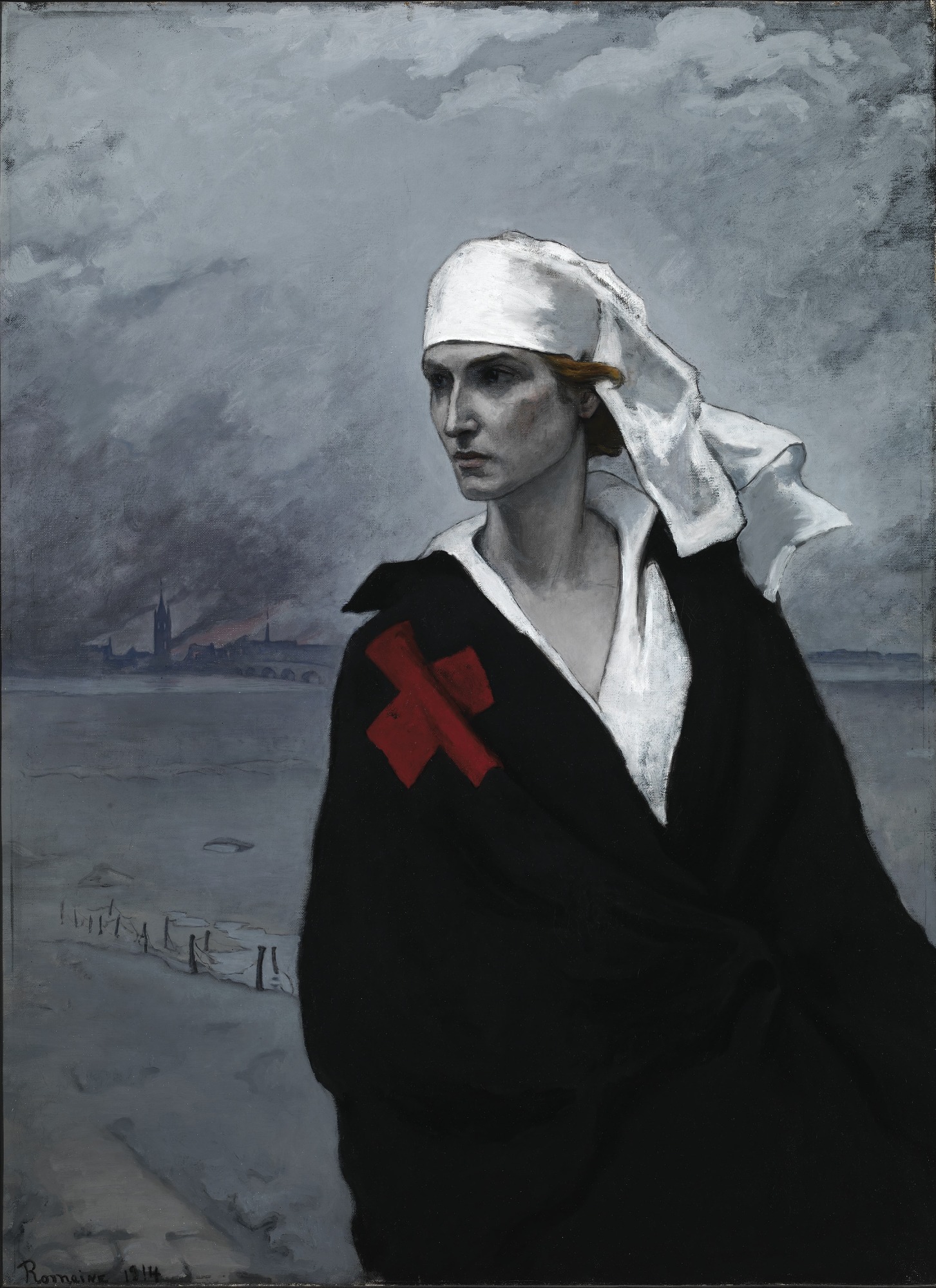
Beatrice Romaine Goddard (1874-1970), known as Romaine Brooks ~ Au bord de la mer (At the seaside), 1914. Oil on canvas. | Franco-American museum of the Blérancourt castle via wikimedia commonsBeatrice Romaine Goddard (1874-1970), known as Romaine Brooks ~ Au bord de la mer (Autoportrait), 1914. Oil on canvas.Romaine Brooks ~ Peter (A Young English Girl), 1923-1924, oil on canvas SAAM-1970.70_2
Peter depicts British painter Hannah Gluckstein, heir to a catering empire who adopted the genderless professional name Gluck in the early 1920s. By the time Brooks met her at one of Natalie Barney’s literary salons, Gluckstein had begun using the name Peyter (Peter) Gluck. She unapologetically wore men’s suits and fedoras, clearly asserting the association between androgyny and lesbian identity. Brooks’s carefully nuanced palette and quiet, empty space produced an image of refined and austere modernity. ~ The Art of Romaine Brooks, 2016
With this self-portrait, Brooks envisioned her modernity as an artist and a person. The modulated shades of gray, stylized forms, and psychological gravity exemplify her deep commitment to aesthetic principles. The shaded, direct gaze conveys a commanding and confident presence, an attitude more typically associated with her male counterparts. The riding hat and coat and masculine tailoring recall conventions of aristocratic portraiture while also evoking a chic androgyny associated with the post–World War I “new woman.” Brooks’s fashion choices also enabled upper-class lesbians to identify and acknowledge one another. ~ The Art of Romaine Brooks, 2016
Romaine Brooks ~ Una, Lady Troubridge, 1924, oil on canvas SAAM-1966.49.6_2
Una Troubridge was a British aristocrat, literary translator, and the lover of Radclyffe Hall, author of the 1928 pathbreaking lesbian novel, The Well of Loneliness. Troubridge appears with a sense of formality and importance typical of upper-class portraiture, but with the sitter’s prized dachshunds in place of the traditional hunting dog. Troubridge’s impeccably tailored clothing, cravat, and bobbed hair convey the fashionable and daring androgyny associated with the so-called new woman. Her monocle suggested multiple symbolic associations to contemporary British audiences: it alluded to Troubridge’s upper-class status, her Englishness, her sense of rebellion, and possibly her lesbian identity. ~ The Art of Romaine Brooks, 2016
Romaine Brooks ~ La France Croisée, 1914, oil on canvas SAAM-1970.69_2
In La France Croisée, Brooks voiced her opposition to World War I and raised money for the Red Cross and French relief organizations. Ida Rubinstein was the model for this heroic figure posed in a nurse’s uniform, with cross emblazoned against her dark cloak, against a windswept landscape outside the burning city of Ypres. This symbolic portrait of a valiant France was exhibited in 1915 at the Bernheim Gallery in Paris, along with four accompanying sonnets written by Gabriele D’Annunzio. The gallery offered reproductions for sale as a benefit to the Red Cross. For her contributions to the war effort, the French government awarded Brooks the Cross of the Legion of Honor in 1920. This award is visible as the bright red spot on Brooks’s lapel in her 1923 Self-Portrait. ~ The Art of Romaine Brooks, 2016
Brooks met Russian dancer and arts patron Ida Rubinstein in Paris after Rubinstein’s first performance as the title character in Gabriele D’Annunzio’s play The Martyrdom of St. Sebastian. Rubinstein was already well known for her refined beauty and expressive gestures; she secured her reputation as a daring performer by starring as the male saint in this boundary-pushing show that combined religious history, androgyny, and erotic narrative. Brooks found her ideal — and her artistic inspiration — in the tall, lithe, sensuous Rubinstein, who modeled for many sketches, paintings, and photographs Brooks produced during their relationship, from 1911 to 1914. In her autobiographical manuscript, “No Pleasant Memories,” Brooks said the inspiration for this portrait came as the two women walked through the Bois de Boulogne on a cold winter morning. ~ The Art of Romaine Brooks, 2016
All quotations and images (except n. 1 & 2) are from the Smithsonian American Art Museum (x)
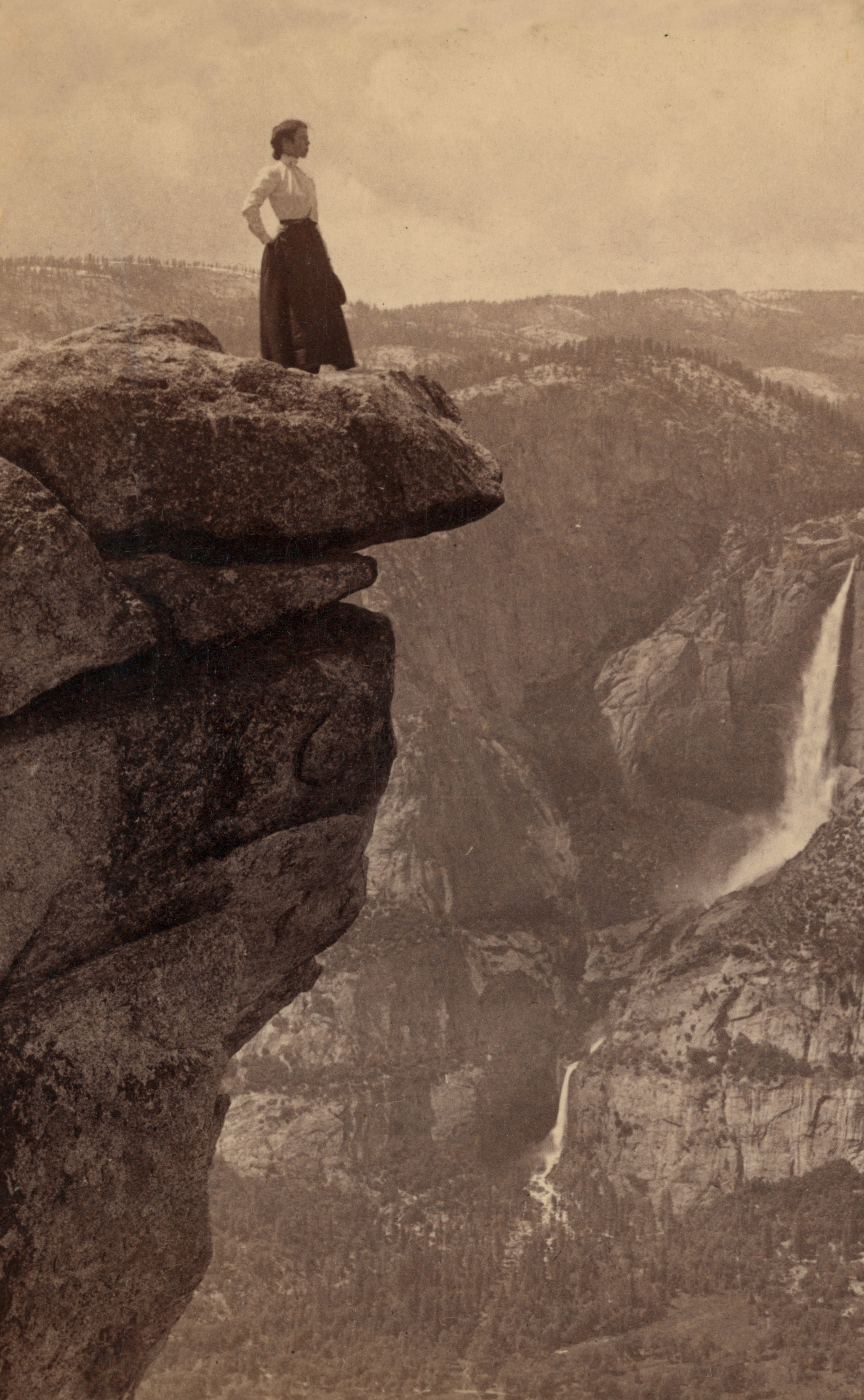
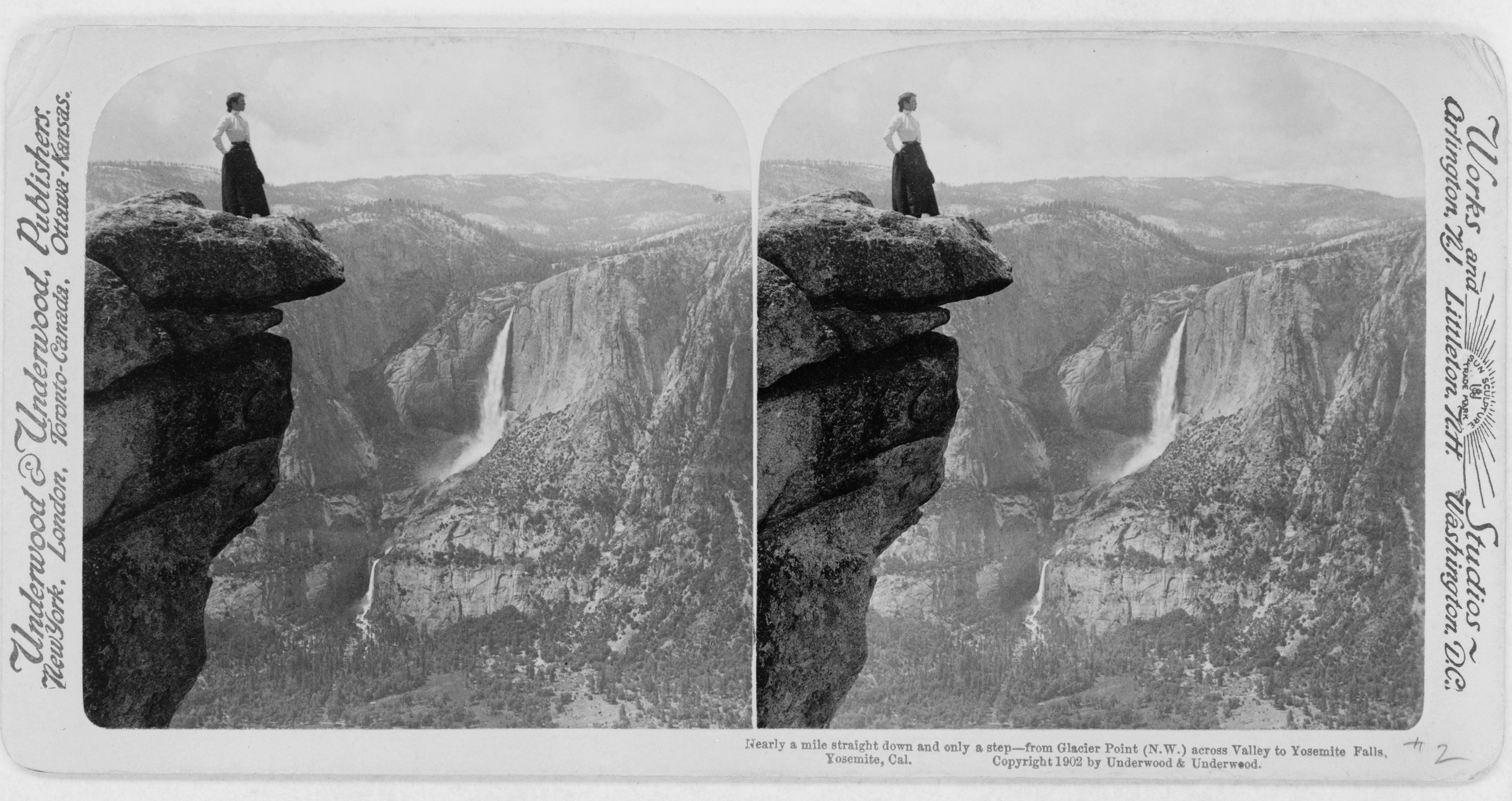
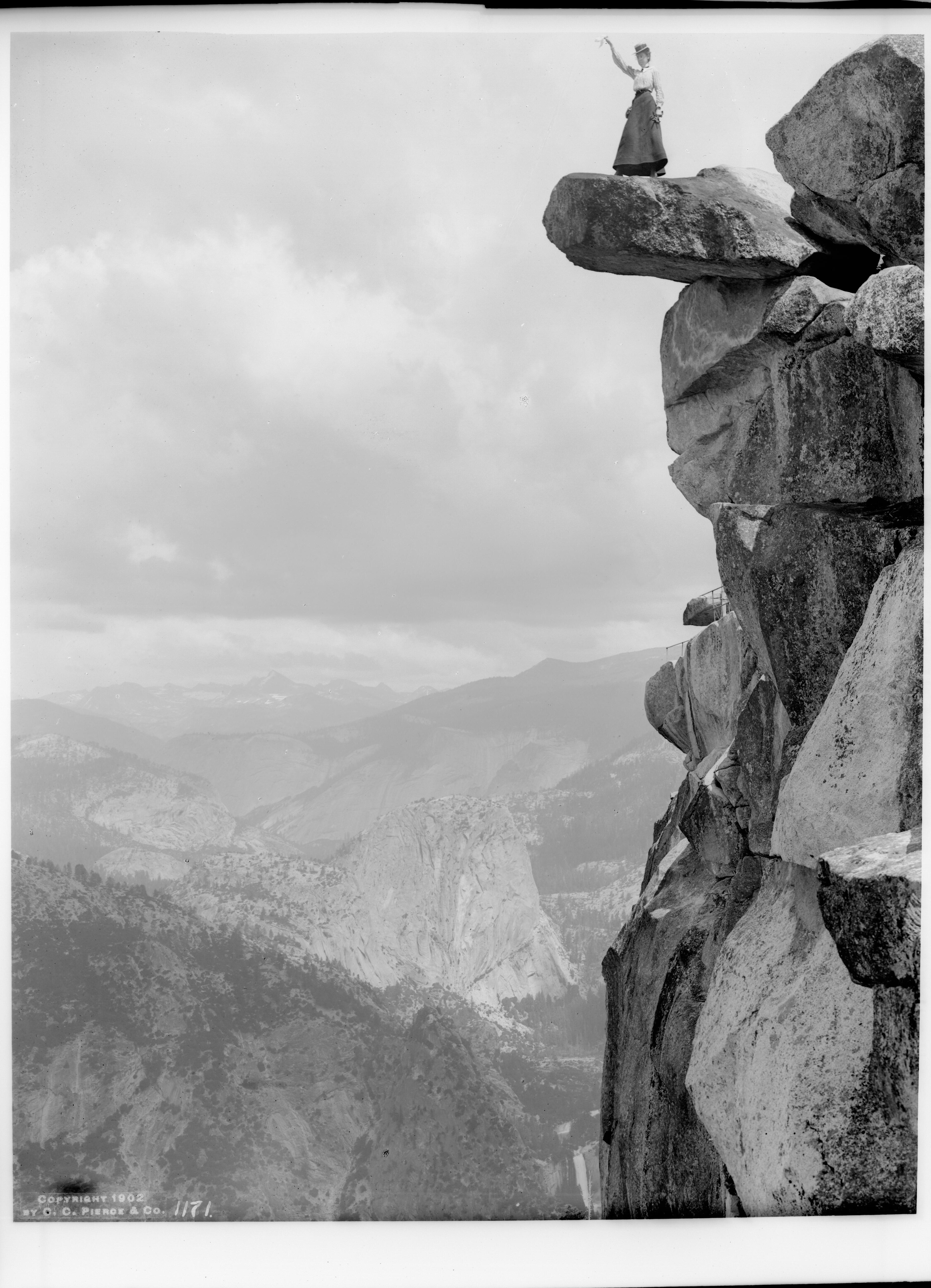
Nearly a mile straight down and only a step–from Glacier Point, Yosemite valley, ca. 1902 [detail]Nearly a mile straight down and only a step–from Glacier Point (N.W.) across valley to Yosemite Falls, Yosemite, Cal.,ca. 1902. Underwood & Underwood. Half stereo card.
Original title: Nearly a mile straight down and only a step–from Glacier Point (N.W.) across valley to Yosemite Falls, Yosemite, Cal. [Description: Woman standing on cliff overlooking deep valley.]. Underwood & Underwood, publishers, New York, ca. 1902. Digital file from original photo : photographic print on stereo card : stereograph. [scanned half stereo] | src Library of Congress
Underwood & Underwood :: Woman standing on cliff overlooking deep valley, 1900-1910B&W film copy negative from original stereo card | src Library of CongressView of woman standing on an overhanging rock at Glacier Point with Yosemite Falls seen in the distance. | src ALMA repository
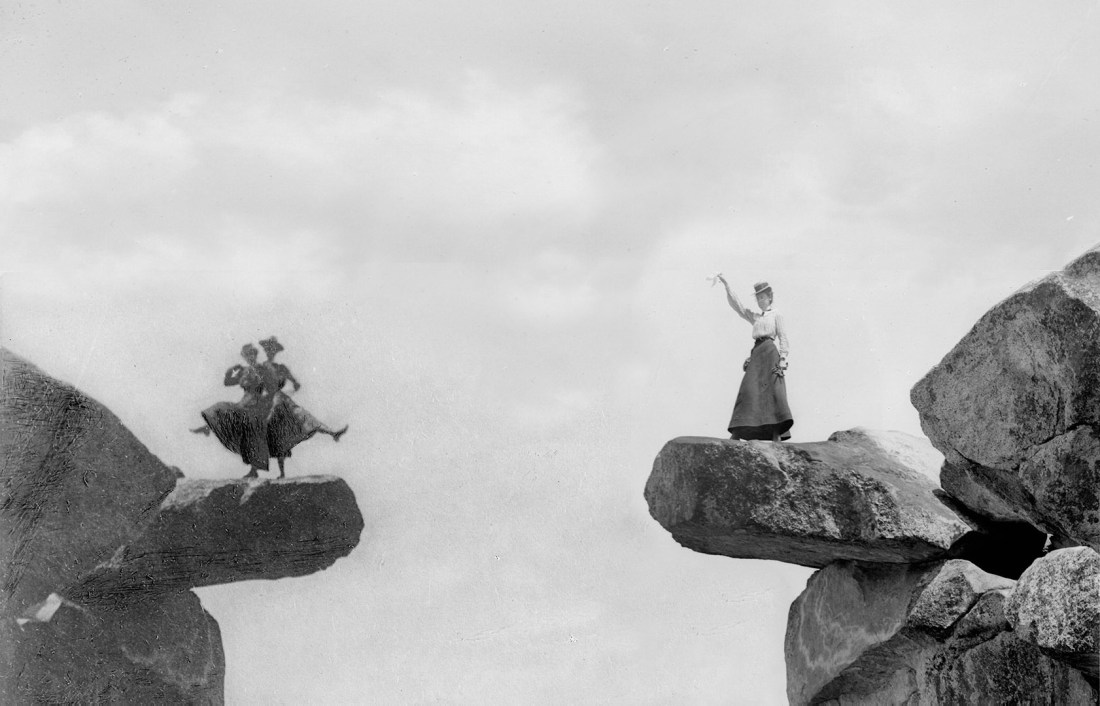
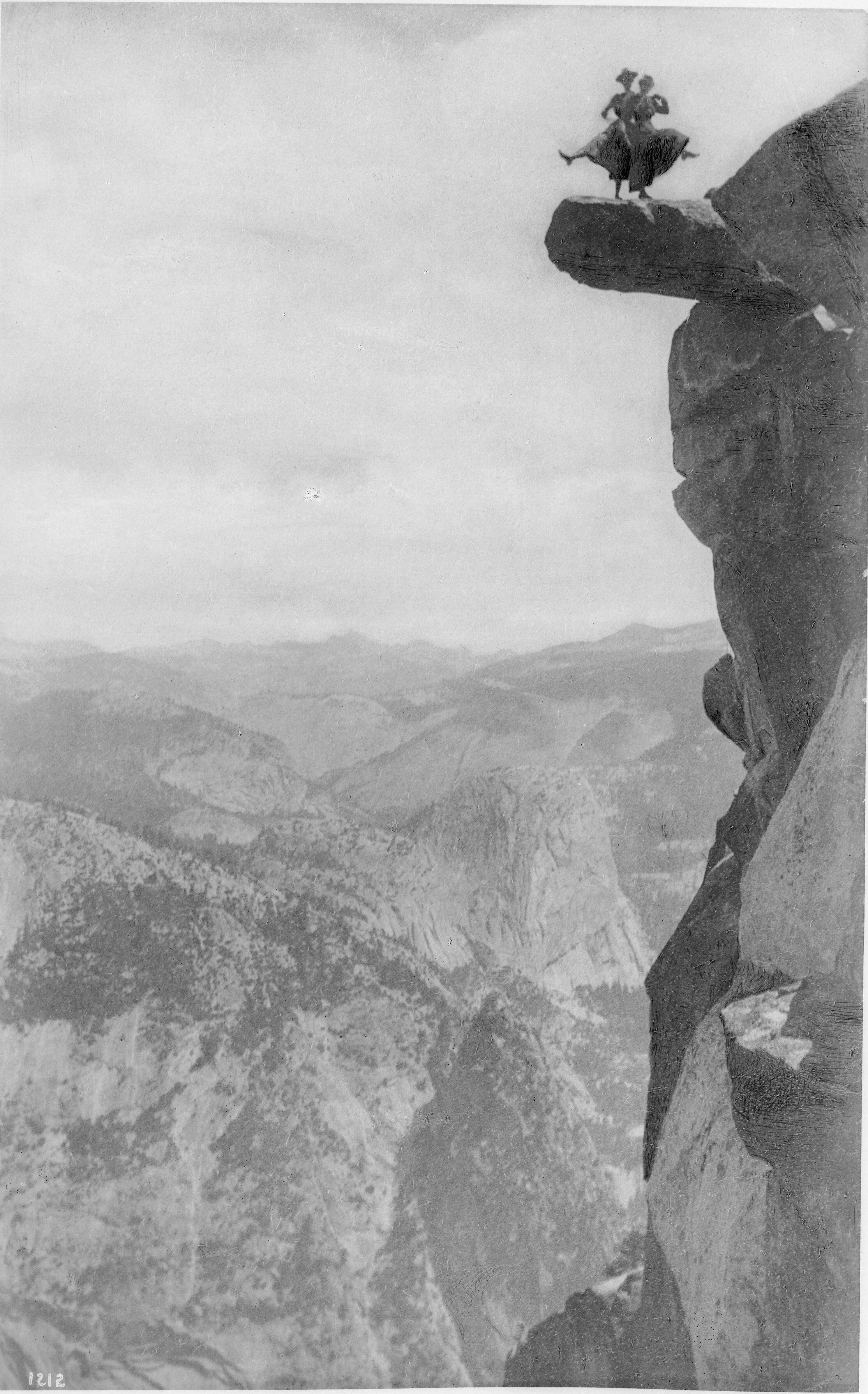
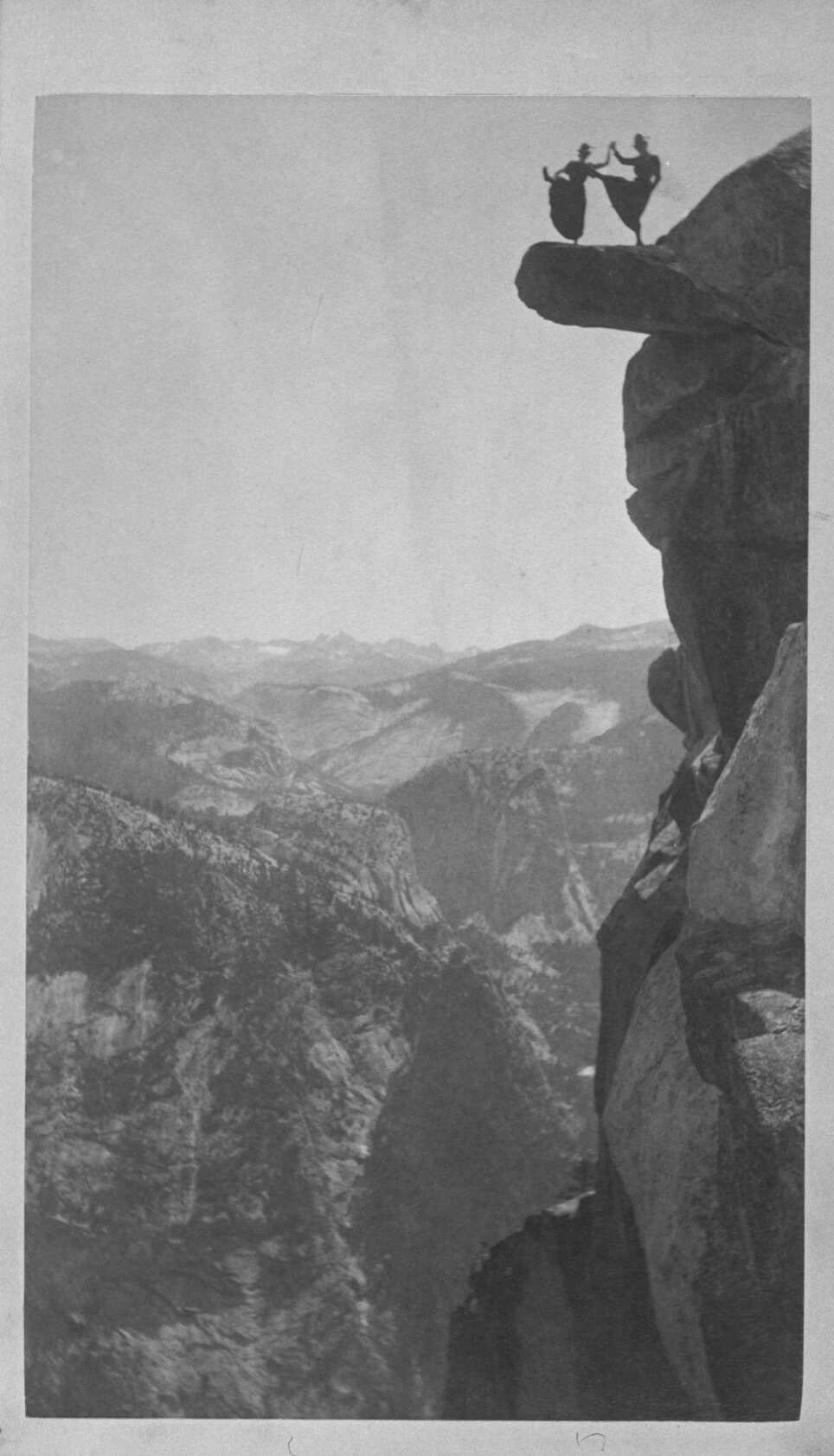
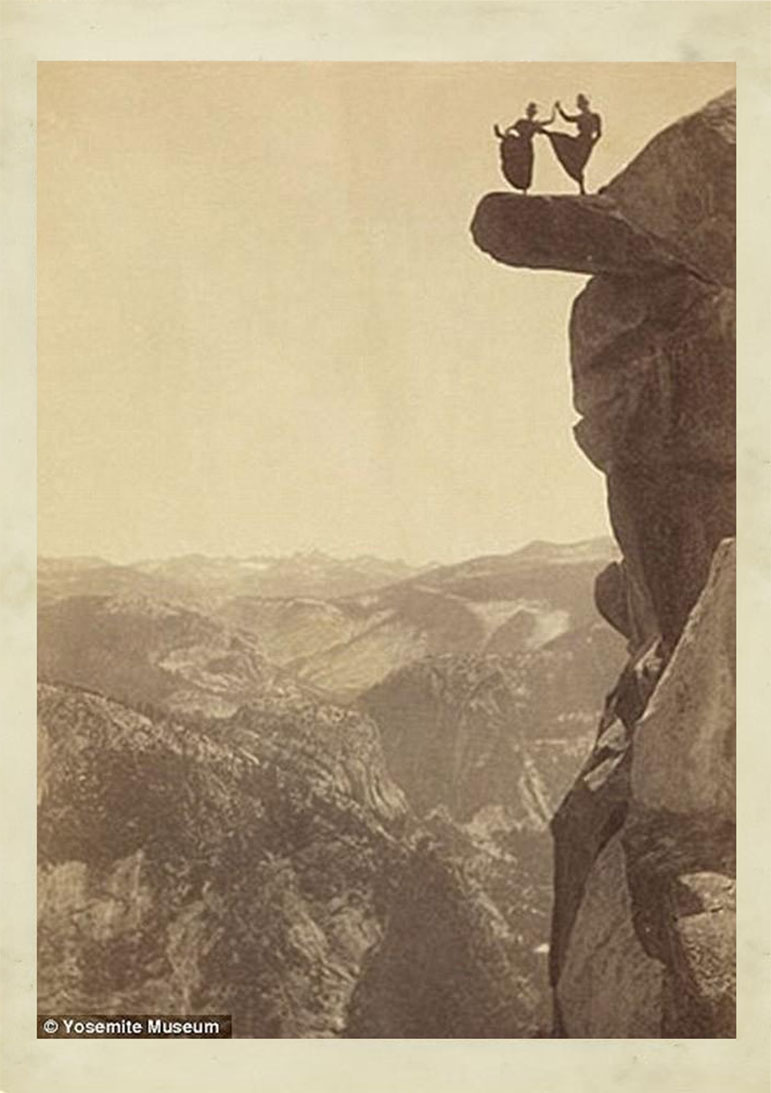
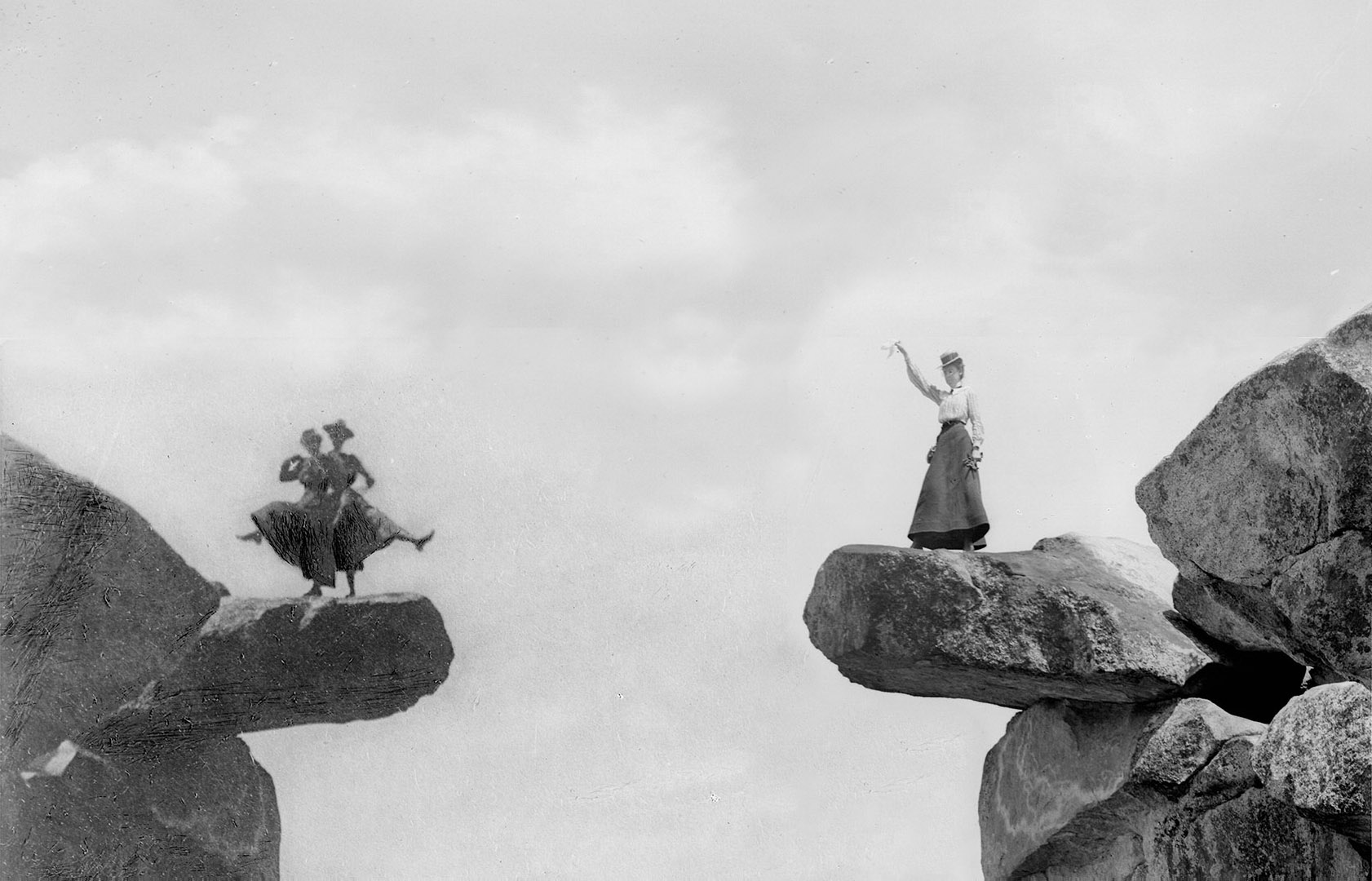
George Fiske (1835-1918) :: Two women doing a “skirt dance” on the precarious Glacier Point in Yosemite National Park, 1900-1902. Glass negative. | src USC LibrariesGeorge Fiske (1835-1918) :: Kitty Tatch and Katherine Hazelston [waitresses in a nearby hotel, the Yosemite’s Sentinel] in their famous cliff-edge dance. Late 1890s. | src NPSCharles C. Pierce (1861-1946) :: Two people on Glacier Point, three thousand two hundred feet above the Merced River in Yosemite Valley (Nr. 905), 1900-1910. | USC LibrariesCharles C. Pierce (1861-1946) :: Woman (Miss Loomis?) standing on the precarious Glacier Point in Yosemite National Park, 1900-1902 | USC LibrariesKitty Tatch and Katherine Hazelstine or Hazelston, also nicknamed “Kitty,” nearly can-can themselves off Overhanging Rock in the late 1890s. The pair were waitresses in Yosemite’s Sentinel Hotel and apparently shared a cat-like indifference to stomach-churning drops. Their famous cliff-edge dance was captured by photographer George Fiske. | src San Francisco GateGeorge Fiske (1835-1918) :: Two women standing out on the rock are holding hands and doing a high kick to the left. Albumen print mounted on grey/green board. View of Overhanging Rock at Glacier Point. In ink on verso: Dancers on Overhanging Rock at Glacier Point’. Photographer’s stamp on center of back of mount “Geo. Fiske, Photo. Yosemite Valley, Cal.” | src NPS / YOSE 5252
Kitty Tatch was a maid and waitress at the Sentinel Hotel in the late 1890s and early 1900s. Dressed in long wide skirts identifying her clearly as a woman, she danced and did high kicks at Overhanging Rock, 3,000 feet above the Valley, on Glacier Point with her friend Katherine Hazelston as George Fiske photographed them. These pictures were later made into postcards, autographed by Tatch, and sold for years. / quoted from National Park Service > Women of Yosemite : The Adventurers
Photocomposite from images # 1 (Fiske) and # 3 (Pierce)
Born in Rennebu. Son of farmer Ole Knudsen Grendahl and Ane Hansdatter, born Aas. He graduated in architecture with architect Solberg, Trondheim, in 1902, after which he went to Germany and studied architecture at the university in Karlsruhe. After completing his education, Grendahl was employed, among others in the company Jacob Digre in Ålesund, later he became an assistant teacher in building subjects, construction and freehand drawing at Trondhjem’s technical training institute. In 1916 he was employed as a teacher at NTH. In the 1920s and 30s took a number of photographs in color (Autochromes), i.a. interiors and exteriors of churches in Trøndelag, Gudbrandsdalen, Østerdalen, Møre and Romsdal and Telemark, as well as pictures from the Trøndelag exhibition in 1930 and the Drammen exhibition in the same year. The oldest color photo taken in his collection is from 1922. Grendahl left a unique archive of stereo images, about half of which are in colour, to his daughter Adelheide (Ada) Grue, in Stjørdal. The picture collection was bought by the Preus Fotomuseum in 1989 and digitalized in December 2021. It consists of 1017 photographs on glass plates in the format 90×140 mm. With a few exceptions, the images are stereo images.
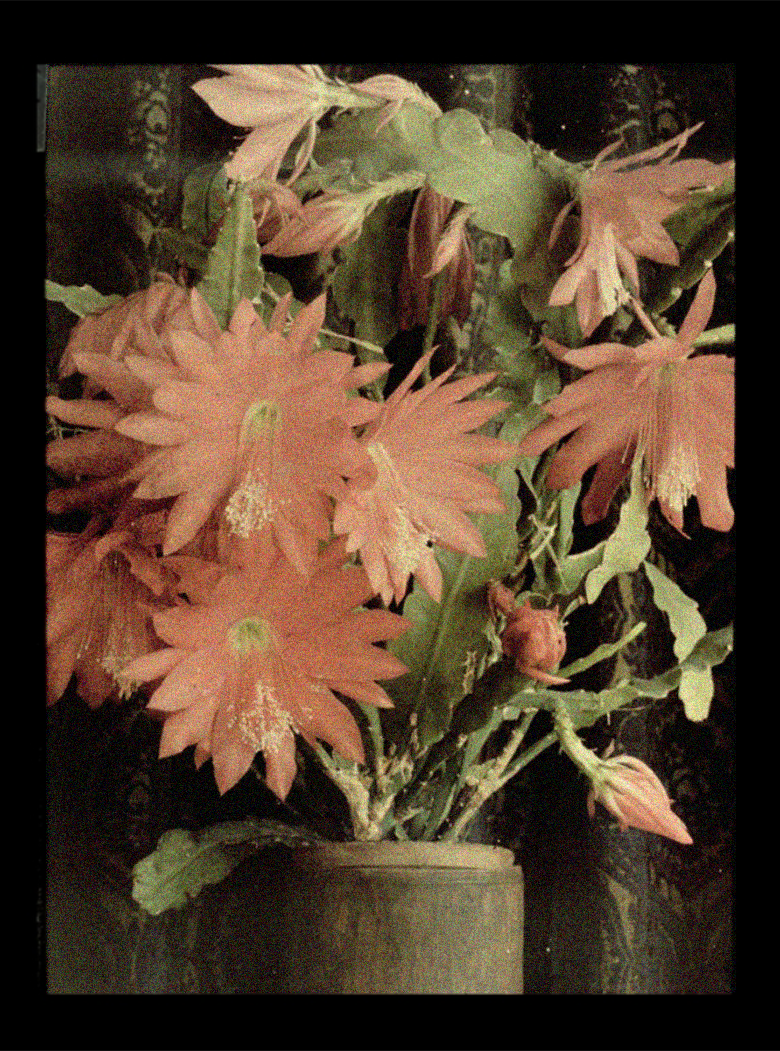
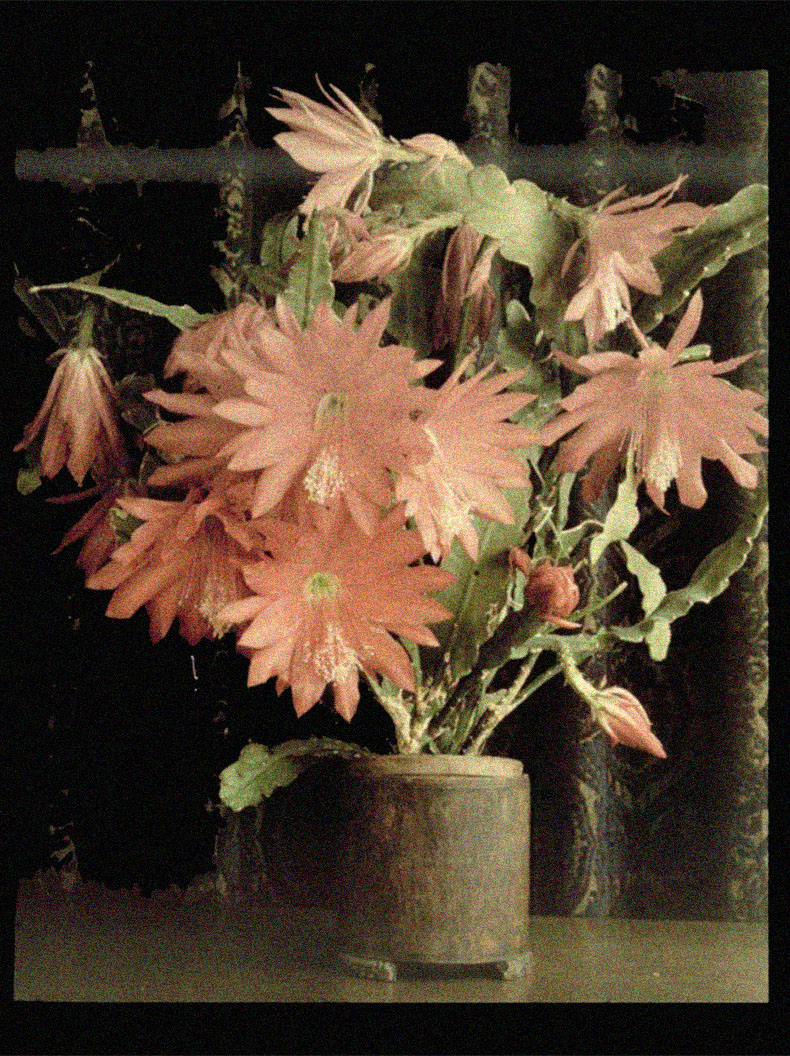
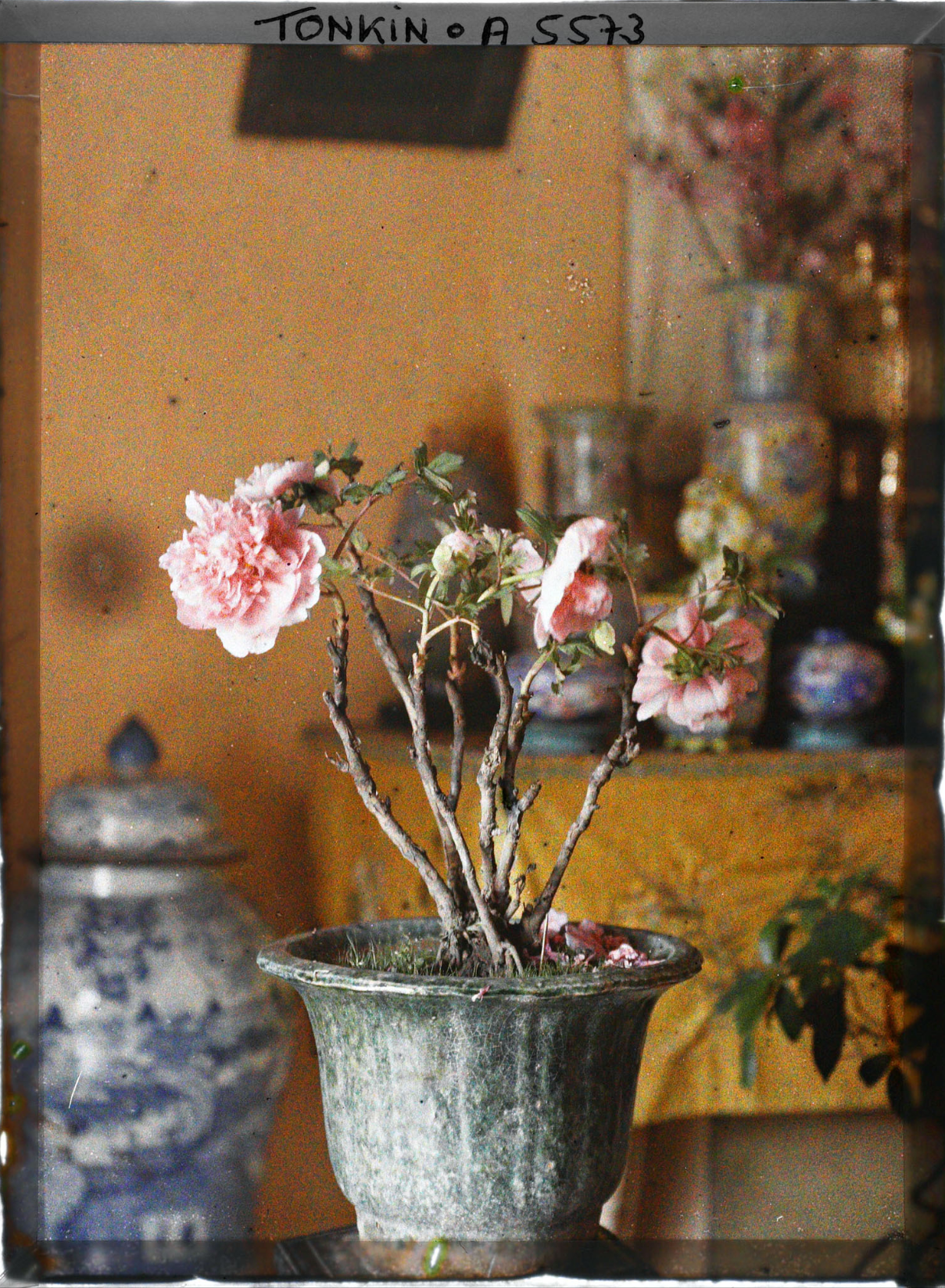
Léon Busy ~ Une pivoine de Chine fleurissant le pied de l’autel des ancêtres à l’époque de la fête du Têt, Hà-dông, Tonkin, Indochine, février 1915. Autochrome Lumière. Archives de la Planète.
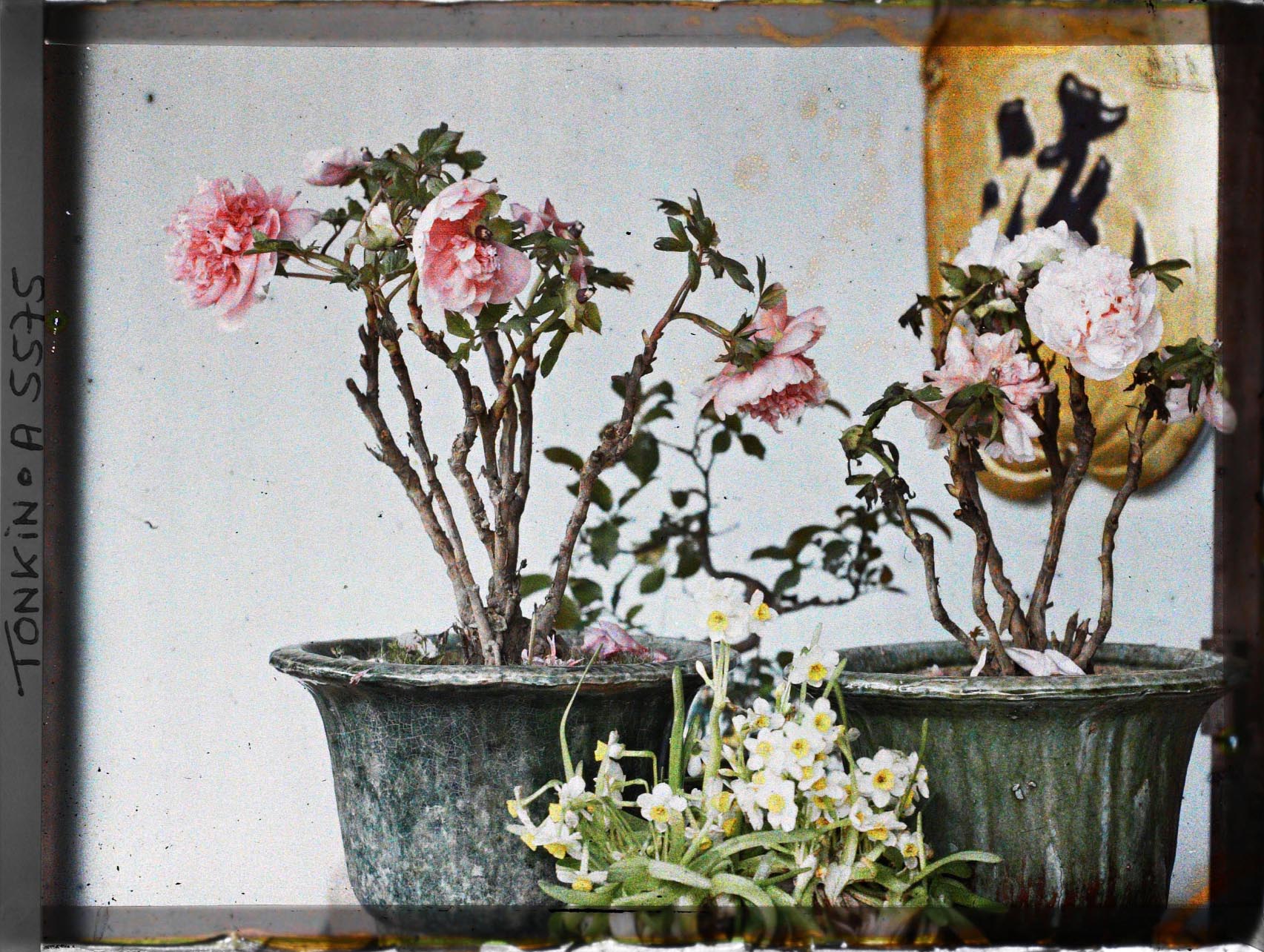
Three views of a Chinese peony blooming at the foot of the altar of the ancestors at the time of the Têt festival, Hà-dông, Tonkin, Indochina, February 1915. Mission : Léon Busy en Indochine
Léon Busy ~ Pivoines de Chine fleurissant le pied de l’autel des ancêtres à l’époque de la fête du Têt, Hà-dông, Tonkin, Indochine, février 1915. Autochrome Lumière. Archives de la Planète. Léon Busy ~ Une pivoine de Chine fleurissant le pied de l’autel des ancêtres à l’époque de la fête du Têt, Hà-dông, Tonkin, Indochine, février 1915. Autochrome Lumière. Archives de la Planète.
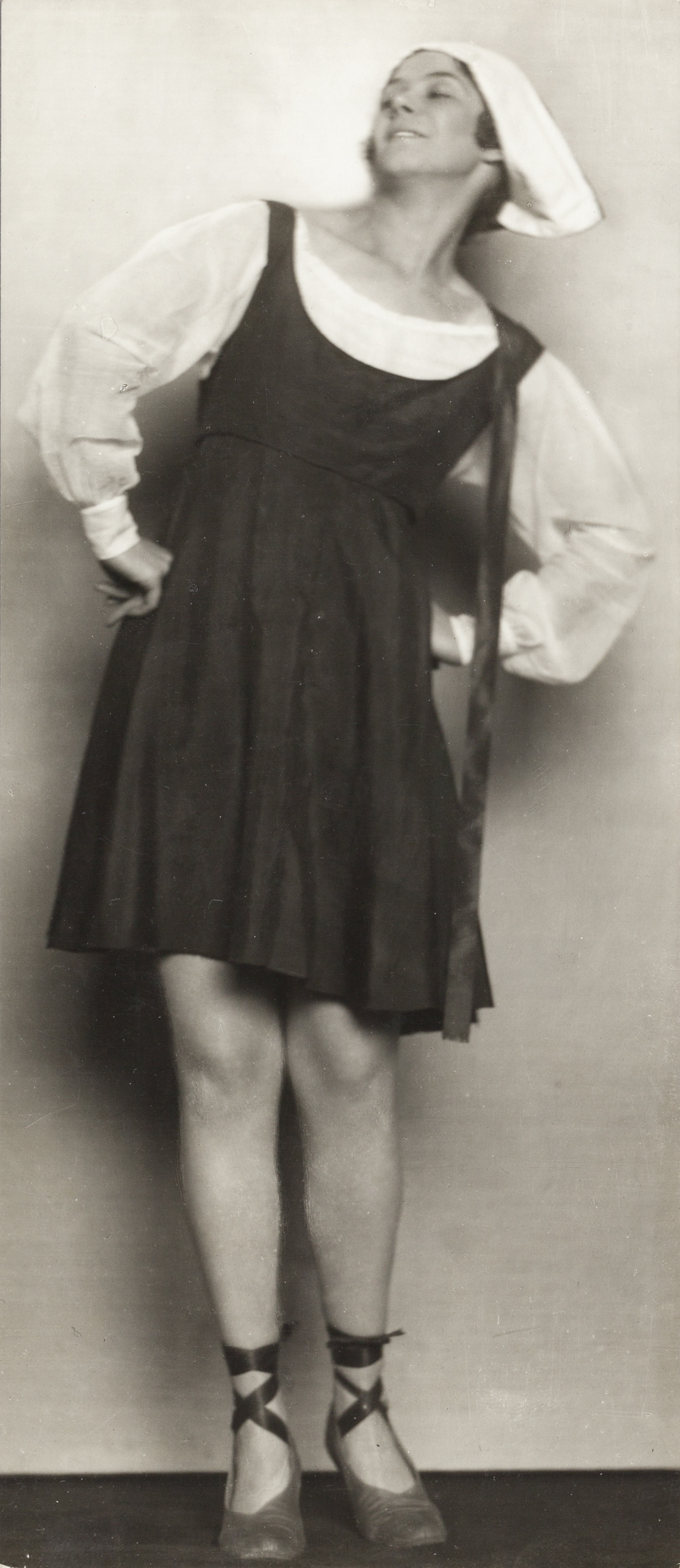
Trude Fleischmann (1895–1990) ~ Die Tänzerin Ronny Johansson, Wien, 1924. Vintage silver print on semi-matte paper. src Ostlicht Foto Auktion Spring 2023
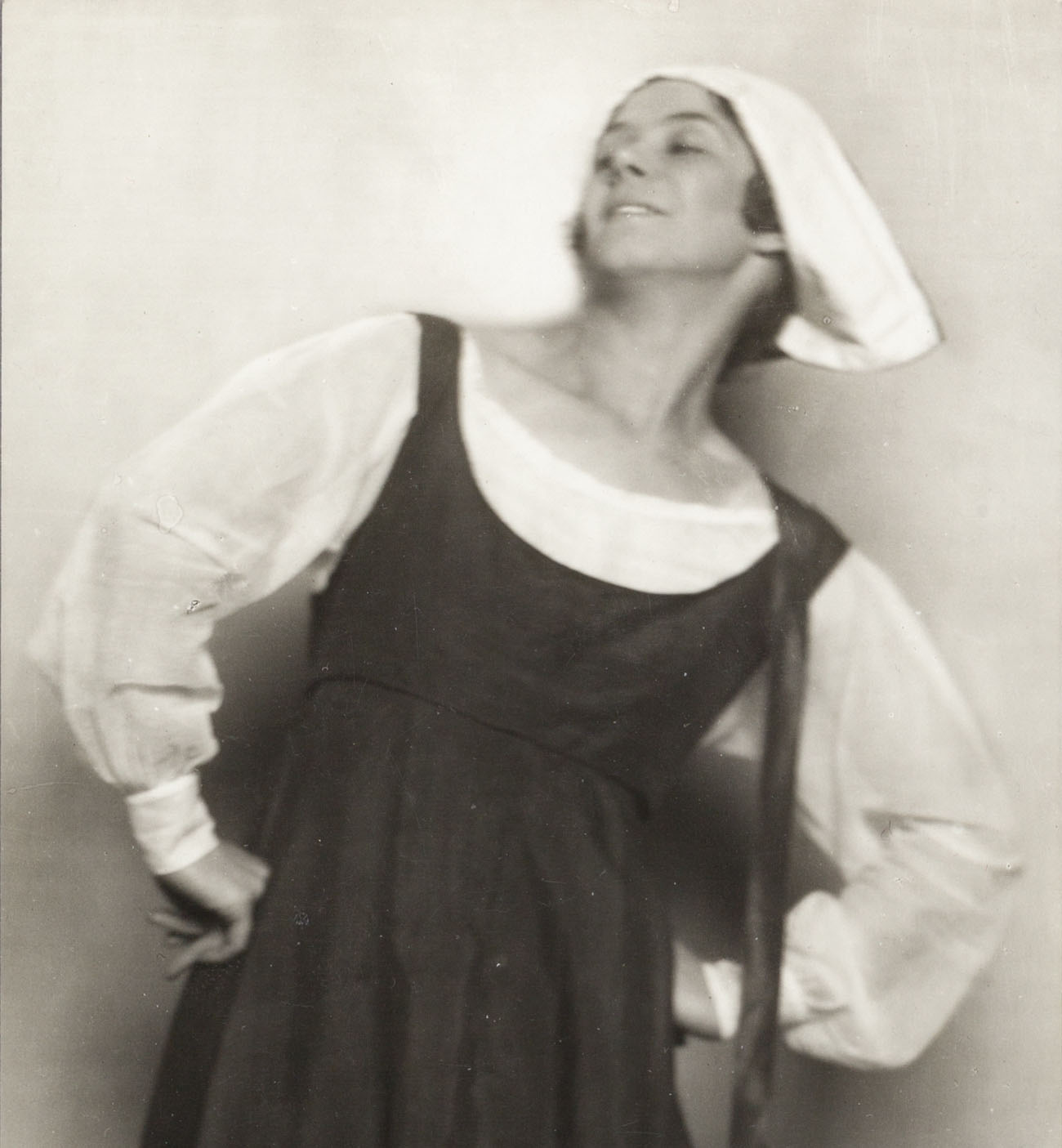
Photographer’s stamp with address at “Wien I. Ebendorferstraße 3”, her copyright stamp and her re-order stamp with handwritten negative no. “281” in ink, and handwritten title in pencil on the reverse [‘Die Tänzerin Ronny Johansson’]. Ronny Irene Johansson was born 1891 in Latvia, to Swedish and Scottish parents. Her father, a businessman in the shipping industry, sent Ronny to Russian and Swedish boarding schools. It was in Sweden that she established a professional dancing career, debuting in Weisbaden in 1916. After touring and performing throughout Europe, she moved to the USA in 1925 to pursue Modern dance. [quoted from source]
Trude Fleischmann (1895–1990) ~ The dancer Ronny Johansson, Vienna, 1924. Vintage silver print on semi-matte paper. src Ostlicht Photo Auction Spring 2023


















 un regard oblique