Otto Dix :: »Kupplerin«, 1923. Farbige Lithographie auf Maschinenbütten. Signiert unten rechts. Herausgegeben von Karl Nierendorf. | src Karl and Faber Kunstauktionen
Im Jahr 1921 zieht Otto Dix für vier Jahre nach Düsseldorf, wo er sich in druckgraphischen Techniken weiterbildet. Er liebt die Großstadt, die Typen und Randgruppen, die er vor allem während der Nacht auf den Straßen und in den Lokalen trifft: Matrosen oder Artisten, Kriegsversehrte und Kriegsgewinnler, ebenso wie Prostituierte und ihre Kunden. Die „goldenen“ Zwanziger zwischen allumfassender Traumatisierung, Vergnügungssucht und frühem Konsumismus, zwischen schillernder Oberfläche und abgestorbenem Innersten reizt ihn zu grotesk-enthüllenden Bildsujets. In seinen Werken – wie auch in der vorliegenden Lithographie „Kupplerin“ – führt Dix dem Betrachter schonungslos den körperlichen Zerfall, die Defizite und Eigenarten seiner Modelle vor Augen. Sein neuartiger Realismus, für den die Zeitgenossen den Begriff „Verismus“ prägen, macht Dix – zusammen mit Max Beckmann und George Grosz – nicht nur zum Hauptvertreter dieser Kunstströmung in Deutschland, sondern auch zu einem der bedeutendsten Realisten in der Geschichte der Kunst überhaupt.
In 1921, Otto Dix moved to Düsseldorf for four years, where he continued his education in printmaking techniques. He loves the big city, the characters and marginal groups he meets on the streets and in bars, especially at night: sailors or artists, war invalids and war profiteers, as well as prostitutes and their customers. The “golden” twenties between comprehensive traumatization, pleasure-seeking and early consumerism, between shimmering surfaces and dead innermost parts provoked him to grotesquely revealing pictorial subjects. In his works – as well as in the present lithograph “Kupplerin” – Dix ruthlessly shows the viewer the physical decay, the deficits and the peculiarities of his models. His new type of realism, for which his contemporaries coined the term “Verism”, made Dix – together with Max Beckmann and George Grosz – not only the main representative of this art movement in Germany, but also one of the most important realists in the history of art in general. (Roughly translated by us from source)
Otto Dix (1891-1969) ~ Bildnis der Journalistin Sylvia von Harden, 1926. Oil and tempera on wood | src Centre Pompidou
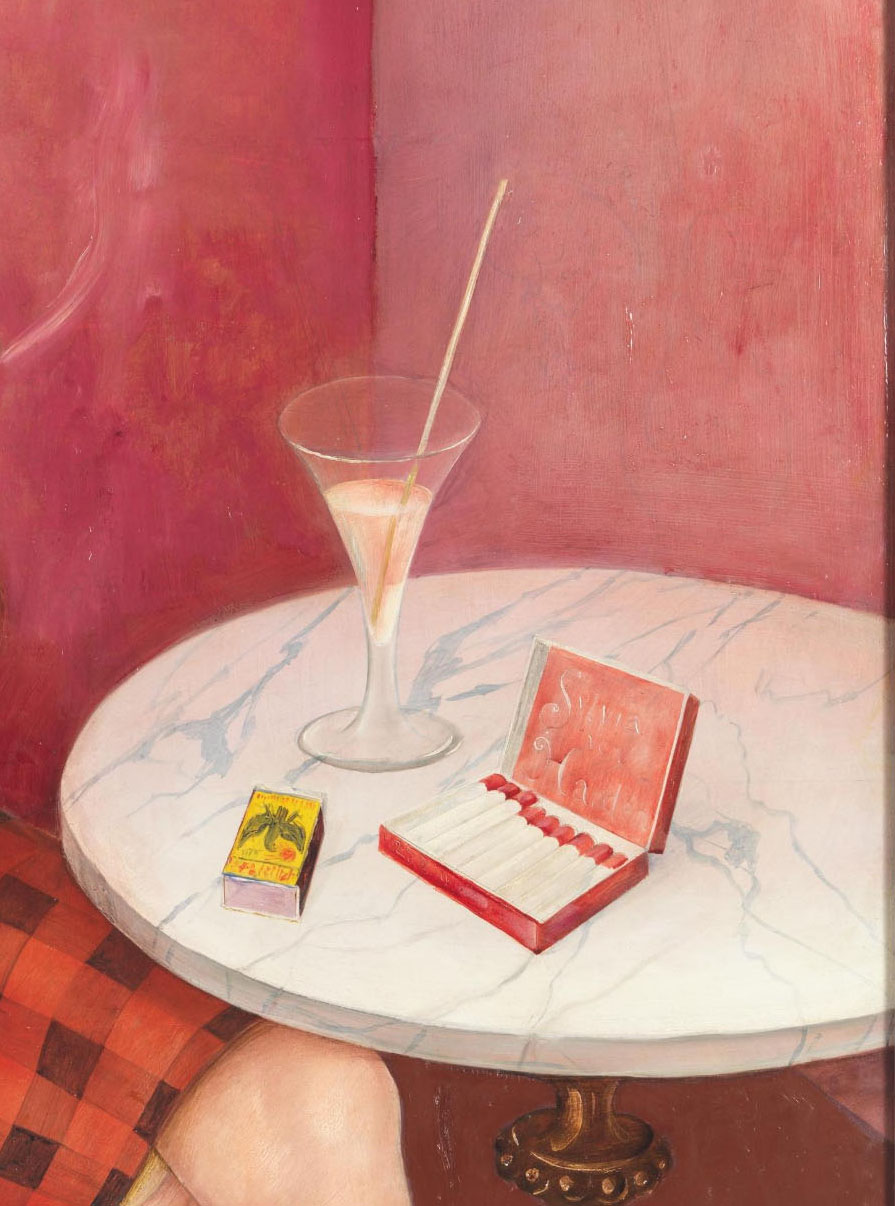
Journaliste à Berlin dans les années 1920, Sylvia von Harden (1894-1963) s’affiche en intellectuelle émancipée par une pose nonchalante. Otto Dix contrarie son arrogance par le détail d’un bas défait. Sa robe-sac à gros carreaux rouges détonne avec l’environnement rose, typique de l’art nouveau. Le style réaliste, froid et satirique est caractéristique du mouvement de la Nouvelle Objectivité [Neue Sachlichkeit] auquel appartient le peintre. Il s’inspire des maîtres allemands du début du 16e siècle (Grünewald, Cranach et Holbein), par la technique de la tempera sur bois et l’exhibition d’une intéressante laideur. | src Centre Pompidou
Sylvia von Harden (1894-1963) was a journalist in Berlin in the 1920s. Her nonchalant stance is a statement of her emancipated intellectual role. Otto Dix undermines her arrogance with the detail of a loose stocking and her rather awkward pose. Her red-checkered sack dress contrast with the pink environment, typically Art Nouveau. The cold, satirical realism typifies the New Objectivity [Neue Sachlichkeit] movement to which the painter belonged. lnspired by early 16th-century German masters (Grünewald, Cranach and Holbein), he embraced the tempera on wood panel technique as well as the choice to exhibit the ugliness. | src Centre Pompidou
Note the inscription of her aristocratic name “Sylvia von Harden” on the inner cover of the cigarette box Detail from: Otto Dix ~ Bildnis der Journalistin Sylvia von Harden, 1926. Huile et tempera sur boisAugust Sander (1876-1964) ~ Secretary at the Westdeutscher Rundfunk in Cologne [Sylvia von Harden], 1931 | src Tate GalleryAugust Sander (1876-1964) ~ Sekretärin beim Westdeutscher Rundfunk in Köln [Sylvia von Harden], 1931 | src Centre PompidouOtto Dix (1891-1969) ~ Bildnis der Journalistin Sylvia von Harden, 1926 (scan)
Installé à Berlin entre 1925 et 1927, Dix peint une série de portraits remarquables. Maintes fois reproduit et exposé, celui de la journaliste Sylvia von Harden, de son vrai nom Sylvia Lehr (1894-1963), est l’un des plus fascinants. Il offre une véritable synthèse d’une recherche picturale qui s’inscrit dans ce que le critique Gustav Hartlaub désigne comme « l’aile gauche vériste » de la Neue Sachlichkeit [Nouvelle objectivité]. La représentation sans complaisance d’un type humain à travers ses attributs s’exprime dans le choix d’une intellectuelle émancipée des années 1920, aux allures masculines, fumant et buvant seule dans un café. […] L’image de la journaliste, que Dix a rencontrée au Romanische Café, haut-lieu berlinois du monde littéraire et artistique, reste pourtant ambiguë. Si dans ses souvenirs publiés à la fin des années 1950, la journaliste émigrée à Londres affirme que Dix l’a choisie pour son allure, représentative de cette époque, il semble que l’artiste la montre aussi en porte-à-faux par rapport à un type et un rôle dans lesquels elle paraît mal à l’aise. Sa pose nonchalante, mais peu naturelle, paraît trop ostentatoire ; son arrogance intellectuelle est contrariée par l’image de son bas défait ; et sa robe-sac à gros carreaux rouges l’oppose à l’environnement rose Art nouveau. Cette mise à nu semble avoir échappé au modèle. | src Centre Pompidou
Living in Berlin between 1925 and 1927, Dix painted a series of remarkable portraits. Reproduced and exhibited many times, that of the journalist Sylvia von Harden, whose real name was Sylvia Lehr (1894-1963), is one of the most fascinating. It offers a true synthesis of pictorial research which is part of what the critic Gustav Hartlaub designates as the “verist left wing” of the Neue Sachlichkeit [New Objectivity]. The uncompromising representation of a human type through its attributes is expressed in the choice of an emancipated intellectual from the 1920s, with masculine appearance, smoking and drinking alone in a café. […] The image of the journalist, whom Dix met at the Romanische Café, a Berlin hotspot for the literary and artistic world, nevertheless remains ambiguous. In her memories published at the end of the 1950s, the journalist who emigrated to London affirms that Dix chose her for her appearance, representative of that era, but it seems that the artist also shows her cantilevered from to a type and a role in which she seems uncomfortable. Her nonchalant, but unnatural pose seems too ostentatious; her intellectual arrogance is thwarted by the image of her undone stockings; and her large red check sack dress contrasts with the pink Art Nouveau environment. This exposure seems to have escaped the model.
Angela Lampe. Extrait du catalogue Collection art moderne – La collection du Centre Pompidou, Musée national d’art moderne , Paris, Centre Pompidou, 2007




 un regard oblique