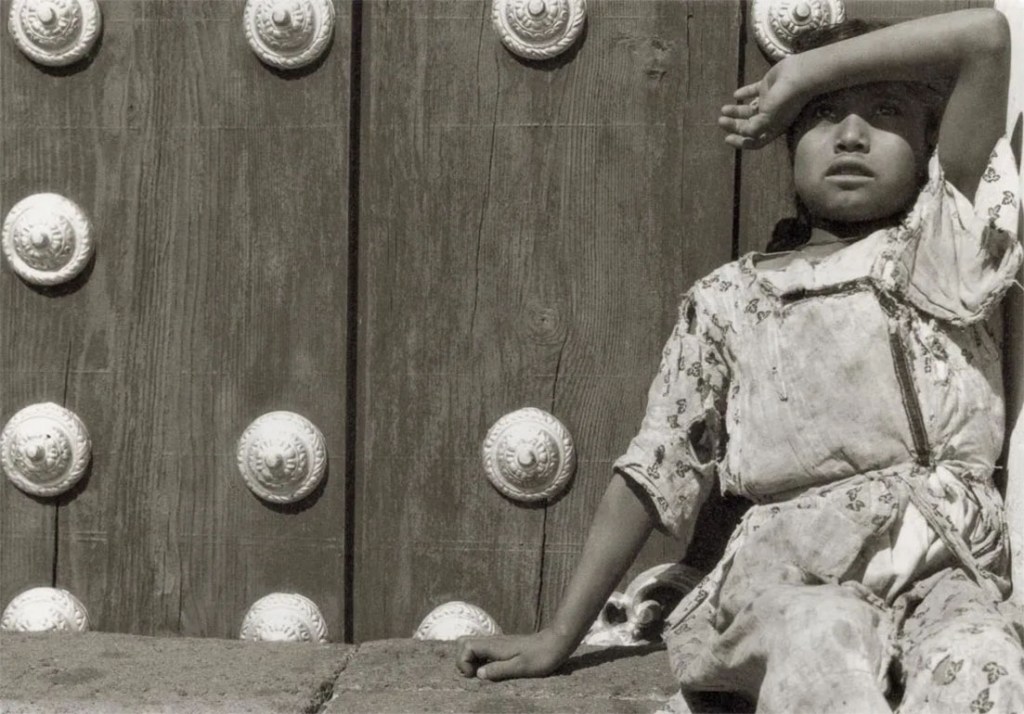
Alvarez Bravo · Girl looking at birds
images that haunt us
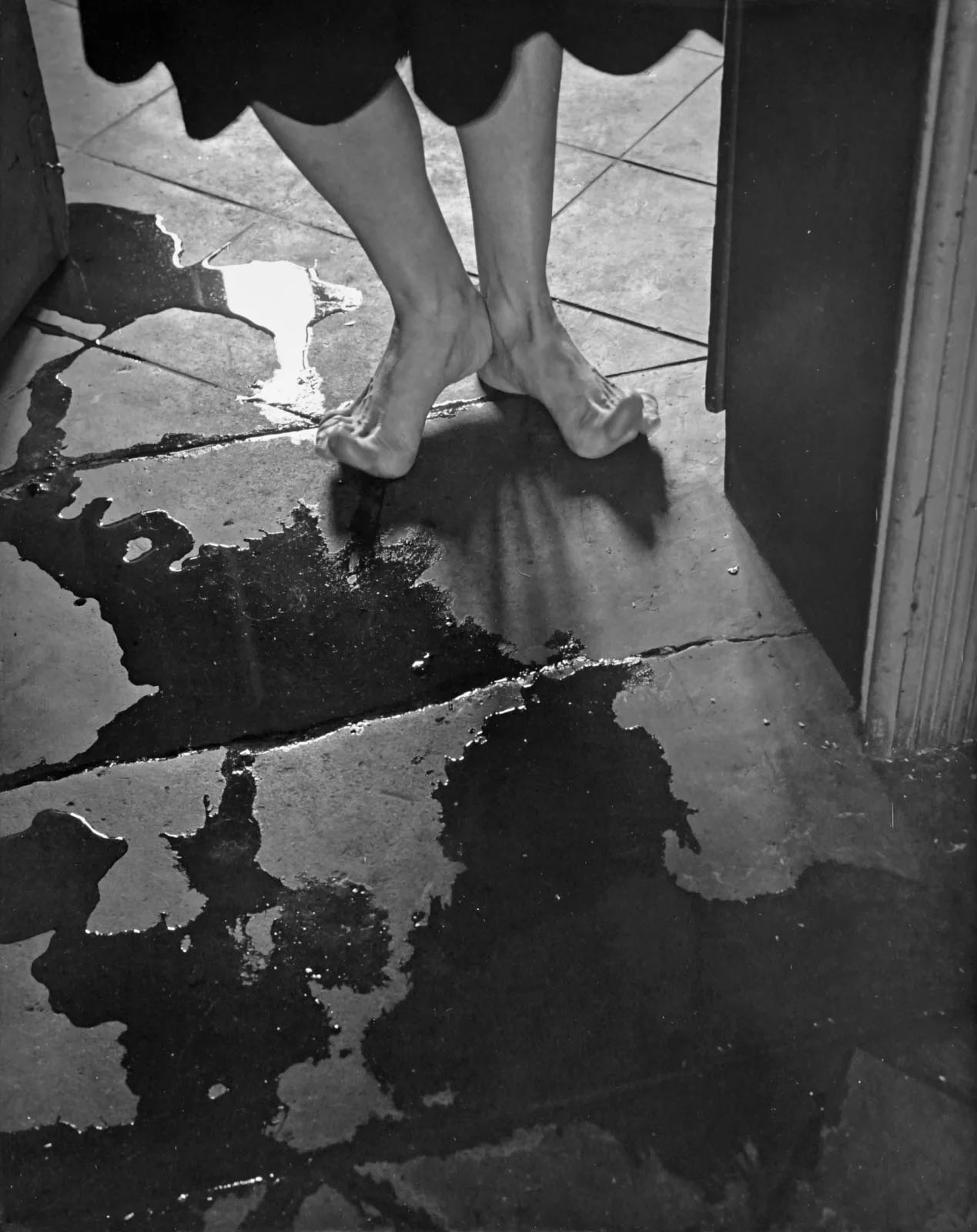
Manuel Álvarez Bravo was one of the most influential Latin American photographers of the twentieth century, with a career spanning over seven decades. His complex images represent the diverse people and places of Mexico through avant-garde visual techniques such as distorted reflections and dramatic lighting. Here he turns his camera onto the rippling skirt and legs of a woman standing in the threshold of a doorway, curling her toes away from the liquid spreading across the floor. The tilting perspective creates a sense of tension despite the everyday nature of the scene. While Álvarez Bravo’s work has often been compared to that of European Surrealist photographers, who also had a fondness for uncanny juxtapositions of elements from daily life, his differs in that it weaves together the visual modes of modern photography, Mexican culture, and art history, fusing past and present. | src University of Michigan (UMMA)



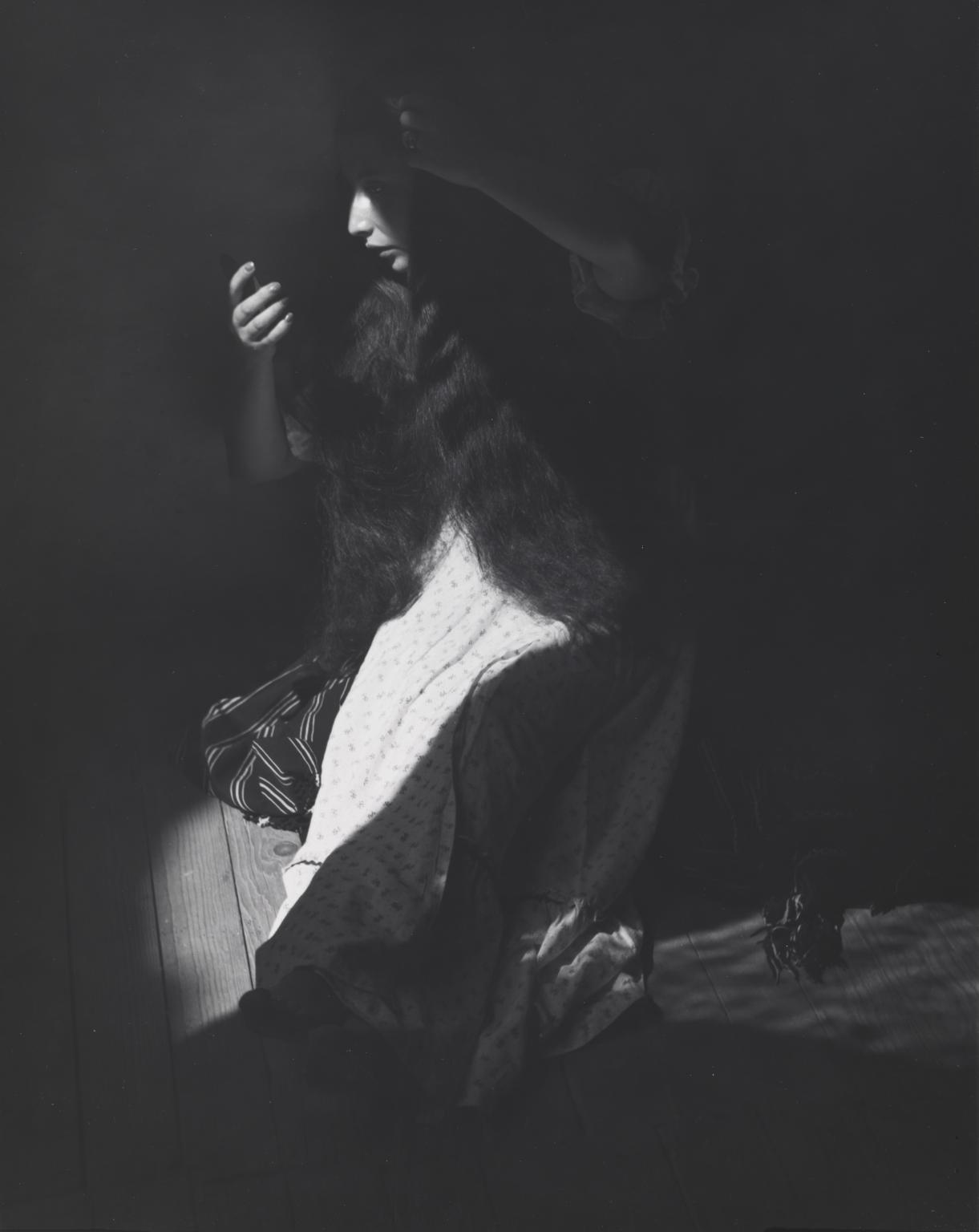
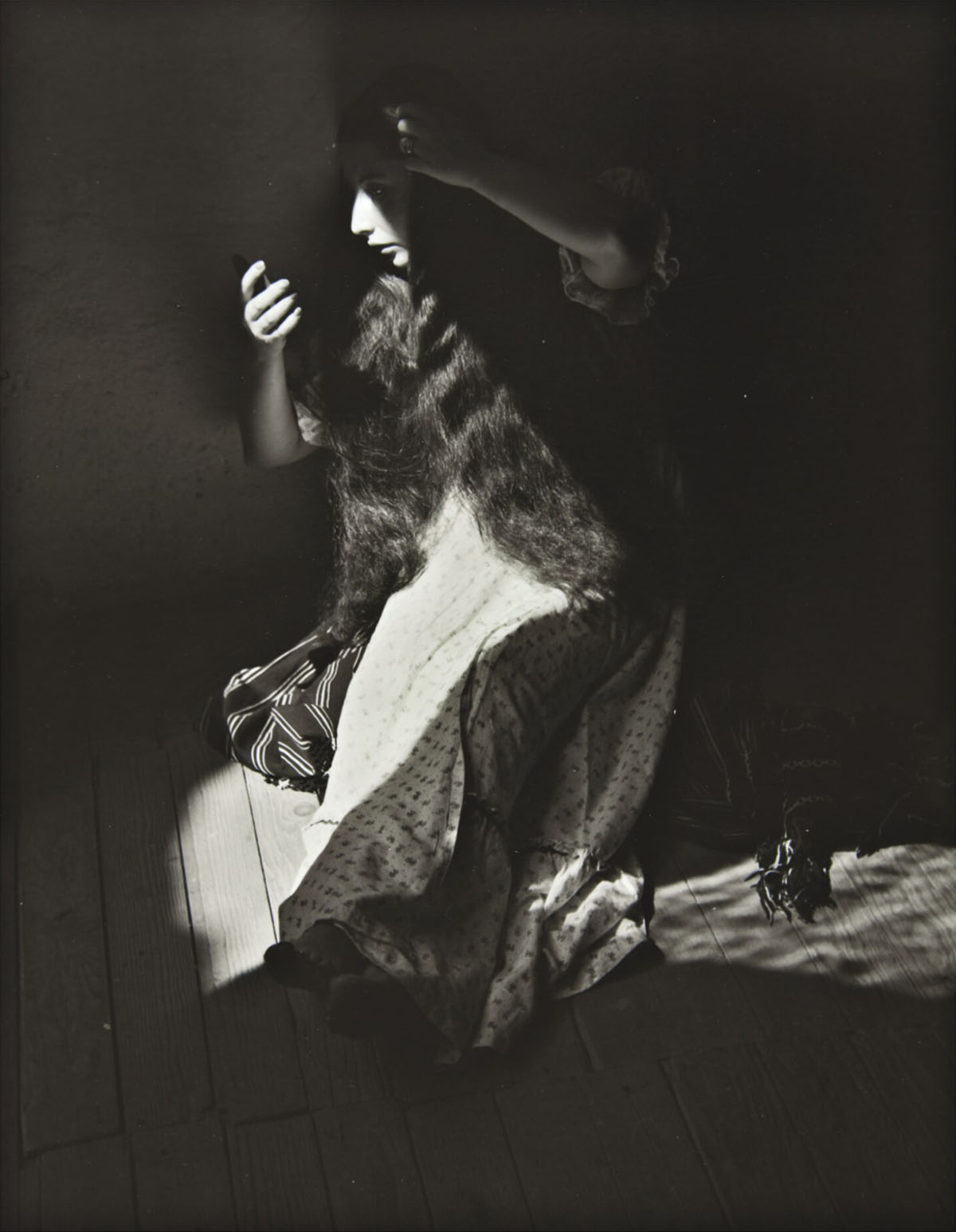
In Portrait of the Eternal, Álvarez Bravo fashioned a modern vanitas image of contemplative mystery, which at first appears in line with Surrealist ideas of the female muse. But this was no ordinary choice of model and collaborator: it was Isabel Villaseñor. Already well known as a talented artist and poet, Villaseñor’s distinctive profile, curtain of luxuriant hair, and mestiza (mixed race) heritage resonated with Mexicanidad and an ongoing process of national re-creation during the post-revolutionary period. (text: MMoCA)

En Retrato de lo eterno, Álvarez Bravo construyó la imagen de una vanitas moderna de misterio contemplativo que a primera vista parece alinearse con ideas surrealistas sobre la musa femenina. Pero la elección de su modelo y colaboradora para esta imagen no fue una opción caprichosa. Se trataba de Isabel Villaseñor, ya para entonces bastante conocida como artista y una poeta talentosa. Su perfil inconfundible, el velo de su cabellera suntuosa y su herencia mestiza resonaban con el concepto de mexicanidad y con los procesos en curso de re-creación nacional durante el periodo posrevolucionario. (text: MMoCA · Madison Museum of Contemporary Art)

 un regard oblique