images that haunt us
![Jan Toorop [Dutch, 1858–1928] :: Jeanne d'Arc - Joan of Arc, 1898. Graphite and colored pencils on tan wove board. | Art Institute of Chicago, “Drawings in Dialogue: Old Master Through Modern“](https://unregardoblique.com/wp-content/uploads/2022/09/2013.1035-joan-of-arc.jpg?w=1100)
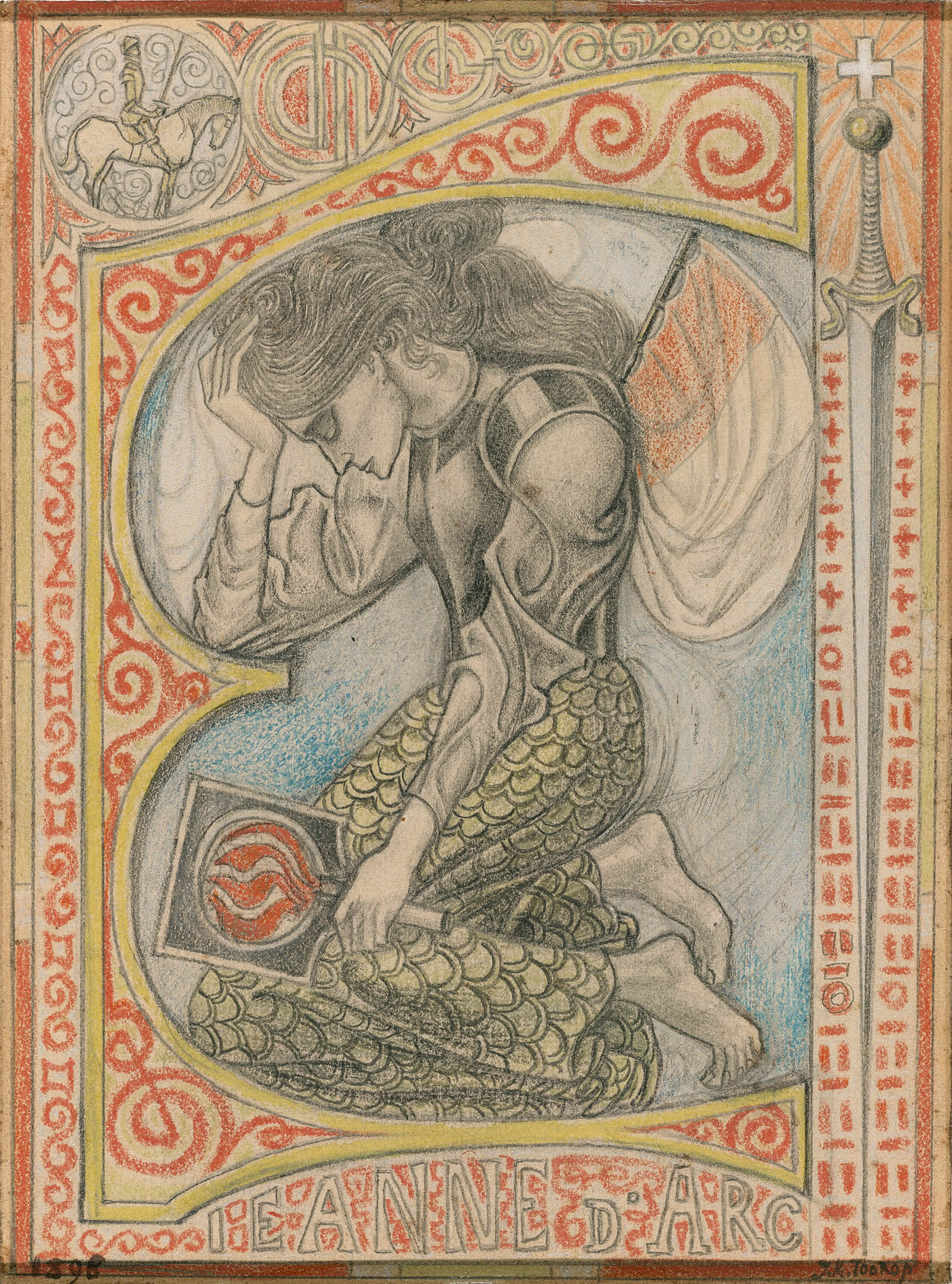
Signed recto, lower right, pen and black ink: “J. K. TOOROP”; dated, lower left, in pen and black ink: “1898”; inscribed recto, lower center, in graphite: “IEANNE D’ARC”
Imbued with the sinuous linear style of Toorop’s most celebrated works, this small drawing merges medieval subject matter with the graphic language of Symbolism. Cleverly situated within the voids of a capital letter E, Toorop’s title figure recalls the conventions of medieval manuscript illumination. Indeed, like many of Toorop’s drawings, this work was likely intended for inclusion in a book. The swirling parallel lines in the saint’s hair and the intensity of her downcast posture assert the sympathetic interpretation Toorop offered of this warrior saint, whose canonization was not finalized until 1920. [AIC]
![From: Coquilles : [12 peintures], vers 1830-1840 | src BnF - Gallica
Author: Marie-Melchior-Joseph-Théodore de Lagrené (Collecteur)
Author / Artist: Yoeequa (peintre ou atelier chinois actif à Guangzhou vers 1830-1840) - BnF](https://unregardoblique.com/wp-content/uploads/2022/08/coquilles_-_peinture___yoeequa_...yoeequa_18_btv1b105488504_141.jpg)
![From: Coquilles : [12 peintures], vers 1830-1840 | src BnF - Gallica
Author: Marie-Melchior-Joseph-Théodore de Lagrené (Collecteur)
Author / Artist: Yoeequa (peintre ou atelier chinois actif à Guangzhou vers 1830-1840) - BnF](https://live.staticflickr.com/65535/52294219461_0782662275_o.jpg)
![From: Coquilles : [12 peintures], vers 1830-1840 | src BnF - Gallica
Author: Marie-Melchior-Joseph-Théodore de Lagrené (Collecteur)
Author / Artist: Yoeequa (peintre ou atelier chinois actif à Guangzhou vers 1830-1840) - BnF](https://live.staticflickr.com/65535/52294702780_0ee7bc8911_o.jpg)
![From: Coquilles : [12 peintures], vers 1830-1840 | src BnF - Gallica
Author: Marie-Melchior-Joseph-Théodore de Lagrené (Collecteur)
Author / Artist: Yoeequa (peintre ou atelier chinois actif à Guangzhou vers 1830-1840) - BnF](https://live.staticflickr.com/65535/52294219668_fef1f41a1a_o.jpg)
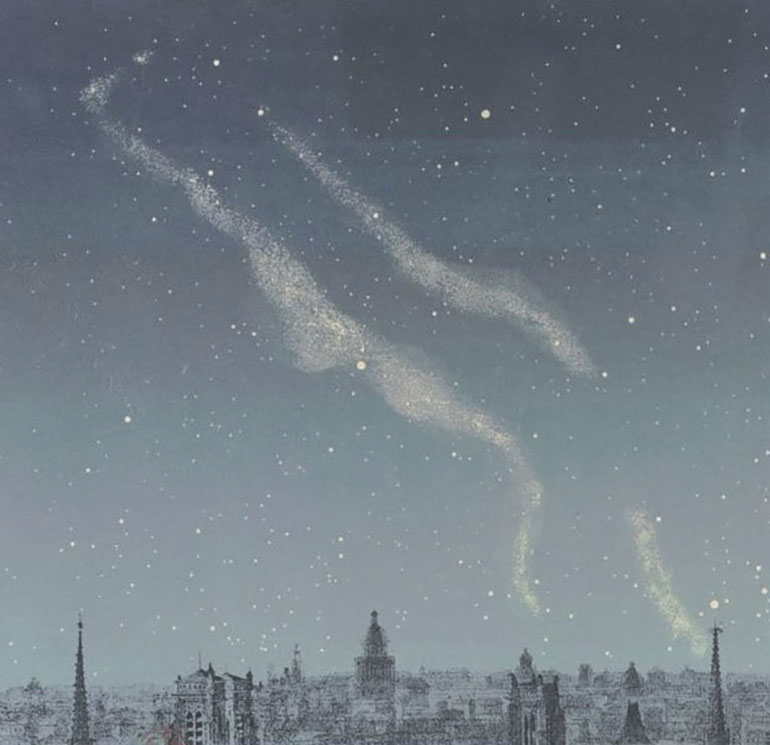
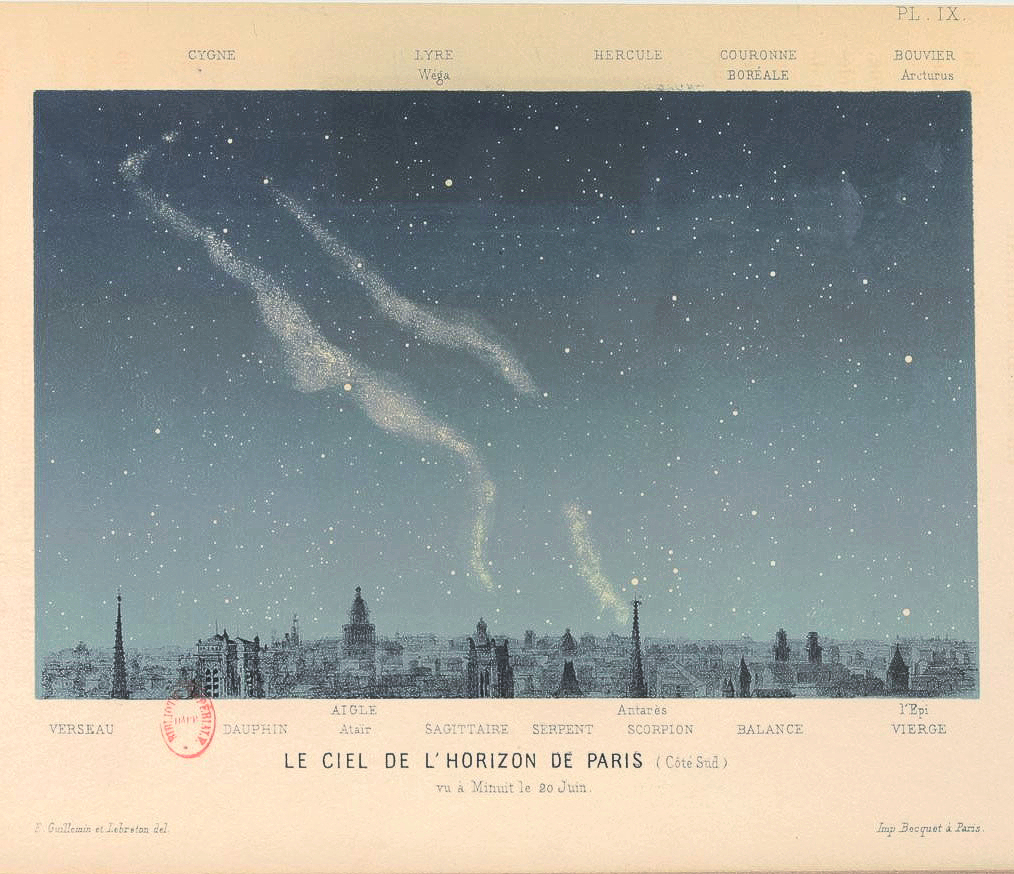
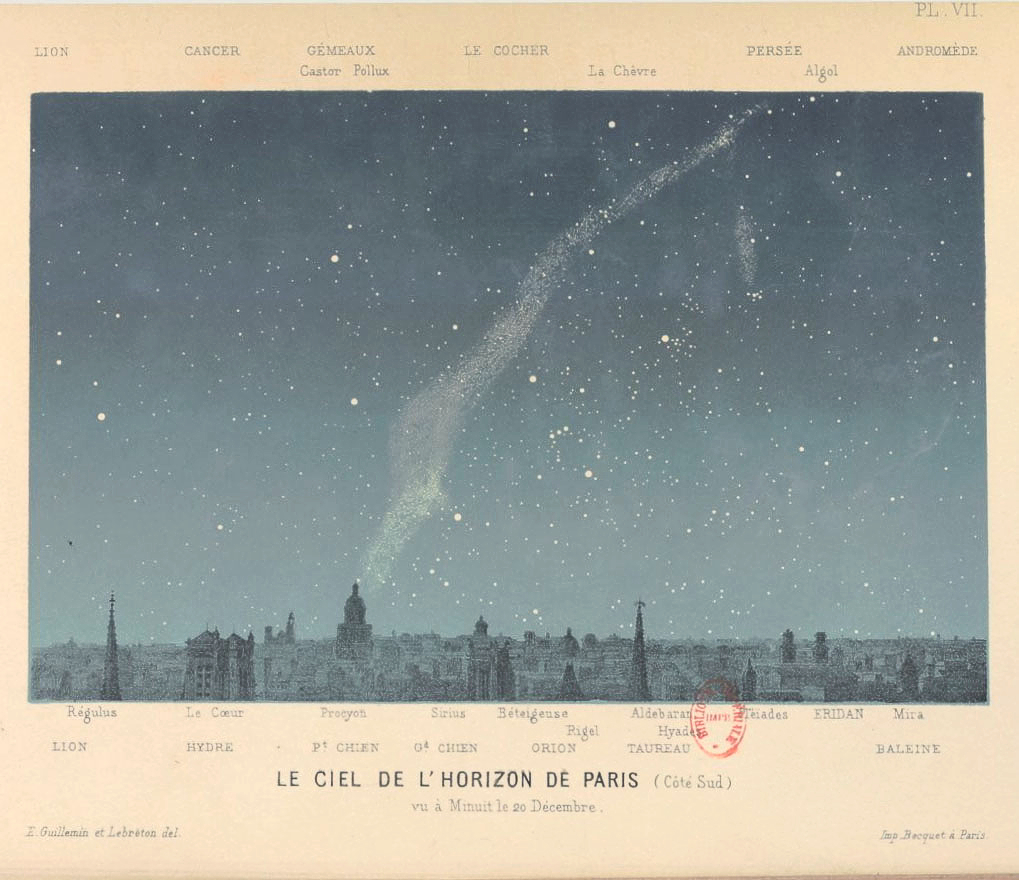
![Le ciel de l'horizon de Paris (Côté Sud ) vu à Minuit le 29 Mars [detail] | BnF · Gallica](https://unregardoblique.com/wp-content/uploads/2022/08/le_ciel_-_notions_dastronomie_...guillemin_amedee_bpt6k62098808_437-1.jpeg)
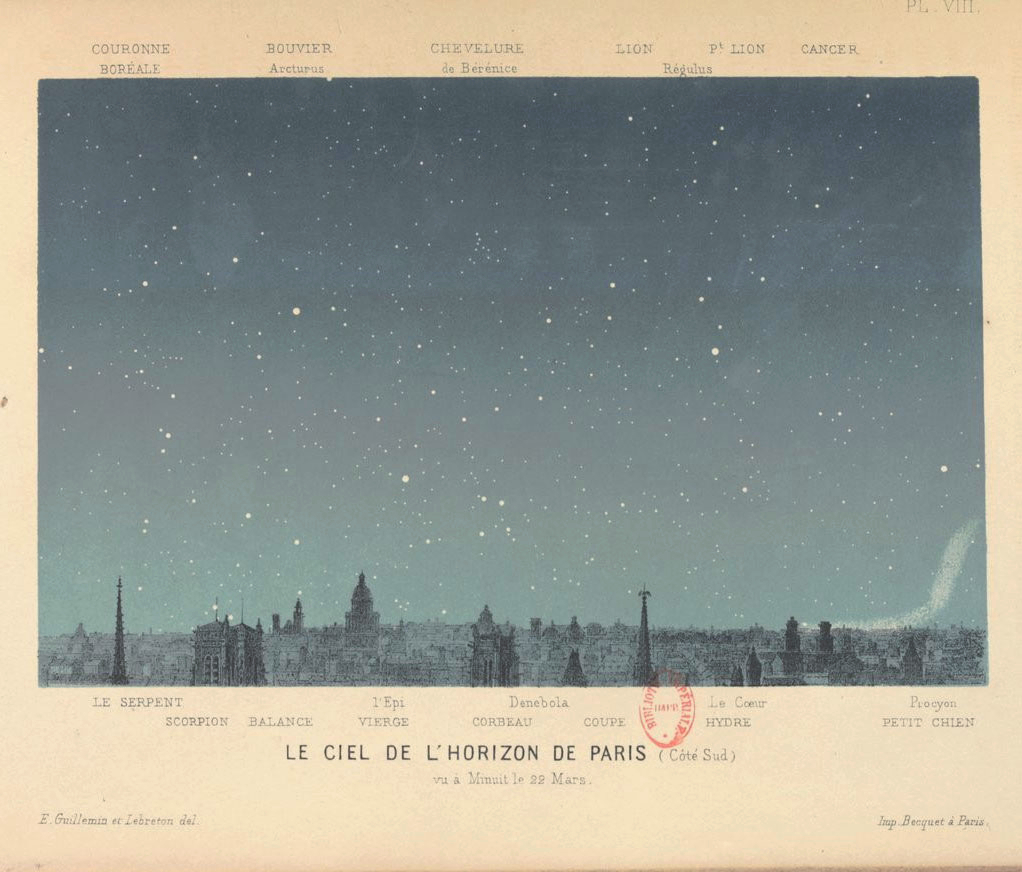

![Le ciel de l'horizon de Paris (Côté Sud ) vu à Minuit le 20 Décembre [detail] | BnF · Gallica](https://unregardoblique.com/wp-content/uploads/2022/08/le_ciel_-_notions_dastronomie_...guillemin_amedee_bpt6k62098808_411-1.jpg)
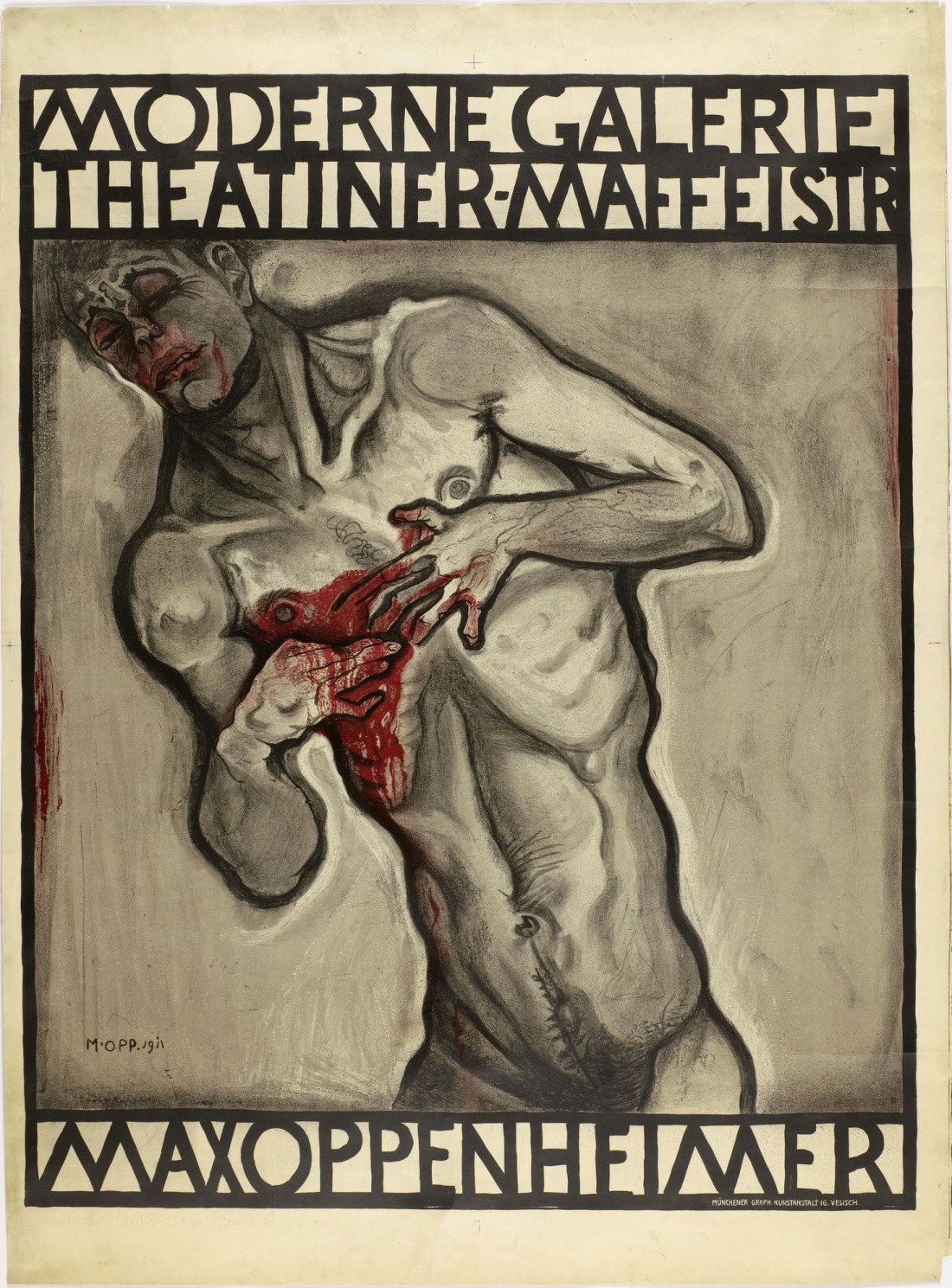
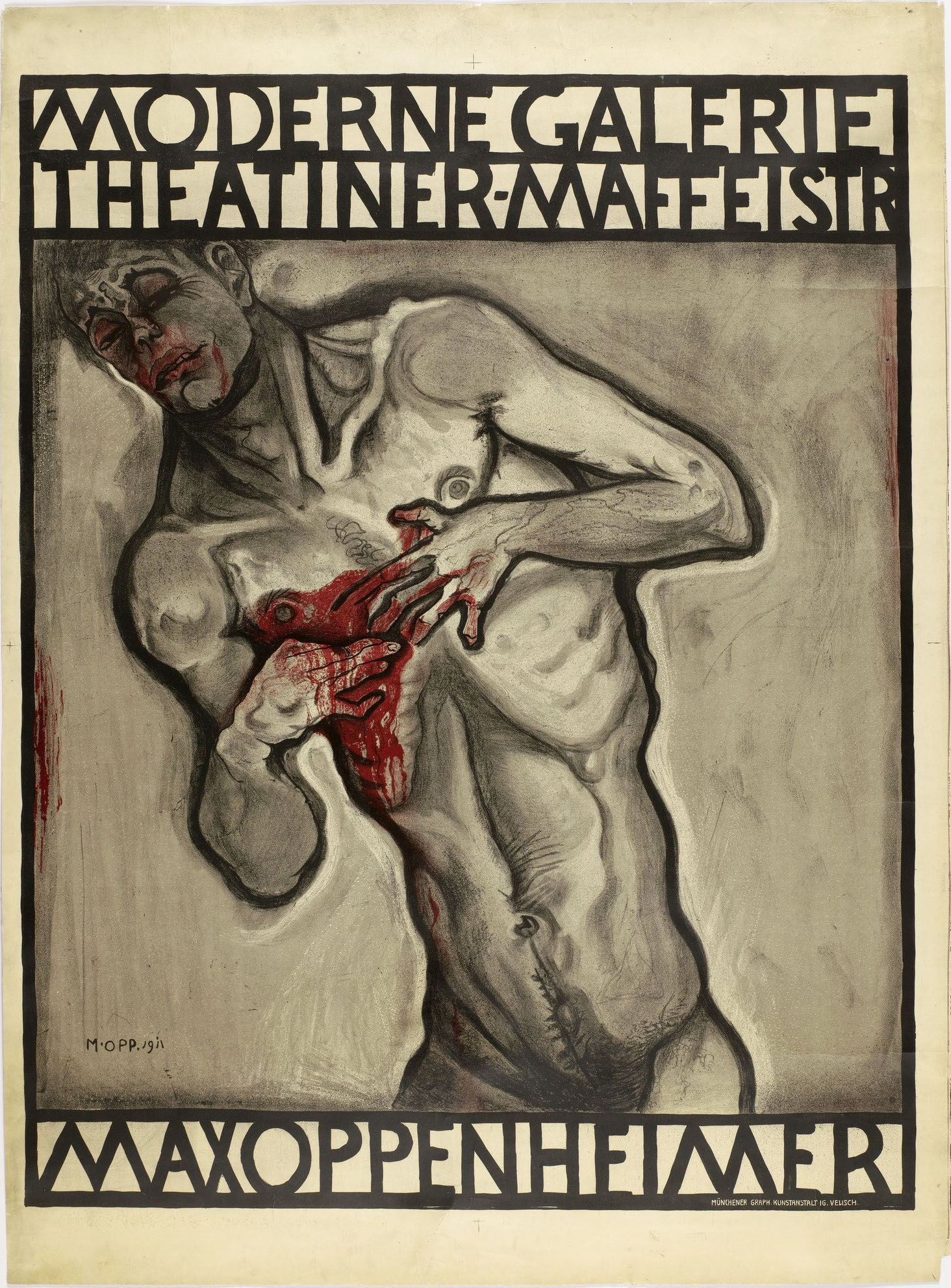
Oppenheimer, who had begun signing works MOPP by 1911, was initially friendly with both (Oskar) Kokoschka and (Egon) Schiele. But this poster, which he designed for his first Munich exhibition, brought accusations of plagiarism from Kokoschka, who found its subject—a gaunt, naked self-portrait figure bleeding from a chest wound—too close to his own agonized poster of a year earlier (images below). | quoted from MoMA
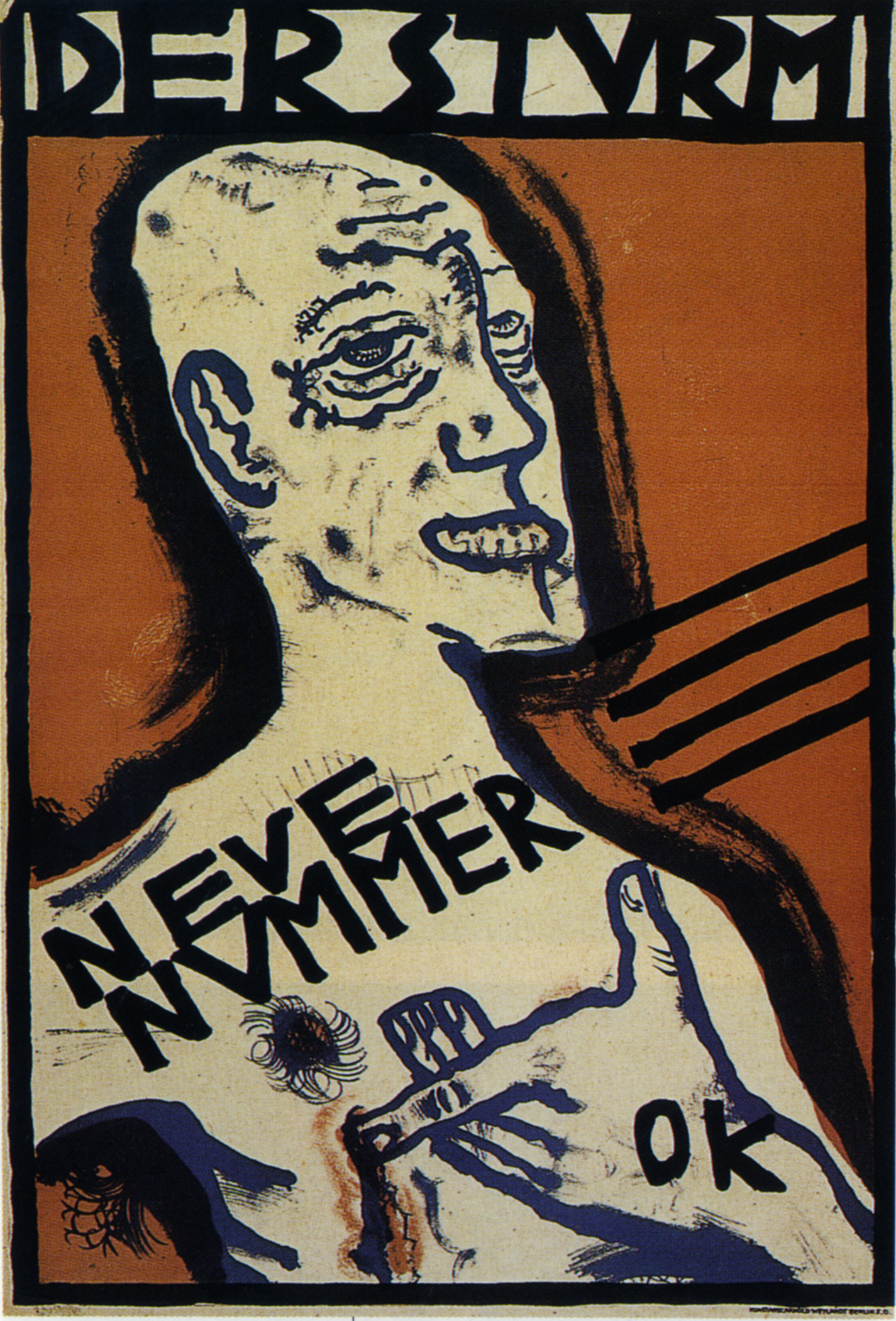



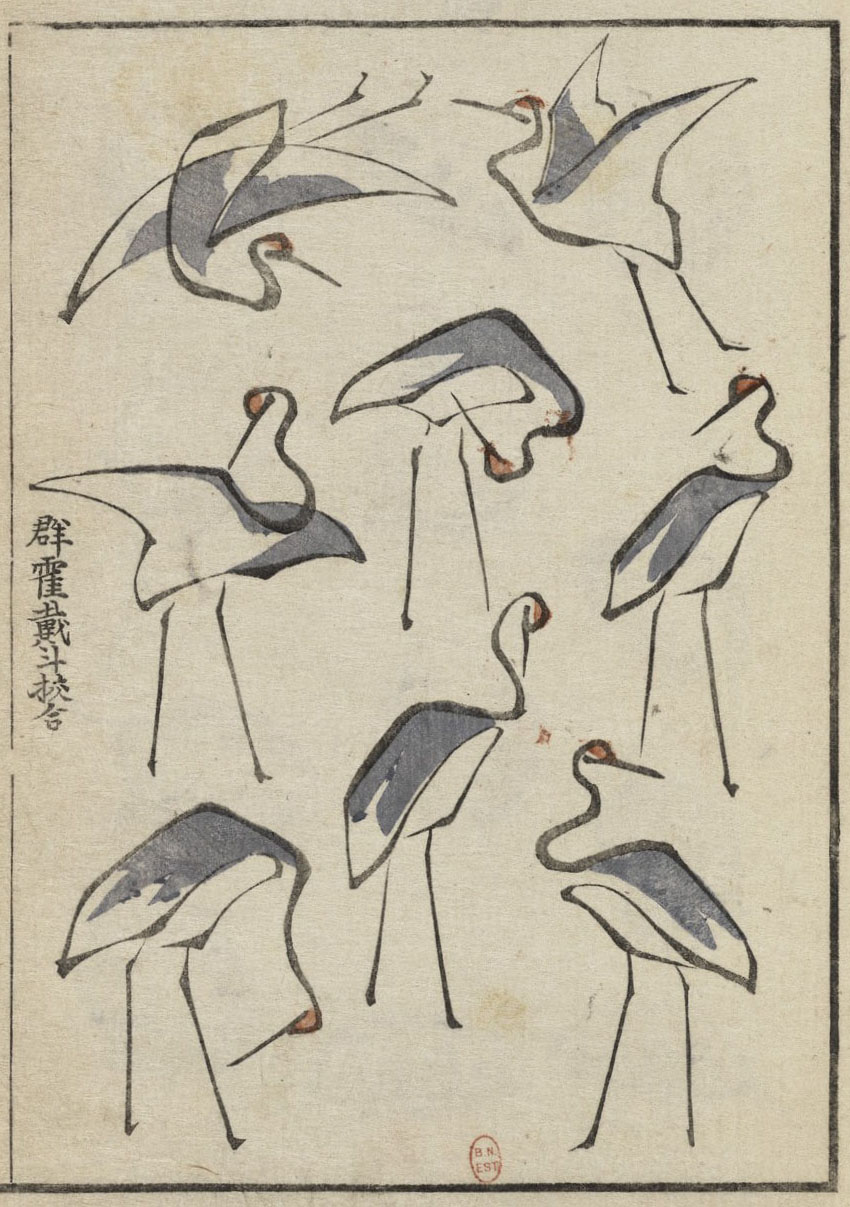
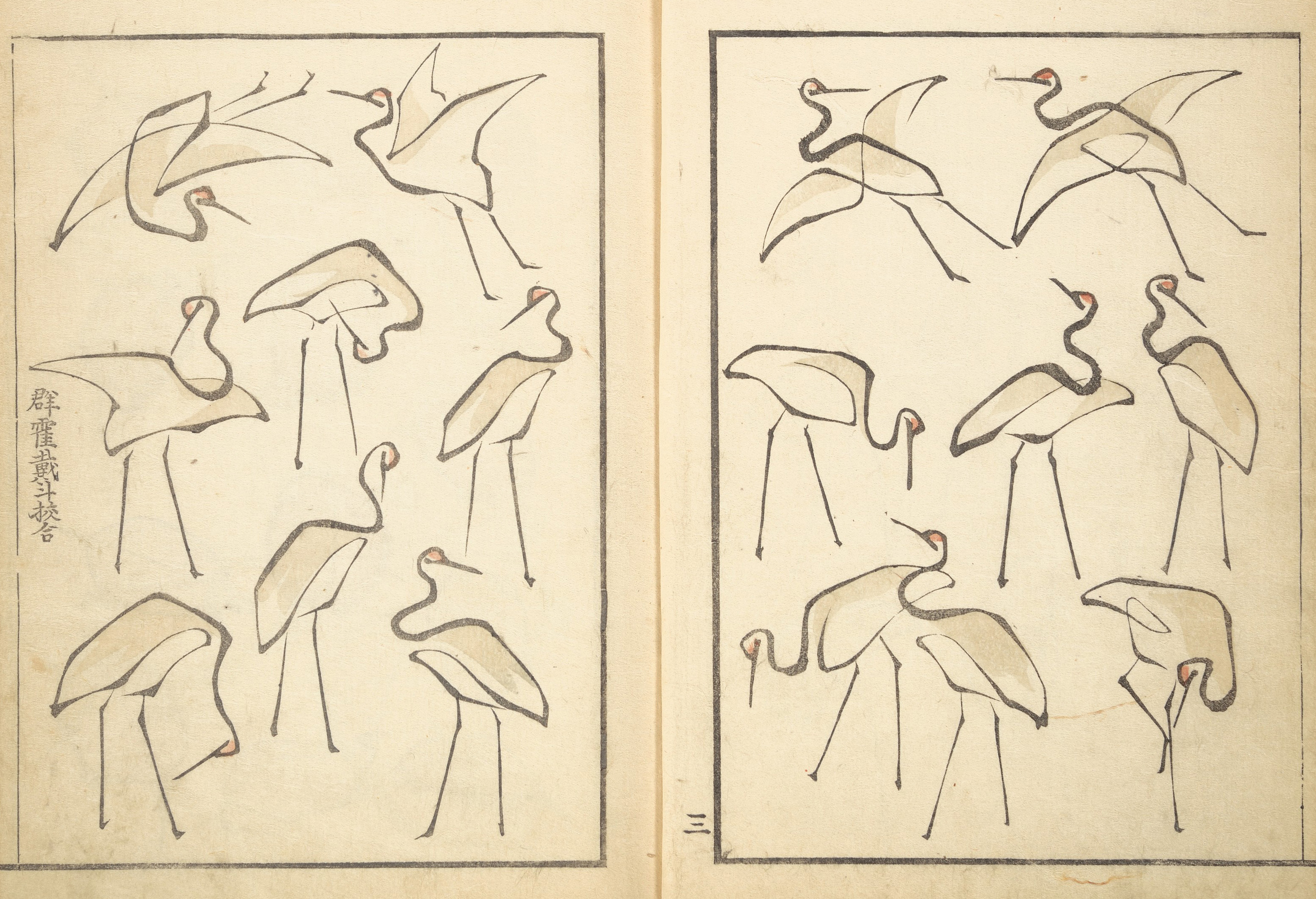
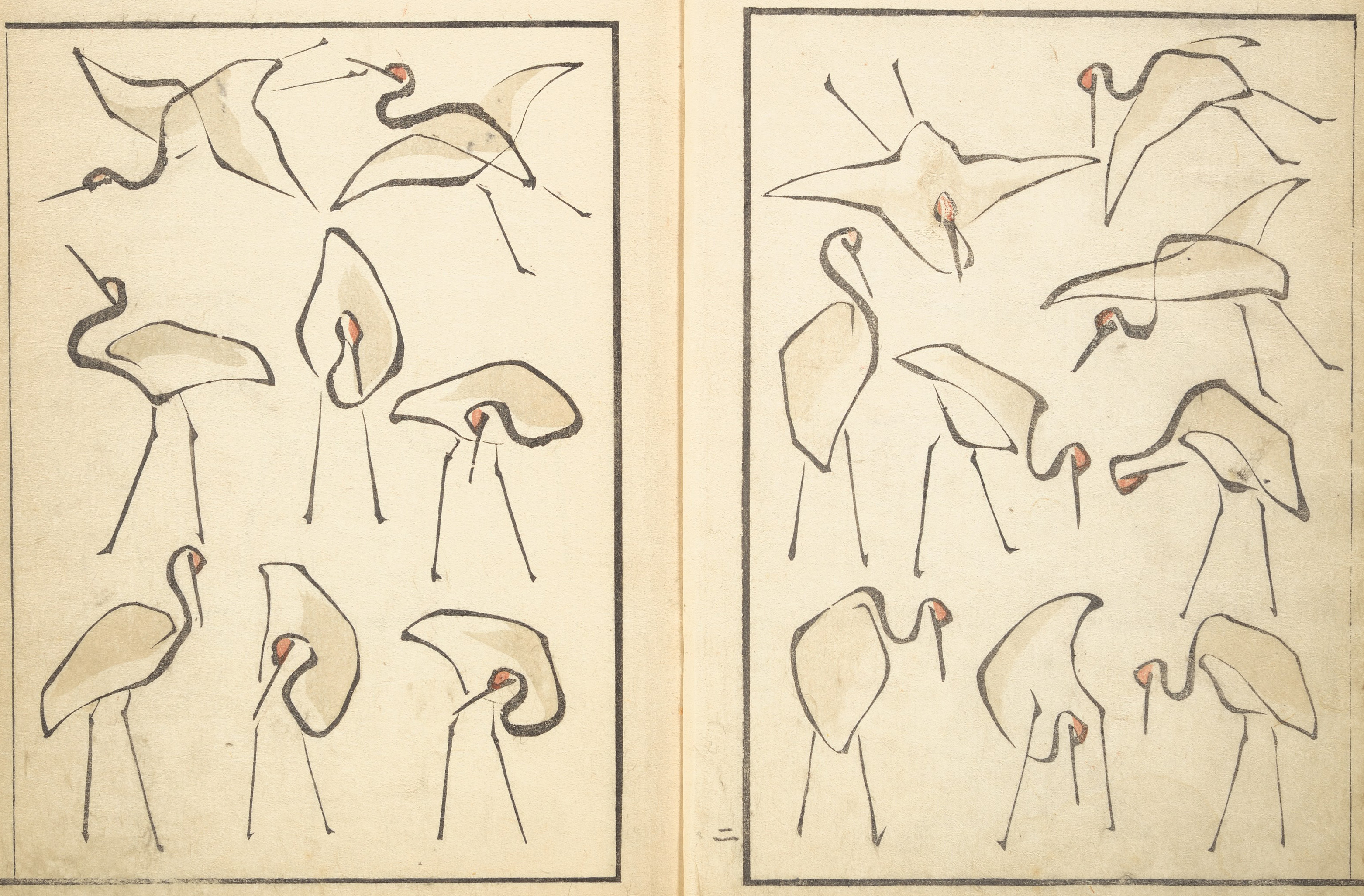
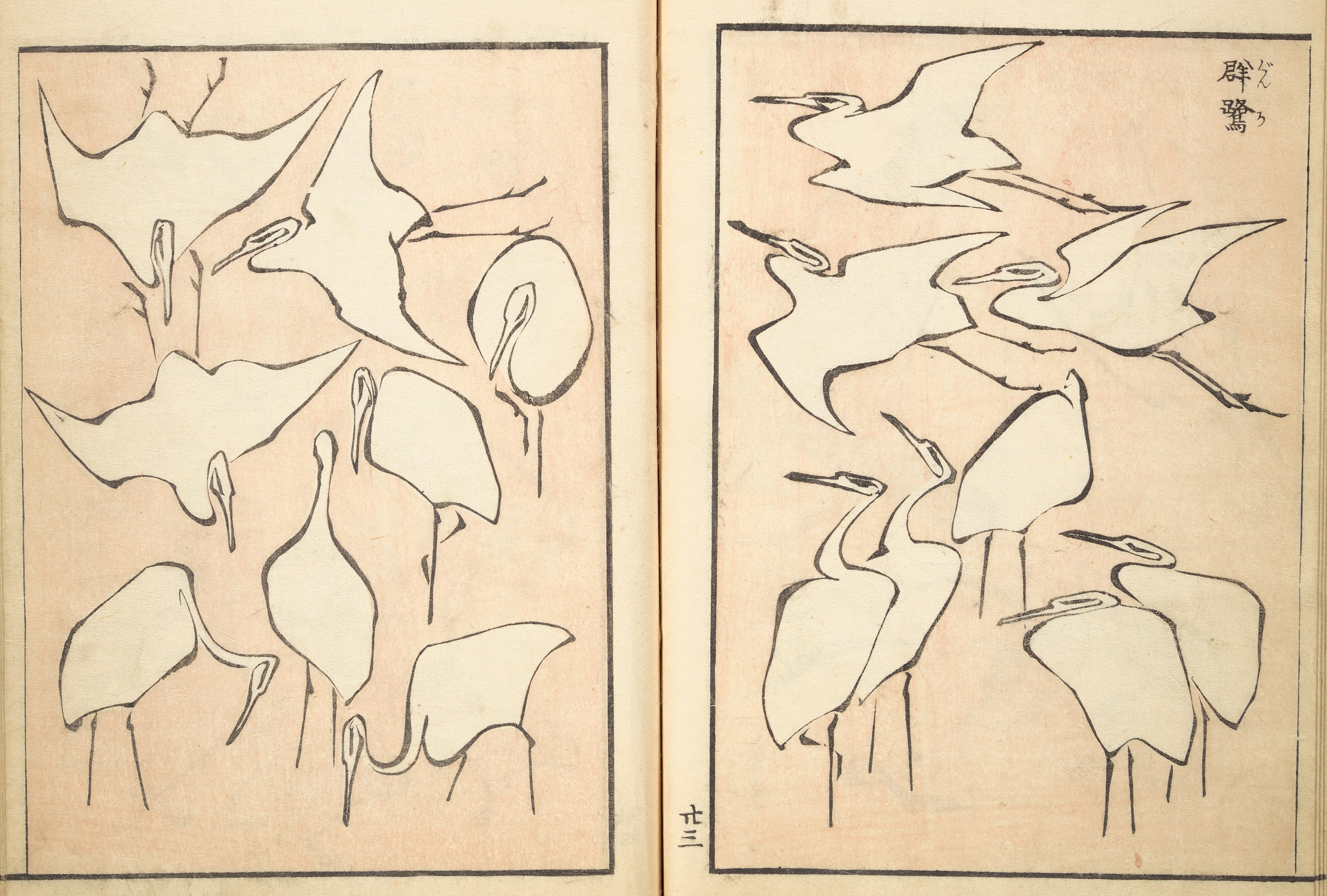
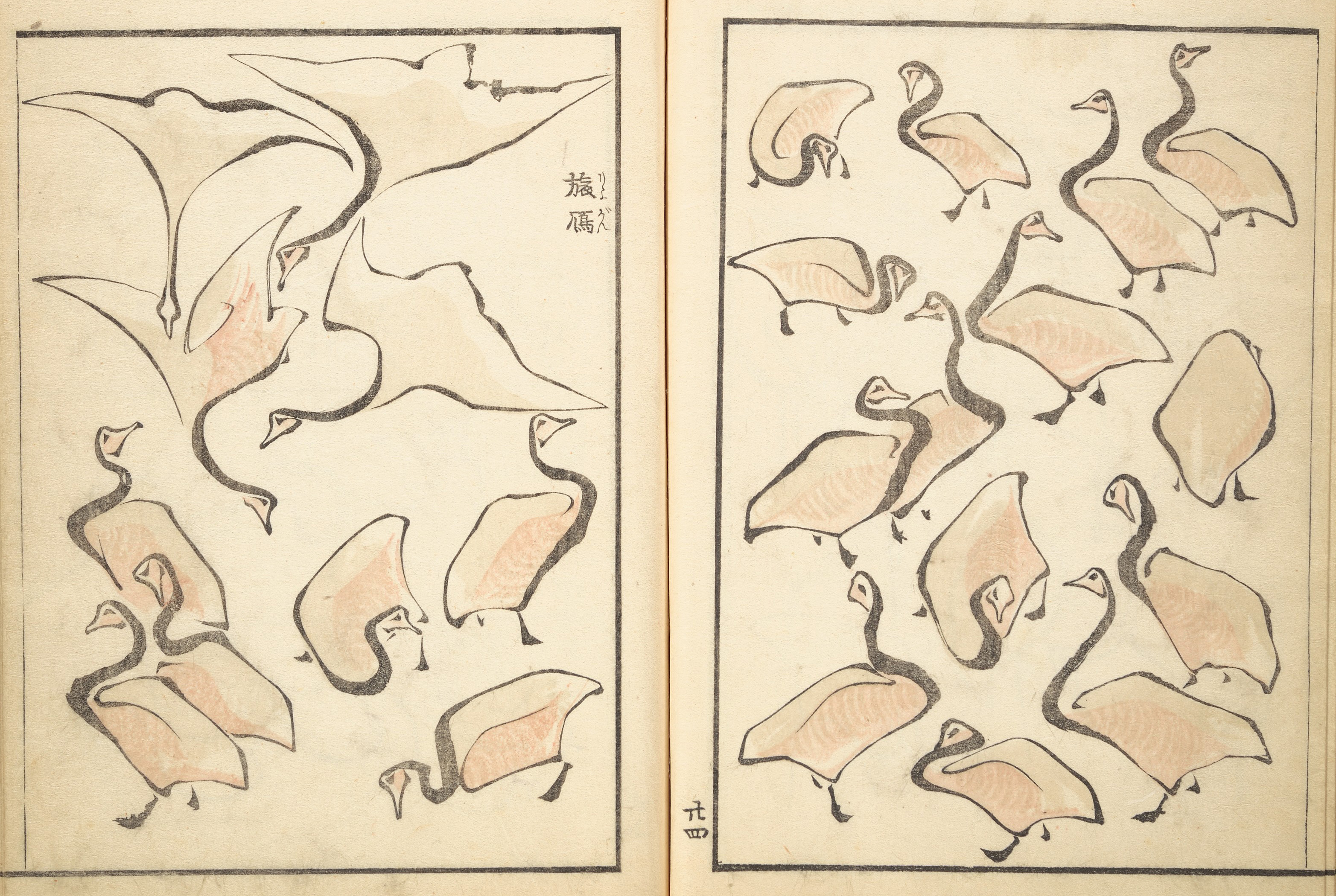
![Katsushika, Hokusai (1760-1849) :: Cranes. Denshin kaishu ippitsu gafu : zen [Album de dessins d'un coup de pinceau]. Gravure sur bois polychrome, 1823 | src BnF ~ Gallica](https://live.staticflickr.com/65535/52163320728_a881f0fb91_o.jpg)
![Katsushika, Hokusai (1760-1849) :: Cranes. Denshin kaishu ippitsu gafu : zen [Album de dessins d'un coup de pinceau]. Gravure sur bois polychrome, 1823 | src BnF ~ Gallica](https://unregardoblique.com/wp-content/uploads/2022/06/denshin-kaishu-ippitsu-gafu-zen-katsushika-hokusai-_8-bnf.jpg)
![Katsushika, Hokusai (1760-1849) :: Cranes. Denshin kaishu ippitsu gafu : zen [Album de dessins d'un coup de pinceau]. Gravure sur bois polychrome, 1823 | src BnF ~ Gallica](https://live.staticflickr.com/65535/52163320713_d87223a157_o.jpg)
![Katsushika, Hokusai (1760-1849) :: Cranes. Denshin kaishu ippitsu gafu : zen [Album de dessins d'un coup de pinceau]. Gravure sur bois polychrome, 1823 | src BnF ~ Gallica](https://live.staticflickr.com/65535/52163808410_6742539137_o.jpg)

Im Jahr 1921 zieht Otto Dix für vier Jahre nach Düsseldorf, wo er sich in druckgraphischen Techniken weiterbildet. Er liebt die Großstadt, die Typen und Randgruppen, die er vor allem während der Nacht auf den Straßen und in den Lokalen trifft: Matrosen oder Artisten, Kriegsversehrte und Kriegsgewinnler, ebenso wie Prostituierte und ihre Kunden. Die „goldenen“ Zwanziger zwischen allumfassender Traumatisierung, Vergnügungssucht und frühem Konsumismus, zwischen schillernder Oberfläche und abgestorbenem Innersten reizt ihn zu grotesk-enthüllenden Bildsujets. In seinen Werken – wie auch in der vorliegenden Lithographie „Kupplerin“ – führt Dix dem Betrachter schonungslos den körperlichen Zerfall, die Defizite und Eigenarten seiner Modelle vor Augen. Sein neuartiger Realismus, für den die Zeitgenossen den Begriff „Verismus“ prägen, macht Dix – zusammen mit Max Beckmann und George Grosz – nicht nur zum Hauptvertreter dieser Kunstströmung in Deutschland, sondern auch zu einem der bedeutendsten Realisten in der Geschichte der Kunst überhaupt.
In 1921, Otto Dix moved to Düsseldorf for four years, where he continued his education in printmaking techniques. He loves the big city, the characters and marginal groups he meets on the streets and in bars, especially at night: sailors or artists, war invalids and war profiteers, as well as prostitutes and their customers. The “golden” twenties between comprehensive traumatization, pleasure-seeking and early consumerism, between shimmering surfaces and dead innermost parts provoked him to grotesquely revealing pictorial subjects. In his works – as well as in the present lithograph “Kupplerin” – Dix ruthlessly shows the viewer the physical decay, the deficits and the peculiarities of his models. His new type of realism, for which his contemporaries coined the term “Verism”, made Dix – together with Max Beckmann and George Grosz – not only the main representative of this art movement in Germany, but also one of the most important realists in the history of art in general. (Roughly translated by us from source)
 un regard oblique