Gaetano Piccini :: Grotesque Head with a Large Ear and an Open Mouth Looking to the Right within a Circle, 1727. Pen and brown ink. (Photo: Sepia Times – Universal Images Group). | src and hi-res Getty Images
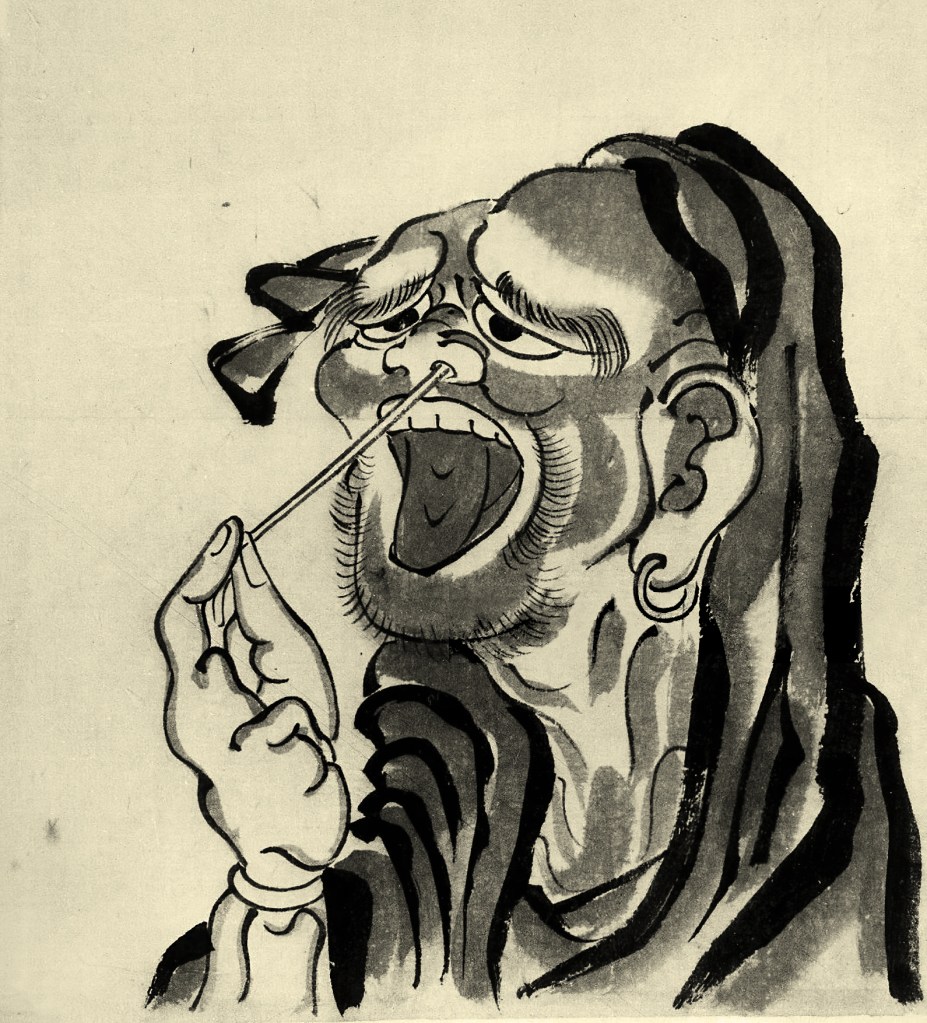
Daruma (Buddhist Saint), 18th-19th century. Edo period (1615–1868). Japan, Ink and color on paper. Artist School of Katsushika Hokusai.(Japanese, Tokyo (Edo) 1760–1849) (Photo by Heritage Art-Heritage Images-Sepia Times) | src Getty Images
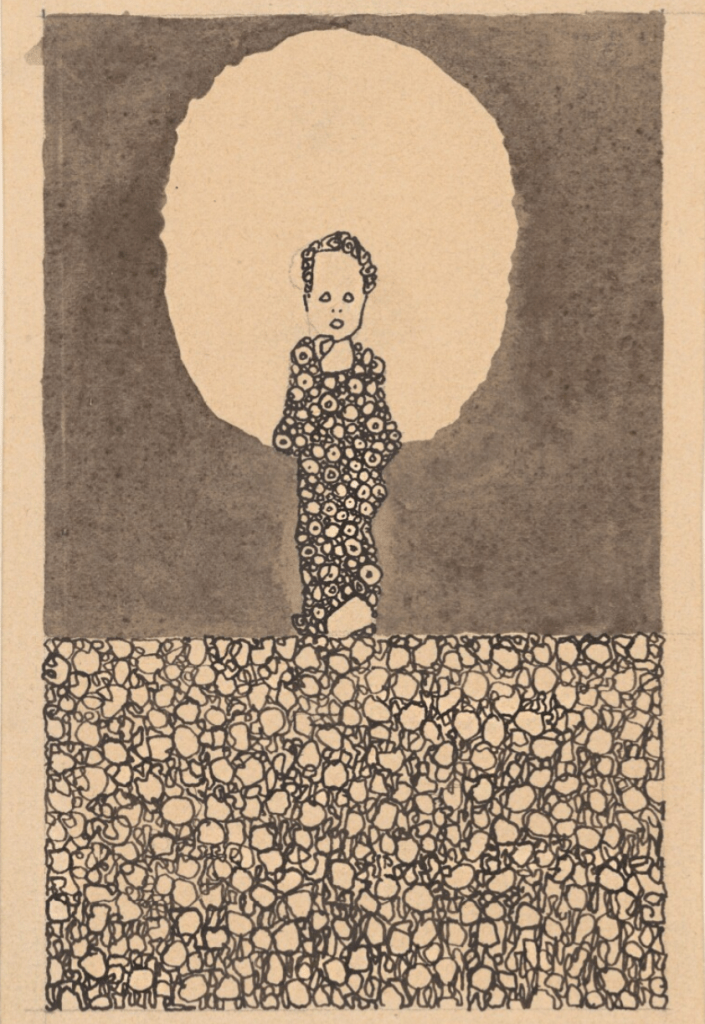
Egon Schiele :: Kind mit Nimbus auf einer Blumenwiese, um 1909. Bleistift, Tusche laviert, auf Zeichenpapier. | Child with a nimbus on a flower meadow, around 1909. Pencil, washed ink, on drawing paper. | src Albertina Museum Online Collection 1909 entwirft Egon Schiele für die Wiener Werkstätte einige Postkarten, die allerdings nie gedruckt wurden. Stilistisch sind diese Postkartenentwürfe eng miteinander verwandt. Ihr radikaler Flächenstil macht sie trotz ihres kleinen Formats zu Hauptwerken Schieles aus seiner Jugendstilphase. (In 1909 Egon Schiele designed some postcards for the Wiener Werkstätte, which were never printed. Stylistically, these postcard designs are closely related to one another. Despite their small format, their radical surface style makes them one of Schiele’s main works from his Art Nouveau phase.) quoted from Albertina Collection Online
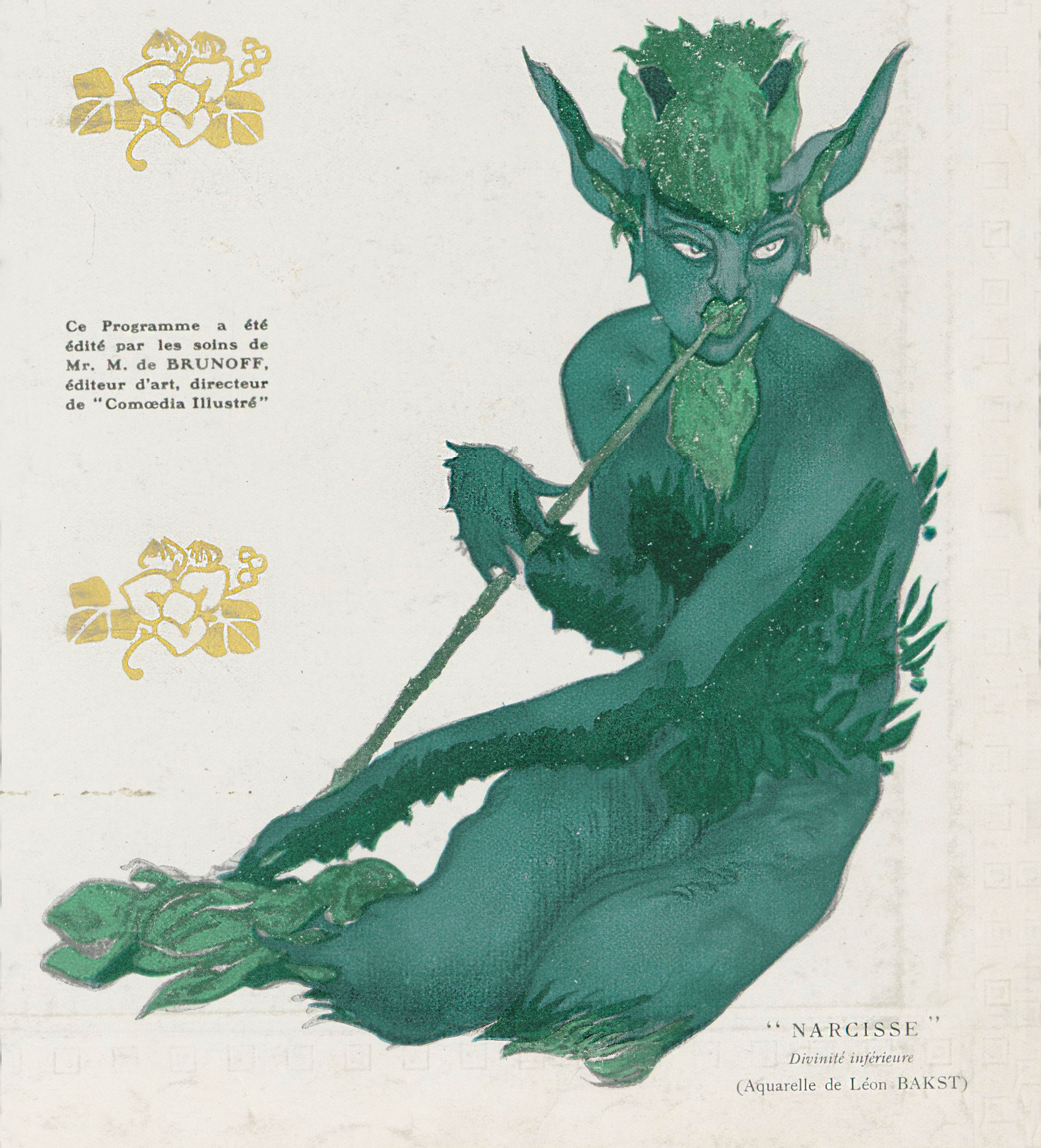
Sixième Saison des Ballets Russes, 1911. Organisée par M. Serge de Diaghilew. Théâtre du Châtelet. «Narcisse». Divinité inférieure (Aquarelle de Léon Bakst) Comœdia Illustré. | src BnF
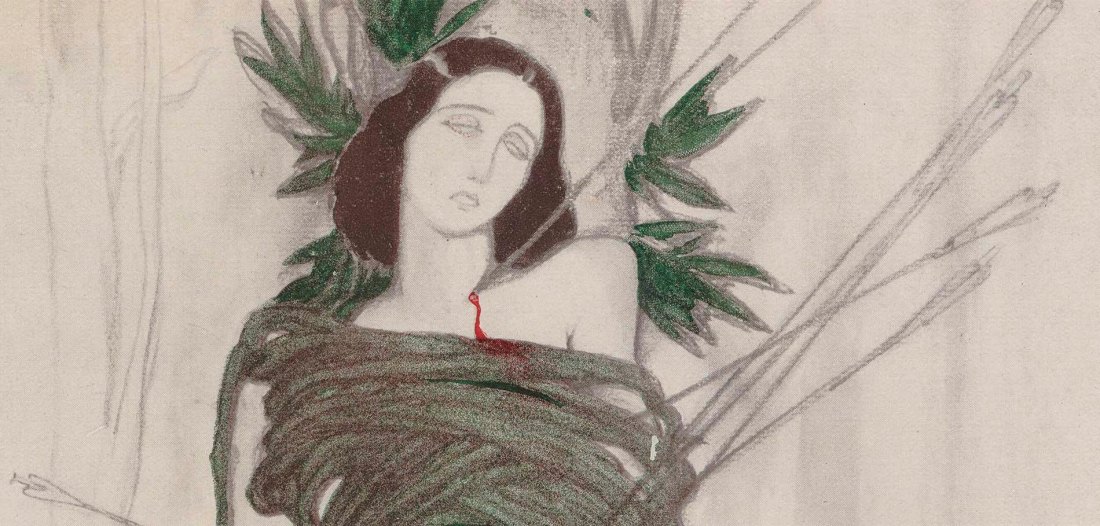
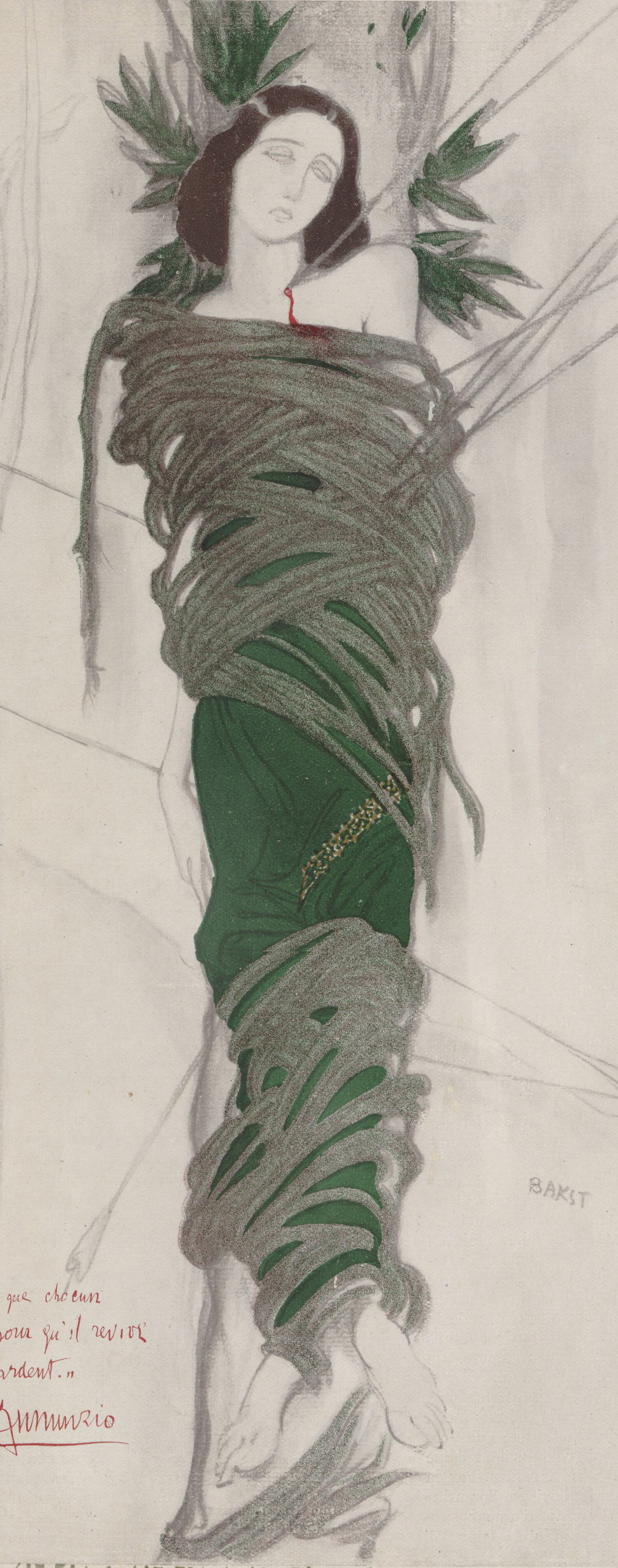
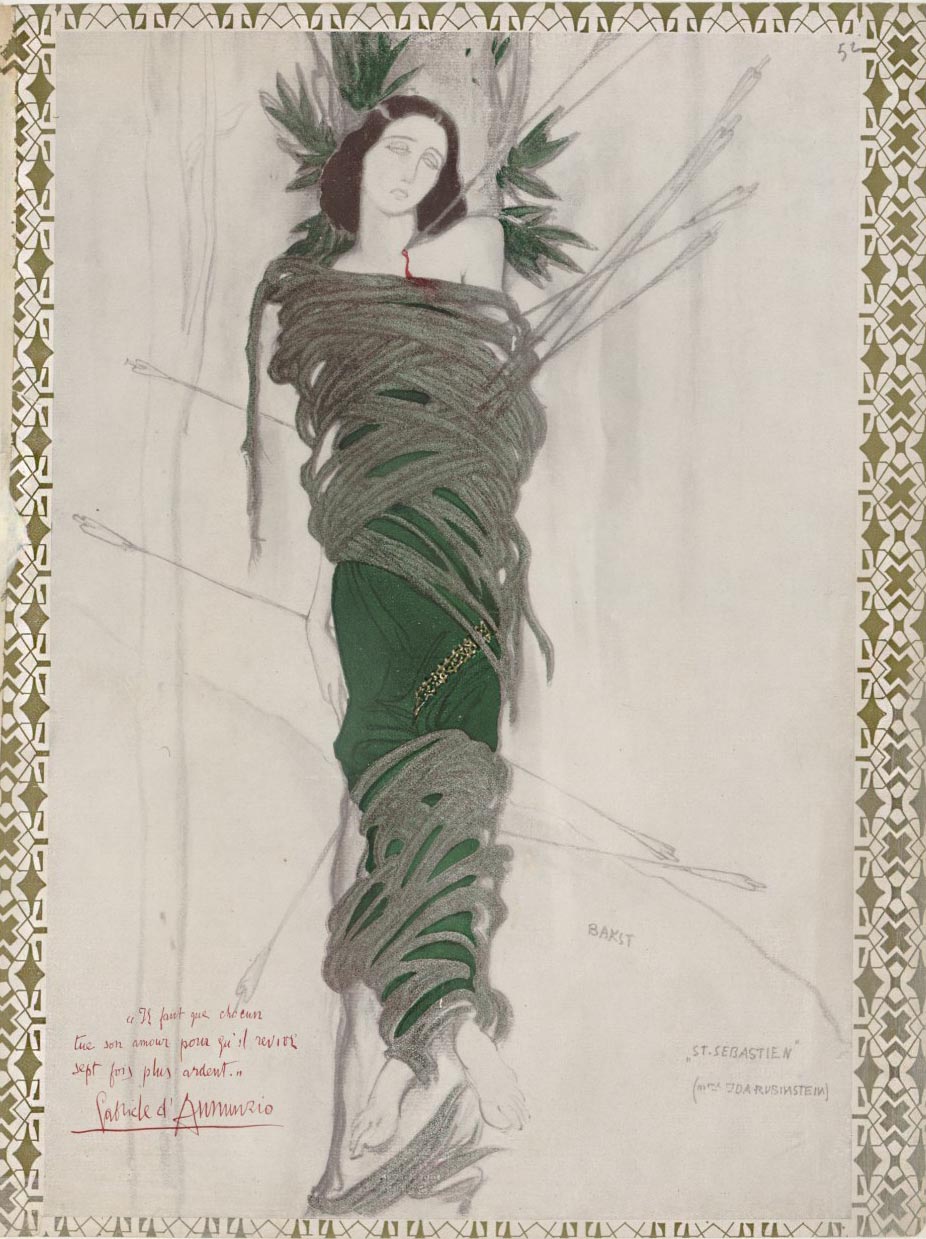
Spectacles de gala de Ida Rubinstein, 1911. Le Martyre de Saint Sébastien. Mystère en cinq actes de Gabriele D’Annunzio avec la musique de Claude Debussy. Décors et Costumes de Léon Bakst. Représenté pour la première fois au Théâtre du Châtelet le 22 mai 1911. Comœdia Illustré. | src Gallica ~ BnFSpectacles de gala de Ida Rubinstein, 1911. Le Martyre de Saint Sébastien. Mystère en cinq actes. [full image]Ida Rubinstein dans Le Martyre de Saint Sébastien. Costumes de Léon Bakst. Comœdia Illustré, 1911. [detail] | src Gallica ~ BnF



 un regard oblique