Adolf Hirémy-Hirschl :: In Ekstase (Studie zu “Sic Transit”). In Ecstasy (Study on ‘Sic Transit’). Charcoal and white chalk on blue-gray laid paper. Preliminary study for the monumental polyptichon “Sic Transit” (1912) in the Galleria Nazionale d’Arte Moderna in Rome. The drawing prepares the ghostly female figure that can be seen in the left panel in the right background. – Provenance: From the artist’s estate (stamp on verso). Galleria Carlo Virgilio, Rome (stamp on verso). | src invaluable and Bassenge
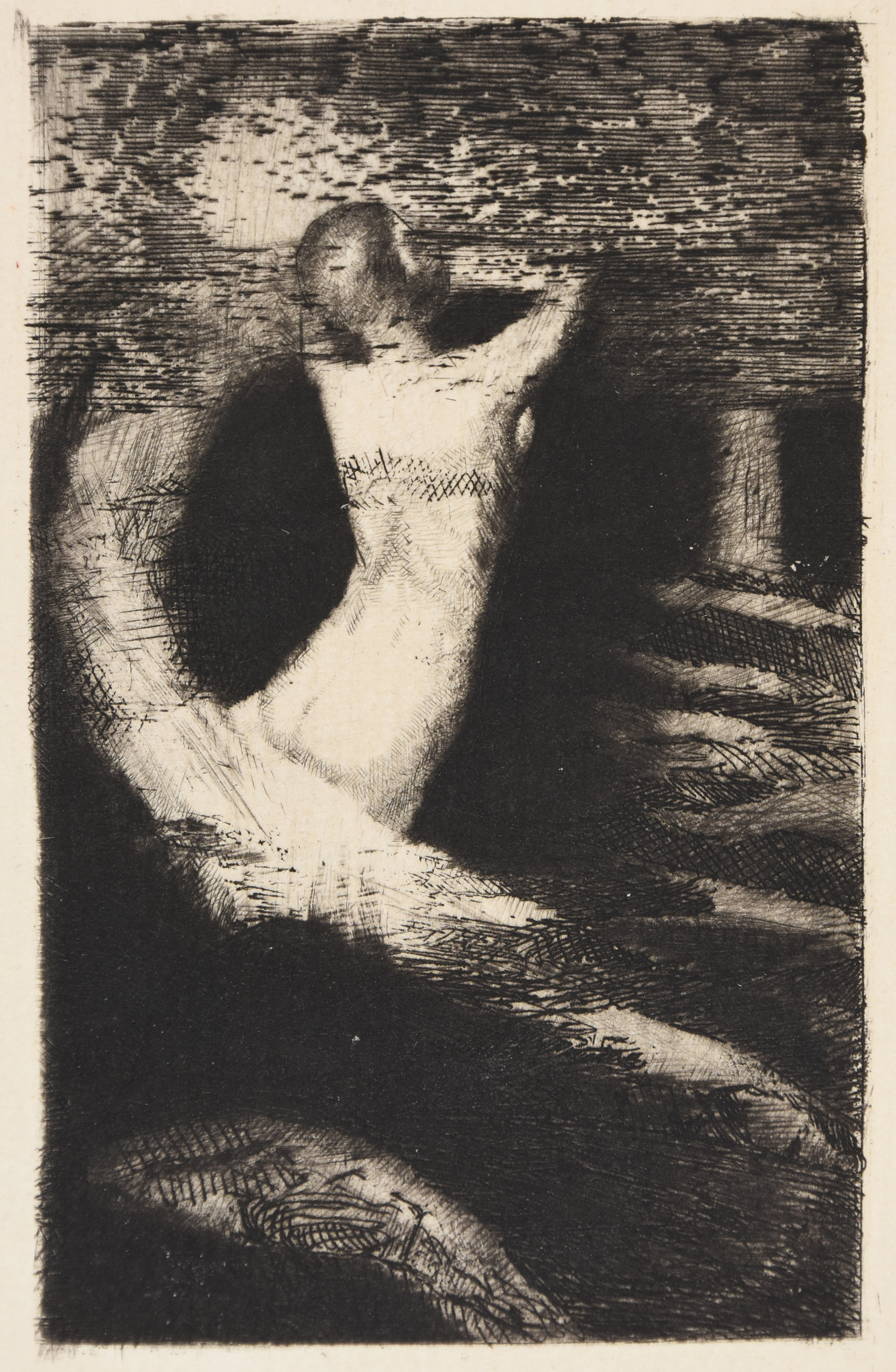
Frontispice symboliste de Odilon Redon à l’eau-forte et pointe sèche sur vergé, pour un ouvrage de l’auteur oublié Adrien Remacle (1849-1916). La passante. [Roman d’une âme]. Paris, Bibliothèque artistique et littéraire, 1892. Édition originale | src Arenberg Auctions
Dessin sur les gestes de Mademoiselle Ida Rubinstein par Georges Tribout. Précédés d’une glose de Charles Batilliot. Paris, Le Belle Édition, ca. 1912. | src Arenberg AuctionsDessin sur les gestes de Mademoiselle Ida Rubinstein par Georges Tribout. Précédés d’une glose de Charles Batilliot. Paris, Le Belle Édition, ca. 1912. | src Arenberg AuctionsDessin sur les gestes de Mademoiselle Ida Rubinstein par Georges Tribout. Précédés d’une glose de Charles Batilliot. Paris, Le Belle Édition, ca. 1912. | src Arenberg Auctions
Henri de Toulouse-Lautrec (French, 1864-1901) :: Miss Loïe Fuller, 1893. Brush and spatter lithograph printed in five colors on wove paper. Loïe Fuller was famous in turn-of-the-century Paris for her dazzling performances which combined dance, colored electric lights, and music. In this print, inspired by her appearance at the Folies Bergère, Lautrec captures the decorative effect of her billowing silk gown, which she manipulated with large poles held in her hands. Lautrec executed about sixty versions of this print in a variety of colored inks, including gold and silver. | src The MetHenri de Toulouse-Lautrec (French, 1864-1901) :: Miss Loïe Fuller, 1893. Color lithograph. Parisian audiences were captivated by Loïe Fuller (1862–1928) whose unique performances involved manipulating voluminous translucent gowns with the aid of large poles in each hand. Fuller danced in a specially designed space featuring a glass floor illuminated from below and surrounded by mirrors. Electric lights of various colors projected onto the stage created an ethereal, swirling effect. Fuller’s extraordinary dance was the subject of Toulouse-Lautrec’s most abstract lithograph. The artist used layers of colored ink—including some metallic tones—to convey the movement and energy of Fuller’s performances. | src The Cleveland Museum of Art and Flickr
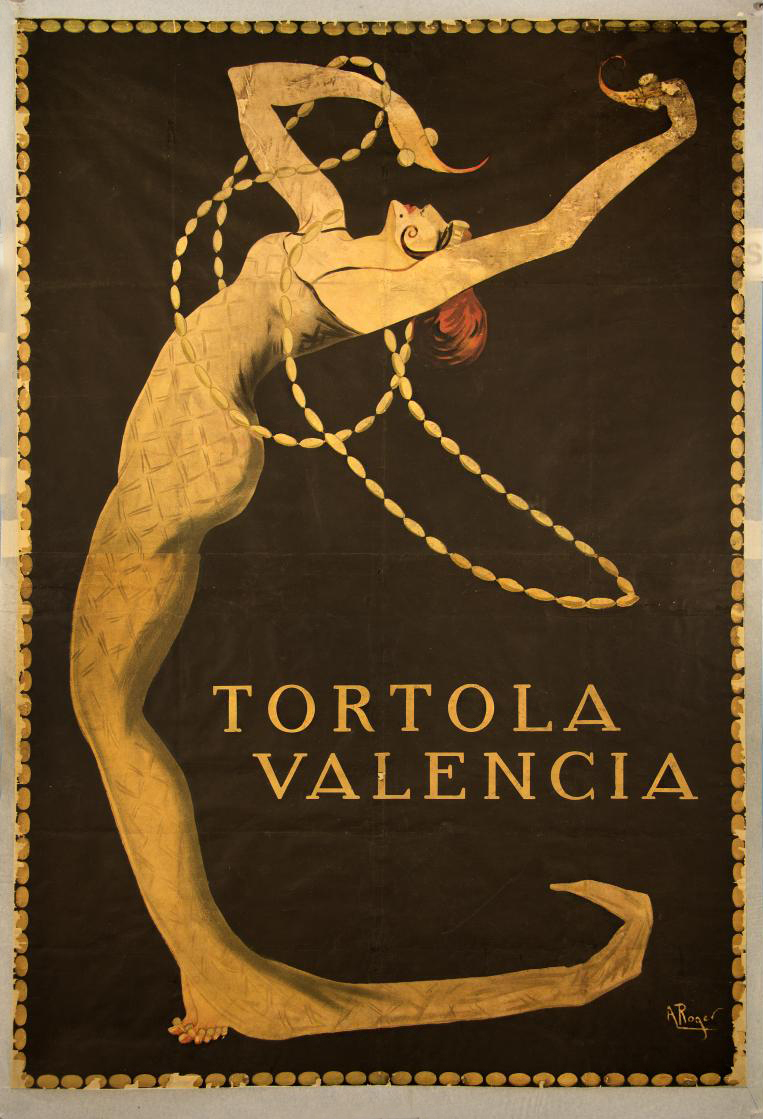
La serpiente. Tórtola Valencia, 1915. Cartell de grans dimensions per a la Danza de la serpiente de Tórtola Valencia. Dansa. Dance. Segle XX. Dansa de la serp. (signatura: A. Roger) | src Fons Tórtola Valencia (cdmae)
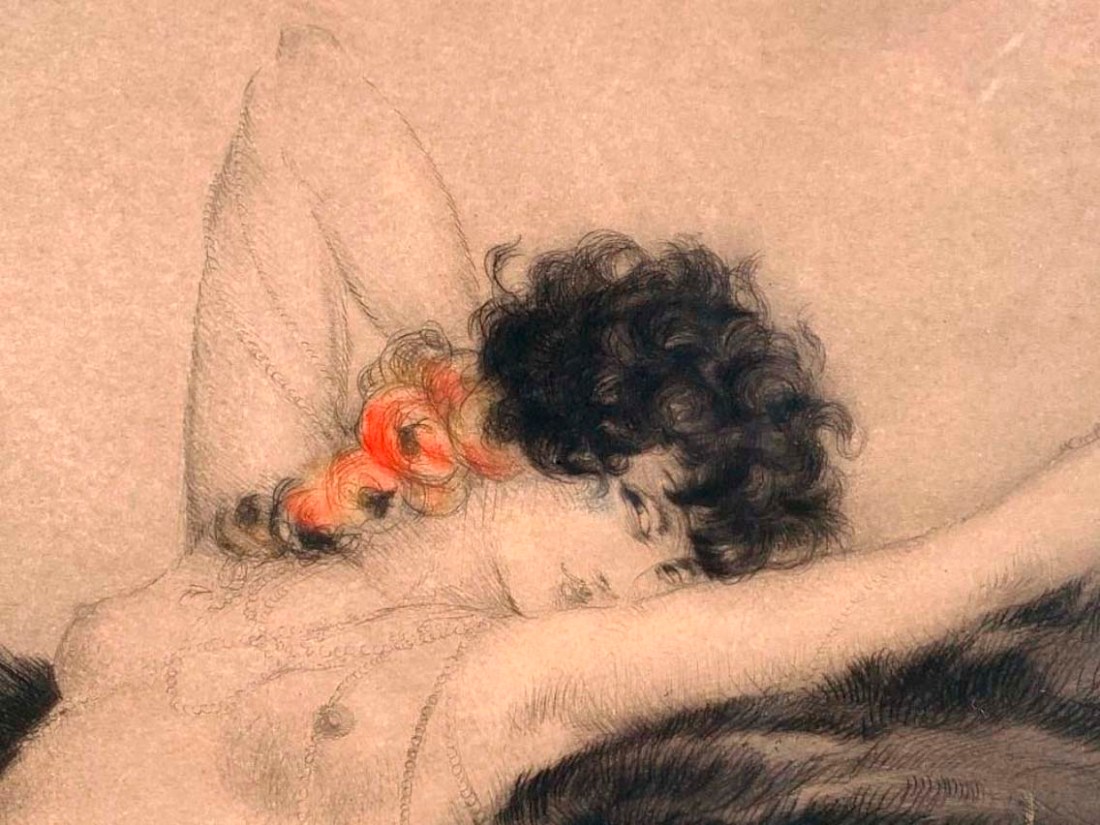
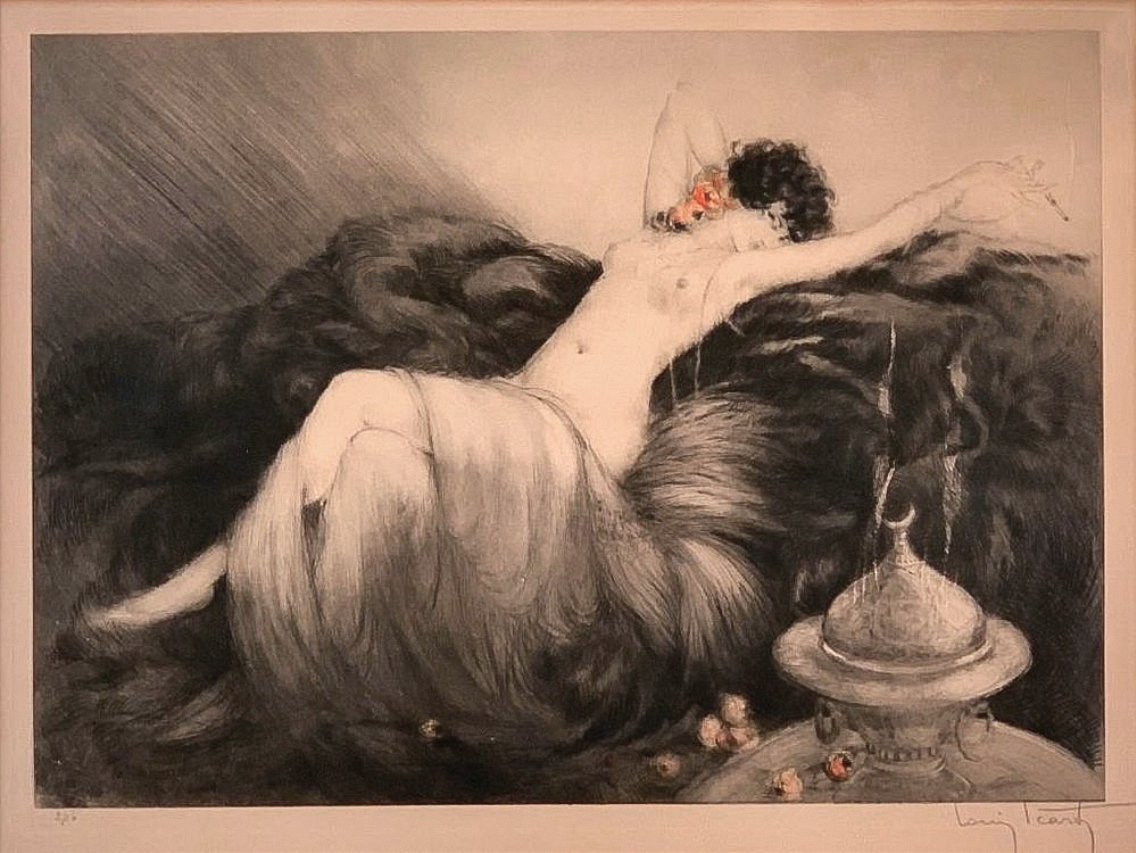
Louis Icart :: “Smoke, or Fumée”, 1926, etching with touches of hand coloring on paper, signed in pencil on lower right, numbered 246 on lower left, with blindstamp. (detail) | src Bidsquare ~ Neue AuctionsLouis Icart :: “Smoke, or Fumée”, 1926, etching with touches of hand coloring on paper, signed in pencil on lower right, numbered 246 on lower left, with blindstamp. | src Bidsquare ~ Neue Auctions
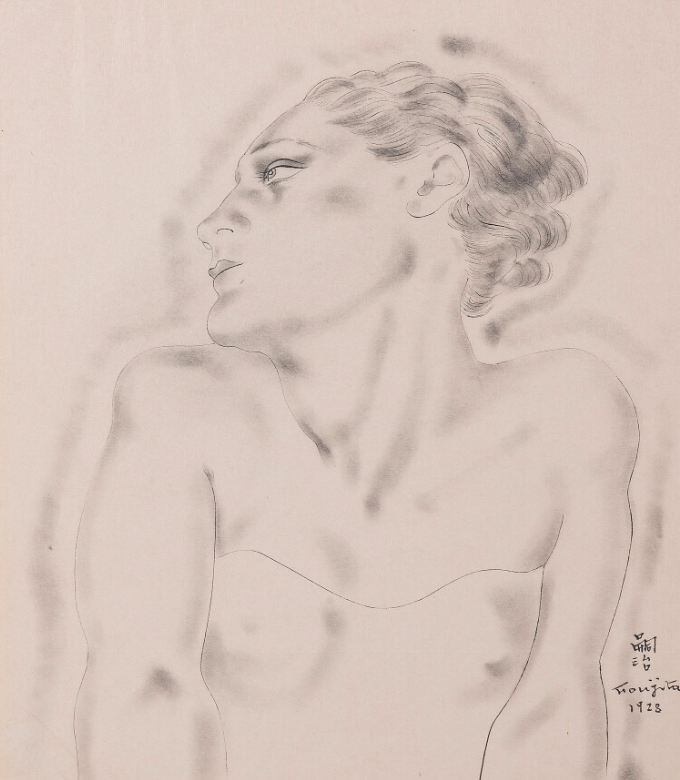
Léonard Tsuguharu Foujita (藤田 嗣治, Fujita Tsuguharu, 1886–1968) :: Buste de la danseuse, modèle, 1928. Dessin à la plume, au lavis et à l’estompe, signé et daté 1928 vers le bas à droite. | src Auction @ Briscadieu Bordeaux








 un regard oblique