Leonetto Cappiello · Dancers

Leonetto Cappiello (1875-1942) ~ A dancer in motion wearing a futuristic headpiece and billowing wide pants, 1928. Watercolor and pencil drawing | src invaluable
Leonetto Cappiello (1875-1942) ~ Folies Bergere poster, 1900s | src RetroGraphik

Leonetto Cappiello: The Father of Modern Advertising Poster

Leonetto Cappiello (1875 – 1942) was an Italian poster artist who lived much of his life in Paris, France. With no formal training in art, he emerged as one of the leading Italian artist and caricaturist in Paris that eventually succeeded the other famous lithographers such as Henri Toulouse-Lautrec (1864-1901), Jules Cheret (1836-1932) and Alphonse Mucha (1860-1939) as the leading advertising poster designer in Paris.

Talented Cappiello started his arts career as a caricature artist in 1896 illustrating for French journals like Le Rire, Le Cri de Paris, Le Sourire, L’Assiette au Beurre, La Baionnette, Femina, and others. His first album of caricatures, Lanterna Magica, was made in 1896. His early caricature style was seen to be influenced by Henri Toulouse-Lautrec, which was already the most famous artist of the time.

Today, arts historians list him as one of the most influential poster artist in the history of poster art as many would agree that he is also known as the “Father of Modern Advertising Poster”. As advertising posters were the main medium of communication during the time, Paris streets were saturated with many types of advertising posters, all trying hard to engage the increasingly distracted eyes. There was a need to rethink how poster as a medium need to be relevant and engage the faster pace of the 20th century. 
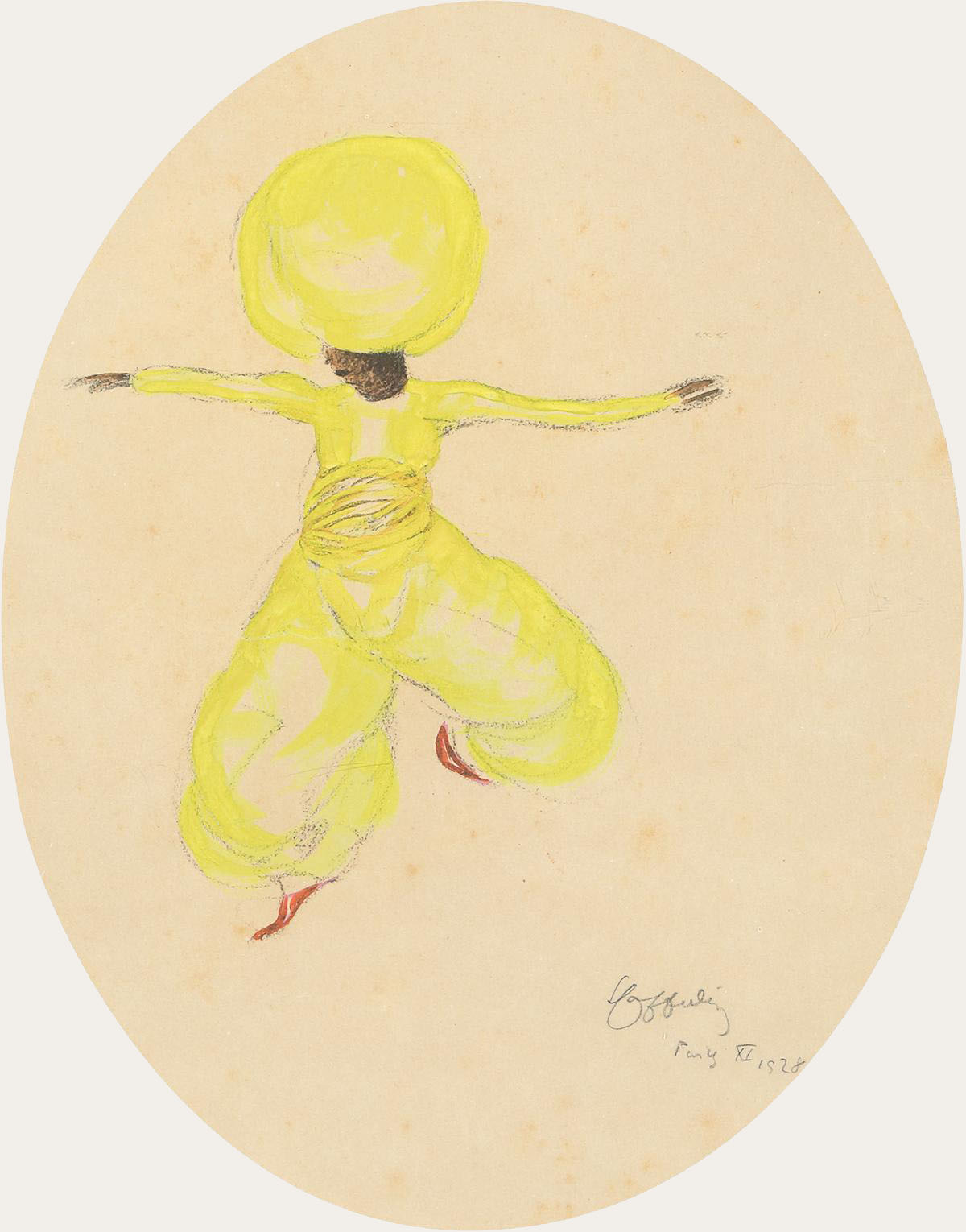
Leonetto Cappiello (1875-1942) ~ Turbaned dancer in midair wearing a bright yellow outfit, 1928. Watercolor and charcoal drawing | src invaluable
Leonetto Cappiello (1875-1942) ~ Asti Cinzano poster, 1910s | src RetroGraphik

The Cappiello Style

Cappiello is credited to revolutionize the old thinking of poster illustration during his time. His concept of poster art was simple, to simply engage audience faster by creating unconventional visual impact. He was the first poster artist to boldly experiment and innovate new graphical styles at the time. His presentation was straight forward with use of enlarged bold subjects with unconventional colors,contrasted by the very dark background, which make his art “pop out”. By doing so he moved away from illustrating intricate details in his artworks, which was famous at the time as Art Nouveau movement was popular.

Between 1901 and 1914, he created several hundred posters in a style that revolutionized the art of poster design. Cappiello redesigned the fin-de-siècle pictures into images more relevant to the faster pace of the 20th century.

His new functionalist style of graphic art, in which a single bold image would be used to grab the viewer’s attention. This graphic design proved highly effective, not only in drawing attention to the product but also in building a brand. It made Cappiello the acknowledged master of the advertising poster in his time for almost 20 years. | src RetroGraphik

Eduard Wiiralt · Cabaret

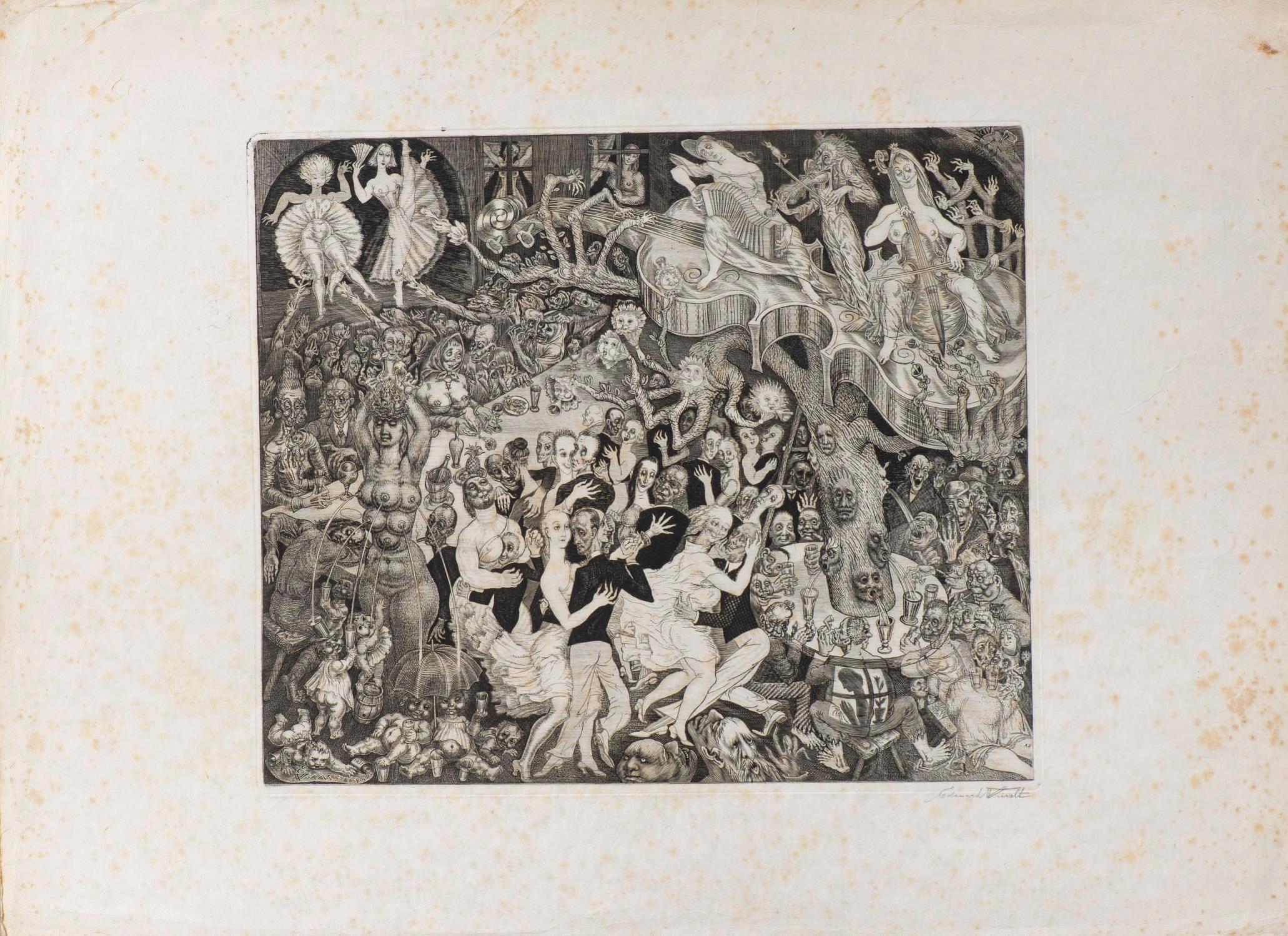
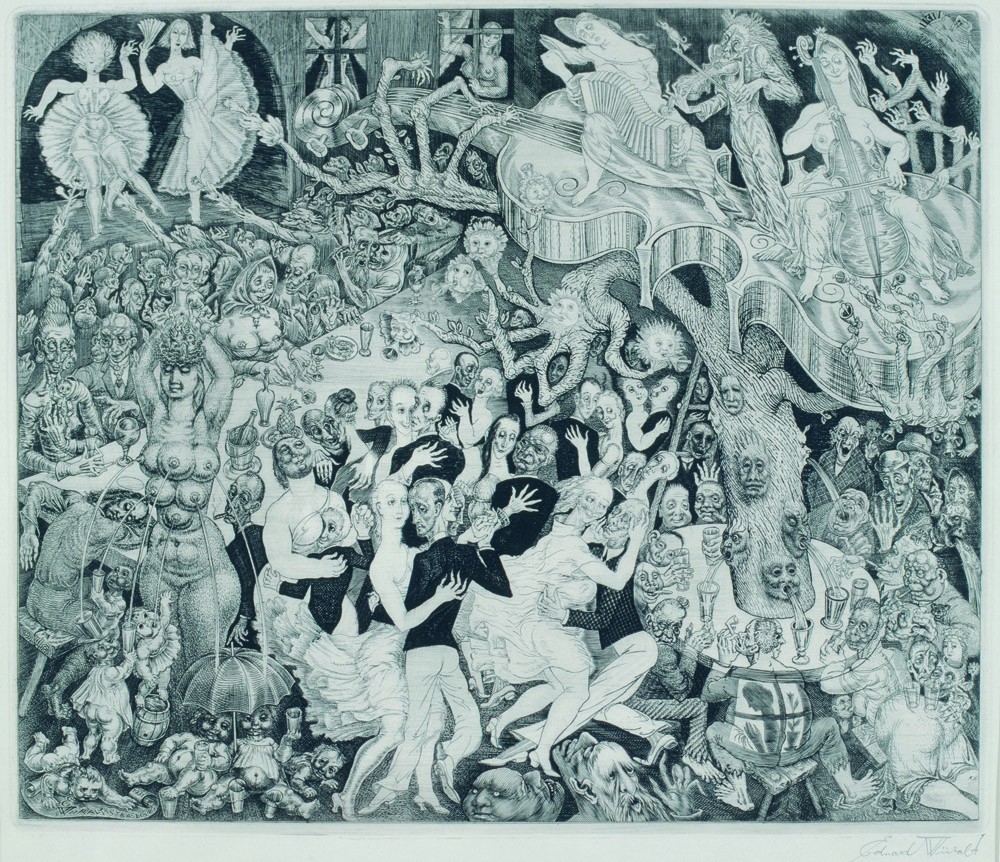
Eduard Wiiralt (Estonia, 1898-1954) ~ Cabaret, 1931. Eau-forte sur papier (detail 1)
Eduard Wiiralt (Estonia, 1898-1954) ~ Cabaret, 1931. Eau-forte sur papier (detail 2)
Eduard Wiiralt (Estonia, 1898-1954) ~ Cabaret, 1931. Eau-forte sur papier (detail 3)
Eduard Wiiralt (Estonia, 1898-1954) ~ Cabaret, 1931. Etching, copper engraving | src EKM Eesti Kuntimuuseum (KUMU)
Eduard Wiiralt (Estonia, 1898-1954) ~ Cabaret, 1931. Etching
Eduard Wiiralt (Estonia, 1898-1954) ~ Cabaret, 1931. Etching (Detail 2)
Eduard Wiiralt (Estonia, 1898-1954) ~ Cabaret, 1931. Etching (Detail 3)
Eduard Wiiralt (Estonia, 1898-1954) ~ Cabaret, 1931. Etching (detail 1)
Eduard Wiiralt (Estonia, 1898-1954) ~ Cabaret, 1931. Eau-forte, gravure sur cuivre | src Musée Félicien Rops

Tsuguharu Foujita · Book of Cats
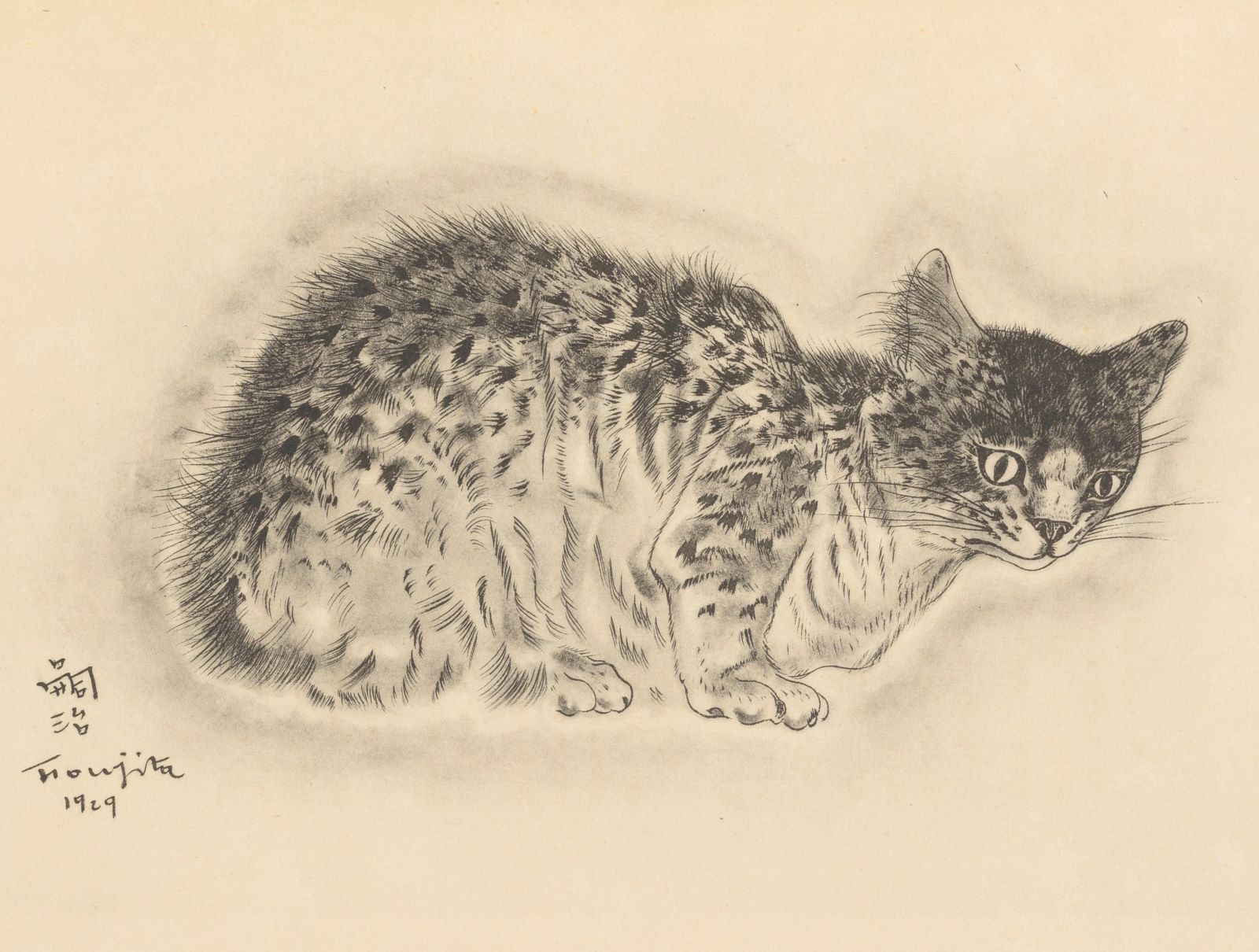
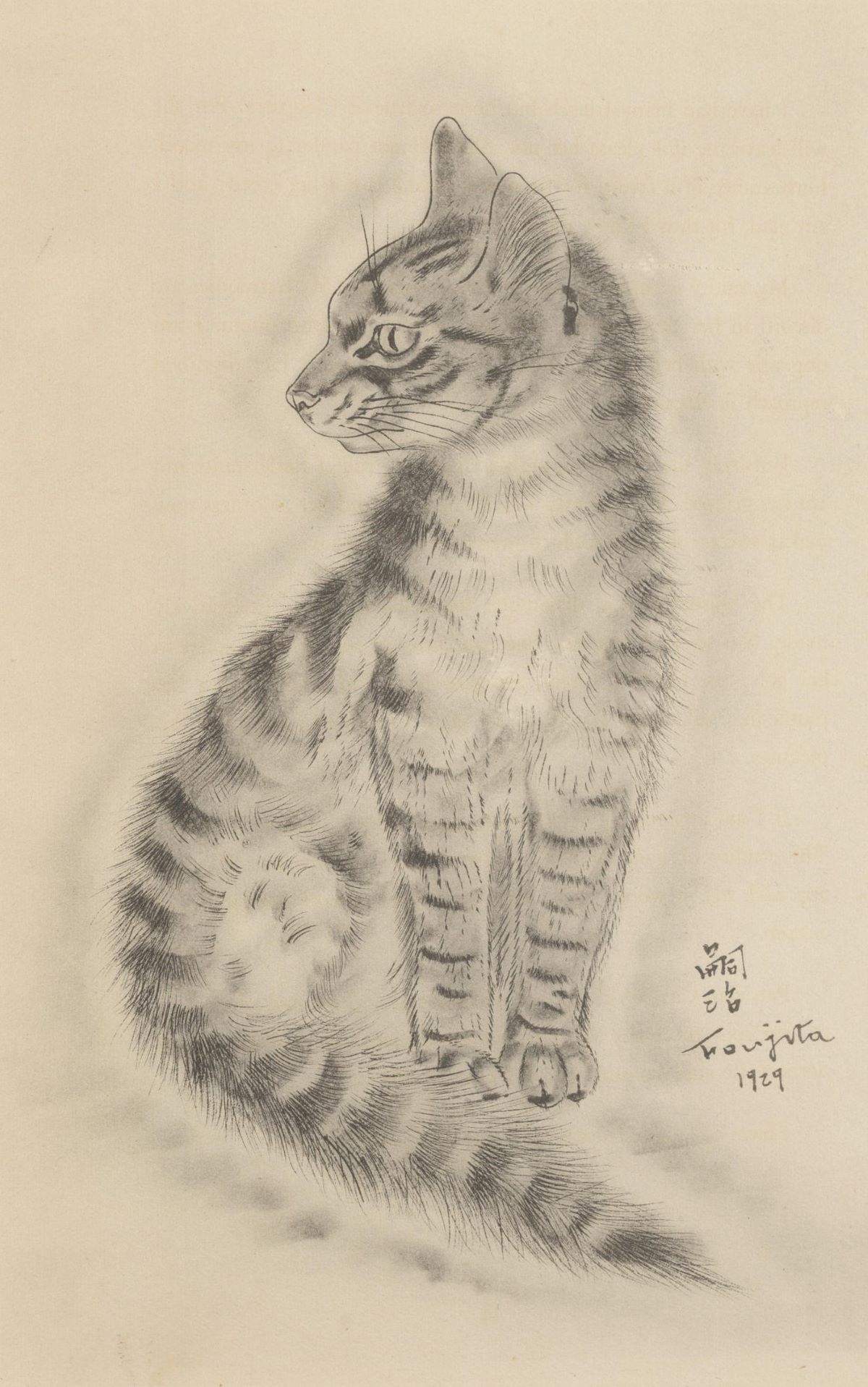
Tsuguharu Foujita (1886-1968) ~ A Book of Cats. New York; Covici Friede, 1930 | src Bonhams
Tsuguharu Foujita (1886-1968) ~ A Book of Cats (1930) | src FW gallery
Tsuguharu Foujita (1886-1968) ~ A Book of Cats: 20 drawings by Foujita; Poems by Michael Joseph (1930) | src FW gallery
A Book of Cats: 20 drawings by Foujita; Poems by Michael Joseph (1930) | src FW gallery
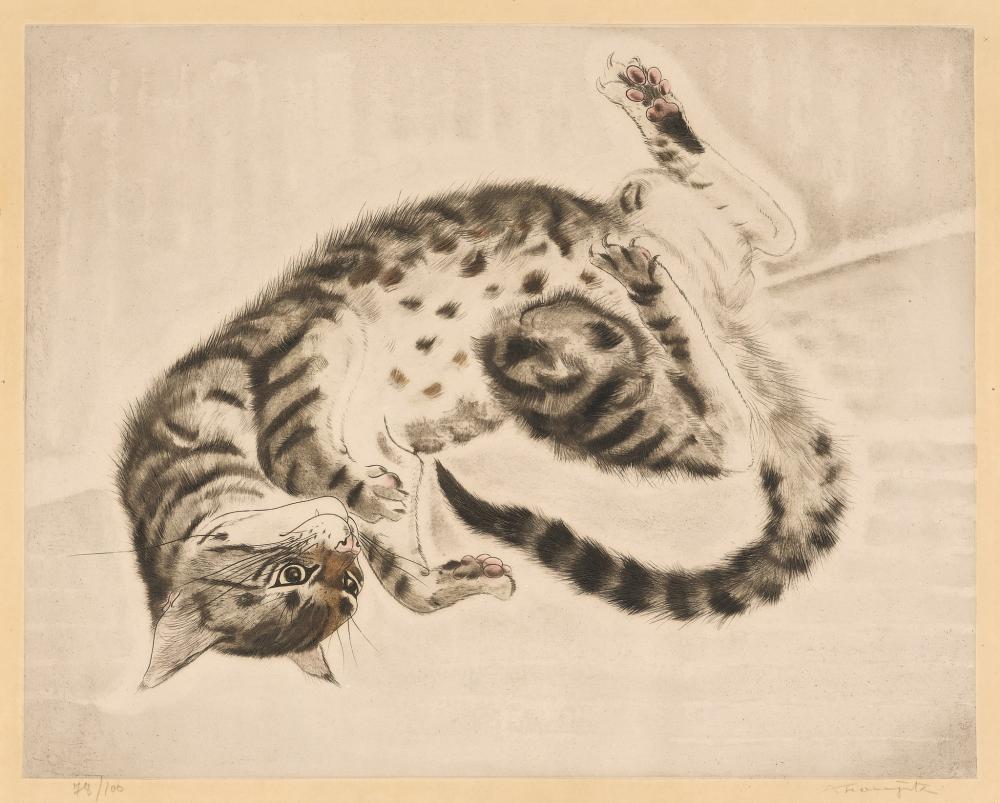
Tsuguharu Foujita (1886-1968) ~ Chat couché (Twisting Cat), from Les Chats (1930) | src Galerie Zacke (Wien)
Tsuguharu Foujita (1886-1968) ~ A Book of Cats. New York; Covici Friede, 1930 | src Bonhams
Tsuguharu Foujita (1886-1968) ~ A Book of Cats (1930) | src FW gallery

Emil Pirchan · Tunkpapiere

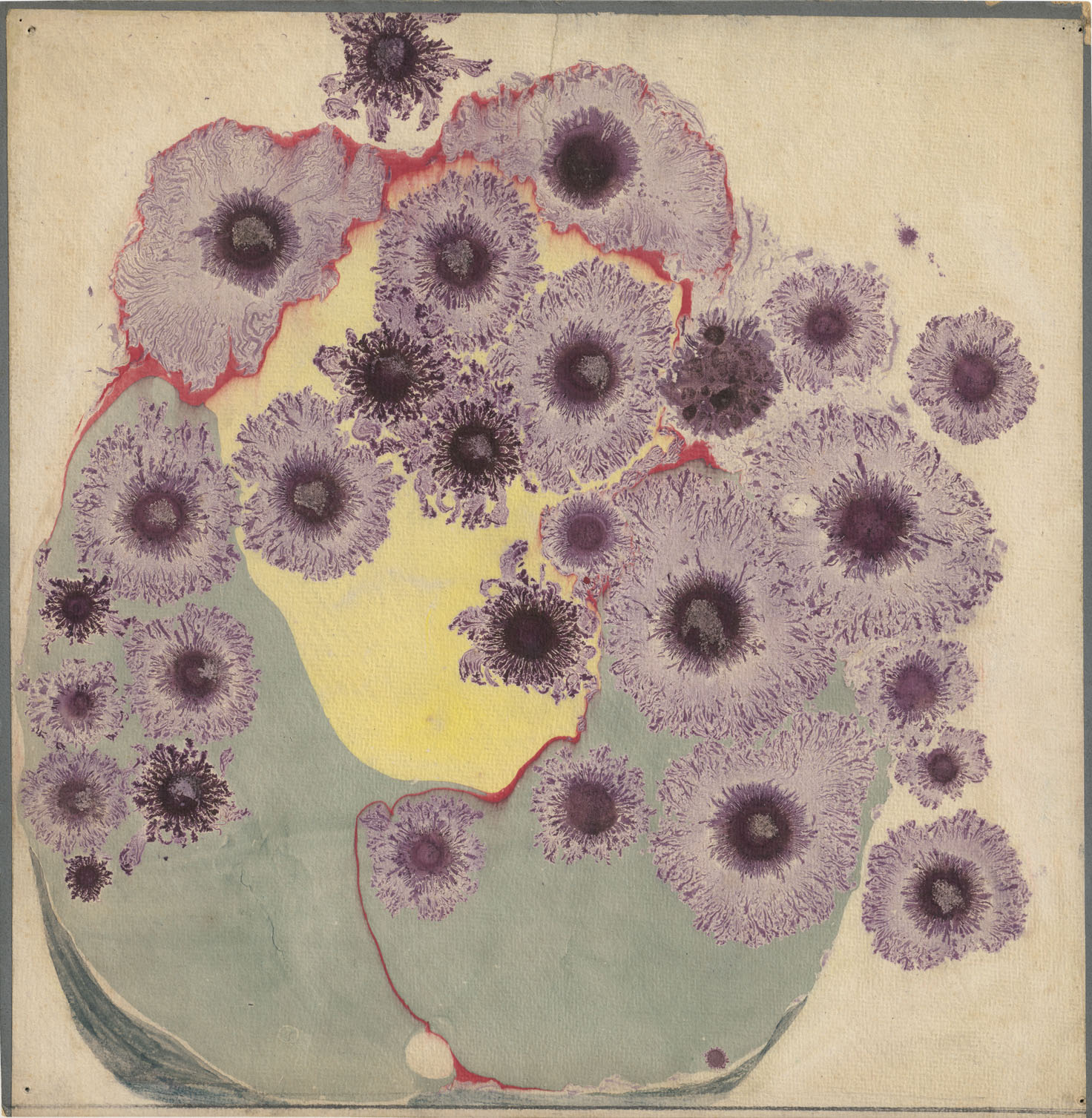
Emil Pirchan ~ Komposition in Violett, Blau, Grau und Orange; um 1906-07
Wasserfarben aufgebracht im Tunkpapierverfahren auf Bütten | src Bassenge Auktion 121 Los 6874

This work, which Emil Pirchan developed using a special ink paper technique, impresses with its singular beauty. Emil Pirchan, who came from Brno and grew up in a well-off artist household, came to Vienna in 1903. The metropolis, which was currently experiencing one of its heydays, was a magnet for many artists from near and far. Back then, Pirchan studied architecture in Otto Wagner’s master class at the Academy of Fine Arts, and in the evenings he was a regular guest at the Café Museum, which was then a meeting place for the progressive artists of the Vienna Secession. Gustav Klimt, Josef Hoffmann, Koloman Moser, Josef Olbrich and also his teacher Otto Wagner met here and debated about art. Pirchan later vividly remembered the “exuberance of the feeling of belonging to a liberated new art” (Bau und Bild, Bühne und Buch. Erinnerungen an mich, Vienna 1941, unpublished manuscript).

At that time, Josef Hoffmann, Koloman Moser and Leopold Stolba, members of the Secession, were experimenting with the production of dipped paper (Tunkpapiere). They modified the process originally developed in the Orient and created poetic compositions in which birds, amphibians, fish and plants suddenly appear in recurring wave patterns. The Museum of Applied Arts in Vienna keeps an excellent collection of these paper works from the years 1903 to 1906. These works must have been a source of inspiration for the young student Emil Pirchan, who evidently immediately recognized the potential of the technique and developed it further. In the marbling technique, a sheet of paper records an “image” that was created with colors on the surface of the water in the marbling bath. While the historical marbled papers were ornamental and could be cut to size for different purposes, the sheets of the Vienna Secession were designed as images, with a specific format and a defined image area. Pirchan’s dipped papers are also designed as images, but he breaks away from representationalism. He lets the colors sometimes glide gently onto the surface, sometimes drips them into the water bath from above, perhaps with the help of a pipette. Blurred areas of color compete with circular dots of color, which expand explosively due to additional violet drops of color in their center, creating the impression of a brilliant firework display. The monotypes created in this way are therefore largely determined by chance, by the unforeseen flowing movements of the pigments. Pirchan’s abstract compositions unfold an unexpected magic and are far ahead of their time. It was only years later that Wassily Kandinsky brilliantly shattered the representational into colorful shapes and lines. / from : Bassenge Auktion 121

Emil Pirchan ~ Komposition in Mauve, Grün, Orange und Gelb; um 1906-07 | src Bassenge Auktion 121
Wasserfarben aufgebracht im Tunkpapierverfahren, grauer Stift, auf Papier, original auf Karton kaschiert.

The painter, commercial artist, architect, stage designer and writer Emil Pirchan was rediscovered in 2019 at the Museum Folkwang, Essen through an exhibition that was afterwards shown at the Leopold Museum in Vienna. The artist’s ink papers (Tunkpapiere) were a special surprise at the exhibition. They are closely linked to “Vienna around 1900”, where the artist, who was born in Brno, became a master student of the famous architect Otto Wagner in 1903. He is also closely connected to the vibrant art scene in the heart of the Austro-Hungarian monarchy through his great-cousin Josef Hoffmann, who rose to fame in 1903 as one of the co-founders of the legendary Wiener Werkstätte. Pirchan’s ink papers are unthinkable without the Vienna Secession and its willingness to experiment.

The present work, together with other inked papers by Pirchan, adorned the hall in his house in Brno. A historical photograph from 1907 shows the interior, for which Pirchan designed the entire furnishings, from the furniture to the flower vase, in the spirit of an overall concept (see exhibition catalogue Emil Pirchan. A universal artist of the 20th century, Wädenswil 2018, fig. p. 158-159, our work hangs in the top row, left). The compositions presented there in white, square frames show an effortless oscillation between closeness to nature and abstraction, a gliding and flowing of the motifs, which are sometimes reminiscent of exotic flowers and then again surprise with completely abstract, non-representational structures. Emil Pirchan’s inked papers are autonomous works that stand in their own right and are in no way inferior to Koloman Moser’s best experiments with color and form. And they give an idea of ​​how Max Ernst created his oscillating universe with curved and branched lines. / Bassenge Auktion 121

Bassenge Auktion 121 Zeichnungen des 16. bis 19. Jahrhunderts

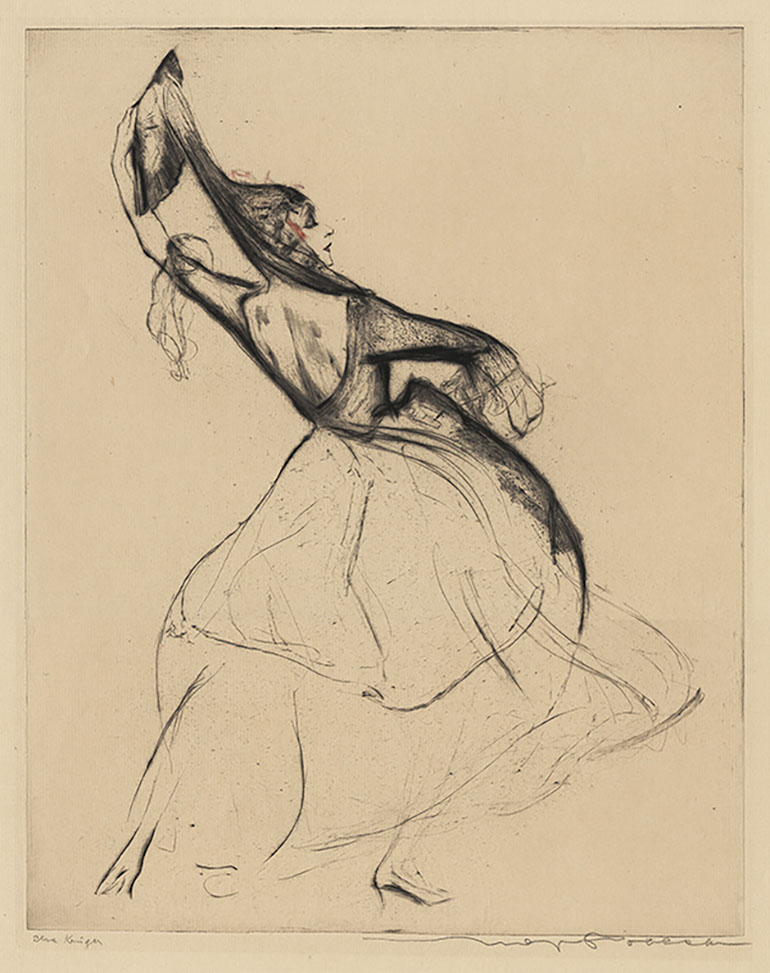
Elsa Krüger by Max Pollak

Max Pollak (1886 – 1970) ~ Elsa Krüger, 1919; drypoint with aquatint printed in color | src Annex galleries

Käte Hoch · liegender weiblicher Akt

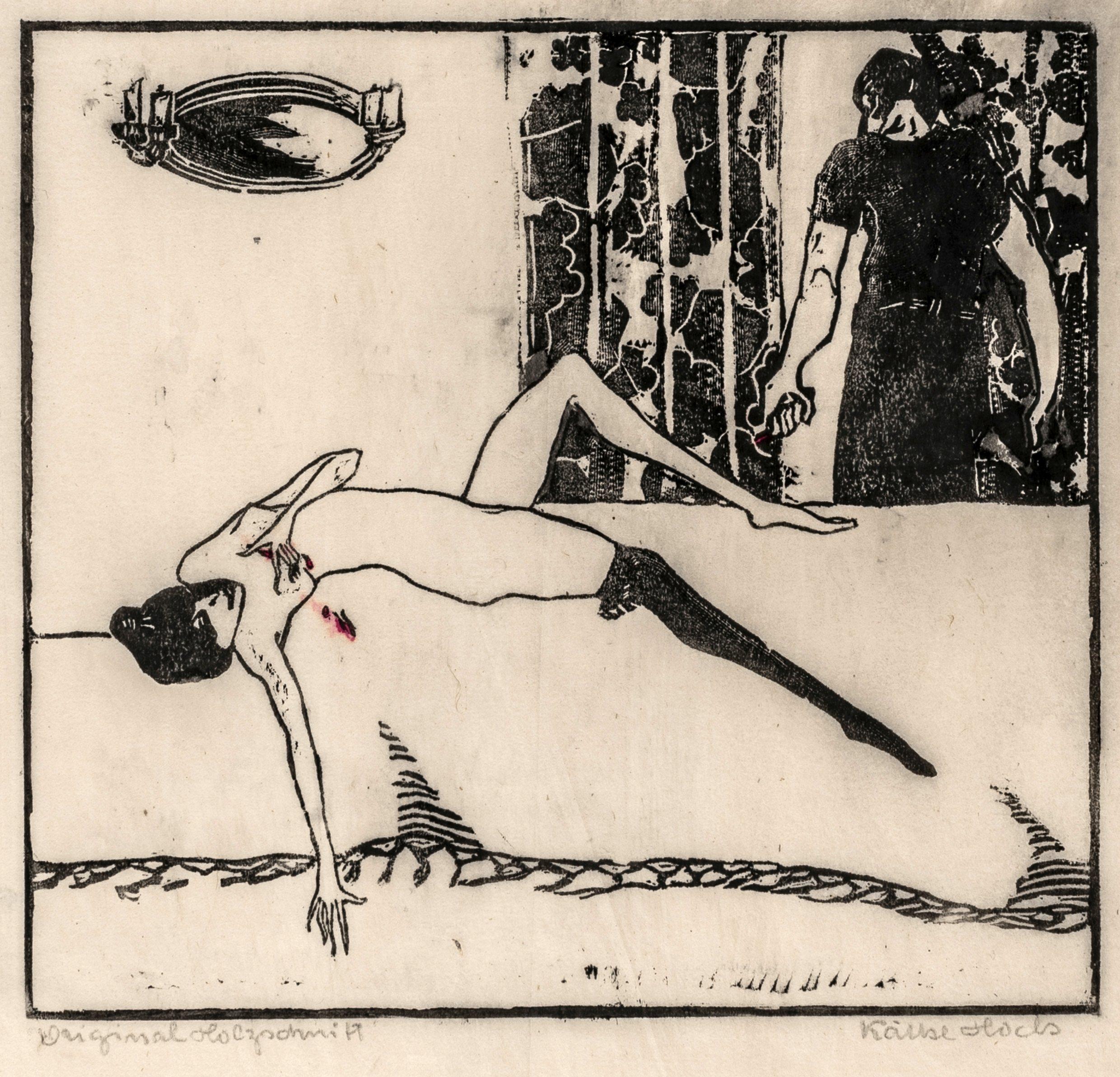
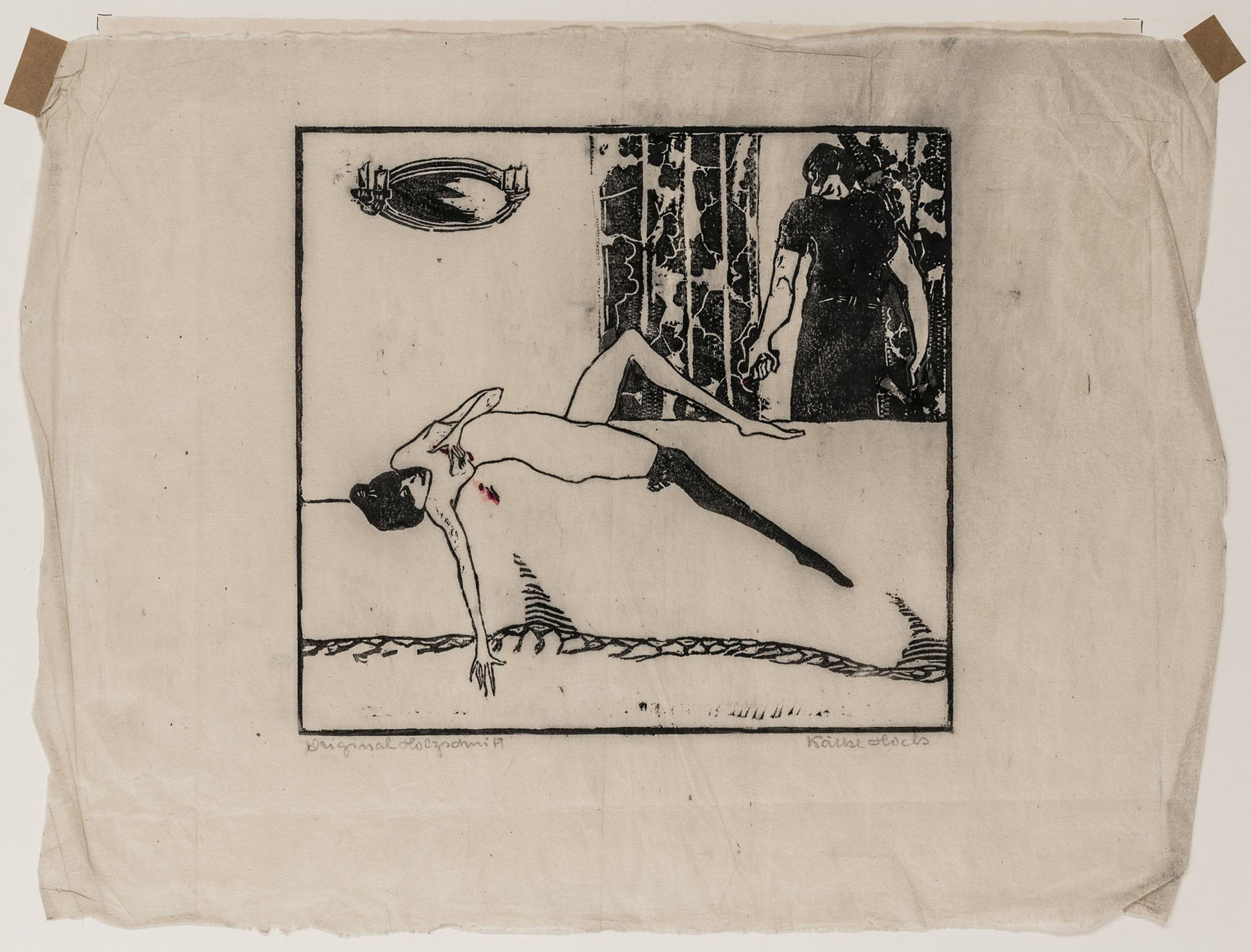
Käte Hoch (1873-1933) ~ Untitled (Reclining female nude), ca. 1910. Woodcut on thin Japan paper, with red coloring, probably added later. Inscribed “original woodcut” at the bottom left | src Nosbüsch & Stucke
Käte Hoch (1873-1933) ~ Ohne Titel (Liegender weiblicher Akt). Holzschnitt auf dünnem Japan, mit punktuellem, wohl später hinzugefügtem roten Kolorit, um 1910 | src Nosbüsch & Stucke

Die deutsche Malerin Käte Hoch (1873-1933) studierte von 1891-1894 an der Münchner Damenakademie. Ab 1906 betrieb sie eine eigene Mal- und Zeichenschule in München und nahm u.a. an Ausstellungen der Münchner Secession und des Kunstvereins München teil. 1933 stürmte ein SA-Trupp ihre Wohnung und ihr Atelier in Schwabing, wobei der Großteil ihrer Werke zerstört wurde.

The German painter Käte Hoch (1873-1933) studied at the Munich Women’s Academy from 1891-1894. From 1906 she ran her own painting and drawing school in Munich and took part in exhibitions at the Munich Secession and the Munich Art Association, among others. In 1933, an SA troop stormed her apartment and studio in Schwabing, destroying most of her work.

Louise Bourgeois · Gouaches

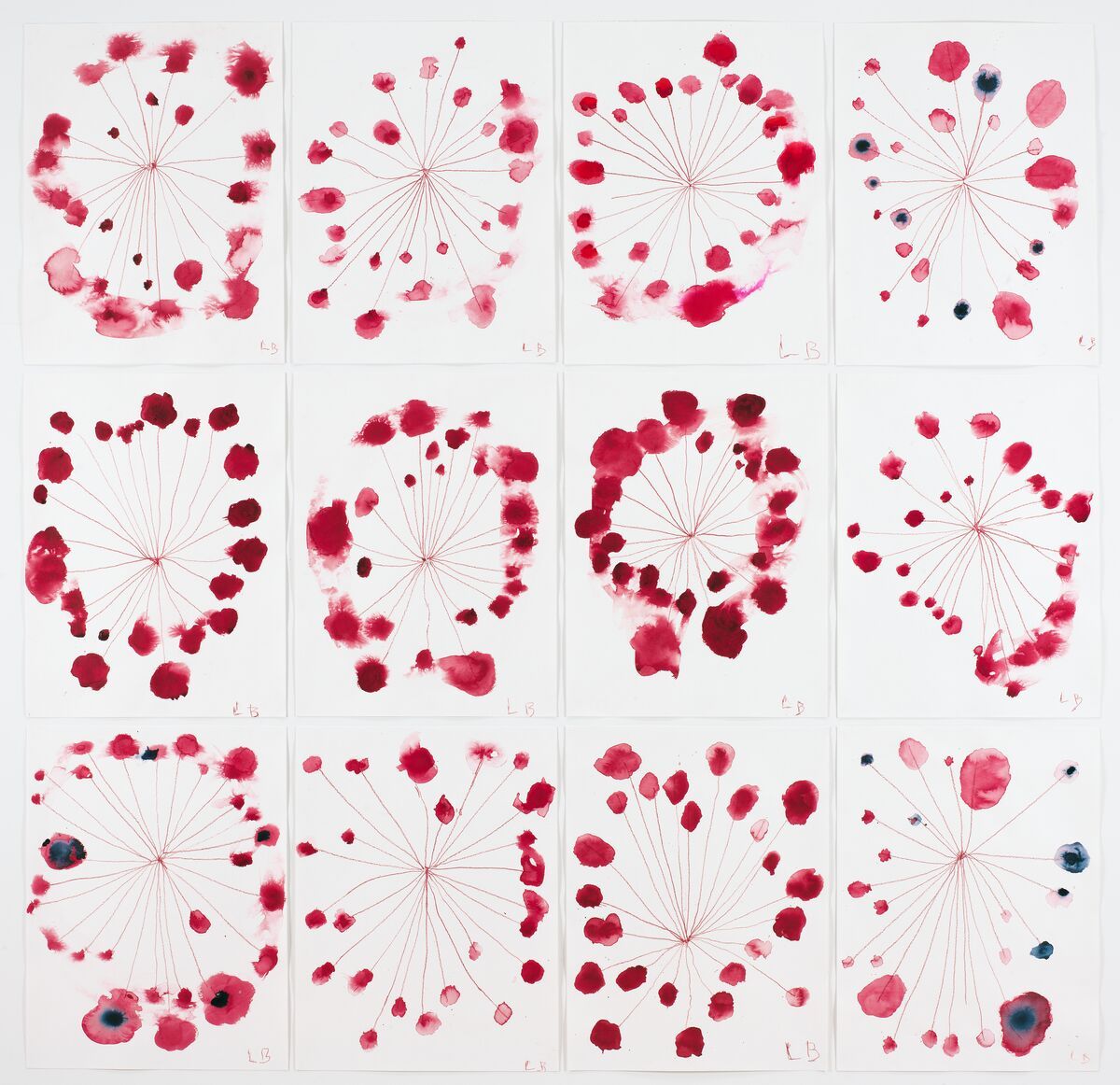
Louise Bourgeois (1911 – 2010) ~ The Ticking of the Clock: The Heartbeat, 2008. Gouache and colored pencil on paper, suite of 12 | src Hauser & Wirth
Louise Bourgeois (1911 – 2010) ~ Les Fleurs, 2009. Gouache on paper, suite of 18 | src Hauser & Wirth

‘Louise Bourgeois. My Own Voice Wakes Me Up’

First solo exhibition in Hong Kong of works by renowned French-American artist Louise Bourgeois (1911 – 2010). The exhibition is curated by Jerry Gorovoy, who worked closely with Bourgeois from the early 1980s until her death in 2010.

For more than 70 years, Bourgeois created forms that merged the concrete reality of the world around her and the fantastic reality of her inner psychic landscape. Her creative process was rooted in an existential need to record the rhythms and fluctuations of her conscious and unconscious life as a way of imposing order on the chaos of her emotions. The body, with its functions and distempers, held the key to both self-knowledge and cathartic release. ‘My Own Voice Wakes Me Up’ takes its title from one of Bourgeois’s ‘psychoanalytic writings,’ dated December 1951 and written at the very beginning of her intensive analysis. In this text, she describes how her own voice awakes her from a dream in which she was calling out (‘maman, maman’) while pounding on her husband’s chest. The exhibition focuses on distinct bodies of work from the final two decades of the artist’s life, including fabric sculptures, hand poses, late works on paper, topiary sculptures, and rarely exhibited holograms. | text Hauser & Wirth

Cat and Butterfly by Min Zhen

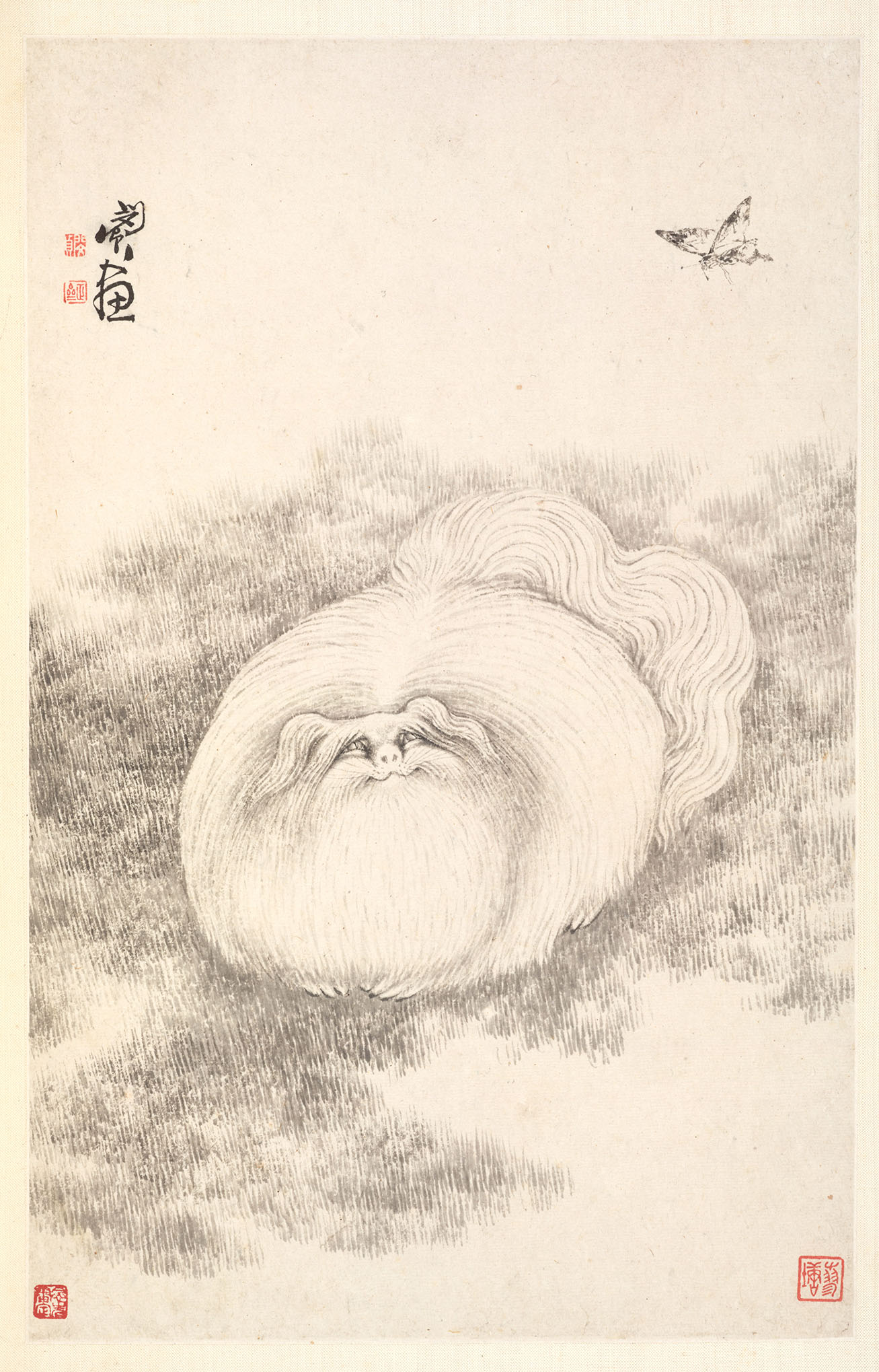
Min Zhen (Chinese, 1730–after 1788) ~ Cat and Butterfly, ca. 1788 (ink on paper). From Album of Miscellaneous Subjects | src Cleveland museum of art

Min Zhen painted this album for his friend Dailili Shanren in exchange for a scholar’s stone.

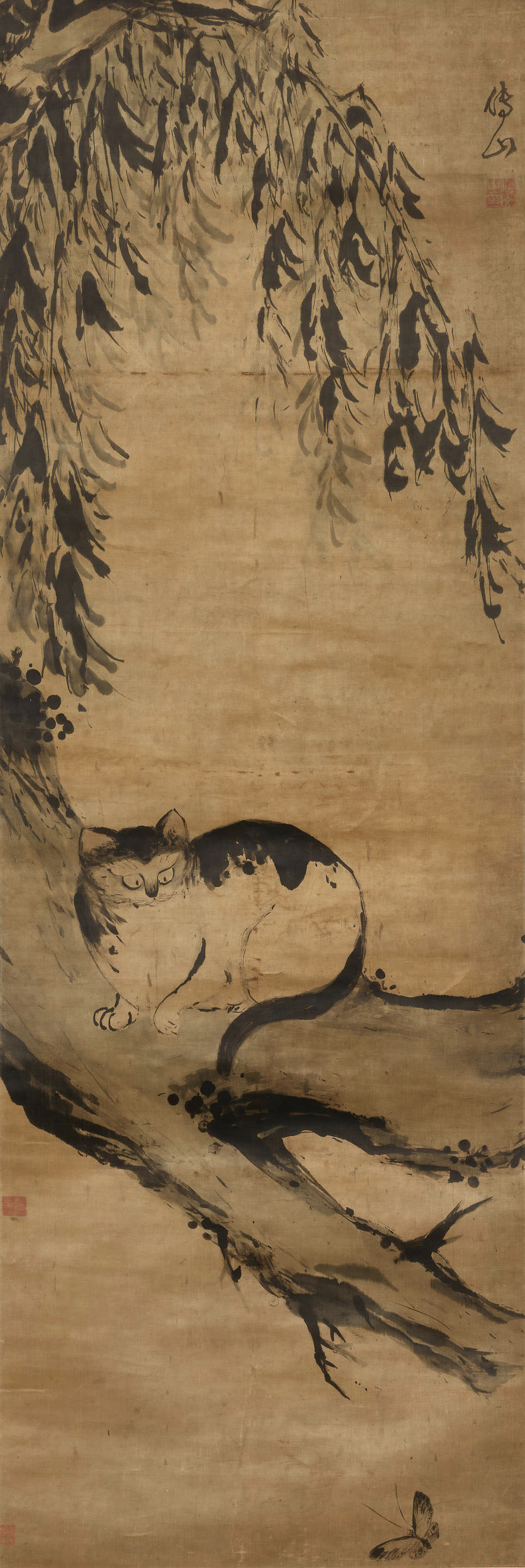
Cat and butterfly [ 貓和蝴蝶 ] are homophones for the characters “mao die” 耄耋 (octogenarian), so this painting expresses hope that the artist’s friend will live a long life.

Cat and Butterfly by Fu Shan

Fu Shan (1607-1685) (attributed to) ~ Cat and Butterfly. Ink on satin, hanging scroll | src Bonhams

La Femme et le Pantin · 1928

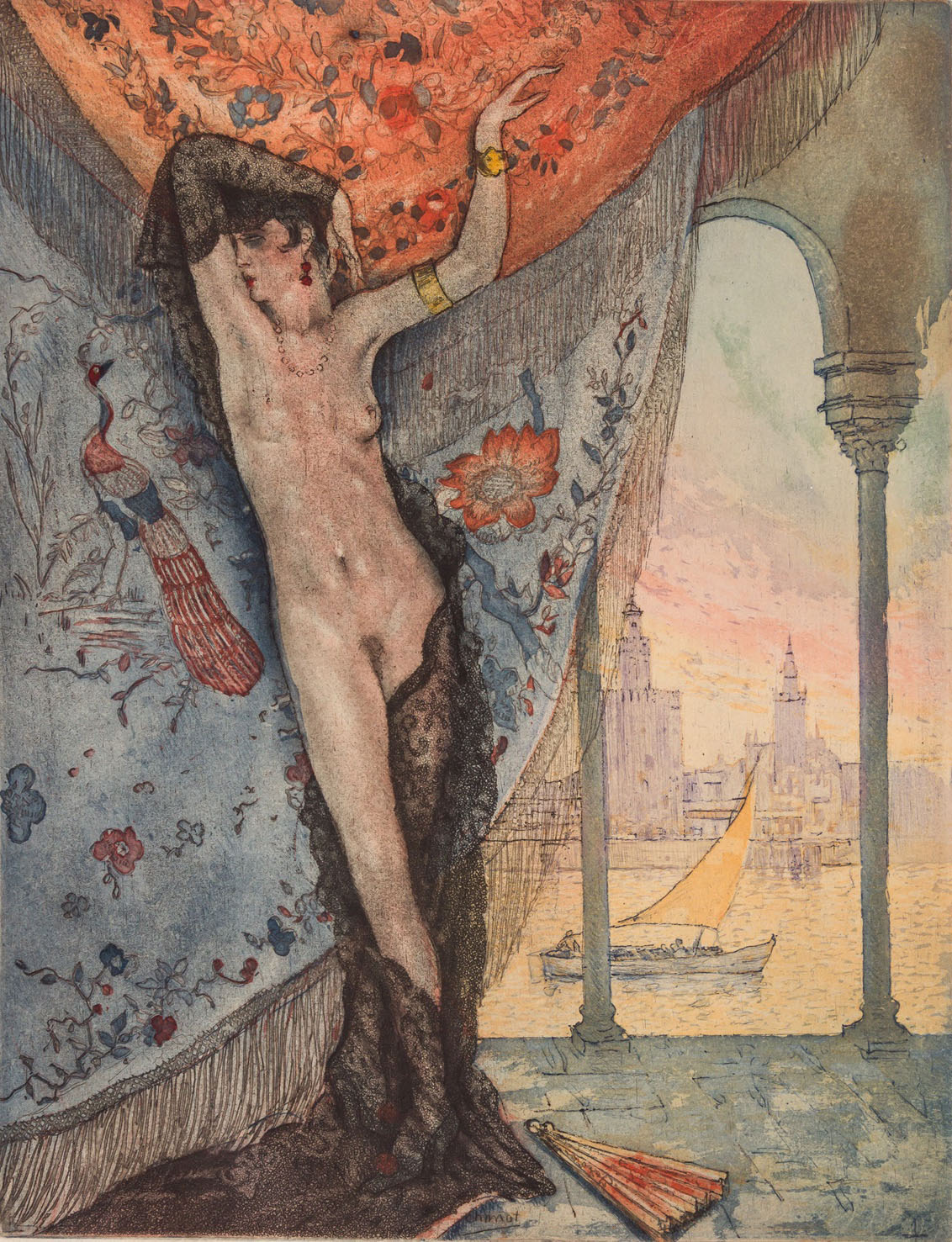
Edouard Chimot ~ Etching for Pierre Louÿs’ «La Femme et le Pantin», Paris, 1928
Pierre Louÿs & Edouard Chimot ~ La Femme et le Pantin. Les Editions d’Art Devambez, Paris, 1928
Etchings in colour and black and white by Edouard Chimot | src Chiswick auctions
Edouard Chimot ~ Colour etching for Pierre Louÿs’ «La Femme et le Pantin», Paris, 1928
Edouard Chimot ~ Etching for Pierre Louÿs’ «La Femme et le Pantin», Paris, 1928