images that haunt us




La sensualità è uno degli aspetti più indagati dall’arte e più presenti fra le sale dei musei. Lo scopriremo grazie a B-Side – Il lato nascosto dell’arte, viaggio intrapreso da Caroline Pochon e Allan Rothschild attraverso la storia della rappresentazione del fondoschiena, oggetto proibito del desiderio su cui si sono concentrati gli sguardi di molti artisti. (src Artribune)

La face cachée des fesses, documentaire diffusé sur Arte évoquera plus particulièrement les fantasmes et les tabous que suscitent nos postérieurs en s’appuyant sur ses différentes représentations à travers les siècles. Le film de Caroline Pochon et Allan Rothschild, deux passionnés d’histoire de l’art, proposera une étude des mœurs centrée sur les fesses et tentera d’expliquer les fantasmes collectifs au sujet de notre arrière-train. (link to source)

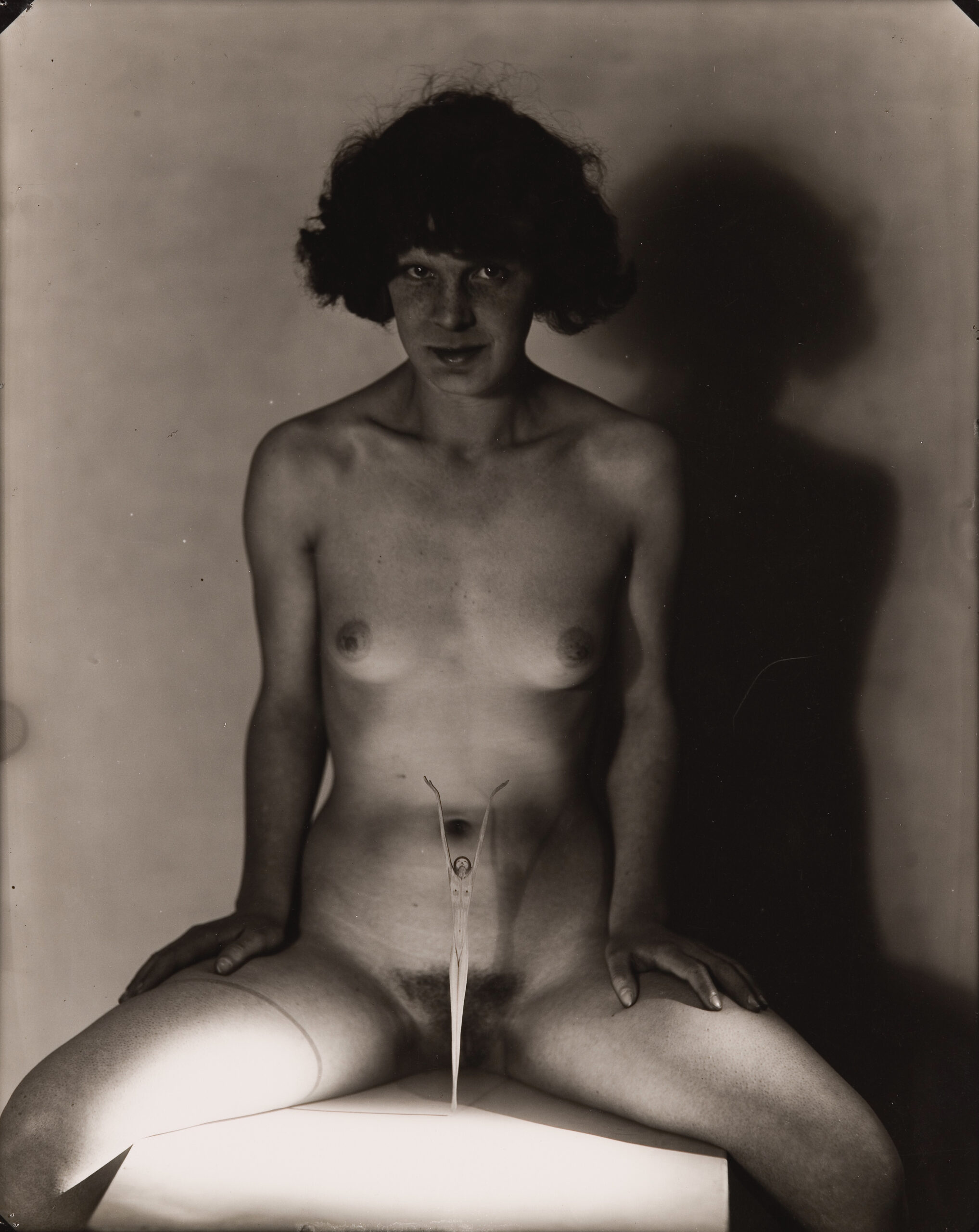
The Biederer Studio was founded and managed by the Czech born brothers Jacques Biederer (1887-1942) and Charles Biederer (1892-1942). The photographic studio was specialized in erotic and fetish photography. It was active in Paris in the period between the two world wars.


The Mimosa paper label on the verso of the mount indicates that this photo was used as an advertisement to demonstrate Mimosa paper. Mimosa used the negatives of many well-known German photographers such as Hugo Erfurth, d’Ora and Yva to demonstrate the various photo paper qualities the firm produced.



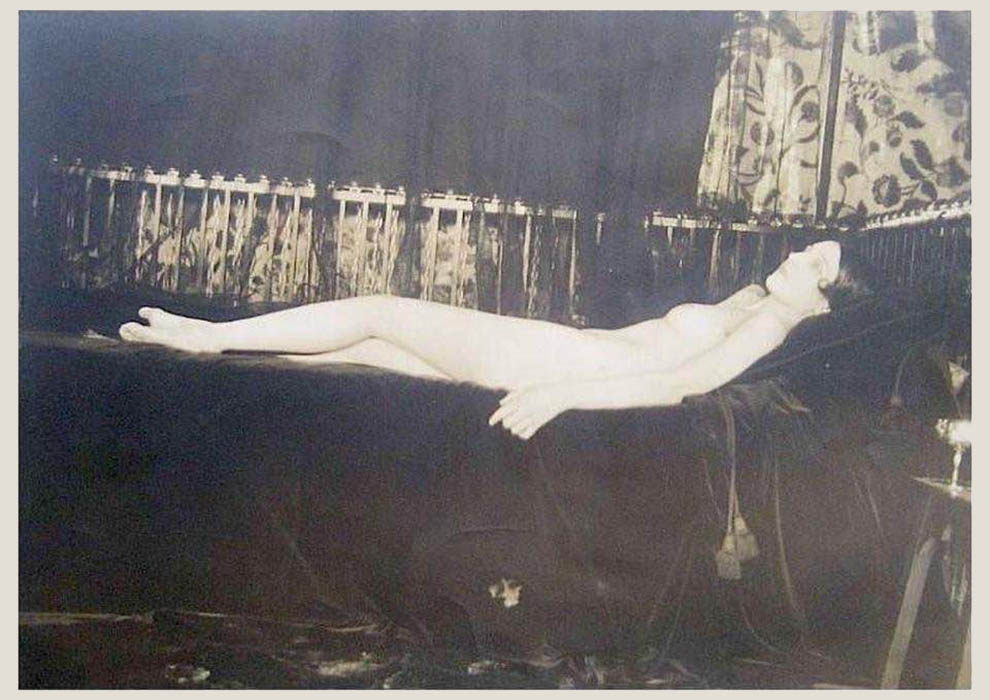
Brooks painted Ida Rubinstein more often than any other subject; for Brooks, Rubinstein’s “fragile and androgynous beauty” represented an aesthetic ideal. The earliest of these paintings are a series of allegorical nudes. In The Crossing (also exhibited as The Dead Woman), Rubinstein appears to be in a coma, stretched out on a white bed or bier against a black void variously interpreted as death or floating in spent sexual satisfaction on Brooks’ symbolic wing. (x)
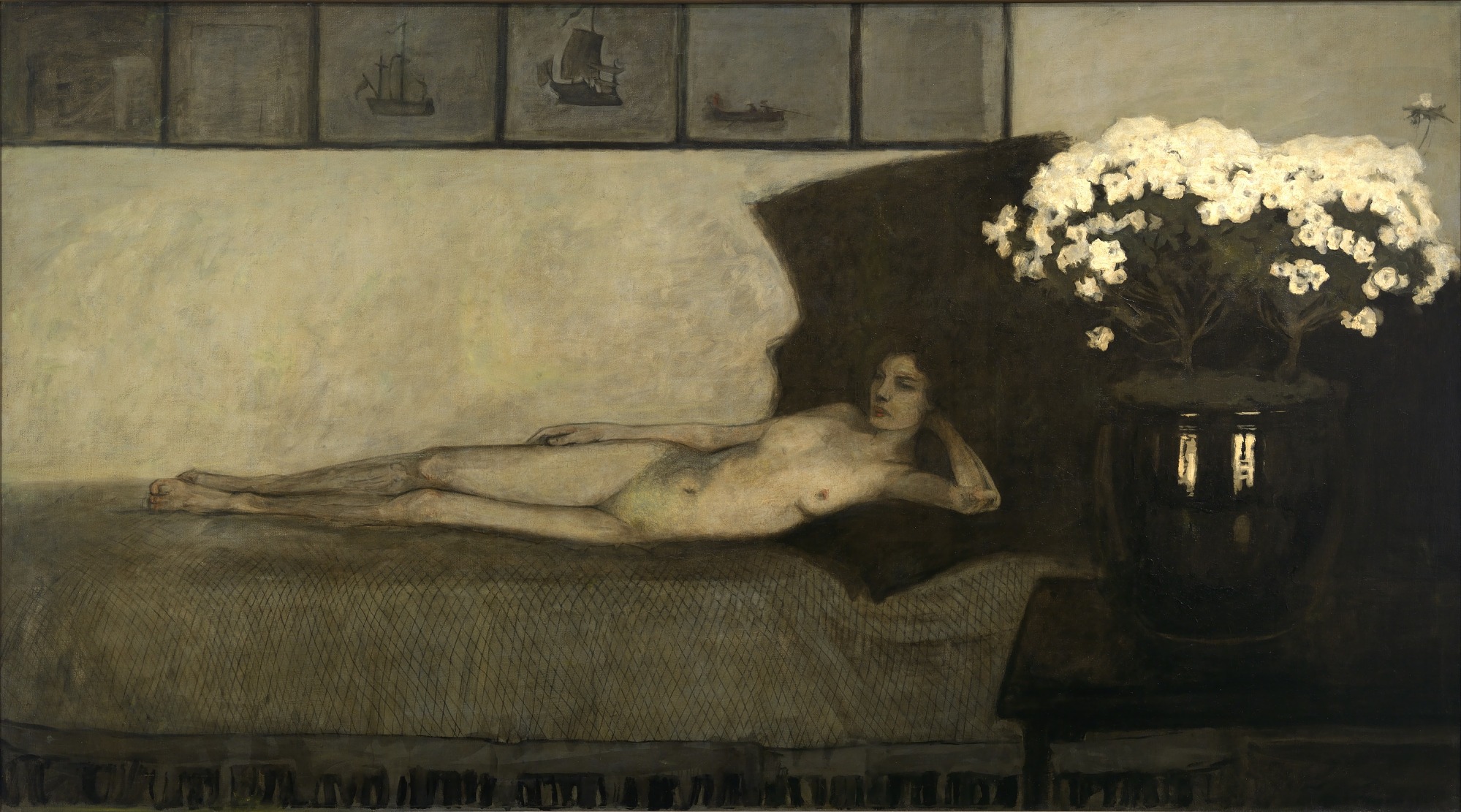
In 1910, Brooks had her first solo show at the Gallery Durand-Ruel, displaying thirteen paintings, almost all of women or young girls. Among them, Brooks included two nude studies: The Red Jacket, and White Azaleas, a nude study of a woman reclining on a couch. Contemporary reviews compared it to Francisco de Goya’s La maja desnuda and Édouard Manet’s Olympia. But, unlike the women in those paintings, the subject of White Azaleas looks away from the viewer; in the background above her is a series of Japanese prints. (x)

Romaine Brooks remained aloof from all artistic trends, painting, in her palette of black, white, and grays, haunting portraits of the blessed and the troubled, of socialites and intellectuals. She moved in brilliant circles and, while resisting companionship, was the object of violent passions. […] Her story and her work reveal much about bohemian life in the early twentieth century.
Elizabeth Chew Women Artists at the Smithsonian American Art Museum (x)
Describing herself as a lapidée (literally: a victim of stoning, an outsider), at the height of her career Brooks was prominent in the intellectual and cosmopolitan community that moved between Capri, Paris and London in the early 1900s. Brook’s best known images depict androgynous women in desolate landscapes or monochromatic interiors, their protagonists undeterred by our presence, either staring relentlessly at us or gazing nonchalantly past. Her subjects of this time include anonymous models, aristocrats, lovers and friends, all portrayed in her signature ashen palette. Rejecting contemporary artistic trends such as cubism and fauvism, Brooks favoured the symbolist and aesthetic movements of the 19th century, particularly the work of James Abbott McNeill Whistler. Her ability to capture the expression, glance or gaze of her sitters prompted critic Robert de Montesquiou to describe her, in 1912, as ‘the thief of souls’. quoted from Frieze
 un regard oblique